Video Interview: Bentley Coming Out Of The Pandemic And Looking To The Future
Walter Lamothe, President/CEO, and Jeremy Brown, Chief Operating Officer of Bentley, discuss how the retailer came through the pandemic and its outlook for the future.
They talk about how travel restrictions impacted the business, key lessons learned in the past couple of years, how business has changed, Brown’s background and why he recently joined the company, what they’re excited about for the future, the current store presence and plans for growth.
The Video Interview Series by Retail Insider is available on YouTube.
Connect with Mario Toneguzzi, a veteran of the media industry for more than 40 years and named in 2021 a Top Ten Business Journalist in the world and the only Canadian – to learn how you can tell your story, share your message and amplify it to a wide audience. He is Senior National Business Journalist with Retail Insider and owner of Mario Toneguzzi Communications Inc. and can be reached at mdtoneguzzi@gmail.com.
Also check out the other series offered by Retail Insider, including The Weekly podcast and The Interview Series, which are both available on Apple Podcasts, Stitcher, TuneIn, Google Podcasts, or through our dedicated RSS feed for Simplecast and other podcast players.
The retail outlook for Edmonton is slowly improving as the sector comes out of a challenging time during the pandemic.
A report by commercial real estate firm JLL said the retail market in the Alberta city has seen steady improvements in leasing activity through the start of 2022, despite not yet reaching pre-COVID levels.
“The pandemic has created pent-up demand for retailers and consumers, driving a surge in retail sales,” said the report. “Asking retail rents have remained relatively stable, with a slight dip to begin the year. The trend in rents is still upwards. As vacancy continues to drop with the help of the recovery, landlords are expected to raise rental rates.
“The growing net absorption and declining vacancy have been strong signs that the market is tightening. Most of the positive net absorption is attributable to general retail, malls, and neighbourhood centres. Many of the major corridors have been recovering and are now at healthy vacancy levels. Whyte Avenue is the slowest to recover, and currently has more vacancy than it’s had in a long time.”
Whyte Avenue in Edmonton (Image: Tourism Edmonton)
The availability rate in Edmonton has increased from 4.3 per cent in 2019 to 5.1 per cent today. It had peaked to 5.8 per cent in 2021.
Paul Raimundo, Vice President, Retail Leasing and Sales at JLL in Edmonton, said the retail sector in Edmonton today is very active.
Paul Raimundo
“There’s lots going on. Everybody you speak to has a lot of transactions in the queue, a lot of people looking, which is all really positive. I would say it’s the busiest we’ve been since we lifted most of our restrictions,” he said. “We have a lot of variety of product that we work on here. There’s significant interest. Paper moving back and forth, which is good.
“People are trying to do deals. Franchise groups are back out sourcing sites because they’ve got franchisees in the queue and they’re looking for spaces which is usually a pretty good indication that the market is moving in the right direction. That hasn’t happened very much over the last two and a half years. It’s been fairly quiet on that front. So that’s a good thing.”
Raimundo said the flight to grocery-anchored, daily needs sites continues. They remain the strongest sites in the market.
“You’re starting to see good commuter sites now come back. Those two to three acre C-store gas bar sites. The interest has picked back up in those,” he said. “New growth areas are still big here and we’re doing a couple of projects in a couple of areas.”
ICE District in Downtown Edmonton (Image: Colliers International and Savills)ICE District in Downtown Edmonton (Image: Colliers International and Savills)
The JLL report said the food and beverage industry in Edmonton has suffered perhaps more than others. More specifically, full-service restaurants that occupied spaces between 5,000-7,000 square feet are becoming vacant as fewer shoppers dine in. Restaurant owners are finding spaces between 3,500-4,000 square feet as optimal for their businesses and ever-changing consumer behaviour, it said.
“With a dramatic increase in inflation and rising interest rates, we’re starting to see deals take longer to complete. Many tenants and landlords who seek financing approval for their expanding projects have been waiting much longer. As interest rates continue to rise, this issue will persist,” said JLL.
“Shopping centres structured with good anchor tenants have been performing well. Specifically, centres anchored by grocery stores or pharmacies have seen little-to-no vacancy as repeat customers contribute to overall sales within the property. Tenants are also more likely to seek positions next to anchor tenants while avoiding shopping centres that have none. This has led to vacancy in properties without anchor tenants.
Image: South Edmonton Common/Cameron Corp
“As people have been eager to go out and spend money on shopping and eating out, we should continue to see robust retail sales. We’re just coming out of physical store restrictions, decreased opportunity to spend, and a sustainment of savings, which is leading to more consumer confidence and higher spending power pushing demand for spending.”
Raimundo said construction costs are still hindering the market, making it more difficult to renovate as well as slowing the development process.
The report also said new tenants in malls have been more confident to sign long-term deals, as they don’t anticipate the same recurring COVID restrictions that hurt them in the past.
“Before it used to be this real tug of war. It’s a landlord’s market, then it’s a tenant’s market, then it’s a landlord’s market. That seems to have gone away a bit. It needs to be both our markets otherwise this doesn’t work,” said Raimundo. “It helps with the transparency and it helps that they’re partners.”
Retail Insider is streamlining its Canadian retail news from around the web to include a handful of top news stories that can be viewed quickly during the day. Here are the top stories from the past 24 hours.
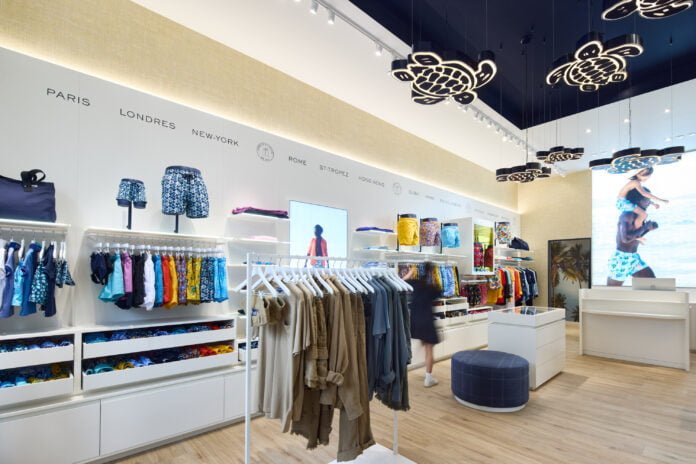
French luxury brand Vilebrequin, known for its colourful swimwear and fashions for men and women, has opened its first Canadian storefront in Montreal’s affluent Westmount area.
The store is located at 4912 Sherbrooke Street in a 1,148 square foot space. Included is a range of swim styles for men, women, boys and girls as well as ready-to-wear, accessories and beach day essentials.
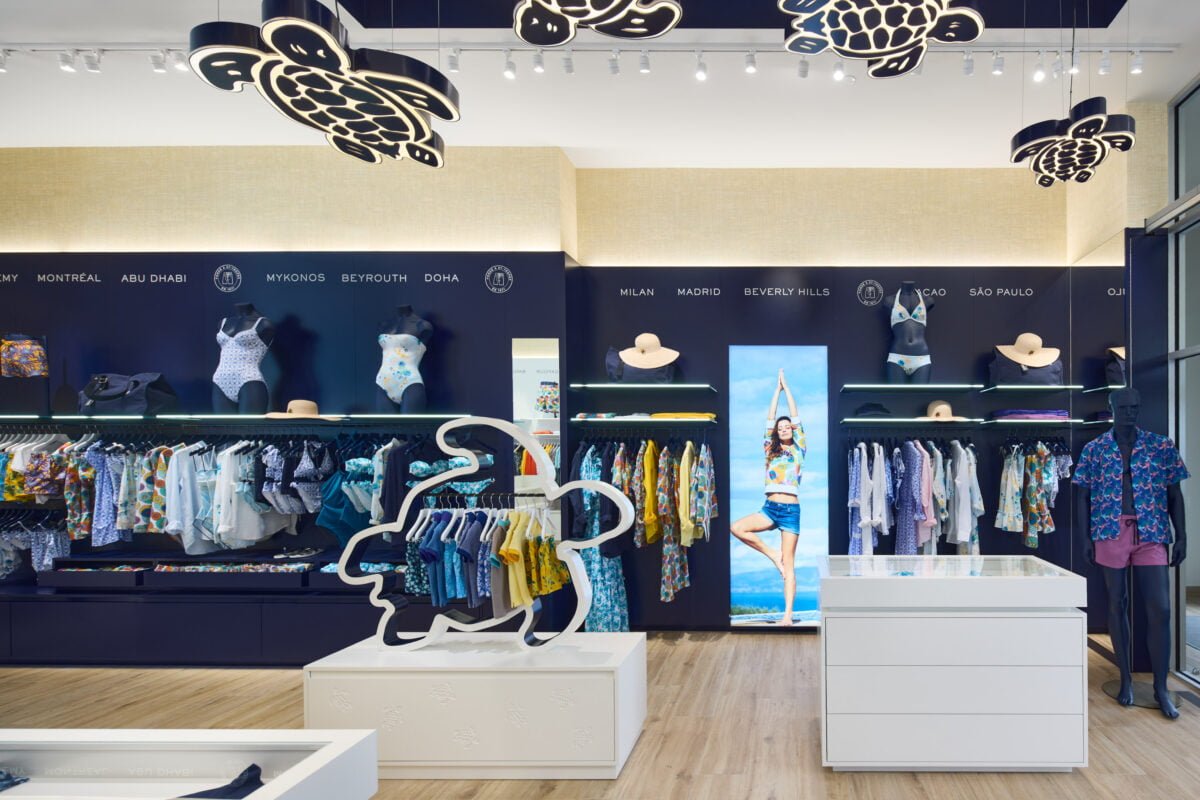
The store design is inspired by the vibrant azure and white hues of the Mediterranean Sea. The brand said in a statement that the colourful environment “brings its signature sense of laidback, seaside cool while hinting at the glamourous lifestyle of the French Riviera”.
Vilebrequin Montreal (Image: Vilebrequin)Vilebrequin Montreal (Image: Vilebrequin)
The brand is known primarily for its pricey swimwear. Vilebrequin has expanded into fashions for men, women and kids including an assortment of fashion and accessories and even flip flops priced at $110 CAD according to the retailer’s website. The brand says that it celebrates “the art of carefree living in the sun all year long” and that it is focused on developing and implementing sustainable solutions, fabrics, and processes “that only make an impact on vacation, not on the ocean”.
The Westmount storefront is owned by franchisee Cheryl Glense, who has been a staple in Montreal and Westmount fashion for decades. Glense owns two high-end independent boutiques a block away from the new Vilebrequin store. That includes Courval Fine Lingerie which she recently acquired as well as the 40-year-old Ritsi women’s fashion boutique.
No other Vilebrequin stores are planned for Canada at this time.
Vilebrequin was founded in 1971 in Saint Tropez by Fred Prysquel, a photographer and sports automobile journalist and his wife Yvette, a fashion designer. Interestingly, Fred is colorblind and Yvette picks out all the colours. In 2012 the company was acquired by US-based G-III Apparel Group Ltd. The company has over 170 stores globally in 62 countries as well as distribution in multi-brand retailers.
One of Canada’s biggest banks is encouraging small and medium businesses to invest in innovation and technology before interest rates rise even higher.
“Taking a proactive approach to investing in your own business – now rather than later – will ensure it’s more resilient, as you adapt to a higher cost future and capitalize on changing consumer behaviour,” said Jason Charlebois, Scotiabank’s Senior Vice President of Small Business Banking.
Jason Charlebois
“Innovation and technology has emerged as key themes for businesses that have been successful coming through the last several years of the pandemic and COVID-19. Those businesses that were able to pivot and adapt to introducing new channels for sales and generating revenue, mostly through online and/or curbside pickup, leveraging e-commerce platforms and other ways to digitize the way they send and receive money, were businesses that were more successful coming through the pandemic.”
Scotiabank’s most recent Path to Impact report found that businesses that invested in their digital capabilities were better positioned to withstand economic challenges.
Scotiabank’s latest small business trend report, SMEs: The Shortage Economy indicates that business owners now expect supply chain disruptions to continue to worsen for at least the next six months, exacerbated by geopolitical events such as the war in Ukraine.
Retailer holds tablet and use augmented reality technology to monitor data.
Also the cost of borrowing is expected to continue to rise.
“Small businesses come in all different forms in terms of the type of industry and the services and goods that they provide. So innovation and investment in capabilities for the business are different depending on which business sector they’re from,” said Charlebois. “Of course, businesses have to be mindful of the competition in the local market and the competition that might be taking business from them beyond their local market because other businesses are now maybe offering goods and services in an online or digital way, thereby reducing foot traffic towards a traditional brick and mortar business that might be located in a local market. So businesses have to be mindful of what their competition is and be ready to pivot and adapt as necessary to stay competitive and stay relevant to their customers.
“Interest rates are on the rise. The Bank of Canada has increased the prime lending rate. That’s making it more important than ever for small and medium businesses to secure the required capital that they might need now to invest in innovation and technology. Businesses should be seeking advice. Scotiabank has a range of specialized advisors, small business advisors, across our entire footprint in this country who are able to advise and help business owners to put strategies in place to weather any future economic headwinds and manage their risks and capitalize on the opportunities so they can plan and sustain a prosperous future for their business.”
Key findings of the SME report include:
SMEs have underperformed larger enterprises in the post-pandemic recovery. Since the start of the pandemic, one-third of firms now consider a shortage of input products to be a limiting factor for raising production;
Canada has seen the number of unfilled job vacancies reach historic levels during the post-pandemic recovery. Many positions remain unfilled from workers who left industries affected by lockdowns, the inability to hire workers as quickly as they were laid off during the pandemic, and overall exodus from some industries where virus exposure was elevated;
Businesses consider the shortage of labour as an important limiting factor to revenue growth and smaller firms expect to raise wages more on average, compared to larger firms; and
Growth in Canada’s overall GDP is expected to average 4.3 per cent in 2022 and 3.2 per cent in 2023, with unemployment falling through 2022.
Scotiabank is recommending four key areas for recovery and growth for Canadian business owners:
Plan your Liquidity and Cash Flow;
Dive into Digital;
Continually monitor the economic environment; and
Lean on your financial A-Team.
“The pandemic was unique for all businesses in our country and around the world,” said Charlebois. “Different businesses depending on the industry they were in were impacted more. In the case of small businesses, they tended to be unfortunately in the zone of when most of the pandemic restrictions were implemented in the various provinces across the country. Whether that be the hospitality sector, the arts and entertainment sector, obviously restaurants and the service industry broadly.
“Most of the businesses in Canada are small businesses and therefore small businesses generally were affected that were in those sectors more substantially than maybe larger businesses that maybe had other avenues to continue to serve customers and were able to stay open while certain small businesses were forced to close their storefronts.”
Video Interview: Best Buy Canada and How it is Adapting to The Changing Consumer Environment
Phil Thampy, Director, Retail and Service Operations, Best Buy Canada, discusses how the retailer has adapted to the changing consumer environment over the past two years.
Thampy talks about the impact the pandemic has had on business, new ways of doing business, what today’s consumers want, key challenges in the past two years, key lessons learned during this time, the company’s store presence in Canada and plans for growth, and its head office move.
The Video Interview Series by Retail Insider is available on YouTube.
Connect with Mario Toneguzzi, a veteran of the media industry for more than 40 years and named in 2021 a Top Ten Business Journalist in the world and the only Canadian – to learn how you can tell your story, share your message and amplify it to a wide audience. He is Senior National Business Journalist with Retail Insider and owner of Mario Toneguzzi Communications Inc. and can be reached at mdtoneguzzi@gmail.com.
Also check out the other series offered by Retail Insider, including The Weekly podcast and The Interview Series, which are both available on Apple Podcasts, Stitcher, TuneIn, Google Podcasts, or through our dedicated RSS feed for Simplecast and other podcast players.
Retail Insider is streamlining its Canadian retail news from around the web to include a handful of top news stories that can be viewed quickly during the day. Here are the top stories from the past 24 hours.
St. Lawrence Market in Old Toronto (Image: Dustin Fuhs)
Retail Insider would like to thank consultant and analyst Ed Strapagiel for his years of providing his monthly StatCan analysis on Canadian retail sales. This is his final post, we wish him the best in his retirement.
Canadian Retail Sales Start to Weaken
Canadian retail sales were up 7.5% year-over-year in Q1 2022, according to the latest data from Statistics Canada. This would normally be a “good” result, except that it isn’t. About 1/3 of it is caused by record high gasoline prices. If gasoline stations are excluded, then the Q1 retail sales gain would be a more modest 5.1%, which is about flat when inflation and population growth are figured in
A number of retail store types are also showing some sales weakness. Even e-commerce sales are declining for the first time ever.
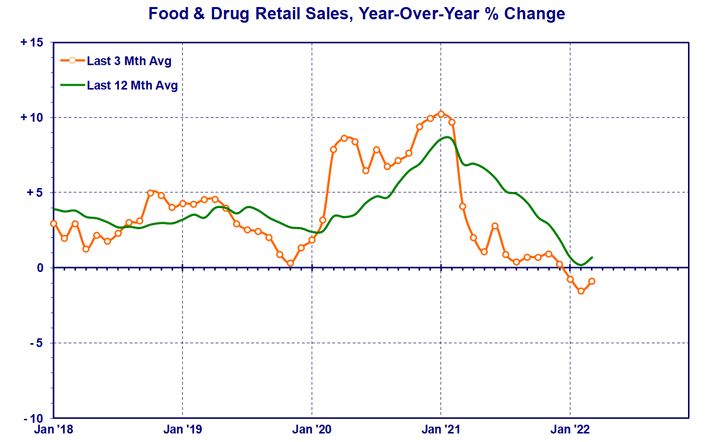
Food & Drug
Retail sales in Food & Drug were down 0.9% year-over-year in Q1 2022, an historical low point. After shooting up in 2020, the underlying 12 month growth trend (green line in the chart) dropped like a stone in 2021, and is at record lows at the start of 2022. This is despite high price inflation in this retail sector.
Grocery stores are by far the largest component of Food & Drug, but their sales were off 2.7% in Q1. Convenience stores suffered the largest decline however, with retail sales down 7.3% for the period. Only the small specialty food stores group had a respectable Q1 gain, at up 5.3%.
Health & personal care stores did better than food, but not by much. Their retail sales were up just 1.2% in Q1 2022.
Store Merchandise
Retail sales in the Store Merchandise sector were up 10.5% year-over-year in Q1 2022, a good result by historical standards. In the next few months however, this may wane due to very high sales gains in the same period a year ago.
Clothing & clothing accessories stores continue to be the leaders in this sector with retail sales up 33.0% in Q1. Other solid sales gains included miscellaneous store retailers (up 13.6%), furniture & home furnishings stores (up 13.0%), and general merchandise stores (up 9.5%).
No store type in the group had a Q1 sales decline. Even electronics & appliance stores managed to eke out a small gain of 0.6%.
Automotive & Related
Retail sales in Automotive & Related were up 12.3% year-over-year in Q1 2022. This result however misses the schizophrenic nature of the sector, due to different fortunes of auto sales versus gasoline stations.
Automobile dealers recorded a 5.6% retail sales increase in Q1, a fairly good result. The trend lines however are starting to head south, and Q2 sales increases are unlikely to keep up due to supply issues and the high gains set in the same quarter last year.
On the other hand, retail sales at gasoline station were up 31.0% in Q1 2022, which accounts for the high gain in the overall Automotive & Related sector. This in turn is due to high increases in gasoline prices for which no relief appears imminent, particularly with summer driving season about to start.
By The Numbers
Note that the data and analysis in this report are always based on not seasonally adjusted (or unadjusted) retail sales statistics.
Canadian e-commerce boomed in 2000 as COVID hit but then cooled off in 2021. In Q1 2022, e-commerce retail sales actually declined by 22.8% year-over-year. Note however that e-commerce sales are still well above pre-pandemic levels.
Overall, e-commerce represented about 6.1% of total retail sales over the 12 months ending March 2022, according to Statistics Canada, including both pure plays as well as bricks & clicks stores. Note that Canadian consumers may also buy online from foreign websites which is not captured in these numbers.
Location based retail is the same as that in the preceding “By The Numbers” table. It’s what’s normally reported as Canadian retail sales. Except that it isn’t. Location based retail excludes another section called Non-Store Retailers (NAICS code 454), which includes electronic shopping and mail-order houses, which in turn is where (mostly) pure play e-commerce businesses are. For the 12 months ending March 2022, electronic shopping and mail-order houses had an estimated $26.8 billion in e-commerce sales.
But that’s not the only source of e-commerce, as (mostly) bricks & mortar location-based retailers also sell online. This group had an estimated $17.0 billion in e-commerce sales during the period. With electronic shopping and mail-order houses, there’s a grand total of $43.8 billion in e-commerce sales by Canadian operators. Note that this does not include foreign e-commerce purchases made by Canadian consumers, but it does include e-commerce purchases made by foreigners at Canadian operations.
For electronic shopping and mail-order houses, an estimated 96.0% of their sales are currently allocated to e-commerce. For (mostly) bricks & mortar retailers, it can be estimated that 2.5% of their total sales are attributable to e-commerce.
In the final section of the above table, (mostly) pure play operators (namely, under electronic shopping and mail-order houses) generated an estimated 61.2% of all e-commerce sales in Canada, while (mostly) bricks & mortar location-based retailers’ share of e-commerce was 38.8%.
1100 Boulevard René-Lévesque Ouest, Montréal, QC (Image: Groupe Petra)
With the business environment stabilizing, Montreal is experiencing improved activity in the retail leasing market.
A report by commercial real estate firm JLL said the retail leasing market in Montreal is expected to strengthen this year as Quebec enters a more stable environment with retail sales so far this year up by 30 per cent compared to a year ago.
“Businesses have been increasingly confident to move into retail spaces. Furthermore, the supply of retail space has been constrained by the continued rise in construction costs,” said the JLL report. “The trend to move in remains stronger than the trend to move out. Following strong consumer demand growth last year, many businesses continue to expect increases, sometimes significant, in their sales in 2022. Future sales indicators have improved, and businesses have felt supported both by greater domestic and foreign demand.
“The supply of new retail supply remains limited as commercial construction slows and residential construction soars. Montreal has been one of the metro areas most affected by rising construction costs.
“In an environment where retailers have until recently felt the heavy hand of the federal and provincial governments, retail leasing activity remains reduced from pre-pandemic levels. The recent Omicron wave hasn’t helped improve the environment either. The expectations now are that leasing activity will gradually improve as most of the mandates are scrapped and less interference takes place.” Manon Larose, Senior Vice President, Retail with JLL, said the Montreal retail market is getting more and more dynamic.
“There is increasing interest from some brands, or banners, that had projects in 2020 and 2021 they postponed them and they now are ready to proceed,” she said. “As an example we have two tenants we are actively searching for the best space downtown. One would be on Sainte-Catherine Street, the other one would be on Sherbrooke West. So I see increased interest and more dynamism than I saw over the past two years.
“That’s happening because there are some solid companies who had some solid projects they had to put on hold and now it’s been too long and they want to proceed. There is also some newcomers who want to have a little bit of brick and mortar on the best high streets as well as the best shopping centres.
“The neighbourhood shopping centres are also extremely in demand where you have grocery-anchored tenants. That’s really solid. And the interest for the local or nearby stores also are something that make this interest increase.”
936 Rue Sainte-Catherine Est, Montréal, QC (Image: MTRPL)
Downtown retail has seen a resurgence because more and more people are coming back to the offices.
“You are seeing more activity. People are coming back. There is still some improvement to be done over there by tourists. And students will be back at the end of summer. So I see more activity over there and again more interest from some banners to have a place on Sainte-Catherine,” said Larose.
“What will be a challenge is obviously the construction work. We will have a break in 2022 on Sainte-Catherine Street. It will start again in 2023 and 2024. That will be a challenge. The section by the Montreal Eaton Centre is kind of done. So that’s a good thing for this year. I see some landlords being creative for the other portions where they will want to do some deals with the banners that want to be there.
“I’m very happy to see that there is a lot of interest for Sainte-Catherine Street because when you have your main street healthy. It means the rest of the city is also impacted positively.”
The enlarged sidewalks and punctual forecourts highlight. Rue Sainte-Catherine Ouest Ste. Catherine St.’s unique heritage buildings, like Ogilvy’s between De la Montagne and Crescent. Crédit : Lemay, SNC-Lavalin
The JLL report said rents for retail space continue to strengthen. After declining in 2020, rents in Montreal increased by 5.1 per cent in 2021. Despite the COVID restrictions imposed by the spread of the Omicron variant in late December, the momentum of economic and employment growth has contributed to the strengthening of commercial rents. A strong holiday season also served as a boost, as a portion of retail rents are tied to retail sales, it said.
“Retail properties anchored by grocery or with direct outdoor access close to the shoppers’ homes continue to be popular. Neighbourhood centres and general retail have been the most sought-after places for retailers,” said JLL.
“In turn, malls should continue to rebound as shopping centre teams rearrange their retail mix following closures and relocations. In the second half of 2021, we saw a strong rebound in sales and traffic, which were tempered by new restrictions in early 2022. Leasing activity is now resuming as there are good opportunities in major shopping centres.”
After dropping in 2020, Montreal retail sales vigorously rebounded and closed 2021 12 per cent higher than 2019. Despite Omicron, retail sales stepped into 2022 at a higher level supported by post-holiday season shopping and a less hesitant shopper. But Montreal continues to lag several major markets within Quebec and across Canada but is ahead of Toronto, said the report by JLL.
Image: Columbus Café & Co
“If local retailers were concerned about lockdowns in the beginning of 2021, this time they are concerned about labour shortages and supply chain issues. Per a recent Bank of Canada survey, about one-third of Canadian firms indicated that capacity constraints are holding back their sales expectations. Rising inflation and the Russia-Ukraine conflict, which affect fuel prices and consequently transportation costs, have been top of mind as well,” said the report.
“Food services in Quebec continue to rebound as it recovered in 2021 almost half of what it had lost in sales in 2020. Food services sales in 2021 remained 16 per cent down from pre-pandemic levels, mostly due to the ban of indoor dining. Although Omicron depressed food services sales in early 2022, they are expected to gradually rise and peak in August like in previous years. Notably, QSRs have enjoyed better sales than pre-pandemic.
“Following a quiet period in 2020 and early 2021, we are seeing increased leasing activity on Sainte-Catherine Street. Asking rents continue to climb back towards 2019, although rates remain below $200/square foot for now. Landlords hope to attain pre-COVID rates within the next few years. Retailers have inquired about shorter lease terms on Sainte- Catherine, with a greater number of five-year leases, or sometimes three-year and pop-ups.”
Behind the Scenes of TSC NOW with Jeanne Beker (Image: TSC)
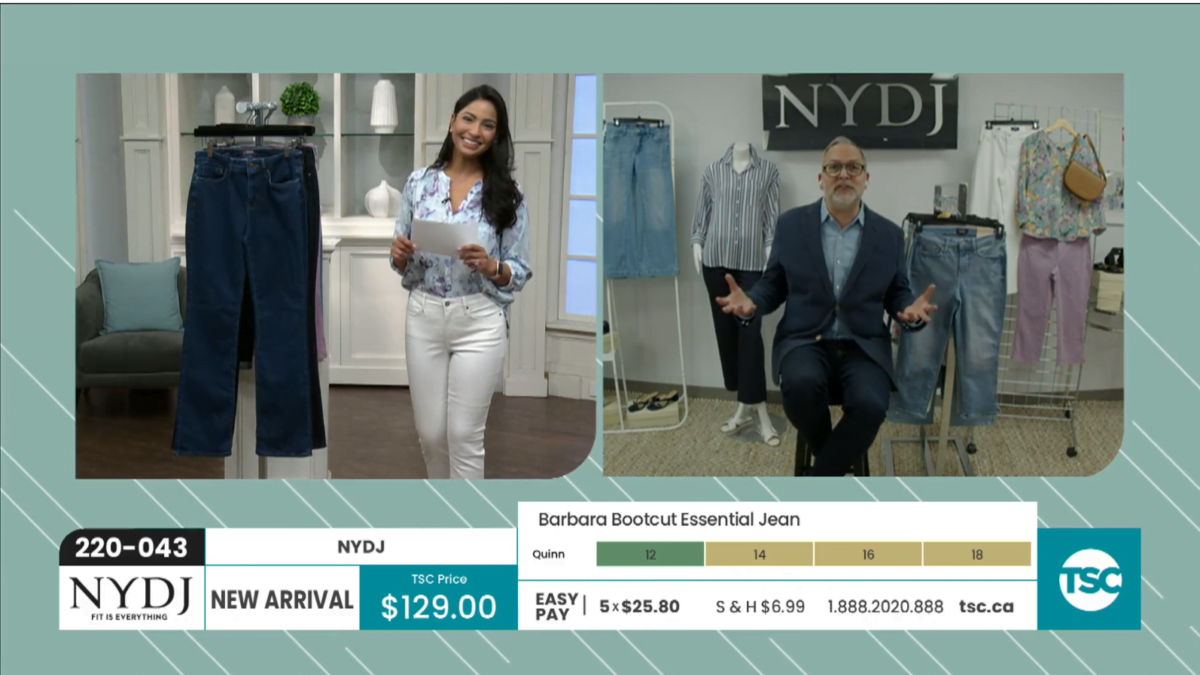
Today’s Shopping Choice is celebrating their 35th anniversary and provide a unique way of bringing shopping experiences to life.
As a Canadian grown company, the founders wanted to bring something new to retail – Television shopping. In previous years, TSC was just a shopping channel – but now, the company operates a website, mobile app, social media channels, and live shopping events. You can also find TSC on OLN and Citytv.
TSC carries several of national brands including Adidas, Apple, and Canon. It’s also known to offer great discounts and bundles, usually lasting 36 hours.
Bringing Shopping to Life
Sodastream on TSC (Image: TSC)
Kit Li-perry
“We do storytelling, the combination of telling a story and selling a product,” says Kit Li-perry the Chief Merchandizing Officer at TSC. “In other retail stores, you will walk in and just see the clothing and if you are lucky, you will get some associate telling you about the product. What we do is we take a product and really go into why it is good, why do you need it, why is it unique, why is it the best.”
TSC has expanded its digital footprint to make it possible for customers to connect with TSC in different ways such as on social media, their website, or customers can call. With great communication, customers can understand the product better such as knowing how to use it, wear it, or wash it.
“All of those channels, the experience is the same. It really is about the storytelling and the product information that we can give,” says Carolyn Galvin the Senior Director of Content and live Broadcast at TSC. “They can call in, or they can shop online, or they can shop through social media. All of that is a unique way of how our customers interact with us.
Connecting with Customers
Carolyn Galvin
During Covid-19, the customer base has expanded and Li-perry said a lot of them end up being loyal and are surprised about the brands and products they carry.
Customers can talk to hosts, ask questions to experts, and provide feedback to the merchandizing team. The feedback allows TSC to learn more about which products are popular.
“Customers can tell the hosts about birthdays or anniversaries and the host will announce it on the show. It is unique to be able to have that connection with your customers and community so directly,” says Galvin.
TSC Discounts and Bundles
Unlike other retailers, TSC includes daily Showstoppers and bundle packages. These are limited time only for around 36 hours.
Product bundles are decided on what makes sense at the time, such as Father’s Day bundles. TSC also has bundles for back to school, kitchen supplies, and gift bundles.
Covid-19 Inspiration
Remote Fashion (Image: TSC)
As the pandemic and restrictions hit, TSC had to think about new ways to keep the show going even after losing their ability to create live shows.
“The show must go on,” says Galvin. “Necessity breeds invention. So, we became a lot more comfortable with having guests on Skype.”
As guests started advertising products from home, TSC realized some products are better off staying out of their studio.
“We had a guest who used a lot of spray paint, so for the show he just went out to his backyard and started spraying his fence. That is something difficult for us to stimulate in the studio as we would need to cover everything in plastic,” says Galvin.
TSC is becoming more popular in North America as it is easy and more accessible for customers who find it difficult to shop in stores. The next step TSC is focusing on is being more relevant to customers, expanding their digital footprint to be more accessible, and being flexible on adding new products.
“Shopping is fun,” says Galvin. “So, our goal is to make it an enjoyable shopping experience. The whole feel of what we are trying to do is community of shoppers who love products and love discovering products.”