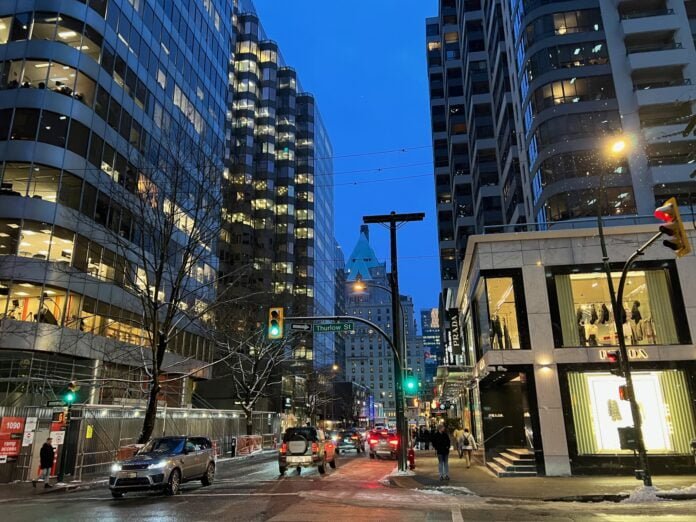
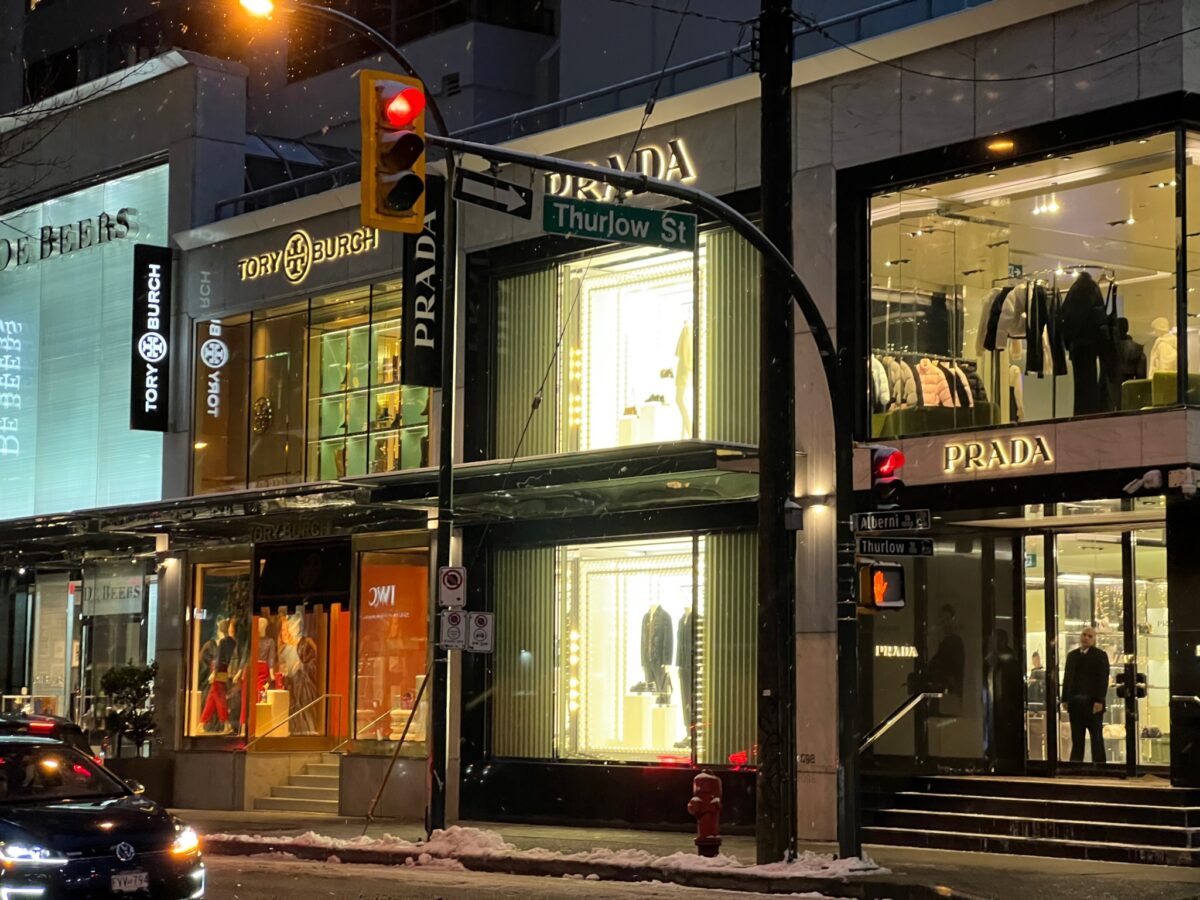
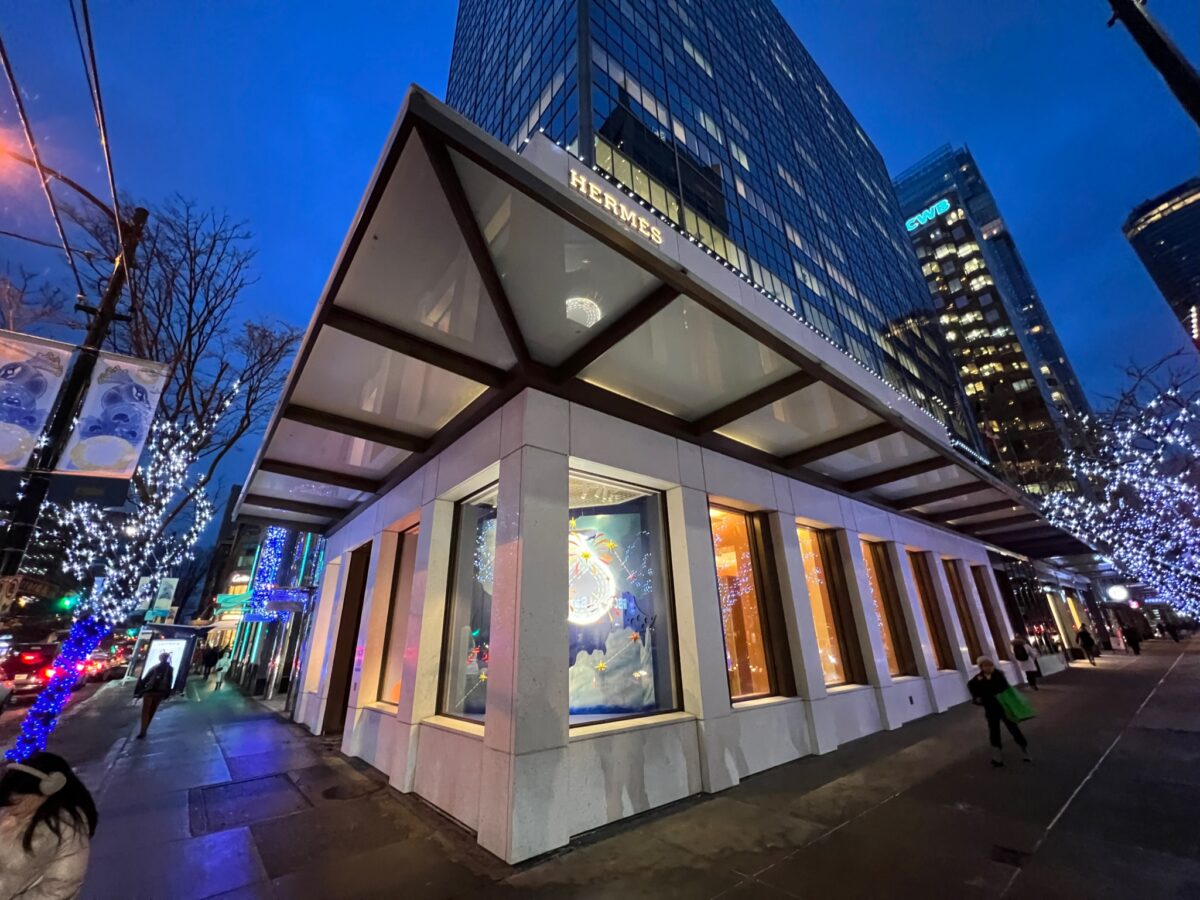
Prada and former Escada (and temporary Gucci) at intersection of Thurlow at Alberni Street corner in downtown Vancouver on December 19, 2022. Photo: Lee Rivett
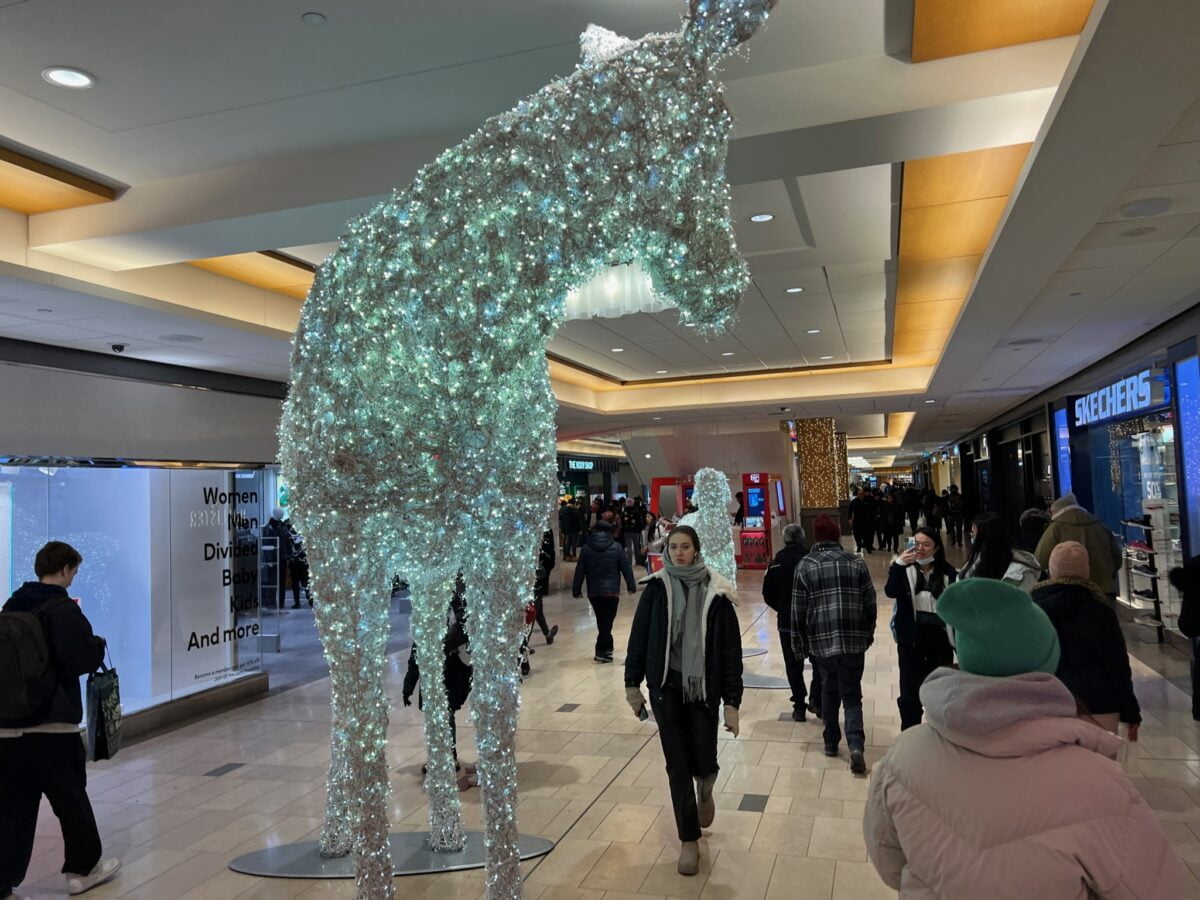
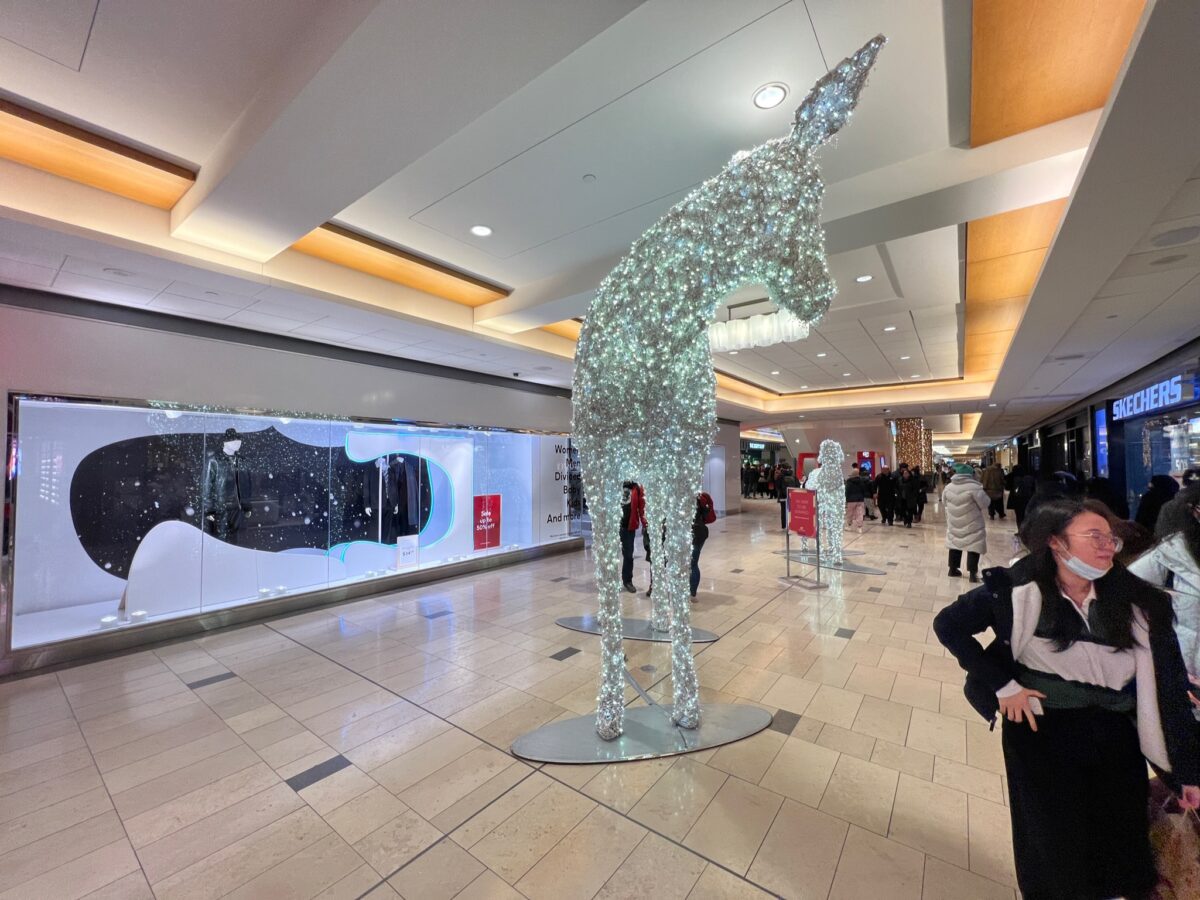
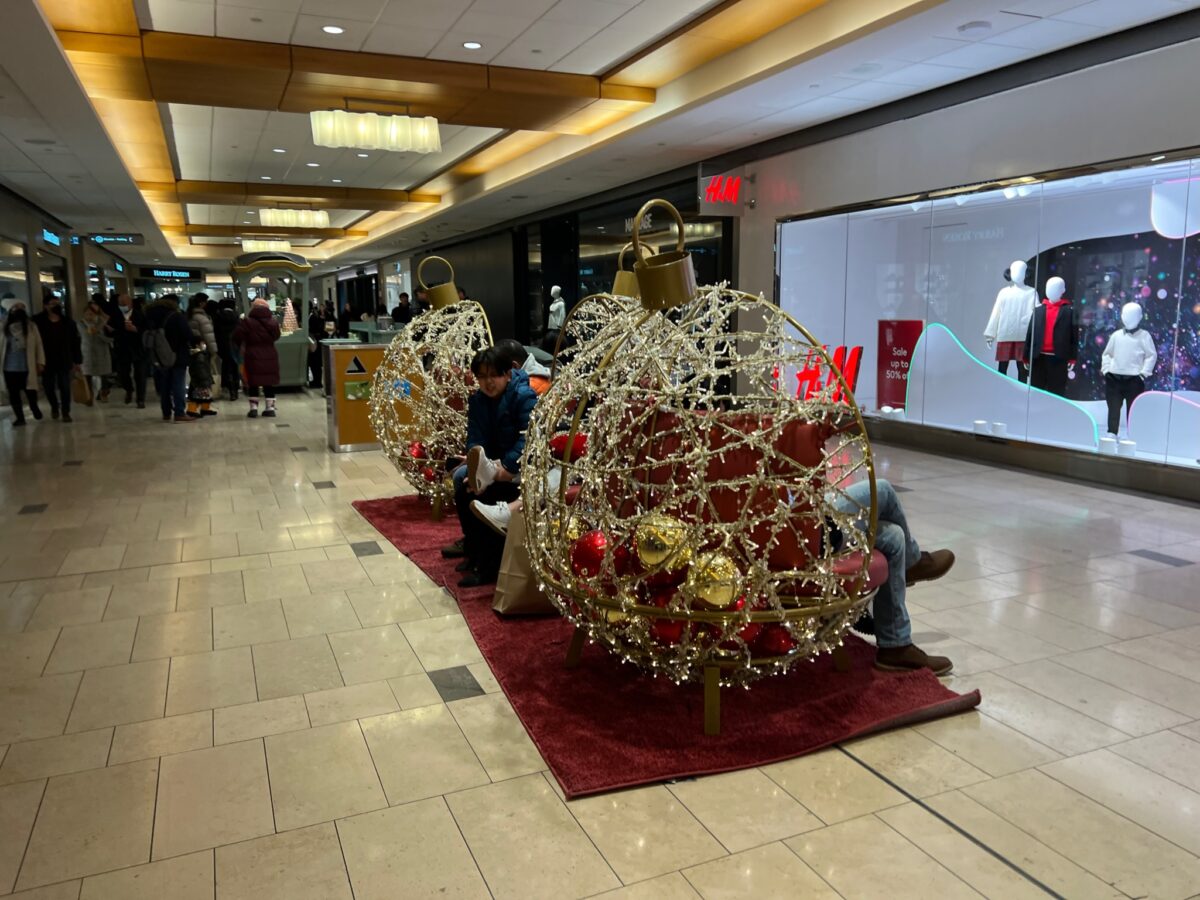
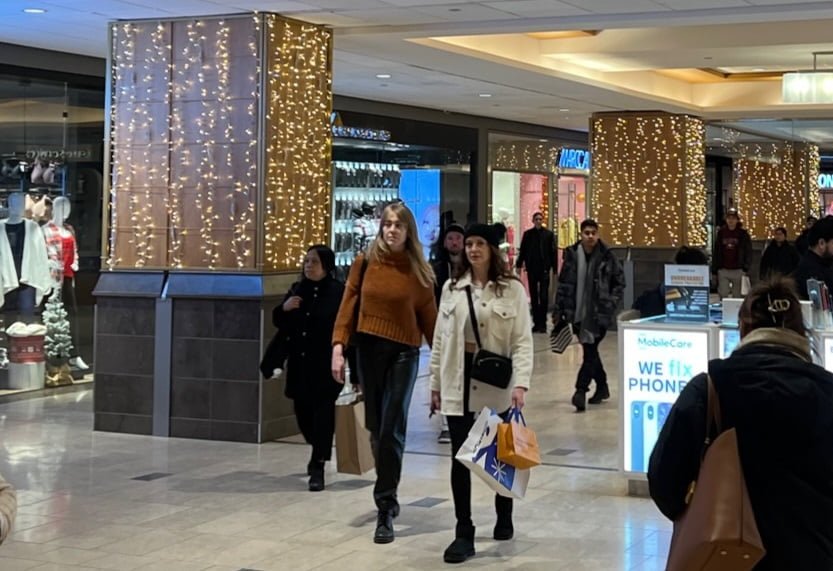
Retail Insider resumes our annual tradition of sharing holiday photos of Canadian shopping areas for 2022. Both landlords and merchants have rolled out the red carpet for holiday shoppers and the staff at Retail Insider wanted to share their efforts for those on a mission as they plow through their Christmas shopping, those who haven’t seen their favourite retail haunts over the holiday season for a while, or for those who like to thumb through festive holiday photos like we do!
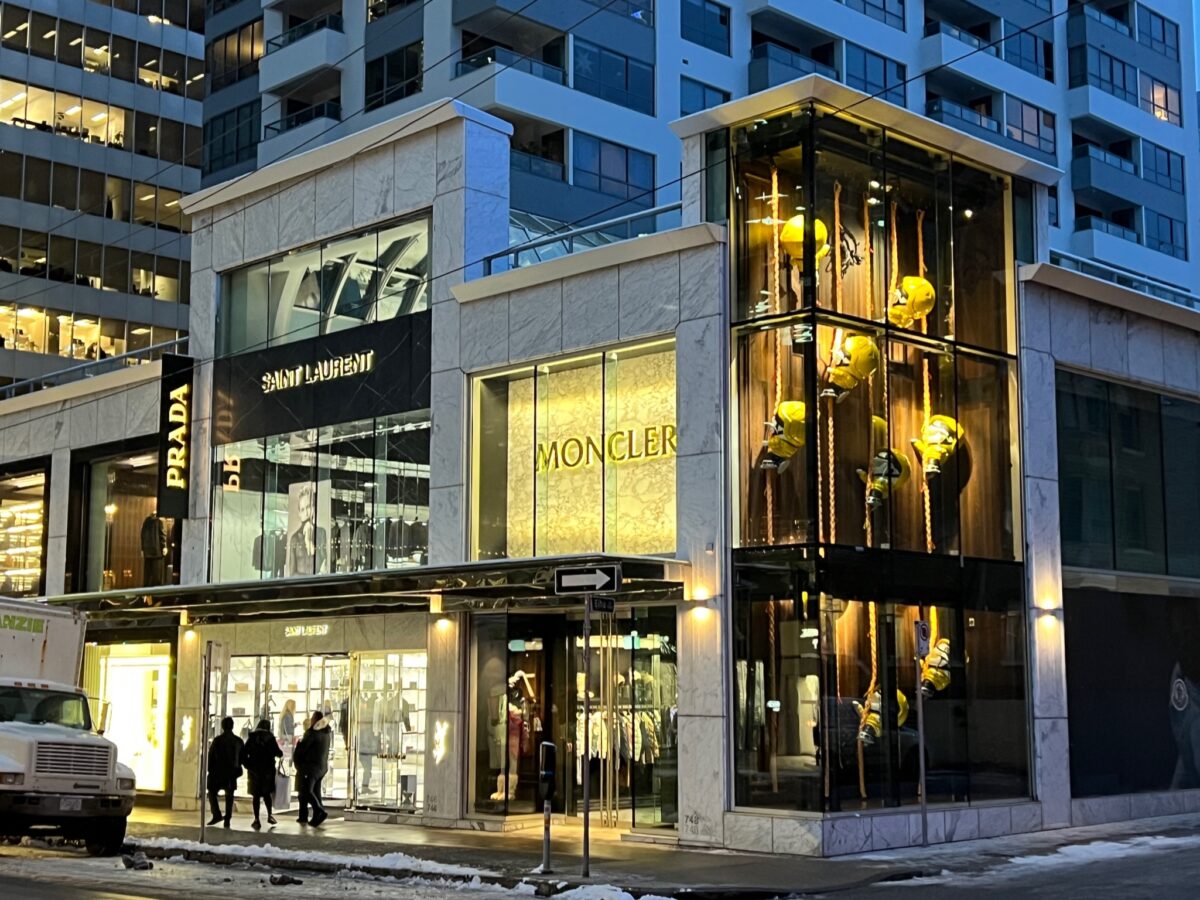
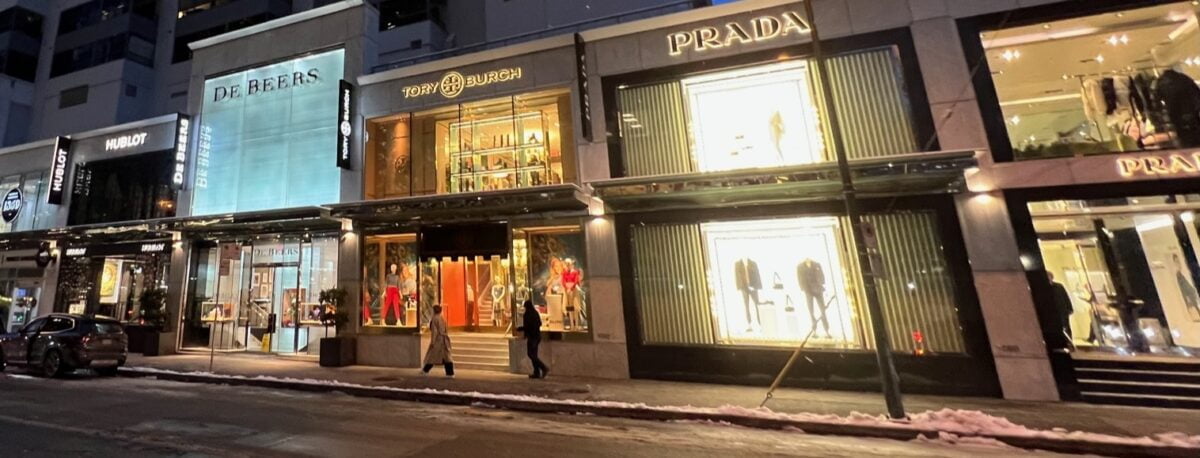
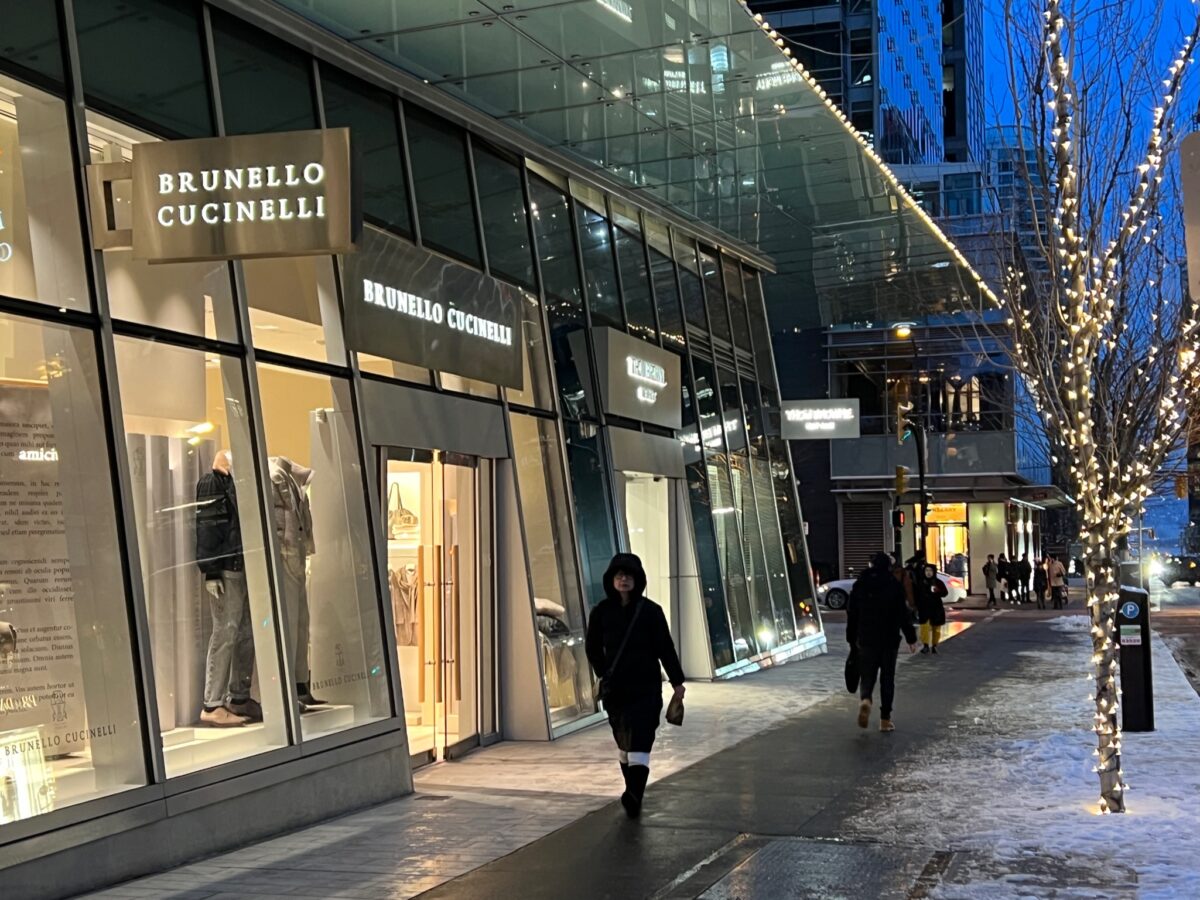
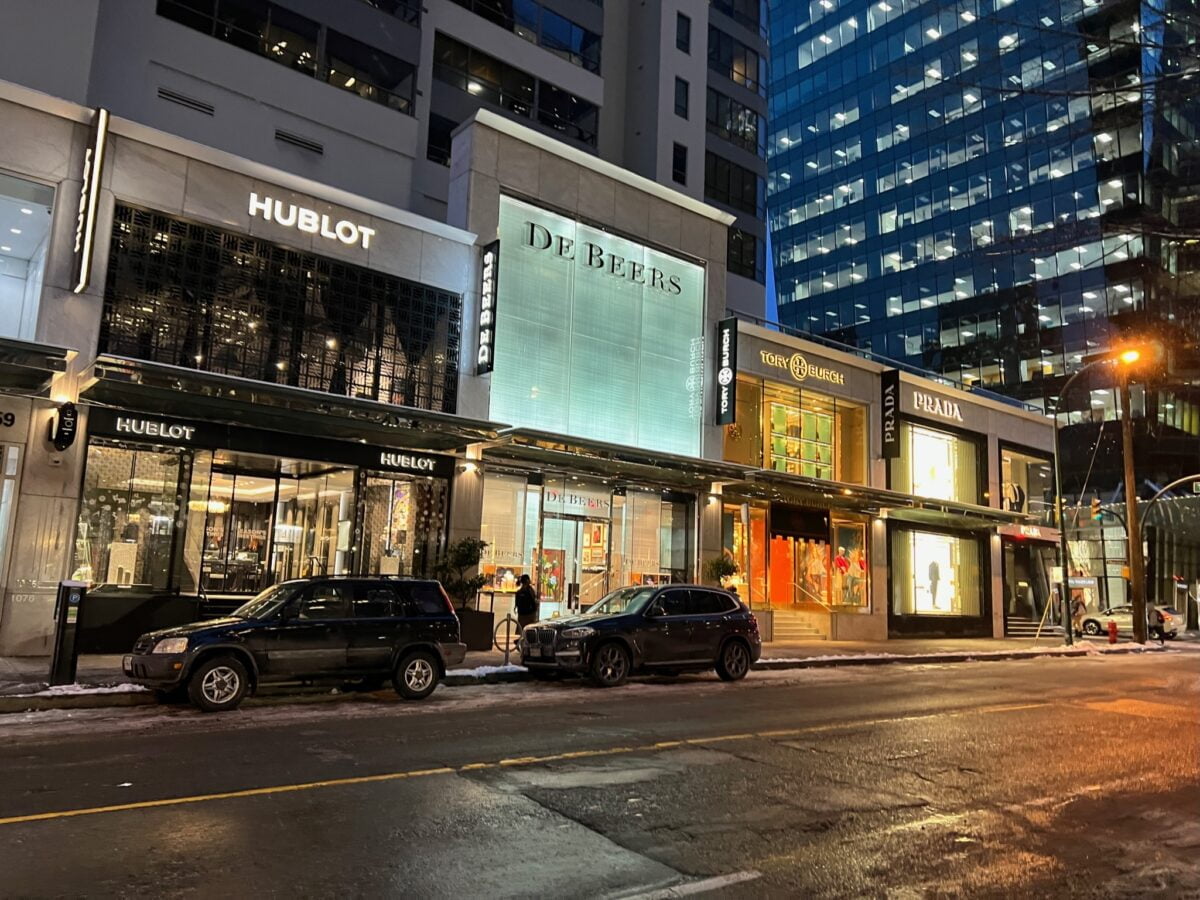
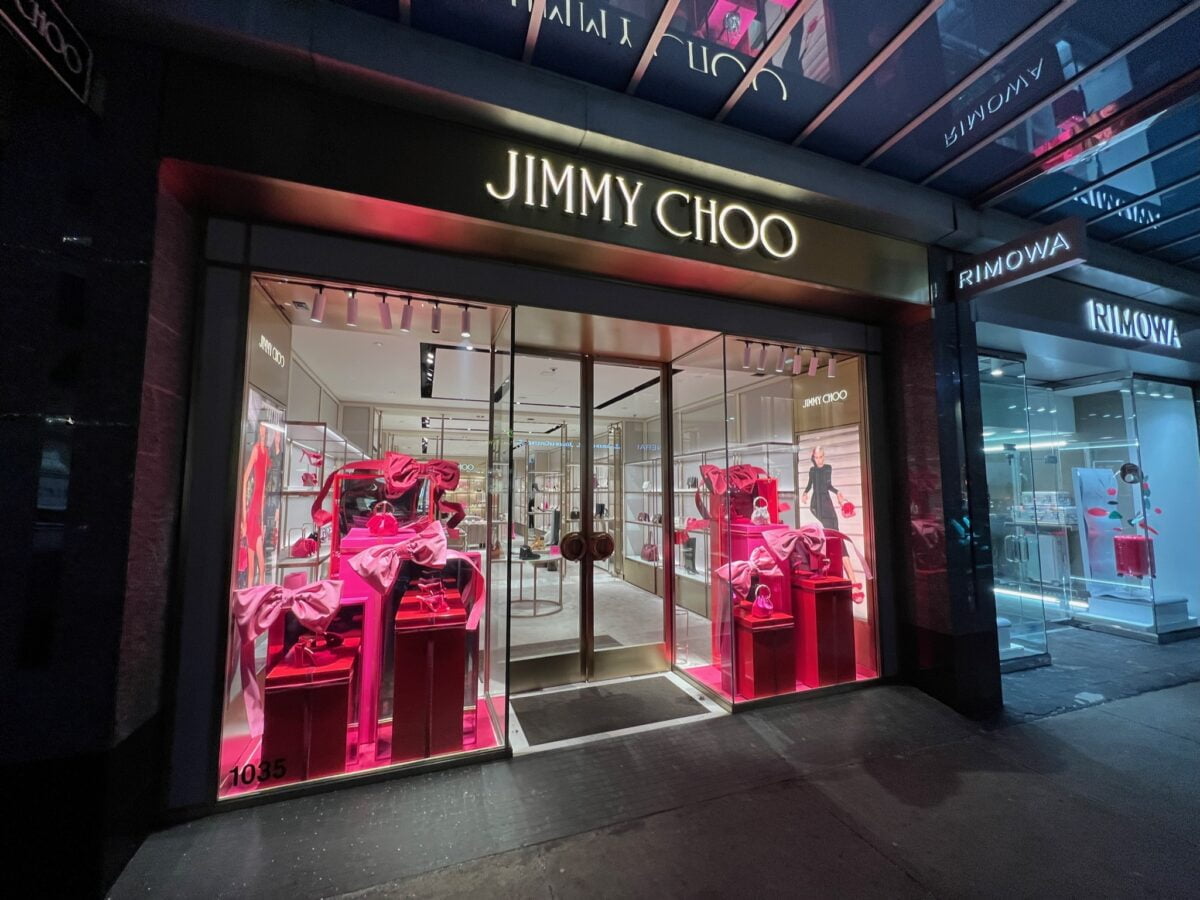
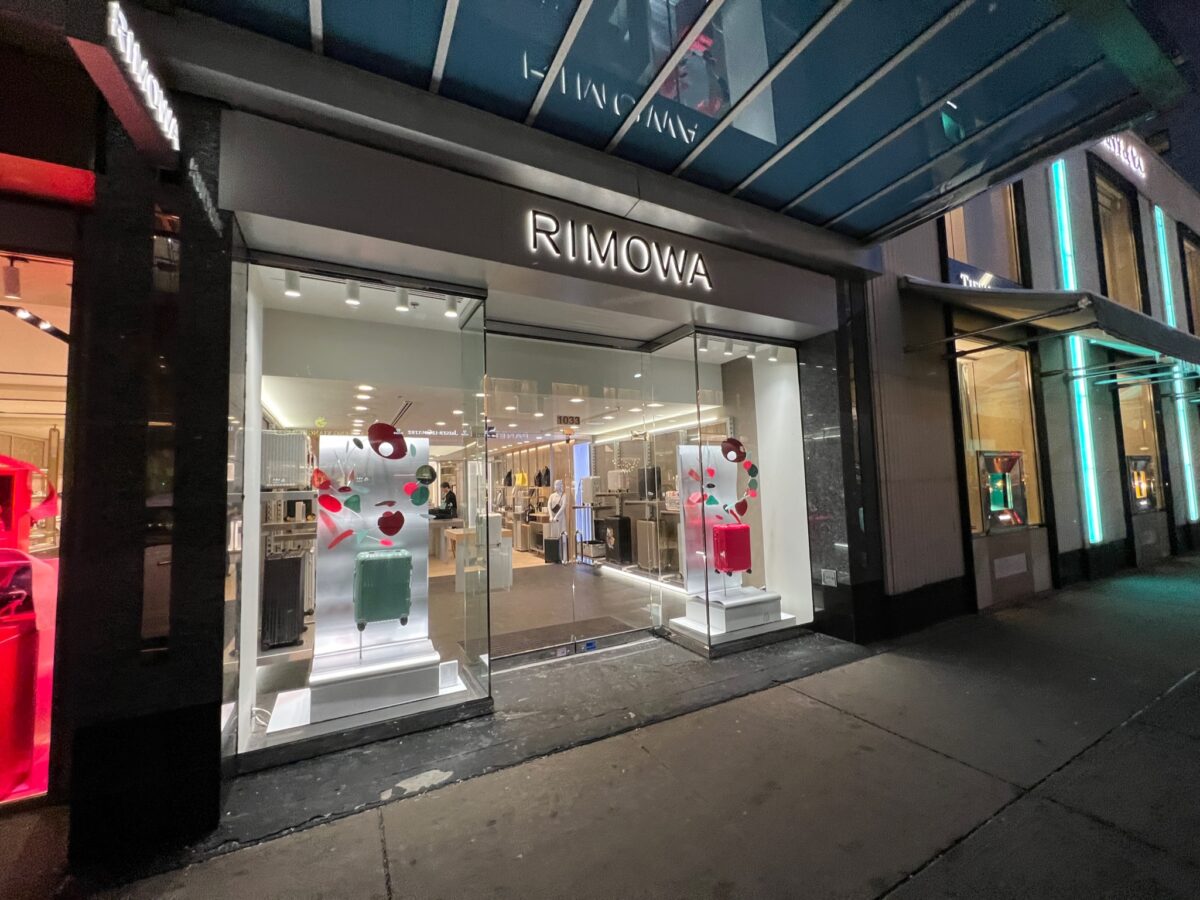
This instalment of the ‘Holiday Photo Series’ takes us to the Alberni Street luxury zone in downtown Vancouver, British Columbia. Once a nondescript commercial street, the street emerged as a luxury hub for the downtown core in the early 2010s.
With the opening of Shangri-La hotel with its Burberry stand-alone store and nearby De Beers diamond flagship, the luxury retailers began slowly taking over the Alberni Street between Thurlow and Burrard Streets.
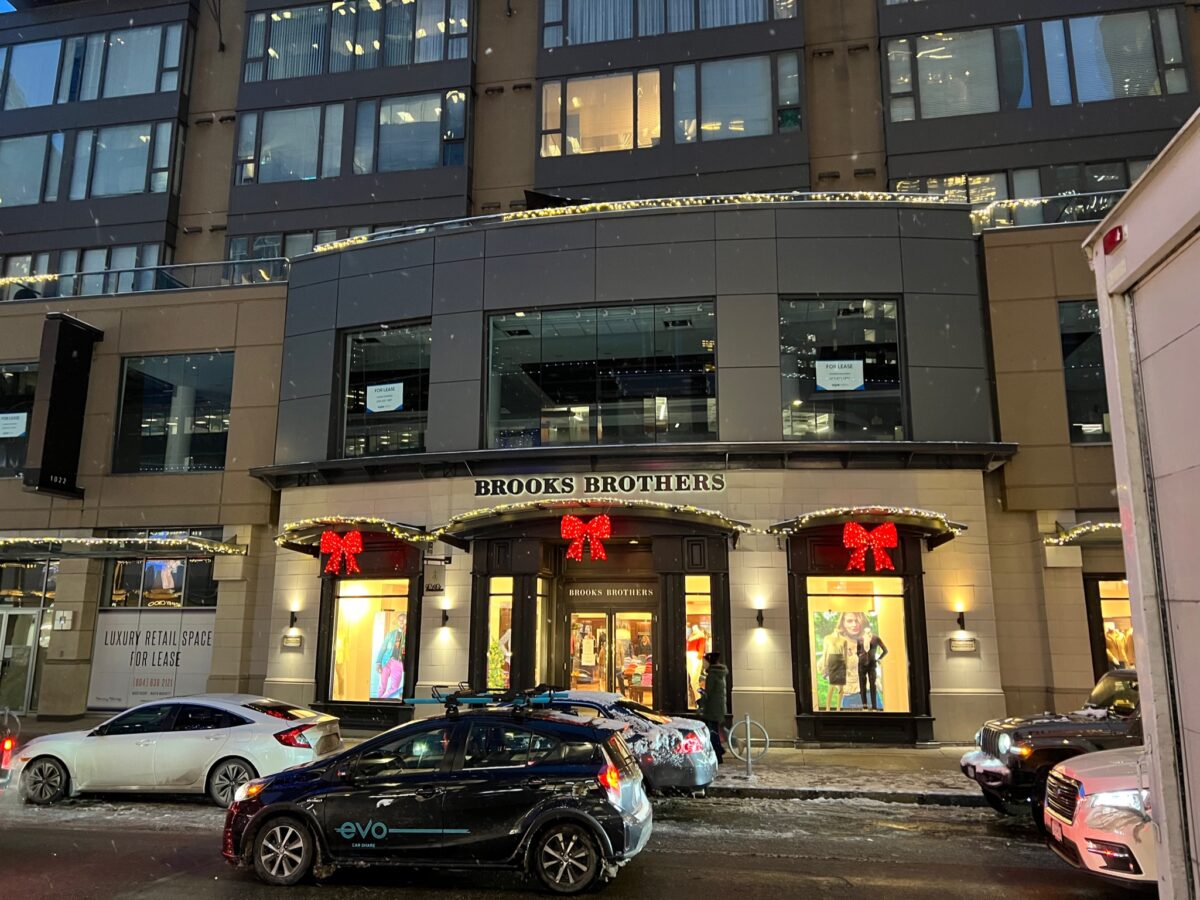
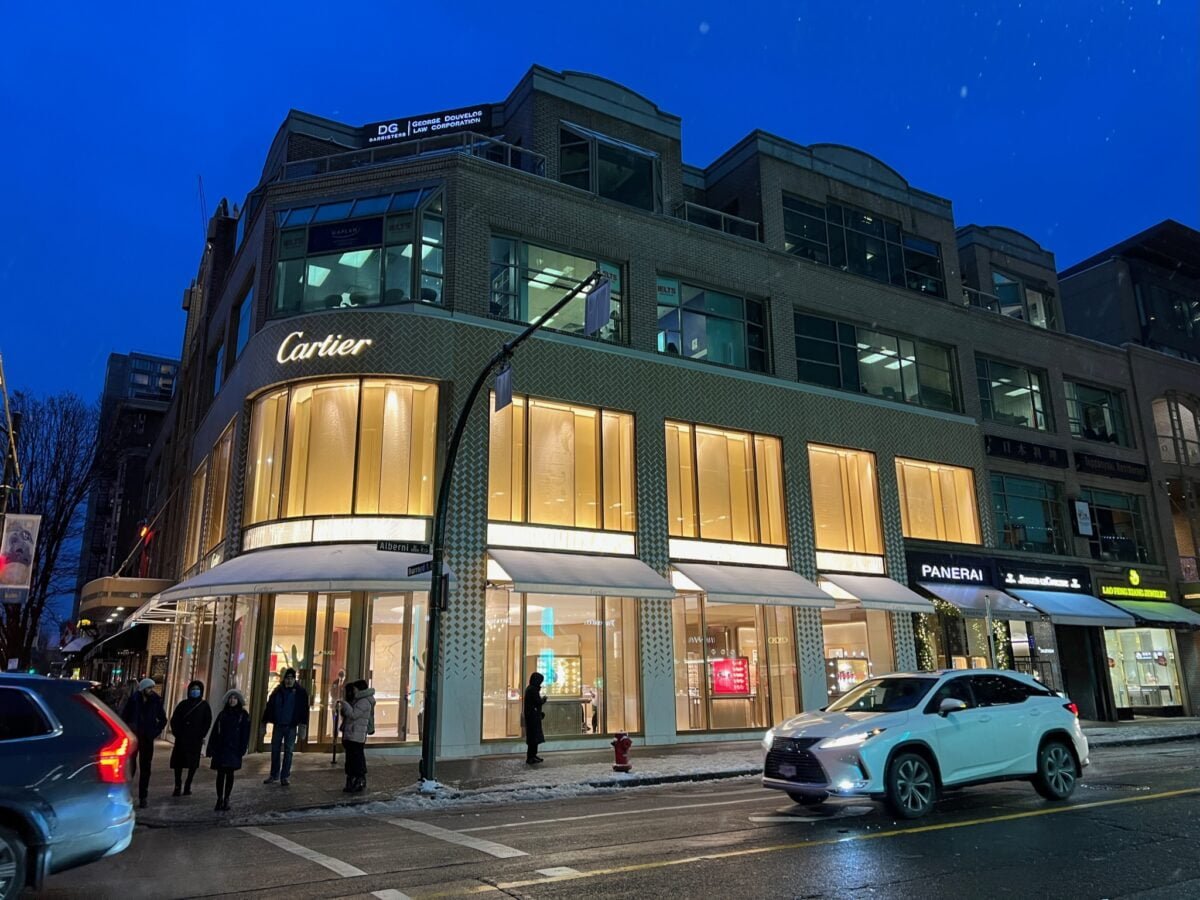
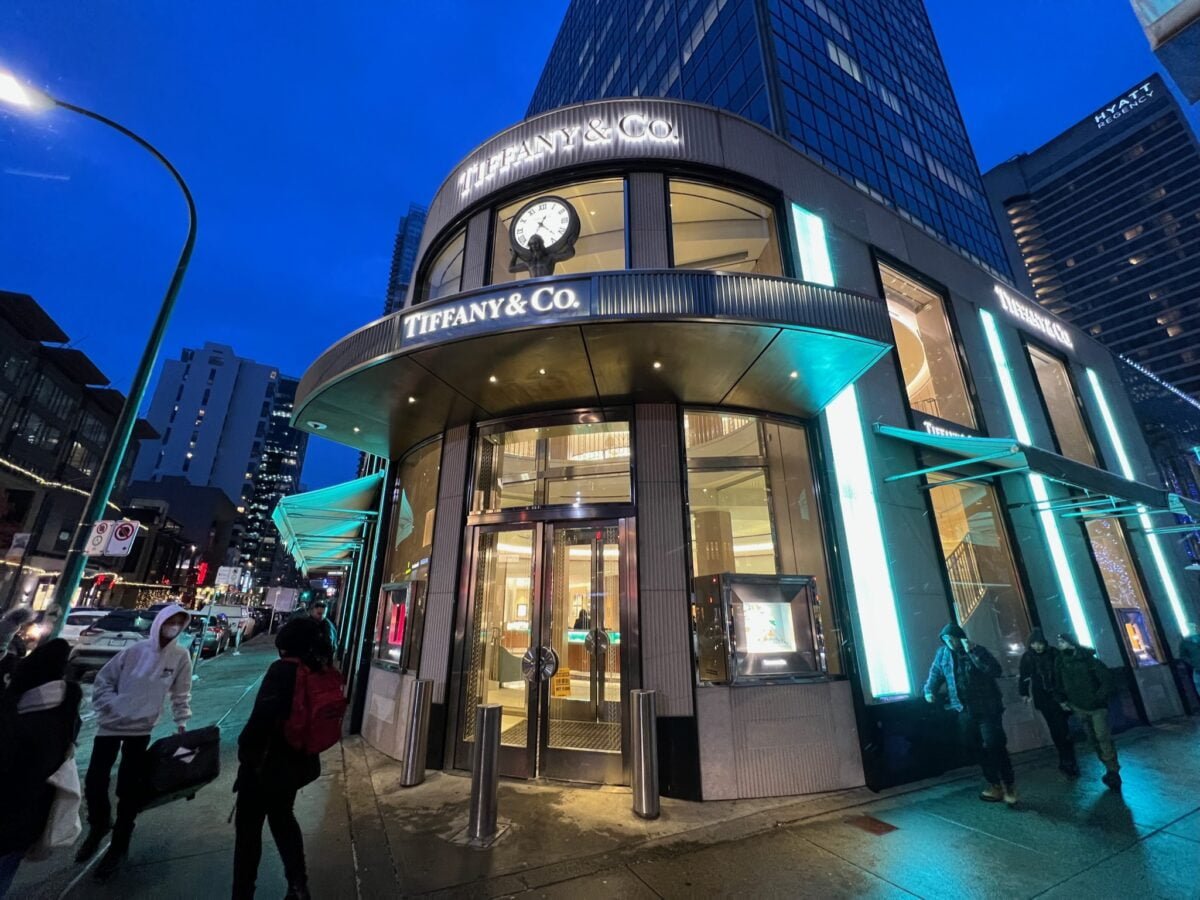
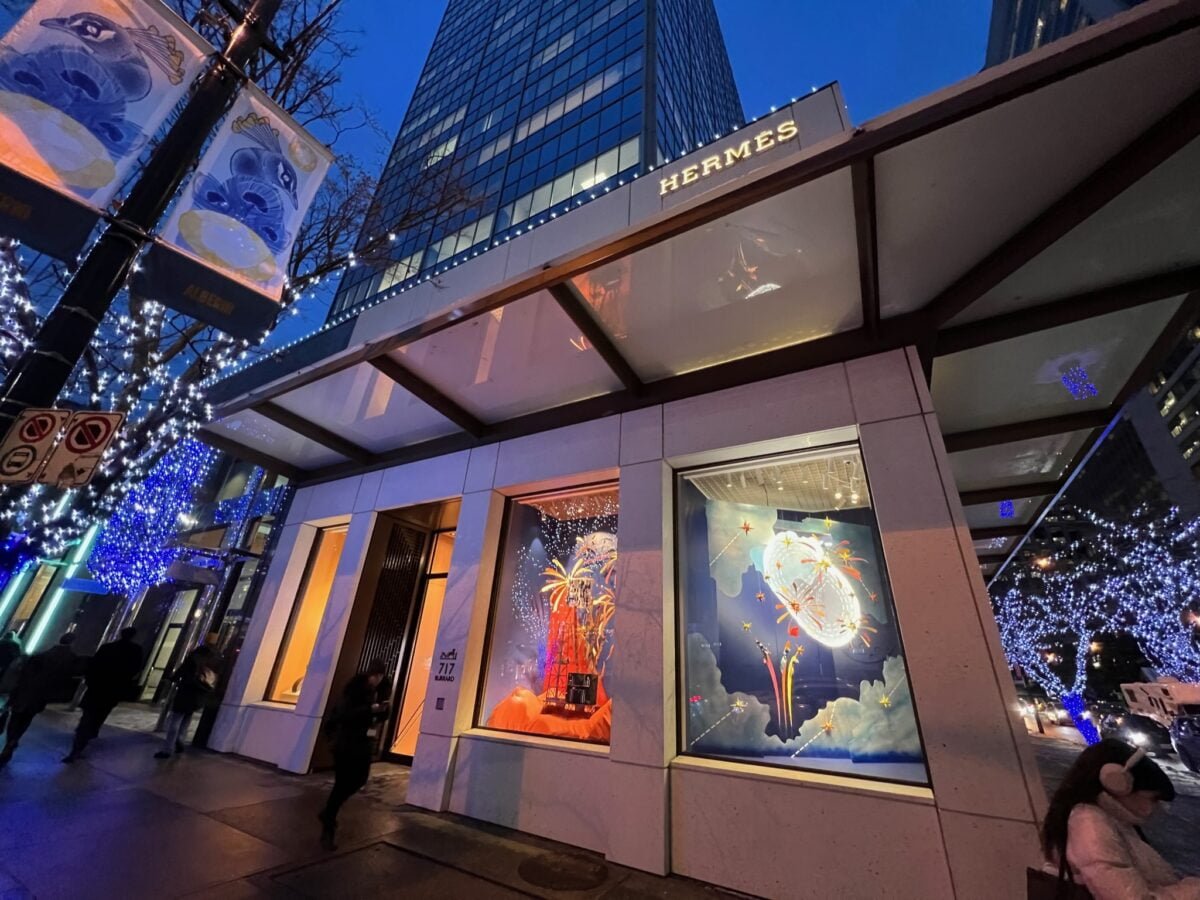
Moncler, Saint Lauirent and Prada at Alberni and Thurlow corner in downtown Vancouver on December 19, 2022. Photo: Lee RivettPrada, Tory Burch, De Beers and Hublot at Alberni and Thurlow corner in downtown Vancouver on December 19, 2022. Photo: Lee RivettBrunello Cucinelli and Thom Browne at Alberni and Thurlow corner in downtown Vancouver on December 19, 2022. Photo: Lee RivettPrada, Tory Burch and De Beers at Alberni and Thurlow corner in downtown Vancouver on December 19, 2022. Photo: Lee RivettPrada, Tory Burch, De Beers and Hublot at Alberni and Thurlow corner in downtown Vancouver on December 19, 2022. Photo: Lee RivettJimmy Choo on Alberni Street in downtown Vancouver on December 19, 2022. Photo: Lee RivettRimowa on Alberni Street in downtown Vancouver on December 19, 2022. Photo: Lee RivettBrooks Brothers on Alberni Street in downtown Vancouver on December 19, 2022. Photo: Lee RivettCartier on Alberni Street in downtown Vancouver on December 19, 2022. Photo: Lee RivettTiffany & Co. on Alberni Street in downtown Vancouver on December 19, 2022. Photo: Lee RivettHermes on Alberni Street in downtown Vancouver on December 19, 2022. Photo: Lee RivettHermes on Alberni Street in downtown Vancouver on December 19, 2022. Photo: Lee Rivett
We hope you enjoyed our holiday tour of Alberni Street luxury zone in downtown Vancouver, British Columbia. Don’t forget to check out our other retail photo tours on Retail Insider. Thank you for taking this tour with us.
Discover More Related Retail Photo Tours From Retail Insider:
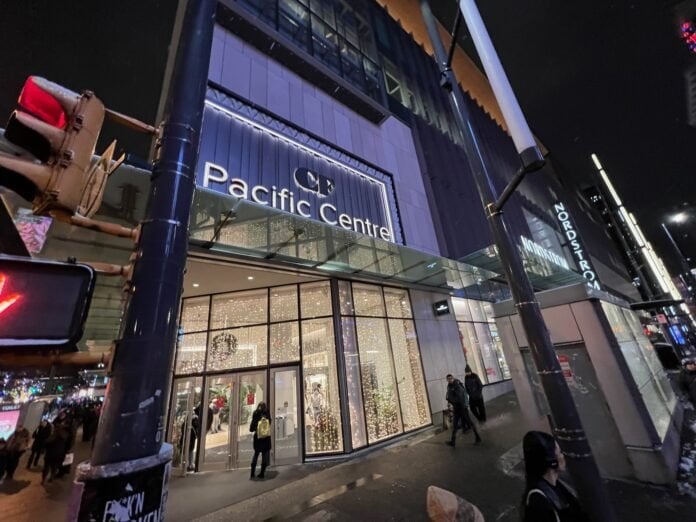
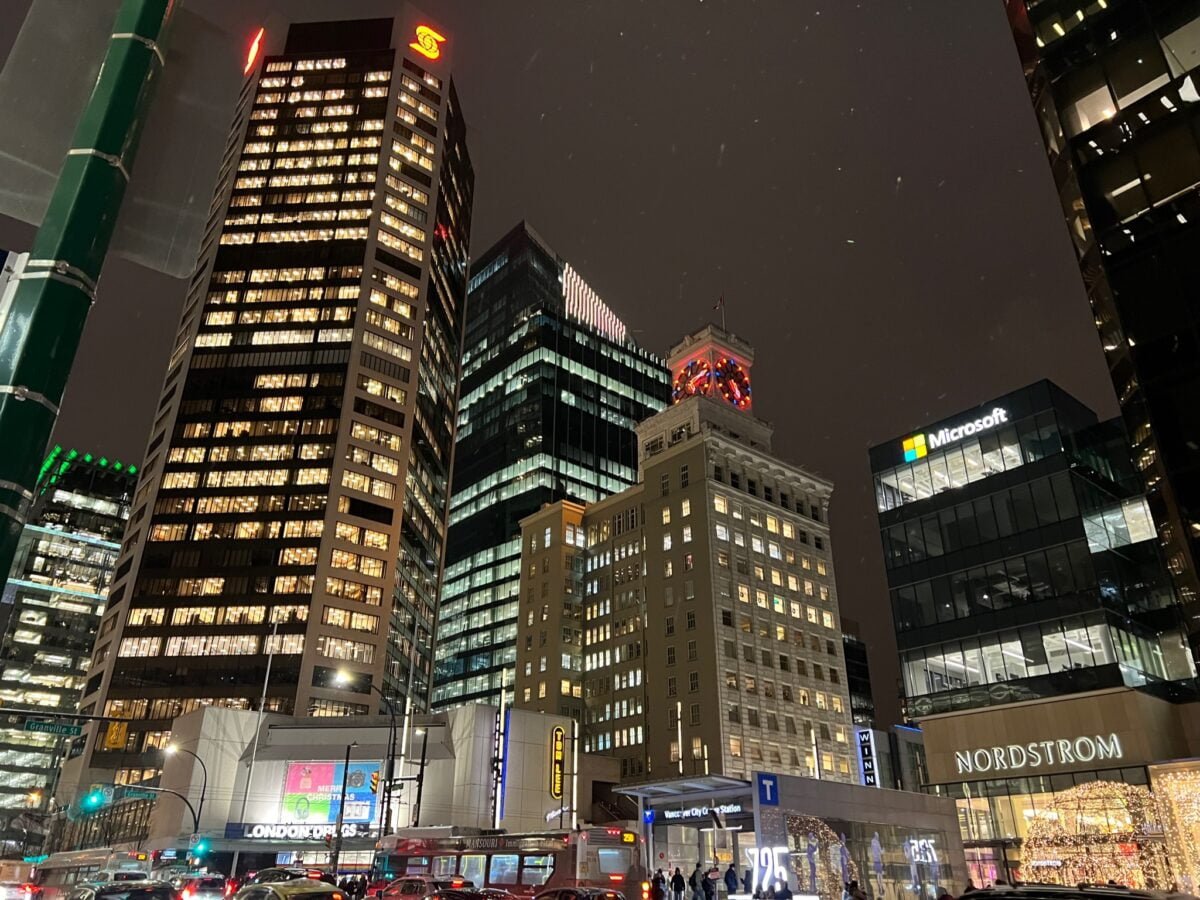
CF Pacific Centre at Granville Street and Robson Street in downtown Vancouver on December 19, 2022. Photo: Lee Rivett
Retail Insider resumes our annual tradition of sharing holiday photos of Canadian shopping centres for 2022. Both landlords and merchants have rolled out the red carpet for holiday shoppers and the staff at Retail Insider wanted to share their efforts for those on a mission as they plow through their Christmas shopping, those who haven’t seen their favourite retail haunts over the holiday season for a while, or for those who like to thumb through festive holiday photos like we do!
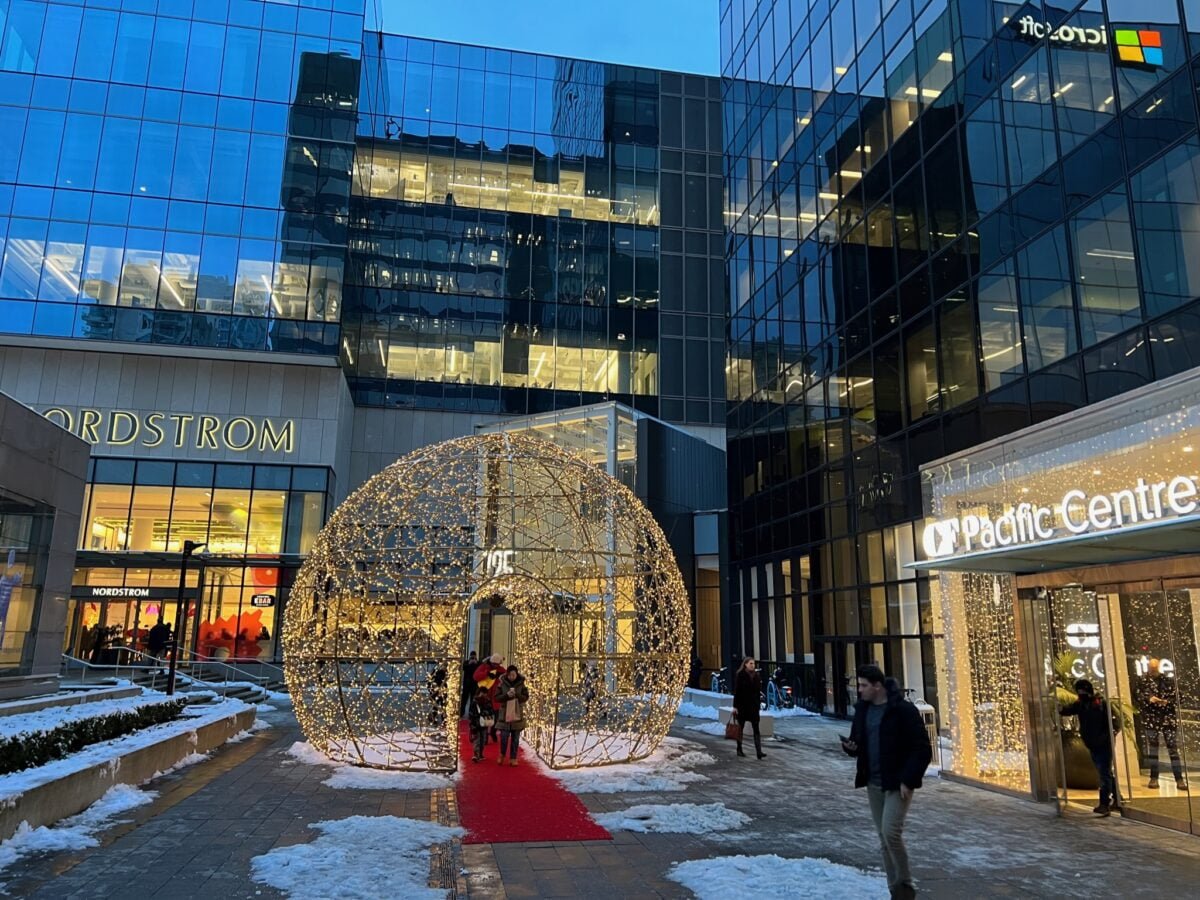
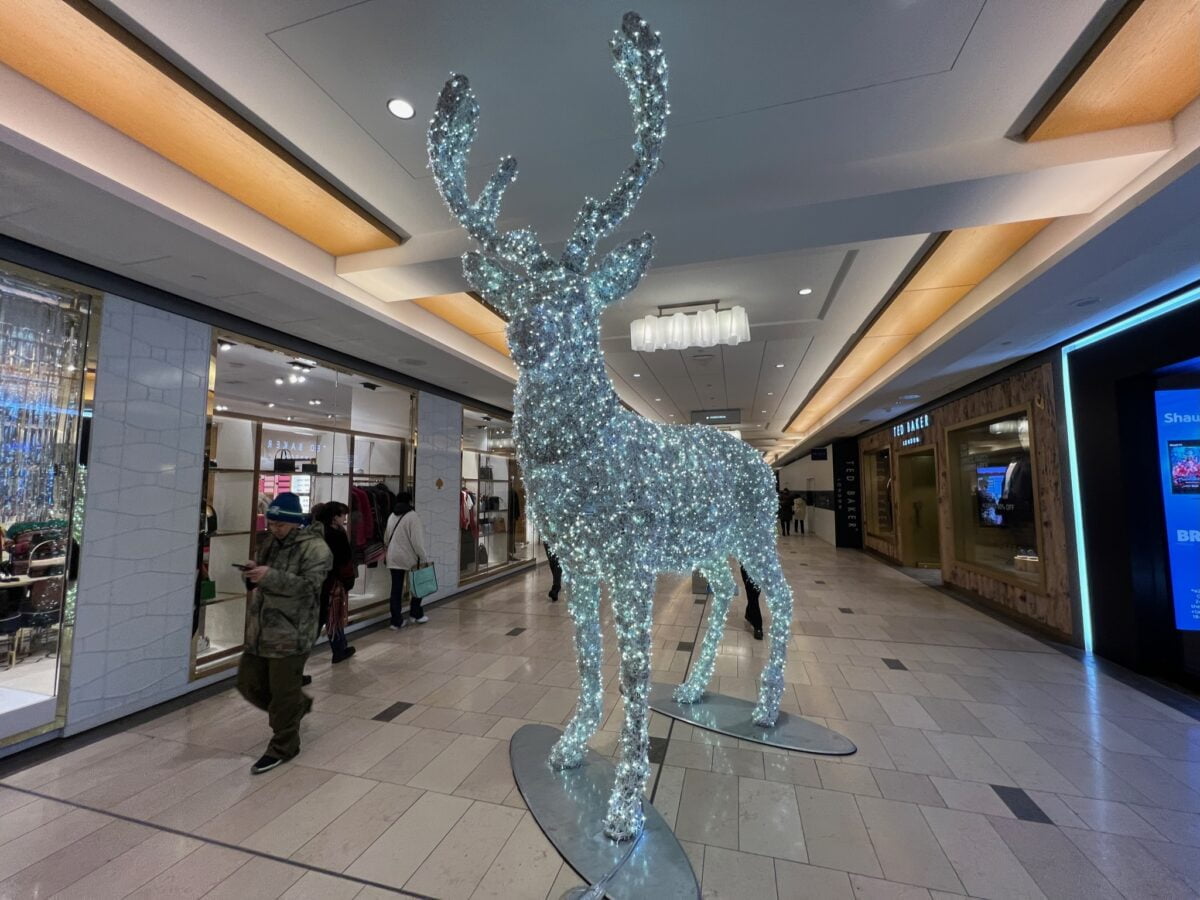
This instalment of the ‘Holiday Photo Series’ takes us to CF Pacific Centre in downtown Vancouver, British Columbia. The mall has over 100 stores and shops and is partially underground. The mall is directly connected to the Hudson’s Bay department store, Vancouver Centre Mall, two SkyTrain subway stations, and the former Four Seasons Hotel Vancouver.
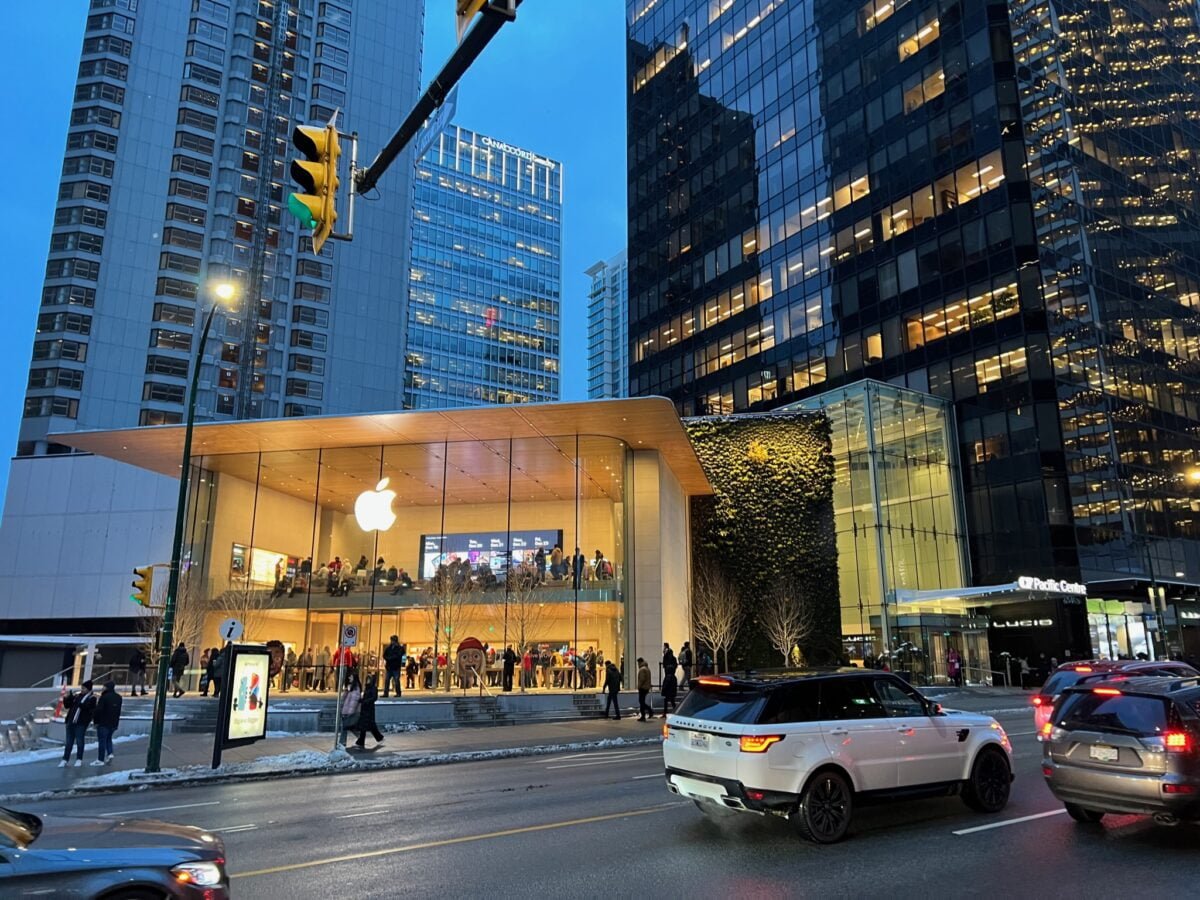
Have a look at what’s in store, including photos of the recently opened Apple flagship store.
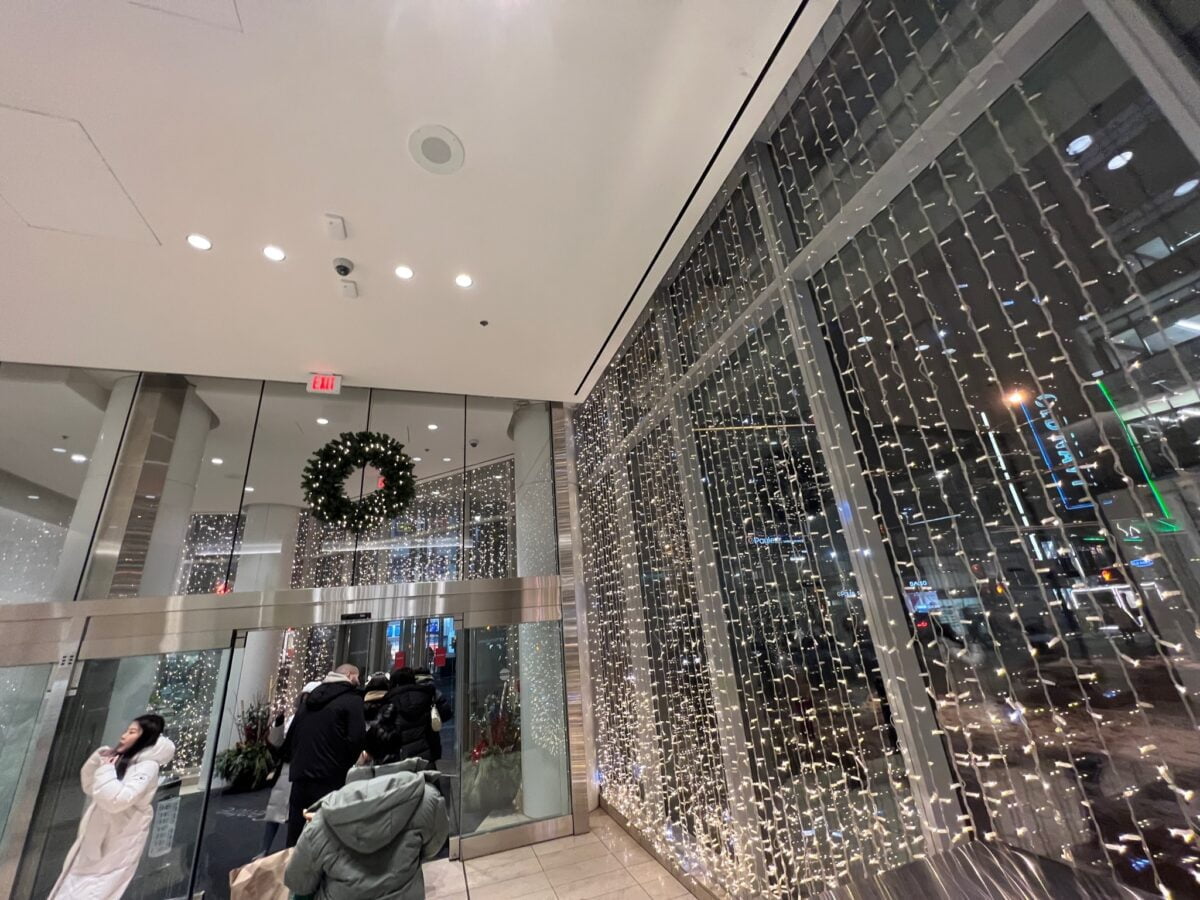
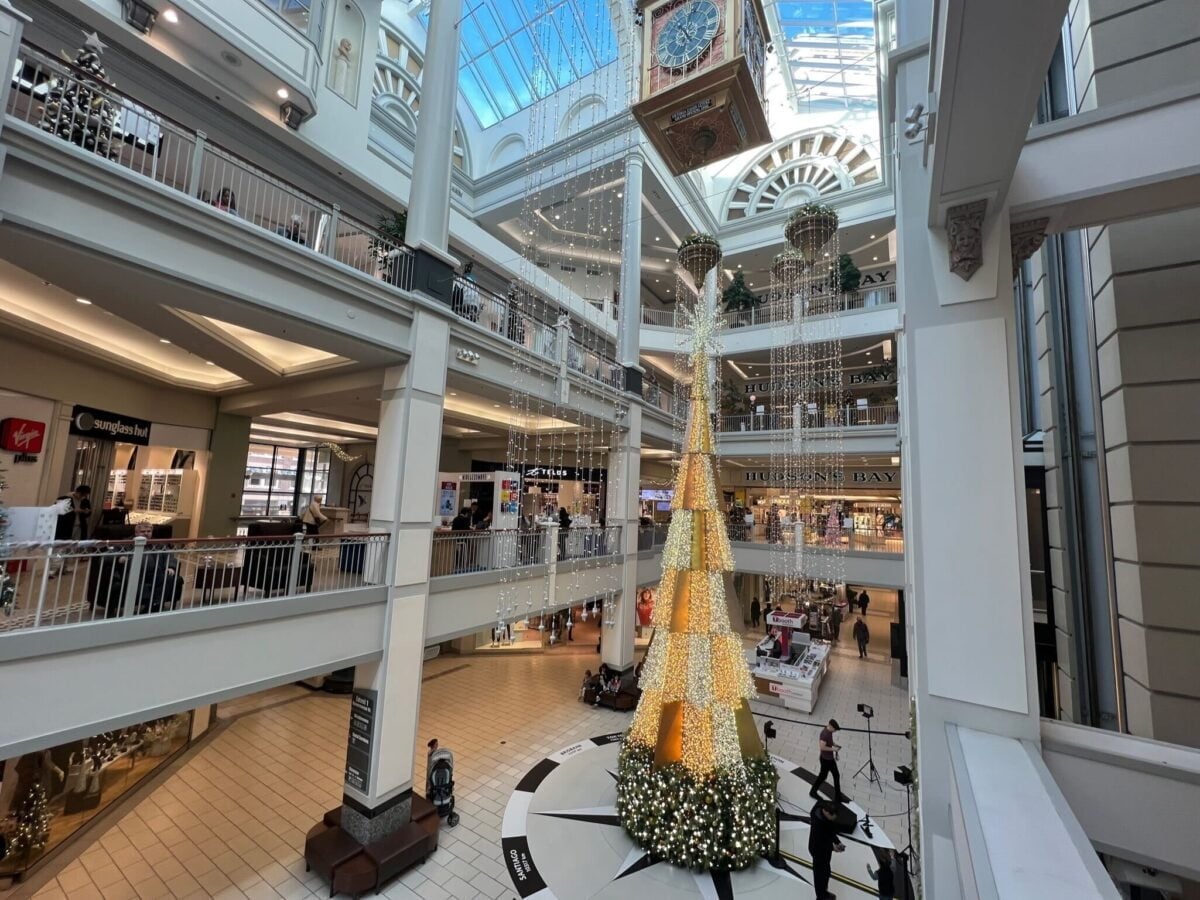
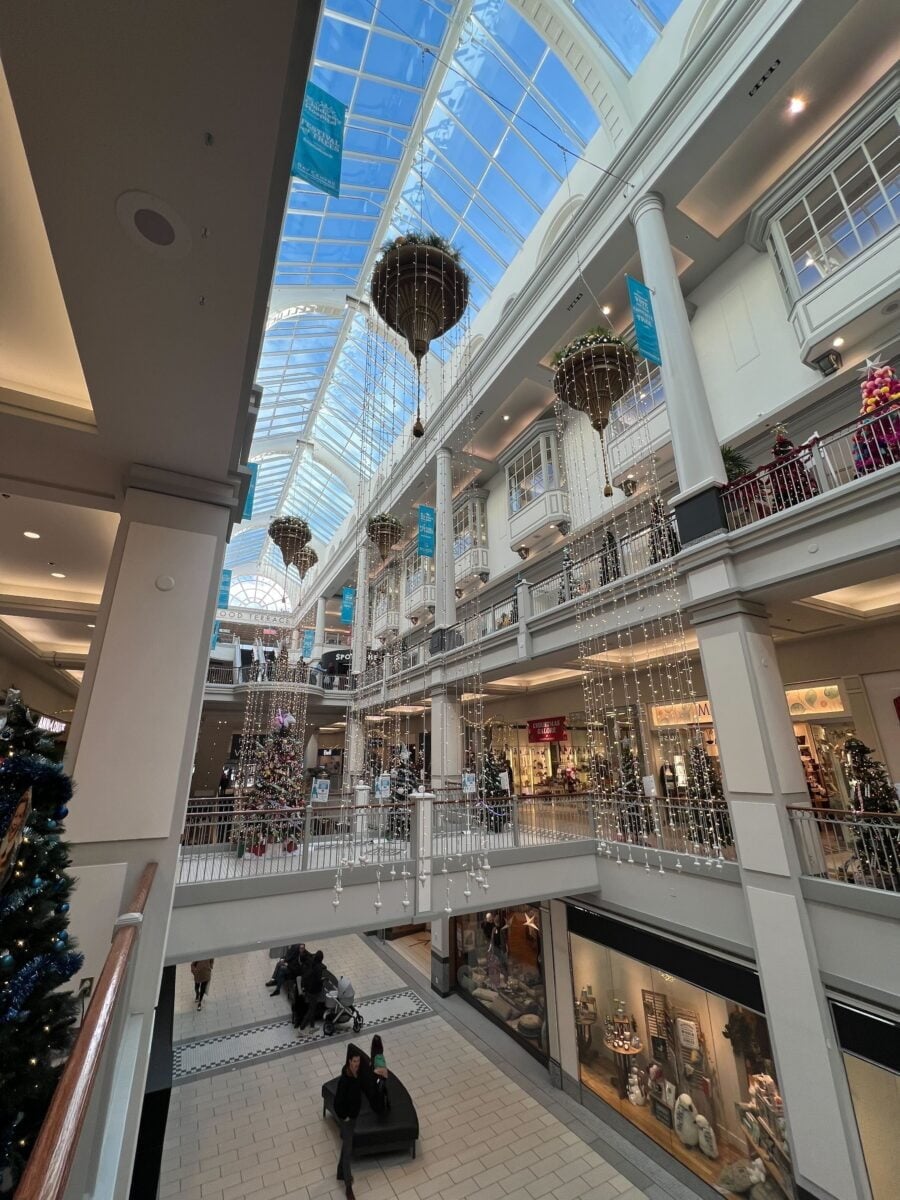
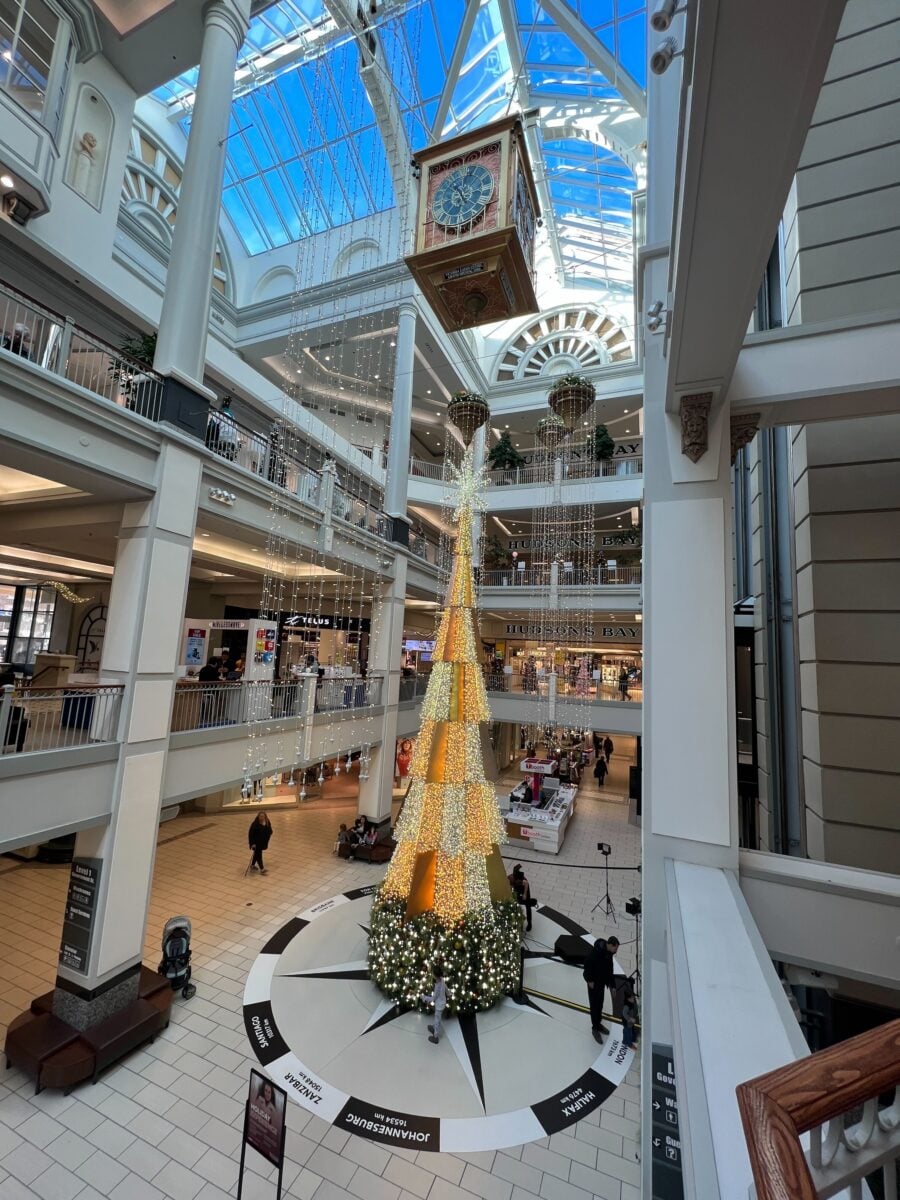
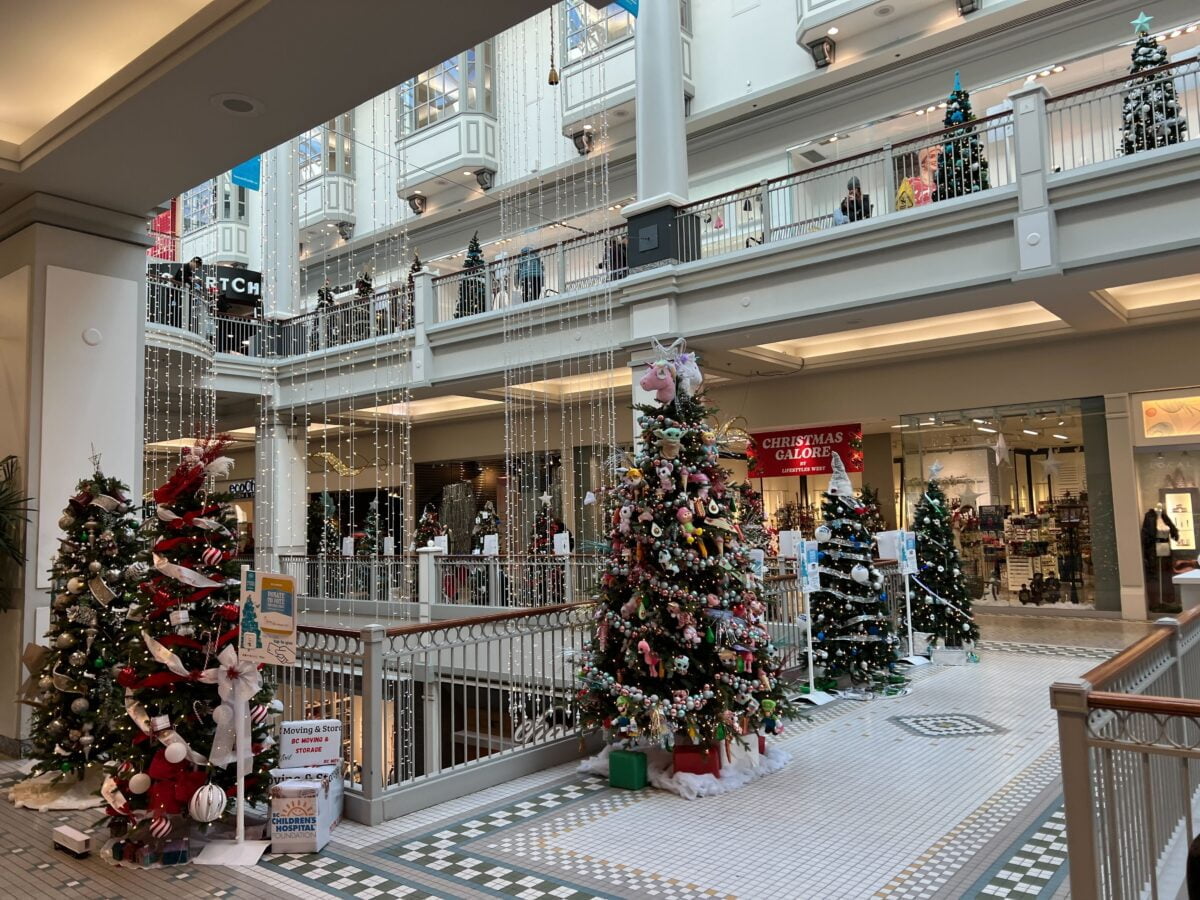
Exterior of CF Pacific Centre in downtown Vancouver on December 19, 2022. Photo: Lee RivettChristmas decorations of CF Pacific Centre in downtown Vancouver on December 19, 2022. Photo: Lee Rivett
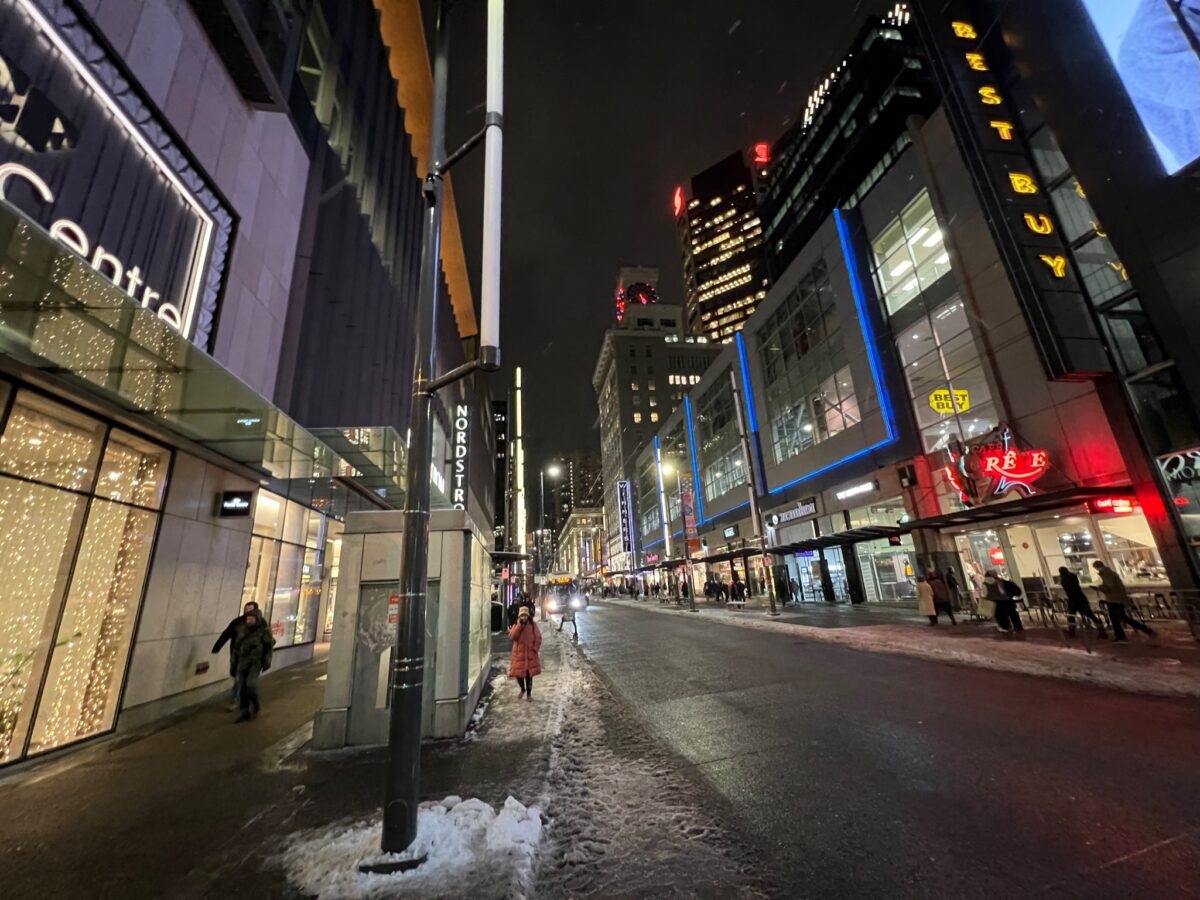
Exterior of CF Pacific Centre in downtown Vancouver on December 19, 2022. Photo: Lee Rivett
Exterior of CF Pacific Centre in downtown Vancouver on December 19, 2022. Photo: Lee Rivett
Exterior of CF Pacific Centre in downtown Vancouver on December 19, 2022. Photo: Lee Rivett
Exterior of CF Pacific Centre in downtown Vancouver on December 19, 2022. Photo: Lee Rivett
Exterior of CF Pacific Centre in downtown Vancouver on December 19, 2022. Photo: Lee RivettExterior of the new Apple Flagship at CF Pacific Centre in downtown Vancouver on December 19, 2022. Photo: Lee RivettCF Pacific Centre at Granville Street and Robson Street in downtown Vancouver on December 19, 2022. Photo: Lee Rivett
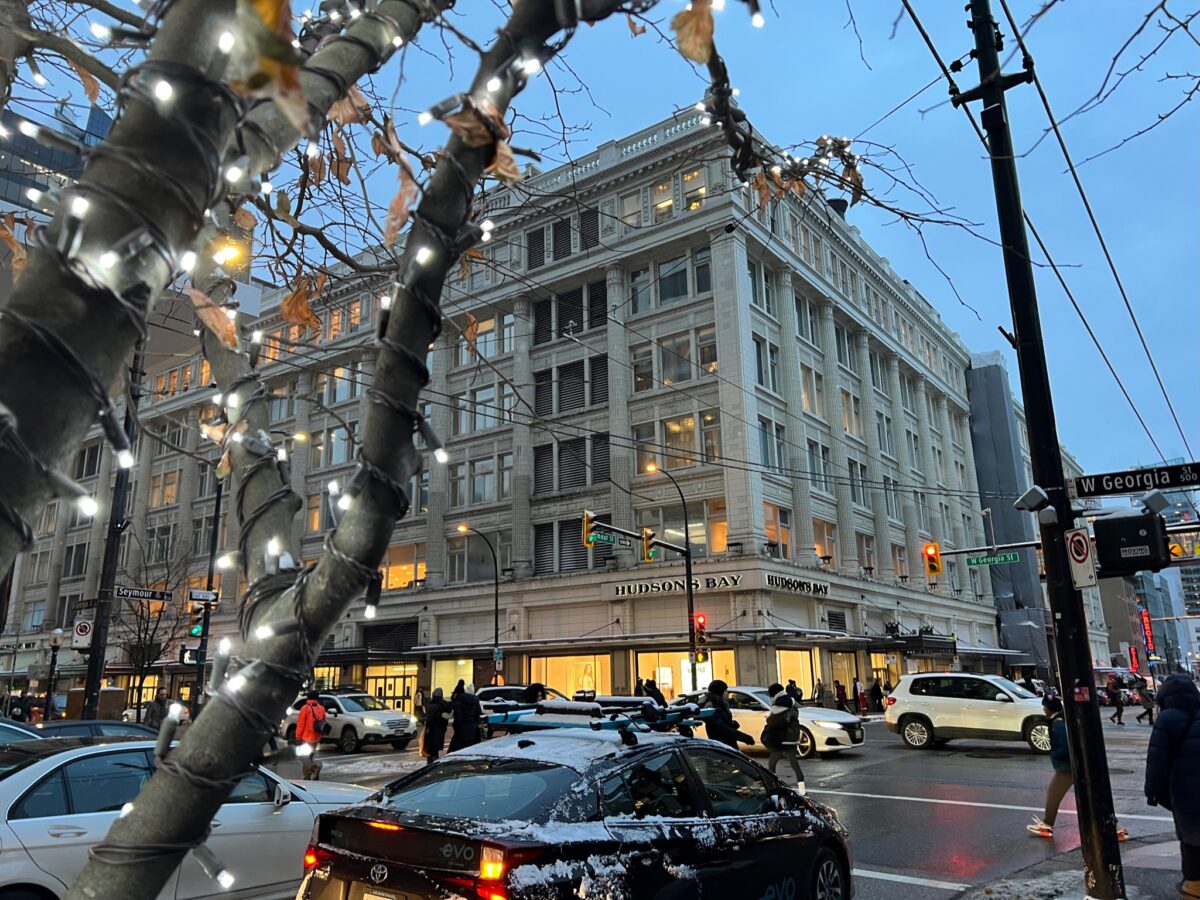
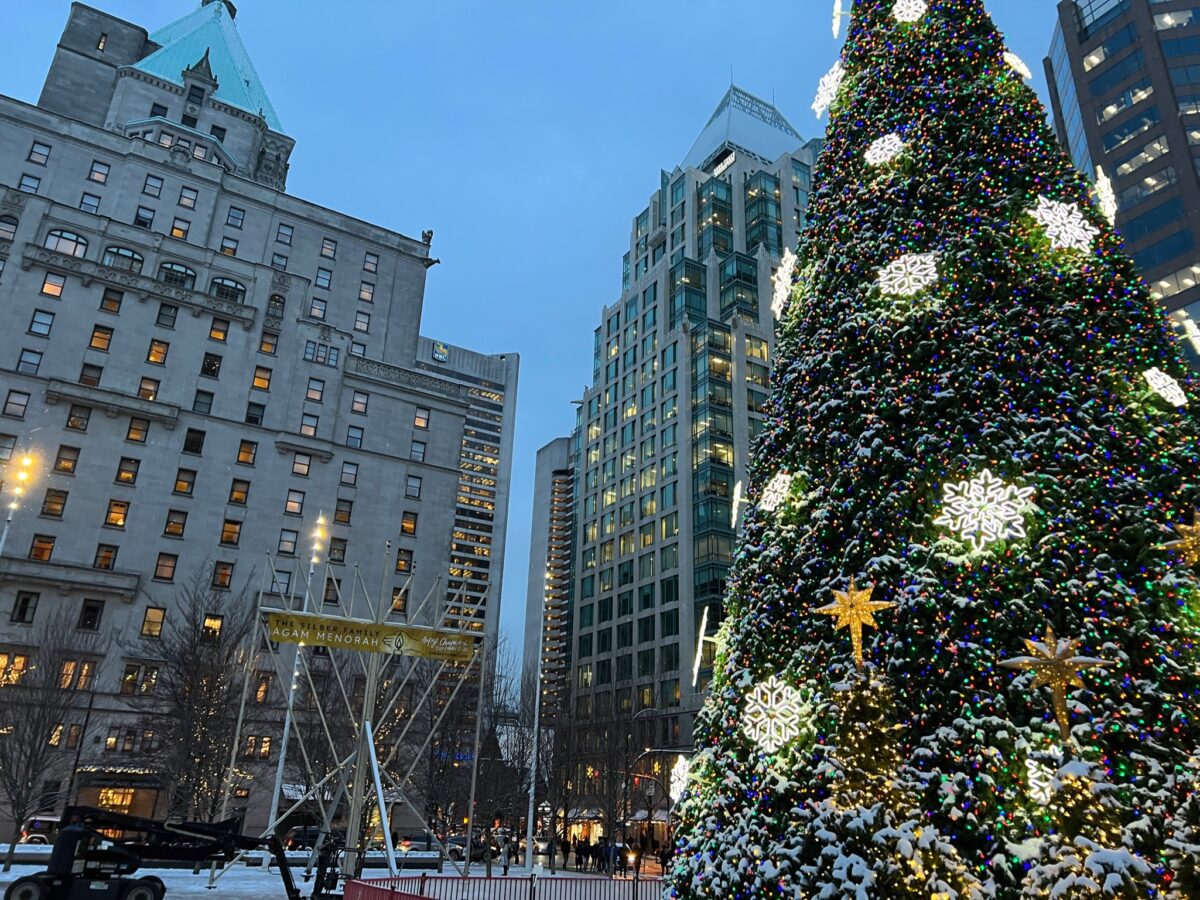
Connected to CF Pacific Centre is the downtown Hudson’s Bay store, the Vancouver Art Gallery with its Christmas Tree, and TELUS Gardens.
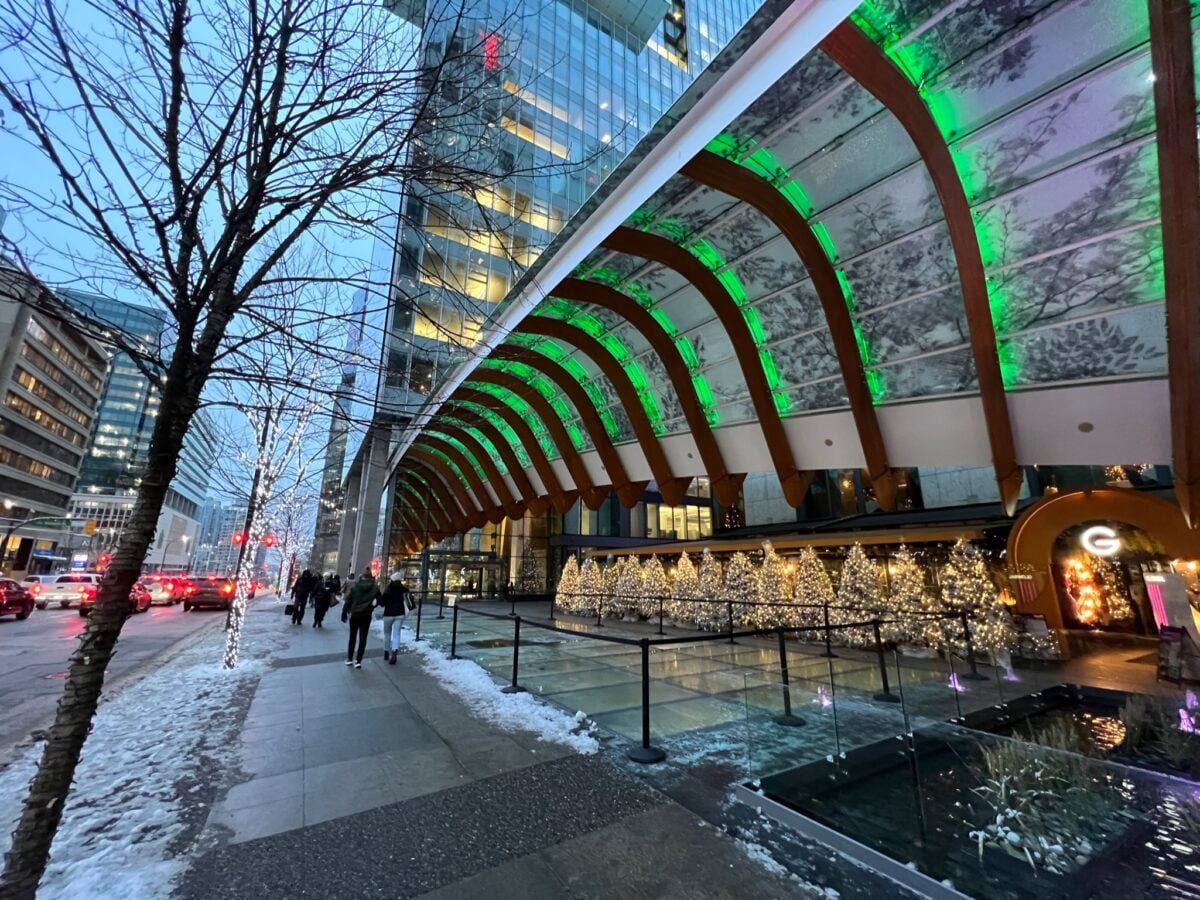
Exterior of Hudson’s Bay in downtown Vancouver on December 19, 2022. Photo: Lee RivettChristmas Tree at the Vancouver Art Gallery in downtown Vancouver on December 19, 2022. Photo: Lee RivettTELUS Gardens in downtown Vancouver on December 19, 2022. Photo: Lee RivettDowntown Vancouver on December 19, 2022. Photo: Lee Rivett
We hope you enjoyed our holiday tour of CF Pacific Centre in downtown Vancouver, British Columbia. Don’t forget to check out our other retail photo tours on Retail Insider. Thank you for taking this tour with us.
Discover More Related Retail Photo Tours From Retail Insider:
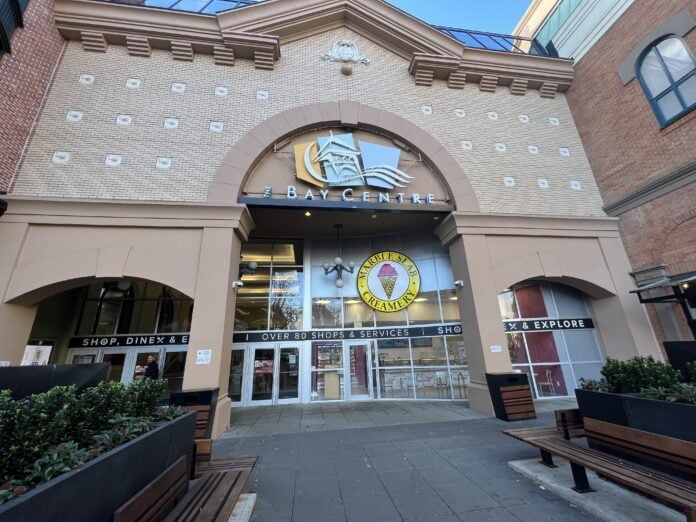
The Bay Centre near downtown Victoria on December 11, 2022. Photo: Lee Rivett
Retail Insider resumes our annual tradition of sharing holiday photos of Canadian shopping centres for 2022. Both landlords and merchants have rolled out the red carpet for holiday shoppers and the staff at Retail Insider wanted to share their efforts for those on a mission as they plow through their Christmas shopping, those who haven’t seen their favourite retail haunts over the holiday season for a while, or for those who like to thumb through festive holiday photos like we do!
This instalment of the ‘Holiday Photo Series’ takes us to The Bay Centre in Victoria, British Columbia. This shopping mall provides visitors with more than 90 interior and store front shops. The four floors of the Centre covers two city blocks. The Bay Centre has 410,264 square feet of retail space.
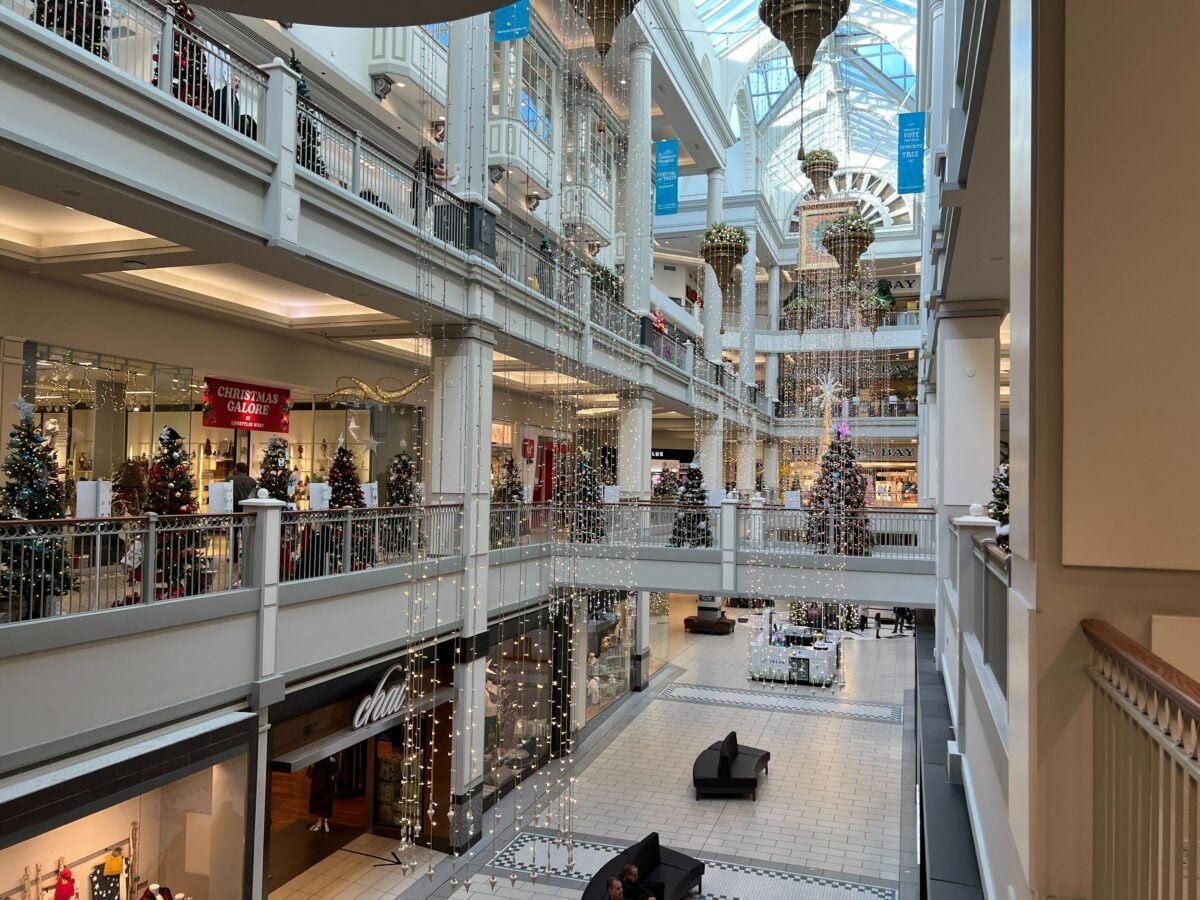
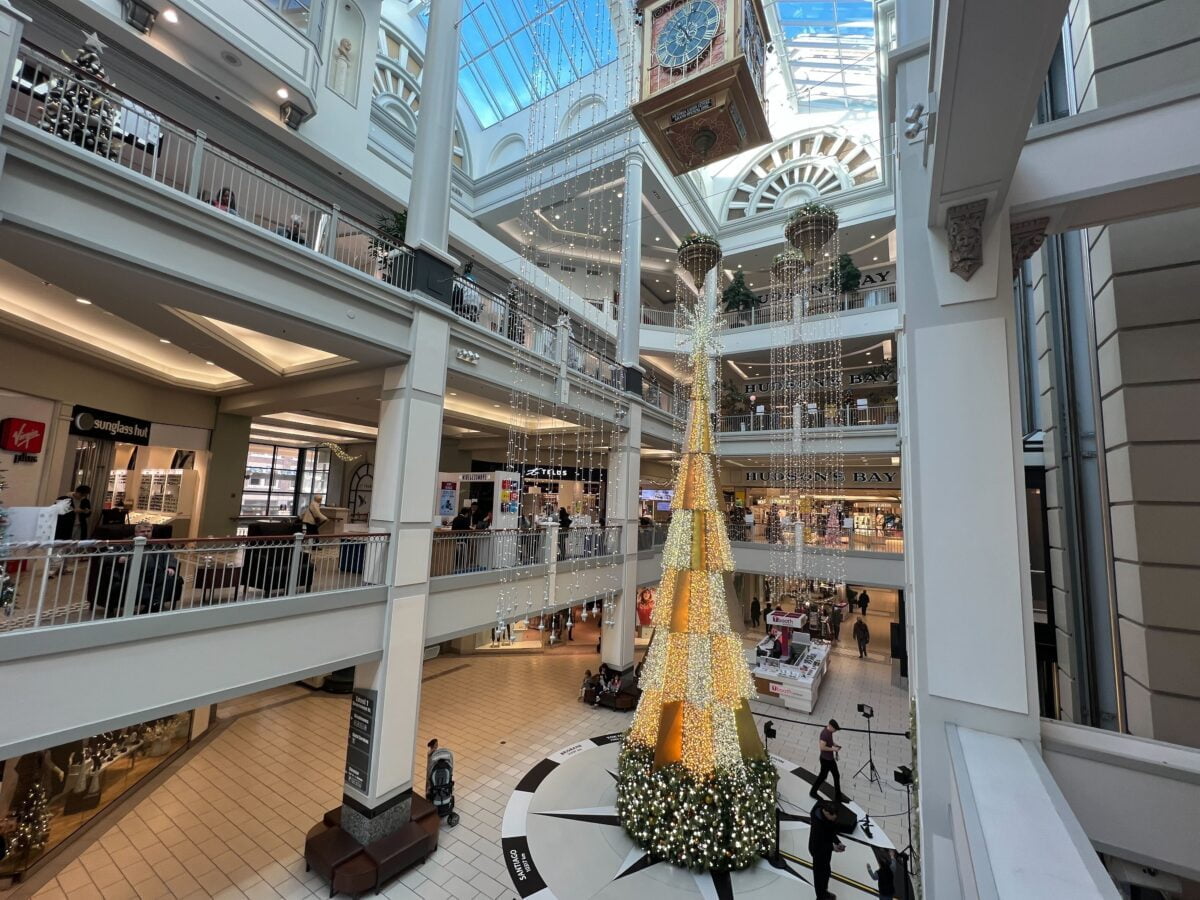
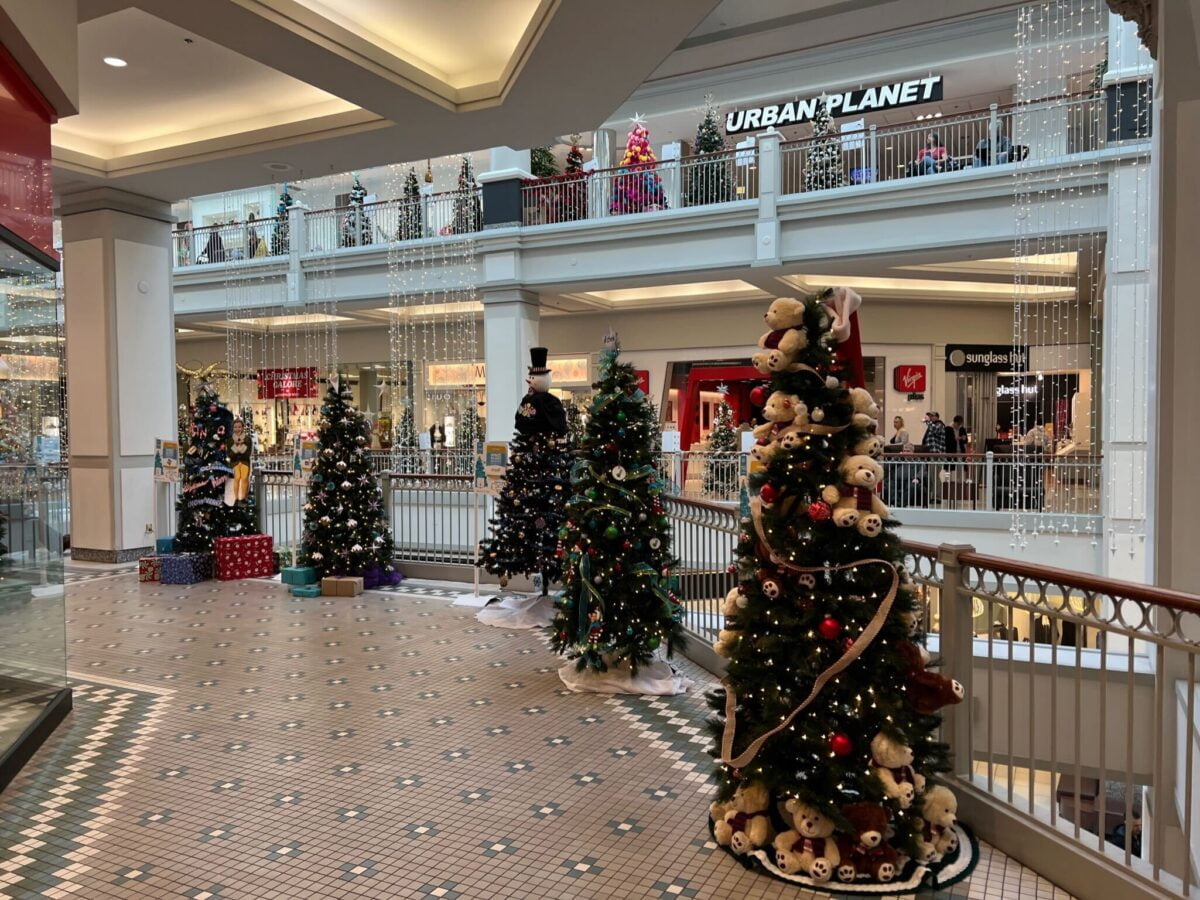
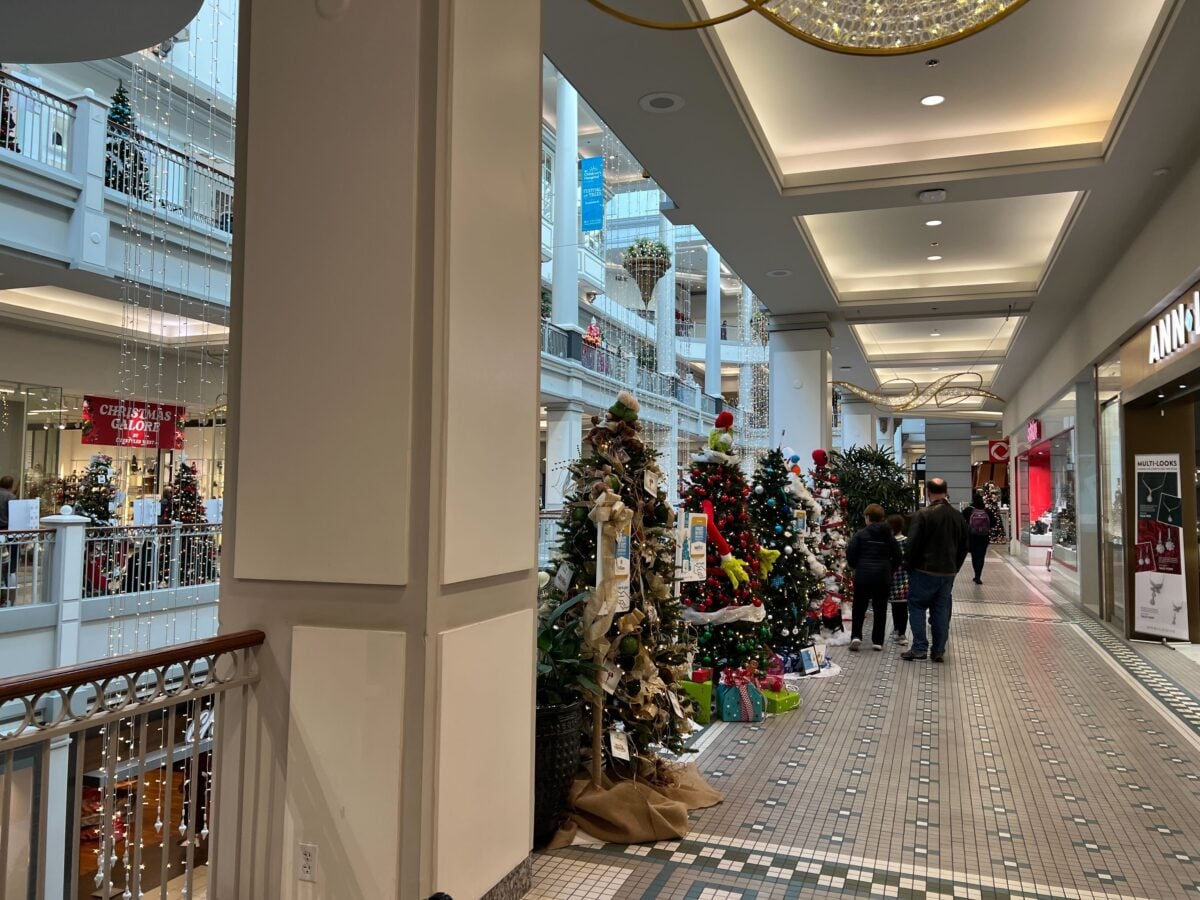
The Bay Centre interior near downtown Victoria on December 11, 2022. Photo: Lee Rivett
The Bay Centre interior near downtown Victoria on December 11, 2022. Photo: Lee Rivett
The Bay Centre interior near downtown Victoria on December 11, 2022. Photo: Lee Rivett
The Bay Centre interior near downtown Victoria on December 11, 2022. Photo: Lee Rivett
As shown in the “1990” in the capstone above the main entrance (visible from our first exterior photo), the mall opened its current iteration in 1990 and is located near Victoria’s Old Town neighborhood. The shopping centre spans two city blocks and is the city’s first large shopping mall in the downtown area.
Prior to 1990, a former Eaton’s building was demolished as well as several historic buildings to allow the two-block footprint to be possible.
The Bay Centre interior near downtown Victoria on December 11, 2022. Photo: Lee Rivett
Eaton’s opened within the new “Eaton Centre” as the shopping centre was a partnership between Eaton’s and Cadillac Fairview. Sears Canada filled the space after Eaton’s went bankrupt in 1999; however, Hudson’s Bay took over thereafter and the centre’s name was changed.
The Bay Centre interior near downtown Victoria on December 11, 2022. Photo: Lee RivettThe Bay Centre interior near downtown Victoria on December 11, 2022. Photo: Lee Rivett
Cadillac Fairview sold “The Bay Centre” to LaSalle Investment Management in 2010.
The Bay Centre interior near downtown Victoria on December 11, 2022. Photo: Lee Rivett
The Bay Centre interior near downtown Victoria on December 11, 2022. Photo: Lee Rivett
The Bay Centre interior near downtown Victoria on December 11, 2022. Photo: Lee Rivett
The Bay Centre interior near downtown Victoria on December 11, 2022. Photo: Lee Rivett
We hope you enjoyed our holiday tour of The Bay Centre in Victoria, British Columbia. Don’t forget to check out our other retail photo tours on Retail Insider. Thank you for taking this tour with us.
Discover More Related Retail Photo Tours From Retail Insider:
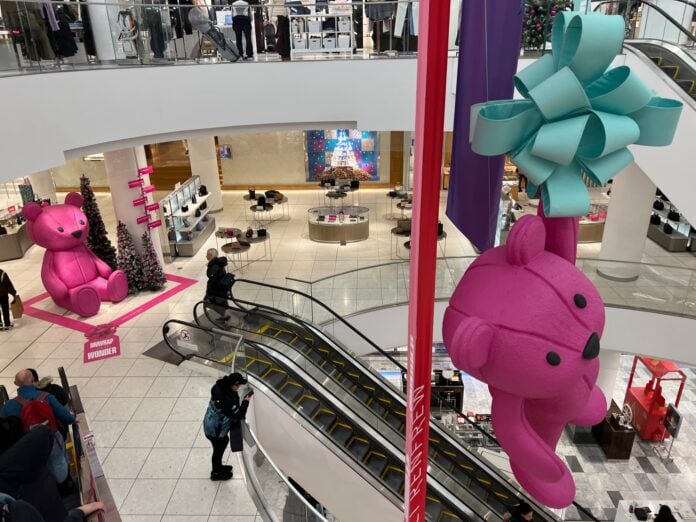
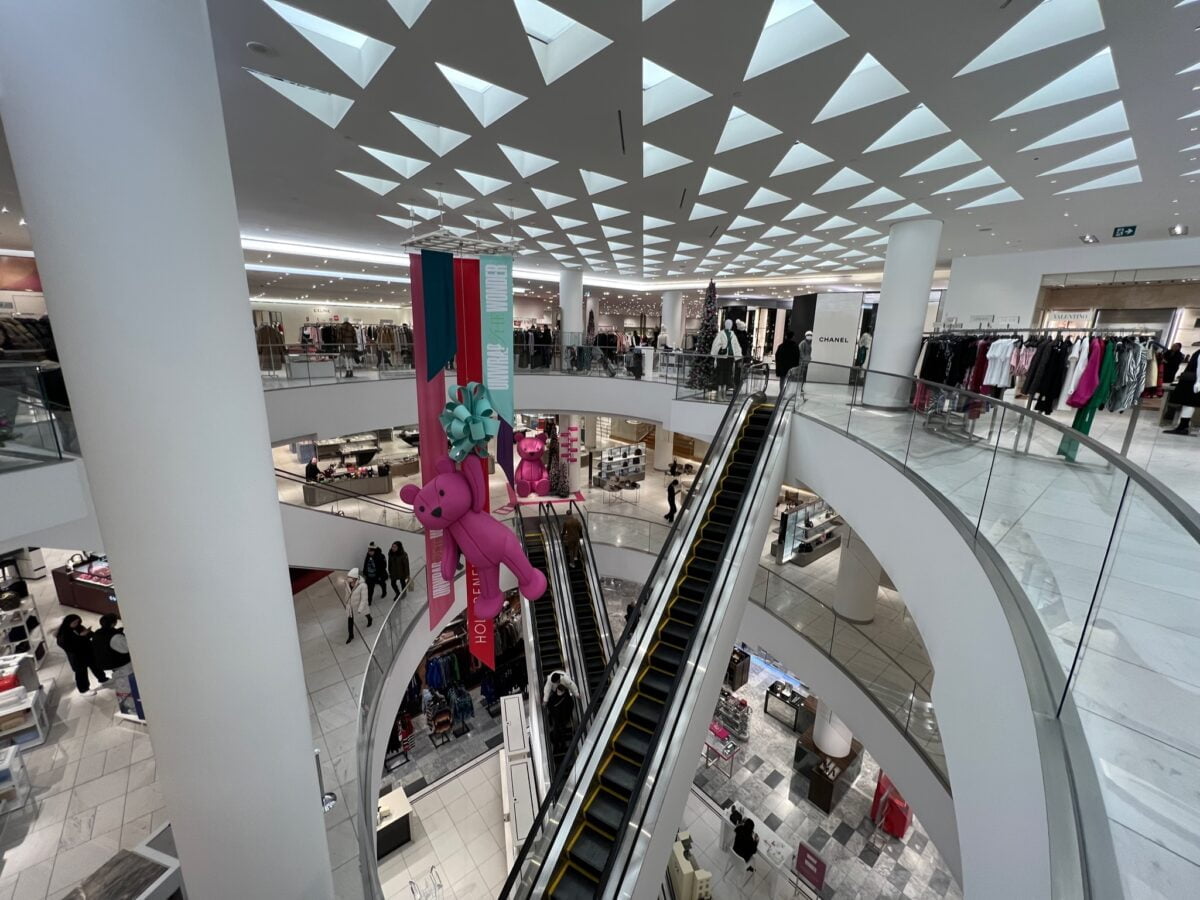
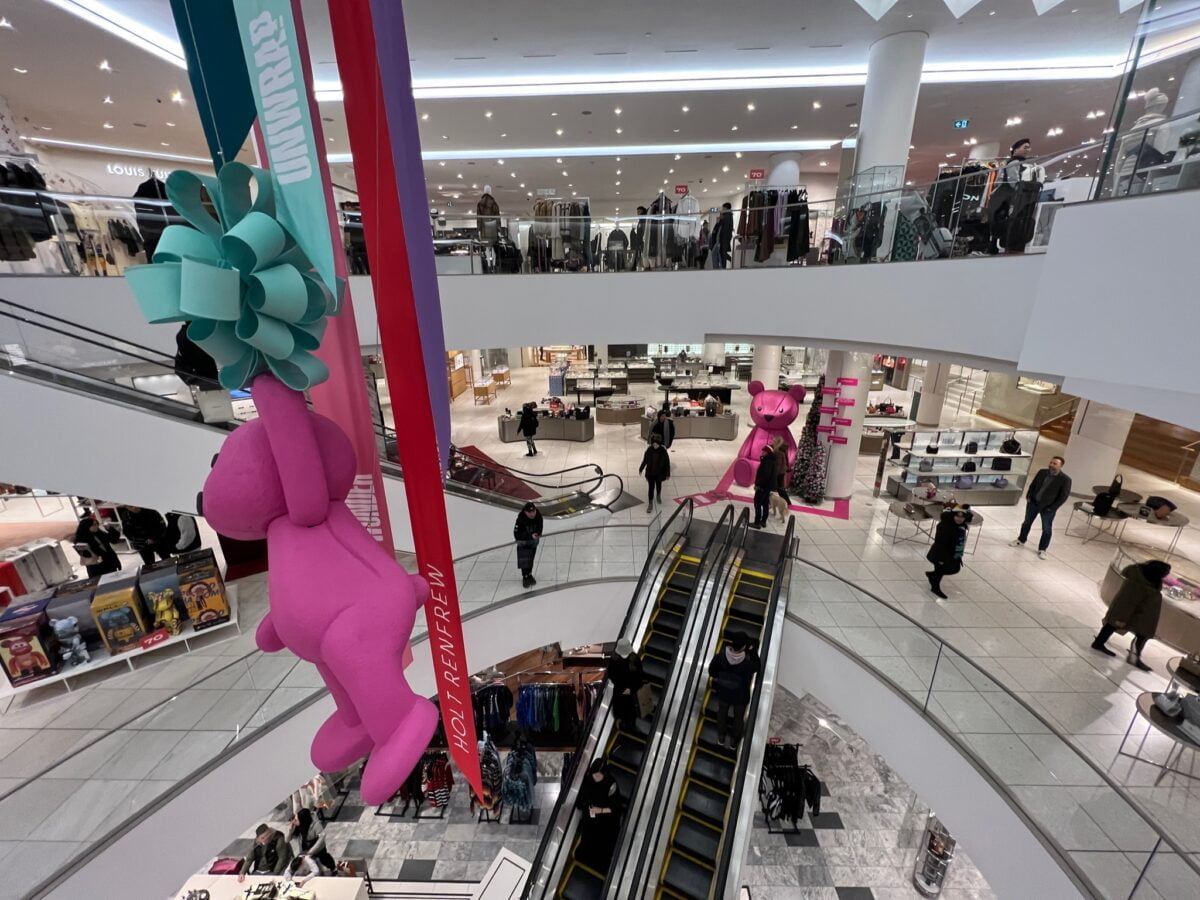
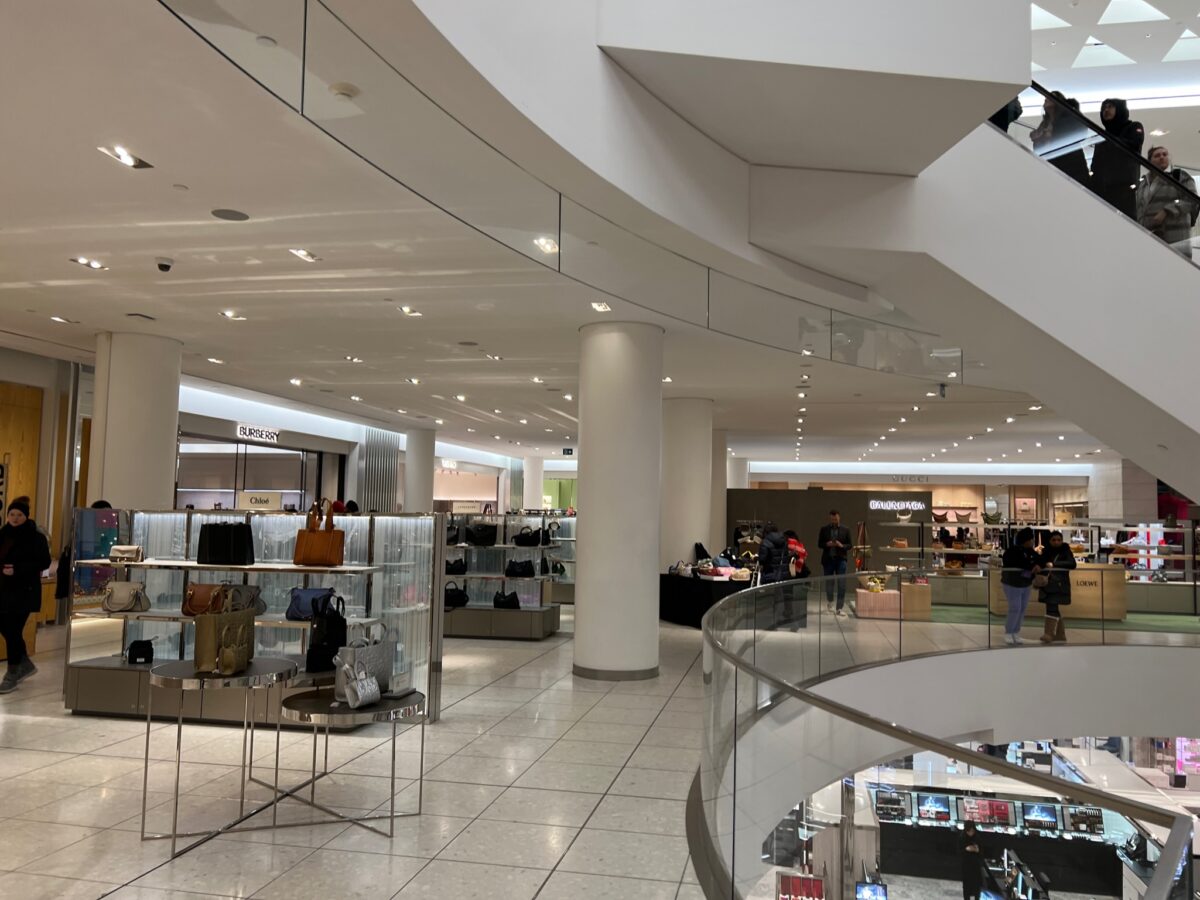
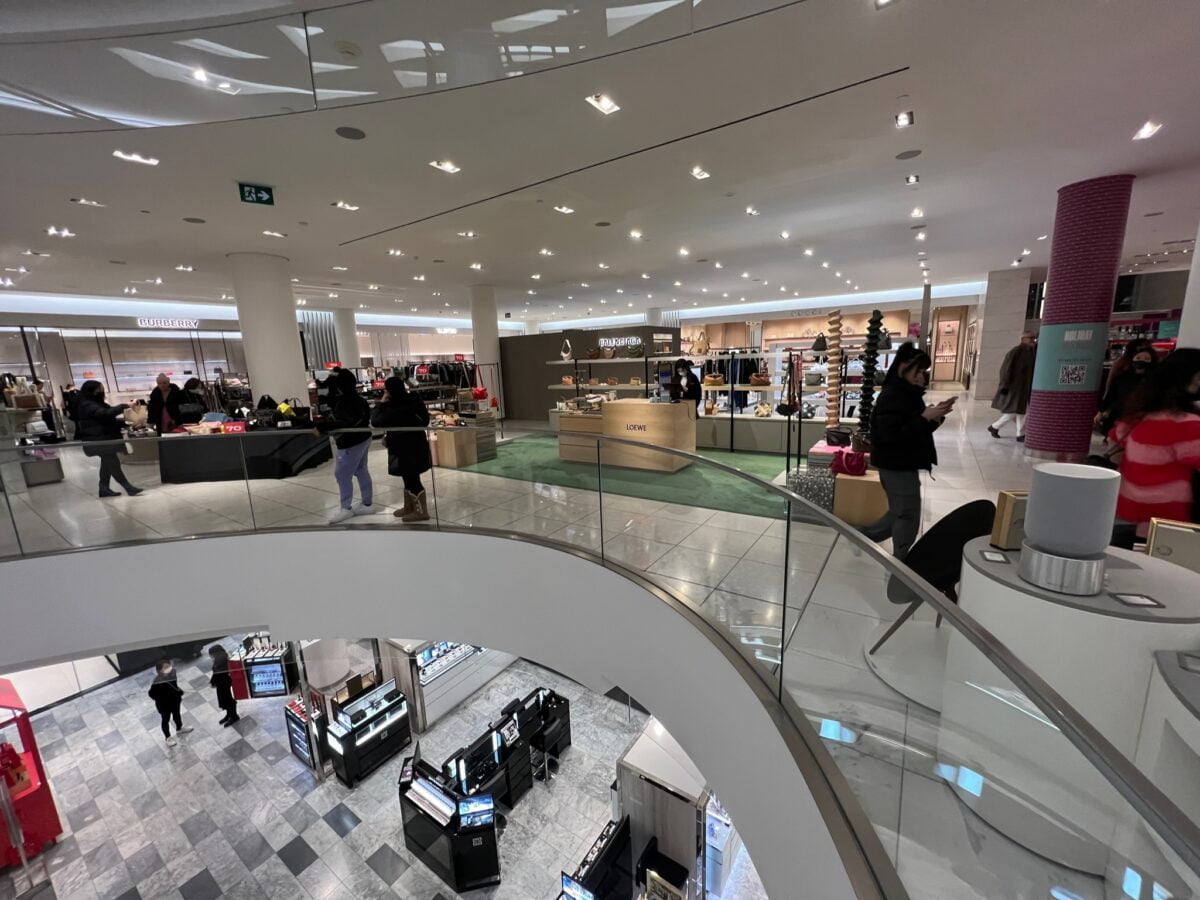
Atrium at Holt Renfrew in CF Pacific Centre in downtown Vancouver on December 19, 2022. Photo: Lee Rivett
Retail Insider resumes our annual tradition of sharing holiday photos of Canadian retail for 2022. Both landlords and merchants have rolled out the red carpet for holiday shoppers and the staff at Retail Insider wanted to share their efforts for those on a mission as they plow through their Christmas shopping, those who haven’t seen their favourite retail haunts over the holiday season for a while, or for those who like to thumb through festive holiday photos like we do!
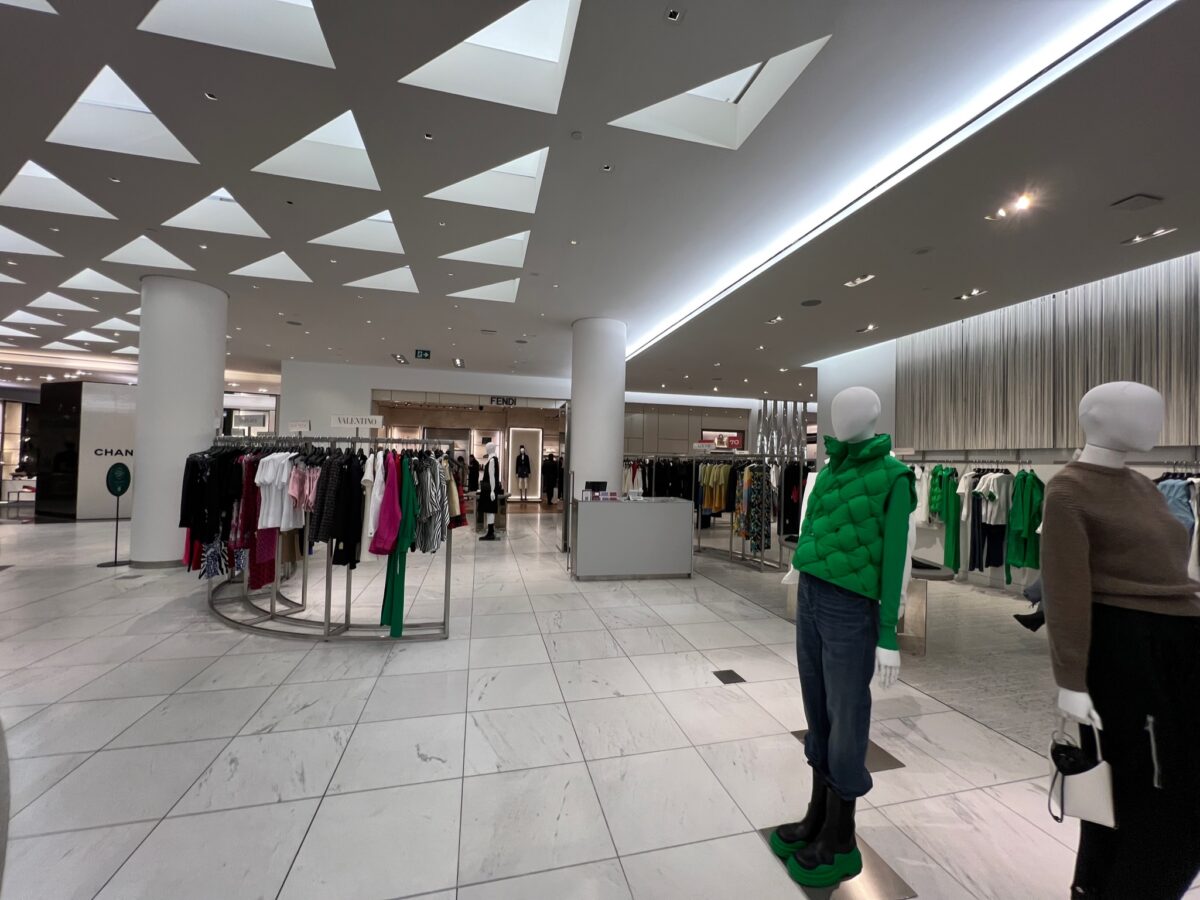
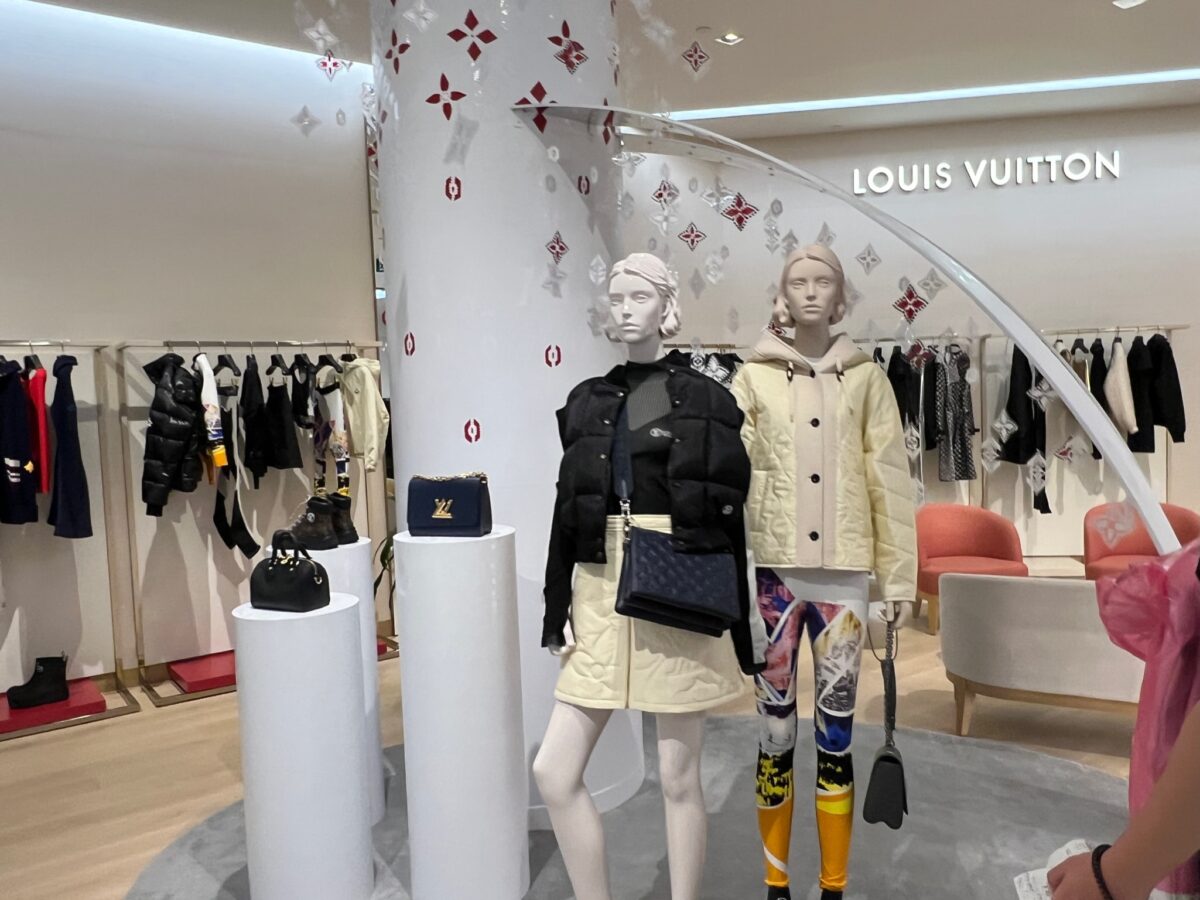
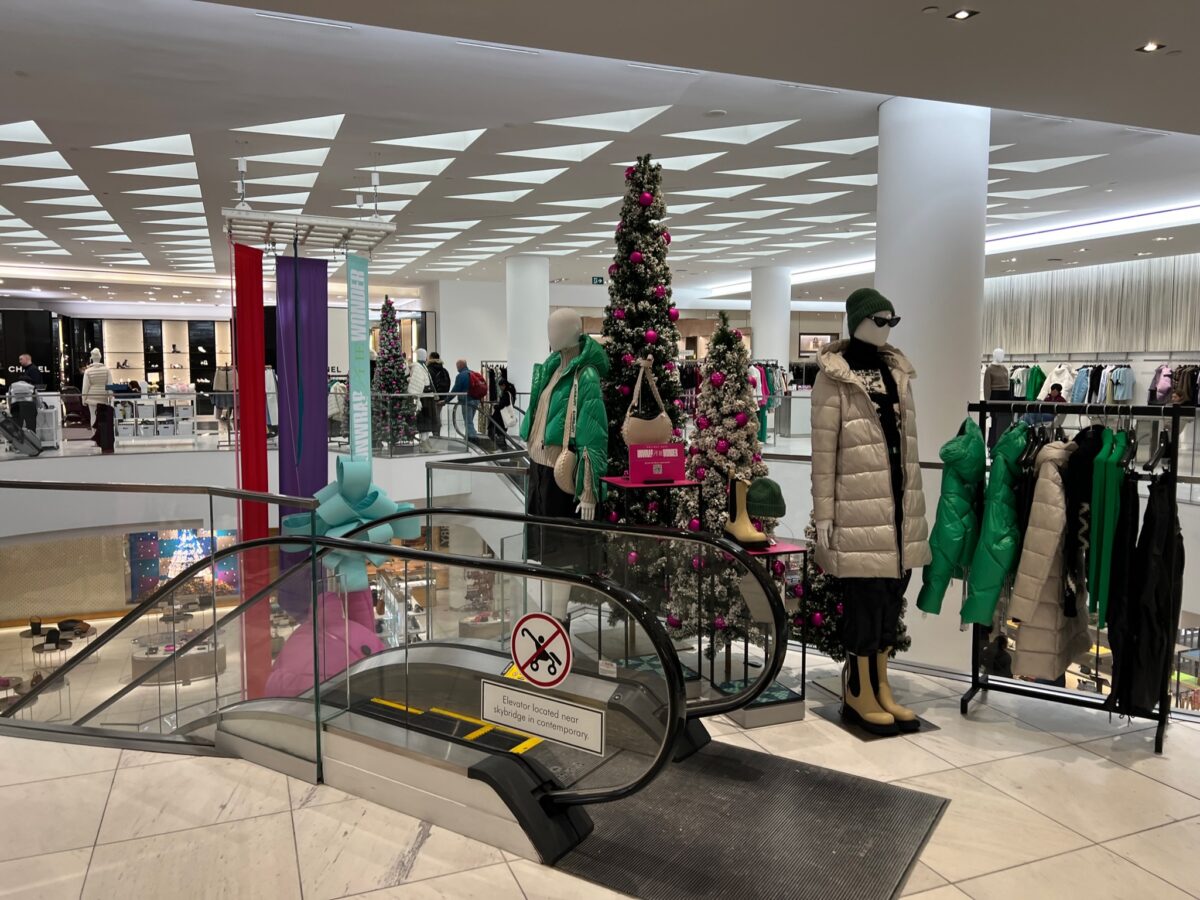
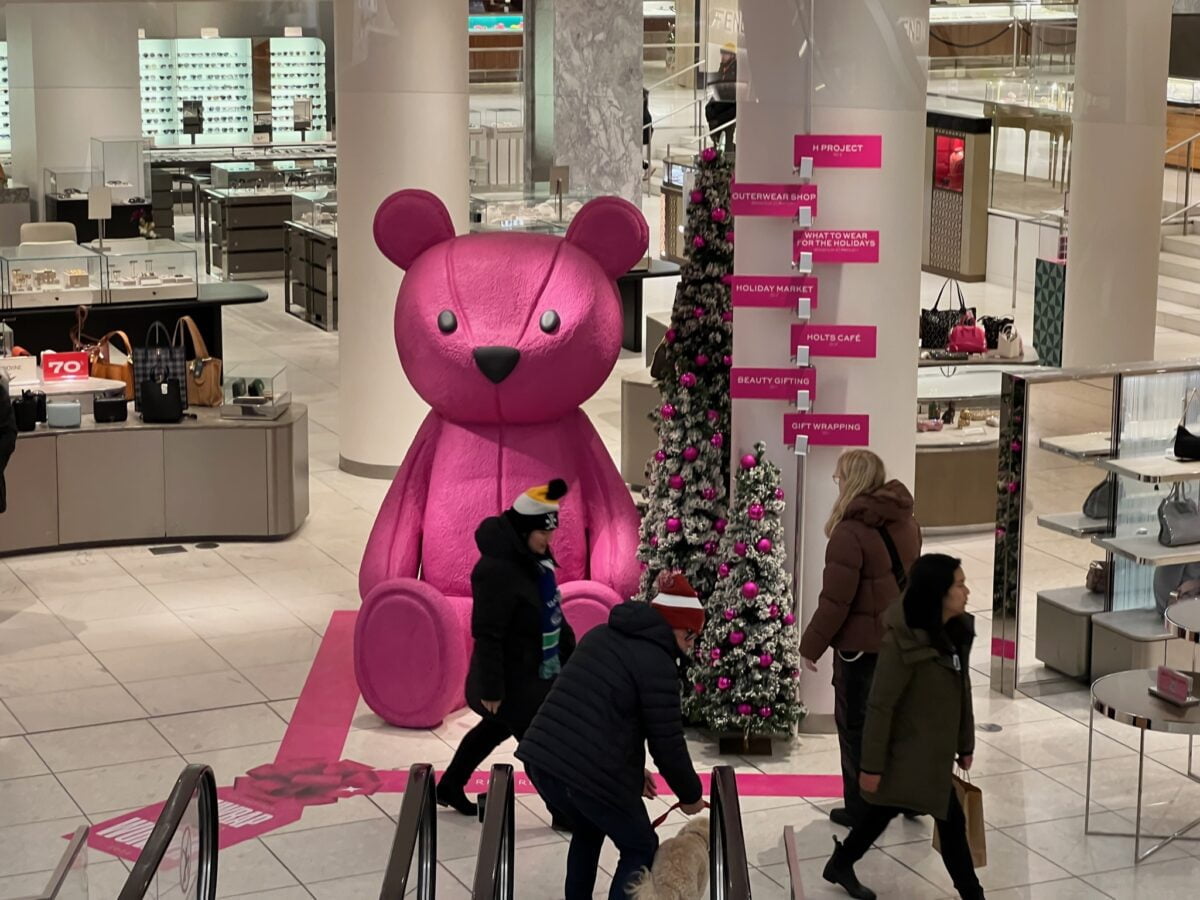
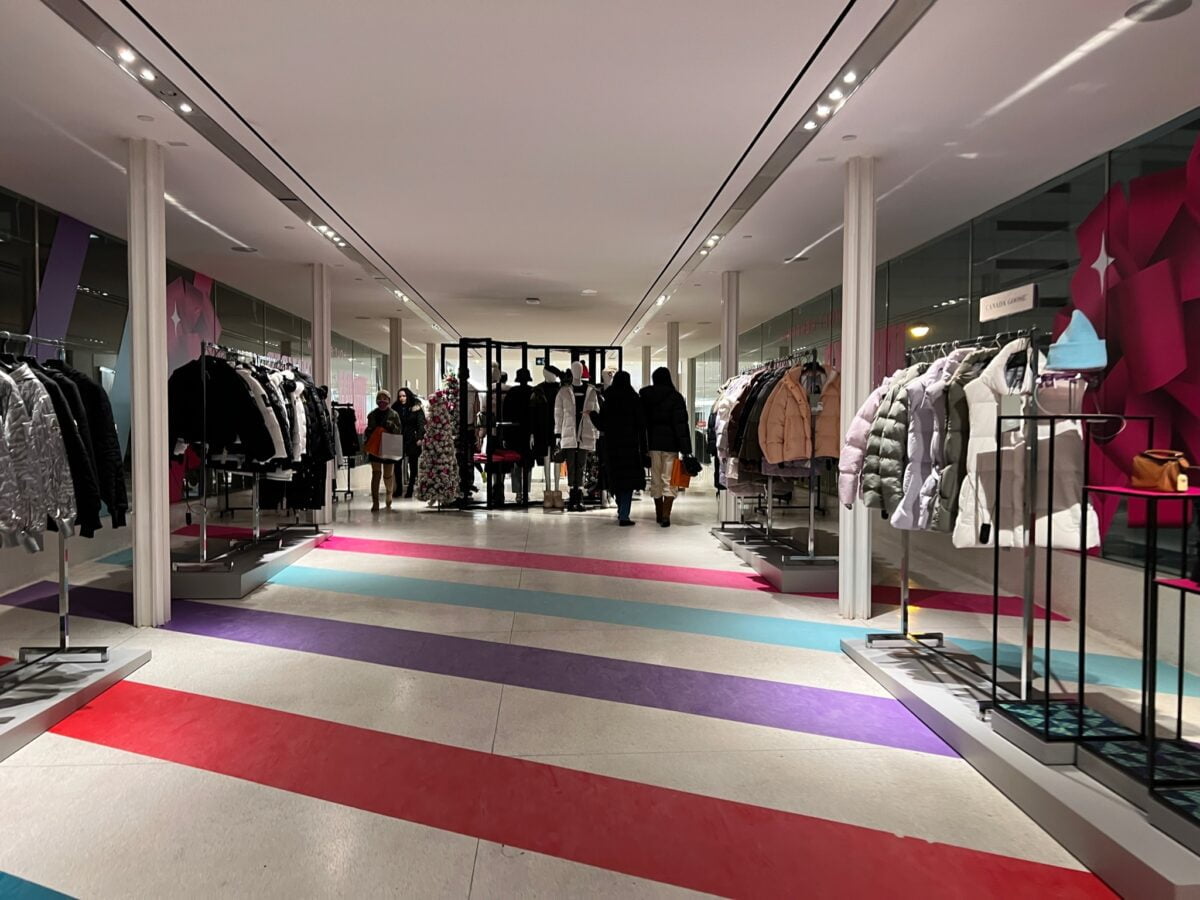
This instalment of the ‘Holiday Photo Series’ takes us to Holt Renfrew in CF Pacific Centre in downtown Vancouver, British Columbia. The downtown Vancouver location was the chain’s first West Coast store which opened in 1975. That store was nearby in the mall and only measured 32,000 square feet — fast forward to today and the current Holts, which opened in the spring of 2007, spans a whopping 190,000 square feet after an expansion.
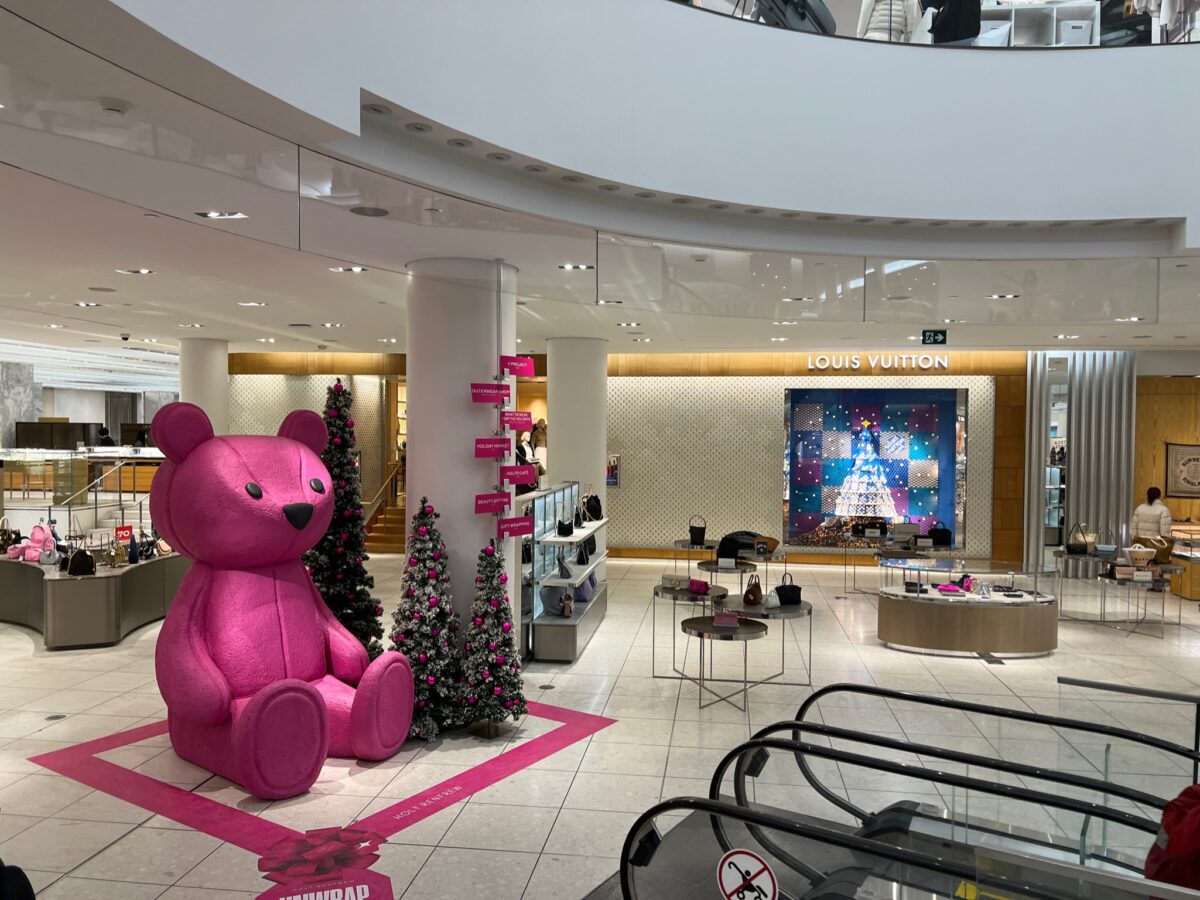
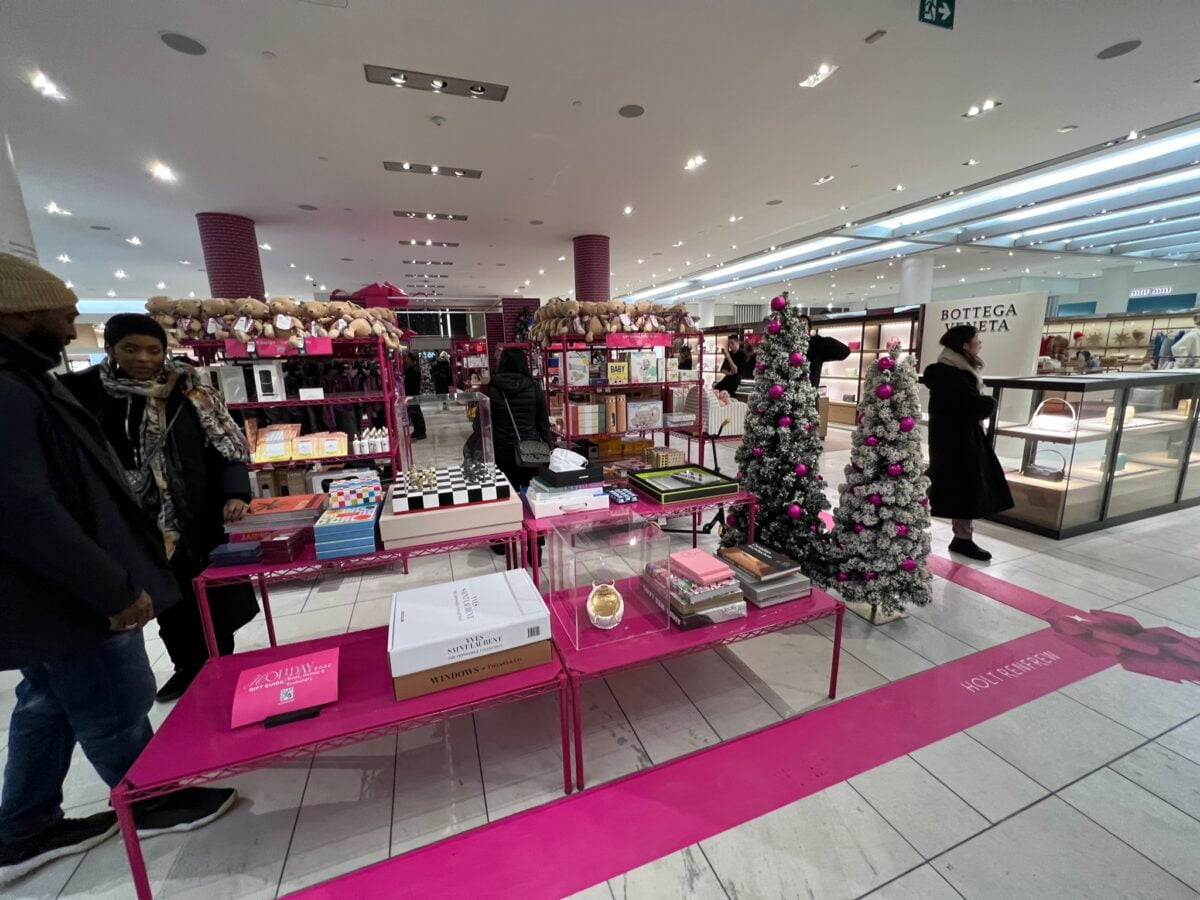
See some photos below of the Holt Renfrew store in Vancouver which got dolled up for the holidays.
Holt Renfrew interior at Holt Renfrew in CF Pacific Centre in downtown Vancouver on December 19, 2022. Photo: Lee RivettLouis Vuitton at Holt Renfrew in CF Pacific Centre in downtown Vancouver on December 19, 2022. Photo: Lee RivettAtrium at Holt Renfrew in CF Pacific Centre in downtown Vancouver on December 19, 2022. Photo: Lee RivettHolt Renfrew in CF Pacific Centre in downtown Vancouver on December 19, 2022. Photo: Lee RivettLouis Vuitton women’s at Holt Renfrew in CF Pacific Centre in downtown Vancouver on December 19, 2022. Photo: Lee RivettHolt Renfrew in CF Pacific Centre in downtown Vancouver on December 19, 2022. Photo: Lee Rivett
Holt Renfrew in CF Pacific Centre in downtown Vancouver on December 19, 2022. Photo: Lee Rivett
Holt Renfrew in CF Pacific Centre in downtown Vancouver on December 19, 2022. Photo: Lee Rivett
Holt Renfrew in CF Pacific Centre in downtown Vancouver on December 19, 2022. Photo: Lee Rivett
Holt Renfrew in CF Pacific Centre in downtown Vancouver on December 19, 2022. Photo: Lee Rivett
Holt Renfrew in CF Pacific Centre in downtown Vancouver on December 19, 2022. Photo: Lee Rivett
We hope you enjoyed our holiday tour of Holt Renfrew in downtown Vancouver, British Columbia. Don’t forget to check out our other retail photo tours on Retail Insider. Thank you for taking this tour with us.
Discover More Related Retail Photo Tours From Retail Insider:
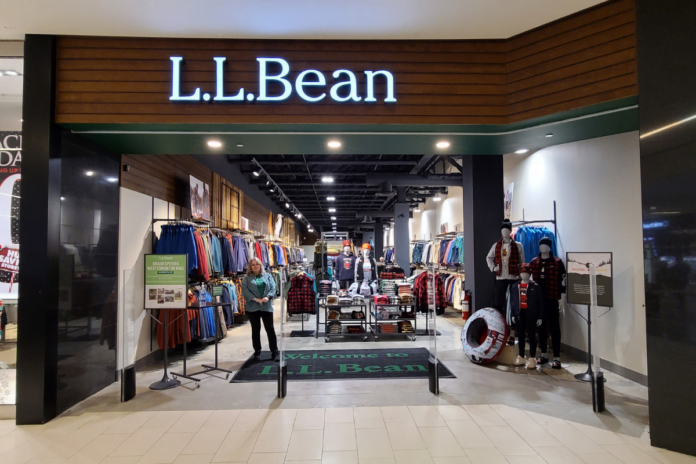
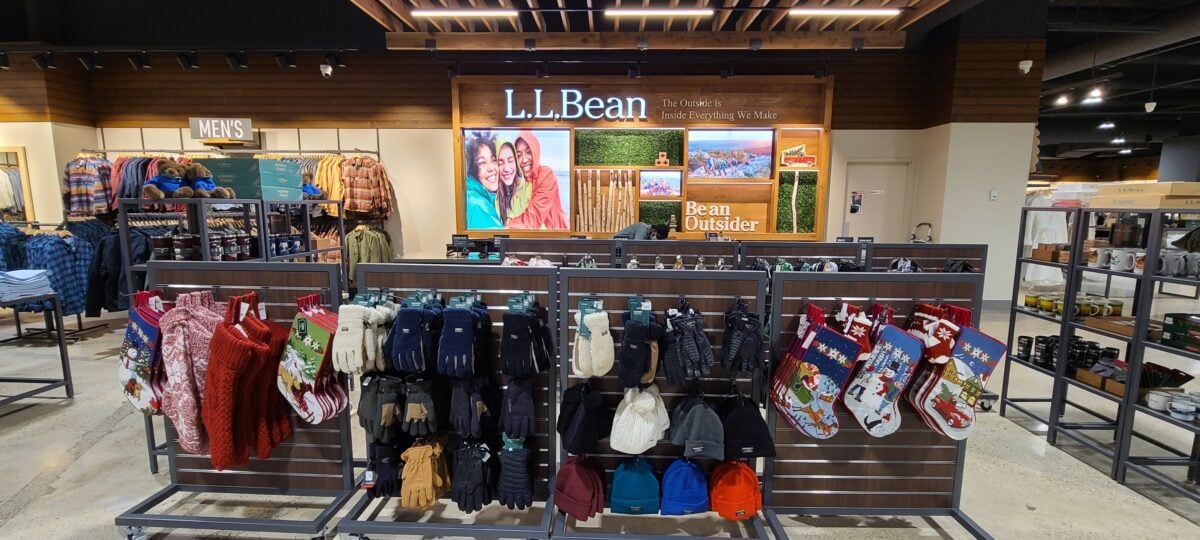
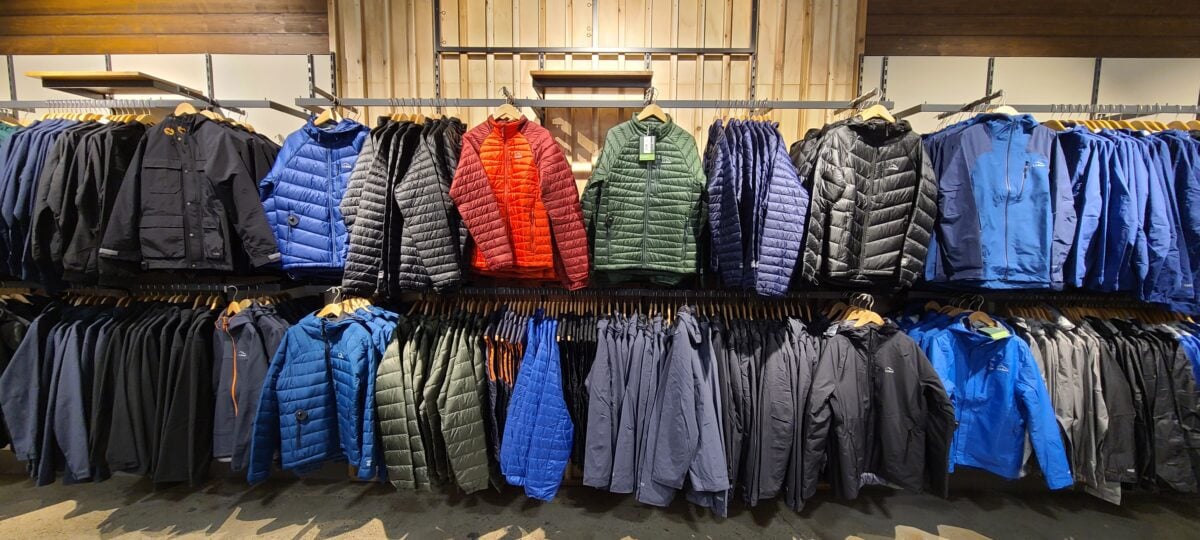
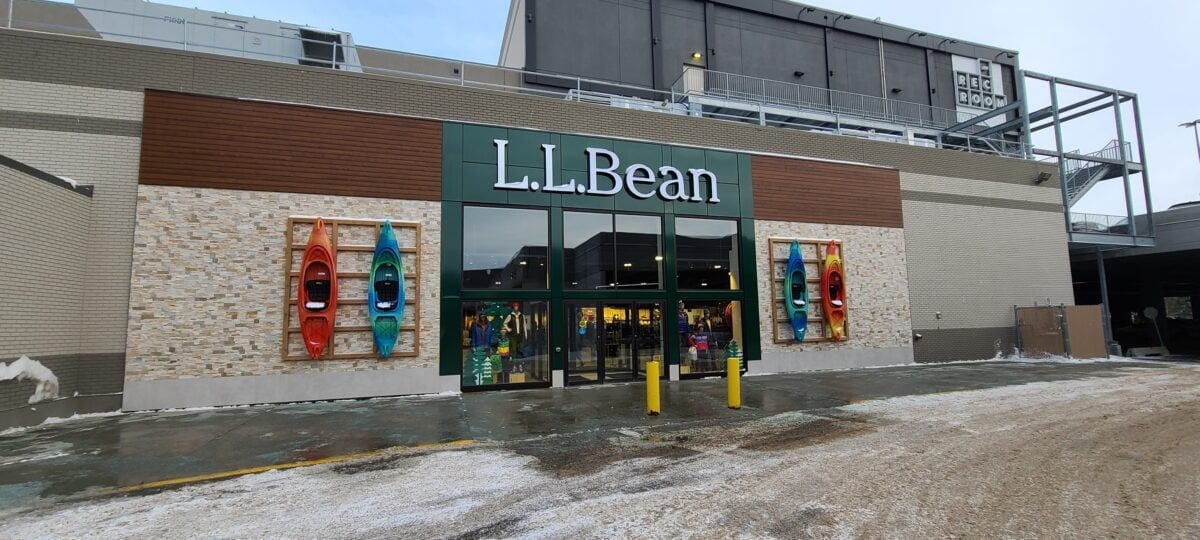
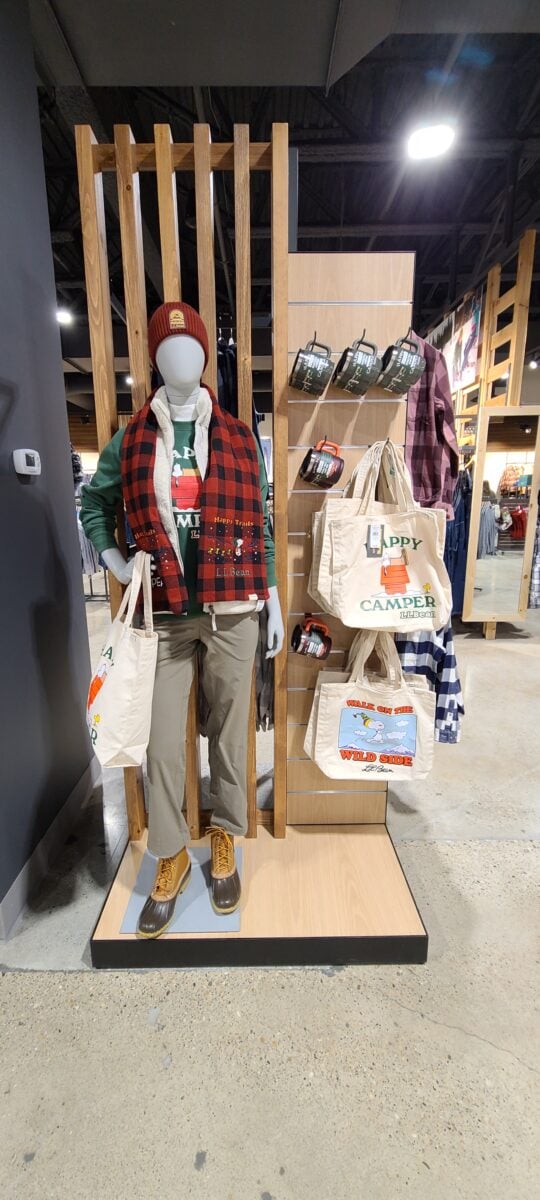
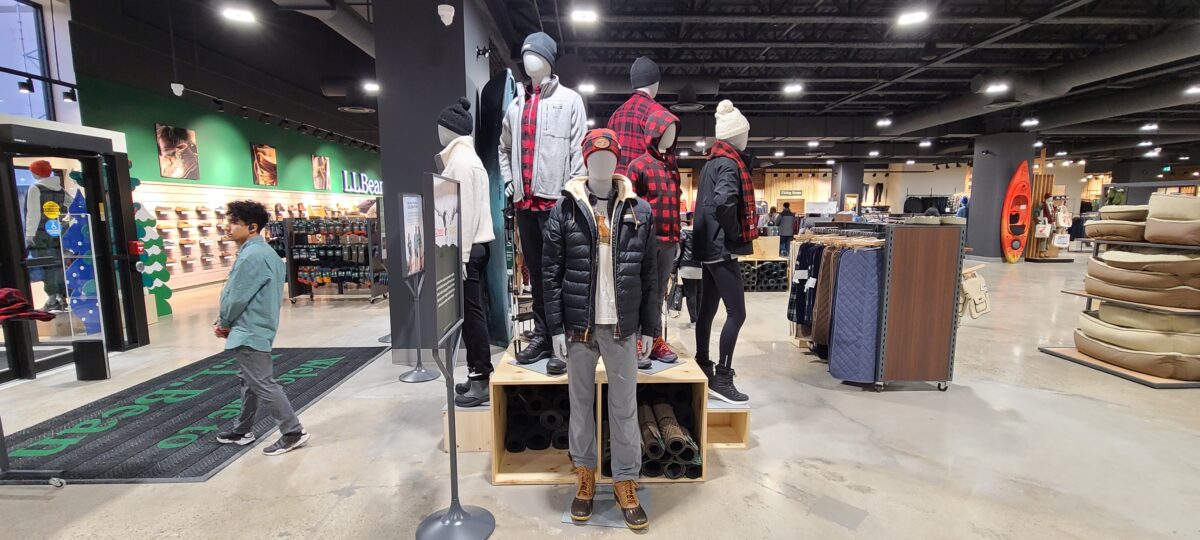
L.L.Bean at West Edmonton Mall (Image: Christopher Lui)
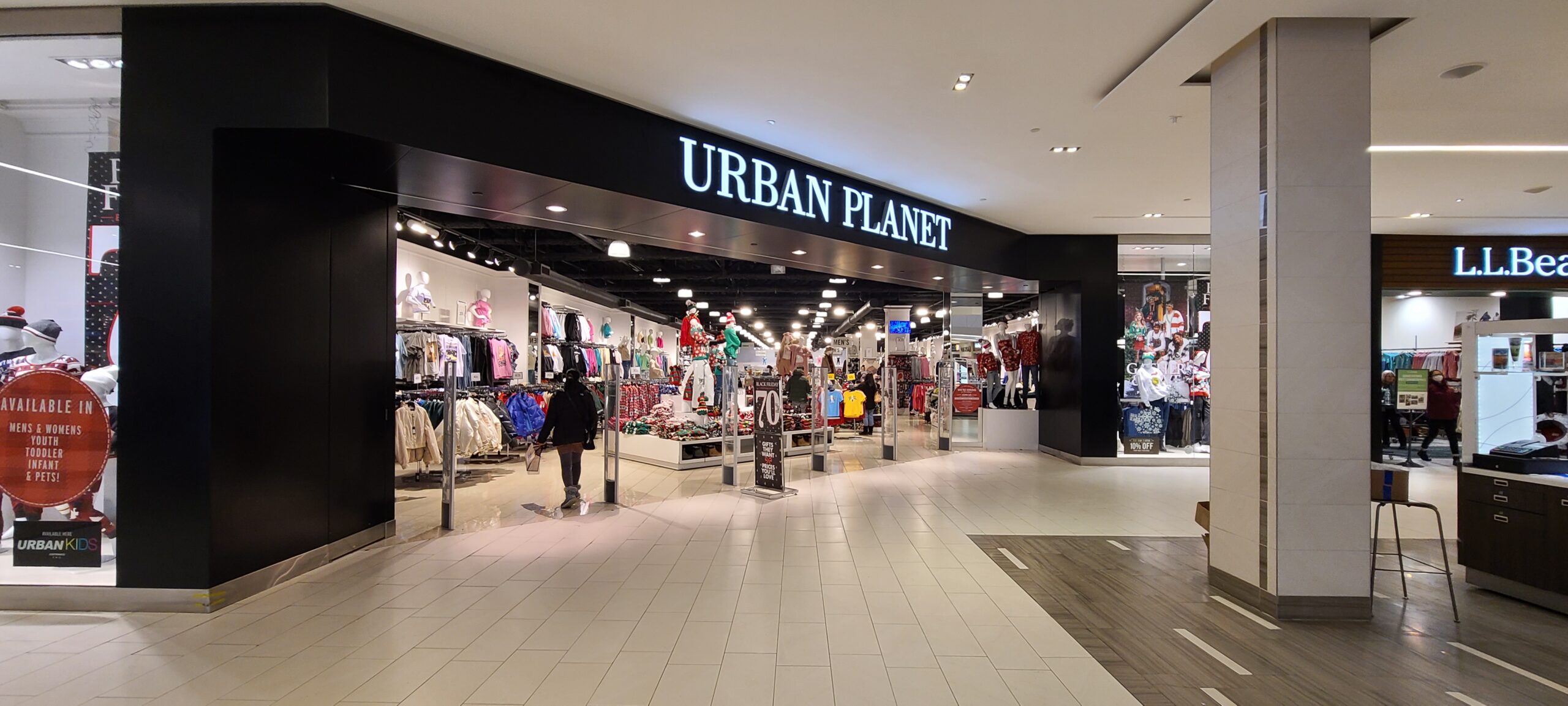
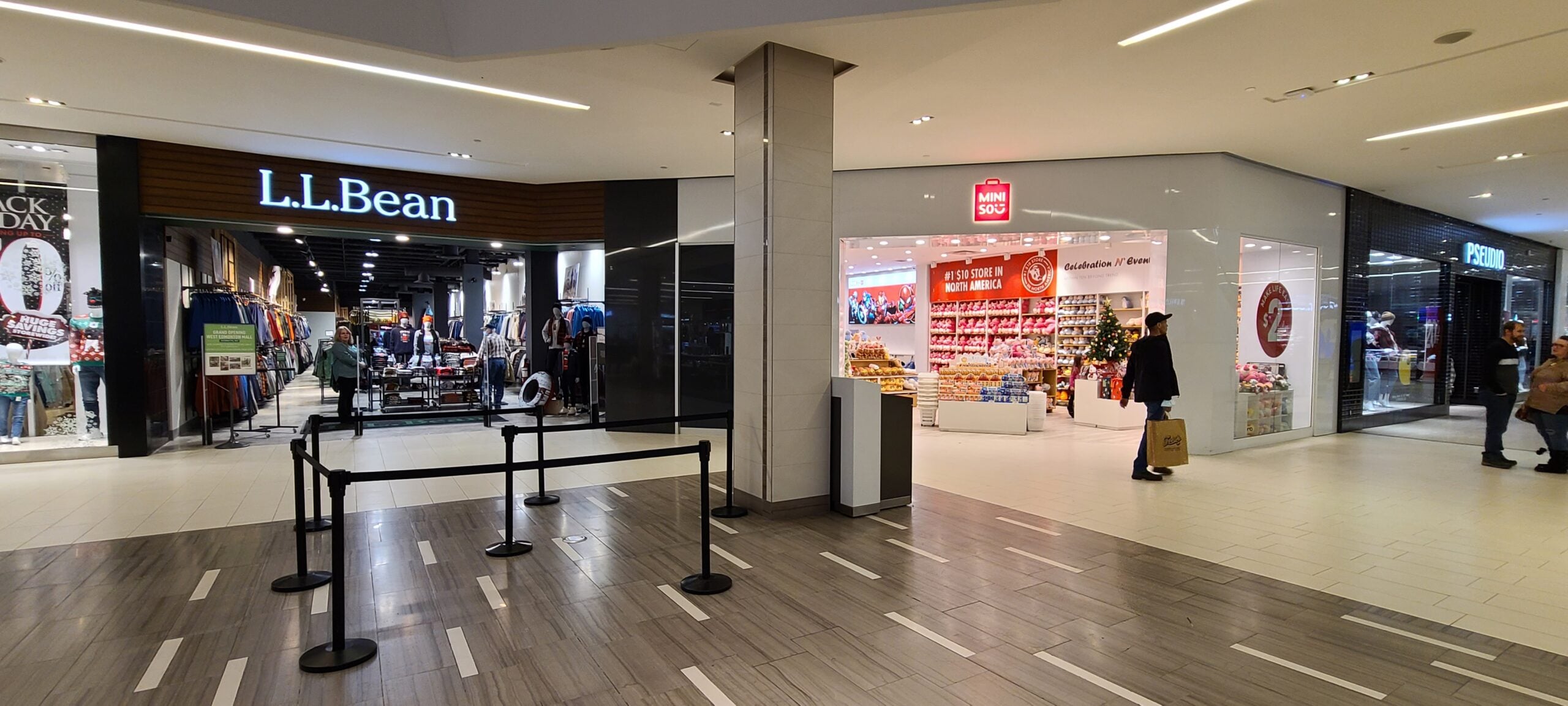
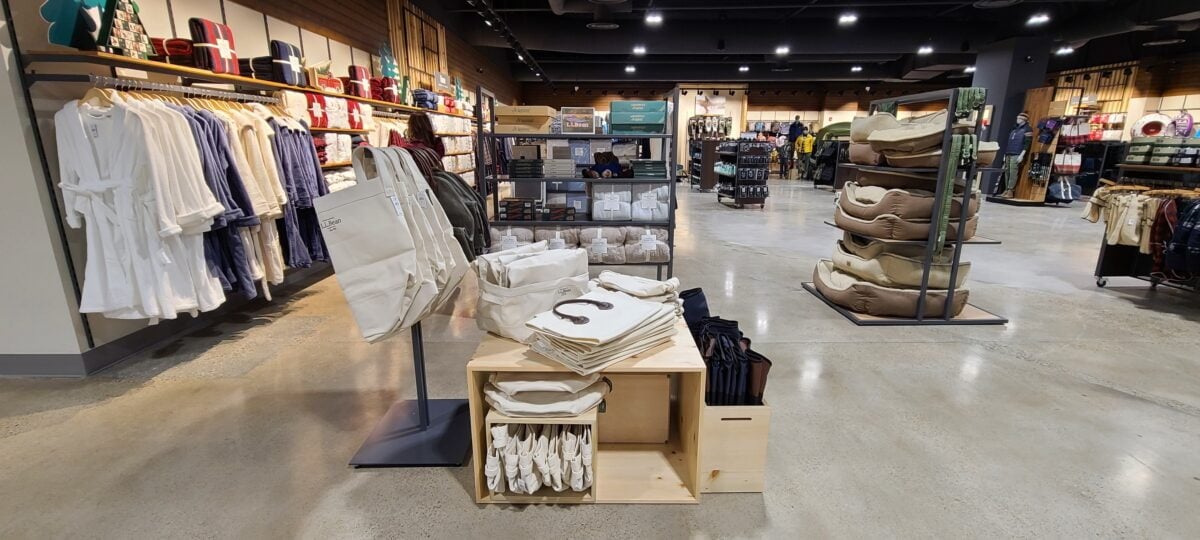
Announced in 2021, U.S. based outdoor specialty retailer L.L.Bean officially opened its Edmonton store in West Edmonton Mall earlier this month. Located in Phase II of the mall, L.L.Bean takes over the space formerly occupied by International Clothiers which has relocated to a smaller footprint in Phase I. The new L.L. Bean joins current neighbouring retailers Urban Planet spanning 16,017 square feet and Miniso spanning 3,905 square feet.
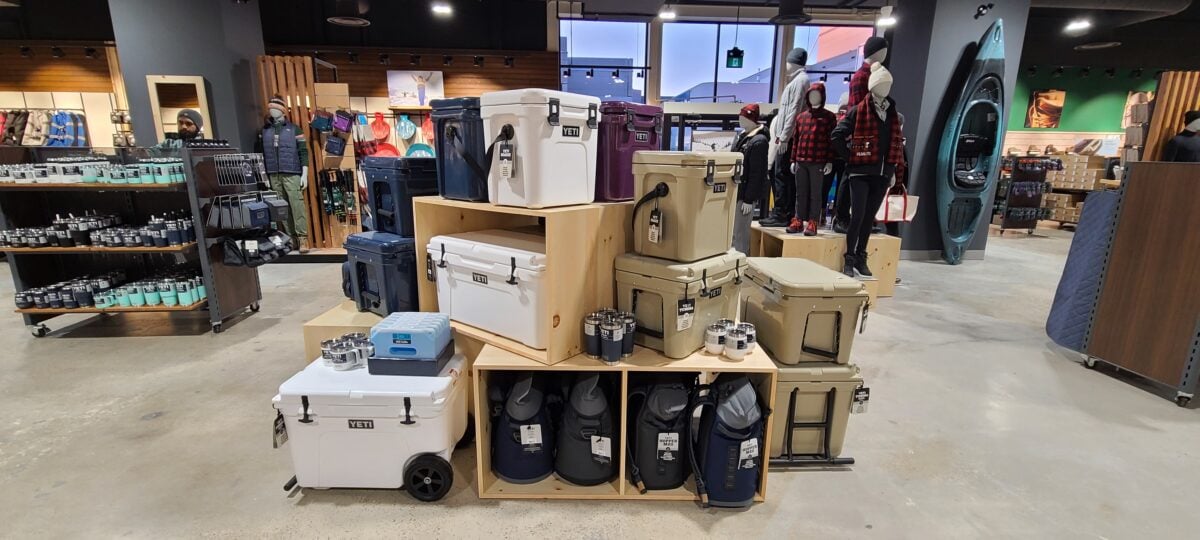
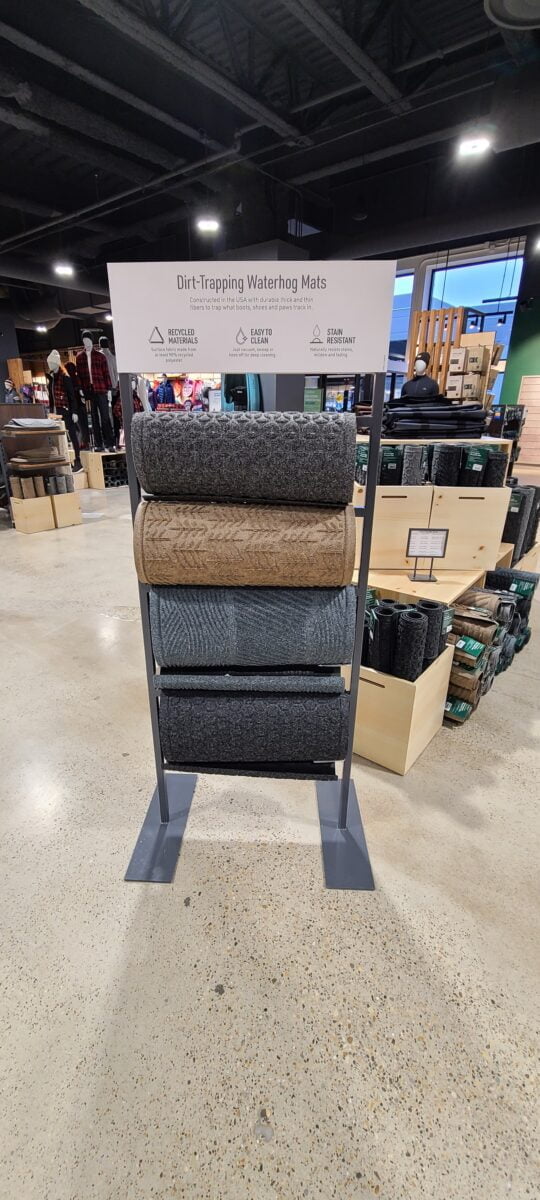
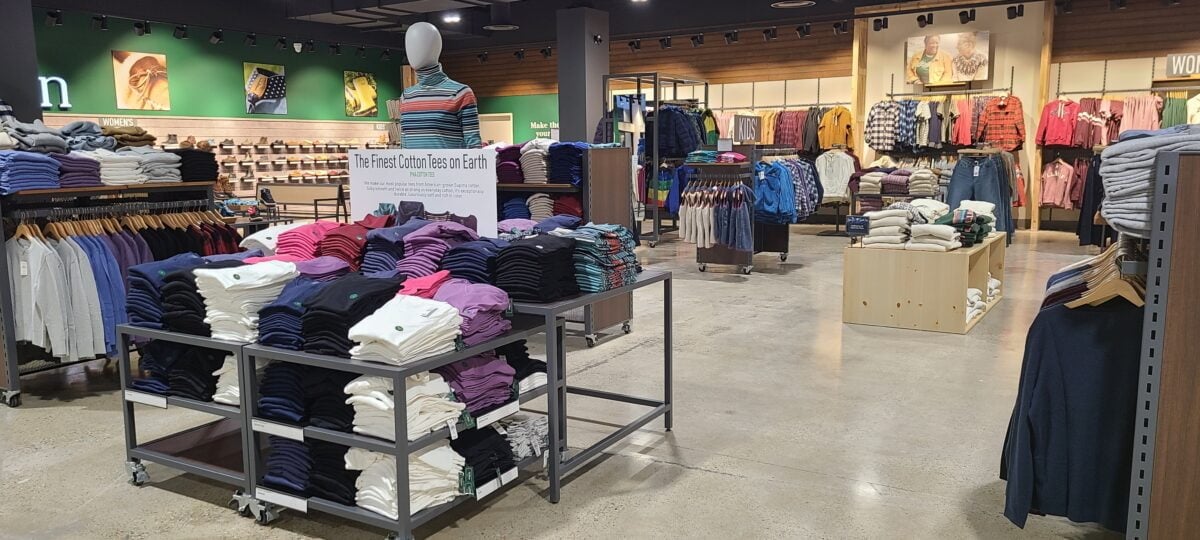
The Edmonton L.L.Bean store marks the twelfth store in Canada and second store for the retailer in Alberta. The Edmonton store carries all of the signature L.L.Bean product categories including Men’s, Women’s & Kid’s Apparel with an expanded Outerwear and Fleece, Active Apparel departments, Footwear, Travel, Home Accessories, Camping, Hiking & Backpacking, Pet Supplies and L.L.Bean Signature Collection.
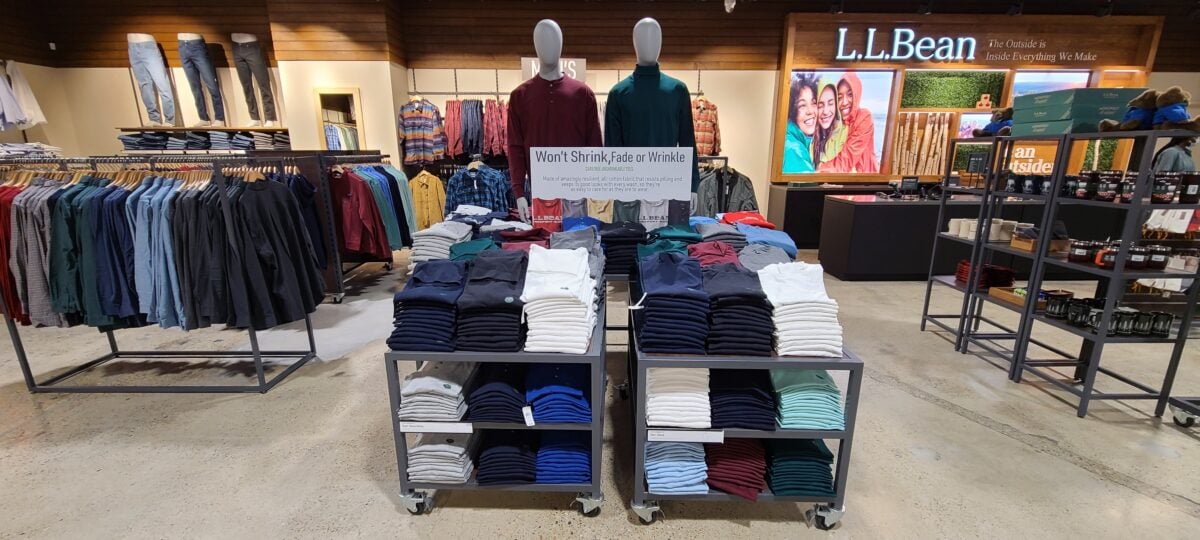
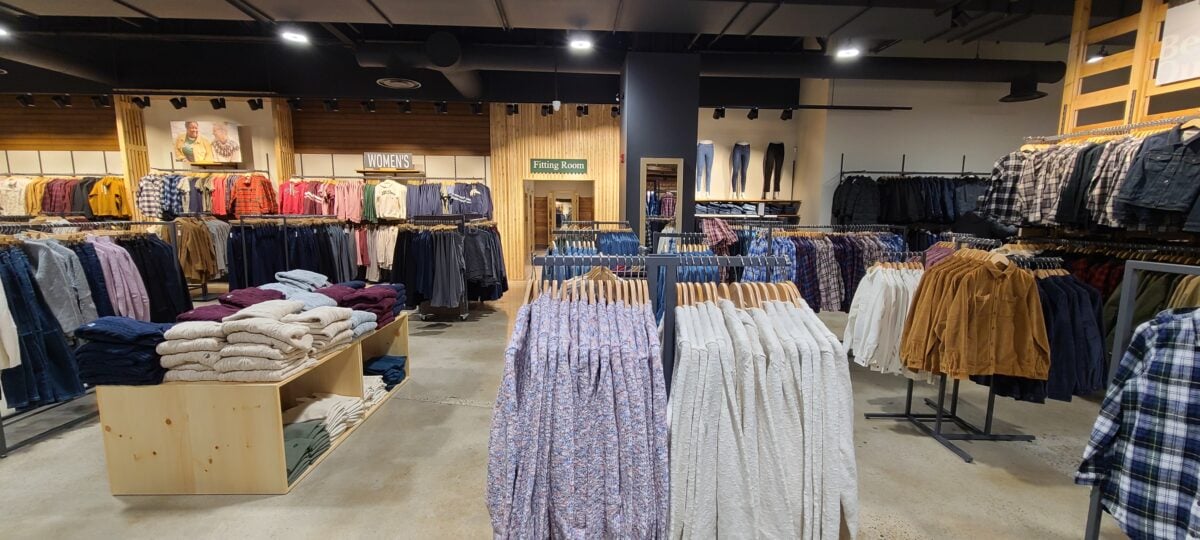
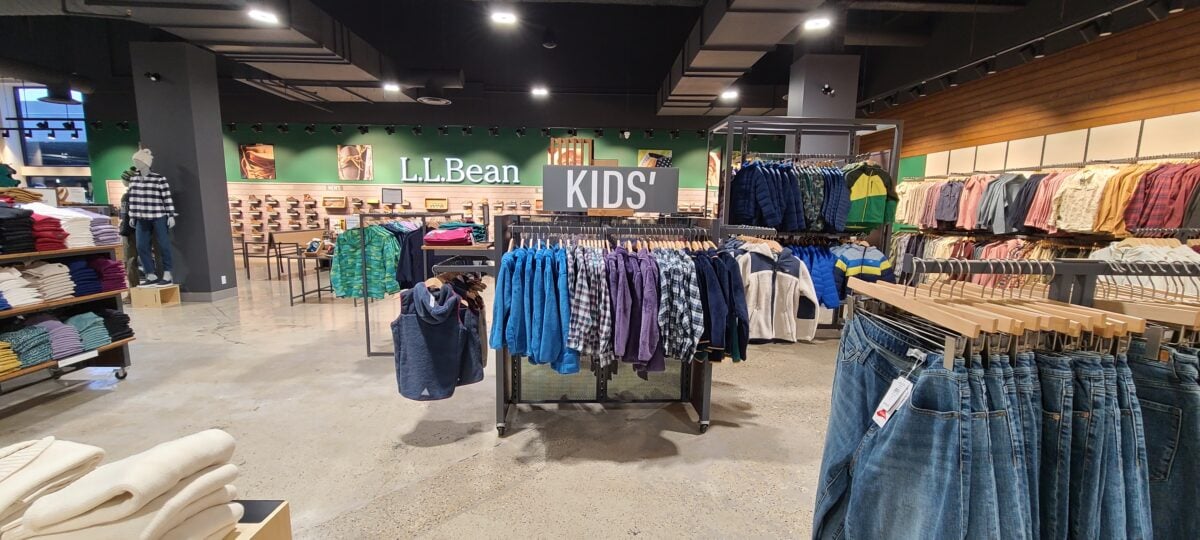
L.L.Bean at West Edmonton Mall (Image: Christopher Lui)L.L.Bean at West Edmonton Mall (Image: Christopher Lui)
Currently the store footprint is an expanded l-shaped layout encompassing 20,000 square feet. The store will grow to 25,000 square feet in spring 2023 with the current neighbour, Miniso, being slated to be relocated to another location within the mall. This will allow L.L.Bean to expand its mall frontage to mirror the same frontage as neighbouring Urban Planet. This will add an increase in the mall frontage to 60 feet from the current 30 feet and add approximately 5,000 square feet in floor space for additional men’s and women’s fashion categories as well adding increased sight-lines within the expanded L.L. Bean space.
Urban Planet at West Edmonton Mall (Image: Christopher Lui)
L.L. Bean and Miniso at West Edmonton Mall (Image: Christopher Lui)
We navigated the store with Shirel Shayo, Director of Retail, L.L.Bean Canada, Jaytex Group, and Olivia Daechsel, Marketing Coordinator, Jaytex Group. Starting at the mall entrance is the Active Apparel department which leads all the way down the corridor. Hero products in this section include the Airlight knits and fleece. The merchandising strategy focuses on using symmetry to showcase products.
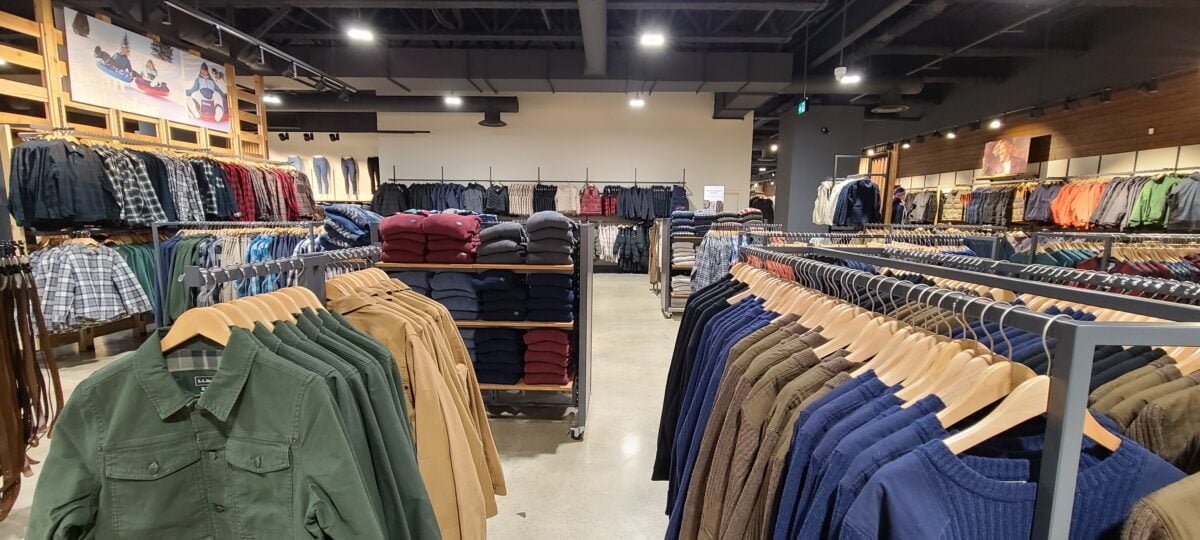
On the right side of the store is women’s product with men’s product on the left side. Similar products based on style and fabric are merchandised together and mirrored on the opposite side to allow shoppers of all genders to find similar products in the same space. Further down the corridor is the Outerwear Department which is a signature L.L.Bean category including the 850 power down-fill jackets in a variety of prints and colours.
L.L.Bean at West Edmonton Mall (Image: Christopher Lui)
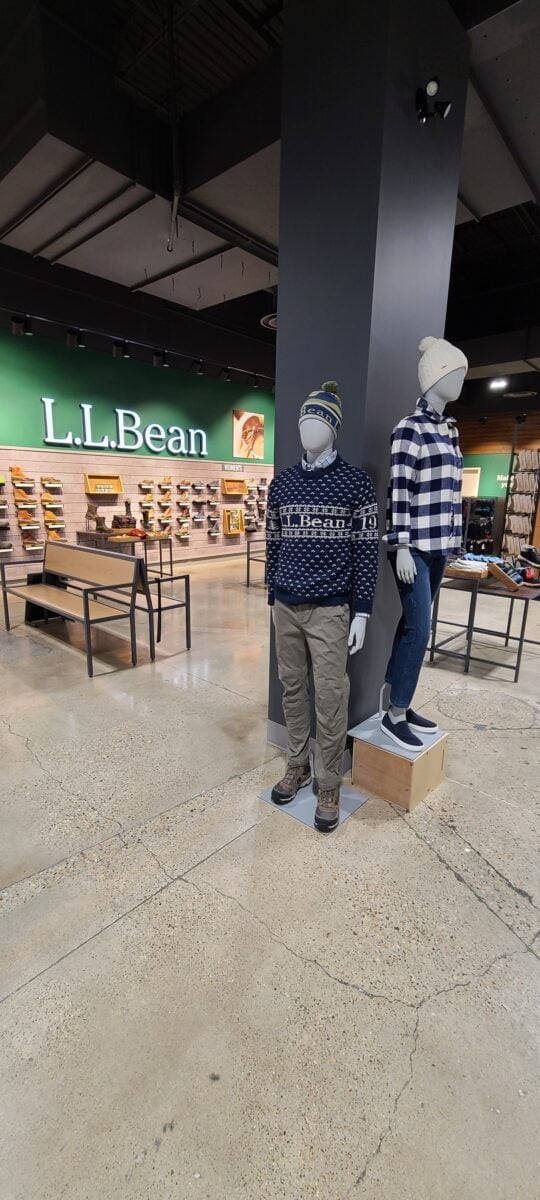
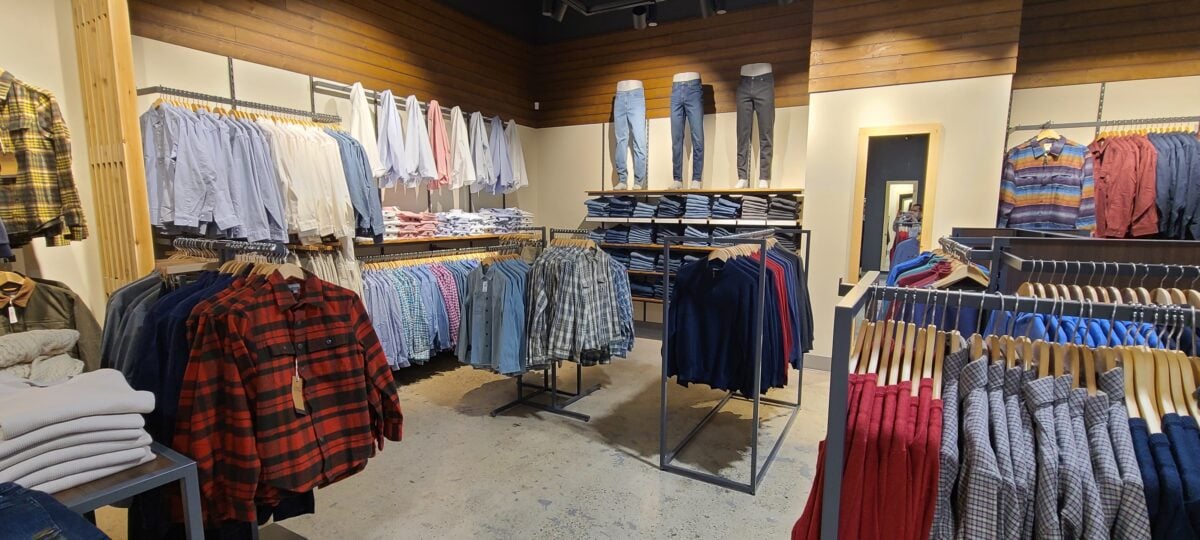
Turning right we entered the main space of the store which contains the Men’s and Women’s Clothing Departments. There is a Flannel Shirt Department that is stocked with L.L Bean’s Scotch Plaid flannel shirts made with high-quality Portuguese cotton flannel and signature plaid patterns. There is also a variety of clothing basics including polos, t-shirts and bottoms. For the winter season, there is a focus on sweaters made from a variety of materials including cotton, lambswool and cashmere. There is also a Kid’s Clothing department that stocks sizes from toddler to 18 allowing the entire family to be outfitted.
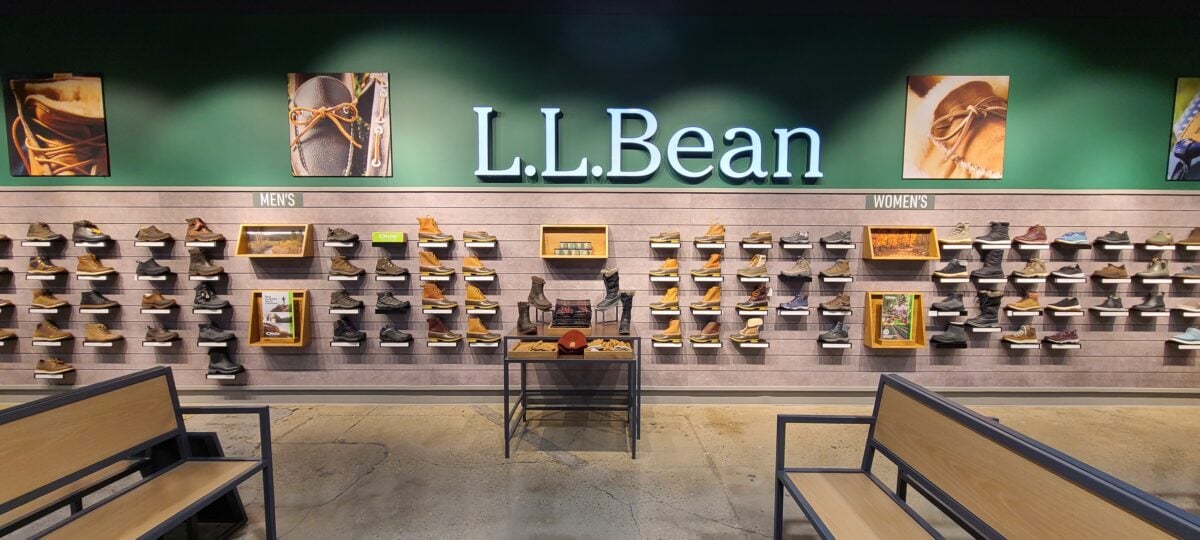
L.L.Bean at West Edmonton Mall (Image: Christopher Lui)L.L.Bean at West Edmonton Mall (Image: Christopher Lui)
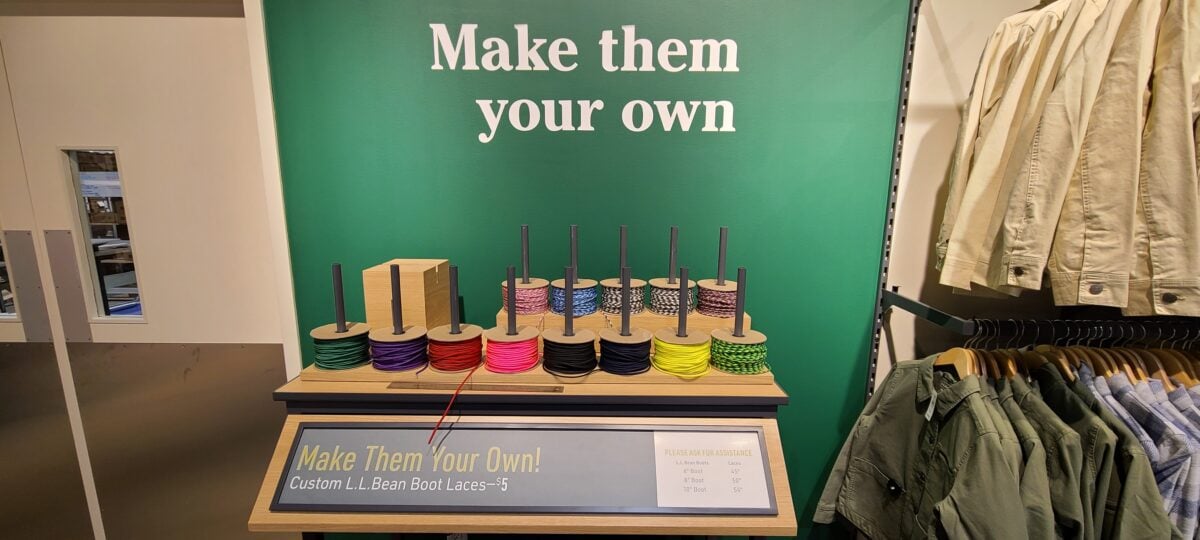
The focal point of this space is the Footwear department. There is a footwear wall that stocks all of the L.L.Bean footwear favourites including the Bean Boots and Wicked Good Slippers. There is also a selection of third party footwear brands including Keen and Oboz. To help shoppers personalize their footwear, there is a “Make Them Your Own” station. This personalization station allows shoppers to choose from a variety of different shoelaces to give their new footwear their own personality.
L.L.Bean at West Edmonton Mall (Image: Christopher Lui)
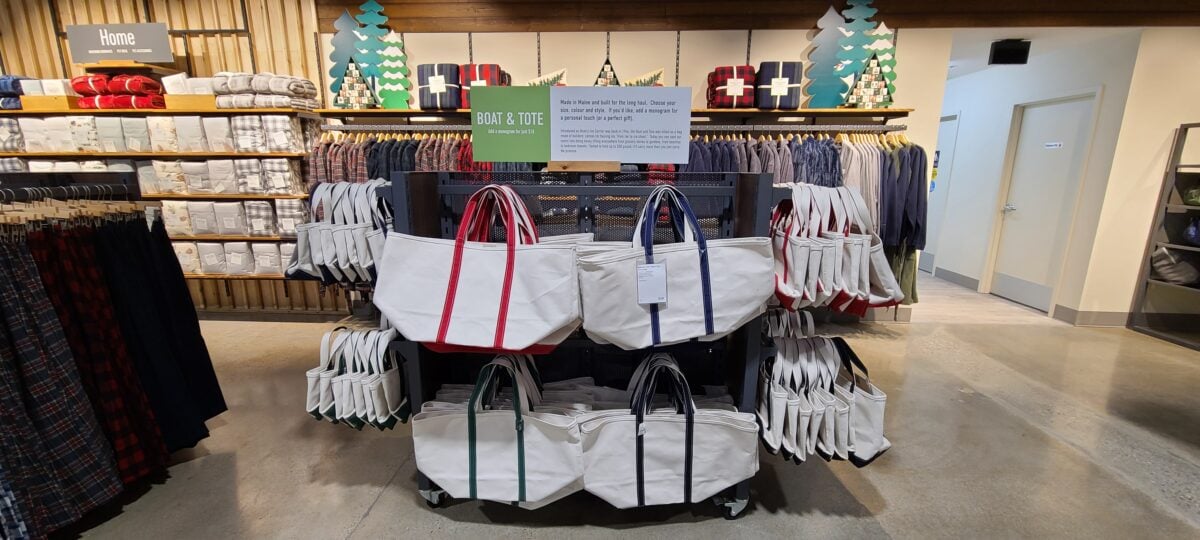
Turning left, we entered the Home Goods Department which is stocked with bedding, bath, rugs and mats and home décor. There is also a pet section to allow the pets to be outfitted as well.
L.L.Bean at West Edmonton Mall (Image: Christopher Lui)
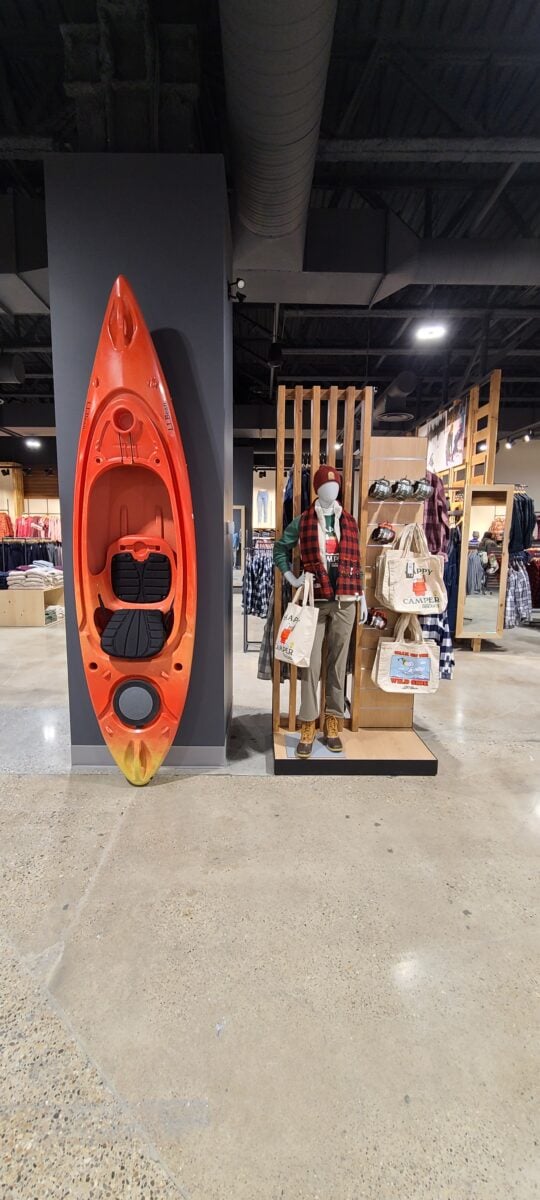
Rounding out the store tour is the Outdoor Equipment and Bags and Travel Departments. There is a selection of camping equipment and for winter a selection of snowshoes, sleds and snow tubes perfect for Edmonton winters.
L.L.Bean at West Edmonton Mall (Image: Christopher Lui)
The store also features its own exterior entrance that was the original relic from the Bretton’s department store many years ago. This entrance allows shoppers to enter directly from the parking lot as well as it facilitates easy pick up of larger items. To support a seamless integration with the e-commerce store, online shoppers are able to process online returns in-store and the online store features an in-store availability product check for customers wanting to shop in person.
L.L.Bean at West Edmonton Mall (Image: Christopher Lui)
During the tour, we encountered many loyal L.L.Bean shoppers that have been shopping online and through the catalogue for many years. Shayo mentions that, “These customers have been shopping the brand for so many years. It is great for them to see the catalogue come to life. The touch and feel goes such a long way.” Daechsel adds that, “I helped a customer today and he was in awe to see the product come to life.”
The Edmonton L.L.Bean store is positioned for success with an already loyal Edmonton customer base from catalogue and online. The prime location in West Edmonton Mall will help to engage with shoppers new to the brand and create new shopping experiences for existing shoppers.
We will follow up on the L.L. Bean Edmonton store once the expanded mall frontage is completed.
L.L.Bean at West Edmonton Mall (Image: Christopher Lui)
L.L.Bean at West Edmonton Mall (Image: Christopher Lui)
L.L.Bean at West Edmonton Mall (Image: Christopher Lui)L.L.Bean at West Edmonton Mall (Image: Christopher Lui)
L.L.Bean at West Edmonton Mall (Image: Christopher Lui)
L.L.Bean at West Edmonton Mall (Image: Christopher Lui)
L.L.Bean at West Edmonton Mall (Image: Christopher Lui)L.L.Bean at West Edmonton Mall (Image: Christopher Lui)L.L.Bean at West Edmonton Mall (Image: Christopher Lui)L.L.Bean at West Edmonton Mall (Image: Christopher Lui)
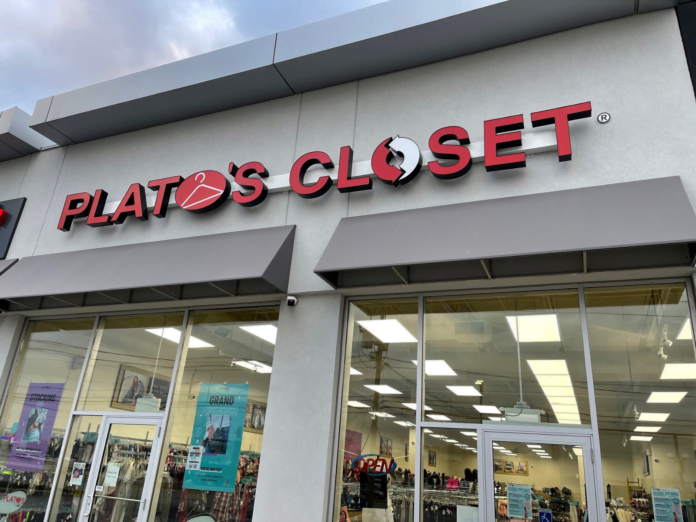
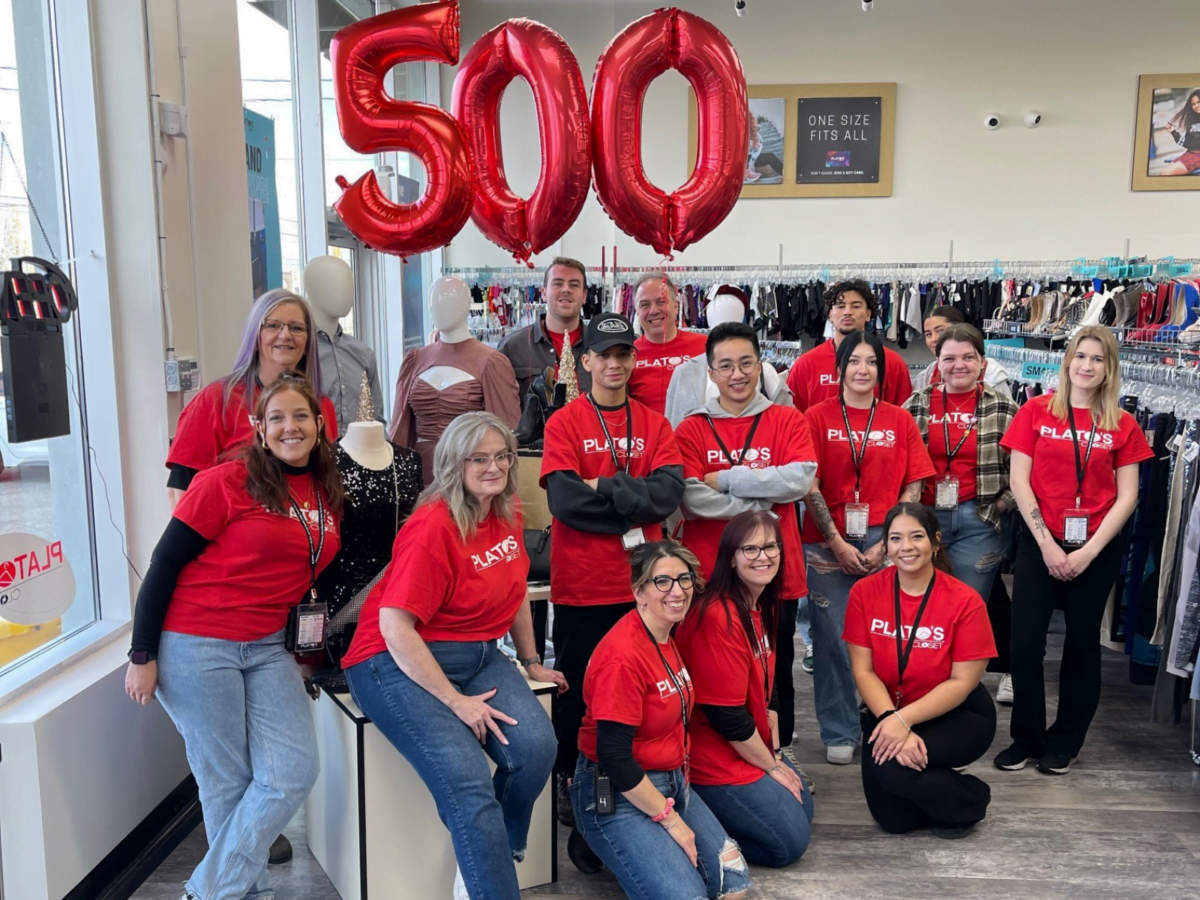
Plato’s Closet, a retail leader in the buying and selling of name brand, gently used apparel and accessories for teens and twenty-something girls and guys, has opened its 500th store in North America in Windsor, Ontario with plans to continue to expand the brand in Canada and the U.S.
The retailer was founded in 1998 and Winmark – the Resale Company began franchising the concept in 1999.
Brad Spencer
Brad Spencer, Vice President of Operations for Winmark, said Plato’s has opened 14 stores in 2022. It has 44 stores in Canada.
“We have 20 signed agreements for new stores, four of which are in Canada,” said Spencer.
“We are actively seeking candidates for our more than 450 open and available Plato’s Closet territories – 30+ of these open territories are in Canada. This really is a tremendous time to be looking at a franchise and in particular a franchise that is focused on providing ultra-high value with a strong focus on sustainability. There are so many great communities in Canada that would be perfect to add additional Plato’s Closet stores.”
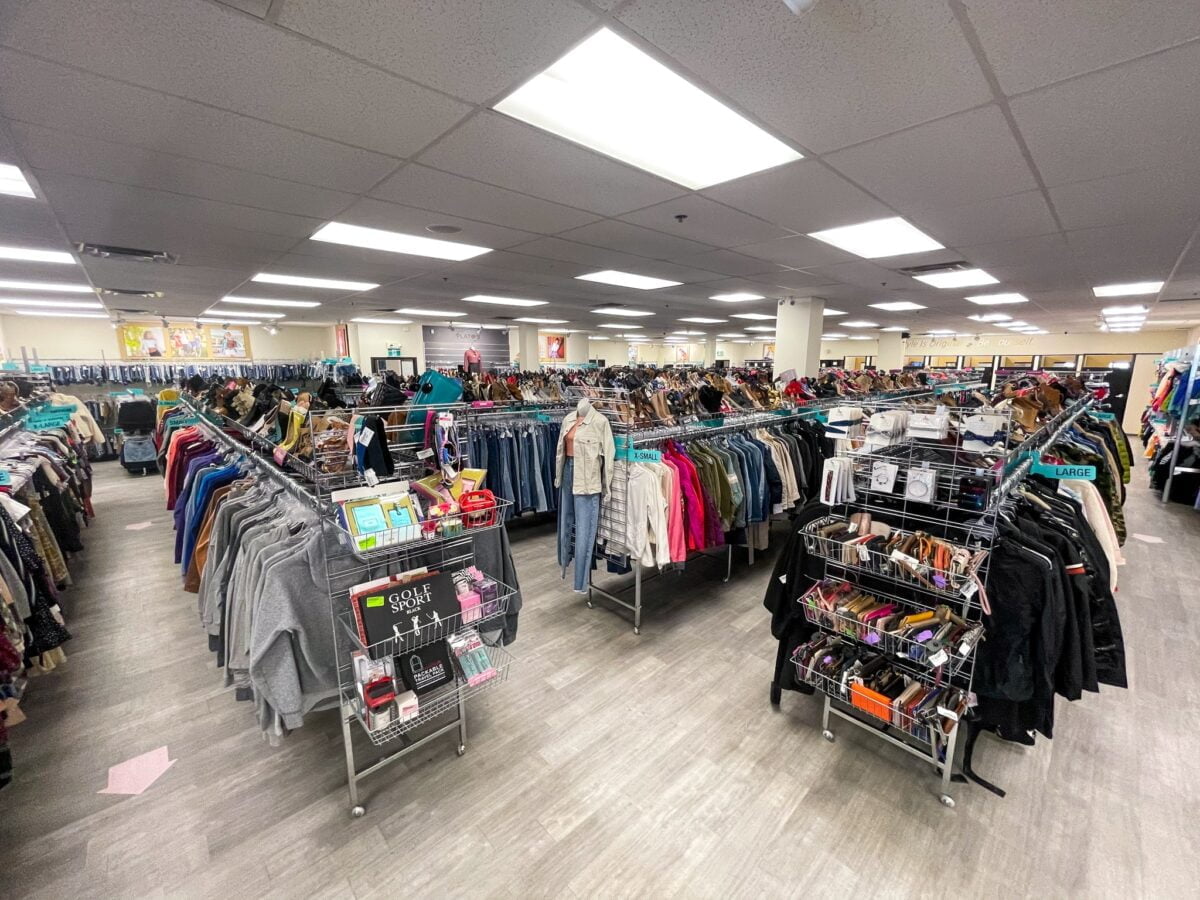
Plato’s Closet (Image: Winmark)
The store was named after Plato, the Greek philosopher. At the time the founders, Dennis and Lynn Blum in Columbus, Ohio were searching for a name for their newest resale concept, their youngest son was doing a report on Plato. After reading his report they felt Plato himself was synonymous with “smart”, “wise”, and full of “wisdom”, therefore the name would appeal to smart shoppers who want to save money by buying and selling “gently used” items.
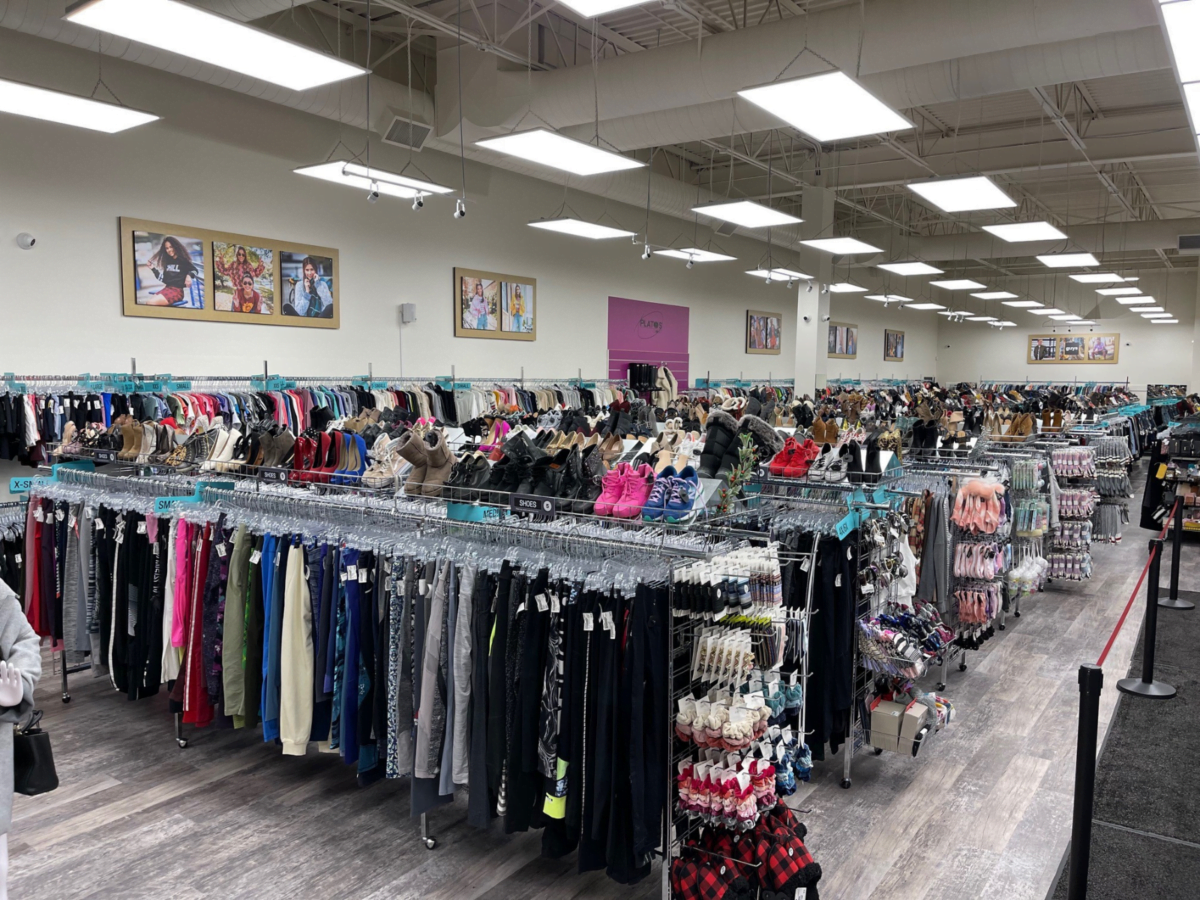
Plato’s Closet is a retail-resale store focused on the resale of Apparel, Footwear, and Accessories for teens and twenty-somethings.
“Our stores provide value to local communities in a variety of ways. First, we price the items we sell at 70-80 per cent less than regular retail. We know that everyone appreciates a good deal. Second, we provide a convenient process where we pay customers cash on the spot for their gently used items (not consignment), and third we provide a more sustainable way to buy and sell Clothing, Footwear and Accessories,” said Spencer.
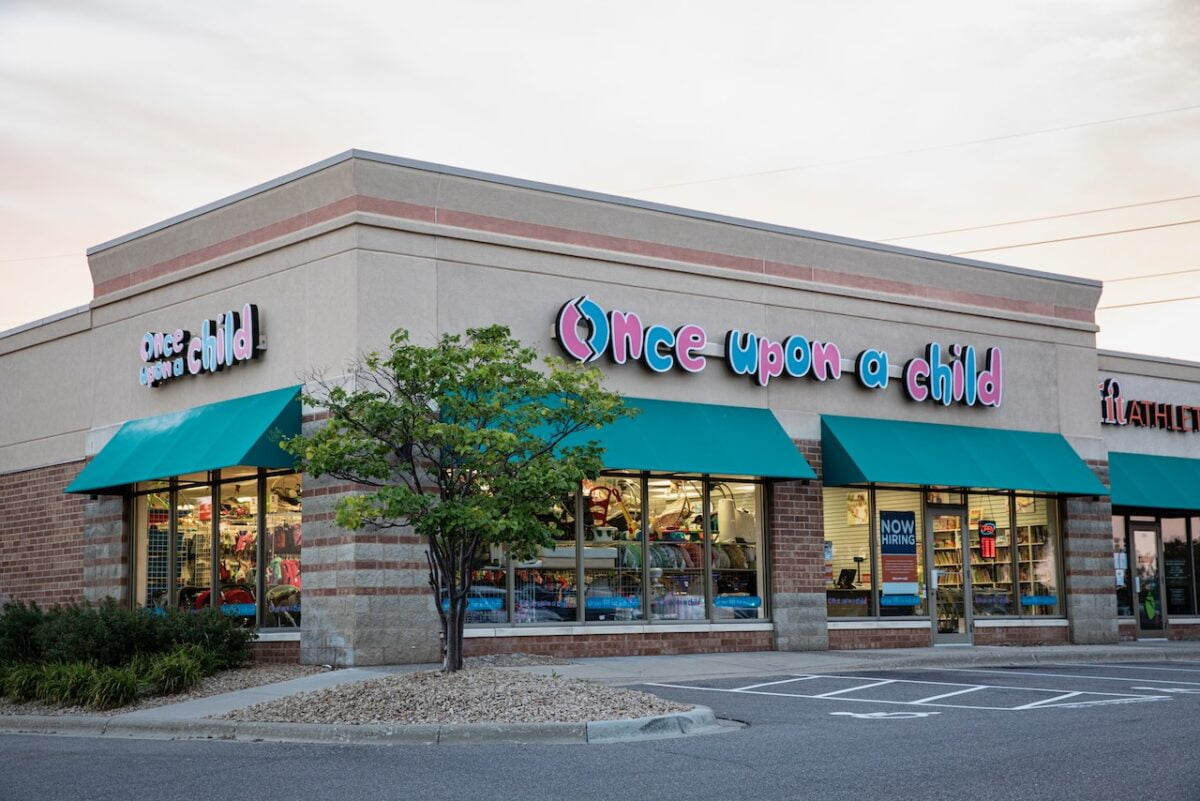
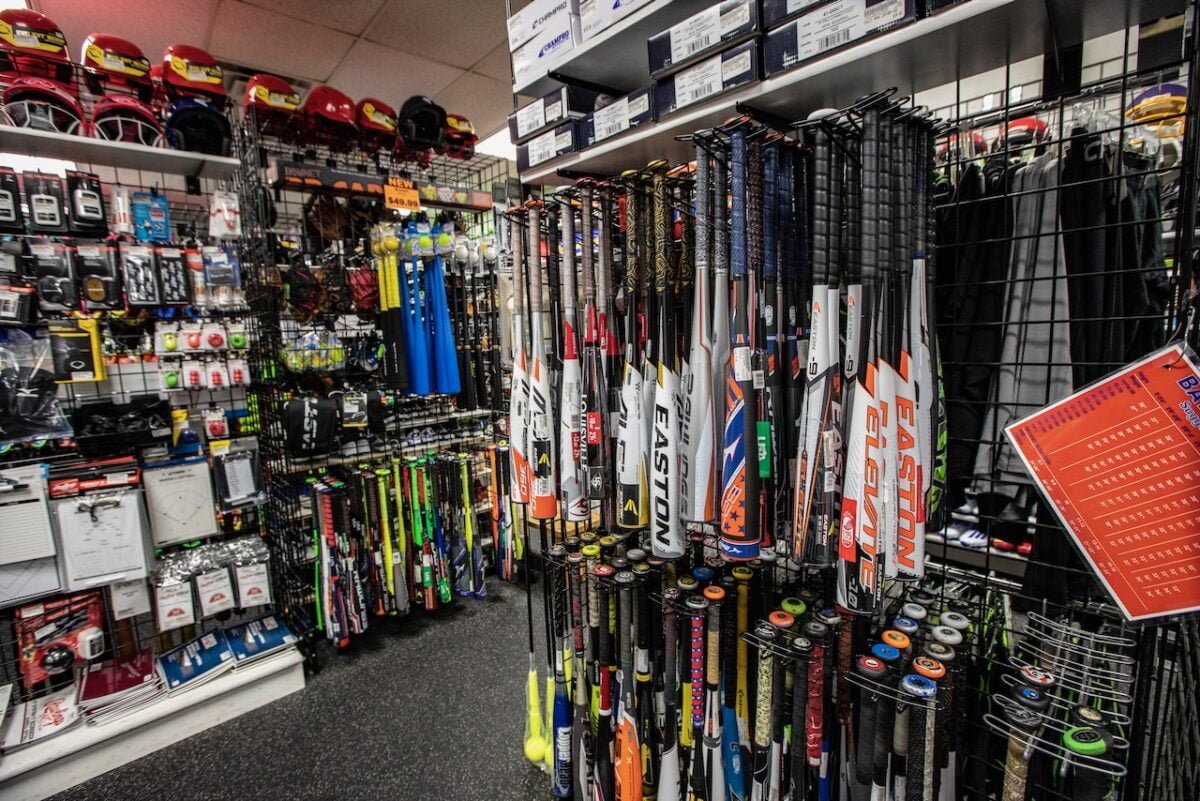
“What people don’t realize sometimes is that Plato’s Closet is part of a network of stores that Winmark – the Resale Company franchises that include Once Upon A Child, Play It Again Sports, and Style Encore. All of the stores are focused on reselling gently used items. That entire system is now at just under 1,300 Stores. In fact, an interesting statistic is that since 2010 Winmark – the Resale company stores have helped extend the life of over 1.5 billion items. The numbers are continuously growing but that comes out to over 432,000 items a day, or more than five items per second. It really is an important network of stores in terms of bringing sustainability to the local level.
“When Plato’s Closet comes to a community, customers love the fact that they have a convenient local and more sustainable option to find the current styles they are looking for. Since we are able to buy our items directly from the communities we serve we tend to get the styles and trends that resonate well in that area and meet the demand of the buying customers. Another unique aspect is the treasure hunt and thrifting aspect of our stores where customers can find unique items at great value. A treasure hunt sort of mentality.”
Plato’s Closet (Image: Winmark)
Spencer said the average Plato’s Closet puts over $350,000 back in their community by paying people for their items.
“We don’t want to look like a resale store, we want to look like a retail store. So the look and feel of our store is important and really we want to make the process convenient for our customers because bringing in items to sell is different. We don’t do that often in everyday life and we know people’s time is very valuable,” he said.
“A unique aspect of our stores is whatever the community is bringing us in is the type of items that are in style in that community and in terms that’s the type of items we can offer to them as well. It’s unique that in some areas there’s brands and styles that become more important. Canada is a good example.”
A Plato’s Closet store is typically in the 3,500 to 4,000 square foot range.
Image: Plato’s Closet London
Once Upon A Child is Winmark’s retail store concept that focuses on the resale of children’s related apparel, accessories, footwear, and equipment. Style Encore is for Women and Men’s clothing and accessories. Play It Again Sports is for sporting good related items and Music Go Round for Musical instruments and accessories.
“As the resale market continues to grow, Plato’s Closet and Winmark – the Resale company are more optimistic than ever that our stores are well positioned to expand in the communities we already serve and the many open territories we have. If people are interested in bringing a resale store into their community they should check out winmarkfranchises.com for information on the resale market and how our stores operate. Store operators don’t need to be experts in retail to get involved in these concepts, as Winmark – the Resale Company provides an exceptional model for entrepreneurs to follow,” said Spencer.
With over 2,800 available territories in the U.S. and Canada across all five brands, Winmark Corporation has its eyes set on targeted development and is actively seeking to grow with qualified franchisees. The brand has pinpointed Sacramento, Los Angeles and Boston for immediate expansion.
Once Upon a Child (Image: Winmark)Play it Again (Image: Winmark)
“When you look back 20-30 years ago when Once Upon A Child and Plato’s Closet were founded. It really was about the two key things – sustainability, being helpful and friendly to the environment, but also providing value to people that maybe couldn’t afford these items,” said Spencer.
“I think as times have changed things have become more and more expensive and really this is allowing people that maybe weren’t able to afford certain brands or certain styles, now can afford these brands since we’re able to bring in so much good quality product for them. Interestingly enough in kind of this inflationary environment our prices that we sell items for have not really risen because we don’t have the transportation costs. Our customers are our supplier.
“Sustainability has much more important to this younger generation and it’s more mainstream and acceptable to buy and sell used items and at the same time whether you’re in a good economic environment or poor people always need value and we will provide that during all times.”
Quick-service sandwich chain Quiznos continues to expand its presence in the country with plans to significantly grow in the marketplace.
The brand, which is based in Denver, has about 450 restaurants worldwide and just over 100 in Canada. The first store opened in Canada in May 1997 in Vancouver. The brand launched in 1981 in Denver, Colorado, where it has its home office.
Tim Casey
Tim Casey, President and CEO of REGO Restaurant Group, which owns Quiznos, said the pandemic slowed down growth for the company as it did for most brands in the industry.
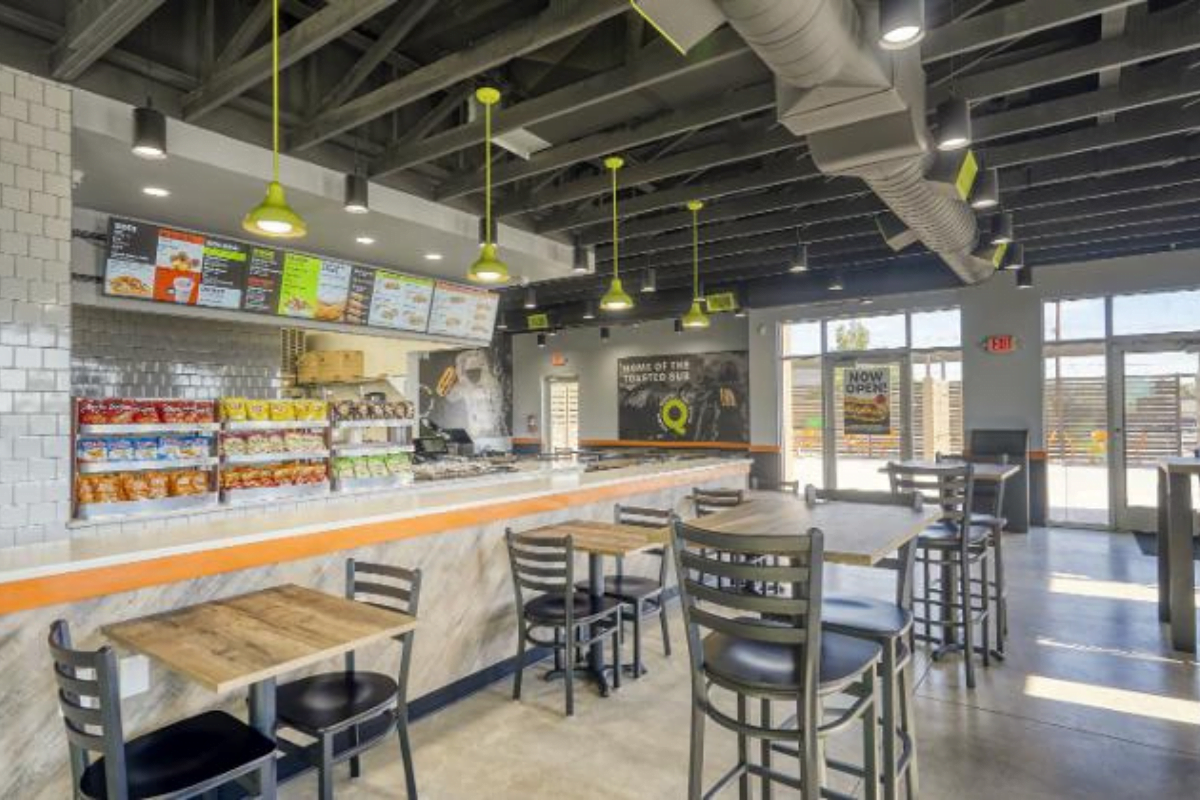
“What we are most excited about is our new restaurant which incorporates both a contemporized design, new menu, really a new look for Quiznos. We opened up in Vancouver (on SE Marine Dr). We’re very excited about that location. That location and that franchisee is really setting a very solid foundation in the Canadian market for what we believe future growth will be.
Image: Quiznos
“We’ve got several franchisees that have signed development agreements in Canada and we have several more pending. It’s a market that franchisees are very interested in. This new restaurant in Vancouver is doing extraordinarily well and it’s certainly created a tremendous amount of interest and enthusiasm with franchisees. That restaurant opened up mid summer of this year and it just continues to grow stronger and stronger each month.
“I think what consumers are most excited about is they’re really excited to see the new look of the brand, the team did an incredible job of some rigorous consumer research. They brought that to life in a very relevant and contemporized brand and what comes with that is not only the fan favourite menu items but entirely new menu items to drive the brand well into the future.”
Casey said since 1981 Quiznos has been and continues to be a fan favourite with tremendous consumer affinity across North America which continues to grow.
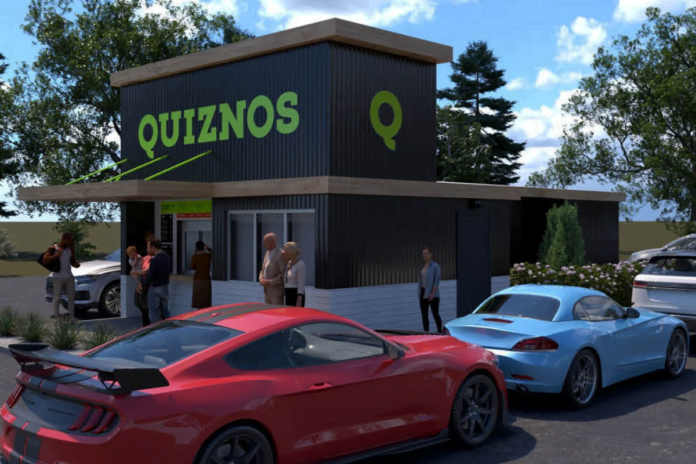
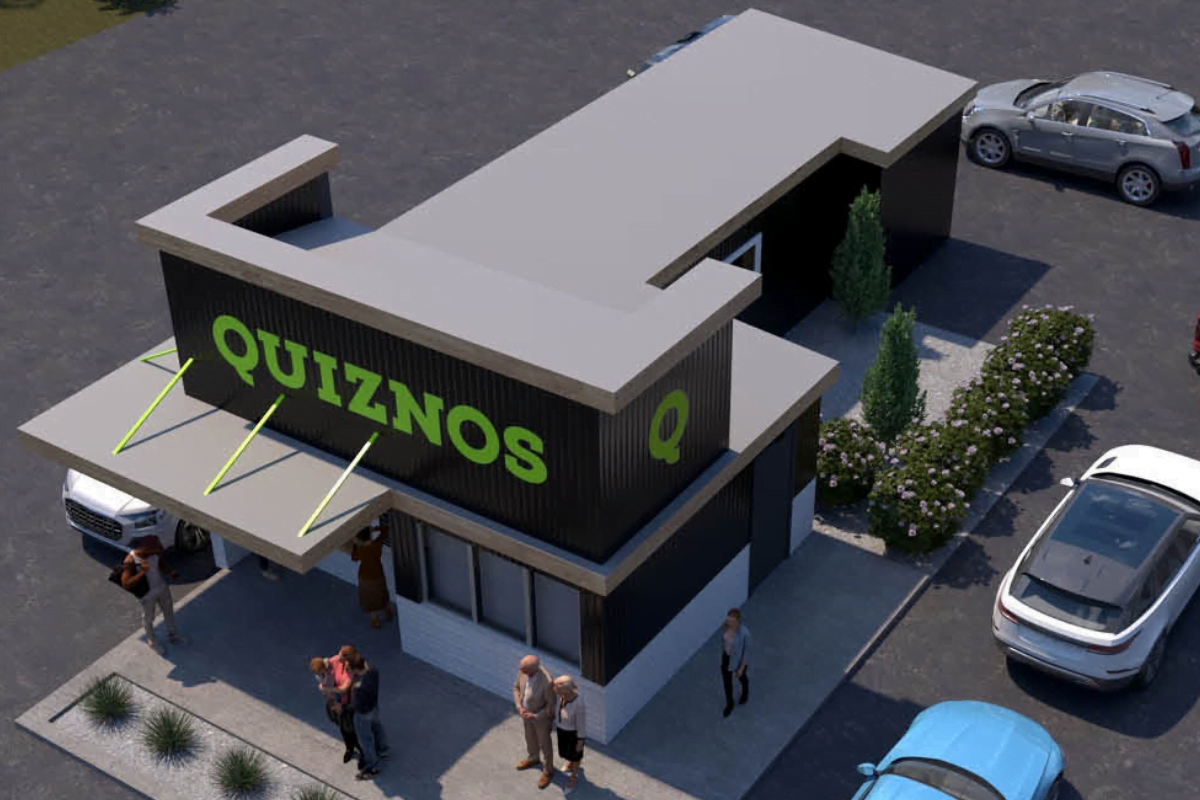
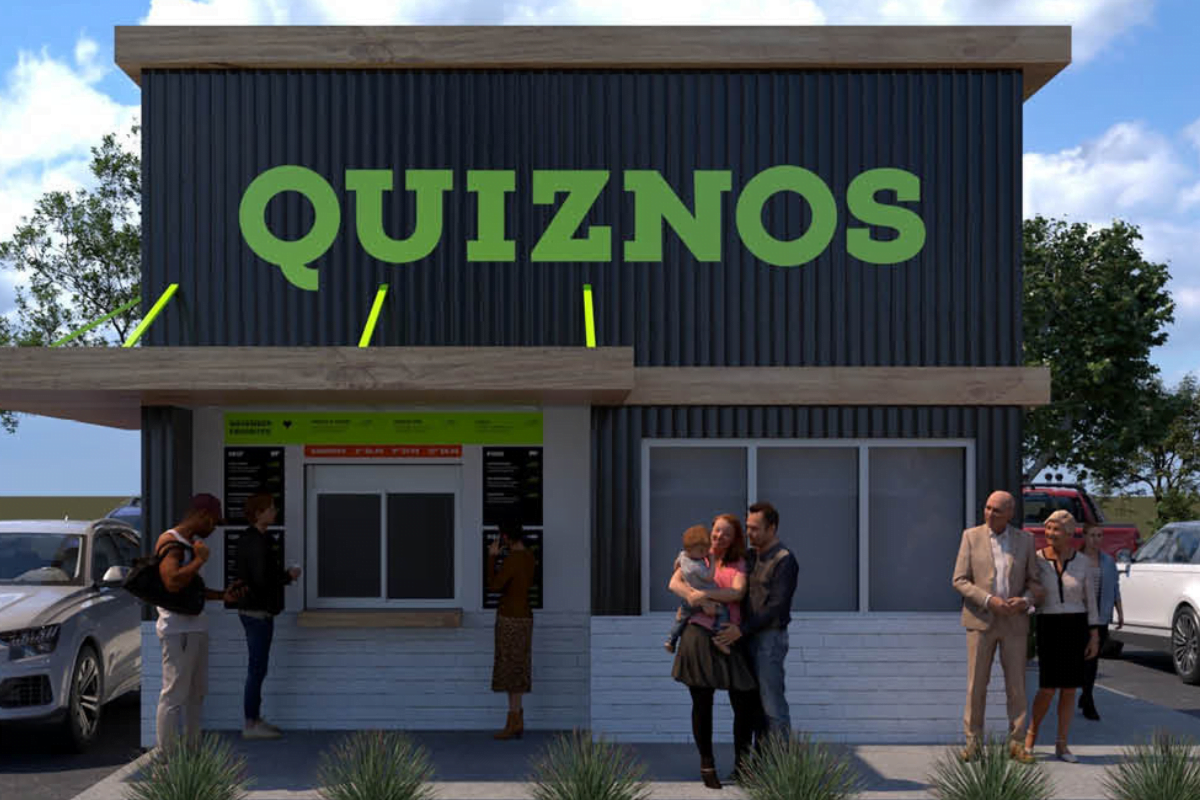
The Quiznos Qube (Image: Rego Restaurant Group)
“In several markets in Canada, they’ve just been waiting for us to come back to their marketplace,” he said.
“I think we have tremendous upside opportunity there. The enthusiasm that we see, the number of franchise agreements that we’ve signed, as I look back over our past it was a very large marketplace for Quiznos and I think our opportunities are very, very significant. We have both urban and rural appeal. The awareness in Canada is just as strong as it is in the US. So from that perspective we are well known, we are well thought of, the consumer affinity is very, very high. So based on what we are seeing and based on our history we think Canada can be a very large market.
“In our locations, we are looking for what most brands look for. We’re looking for good traffic patterns, we’re looking for good visibility, we’re looking for good ingress and egress so consumers have easy access to the brand. We’re looking to be in those areas that consumers have already identified as lunch and dinner hubs.”
The Quiznos Qube (Image: Rego Restaurant Group)
Casey said the company continues to look for and attract individuals as franchisees who are strong entrepreneurs with solid business acumen.
“I think when you combine great real estate and great site selection with the franchisees that we are attracting it means nothing but great things for the brand going forward,” he said.
“Quiznos has always been known for innovation. When this brand started, we were the most innovative in this space. We were the first ones to offer a toasted sub sandwich . . . I think consumers have noticed that DNA, that gene, of innovation is back in a big way . . . We have gotten back to the roots of our history and our legacy and innovation is at the core of everything we do.
“We’re not just innovating in our menu but also in our restaurant design.
“I believe we are one of, if not the only brand, that offers franchisees flexibility as to how they build out their restaurants. We offer the traditional bricks and mortar which you might find in a shopping centre. But we also have a proprietary exclusive relationship with a company called BCubed Manufacturing and they’re helping us offer to our franchisees a very innovative approach to providing them with a freestanding drive-thru restaurant in their marketplace. BCubed is expanding their manufacturing capabilities to include Canada by mid to third quarter of 2023. We’re excited about that. We’re excited about it because once again it’s got the spirit of innovation that we’re all about and number two we’re all about the franchisee and being able to provide them with two options that they can choose from to maximize the return on investment. We think that’s what all franchisors should be doing. And we’re very proud of the fact that we’re one of the first to offer such flexibility to optimize the ROI of our franchisees.”
Retail Insider is streamlining its Canadian retail news from around the web to include a handful of top news stories that can be viewed quickly during the day. Here are the top stories from the past 24 hours.
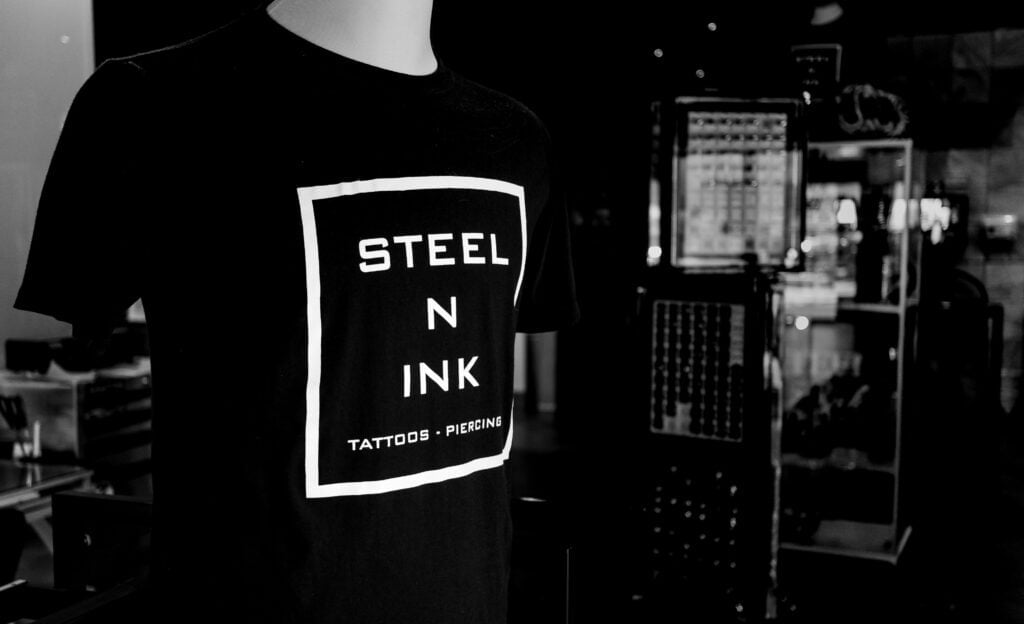
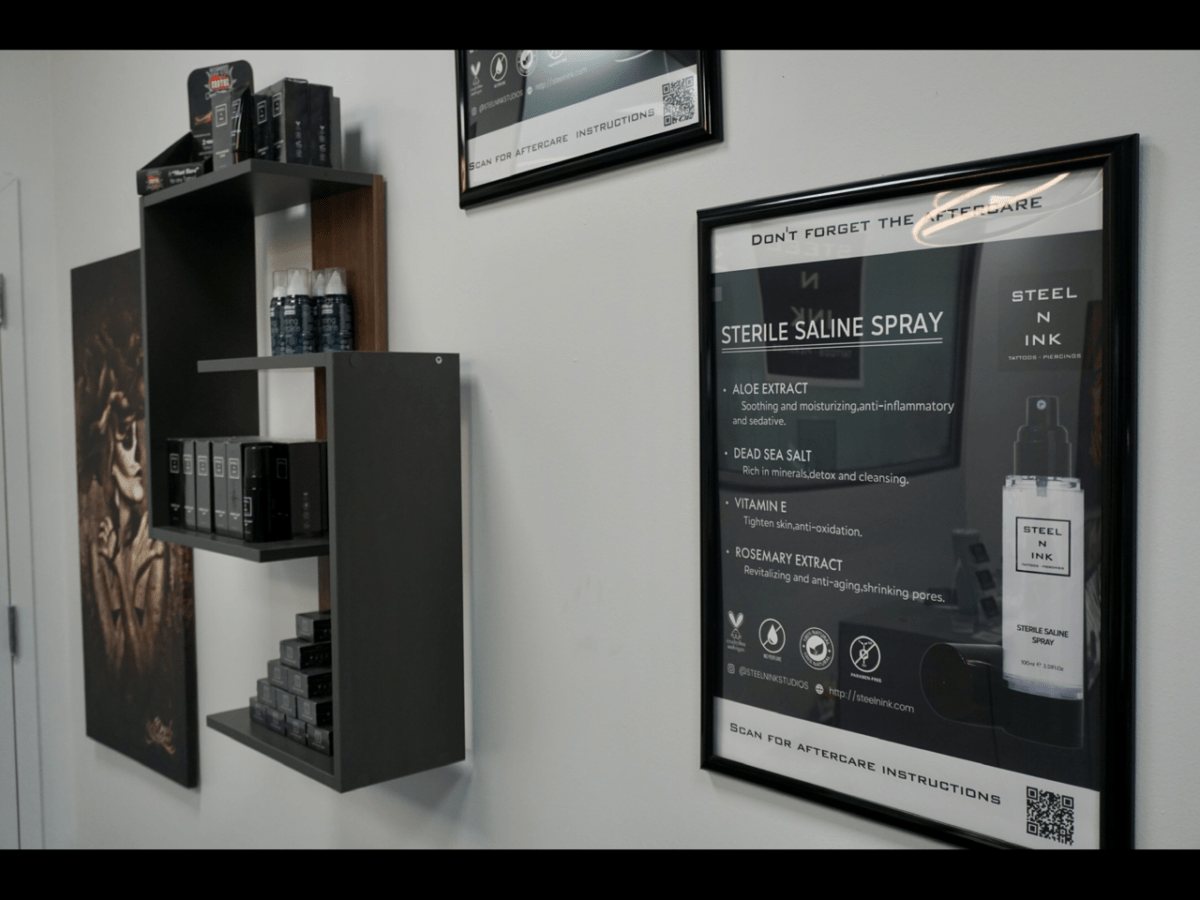
The idea for Jamie Randolph’s Steel N Ink business began years ago when he took a summer job with a family friend in Sauble Beach, near Owen Sound, Ontario.
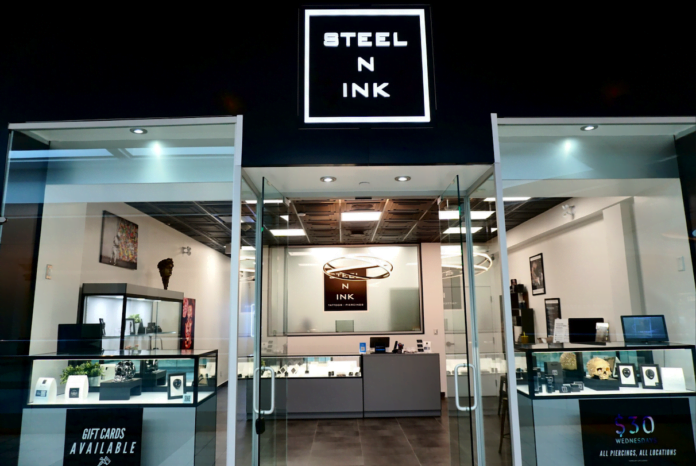
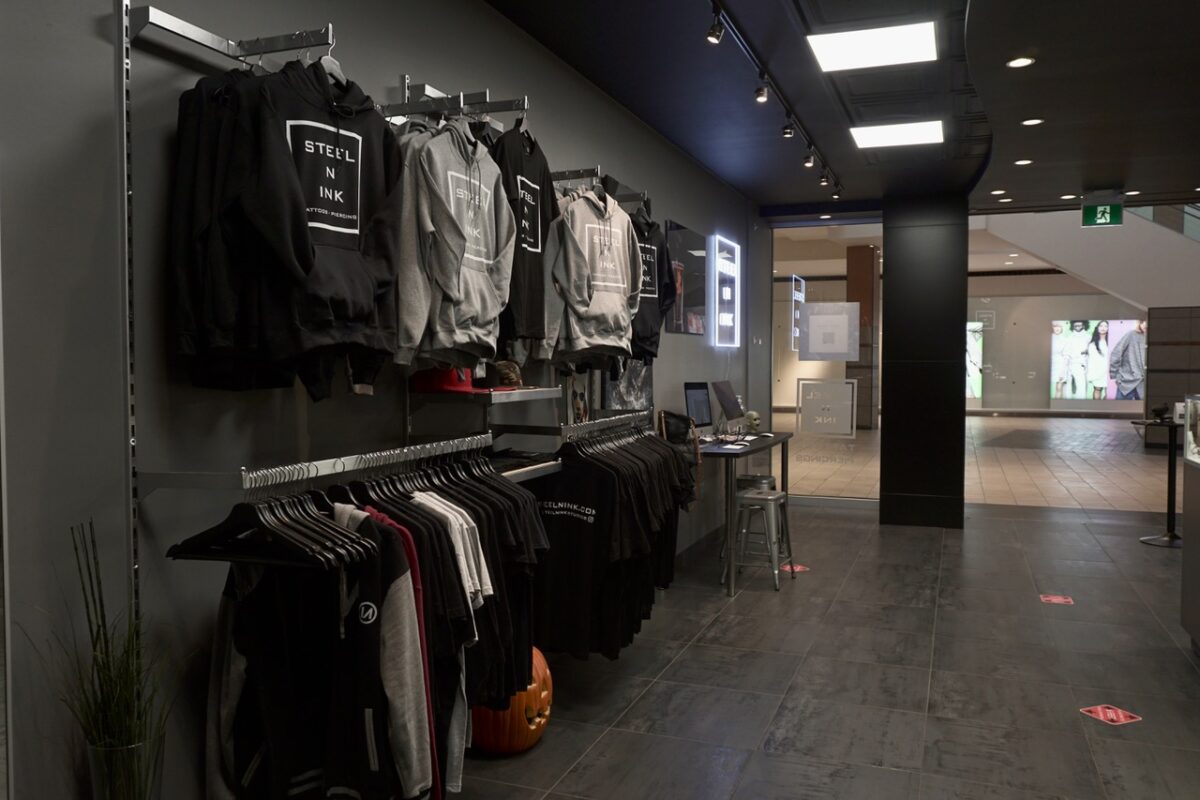
Today, the upscale tattoo, body piercing studio, which has top quality body art and body jewelry, is opening its 11th location next month in the Scarborough Town Centre as it continues to expand its retail footprint in different malls.
“When I was 17 years old I went to Sauble Beach to work as a summer job. It’s a seasonal beach town. I went to work for a family friend. He owned a body piercing and T-shirt store and I worked there and then I bought it in 2005 and made it a tattoo studio as well,” said Randolph, CEO and Founder.
Image: Steel N Ink
The first location opened in Sauble Beach in 2005. Randolph said other locations are scattered throughout southern Ontario and beyond.
“The last maybe five locations we’ve found our niche in malls. We started in 2017, we opened in Stone Road Mall in Guelph. It was very successful for us and we continued with the (CF) Lime Ridge Mall in Hamilton. Then we did (CF) Shops at Don Mills in Toronto. Then Upper Canada Mall in Newmarket. Then we went to (CF) Polo Park in Winnipeg. So we opened our first out of Ontario store,” said Randoph.
“We’re opening in Conestoga Mall (Waterloo) this month and then Scarborough Town Centre after that and we have a few more planned for 2023.”
Image: Steel N Ink
It’s not the typical store that one would see in a mall environment.
“As far as I know, when we opened in Guelph we were the first in that class of a mall,” he said.
“I started in Sauble Beach and everyone always said to me who would get a tattoo on vacation. You know it’s just people. When you have a large crowd of people you have traffic. It’s very inviting. People come in and everyone’s thinking of doing a tattoo but a lot of people don’t go out of their way to get it done and other studios kind of make it hard to book in and they’re in certain parts of towns.
“We are to the masses. We’re in a great spot in Sauble Beach. Now people who wouldn’t typically walk into a tattoo shop come see us. Seeing that, we went to Collingwood which is also a tourist place and then at Barrie across the street from the mall because they wouldn’t allow me in the mall at the time. Then we went to the Fallsview Casino in Niagara Falls and that was tremendous for us.
“Then I said we’ve got to go into malls and everything got started from there.”
Image: Steel N Ink
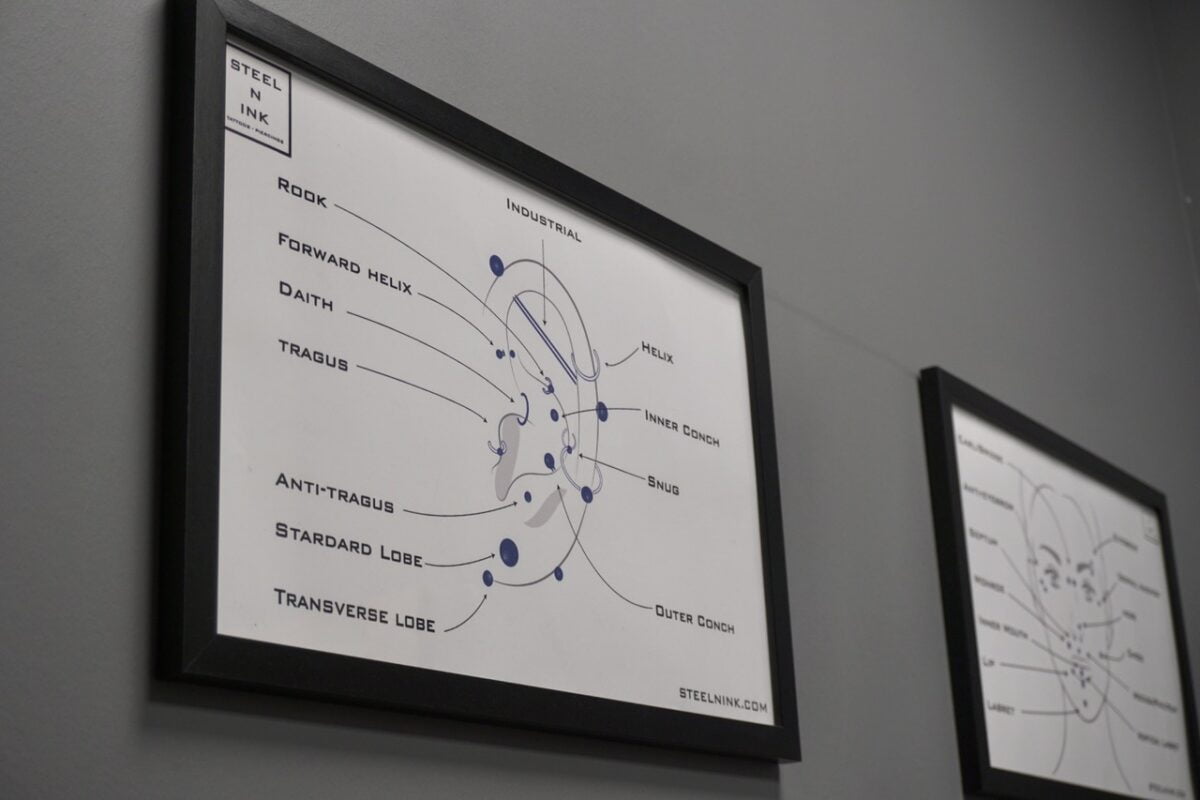
Randolph said besides tattoos and body piercing the locations have a large selection of fine body jewelry.
“I’m talking 18 karat gold, diamonds. Really high end body jewelry. Stuff you don’t see everywhere,” he said.
“We cater to the clients. A lot of tattoo studios they cater more to themselves. They’re artists and they want to make their shops about them. We really cater to the clients. We want people that wouldn’t typically walk into a tattoo shop come into ours, feel free to ask questions, feel comfortable in there.
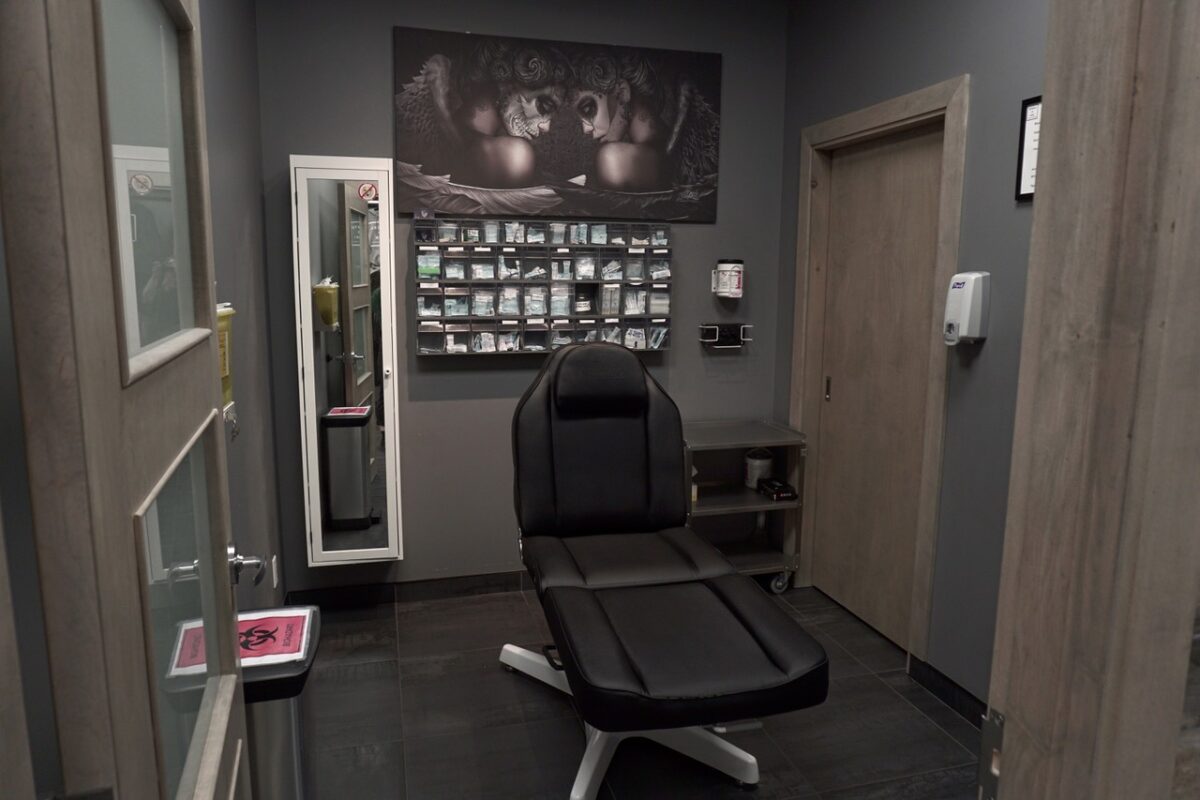
“We make friendliness a priority. Our facilities are purpose-built. We run it like a medical clinic in a way.”
Image: Steel N Ink Image: Steel N Ink
Currently Randolph owns all the stores corporately.
“We’ve just come out with a franchise model. So we’re looking to use that to expand nationally in 2023,” he said. “Hopefully continue expanding, expanding.
“Our model works great. Every market we go into we seem to be very well received and we just think this could spread. Every decent mall should have a Steel N Ink.”
When Randolph bought the business, it had a different name. And he was trying to come up with a new name. Back in the day, he said, all body jewelry was surgical steel. Now there’s different material as well. But needles are still made from steel.
The name just seemed natural to illustrate what the company does and offers.
The Interview Series podcast by Retail Insider Canada is available on Apple Podcasts, Stitcher, TuneIn, Google Play, or through our dedicated RSS feed for Overcast and other podcast players. Also check out our The Weekly podcast where Craig and Lee discuss popular content published on Retail Insider which is part of the The Retail Insider Podcast Network.
Drop us a line at Craig@Retail-Insider.com. You can also rate us in Apple Podcasts or recommend us in Overcast to help more people discover the show!
Background Music Credit: Hard Boiled Kevin MacLeod (incompetech.com). Licensed under Creative Commons: By Attribution 3.0 License. http://creativecommons.org/licenses/by/3.0/