Advertisement
Advertisement
Home Blog Page 793

The Webster Chooses a Facade Colour for its First Canadian Store in Toronto’s Yorkville Area 

The Webster in Yorkville (August 2021) Photo by Craig Patterson

Miami-based multi-brand luxury retailer The Webster will open its first Canadian storefront this fall at 121 Scollard Street in Toronto. Many wondered what colour the store’s facade would become after an overhaul of the historic townhouses on the site which until recently were sandblasted back to its natural brick. 

For months, construction workers weren’t even sure what colour the store’s exterior would ultimately be and it’s now been revealed — the store’s facade will be pink, similar to several other locations for the retailer in the United States. The other contender for the exterior was the colour gold according to multiple sources. 

The pink facade at The Webster will complement another retailer nearby — fashion guru Nicholas Mellamphy operates his by-invitation showroom Cabine nearby on Hazeton Avenue which features a pink doorway. 

The Webster’s Toronto store will span about 6,500 square feet in a building that was built in 1884 by Leeds Sheppard and it will be preserved and designed by Stéphane Parmentier, a Parisian interior designer who is also the creative director of The Webster Home vertical. The Scollard Street store will be The Webster’s eighth retail store and the brand’s first outside of the United States.

Rendering of The Webster Facade in Yorkville. Rendering: The Webster

First Capital REIT owns the 121 Scollard Street building which is currently undergoing a renovation to house The Webster.

The Webster boasts a unique assortment of luxury brands and products not found elsewhere. Founder Laure Heriard Dubreuil for years developed relationships with key brands and obtains some merchandise via consignment. Prior to founding The Webster, Ms. Heriard Dubreuil lived in Paris and worked as a top merchandiser for Balenciaga and Yves Saint Laurent.

The Webster was founded in 2009 by Heriard Dubreuil when she opened a 20,000-square-foot store in the former Webster Hotel at 1220 Collins Avenue in South Beach, Miami. The Art Deco building spanned three floors and became a draw for locals and tourists. Rather than organize the store according to brand, Heriard Dubreuil merchandised it as if it were a personal wardrobe by mixing big brands with the emerging, arranging everything intuitively by mood, which was revolutionary at the time.

A decade after opening the first location, The Webster opened stores in Bal Harbour (Bal Harbour Shops) near Miami, in Houston Texas (adjacent to Houston Galleria) , at South Coast Plaza in Costa Mesa California, in New York City’s SoHo area, in Los Angeles at the Beverly Center, and most recently in Montecito California. The Webster also has an outlet store at Sawgrass Mills in Florida. Each store has its own personality.

We’ll follow up this article when the store opens this fall. 

The Webster in Yorkville (August 2021) Photo by Dustin Fuhs

Canadian Retail News From Around The Web For August 17th, 2021

Canadian Retail News From Around The Web

Top Stories: National

Central/Eastern Canada News

Western Canada News

25 Years Since the Closure of Consumers Distributing Stores [Retrospective]

Photo: Richmond Hill/GTA - Then and Now via Facebook

This month marks the 25th anniversary of the bankruptcy of catalogue-based Canadian retail chain Consumers Distributing — the reminder was announced on the weekend in Halifax ReTales. Consumers Distributing had stores in all provinces in Canada and for years was a part of Canadian retail history. 

The main product focus of Consumers Distributing was jewellery, appliances, kitchenware, toys, personal care, discount furniture, electronics and seasonal goods. Stores were laid out in a series of glass cabinets that displayed merchandise. Customers would select their products from catalogues located throughout the store, filling out a request form for the item they desired. This form was given to a store clerk and processed for fulfilment, with the goods stored in non-public space in a warehouse system stock area behind the counters.

Two main catalogues launched yearly with seasonal mini-catalogues issued more frequently to highlight various items. The entire line changed twice a year and new items were introduced only with a new catalogue. Specialty lines such as batteries, film and some jewellery lines on counter racks were not found in the catalogue. Photo processing was a service available in many stores.

Those who remember the retailer may realize its potential today as a business model — if it had maintained operations and innovated, it could have been what Amazon is for retail today. The business model of Consumers Distributing has been described as “Internet shopping before the Internet”.

At the height of its success, Consumers Distributing had 243 stores in Canada and 217 in the United States. The chain was founded in 1957 by Jack Stupp and Sydney Druckman in Toronto and the company was taken public in 1969. In 1988, the chain’s revenues surpassed $1 billion annually. Despite its success, customers often complained of products being out of stock which led to a concept called the ‘Flashboard’ which was a steel bulletin board with magnetic catalogue numbers for out of stock items.

In the 1980s the retailer launched a chain of toy stores called Toy City (Toyville in Quebec) and in 1990 stores became Toy City/Consumers Distributing before being shuttered in the mid 90s. Quebec-based grocer Provigo bought Consumers Distributing in 1987 and it was sold in 1993 to a Belgian holding company. 

Stocking issues remained a problem for the retailer into the 1990s when it undertook several initiatives to dispel its out-of-stock perception. That included launching ‘super stores’ that had all of the in-stock products on display, as well as free home delivery or store to store transfer for items that were not in stock. Consumers Distributing also implemented a state-of-the-art inventory system that could check the availability of other stores in real time, and would suggest alternate products at the store which were in stock.

The retailer was one of the first in Canada to implement the real-time stock checking and prepayment for products available at other branches and the main warehouse. These initiatives, including the superstore expansion, free delivery, and costly new inventory management software led to the company being overextended financially.

High operating expenses along with increasing competition and changing retailing trends (such as warehouse format stores) contributed to the chains demise. Other issues contributing to this was deflation in several product categories including jewellery and electronics as well a lingering recession and the expansion of Walmart into Canada all contributed to the company’s bankruptcy in 1996. 

In 2006, former Consumers Distributing employee Marc King relaunched the company as an online retailer until 2013 when it was shuttered amid controversy — King was accused of owing back wages to employees. In May 2015, the company was issued a compliance order by Consumer Protection B.C. for deceptive acts and practices and for failing to issue refunds.

Interesting, retailer Argos, modelled on the Consumers Distributing format, continues to succeed in Ireland and the UK. And interestingly as well, there is still a Consumers Distributing website selling goods with a Canadian office in Montreal and a US office in Florida.

Podcast: Why Hudson’s Bay is Separating its Physical Stores and Online Business

Craig and Lee talk about HBC’s recent announcement that the company is separating its physical department store business from its online operations, and what it means for the future of the retailer. Craig has some choice words when discussing the lack of investment in Hudson’s Bay stores resulting in their current lacklustre condition.

The Weekly podcast by Retail Insider Canada is available on Apple Podcasts, Stitcher, TuneIn, Google Play, or through our dedicated RSS feed for Overcast and other podcast players. Also check out our The Interview Series podcast where Craig interviews guests from across the Canadian retail landscape as part of the The Retail Insider Podcast Network.

**Podcast Sponsor: Swyft is a rapidly growing Canadian same-day shipping company that has partnered exclusively with Retail Insider. Learn more about Swyft’s scalable, affordable best-in-class last mile solution

Retail Insider content discussed this episode:

Subscribe, Rate, and Review our Retail Insider Podcast!

Follow Craig:

Follow Retail Insider:

Listen & Subscribe:

Share your thoughts!

Drop us a line at Craig@Retail-Insider.com. You can also rate us in Apple Podcasts or recommend us in Overcast to help more people discover the show!

Background Music Credit: Hard Boiled Kevin MacLeod (incompetech.com). Licensed under Creative Commons: By Attribution 3.0 License. http://creativecommons.org/licenses/by/3.0/

Program Launches to Stimulate Consumer Spending in Canadian Downtowns: Interviews

Image: The Canada’s Food Island Gift Card for Prince Edward Island

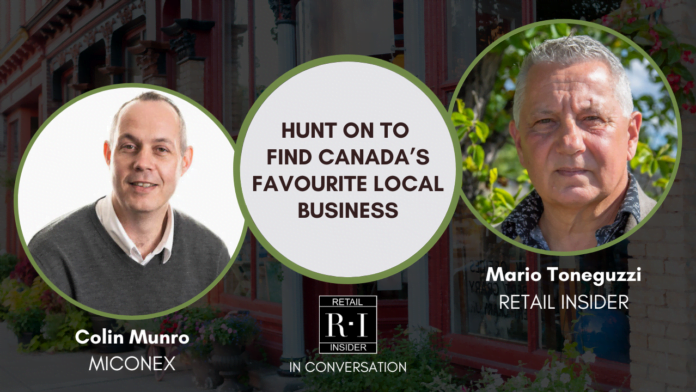
A downtown gift card program from international fintech company Miconex is expanding across Canada.

The Perth, Scotland-based company, in partnership with EML Payments Limited, has launched the new program after successful existing gift card systems for Prince Edward Island and Peterborough, which were launched late last year.

New ‘Downtown Dollars’ systems are being launched in Downtown Sudbury and Downtown London.

Andy Monaghan, CEO of Miconex North America, said downtowns are looking for new ways to stimulate the economy.

“In any Canadian province, there are multiple organizations focused on the success of businesses, from DBIAs and local Chambers of Commerce to local government. As well as stimulating the economy, these organizations naturally feel they have a role to play in bringing consumers back. A gift card system is a tangible way that they can support small, local businesses. It also means they can be ready for the holiday period when demand for gift cards will rocket.

Image: The Boro Gift Card for Peterborough DBIA

“In Canada, the average spend on gift cards is $465 per year, per person. There are millions, even tens of million dollars being spent in each community. This significant amount of money goes to the big national and international chains and internet retailers. Introducing a program means provinces like Ontario and Prince Edward Island can harness that spend, and take their fair share of the gift card market.

“But if places can move a step beyond this, and see their program not as a gift card but a local currency, it paves the way for innovative tourism initiatives like we’ve seen on Prince Edward Island and disbursement of funds to local residents. There is an opportunity to be hugely creative. Our job at Miconex is helping provinces to figure out the challenges they’re facing right now and a plan for success that benefits the whole community.”
Miconex was founded in 2010 and works with towns and cities across the world, helping to support successful local economies. Monaghan said the goal of the company is to help downtowns in the UK and North America with economic development in attracting spend to the local businesses.

It developed the UK’s first city-wide gift card program in Perth, Scotland, through its Town and City Gift Cards initiative in 2015. This program is designed to lock in money locally for participating businesses, drive foot traffic and stimulate economic activity, in effect creating a local currency through the Visa network. In 2018, Miconex launched Mi Rewards, a loyalty program that automatically rewards consumers for spending money at registered businesses in a specific local economy, encouraging consumers to spend more in their town or city.

“The idea behind the gift card program is giving local organizations such as BIA’s, downtowns, Chambers, local authorities, local government, a way to attract and keep spend in the downtown or the local area as opposed to letting it disappear off to bigger organizations, national chains, things like that,” said Monaghan. “A key component of the program is what’s called closed loop in that the organization that is in charge gets to control where the card can be redeemed.”
For example, Canada’s Food Island Gift Card was introduced by the government of Prince Edward Island in September 2020 to stimulate the economy and lock in spend on Prince Edward Island. The initiative was supported by the P.E.I government, with gift cards sold at a 20 per cent discount. Over $3.7 million has now been loaded onto Canada’s Food Island Gift Cards.

The province recently announced a new staycation incentive, with a $100 gift card given with each consecutive two-night stay at participating P.E.I accommodation, as part of a $66 million support package for the island’s tourism industry.

The Downtown Peterborough program began in December of last year.

“I think any organization that has that local focus where they have in some way a desire to help their local area . . . this is a great tool for them to keep that spend local to help the downtowns, to help the local areas, right now. Essentially, without being overly dramatic, many of these local areas are under threat right now. They’re really struggling. Large national chains and large international retailers, online or brick and mortar, have done actually reasonably well in the last year, year and a half, judging by the results, these smaller locations, these smaller businesses have really suffered,” said Monaghan.
Left: Kent Thompson, Director of Finance and Food Tourism at Food Island Partnership. Right: Mitch Cobb, Chair, Food Island Partnership

“So for those who are looking to really make a difference with the local businesses, the small businesses, this is a natural fit and what we’re seeing right now given the time of year leading up to Christmas we have organizations pretty much approaching us every day of every week right now seeing if there’s a way for this program to work for them.”

Kent Thompson

Kent Thompson, Director of Finance and Food Tourism for Food Island Partnership said the Canada’s Food Island Gift Card project has vastly exceeded their expectations.

“We have 160,000 residents on Prince Edward Island as Canada’s smallest province and had projected that the entire project would raise $100,000 for our local economy. Our initial release of 5,000 gift cards sold out in 4.5 days, so we quickly surpassed that goal. 80 merchants had signed up to receive the Canada’s Food Island Gift Card as payment within a week of the project being announced. We now have over 300 merchants.”

In September, Miconex said Downtown London will replace its Downtown Dollars program with a gift card. The new gift cards can be loaded with any dollar amount and spent in person at around 60 participating businesses including restaurants, grab and go eateries, entertainment venues, live music, sporting facilities and retail stores, or online on Downtown London’s Online Marketplace.

Kyle Marcus

Kyle Marcus, the managing director at Downtown Sudbury BIA and owner of cocktail bar The Alibi Room said it’s vital for communities to unite following the pandemic.

“Sudbury has been on a journey of change for some time, from small mining town to urban multicultural city. The pandemic has further changed our community offering new opportunities for growth as we’re experiencing an influx of people wanting to relocate to Sudbury for its mix of urban centre and outdoor recreation. As a small business owner, I can say from first-hand experience how hard it has been for businesses. Community unity is vital for Sudbury’s recovery, the Downtown Dollars Gift Card allows us to support merchants by giving them another revenue stream, and capitalize on the emigration from nearby cities. We’re positioning Sudbury for the future,” he said.

Brief: ‘The Bay’ Website Officially Rebranded Amid Business Split, Construction Begins on Downtown Toronto IKEA Store

Construction Begins for New Downtown Toronto Ikea Store

IKEA Construction – The Aura at College Park . Photo: Dustin Fuhs

Swedish home furnishing retailer IKEA has started construction on the new urban concept store, the first of its kind in Canada.

Read More about the new Toronto IKEA

Downtown Vancouver BIA Launches Unique Initiative to Attract Consumers

Image: DVBIA

Program creates fake calendar events with local offers to drive traffic at a challenging time.

Read More about the DVBIA Program

T. Kettle Opens PATH Location in Downtown Toronto

T. Kettle in Royal Bank Plaza – Photo by Dustin Fuhs

Specialty tea retailer opens first location in Toronto after Yorkdale store recently closed.

Read More about the T. Kettle Store

Hudson’s Bay Website Officially Becomes ‘The Bay’

Image: The Bay Website

TheBay.com has rebranded as part of the separation strategy of physical store and online businesses.

Read More about the rebrand

Volvo Electric Car Brand ‘Polestar’ Opens Temp West Vancouver Storefront

Polestar location at Park Royal Shopping Centre in West Vancouver (August 2021)
Polestar location at Park Royal Shopping Centre in West Vancouver (August 2021). Photo: Lee Rivett.

Temporary store opens at Park Royal while new downtown location is constructed.

Read about the new temp location

Related Retail Insider Briefs

Shoppers Drug Mart Expanding Managed In-Store Medical Clinics in Canada 

Shoppers Drug Mart at 728 Yonge Street (corner of Charles Street) on Friday, August 13 2021. Photo: Craig Patterson

Toronto-based Shoppers Drug Mart is expanding its base of managed in-store medical clinics after launching four locations in the Toronto area. The retailer says that it will expand the clinics across Ontario this year and the initiative is likely to expand into other provinces if the clinics are successful. 

The Health Clinic by Shoppers is described as being a primary-care and family practice clinic that provides patients with convenient, one-stop access to medical services and advice. So far four locations are open with three of those in Toronto and one nearby in Whitby — that includes a downtown Toronto location on the third floor of the Shoppers Drug Mart store at the southwest corner of Yonge and Charles Streets as well as Shoppers Drug Mart stores at 770 Lawrence Avenue West near the Yorkdale Shopping Centre, 1995 Weston Road in Weston and Kendalwood Park Plaza in Whitby. 

Jeff Leger

Three more locations are confirmed in Ontario with two being in Ottawa and another in Kingston. 

“We know Canadians want and need more from their primary care. The world changed quickly and dramatically over the last year, highlighting the need for more accessible healthcare options for patients – including extended hours and more convenient locations for in-person services, and virtual care services for all patients including those who don’t currently have a family physician,” said Jeff Leger, President, Shoppers Drug Mart. “Since May 2020, our Toronto locations have been meeting those needs, through more than 20,000 patient visits. Bringing the Health Clinic to new markets will allow us to make healthcare more accessible for more Ontarians.”

The Health Clinic at 3 Charles Street West in Toronto on Friday, August 13 2021. Photo: Craig Patterson

The clinics host a suite of family medicine services with an aim to make healthcare more accessible for patients with extended operating hours and increased technology such as online appointment booking and virtual care options through Medeo® solutions and electronic health records via the AccuroEMR® platform. 

The expansion of Health Clinic by Shoppers™ is the latest move by the retailer to expand further into health and wellness. Shoppers Drug Mart has also introduced other non-retail offerings to its stores to gain consumer following. In 2019 we reported that the retailer had introduced dental centres to its stores in a partnership with SmileDirect Club. In the fall of 2017, Shoppers Drug Mart also launched a seniors-focused ‘Wellwise’ concept store in Toronto that aims to to keep the country’s aging population healthy and active.

Retail Workers are Concerned About Returning to Work with Unvaccinated Co-Workers and Customers and it will Impact Hiring: Survey

By Suzanne Sears

With case counts rising across the country and with the more transmissible and deadlier Delta variant, retailers can no longer dodge the issue of vaccination standards.

In July 2021, Best Retail Careers International Inc. in partnership with Retail Insider conducted a survey with hundreds of responses about how retail employees feel about return to work and vaccines. The findings were very interesting.

Retail is eager to open fully. Retail workers are eager to get back to work except 68% of them are worried about returning to work with unvaccinated co-workers and customers. It’s such a big issue many are delaying making themselves available for rehire and retailers are in a near panic to find staff. It really isn’t the availability of CERB type funding and a laziness to work. The core issue is fear. The longer this pandemic goes on, the more resistant people are to accept front-line jobs.

HOW DO EMPLOYERS COPE WITH THIS NEW REALITY?

The law says employers have to provide a safe environment in every way, but it has stopped short of demanding vaccination proof. As more and more jurisdictions globally are implementing mandatory proof of vaccination for public facing jobs, Canada is stuck in limbo with a fear of igniting political strife over the issue. We have New York City jumping right in: no vaccination = no entry to restaurants, clubs, theatres, or any other public arena.

We have Alberta tossing open the doors with its ‘let’s see what happens’ policies. We have British Columbia only slightly more restricted while we have Quebec leading the charge with vaccination passports. What’s missing is leadership at the Federal and Provincial level that is consistent across the country about vaccination status.

HOW DOES THIS TRANSLATE OVERALL?

Nearly every poll from every source indicates that the Canadian public wants protection from COVID-19. They want to know they are safe inside stores. They want vaccinated staff. The public wants it even more than the workers want it. The weak job gain in July of only 94,000 positions isn’t no jobs. It is people refusing to return to work.

Retail cannot avoid the policy issue any longer. The law will say you can’t force people to get vaccinated. Fine. However, what are the rules on terminating people who are unvaccinated? It’s a tough call. The obvious solution is to implement a policy of 100% vaccinated for all new hires and give existing staff a window to comply as well.

Could a business get sued? Possibly. Is it likely? Not really. COVID is changing so rapidly by the time a wrongful termination case gets to court, we may well have mandatory vaccination rules in place.

The primary issue retailers have to face is creating a clear and sensible COVID workplace policy. Get creative — give rewards for vaccination. Continue the mask mandate with or without government approval. Talk to your employees or potential ones, and ask the same survey questions we did—and implement policy that speaks to their concerns. 

At stake is the restoration of retail sales as we knew them. The longer staff stay away, the worse those numbers will be. Retailers must not sit back and wait for governments to create their policies. If there was ever a time for retail to take a leadership position, it is now. Find your best solution and make it public. Attracting new staff will be easier if they know your policy and how you intend to keep people safe in your stores. 

For more information on our survey or how we can help with retail staffing requirements, please contact Suzanne Sears at suzanne@brcareers.com

*Partner content. To work with Retail Insider, email: craig@retail-insider.com

A Change in Thinking in How to Strategize Advertising for Canadian Businesses: Interview

Image: Cult Collective LP

The overriding theme of the 21st Century is accelerated change. Yet one industry remains curiously mired in archaic beliefs and practices, dating back decades. Advertising.

That’s the philosophy of one of North America’s leading marketing engagement agencies – Cult which is based in Calgary.

“Companies are still stubbornly hunting target audiences, unaware they should be making targets of themselves. They continue wasting obscene amounts of money on media campaigns and markdowns, oblivious to the fact that the biggest return on investment is to be had by making their products, programs and people more remarkable. They shout ever more loudly into a jaded void, rather than interacting with those who really matter,” says the company on its website.

“At Cult, we know that true customer engagement isn’t about getting people to buy —  it’s about getting them to buy in. We understand that when customers get involved, contributing their voice, and not just their dollars, they are worth their weight in gold. We know that cult brands spend as much effort fostering their culture and engaging employees, as they do attracting customers. And we believe that, in a world with too many choices and too little time, companies without highly engaged, devoted followers, both inside and out, are destined to drift into irrelevance.”

Image: Cult Collective LP Facebook

Some brands have been successful over the years in building a cult following. Brands like Coca Cola, Harley-Davidson. Chris Kneeland, CEO and Partner of Cult, adds retailers like Home Depot, Lush, lululemon, Zappos.

Chris Kneeland

“Cult is just a provocative label for a business that’s reaping above average benefits from word of mouth – what we like to say advocacy. The majority of businesses are chasing awareness which is why they spend so much money on advertising. They think that if people just know us more the likelihood of them shopping us goes up,” said Kneeland.

“Cult brands certainly want awareness but they’re realizing the best way to become aware of a business isn’t through an ad but through a referral – somebody talking and championing on their behalf. That’s why we like the metaphor of cults. Cults much like religion or fraternities, they grow more by word of mouth. That’s the single biggest symptom. There’s a bunch of other little things about the engagement of their employees, about how they spend money, about how they don’t have to bribe people with discounts as often.

“So cult brands tend to be either a premium price point, a few notable exceptions like Costco and Target, but most cult brands from Porsche to Apple to Starbucks are kind of in the premiumness of their category.”

Kneeland said becoming a cult brand is not the hard part – it’s not like it’s a secret – but the biggest challenge is the idea that good is the enemy of great. Most businesses are content getting customers. Most bosses get promoted when they grow their revenue.

“Chasing some I think inferior metrics that prevent people from transcending from good to great,” said Kneeland.

Image: Cult Collective LP

“The single biggest thing is what do you truly desire. Are you just trying to be successful or are you trying to be significant? Most businesses are pretty content just being successful.” But he says there is a degree of prosperity that can be much more fulfilling.

“Businesses should exist for more than just the creation of profit. I think businesses should exist for the prosperity of mankind and cult brands are so adored not only because their purpose is greater but because they’re the exception.”

Kneeland said it becomes more difficult to become a cult brand the more stakeholders are involved. The higher the frequency of use by customers the higher the potential for a brand to have a cult following.

According to Cult, here are eight points to become a cult brand – some common traits that enable brands to better connect with customers:

Be Remarkable

“Too many businesses have commoditized offerings and must shout (i.e. paid media) or bribe (i.e. discounts) in order to be noticed. But cult brands create products, services and/or customer experiences that are actually worthy of people’s attention. They are more substance than sizzle and do at least one thing so exceptionally well that their fans can’t help but talk about it.”

Have Purpose

“Every business exists to generate profit, but cult brands also live by a noble brand purpose. Audiences often care more about what a brand stands for than what it sells, so cult brands have mastered how they weave their desirable ethos into their audience engagement strategies.”

Build from the Inside Out

“Cult brand leaders understand that no company can become beloved externally if it’s not first beloved internally. They prioritize culture and redeploy marketing resources away from advertising and margin-eroding sales promotions into a host of properly executed internal engagement pursuits.”

Co-Create

“Mediocre brands emphasize transactional relationships via creative messaging and media plans, whereas cult brands have learned how to shut up and listen. Cult brand leaders systematize how they solicit customer input and gain actionable insights, as well as how they encourage customers to amplify word of mouth.”

Congregate

“Cult brand leaders find creative ways for their fans to assemble together, virtually or physically. Whether it’s supporting third party-initiated activations or developing desirable destinations for followers to partake in elevated branded experiences, they make it easy for followers to gather and revel in their togetherness.”

Create Rites & Rituals

“Cult followers want to feel like insiders, knowing things and enjoying access that others don’t. Cult brand leaders spend less time creating marketing communications and more time creating lexicons, traditions, symbols and privileges that help best customers feel like valued members of an exclusive club.”

Be Relatable

“Cult followers treat specific businesses like close friends and seek out brand personalities and value systems that align with their own personal preferences. Cult brands perfect how they personify human attributes, and consistently bring their relatable persona to life across all aspects of the customer journey.”

Pick a Fight

“Cult brand leaders target the alienated and intentionally appeal to those who want to separate themselves from the mainstream. A large number of cult brands provocatively challenge market leaders and attempt to derail the establishment that is more comfortable playing it safe by trying to please everyone.”

Hudson’s Bay Website Officially Becomes ‘The Bay’

Image: The Bay Website

Last week we reported that the Hudson’s Bay Company is separating its physical store and online businesses. It’s now officially online as the retailer’s website now shows ‘The Bay’ as being the official name of the site utilizing the same font as what’s seen on most updated Hudson’s Bay department stores in Canada. 

The Bay website features a simple and upscale look that might confuse those not familiar with the retailer into thinking that it’s something of a luxury store. A section at the top of the website marked ‘Designers’ showcases some of the world’s biggest luxury brands such as Balmain, Oscar de la Renta, Thom Browne, Moschino and others. 

Those designer brands are only available at The Room at Hudson’s Bay in Toronto (Queen Street) and Vancouver (Downtown) while some suburban stores are in another world in terms of having limited designer offerings in non-luxurious settings. 

We’ll be providing updates regularly on the Hudson’s Bay Company and what it is doing with its Canadian stores as the retailer continues to transition its business model.