Home Blog Page 814

Canadian Retail News From Around The Web For November 16th, 2021

Canadian Retail News From Around The Web

Top Stories: National

Central/Eastern Canada News

Western Canada News

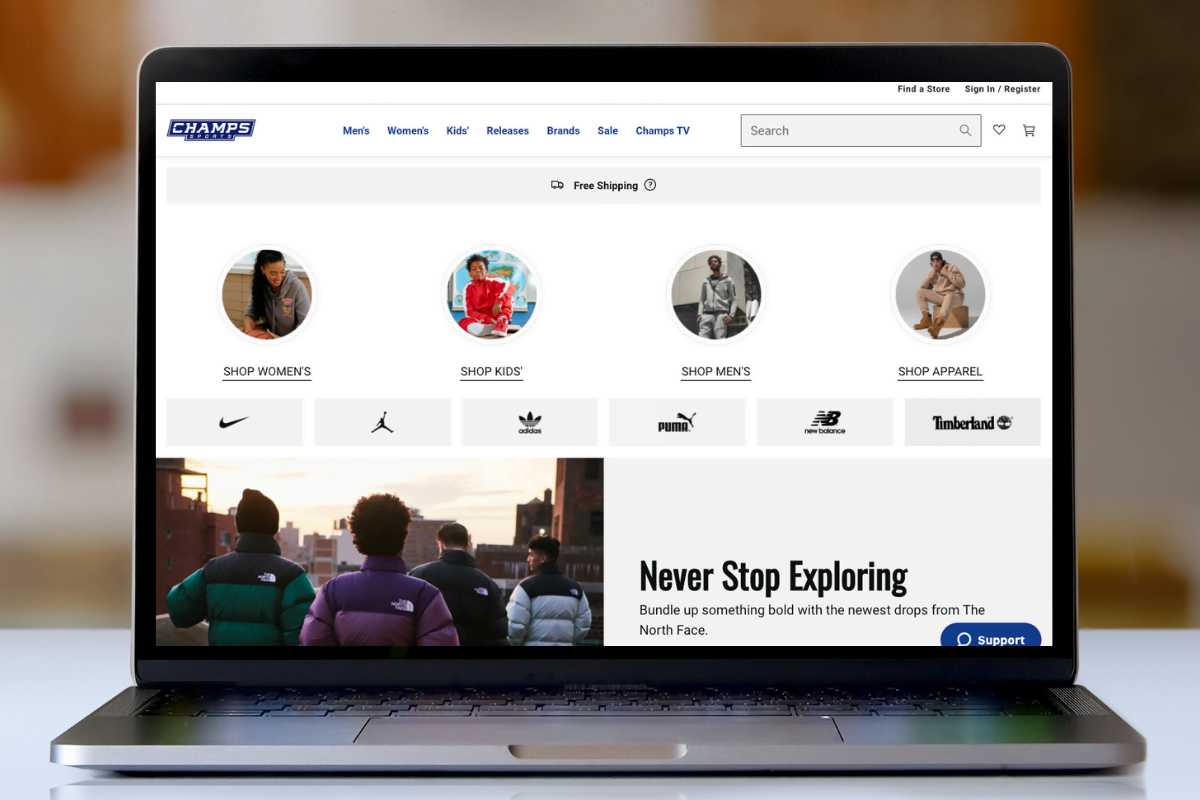
Champs Sports Launches Canadian E-Commerce

Champs Sports in Oshawa Centre

Champs Sports, part of New York-based Foot Locker Inc. family of brands, has launched ChampsSports.ca.

With the new digital platform, the brand will be able to better serve the needs of Canadians through an ever changing and evolving industry. The brand will continue to leverage its portfolio of stores while delivering a relevant experience online.

“Champs Sports operates 532 stores across North America and with 33 stores in Canada, we are excited to extend our successful e-commerce business that we have in the United States to the Canadian consumer with the launch of Champssports.ca,” said Guy Harkless, Senior Vice President and General Manager of Champs Sports and Eastbay. 

Image: ChampsSports.ca
Champs Sport on ground/lower level at Metropolis at Metrotown (July 2021). Photo: Lee Rivett.

“The new digital presence enables us to better serve the Canadian market from a multi-channel perspective and enhance the experience and convenience for the sport-obsessed athlete. Our portfolio of experts on the ground in Canada will continue to meet the evolving needs of the Canadian consumer by offering a best-in-class product assortment in athletically inspired footwear, apparel and accessories from our branded partners and in-house brands.”

Featured brands on ChampsSports.ca include Nike, Jordan, PUMA, Adidas, The North Face, and more added as trends evolve. In addition to searching by brand, category and size, the website also showcases featured collections.

Foot Locker, Inc. includes a portfolio of brands that include Foot Locker, Kids Foot Locker, Champs Sports, Eastbay, Footaction, atmos, WSS and Sidestep. In addition to the websites and mobile apps, the brand has more than 3,000 retail locations in 28 countries.

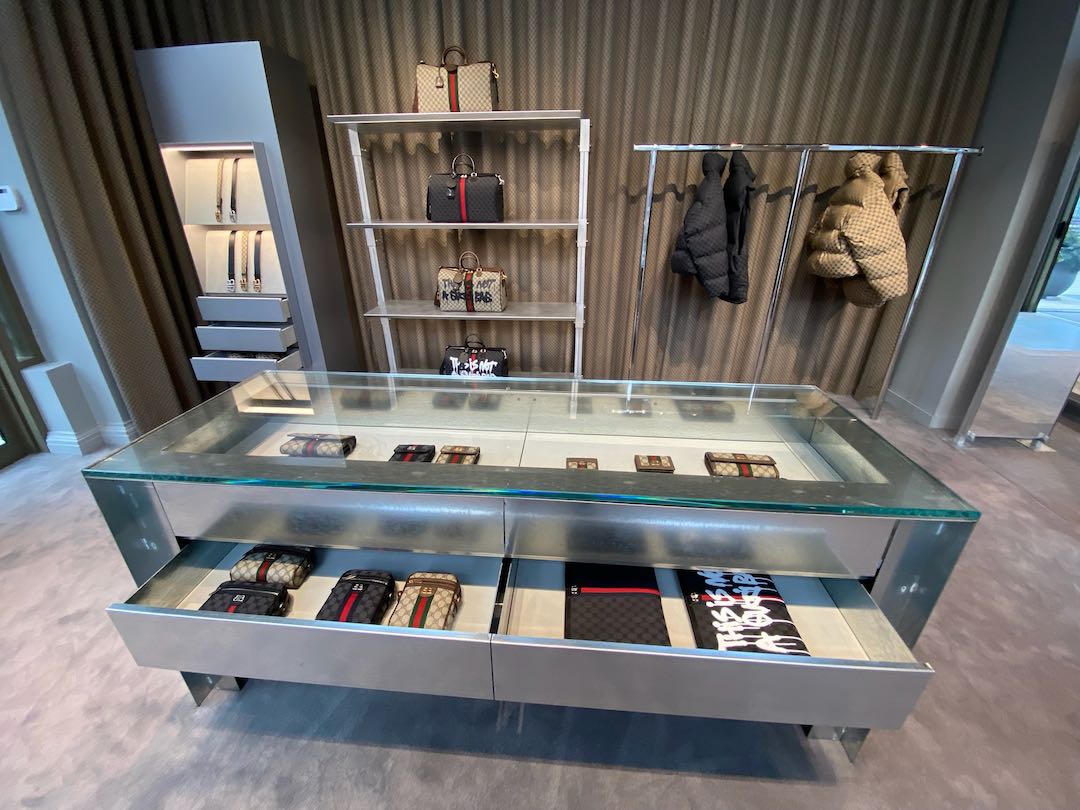
Gucci x Balenciaga ‘Hacker Project’ Opens in Canada Including Impressive Storefront on Yorkville Avenue in Toronto [Photos]

GUCCI & Balenciaga - The Hacker Project at 92 Yorkville Ave in Toronto (Photo by Dustin Fuhs)

The world’s hottest two brands are part of a collaborative initiative that saw the opening of temporary storefronts globally on Monday. In Canada, the highly anticipated Gucci x Balenciaga ‘Hacker Project’ includes a dedicated standalone store on Yorkville Avenue in Toronto open for two months, the takeover of the SSENSE store in Montreal, and distribution at two Holt Renfrew stores. 

Globally, the Hacker Project includes 74 activations in major centres with a mix of standalone stores and shop-in-stores depending on the market. The pop-ups offer cross-branded ready-to-wear, shoes, bags and accessories — Balenciaga pieces were reinterpreted with Gucci ‘codes’ which is said to be a nod to counterfeit culture, branding and logomania. Signature silhouettes including Gucci’s ‘Jackie’ bag and Balenciaga’s ‘City’ were redesigned in a merging of monograms and prints, for example. We’re told that pieces are limited edition with some being numbered “X/250”. 

In Toronto, the former Diesel retail space at 92 Yorkville Avenue (next to Chanel) was transformed over several days into a storefront with an illuminated Balenciaga logo and Gucci spray painted over the doors. On Sunday, the ‘Gucci’ doors had been vandalized with pink spray paint and everything had to be removed prior to the Monday opening. The space saw renovations to create the main-floor pop-up space which includes one side dedicated to the collaboration and the other housing new Balenciaga items. The Toronto storefront will remain open until January 15, 2022 we’re told. First Capital REIT owns 92 Yorkville Avenue as well as several other properties in the neighbourhood.

The Toronto store was able to secure a specific black “BB” monogram duffle bag, number one of only 250 according to a representative who spoke with Retail Insider.

#1 of 250 bags in this style, photo by Dustin Fuhs
Photo of the vandalized storefront on Sunday, November 14.

In Montreal, the SSENSE store in Old Montreal saw a ‘takeover’ on Monday for the new Gucci x Balenciaga collection. Montreal-based SSENSE is considered to be one of the world’s leading upscale multi-brand retailers with a focus online as well as the Montreal multi-level storefront. 

Somewhat surprisingly, the Vancouver market did not get a splashy Gucci x Balenciaga pop-up despite robust sales for both brands in the city. The Hacker Project collection was launched at Holt Renfrew in Vancouver, as well as at the Holt Renfrew store at Toronto’s Yorkdale Shopping Centre. 

According to the Q3 2021 Lyst Index, Balenciaga was ranked as the world’s most popular brand while Gucci was ranked second. Balenciaga is having a fashion moment — the brand returned to haute couture after 53 years, launched a Fortnite collaboration, and teamed up with Kanye West on the launch of his Donda album. Recently the brand showcased its fashion collection in cartoon format at Paris Fashion Week via popular television program ‘The Simpsons’.

Related Retail Insider Articles

See below for more photos of the store.

GUCCI & Balenciaga – The Hacker Project at 92 Yorkville Ave in Toronto (Photo by Dustin Fuhs)

Food Prices are Rising in Canada, But so is Theft from Grocery Stores [Sylvain Charlebois]

“Thefts from grocery stores appear to be on the rise. With food inflation these days, that was to be expected; and the worst is yet to come. “

Apparently, shoplifting has been on the rise in supermarkets in Canada in recent months. Concrete data on theft in grocery stores is harder to get since incidents are typically underreported. Managers tend to take matters into their own hands. But with the increasing number of reports on theft and security guards stationed in and out of grocery stores, things are likely more complicated out there than we’re aware of.

Speaking with various retailers in Montreal, Halifax, Toronto, and Vancouver, and even those located in the heart of neighbourhoods where crime rates are typically lower than average, thefts are now a new cause for concern. According to some anecdotal estimates, the number of thefts has increased by 25 to 40% in just the last six months. A mid-sized grocery store can easily catch 10 to 12 shoplifters in a week these days. The cost of living and the price of food are enticing some citizens to find other ways to obtain supplies.

The most coveted items in supermarkets include meat such as ground beef, steaks, sausages, and roasts, cheeses, spices, and over-the-counter medicine. Energy drinks and alcohol are also a target in provinces where beer, wines and spirits are sold in grocery stores. Some people can steal up to $300 worth of products from multiple locations in a single day.

In addition, some employees may act as accomplices for internal thefts, either in the warehouse or at the back of the store even before the products are put on the shelves. On average in Canada, every grocery store is scooped up for $3,000 to $4,000 worth of groceries per week. In other words, for every 500 supermarkets that open their doors every morning in Canada, a total of nine stores will liquidate their food for free that day due to theft. That’s a lot of food, and the associated costs are a huge problem for our retailers.

Some merchants go to great lengths to prevent theft. Aside from the addition of security cameras and door people, hiring client-security guards also seems to be paying off. Plainclothes mystery shoppers roam the aisles to watch every single move of customers and catch them in the act. Although expensive, this strategy still works well.

These offenders are not associated with any typical profile, as they come from all age groups and backgrounds, which makes the task of catching them more difficult. In Canada, according to some crime experts, about half of all those charged have no criminal record. First instance offenders are often well educated, come from well-off families, hold stable positions, and enjoy a good reputation. Many are just down on their luck.

Obviously, self-service checkouts can facilitate theft. It should therefore come as no surprise that more surveillance has been added around these areas. With profit margins approaching 1%, the profitability of a store now depends a lot on increased surveillance to minimize theft of merchandise. And for those who do follow the rules, which is most of us, we must pay extra for our food due to shoplifting. For merchants to cover their costs, all consumers pay a premium of approximately 2-2.5% for shoplifting and internal theft.

However, with online shopping, theft becomes impossible. Since the start of the pandemic, e-commerce in food has exploded. Canadians now buy more than $5 billion in food a year online. These sales are obviously safe from any temptation to take products and leave without paying. Grocers know this and will want to encourage online shopping from their customers to lower their risk.

Meanwhile, food inflation still has unpredictable shocks in store for us and some believe the situation could deteriorate in the coming months. The merchants will have to double their vigilance. It should come as no surprise that some retailers are using new methods to deter in-store delinquency.

The very first self-service grocery store opened in 1916 in Memphis, Tennessee, under the name Piggly Wiggly. Back in the day, customers presented their shopping lists to employees who then collected the merchandise from the store shelves. Then the founder had the revolutionary idea of allowing customers to serve themselves. Since then, we have been able to visit a store, see the different products and place them in our basket ourselves. For the sake of our grocers, this is a privilege that should not be taken for granted.

Canadian Consumers Intend to Support Local Businesses Ahead of December Holidays: Interview

Bloordale Village BIA Shop Local Signage - Photo by Dustin Fuhs

The shopping local trend has been a saviour for many struggling businesses over the past year and a half as they’ve tried to navigate the stormy economic waters caused by COVID-19 pandemic.

And as we head into the holiday shopping season, this year has become a critical period of time for local independent retailers.

Recent data from Twitter Canada found that Canadian consumers on Twitter are planning to increase their support for local businesses in 2021.

Twitter Canada Office in Toronto (Image: Twitter Canada)

It said 40 per cent of Canadians on Twitter reported they would be more likely to support local businesses. In 2021, 35 per cent of Canadians on Twitter say they plan on shopping local more often this year than they did the year prior.

Michelle Slater

“This is a big increase from last year. If we look at why Canadians are saying this, I think it comes back to the fact that we do want to see our local businesses survive and thrive, moving into 2022,” said Michelle Slater, Head of Business Marketing at Twitter Canada.

“It’s been a very challenging period for retailers. They’ve been hit hard with increasing regulations, with changing consumer buying habits, and obviously the pandemic has been rough. Knowing that Canadians want to step up and very much help support Canadian retailers is a very positive sign of how our country is coming together to support each other.”

Slater said local retailers offer a different level of service than perhaps bigger brands and chains. Shoppers can talk to the owner or family members. It gives consumers a sense of community which many people want to embrace.

Data also indicated that Canadians on Twitter have a love for branded holiday campaigns, reporting a strong appetite for holiday-related brand content on Twitter. Two-thirds of Canadians on Twitter say they want to see holiday-related content from brands on Twitter.

Rosedale BIA Supporting Local
Rosedale BIA Supporting Local – Photo by Dustin Fuhs

“They’re looking for information on deals, discounts. They’re looking for holiday inspiration for gift giving. What is even more impressive is that 80 per cent of Canadians on Twitter already follow a brand. So they don’t see those ads from brands as being an interruption in their timeline on Twitter. They actually look forward to getting that information as it helps them with their holiday shopping.”

Brands are also innovating on how they’re using Twitter to build engagement and anticipation amongst their audiences.

For example, a September 14 Apple event included features like animated Twitter emojis and teaser Tweets from Apple CEO Tim Cook paired with a Twitter Topic and event pages on the Twitter side to launch Apple’s new iPhone.

Other key insights from Twitter data include:

  • Half of Canadians on Twitter say they’re more likely to participate in holiday shopping days this year;
  • 30 per cent are more likely to participate in Black Friday shopping;
  • 26 per cent are more likely to participate in Boxing Day shopping;
  • 23 per cent are more likely to participate in Cyber Monday shopping;
  • 36 per cent of Canadians on Twitter plan to spend more time shopping online in 2021 than they did in 2020.

Canadian Retail News From Around The Web For November 15th, 2021

Canadian Retail News From Around The Web

Top Stories: National

Central/Eastern Canada News

Western Canada News

Pent-up Consumer Savings and Demand Driving Optimism Ahead of 2021 Holiday Shopping Season in Canada: Report

Festive shop windows adorn with garland and holly. Toy stores and departments buzzing with giggles and excitement. And attentive staff hustling to welcome throngs of eager shoppers. These are the sights and sounds that have, through the years, become traditionally associated with the holiday shopping season in Canada. They are sights and sounds that were significantly muted last year as a result of ongoing health concerns related to the COVID-19 global pandemic, leaving many shoppers and retailers alike feeling somewhat empty and a lot less jolly. However, Google’s recently released Holiday Insights suggests that a combination of pent-up consumer demand, a rising crest of confidence in a stabilizing economy and easing social restrictions and protocols is causing real optimism to spread throughout the industry. And, according to Eric Morris, Managing Director, Head of Retail, Google Canada, it’s optimism that he feels is well-founded ahead of what he expects to be a positive holiday shopping season.

“It’s important to point out that sentiment, whether from the consumer’s or retailer’s perspective, is highly dependent on personal and individual circumstances,” he says. “Having said that, consumer confidence is high and Canadians are spending. For retailers that operate physical storefronts, being able to remain open is providing them with a much-needed channel to service their customers and support the experiences they offer. These signals, and others, lead one to believe that the upcoming holiday shopping season is going to be a very successful one for many retailers throughout the industry. In fact, many Canadians are already in holiday shopping mode.”

Making merry, earlier

Morris’ observations are reflected within Google’s survey findings which reveal that nearly half (44%) of Canadian shoppers plan to start their holiday shopping earlier this year than they did last year. And, nearly a third (33%) have already begun their holiday shopping. He points to longstanding pandemic-induced constraints and consumer trepidation as the very functions contributing toward the expected boom in spending this holiday shopping season. Demand has been supressed for such an elongated period of time, he explains, that as attitudes toward social gatherings and in-person shopping loosens and intentions to spend on family and friends continues to intensify, so, too, does the positivity surrounding the upcoming holiday shopping season.

“Broadly speaking, there’s savings in the pockets of Canadian consumers,” he says. “They have more confidence in the economy and in the fact that we’ve finally turned the corner on COVID. Any lingering economic uncertainty effecting spending decisions continues to improve. In addition, travel has been somewhat stifled, with most of the trips remaining local and less expensive. This has resulted in a little more disposable income that Canadians are spending on other things and in different ways. For instance, shortly after the onset of the pandemic, people started investing in home improvements because they were spending more time in their homes, working, socializing and entertaining. It’s a trend that’s sustaining as people continue to spend money on things that are making their homes more comfortable. And, because society is now opening up, we’re starting to see some of the purchases that may have been suppressed or on hold, such as apparel, experience a resurgence. It’s triggering purchases and spending that’s resembling a bit of a resumption of pre-pandemic behaviour.”

Digital influence

Anything that resembles a return to consumer spending will be welcomed by merchants throughout the industry and across the country as the retail recovery continues to build momentum. One change that’s occurred during the past 18 months which will not be reverting back to the pre-pandemic status quo, however, is the shift in consumer shopping and purchasing behaviour away from physical brick-and-mortar retail locations toward online channels. And, according to Google’s Holiday Insights, that trend is set to continue with 58 percent of those surveyed stating their intentions to shop online more this holiday shopping season, two thirds (66%) intending to browse for gift ideas online rather than in-store, and 63 percent planning to leverage the websites of brands to confirm the availability of items in-store before making their purchases. Morris says that the data is all reflective of the digital evolution that’s been happening for the last long while within the industry, one that he believes has advanced nearly a decade over the course of the past year-and-a-half or so.

“Each year over the past five-plus years, ecommerce has played an increasingly significant role in holiday shopping,” he asserts. “There was a dramatic acceleration last year when ecommerce in Canada doubled. And it’s a trend that’s going to continue into this year’s holiday shopping season. In fact, we’re anticipating the largest ecommerce sales in Canada on record to date as new habits have been formed by the consumer. COVID has forced retailers across the country to up their online games to improve the digital experience, reduce shopping times and ensure that all of their assortment is online in support of the overall customer experience. What it’s resulted in is a Canadian consumer that’s now buying product online like never before.”

Values-driven decisions

In addition to the influence that impacts of the pandemic have had on consumer shopping behaviour, it’s also facilitated rethink and reassessment of the things that matter most to them and the values that they live their lives by. In fact, Google’s Insight’s reveal that 34 percent of Canadians have expressed a desire to shop with brands that share the same values as

them this holiday season. Further, nearly a quarter (22%) said their decisions concerning the products they buy and the brands they buy them from will be based largely on environmental and sustainability considerations. And, Google data shows that search interest related to second-hand stores and sustainable clothing has significantly increased over recent months. It’s all representative, says Morris, of an intensifying shift toward values-based decisions on the part of the consumer, and the underpinning of opportunities for brands to highlight the things they stand for.

“Today, Canadians are shopping their values like never before,” he says. “The global pandemic has actually served to bring a number of other things into sharper focus in the minds of Canadian consumers, resulting in greater concern around the environment and social issues like racial inequality and injustice. There’s also more emphasis being placed on community, specifically with respect to the support of local businesses. Searches for local business on Google have nearly doubled over the past year. There’s been an increase in searches for second-hand stores as well, which is less a reflection of the consumer’s desire to find deals and more about their recognition of the waste that’s being created and the need to reuse. We’ve also seen a rise in support for businesses owned by underrepresented groups. What this data tells us is that Canadians are starting to use their wallets to help make the world a better place by allowing their values to increasingly drive their decisions.”

Social inspiration

In addition to the penchant among today’s Canadian consumer to shop with their values, Google’s Insights also indicate that they’ll be willing to explore when shopping for gifts this holiday season. According to the internet giant’s data, 45 percent of Canadians say that they are open to shopping new stores and brands to satisfy their shopping needs, while nearly 4 in 10 (38%) intend to shop with small businesses. However, when it comes to consumers’ purchasing decisions this holiday shopping season, much of the inspiration that they seek will be drawn from social media, with YouTube leading the way. In fact, Google’s Insights reveal that Canadian consumers are four-times as likely to use YouTube versus other platforms to find specific information about a brand, product, or service. They are twice as likely to go in-store or online to buy something they saw on YouTube versus the competitive average. And, a whopping 60 percent of YouTube viewers said they bought a brand as a result of seeing an ad on YouTube. The data is overwhelming and testament, says Morris, to the power of the video sharing platform to drive interest among consumers and engagement with brands.

“Social media platforms are increasingly playing a really significant role in helping brands promote their products and message in an organic and compelling way,” he says. “They’re serving as incredible promotional vehicles for retailers to drive traffic to their physical brick-and-mortar stores as well as their ecommerce sites. And, the obvious choice for many consumers looking to research and learn more about the products they’re interested in is YouTube. It’s often the first destination shopped by Canadians, the starting point in their journey with a retailer or brand. Whether it’s product reviews, unboxings or anything else, consumers are increasingly visiting YouTube in order to discover new brands and products and to help them make their decision concerning the product to buy and, ultimately, the retailer or brand to buy it from.”

Evolving shopping journey

Though there are a couple looming headwinds to success as we approach the 2021 holiday shopping season, most notably in continued supply chain disruptions and constraints and ongoing staffing challenges felt by organizations across the country, the positivity throughout the industry is palpable. Propped up by a belief that the worst of the pandemic may finally be behind us, the attitudes of many around social gatherings and in-person shopping continue to soften and relax. And, with pent-up consumer savings and demand, opportunities for retail success this festive period are abound. They are opportunities that Morris suggests brands can seize if they approach their activities with a clear understanding of recent changes in consumer behaviour and the ever-evolving experiences they seek.

“The retailers that continue to focus on the ways that the consumer shopping journey has changed will be best positioned for success this coming holiday shopping season. As part of this evolution, digital continues to play an increasingly important role, whether serving as a platform for transactions or driving in-store traffic. As a result, it’s critical for retailers to make sure they offer a seamless, frictionless omnichannel experience for their customers, and that they are present and available where and when the customer wants to interact with the brand. If retailers can match their activity and focus with the places and platforms where consumers are frequenting, they’ll be able to realize opportunities to deliver the experience they’re looking for and ensure a very successful holiday shopping season.”

Related Retail Insider Articles

Podcast [Interview] Matt Crowell on Retail Insider’s New Partnership with GetintheLoop

The Interview Series: Matt Crowell discusses the new Retail Insider partnership with GetintheLoop

Matt Crowell, Founder and CEO of Kelowna-based platform GetintheLoop joins Craig to discuss Retail Insider’s new partnership with the GetintheLoop platform. 

Retail Insider has partnered with GetintheLoop, a shop local community that delivers consumers more ways to explore, discover and shop local, wherever they are.

For multi-location brands, GetintheLoop has found creative and profitable opportunities for national brands to help solve many of the LSM challenges of promoting your brand in local communities. Hundreds of national brands, such as Popeyes and Sunrise Records, have put their trust in GetintheLoop to help drive foot traffic, increase revenue, distribute hyper local mobile offers, and create loyalty and reward return customers. Ultimately, helping save time and resources when deploying local & national programs.

GetintheLoop works with over 35+ shopping centres in Canada and finds incredible, creative and profitable opportunities to help their partners solve tenant engagement, drive traffic, increase revenue, and help them understand who their shoppers are by collecting customer data / insights. Finding ways to innovate the shopping centre experience with Cushman & Wakefield, Primaris, Triovest, BentallGreenOak, and others.

Interested in learning more about GetintheLoop for your business? Retail Insider has an exclusive landing page on the GITL website to share more about the brand.

If you’d like to learn more about the Franchise opportunities, feel free to check out the Franchise landing page.

The Interview Series podcast by Retail Insider Canada is available on Apple Podcasts, Stitcher, TuneIn, Google Play, or through our dedicated RSS feed for Overcast and other podcast players. Also check out our The Weekly podcast where Craig and Lee discuss popular content published on Retail Insider which is part of the The Retail Insider Podcast Network.

Interviewed this episode:

Subscribe, Rate, and Review our Retail Insider Podcast!

Follow Craig:

Follow Retail Insider:

Listen & Subscribe:

Share your thoughts!

Drop us a line at Craig@Retail-Insider.com. You can also rate us in Apple Podcasts or recommend us in Overcast to help more people discover the show!

Background Music Credit: Hard Boiled Kevin MacLeod (incompetech.com). Licensed under Creative Commons: By Attribution 3.0 License. http://creativecommons.org/licenses/by/3.0/

Burger King to Expand Significantly in Canada in Growing Partnership

Image: Burger King Canada

A growing partnership with Redberry Restaurants is boosting Burger King’s expansion plans across the country.

Recently, it was announced that Redberry would develop 50 new Burger King restaurants in Quebec and 15 new restaurants in Saskatchewan over the next five years. An additional 60 Burger King restaurants are scheduled for remodelling, which is more than half of the current Redberry-owned Burger King locations.

Image: Grand Opening of Burger King at 98 Danforth Ave, Toronto

Matt Wright, General Manager of Burger King Canada, said the company is excited about its partnership with Redberry to rapidly grow the brand in Canada.

“Redberry is our largest franchise partner in Canada . . . Really great partner. Strong operations. They deliver really well on the guest experience. They’ve got a really good team and we’re confident in them to be able to deliver on these development pipelines as well as the guest experience,” said Wright. 

The first Burger King restaurant in Canada opened in Windsor, Ontario in 1969. Today, it has 318 restaurants in the country, coast to coast.

“At Burger King, we see Canada as a huge opportunity for us. It’s a market that we’re under-penetrated relative to the population as well as our competitors. We’re really excited. We have an iconic brand in the Burger King name in Canada. A lot of Canadians know about us. We have a really, really high awareness but the feedback that we get from our guests in the research we hear from our partners is everyone knows Burger King but no one knows where to find a Burger King,” said Wright.

“A high priority for us is to be able to make our brand, the iconic Whopper sandwich, more convenient and accessible to our guests.”

Image: Redberry Restaurants (via Linkedin)

Redberry currently owns and operates 16 Burger King restaurants in Quebec, and more than 102 locations across Ontario and Manitoba. 

“The strategic expansion of 50 new Burger King restaurants in Quebec would more than triple our current presence in this pivotal marketplace, while our plans to open 15 restaurants in Saskatchewan would allow us to expand into a fourth province,” said Ken Otto, CEO of Redberry. “Our proven track record of opening many successful restaurants shows how accelerated growth is possible with our talented team members and Burger King Franchisor Partner. We have extremely ambitious plans to continue our rapid growth in 2021 and beyond.”

Redberry has successfully accelerated their development with the opening of seven new Burger King locations this year with an additional nine locations to open before year end. This would bring Redberry’s total count of Burger King restaurants to 127 units representing more than 40 per cent of Burger King restaurants in Canada.

Redberry plans to build and acquire an additional 168 new Burger King restaurants over the coming years, which would more than double its current size.

The Burger King system operates more than 18,700 locations in more than 100 countries and U.S. territories. Close to 100 per cent of Burger King restaurants are owned and operated by independent franchisees.

Founded in 2005, Redberry Restaurants is one of the largest and fastest growing quick service restaurant franchisees in Canada, owning and operating more than 140 restaurants under the Burger King, Pizza Hut Canada, and Taco Bell brands. 

Wright said COVID-19 has been a challenging time for the restaurant industry. 

“But we’ve worked really closely with our franchise partners. We’ve adapted quickly to COVID. We’ve realized how important our delivery business is, our digital business, our drive-thru lanes. Luckily throughout COVID, and throughout the pandemic, and coming out of it, working closely with our franchise partners, we’ve been able to do pretty well and we’ve been able to adapt pretty quickly to the changing needs of the business,” he said.

Wright said Burger King is also focused on remodelling and improving the brand and restaurant image in Canada, which will complement the growth strategy of developing new restaurants. 

“Redberry has recently signed on to remodel at least 60 of their restaurants in Canada. That’s a big, big priority for us. But another big priority is going to be on the digital front. We launched our app earlier in 2021 – mobile order and pay – which is another channel for us to be able to be more convenient and accessible to our guests,” he said.

“As we continue to move forward in addition to improving our brand image through remodels, our growth strategy to develop new restaurants with our franchise partners, digital through mobile app initiatives will be a big part of our strategy. And I think as we look to develop our restaurants, a huge focus on the restaurant – building restaurants that have a great image, that work great for our guests, double drive-thru lanes, huge focus on the guest experience at the restaurant.”

Wright said company research indicates the quick service restaurant industry in Canada is large with a big market share. It’s popular for Canadian consumers.

“But we feel we don’t have our fair share. We feel we need to make flame grilling, our iconic brand, and our iconic sandwiches and the Whopper, more available to our guests because we believe that’s a category in Canada that’s under-penetrated and represents a great opportunity for us.”

Podcast: The Webster Opens 1st International Store in Toronto

The Webster Opens 1st International Store in Toronto

This week Craig and Lee talk Miami-based The Webster’s launch into the Canadian market with an impressive three-level storefront in Toronto’s Yorkville area. The Webster could grab market share from other multi-brand retailers with its mix of exclusive brands and quirky ethos.

The Weekly podcast by Retail Insider Canada is available on Apple Podcasts, Stitcher, TuneIn, Google Play, or through our dedicated RSS feed for Overcast and other podcast players. Also check out our The Interview Series podcast where Craig interviews guests from across the Canadian retail landscape as part of the The Retail Insider Podcast Network.

Retail Insider content discussed this episode:

Subscribe, Rate, and Review our Retail Insider Podcast!

Follow Craig:

Follow Retail Insider:

Listen & Subscribe:

Share your thoughts!

Drop us a line at Craig@Retail-Insider.com. You can also rate us in Apple Podcasts or recommend us in Overcast to help more people discover the show!

Background Music Credit: Hard Boiled Kevin MacLeod (incompetech.com). Licensed under Creative Commons: By Attribution 3.0 License. http://creativecommons.org/licenses/by/3.0/