Retail Insider is streamlining its Canadian retail news from around the web to include a handful of top news stories that can be viewed quickly during the day. Here are the top stories from the past 24 hours.
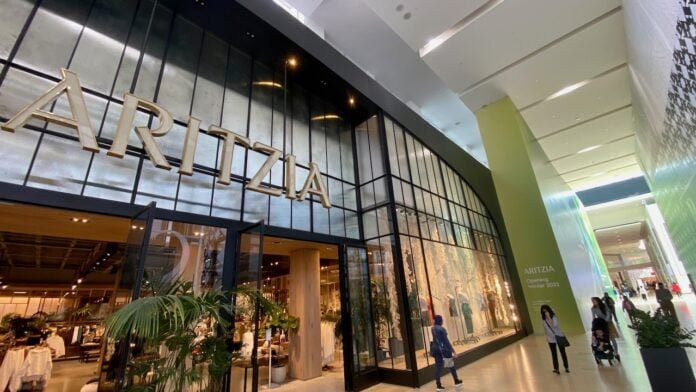
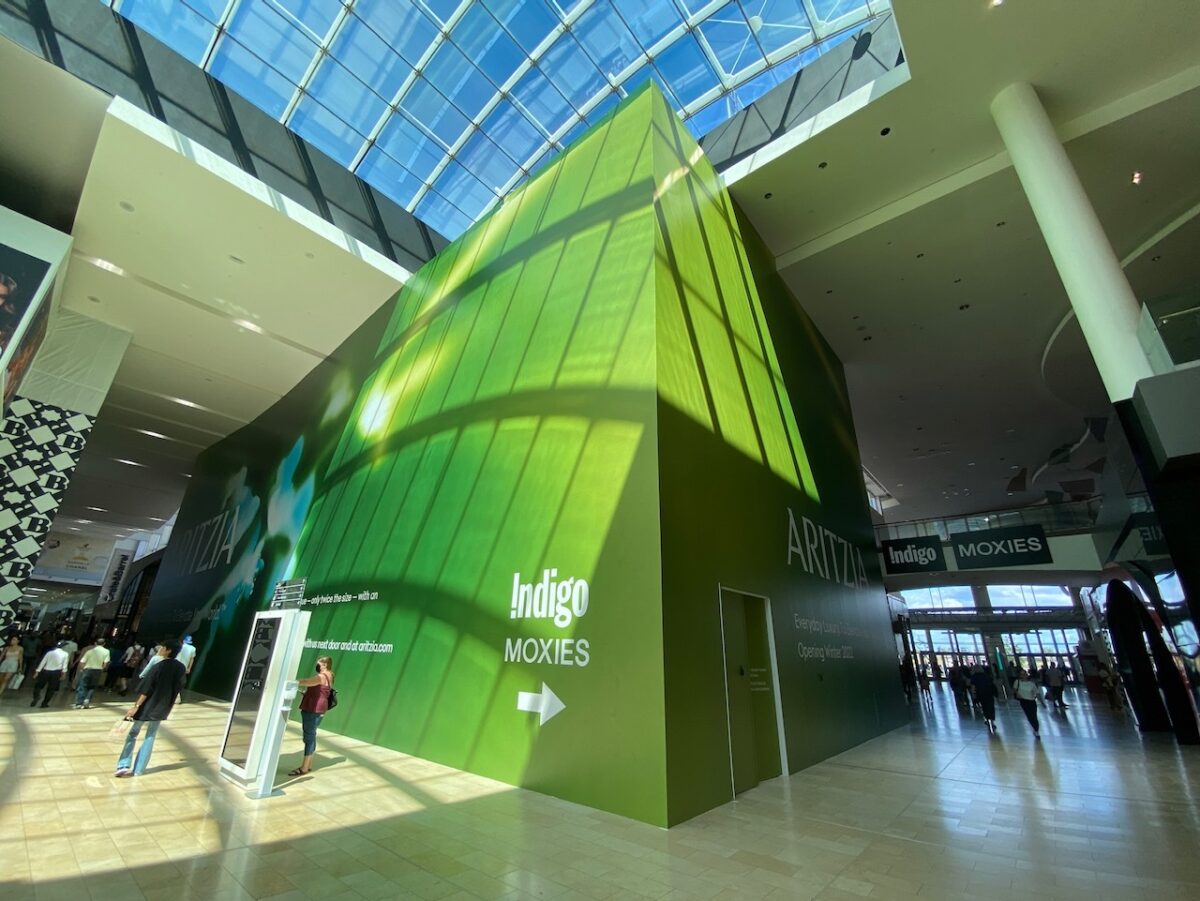
Current Aritzia and Future Expansion at Yorkdale Shopping Centre (Image: Craig Patterson)
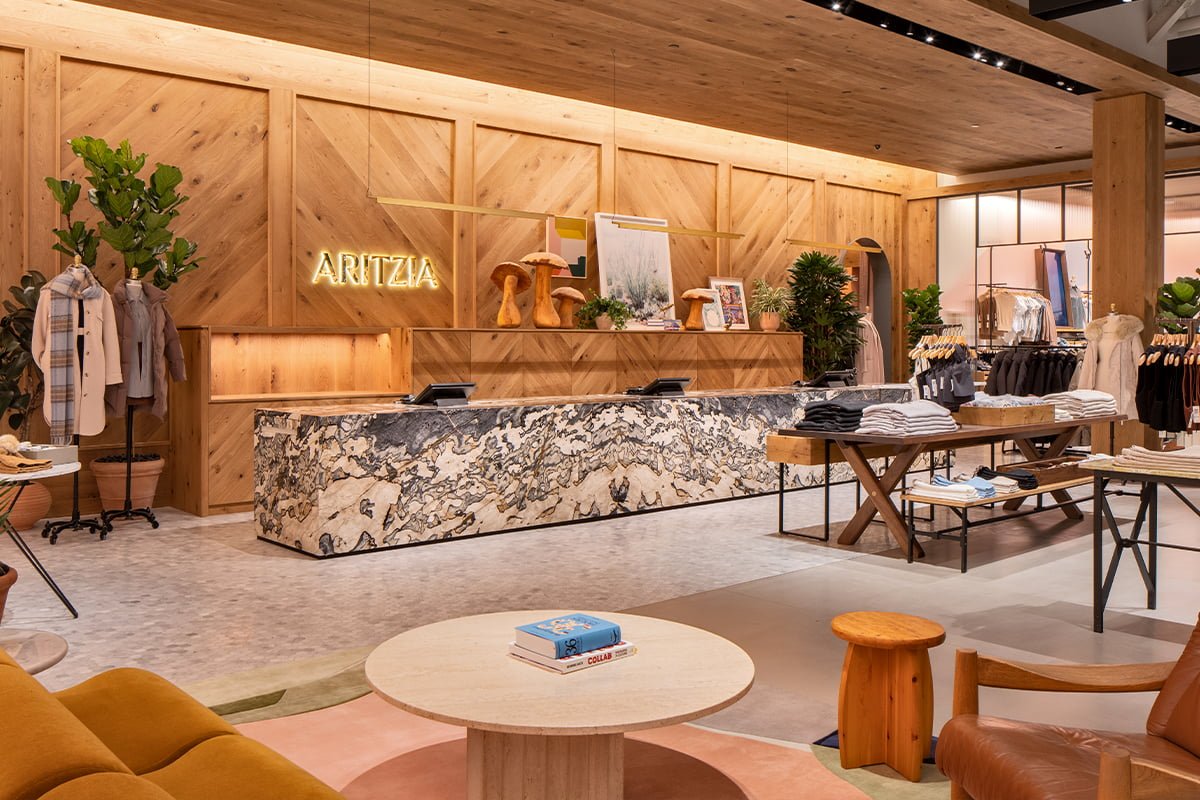
Retailer Aritzia is planning to open its redesigned and redeveloped store in the Yorkdale Shopping Centre in time for the holiday shopping season.
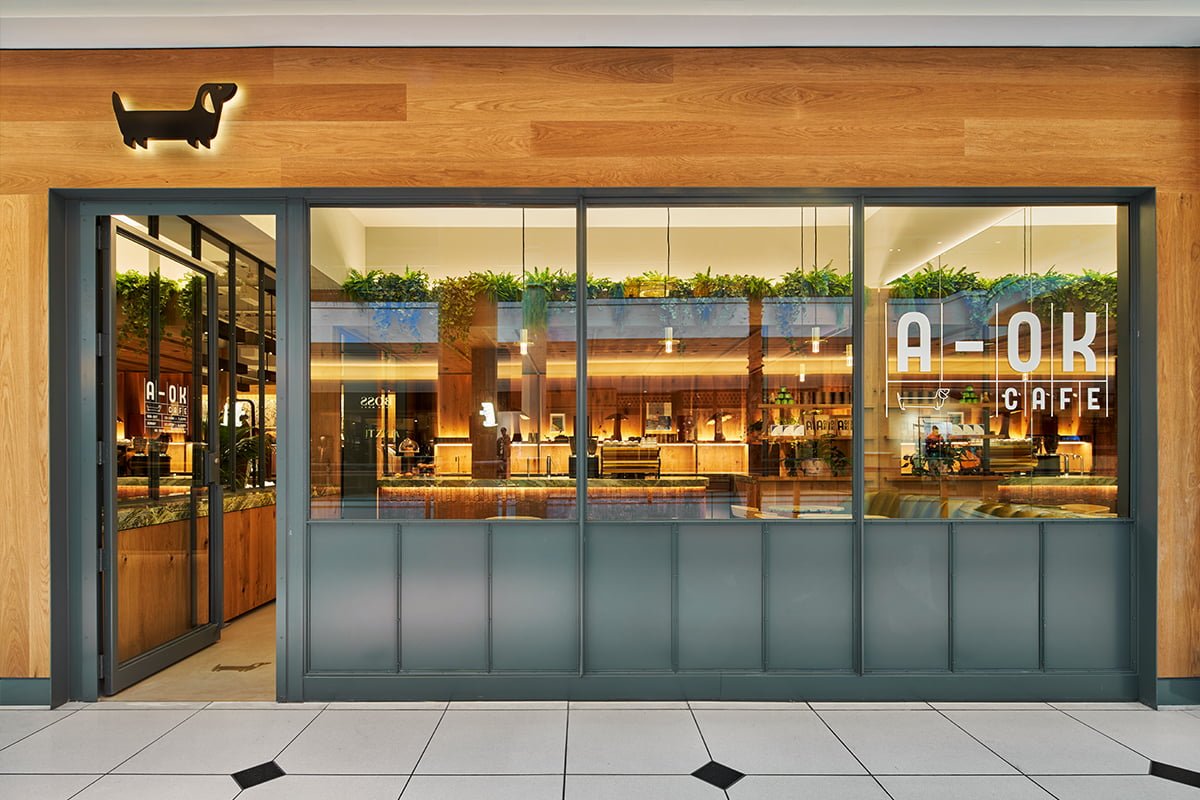
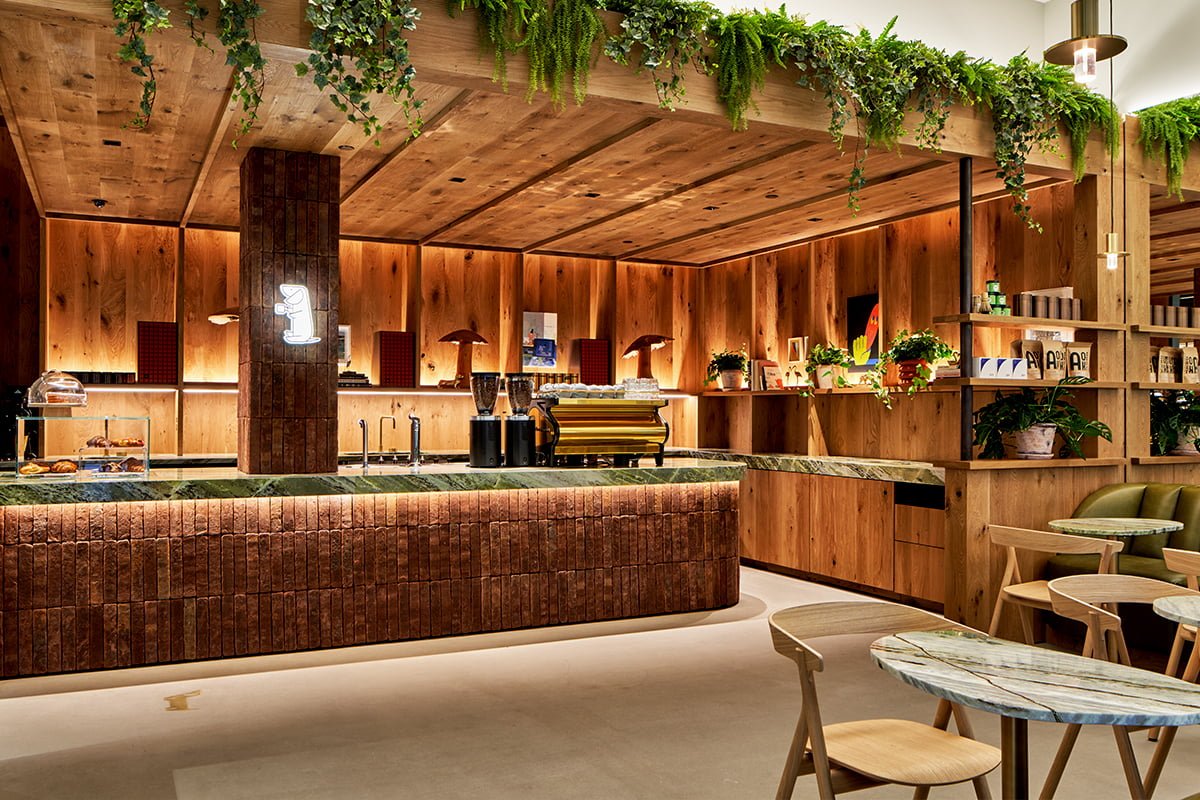
And the location will include its unique new A-OK Café concept.
Karen Janes
“Our current boutique is approximately 10,000 square feet, and we are increasing its square footage by almost 9,000 square feet for a total of almost 20,000 square feet. We have been in the Centre since 1999. Our space at that time was nearly 5,000 square feet and in 2017 we moved to our current space,” said Karen Janes, Executive Vice President, Real Estate boutique Development, for Aritzia.
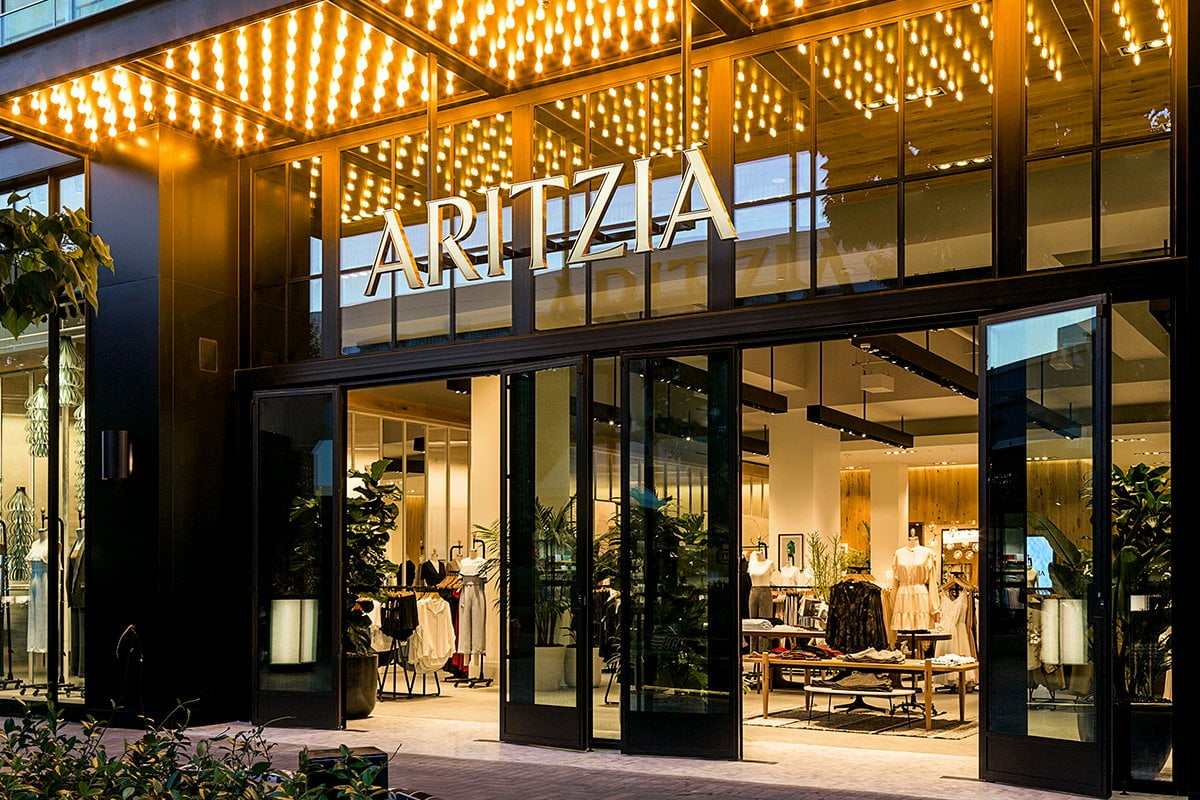
“The biggest key feature will be the large wrap-around video screen at the exterior of the boutique. Other key features include Aritzia’s exclusive A-OK Café and two-storey brick arches on the boutique front facade, one-of-a-kind vintage furniture from Italy, Denmark and France, open concept fitting rooms with two private shopping areas, and hand painted sales floor and ceiling covered murals.
“The construction for the expansion will be phased, but we are aiming to open the majority of the space by the holiday season this year.”
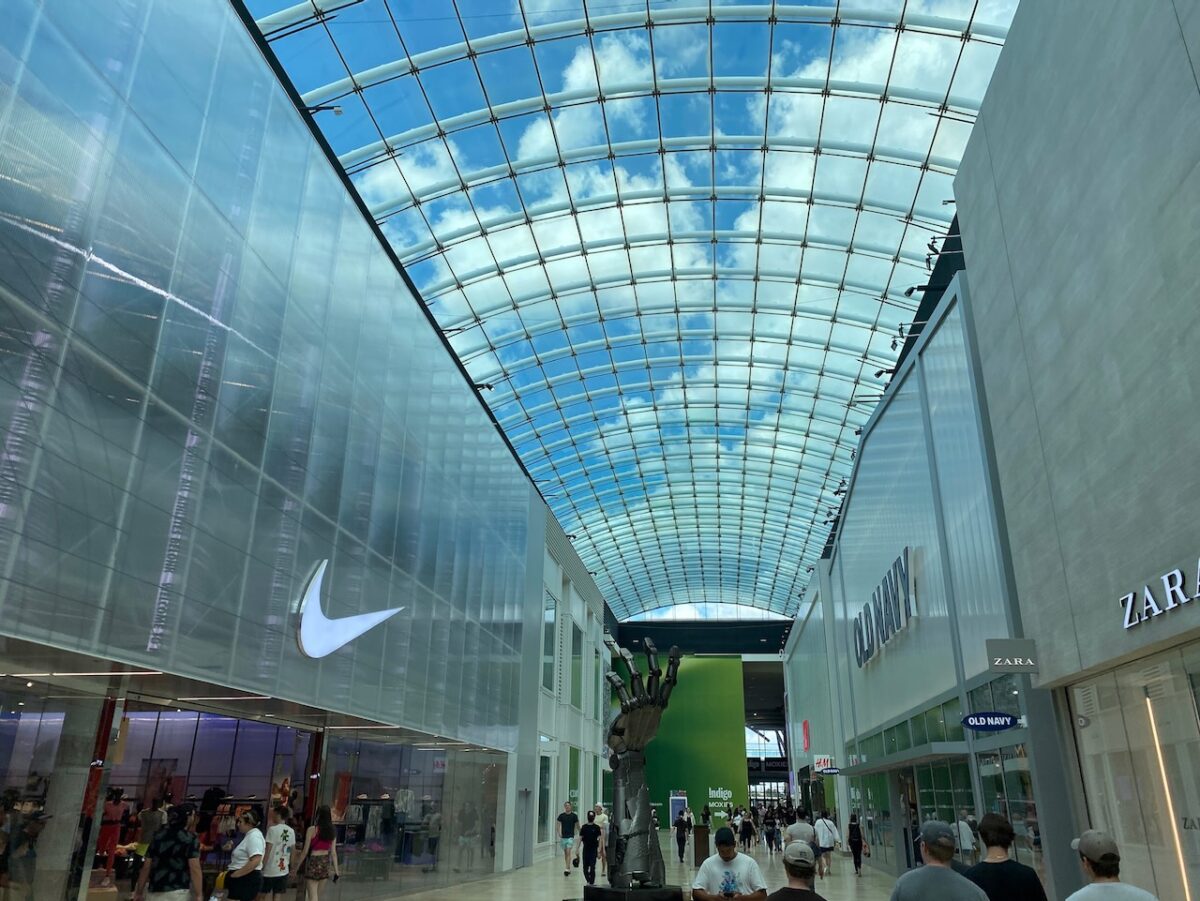
Future Aritzia Expansion at Yorkdale Shopping Centre (Image: Dustin Fuhs)Nike, Old Navy, H&M, Zara, Massimo Dutti and the Future Aritzia Expansion at Yorkdale Shopping Centre (Image: Dustin Fuhs)
Janes said the retailer currently has 112 boutiques, with 68 permanent boutiques in Canada and 44 in the United States, complementing its digital boutique Aritzia.com.
In the past year it has opened one new boutique in Canada at Montreal Premium Outlets in Mirabel, Quebec and six new boutiques in the United States.
She said the company has a total of six planned openings for the rest of 2022: three expansions which include the Markville Shopping Centre in Markham, Ontario; CF Polo Park in Winnipeg and Washington Square in Portland as well as three new boutiques at Stanford Shopping Center in Palo Alto, California, Fashion Outlets of Chicago and Shops at La Cantera in San Antonio.
“With every expansion and opening, our goal is to provide our clients with an aspirational environment. Many of the elements and design ideas will be integrated in future boutiques in an organic way,” explained Janes.
“When we think about expanding our footprint, we look at premier locations that provide us the runway to connect with both new and existing clients through engaging service, beautiful product and aspirational environments. As we look ahead, we are well-positioned and excited for continued growth through the expansion of our boutiques across both Canada and the US.
“We opened our first boutique in Ontario at Yorkdale in 1999 and have gained many loyal clients here. By expanding our Yorkdale location, we are able to share our beautiful product, aspirational space and provide a one-of-a-kind Everyday Luxury shopping experience with our clients. The opportunity to expand in place allows us to offer our clients greater product assortment, more tailored services, and the addition of our A-OK Café concept.”
A-OK at Aritzia Somerset (Image: Aritzia)A-OK at Aritzia Somerset (Image: Aritzia)
The retailer describes itself as a design house with an innovative global platform.
“We are creators and purveyors of Everyday Luxury, home to an extensive portfolio of exclusive brands for every function and individual aesthetic. We’re about good design, quality materials and timeless style – all with the wellbeing of our People and Planet in mind,” added Janes.
“Founded in 1984, in Vancouver, Canada, our world-class team creates immersive, and highly personal shopping experiences in our 100+ boutiques throughout North America and at aritzia.com to everyone, everywhere.”
The new Levis pop-up store in the Hudson Bay building in downtown Vancouver, B.C., on Friday, August 19, 2022. CPimages / Jimmy Jeong
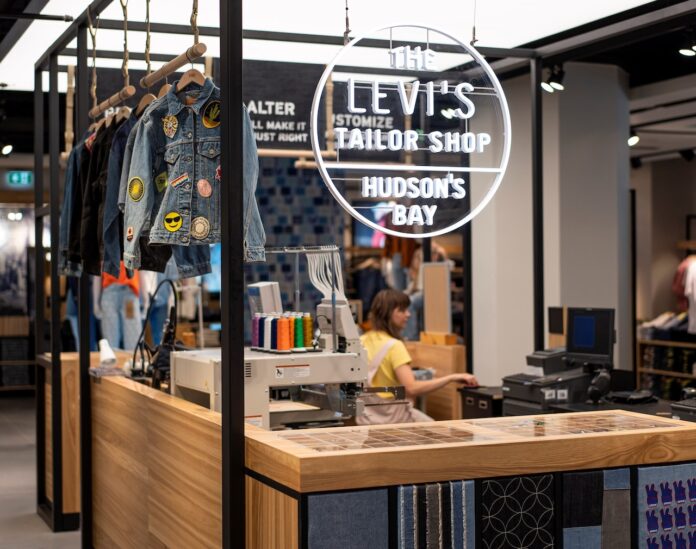
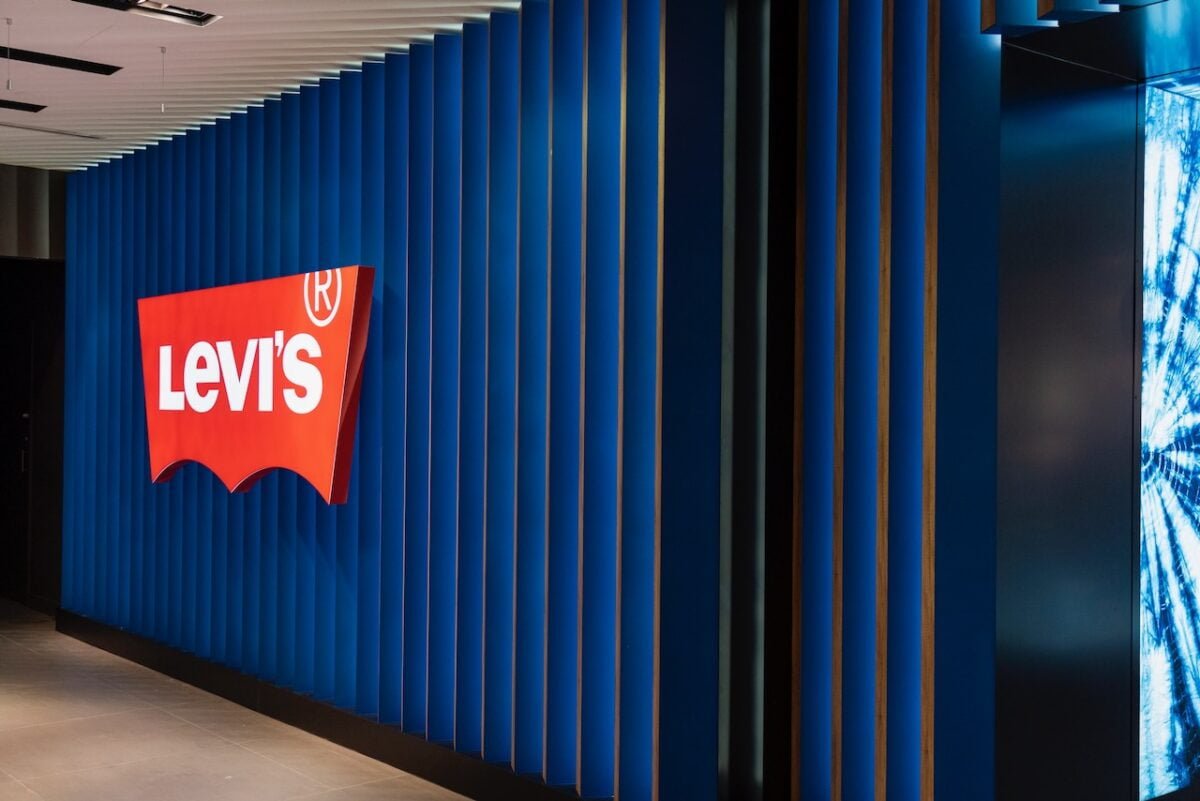
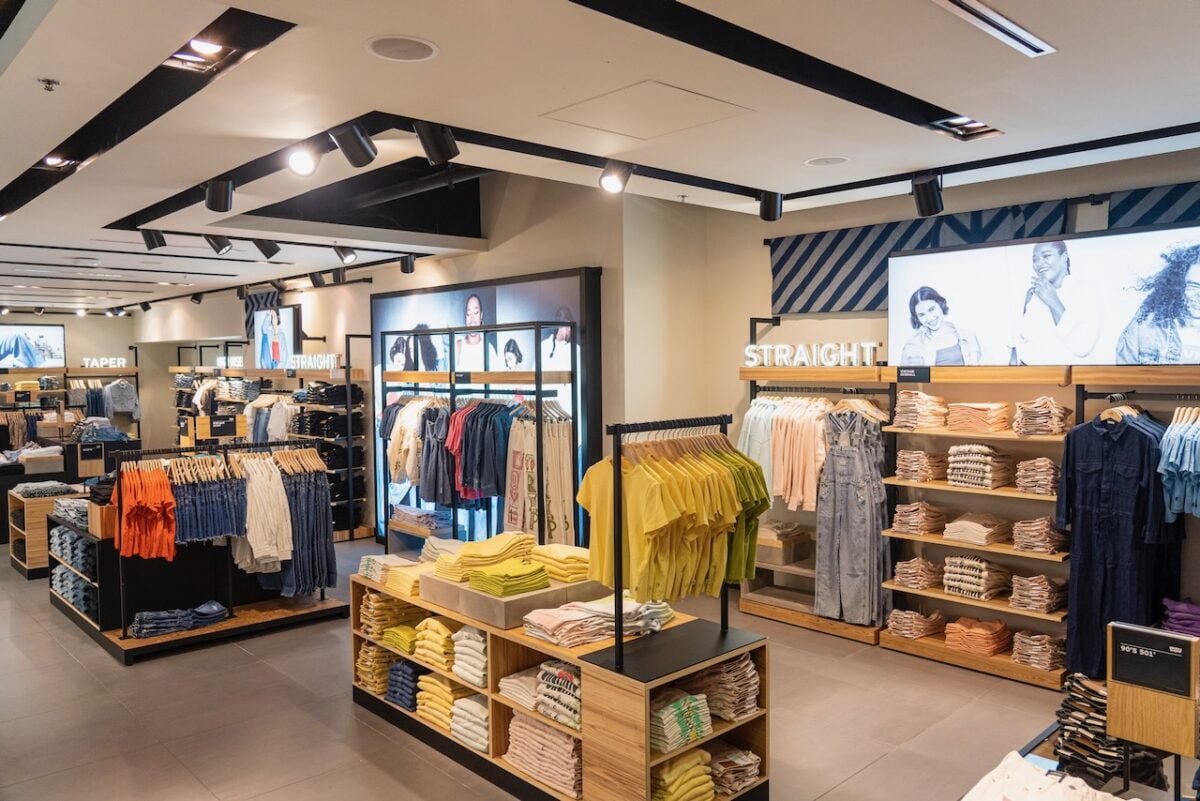
Levi’s has opened a new premium shop-in-shop experience at Hudson’s Bay in Downtown Vancouver.
Nicolas Versloot, Managing Director of Levi’s Canada, said the total selling space is more than 6,000 square feet and is located in a high-traffic lower ground floor level with several access points immediately entering the store.
Nicolas Versloot
“We chose this location because we saw an opportunity to deliver an elevated Levi’s experience in a high-traffic downtown location in Vancouver. This complements our Park Royal-owned and operated store and gives us the space to house a tailor shop to give customers the opportunity to make an individual statement on the products they buy, be it with patches or embroidery or a design of their own,” he said.
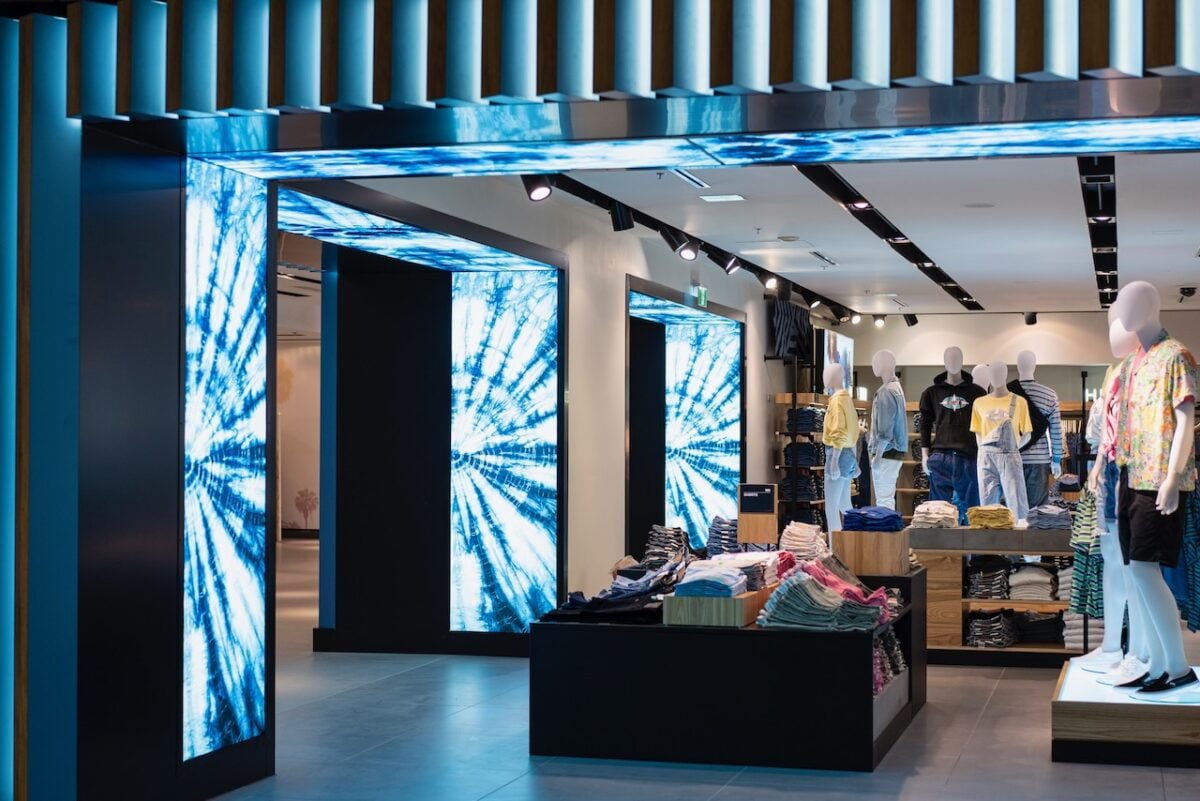
“This is the first of its kind in that we have added more digital technology to provide better customer service and appeal to the more fashion-conscious consumers for whom digital is a constant in their lives. Not only do we have style advice and continuous communication with the stylist from the fitting room, but we also have locations for social media or image sharing with friends which is a shopping habit of the Gen Z customer.”
The new Levi’s pop-up store in the Hudson Bay building in downtown Vancouver, B.C., on Friday, August 19, 2022. CPimages / Jimmy JeongThe new Levi’s pop-up store in the Hudson Bay building in downtown Vancouver, B.C., on Friday, August 19, 2022. CPimages / Jimmy Jeong
The retailer describes the new location as a “6,600 square foot immersive experience that offers styling, product tailoring and customization, tech-enabled fitting rooms and a larger assortment of the brand’s favorite products.”
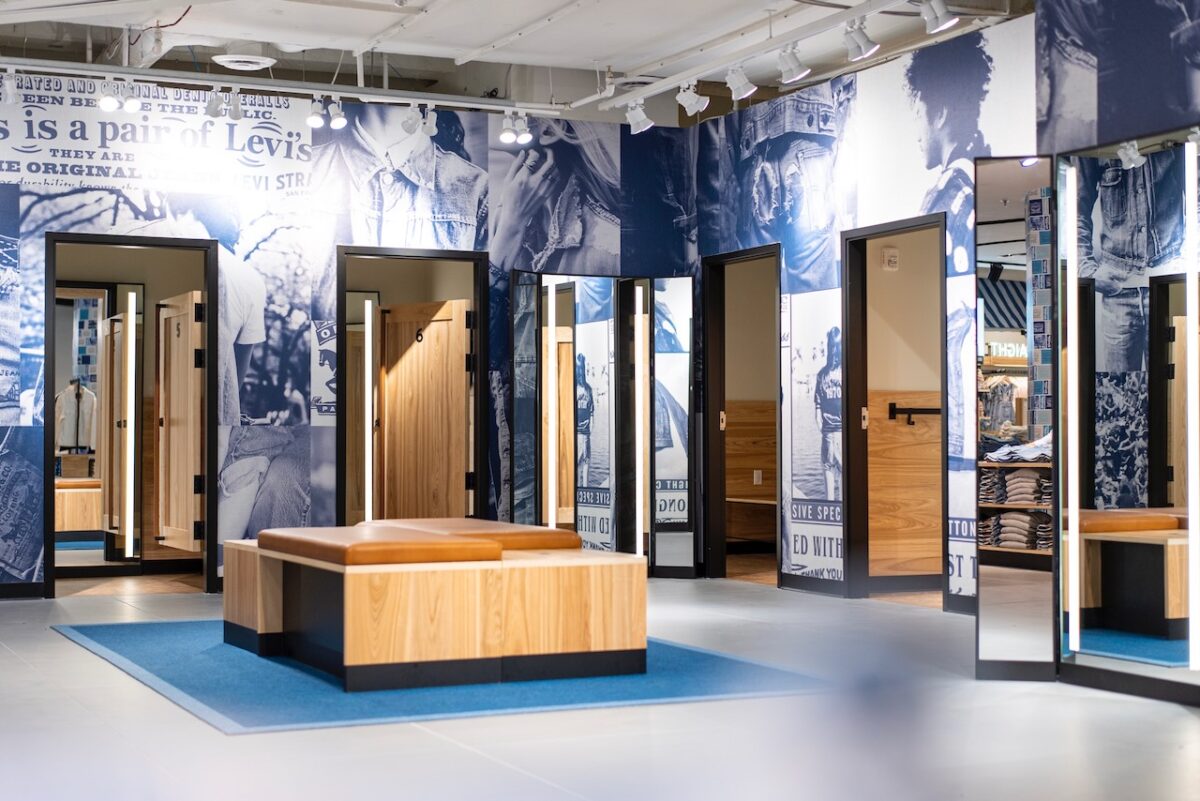
Levi’s says it has reimagined and digitized its fitting rooms for a seamless and effortless experience interacting with stylists on the floor to ask for an alternative style or fit, request heels or a belt to help visualize how the look will wear after purchase and to offer additional inspiration on pieces that help complete the wearers’ look – all at the touch of a button.
At the heart of the experience is the Levi’s Tailor Shop, where customers can work with a skilled Levi’s Tailor to make sure the jeans fit exactly the way they want them to —whether that means simply cropping a hem, tapering the leg or adjusting the waist. From coloured shank buttons and rivets to patches, to pocket linings, to chain stitching and embroidery, the Levi’s Tailor Shop offers a full range of customization options that ensure each pair of jeans can be a one-of-a-kind creation, adds the company.
“As this is a first we are evaluating the consumer’s response before we commit to further expansion,” said Versloot.
The new Levi’s pop-up store in the Hudson Bay building in downtown Vancouver, B.C., on Friday, August 19, 2022. CPimages / Jimmy JeongThe new Levi’s pop-up store in the Hudson Bay building in downtown Vancouver, B.C., on Friday, August 19, 2022. CPimages / Jimmy Jeong
“As a leading retailer, we have a duty to the industry and the category to provide reasons to shop in a brick-and-mortar environment. We know how important fit and feel are to our fans. Post-COVID, which saw a huge swing to the convenience of online shopping, we had to innovate in a way that reminds shoppers of the benefits of trying on products, of having styling options to create an individual look, and an experience that is innovative, different, and worthy of repetition and recommendation.
“With consumer behaviour shifting in the ever-changing retail landscape, Levi’s continues to prioritize how we deliver our iconic products and impactful brand experience. Our goal was to provide a premium one stop shop in a coveted, high-traffic area, perfect for engaging with Levi’s fans who want to connect with the brand, and who are searching for a retail experience as well as their dream pair of Levi’s.”
In a statement, Laura Janney, Chief Merchant, The Bay, said: “Levi’s is a brand that has transcended generational fashion eras and remained a must-have wardrobe staple in our customer’s closets for years. This shop represents Levi’s continued innovation, quality and latest fashion in an environment that inspires shoppers as they discover and connect with an iconic brand.”
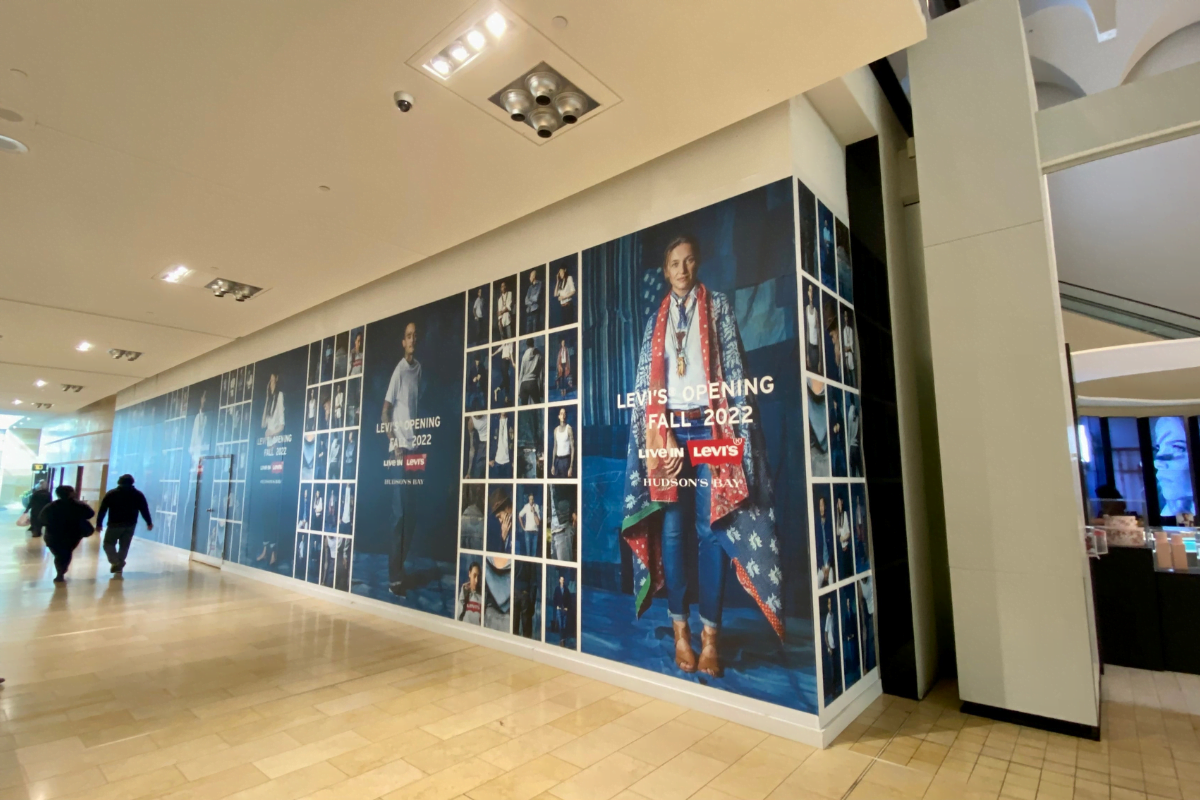
Future Levi’s Pop-up at Yorkdale Shopping Centre (Image: Craig Patterson)
A second similar Levi’s storefront is set to open soon at Toronto’s Yorkdale Shopping Centre as well. Construction hoarding has been up for several months now.
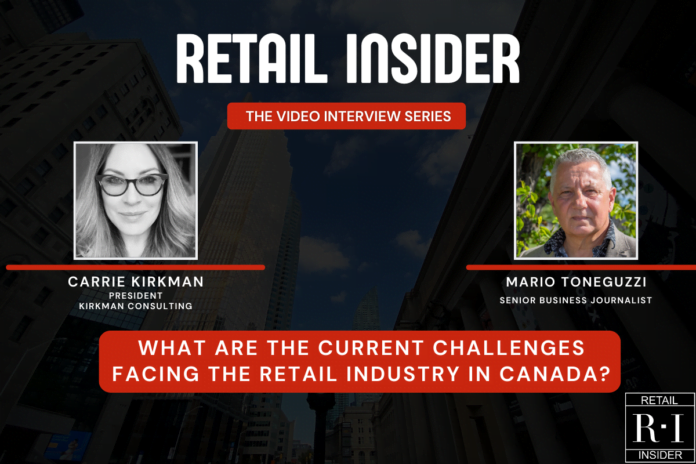
Video Interview: What Are The Current Challenges Facing The Retail Industry in Canada?
Carrie Kirkman, President, Kirkman Consulting, and Executive Director, Sympli, discusses the current challenges faced by the retail industry in Canada.
Kirkman talks about the retail landscape today, issues such as labour, supply chain and inflation, what are consumers looking for, the future of retail, her background in the industry and why she chose retail as a career path.
Over her career, Kirkman has had leadership and executive roles at Nine West, Global Brands Group, Sears Canada, Jones Apparel, Hudson’s Bay and Liz Clairborne.
The Video Interview Series by Retail Insider is available on YouTube.
Connect with Mario Toneguzzi, a veteran of the media industry for more than 40 years and named in 2021 a Top Ten Business Journalist in the world and the only Canadian – to learn how you can tell your story, share your message and amplify it to a wide audience. He is Senior National Business Journalist with Retail Insider and owner of Mario Toneguzzi Communications Inc. and can be reached at mdtoneguzzi@gmail.com.
Also check out the other series offered by Retail Insider, including The Weekly podcast and The Interview Series, which are both available on Apple Podcasts, Stitcher, TuneIn, Google Podcasts, or through our dedicated RSS feed for Simplecast and other podcast players.
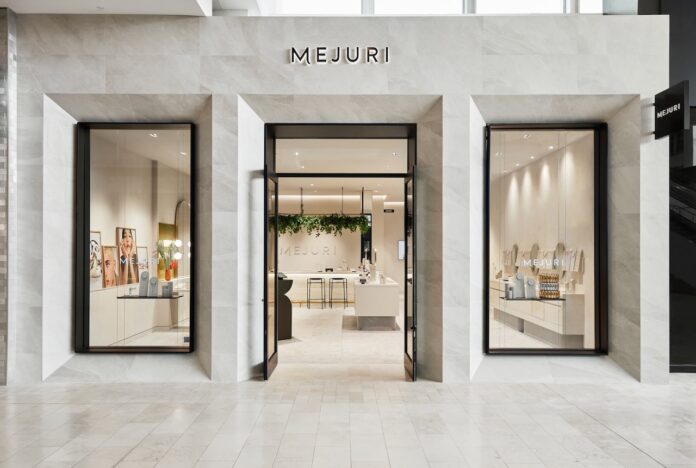
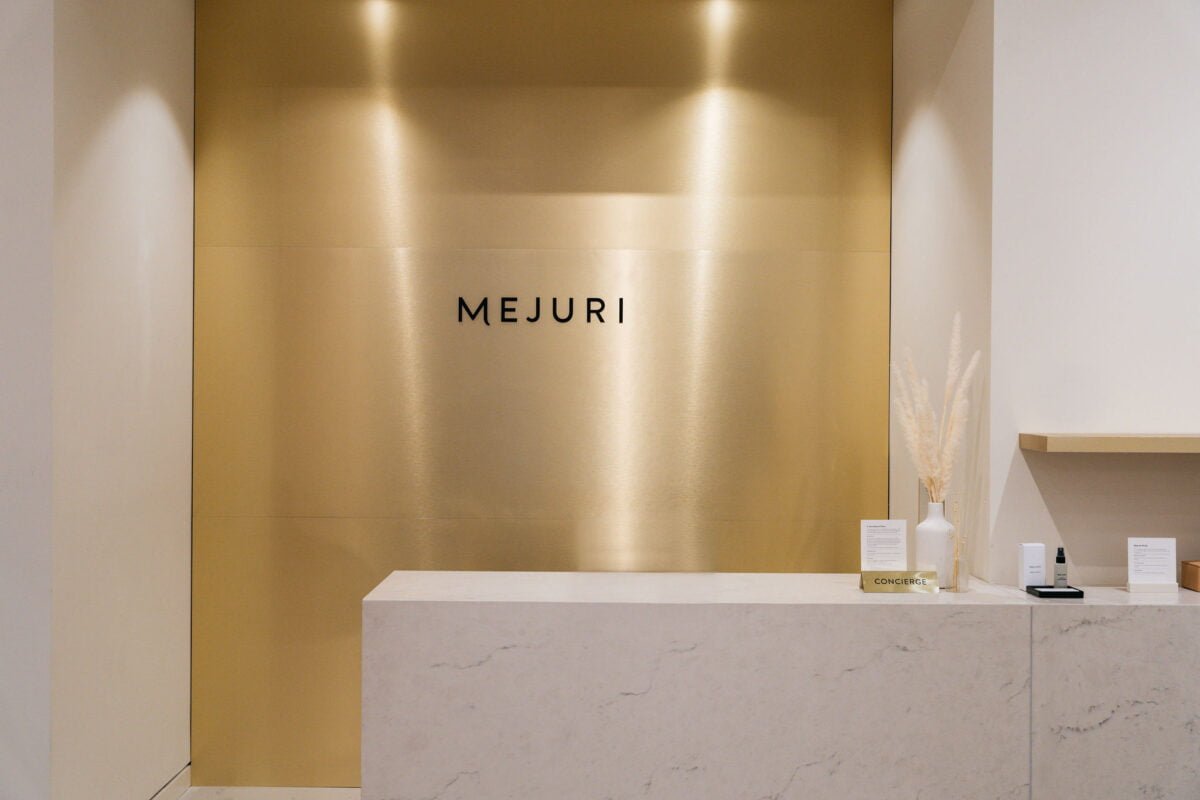
Mejuri at Yorkdale Shopping Centre (Image: Mejuri)
Mejuri, the category defining fine-jewelry brand, has opened its second store in Toronto and its first enclosed mall location at the Yorkdale Shopping Centre.
“This will be Mejuri’s very first enclosed mall location, which is very exciting. We chose Yorkdale as it is one of the top performing malls globally, and home to an array of luxury brands. With our highly-engaged community, especially in our homebase of Toronto, Yorkdale offers our community a second retail option in the market. Yorkdale’s doesn’t only have a strong draw within the Greater Toronto Area but also internationally,” said Majed Masad, Co-founder and President of Mejuri.
Majed Masad
“This store is also the first representation of our new design vision and direction for Mejuri – a bolder, playful and artful take while creating a localized experience. In addition to new custom fixtures and materials, the store is designed to create an approachable in-person experience of the brand and all it stands for: jewelry as an expression of self. Customers are encouraged to shop the necklace wall, product displays, and bespoke elements, providing a sense of empowerment to style yourself – though our experienced stylists are always nearby for advice.
“A key feature is the storefront – drawing inspiration from the Jenna Lyons Signet Pinky Ring, a special piece created for International Women’s Day. The subtle movement of the slate-esque tile and chamfered windows elevate the storefront with the boldness of the metal window wells to frame the jewelry and store experience.”
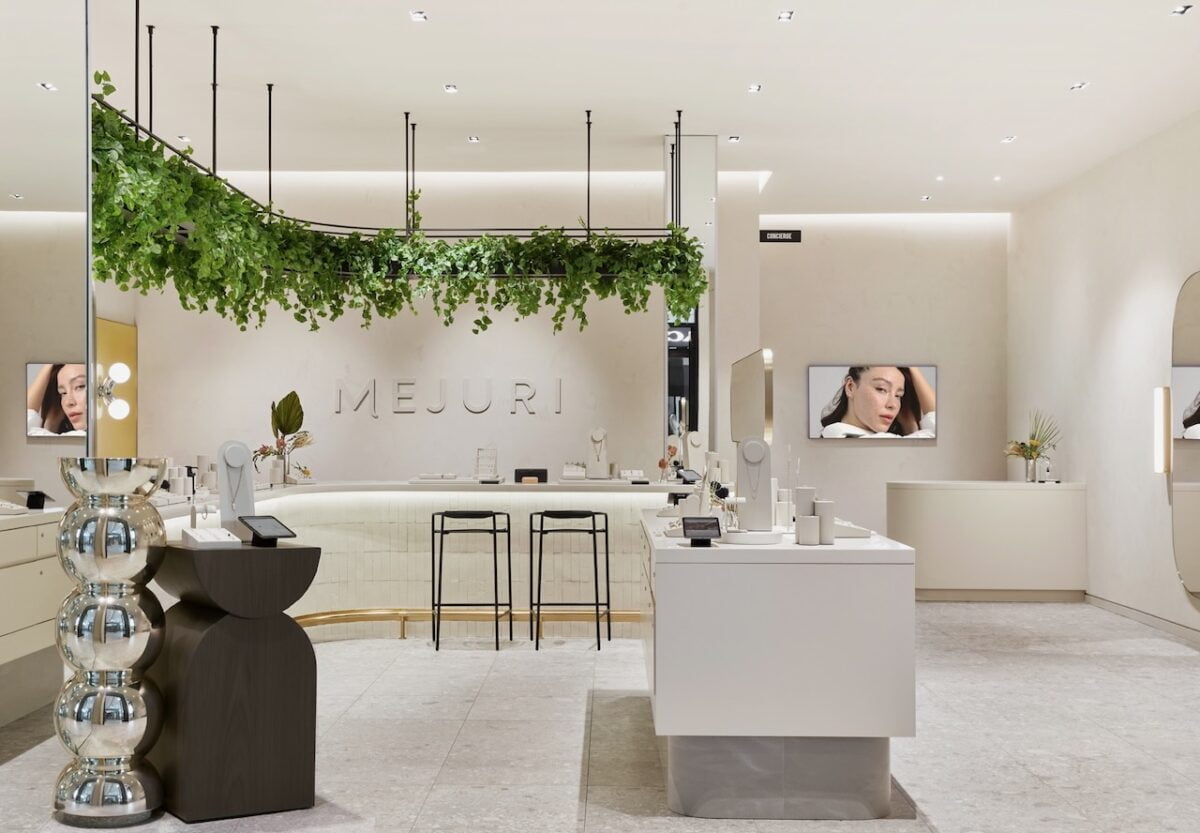
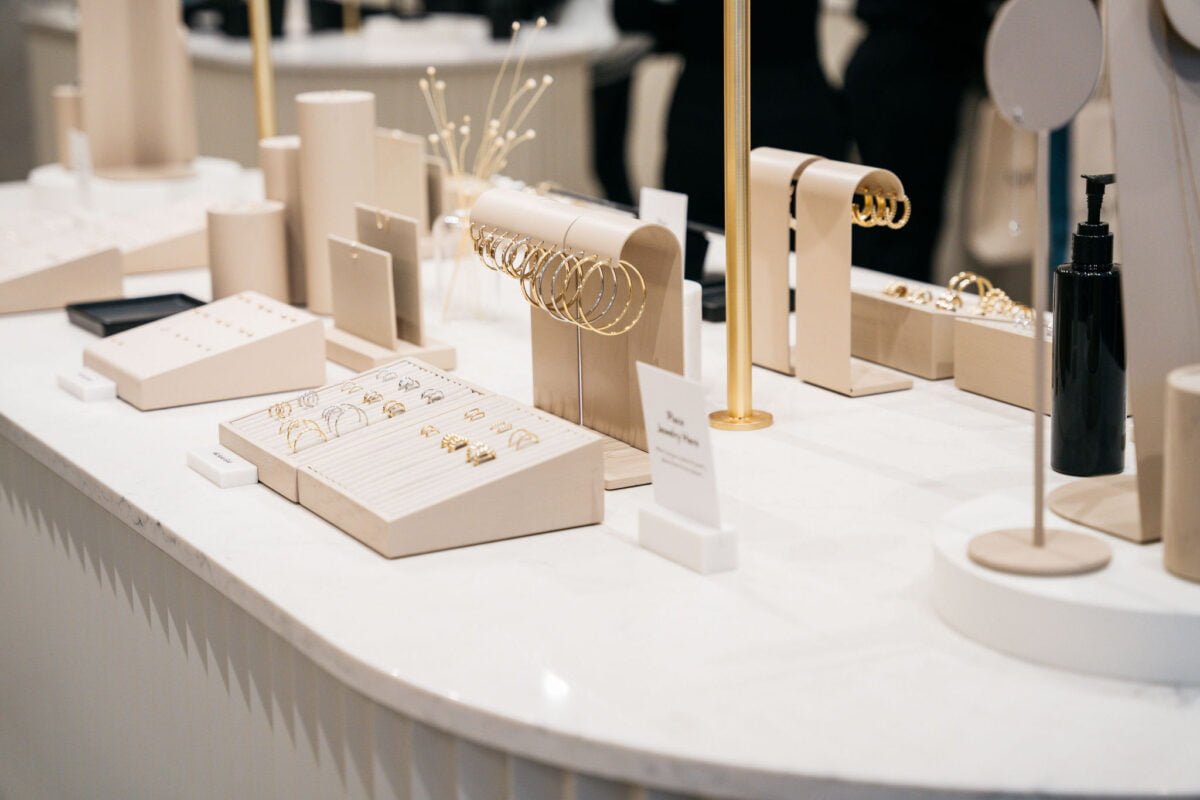
Mejuri at Yorkdale Shopping Centre (Image: Mejuri)
Masad, with partner in work and life, Noura Sakkijha, created the brand in 2015 and opened its first location in Toronto on Dundas Street in July 2018. It has since expanded to 12 stores across North America and the UK., including Yorkdale.
“Toronto represents the beginning of Mejuri; it is our homebase,” said Sakkijha. “Many of our very first Toronto customers are still shopping with us and interacting with us six years later. Even while we expand globally, the relationships we hold with our community here especially empowers us to continue to deliver new stores and pieces.”
Noura Sakkijha
Masad said Mejuri was created to disrupt an archaic industry and create a brand that is relatable to the modern consumer.
“As a third generation jeweler, Noura understood that the market is fragmented with large jewelry brands owning a small share of the global jewelry market and most customers not having a single brand they have loyalty towards. We also found that many of these brands are outdated, with high luxury markups and lacked focus on community and the brand experience. This dynamic in the industry reinforced our belief in creating a brand that has a fresh, modern take on the category; one that reflects the values of our generation by encouraging individuals to purchase jewelry for themselves with or without an occasion. We love to say buy yourself the damn diamond,” he said.
“What differentiates us the most, is our relationship with our community, and our understanding that Mejuri is much more than a fine jewelry brand. We pioneered the ‘drop’ model in fine jewelry with new launches dropping weekly so that we could sustain an ongoing dialogue with our customers. As a result of our community focus, we have shipped over two million pieces and have garnered an Instagram following of over one million followers. The response from our community and the way they celebrate themselves and others has been incredible. We’re continuously inspired by the way they uplift one another, which is why we created the Empowerment Fund in order to provide the tools and resources for underrepresented women and non-binary individuals to succeed.”
Image: MejuriImage: Mejuri
Masad said the company intends to triple its store count by the end of 2022, bringing it to over 20 stores across North America and the U.K.
“We have seen tremendous performance in our retail stores that have truly surpassed our projections. Our customers are seeking a personalized, in real life experience with us and as a result, they’re purchasing more. It is our hope that our retail expansion provides more accessible touchpoints for our customers, no matter where they are. We do have some exciting news coming down the pipeline in Canada specifically, and will be able to share that later this Fall,” he said.
The brand is a good fit in its newest location. The company says Yorkdale is one of the top performing malls globally. With over 18 million annual visitors, it is home to a number of international retailer’s first stores in the Canadian market, including some of the biggest and most luxurious brands in the world, such as Louis Vuitton, Cartier, Valentino, Ganni, Bottega Veneta and Celine among others.
The facade of the Yorkdale location is inspired by the Jenna Lyons Signet Ring for its simple geometry and boldness, which launched earlier in 2022 for International Women’s Day. The space also echoes the décor of Mejuri’s existing 10 stores across North America and the U.K. with custom modular mirrors, millwork and jewelry displays, all designed in-house. The L shaped bar allows customers to connect with Mejuri’s experienced stylists to garner counsel on how to stack and layer their pieces. Intimacy is evoked within the space by having the collections displayed within reach on ring bars and necklace wall displays, as if you were trying on a friends’ personal collection, says the company.
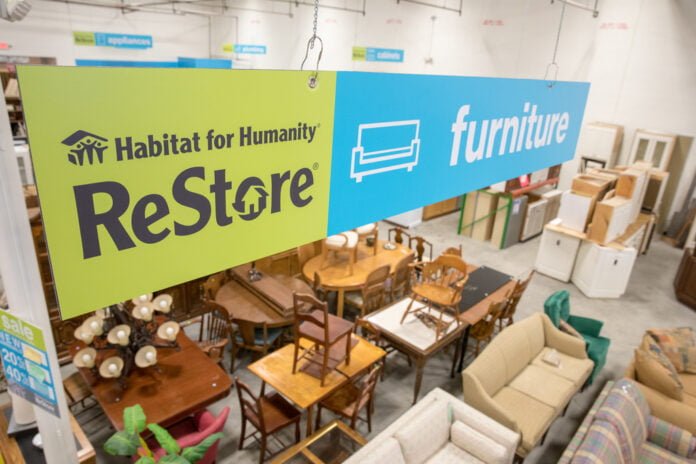
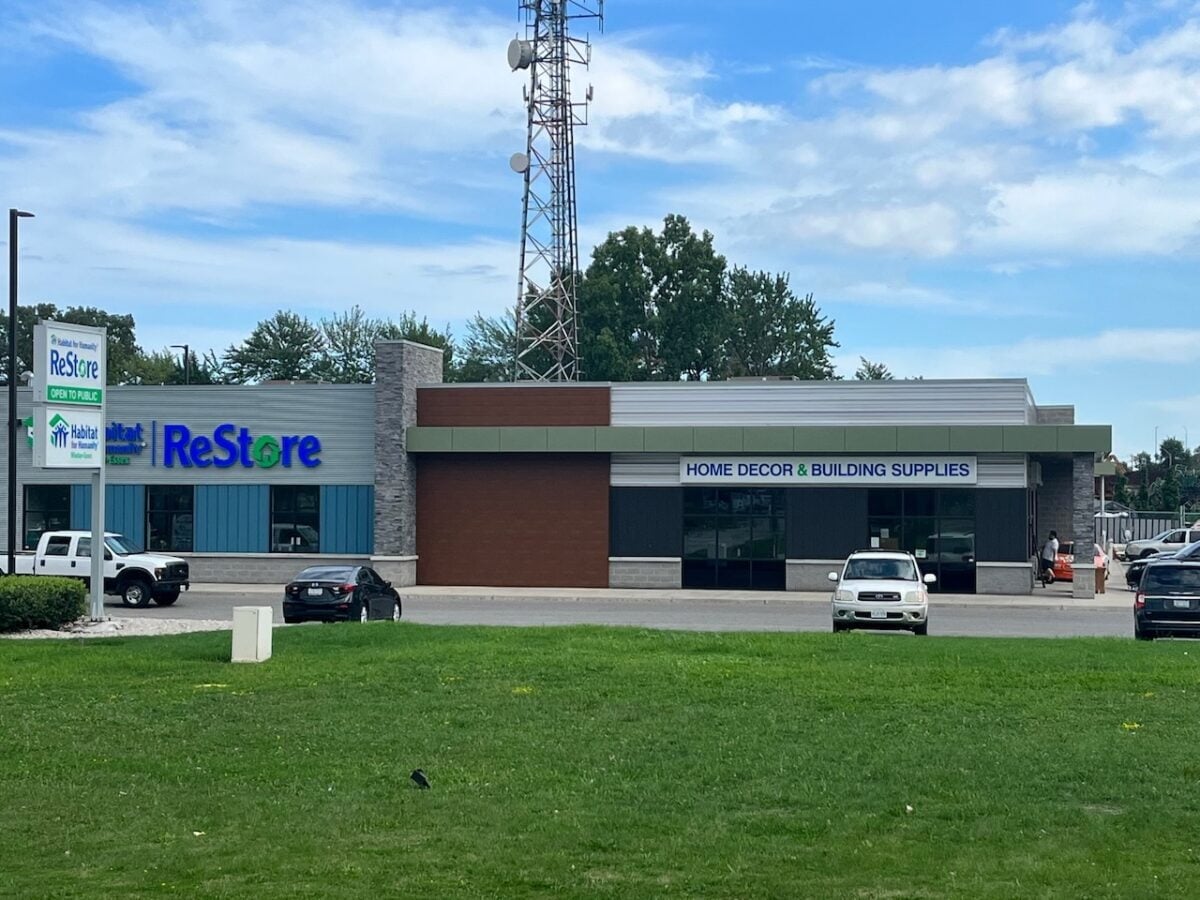
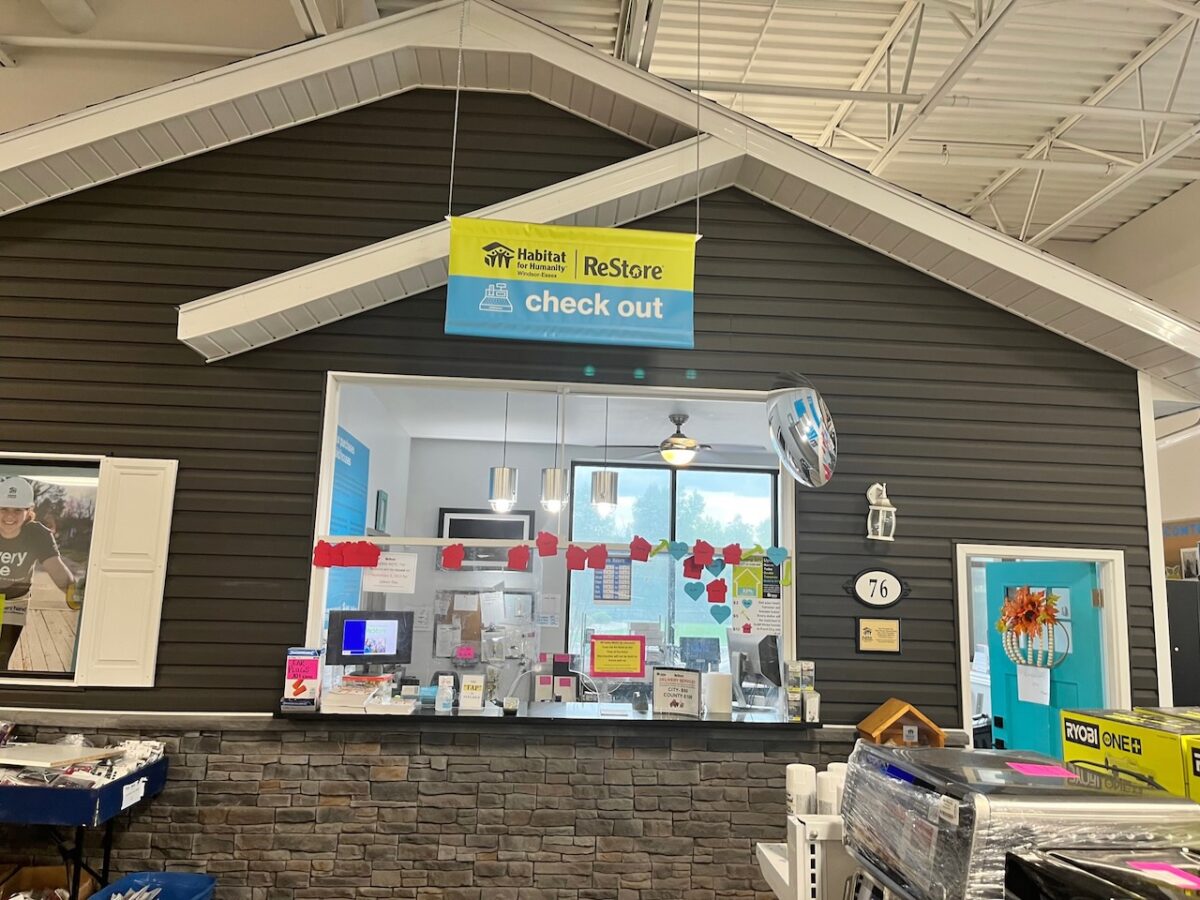
Habitat for HumanityReStores are home and building supply outlets that accept and resell new and gently used building materials.
And the concept continues to gain momentum throughout the country, capitalizing on the burgeoning consumer trend of spending money at secondhand and used retailers.
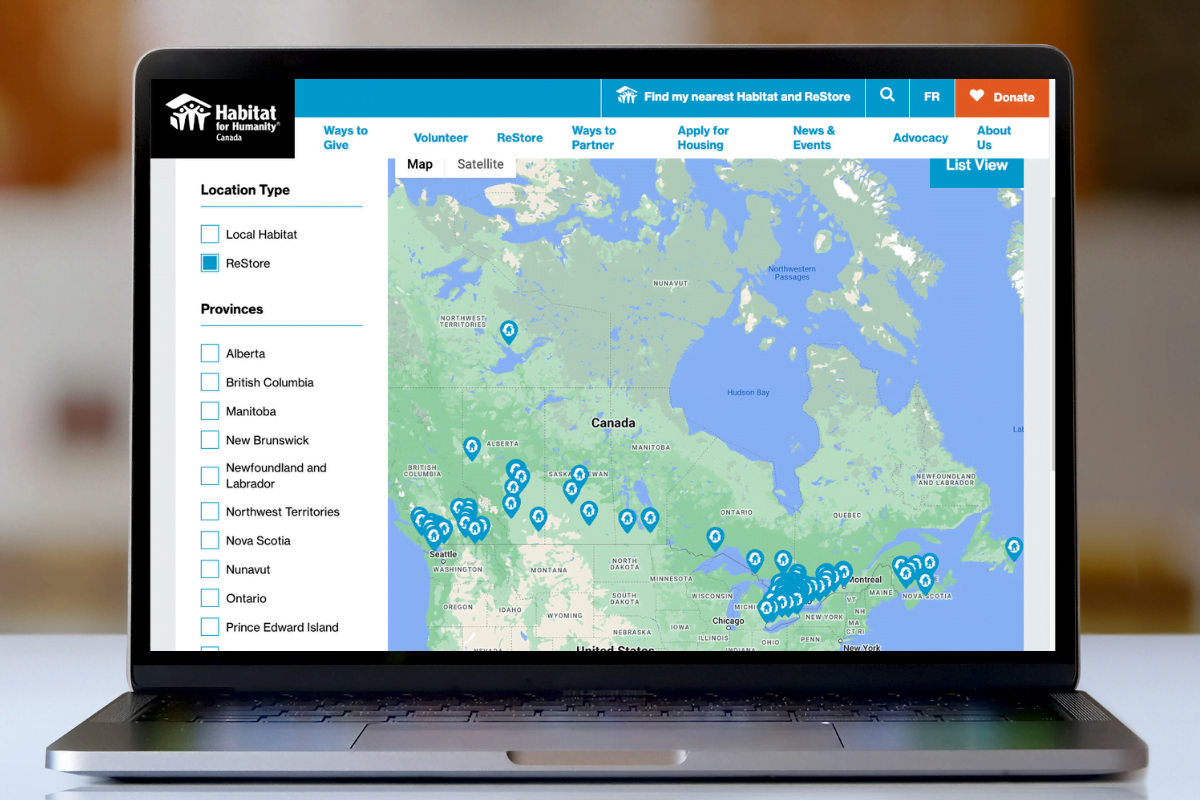
It began with its first store in 1991 in the Winnipeg area and today there’s 110 locations across Canada coast-to-coast. There are more than 1,000 stores worldwide.
“Right now, we’re about an $80-million business in Canada,” said Daryl Morrison, National Manager for the Habitat Restore, who takes care of all the initiative’s procurement, product and distribution across the country.
“The ReStore supports the local (Habitat for Humanity) affiliate and there’s 49 Habitat affiliates.”
Image: Habitat for Humanity ReStore
Founded in 1985, Habitat for Humanity Canada is a national charitable organization “working towards a world where everyone has a decent and affordable place to call home”.
Habitat Canada says it brings communities together to help families build strength, stability and independence through affordable homeownership.
“With the help of volunteers, Habitat homeowners and 50 local Habitats working in every province and territory, we provide a solid foundation for better, healthier lives in Canada and around the world. Habitat for Humanity Canada is a member of Habitat for Humanity International, which was established in 1976 and has grown to become a leading global nonprofit working in more than 70 countries.”
Morrison said he believes the ReStore concept will continue to grow in Canada.
“There’s a lot of secondhand stuff on the market. We don’t want anybody necessarily throwing it out. Last year alone, we diverted 43,000 tonnes of product from landfill all across the country,” he said.
“Definitely I see growth across the country in the secondhand market.”
Image: Habitat for Humanity ReStore Image: ReStore
Morrison said each ReStore is unique, offering consumers a wide variety of products for a home – from construction materials to furniture and appliances at discounted prices. Some stores even sell books.
Revenue generated from the stores goes back to help Habitat for Humanity in its home building efforts throughout the country.
Morrison said the venture receives its items that it sells through donations as well as national donors that include several big box retail chains.
“We have a small procurement team and we look after national donors that have multiple locations across the country,” he said. “Overstock. Returns is a big, big business for us right now. There’s so much returns right now (in the retail industry).
“If you can’t handle all these returns, please donate them and we can get some money back in the markets for them to support our mission. There’s just so much out there and we just need to get a grasp of it.”
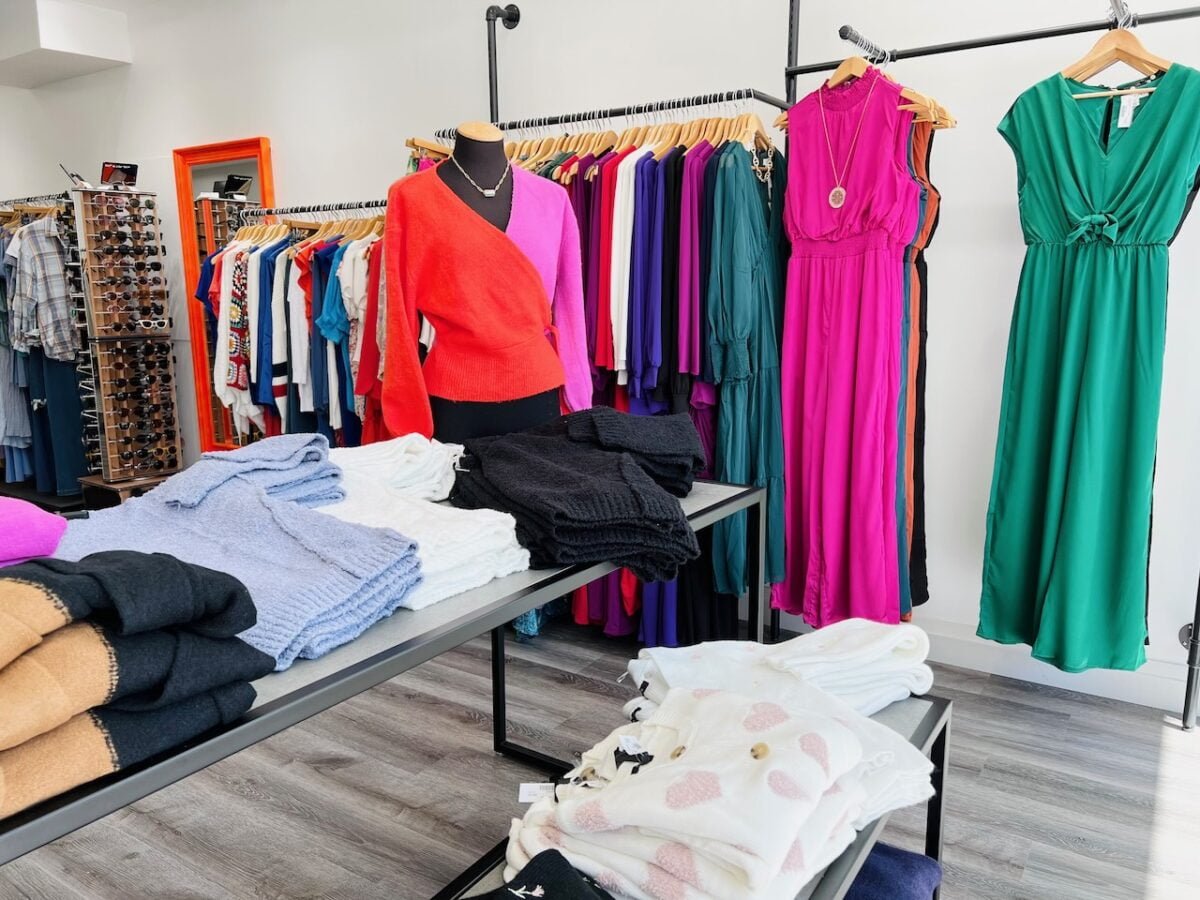
Boa Boutique, a women’s fashion store known for its uniqueness, is looking to improve its in-store experiences, live selling, its website, and its social media accounts – the four main channels of selling to complimenting the retail element.
Starting in 2001, its first location was at Yonge and Lawrence in Toronto. Boa Boutique now has two locations – one in Toronto and the other in Oakville, where it has recently moved storefronts.
Daphne Nissani
The Oakville store moved six blocks from its original location and is now at 125 Lakeshore Road. Boa Boutique was at its previous location for 13 years; however, decided to move into a much larger space to allow for more growth.
“The space is close to double, I moved because I had the opportunity and I was able to pivot quickly,” says Daphne Nissani, the owner and founder of Boa Boutique. “I just took advantage of what was available and instead of being constantly afraid to make a move. So, I got a bigger store, negotiated a better lease, and better opportunities.”
The new store is 2,000 square feet and opened in June 2022.
Image: Boa Boutique
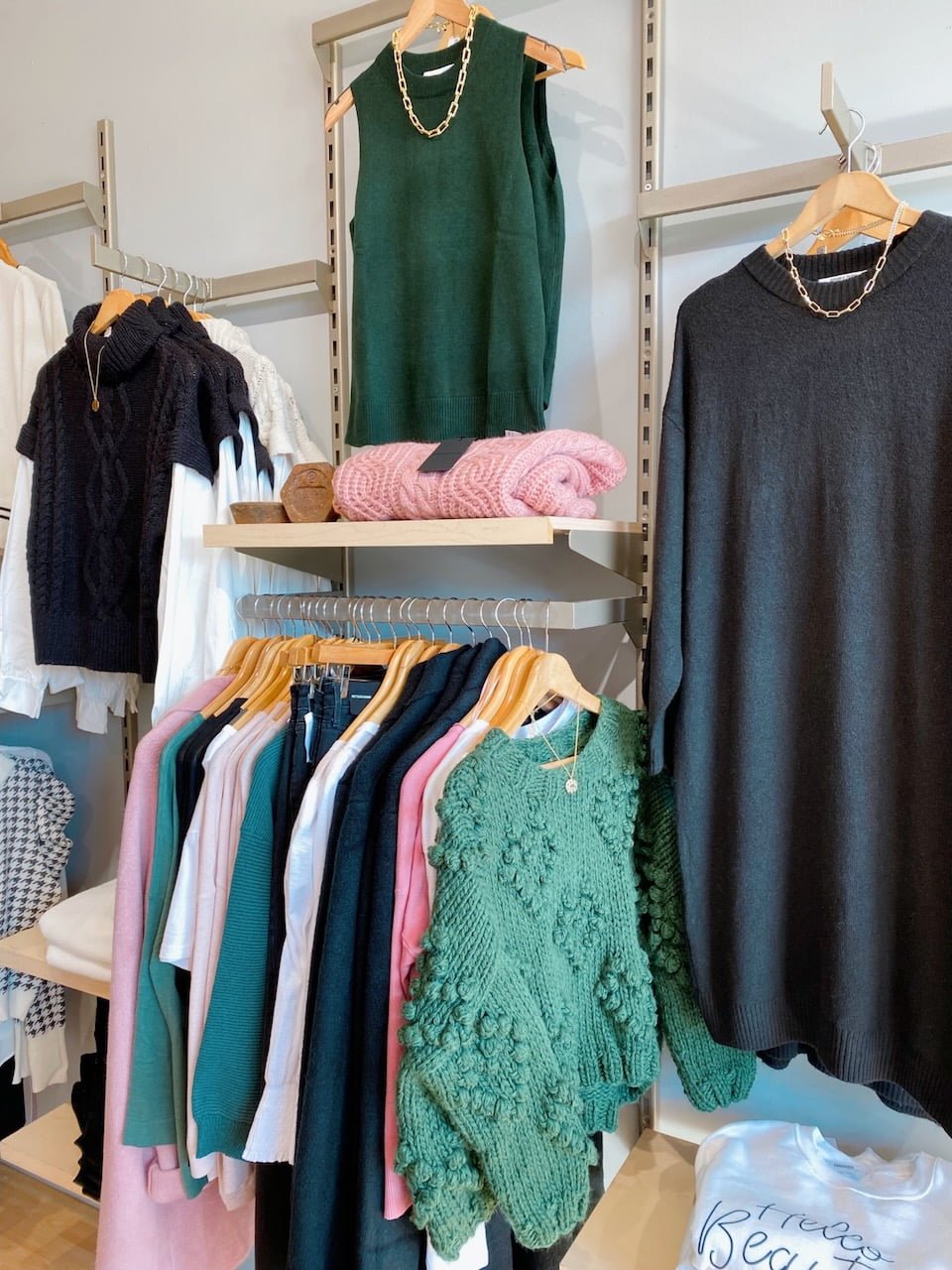
Products customers can find include jumpsuits, workwear, tops, dresses, accessories, and more. Nissani said she is always looking to add new clothing that is sustainable, comfortable, and unique.
“We look for looks that convert from day to night, provide comfort, and that are unique which is important to us as we want to have something that is a bit different so that you don’t look like everybody else as I am very committed to being unique. I have a sustainable element because I am a conscience fashion buyer. I look for products that have some element of sustainability, whether that is their carbon footprint, upcycled fabrics, or sustainable fabrication such as ethical leather.”
Live Selling – A Lifeline During the Pandemic
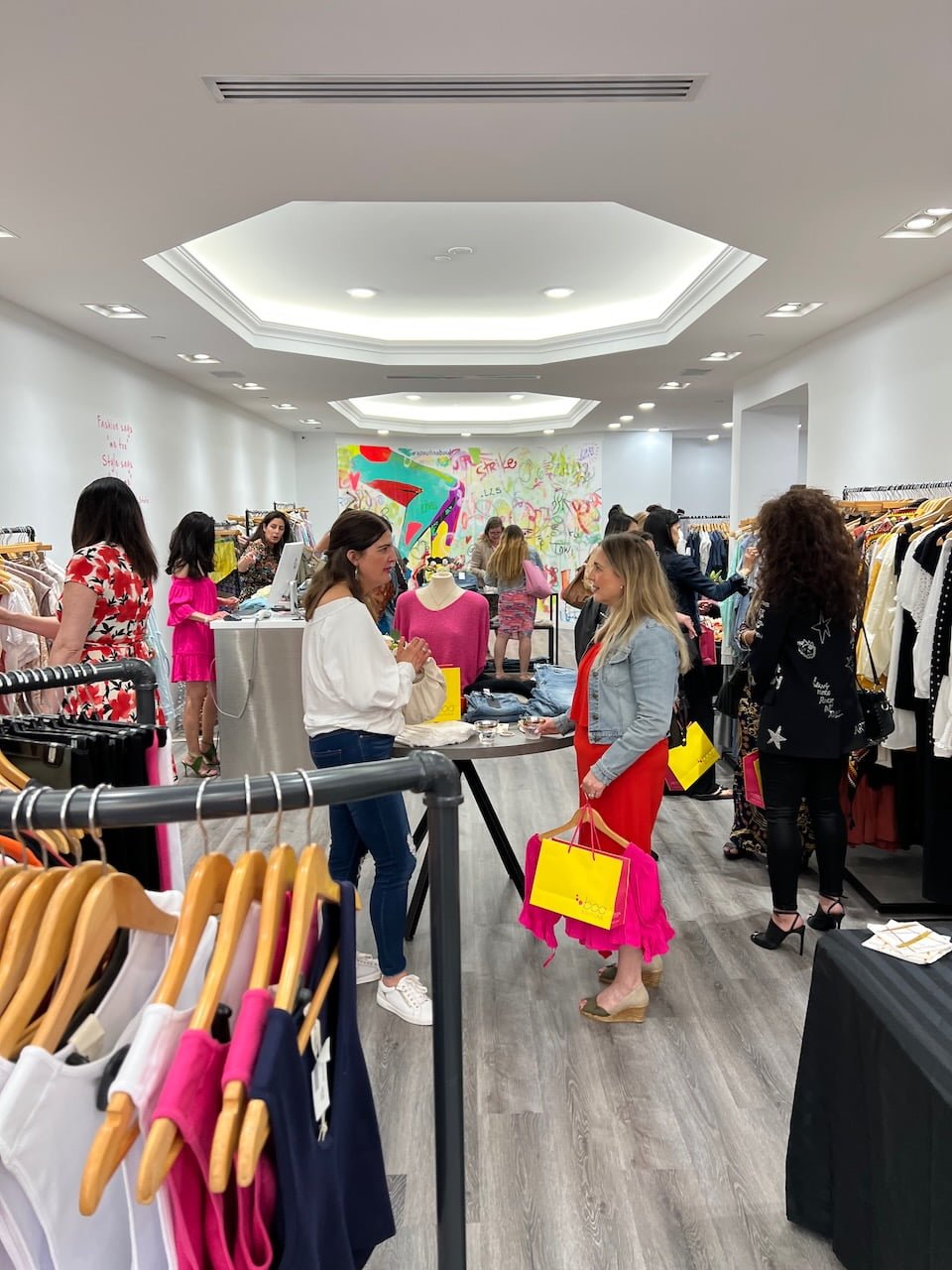
Image: Boa Boutique
Boa Boutique started live selling on its Instagram account as of March 2020 due to the pandemic.
The live selling happens a couple of times each month where customers can participate in an auction.
“We will do a live auction which is a sell of discounted items so it may attract a specific customer, or some people join for fun. Basically, you just hop on, we are live trying on clothes, with some closeup shots, and you claim it on the live feed. Everything is exchangeable, even sale items are still exchangeable so there is no commitment. Selling live was our lifeline throughout the pandemic and now we are going to continue to sustain and grow the selling channel.”
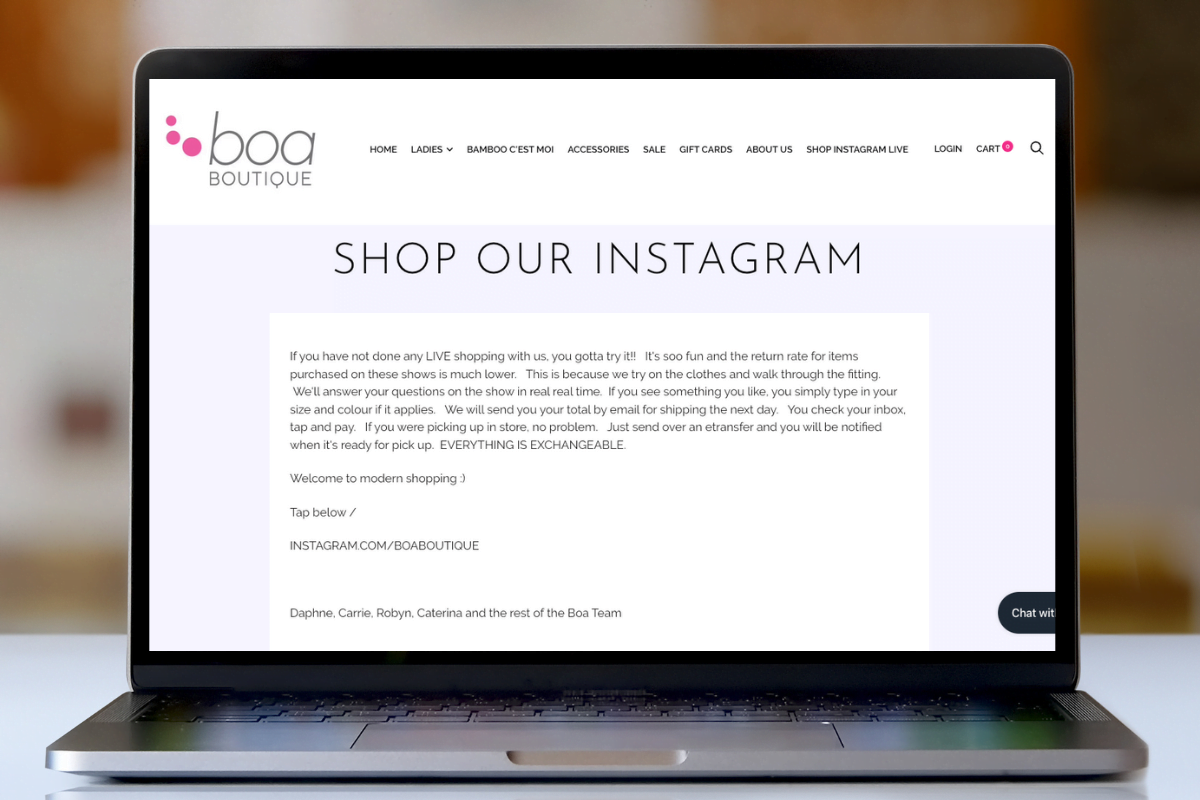
Image: ShopBoa.ca
Nissani said the live shopping channel has also created a new sense of community for Boa Boutique as customers are interacting more together and with the store. It has also been attracting customers from all over Canada to even as far as the United Kingdom.
“We have reached more customers all over Canada. People were really grateful during the lockdowns and during that time there was a sense of community. People online became friends just because they talked to each other so regularly on the live feed.”
To date, the live feed has completed about 115 shows. The next step will be to improve the live selling platform so customers can directly purchase the item on Instagram instead of buying through its website.
Updating All Four Selling Points
Image: Boa Boutique
Image: Boa Boutique
Nissani said she is looking at revamping the live selling experience, social media accounts, and re-develop its website.
Boa Boutique’s Beaches location at 2116 Queen Street East in Toronto is the second location. It’s currently in the works to be remodelled and will re-open in January 2023.
“I am working on the drawings right now to remodel that location, so once both stores are more updated, I want to be able to sustain a comfortable relationship with customers who shop in-store, through social media, on the website, and also on the live selling – those four main streams and everything else that compliments the retail experience.”
Image: Boa Boutique
The 900 square foot store will be getting a new look as the façade will be transitioned to all glass along with an interior redesign. Originally, this project was supposed to be done this season; however, because of lack of resources due to the pandemic, Nissani said it was pushed back until January.
“Right now, I am focusing on just online and continuously sustain and increasing my live selling format because that has been a lifeline throughout the pandemic, and I think it is just something that has proven to be a model for sales, so I am just trying to improve it with my team. I want to make sure our stores have a feel-good environment, making sure all customers get help in what they are looking for, and that everyone feels welcome.”
Kelley Keehn, best-selling author and personal finance educator, discusses today’s high cost of living and its impact on consumers.
Keehn talks about inflation and rising costs, the impact that is having on spending, the impact for retailers, how discount stores are doing in this environment and advice for consumers in these times.
The Video Interview Series by Retail Insider is available on YouTube.
Connect with Mario Toneguzzi, a veteran of the media industry for more than 40 years and named in 2021 a Top Ten Business Journalist in the world and the only Canadian – to learn how you can tell your story, share your message and amplify it to a wide audience. He is Senior National Business Journalist with Retail Insider and owner of Mario Toneguzzi Communications Inc. and can be reached at mdtoneguzzi@gmail.com.
Also check out the other series offered by Retail Insider, including The Weekly podcast and The Interview Series, which are both available on Apple Podcasts, Stitcher, TuneIn, Google Podcasts, or through our dedicated RSS feed for Simplecast and other podcast players.
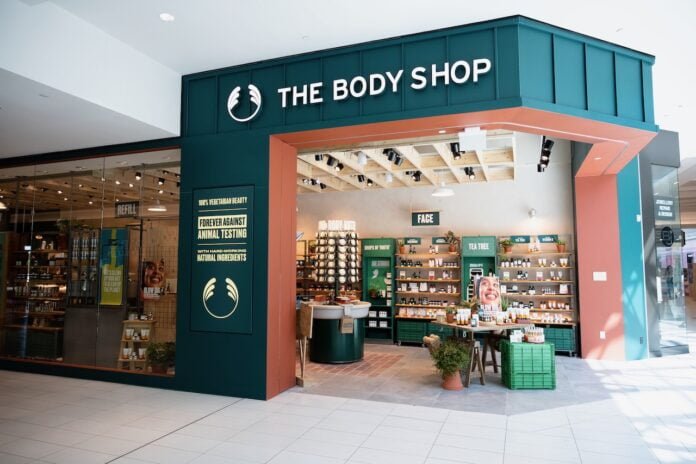
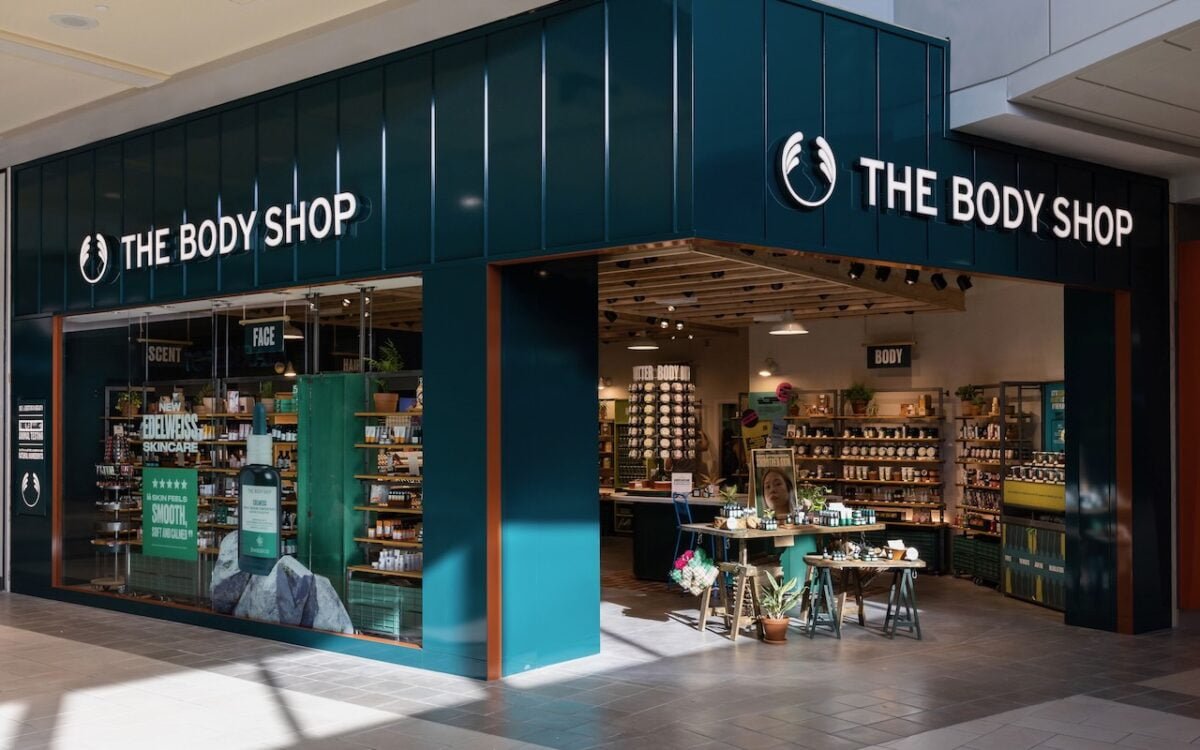
The Body Shop Canada continues to expand new Workshop concept stores across the country, celebrating its activist roots.
The concept was launched in 2020 prior to the pandemic at CF Pacific Centre in Vancouver. Recently, it also opened in Oshawa Centre and Market Mall in Calgary with stores to open as well in November at West Edmonton Mall and at the Metropolis at Metrotown in Burnaby, BC in 2023.
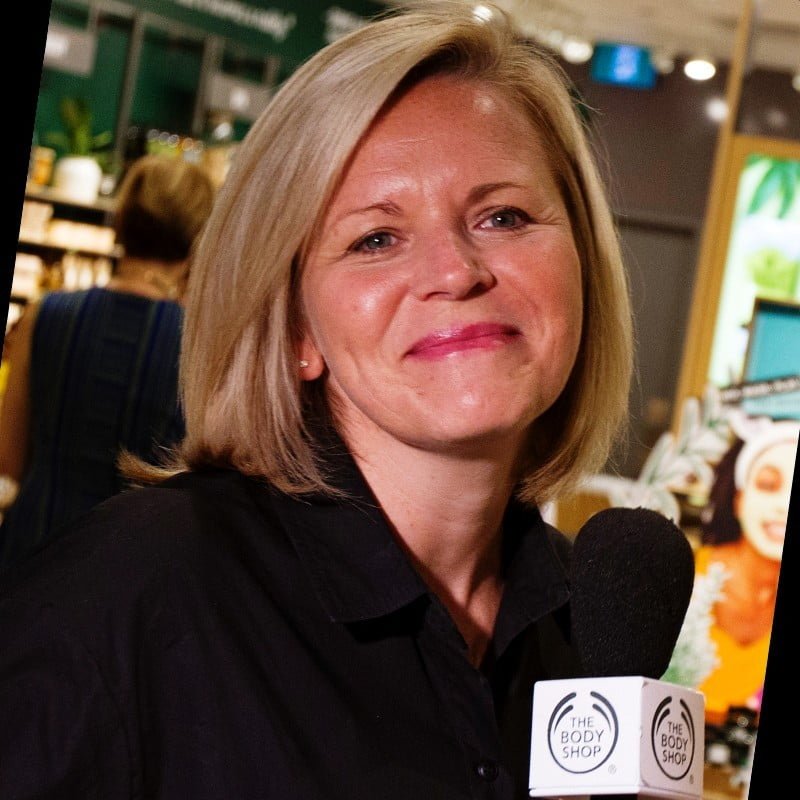
Hilary Lloyd
“To a lot of people, the concept of ‘changing the world’ can sound a bit abstract. With our workshop stores, we want to bring people together to realize that they can be change makers and are capable of making small changes that could benefit our communities and the planet,” said Hilary Lloyd, VP of Brand and Activism for The Body Shop North America.
“From our refill stations to our new Wellness body care range, customers will get to shop the products that make them feel good, while also doing good. These stores are the ultimate changemaking beauty experience. Our stores and products have always been, and always will be, a way to connect people to environmental and social justice issues.
“There’s a healthy runway of Workshops to come which we’re just in the process of finalizing the details on. We’re really excited about what’s coming.”
Image: The Body Shop
Founded in 1976 in Brighton, England, by Dame Anita Roddick, The Body Shop is a global beauty brand and a certified B Corp and today has 123 stores in Canada. The Body Shop operates about 3,000 retail locations in more than 70 countries.
Lloyd said the new concept Workshop is designed with many purposes in mind.
“The first is we want them to be really inviting and customer engaging spaces,” she said. “When you’re in a Workshop, you’re sort of all hands on deck, sleeves rolled up, more active in the experience. That’s a really big part of the experience we’re trying to create with the new concept.
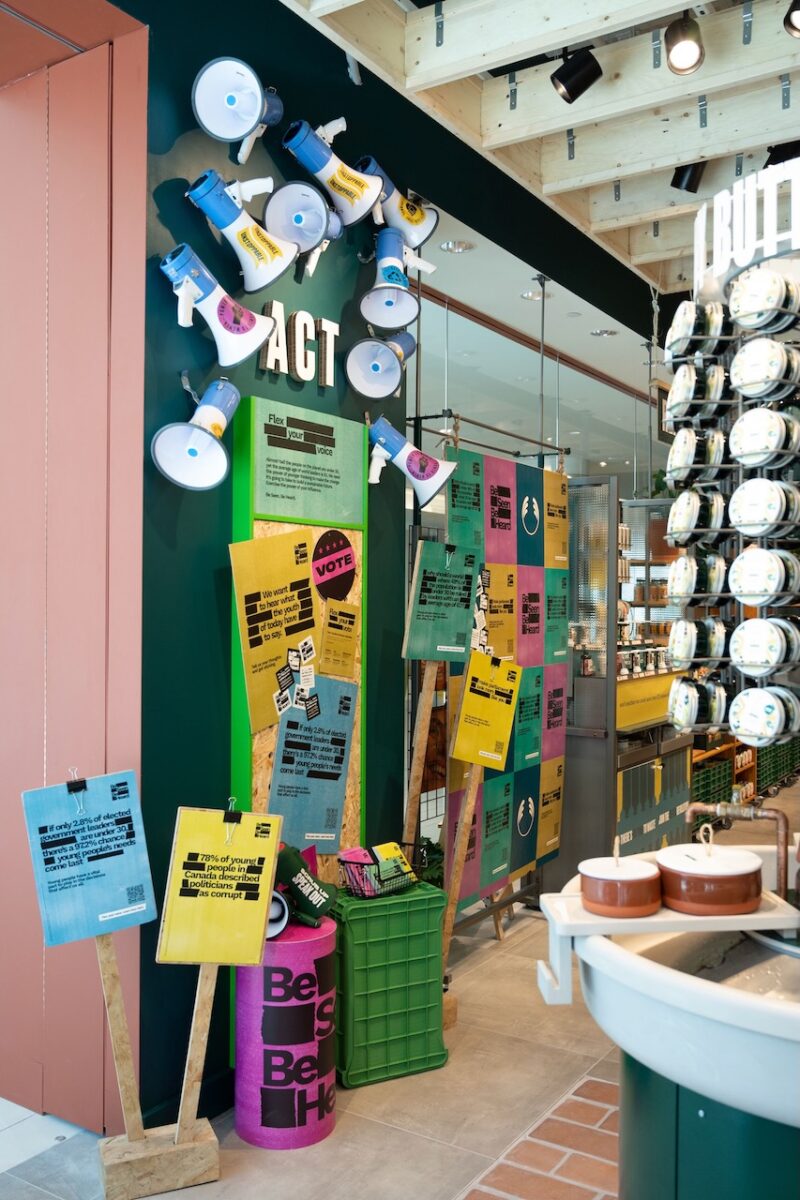
“The other piece that’s unique I think to The Body Shop and our very long history and heritage is there is a really clear intention to take the store and its concept back to our activist roots. So the stores themselves are designed to reflect and support the local communities where we operate.
“Ideally what we do in these store locations is we would bring to life issues and stories that are important to the communities where we operate. So really, at the end of the day, we’re developing and rolling out a store concept that is designed around experiences and really those experiences should be about our products and getting people to fall in love with the incredible products we sell and then also facilitating the experience of community activism in the markets where we operate.”
The Body Shop at Market Mall in Calgary (Image: The Body Shop)
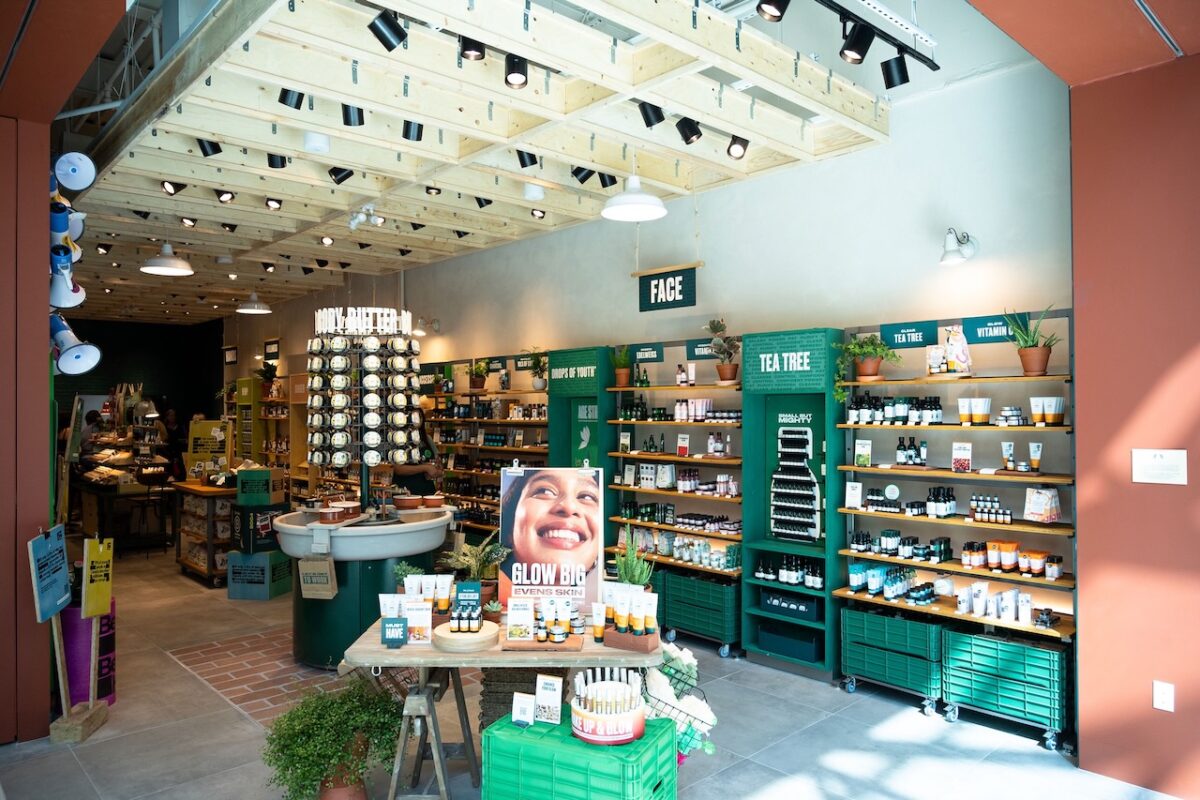
Lloyd said the new concept Workshop is basically the same footprint as existing stores. The new concept has a much wider and inviting entrance with more of the store experience flowing out into the centre. There will be more interactive experiences for customers with sinks where they can test and try products and ask for consultation for skin care.
“Certainly we have a need to reinvigorate the brand and re-remind our Canadian customers of who The Body Shop is and why we exist in the world and what benefits we can create for them,” she said. “So we need a store environment that facilitates us trying to support the brand in building that understanding.
“I think the other thing is that we also needed a fit and an experience that reflects who we are and our values. We’re a certified B Corp. We’re a purpose-led business. We have extraordinary natural products that we sell. And so we needed a store environment that reflects back those values. Because of that specifically, it was time for an upgrade and time for the Workshop concept.”
Image: The Body Shop
All the new Workshop locations currently operating and to come in November are in renovated existing stores. In the future, the concept will be rolled out in other existing stores and new builds.
“We’re always on the lookout for opportunities for new builds within the real estate environment that we have,” explained Lloyd. “It will be very likely a mix of both. Right now, we’re focused on the malls and the locations we operate in making improvements in those locations at the same time that we’re sort of looking out to see where The Body Shop could add value in a community context whether it’s within a mall or in another location. We’re working on both.”
Lloyd said the plan for the rollout of the new concept is “very, very ambitious” and in process.
Image: The Body Shop
“Canada, where The Body Shop is concerned, we’ve got a really stable customer base. We’ve been in the market for over 40 years. Customers know us and understand us and understand the business. I think our opportunity is to re-remind them of who we are through this Workshop concept and this new store process and we’re really, really excited about it,” she said.
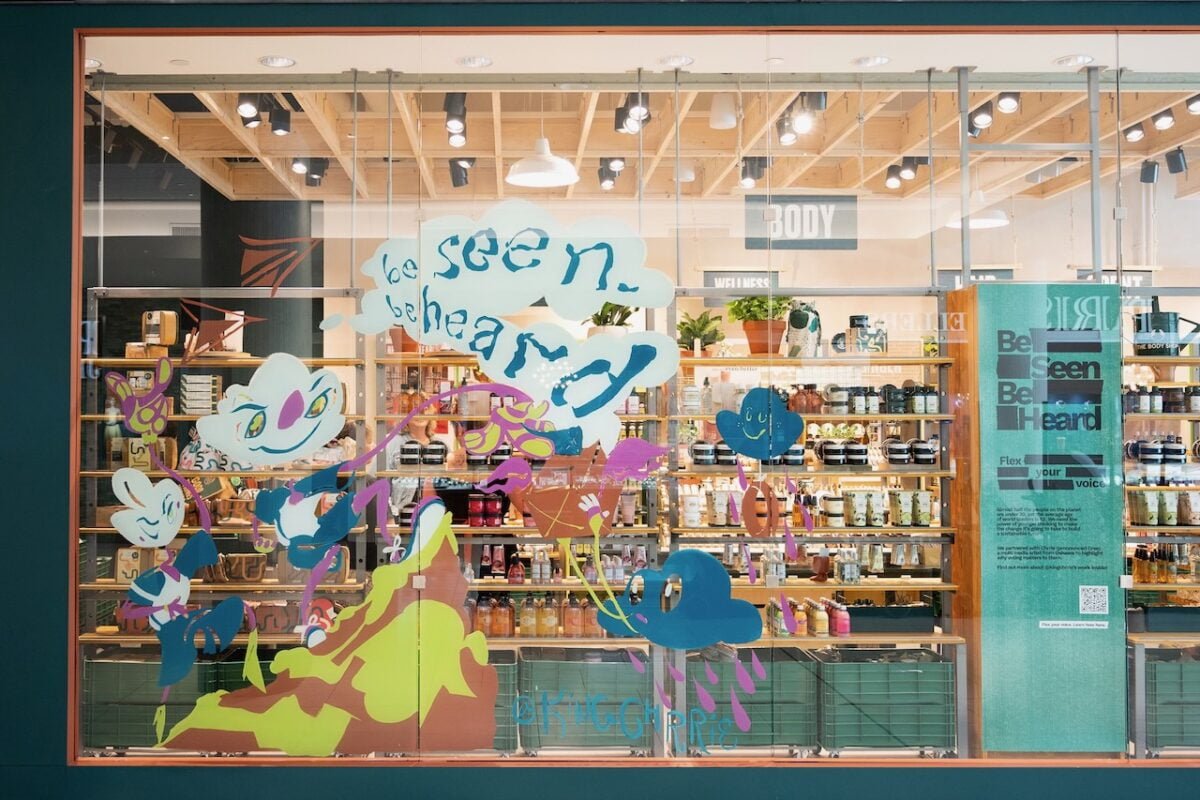
Recyclable materials, 100 per cent recycled countertops created from recycled plastic destined for landfill: circularity is the beating heart of this store concept, said the retailer. The stores are fitted with a range of upcycled and reclaimed materials such as reclaimed wood and part-recycled plastic storage crates. Even down to the lightweight aluminum facade, every care has been taken to ensure the environmental footprint of every Workshop is as tiny as possible.
The gifting station is a place to personalize gifts with ribbons and recyclable paper. There’s new makeup stands and a dedicated area giving customers the chance to learn about the issues that affect their communities, see for themselves how rewarding social and environmental change can be and meet others who feel the same way. All of the new stores have refill stations to encourage people to bring back and reuse aluminum bottles. Sustainability is a huge part of the new concept.
Ahead of the upcoming in Toronto on September 28-29, a Trends Report has been released discussing supply chain, strategies for targeting the right customers, and investment strategies, with a discussion how these affect retailers. []
The report comes at a pivotal time as retail sees significant change brought by shifts in consumer behaviour resulting from accessibility of technology and the lasting effects of the COVID-19 pandemic.
The report is broken down into sections. Emerging retail technology is the first part of the report, which goes on to discuss QR Codes and how they are of ongoing importance, and RFID technology which is already proving transformative for retailers such as Amazon Go. The discussion also includes the concept of experiential technology and the future of autonomous delivery.
The report then dives into the topic of post-Covid investment strategies for retailers which are seeing a bounce-back as consumers pick up spending. An increase in online shopping is requiring more investment in online channels by retailers as well as investments in omnichannel and marketing.
Tackling supply chain, inflation and fuel costs is another section of the report, representing a hot topic and a point of pain for many retailers as costs have soared and shipments have been a challenge in some instances. Ongoing inflation has been one of the biggest challenges to retailers with consumers complaining of increasing prices.
The fourth section of the report includes strategies to target the right customers in a cookie-less world — it’s a very hot topic among marketers grappling with Google’s decision to remove third-party tracking from its Chrome browser. Marketers are now faced with challenges as consumers still want personalization online, and fortunately other options are available.
The future of omnichannel retail is the final section of the report, including talking points around the store of tomorrow. Creating an integrated customer experience while optimizing supply chain and creating an optimal workforce will be crucial for retailers as the world continues to change.
[]
The highly anticipated will take place September 28-29 in downtown Toronto at the located at 370 King Street West. Dozens of speakers have already been confirmed. []
eTail is a two day retreat designed to help businesses increase profits with action-packed strategies and connections made with the top mind’s at Canada’s most successful retailers.
Download the to see the completeand inspiring sessions at this year’s eTail Canada Conference.