Retail Insider is streamlining its Canadian retail news from around the web to include a handful of top news stories that can be viewed quickly during the day. Here are the top stories from the past 24 hours.
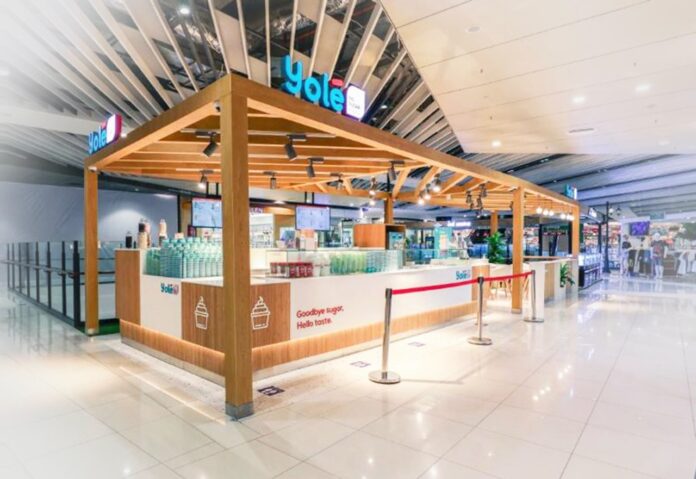
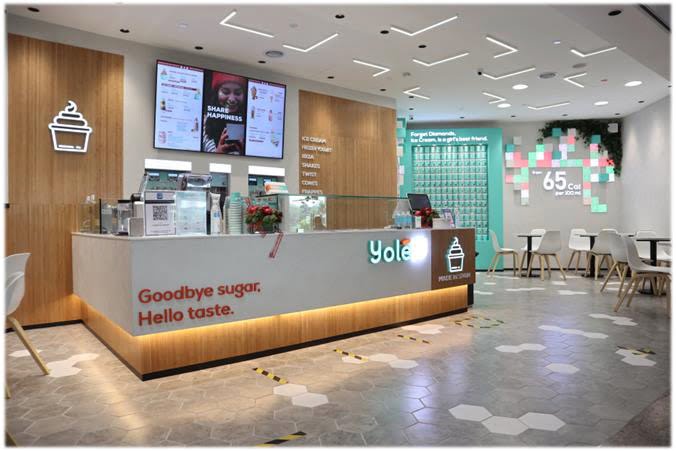
The brand, which was created in 2020, has grown to more than 50 outlets in more than nine countries with more than 300 locations signed around the world.
And now it has its sights set on the Canadian market with its immediate focus on the Greater Toronto Area.
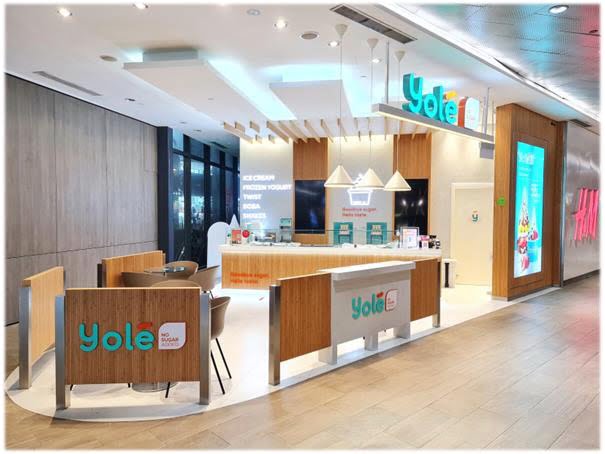
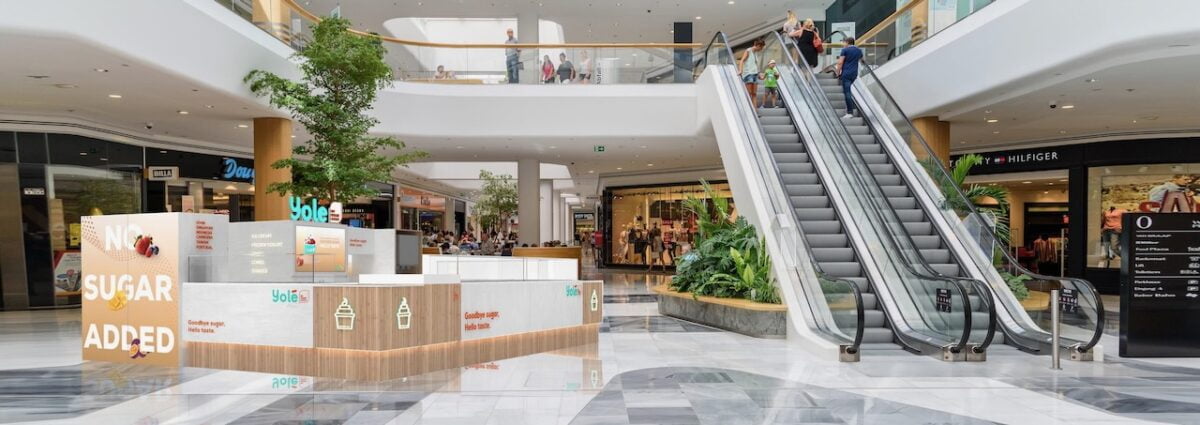
Image: Yolé
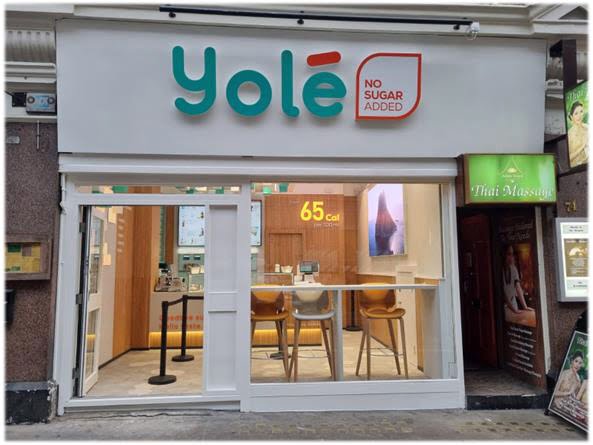
Image: Yolé
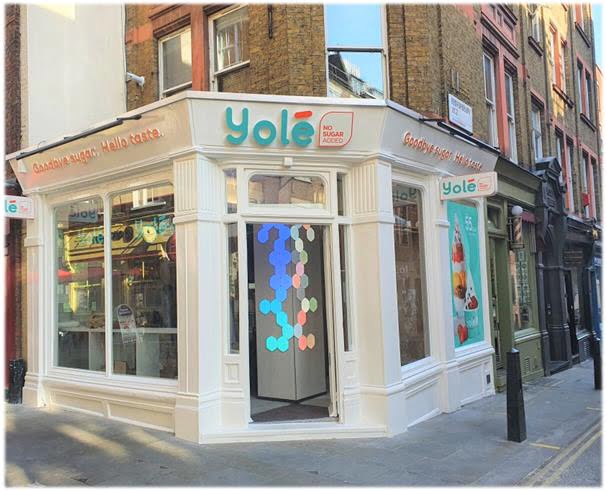
Image: Yolé
Avi Behar
Toronto-based real estate company The Behar Group Realty is spearheading Yolé’s Canadian expansion plans as it searches for the ideal locations to launch in the market.
“They’re under development generally through franchise partnerships in Peru, Chile, Costa Rica, Mexico, Saudi Arabia, Egypt, Italy, Guatemala, El Salvador and of course Canada and the US,” said Avi Behar, Chairman and CEO of The Behar Group Realty.
“We’ve been retained to oversee the Canadian expansion. Kelley (Farraj, Vice-President) is leading that for us. But the intent is to develop locations across the country obviously starting with the major markets. We’d like to do the first one in Toronto.”
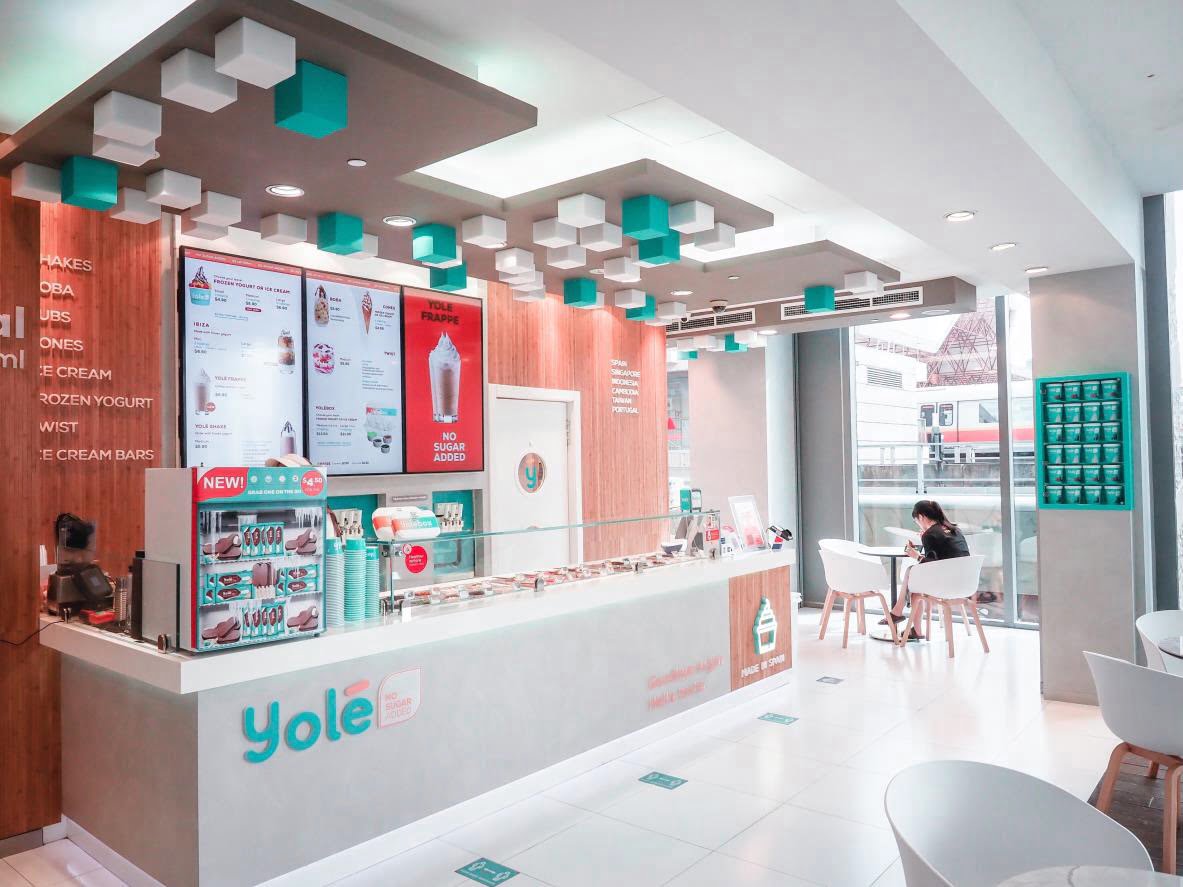
In 2022, the brand started their expansion toward European and American countries. They are the first brand in the world to offer soft ice cream and ice cream tubs for all distribution channels. They are the first plant-based and no-sugar-added ice cream. Products are made in Spain and their sustainable packaging and kiosks meet high environmental guidelines, says a Behar Group fact sheet on the brand.
Image: Yolé
Image: Yolé
Yolé belongs to D+1 Holding, a well-known food and beverage company in Asia recognized for bringing Spanish values to Asian markets through their brands.
Yolé is based in Singapore with offices in Spain and Miami.
Kelly Farraj
Farraj said the healthy part of the brand would give it a nice boost in the Canadian market.
“We like the fact that all their products have no sugar added. They do have a lot of plant-based options which is big right now and we believe it will continue to be big and it will continue to grow on people,” said Farraj.
“We believe it’s an appeal to a huge segment of the population.”
Image: Yolé
Image: Yolé
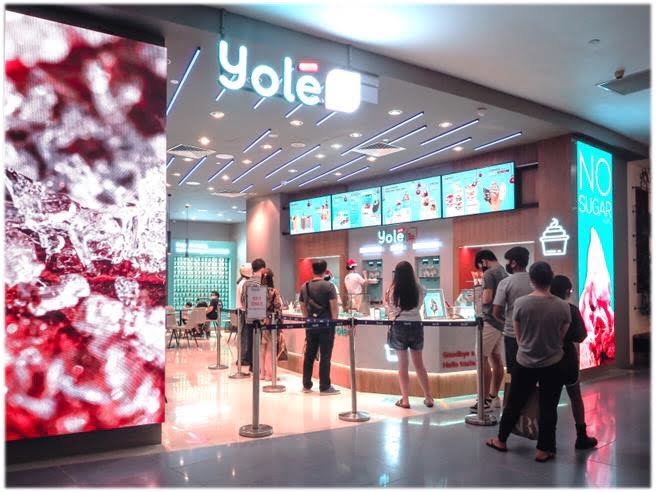
Farraj said the real estate company’s approach is to focus on the bigger shopping centres of Toronto.
“We’d like to start there and branch out into the smaller and more active cities and hit up some stores with good foot traffic. Maybe Queen West, maybe around Dundas Square. We believe there is room for at least a dozen or two in the Greater Toronto Area,” he said.
Behar said that nationally the initial projection for the number of stores is probably about 45 to 50 locations across the country and probably over a seven or eight year period.
Image: Yolé
“Ice cream is obviously like a favourite food or product for the masses. I don’t know many people, if any, who don’t like ice cream. I think what Yolé is doing is a lot different than what’s out there, largely because of the zero sugar,” he said.
“The ability to have a plant-based, tasty product, I don’t think is a trend. It’s a lifestyle that more and more are adopting. I believe that there’s lots of legs behind this type of a business. It’s been kind of tried and tested now on a global basis with good results and I believe the Canadian consumer will really embrace this.
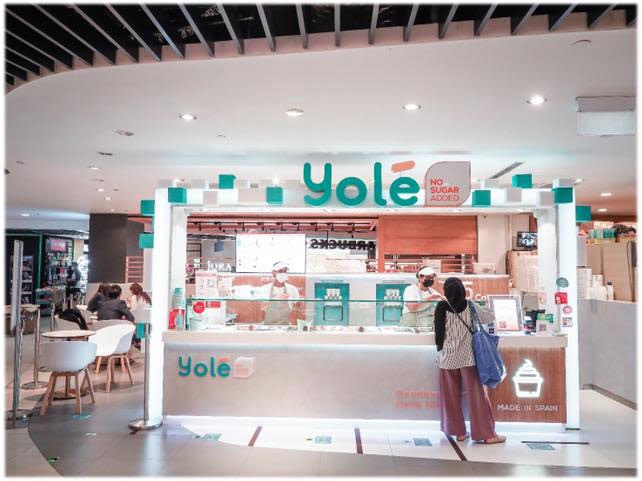
“From a real estate perspective, there’s flexibility on the size. The stores themselves are not all cookie cutter although there are prototypes. But they’ll generally range from kiosks as small as approximately 300 square feet to slightly larger stores whether it’s a streetfront, plaza or shopping centre. That could be 900 square feet, 1,000 square feet or more depending on the rental structure and the financial terms. There’s a range in sizes and we’re open to looking at all opportunities so long as they’re high profile, high traffic, good visibility.”
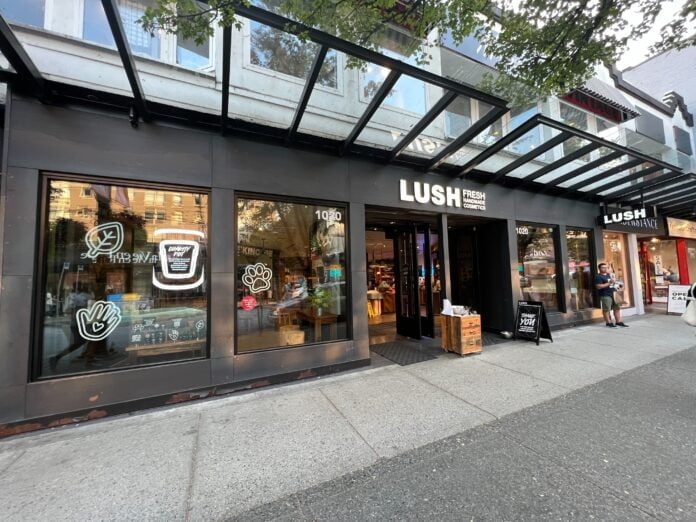
Lush on Robson Street in Vancouver (Image: Lee Rivett)
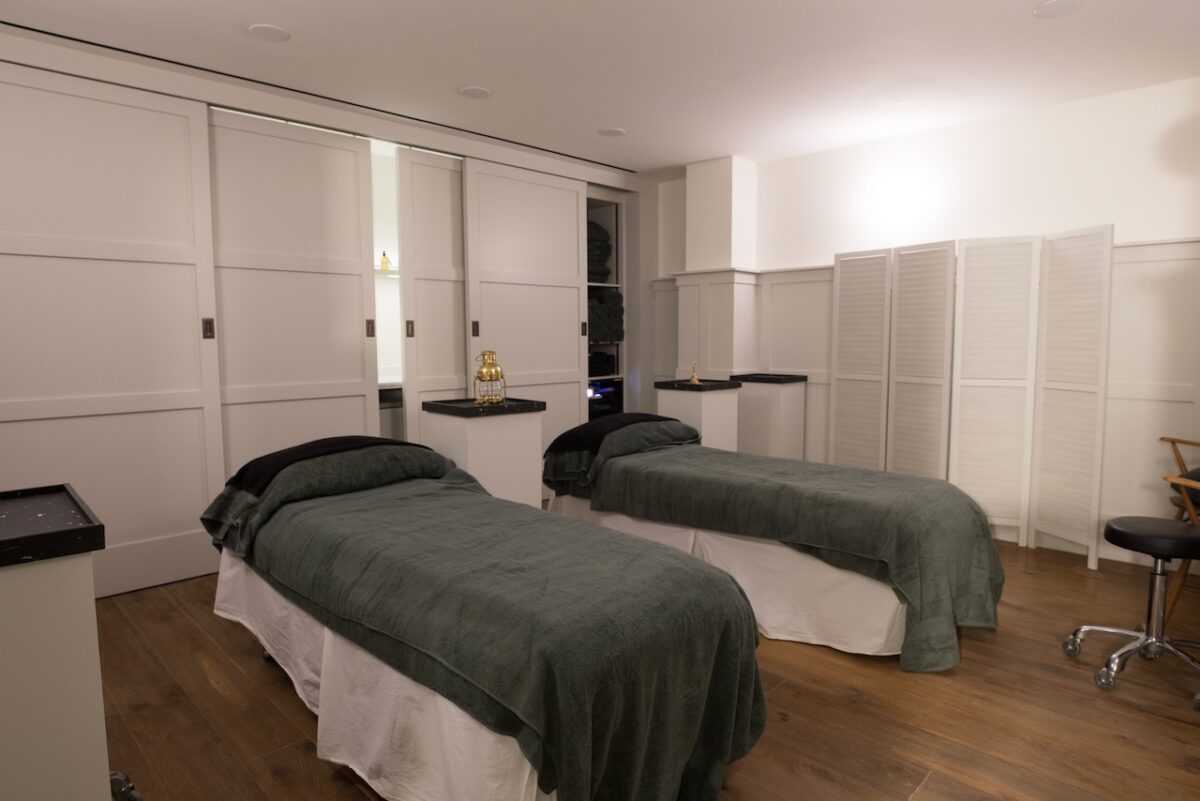
For the first time ever, Lush will be introducing Lush Spa to Canada. The new concept, currently only available outside of North America will be launching at one Lush location in Canada to start with plans to further expand in the future. Lush is also looking to grow its retail footprint in Canada and add new collections to its line-up including make-up and candles just to name a few.
Brandi Halls
Opening in July 2023, Lush is launching a Lush Spa at an existing location at 1020 Robson Street in Vancouver. The retail space is 2339 square feet and will be divided into retail space and spa treatment rooms. Instead of opening a new store, Lush will be refreshing the Robson location to incorporate the new spa.
“We are thrilled to announce that we will be refreshing our Robson Street location to include a Lush spa, the first of its kind in Canada,” says Brandi Halls, the Chief Ethics Officer of Lush in North America. Bringing more of these larger, experiential shops to the Canadian market is a key part of our growth strategy. We know consumers are craving connection and experience and we hope that Lush shops can be that for that place for them.”
Halls was excited to share this spa will have the same service menu as the ones in the UK and will have three treatment rooms, one being reserved for an immersive Book a Bath treatment.
Book A Bath
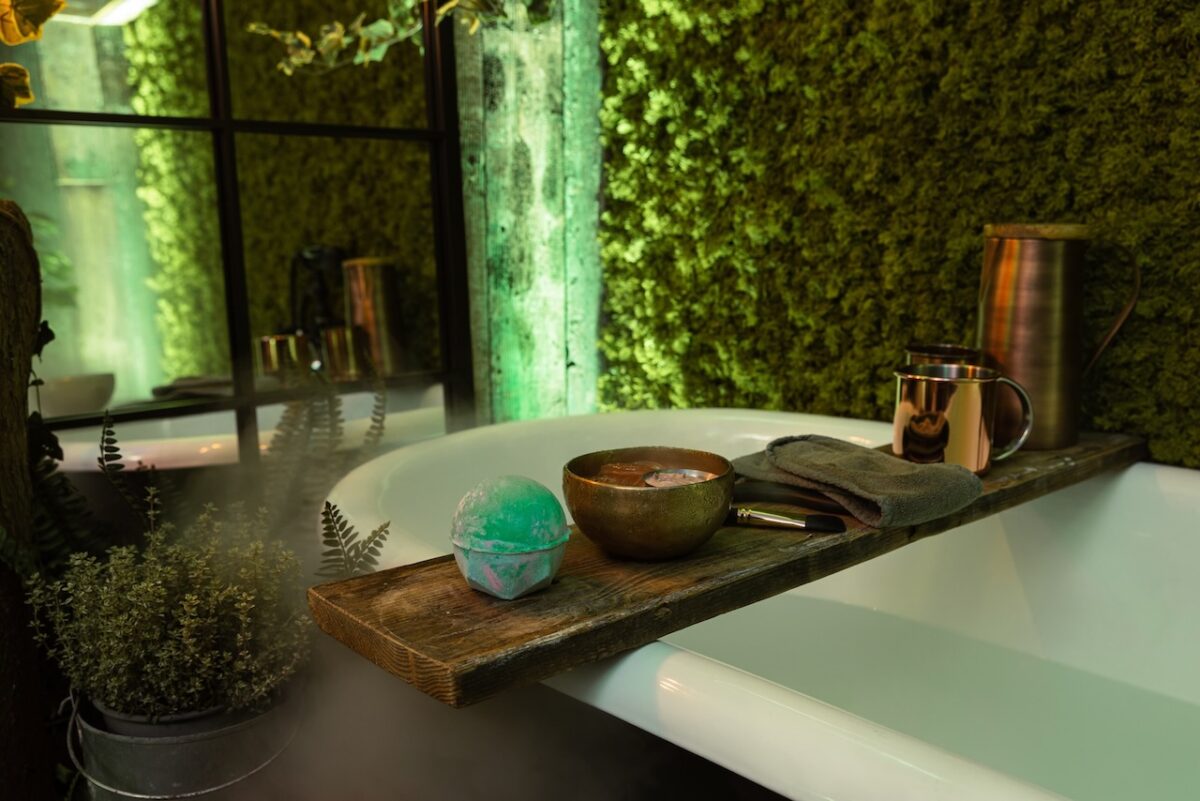
Book a Bath (Oxford Street) Image: Lush
Along with traditional spa services, such as massages and facials, Lush Spa will be including the Book a Bath treatment.
“The spa allows our customers to be immersed in both traditional and non-traditional treatments for the face and body. We are particularly excited to introduce customers to the new Book a Bath Treatment which is a bath experience like no other.”
“Imagine a bathroom that captures the essence of some of our unique products. But this isn’t just about our famous bath bombs. Throughout this indulgent bath experience our customers are paired with products, soundtracks and other surprises to elevate this multi-sensory experience.”
The Book a Bath Treatment is a 30 minute treatment that is offered at three of the Lush spas in the UK. Currently they are offering an immersive experience inspired by The Lakes Bath Bomb but who knows which bath bomb may inspire the first experience in Canada. Fans will have to wait to find out.
“Blending of the Senses”
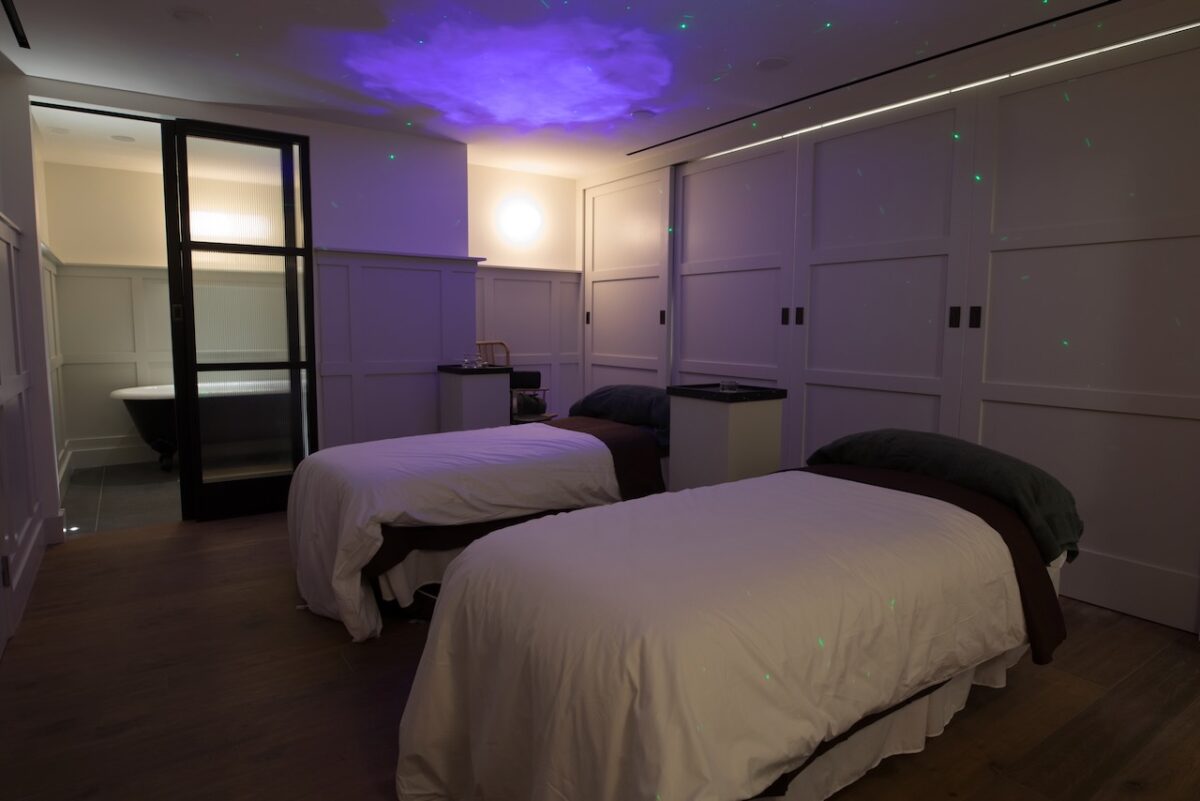
Liverpool Spa (Image: Lush)
Halls said the signature Lush Spa treatment is Synaesthesia, where customers choose how they would like to feel and the 80 minute full-body massage experience is tailored just to them.
“This treatment is completely bespoke and multi-sensory. I promise you it is unlike any other massage you will have ever experienced. It truly is the blending of all the senses. Everything that you hear, taste, smell, and feel during this treatment is determined by how you want to feel. And this is just one of the many treatments we will be offering at the Lush spa”
Halls said that Lush wants to bring the fun, excitement and community back to the in-store shopping experience in North America. The spas are just one way that Lush hopes to get shoppers out from behind their screens and into stores.
Liverpool Spa (Image: Lush)
The new spa concept is looking to expand across Canada but currently locations of spa expansions are unknown.
“The spas really are the quintessential Lush experience. We know that our loyal Canadian fans have been long awaiting these luxurious treatments and the time is near. The spas allow us to take our stellar customer experience to a whole new level.”
New Store in Oshawa Ontario Opening in November
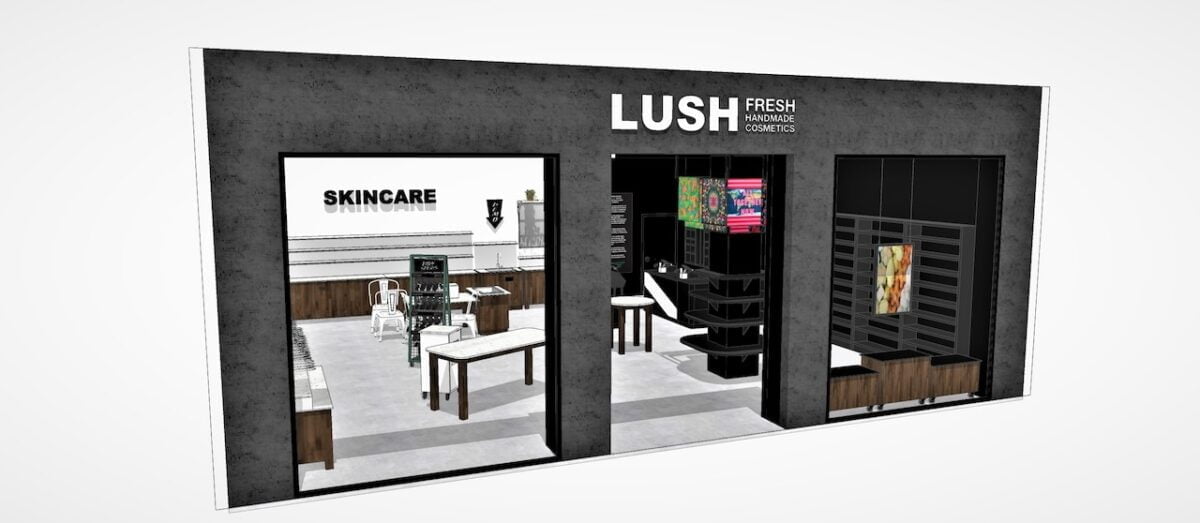
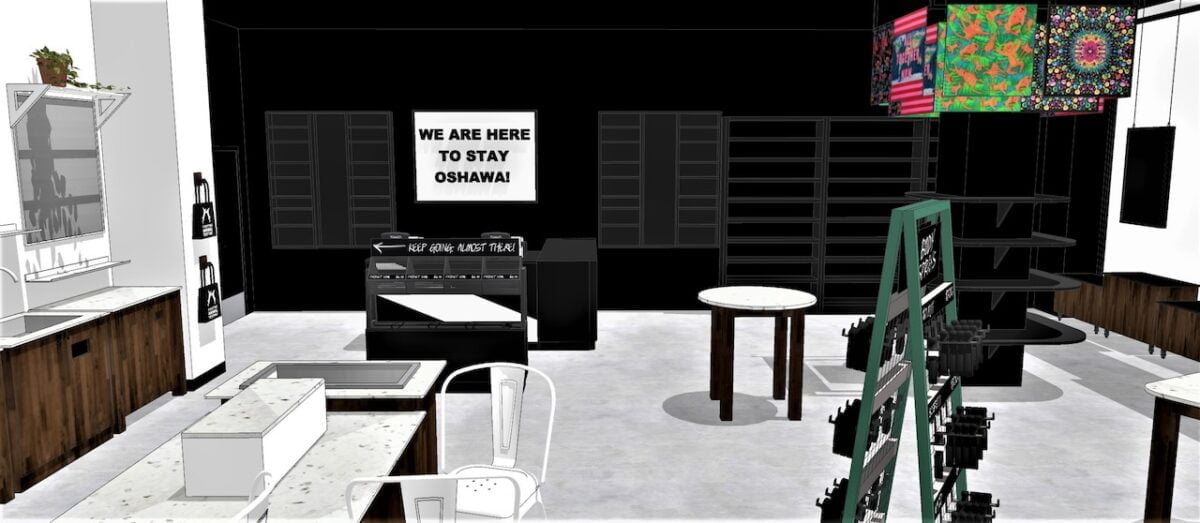
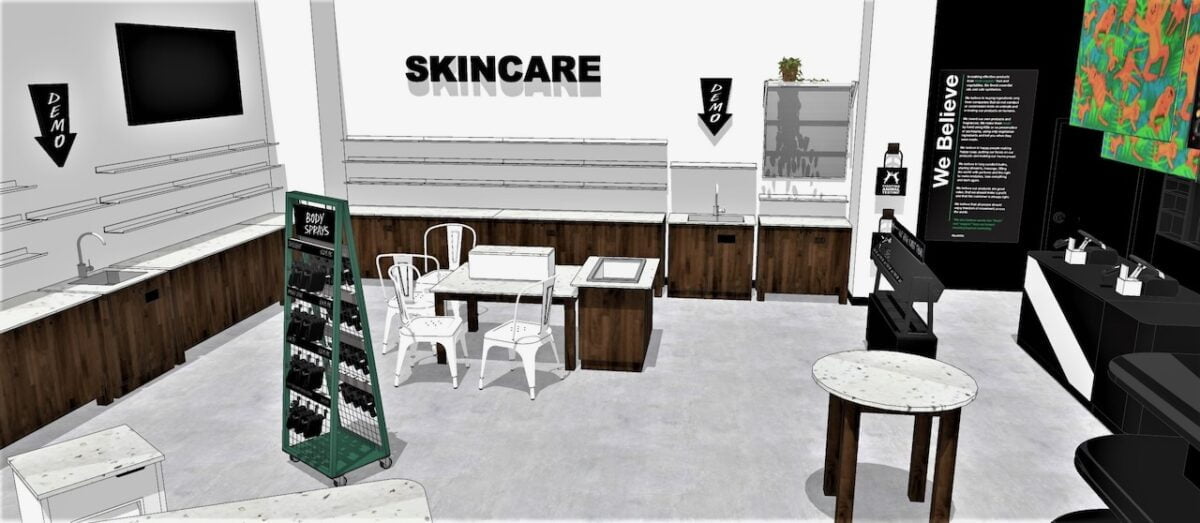
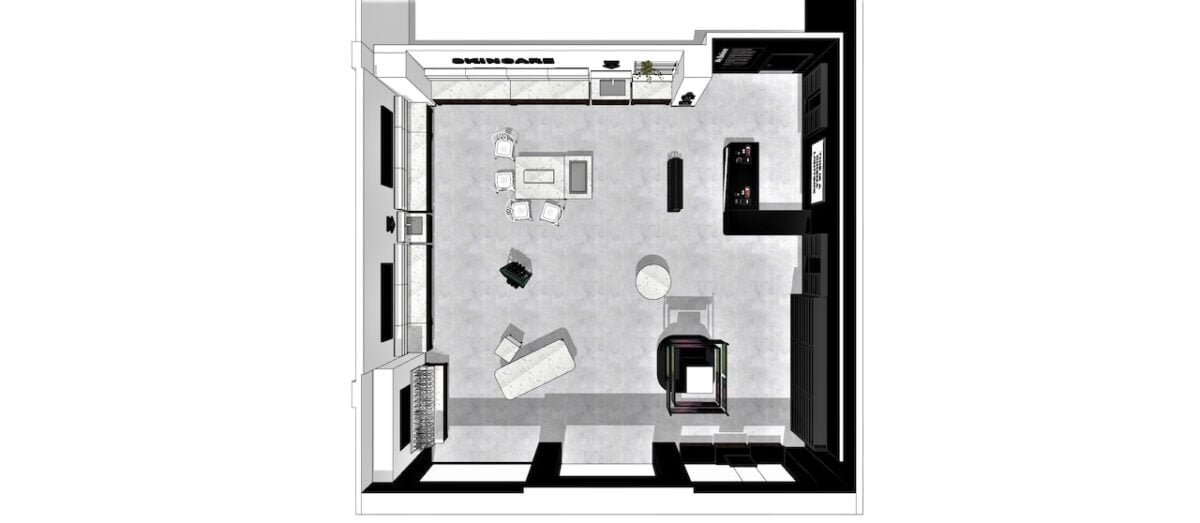
Lush Renderings for Oshawa Centre (Image: Lush)Lush Renderings for Oshawa Centre (Image: Lush)
Opening in November, Lush will be adding an additional location in Oshawa.
“We saw such a tremendous response from our loyal fans at our temporary pop-up location in Oshawa, we have decided to open a permanent location in the Oshawa Centre.”
The new location will be the traditional Lush store, unfortunately no spa, and will be 1600 square feet. Customers can find a full extent of its products, and new ones as Lush is expanding its makeup selection, adding self-preserving moisturizers, and candles with best-selling fragrances.
“You can expect a lot of product innovation from Lush this year. We are growing our make-up collection with an extended range of eyeliners and lipsticks hitting shops. It has been quite some time since we expanded our colours so this is very exciting for our fans. You’ll also see new self-preserving versions of some of our best-selling facial moisturizers launching as well as monthly subscriptions boxes with limited edition products arriving at your doorstep.”
“Striving to leave the planet lusher than we found it”
Lush Renderings for Oshawa Centre (Image: Lush)
As Lush continues to grow, the company says that it is mindful of its impact on people, animals and the planet.
“We strive to leave the planet lusher than when we found it and this is at the heart of everything we do. We recognize that being a sustainable business is no longer enough, we are now focused on being regenerative and circular in how we operate.”
To take actions further, Halls says Lush has an ambitious ‘Climate and Nature To-Do list’ including radically reducing its transport emissions, moving to 100% renewable energy, standing up for climate justice and making materials used regenerative and circular.
“Our first approach to packaging is always to avoid it, so over 60 percent of Lush’s products are sold naked. We are the inventors of solid shampoo bars, by using one of these bars our customers save three plastic shampoo bottles from hitting landfill. Just imagine if everyone switched to solid shampoo.”
Lush Renderings for Oshawa Centre (Image: Lush)
Lush has also updated its Bring It Back reward program where it takes back its plastic pots and recycles them into new pots. The retailer rewards its customers by offering them one dollar off purchase for every pot returned, or a free face mask with the return of five pots.
“We are incredibly lucky because all of our innovation is happening in house. We are a highly innovative brand, and we are still privately owned so all these things set us up beautifully for continued growth.”
While growing its company from inside and out, Lush is looking to continue to contribute to the community while meeting the needs of its customers.
“We know the bigger the brand gets, the more good we can do. We have big dreams of greater brand awareness, more access for our customers, larger shops, faster delivery. We definitely aspire to do more and to do it better – and that is the Lush way”.
Walmart Canada is piloting a circular economy reusable bag program in two Guelph, Ontario stores that could eventually be rolled out to other stores across the country.
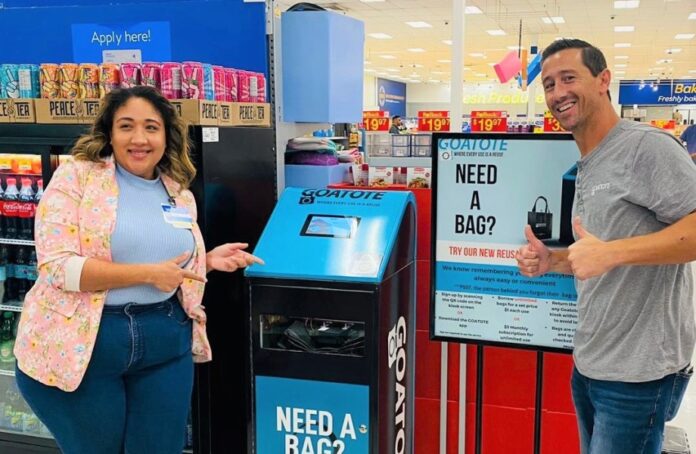
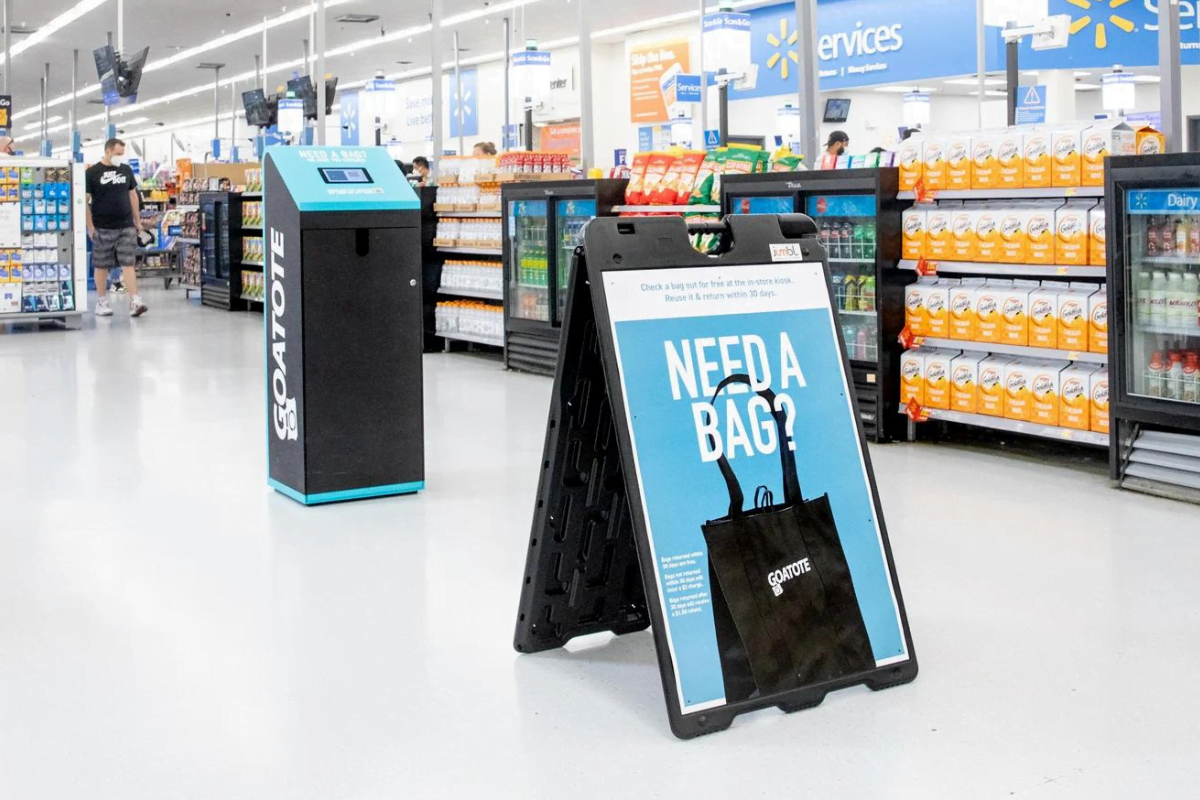
The program allows customers to use in-store GOATOTE kiosks to check out clean reusable bags for a fee and return them by the end of the month.
“As we continue on our journey to becoming a regenerative company, we’re focused on testing innovative solutions that help to make the sustainable choice the easy, affordable choice,” said Gaurav Gupta, Director, ESG (Environmental, Social, Governance), Walmart Canada.
Image: Walmart Canada
“GOATOTE is a program whereby our customers and our associates can participate in the circular economy. What that essentially means is there are kiosks in two of our stores in Guelph, in a pilot program, and these allow our customers to walk up, and check out reusable bags for a fee.
Gaurav Gupta
“There are two options of doing that. They can either use a subscription model where they pay a $3 fee and they can then pack as many bags as they want across the month or they can pay $1 a bag and take as many bags as they want. So really it’s a means for having our customers have reusable bags in case they forget to bring their own or would just like to purchase one at the store.”
The GOATOTE kiosks are located conveniently at the front of the store, prior to customer checkout. The exact location may vary by store or throughout the pilot as the retailer tests the best placement options.
Customers can use the bags for the shopping trip – and throughout the month if they’d like. Bags must be returned within 30 days to the kiosk. GOATOTE cleans and quality checks each bag before returning it to the kiosk to be used again.
Gupta said Walmart is starting with the two stores in Guelph and will see how the pilot goes.
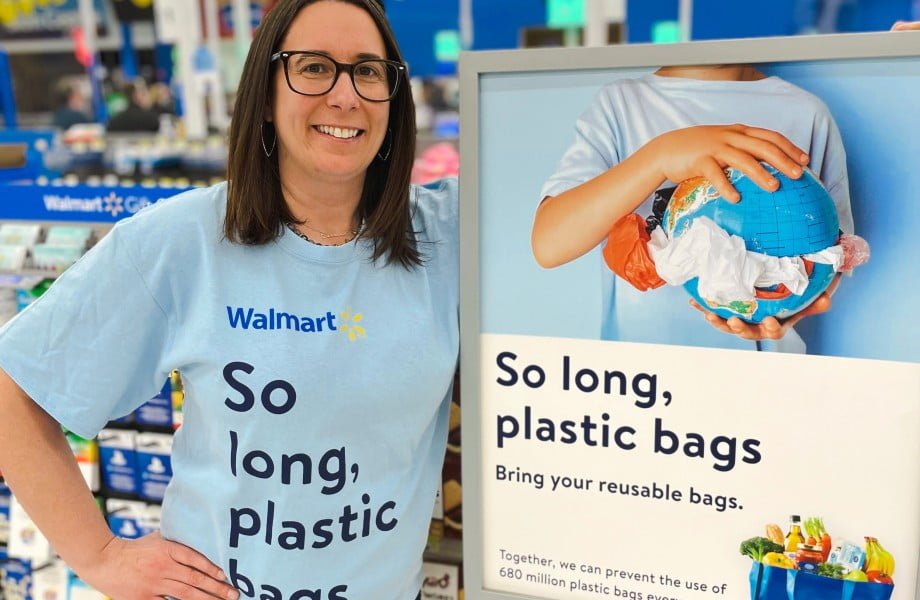
About a year ago, Walmart introduced a 10-store pilot to eliminate single-use plastic shopping bags in its stores.
“Since the roll-out began in January 2022, we’ve prevented nearly 200 million single-use plastic bags from entering circulation. And we’re not stopping there – we’re building on that momentum to test and learn as we continue on our journey to become a regenerative company,” said Gupta.
Image: GOATOTE
“Eliminating single-use plastic shopping bags, as we did in April 2022, is only part of the solution as we all work to be more sustainable. Circular economy solutions, like the GOATOTE option we’re testing in our Guelph stores, focus on eliminating waste and recovering as much value as possible from the goods we use. This means reusing and repairing items while they’re in use and then upcycling or recycling once they’ve reached the end of their lifespan.
“Introducing GOATOTE kiosks into our Guelph stores provides our customers with more choice in how they carry out their purchases when they shop with us and provides us with an opportunity to test this concept for broader use.”
Gupta said Walmart is on a journey and sustainability is a key component of regeneration, moving more into a circular model.
With the holidays rapidly approaching, Retail Council of Canada’s third annual Retail Holiday Shopping Forum arrives just in time for retailers as they make the crucial, final, strategy adjustments to their holiday retail plans before the busy end-of-year campaigns kick into full gear.
A half-day virtual event on October 13, 2022, the Retail Holiday Shopping Forum promises attendees exclusive insights ahead of the busiest (and most wonderful!) time of the year – starting with a series of high-profile speakers that will help Canadian retailers adjust to the holiday season’s ever-changing makeup.
The virtual format is designed to ensure retailers from across Canada can participate in the information-packed event that will be filled with actionable tips on how to leverage the latest learning to optimize their assortments for the end-of-year sales surge.
Eric Morris, Managing Director and Head of Retail with Google Canada, presents part two of Navigating the Holiday Season, first shown at RCC STORE Conference 2022. Eric delivers a timely follow up with category specific insights, recommendations around in-store vs ecommerce, and suggested decision-making tactics.
Luc Dumont, Leger’s Vice President Research and Innovation, highlights the most critical insights from the much-anticipated RCC x Leger Annual Holiday Shopping Survey – which features intended shopping behaviours from over 2,500 Canadians across the country. This survey, now in its 5th year, will provide trending learnings and dig into how Canadians’ decisions for their holiday shopping compares to how they buy at other times of the year.
Samir Kulkarni, CEO at Showcase will be dropping big insights on a holiday strategy that hinges on the October surprise. Samir shares the most important factors in this customer-centric strategy, how data is leveraged for timely insights, and what enables the Showcase team to act with agility ensuring the year’s must-have gift is ready for customers.
Retail Insider’sCraig Patterson sits down with The Voice of Retail producer & host Michael LeBlanc to discuss retail prospects coast-to-coast, the impact of changing commuter and working patterns on the industry, the challenges of the mall economy and what retailers need to know today to thrive tomorrow. Retailers will also get the inside scoop on real estate and shopping centres and walk out of the Retail Holiday Shopping Forum more prepared to tackle what’s ahead!
Retail Insider is streamlining its Canadian retail news from around the web to include a handful of top news stories that can be viewed quickly during the day. Here are the top stories from the past 24 hours.
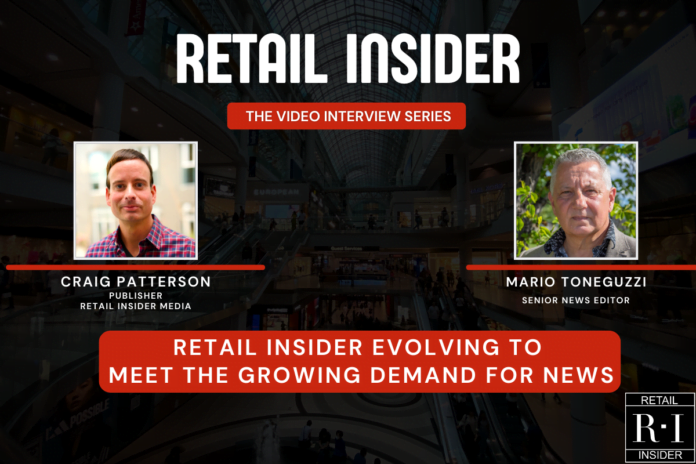
Video Interview: Retail Insider Evolving To Meet The Growing Demand For News
Craig Patterson, Founder, CEO, Publisher, Retail Insider, discusses some recent changes the publication has made to meet the growing demand for news in the industry.
Patterson talks about some key management role changes, why they were made, the content the publication is looking for, trends in the industry, the publication’s reach and his vision for the future.
The Video Interview Series by Retail Insider is available on YouTube.
Connect with Mario Toneguzzi, a veteran of the media industry for more than 40 years and named in 2021 a Top Ten Business Journalist in the world and the only Canadian – to learn how you can tell your story, share your message and amplify it to a wide audience. He is Senior News Editor with Retail Insider and owner of Mario Toneguzzi Communications Inc. and can be reached at mdtoneguzzi@gmail.com.
Also check out the other series offered by Retail Insider, including The Weekly podcast and The Interview Series, which are both available on Apple Podcasts, Stitcher, TuneIn, Google Podcasts, or through our dedicated RSS feed for Simplecast and other podcast players.
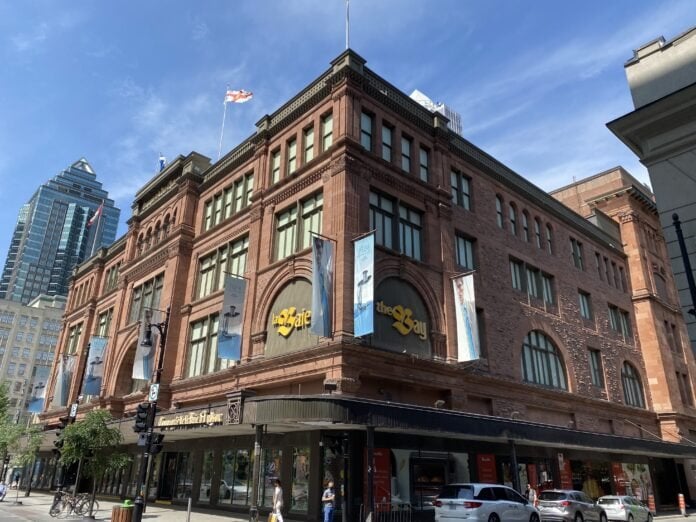
Hudson's Bay at 585 Saint-Catherine St W, Montreal (Image: Dustin Fuhs)
Toronto-based department store retailer Hudson’s Bay announced Monday that it will have a new President as Wayne Drummond announces his retirement. Sophia Hwang-Judiesch will replace him — she’s a Canadian who most recently was with Ulta Beauty. She’s taking the reins of Hudson’s Bay at a time of change and at a time when the retailer requires investment more than ever.
As part of the announcement, Hwang-Judiesch will now report to Richard Baker, Governor and Executive Chairman of the Hudson’s Bay Company and join The Bay’s Executive Committee led by Iain Nairn, President and CEO of online division The Bay.
Most recently, Hwang-Judiesch was Vice President of Strategic Initiatives at US-based Ulta Beauty. Prior to that she was Senior Vice-President at Carter’s Oshkosh and before that she was with Esprit de Corp as China Country Manager – Retail, Wholesale & E-commerce, China Brand, overseeing the most important market for Esprit globally.
Sophia Hwang-Judiesch, photo suppliedHudson’s Bay in Downtown Vancouver (Image: Lee Rivett)
Hwang-Judiesch said in a statement, “I am excited to return home to Toronto, as I already hold a deep connection and affinity for Hudson’s Bay, so I am thrilled by the opportunity to lead Hudson’s Bay stores. This is an incredibly exciting time in the industry, when brick and mortar retail is redefining itself. I look forward to building on the transformation already underway at Hudson’s Bay, to elevate and shape the customer journey and drive growth across the business.”
The Bay’s Iain Nairn said, “Wayne Drummond is retiring from Hudson’s Bay. The company is grateful for his leadership and dedication over his esteemed 34-year career with HBC.”
Hudson’s Bay is the physical network of 84 department stores in Canada — the retailer’s e-commerce division was spun off as its own division, The Bay, a bit over a year ago. The online division sees millions of page views annually and is a driver of growth, while stores are seeing elements of the online business integrated with new digital initiatives. The Bay division is responsible for shared functions including brand direction, marketing, buying, planning and technology for both businesses.
Big changes are coming to Hudson’s Bay stores, and Hwang-Judiesch will be taking over operations at a time when the traditional department store model is needing a refresh. Concessions are being added including a second-hand retailer in Winnipeg and a beauty retailer in Ottawa. Hudson’s Bay also recently announced partnerships with MEC as well as the revival of Zellers as shop-in-stores, having some scratching their heads.
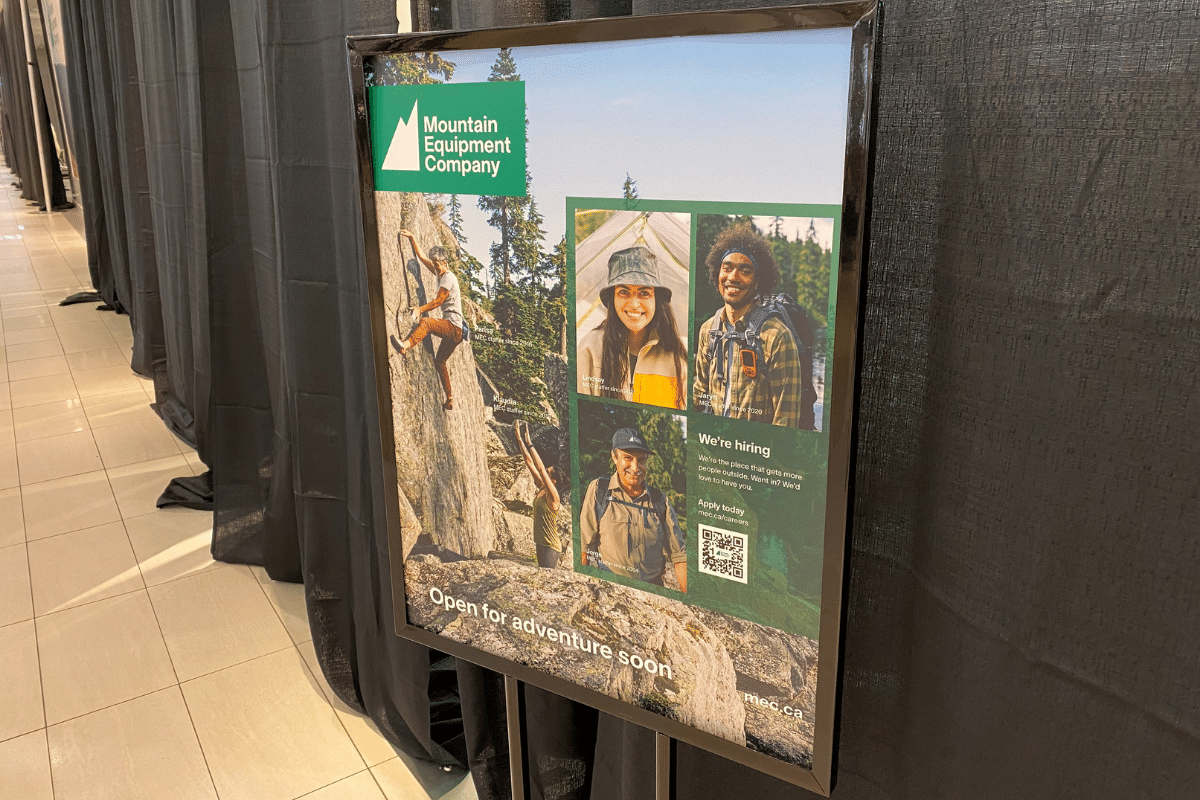
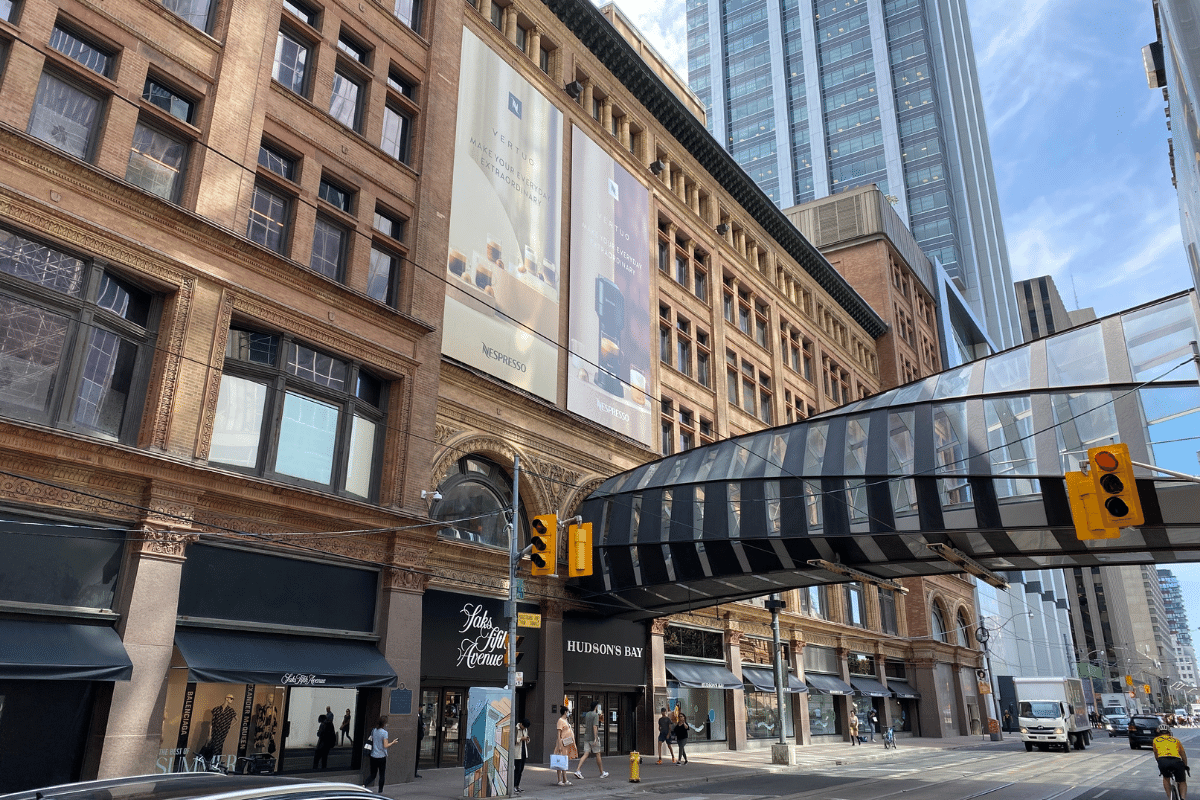
Future MEC at Hudson’s Bay Queen Street (Image: Dustin Fuhs)Hudson’s Bay Queen Street (Image: Dustin Fuhs)
The MEC partnership will involve MEC shop-in-stores being introduced within Hudson’s Bay stores via a concession model, while the new Zellers division stores will also operate as separate locations within Hudson’s Bay stores — Zellers is also expected to feature an online marketplace portal. The move to reintroduce the Zellers name is part of an effort to gain the loyalty of Canadians at a time when the perception of the physical department stores is less than positive.
Millions of dollars of investment are required to bring many Hudson’s Bay stores into a format and look that is in line with the contemporary consumer. And consumer feedback about the appearance of some Hudson’s Bay stores, particularly suburban units in smaller cities, is often less than positive. Years of wear-and-tear have left some stores in a disheveled condition at a time when shoppers are expecting more.
The department store itself has become less relevant. In decades past, department stores were an avenue for consumers to discover new brands. Now with the internet and social media, the physical department store model is less relevant in terms of being a place of first discovery, though Hudson’s Bay is attempting to counter this with its significant push with its digital channels. Hudson’s Bay has also been introducing many new brands to its physical stores while dropping others.
Future Hudson’s Bay Store in Vancouver (Image: Perkins & Will-Hudson’s Bay Company-Streetworks Development)
Changes are being seen at some Hudson’s Bay stores to address the digital shift — for example, the Londonderry store in Edmonton saw updates last year that included single checkouts in each floor and a reduction in the retail footprint partly to create storage space for online fulfillment. Despite the fact that several Hudson’s Bay stores have shut since the start of the pandemic (including downtown Edmonton, downtown Winnipeg, Bloor/Yonge in Toronto and last weekend, Laurier Quebec in Quebec City) it is expected that most of the remaining store fleet will be kept open at least for the real estate potential.
The Hudson’s Bay Company is also capitalizing on its real estate in Canada’s downtown cores with the redevelopment of some stores. Included will be smaller retail department stores along with the addition of mixed-uses including restaurant and office space. So far the downtown Montreal and downtown Vancouver Hudson’s Bay flagships have been announced for redevelopment and several other downtown stores could also see big changes.
We’ll be reporting more on Hudson’s Bay in the weeks to come including speaking with analysts on the future of the retailer.
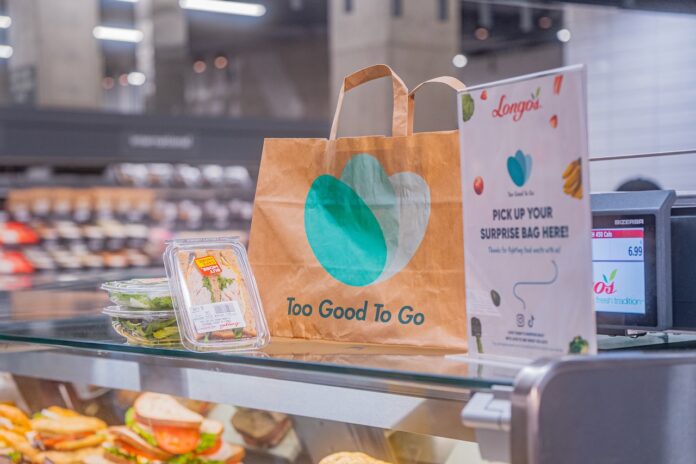
Too Good To Go, the world’s largest marketplace for surplus food, has partnered with the Longo’s grocery chain to accelerate their mission to reduce food waste across Ontario and across the planet.
All 36 Longo’s grocery stores are part of the initiative.
“Longo’s is leading the way, showing the importance of major retailers to take the issue of food waste as seriously as the problem demands,” said Sam Kashani, Too Good To Go Country Manager. “As the largest Canadian grocery store to join us in the fight against food waste, Longo’s joins more than 165,000 businesses across the world who have pledged to be part of the solution. We’re thrilled to partner with them and know that they will have a measurable impact on the future of food waste reduction in Canada.
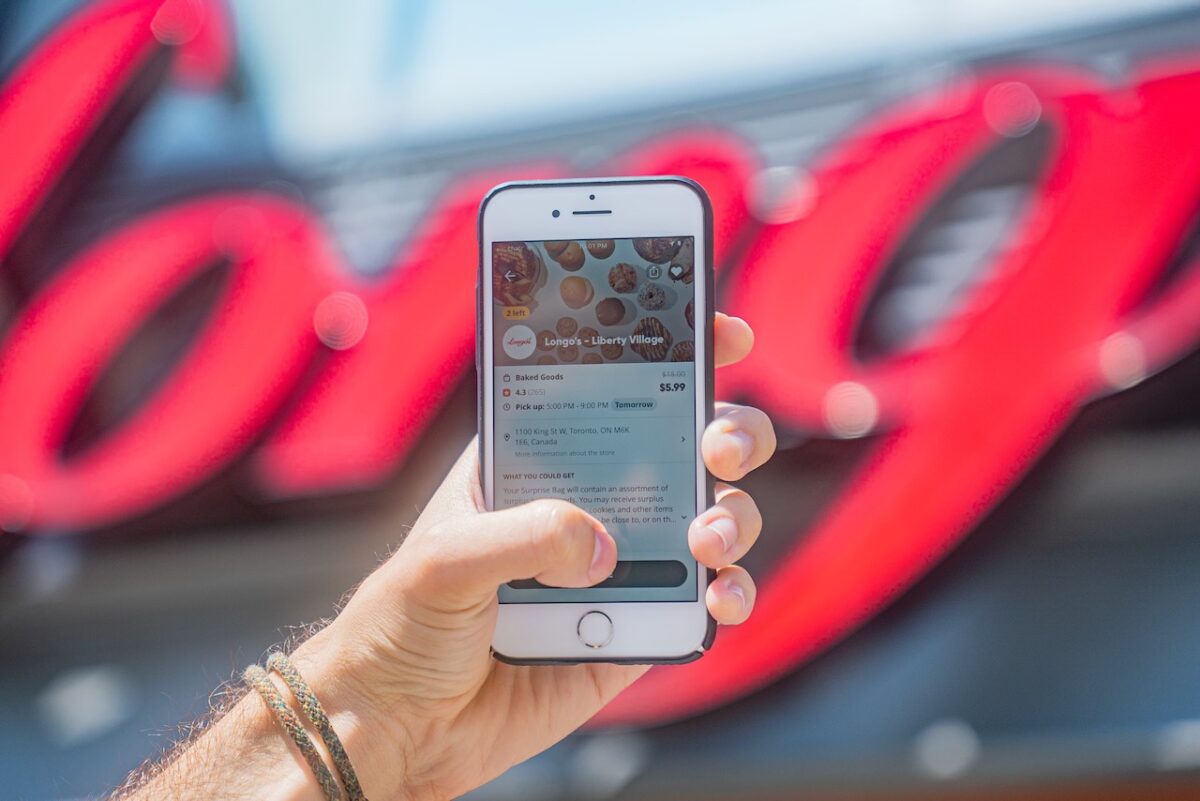
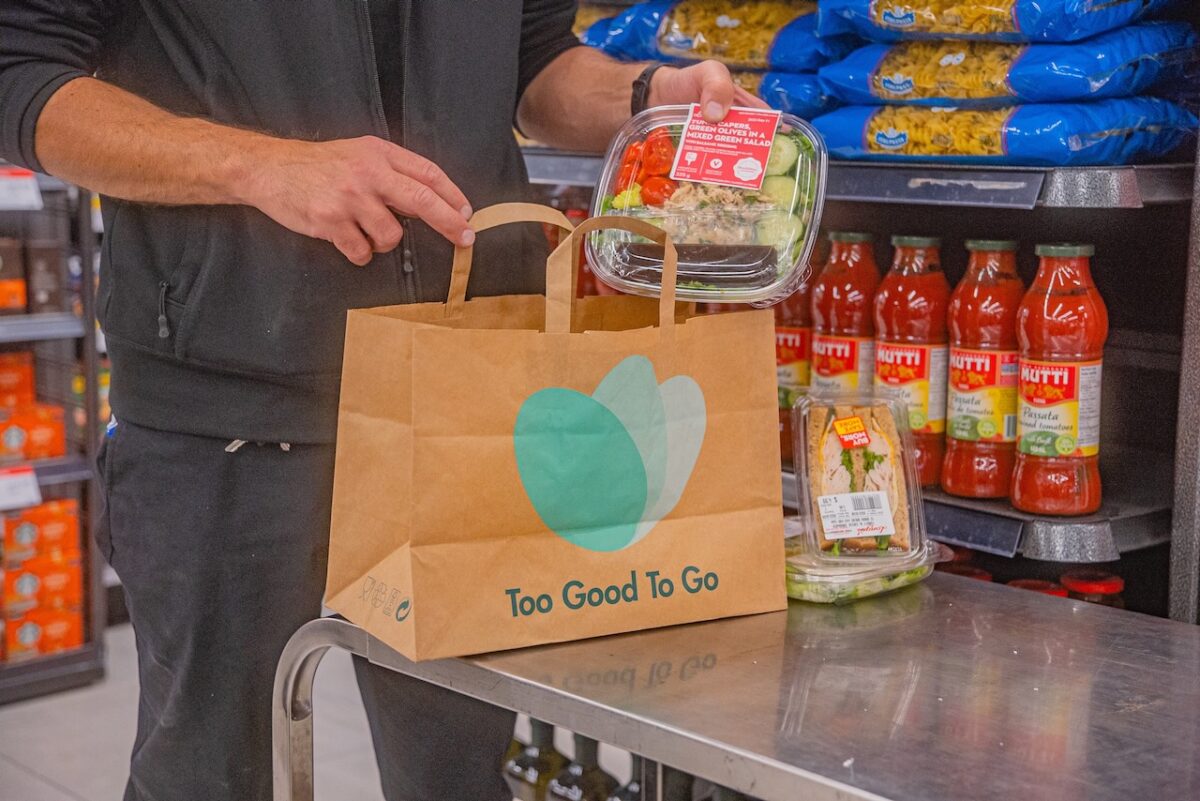
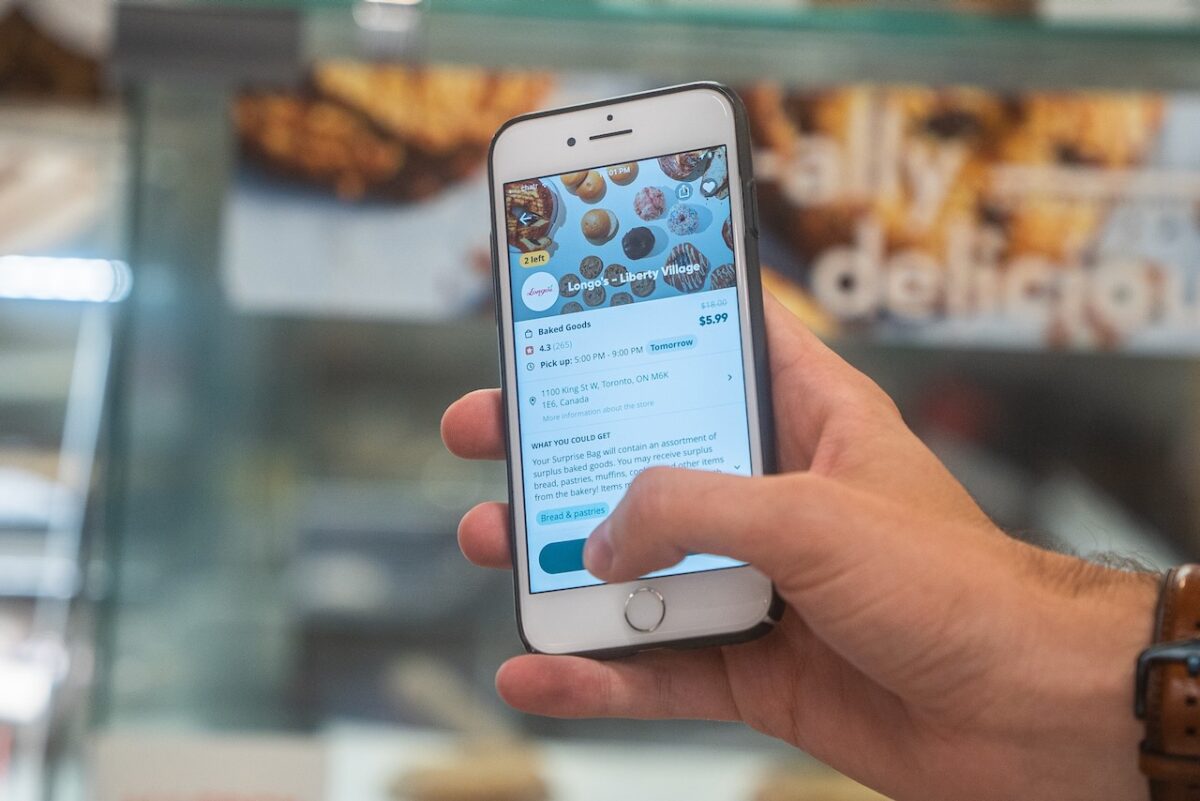
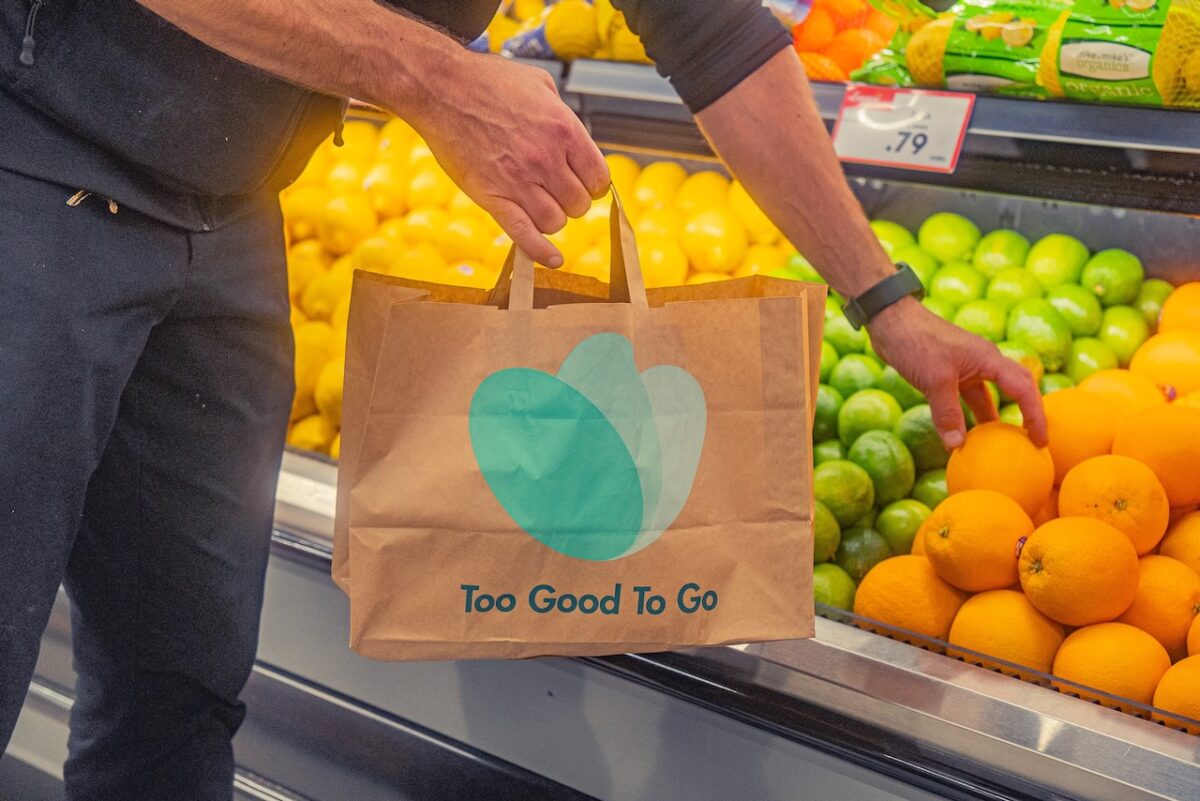
“We connect consumers and stores that have surplus food at the end of the day. Users can essentially fire up our app and go to their local neighbourhood and then reserve what we call a surprise bag. And the surprise bag is essentially surplus food that the establishment and food store has left for the end of the day. Users reserve it and then go in during a defined pickup window and pick up that surplus food for one-third of the cost.
Image: Too Good to Go x Longo’s
“Why it’s worked in Canada and really around the world is because it’s super simple and it’s win, win, win. Users win because they get perfectly healthy, delicious food for one-third of the price. The businesses win because they get to drive incremental traffic to their stores but also drive incremental revenue for food that they otherwise would have thrown out which was ultimately surplus to them. And we’re a social impact company. We save food from being thrown out and we’re ultimately helping to reduce food waste which is where the planet wins on our overall mission to help eliminate and reduce food waste.
Sam Kashani
“Longo’s is a wonderful partner. I think they have bold ambitions around their diversion plans and around their sustainability agenda. And we are one of many partners to be able to help them achieve that and ultimately we’re helping rescue any surplus food that they have across their 36 locations on a daily basis. It’s a wonderful partnership with Longo’s and Anthony Longo and his team in really bringing that to life and making sure they are on that mission and ambition to get to zero waste.”
Too Good To Go, a certified B Corp, was founded in 2016 and says it has saved more than 158 million meals from more than 165,000 partners in 17 countries.
The company’s global headquarters is in Copenhagen, Denmark with its Canadian base in Toronto and regional offices in Vancouver and Montreal.
Image: Too Good to Go x Longo’s
Longo’s is a family-operated Canadian business that started in 1956 when three brothers, Tommy, Joe and Gus, opened their first fruit market. It operates stores in communities across Toronto and the GTA, as well as Grocery Gateway, the leader in online sales of home-delivered groceries.
Anthony Longo
“Food waste is a global issue that cannot be ignored. Too Good to Go is an incredible organization working to be a part of the solution,” said Anthony Longo, President and CEO of Longo’s. “Partnering with Too Good To Go supports our goals to reduce emissions, contributes to our bold zero waste ambitions, and gets us closer to achieving our goal of reaching 90 per cent landfill diversion by 2025.
“Longo’s is committed to reducing our environmental impact and partnering with like-minded organizations like Too Good To Go helps us to move closer to achieving our sustainability goals. We strive to give our guests and team members the best experience possible, and try to set an example in our industry to highlight the importance of fighting food waste and reducing carbon emissions for a happier and healthier planet.
Image: Too Good to Go x Longo’s
“Longo’s and Too Good To Go’s missions are akin to each other. We are both committed to identifying sustainable solutions to reduce food waste, which is a significant problem in Canada – Canadians waste the equivalent of $1,800 of food per year. Our partnership with Too Good To Go allows us and our guests to be a part of the solution. Purchasing a surprise bag saves the equivalent of 2.5 kilograms of CO2 emissions, lowering their carbon footprint; and we can all feel good about that.”
In its recent 2021 Sustainability Report, the grocery chain identified key pillars to fulfill Longo’s purpose and mission, of which Environmental Stewardship is one, added Longo.
“We’re committed to achieving those goals including diverting 95 per cent of waste from landfills by 2025. Our partnership with Too Good To Go can play a critical role in getting us there,” he said.
“Reducing food waste has always been top of mind as a grocery retailer because we recognize it can help us dramatically reduce our environmental impact. In addition to Too Good To Go, Longo’s operates several programs to keep the food in our stores from going to waste. As an example, we are able to transform our products into ingredients for multiple uses. And, in 2021, we are proud that we diverted more than 71 per cent of waste from landfill by donating more than 203,000 kilograms of surplus food from our stores to organizations in need and sponsoring a community food waste reduction pilot project in Guelph.”
Image: Too Good to Go x Longo’s
Kashani said his mission is around democratizing the fight against food waste.
“So anywhere, in any establishment, whether a single, family-owned business or a national chain with thousands of stores, is on our platform and we’re working with them,” he said.
“Anywhere that there is food we ultimately work with them . . . and across verticals, retail, restaurants, hotels that certainly have food, canteens and cafeterias, etc, etc.”
He said currently Too Good To Go has more than 3,400 businesses on its platform.
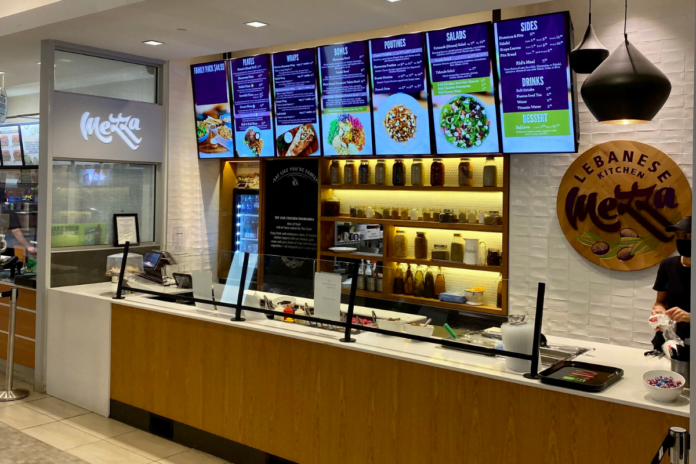
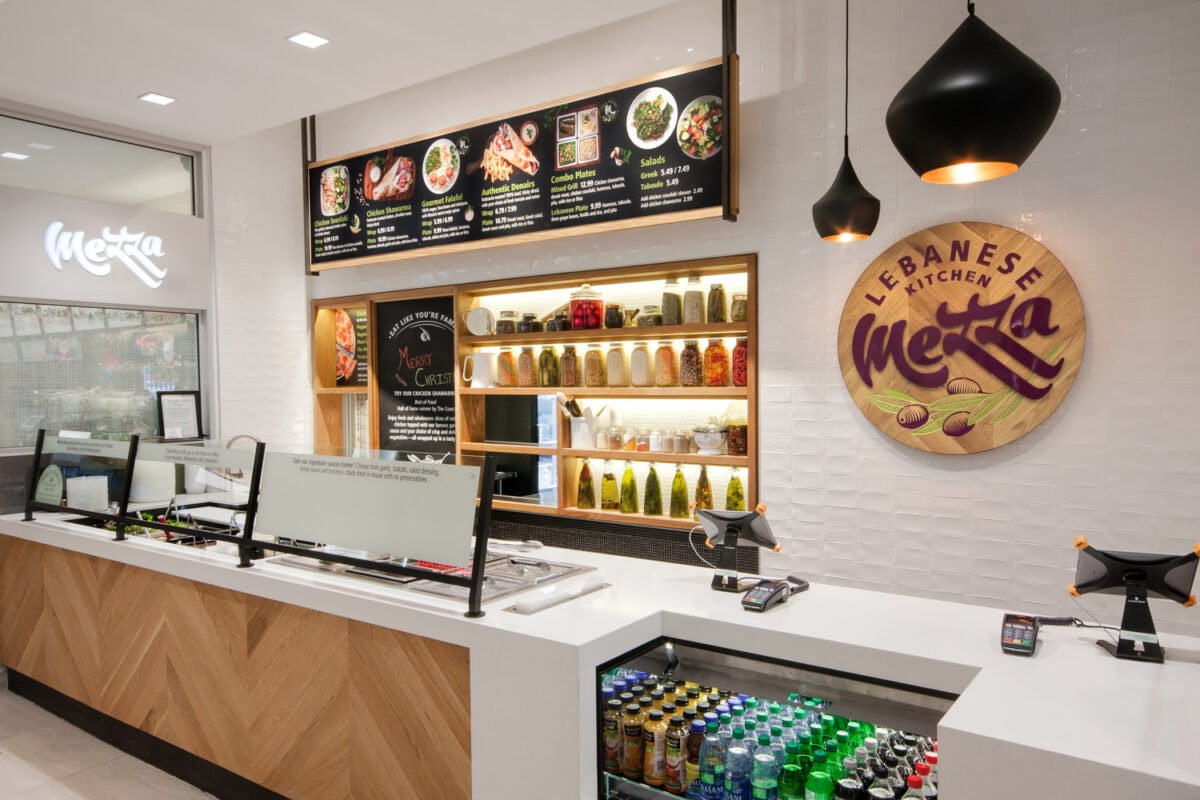
Mezza Lebanese at Scotia Square (Image: Crombie REIT)
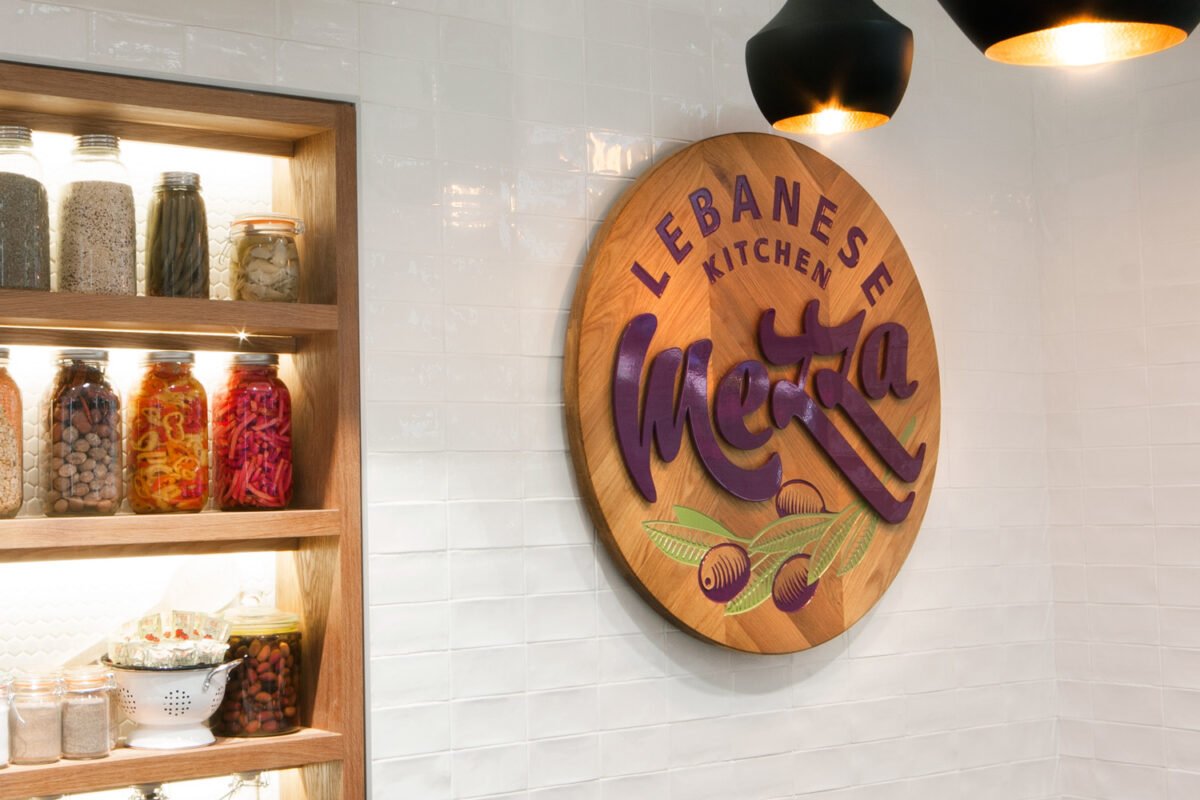
Mezza Lebanese Kitchen has partnered with Crombie REIT to create a recipe for success as the restaurant group continues to expand its footprint across Atlantic Canada.
It is part of the foodservice company’s growth strategy as it looks to reach more consumers in Atlantic Canada and eventually beyond with a growing franchising model.
Peter Nahas
Peter Nahas, Vice President of Business Development and Franchising, said the company has a total of 14 locations currently with four more under construction, bringing it up to 18 by the end of the summer and another five under development for early next year.
“Over 20 locations in the next 12 months. Certainly been growing. It’s been quite the success over the last 30 years but just in the last five or so have really been the franchise growth.”
Currently, it has eight corporate stores and six franchise stores but everything going forward will be franchise. Nahas said five locations are currently in Crombie properties with three under construction and a ninth next year.
Mezza Lebanese Kitchen (Image: Fathom Studio)
Nahas said the relationship with Crombie began in 2014 when it opened its first location with the REIT in the Scotia Square food court in Halifax.
“Quickly thereafter we opened up our second with Crombie in Downsview Plaza in Lower Sackville and then really it just started going from there,” said Nahas.
“It’s just been a great partnership that we’ve had with them where they really have a great power centre and usually a good retail mix that we’re looking for that does well for our brand. It’s been a great recipe for us to work with Crombie where we know who is usually going to be in the mix, we know what we can expect from our landlord. I think it’s a good partnership for the long term.”
Crombie has 294 properties across Canada totaling 18.5 million square feet. Retail comprises about 15.4 million square feet of the REIT’s overall portfolio.
Andrew Watt, Vice President, Retail Leasing for Crombie, said Mezza is a great fit for Crombie’s properties.
Andrew Watt
“They generally nicely augment our existing tenants at many of our plazas which are focused on combining need space retail with food and other retail that fills gaps in the various communities that we’re in,” said Watt.
Watt does see further expansion of the relationship in the future.
“What makes them so successful is they have a really strong brand and they back it up with a great product combined with many, many years of experience,” he said. “I’ve seen them replicate this over the nine properties that they have with us.
Mezza Lebanese Kitchen (Image: Fathom Studio)
“They’re very consistent in their branding, they’re consistent in the products that they deliver. It will be a challenge coming into markets like Ontario where you already have several similar established brands . . . but they really do own the market I would say in Atlantic Canada right now.
“Once you have a partnership like we do with Mezza and you’re able to come up with a precedent lease – they understand what our requirements are and we understand theirs – I think it’s very easy to replicate across the portfolio. We’re doing that not only with independents but we also do it with nationals as well.”
Mezza has its roots serving up fresh, authentic Lebanese food more than 30 years ago. In 1990, it began with the parents of Nahas opening the family-run business after immigrating from Lebanon to Halifax where they opened their first restaurant in the Halifax Shopping Centre food court.
“It wasn’t Mezza at the time but it was a location that we actually still have today 30 years later,” said Peter Nahas.
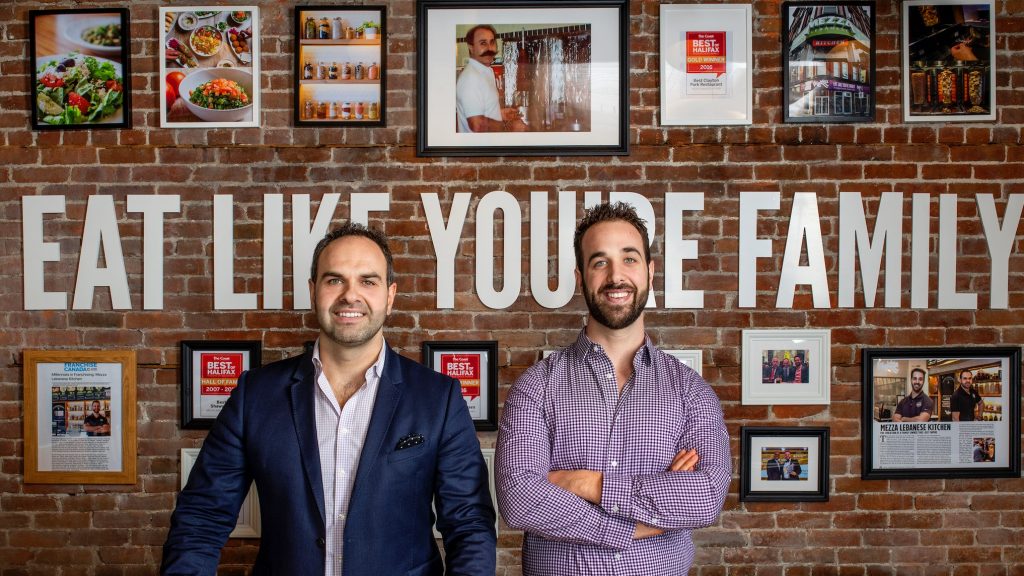
TONY AND PETER NAHAS. IMAGE: FACEBOOK.
Today, Peter and Tony Nahas own the company. Tony is the company’s President and CEO.
“Tony and I obviously grew up in the business. Being a family-run business, your typical immigrant story where the two sons, the two daughters, the mother and the father, they all work in the business and they make it what it is. So you essentially put food on the table,” said Peter Nahas.
“While Tony and I grew up in it, we took over the business in 2012 and at the time we had three different restaurants with the family, all under different brands, all under different menus, one was fine dining, one was a food court, one was in a downtown late night pizza shop. But it was in 2012 that Tony and I decided to open up Mezza Lebanese Kitchen with the menu that you see today, with the branding. We revamped everything.
“And it blew the doors open. We did great. Sales were fantastic. We opened in a business park in Dartmouth. With the first location obviously came the second and the third and we started rebranding what our existing ones were and by essentially 2016 we had six corporate locations all under the Mezza Lebanese Kitchen brand. In 2017, we began to start franchising and had four locations franchised in basically six months. We really took an aggressive approach pretty quickly.”
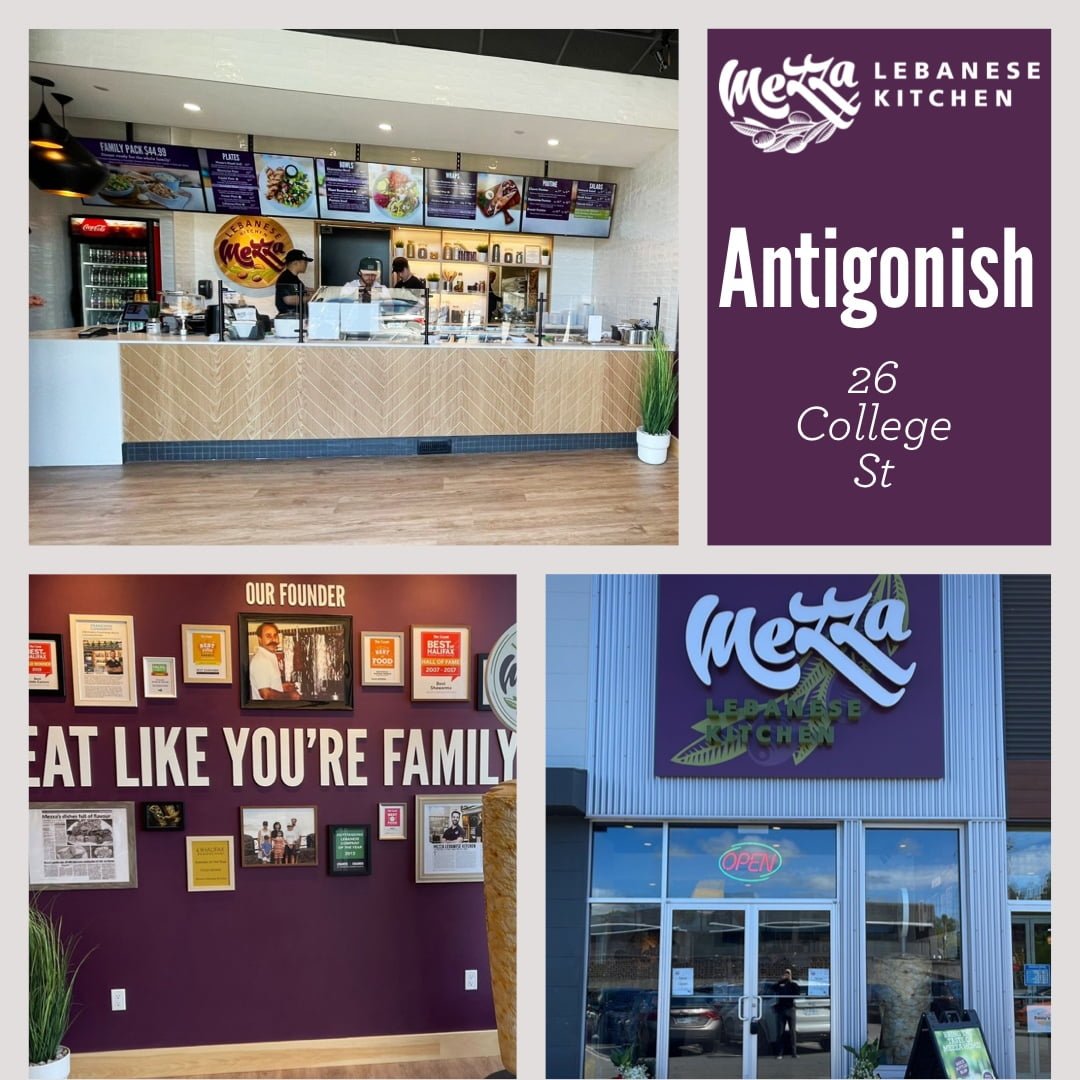
Mezza Antigonish at 26 College St (Image: Facebook)
Peter Nahas said the company has eventual plans to grow beyond Atlantic Canada.
“That’s always been the plan and I’ll say it’s the longer-term plan that’s turned into the short term. Where most of the Maritimes is now sold other than Newfoundland being the biggest opportunity still available in Atlantic Canada, we’ll be moving westward pretty quickly. PEI has been sold. Major markets other than Saint John, New Brunswick have all been sold and Nova Scotia is all gone.
“So for territories all that’s going to be left outside of Atlantic Canada and the Maritimes. So certainly the plan is to keep growing westward for Ontario, Alberta and everywhere in between.”
Mezza has a lengthy history of winning awards including Business of the Year with the Halifax Chamber of Commerce and Tony Nahas capturing Entrepreneur of the Year with Ernst & Young, in Hospitality and Tourism, in 2016.