During a challenging period of labour shortages in the foodservice industry across Canada, fast food chain McDonald’s has embarked on a campaign to hire thousands of people for its more than 1,400 restaurants.
Becky Ohayon, Senior Director, Field Human Resources McDonald’s Canada told Retail Insider that there are more than 20,000 open positions at McDonald’s for job-seeking students looking for work as well as more mature job seekers.
“We like to say that we’re always hiring, and the back-to-school season is no exception. There are a range of positions available for youth at McDonald’s Canada restaurants from Crew member all the way to Guest Experience Leaders, with opportunities for growth no matter where you’re starting from,” she said.
“With students going back-to-school in the coming weeks, we are looking to hire students looking for flexible work during the school year. Around 70 per cent of our restaurant staff is under 24. Available roles offer youth and students flexible schedules to help balance school, extra curriculars, community work and life while working in a skill-building position.”
Image: McDonalds Canada
Ohayon said hiring is an industry wide problem today.
“Everyone is looking to hire, but our size and scale makes hiring an extra challenge. While many brands in the QSR (Quick Service Restaurant) space may be looking to hire, there’s a lot that makes McDonald’s Canada stand out as an employer. From career development opportunities to flexible schedules, McDonald’s Canada has long been a great first job to kickstart your career—a claim recognized by hiring managers and recruiters across Canada.”
She said working with the fast-food chain is more than just a paycheque as it provides learning and development opportunities designed to empower employees with the tools to grow and succeed in their careers.
McDonald’s cites some independent surveys showing:
58 per cent of employers surveyed say it would be appealing for a job candidate to have experience working at McDonald’s restaurant;
89 per cent agree McDonald’s restaurant experience demonstrates that applicants can work well as part of a team;
82 per cent per cent agree McDonald’s restaurant experience is applicable to careers beyond the food and beverage industry;
77 per cent of hiring managers and recruiters believe that McDonald’s restaurant experience signals applicants have acquired versatile skills including people skills, communication skills, listening skills, time management and empathy;
35 per cent of hiring managers surveyed would select the applicant with McDonald’s restaurant experience when looking at two similar CVs;
According to a recent survey, Canadian residents with previous McDonald’s restaurant work experience went on to work in fields such as education (six per cent), healthcare (eight per cent) and government (nine per cent).
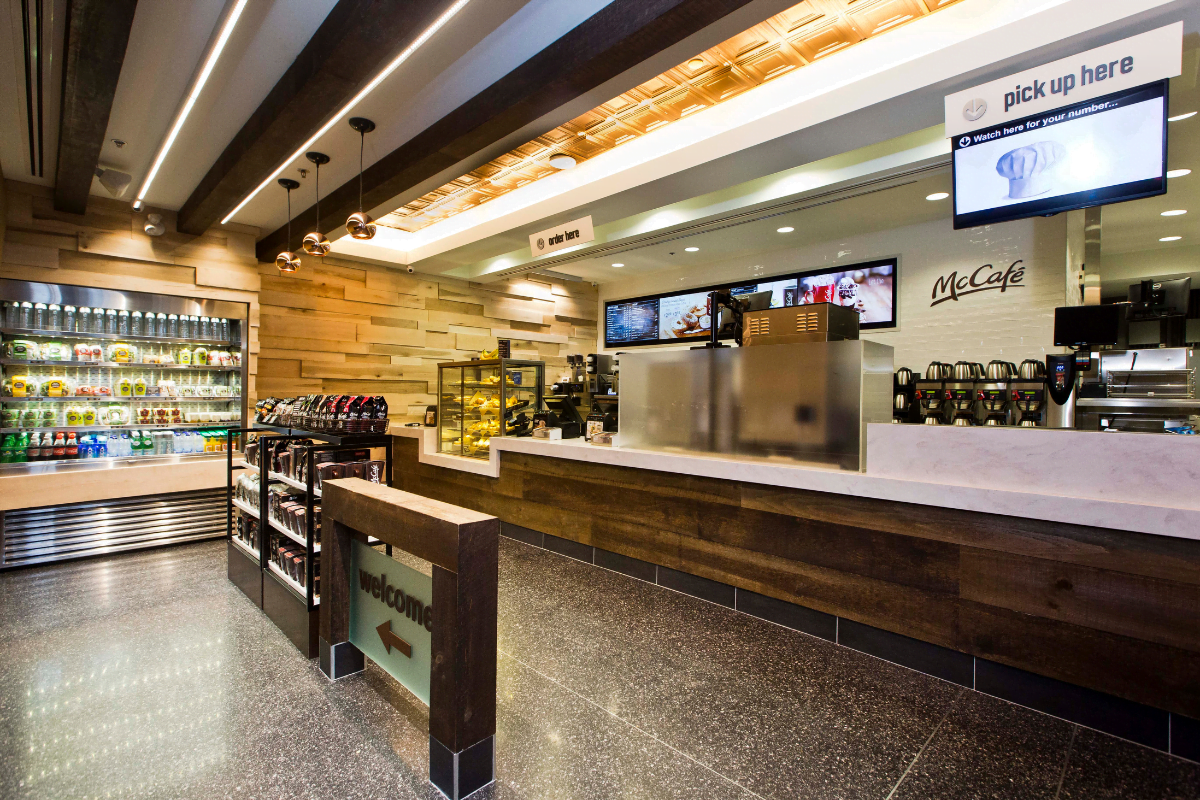
Standalone McCafe at Toronto Union Station (Image: McDonalds Canada)
Ohayon said about one in 10 Canadians have worked at a McDonald’s restaurant at some point.
McDonald’s has operated in Canada for the past 55 years.The first McDonald’s was launched in 1967 in Richmond, BC. Nearly 100,000 people are employed from coast to coast to coast, and more than 90 per cent of McDonald’s 1,400 Canadian restaurants are locally owned and operated by independent franchisees.
Winmark Corporation, the unique national retail resale franchise company, continues to grow its presence in Canada with future growth planned for several of its brands in the market.
Renae Gaudette, Chief Operating Officer for the Minneapolis-based company, said the resale market has been “wonderful” in recent years.
“We like to say we’re recession proof from a franchising perspective and consumers want our brands and want our products right now. They want the value. Not only that but we pay them cash. They bring in their products to us, we pay them immediately on the spot. And then obviously that fills the racks, providing great value to all of our families and consumers across Canada and North America,” she said.
“We’re on a mission. We’re on a mission to provide resale for everyone and we think all of our brands fill a niche in all the communities across North America and Canada, especially for families, growing families, young.”
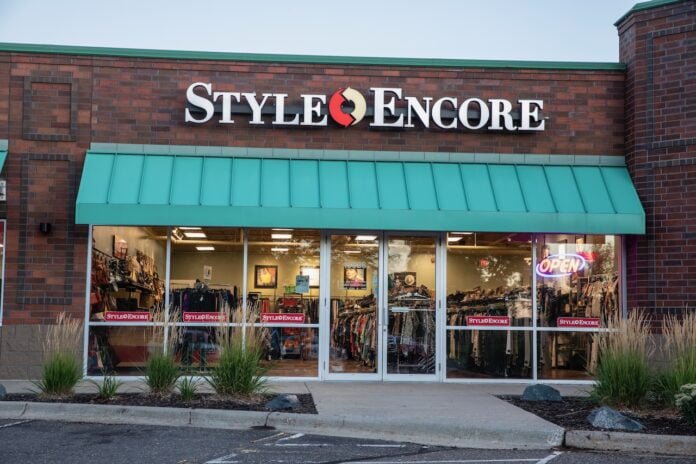
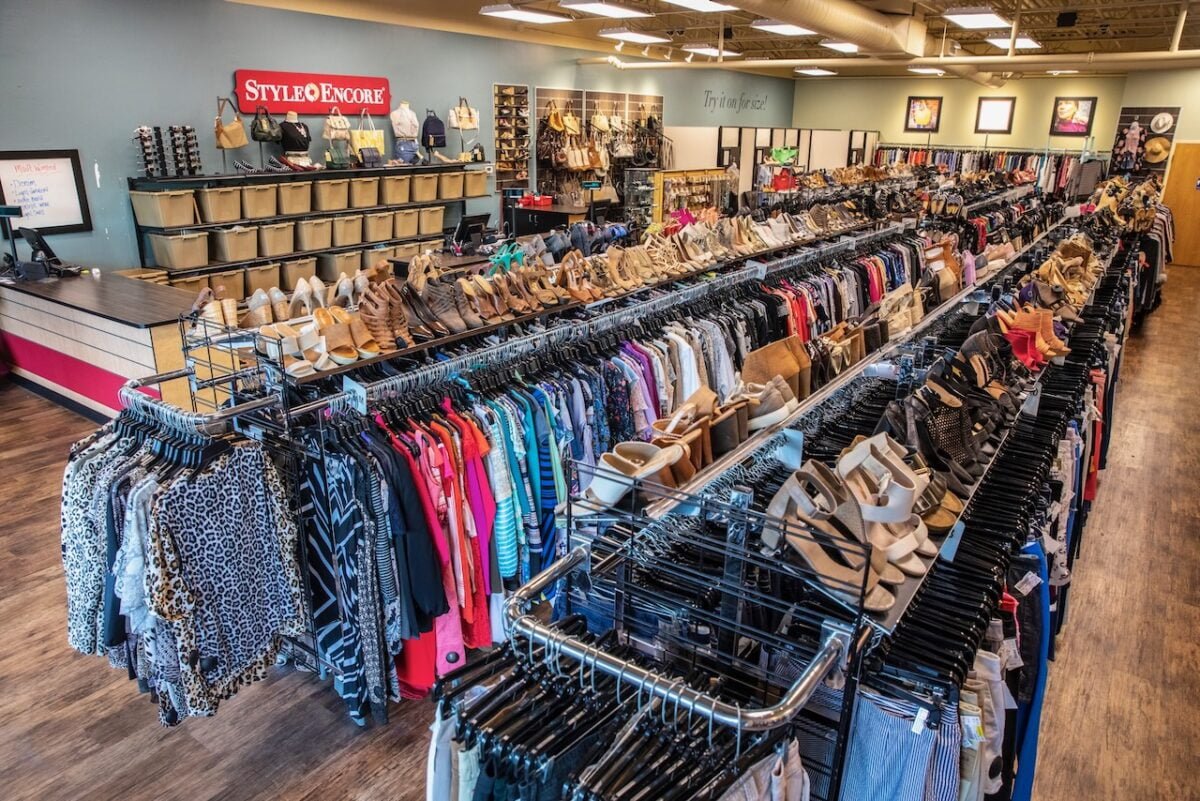
Style Encore (Image: Winmark)
Most recently, the company opened its latest Style Encore store in Markham, Ontario, specializing in resale clothing and accessories designed by women, for women.
“Our official company is called Winmark – the Resale Company. We’ve been around for over 30 years. We’re a franchisor of five wonderful resale brands. And we’ve got almost 1,300 locations across North America,” said Gaudette.
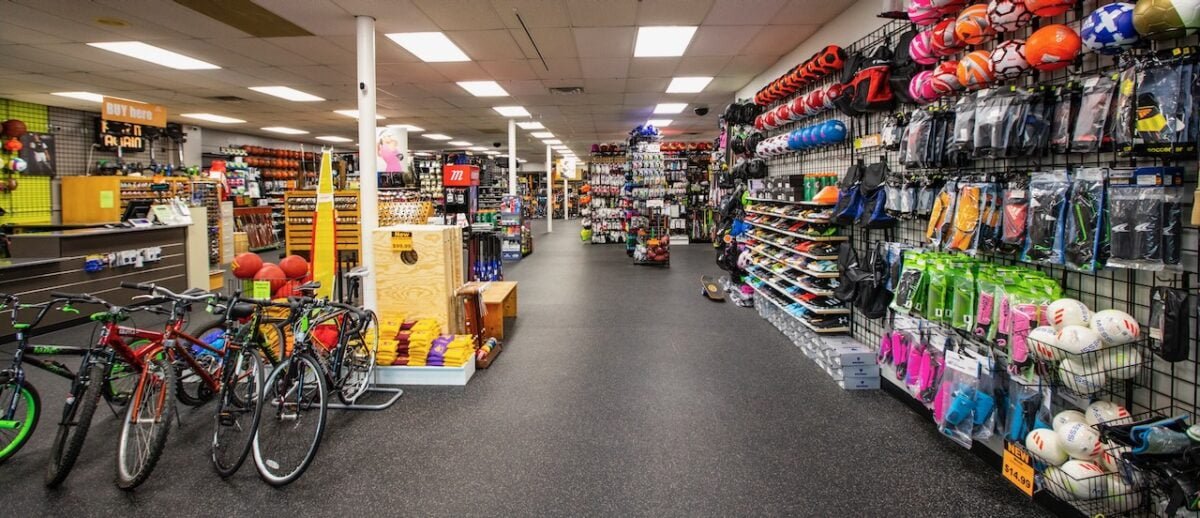
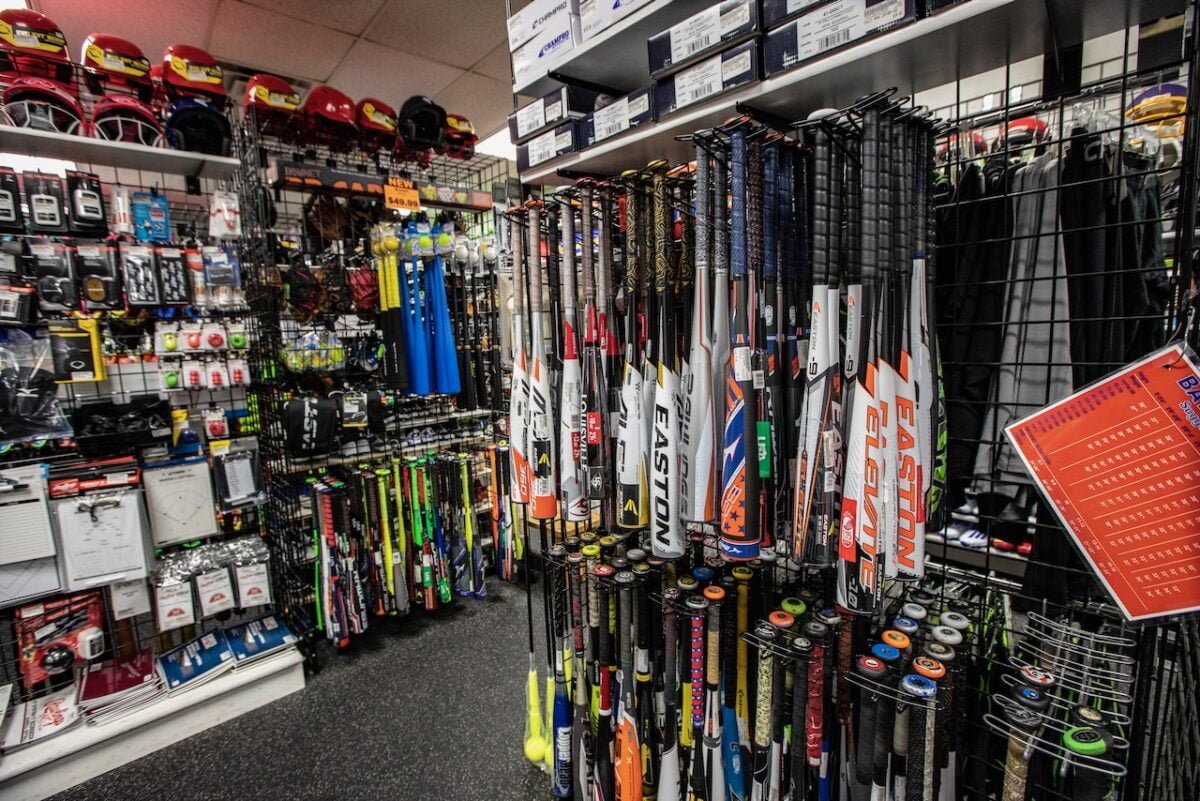
“Play It Again Sports, which deals with sporting goods, quality sporting goods new and used, was our first original resale brand. Next came Once Upon A Child which deals in children’s items, gently used, toys and equipment. After that came Music Go Round. We don’t have any locations in Canada right now but that one is one of our smaller brands but we are franchising in Canada. That deals with used musical instruments. And then came Plato’s Closet which is our teen and young adult gently used franchise that is our largest brand. We have almost 500 locations. Our newest brand was Style Encore which we started franchising in 2013 and opened our first Canadian location I believe it was 2016-2017. That is our women’s, gently used, resale brand. It’s like a big sister to Plato’s Closet.
“In Canada, we have almost 400 open stores across all four of those brands and another 15 signed and ready to be open.”
Play It Again Sports (Image: Winmark)Play It Again Sports (Image: Winmark)
Gaudette said because the products in the stores are locally sourced, the inflationary costs of shipping and supply chain are not passed on to the consumer and that’s where the value truly comes in for the customers.
While Music Go Round does not have a presence in Canada today, she said the company is actively looking for franchise partners who love the music industry.
“We have almost 200 territories across all of our brands that we’re actively looking for franchise partners to open one of our stores (in Canada),” added Gaudette.
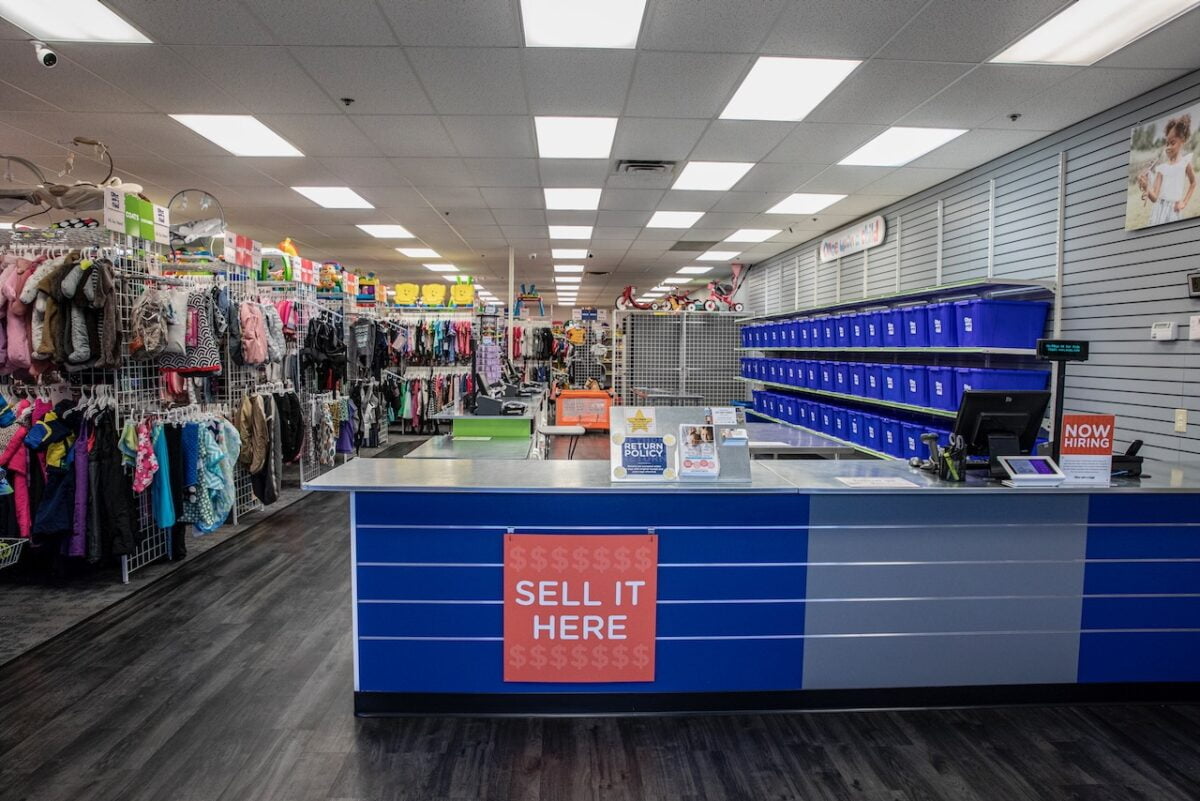
Once Upon a Child (Image: Winmark)Once Upon a Child (Image: Winmark)
“Canadians love our brands. All of our franchise partners have been executing at a very high level, especially during the pandemic. Our brands are very sustainable, they’re recession proof. There’s no other retail concept that actually pays money back into the community. Customers come in and they want to sell us their gently-used stuff. We pay them and it’s on average per store over $350,000 that our franchisees pay back into the community. That’s the beauty of our model.
“There’s no other retail industry out there that can say that and it’s a win-win because not only do we pay the customer and it goes back out into the community but then they come to our stores and see the value that’s on the rack. It’s a win-win situation. That’s the beauty of our model. And we’re doing our little part, our franchisees and consumers, of keeping things out of the landfill.”
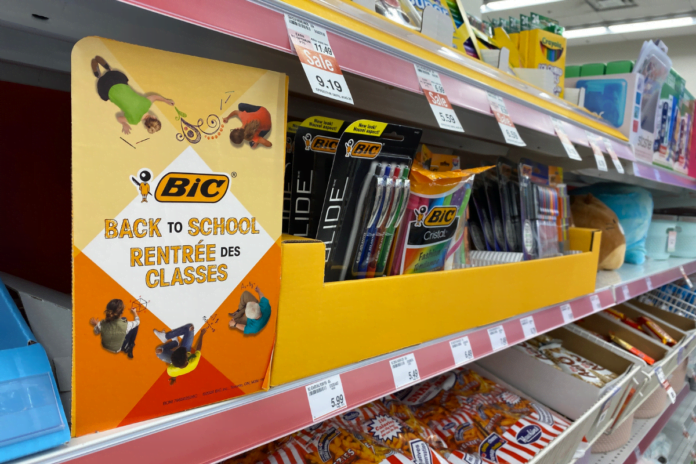
Back to School at Shoppers Drug Mart (Image: Dustin Fuhs)
It’s that time of the year again as retailers across the country have been catering to a back-to-school shopper looking for everything from pencils to clothing for their children.
And while some students may already be back in school, the shopping for supplies and clothing continues.
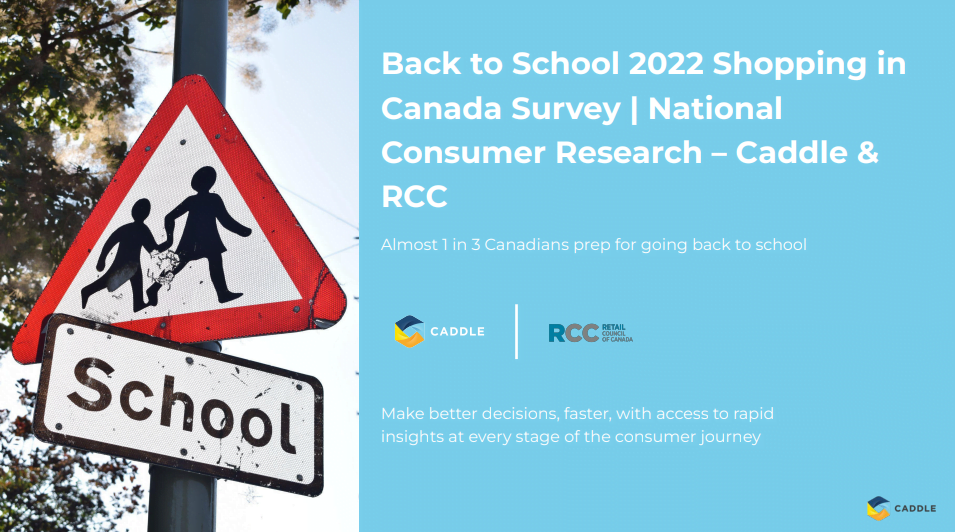
With kids returning to school, the Retail Council of Canada’s Back-to-School 2022 Shopping Survey, indicates 86.3 per cent of Canadians make back to school purchases and apparel is the top spending category, followed by books and personal and home electronics such as smartphones and tablets.
“Unlike the past two years, parents and students have more certainty of what back-to-school will look like this fall. As such, spending on school-related items is well underway with 42.9 per cent of respondents reporting that they make purchases between two to four weeks before the holiday,” said RCC in a news release.
Back to School 2022 Shopping in
Canada Survey | National
Consumer Research – Caddle &
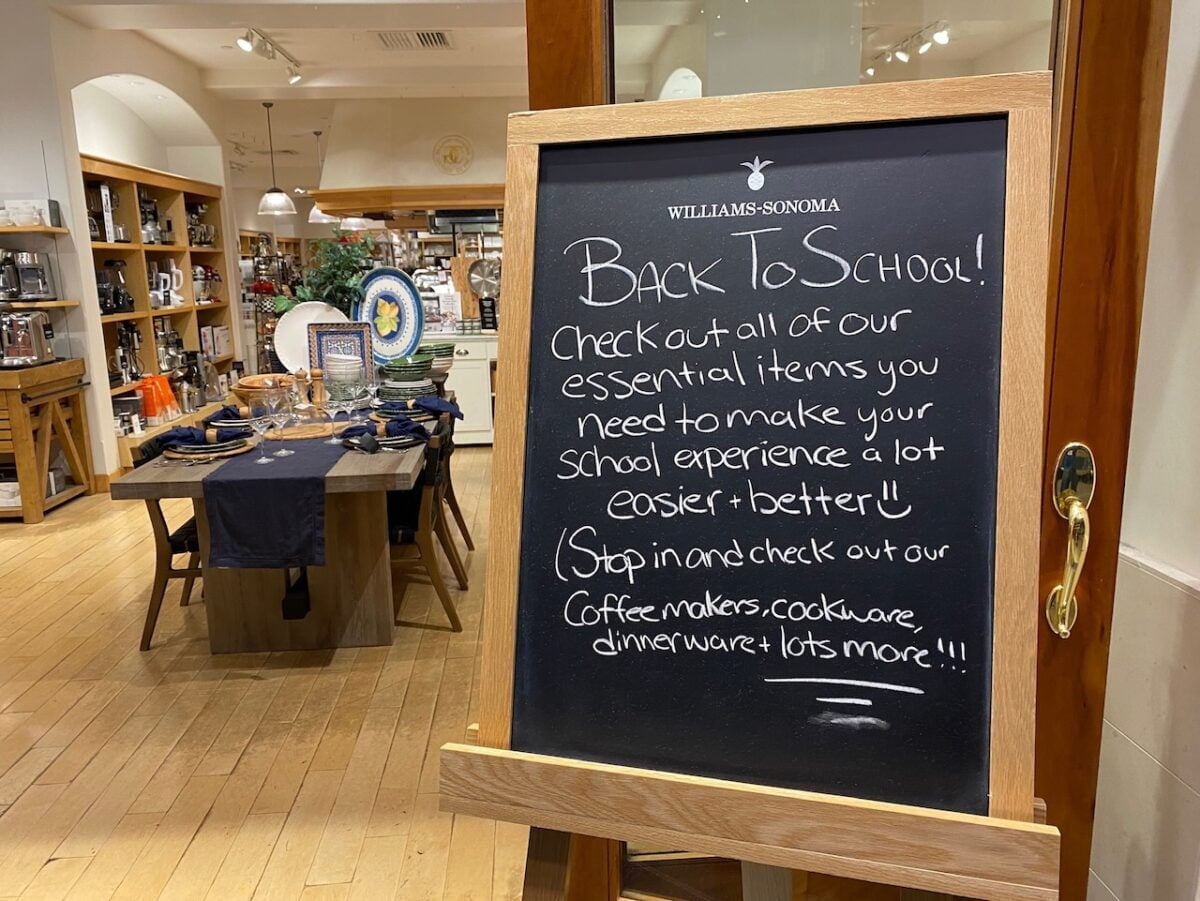
RCCBack to School at Williams-Sonoma in CF Toronto Eaton Centre (Image: Dustin Fuhs)
The report also found:
41.5 per cent intend to shop locally, and in person, this year versus online;
77 per cent will spend more than $50;
Big box retailers, followed by clothing retailers, is where most consumers say they intend to make their purchases; and
32.7 per cent of Canadians specifically go shopping for back-to-school purchases.
Caddle surveyed Canadians from coast to coast in June to better understand consumers’ shopping intentions around going back to school. The survey was conducted using Caddle’s mobile platform and online panel amongst a representative randomized sample of over 9,000 Canadians.
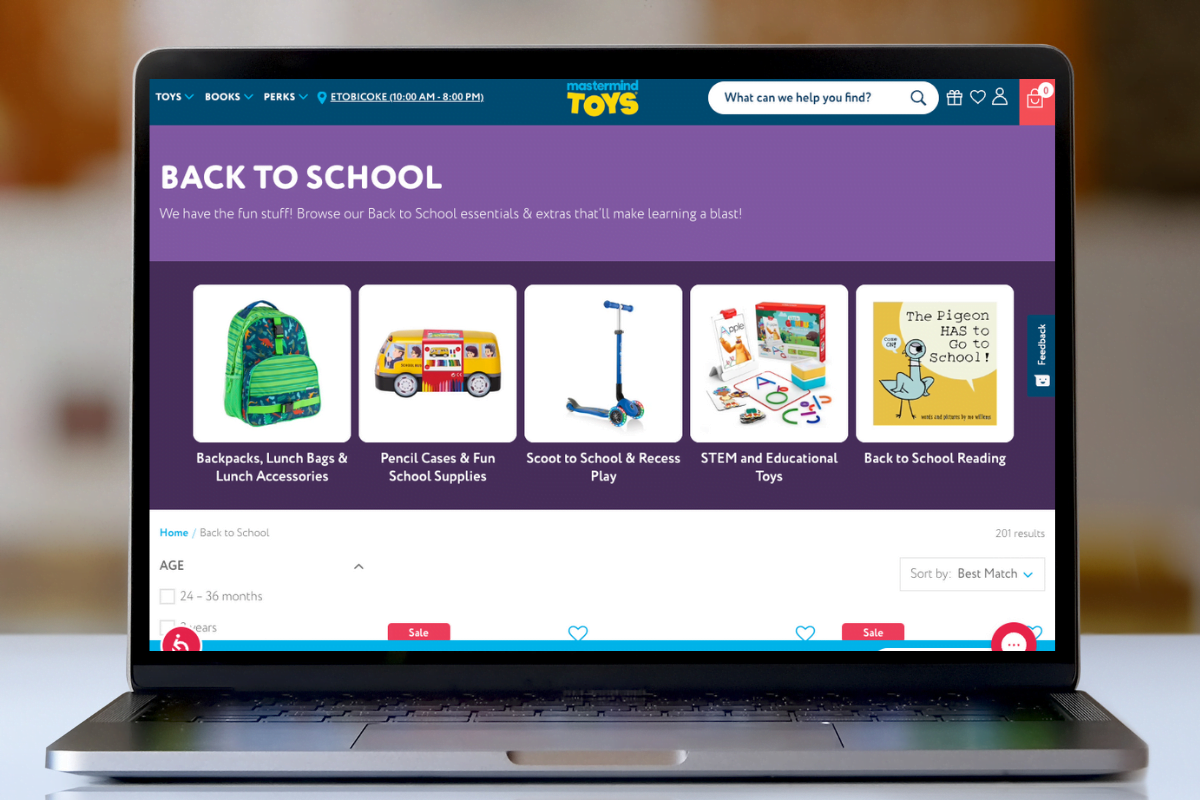
“And one thing they know is that they need to shop early. So pre-pandemic, and I’m talking about the holidays here, we noticed this trend pre-pandemic of people shopping later and later closer to the milestone holidays,” said Jordan. “And during the pandemic, certainly customers were savvy that they needed to shop early, especially because they wanted to make sure they had the gift for under the tree.
“They were very aware of the supply chain challenges. I’m predicting that this holiday season is going to look like last year where customers are going to shop early. The other thing we’re noticing is that digital is really being used to secure the top items. So while our doors are open we’ve been so excited to welcome back Canadian kids and families into our stores to see our larger than life demos, to see our window displays. So 2022 has really allowed us to be the toy store where we really can create all these moments of wonder.
“But we’re noticing that our customers are still relying on the digital channels whether it’s curbside or web for the sought-after items, whether it’s a new LEGO launch, whether it’s the hottest item of the season. They’re not waiting to get to the store to see if we still have (the product). They’re ordering it online to make sure that they can have it.”
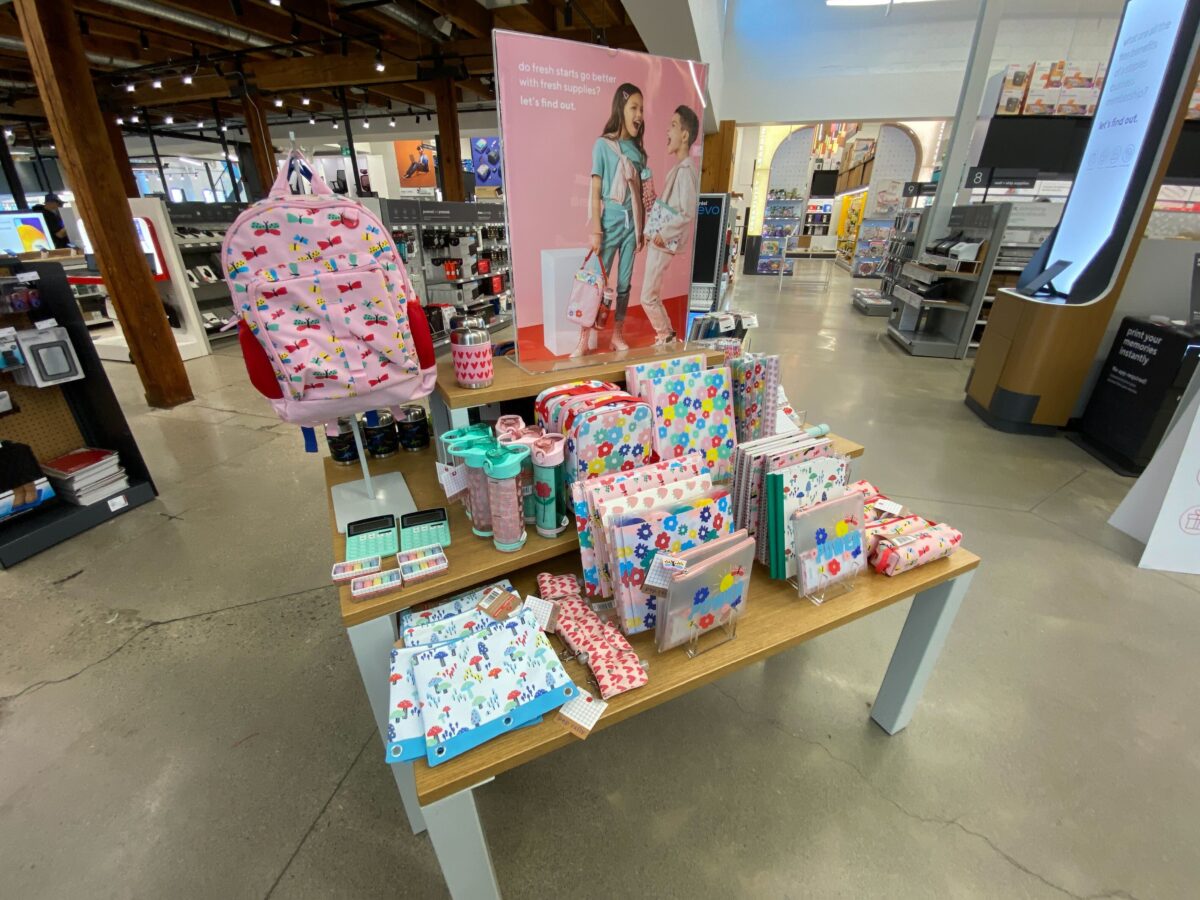
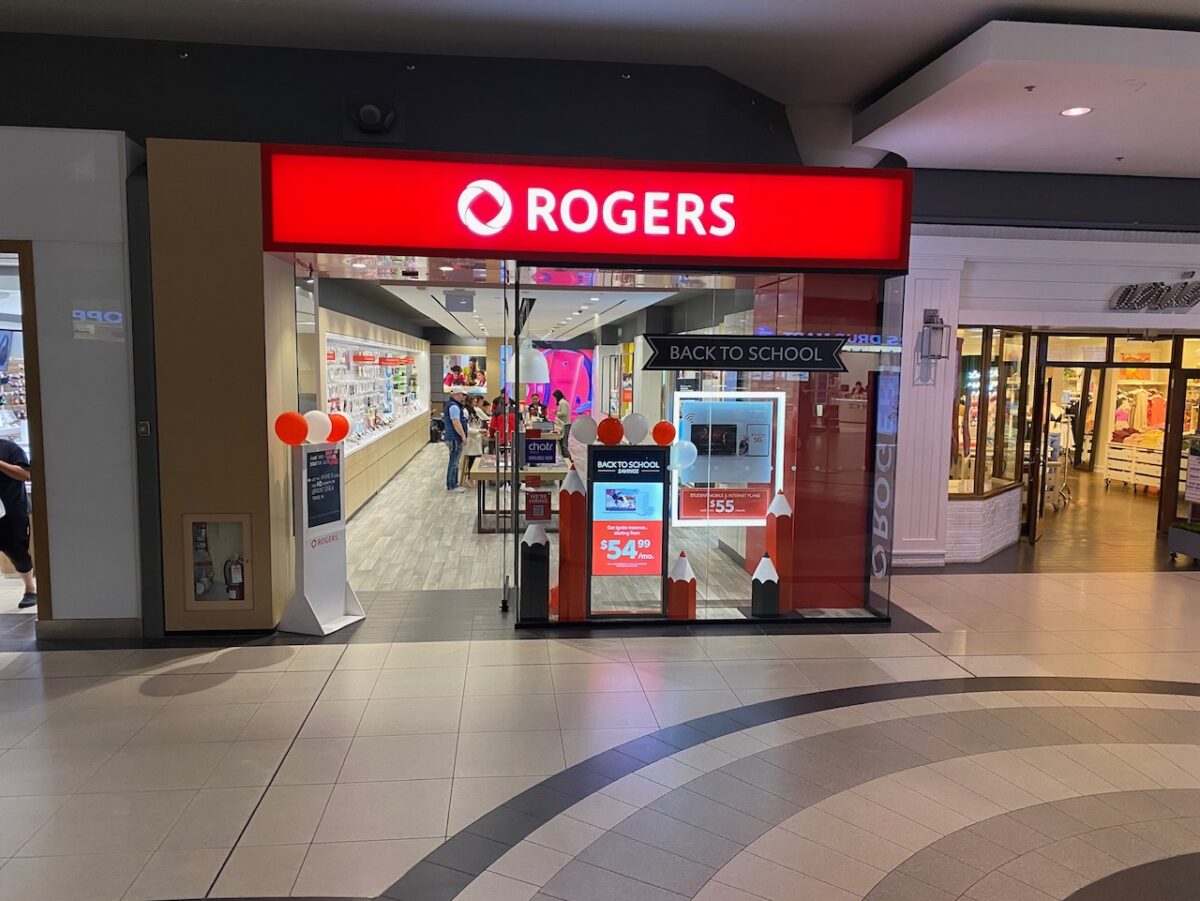
Back to School at Staples Canada (Image: Dustin Fuhs)Back to School at Rogers in CF Toronto Eaton Centre (Image: Dustin Fuhs)
Another recent survey found that two thirds of parents and students are worried about inflation’s effect on school-related costs.
The Angus Reid study, for Licenced Insolvency Trustees, Bromwich+Smith, surveyed 1,508 Canadians,
Laurie Campbell
“Back to school is always a financially and emotionally draining time for parents and students,” said Laurie Campbell, director of client financial wellness at Bromwich+Smith, in a news release. “With classrooms at their highest capacity since 2019 and inflation the biggest back-to-school story, our survey shows parents and students alike are overburdened with all things financial.
“It’s important to know your upfront costs and finances, set a budget, shop around and create a school spending fund.”
The survey found that 64 per cent of parents with children in school said they were worried/stressed about the effect of inflation on the cost of the upcoming school year. Also, 73 per cent said they expect even higher prices for school supplies/books due to supply chain issues.
Retail Insider is streamlining its Canadian retail news from around the web to include a handful of top news stories that can be viewed quickly during the day. Here are the top stories from the past 24 hours.
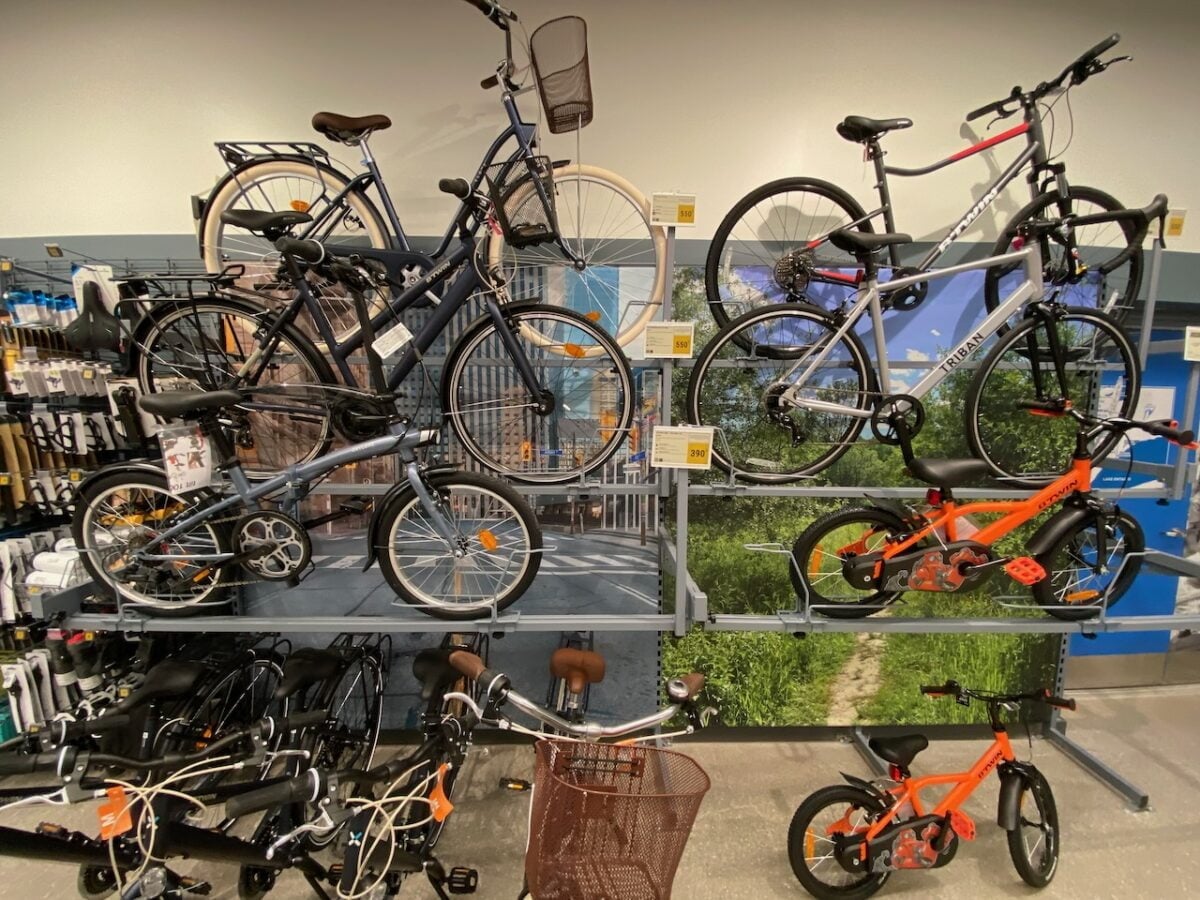
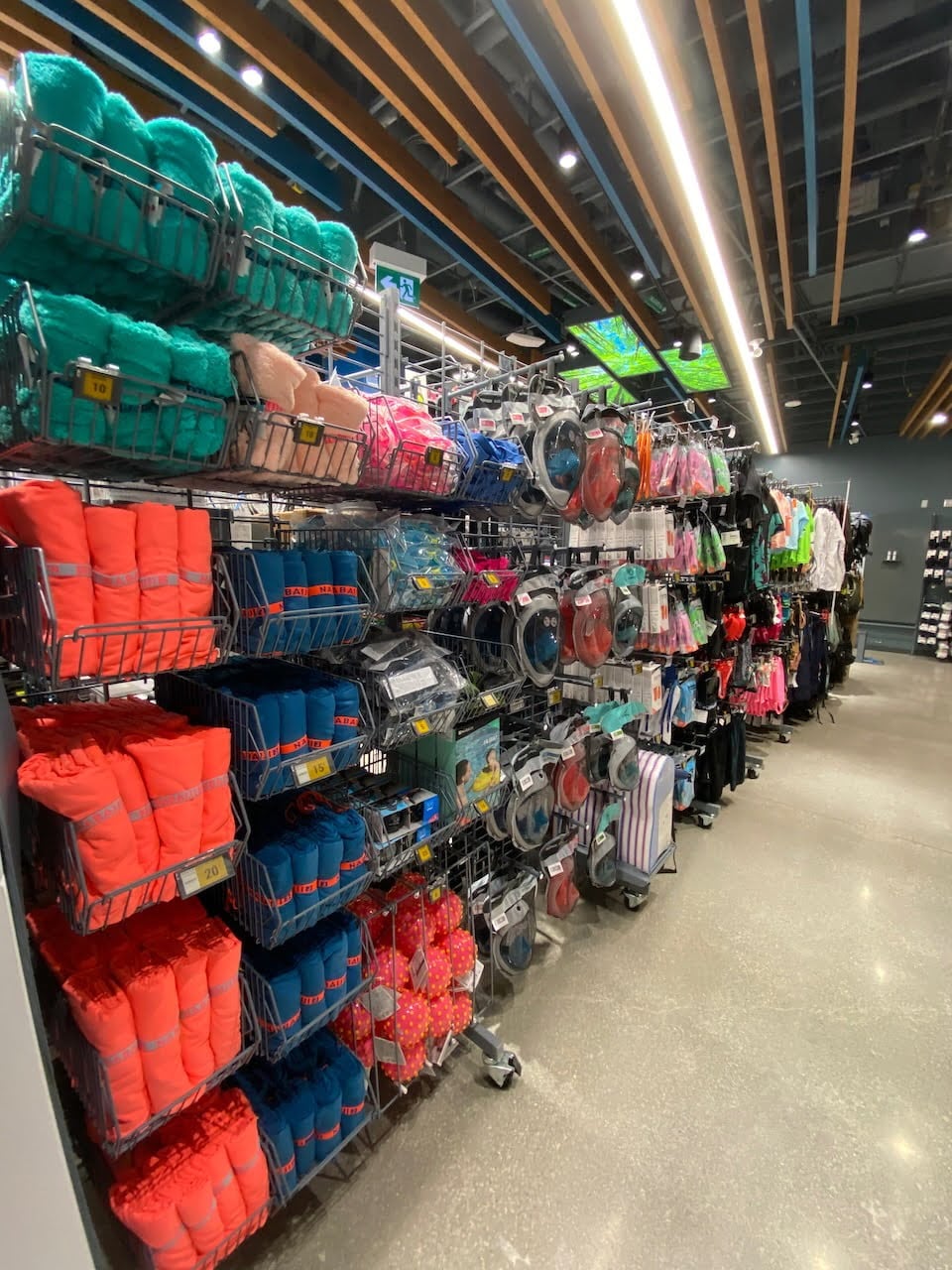
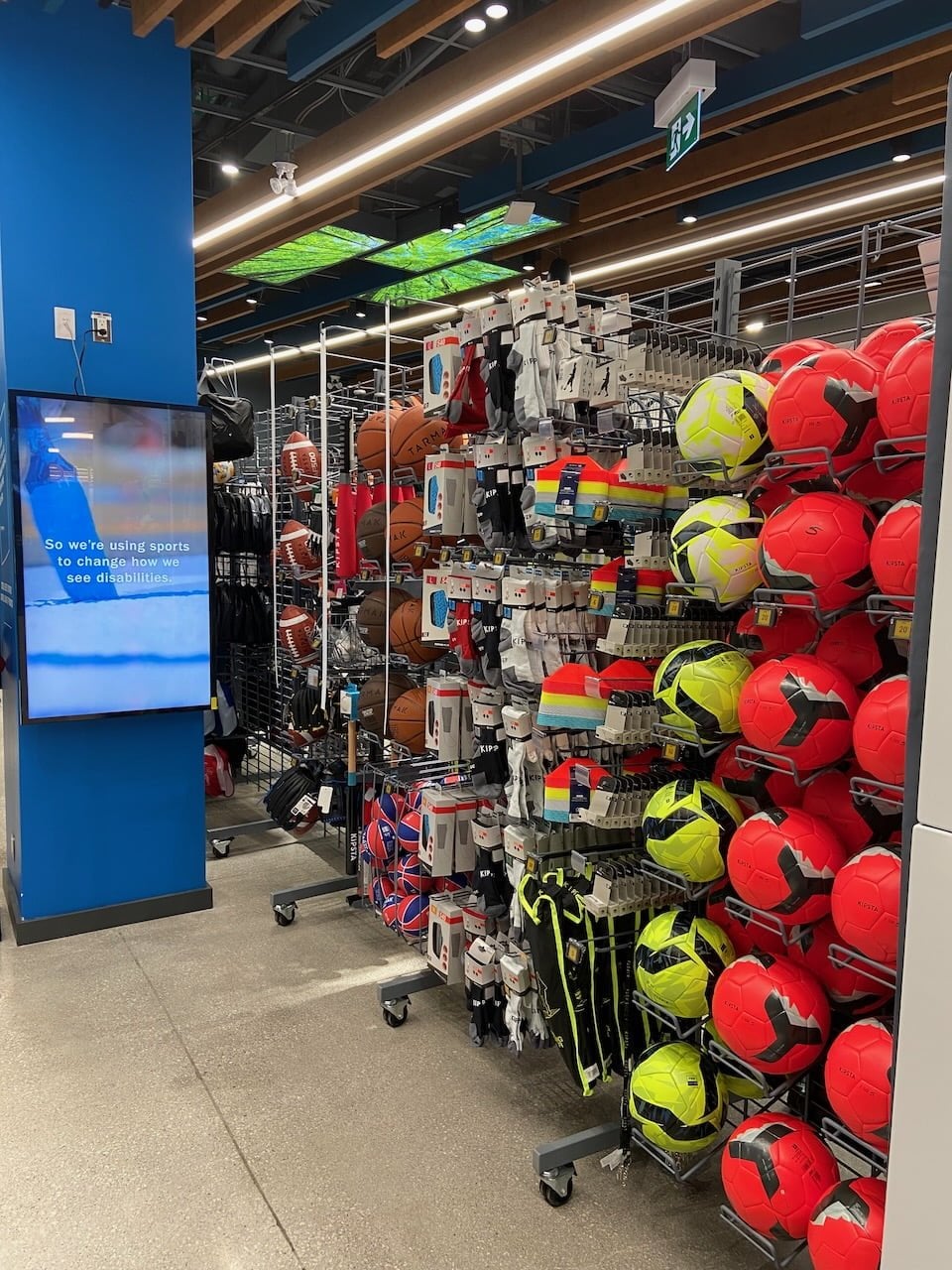
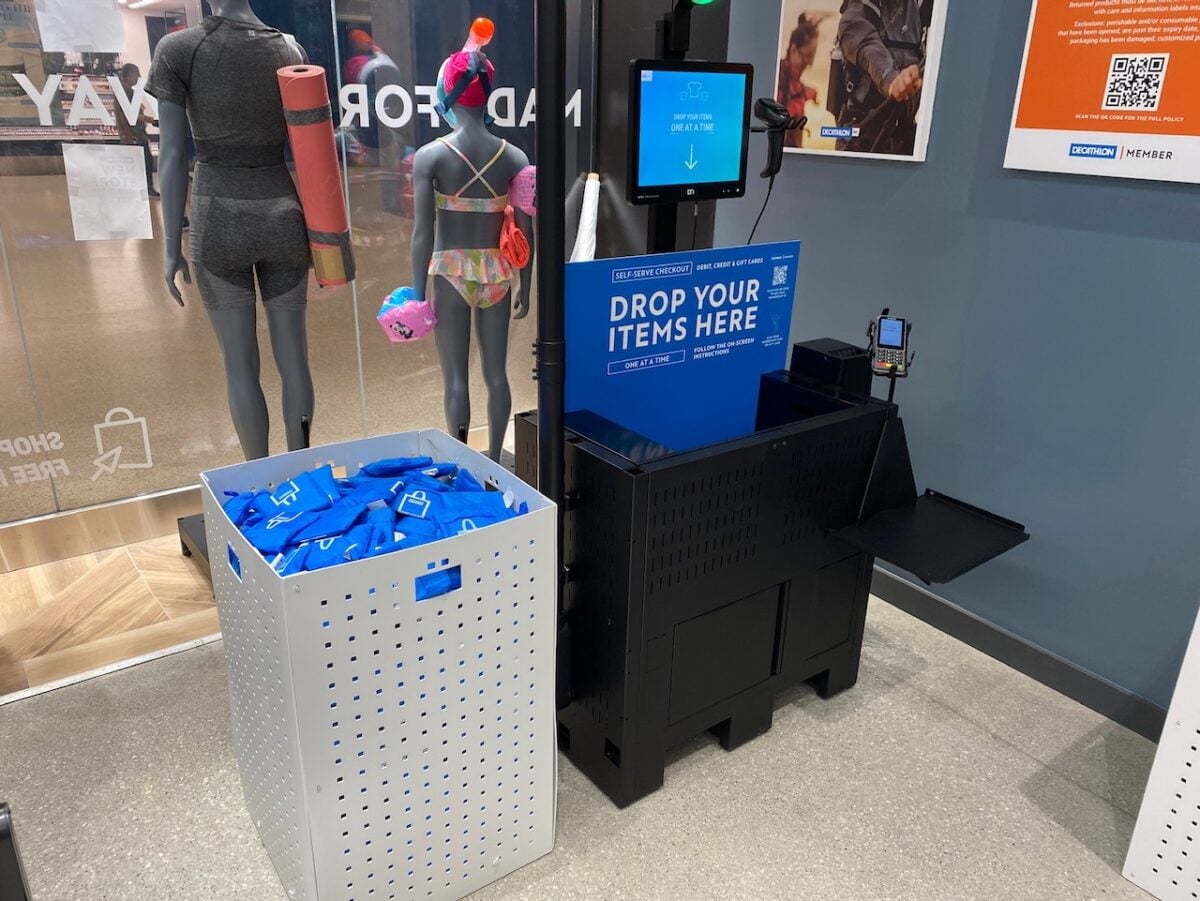
French Sporting goods retailer Decathlon has opened a new concept store at Union Station in the heart of Downtown Toronto as part of its ongoing Canadian expansion.
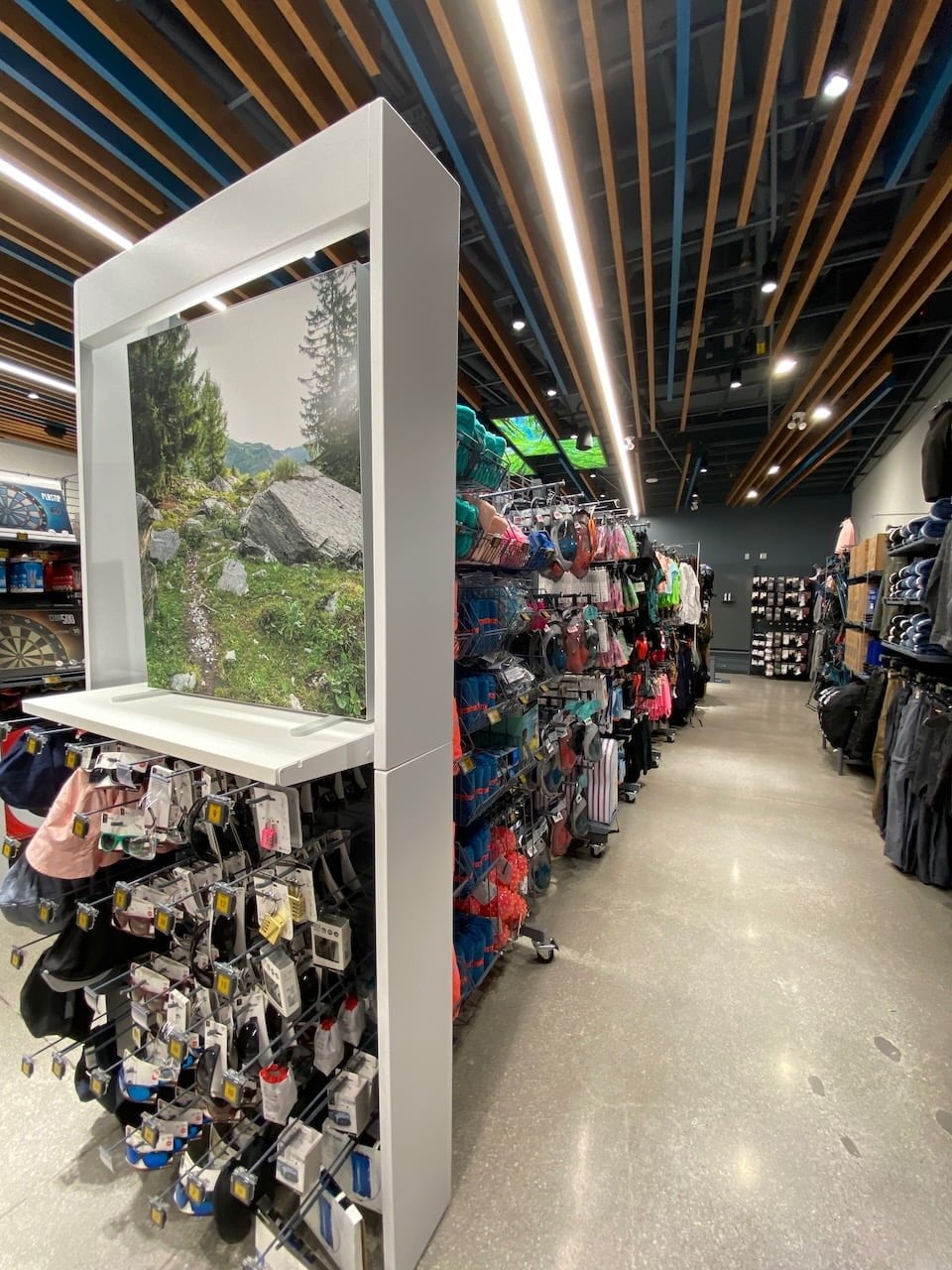
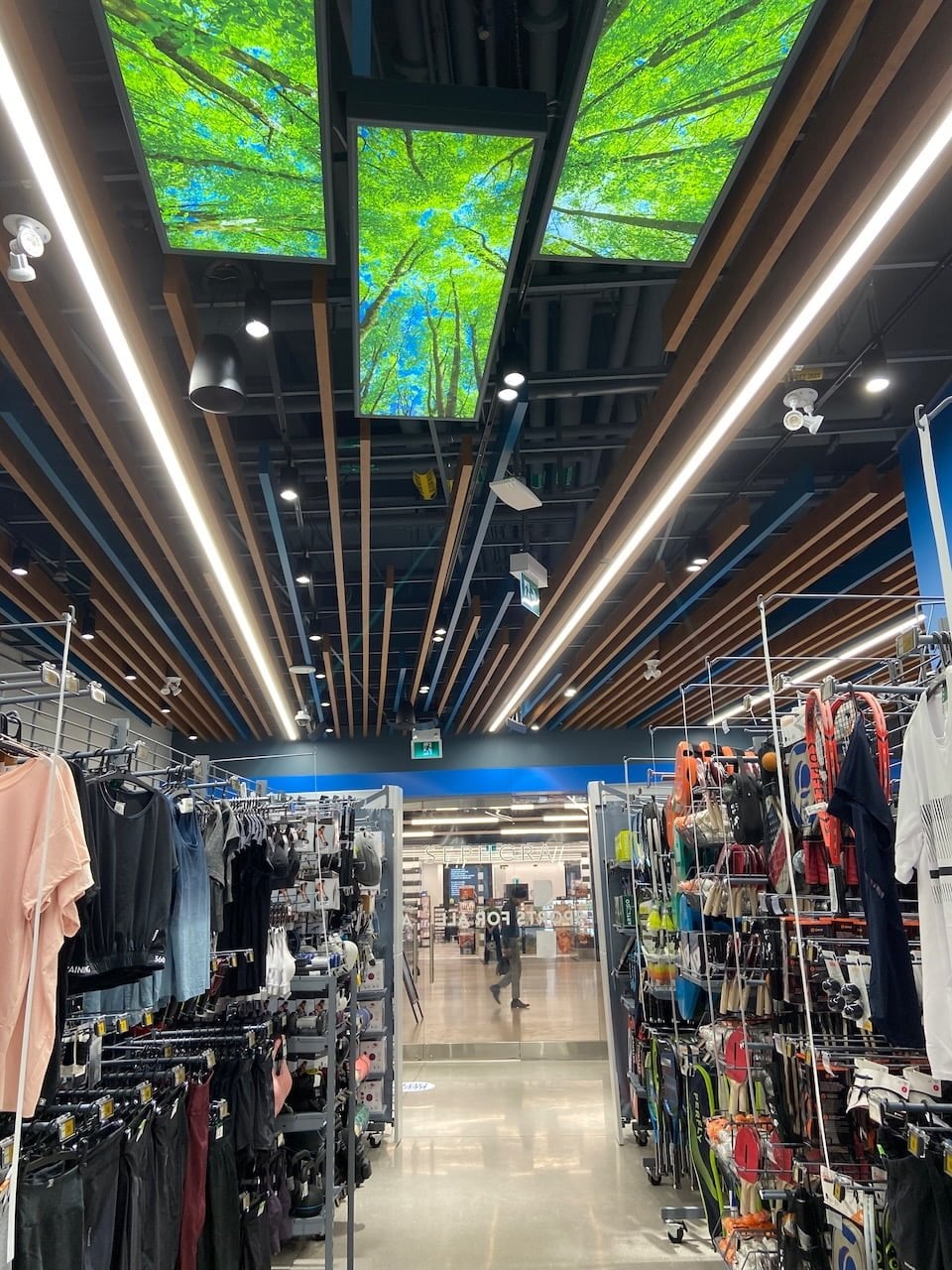
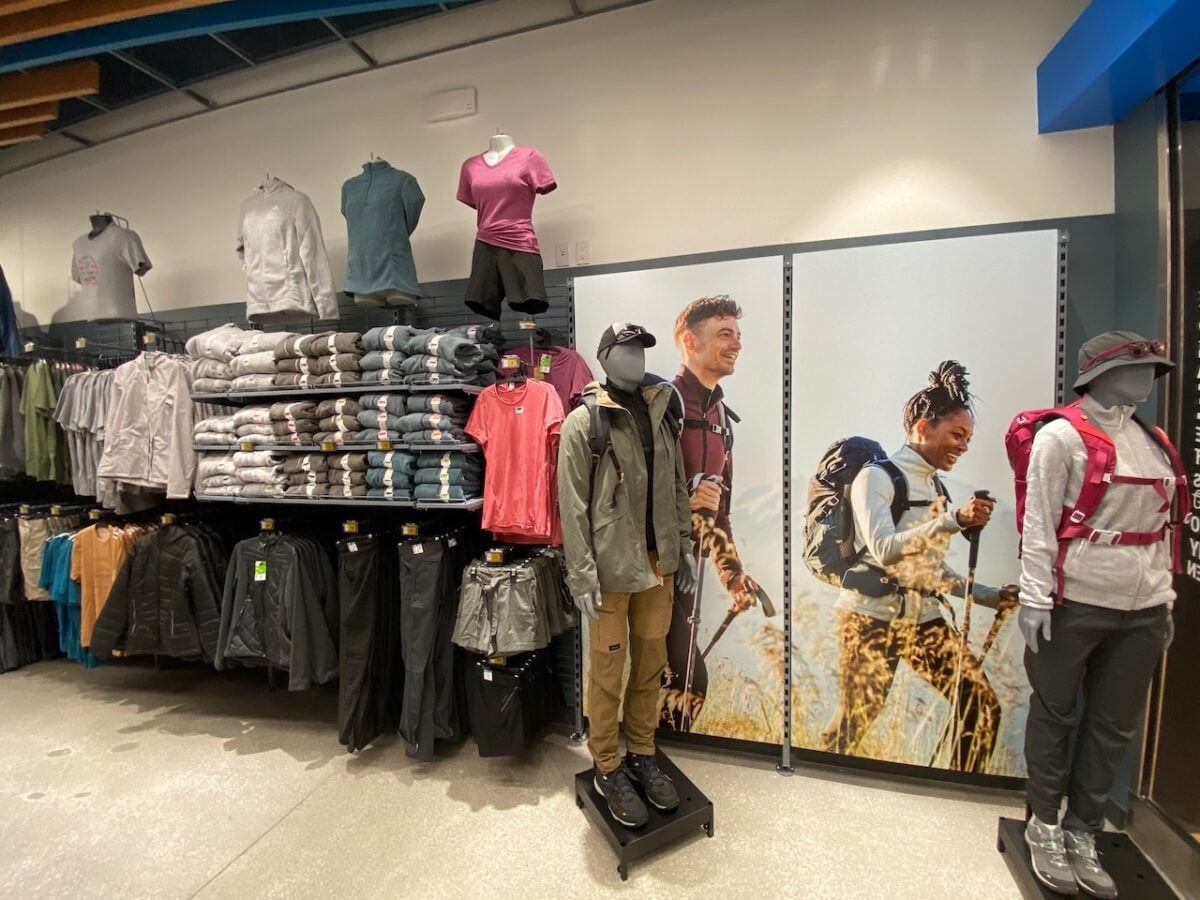
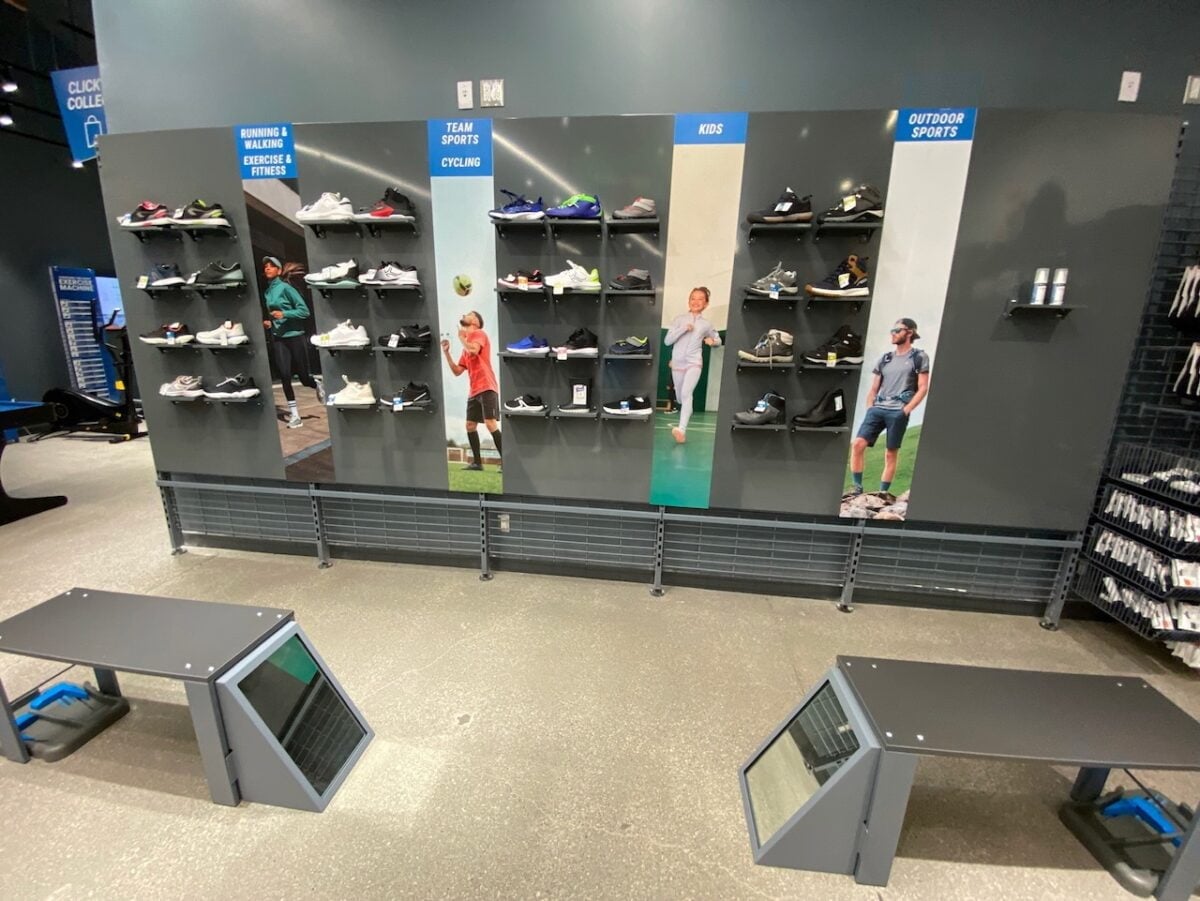
The 3500 sq. ft. “Decathlon City” location features a smaller footprint than a traditional Decathlon storefront and offers a ‘top-seller selection’ that draws from the 7,000 total products offered by the retailer.
“We are very excited to be able to meet downtown Torontonians exactly where they are with this new concept store,” says Bjorn Bosmans, Ontario leader for Decathlon Canada. “It is a great way to introduce our brand to people who live, work or commute in the downtown core.”
Decathlon City Union Station (Image: Dustin Fuhs)
Decathlon City Union Station (Image: Decathlon Canada)
Decathlon City Union Station (Image: Decathlon Canada)
The store will allow for shoppers to explore a selection of Decathlon’s most popular products in the experience-driven location.
“We want to get Torontonians moving through this central hub acting as a point of connection, a place for events, and see where this experience can take them,” says Bosmans. “Union Station provides us with the perfect access point for our new City store experience, and we look forward to meeting people and bringing the community together to stay active, uniting under the banner of sports.”
Decathlon City Union Station will employ 15-20 staff to start.
Decathlon City Union Station (Image: Decathlon Canada)
Decathlon City Union Station (Image: Decathlon Canada)
Decathlon City Union Station (Image: Decathlon Canada)
“Decathlon City is part of the ecosystem of Decathlon around the world,” shared Marie-Lou Blais, Director of Communications, Decathlon Canada. “It’s a smaller footprint store, but in the heart of where the community and people are, as we’d like to make sports accessible to the many.”
Marie-Lou Blais
“Decathlon is a sports brand, but it’s also for active living. We’re in the hub of where people go to, from work and go home…a lot of people live here. I think we fit the Union Station vision of making people active, unique retail, and we offer easy to buy products that will make a difference in your life.”
“The exciting part is that we want to build a community and we want to be there for a community that already exists – people that are active. So people are going to come into the store on opening day and they’re going to see golf, swimming, jackets. We will adapt and change the store as time goes to be able to answer the demand. We want to be customized to the customer who visits us.”
Decathlon City Union Station (Image: Dustin Fuhs)Decathlon City Union Station (Image: Dustin Fuhs)
“With 7000 products in our system, it can all be available here,” shared Blais. “The area is smaller, but we are also developing our Click and Collect offering. As time goes on, we can see what people are ordering online for Click and Collect and be able to bring those items into the store.”
With the new store being in the heart of the transit hub and connected to Scotiabank Arena and short walk to Rogers Centre, the store has an opportunity to be flexible.
“I think we’re opening the store with the current situation and we’ll be able to adapt by way of the number of staff and the hours.”
Decathlon City Union Station (Image: Decathlon Canada)Decathlon City Union Station (Image: Dustin Fuhs)
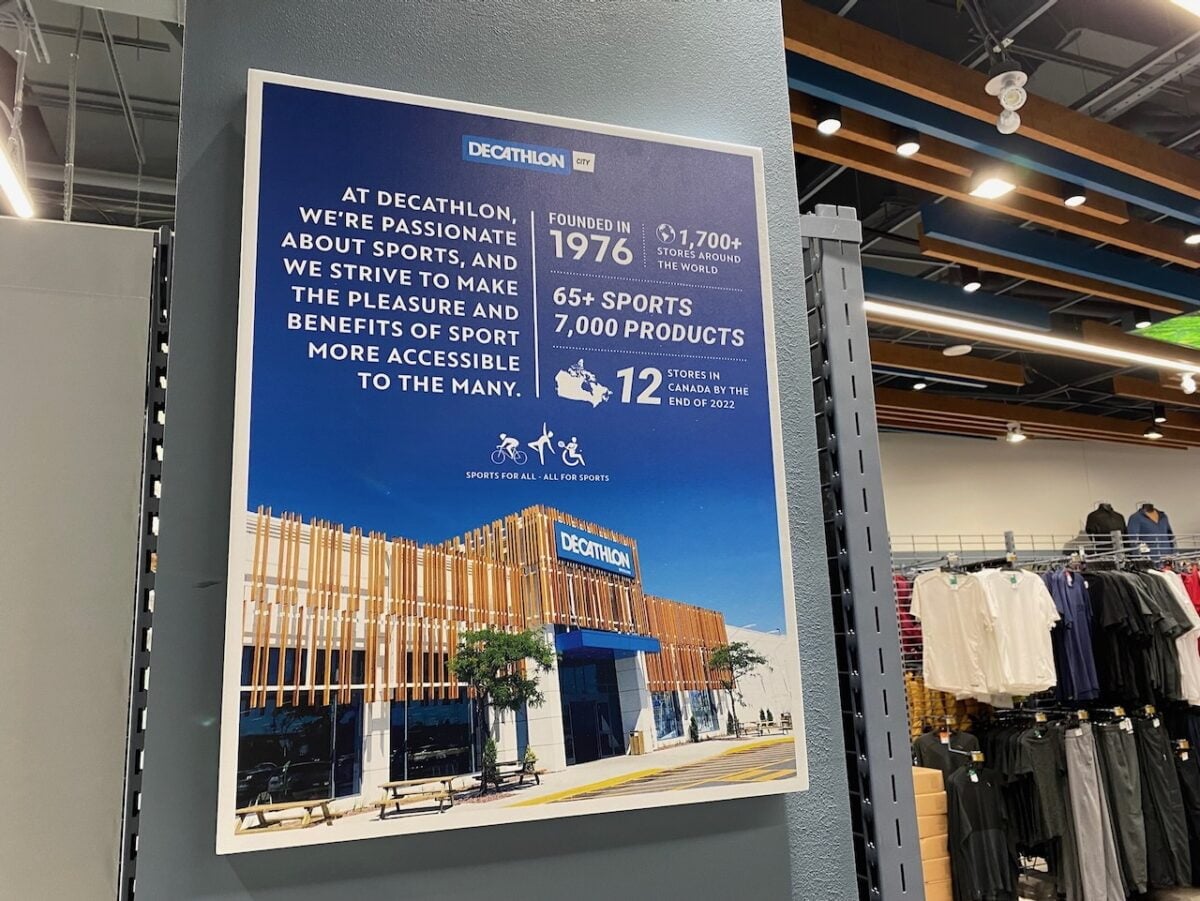
Decathlon has been on a cross Canada expansion, which currently sits at twelve locations.
“We’re opening a Flagship store in Markham at the end of the year,” shared Blais. “We’re growing around the GTA area. We have a lot of opening plans next year, more towards the second half of the year. We really want to be where the populations are, where the communities are. We have a lot of followers on social media, asking for locations and we love that, as then we can plan.”
With more than 1,700 stores in over 60 countries around the world, Decathlon is a world-renowned brand that designs, manufactures, tests, and sells apparel and equipment for over 65 different sports. Decathlon teams provide a complete sports experience through in-store gyms, product test areas and sports classes, as well as physical and virtual activities for the community.
Image: Decathlon
Decathlon Canada, represented by real estate advisory firm Oberfeld Snowcap, has twelve current Canadian locations.
Union Station recently saw the opening of the LCBO, Sephora and Tao Tea Leaf. The transit hub will be welcoming Liberty Entertainment Group’s Blue Bovine restaurant concept, The Queenston restaurant concept, Japanese-based % Arabica coffee shop – with more to be announced.
Park Royal South with the Christmas decorations up for Christmas 2021 in West Vancouver (December 2021). Photo: Lee Rivett.
Inflation in Canada has been at historic highs of late impacting consumer spending as the retail sector also deals with rising labour and material costs, staffing shortages, business sustainability and supply chain interruptions.
For retailers it is indeed a challenging time as they prepare for the upcoming holiday shopping season.
Rob Garf, VP and GM of Retail for Salesforce, said after a couple of years of tremendous growth particularly online we’re now seeing a balancing between store and digital sales.
“And there’s been a shift in mentality for many retailers around the world. And that’s moving from scrappy over the last couple of years in terms of putting in initiatives based on the changing consumer behaviour to scale which is ‘wow, now I need to fully operationalize initiatives like buying online, picking up in store or allowing our associates to provide service whether they’re in the store or hanging out at home on their couch’,” he said.
CF Toronto Eaton Centre In the Holidays
“Retailers generally have had somewhat of a wakeup call in the impact these new operational realities have taken. And it’s really putting tremendous pressure on margin and as we’re talking to retailers about holiday that seems to be a common theme in terms of not letting margin be the Grinch that steals Christmas.
Rob Garf
“Retailers have (implemented) a lot of new technologies. They’ve put in place some critical capabilities and now how do they make sure they can scale, drive automation, drive efficiency.”
Garf said the average selling price in the retail sector has been consistently rising over the last six or seven quarters. Consumer spending is essentially a zero sum game, he added.
“Consumers are now spending more on almost every item but they’re spending the same amount of money total so the math means they’re buying fewer products from less retailers,” said Garf. “So there’s been a shift to a large degree in loyalty and the definition of loyalty. Many consumers are looking for value, they’re looking for experience.
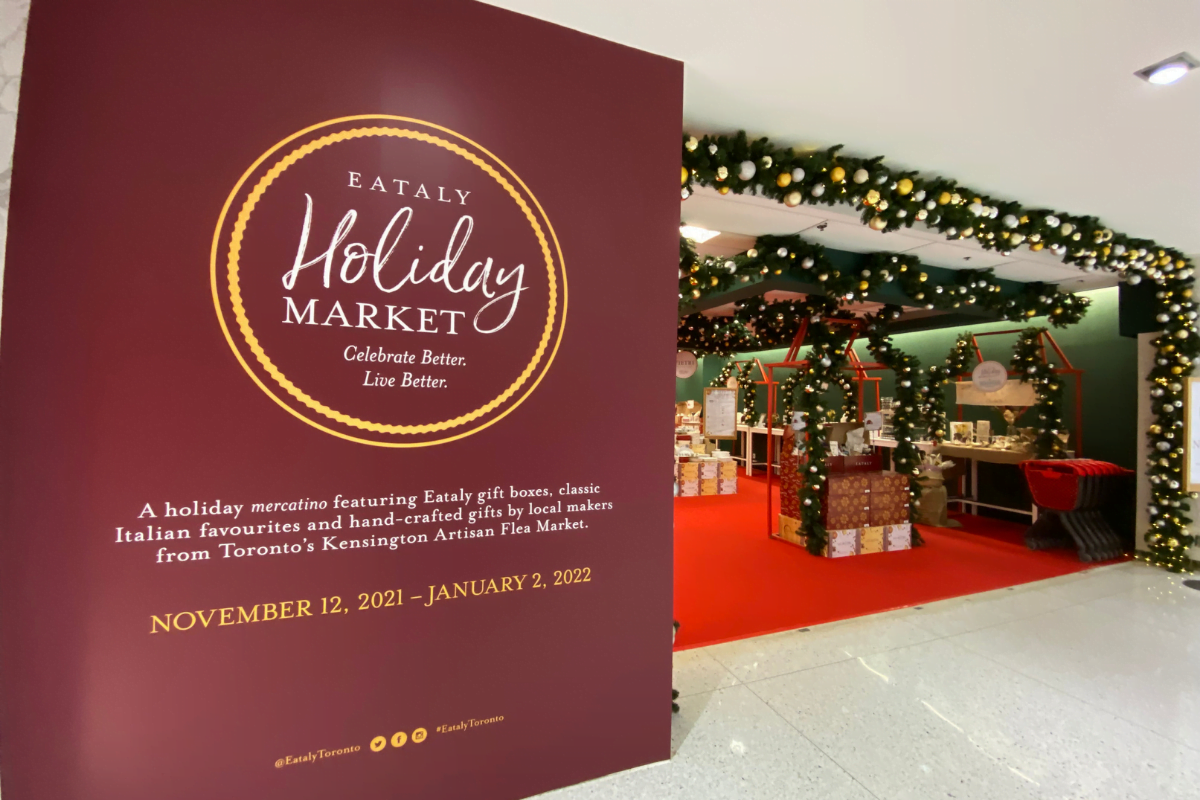
The Eataly Holiday Market in Manulife Centre (Photo by Dustin Fuhs)
“Inflation is real. Last holiday, in particular, retailers, the extended supply chain, they were able to absorb the incremental costs of doing business, partly because they were able to preserve their margin by not having to discount. If you remember, there’s an inventory challenge which is there’s not enough of it because it’s stuck in containers at the ports and not being able to come into the domestic supply chain.
“Consumers got wind of that . . . And consumers got scared. So the retailers didn’t have to discount because they didn’t feel compelled to. This year there’s an inventory problem which is many retailers have excess inventory in categories that aren’t hot anymore whereas last year retailers were able to absorb the incremental costs of goods sold because they weren’t discounting. This year the retailers are passing that along to the consumers but also feeling the pain of margin erosion.”
Garf said people will look back at this time 10 years from now and see that the pandemic was a kick in the butt for retailers and brands to really force them to think about how consumers traverse the online and offline shopping journey.
“On average, according to our research, consumers traverse nine different touch points in any given shopping journey. Obviously with grocery, it’s likely a little less. When it’s a very concerted purchase like furniture it’s probably more but the point here is retailers, even coming up to the pandemic, while omnichannel became a common word in our industry nomenclature, it wasn’t put into practice in a way that incentives changed, processes changed, operations changed, and what the pandemic has shown particularly with the rise in digital is that it’s not a contest against digital versus physical but it’s a blending of the two that will really best serve the consumer,” said Garf.
“It’s a kick in the butt but in a good way. It’s not just about being scrappy anymore, but it’s really about scaling that omnichannel operation and looking at how do we automate, how do we create more efficiency, how do we break down the friction as the consumers traverse the various channels.
“I really feel like this is an interesting turning point for industry and I’m pretty darn jazzed up, and I’m pretty excited about what the future holds for those retailers that embrace it.”
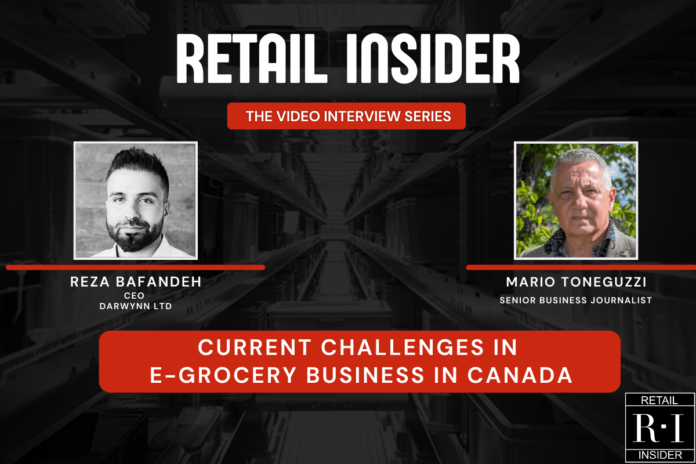
Bafandeh talks about why many models like click and collect continue to lose money, how companies can shift models to be more profitable, the lack of sustainability that creates plenty of waste, sunken costs for delivery companies, new technology to revolutionize e-grocery, and the history of Darwynn and what it does.
The Video Interview Series by Retail Insider is available on YouTube.
Connect with Mario Toneguzzi, a veteran of the media industry for more than 40 years and named in 2021 a Top Ten Business Journalist in the world and the only Canadian – to learn how you can tell your story, share your message and amplify it to a wide audience. He is Senior National Business Journalist with Retail Insider and owner of Mario Toneguzzi Communications Inc. and can be reached at mdtoneguzzi@gmail.com.
Also check out the other series offered by Retail Insider, including The Weekly podcast and The Interview Series, which are both available on Apple Podcasts, Stitcher, TuneIn, Google Podcasts, or through our dedicated RSS feed for Simplecast and other podcast players.
It is believed that Harry Gordon Selfridge popularized the phrase “the customer is always right” in the early 1900s and the motto was thereafter endorsed by countless retailers. While the statement was ambiguous (after all, the customer is not always right), it created a deeply entrenched habit in North American retailers. One that was taken to extremes by the likes of Nordstrom known for its famously liberal return policies to keep their clients happy.
Yet, today, this affirmation is put to the test. Retailers and service providers are now asking clients to behave. From signage in stores telling clients that rude or aggressive behavior will not be tolerated to businesses simply shutting their doors and only accepting customers by appointment, it may look like clients have lost the upper hand. Blaming their anxiety and frustration over pandemic related issues, they are being told to shoulder the responsibility for situations that get out of hand.
But it’s a little too easy to impute the issues on the clients. Doing so removes any service accountability on the part of the retailer; it ignores the fact that many of the frustrations experienced by clients are indeed the retailer’s responsibility, whether it is staffing, service quality or supply chain issues. Finally, it neglects to acknowledge the obvious fact: customers expect retailers to meet their needs, not the other way around.
Excellence in customer service is the retailer’s responsibility
We all agree that it is unacceptable for a client to demonstrate rude and aggressive behavior or to use abusive language towards staff. That’s a given. We have all encountered demanding and entitled clients who make unreasonable requests and then become angry when those requests are not met.
However, a recent study challenges the widely held assumption that clients are always the ones triggering bad behavior. On the contrary, it suggests that when tension escalates between a client and a staff member, it is often due to the employee’s attitude and not the reverse.
One well-known retailer once said that the best way to manage a conflictual situation with a client was to “kill him/her” with kindness. That may seem evident but it’s obviously not a mainstream attitude. Indeed, many articles such as this one have been published recently about clients conducting themselves poorly towards staff and retailers and other service-oriented companies pushing back with signage asking clients to be respectful to their “valued staff.”
Staffing, service quality, and supply chain issues are the retailer’s responsibility
We are by now well aware that the pandemic has exacerbated staffing, service quality, and supply chain issues.
Staffing has always been a problem for retailers and the multiple store closures has compounded it, driving countless employees to leave the industry entirely. Thus, many retailers have entire new teams. One retailer admitted in confidence that 75% of their managers have been less than a year in their role and were, for the most part, promoted from more junior positions. With little to no management training, the consequence is often a scenario akin to the blind leading the blind.
Service Quality. For about 20 years, the quality of service which results in customer satisfaction has been given increased attention. Retailers have worked towards enhancing customer satisfaction as the pivotal point to drive sales (Farooq & Salam, 2018).
Several studies in the past decade have noted that service quality is the main driving force behind increased revenue (Elivra & Shpetim, 2016). With better service quality, the reputation of the brand improves, and customers are more loyal.
However, the pandemic seems to have triggered an erosion of service quality in many places, mostly as a result of a well-documented labour gap, which, itself, results in a skills gap. We have all heard stories of poor or downright atrocious customer service. While most customers understand the issues currently faced by retailers such as lack of personnel and inventory problems, they do not appreciate retailers not taking responsibility for them and not trying to find solutions such as implementing better training programs. Instead, they are often being talked to rudely or dismissively, leading to further dissatisfaction. Ultimately, customers just want to be treated with empathy and be listened to. When their concerns are ignored or disregarded, they rightfully become angry.
Supply chain issues resulting from the pandemic are global and well documented. While some aspects of these problems are out of the retailers’ control, managing them as far as the clients are concerned is entirely their responsibility. Clients are aware of these issues. They just don’t appreciate a retailer who makes excuses instead of trying to empathize and find solutions. Indeed, retailers already know what products are out of stock, and they can anticipate the clients’ reactions and act accordingly. When staff acknowledge clients’ irritation and works with them to solve the problem, most clients leave on a positive note instead of being angry and frustrated.
When that is not done and when staff ignore it, the client is legitimately upset. Retailers need to come up with other options to not only keep the client satisfied but also to keep their businesses alive. It’s not by berating clients that this will happen. A sign warning customers about their “anticipated behavior” when they enter a store is a major deterrent and could drive them away, feeling unwelcome. After all, retailers need clients desperately and cannot afford, especially nowadays, to lose a single one.
Retailers must meet the clients’ needs, not the other way around
There was a time where the people who shopped in stores were the valued ones. Despite the growth of online shopping, retailers’ goal should always be to deliver the best client experience possible, regardless of their customers’ attitudes. The customer may not always be right, but in the aftermath of the pandemic, we need, more than ever, to address customer concerns, foster service quality and heighten the customer experience. That’s our job.
Solange Strom
Solange Strom, visionary and entrepreneurial retail executive with a track record of driving growth through employee-centric strategies. 25 years helming global brands such as Boiron, L’Occitane en Provence and Repetto Paris. Founder of the Radical Retail Method, a training program aimed at supporting retail organizations in their quest for excellence. To contact Solange visit www.solangestrom.com.
Photo: Frederic Dimanche
Frederic Dimanche is a Professor and Director at the Ted Rogers School of Hospitality and Tourism Management at Ryerson University. He has thirty years of professional and academic experience in service marketing and consumer behaviour, particularly in hospitality and tourism. His academic experience includes in the USA, France, and Canada.
Ahead of the highly anticipated in Toronto on September 28-29, an Innovation Briefing has been released for 2022. []
The report provides insight into how some of the biggest retailers are pushing the boundaries while seeing success with e-commerce at a time when consumers are shopping online more than ever. The report makes readers better equipped to implement and optimize similar strategies through learnings and experience.
Included is a discussion of how Canadian Tire is investing in its e-commerce — the retail behemoth has seen strong sales from its expanded online channel, as well as its membership program. Walmart Canada, which is investing hundreds of millions of dollars in its Canadian operations, is a point of discussion showcasing how over the course of a decade, it grew its online channel from almost nothing to billions of dollars in annual revenue.
The discussion then goes to to how Lowe’s and Google Cloud services are supercharging app development and how Loblaws is adapting to evolving shopping trends and eating habits — grocery retailers in particular have seen a huge spike in online business since the start of the pandemic.
Big-box retailer Costco, known for its busy stores, has seen its online sales rise drastically in the face of changing consumer — while inexpensive hot dogs are an attraction at stores, so is the convince of being able to shop from home. All of these retailers have shown tremendous innovation in developing and expanding online channels.
[]
The highly anticipated will take place September 28-29 in downtown Toronto at the located at 370 King Street West. Dozens of speakers have already been confirmed. []
eTail is a two day retreat designed to help businesses increase profits with action-packed strategies and connections made with the top mind’s at Canada’s most successful retailers.
Download the to see the completeand inspiring sessions at this year’s eTail Canada Conference, we hope to see you there.
Retail Insider is streamlining its Canadian retail news from around the web to include a handful of top news stories that can be viewed quickly during the day. Here are the top stories from the past 24 hours.