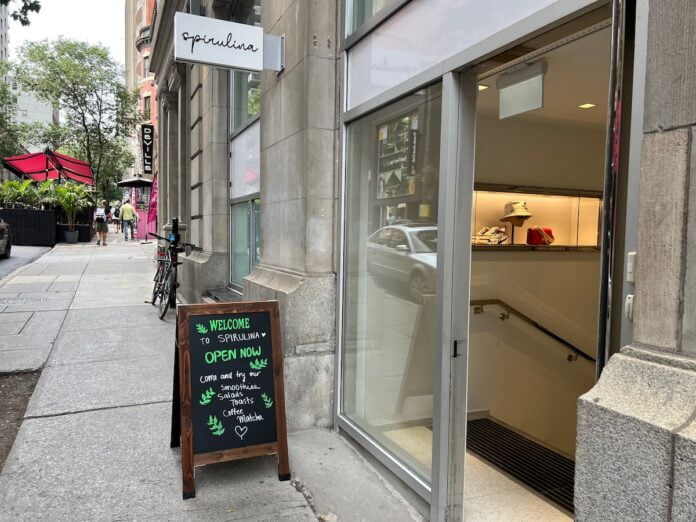
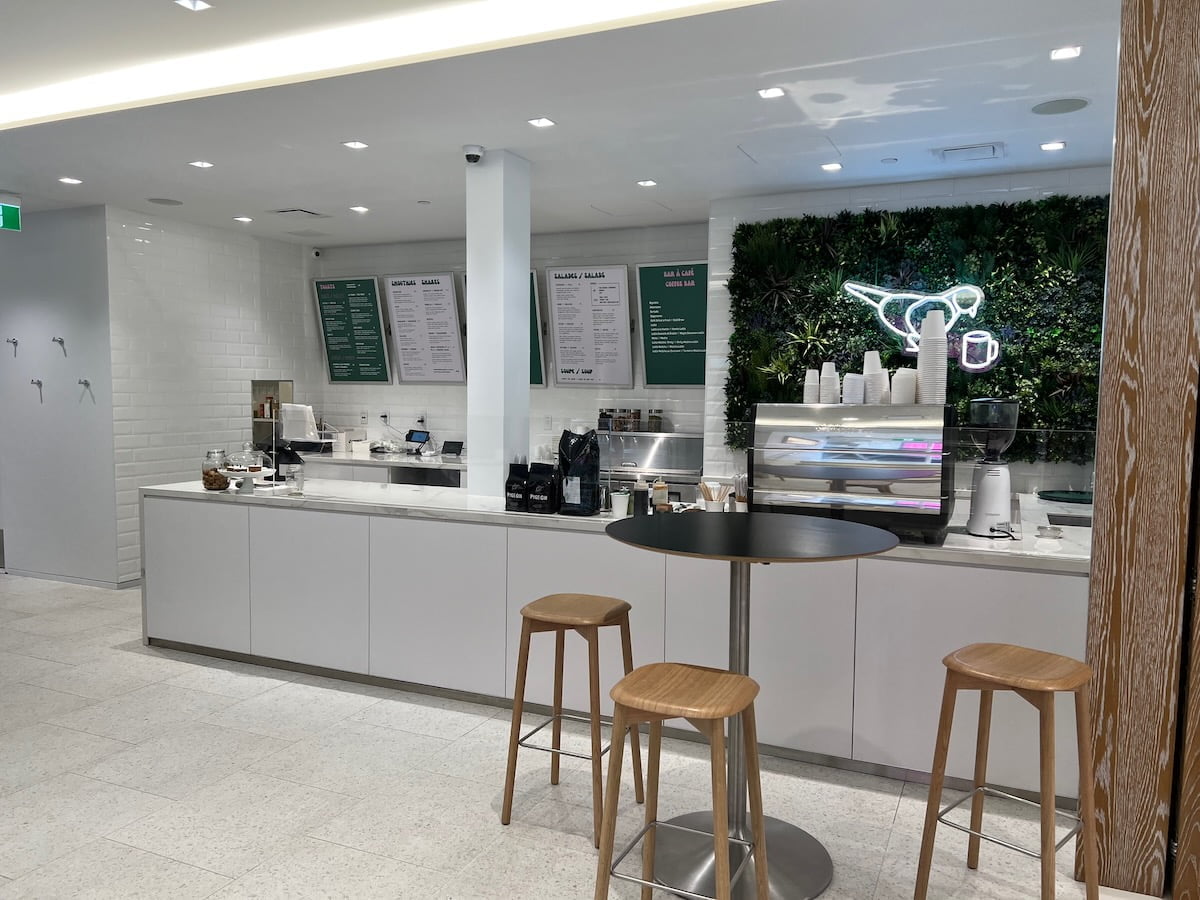
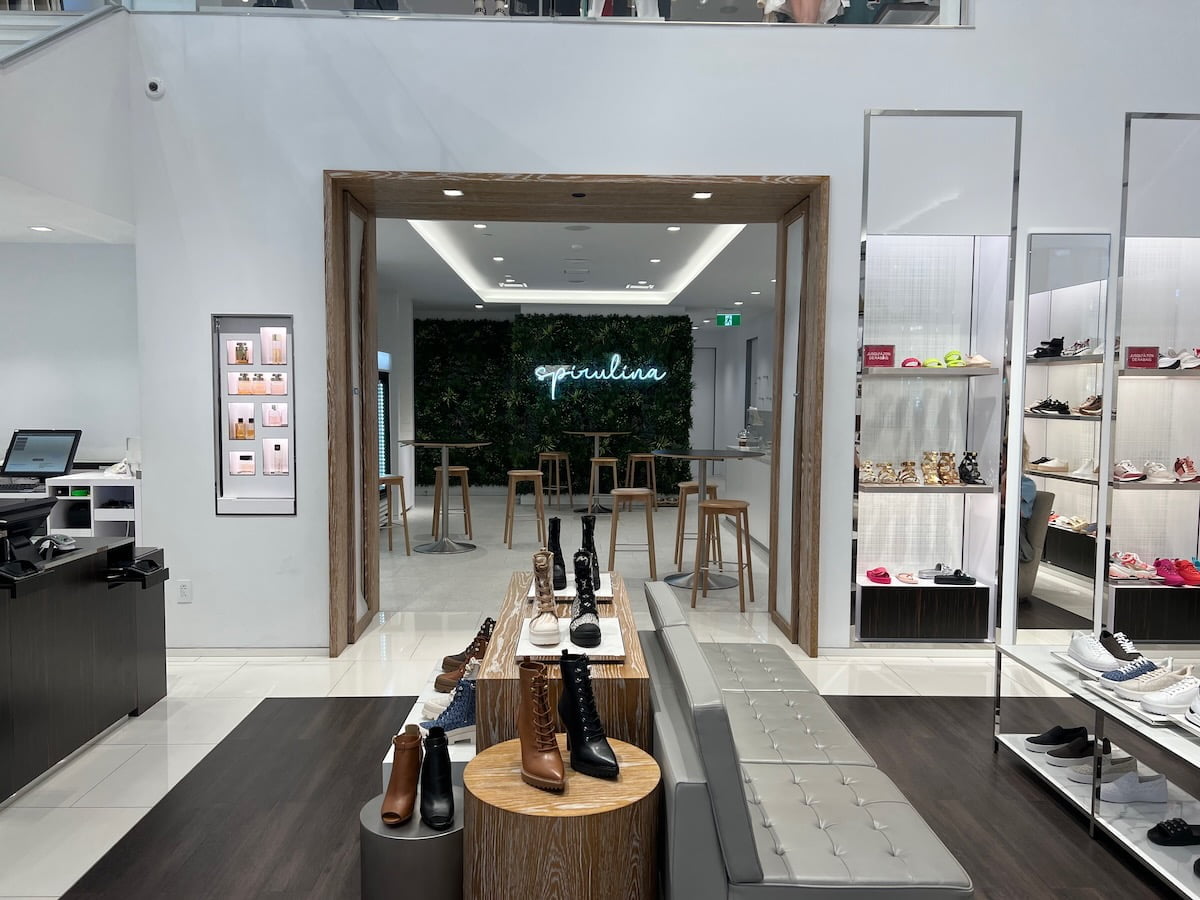
Michael Kors is partnering with Spirulina, a health bar and café, at its flagship location at Ste. Catherine Street in Montreal. The partnership includes a new foodservice concept within the Michael Kors store that opened in downtown Montreal in late 2019.
Spirulina is a relatively new concept, having launched with its first location in Montreal’s affluent Westmount area in 2020. Its intention upon its founding was to provide quick healthy foods after finding a gap in the industry.
“My goal was to help people find healthier options when they are away from home. No one should have to compromise or be forced to eat unhealthily when on the go, so our menu offers a wide variety of simple but healthy food items made with minimal ingredients,” says Jessica Power, the founder of Spirulina.
Its menu offers a variety of choices such as salads, smoothies, juices, coffee, and more. Currently there is no exclusive menu to the new location; however, Power said they are excited to meet customers and will adapt the menu to suit their needs.
“It Was a Perfect Fit”
Spirulina at Michael Kors (Image: Spirulina)Spirulina at Michael Kors (Image: Spirulina)
“The gorgeous Michael Kors Store on Sainte-Catherine Street is not only the Canadian flagship, but it was a perfect fit. We are confident that this will be the best partnership Michael Kors has had.”
Power said customers should expect “a fabulous one-stop shop location for all your fashion and healthy food needs.”
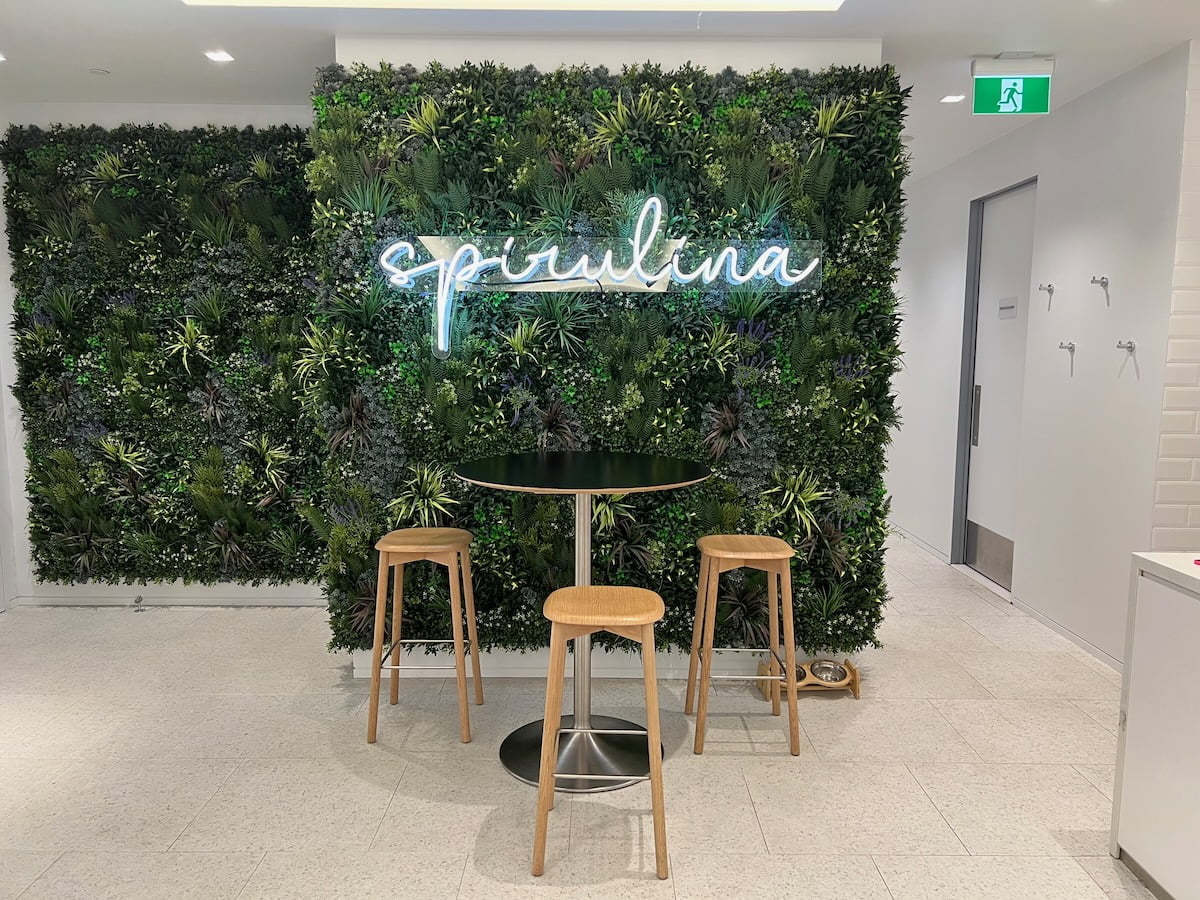
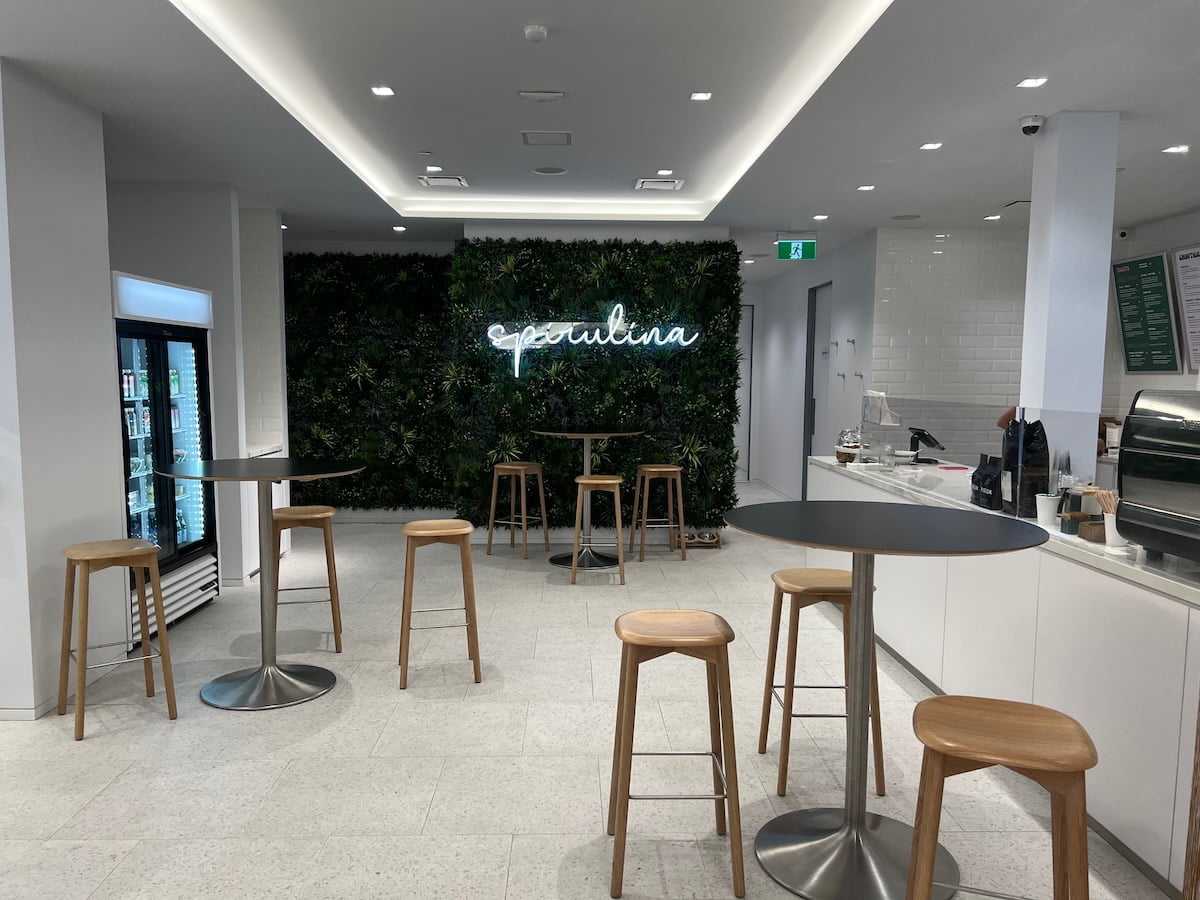
Spirulina offers a large luxurious café which includes stylized seating, green textured walls, and also offers “light bites” such as green juice and avocado toast to “let customers unwind from the bustle of the commercial district outside.”
Power said the goal of partnering with Michael Kors is to expand with her brand to bring quick healthy meal options to all Canadians.
How Spirulina Started
Spirulina at Michael Kors (Image: Spirulina)Spirulina at Michael Kors (Image: Spirulina)
After noticing a gap in the food industry with healthy to-go foods, Power decided to open Spirulina. She noticed the issue once she started having digestive health challenges, which uprooted her original career. Before becoming a Naturopath, Power graduated in Business and started a book-keeping and payroll business; however, after not getting any answers about her health challenge, she took it as an opportunity to turn it into something good – to start Spirulina, a healthy café.
After less than a year of being open, Michael Kors approached Power with a partnership offer.
“I realized quickly that there was a huge gap in the market when it came to healthy options. I knew that I could use my knowledge to help a wider audience, which is why I launched Spirulina. Less than a year after opening our first location in Westmount, we were approached by Michael Kors to begin a partnership. We knew this was an opportunity of a lifetime and could not wait to partner with a brand that truly understood our vision.”
The Michael Kors flagship store at 1133 Ste-Catherine Street West spans 9,000 square feet over three floors boasting a vast assortment of accessories, jewellery, footwear, and fashions for men and women. Prior to opening the flagship, Michael Kors had a concession presence at Ogilvy in Montreal — that concession shut prior to a renovation and expansion that created the current 250,000 square foot Holt Renfrew Ogilvy store.
Hearing directly from senior retail leaders is always the best way to understand their thinking and plans for their businesses. But, it is often a challenge to get direct access to them.
This fall, Retail Council of Canada (RCC) is bringing back the highly popular, often sold-out, In Conversation with Retail Leaders in Canada series to help retail partners (and for one event only, other retailers), learn, from senior executives themselves, about their perspectives, company business strategies, and specific plans for the future.
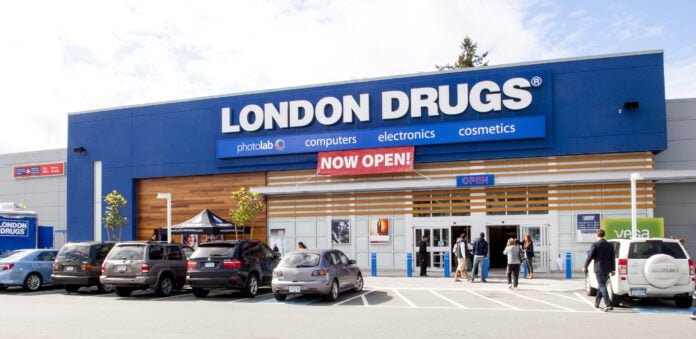
On September 22, 2022, Clint Mahlman, COO, London Drugs, convenes for an information-packed, in-person conversation with RCC’s President and CEO Diane J. Brisebois. (This is the only event in this series that is open not just to the vendor and supplier community, but also to retailers.)
In this session, Mr. Mahlman will speak to the state of vendor and retailer relationships in Canada post-pandemic, and the status of supply chain planning. Vendors and retailers require strong partnerships for mutual success and Clint will discuss the value of being “our vendor’s best retailer” in the London Drug’s business strategy. He will also discuss: the long-term outlook on supporting local governments in the development and production of “made in Canada” vaccinations and pharmaceuticals, how retailers can work to reduce criminal and violent behaviour in-store, the intersection of digital and privacy in retail, and the variety of impacts on sales including supply chain challenges, inflation and more.
Mr. Mahlman brings over 36 years of retail experience and success to London Drugs and has made a lasting impact on many aspects of the business. From part-time stock person to President, Clint has served in a wide range of store and head office roles, enabling him to develop a 360-degree perspective of the business. He is known for his passion for understanding how customer and employee behaviour drives merchandising and operations.
The event will take place at the Toronto Congress Centre. Also, senior London Drugs team members will be present to ensure this is an unparalleled opportunity for business networking and question answering.
Register here for the September 22, 2022 In Conversation with Clint Mahlman event. Also visit https://www.retailcouncil.org/events/ to see more RCC events planned for Canada’s retail community.
Other In Conversation with Retail Leaders in Canada guests this fall include:
Grocery prices are hitting everyday shoppers where it hurts these days: right in the wallet.
And few things influence shopper habits like price, according to a report by Field Agent, a company that leverages crowdsourcing and mobile technology to collect retail audits and conduct mystery shops for retail operations.
“The takeaway for CPG (Consumer Packaged Goods) brands: shoppers are increasingly open to purchasing from competitors. And when loyalty is low, every sale counts,” said Jeff Doucette, General Manager, Field Agent Canada.
“But shoppers aren’t the only ones tightening their belts. As sales dip for many brands, the cost of boots on the ground to fix pricing errors and check out-of-stocks can feel overwhelming. But here’s the good news: low-cost, high-yield solutions for these challenges (and many more) exist to help every CPG brand weather inflation. Companies of all sizes, from Fortune 500 juggernauts to mom-and-pop brands, trust Field Agent to inspect prices, double-check out-of-stocks, and even boost e-commerce sales. All with just a few clicks.”
Image: Field Agent Canada
In Canada, the Consumer Price Index rose 7.6 per cent on a year-over-year basis in July, down from an 8.1 per cent gain in June. The deceleration was a result of slower year-over-year growth in gasoline prices, according to Statistics Canada.
The federal agency said prices for food purchased from stores increased more on a year-over-year basis in July (+9.9 per cent) than in June (+9.4 per cent). Prices for bakery products (+13.6 per cent) continued to rise at a faster pace as wheat prices remained elevated. Higher input costs and global supply uncertainty related to the Russian invasion of Ukraine continued to put upward pressure on global wheat prices amid an already constrained supply, explained StatsCan.
Other food items also exhibited faster price growth, including non-alcoholic beverages (+9.5 per cent), sugar and confectionery (+9.7 per cent), preserved fruit and fruit preparations (+10.4 per cent), eggs (+15.8 per cent), fresh fruit (+11.7 per cent), and coffee and tea (+13.8 per cent), it added.
Field Agent asked 2,739 shoppers about how inflation has influenced and altered their grocery shopping habits over the last three months.
Shoppers Drug Mart, Winnipeg, Manitoba (Image: Field Agent Canada)
“From a retailer perspective, we’ve really got to think about having those alternate options for people that are on budgets,” said Doucette.
“If you have $200 to spend on groceries, that’s all you have. So finding options of smaller pack sizes, formats that can help people save a little bit of money from an absolute price point basis. I think that’s the thing we’ve been missing in so many of the conversations about inflation. There’s so many Canadians that their budget for groceries is a fixed dollar amount. It’s not a flexible amount necessarily.
“So if they have smaller pack sizes they can still buy affordably. And private label brands I think are going to be important even though they’re also under pricing pressure and price increases as well. It’s a complicated story but consider that overall consumer budget as a dollar amount and try and help them drive value.”
The survey said 95 per cent of shoppers surveyed are well aware of higher prices, and over a quarter report paying “much higher” prices for their groceries. It’s a pain point many can’t afford to ignore.
Sobeys in St. John’s (Image: Field Agent Canada)
The survey found that 12 per cent of these shoppers report an increase in grocery stock, and about 31 per cent say they haven’t noticed any significant change at all. But a majority (57 per cent) continue to perceive a drop in grocery stock compared to three months ago.
“Why is this an important question for CPG brands? Simply put, customer loyalty drops with the purchasing power of their dollar. Translation: if your product isn’t on-shelf, penny-pinching shoppers are more than happy to swap for a competitor—especially if they’ll save a few bucks doing so,” added Doucette.
The report also found that 53 per cent of shoppers said they are less likely to grab an unplanned treat while grocery shopping and 19 per cent are much less likely to do so.
“For shoppers, impulse purchases are an afterthought. But for many CPG brands, they’re the prize-winning bread and butter. When a dollar just doesn’t go as far as it used to, frivolous purchases are the first to be kicked to the curb,” explained Doucette.
Dollarama on King West (Image: Field Agent Canada)
“Inflation isn’t only affecting what goes into physical shopping carts—digital carts are also feeling the pressure. 58 per cent of our shopper sample said they buy groceries online at least occasionally, and seven per cent make such purchases at least once a week. It’s a dirty little secret, but what’s in-stock on grocery store shelves may not be available on retailer apps for pickup or delivery.
“A majority of shoppers have noticed a downward trend in availability as they shop for groceries online or in-app. For CPG brands, that means more substitutions or missed sales.”
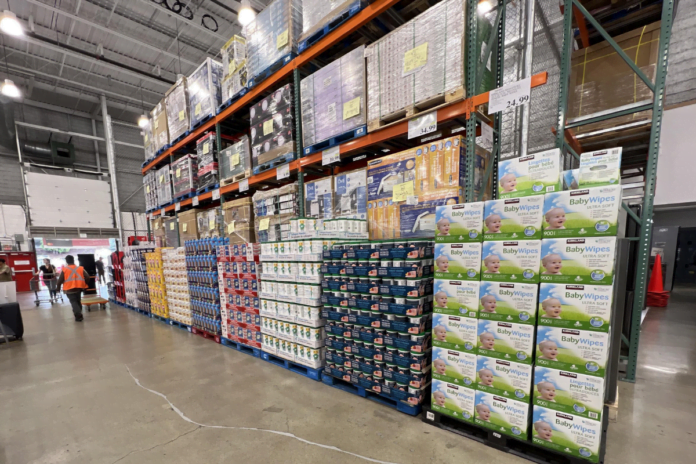
The report also found that 82 per cent of shoppers say they’ve adjusted their grocery-shopping habits due to inflation. It said 74 per cent of shoppers say they’re switching brands to save costs, and 75 per cent are buying different groceries altogether (less meat, for example). Also, 23 per cent say that inflation has even influenced them to pick up a membership at a warehouse club like Costco.
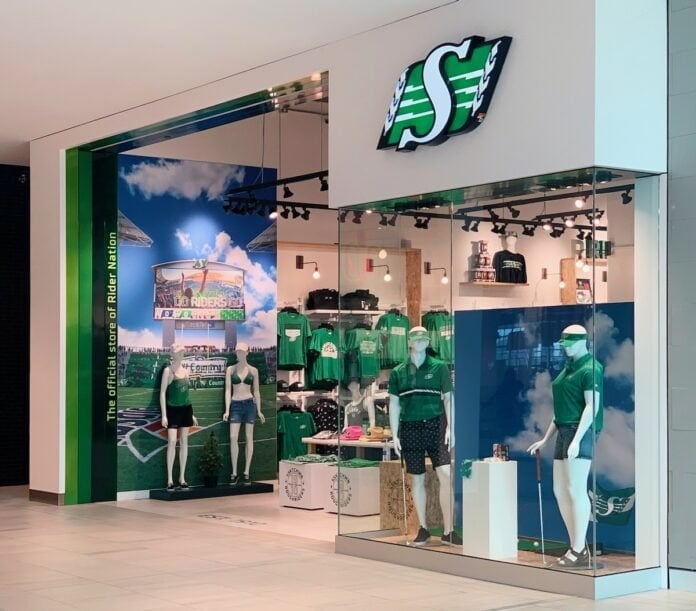
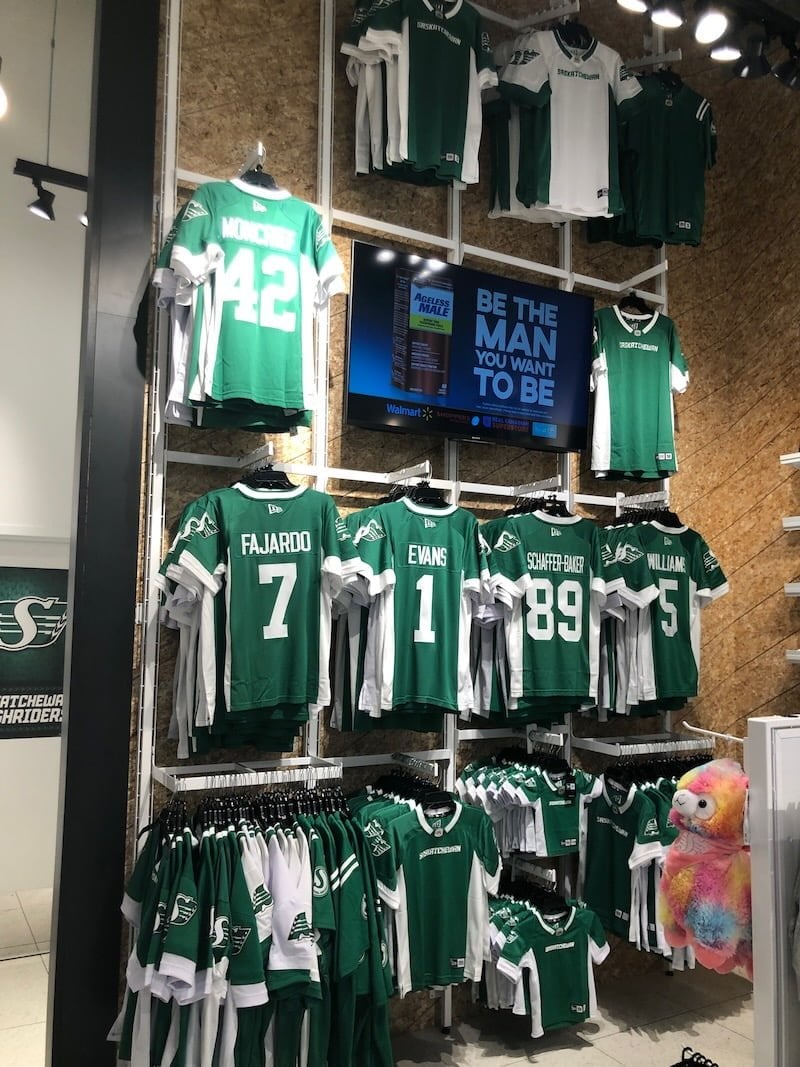
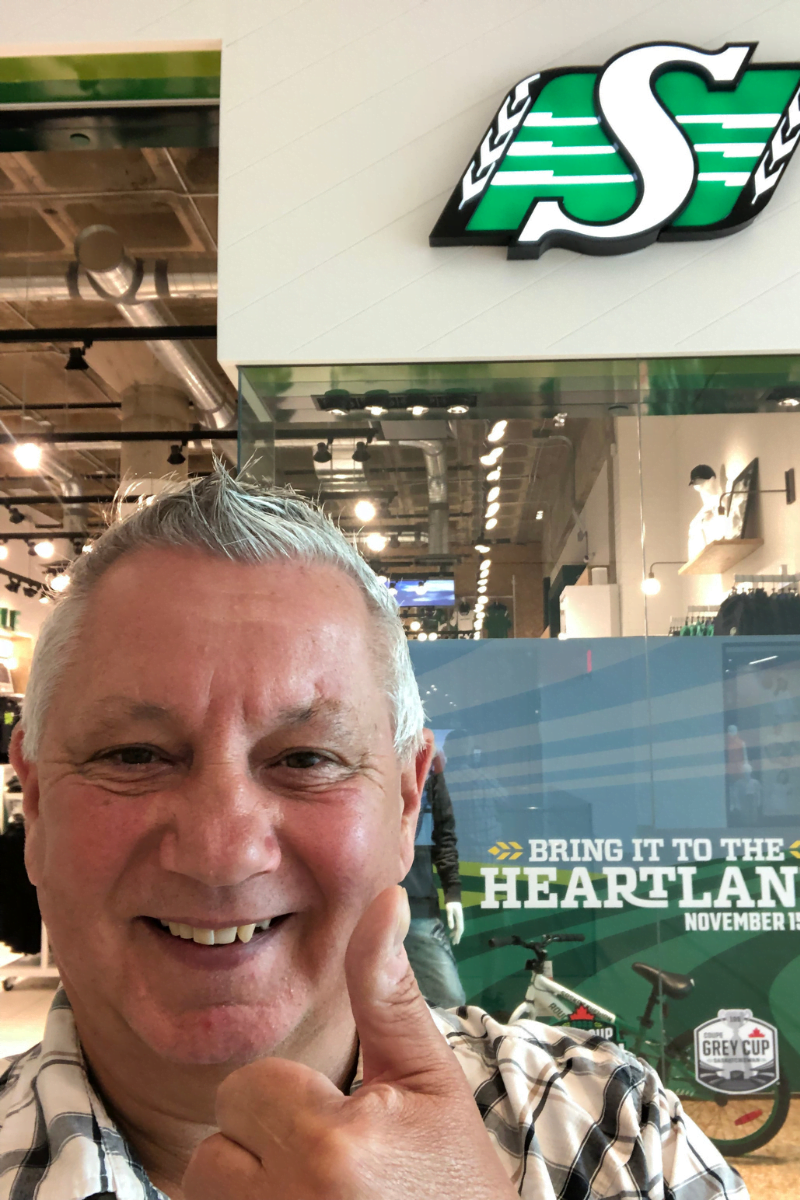
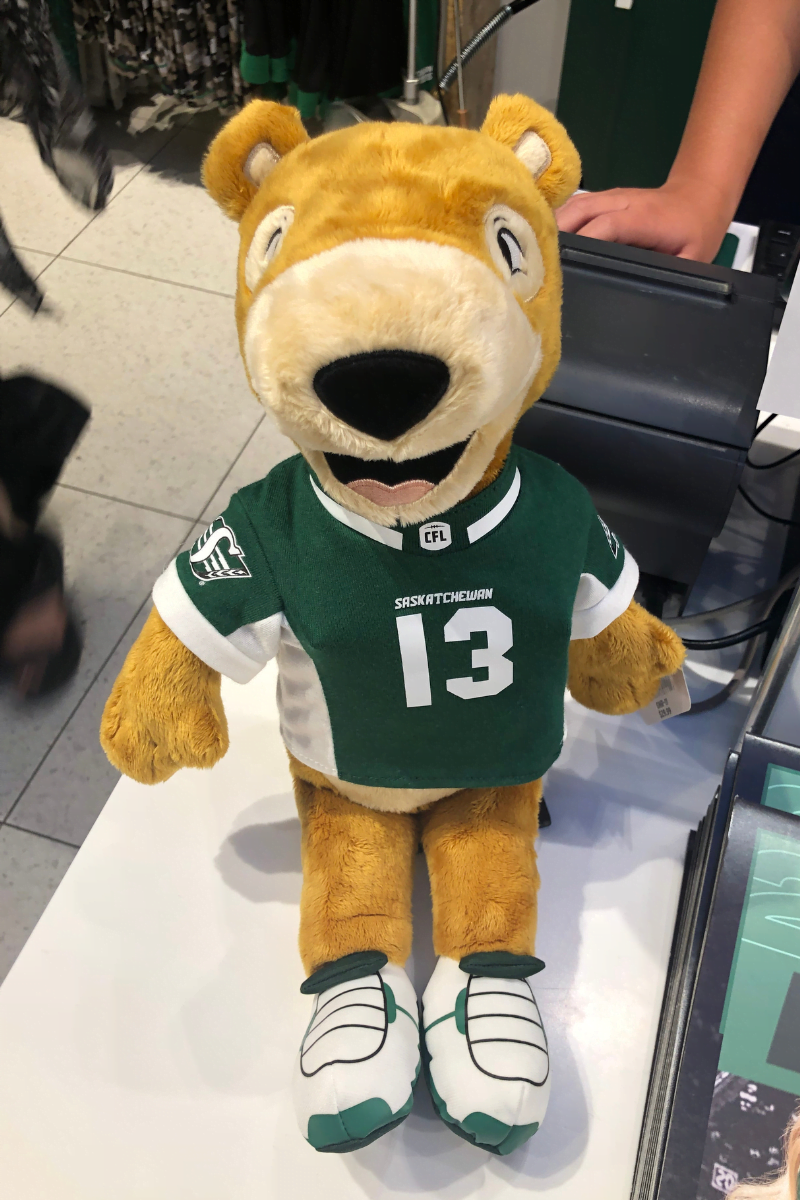
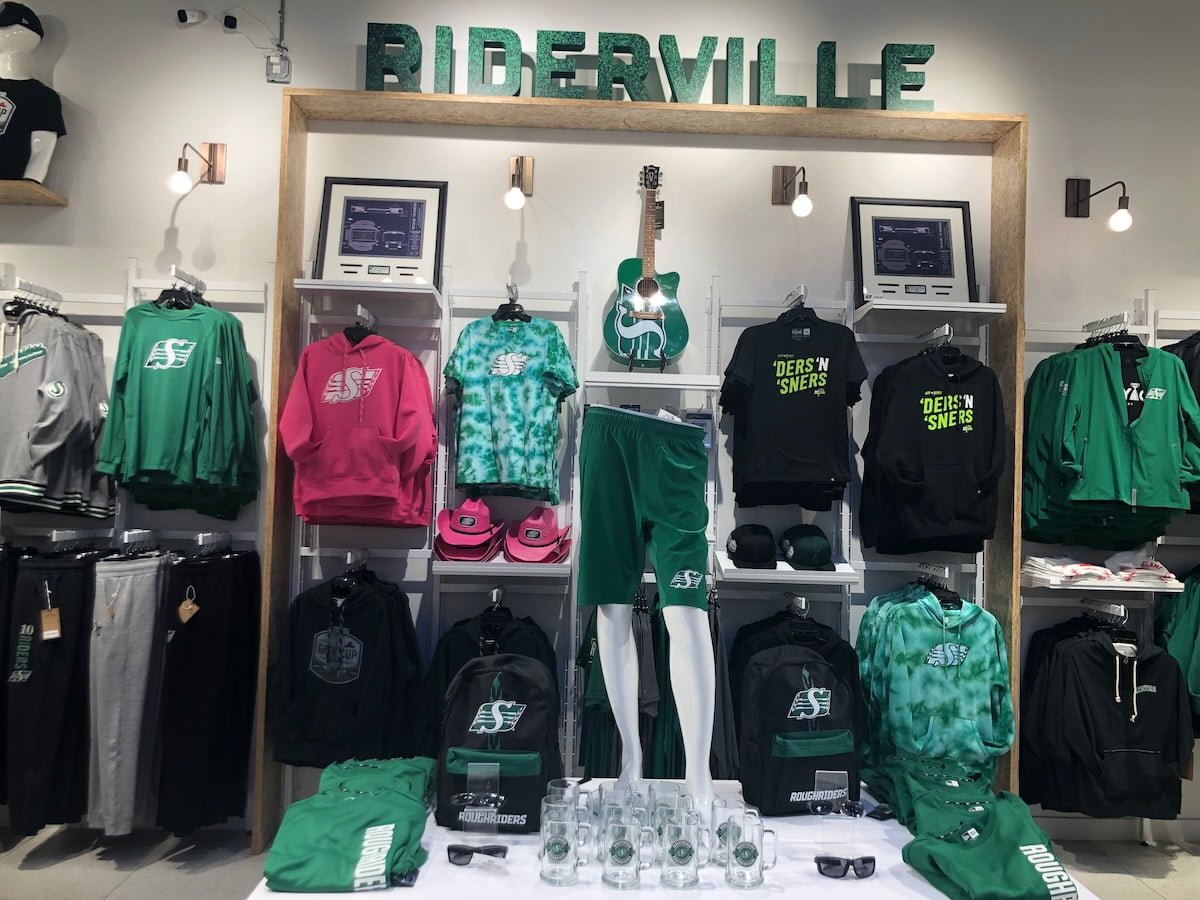
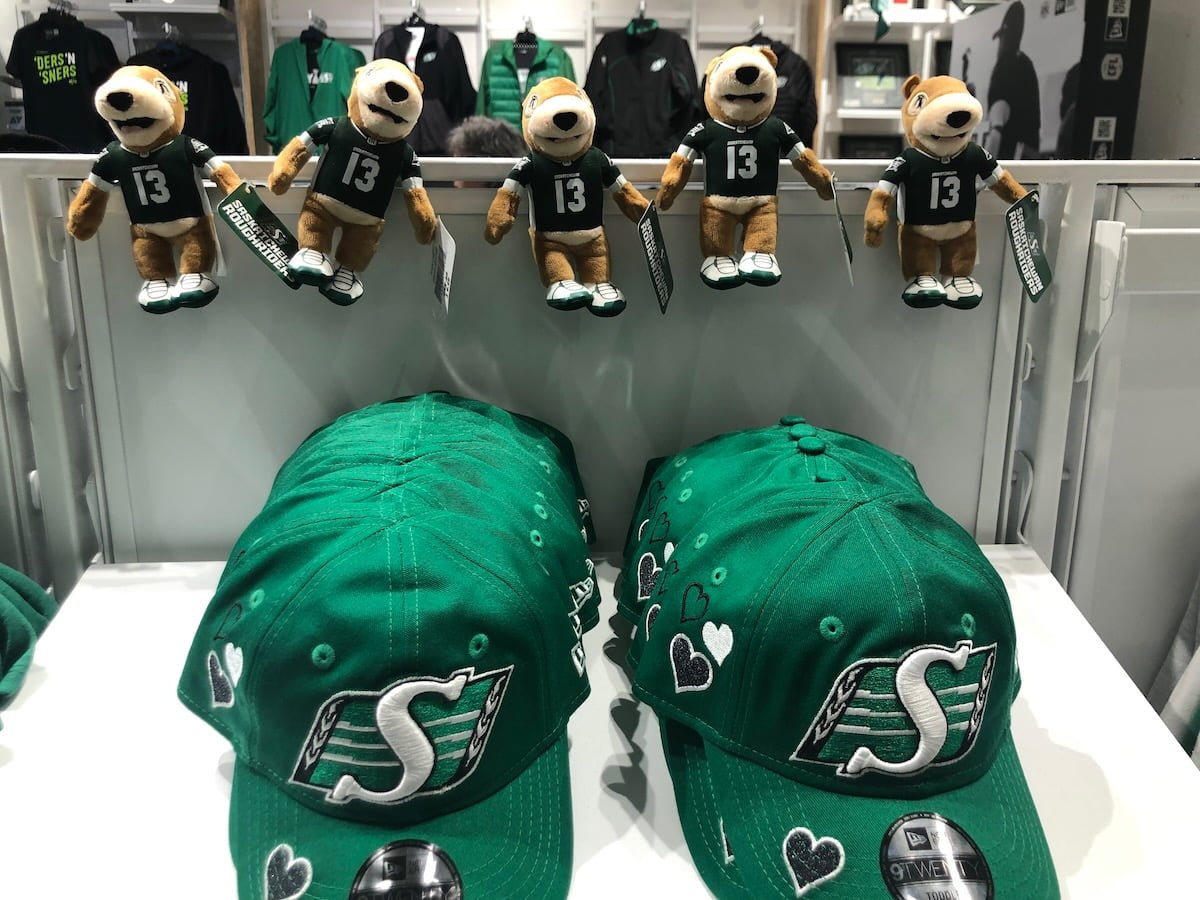
Rider Team Store at Midtown (Image: Nancy Keumper / Saskatchewan Roughrider Football Club)
Football is a religion in Saskatchewan.
Wherever you go in the province you are likely to see an item of clothing or object with the green and highly identifiable logo of the Saskatchewan Roughriders of the Canadian Football League.
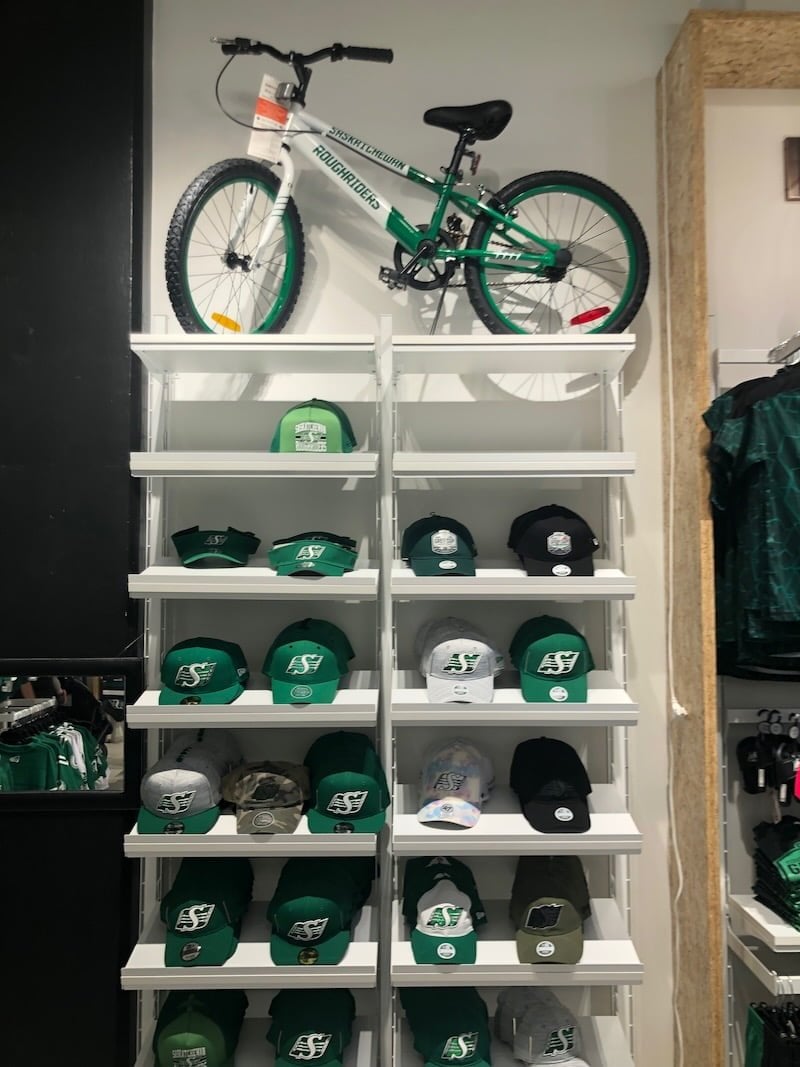
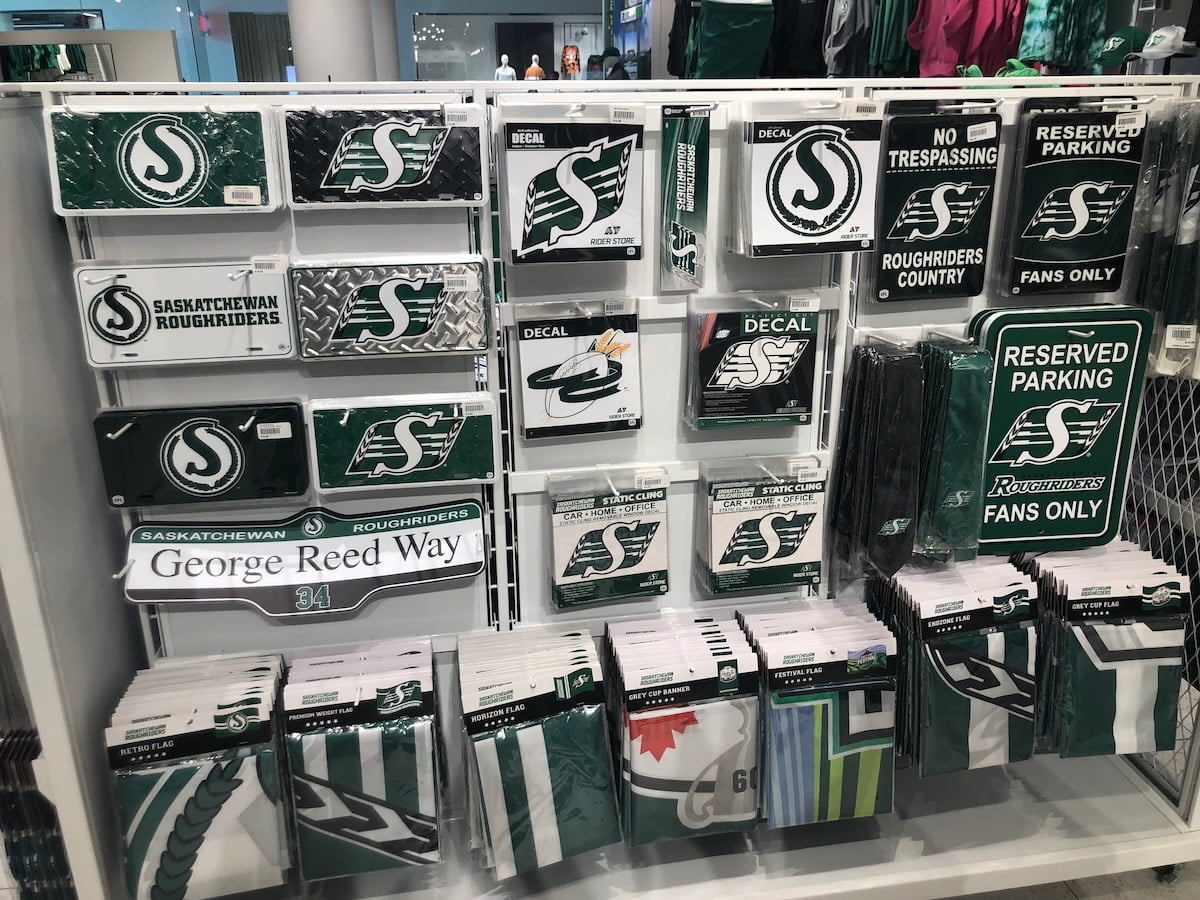
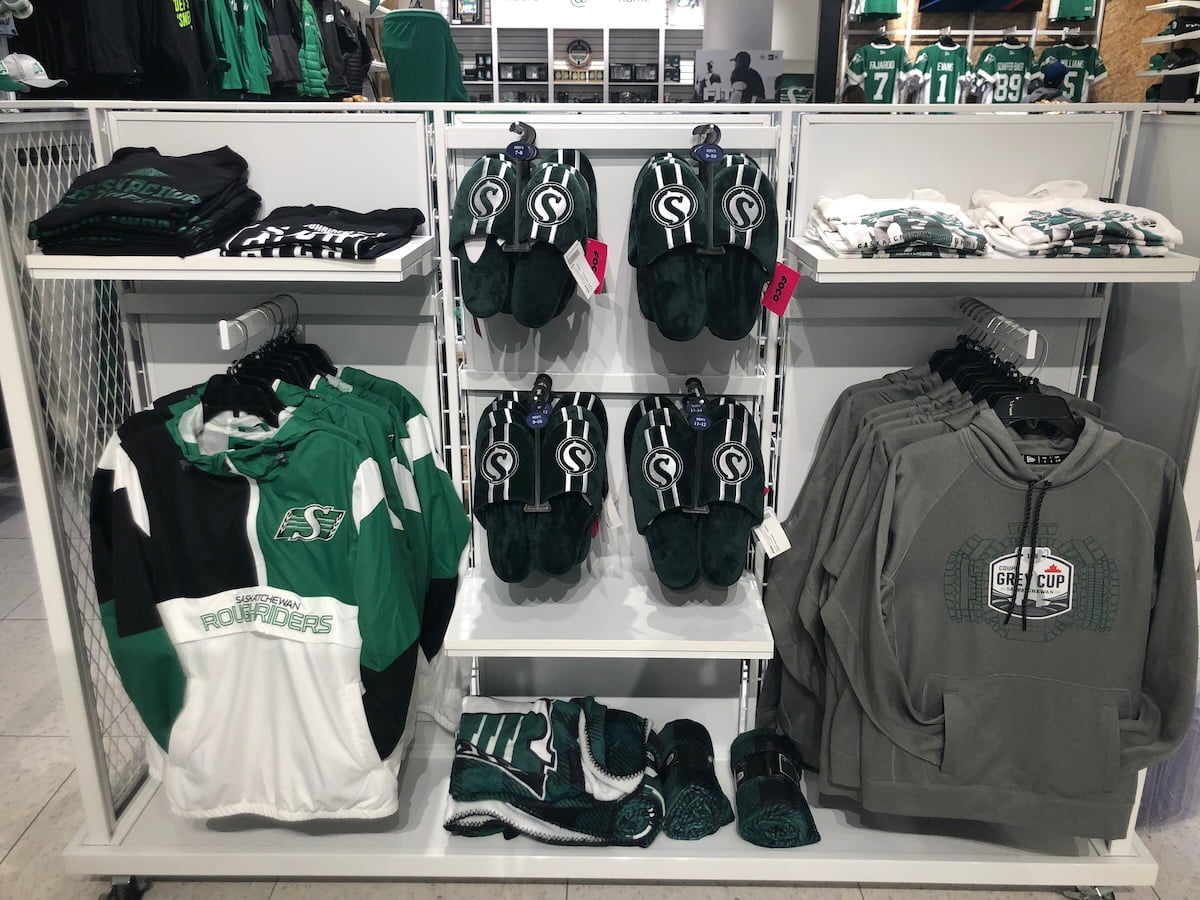
To make Rider merchandise even more accessible to people in the province, a store opened in the Midtown Plaza shopping centre in downtown Saskatoon in July 2020 joining The Rider Store at Mosaic Stadium in Regina to sell all things Riders – from jerseys to pins and decals to all sorts of different novelties.
All sporting the Rider green and the team’s logo.
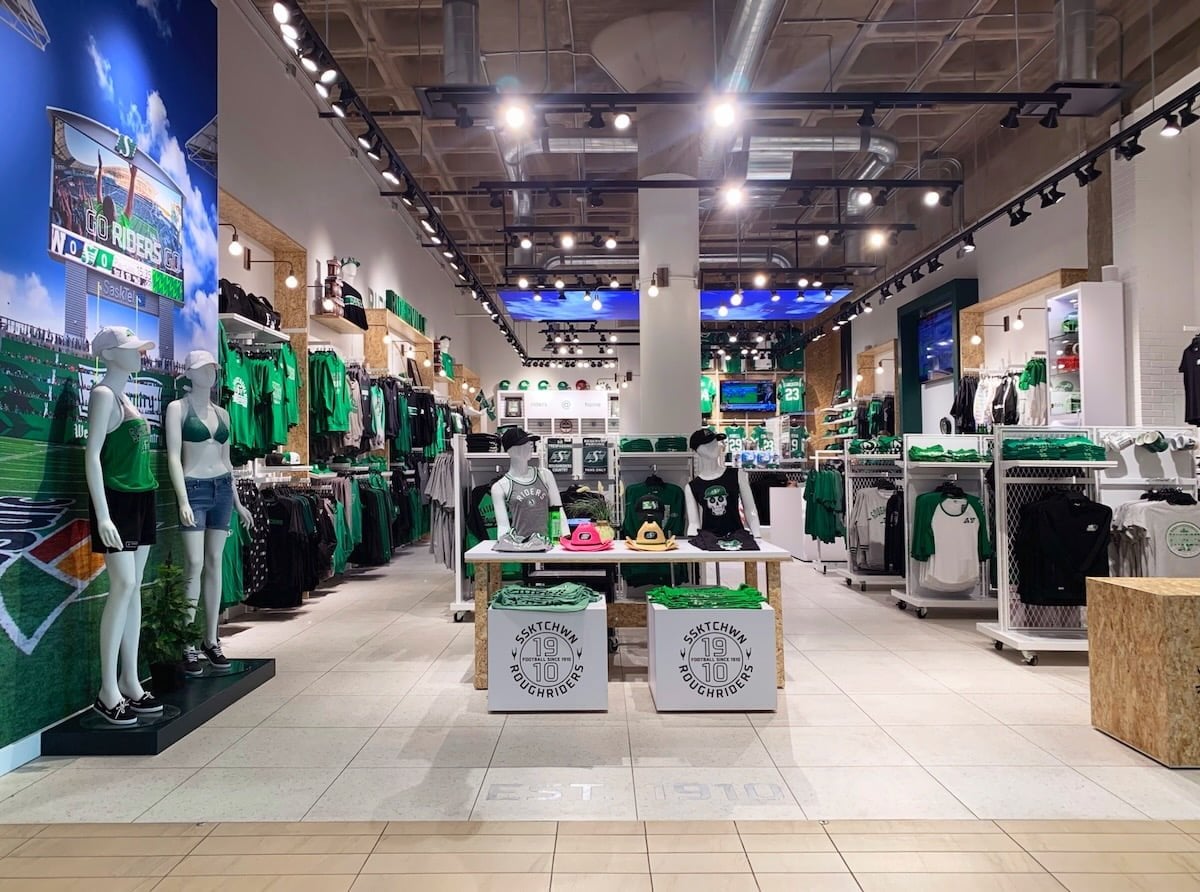
Rider Team Store at Midtown (Image: Nancy Keumper)
The store at Mosaic Stadium opened in 2017 when the Stadium itself opened. It’s just over 5,000 square feet. The Midtown Plaza store is just under 1,900 square feet.
Anthony Partipilo, Chief Brand Officer for the team, said the Riders’ brand has been built over decades of loyal fans riding the waves of boom and bust.
Anthony Partipilo
“The Rider fans have always been incredibly resilient people. Hard working, roll up your sleeves, salt of the earth folks that also want to never give up, regardless of the obstacles thrown at the club over many, many decades. What was there to pick up the team was Rider Nation,” he said.
“So this really is about what are we doing at a time where the Roughriders’ franchise has never been better financially. Never been on more sound footing, plays out of the most sophisticated and beautiful stadium in the whole country. The flagship really of the CFL is the Saskatchewan Roughriders.
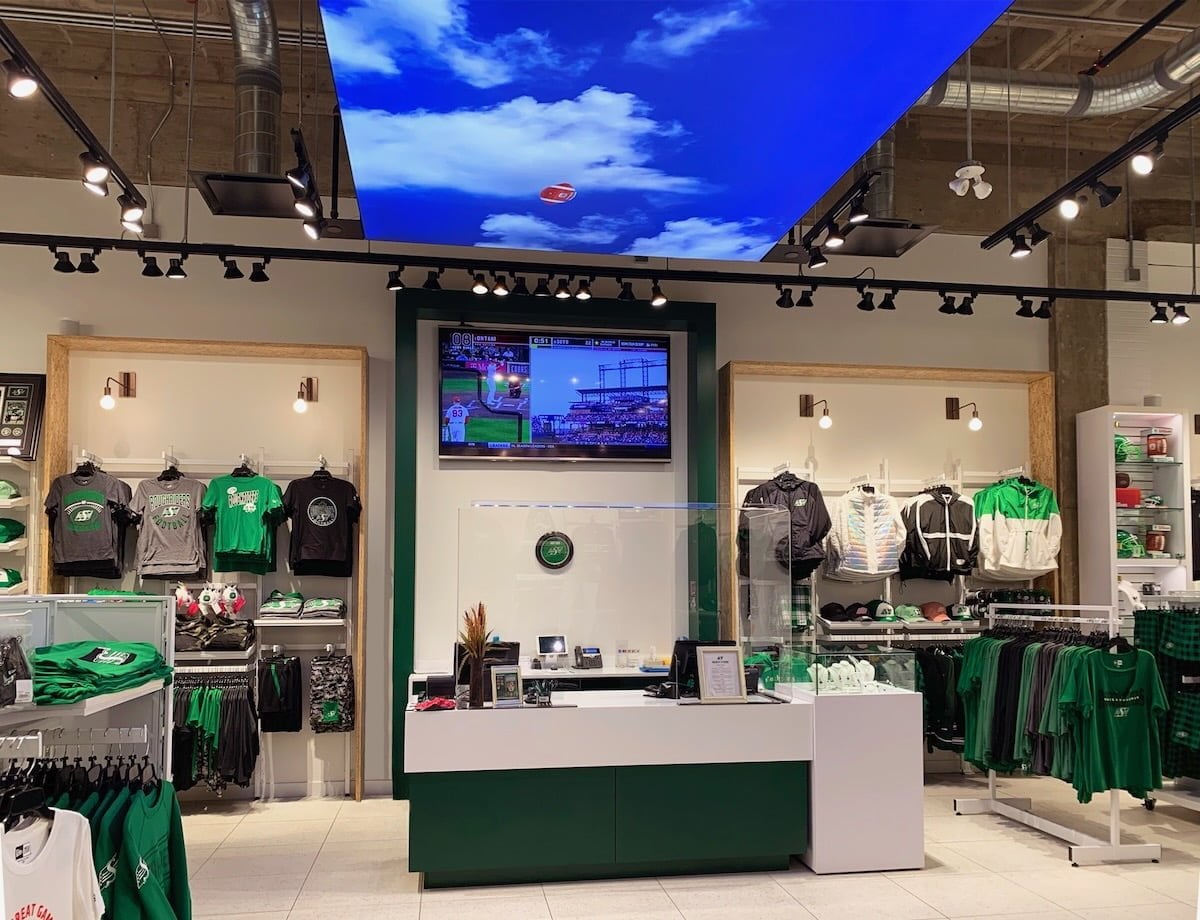
Rider Team Store at Midtown (Image: Nancy Keumper)
“And so what do we do to sort of as a tribute to Rider fans, how do we bring the Rider brand to the rest of the country so that they can also share in what we are very, very proud of here. A lot of what our retail strategy is is not only to ensure that Rider logo, that green and white, is spread out throughout the entire province as much as possible, but also throughout the entire nation and in fact internationally because Rider fans remind us constantly that they’re everywhere, not just in Saskatchewan.”
Partipilo said the online store has also been very successful for the Riders particularly throughout the pandemic and it continues to have very strong sales.
“While oftentimes we don’t think about the online presence as being a retail channel, it’s actually a very, very strong channel for us. It’s always been for the Rider brand about leadership. The Roughrider fans are not satisfied with second best. They want to be the best at everything so it’s imperative on us to be the best at everything we do and retail and merchandise is nothing short of the best in the league. We know that regardless of the size of the markets that we compete with,” he said.
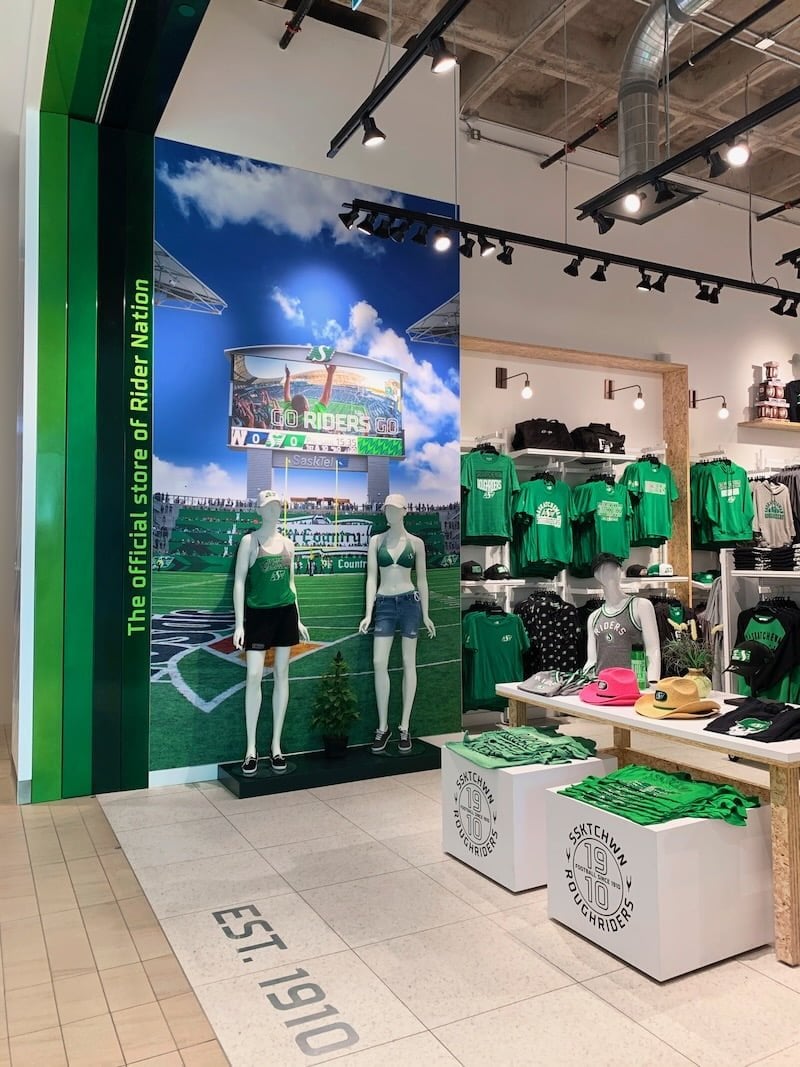
“The brand needed to be a leader. The brand needed to be proud of Saskatchewan. And part of our strategy in the new retail store design, which a lot of credit goes to Mark (Habicht, Director of Retail for the club) for when we built the Stadium he re-designed the store footprint and it’s a beautiful store if you’re at Mosaic Stadium. We felt that we started down that path and the store at Midtown was an opportunity to build on that and create an experience that not just Saskatchewan fans, Rider fans, will be proud of the brand but because the brand resonates so powerfully everywhere we felt that Midtown is an attractive mall location for tourists. A lot of people who visit the city will go through that mall.”
Rider Team Store at Midtown (Image: Mario Toneguzzi)
Rider Team Store at Midtown (Image: Mario Toneguzzi)
Habicht said the Riders made their first foray into Saskatoon in 2009 and Midtown was the mall it had targeted as its the premier shopping centre in the city and in the heart of the city. But for a variety of reasons that didn’t work out. What followed was a presence in a couple of other malls in Saskatoon.
“But the dream was always to kind of have a central location and when the opportunity to go back into Midtown came up, we really started re-evaluating what we wanted to do and the way we see retail going in the future, we thought that building what we’ll call a proper flagship store right in the heart of the city just made sense,” he said.
“We’re trying to create a really great shopping environment . . . The new Stadium afforded us this luxury to be able to have a central location in Regina and another one in Saskatoon.”
Rider Team Store at Midtown (Image: Nancy Keumper)
Rider Team Store at Midtown (Image: Nancy Keumper)
“Anthony Partipilo was our client when he was with the Toronto Blue Jays and we did for him the Stadium shop and we did the flagship CF Toronto Eaton Centre shop. He then left the Toronto Blue Jays and was hired by the Saskatchewan Roughriders to kind of do the same thing but also to be head of the marketing. And that’s what he’s done, driving access to fan base material, fashion items and memorabilia to help build the brand,” said Lacroix.
“And the Saskatchewan Roughriders have an incredible fanatic following group of customers . . . We want to mirror the emotional connection the fans have with the brand. We want to capture that sense of excitement and also these fans know the colours of the brand and it allows them to make that connection from a brand equity standpoint.”
The 109th Grey Cup will be played this year on Sunday November 20 at Mosaic Stadium.
Rider Team Store at Midtown (Image: Mario Toneguzzi)
Rider Team Store at Midtown (Image: Mario Toneguzzi)
Habicht said retail sales for the Riders have been quite strong this year.
“Even last year was surprisingly good in the shortened season and it’s really carried into this year. We’ve been extremely happy. Our average sales are up. Our numbers are up across the board. It’s been very, very strong and we really see that momentum. And obviously we’re hosting the Grey Cup this year so we really see that momentum carrying through all the way to the end of the year,” he said. “So we’re really excited about the opportunity here.”
Habicht said the club has thought about expanding its retail presence to other Saskatchewan markets but with the way the online channel has taken off that’s probably where the club’s focus will be in the next few years.
“But never say never. I’ve been here since 2009 and certainly we’ve heard from our fans all over the province in places like Yorkton and Moose Jaw and Prince Albert and they all would love to have a Rider store. In fact, I get phone calls on a regular basis from places like Medicine Hat (Alberta) who would love to have a store in Medicine Hat but as of right now I think we’re pretty happy with the strategy we’ve taken on,” he said.
“The store (in Regina) and the store in Midtown better reflects where we’ve taken the merchandise over the years. In early years it was maybe a little bit more fan gear. Now it’s much more fashion focused, much more targeted to everybody in the family. Certainly more targeted to women. We’re seeing huge growth in the women’s sector and sales in the women’s area. Midtown reflects that so much better in terms of the product and the customer that we’re really looking for.”
Rider Team Store at Midtown (Image: Mario Toneguzzi)Rider Team Store at Midtown (Image: Mario Toneguzzi)Rider Team Store at Midtown (Image: Mario Toneguzzi)Rider Team Store at Midtown (Image: Mario Toneguzzi)
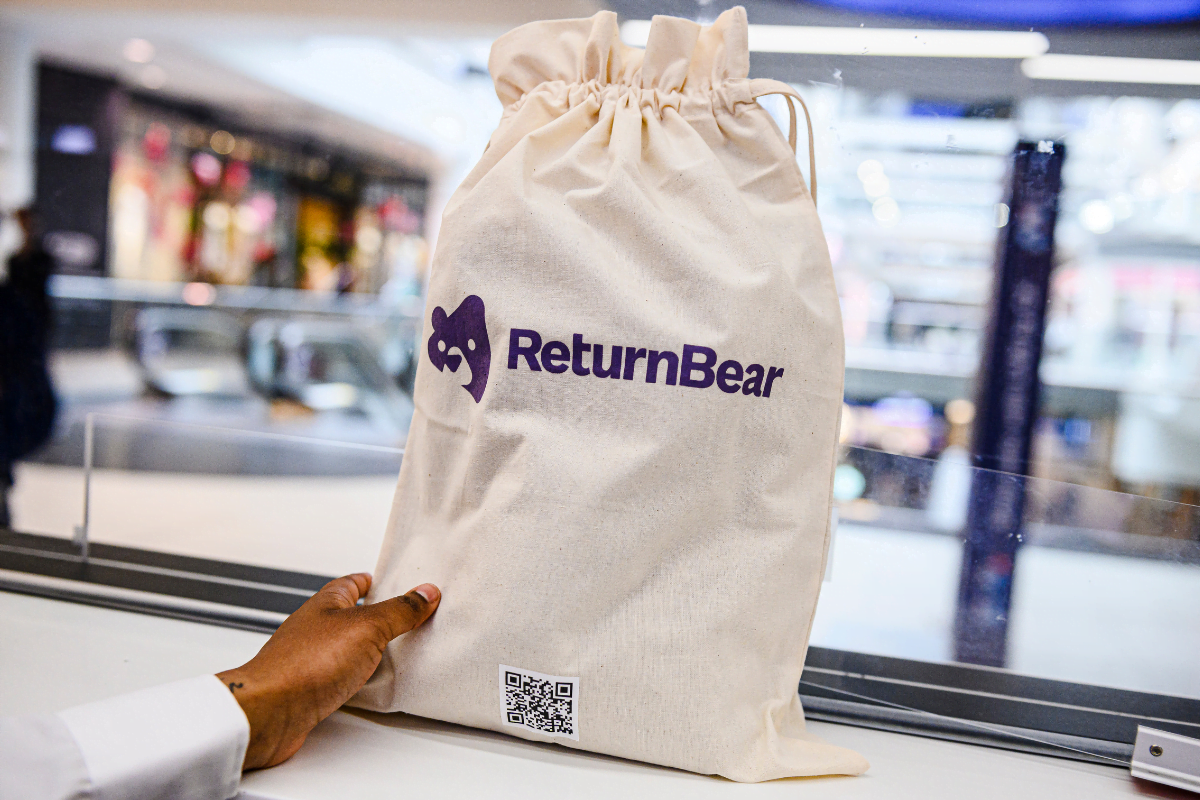
New data by The Angus Reid Forum, commissioned by ReturnBear, Canada’s first end-to-end returns solution, indicates that 46 per cent of Canadians aged 18-34 have lost money from keeping unwanted items they didn’t return since the pandemic.
Other key findings include:
34 per cent of Canadians have lost money from keeping unwanted items they didn’t return since the pandemic. 19 per cent of Canadians have lost over $100, one-in-10 (nine per cent) Canadians have lost $250 or more;
Younger Canadians are more likely to have lost money from keeping unwanted items they didn’t return since the pandemic. One-in-five (20 per cent) Canadians aged 18-34 have lost less than $100, 15 per cent have lost at least $250, and nine per cent have lost more than $500;
In the past six months, Canadians have been cutting down on spending due to inflation. One-in-four (25 per cent) younger Canadians have felt forced to return clothes they’ve purchased, significantly higher than Canadians aged 35-54 (17 per cent) and especially those 55+ (seven per cent).
Robert Domagala, Head of Business Development and Marketing at ReturnBear, said returns are a pain point for Canadians, with many accumulating items and expenses to avoid the hassle, and others returning items they purchased after realizing fears of inflation. The report shows that there is national demand for a better retail returns solution, and a willingness from Canadians to take alternative measures to avoid returns altogether.
“Canadians are feeling the burden of retail returns. Many young Canadians are losing money simply to avoid the hassle of returning an item that didn’t work out. Millennials and Gen Z value speed, convenience, and affordability, and retailers need to pay attention to their wants and needs, especially in the shifting economic landscape,” he said “As we head into a potential recession, it’s more important than ever for retailers to cut the costs of returns for both themselves and their customers, and that’s exactly what ReturnBear does. We see a huge opportunity to provide a better solution to shoppers, and also correct the escalating problem of returns in the industry.”
Domagala said the survey results were both surprising and validating.
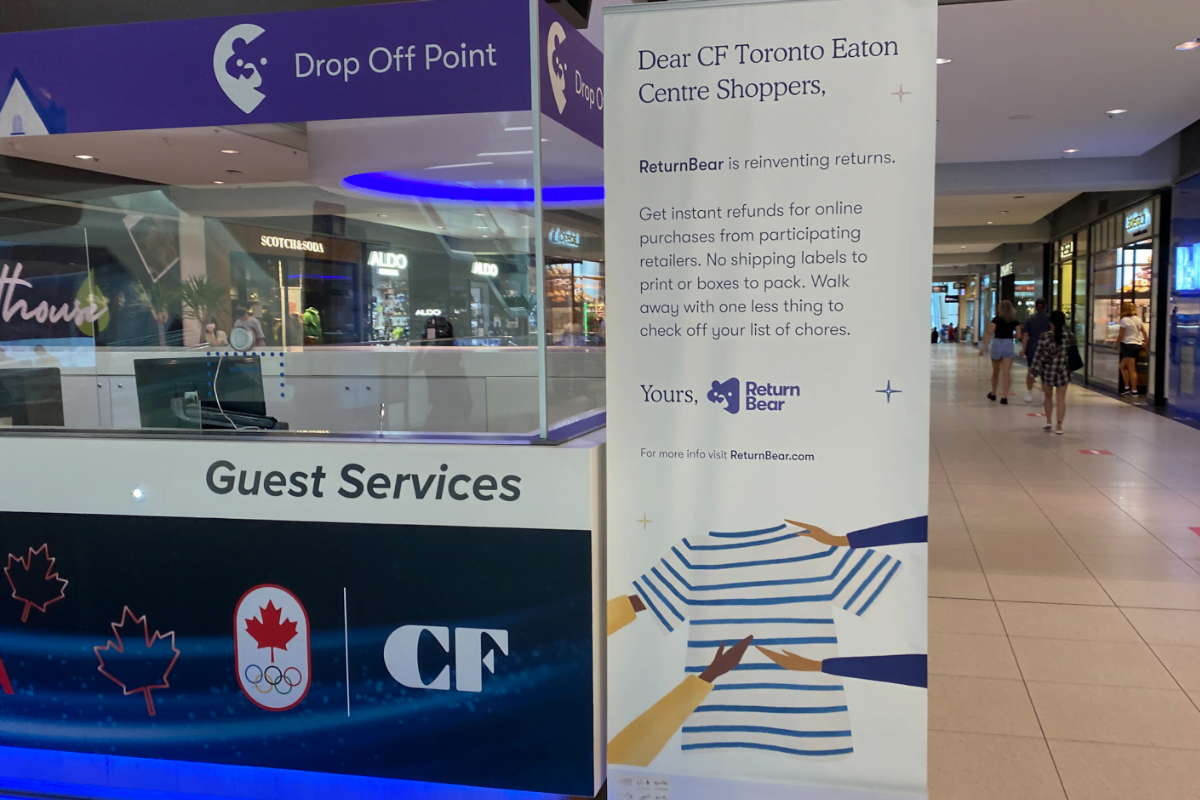
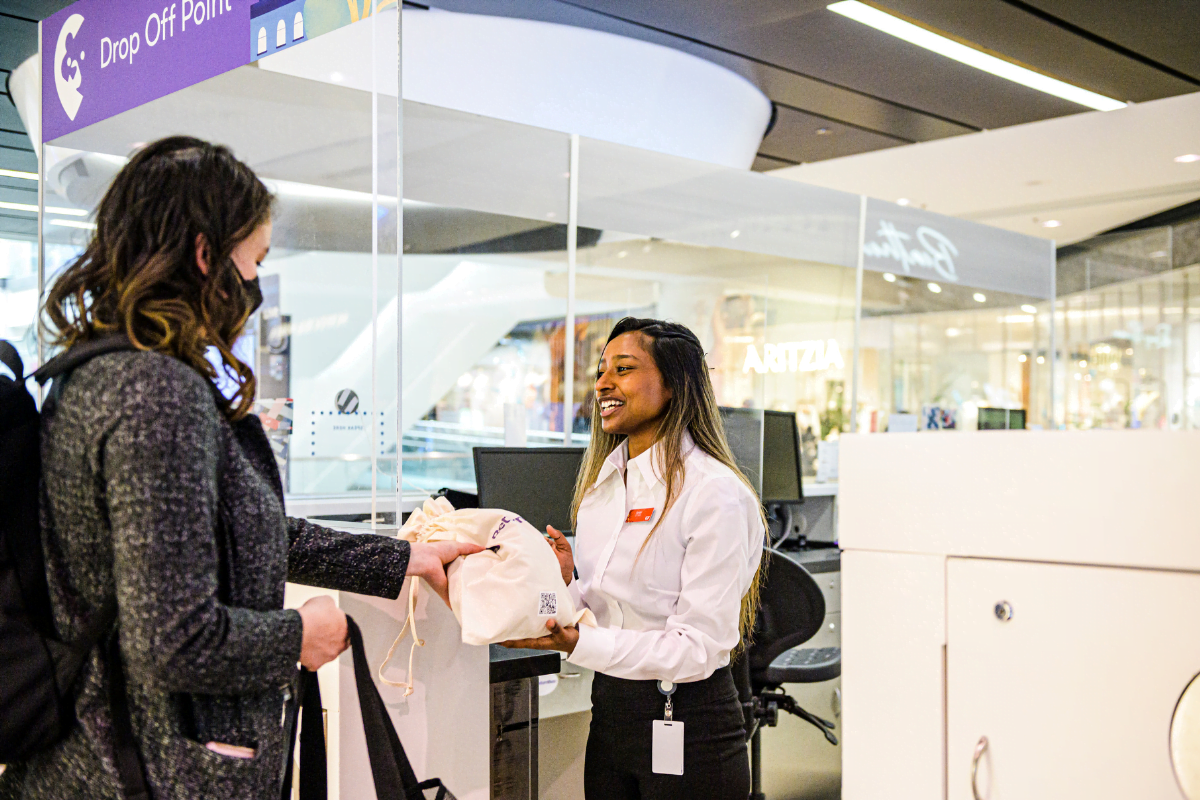
ReturnBear at CF Toronto Eaton Centre (Image: Dustin Fuhs)Image: ReturnBear at CF Toronto Eaton Centre
“The fact that one in 10 Canadians were reporting that they have lost $250 or more of value, of purchase price, on returns that they couldn’t be bothered to return or didn’t feel that it was convenient to return or perhaps felt challenged by the return solution on offer, or the options on offer, and preferred to take that loss, acquiesced to taking that loss,” he said.
“Similarly, there was that stat that surfaced that of Canadians 18 to 34, specifically, nine per cent had lost more than $500 on unwanted items that they kept. That’s staggering to me because that is a lot of value and especially when you look at the age brackets here. A younger shopper with probably a bit less discretionary income to throw around still being prepared to eat upwards of $200, $300, $400 in a couple of return items.
“The process must be wildly inconvenient to those people for them to be willing to take that loss. I’m still surprised by those numbers getting up to the 10 per cent range given the high dollar value and I’d be curious to see how that continues to play out as the recession ebbs and flows and as the cost to do business goes up. Despite me being surprised, the numbers are validating to me because I think they reinforce our thesis that there is a lot of opportunity especially in the Canadian market where this problem really hasn’t been tackled across our vast geography. A great deal of opportunity to improve the return process and from the consumer’s lens make it more convenient, more cost-effective, so that they can recover that lost value at the same time we want to help brands recover value by having lower cost return processes, encouraging their customers to use our drop offs for example as the brand pays for the cost of the return. We want to help them recover value.”
Image: ReturnBear at CF Toronto Eaton Centre
ReturnBear, which is backed by Cadillac Fairview and the Ontario Teachers’ Pension Plan, was established in October of last year.
The growth of e-commerce has spotlighted one of online retail’s biggest problems: returns. More online shopping means more online returns. Returns are costly for merchants and a hassle for customers, and up until now there has been no streamlined process to make this easier for Canadians. ReturnBear is on a mission to make retail returns easy and accessible for everyone.
Domagala said ReturnBear brought to market over the past year the first package free, label free drop off network of its kind in Canada. A major network is through many Cadillac Fairview shopping centres.
Robert Domagala
“And we’re excited to be exploring additional partnerships with some major neighbourhood retailers that would expand the reach of our drop off network,” he said. “So with scale and with training the Canadian customer to seek out this type of return process when making a purchase decision from a brand, we can help them enjoy not only a more convenient return should they select the drop off but in the case where they do have to pay the cost of the return where the brand isn’t covering the return, a lower cost return option.
“So just as our drop offs are lower cost return options for a brand that does bear the cost of return on behalf of their customer, are they a lower cost option for those customers that are shopping from brands that have not yet hit that sort of level of scale where they can offer free returns. And so we can at least start providing customers with this greater optionality, more choices, more locations.”
He said ReturnBear is encouraging brands to participate in this shared network it is building where there are drop off points coast to coast and multiple brands can use them.
“We are expanding our processing hub capacity beyond Toronto to include a hub in the Greater Montreal Area and one on the west coast. And when we do that participating merchants will have the ability to see product aggregation more regionally distributed without them having to own their own warehouses on both coasts for example,” added Domagala. So returns will have a shorter distance to travel when they’re coming in by mail . . . In doing it in a stepped manner that we are, it’s going to make this more accessible to more brands quite frankly.”
Retail Insider is streamlining its Canadian retail news from around the web to include a handful of top news stories that can be viewed quickly during the day. Here are the top stories from the past 24 hours.
Exciting Fall Issue of Retail Insider the magazine: Coming Soon
The second installment of Retail Insider the magazine is deep in development and jam-packed with content that will engage and inspire its legion of readers. Building on the incredibly positive reception that the inaugural issue received, the issue is set to be published in September and will continue tackling the retail industry’s most pressing challenges and topics.
Expert contributors
The publication will once again welcome contributions in the way of quarterly columns from some of the industry’s most influential figures. David Nagy, Canadian ecommerce pioneer and Founder of eCommerce Canada, provides his insights concerning the current state of ecommerce in Canada in ‘The Digital Curve’. And, Dan Kelly, President, Chief Executive Officer and Chair of the board of governors of the Canadian Federation for Independent Business, shares his views regarding the greatest challenges and opportunities faced by small businesses operating throughout the country in ‘Main Street Matters’.
Getting closer to the consumer
Liza Amlani, direct-to-consumer guru and Principal and Founder at Retail Strategy Group, joins the growing ranks of expert contributors on the magazine’s masthead. Leveraging her unique insights and expertise, Amlani will provide her keen analysis and assessment of retail operations, challenging traditional and outdated buying, sourcing and product assortment practices while highlighting the tremendous benefits that retailers can reap by getting closer to the consumers that they serve.
The retail experience
Retail Insider the magazine’s editorial team also sits down with industry legend Jean-Pierre Lacroix, President and Founder of leading retail design consultancy SLD, to get his take on the ever-evolving consumer shopping experience. With the impacts of the pandemic in mind, combined with shifting consumer behaviour and preferences, we’ll explore the digitization of the industry and aspects of the retail environment that merchants need to tweak or enhance in order to continue meeting consistently elevating consumer expectations.
Future of the shopping centre
Not only is the retail store environment changing and shifting, so too is the function and utility of Canada’s shopping centres. In an in-depth interview with Andy Clydesdale, Executive Vice President, Retail, at QuadReal Property Group, we’ll explore the current progress concerning the transmogrification of some of Quadreal’s biggest, most successful properties while looking ahead to the future of the shopping centre as hubs of community, culture and commerce.
Grocery innovation
Speaking with Dr. Sylvain Charlebois, Senior Director, Agri-Food Analytics Lab at Dalhousie University, we’ll also attempt to take a bite out of the latest in grocery innovation. From automation to cutting-edge temperature modulation technology, the ‘Food Doctor’ will weigh in on the latest innovations helping to improve and enhance the way grocers operate and the resulting benefit to the Canadian food consumer.
In addition, self-service grocery pioneer, Aisle 24, will be featured in this issue’s brand profile, diving deep into the extraordinary concept that has the entire industry talking. Speaking with Co-Founder John Douang, we’ll discuss the evolution of the grocery experience, the technological innovation required to support a completely cashierless store and the elements required to provide an incredible shopping experience for the customer.
The lap of luxury
And, to round out the issue, Craig Patterson, Founder of Retail Insider Media Ltd., shares his analysis of the current state of the luxury sector in Canada. From brand expansion to new players entering the Canadian market, Patterson injects his expertise concerning luxury retail to highlight trends within the space, challenges that are impeding progress and opportunities for further growth and success.
Don’t miss it
Boasting a stellar lineup of contributors and content, readers won’t want to miss this engaging and insightful read. Look for the launch of the second issue of Retail Insider the magazine in September and continue to support Canada’s only national publication dedicated to covering all of the news, trends, research and analysis related to Canada’s dynamic retail industry.
For more information concerning exclusive advertising and sponsorship opportunities within the publication, download our 2022 Media Kit here: https://therimagazine.com/media-kit
Vancouver’s online luxury clothing and consignment store FAULKNER is venturing into new territory with a collaboration with a local young artist doing ceramics in a “very cool, modern type of way,” says James Faulkner, the retail owner.
“We’re going to be debuting a collection of ceramic vessels at the end of the month in partnership with Wynnie Tosetti, Brazilian-Canadian artist and owner of Báhoo Studio, but we’re predominantly clothing,” he added.
“I moved to Vancouver in the late part of 2016 from London, England. I came here with no hopes, no expectations. Just came for the change. Just a traveler. I got to the country and spent a few months here and I was working in the Gastown District and on my lunch break I would go to the vintage shops around Chinatown and Gastown and they were really awesome shops.
“They inspired me but at the same time as well I found them very quite North American with the denim and the plaid and I thought I could do something different. More what I grew up in England. Do something in a very different way. More heavily curated type of way. And more specific. Really individual items that all stand alone.”
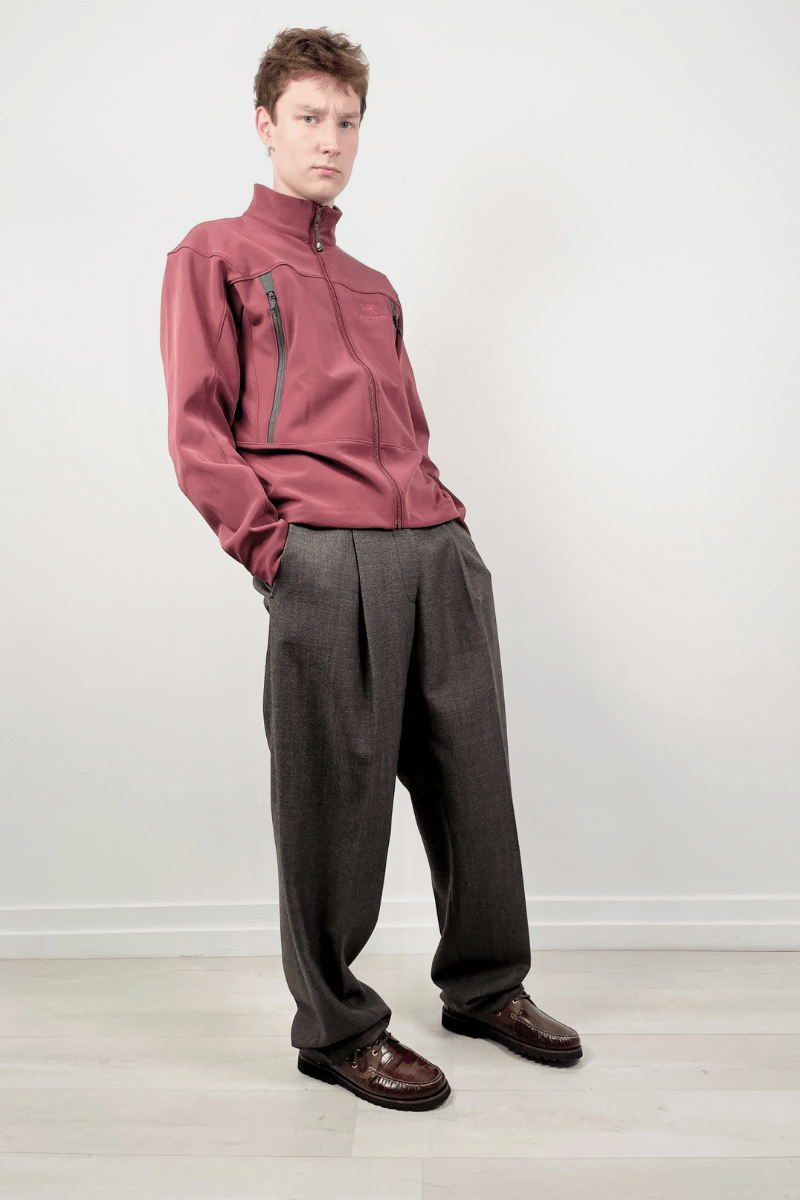
Image: FAULKNER
Photography & Styling: Jay Kim Valentine
Model: Deion Ramos
Image: Wynnie Tosetti / Báhoo Studio
Image: Wynnie Tosetti / Báhoo Studio
The company began in May 2017 with a small storefront in Vancouver’s Downtown Eastside and has since evolved into an office in the historic Gastown district, carrying sustainably sourced clothing and accessories.
The move was made about 18 months ago.
“Coming out of COVID, my lease was almost up in the space I started it and for me Gastown obviously is a nice, cool district in Vancouver and I kind of wanted to make that transition,” explained Faulkner. “I found a really nice studio space and we moved into there.
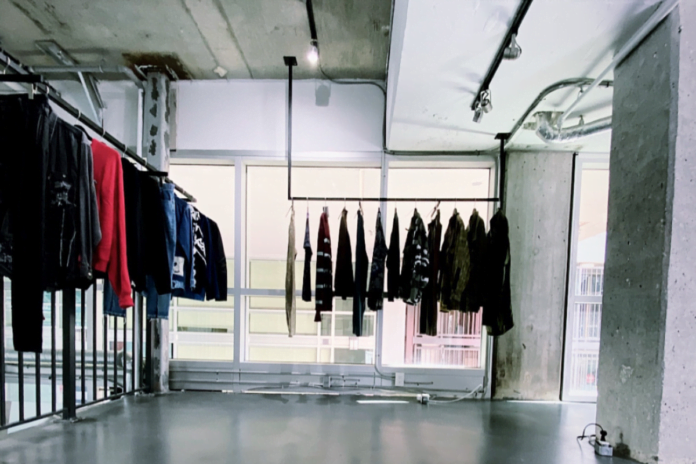
“It’s about 500 square feet. Not particularly big. We sell really rare, one-off, vintage designer and luxury pieces and archival. We sell a lot of Japanese designers and we sell on the European side. Very contemporary designers and some of the more classic ones.
“We’re trying to go on the more rarer side of the scale for those pieces and the pieces are normally quite individual and quite unique. Some of them can be catwalk for example.”
Image: FAULKNER
Image: FAULKNER
Faulkner used to find his clothing in places like the Salvation Army and Value Village.
“My first girlfriend in Vancouver, she took me to one of these places and I think that’s when my brain really started to think about this. Wow you can find this stuff if you dig deep enough. I would just be very intense with that but it obviously grew more into consignment and buying trips to Japan and we use auction sites from Japan,” said Faulkner.
“It all just snowballed really but it predominantly started from the thrift.”
Today, FAULKNER is based on consignment as well as buyouts.
Image: FAULKNER
“It attracts people who already have those types of clothing. So we’re able to get our hands on the clothes that way,” he said.
Faulkner is hoping to eventually grow to more locations. Since the pandemic, he’s explored a different avenue for the concept.
“I’m going for a more wholistic style approach in terms of slowing everything down, taking our time and just trying to do something we really want to do and build a community within that by really supporting people. People have really supported us.
“I’m more excited about doing something I enjoy and we’re curating something that is different and I’m doing it my own way and that’s all I can ask for.’
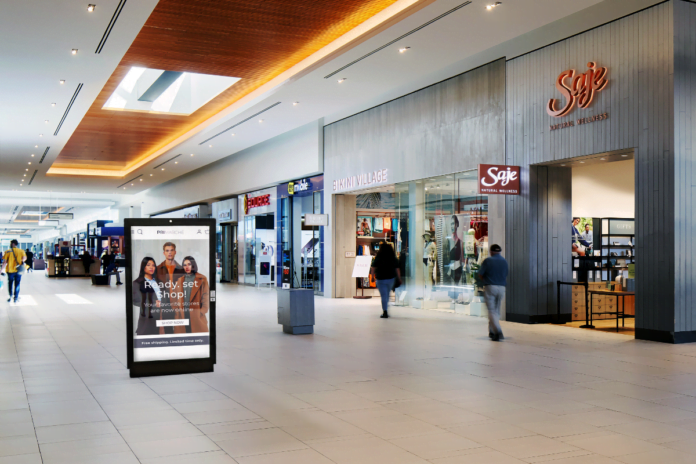
Cineplex Digital Media (CDM), a division of Cineplex, is teaming up with Primaris REIT to develop, install and maintain a state-of-the-art digital signage network in 19 shopping centres across Canada including Dufferin Mall in Toronto and Orchard Park in Kelowna.
As part of the partnership, CDM will operate a network of nearly 70 digital displays at 19 Primaris owned and managed retail properties in British Columbia, Alberta, Manitoba, Ontario, Quebec, and New Brunswick. Each property will receive a custom display solution consisting of large double-sided portrait screens for media advertising, mall directories, and maps. The new network of digital displays is expected to be fully deployed nationally this fall.
Fab Stanghieri, Executive Vice-President and Managing Director, Media, for Cineplex, said CDM has been a trusted mall network partner for over a decade and by adding 19 additional properties to its robust digital signage network, it now has access to at least 60 per cent of the Canadian shopping audience.
Fab Stanghieri
“This deal enables not only our media partner’s audience reach to even more of Canada’s mall consumers, but it also gives CDM the opportunity to support Primaris’ ongoing commitment to providing exceptional and innovative shopping experiences for their guests,” he said.
“Our digital signage network with Primaris features state-of-the-art double-sided portrait screens for media advertising, mall directories, and maps. It doesn’t stop at the technology though. We’re all familiar about the importance of building a retail customer journey – well, that customer journey is just as important because those same customers are walking through the shopping centre.
“A strong digital signage network meets consumers in the places and spaces they actually want to be in – it keeps them engaged, receptive and emotionally connected. And with the right strategy and solution, a digital signage network can drive shopper engagement, additional (media) revenue, increase dwell time, and even draw in new data insights.”
Cineplex Digital Media (Image: Dustin Fuhs)
With the addition of Primaris REIT, CDM’s mall network spans across 69 centres with over 700 million yearly visitors. In addition to its robust mall network, CDM’s digital signage business also designs digital in-store experience solutions for a variety of clients which include Grocery, Retail, Multi-Brand Retail, Financial Banking and QSR industries, added Stanghieri.
“We’re continuously working with landlords to build out new directory and media programs that best align with their business objectives,” he said.
“We are installing the Primaris network in early September with plans to complete the full 19 location rollout by early October – just in time for the busy holiday season.”
In a news release, Jasleen Bhinder, Director, Marketing, Primaris REIT, said the company’s ongoing commitment to consumers and retail partners is exemplified through its continuous efforts to increase traffic to its shopping centres with memorable and meaningful experiences.
“We are excited to work with CDM’s strategic customer-centric and robust in-house team of experts and look forward to CDM’s strategy-focused programs including creative playlists, optimization, specialty tenant branding opportunities, and innovative technology solutions,” she said.
Cineplex has more than 170 movie theatres and location-based entertainment venues in Canada.
Primaris REIT owns and manages 35 retail properties aggregating approximately 11.4 million square feet, at Primaris REIT’s ownership share valued at approximately $3.3 billion, including 22 enclosed shopping centres totaling approximately 9.8 million square feet and 13 unenclosed shopping centres and mixed-use properties aggregating approximately 1.6 million square feet.
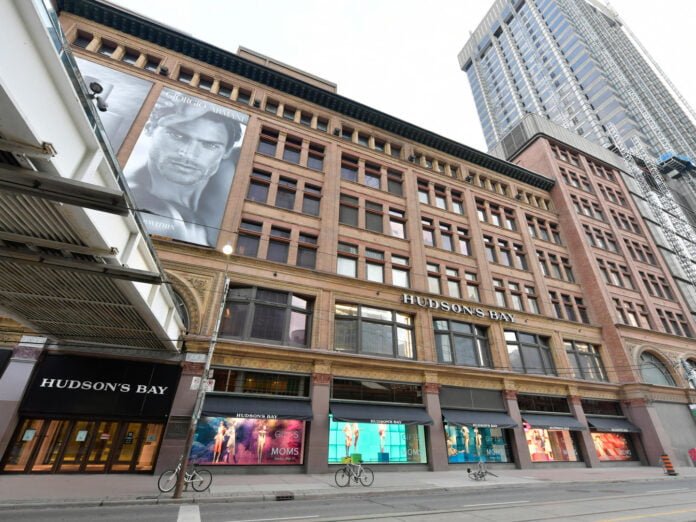
Hudson's Bay flagship, Queen Street Toronto. Photo: HBC
A unique pop-up retail space is opening this weekend on August 19-21 at the Hudson’s Bay flagship store at Yonge and Queen Streets in downtown Toronto. Toronto-based J2 Retail Management will launch the latest activation of its ‘Community Playground’ concept that will be housed on the second floor near the store’s main bank of elevators.
Four local vendors are part of the Hudson’s Bay Community Playground pop-up, which will feature a curated mix of fashions from the 1960s, 70s, and 80s. That will include mint-condition band t-shirts, Levi’s jeans, and other fashions. On-hand will be a mix of affordable as well as some higher-end pieces.
Three of the vendors are from Toronto and one is from Hamilton. One vendor, Kobe Sells Vintage, has operations in North York and will bring some of its top pieces to the Hudson’s Bay pop-up. Fruit Market Vintage Clothing, located on College Street in Toronto, is a local favourite for many. Edgy Kensington Market-based Lost Boys Vintage will be on-site with a range of t-shirts and other vintage styles, as well Hamilton-based Drop Spot Vintage which has a huge local following in that city.
A dedicated area near the second-floor elevator banks in the department store has seen various pop-ups, creating experiences to bring consumers back by diversifying offerings.
Hudson’s Bay partnered with Toronto-based J2 Retail Management on this weekend’s pop-up. It’s part of a broader years-long relationship between the Hudson’s Bay and J2, whose co-founders Jodie Wolfe and Brian LeSaux have worked with various brands on merchandising strategy.
As part of its evolution, J2 Retail Management has expanded its service offerings and is now hosting Community Playground activations in the Greater Toronto Area. Brian Le Saux, another retail veteran, is now partners with Wolfe and the duo is growing the J2 Retail Management operations by offering services that include logistics and supply chain management, merchandising, e-commerce, and visual media. It operates several warehouse spaces in the Toronto area with plans for further expansion.
Wolfe and Le Saux spoke to Retail Insider about the pop-up as well as J2 Retail’s plans at the end of the month to unveil a much larger Community Playground activation at Toronto’s Bentway near Fort York. Details on that activation will be released soon and it’s expected to include about 50 vendors and 20 foodservice businesses as well as speakers and various activities.
*Retail Insider partnered with J2 Retail Management for this article. To work with Retail Insider, contact Craig@retail-insider.com