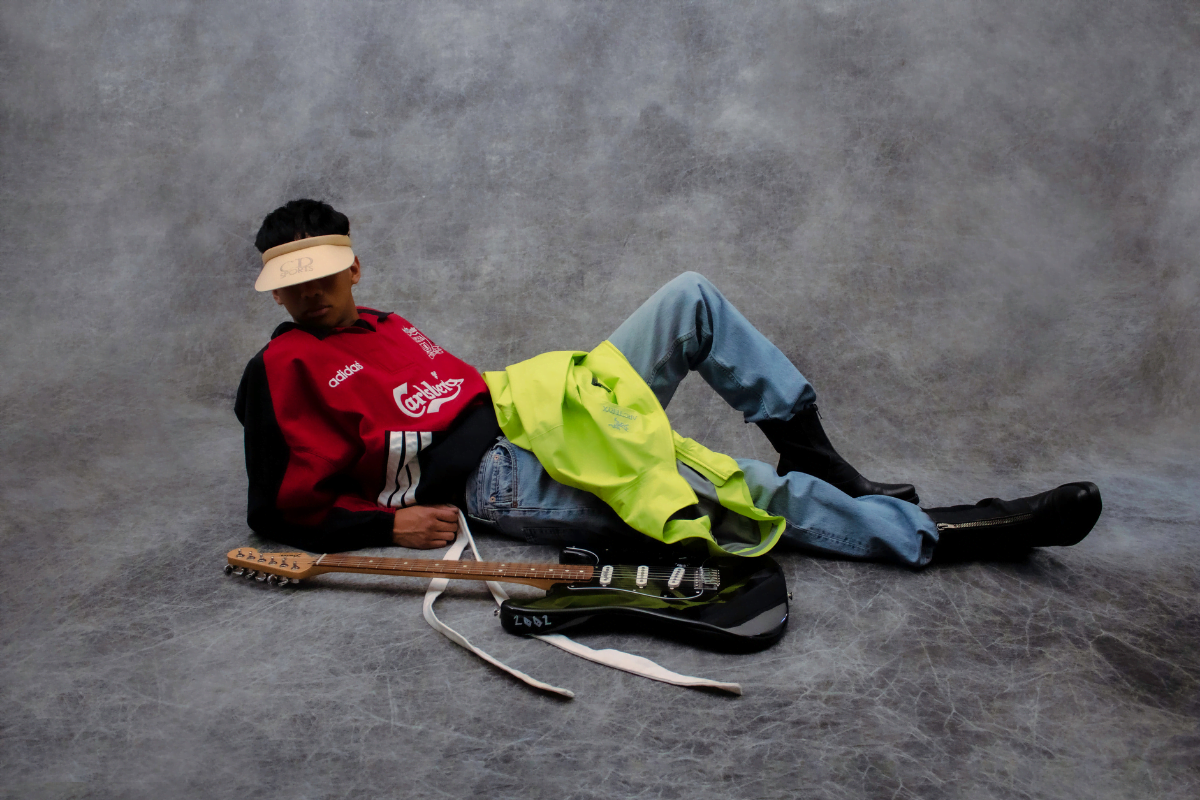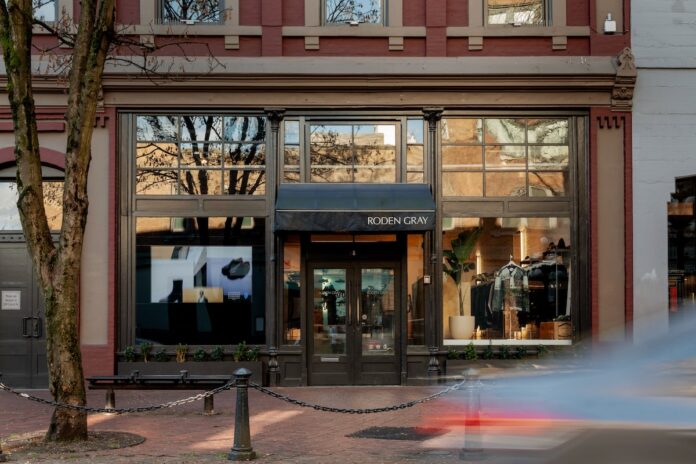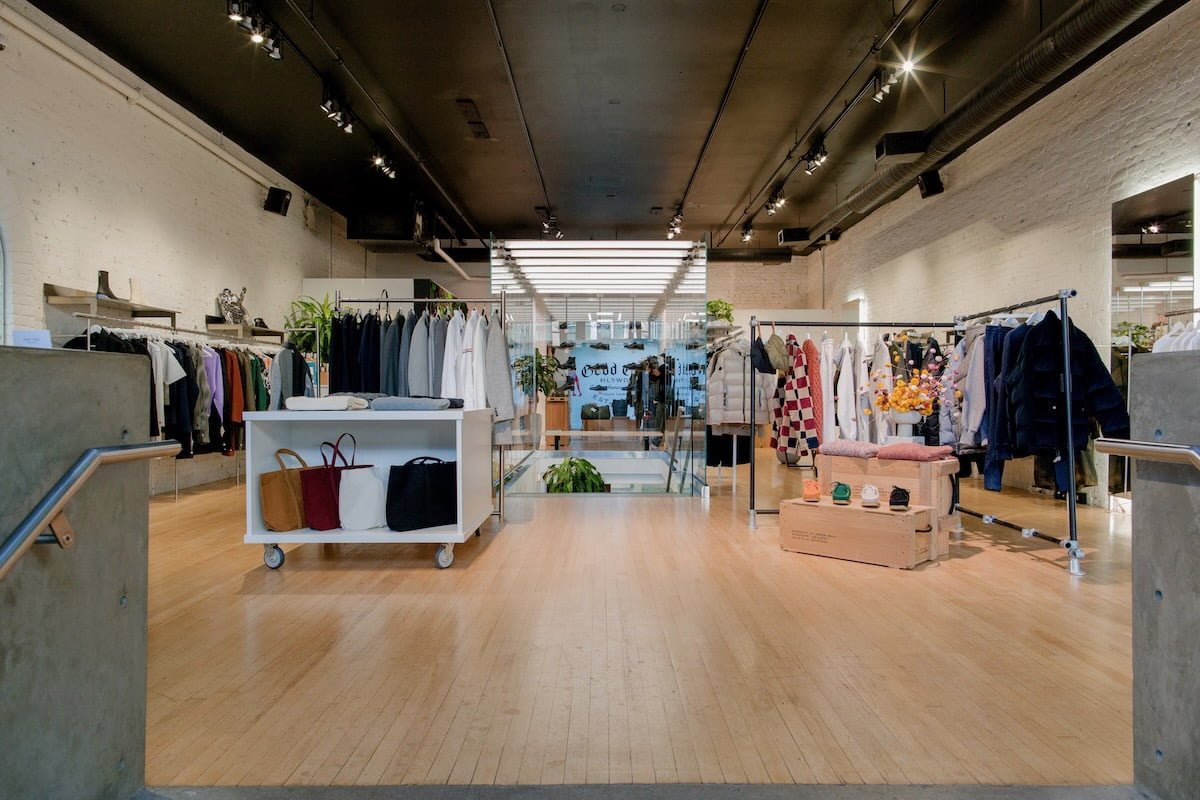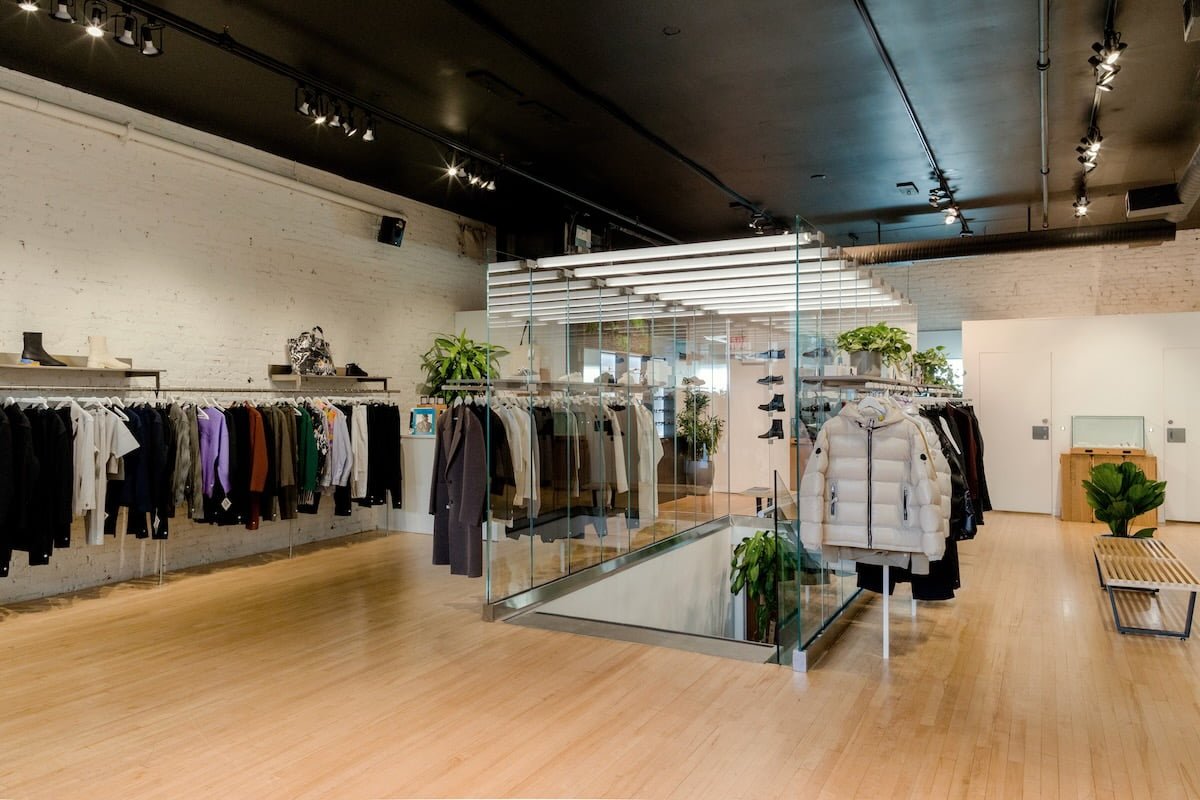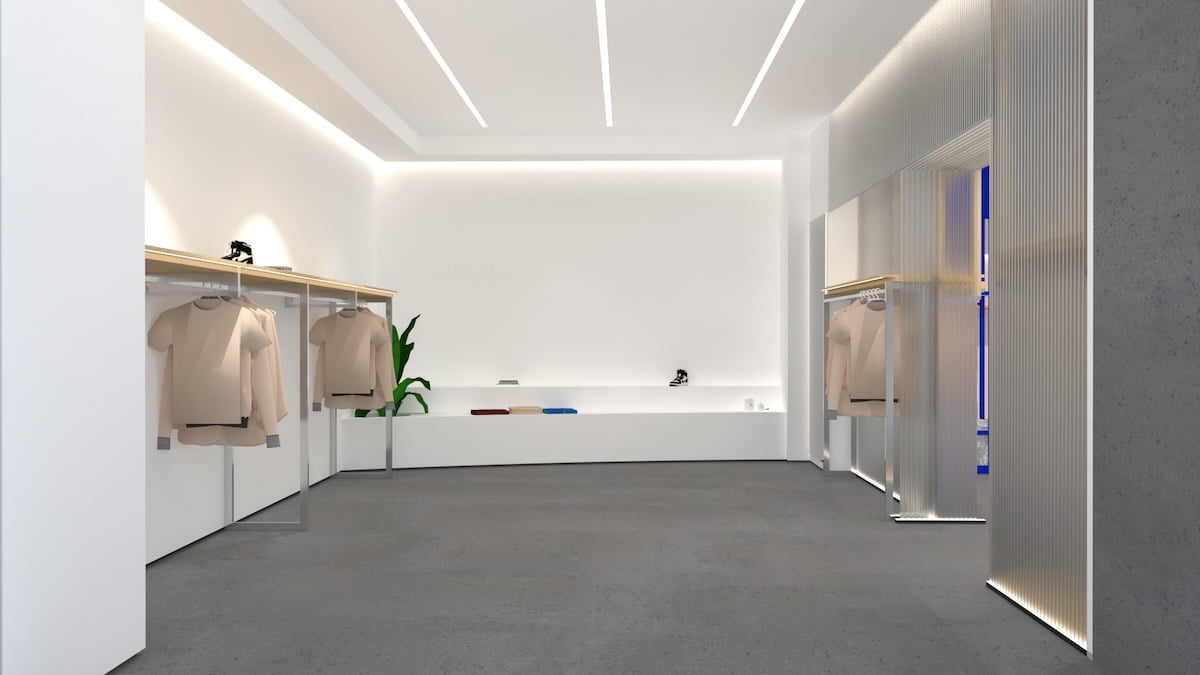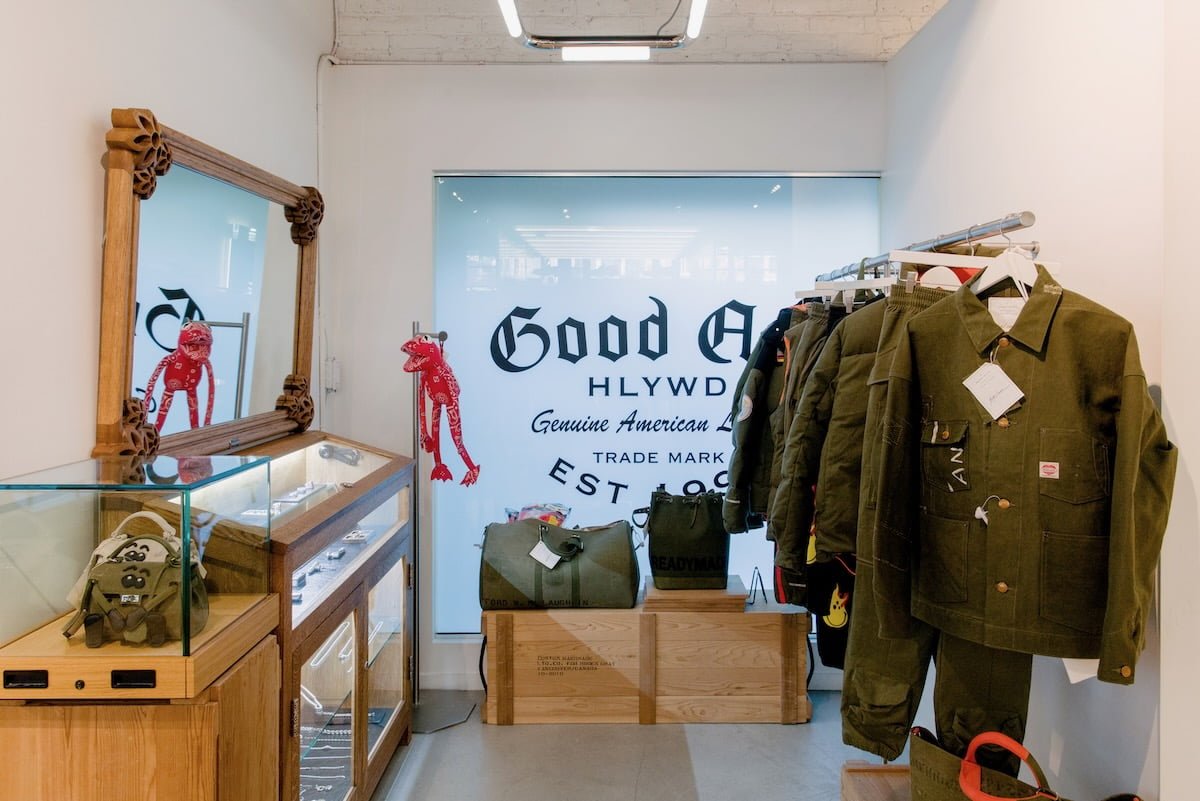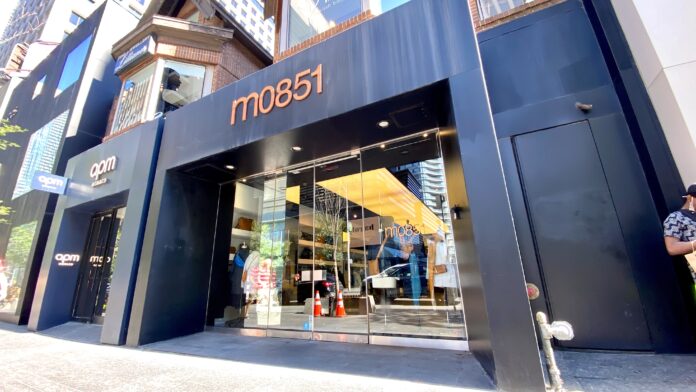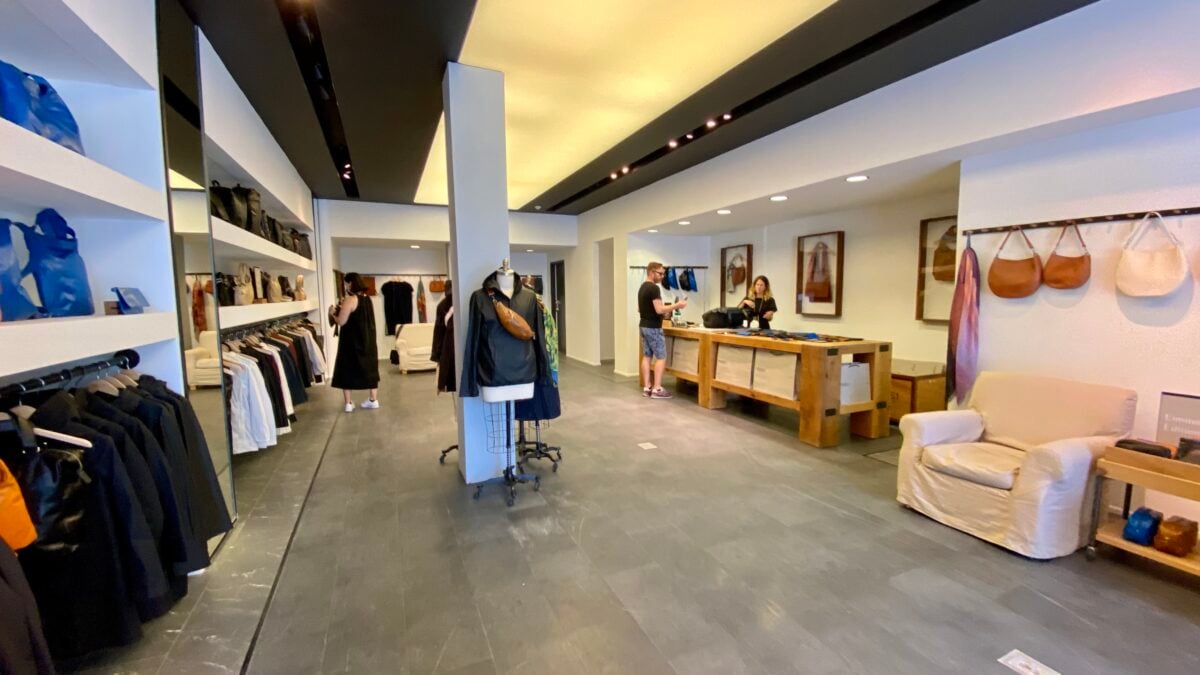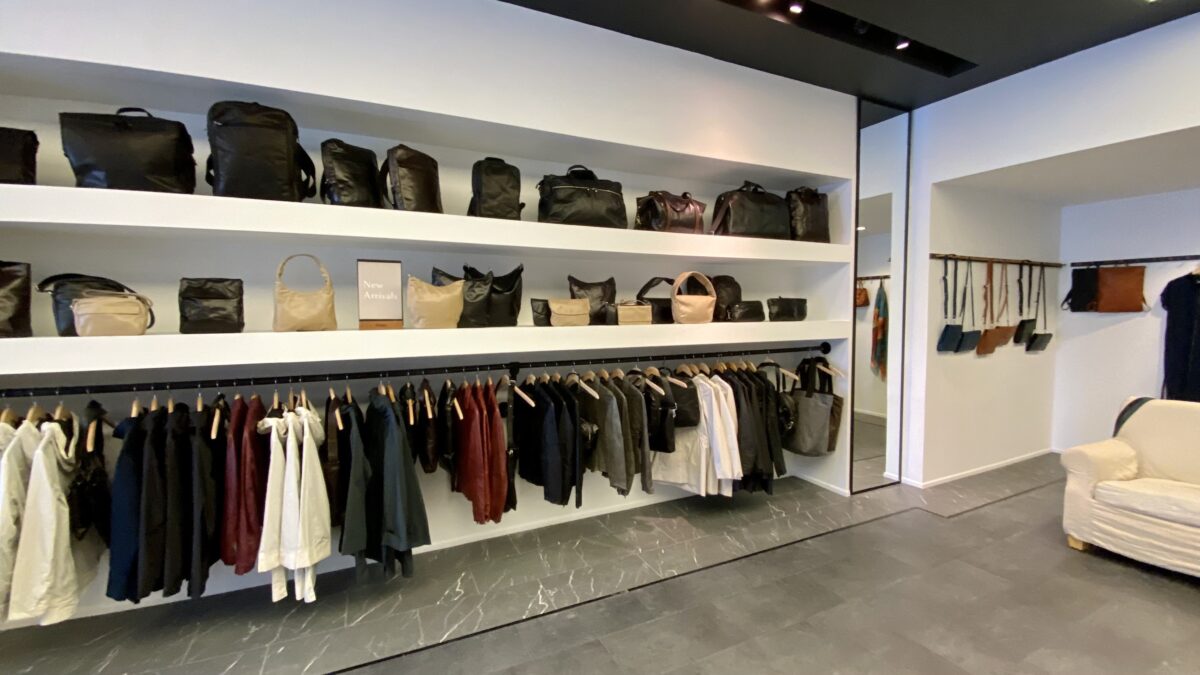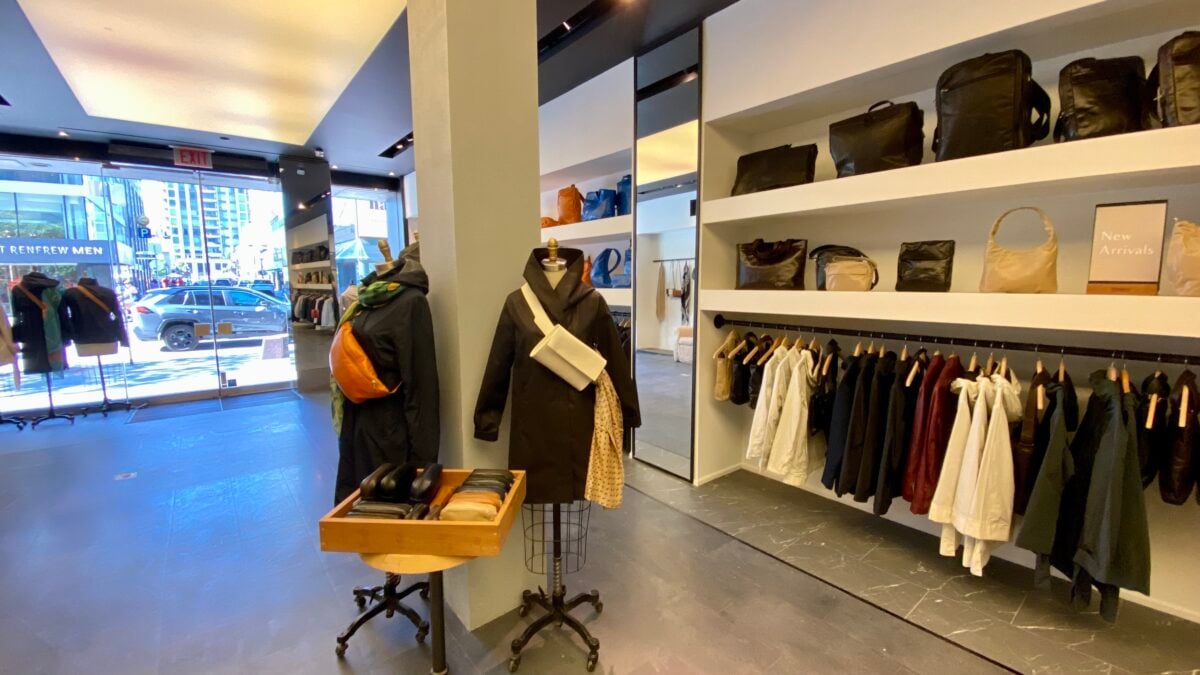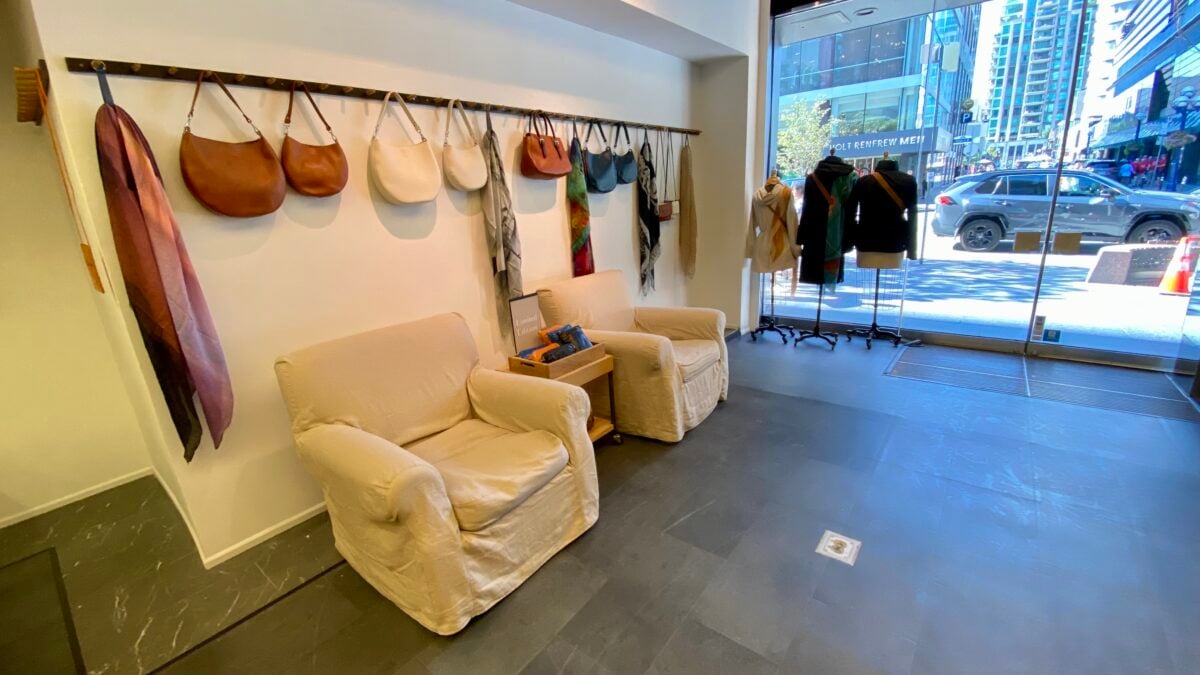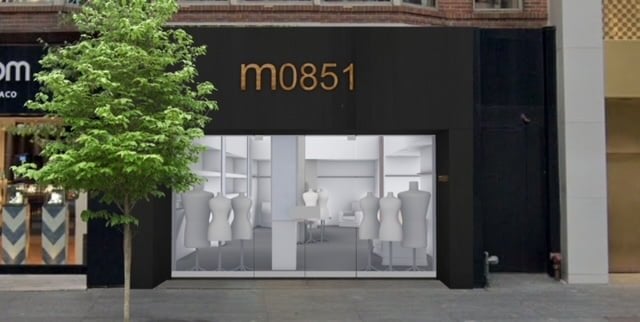
Colton's Couture at Park Royal Shopping Centre (July 2021). Photo: Lee Rivett.
Vancouver-based Colton’s Couture, a family-owned contemporary fashion boutique, recently opened a storefront at the Park Royal Shopping Centre in West Vancouver with plans to expand to Ontario.
Image: Howard Colton
The retailer, which was established in 2016, prides itself on building much more than a wardrobe for customers but building an image.
Howard Colton, founder of the business, said the retailer would like to open two new stores “hopefully this coming year” at the Markham Centre and CF Sherway Gardens.
“We have a very, very prominent Asian clientele. I would say we have an 80 per cent Asian clientele and those particular areas reflect the dominance of that clientele especially in Markham, Ontario. It’s very similar to Richmond (BC) where it caters to a very affluent Asian client,” said Colton.
The retailer’s first store was a small pop-up shop in Oakridge Centre in Vancouver that was about 1,000 square feet. It ended up being a permanent store that same year.
“The store was very successful. In that small square footage it did over $2 million in that small footprint. The unfortunate part of it is Oakridge is now closed for total renovation and will be reopened in approximately I think 2025. So hopefully we have plans to be part of that reopening as well,” said Colton.
Colton’s Couture at CF Richmond Centre. Photo: Geetanjali Sharma
The Richmond Centre store is the company’s flagship. It also has an outlet store at McArthurGlen called Designer Wearhouse. It recently closed a retail location it had at the Metropolis at Metrotown shopping mall.
The Richmond Centre store is about 1,600 square feet and the Park Royal store is about 800 square feet.
“We’re going to a smaller footprint. We find that it’s much more easier to manage and it gives that personal touch as well. More of a boutique,” said Colton.
“We specialize in customer service. We specialize in giving our customers what they want without any pressure. We kind of go with the trend and it’s ever-changing. We used to be very very (tied in) with our Italian merchandise with brand names as Prada, and Fendi, Gucci. But we find the trend for that is not what the client really wants anymore. Not so much the prominent brands. They’re looking for something that people don’t have. We can give them something that not everybody’s wearing.”
Colton’s carry a wide selection of the most current styles from a variety of contemporary designer brands around the world. The designers it selects represent what the retailer calls its love and devotion towards fashion as a way of life. It also carries accessories.
“Our goal is to impart our values and passion with like-minded individuals through the medium of apparel. We are committed to bringing customers an inclusive and intimate experience, catering towards the needs and style of each individual. We strive to play a guiding role in helping our customers find contemporary fashion items to construct a confident, trendy, and exclusive lifestyle,” says the company on its website.
Shuttered Colton’s Couture location at Metropolis at Metrotown (July 2021). Photo: Lee Rivett.
Colton said the retailer has had a number of inquiries from Asia to open stores there but with the pandemic over the last 16 months those conversations have been put on hold.
The initial success of the company came down to the brand and the concept and listening to what the customer wants.
“We listen to the client instead of just trying to ring the cash register. We found that when we did listen to the customer we did ring the cash register,” said Colton, who has been involved in the fashion industry for 30 years including bluefly.com which was the first luxury online retailer in the world in 1998.
Colton said the company is looking forward to meeting and servicing its new customers at Park Royal and giving them the Colton’s experience.
“We decided to go there because we felt that it was a good part of our clientele. It was a very affluent clientele. Very fashion conscious. And with not having to leave the west side of the city to go downtown to Nordstrom or Holt Renfrew without leaving their backyard really. We thought we could be there and service them,” said Colton.
Craig and Mélissa Lambert, President and Founder of Lambert Design Inc., discuss the origins of the brand as well as its growth and expansion plans including a new flagship building in Montreal.
The Interview Series podcast by Retail Insider Canada is available on Apple Podcasts, Stitcher, TuneIn, Google Play, or through our dedicated RSS feed for Overcast and other podcast players. Also check out our The Weekly podcast where Craig and Lee discuss popular content published on Retail Insider which is part of the The Retail Insider Podcast Network.
Drop us a line at Craig@Retail-Insider.com. You can also rate us in Apple Podcasts or recommend us in Overcast to help more people discover the show!
Background Music Credit: Hard Boiled Kevin MacLeod (incompetech.com). Licensed under Creative Commons: By Attribution 3.0 License. http://creativecommons.org/licenses/by/3.0/
Consumer preferences toward payments are changing. Today’s shopper wants access to more options and craves greater flexibility. It’s a sentiment that has been mounting for some time, but is also one that has been exacerbated by impacts of the COVID-19 global pandemic. Combined with the sharp shift in consumer behaviour toward online purchases, it’s a sentiment that presents businesses everywhere with the opportunity to grow their share of the market by catering to evolving preferences within an omnichannel world. It’s an opportunity recognized and supported by Afterpay – the innovative provider of ‘buy now, pay later’ services. And, according to Zahir Khoja, General Manager of Afterpay North America, it’s one that the savviest retailers within the industry are increasingly taking advantage of.
“Prior to the pandemic, there was already a generational shift happening in regard to spending preferences,” he says. “This was further fueled by the onset of COVID-19. Generation Z and Millennials are increasingly credit averse and wary of high-interest and revolving debt cycles, favouring the use of debit cards. They want to use their own money instead of turning to expensive loans or credit cards, but still want and need the flexibility of being able to pay over time afforded by traditional credit. Amid the past year, which saw immense economic uncertainty and a shift in consumer preferences toward online purchases as we faced the pandemic, the demand for Afterpay’s ‘buy now, pay later’ value proposition has risen steeply.”
Simple and effective payment option
Since its founding in 2014, Afterpay has quickly become one of the leading solutions available for retailers looking to offer a more flexible and responsible payment option for their consumers. And, what’s more, the model is a simple one. By leveraging Afterpay’s services, consumers can receive products immediately and pay over time using their own money, always interest free, with purchases paid in four instalments due every two weeks. It’s a model that provides the consumer with the flexibility that traditional credit affords, without all of the downside. And, when it comes to merchant benefits, Khoja says that the heightened performance of brands offering Afterpay as an option at checkout speaks for itself.
“With Afterpay, merchants gain access to a large and growing segment of shoppers – nearly 15 million globally – who prefer not to incur credit card debt, interest or fees,” he asserts. “For this reason, Afterpay delivers increased conversion rates for merchants approximately 20 to 30 percent higher as compared to other payment methods. In addition, the availability of Afterpay also results in higher average order values, fewer returns and increased customer engagement. It’s also important to note that our merchants see us as much more than a payment option, but also a marketing vehicle as many of our customers will start their shopping journey on the Afterpay platform. An average of 35 million merchant referrals are generated globally per month from our Shop Directory, providing a source of new traffic to our retail partners.”
Supporting ecommerce growth
Considering Afterpay’s increasing global reach, combined with the spike in ecommerce activity caused by the pandemic, its services have been critical in helping many retailers and brands sustain the pressures of the past 16 months. Moreover, it’s also been instrumental in the development and growth of ecommerce business for retailers across the country, helping them unlock benefits and opportunities to meaningfully engage with today’s digitally-connected consumer. Due to its power and simplicity, Afterpay has become a strategic tool leveraged by many retailers, and one that Meghan Roach, President and CEO of Roots, considers a valuable component of her company’s innovative solutions.
“At Roots, we continue to stay at the forefront of ecommerce innovation, by offering a wider selection of payment options, including our recent addition of leading ‘buy now, pay later’ platform, Afterpay,” she says. “It’s allowed us to add to the variety of payment options that we provide at checkout, while enabling us to offer our customers an entirely new form of payment flexibility. As we continue to evolve our digital offering in order to keep up with mobile and payment trends, Afterpay allows us to appeal to consumers who are looking for alternatives to traditional payment methods. Younger consumers, specifically Gen Z and Millennials, want flexibility when it comes to their spending. With Afterpay, we can now offer our customers the option to get the product now but pay over a period of time.”
Enhancing the online experience
Image: Roots.com
In addition to adding breadth to the payment options that the company provides, Roach says that Afterpay also helps to support the online shopping experience that Roots offers. By allowing the company to offer its existing customers new methods to engage and transact with the brand, it’s helping to remove barriers and friction common within the digital experience, while also helping attract and acquire new customers.
“We have continued to evolve our payment options beyond the more standard online experience of ‘enter your credit card information’,” she says. “Afterpay helps to create another channel through which customers can discover our brand, and because it enables our customers to purchase products now while paying over time, it makes some of our higher-priced products more accessible, driving a higher average order value. It’s also been a great tool in driving customer loyalty and repeat shopping and has reduced our product return rates as well.”
Agility and adaptability
Given the business complexities that have been created by the pandemic, and the strains and pressures faced by retailers throughout the industry over the course of the past year-and-a-half, many are actively looking for ways to further enhance the offering and experience they provide for customers. And, as we approach ever closer toward a post-pandemic environment and a potential subsequent boom in consumer purchasing, it seems that ensuring a wider breadth of options and greater flexibility when it comes to payments is a great way to elicit business and engagement. Furthermore, adds Afterpay’s Khoja, it also enables increased adaptability for brands going forward concerning their response to future consumer trends and evolutions.
“The rise in ‘buy now, pay later’ has proven that consumers want flexibility when it comes to their spending. And this is not something that’s going to go away. Generation Z and Millennials are the new powerful force in the economy. And as this generation’s spending power grows, so will the use of ‘buy now, pay later’ as a primary form of payment. Retailers should keep this top-of-mind as they’re evaluating their current payment options and looking at ways to ensure greater agility that will allow them to adapt quickly to changing consumer demands, including the ways by which they want to pay for their purchases.”
Polestar location at Park Royal Shopping Centre in West Vancouver (August 2021). Photo: Lee Rivett.
Automaker Volvo‘s electric performance brand Polestar has opened a temporary Vancouver storefront at Park Royal Shopping Centre in West Vancouver while a new downtown store is built. The Park Royal location is in addition to its Montreal (3035 Boulevard le Carrefour, Laval) and Toronto (55 Avenue Road at Yorkville Village) locations.
Polestar location at Park Royal Shopping Centre in West Vancouver (May 2021). Photo: Polestar Vancouver/Google Maps.
Hamilton Street location in downtown Vancouver (February 2021). Photo: Polestar Vancouver/Google Maps.
1050 Homer Street Polestar Location
1 of 3
Homer Street location in downtown Vancouver (November 2020). Photo: Reddit
Homer Street location in downtown Vancouver (December 2020). Photo: Google Maps.
Homer Street location in downtown Vancouver (December 2020). Photo: @stevenelliott /Twitter
Future Polestar location at 827 Seymour Street in downtown Vancouver (Dec 2020). Photo: Google Streetview.
The downtown Vancouver store’s opening date hasn’t been formally announced as construction is ongoing. Polestar’s retail spaces will be located in busy downtown locations where between two and three vehicles can be displayed, with non-commissioned salespeople and demonstrators to be part of the retail experience, according to a report in Automotive News Europe.
Retail is about people. It always has been, dating all the way back to the earliest bazaars. And it always will be. The objective, of course, is the transfer of product and services from seller to buyer. But, at its core, it’s about communication and the delivery of information and courtesy in order to support a great experience for the customer. Today, ensuring that stores are staffed with the right talent required to execute superior levels of service and to meet and exceed customer expectations is a top priority for retailers everywhere. Given the challenges that the industry’s faced over the course of the past 16 months or so, combined with a current shortage of in-store retail talent, it’s an element of the operation that is in desperate need of improvement. And, according to Ray Riley, Co-CEO at Progress Retail – a provider of an innovative retail operations and employee experience platform – the solution to the challenge is in the continuous education and development of staff.
“The role of the in-store retail employee is a difficult one,” he admits. “And it’s one that’s only becoming harder. When we talk to retailers every single day, the main issues of front-line empowerment and enablement come up time and time again. From an enablement perspective, there are far too many tools and apps today that make it very difficult to effectively engage and develop store teams and manage store operations. Our platform combines retail task execution, company communications and dynamic learning for all. From an empowerment perspective, retailers of all shapes and sizes are starving for quality content. Through Progress Retail, brands have access to a deep and renowned library of education. Going forward, meaningful retail education and development will be table stakes as retailers refine their physical footprints, and stores continue to evolve in purpose and utility.”
A learning platform for retailers, built by retailers
Image: Progress Retail
Founded in 1989 as People in Progress by current Co-CEO Terry Hawkins, the company has amassed over 100,000 retail alumni who have clocked in more than 85,000 online learning hours. In a 2019 case study, Progress Retail’s approach contributed over a one-year period to a 61 percent decrease in their clients’ employee turnover rates. It’s a mission and resulting success that’s not only driven by the robust nature of the platform and its offering, but by the combined 40-plus years of experience the leadership team has enjoyed working within the industry. Hawkins spent a number of years working within executive roles at major fashion chains, and is a recognized expert in the design of retail education. And Riley, who describes himself as a ‘lifetime’ retail employee, has worked everything from frontline in-store positions to leading Michael Hill’s U.S. stores. He says that experience underpins the fluency needed to relate to retailers.
“There’s a language to retail,” he asserts. “Very quickly you know who’s lived that life in practice and not just in theory. Progress Retail is a platform for retailers that’s been built by retailers.”
Justin Asgarpour
And it seems that Canadian retailers are taking notice. In fact, Clearly of Essilor Luxottica and Kiaro have recently joined Progress Retail in the last few months to leverage the platform that Riley describes as “category-agnostic”, adding that it’s breadth of application speaks to the strength of the platform and educational content it offers. And, according to Justin Asgarpour, Chief Vision Officer & Director of Retail Operations at Clearly, the Progress Retail platform is easy to use, delivering tangible results.
“The platform is intuitive, enabling optimal engagement of staff, and provides insights our leadership team can leverage to further support team development,” he says. “The Progress Retail team has provided a level of commitment that ensures uptake, guaranteeing the needle moving in the right direction.”
Eleanor Lynch
Eleanor Lynch, Chief Operations Officer at Kiaro agrees, adding that the platform also serves as an incredible singular touchpoint from which retailers can manage their teams while properly and effectively supporting their current and future development.
“Retail staff have many priorities,” she recognizes. “Progress Retail allows us to support Kiaro store teams with one convenient platform to collaborate, update their own knowledge-base and find the information they need to complete in store duties. Beyond just the tactical improvements to the employee experience, Progress Retail provides Kiaro store management with a comprehensive training program focused on empathy-based interactions. The team at Progress Retail have provided exceptional value to our retail teams, and we are honoured to be a partner.”
Company-wide development tool
A business tool to be implemented and leveraged by the entire retail organization, Progress Retail’s education platform consists of three distinct retail hubs, including Operations, Learning and Performance. Riley says that he and Hawkins often talk about “the total being greater than the sum of the parts,” adding that the amount of increased productivity and engagement retailers can realize by having a single source of truth for the majority of store communications, operations, and training is quite compelling. He suggests that it represents a much more holistic approach to education and skills development than retailers have been used to. But, more importantly, it helps them modernize the methods by which they administer and manage their training, helping them to address the needs and concerns of the modern retail employee.
“Post-COVID retailers are increasingly looking at new ways of operating,” explains Riley. “They’re shedding their legacy tools and systems, doing away with their homegrown intranets and PowerPoint-style training content, and looking for newer and better ways to meet the needs and complexities of modern retail. We don’t use the term ‘learning management system’ or ‘LMS’. That’s not where we are competing, nor is it where we believe the industry is going. The platform’s full capability helps retailers streamline their employee education and training while enabling them to communicate directly with team members. It allows a clearer view into the objectives of the team and the impact that their training activities are having on the organization’s overall performance.”
Increasing comprehension and performance
In addition to the streamlining of learning and education that the Progress Retail platform provides, it’s also helping retailers to increase comprehension among their teams, resulting in enhanced execution and performance results. Riley believes that it’s a comprehension that has lacked within the industry over recent years, explaining that it’s simply been “assumed” that retail frontline staff have a clear and explicit understanding of their roles and the ways by which they contribute toward the organization as a whole, when, in fact, they don’t.
“For 25 years now, the ‘all-store’ emails have gone out with training information, tasks to be done, and updates from nearly all business functions,” he says “What’s the priority? Who is the intended audience? What got done? And who knows what? It’s impossible to tell. Fortunately, we offer an easier way, representing perhaps the greatest return on investment for any retailer when it comes to leveraging our platform. It provides them with the ability to develop people into the next generation of retail leaders as well as the tools to help support that development. It ultimately leads to a more engaged and involved retail team who feel a renewed value and importance placed on their roles. And it helps to motivate staff, providing them with a clearer view into potential career progression and the path to success. This is a platform that will help them achieve their goals as an employee of the company. With this in mind, learning is not a stop and start process. For retailers looking to cultivate and maintain a culture of learning, education and training should never stop. Employees are constantly developing, transitioning from frontline staff to assistant store managers, to store managers, to district managers and so on.”
Meeting the needs of modern retail
Riley goes on to explain that the platform also helps retailers address the many new skills that are required in light of the shift in consumer behaviour that’s been precipitated by COVID-19 lockdowns and social distancing requirements. The advent and growth of buy-online-pick-up-in-store, curbside pick-up and other modes of retail transactions are presenting organizations with new rules and learning opportunities around meeting the needs of today’s consumer and delivering the experiences that they demand. When considering the gamut of talent development needs that the Progress Retail platform helps to address, it seems to serve as the vital talent cog that keeps the retail operation moving forward, smoothly.
“We are seeing firsthand how challenging hiring within the industry is,” he says. “The people that work in stores are beyond essential. The level of empowerment and enablement they receive is what will set retailers apart as an employer of choice. We’re experiencing positive growth and are looking forward to supporting retailers throughout North America, and executing on some exciting plans with respect to the next generation of our product.
For more information concerning the ways Progress Retail can help improve your organization’s training and development initiatives and streamline your operations, visit progressretail.com
Showcase at CF Toronto Eaton Centre - Photo by Dustin Fuhs
Canadian retailer Showcase, known to be ‘Home of the Hottest Trends’ and the world’s largest retailer of its kind, has opened its first store in downtown Toronto. It marks a milestone for the retailer which has no other downtown stores in major Canadian cities except for a Calgary location.
The new downtown Toronto Showcase store is located on Level 1 of CF Toronto Eaton Centre next to a new Sunglass Hut store and is across from retailers Zumiez and Hollister. The Showcase storefront features a prominent black facade and has been busy since its opening several days ago.
The first Showcase store to open in a major Canadian downtown is at Calgary’s ‘The CORE’ shopping centre in 2019.
Until now, residents of downtown Toronto and visitors would have to go to a suburban shopping centre to shop at a Showcase store. The retailer has several locations in the city with the closest to the downtown core being at Dufferin Mall.
Showcase at CF Toronto Eaton Centre – Photo by Dustin Fuhs
Across Canada, downtown residents often find themselves visiting the suburbs for certain retailers. That is changing in some markets as downtown populations boom, and Toronto is leading the way in Canada. The city’s downtown core continues to see thousands of new residential units being added annually with a downtown population exceeding 300,000 people — making it second only to Manhattan in North America in terms of having such an urban core density.
Showcase has been innovating with its retail concept, including being the first retailer in Canada to launch regular live-stream shopping on social media platforms as recently reported in Retail Insider. Showcase also has an online presence which means residents of other urban cores such as those living in Vancouver may choose to shop online rather than visit a physical Showcase store location in a suburban mall.
Showcase at CF Toronto Eaton Centre – Photo by Dustin FuhsShowcase at CF Toronto Eaton Centre – Photo by Dustin FuhsShowcase at CF Toronto Eaton Centre – Photo by Dustin FuhsShowcase at CF Toronto Eaton Centre – Photo by Dustin FuhsShowcase at CF Toronto Eaton Centre – Photo by Dustin FuhsShowcase at CF Toronto Eaton Centre – Photo by Dustin Fuhs
Odd Burger, one of the world’s first vegan fast-food chains and first to go public, is in expansion mode. The company is set to open its newest location in London, Ontario in mid-August – its fourth since it began operations and second since rebranding.
James McInnes
An additional two locations – Waterloo and Hamilton – are also expected to open this month and in September, respectively. And the brand plans to open 20 locations by this time next year, including a flagship New York City restaurant in Manhattan.
“We feel we can be as big as any other major fast food chain. Thousands of locations. International restaurant footprint,” said James McInnes, co-founder and CEO.
“Frankly, the fast food industry is the largest, if not one of the largest, sectors of the food industry. It’s going to be a trillion dollar food industry within about six or seven years. It’s an enormous part of the economy but the problem is that the current industry is horrible for the environment because of its reliance on animal products primarily, horrible for our health, and obviously kills billions of animals a year.
Image: Odd Burger
“So the idea that this industry is in any way sustainable is kind of laughable. It’s just not a sustainable industry. It’s an industry that has to change if we’re going to take the environment seriously. And the fast food industry so far hasn’t changed very much. What we believe is that Odd Burger is going to be the brand that is going to create this radical change in the industry where we come in and prove that you can have great food that’s better for your health and way better for the environment and our sustainability challenges. I just don’t think major chains are taking that seriously and maybe they never will. We need leadership in the space to create this change and that’s what we’re doing.”
Odd Burger’s roots are in the former Globally Local brand. The first fast food restaurant opened in 2016 in London, Ontario. Odd Burger Corporation went public in April on the TSX Venture Exchange and in June the rebrand was announced.
There were two locations in London of Globally Local which were closed and now a brand new location is being opened for Odd Burger. The first fully branded Odd Burger location was in Vaughan. Other Odd Burgers currently open are in Toronto on College Street and in Windsor (Tecumseh Road East).
Image: Odd Burger in Vaughan, Ontario
McInnes said the company rebranded because it wanted to become an international brand and it was not able to do that with Globally Local due to trademark issues in the U.S.
“About a year ago we engaged a couple of big branding companies in Toronto to come up with a new brand that would represent more what we do and who we are and be more clear to our customers what we do,” he said. “Through that process we chose the name Odd Burger and the reason we chose that was because number one we can use that internationally. We’ve trademarked it in the States and Canada.
“But also we also felt the name Odd Burger really represented us as a company and our values. And our values are that we are kind of doing things very different from other fast food chains and other restaurants. Doing things different is what you need to solve our sustainability issues essentially. It’s all about thinking outside the box. Doing things differently, having a different type of menu, having food that’s familiar but odd.
Image: Odd Burger
Image: Odd Burger
“For example, we have iconic versions of fast food. But those differences mean that you’re helping the environment, you’re saving animals, it’s better for your health. These are good differences. These are things that we’re proud of.”
Odd Burger also operates a manufacturing facility in London where it creates and distributes its proprietary foodservice line of plant-based proteins and dairy alternatives such as burgers, chickUN, sausage and dairy-free sauces.
The company says Odd Burger restaurants operate as smart kitchens, which use state-of-the art cooking technology and automation solutions. With small store footprints optimized for delivery and takeout, advanced cooking technology, competitive pricing, a vertically integrated supply chain along with healthier ingredients, Odd Burger says it is revolutionizing the fast-food industry.
One of Canada’s oldest shopping centres won’t be closing after all. In April Retail Insider reported that Le Boulevard in suburban Montreal would be shuttering in December of this year after an announced expropriation for a new transit expansion and now plans have changed.
The Société de transport de Montréal planned to acquire the entire property for the expansion of Montreal’s rapid transit ‘Blue Line’ that will extend to the Galeries D’Anjou shopping centre on the north part of the Island of Montreal. Prior to that, plans had originally been in place to expropriate part of the shopping centre property and it was ultimately decided in February of this year that given the challenges associated with operating on only part of the site, taking over the entire property made more sense. Disruptions around construction and access were also taken into consideration as it was expected that many tenants would vacate the centre during construction, regardless.
There will still be construction disruption for the new transit line and tenants are being given the option to stay on-site with no rent increases. Construction is expected to begin in the spring of 2022 according to a report in the Montreal Gazette.
Le Boulevard was the third shopping centre to be built in Montreal and it opened in September of 1953 with 32 stores. The open-air shopping centre was enclosed in the 1970s and expanded in the shape of an L to house about 70 retail businesses. The upscale Henry Morgan department store company opened a one-level store at Le Boulevard in 1953 which was expanded to two levels in 1958. Prior to opening at Le Boulevard, Morgan’s operated exclusively out of a massive building at 585 Ste-Catherine Street West in downtown Montreal which was rebranded as a Hudson’s Bay store in 1972.
Exterior of Le Boulevard Shopping Centre in recent times. Photo: Le Boulevard Shopping Centre
The Morgan’s store at Le Boulevard was also rebranded as Hudson’s Bay in 1972, where it operated until its closure in September of 2018. Landlord Crofton Moore set out to redevelop the 100,000-square-foot Bay box by demising it for several new tenants including an Aubainerie store.
Le Boulevard encompasses about 400,000 square feet of retail space and prior to the pandemic, saw more than 8 million annual visitors. The centre is located at the corner of Jean Talon Street and Pie IX Boulevard which sees more than 60,000 cars pass by daily. Existing tenants include Canadian Tire, Metro Plus Supermarket, Urban Planet, Jean Coutu, SAQ (Liquor Store) Dollarama, and Ardène, to name a few. Landlord Crofton Moore had been marketing the mall’s former Hudson’s Bay space for re-tenanting as part of a strategy shift for the historic centre prior to the pandemic.
The Le Boulevard was one of the first suburban shopping centres in Canada when increasing suburbanization in the 1950’s saw modern shopping malls open in automobile-dependent locations on the outskirts of major cities. The rise of the shopping centre is blamed in part for the demise of downtown retail in North America as well as the downtown department store model that was once in every major city.
It’s unclear what will happen to the Le Boulevard site when the Blue Line is finished. Given the size of the site and its proximity to transit, it may be the case that a mixed-use development including retail and residential will be part of a future redevelopment.