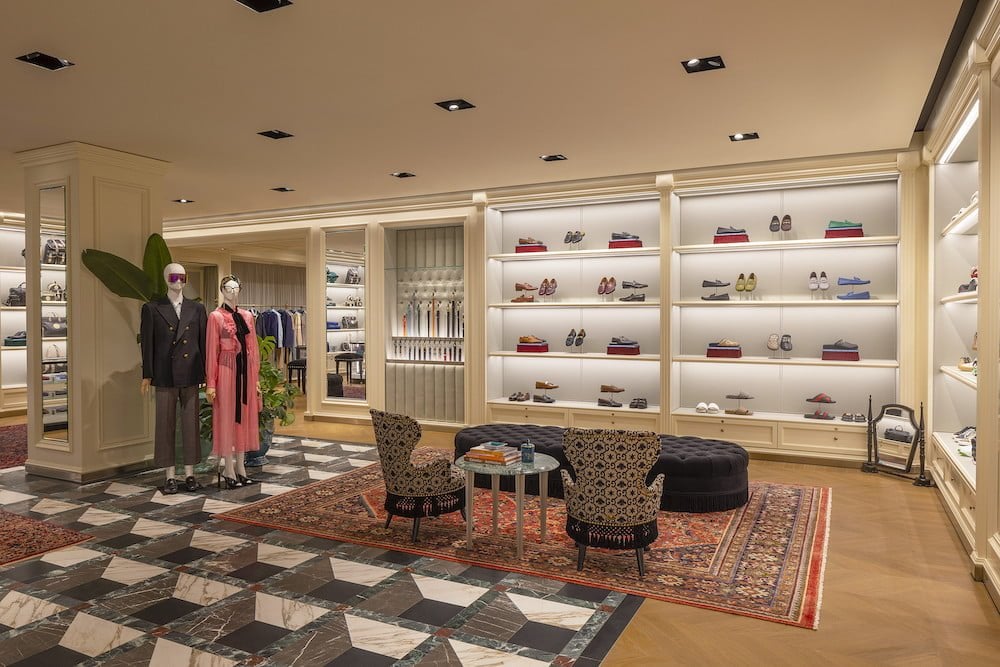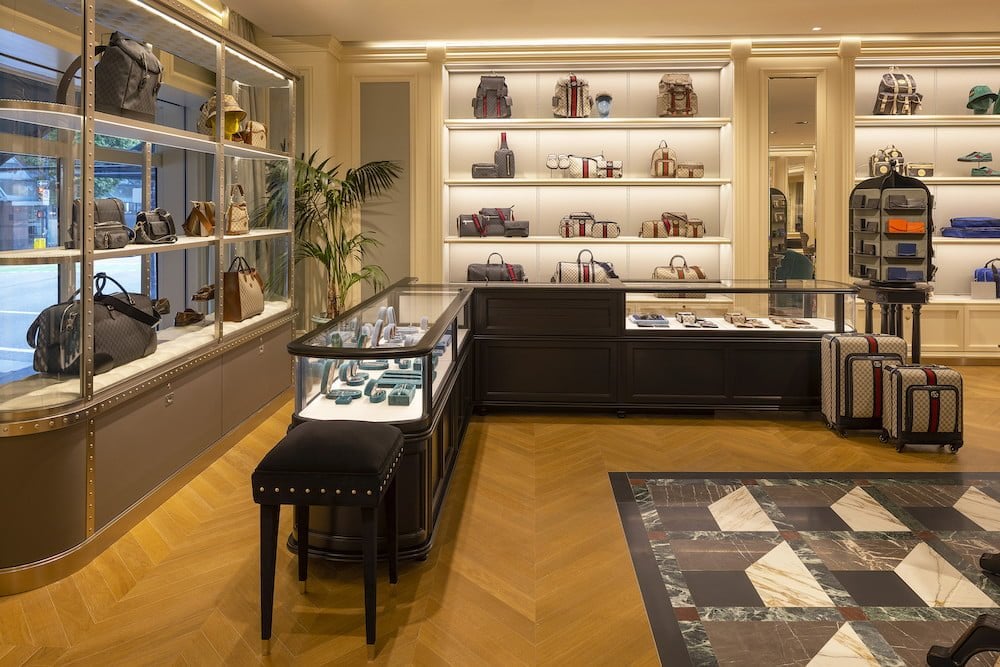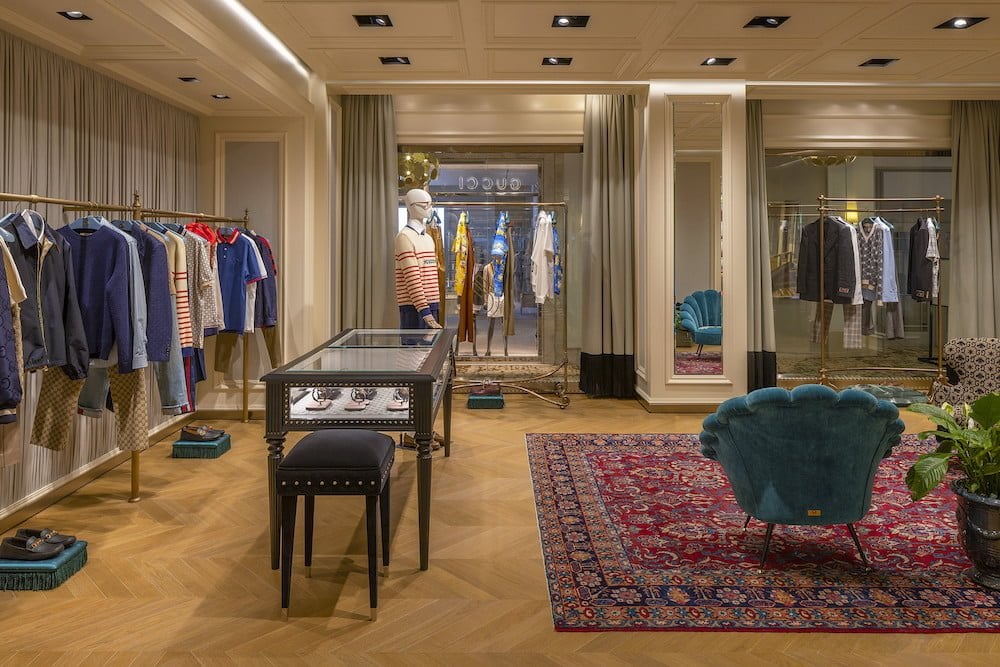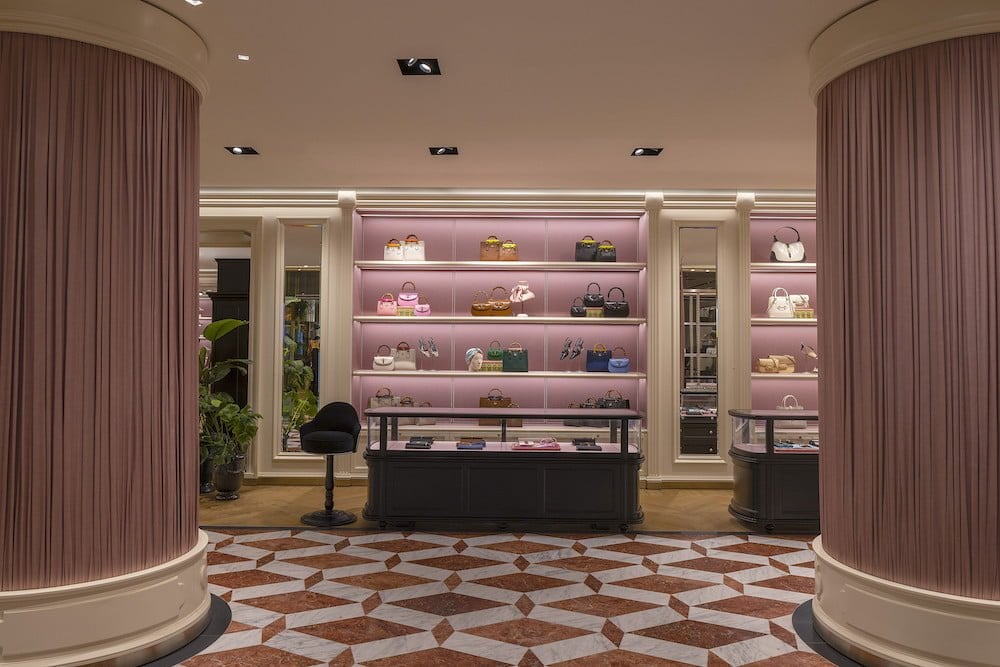
lululemon loyalty program is one being tested by lululemon in a number of major cities — for an annual fee, members receive a free pair of pants, expedited shipping, and special access to classes.
The COVID-19 pandemic and its associated lockdown almost dealt a gut blow last year to Canadian apparel retailers with total sales decreasing 23.6 percent to $23.8 billion, says a new report by Trendex North America, a marketing research and consulting firm.
The report said women’s sales were down 24.6 percent and men’s by 20.6 percent.
“Apparel retailers over the past 12 months have had no choice but to play defence as they struggle to survive,” said Randy Harris, President and Owner of Trendex North America. “However, with the end of the pandemic somewhat in sight, apparel retailers should be increasingly focused on rebuilding their sales and their loyal customer base.”
Randy Harris
Harris said two ways to do that, research by Trendex has noted, is to invest in two marketing initiatives. One traditional and one new.
“The traditional marketing initiative is one that has been a staple of many Canadian apparel retailers. The loyalty program. Although operating a loyalty program was thought to be a basic concept of a retailer’s marketing program, in fact only 25 percent of Canadian apparel retailers, according to Trendex research conducted in January of this year, operate a conventional loyalty program versus 60 percent in the United States,” explained Harris.
“Canadian apparel loyalty programs can best be described as plain vanilla like that of Laura whose customers accrue points for making purchases. In most cases the points equate to a fixed amount of money that can be applied to future purchases at only the retailer. It would be safe to assume that few customers buy from an apparel retailer in order to build up their point total. This is evidenced by the few customers who announce up front at the cash ‘I am a member of the store’s loyalty program’.
“Acquiring loyalty points is often seen as an afterthought, not a driving force in the purchase decision. La Maison Simons’ loyalty program offers a slightly better incentive — a combination of points, free shipping as well as free in-store attendance at events. The retailer’s description of its loyalty on its site is one of the best examples of how a loyalty program should be described.”
Harris said an even more interesting version of a loyalty program is one being tested by lululemon in a number of major cities. For an annual fee, members receive a free pair of pants, expedited shipping, and special access to classes.
“Needless to say, the majority of Canadian apparel retailers cannot offer the types of benefits available as part of Lululemon’s loyalty program but they can still offer experiential activities including evening in-store style shows or in-person discussions with the retailer’s design team,” said Harris.
“What history has demonstrated over and over is that successful loyalty programs combine transactional and experiential to create differentiation and true customer loyalty. Regardless of the loyalty program a retailer offers, its existence has to send out a clear message to the consumer that their business is appreciated.”
But Harris said the question remains: Why don’t all retailers offer a loyalty program and why are retailer programs so unimaginative?
“A new marketing program that all apparel retailers should adapt immediately is what has been labelled ‘pay to play’, but even better ‘buy now, pay later’. Retailers including Aritzia, the Gap, Frank and Oak, Ardene, lululemon, and Shopify are already offering the service,” said Harris.
“There are four or five companies offering a type of pay for play service that’s best known as after pay. It’s a simple scheme. From the consumer’s perspective the consumer announces at the cash that instead of VISA or Mastercard they want to pay with AfterPay. They fill out an application. The application is immediately approved on the spot and they pay one quarter of the purchase price. Over the course of the next six weeks, they make three equal payments,” said Harris.
“The retailer pays 30 cents per transaction plus four to six per cent of sales. Note that it’s more than the standard fee charged by a credit card company. The merchant is paid the full amount of the transaction within 48 hours.”
Harris said the claimed benefits from a retailer offering a buy now pay later service are: 30 percent of the customers are new to retailer; a 20 percent increase in cart conversion; average orders are 18 to 25 percent larger; return rates are lower; and the retailer can advertise offering the service and the service advertises that the retailer offers the service.
“The bottom line, having a loyalty program and offering a buy now pay later option are no brainers. The costs of offering both are very small compared to the possible incremental benefits,” said Harris.
The world around us is a digital one. Over the course of the past couple of decades, aided by the sustained development of the internet and an explosive rise in the use of mobile devices, the pace of innovation and development around digital technologies have been swift and unrelenting. For retailers, the digitization of the shopping environment has provided a plethora of touchpoints at which consumers can be engaged, empowering their marketing and merchandising teams in their collective efforts to increase traffic and convert more sales. Complex promotions and digital coupons have proven to be a powerful tool to support this conversion while adding value to the shopping experience and driving customer loyalty.
The Rise of Digital Coupons
It’s been estimated by U.K.-based Juniper Research, which specializes in identifying and appraising high growth market sectors within the digital ecosystem, that the worldwide value of digital coupon redemptions will surpass US$90 billion by the end of 2022. It adds that mobile devices will be at the heart of this activity, being leveraged to complete 80 percent of all online coupon redemptions. In addition, research conducted by eMarketer suggests that 87.6 percent of shoppers who receive coupons or deals are likely to download a retailer’s app. These statistics speak to the very obvious and continued popularity and use of coupons among shoppers. According to Dan Surtees, Vice President of Strategy & Business Development at XCCommerce, they are also indicative of the opportunities available to retailers with respect to the leveraging of digital channels to support promotional efforts.
Dan Surtees
“Coupon use is extensive in North America and has been for decades,” he says. “Consumers have always been open to receiving deals on product, and that interest is only increasing. What the digitization of the shopping environment and retail operation provides, however, is a powerful platform to target promotions and meet that growing desire among consumers for personalization and communication that’s relevant to them. By leveraging the capabilities of digital coupons, retailers can build their promotional campaigns, and combine them with their existing loyalty programs to better understand which customers to target and the deals and products that will interest them most. In addition, the digital environment also allows retailers to deploy a number of different types of coupons, including generic, single-use, multi-use, coupons restricted to a single customer, coupons with dollar value and custom encoding and randomization methods. Ultimately, the digital world is providing retailers with incredible opportunities to meaningfully engage their customers, drive traffic to their stores and website, increase basket size and heighten product demand on specific items. It’s allowing retailers to make more informed decisions, increasing the effectiveness of their marketing and merchandising efforts as an organization.”

A Strategic Advantage
The digital world is aiding retailers’ promotional efforts to such an extent, says Surtees, that those able to effectively execute complex promotions are realizing a significant strategic advantage over those that cannot. The ease of deploying promotions through digital channels, in addition to the multiple ways by which digital allows retailers to use coupons, are helping to remove many of the traditional limitations that once existed. With new digital capabilities, retailers can offer promotions that facilitate and support any different promotion rules or combination of rules, including simple discount offers, BOGOs, bundle deals, buy more save more, transaction discounts, order discounts, tiered order discounts, discounts based on tender type, and loyalty base points, bonus and multiplier points, among others. As a result, explains Surtees, the opportunity for retailers to cater to and influence shopping behaviour while enhancing the omnichannel experience that they offer is immense.

“It’s obviously extremely important for retailers to attract the attention of consumers,” he says. “But, it’s critical, and the aim of every retailer, to consistently bring those customers back to their store and website and to generate a level of loyalty that ensures continued success. One of the keys to achieving this goal today is in creating promotions that enhance the overall retail omnichannel experience and to provide a stickiness that keeps people coming back. Because digital technologies enable retailers to create promotions and rewards in real time, the incentives that they can offer customers for their continued business can be incredibly powerful.”
Overcoming Challenges
Despite the opportunities that are available for retailers looking to leverage the full potential of complex promotions and digital coupons, and the ways they can help effectively support promotional objectives, there are also challenges involved in implementing them into organizations’ overall strategies and operations. These are challenges that have existed for a number of years now. But, as Surtees explains, these challenges have been exacerbated by the impacts of the COVID-19 global pandemic, exposing the need for retailers to address them in order to stay ahead, or keep up, with the digital curve.
“One of the biggest industry impacts that’s resulted from the pandemic is the explosion in consumer activity on multiple sales channels,” he states. “It’s highlighted a lot of the challenges that retailers were already experiencing or were about to experience. Going forward, much of the retail experience will involve a digital component. Consumers are embracing the different channels and ways to interact with brands and will be expecting more from retailers from a digital perspective. Many retailers are offering, in addition to the physical retail space as a means by which to purchase product, a range of other channels to shop, including e-commerce, social commerce, mobile commerce, BOPIS, and curbside pickup. The pandemic has accelerated retailers’ need to enhance their digital efforts, including their promotion strategy. However, what some are finding is that the systems they use don’t integrate easily with their multiple sales applications and solutions, making it next to impossible to properly leverage the full capabilities of complex promotion strategies, including digital coupons. That’s where the real challenge lies for retailers.”
Overcoming this system integration challenge can seem like a daunting one for those faced with it. It can become a planning, reorganizing and logistical nightmare at best, and at worst can result in a grotesque technological hodgepodge that serves neither function nor strategy. Thankfully, this is where solutions providers like XCCommerce come in, removing the complexities of the challenge at hand and helping retailers move toward a seamless omnichannel offering and experience for their customers.
Leveraging Experience and Expertise
Providing those operating within the retail industry with automated promotion and coupon management solutions for more than 20 years, XCCommerce has the experience, understanding and platform required to help retailers easily manage their strategic promotional programs and to continue growing within the fast-paced world of retail. Headquartered in Montreal, QC, with offices in Toronto and the United Kingdom, the company works with more than 55 brands, including Indigo, Shoppers Drug Mart, Victoria’s Secret, and L.L. Bean, among many others, servicing more than 13,500 storefronts on 30 different channels. Offering a promotion solution that provides its clients with full control over the management of their promotion and coupon offers, the company is helping retailers drive loyalty among their customers and increase sales. But, as Surtees points out, it’s the agnostic nature of the system that XCCommerce offers that makes it a fit for just about any business.
“The promotion management system, which includes our coupon module, is compatible with any operating system, database and sales application,” he says proudly. “It doesn’t matter how many sales applications a retailer currently uses, the XCCommerce solution can integrate with any and all of them. And, in addition to easily and seamlessly integrating with these systems, our solution also helps to ensure that retailers are future-proofed for any other disruption or challenge. XCCommerce is completely decoupled from all other technologies, providing our clients with the huge benefit and advantage of managing one solution that can be leveraged across their entire enterprise.”
In addition to the functionality and integration capacity of the XCCommerce promotional management solution, it’s also multi-currency, multi-language and multi-banner, allowing retailers to leverage their promotions across global markets. The culmination of the solution means that retailers using XCCommerce’s system allow them to lean on one solution to meet all of their needs. It’s reflective of one of the ways that the company keeps its clients at the centre of everything it does. And, as Surtees also notes, it aligns well with its philosophy and the work it does with clients, providing it with an advantage over and differentiation from its competitors.
“XCCommerce truly understands the needs of the retail industry,” he says firmly. “The reason for this is the fact that we aren’t just a technology company, we’re a retail solutions company. The majority of our team have many years of experience within the retail industry. We’re acutely aware of the value of building a trusted partnership and working together through a long-term engagement. As part of that, we make sure that when we start working with a client that we understand their specific requirements, goals and objectives. What kind of customer experience are they trying to create? Are they looking at global expansion? How do they want their coupons and promotions to look? We’re involved with them throughout the entire process, from implementation and integration to mapping and planning with respect to the development of new trends within the industry. Through a combination of our retail and innovation expertise, we help retailers create and leverage strategic advantage through their promotion and coupon management.”
Continued Product Enhancement and Growth
To help bolster its suite of services, XCCommerce recently introduced a new Promotion Information module designed to complement its existing product by providing time-based promotion information for web and mobile, and is currently in the design phase of a new promotions analytics module which will leverage artificial intelligence and machine learning in order to further inform promotion strategies. According to Surtees, the addition of the new modules will ensure XCCommerce remains the industry leader in innovative promotion solutions, delivering an end-to-end promotion management solution, enabling retailers at the analytics, planning and execution stages of their promotions. And, he says, these latest developments are perfectly in line with the company’s plans for further near-term growth.
“We have an extremely successful track record in North America. And our focus remains on continuing to enhance our product and offering to retailers across the continent. However, we’ve also identified a number of retailers globally that could benefit from our expertise, so we have expanded into Europe. In addition, we have broadened our scope to offer promotions-as-a-service in the cloud, so we can run the products we offer and manage the environment so the retailer doesn’t need to build out that expertise internally. We possess that expertise and a fundamental understanding of the needs of our retail clients. Through continued product enhancement and the holistic nature of the services that we provide, we can remove their most pressing pain-points, delivering cutting edge tools to position them for future growth and success.”
The past year or so has been a rough one for most retailers across Canada and around the world. It’s been a 12-month period that has tested the resolve and character of many, pushing some to the edge of survival, and others less fortunate beyond it. And as lockdowns persist and provinces and communities across the country continue to await a full rollout of COVID-19 vaccines, it can be comfortably suggested that the resolve and character of the industry could be tested further before a post-pandemic world is welcomed. It’s been a time rife with challenges, eliciting a need for creativity, imagination and other forms of unorthodox thinking in order to survive and succeed. For Canadian-owned and family-run retailer, Showcase, the time has served as a moment of pivot and innovation, supporting the company’s growth despite the adversity faced by the industry.
Showcasing the Art of the Pivot
The company, founded in 1994 by Edmontonian, Amin Jivraj, has cultivated a name for itself over the course of more than a quarter century as the ‘Home of the Hottest Trends’. In that time, it’s generated an extensive, active, and loyal customer-base and has managed to grow its store network to 117 locations — 10 in the United States and 107 in major malls across Canada. In the years just prior to the pandemic, the company grew its staff substantially as it plotted further expansion of the Showcase brand, aiming to expand its reach into untapped markets. But when the impacts of COVID-19 began to take hold, with much of its store network restricted by lockdowns, the company knew that it needed to react. And it didn’t waste any time in doing so, immediately pivoting its business model and working with its suppliers to facilitate the quick and safe distribution of personal protective equipment (PPE) to frontline workers during a time of shortage and great need. It enabled Showcase to operate as an essential service, allowing its stores to remain open throughout the pandemic. But, according to the company’s CEO, Samir Kulkarni, it most importantly provided a way in which Showcase could meaningfully contribute toward the safety and wellbeing of others and the improvement of a difficult situation.
Samir Kulkarni
“What we did back in March of last year represents the biggest pivot in the company’s history,” he says proudly. “We’re very used to reacting to changing trends in the marketplace. But this was a health crisis first and foremost. We were aware of the devastation that was happening on the front lines when the pandemic first hit Canada and the lack of health supplies that were available for first responders. We realized that we could make a difference and contribute positively toward the health and safety of communities. So, we rediverted our resources to help.”
Kulkarni explains that because Showcase’s base business essentially disappeared back in March of last year, along with its ability to provide the fun, interactive, discovery-based, in-store retail experience that the company has become known for, the pivot was a necessary one. It was represented by the launching of 150 SKUs of PPE, something that required bidding by the company on a global level for supplies that were at the time extremely scarce. The retailer secured these items for its stores, commissioning planeloads of inventory to be flown in from all over the world, including hand sanitizer, N-95 respirator masks and face shields, among a range of other items and equipment. Bringing the inventory in meant that more than 100 Showcase locations remained open during the first pandemic lockdown, with dedicated hours and pricing to first responders, healthcare workers and seniors. The retailer also provided bulk pricing for hospitals and governments, establishing a wholesale PPE division within its business to meet the demand. In total, Showcase has provided 11 million units of PPE, equating to an estimated $27 million worth of supplies, serving as an incredible example of pivot and innovation during the most difficult of times.
Meeting Online Demand
Becoming a provider of PPE supplies was not the only pivot that the company made in order to address the effects of the pandemic, however. A sudden spike in online activity by the company’s customers – a trend experienced by just about every retailer offering e-commerce capabilities – required Showcase to make some changes to accommodate the increased online demand.
“Our e-commerce grew substantially throughout 2020,” he says. “It’s growth that’s required a lot of adjustments to our systems and processes. Our head office and national distribution centre just outside of Toronto is 106,000 square feet. We needed to rethink and repurpose the majority of that space in order to deal with a primarily e-commerce environment for several months. We made the necessary changes and hired a substantial workforce to keep up with demand at that facility and to allow us to continue to serve our customers who still wanted to make purchases but were unable or unwilling to visit a shopping centre. It represents another critical pivot that we made, enabling our continued growth.”
Proprietary Trendspotting Technology
The company, which has grown steadily during the course of its 27-year history, achieved a 33 percent increase in sales over the past three years. And in 2020, it surpassed the $100 million revenue mark for the first time. It’s incredible growth which Kulkarni says the company is extremely proud of, attributing it to the hard work that was put in by the entire Showcase team. He describes the company’s success as a testament to its perseverance and ability to innovate during difficult times, quickly acknowledging the significance of the pivots made over the past twelve months. However, he’s just as quick to recognize the fact that Showcase’s growth has not simply been a product of these pivots, pointing to its proprietary trendspotting technology and capabilities as another one of the drivers of the company’s continued achievements.
“Most retail offerings throughout the industry tend to be driven by vendors,” he says. “The challenges with buying based on vendors or supply is that it may not be what the customer actually wants. Our philosophy is to flip the notion of vendor-based buying to develop a consumer-based strategy instead. The idea is to listen to consumers and deliver to them exactly what they’re looking for. We use sophisticated techniques powered by algorithms and machine learning to best understand what the consumer is looking for. It’s critical in driving and informing our real-time sourcing strategy, helping us to find the needle in the haystack. There are a lot of products in retail, but there are few that are truly trending. Our proprietary technology allows us to find the trending products and bring them to market immediately.”
Advantage and Differentiation
Its technology and unique method of identifying the hottest product trends via social media, website search volumes, internet posts, sentiment, general awareness and demand in the marketplace, provides Showcase with a competitive advantage and differentiation, allowing it to offer its customers more exclusives and first-to-market items. And, as Kulkarni explains, the products that the Showcase algorithms determine as trending are often nonexistent within the market, enabling the company with the opportunity to develop private label solutions to meet consumer desire. To do this, Showcase often develops products from scratch, working directly with factories, and creating the branding, packaging and visual in-store displays. This vertically-integrated model means that the retailer remains nimble within the market, ensuring greater control over production and supply. Fully 70 percent of the company’s assortment is currently its own private label offering, exclusive to Showcase and its customers.
One great example of the potential that’s inherent in the company’s mix of technological trendspotting and first-to-market production philosophy is its introduction of Hot Chocolate Bombs this past winter. Branded as Sweet Bombs, the product – a hollow chocolate ball with marshmallows and cocoa powder inside which, when put into a mug and hot milk is poured over it, turns into a tasty hot chocolate treat – was identified by the Showcase algorithms as going viral on October 10, 2020, moving its status from a niche item to that of an emerging trend. However, diagnosing the trend was the easy part. The challenge was in the fact that there was no inventory of this item in the market. Having amassed more than a billion views on social media, and without any chocolate manufacturers producing the treat, Showcase recognized the opportunity to produce their own, as well as a chance to stimulate and support local economies at the same time.
“Hot Chocolate Bombs provided us with an amazing opportunity to connect with our communities and engage local restaurants, bakers and caterers to partner and generate revenue during a very difficult time for businesses,” he asserts. “We recognized that they are the ones with the expertise, know-how and customer-base. And so, we provided them with the ingredients which included 30 tonnes of chocolate, the recipes and packaging. And together, as a collective community, we were able to produce the trending item. We put out a 1 million ball challenge to Canada and were able to have Hot Chocolate Bombs in stock at stores from coast-to-coast by Black Friday, selling millions of dollars worth of the product in just a few short weeks during the 2020 holiday season.”
Continued Expansion
Showcase’s recent successes, supported by the tremendous pivots that the company has made in the past year, are truly remarkable and lay the perfect platform for continued growth and expansion of the brand. And that’s exactly what Kulkarni says the company has planned. Through continuous streamlining and enhancement of its three-step trend system, which includes identification of the trend, introducing it to the market and bringing it to life in-store and online, Kulkarni believes that Showcase has the opportunity to expand its physical store network even further in the years to come.
“We are big believers in bricks-and-mortar,” he admits. “It’s the most visceral, personal experience that a retailer can provide for its customers. So, although we’re almost fully saturated in malls in English Canada, we’ll continue to open stores. There are still a handful of malls that we’d like to be in, which we’re working on now. But the major growth potential for us is in the US. Based on population, we should have ten-times as many stores in the US as we have here in Canada, equating to a 1,000-store potential. And even if we’re off by half, it still provides us with a lion’s share of the business. We opened ten stores in the US in 2019 just prior to the pandemic. Those stores are growing despite all of the recent challenges. As we complete that pilot, we’ll then turn our attention to an extensive rollout in the US market.”
To support this growth, however, Kulkarni says that the company won’t lose sight of its commitment to customers across the country, remaining focused on providing the Showcase community with a consistently exceptional experience, wherever they are. And, in today’s digital world, while impacts of the pandemic continue to persist, he recognizes the significance of an enhanced online presence in order to continue engaging with consumers, connecting them with the hottest trends on the market today.
“We want to be able to provide our customers with the most personalized and curated experiences possible. To help create those experiences online, we’re investing more into digital advertising on social media platforms. It’s providing us with a different means by which to get in front of our customers, offering them another channel through which they can engage with us. And, going beyond advertising, we’re also seeing a lot of opportunity in interactive video shopping. So, we’ve also been focused on creating video content and developing strategies to integrate e-commerce with video content in order to make that in-store Showcase experience available for our audience online. In the end, retail is all about offering interactivity and personalization for the customer on their journey to discovery. Our aim is to continuously enhance the experience we provide, wherever that discovery is taking place.”
The retail sector dominates the Top 10 Most Reputable Companies in Canada in the 2021 list that is annually produced by market research and analytics company Leger.
According to Canadians, the most reputable companies in Canada this year with a maximum possible reputation score of 100 are:
Canadian Tire (Reputation Score: 80)
Shoppers Drug Mart (Reputation Score: 78)
Kellogg (Reputation Score: 75)
Sony (Reputation Score: 74)
Campbell (Reputation Score: 73)
Google (Reputation Score: 72)
Samsung (Reputation Score: 72)
Interac (Reputation Score: 71)
YouTube (Reputation Score: 70)
Dollarama (Reputation Score: 69)
Dave Scholz
The 24th annual Reputation study has tracked the reputational rise and fall of numerous companies over time. Leger surveyed more than 32,000 Canadians to explore their perspectives on more than 275 companies in 29 different sectors.
“The results do not show massive change this year; rather, they provide lessons in what leads to a reputation shift and the difference between a strong reputation and one that is fragile,” said Dave Scholz, Executive Vice-President at Leger. “The rise in media coverage of pandemic news and all other issues put many companies out of the spotlight and, if they had a sufficiently good, stable reputation, we saw little movement.
“Overall, I’m kind of heartened by the fact that reputation didn’t change much this year. We had a year of pause for a lot of corporations and especially for a lot of retailers and in general, Canadians feel in a similar way to them than they did a year ago.
“For organizations that had a particularly tumultuous year or years leading up to the pandemic – like SNC Lavalin as an example – they had a year off. They’re the most substantial improver because they were not being discussed about any of their crises in the media on a regular basis. Other organizations had to live up to a little bit of a stress test. And you look at some general decreases with organizations like Amazon, Walmart, Sobeys grocery retail chain . . . The way people are working with these organizations and some of the ongoing coverage of these organizations being open while other smaller businesses were not has hurt the reputation of these companies.
Exterior of Shoppers Drug Mart. Photo: Shoppers Drug Mart
“Amazon, along with the shipping and couriers which also had a bit of a hit this year, it’s the overall stress test that now more and more people were starting to use these services and more and more people are expecting something different from them and they haven’t necessarily lived up to the pre-pandemic billing.”
Scholz said one of the keys for companies is building a base reputation that comes from delivering quality products and quality service.
“When we look at the pillars of reputation and what is driving reputation amongst retailers, it’s all about the quality of products and services. But to move to a top 10 level like a Canadian Tire you need to adopt some of the intangibles that go along,” said Scholz.
“It isn’t just about the quality of the products and service you give. It’s the fact that we feel you are committed to us as Canadians. We feel we’re part of that organization . . . That brings the companies to a level where they’re a little more revered within Canadians’ retail status.”
The Leger report said the hospitality industry has been hit hard reputationally as travel declined drastically, resulting in a collective four-point reputation score drop. In contrast, increased usage strained other industries, including the courier/shipping sector, which also experienced a collective four-point drop in reputation score. Online shopping increased drastically, and Canadians’ patience was challenged in terms of delivery, said the report.
“With Canadians spending more time at home and embracing food and home cooking more than ever, the packaged goods/food industry benefited reputationally, as did other sectors whose products and services were embraced by Canadians due to the pandemic,” said the Leger report.
“The pharmaceutical industry saw a plus one increase this year, driven largely by an increase in reputation for Pfizer, AstraZeneca, and Bausch Health related to increased media coverage around vaccine development, followed by roll-out. The COVID-19 pandemic continues, and the next year will continue to be challenging for some industries. Going forward, we will monitor which industries and companies successfully transition to a post-pandemic life. Those that do so while leading the way for economic and social recovery will likely be rewarded in the next edition of our Reputation study.”
Scholz said payment service companies, like Interac, received a boost as they provided consumers with the trust and confidence to make online purchases.
“I think it’s no surprise where VISA has a campaign right now where they talk regularly about being comfortable making your purchase because it’s protected because you’re safe,” said Scholz.
Luxury multi-brand retailer Nicolas, located at 153 Cumberland Street in Toronto’s Bloor-Yorkville Area, carries some of the world’s most highly respected luxury brands for both men and women. Nicolas is regularly sought out by high-profile North American tastemakers and celebrities for his unique take on fashion, always bringing in one-of-a-kind trend-setting pieces for his discerning clientele. Retail Insider recently spoke with Founder and Owner, Nicolas Kalatzis, to discuss how he got started, some of the challenges during COVID-19, and what Bloor-Yorkville could improve to attract a continuing affluent demographic following recent lockdowns.
Nicolas Kalatzis
RI: How did you first get involved in Retail? What motivated you to open your own store?
NK: My first job in retail was at the original Brick Shirt House near the corner of Yonge and Gloucester Streets next to Fenton’s restaurant in Toronto. I bought a shirt for $32.10 with tax and the owner, Alan Goouch, offered me a job. I was a student and it was a part-time job where I learned that I had a skillset for fashion. I could touch fabrics blindfolded and put together colours effortlessly, it was like I could swim the first time I jumped in the pool. On my days off as a student, I would visit Marvel Pant Company and I learned more about garments. I worked for Alan Goouch for a decade and then at the Marc Laurent store on Bloor Street which brought in brands including Claude Montana, Byblos, Cerruti 1881, and others.
I opened my first store in 1991 at the northwest corner of Bloor Street and Bellair Street, across from Harry Rosen. David Daniels of the Daniels family spearheaded financing for the store during a challenging recession. I styled my own private label clothing collection, accessories, and shoes (handmade by Fatta A Mano produced by small artisan factories), and I brought in designers no one had heard of. Names such as Giorgio Armani Black Label, Romeo Gigli, Canali and Paul Smith that all became more well-known with time. I opened the first Vestimenta (Black Label Armani) boutique in Canada featuring their own fixtures from Italy. I opened my current store on Cumberland Street in 2000 with brands such as Lardini, Aspesi and Herno, which is one of the best outerwear brands in the world, and we also carry some very strong labels such as Lanvin, Isaia, and Neil Barrett. Over the years, I have worked in excess of 70 hours weekly plus all of the European buying trips twice a year, as well as monthly trips to New York City for the store. I have been a pioneer with the brands that we have brought into Toronto. In 2004, GQ named Nicolas as one of the best stores in world, and British Vogue in 2013 named us as one of world’s top 100 stores.
The biggest asset is my eye to measure pin and tailor garments is second to none. Life is good when you are doing something that comes naturally to you that you love and can make a living from.
RI: What was it about Yorkville that made you decide to locate here?
NK: My first job in the Yorkville area was at Marc Laurent in 1980s. The area for the past several decades has been a destination for people who desire luxury goods. Being a node for luxury brands and consumers, having a store in the area makes sense. Being on Cumberland Street for a business like mine is ideal. The street has a quaint European flair which included foot traffic. Before COVID-19, about 75% of my customers were regulars and 25% were walk-ins. Today walk-ins are limited given the pandemic and with major hotels such as the Four Seasons, Hazelton Hotel and the Windsor Arms in the area being almost empty, that tourist traffic is not there.
RI:What are some of the unique challenges of being in Yorkville that is different from being in a mall?
NK: The weather is a big one, particularly in the winter. At the same time, you get a far more personalized and customized vibe in Bloor-Yorkville that you don’t generally get in a mall. Except for Yorkdale that is, which is a phenom with some stores that aren’t even on Bloor or in Yorkville.
RI:How has Covid impacted your business and what strategies did you use to defeat it?
NK: COVID-19 has hit the fashion industry from the top down. Some fashion houses have closed, some designer showrooms in the U.S. have shuttered with the process being accelerated due to the pandemic. It’s hard to do business when people are not in the offices. There are no events for charities, weddings, and other celebrations. The clothing purchases for most, therefore, are limited, except for possibly activewear and some smart-casual items. Sales of suit and sports jackets are extremely soft. Some people are also concerned for their jobs and are not doing lavish things. One only needs so much clothing. Smart-casual is where I focused over the past eight to ten years — it’s not just a sports jacket, power-blue button-down shirt without a tie. It’s an art to dress smart-casual. Connecting with my clients has proven successful and private appointments are available.
RI:What do you think the Bloor-Yorkville community needs to do to thrive in the future?
NK: I think the area would benefit from high-end advertising and events closing streets off. Sophisticated marketing makes sense, and the BIA may wish to communicate more with local merchants to determine the best messaging. Toronto is a terrific city and the Toronto International Film Festival is world class. Similar marketing tactics would be beneficial for Bloor-Yorkville to attract the ideal target demographic.
RI: Are there any retailers that inspired your current store concept?
NK: I would say no, to be honest. The way that I have curated my stores and product it unique. It’s my own look, and Nicolas as a result is not like other stores.
Luxury Careers Canada is a new recruitment firm job board that will continue to expand with new positions. Check out the job board here.
Many Canadians are oblivious to the fact that in the food industry, suppliers need to pay grocers to conduct business. Fees were justified by merchandising costs, shelf space, things anyone would expect. Yet in recent years, things changed. Companies like Loblaw, Walmart and Metro were using infrastructure and capital projects to justify new fees. Fees were imposed quickly, unilaterally. Walmart’s latest $500 million dollar distribution center project is partially financed by suppliers.
Grocers were charging fees by mainly dictating how business should be conducted in food distribution. It was their way or the highway, plain and simple. As grocers requested, suppliers and food manufacturers complied. It was the same in the United Kingdom and in Australia where oligopolistic powers in the grocery space prevailed. That is, until a code of practice was implemented. It seems Canada is now joining that club.
Indeed, a draft code of practice exists now in Canada between food manufacturers and grocers, well, one grocer. Our country’s number two grocer Sobeys, which recently acquired two key independent grocers in Longo’s and Farm Boy, felt it was time for a change. Number one grocer Loblaw and Metro, whose number three, have always stated a code was not necessary In Canada, and it’s highly doubtful they will join.
Agriculture Ministers in the country recently agreed to create a Working Group to study this important issue. Instead of waiting for a report to be presented sometime in July, both Food Health and Consumer Products Canada and Empire/Sobeys opted to go ahead and set a standard for the industry by presenting a new code of practice. The code includes 5 guiding principles which essentially gets all parties to commit and act in good faith as they conduct regular business. No more unilateral decisions, no more last-minute ploys, just straight, honest business.
Current market conditions just made it more challenging for food processors in Canada. Food manufacturing contributed $26.5 billion to the Canadian GDP in 2020. In the U.S., it was $766 billion in 2020, which is 29 times larger. That’s right, 29 times. As it is in the U.S., a strong food processing sector can serve as a strategic anchor for the entire industry. The supply chain is not as vulnerable to macroeconomic shifts and can allow the industry to better support our farmers. The Mad Cow crisis and our latest spat with China are good examples.
Despite the last decade seeing few new food plants open while several closures were reported, food manufacturing was the second largest manufacturing sector in Canada after transportation equipment in 2020. Despite the financial heartaches, food manufacturing also still managed to grow its GDP contribution from 13.18 per cent in 2010 to 13.47 per cent in 2020. But the sector can do much better.
While food prices continue to climb in Canada, grocers’ fees, in addition to low margins, have not helped manufacturers benefit from these rising prices. In most cases, farmers did not benefit from recent food price hikes. Some may speculate that food prices may rise due to a code, forcing grocers to charge more to protect margins. The United Kingdom has had a code since 2009, and food inflation in the country has generally been lower than here in Canada over the last decade.
This code is meant to change the culture of an industry in which vertical coordination and collaboration barely exists. It is also very much about dealing with a broken supply-side economic model few people in Canada can appreciate. The code is obviously an unproven concept in Canada, and few know if it’s going to work without other major grocers participating. However, the current situation was no longer viable.
Strong supply chain collaboration could lead to more innovation and growth. When forced to work on issues, parties will need to share data and insights. As such, market gaps can be recognized more easily as the execution of developing and commercializing novel food products is more likely. The code can create opportunities if the group remains disciplined and committed as the code is not legally binding.
Independent grocers, on the other hand, will likely get some welcomed help with the code. Unlike major chains, they could not really impose anything on suppliers. The relationship Sobeys has now with suppliers can be used as a useful benchmark.
Only time will tell us if the code works. But this effort is a valiant one. The concept is no longer just academic. Instead of letting politics dictate the industry’s faith, suppliers and Sobeys are giving themselves some hope that, perhaps, things can be different. Going ahead now with a code, not having everyone involved, also implies that the creation of a code of practice would have never happened with both Loblaw and Metro participating. Plain and simple.
Luxury Watch Brand Tudor Opens 1st North American Store at Toronto’s Yorkdale Shopping Centre
Swiss Luxury watch brand TUDOR has opened its first storefront in North America at Toronto’s Yorkdale Shopping Centre. The 450-square-foot space is a partner boutique connected to the mall’s Raffi Jewellers store which also features several other branded spaces. The boutique technically opened on November 19, 2020 and had to shut three days later due to pandemic lockdowns.
The TUDOR space features red, black, and grey colour hues combined with a mixture of high-quality finishes. The store includes a range of classic, sport, diving, and heritage inspired watches, including the newly-released TUDOR Royal line which is described as having a sport-chic range of watches with integrated bracelet, signature-notched bezel, and automatic movement.
Exterior of the new TUDOR boutique at Yorkdale Shopping Centre. Photo: TUDOR
Interior of new TUDOR boutique in Yorkdale Shopping Centre. Photo: TUDOR
TUDOR was founded in Geneva, Switzerland, in 1926 by Hans Wilsdorf, the founder of Rolex. Tudor continues to be the ‘sister’ company to Rolex with both companies being owned by the Hans Wilsdorf Foundation. The watches, which from afar could be mistaken for Rolex, are generally priced in the $3,000-$7,000 range depending on the style.
Interior of new TUDOR boutique in Yorkdale Shopping Centre. Photo: Tudor
Raffi Jewellers, which is the licensee for the new TUDOR boutique, operates storefronts at Yorkdale as well as at Square One in Mississauga. The Yorkdale store spans nearly 4,400 square feet. Tudor replaces a Jaeger-LeCoultre boutique that relocated down the hall into a standalone space that is now corporately owned.
Yorkdale is home to the biggest clustering of luxury brands in Canada, and sources say that more announcements are on the way for this year as well as into 2021.
The soon-to-shutter Zara Home store at CF Carrefour Laval. Photo: Rentan TGLG
Zara Home Closes Canadian Stores
Spanish fashion brand Zara is closing its home division, Zara Home. By next month the brand’s last Canadian store — located near Montreal — will shut. Zara Home operated two storefronts in Canada for several years but the brand never expanded as broadly as had been anticipated.
The Zara Home store at CF Carrefour Laval is set to close on April 15, according to Retail Insider Montreal correspondent, Maxime Frechette. The 4,200-square-foot Zara Home store occupies a prominent location in the suburban Montreal mall near a Hudson’s Bay anchor store and across from Sephora and Aritzia.
A 4,500-square-foot Zara Home store at Toronto’s Yorkdale Shopping Centre shut permanently last year, and its space is set to be integrated into a new Nike flagship store that will be opening in the mall this year. The Yorkdale Zara Home store was the first in North America when it opened on August 22, 2013.
The Zara Home stores have struggled with merchandising and aggressive competition from other home furnishings retailers over the years. Zara Home stores operated as standalone units separate from the company’s popular Zara fashion stores. Zara Home continues to maintain a standalone Canadian e-commerce site.
Madrid-based Inditex also operates Zara and Massimo Dutti stores in Canada.
Exterior of shuttered Kit and Ace store at 102 Bloor Street West. Photo: Craig Patterson
Kit and Ace Exits Toronto’s Bloor Street Luxury Run
Vancouver-based fashion retailer Kit and Ace has shut its store at 102 Bloor Street West in Toronto. The store opened in 2015 and replaced a Benetton store that had operated there for years.
The full space spans 4,520 square feet on one level and includes a coffee component facing onto Critchley Lane called ‘Sorry Coffee’ which remains open for now. The coffee bar is also expected to shut and the space is now being offered for lease by Stan Vyriotes and David Wedemire of DSWV Realty. More information on the space can be found here.
Click for interactive Google Map of surrounding area.
Kit and Ace went on an expansion tear in 2015 and opened pop-up stores in markets across Canada. The brand was founded in 2014 by the Wilson family, including lululemon Founder, Chip Wilson, and his wife, Shannon, and son, J.J. The brand struggled financially and in 2017 all international stores were closed. In December of 2018 we reported that Kit and Ace CEO, George Tsogas, had purchased the company from Wilson’s Hold It All Inc. and that the brand was being repositioned from a ‘technical cashmere’ brand to a ‘modern commuter’ brand. With that, fashions targeting urban cyclists were added to stores.
Kit and Ace continues to operate six standalone stores in Canada. That includes two in the Vancouver area (165 Water Street in Vancouver and at Park Royal in West Vancouver), one at 171 Lakeshore Road E. in Oakville, ON, one in Mount Royal Village in Calgary, and, during the pandemic, Kit and Ace opened a store in a unique heritage building at 10324 Whyte Avenue in Edmonton.
Exterior of new Summerhill Market on Eglinton Ave West. Photo: Summerhill Market
Summerhill Market Opens 4th Location in Forest Hill
The latest addition to Summerhill Market’s expansion plan has opened on Eglinton Avenue West, in Toronto’s Forest Hill neighbourhood.
The fourth and largest location to date, Forest Hill’s Summerhill Market sits at 7,200 square feet and spans two floors. The space was previously a restaurant and has been extensively renovated to accommodate the boutique grocerant and its extensive product line up.
With two floors to work with, Summerhill dedicated the main floor to fresh produce, dairy and dairy alternatives, and grab-and-go meals. The second level provides customers with the retailer’s popular heat-and-eat items, a butcher, a deli and cheese counter, and various frozen food and pantry staples. Also, unique to this location and largely due to the local demographic, Summerhill Market Eglinton offers an extensive selection of kosher goods.
1 of 8
Interior of new Summerhill Market on Eglinton Ave West. Photo: Renee Suen
Exterior of new Summerhill Market on Eglinton Ave West. Photo: Summerhill Market
Retail Insider reported on Summerhill’s recent partnership with Chef Ted Corrado, who will be overseeing the market’s line of 800-plus house-made items. In addition to adding more restaurant-quality dishes and finessing Summerhill’s established recipes, Corrado is adding frozen and prepared foods from some of his industry peers, including dim sum from Patois chef Craig Wong.
Retail Insider has reported on Summerhill Market’s rapid expansion in the past. In December of 2019, we reported on the opening of Summerhill’s Annex location. In that article, we revealed that the Eglinton store would be opening shortly thereafter, with no way of knowing what kind of year 2020 would be. Now in the spring of 2021, we are pleased to watch Summerhill Market’s continued growth with it’s newest store.
Circle Craft Launches #ShopYourCircle Pop Up to Support Local
The Circle Craft market on Granville Island in Vancouver is encouraging local shopping with a pop up experience. The unique BC artist co-operative says that it wants to continue this push towards supporting smaller, local retailers through its first-ever pop up experience at its Granville Island store.
The pop up will showcase three style collaborations with local design influencers and will also highlight unique work from seven unique artists. Pieces range from glasswork to paper art to pottery.
The #ShopYourCircle pop up is taking place from March 31 to April 12, 2021. Supporting local retail is important to the future of the Canadian economy, as was laid out in a recent feature in Retail Insider.
Kimberly Chamberland (right), CEO, and Jasmine Chamberland (left), President of Big Mountain Foods in their new 70,000-square-foot facility that opened in February 2021. CNW Group/Big Mountain Foods)
Big Mountain Foods Announces Major Expansion Amid Competitive Vegan Market
Mother-daughter-owned-and-operated Big Mountain Foods has announced its expansion into a 70,000-square-foot facility. The space will provide the company with the tools and international reach to make their plant-based foods more accessible than ever. Big Mountain Foods is also aiming to operate a zero-waste facility by 2025.
The natural vegan food manufacturer, owned and operated by Kimberly and Jasmine Chamberland, recently partnered with grocer giant, Kroger, to help facilitate the move into the sprawling new facility.
“I am so proud of the expansion Big Mountain Foods has undergone to get to this point and we are ready to move forward into a larger facility with the top talent in place to execute our product outreach strategy across the USA, Canada, and Asia over the next five years,” says Kimberly Chamberland, CEO of Big Mountain Foods and Orange County, California native.
Big Mountain Foods ‘Veggie Grounds’. Photo: Big Mountain Foods
Big Mountain Foods ‘Veggie Patty’. Photo: Big Mountain Foods
“With new brands entering the plant-based space, we’re ready to expand our capacity and execute our vision to be the leader in clean eating while continuing to innovate allergen-free, clean-label products with ingredients our customers know and love,” says Jasmine Chamberland, President of Big Mountain Foods.
Founded in 1987, Big Mountain Foods has been a supermarket mainstay for years due to the quality of its plant-based products. The manufacturer also prides itself on being entirely female-owned and having a 90% female workforce.