Advertisement
Advertisement
Home Blog Page 848

Amazon Launches Intellectual Property Accelerator for Canadian Retailers and Businesses: Interview

Amazon introduces its IP Accelerator to the Canadian market. Photo: Amazon

Retail giant Amazon has launched the Intellectual Property Accelerator to help Canadian businesses — of small and medium size — secure a trademark and protect their brands.

The initiative connects these businesses with a network of Canadian IP law firms charging reduced fees on key services and participating businesses can access Amazon’s brand protection tools months before their trademark registration is issued.

Mary Beth Westmoreland, VP, Brand Protection at Amazon, said more than 30,000 Canada-based third-party sellers have grown their business with Amazon, reaching millions of customers while grossing more than $2 billion on Amazon’s stores around the world.

Mary Beth Westmoreland

“IP Accelerator is a program that helps businesses that sell on Amazon more quickly obtain intellectual property rights to protect their brands, both in Amazon’s stores and in the broader marketplace,” she said.

“IP Accelerator connects businesses with a curated network of eight trusted Canadian IP law firms that provide high quality trademark registration services at reduced rates to help them secure a trademark with the Canadian Intellectual Property Office. This is important because IP rights are vital to businesses to help them protect their brands, and stop bad actors from copying and infringing on their ideas.

“Amazon is committed to the success of our SMB sellers. We know that seeking IP protection can be a time-consuming, daunting process, and we want to facilitate and expedite the process for as many brands as possible, working with Canada’s most skilled legal professionals.”

The list of participating Canadian firms includes Bereskin & Parr LLP, Chari Prenol Slaney & Turco, Palmer IP, Kestenberg Siegal Lipkus LLP, JZC, Ridout & Maybee LLP, Brouillette Legal Inc., and Clancy PC. These firms are located in Vancouver, the Greater Toronto Area, Ottawa, and Montreal. Participating law firms can serve clients in several languages including English, French, Hindi, Italian, Japanese, Korean, Portuguese, Spanish, and Japanese.

“What’s also exciting is that IP Accelerator provides SMBs with early access to Amazon’s brand protection tools even before their trademark is officially registered. For example, Amazon’s Brand Registry is a free service that provides SMBs with powerful tools that help them manage and protect their brand and IP rights in Amazon stores, with more than 350,000 brands enrolled to date. Participants benefit from Amazon’s automated, data-driven protections that proactively remove suspected infringing or inaccurate content as well as tools that enable brands to report suspected infringement,” said Westmoreland, adding that the IP Accelerator is very much a program that sets SMBs up to grow over the long term.

She said Amazon created IP Accelerator to help SMBs build and protect their brands by relieving the time and challenges that can be associated with filing an application for IP protection.

“We know how critical it is for a brand to protect its IP, and we want to help remove barriers by connecting our SMB sellers with Canada’s top IP legal talent,” explained Westmoreland.

“We also want to help as many brands that sell in our store as possible have access to protections which were previously only available to brands with registered trademarks. These protections include powerful features to find and report potential infringing listings, automated brand protections that remove suspected inaccurate content, and eligibility for brand-building tools. IP Accelerator provides brands with these protections even before their trademark is issued, and we believe that this can have a significant impact.”

IP Accelerator was launched in the United States in 2019, and has since expanded to Europe, Japan, India, and now Canada. Since the program’s initial launch, more than 6,000 trademark applications from participating brands have been submitted to trademark offices including the US Patent and Trademark Office, the European Union Intellectual Property Office, the UK Intellectual Property Office, India Trade Marks Registry, the Japan Patent Office and the Canadian Intellectual Property Office.

Jennifer Pratt

“We’re working with more and more SMBs, and what we’re hearing from our sellers is that they have so many urgent day-to-day priorities involved in running a small business that things like trademark protection are falling by the wayside. We’re proud of the innovations that our SMB sellers bring to Amazon and our customers, and we want to help our sellers protect their unique ideas and grow with us over the long term,” said Westmoreland. “For example, one of our sellers based in BC, Seeding Square, has created a unique gardening tool that has become very popular with urban gardeners. We want to help this seller protect her invention. That’s why we’re working with some of Canada’s top legal talent, who have agreed to reduce their rates to make it as easy as possible for SMBs to have access to the expertise they need.

“It’s worth noting that more than 30,000 Canada-based third-party sellers have grown their business with Amazon, reaching millions of customers while grossing more than $2 billion on Amazon’s stores around the world. IP Accelerator allows our SMB selling partners to build on that success by protecting their valuable IP and setting them up for long-term growth.”

The IP Accelerator is available to any brand selling in Amazon’s stores.

Amazon does not charge selling partners to use IP Accelerator — SMBs pay their law firm directly for the work performed at reduced, pre-negotiated rates. Businesses interested in IP Accelerator can visit brandservices.amazon.ca/ipaccelerator. Law firms that are interested in participating in the program should contact IPAcceleratorWaitList@amazon.com.

Paula Clancy

“For any small business, but particularly for one like mine, whose invention is becoming increasingly popular, there is a significant risk of competitors copying or stealing your hard work and capitalizing on your growth,” said Jennifer Pratt, Founder and Owner of Seeding Square, the colour-coded seed spacer for vegetable gardens. “As a small business owner, I have many urgent day-to-day priorities that can prevent me from pursuing complicated matters like trademark protection. I am encouraged to see initiatives like IP Accelerator, which connects businesses like mine with specialized legal expertise at a reduced cost.”

Paula Clancy, Founder and Managing Attorney at Clancy PC, said that in today’s competitive marketplace, your brand is one of your most valuable assets as it represents your reputation in the eyes of consumers, directing them to your products and services.

“Brand protection on a store like Amazon, which reaches millions of customers worldwide, is essential, not only to prevent unauthorized use of your marks, but also to protect you from potential claims by third parties. Amazon’s IP Accelerator helps small businesses connect with trusted trademark professionals to protect their brands. Clancy PC is excited to be part of the program and to assist small businesses through the trademark registration and Amazon Brand Registry process,” she said.

Disney to Close All Stores in Canada Amid Retail Strategy Shift: Sources

Disney Store at SouthCentre Mall. Photo: Jessica Finch

April 26, 2021, 11:35am

Multiple sources have informed Retail Insider that US-based mass media and entertainment conglomerate Disney will be shutting almost all of its standalone retail stores, including all 18 locations in Canada. Two Canadian locations already shuttered last month. The move comes as Disney re-evaluates its operations amid a challenging time for retail and landlords in North America as the pandemic increasingly shifts consumer shopping patterns to online channels.

***UPDATE: Disney has confirmed that stores in BC will close in July***
***Additional Update: Disney has confirmed that 10 more stores will close, leaving 3 in the country***

Landlords in Canada with properties housing Disney stores are said to have been working with the company on the exit strategy for the past several weeks. Sources said that Disney is paying out monies owed to landlords on the remaining duration for its Canadian leases so as to bypass any potential litigation. The remaining duration of leases for the Disney stores in Canada vary from one year to more than five. Store staff have not yet been notified officially of the Disney store closures according to sources Retail Insider spoke to over the weekend, which means that this article brings with it unfortunate news requiring action. Landlords said that they were not permitted to comment on the record for this story.

Sources tell Retail Insider that the Canadian Disney stores will all shutter by the end of the summer, with one source noting that a date of August 1st had been set for at least one store location in Ontario. Discussions with landlords are said to be ongoing according to another source noting that the landlord is hoping to have one of the storefronts leased to a new tenant by July.

Disney Store Canada Mickey
Disney Store Canada Mickey. Photo: Dustin Fuhs

One source noted that in the United States, Disney is expected to keep a handful of stores open including a flagship location on Times Square in Manhattan. Over the weekend word began getting out on several US stores that will shutter, and we’re told that there will be many more. Our sources based in Canada were otherwise unable to confirm other details pertaining to global Disney store location closures.

Most of the Disney stores in Canada are in the 4,000-to-5,000-square-foot range, with one in Winnipeg being under 3,000 square feet and one at West Edmonton Mall spanning more than 5,600 square feet. Landlords will look to fill these spaces at a challenging time when many brands are seeking smaller retail spaces. At the same time, some of the Disney stores are in exceptional locations in some of the country’s top malls, and will be leased quickly. The current Yorkdale Disney store was already expected to be demolished for new retail space according to a building application. The new space would be geared towards luxury brands, being across from recently opened Louis Vuitton, Golden Goose and Thom Brown stores.

Disney’s Canadian stores are located in Ontario, British Columbia, Alberta, and Manitoba.

Eight of Disney’s stores in Canada are located in Ontario. That includes stores in the Toronto area (at CF Toronto Eaton Centre, Yorkdale Shopping Centre, Scarborough Town Centre, Vaughan Mils, Upper Canada Mall), Hamilton (CF Lime Ridge), Ottawa (CF Rideau Centre), and London (CF Masonville Place). A ninth Ontario location at Square One in Mississauga shut last month.

In Alberta, Disney currently operates four stores, two of which are located in Edmonton at West Edmonton Mall and Kingsway Mall as well as two stores in Calgary at CF Market Mall and Southcentre. A location at CrossIron Mills near Calgary shut last month. In British Columbia, Disney’s three storefronts include CF Pacific Centre in Vancouver, Metropolis at Metrotown in Burnaby and Guildford Town Centre in Surrey. Disney also operates its smallest Canadian location at CF Polo Park in Winnipeg.

Landlord Cadillac Fairview is left most exposed to the closures with 11 of the 18 Disney stores being housed in its Canadian shopping centre properties.

Disney never launched an e-commerce presence in Canada despite promises to do so, nor did it secure warehouse space for product fulfillment in terms of ship-to-store or otherwise. If consumers ordered online from the company’s global website, taxes and duties would be charged. One source noted that several of the Canadian Disney store units, including the CF Toronto Eaton Centre and West Edmonton Mall locations, were among the company’s top-selling stores. 

On March 3, Disney announced that it was planning on focusing on its commerce business while at the same time reducing its brick-and-mortar footprint.  A total of 60 North American locations were announced to close including the Square One and CrossIron Mills locations in Canada.

“Over the next year Disney will focus on providing a more seamless, personalized and franchise-focused ecommerce experience through its shopDisney platform which will be complemented by greater integration with Disney Parks apps and social media platforms,” Disney said in a statement in March. “This will be coupled with an assortment of new and elevated merchandise from the Company’s full range of brands, including adult apparel collections and artist collaborations, trend-forward streetwear, premium home products and collectibles.”

“While consumer behaviour has shifted toward online shopping, the global pandemic has changed what consumers expect from a retailer,” said Stephanie Young, President, Consumer Products Games and Publishing in a statement last month. “Over the past few years, we’ve been focused on meeting consumers where they are already spending their time, such as the expansion of Disney store shop-in-shops around the world. We now plan to create a more flexible, interconnected e-commerce experience that gives consumers easy access to unique, high-quality products across all our franchises.”

Disney said last month that guests will continue to have access to Disney shopping experiences in over 600 Disney Parks stores, shop-in-shops, lifestyle and outlet locations, as well as third party retailers around the world.

The Walt Disney Company reacquired the Disney Store business from Children’s Place Retail Stores Inc. in 2008, with 231 locations being purchased in Canada and the United States. Operating under the Disney Consumer Products division of the company until 2018, the stores were merged under a new division called Parks, Experiences and Consumer Products, which was previously under the leadership of Bob Chapek. Mr. Chapek was named the Chief Executive Officer of The Walt Disney Company in February 2020 and subsequently named Josh D’Amaro as his successor in the Chairman of Disney Parks, Experiences and Products. The Vice-President of Stores for North America is Jonathan Storey, who assumed his role in 2012 after previously leading the marketing for Disney Store Europe’s e-commerce and brick/mortar retail across 120 stores in the UK, France, Spain, Italy, and Portugal.

Canadian Retail News From Around The Web For April 26, 2021

Canadian Retail News From Around The Web

Advertisement

Top Stories: National

Advertisement

Central/Eastern Canada News

Western Canada News

Video Podcast [Interview – Part 2]: Fashion Icon Jeanne Beker Interviewed by Retail Insider’s Craig Patterson

Retail Insider’s Editor-in-Chief Craig Patterson recently interviewed fashion icon Jeanne Beker in a two-part podcast. Ms. Beker was host of Fashion Television between the years 1985 and 2012 and the conversation includes a discussion of some of the most memorable moments, including exclusively announcing the retirement of iconic fashion designer Valentino.

Jeanne Beker captured the hearts and minds of Canadians by showcasing a glamorous world that Fashion Television also aimed to make accessible to the masses. Fast forward today and we see a democratization of designer brands in Canada and beyond.

Ms. Beker continues to be active in the media world including her current role as a host of Style Matters on TSC Today’s Shopping Choice.

Watch the Part 2 Video directly below. As well, last week we published the first video podcast where Jeanne Beker discusses the future of retail in Canada as well as some highlights from her past, including her first job which was at Toronto’s Yorkdale Shopping Centre [See the Jeanne Beker video podcast #1 here].

Watch the part 2 of the video podcast below (Advertising Blockers need to be disabled as they may block video player):

Alternatively, listen to the ‘audio only’ version of the video podcast here:

Jeanne Beker Books

Jeanne is the author of six books, including:

The first part of the series was released last week, which you can watch here.

COBS Bread Plans Significant Multi-Year Canadian Store Expansion: Interview

Exterior of Cobs Bread on Bloor Street in Toronto. Photo: Dustin Fuhs

COBS Bread is looking to aggressively expand its footprint across Canada in the next few years.

The company’s first COBS Bread location was in North Vancouver in 2003. The concept originated about 45 years ago in Australia as Bakers Delight.

Brad Bissonnette

“We continue to grow and expand with a focus on franchising,” said Brad Bissonnette, VP of Marketing and Franchising with COBS Bread. “What really truly hasn’t changed over the 45 years is our value proposition which is to deliver a very high quality product with outstanding customer service and ensuring that we also take care of the communities that we do business in by franchising with local franchisees and donating all of our leftover bread and baked treats to various charitable organizations across Canada.”

The company currently has 128 locations in six provinces. It has 26 commitments to open new locations in Canada over the next year.

“We had some incredible momentum prior to COVID. We were trending along very, very well with same store sales growth in and around six percent. Transaction growth at three percent. COVID ultimately hit back in March of last year and there was a significant amount of uncertainty for a couple of weeks there. But what we found over the last year in the way that Canadian consumer habits have changed has really allowed for the stars to align for our brand. Consumers are now eating more at home,” said Bissonnette.

Interior of COBS Bread store on Bloor Street, Toronto. Photo: Dustin Fuhs

“There seems to be a stronger effort to really take care of our communities which truly is part of the DNA of COBS Bread. There’s significant opportunity here with changing consumer demand and a need for fresh baked bread and treats. What we’ve found whether it’s through a recession or the global pandemic is that demand for bread and baked treats is a staple. It’s an essential. And it’s never been stronger.

“Over the last 52 weeks, we’ve been very pleased with the performance of our bakeries. We went from about six percent store sales before the pandemic and now same store sales is close to 17 percent.”

Average transaction has also grown slightly in the past year.

“We believe the market in Canada can support anywhere from 400 to 500 locations. Currently we haven’t put an exact number on where we want to expand but we do think we can double our footprint in the next five years,” said Bissonnette. “We believe we can be anywhere between 20 to 30 openings a year for the next four to five years.

“Since March of last year, we’ve had 37 commitments to either open a new location or to purchase an existing location. We currently have 26 commitments to open new franchises and have sealed deals in a lot of great markets across the country.

Photo: Dustin Fuhs

“The overwhelming interest in the COBS Bread brand has never been higher. What we’re very proud of is the brand’s ability to not only be able to provide fresh, high-quality products and great customer service, but we’re also very proud of the fact that the brand has been able to deliver a very healthy return to our franchisees. As well, with operating profit really driving high since the global pandemic, and because of all those consumer trends, we don’t feel it’s going to subside significantly post pandemic. Our current rolling 12-month operating profit is $263,000 and so when you take into consideration that the average build is between $700,000 and $750,000, the average franchisee is getting a return on their investment in just under three years. I don’t think there’s too many brands out there that can articulate and create a return like that.”

He said the company is seeing incredible growth in the Ontario market.

Recently, COBS launched a pilot for its new program called COBS Club which is a digital loyalty program that will grow to more locations in the future.

“We have a saying at COBS Bread that we want to deliver a customer experience that cannot be matched. This is now transcending to ensuring that customers can ultimately order COBS Bread whether that’s in bakery or wherever and whenever they would like to purchase COBS Bread. So we’re now on a journey to deliver a customer experience that cannot be matched across all platforms including digital platforms,” said Bissonnette.

“With the pandemic, we really had to take a look at our business to ensure that we were positioned to work our way through the pandemic, deliver a high-quality product and good customer service. We also wanted to ensure that our customers had an avenue to order COBS Bread during the uncertainty. The global pandemic really expedited our work on the digital customer experience side. Early last year we started partnering with delivery companies to ensure customers could receive COBS Bread if they weren’t able to leave their homes.

“We also rolled out an online ordering platform as well. We (recently) rolled out our COBS Club which will in time become a fully-immersive club that provides loyalty and rewards for all of our amazing customers. We’re moving into the digital age when it comes to loyalty, transitioning from a COBS Bread club card to a digital loyalty program.”

In Conversation with Tony Hurst of Lowe’s Canada on Tuesday May 18, 2pm-3pm ET

Tony Hurst, President, Lowe’s Canada will join Retail Council of Canada’s President and CEO, Diane J. Brisebois, on Tuesday May 18, 2021 at 2:00pm ET for an in-depth conversation about how Lowe’s Canada over the last year adjusted their business practices to continue to provide their world-class customer service while ensuring the critical COVID-19 safety protocols were carefully enforced.  [Register: RCC Members $64.99 | Non-members $129.99

Over the past few years, we have been witnessing a transformation in the retail industry. With the COVID-19 pandemic, many organizations had to implement significant strategic changes to maintain or improve the customer experience. Tony Hurst took the helm of Lowe’s Canada as President in January 2021, just a few months before the health crisis began. Learn how Hurst has led the organization over the past year by making its associates, customers and surrounding communities’ well-being his top priorities. Whether it is through special measures to support associates, new technology roll-outs to improve the in-store and online experience, supply chain transformation or special community support programs, Lowe’s Canada adopted several new practices to adapt to this new reality. 

This is the third of four In Conversation With Retail Leaders  webinars where Canada’s most visionary retailers and industry insiders will discuss innovation in retail and provide critical insights to successfully lead businesses through disruptive times. 

Other In Conversation With Retail Leaders  guests this spring include: 

Tickets:RCC Members $64.99 | Non-members $129.99 

*Partner content. To work with Retail Insider, contact Craig Patterson at: craig@retail-insider.com 

Canadian Retail News From Around The Web For April 23, 2021

Canadian Retail News From Around The Web

Advertisement

Top Stories: National

Advertisement

Central/Eastern Canada News

Western Canada News

DSW Shoes Launching ‘Lids’ Shop-in-Stores in Canada Amid Strategy Shift [Interviews]

Interior of Lids store. Photo: Lids

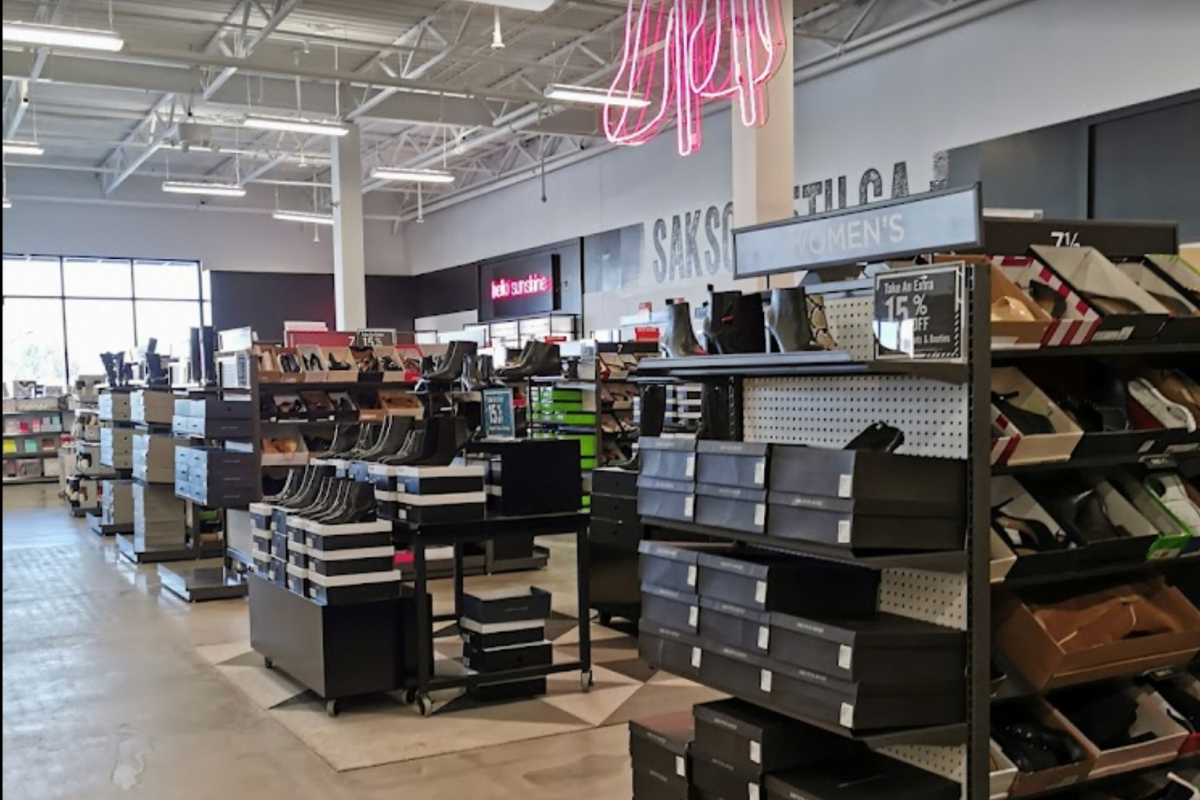
Leading sports retailer Lids, known for selling headwear, is partnering with Designer Brands to launch 45 shop-in-shop concept stores at DSW Designer Shoe and The Shoe Company locations throughout Canada.

“At Lids, we’re always looking for new ways to bring our unparalleled assortment of licensed sports apparel and headwear to more customers,” said Lawrence Berger, Co-Founder and Partner at Ames Watson and Chairman of FanzzLids Holdings which is the owner of Lids. “Designer Brands offers a one-stop-shop for footwear and accessory needs and we’re looking forward to complementing that with Lids’ diverse offerings to better serve Canadian customers.

Lawrence Berger

“There’s a number of reasons why we’re doing this. We love the Canadian market. It’s among our strongest markets and we think it’s going to bounce back very strongly after it opens up from COVID. We believe that there’s an opportunity to bring to the Canadian market a lot of really interesting products.

“We got approached by DSW to do this and we jumped at the opportunity to work with them for a number of reasons. We love their stores. Many of their stores are bigger. They’ve got a lot of space. A lot of our buyers who are buying hats and jerseys have just come from buying a pair of shoes. So they’re buying hats and jerseys to match. If you look at where our Lids stores are in the mall they’re often near a Footlocker or some other shoe company.”

Indianapolis-based Lids carries licensed and branded gear and is the largest headwear retailer in North America, with over 28 million sold per year across their 1,200 locations. The company has about 200 stores in Canada. Stores sell not only hats but jerseys, T-shirts, and other products.

Berger said about two-thirds of the stores are hat stores while one-third are larger stores that sell various licenced sports products. The larger stores are about 1,500 to 2,500 square feet while the smaller stores are about 1,000 square feet.

In the United States, the company also has a partnership with the retail giant Macy’s where Lids operates a store within a store in the larger department retailer.

“We’ve tried to bring far more interesting product into our stores. A lot of exclusive product,” said Berger.

He said the company has seen strong sales even during the pandemic.

“We might be the only retailer in the country or in North America that’s been actively expanding. So in the last six months, we’ve added almost 70 stores. We do believe that there’s opportunity to expand. We do believe that coming out of COVID people are going to want to get out into the mall. We believe that the shopping experience in our stores is complementary to the shopping experience online . . . We think people want to get out,” said Berger.

“And we think that also coming out of COVID who isn’t thinking about going back to a baseball game or a hockey game. We think there’s going to be really strong demand for product . . . So we’re very, very bullish on expansion and we’re very bullish on trying to do interesting product for fans.”

Interior of DSW store. Photo: DSW

The shop-in-shop formats with DSW and The Shoe Company will range from headwear displays to mini shops that include licensed jerseys.

Product will primarily include licensed headwear and jerseys, with an emphasis on gear representing top Canadian sports teams.

“We are thrilled to partner with Lids on the roll-out of store-in-store boutiques offering licensed sports merchandise to local fan communities across the country,” said Mary Turner, President of Designer Brands Operations in Canada. “We believe that Lids’ merchandise provides great synergies with our growing athletics assortments while allowing us to tap into a younger customer demographic.”

The first in-store shop-in-shop concept between Lids and Designer Brands will launch on May 15 along with the online assortment. Berger said the Lids store-within-a store will be about 1,000 to 1,500 square feet.

Berger said this is a first step for the company and he’s hoping to launch more shop-in-shop locations.

“We think it’s going to be successful. We believe DSW thinks it’s going to be successful and if that’s the case we would expect to grow in Canada and also the United States,” he said.

Exterior of The Shoe Company. Photo: Ivanhoe Cambridge

“Our hope is to expand with a lot of other big retailers. We love the store within a store model. We think it works great for us. We think that the customer finds it really interesting. We think they’re pleasantly surprised walking into a Macy’s and seeing the whole set up and we think they’ll be pleasantly surprised walking through DSW seeing the set up there now.”

Berger said the female customer share for Lids has grown substantially over the years and will continue to grow.

“The female buying for herself has grown but a very big driver for us is that females are buying for their kids and they’re buying for their spouses,” he said.

Mary Turner

“We think that customers are obviously going to lots of different stores. They’re shopping in different ways and we believe that there are lots of ways to reach those customers. And we think it’s a very, very broad customer base. “

Lids Sports Group operates stores under the Lids, Locker Room by Lids, Fanzz, Yankees Clubhouse Shops, Dodgers Clubhouse, Cardinals Clubhouse, and numerous other nameplates.

Designer Brands is one of North America’s largest designers, producers, and retailers of footwear and accessories. The company operates a portfolio of retail concepts in nearly 700 locations under the DSW Designer Shoe Warehouse, The Shoe Company, and Shoe Warehouse banners.

BRIEF: Hudson’s Bay Launches Beauty Recycling, Tim Hortons ‘Innovation Café’ Shutters in the Financial District

Hudson’s Bay Partners to Launch Beauty Recycling Program

Hudson’s Bay this week announced a partnership called Pact Collective, which is described as being the first not-for-profit recycling program dedicated exclusively to the beauty industry. Founding members include Hudson’s Bay, Credo Beauty, MOB Beauty, and Element Packaging.

On Earth Day on April 22, Pact launched across North America with recycling bins available in 20 Hudson’s Bay stores in Canada and all 10 Credo stores in the United States. Hudson’s Bay says that it plans to roll it out to all 87 of its Canadian stores through 2021. The materials collected in the take-back bins will be sent to a recycling partner where they are sorted, cleaned, and then recycled, upcycled, or reused.

Julie Yan, Director of Sustainability for Hudson’s Bay, says “By bringing together beauty industry stakeholders through the Collective, Pact is enabling change from within. As a purpose-driven retailer, it was a clear opportunity for Hudson’s Bay to help drive that change, reduce our own impact on the planet, promote education and provide sustainable solutions for our customers”.

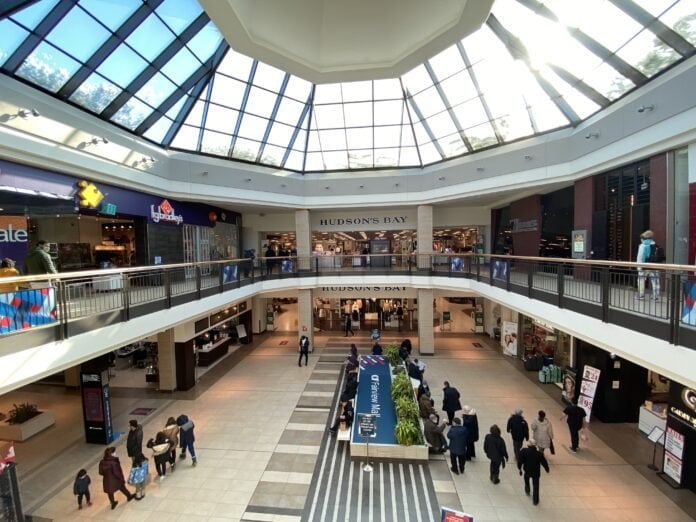
Exterior of Hudson’s Bay store on Queen Street, Toronto. Photo: Hudson’s Bay

The Beauty Industry is said to generate an estimated 120 billion cosmetic packages annually, and most are made with virgin plastic and a small percentage are successfully recycled. Pact’s mission is to provide a sustainable solution for hard-to-recycle beauty packaging including plastic packages smaller than a yogurt cup, squeezable tubes, fragrance bottles, pumps, caps, and other common formats that are unlikely to be recycled in curbside programs.

The announcement comes on the heals of Nordstrom’s announcement earlier this month that it was launching a beauty recycling program in its Canadian sores called BEAUTYCYCLE.

Tim Hortons Innovation Cafe Shuts Down in Toronto’s Empty Downtown Financial District

Interior of the Tim Hortons Innovation Cafe. Photo: CNW Group/Tim Hortons

Tim Hortons’ attempt at becoming a boutique coffee shop has fallen flat after less than two years in operation. The Tim Hortons Innovation Cafe on King Street West has closed, largely due to COVID-19 and the mass exodus of office workers from the city’s downtown core.

“The reality of COVID-19 has meant that the downtown core has been largely vacant for 13 months and will likely continue to be for the foreseeable future,” reads a statement from Tim Hortons.

Sign on Tim Hortons Innovation Cafe announcing its closure. Photo: Dustin Fuhs

The location was the first of its kind for the Canadian staple, elevating the usual no frills Tim Hortons experience with ‘Dream Donuts’, draft lattes, and matcha.

“Tim Hortons 130 King was one of several innovation restaurants that we developed – where we try new menu innovations and new design concepts as we continue to grow and evolve the Tim Hortons brand.”

Retail Insider reported on the opening of the Innovation Cafe in the summer of 2019 and initially the location was greeted with long lineups and general excitement.

It’s tough to say whether or not this concept would have prevailed long term with the Canadian public if it had not been for COVID-19. At the time many thought Timmies should probably just stick to what they know. In a statement, however, the company promised further innovation and exiting things to come.

“We closed Tim Hortons 130 King last week and will continue to trial new ideas and concepts in our innovation restaurants.”

Porsche Centre Markham Opens at CF Markville Mall

Exterior of the Porsche Centre Markham at CF Markville. Photo: CF Markville

CF Markville Mall has officially welcomed Canada’s newest Porsche dealership. Located at 8590 McCowan Road at the northwest corner of the CF Markville site, the Porsche Centre Markham is the first car dealership in Canada that is fully-integrated with a regional shopping centre. A full-service dealership with new and pre-owned vehicle sales, parts, and service, the centre is also the latest addition to the portfolio of Toronto-based premium automotive group Pfaff Automotive Partners.

The 53,000-square-foot dealership is one of the first in the world to feature Porsche’s new global retail architecture, ‘Destination Porsche’, and it is connected directly to CF Markville’s underground and above-ground parking structures, and features pedestrian access.

Additionally, the dealership has integrated a full parts and service operation, as well as a Porsche Driver’s Selection boutique. Customers needing service have the flexibility of 24/7 pick-up and drop-off with a contactless kiosk, and the dealership has the capacity to accommodate service appointments on short notice.

Porsche Centre Markham is also fully-equipped to accommodate the brand’s electric models, with dedicated electric vehicle charging stations on-site, as well as an electric vehicle battery repair room, future-proofed for servicing the new Porsche Taycan and future electric Porsche models.

The addition of the Porsche Centre Markham to CF Markville is just the latest in a growing list of shopping centres adding auto retail showrooms to their mix. The latest example is West Edmonton Mall’s 317,000-square-foot Mayfield Toyota dealership which opened last year.

During the Ontario-wide stay-at-home order, Porsche Centre Markham’s sales and service departments are operating on an appointment-only basis, with Porsche parts and boutique items available for curbside pickup. Appointments can be booked online at porschecentremarkham.com.

BonLook Acquires Virtual Optical Measurement Tool

Montreal-based eyewear company, BonLook, has announced its acquisition of EyeMeasure — a technological application that obtains various measurements necessary for prescription eyewear purchases.

EyeMeasure is a simple application that allows the user to measure pupillary distance (the distance between the centre of each pupil) and bifocal segment height. This technology allows for instant measuring with increased precision when compared to other technologies currently used in the e-commerce sector. The application also includes virtual try-on and frame digitization features that can greatly contribute to a smoother customer experience, replicating to in-person service.

EyeMeasure in action. Photo: BonLook

“Innovation is one of BonLook’s core values, and this new acquisition allows us to move closer to our objective of improving eye care service and prescription eyewear purchase accessibility in-store and online. For several months now, BonLook has been working to identify solutions that can address changes in the industry, while developing new technological tools that we will not only be able to use but also share with other players in the industry. We are currently reinventing systems that will allow eye care professionals to gain access to greater potential for expansion in terms of e-commerce and to reach more customers in an innovative and efficient manner,” expressed Louis-Félix Boulanger, BonLook’s Chief Operating Officer and cofounder.

BonLook has pursued an aggressive expansion plan over the last five years or so. Between growing its brick-and-mortar presence and widening its range of services, this newest acquisition is part of BonLook’s strategic growth plan within an increasingly competitive market. In addition to pursuing its sales operations in-stores and online, the company aims to act as a vector of technological innovation in the field of optics.

The company will enable other businesses equipped with a transactional site to implement the application to take measurements and to access its software development kit (SDK). This will allow partners to develop their own mobile applications and to benefit from the measurement and virtual try-on features. From now on, the EyeMeasure application will be included among BonLook’s services while remaining available to the general public without charge on the Apple App Store.

Altitude Sports Launches Next-Day Delivery in Western Canada

Altitude Sports warehouse. Photo: Altitude Sports

Montreal-based Altitude Sports has announced the introduction of next-day delivery to Vancouver, Victoria, Calgary, Edmonton, Winnipeg, and Regina, all from its Montreal distribution centre starting on April 26, 2021.

After its most successful year to date, Altitude Sports, Canada’s only exclusively online outdoor retailer, is building on last year’s launch of same day/next day delivery to Montreal and Toronto.

When compared to the same time period in 2019, last year between September and December the brand saw a 62 percent increase in new customers across Canada, a 99 percent increase in new customers in Montreal, and a 39 percent increase in new customers in Toronto. Additionally, from July 2020 to February 2021 over 25,000 customers used same day/next day in Montreal to deliver over 35,000 packages.

Altitude Sports

“We constantly look to push the boundaries for what’s possible as an ecommerce business,” says Maxime Dubois, CO-CEO. “Same Day/Next Day Delivery was an initiative that was clearly worth it.”

Now available in Western Canada’s biggest cities, orders placed by 2 pm EST will arrive by 8 pm local time the following day . Prices for next ay delivery will range from $7.99 to $12.99, depending on the shipping location. Orders placed after 2 pm EST will be eligible for two-day express delivery.

Altitude Sports continues to increase its product offering, partnering with new and exciting brands from Canada and around the world, with a focus on high-quality products, especially those that have the lowest impact on the environment. This season’s new brands include: Tentree (Canadian sustainable activewear brand), Praise (Montreal run and après run apparel) and Fox (gear and apparel for mountain biking).

“Our customers come back to us time and again because we evolve with the industry and we listen to them to ensure we are bringing in the best assortment of outdoor gear and apparel,” adds Dubois. “Our goal is to become Canada’s one-stop destination for outdoor living.”

This announcement comes days after Retail Insider reported that Gap-owned Athleta is entering Canada with stores, further intensifying the competitive athleisure and outdoor apparel market in Canada.

Read More Briefs From Retail Insider:

The Trouble with Mandatory Face Masks in Canadian Retailers: Expert Commentary

People in masks shop for essential items at Costco in Mississauga, Ont., on April 18, 2021. Costco insists its in-store customers wear masks even if they claim exemptions. THE CANADIAN PRESS/Nathan Denette

By Alison Braley-Rattai

Masking is currently required to access retail stores across Canada amid the COVID-19 pandemic. Presently, every province has regulations in place that require customers to wear masks before entering stores to shop.

All such regulations include exemptions for those unable to mask owing to a disability. However, not all store masking policies include these exemptions.

The inability to mask for medical reasons raises important questions about the application of well-established principles of human rights law to the retail sector.

Accommodation a Shared Responsibility

Many human rights principles were developed around employment, including, for example, the employer’s duty to accommodate workers to the point of undue hardship.

In the accommodation process, employees have a right to privacy — they don’t need to disclose their diagnoses or provide more information than is necessary to establish their work-related limitations. How much information is sufficient varies with the circumstances. However, it usually involves documentation from a medical professional that substantiates and explains these limitations.

Both parties have a duty to participate in the process; it’s a shared responsibility. There can be several exchanges before an accommodation is agreed upon, often including requests for further medical information. Accommodation is highly discretionary, and parties are encouraged to be creative when exploring various accommodation measures.

Square Peg in a Round Hole

This process, with its back-and-forth nature, is suited to a situation in which the parties have an ongoing relationship. But in a retail setting, there’s no such relationship, so established principles of accommodation are an awkward fit.

Take, for example, a case at the Ontario Human Rights Tribunal. A claimant took the City of Toronto to task, alleging that he was discriminated against at various local businesses owing to the city’s masking bylaw. The bylaw directs organizations to create a policy mandating mask wearing with exemptions for those with an “underlying medical condition,” further stating that no proof of such condition will be required.

Ultimately, the tribunal dismissed the complaint, saying the city “cannot be faulted” for others’ misapplication of its bylaw. In doing so, the tribunal acknowledged that accommodation is a “shared responsibility.” In a retail setting, according to the tribunal, that means that a customer must “identify to a business” that they have an exemption-qualifying condition, but don’t have to provide proof.

Merely identifying a condition, however, falls short of the exchange that usually accompanies requests for accommodation in settings where parties have an ongoing relationship. A business and a customer can hardly share responsibility for accommodation in the same way an employee and a supervisor do.

Proof, What Proof?

The question about how much information a customer should supply to retailers was also relevant to a recent case in British Columbia. A person was denied entry to a store for refusing to wear a mask, even after identifying a medical condition to the security guard. Since the claimant declined to provide details to the B.C. Human Rights Tribunal about their alleged disability, the claim was dismissed.

People shop in Chinatown in Vancouver in February 2021. THE CANADIAN PRESS/Jonathan Hayward

The B.C. tribunal, unusually, made public its decision to make clear that claims require evidence of a disability because, as it rightly stated, the Human Rights Code “does not protect people who refuse to wear a mask as a matter of personal preference.”

However, this doesn’t answer the most pertinent question: What information is a customer required to supply to an organization before the fact, rather than to a human rights tribunal after the fact.

The B.C. tribunal is awaiting a more suitable complaint to determine how much medical information customers must give retailers to be exempt. But are exemptions the only answer?

Exemptions Ripe for Abuse

The need to substantiate mask-exemption claims in the retail sector is genuine, more so as the pandemic worsens. Masking has been politicized, and merely claiming an exemption can be ripe for abuse. Possibly in response to this reality, Costco altered its masking policy in November by removing medically based exemptions. Other retailers followed suit. Removing exemptions has proven controversial, and it’s unclear whether it’s lawful.

Both Costco and Indigo identify alternatives to in-store shopping for those unable to mask. These include shopping online and curbside pickup.

An Indigo bookstore is seen in November 2020 in Laval, Que. THE CANADIAN PRESS/Ryan Remiorz

This appears consistent with advice from some human rights commissions. The Ontario Human Rights Commission, for example, in its non-binding policy role, suggests “offering curbside pickup” as a possible accommodation measure since this “would generally allow a person to receive a retail service.” The Saskatchewan Human Rights Commission has offered a similar view.

Alternative accommodation measures short of exemptions aren’t ideal for some. However, another principle of accommodation is that people have a right to an adequate accommodation — but not necessarily their preferred accommodation.

Accommodation or Exemption?

Current alternatives to in-store shopping are arguably consistent with human rights accommodation principles. Even prior to the masking regulations, some businesses had already insisted their customers wear masks when they enter their stores, in response to the pandemic.

They could do so, as long as they were abiding by those accommodation principles. And given the potential for abusing masking exemptions, the in-store shopping alternatives may also better coincide with legal duties under health and safety legislation across the country.

Customers shop for shoes at a Browns Shoes store during an easing of COVID-19 restrictions that allowed non-essential stores to reopen in Québec in February. THE CANADIAN PRESS/Ryan Remiorz
Alison Braley-Rattai, Assistant Professor, Labour studies, Brock University.

But consumers and retailers are understandably confused. Indigo, for example, maintains that despite their store policy, they are “mindful” of their “legal obligations, especially those relating to customer human rights.”

As vaccination efforts roll out across the country, the end of the COVID-19 pandemic may finally be in view. Issues of mask-wearing exemptions and accommodations by retailers may soon be moot and the situation could remain unresolved — until the next public health crisis.

This article is republished from The Conversation under a Creative Commons license. Read the original article.