Advertisement
Advertisement
Home Blog Page 847

Podcast [The Weekly]: Disney to Close All Stores in Canada

This week, Craig and Dustin discuss Disney’s plans to close all of its Canadian stores. Retail Insider reported on the development on Monday after receiving confirmation from multiple reliable sources.

The Weekly podcast by Retail Insider Canada is available on Apple Podcasts, Stitcher, TuneIn, Google Play, or through our dedicated RSS feed for Overcast and other podcast players.

Discussed this episode:

Subscribe, Rate, and Review our Retail Insider Podcast!

Follow Craig:

Follow Retail Insider:

Listen & Subscribe:

Share your thoughts!

Drop us a line at Craig@Retail-Insider.com. You can also rate us in Apple Podcasts or recommend us in Overcast to help more people discover the show!

Background Music Credit: Hard Boiled Kevin MacLeod (incompetech.com). Licensed under Creative Commons: By Attribution 3.0 License. http://creativecommons.org/licenses/by/3.0/

Foodservice Concept Wingstop Announces Plans to Open 100 Locations in Canada

Exterior of Wingstop location. Photo: Wingstop

Dallas-based fast-casual restaurant chain Wingstop has announced that it will enter the Canadian market with plans for about 100 locations over the next decade. The company will launch in the Toronto area prior to expanding Wingstop nationally. The first Canadian location will open in 2022 according to the company.

Nicolas Boudet

“Wingstop in Canada marks another key step toward our stated goal of becoming a Top 10 Global Brand and further validates the portability of our brand on a global level,” said Nicolas Boudet, President of International at Wingstop. “We currently see Wingstop addressing a need in the Canadian market with our unique brand positioning and product offering and believe this is a market where we can replicate the success we’ve experienced in the U.S. based on Canadians’ appreciation and craving for bold flavour and high-quality product.”

Wingstop partnered with JPK Capital for the Canadian expansion. JPK Capital is described as a single-family office “motivated by sustainable change, technological innovation, and long-term vision.” The company was founded in 2017 by entrepreneur Joe Poulin and provides long-term capital, strategy, and tech expertise for consumer businesses. JPK Capital’s portfolio includes successful restaurant franchises across several countries.

“JPK Capital could not be happier to partner with Wingstop and lead the charge in bringing one of the most successful restaurant brands and the best wings in the world to Canada,” said Poulin. “As technology entrepreneurs and investors, we have been impressed with Wingstop’s investment in innovation and look forward to capitalizing on its proprietary tech stack to offer a best-in-class digital and in-restaurant experience to Canadians.”

Wingstop dining room. Photo: Wingstop

The 100-location agreement starts in Ontario, with a Toronto location anticipated to open in 2022 pending any unexpected or additional Canadian border regulations and closures stemming from COVID-19. The average size of a Wingstop location is 1,750 square feet.

Wingstop says that it targeted Canada for its global expansion because of Canada’s proximity to the brand’s home market in the U.S. as well as similarities in consumer behaviours regarding digital engagement and off-premise dining. In June of last year, Wingstop opened its first ghost kitchen in the U.S. in Dallas.

Wingstop was founded in Dallas in 1994 and has more than 1,500 franchised locations globally. The company’s restaurant employees, known as ‘Wing Experts’,  serve a range of food including classic wings, boneless wings, and tenders, and signature sides including fresh-cut, seasoned fries, and freshly-made ranch and bleu cheese dips.

In 2020, Wingstop saw explosive growth while opening 153 net new units. Digital sales grew more than 60% last year and same-store sales grew by 21.4%.  In fiscal year 2020, Wingstop’s system-wide sales increased 28.8% year-over-year to approximately USD $2 billion, marking the 17th consecutive year of same-store sales growth. Wingstop has achieved over 700% in stockholder returns since its 2015 initial public offering.

Wingstop says that its vision is to become a top 10 global restaurant brand through its independent franchise model that represents more than 98% of Wingstop’s total restaurant count. The company says that a key to its success is “The Wingstop Way” which includes a core value system of being “Authentic, Entrepreneurial, Service-minded, and Fun.”

Outcry to Scrap Airspace Development Tax on Commercial Buildings in Vancouver That Will Harm Small Businesses

PENDER STREET IN VANCOUVER'S 'CROSSTOWN' AREA. PHOTO: TRIPSAVVY

British Columbia Minister of Finance, Selina Robinson, has instructed staff to find a way to provide temporary relief for one year for what the government says is the small number of property owners who now have to pay the speculation and vacancy tax on unbuilt residential space above their commercial property.

But many small businesses, property owners, and business groups in Vancouver simply want it scrapped.

“This change will help commercial tenants as these costs are typically passed on by the property owner,” said Robinson in a statement.

Selina Robinson

“Most businesses — more than 99 percent — will not be affected by the speculation and vacancy tax; it impacts a very small number of owners who took steps to reclassify a portion of their commercial property as residential. The split classification makes it subject to the speculation and vacancy tax; a tax that was brought in to encourage property owners to develop their land for residential purposes.

“It is likely some landowners can apply for different exemptions if they intend to develop their property. We will work with eligible landowners with this classification so they understand the exemptions they can apply for.”

The issue became a heated one recently in Vancouver when media reported that some businesses were having to pay thousands of dollars extra in tax on air space — the development potential of their property — above their actual property.

Bridgitte Anderson, President and CEO of the Greater Vancouver Board of Trade, said the board has more than 5,000 members and two-thirds of those are small and medium businesses.

Bridgitte Anderson

“This is an increasing concern. The rising cost of property taxes continue to be a challenge for many of our members and especially small businesses. For a long time we have been advocating to help these businesses survive by creating a new commercial property subclass, if you will, to enable split assessments, and we continue to work on their behalf and continue to advocate for government to look at options that would bring about greater fairness and certainty to the property tax system,” said Anderson.

“Given it is an expensive city, property taxes are on the rise, and especially in a pandemic, now more than ever, it is a very big concern for some of these small businesses to have extra costs pile on at a time when they’re really just trying to survive. We had the BC budget delivered (recently). That was an opportunity for the government to address this. They did not. It is something that we will continue to advocate for on behalf of our members to see a change to this.

“When you look at that development potential, it’s almost always the residential above a commercial. So for some of these property owners, they’ve actually gone through the course to obtain what is called a split assessment, meaning the potential unbuilt condos — the airspace over the properties — are taxed as a residential rate instead of a higher commercial rate. And that’s what we believe is the fair way to do that. That split assessment. Looking at the two areas separately. One is an area of business and one most likely would be residential. And so that’s what we continue to advocate for and we would hope that in fairness this would be allowed.”

Amy Robinson, Executive Director, of LOCO BC, said many businesses were asking for the tax not to be applied to those properties — not just for it to not impact small businesses.

Amy Robinson

“Because many of the property owners are also small businesses. It’s just non-sensical to apply a vacancy tax to residential zoned properties that can literally not even be occupied. It just goes entirely against the spirit of the legislation. It makes sense to everyone I think that we have a vacancy tax to try to encourage empty properties to be rented out in a housing crisis. None of us are refuting that,” said Robinson.

“It seems like the government is going to make some changes but they’re still going to require the tax to be paid, just instead by the landlords and not by the small businesses. I don’t know how they’re going to do it because if businesses have triple net leases then there’s already an arrangement to pay a portion of the property tax. I’m not sure how they’re going to get around that. Almost every business I know has a triple net lease.”

Jane McFadden, Executive Director of the Kitsilano West 4th Avenue Business Association, said there’s at least 70 businesses in her area that are impacted by the speculation tax.

“It’s not something that’s apparent. You have to sort of be told by your landlord or a property owner that this tax is on their tax bill. But from what I understand I calculated 70. I imagine there’s a few more as well and there’s some that it’s on the building but it’s not applicable because it’s under development or for some other reason,” said McFadden.

“It doesn’t make sense at all. It took us quite a few days just to wrap our heads around what the tax actually meant and what it was for because it doesn’t make any sense. And it’s not designed for commercial businesses to have on their buildings. We’re totally against it and fighting to have it not postponed but completely erased and eliminated. This would never be a good thing for small businesses but right now the challenges that they’re facing with the pandemic makes it the worst time that it could be brought in. I think we would fight it even if there wasn’t a pandemic simply because it doesn’t make sense.”

Patricia Barnes, Executive Director of the Hastings North Business Improvement Association, said about 30 businesses in her association are impacted.

Patricia Barnes

“This was introduced two years ago by the provincial government and they knew at the time this was going to be a problem so built into the legislation at the time was a two-year deferral of the speculation tax for commercial property,” said Barnes. “This issue was brought forward two years ago and we were informed that it would be taken care of and it would be figured out and of course it never was.

“Many of my property owners in this situation are old Italian families. The property has been in their family for years and years. This was how they were going to leave some kind of inheritance for their children. They’re not the big property developer. They don’t have the funds or the resources to develop these properties. They have maintained the building. They have rented them to small independent businesses at affordable rents.

“And if they are forced to redevelop they will be forced to sell then you will enter into a three to four year process trying to get your permits in place so you can redevelop. The small business will end up being kicked out and will never come back. And our communities are left with big vacant holes. And that hurts all the businesses around and when the development finally does get built because of all the costs that come with redevelopment many small businesses can’t afford to rent those properties.”

McFadden said on average the properties are facing increased costs of between $6,000 to $9,000 annually. Many of those impacted are small property owners who are trying to provide relief to tenants through the pandemic and they don’t have deep pockets. Their cash is tied up in the building.

After giving property owners an exemption from the Speculation and Vacancy Tax for vacant land for the last two years, as of this year, the SVT may apply to property owners of vacant land, said the government in an email.

“In the speculation and vacancy tax areas, there are approximately 65 properties where the property owners have taken steps to have a portion of the airspace above their commercial land rezoned and reclassified as residential land (likely because they intend to redevelop the property as residential) and where they claimed the vacant land exemption last year. Most property owners in this situation are able to use exemptions to waive the speculation and vacancy tax,” it said.

“The tax rate for residential property is generally much lower than for commercial property, so the reclassification of the airspace is a tax saving measure. Once the airspace is reclassified as residential, the SVT, and other residential taxes, may apply. Taxpayers are entitled to arrange their affairs to reduce their tax burdens; however, like any other property owner who has vacant or high-value residential property, they may now be subject to specific residential taxes.

“We encourage property owners who own properties with unbuilt airspace that are classified and zoned as residential to continue in the development process to bring much needed residential housing supply to the market — this is one of the reasons we brought in the speculation and vacancy tax. If the owner is taking active steps to develop the property (including applying for permits or financing), they can claim a development exemption and the commercial tenant will not be responsible for any SVT.”

One Year In: How a Newly-Opened Simply For Life Franchise Found Digital Success Amid the Pandemic [Feature]

Simply For Life flagship headquarters in Saint John, N.B. Photo: Simply For Life

Starting out as a small business owner during the best of times has got to be one of the most ambitious endeavours that any one person can pursue, a task that is perhaps only surpassed in difficulty by the effort required to maintain and grow the business. However, launching a store during the onset of a pandemic is a completely different proposition altogether. It’s an undertaking that would not only require a general acumen and understanding of retail fundamentals as well as the ability to apply them effectively to their operation, but would also necessitate a level of bravery, courage and passion from the entrepreneur not found in most people. Fortunately for the natural food market chain, Simply For Life franchisee, Rukhsana Khan, is not like most people.

A Healthy Passion

A certified holistic health and life coach who also holds a Functional Diagnostic Nutrition Certificate, Khan describes her foray into retail as a “dream come true”, the fruition of a venture that she’s desired to embark on for some time. With a passion for health and nutrition, a penchant for the sourcing of best-in-class natural product and a strong belief in the power of human connection, she opened her Simply For Life franchise location in Oakville, Ontario in January of 2020. She says that she was excited, optimistic, and despite her lack of formal business experience, she was eager to open up to her community and start making a positive difference through her products and services.

Rukhsana Khan

“All of the work that was involved in preparing the store to open was amazing,” she says. “It was such a great experience to have the opportunity to work toward a vision. I wanted to bring people together and to create a very open and welcoming environment to facilitate that. I had envisioned conducting free information sessions and health coaching in order to teach people concerning the different aspects of health. I wanted it to be very social and communal, encouraging people to get together, talk, share experiences and heal together. I’m extremely passionate about what I do and believe in this kind of personal and intimate approach. I was really pleased when I opened my store in January of last year. And we immediately started doing sessions that were really well received by the community. Things seemed to be going really well. But, when COVID hit in March, everything changed. There was definitely a moment directly afterward when I didn’t know what to do.”

Noted interior designer Glenn Dixon of Glen Dixon Design conceptualized the space from a shell. He said that he wanted to make the space immersive as well as a comfortable environment both for customers and employees.


Digital Transformation

Because Simply For Life primarily sells food products, Khan was allowed to remain open during the first pandemic lockdown. Though, she admits that traffic to her store had been reduced dramatically as concerned people across the country kept themselves and their families at home during the first wave of contamination. She says that it was an extremely challenging time for her. Without the ability to connect with consumers and a means by which to provide them with the necessary information — the vital piece of Khan’s vision and, indeed, the critical component of her business strategy to create a healthy community through education, inspiration, and empowerment — it seemed as though her business could be lost. But not if Khan could do something about it.

“Not for a second did I ever think of submitting,” she says confidently. “I had worked too hard to realize my ambition and fulfill my passion. I knew that there was a way to continue offering my products and services to customers. I just needed to find the solution that would allow me to do that.”

Khan’s thinking was decisive and her actions swift as she didn’t hesitate in digitizing her business, implementing and activating the Shopify POS System into her operations and immediately moving to get her product online and available for transaction. She describes the initiative as a monumental task as the development of e-commerce capabilities was not something that she had previously planned for the business. However, online sales have been a success for Khan and represent an intelligent and savvy pivot on the part of the Canadian entrepreneur. But, the greatest advantage to her pivot, she points out, is the ways in which her business has benefitted from her decision to transition the store’s information sessions, coaching, and communications to a virtual environment.

“I made the decision right away to make sure that I had all of the store’s products online and available for the consumer to purchase as soon as possible when physical traffic pretty much stopped,” she says. “I also moved all of our services online, conducting all of my sessions and coaching over the phone and through Zoom. This isn’t something that I had ever thought about before. But, the response from my Simply For Life community and results of this decision have been incredible. It has not only increased my exposure and engagement within my local community, but has also opened up my services to a broader audience. I’ve now got clients in places like Ottawa and New Brunswick. The pandemic has accelerated this shift for me. And it’s definitely something that we’re going to continue building in order to connect with more people in the future.”

Fulfilling Community Needs

With knowledgeable, certified staff helping to deliver services and coaching related to meal planning, nutritional consulting, and ways to live and manage a happier, healthier life, Khan has quickly developed a reputation for her store. And, given the rise in positive consumer attitudes toward self-care throughout the pandemic, it seems it’s a reputation that will serve her and her store well going forward. According to a recent Scotiabank survey of Canadians concerning their sentiment toward their financial, mental and physical wellbeing over the course of the past twelve months, an overwhelming majority of Canadians (98 percent) say that they are focusing more on their self-care habits, which they intend to maintain into a post-pandemic world. Of those surveyed, 60 percent have spent an average of $282 on self-care since the start of the pandemic. It’s a growing sentiment that Khan recognizes, and an opportunity for her to contribute in a meaningful way to her expanding community of customers.

“It’s been a really challenging time,” she says. “But, consumer response during the past year has been very positive. There are many who have taken advantage of their situation during this time, beginning to pay more attention to their health and wellbeing. It’s become more of a priority in people’s lives, resulting in better decisions about the foods they eat and the activities they engage in. I’m excited to be able to help people on their journey of self-care and the development of a healthy lifestyle. It’s a passion of mine that I’m really looking forward to offering to more and more people.”

An Exciting Future

As traffic slowly returns to her physical location, now augmented by her new digital presence, Khan is optimistic about the near-term for her business. And, despite the uncertainty of the times and the challenges faced by most small business owners in general, she thinks that their resilience and continued efforts will soon reap rewards, maintaining their status as the backbone of communities from coast-to-coast in the country.

“Small businesses are so important to the health and success of the neighbourhoods and communities that they operate in. They are crucial to their vibrancy and activity of their street fronts and will be appreciated more and more by locals as we go forward. For my business, I’m going to focus on continuing to develop my virtual communications and presence and building out more sessions and coaching services. As a result of digitizing my store, I’ve seen firsthand the value in doing so and now realize the incredible reach and opportunity available to me to provide my expertise to people all over the world. I’m excited to continue making these connections with customers and helping them realize their nutrition goals while growing my business and service.”

Canadian Retail News From Around The Web For April 28, 2021

Canadian Retail News From Around The Web

Advertisement

Top Stories: National

Advertisement

Central/Eastern Canada News

Western Canada News

Mario Negris and Martin Moriarty Exit CBRE Vancouver for Brokerage Marcus & Millichap

Two of Vancouver’s top retail-focused brokers, Mario Negris and Martin Moriarty, have left CBRE to spearhead an expansion at Marcus & Millichap. The duo is said to have been responsible for the vast majority of all retail lease deals over the past several years in downtown Vancouver. 

Negris joins Marcus & Millichap as a Senior Managing Director and Moriarty was named as a Senior Vice President. The announcement was made officially this week. Negris had been with CBRE Vancouver for more than 20 years while Moriarty was there for about a decade. 

Over the past decade, Negris and Moriarty dominated retail leasing in Vancouver by completing more than 6-million square feet in commercial real estate transactions with a total deal value exceeding $3.5 billion while with CBRE Vancouver’s Urban Properties Group. Retail deals negotiated by the duo were numerous and included brand names such as Hermes, Peloton, lululemon, Equinox Fitness, Christian Dior, Muji, Tiffany, Home Depot, Loblaw, and Old Navy, among others. 

“Mario and Martin are the pre-eminent retail property leasing and investment sales team in Vancouver,” said Michael Heck, Regional Manager of Marcus & Millichap’s Vancouver office. “Through their dedicated efforts on behalf of clients, they have reached a majority retail market share in Vancouver. The addition of this team further secures our retail division’s position as the market leader in British Columbia.” 

Negris holds a Bachelor of Commerce in Urban Land Economics from the University of British Columbia and is a member of the Real Estate Board of Greater Vancouver and ICSC. Moriarty earned his degree in real estate investment and finance from the University of Reading, England. Moriarty is also a serving member of the Royal Institution of Chartered Surveyors, the Greater Vancouver Real Estate Board, Canadian Real Estate Association, and ICSC.

In an interview, Martin Moriarty explained how the duo would have the opportunity to continue working on urban projects and investments while at the same time partnering strategically with teams on suburban deals under the Marcus & Millichap nameplate, and that he is looking forward to doing new deals. He also expressed his gratitude to CBRE which is considered to be one of the world’s leading commercial real estate brokerages. 

Brokerages in Canada are seeing a shake-up amid increasing competition for talent. In 2018, JLL Canada expanded by acquiring brokerage Northwest Atlantic and a year later, the company grew by hiring several top brokers from competing firms as well as from noted landlords including Oxford Properties. As the COVID-19 pandemic continues, we may see more movements in the brokerage space as retailers and other businesses look to the future and sign leases for spaces. While leasing was said to be slow towards the start of the pandemic, it is picking up in regions across Canada as brands strategize multi-year growth plans.

City of Calgary Approves Massive Investment for Downtown Revitalization

Calgary city skyline. Photo: Google

The City of Calgary is aggressively moving forward in a concerted effort to bring life to its downtown core that has been decimated in recent years with a record office vacancy rate spurred on by thousands of layoffs in the oilpatch.

City Council has approved an initial investment of $200 million for Calgary’s Greater Downtown Plan which is focused on creating a vibrant area in the city’s core.

The initial investment includes:

  • $45 million in financial incentives for office conversion, office replacement, and new residential development;
  • $5 million in financial incentives to offset +15 Fund contributions for residential development;
  • $55 million for impactful capital projects to improve public spaces, improve vibrancy, and support complete neighbourhoods;
  • $5 million to activate downtown public spaces with festivals, events, and community spaces to build vibrancy;
  • $80 million for Arts Commons Transformation Phase 1; and
  • $10 million over four years for a dedicated City of Calgary Downtown team.
Murray Sigler

Murray Sigler, interim CEO of the Calgary Chamber of Commerce, said vibrant communities lead to vibrant businesses, which are critical to Calgary’s inclusive economic recovery, and Calgary’s Greater Downtown Plan will advance the important work needed to reimagine and build on the vibrancy of the downtown.

“Calgary competes with other cities in Canada and around the world on much more than economics. To attract and retain top talent, we must invest in the capital and social infrastructure that supports community well-being, including childcare, parks, public transit, the arts, and the charitable sector. Calgary’s Greater Downtown Plan builds on the work that is already being done, and this significant investment is needed to address one of our city’s greatest challenges,” said Sigler.

“The plan begins this work through reimagining our downtown for mixed-use neighbourhoods and transportation; addressing climate change through design and land use; continuing to build a strong, well-developed public transit network; and focusing on innovation and regulatory reform. It will also generate investment and support the growth of our business community downtown, which can alleviate pressures on the property tax system caused by downtown vacancy in the years to come.

Michael Kehoe

“A plan that invests, enhances, and builds on Calgary’s vibrancy is needed now, more than ever, and its success will require ongoing collaboration with the business community. As we await further details, we look forward to the renewed community vibrancy that the Greater Downtown Plan will deliver for all Calgarians.”

The 10-year plan, pegged at about $1 billion, was developed through public engagement as well as the input of downtown businesses and community associations. The overall plan includes $450 million to $500 million to address office vacancy and $500 million for downtown vibrancy infrastructure and amenities. The initial investment package represents only 20 percent of the overall need over the next decade. The City said it will require support from all levels of government to help address this 80 percent funding gap. City Council has directed the Mayor and City Administration to initiate a formal request to the federal and provincial governments.

Michael Kehoe, Broker/Owner with Fairfield Commercial Real Estate and a retail specialist, said healthy downtowns are the economic engines of Canadian cities and their return to vibrancy will be an important part of the post-pandemic recovery.

“The recovery will be dependent on workers returning to reinvented downtown work environments where the commercial viability of stores and restaurants is driven by foot traffic. The downtown core in Calgary as we all know has been severely impacted by the fall in oil prices and the pandemic,” he said.

The Tree Galleria seen from 2nd Street SW outside of La Maison Simons at "The Core" in Calgary
The Tree Galleria seen from 2nd Street SW outside of La Maison Simons at The CORE in Calgary. Photo: Jessica Finch

“Any turnaround in the fortunes of the city’s downtown will take years and will require a long-term strategy driven by the private sector and a significant financial reinvestment by building owners that will be executed by their management teams. Time will tell if the recent Calgary City Council’s pledge of $1 billion with an initial $200 million to help address the problems of the downtown core will have any meaningful effect on the fortunes of their ailing downtown core. The city’s function must focus on creating a business-friendly environment with affordable taxes, limiting bureaucratic restrictions, combined with timely approval processes that encourage new investment.

Domenic Mazzocchi

“The market will decide the highest and best use for downtown space and the occupancy levels of commercial buildings. Building owners in Canadian central business districts are a creative and entrepreneurial lot and solutions will emerge as many commercial spaces I am sure will be repurposed to alternate uses. Cities need to encourage citizens and shoppers in particular to come downtown with relaxed parking fees, events, attractions, and other incentives in a post-pandemic Canada. Civic leaders across Canada need to address the social challenges of the many homeless citizens and those struggling with poverty that are evident on the streets of our downtowns.”
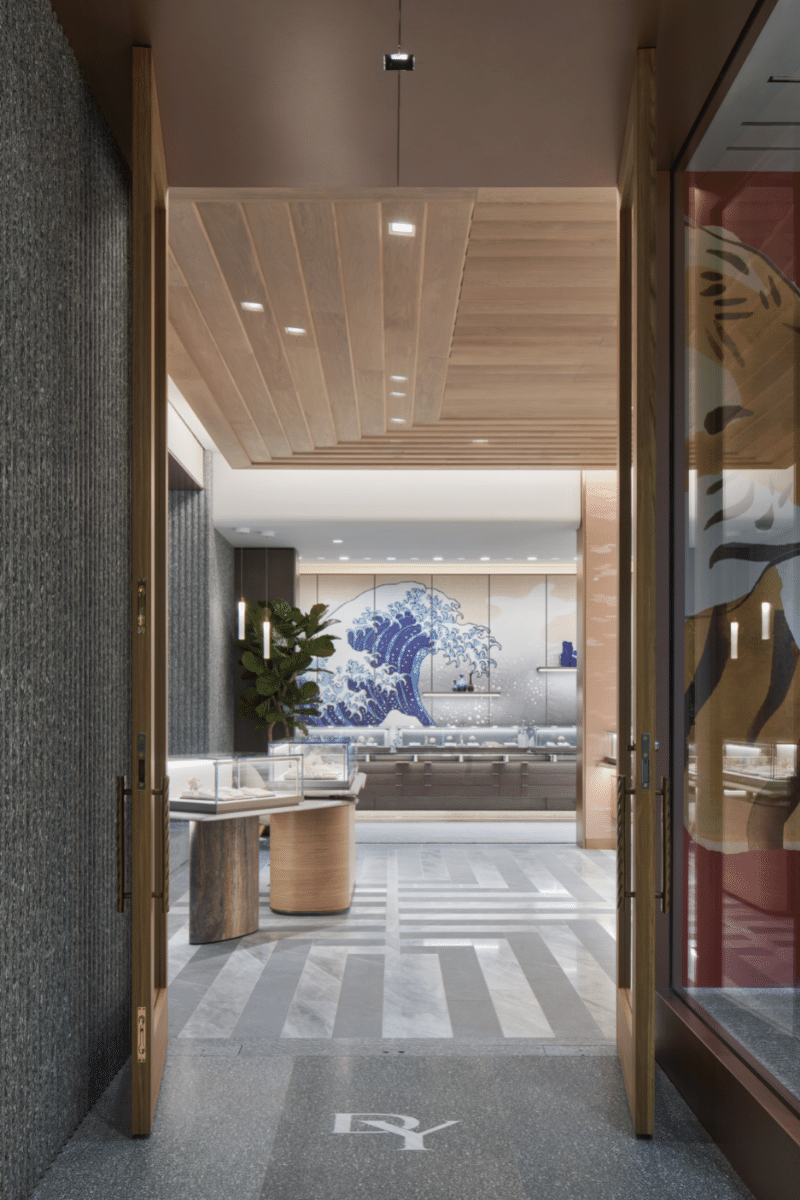
In the heart of corporate Calgary lies The CORE, a shopping centre with about 120 retailers, restaurants, and services in about 610,000 square feet stretching over four floors and home to such high-profile retail brands as Holt Renfrew, Harry Rosen, and Simons. The centre was recently profiled in a photo tour in Retail Insider.

“The CORE is excited to hear that the city has approved a plan to revitalize and energize Calgary’s downtown. We look forward to the execution of this plan to add vibrancy to the downtown through programming, residential density, and capital investments. This is a real opportunity to chart a new more positive course for the downtown,” said Domenic Mazzocchi, Director, Property Management, The CORE

Thom Mahler

When oil prices began their collapse in late 2014, it triggered an economic downturn with a vicious domino effect in Alberta, and particularly Calgary — home of the corporate oilpatch. Thousands of people were laid off from downtown offices, driving the office vacancy rate to more than 30 percent. More than six years later, the vacancy rate still hovers at that level, and, because of the pandemic as well, fewer people are downtown. On many days it looks like a dead zone.

That has impacted businesses and retailers who for years have relied on a healthy corporate world to drive their business.

“A thriving downtown where people want to live and be, and where businesses want to set down roots, means a thriving Calgary,” said Thom Mahler, program lead for The City’s Downtown Strategy. ”We have been working extensively over the past several years with our civic partners, Calgary’s real estate industry, post-secondary institutions, and the downtown business community. We’re doing what we can with what we have, but there is a definite need for broader commitments and funding to make this a reality.”

Kate Thompson

Kate Thompson, President and CEO of Calgary Municipal Land Corporation which is spearheading development in areas near the city’s downtown core, said the investment in Arts Commons underscores the value of the arts to the city’s wellbeing and will ensure the ongoing growth of Calgary’s cultural identity, adding that it “secures the long-awaited expansion of our city’s important arts and cultural centre—something essential not only to the arts community but to downtown’s renewal as a whole.”

Jyoti Gondek, a city councillor who is running for Mayor in the fall election, voted in favour of the $80 million allocation to transform Arts Commons.

“Why? Because an investment in Calgary’s creative sector is an investment in Calgary’s future,” she said.

Gondek said the creative sector has much to offer in the city’s efforts for economic diversification.

“We need to create an even-more thriving downtown community that moves beyond the traditional office-based downtown central business district and instead is a dynamic, vibrant 24/7 centre of our city,” added Mayor Naheed Nenshi. “This means taking bold action and making intentional investments in public spaces, supporting vibrant neighbourhoods, and ensuring we continue to create a downtown that people want to live and work in.”

Jyoti Gondek

“A vibrant downtown is essential for attracting and retaining talent and our city’s long term success,” said Trent Edwards, President, Canada Land & Housing, Brookfield Properties Development and Co-Chair of Calgary Economic Development’s Real Estate Sector Advisory Committee.

“Harnessing the full potential of our city is dependent on creating a significantly improved tax base downtown which will help reduce the tax burden, where it has recently shifted outside the core, and help us to be more competitive throughout the city. These financial investments are part of a necessary take-action approach to attract people who want to spend time living, working and playing in our downtown, providing long-term benefit to all Calgarians. We simply can’t afford not to do this.”

Richard White, a Calgary blogger as the Everyday Tourist and former executive director of the city’s downtown association years ago, said city planners and politicians want this robust downtown like they see in New York or Chicago or even Vancouver.

“But my experience is that you only have a robust, vibrant downtown when you have tourists,” he said.

Trent Edwards

“You go to New York, you go to Montreal. It’s the tourists that make the downtown vibrant. Most other cities in North America and even in Europe, if you don’t have a ton of tourists in your downtown, you probably don’t have a vibrant downtown.

“I’m not sure that Calgary can do anything to become a tourist city. We just don’t have the population close by. When I was in Nashville, there was tons of people on the weekend. But they have something like 50 million that are within a three-hour drive. So people on Wednesday or Thursday can say hey let’s go to Nashville for the weekend. And they hop in their car . . . You look at places that are tourist attractions. They have that rubber tire market. Vancouver has Seattle. Toronto has the whole sort of Golden Horseshoe and Buffalo. Montreal’s got Ottawa, Quebec City and all of northern New York. You need a density of people. We only have Edmonton and people don’t go from Calgary and Edmonton because they’re perceived as the same city. They don’t have anything different to offer.”

White said another thing to consider is that the whole concept of the downtown is an early 20th Century model that is no longer valid. People don’t need to go downtown to go to the cinema. Or to go to the bank. All of those things. The suburbs have all that in place now for people.


Richard White

Also, Calgary’s culture is focused on the outdoors with people spending much of their time on the city’s pathway system and along the rivers. In some ways, that desire has taken away from the downtown appeal.

For example, he points out, the extensive pathway system along the Bow River and its rich natural landscape is only a few blocks away from Stephen Avenue, the pedestrian-friendly roadway in the heart of the downtown core.

Study: Retailers in Canada Struggle to Implement Omnichannel Experience Due to Customer Data Conundrum

Customer data management

A new report says about 85 percent of B2C businesses are lagging behind because they’re incapable of extracting actionable insights from their customer data.

“The new normal demands physical and digital excellence. While the shifts of the previous year required digital transformation across the board, successful marketing strategies of the future are not all digital or all in-person; rather, the best marketing strategies bring both worlds together seamlessly into a comprehensive omnichannel experience. However, 85 percent of organizations today lack a seamless omnichannel experience,” says the report by Forrester Consulting which was commissioned by Toronto-based DAC Group, a digital performance agency, with 12 offices in North America and Europe.

“B2C organizations face a complex conundrum — in a world that’s becoming increasingly digital, building a truly seamless omnichannel experience becomes increasingly difficult. Underscoring this tension is the belief that a 100 percent digital world is the only future, which is not the case. The future reality is an omnichannel world that brings together physical and digital experiences. CMOs and their marketing teams will only be successful in this new world if they are able to combine both digital and physical into a cohesive experience that resonates with customers throughout their entire journey.”

Nasser Sahlool, Vice President, Client Strategy at DAC Group, said there has been a huge jump in digital adoption by brands, supercharged by the pandemic.

“There is a broad consensus that things will be increasingly and in fact exclusively digital moving forward. We wanted to determine whether or not that was a fact because we certainly saw the brands that did the best during the pandemic — beyond the giant digital native brands like an Amazon or Netflix — but the ones that enacted a true omnichannel experience which is incredibly difficult to do in a pandemic with things being open and closed and limited, but those who were able from a retail perspective to do this really well had insanely outcomes in terms of growth,” said Sahlool.

Nasser Sahlool

“(The study) validated that point and it also said moving forward what people are looking for is not 100 percent digital. They are craving these omnichannel experiences and brands that do this are able to build differentiation and the ability to build market share. We’ve certainly seen it in our client base. This certainly shouldn’t be a surprise because there’s a reason we’re all sitting at home depressed. The idea that once the post-pandemic economy opens up we’re all just going to do things digitally is ludicrous. So we wanted to see how well prepared brands are for that post-pandemic omnichannel boom that’s coming.”

Forrester defined an omnichannel experience as one that is a seamless, cohesive, and contextual experience between digital and physical touch points across the entire customer journey.

Sahlool said that retail is at 92 percent in terms of struggling with this which was surprising because retail is typically at the forefront in being able to innovate and building these types of experiences primarily because they have to.

Why is this happening? Why do 92 percent of retailers say they lack any decent cohesive omnichannel experience given that that’s what they need to do?

“The core failure is they don’t know their customers. They cannot build around customer data,” said Sahlool.

The report found that 77 percent of businesses have difficulty maintaining a unified customer profile across channels; 72 percent have difficulty working with disparate data and tech tools; and 74 percent are unable to deliver consistently on the brand promise across the customer journey.

“What is most alarming about this is that retailers and brands have had years and years and years to do this. They’ve invested an enormous amount of money in enterprise tools and platforms and yet this is still the situation,” said Sahlool.

“There’s a further complication in this in that there’s big changes coming in the regulatory and data privacy landscape. Google has made big announcements about changing access to third party data — the death of the third party cookie. That’s not coming for a while but the simple fact that if we in Q2 of 2021 have all of these brands saying we can’t do this today imagine how much more difficult it’s going to be when they don’t have access to that data in a few months’ time.”

If companies don’t figure this out, there will be further consolidation, especially in the retail sector, amongst the giant pure play digital players.

The report cited three key activities for companies to bolster their omnichannel success:

  • Promote their brick-and-mortar locations: “Don’t write off physical stores in favor of digital strategies. Omnichannel is here to stay. 75 percent of decision-makers say their brick-and-mortar stores will be important or critical to overall business performance over the next three years. This includes maximizing the value physical experiences can provide (e.g. ability to interact with a product, have the product immediately available, and the advantage of human interaction in the sales experience), establishing trust and connection by investing in a local presence, and utilizing localized media for a more personalized touch. Brands must address the seamless customer experience now to remain profitable — but understanding where to start can be just as intimidating as addressing challenges.”;
  • Value both quantitative and qualitative benefits from an omnichannel strategy: “Most firms that prioritize creating an omnichannel experience generally do so because it provides a consistent customer experience (71 percent) and drives customer retention and engagement (64 percent). These reasons vary by region and industry, but the underlying motivation is the same: supporting the customer. The benefits go beyond those two goals, though, and are more qualitative than quantitative. In fact, marketers that have built their omnichannel presence cite improvements in customer satisfaction and brand awareness as the top benefits, aligning almost exactly with their priorities for the year ahead. In time, these improvements promote organizational growth by way of differentiation and a strengthened brand, further benefiting both to the organization’s bottom line and its end customers.”;
  • Prioritize insights generation: “Brands need greater insights to inform their omnichannel strategy and a way to effectively connect these insights to multiple data sources. To further bolster their plans, organizations are preparing to implement or expand their implementation of key supporting technology, such as data management platforms and analytics tools. Localization also becomes a critical factor. Integrating digital and physical insights is supported via listings management and reputation management. These tools will help marketers better prepare for a data-deprecated world to understand their customers, while also delivering quality experiences regardless of channel.”

Canadian Retail News From Around The Web For April 27, 2021

Canadian Retail News From Around The Web

Advertisement

Top Stories: National

Advertisement

Central/Eastern Canada News

Western Canada News

Shopping Centre ‘Le Boulevard’ in Montreal to Shutter Entirely

One of Canada’s oldest shopping centres will be shuttered entirely as the city of Montreal expropriates the entire property for a new transit line. The Le Boulevard shopping centre announced on social media on Monday that its tenure was coming to an end and that consumers will have the opportunity to shop closing-out sales in the coming months as stores exit the property.

Le Boulevard encompasses about 400,000 square feet of retail space and prior to the pandemic, saw more than 8 million annual visitors. The centre is located at the corner of Jean Talon Street and Pie IX Boulevard which sees more than 60,000 cars pass by daily. Existing tenants include Canadian TireMetro Plus SupermarketUrban PlanetJean CoutuSAQ (Liquor Store) Dollarama, and Ardène, to name a few. Landlord Crofton Moore had been marketing the mall’s former Hudson’s Bay space for re-tenanting as part of a strategy shift for the historic centre.

The entire shopping centre property will be expropriated for the expansion of Montreal’s rapid transit ‘Blue Line’ that will extend to the Galeries D’Anjou shopping centre on the north part of the Island of Montreal. Plans had been in place to expropriate part of the shopping centre property and it was ultimately decided in February of this year that given the challenges associated with operating on only part of the site, taking over the entire property made more sense. Disruptions around construction and access were also taken into consideration as it was expected that many tenants would vacate the centre during construction regardless.

Le Boulevard was the third shopping centre to be built in Montreal, having opened on September 29, 1953, with 32 stores. The open-air shopping centre was enclosed in the 1970s and expanded in the shape of an L to house about 70 retail units.

Interior map of Le Boulevard Shopping Centre showing the mall’s main anchor stores. Image Le Boulevard Shopping Centre

When it opened in 1953, Le Boulevard was considered to be an important-enough mall to house the first suburban branch of the upscale Henry Morgan department store company. The one-level Morgan’s store was expanded to two levels in 1958 as it saw exceptional commercial success. Prior to opening at Le Boulevard, Morgan’s operated out of a massive building at 585 Ste-Catherine Street West which was rebranded as a Hudson’s Bay store in 1972.

The Morgan’s store at Le Boulevard was also rebranded as Hudson’s Bay in 1972, where it operated until its closure in September of 2018. Crofton Moore set out to redevelop the 100,000-square-foot Bay box by demising it for several new tenants including an Aubainerie store.

The Le Boulevard was one of the first suburban shopping centres in Canada when increasing suburbanization in the 1950’s saw modern shopping malls open in automobile-dependent locations on the outskirts of major cities. The expectation was that locals would patronize these instead of the massive multi-level department stores which were once staples in most larger Canadian downtown cores. The rise of the shopping centre is blamed in part for the demise of downtown retail in North America as well as the downtown department store model that was once part of every major city.

It’s a rare announcement in Canada for an entire shopping centre to close, with only a handful in recent memory. The Heritage Mall in Edmonton was demolished in 2001 for example, and Capilano Mall in Edmonton was repurposed as a big-box centre in 2013. Mall closures are far more common in the United States, which has far more retail space per capita, as well as a rapidly shrinking middle-class.

The story of the demolition of Heritage Mall in Edmonton by ‘Best Edmonton Mall’

Shopping centre redevelopments in Canada are a different story, however, as many of the mall properties in the Vancouver and Toronto areas are slated for site intensification redevelopments, as well as numerous other malls across the country. Retail Insider’s Editor-in-Chief, Craig Patterson, authored Retail Council of Canada’s 2019 Shopping Centre Study which analyzed the situation in considerable detail.

It’s not yet known what will happen to the Le Boulevard site when the Blue Line is finished. Given the size of the site and its proximity to transit, it is highly likely that a mixed-use development including residential will be part of the future mix.

*Thank you Montreal correspondent Maxime Frechette for notifying us of this development.