Advertisement
Advertisement
Home Blog Page 864

Canadian Autonomous Vehicle Company Gatik Prepares for Expansion Amid Major Retail Partnerships

Gatik autonomous vehicle. Photo: Gatik

Gatik, an autonomous technology company deploying autonomous vehicles for B2B middle mile logistics, was recently awarded $997,706 in support through Ontario’s Autonomous Vehicle Innovation Network’s (AVIN) R&D Partnership Fund, along with $8,000,000 in industry contribution, to winterize its autonomous driving technology.

Gatik has major retail partners such as Walmart and Loblaw. In late 2020, it expanded its retailer presence into Canada with a partnership in the Greater Toronto Area with Loblaw.

Sam Saad

Sam Saad, Head of Strategic Initiatives, said the company is customer focused and what it has been hearing from its grocery customers, particularly in Canada, is they want autonomous vehicles to be able to operate year round.

“The main part of what we’re doing is we’re working with the Ontario government and our customers to be able to develop made in Canada technology that allows autonomous vehicles to operate 365 days per year regardless of inclement weather,” said Saad.

“Autonomous vehicles offer the following benefits and consumers want these benefits every day of the year. They don’t want to pause on these benefits for any specific amount of time. And currently autonomous vehicles offer reliable service. They’re never late. They don’t get sick. And you know they’re going to show up on time.

“There are a lot of operational efficiencies linked with autonomous vehicles. Some cost reductions. But also they plug into existing transportation infrastructure quite smoothly so you get seamless integration across the entire transportation network. That includes on road and off road.

“Autonomous vehicles have been proven to be safer for all road users. So between increased reliability, increased operational efficiency and increased safety then our customers and their consumers are big fans of this technology.”

The Ontario government is helping Gatik winterize its proprietary autonomous driving technology, and accelerate R&D efforts to test, measure and demonstrate the operational efficiencies generated by autonomous delivery adoption. The funding and access to R&D resources is accelerating the development and commercialization of Gatik’s autonomous driving technology for deployment in Ontario’s cold weather conditions, at a time when autonomous, contactless delivery of essential items is more important than ever to Canadians.

Gatik autonomous vehicle outside Loblaws. Photo: Gatik

Gatik was founded in 2017 and has offices in Toronto and Palo Alto, California.

Gatik’s CEO and Co-Founder, Gautam Narang, said over 30 percent of global commercial vehicle operations take place in winter conditions and the company wants to serve this market.

Gautam Narang

“The operational experience and data gathered in Ontario gives us a strong understanding of how inclement weather affects our vehicles’ movements and gives us a competitive edge in the B2B short-haul logistics market across North America,” he said.

Saad said Gatik’s partnership currently with Loblaw consists of five vehicles operating up to 12 hours per day, seven days per week in the GTA, moving e-commerce goods between the microfulfilment centre and multiple retail locations – essentially enabling near real time fulfilment for customer goods.

“We’re very much looking at the broader market and scaling across the province and the country but at the moment we’re hyper focused on delivering for our current customer and also ensuring that we make the most out of this AVIN funding and after that we’ll make any decisions on expanding geographically or with other customers,” said Saad.

He said the appetite for grocery providers to adopt autonomous vehicles is very big.

“Gatik’s pioneering technology demonstrates the enormous potential of next generation vehicle technology in assisting businesses to manage their supply chains efficiently and safely, in all weather conditions,” said Vic Fedeli, Ontario Minister of Economic Development, Job Creation and Trade. “We’re delighted that our Autonomous Vehicle Innovation Network (AVIN) is spurring the growth of leading-edge auto-tech companies here in Ontario while strengthening our innovation ecosystem and helping our economy rebound from the COVID-19 pandemic.”

The Future of Customer Experience: From CX to HX: The Evolution and What it Means for Marketers

By Chad Neufeld, Senior Marketing Manager at Chaordix

“The past is always tense, the future perfect,” Zadie Smith wrote in her novel White Teeth.

Past practices of customer experience revolved around what many consider customer support today. It focussed on streamlining online self service, making certain that call centre interactions were pleasant, and ensuring that questions or complaints were addressed in a way that did not leave a bad taste in anyone’s mouth.

Today’s customer experience has taken a few steps forward. Modern CX pros see to it that customer data is in one place, communications are streamlined across channels, and marketing systems are using customer data to inform messaging.

But how does a brand get to a perfect future like the one that Zadie wrote about? What does tomorrow’s customer experience look like?

The future of customer experience isn’t customer experience at all, but is something much broader and richer called holistic experience.

What Is Holistic Experience?

If you consider customer experience as the path people go through while they are evaluating and purchasing a product, you are only considering the very first step on a potentially life-long journey.

Holistic experience includes the purchase of a product or service as well, but it goes beyond the transaction. It considers the use of that product or service, the relationship between a customer and a company, the context in which the customer uses the product, what they say to others about the product or the brand, and the ideas they have for future products.

A Comparison by Way of Example

Let’s compare customer experience and holistic experience by introducing the fictional Rae, who is interested in buying and using an electric toothbrush.

Rae has been hearing a lot about electric toothbrushes and has started to question whether their traditional toothbrush is doing the best job when it comes to a white smile and fresh breath.

Rae does a search for electric toothbrushes and surfs through Amazon reading reviews and creating a shortlist of options. They then go to each company’s website to get more info. They have a question about toothbrush charging on one site and are able to use the provided chat option to get an answer from a rep quickly. They make their choice and then head back to Amazon to make the purchase. A few days later the toothbrush shows up and Rae is the proud owner of a powerful tool for daily oral maintenance.

Rae’s purchase follows a rather typical customer experience journey. The touchpoints highlighted here (product listings, company websites, chat widgets, customer service employees) are the focus of much of the customer experience industry.

So how does holistic experience differ from the customer experience we just covered? For one, it does not end at product ownership. Let’s pick up there. Now that Rae is using an electric toothbrush, they need to know the best way to use and maintain it. They also now have the knowledge necessary to provide feedback to the brand who sold the product. They might have ideas for how the product could be better, or complimentary products that do not exist, but should be available. Finally, Rae had two goals: whitening their teeth and freshening their breath. While tooth brushing can go a long way to achieving those goals, there are other things Rae can do to support those goals.

A brand providing a holistic experience would educate Rae on all of these other things (like flossing and food and regular dentist visits) that also contribute to their goals, and maybe connect them with a group of people who share the same motivations and interests.

If CX is all of the things that happen leading up to and during the purchase process, then holistic experience is those things, as well as what happens afterwards that contributes to the ultimate goal of the customer.

Sheertex, a Canadian maker of space-age tights, proactively calls every single customer a few days after they receive their order in the mail to make sure that they are happy with their purchase and answer any questions that the customer may have. This is a step past the traditional customer experience process and towards holistic experience.

Holistic experience changes the dynamics of the seller-customer relationship. In order to support a customer in achieving their goals and sharing their insights, brands need to build a space for connection, communication and relationship building. Branded online social communities are increasingly being used to serve as this gathering space for brands, as places where learning from customers and providing value to them is scalable in a way that calling each customer to check in really is not.

Fast Forward to the Future

In the future, brands will identify the true value that their products provide, and then use technology to extend that value. They will identify the goals that their customers have, and they will design experiences to support the achievement of these goals.

In the future, the buyer of a pair of designer sneakers will be sending a signal to a company that they want to become (or hopefully stay) stylish. The brand could then invite them to their sneakerhead community, which would be constantly updated by the brand and their customers with new trends and styles. In the future, customers will not just get sneakers, but also a community of people who can help them stay stylish, their ultimate goal in the first place.

Online communities, like the sneakerhead one described above, will allow customers to get the very most out of their purchases, and help companies improve the next generation of products. Brands will be able to build relationships with customers and learn about them more quickly and in more depth, which will inform efforts across their organizations.

Online gathering spaces that allow customers to interact with each other help brands scale the holistic experience approach, because the brand does not have to create all the content. All they have to do is put in the right structure and include the right prompts and moderation. With the right foundation in place, users and fans can support and inspire one another.

Big Forces at Work

As physical retail changes and more purchases are made online, brands are increasingly going to go up against giants like Amazon who are hungry to find trends and then create their own products to capitalize on them. If brands are not focussed on the future of the customer experience, then they may find themselves commoditized by Amazon.

Chad Neufeld, Senior Marketing Manager at Chaordix.

In addition, an increase in ecommerce is going to make discoverability harder. The Rae of 2005 would have walked into their local drugstore and walked out with one of the three electric toothbrushes that had been on the shelf. The Rae of 2025 may have 2,000 toothbrushes to choose from across Amazon.comWalmart.com and BestBuy.com.

Brands who use the concept of holistic experience to build another layer of value, something that will be harder for the Amazons of the world to replicate, stand a chance to both survive and thrive long into the future. Those are the brands that will help the Rae’s of the future attain their goal of white teeth.

Canadian Retail News From Around The Web For March 8, 2021

Canadian Retail News From Around The Web

Top Stories: National

Central/Eastern Canada News

Western Canada News

Rethinking and Retooling the Retail Supply Chain as a Strategic Driver of Growth in Canada

Retail supply chain management.

There has been a lot of headlines and analysis recently generated by the media concerning the impacts of the COVID-19 global pandemic and what it all means for the retail industry. Much of the writing and reporting thus far has, for good or ill, focused on some of the more significant ramifications that have come about as a result of these uncertain times, including the rashes of insolvencies and store closures that have occurred over the course of the past year, as well as the marked decrease in retail sales in 2020. Well documented is the substantial reduction in physical store traffic and the growing hesitancy of today’s consumer to visit brick-and-mortar locations – trends that are believed by many to have been abetted and exacerbated by government-imposed lockdowns and restrictions across the country. The subsequent and drastic change in consumer behaviour has also been discussed at length, a shift most noticeably represented by the sharp uptick in online spending last year. And as the notion that these trends could be sustained through to a post-pandemic world becomes more widely accepted, the idea of the ‘pivot’ is being proffered as the solution to the challenges and a means by which to capitalize on new opportunities. However, according to retail supply chain and last mile expert, Gary Newbury, although this may be the case, without a sufficient reevaluation and reimagination of the retail supply chain, any pivots attempted could go unsupported, rendering them as disingenuous substitutes for meaningful change to capabilities and performance and a significant reorientation of direction.

“One of the most interesting aspects of the supply chain is that it resides within and impacts the public domain,” he says. “As a result, the average consumer has a relatively broad understanding of what the supply chain is in that they know a failure in its execution means that they may not have access to their day-to-day items at their grocery store. The pandemic and subsequent lockdowns have brought the retail supply chain into sharper focus, making it of greater concern to consumers. And one might argue that if it’s of concern to consumers that it’s surely a concern of retailers. Though this is obviously true to an extent, in order to properly address these concerns and the challenges inherent in today’s retail supply chain, a rethink and reinvention of their operational model is required. The problem is, retailers aren’t accustomed to thinking of their supply chains as strategic instruments within their toolkits. That’s going to need to change if they want to evolve with shopping trends and achieve their desired goals.”

Aligning the Chain

Gary Newbury

One company that knows a thing or two about the strategic use of the supply chain, acknowledges Newbury, is Amazon. He describes the online behemoth as “one massive supply network”, and quite rightly so. Operating 175 distribution centres in 15 marketplaces around the world – 106 in the United States and 16 in Canada – the e-commerce giant has managed to develop an expansive yet flat model of distribution to facilitate the delivery of the more than 5 billion packages that left its centres in 2020. It’s a mind-numbing statistic, and one that, according to Statista, amounts to an astounding 13.7 percent share of the total global e-commerce market. What’s equally impressive, however, is the fact that the Amazon last mile delivery network, which it launched in the U.S. in 2014, accounted for the delivery of an estimated 3.5 billion (70 percent) of those packages. In a class of its own, Newbury doesn’t expect any single retailer to be able to compete with the strength of Amazon’s e-commerce and distribution capabilities. But he suggests that the horizontal nature of its operations is something that retailers should take note of as they continue engineering ways by which to address the mounting pressures felt by their supply chains.

“There’s a systemic issue within most retail operations with respect to the way the supply chain is aligned across the organization,” he says. “And until retailers adopt a different approach, their supply chains will remain tucked away in inconvenient pockets. Logistics – transportation and warehousing – is often in one bucket. Sometimes it’s split. Receiving product on the dock or in the back room lies with the stores. Purchase ordering is the responsibility of merchandising. There’s some ambiguity around demand planning with respect to where it lives within the current structure. Allocation is a subset of merchandising. As a result, the entire retail supply chain is incredibly fragmented and doesn’t ever join up to any great effect. While we were in a steady-state world, the way things worked was effective enough to generate 2 percent year-over-year comparable store growth. But when there’s disruption that results in significant demand shifts, because there is no horizontalization to their approach, retailers are left without a proper understanding of the situation and the ways to meet the quickly evolving demand.”

Change Is Inevitable

The considerable disruption that’s been caused by COVID-19 has certainly resulted in the contemplation of change by retailers the world over as we move into year two of our current pandemic-state. In a recent survey of supply chain professionals conducted by the global association, Council of Supply Chain Management Professionals (CSCMP), 75 percent of respondents say that the pandemic is prompting them to make moderate to extreme changes within their supply chains. The top planned changes identified within the survey’s findings are improvements to IT capabilities (61 percent), human resources (58 percent), risk management (58 percent), sourcing strategy (46 percent), inventory management (37 percent) and transportation (26 percent). And, although siloed systems and processes topped the list of barriers to supply chain and logistics innovation, a range of disparate responses meant that only 17 percent ranked it as such. Newbury stresses the importance of removing those siloes that exist within todays retail supply chain, but suggests that the issue might run even deeper.

“To start to address the challenge of defragmenting and horizontalizing the supply chain, retailers will be required to open up a wider discussion around the format of their organizational structure,” he suggests. “As an example, the role of marketing within the retail hierarchy needs to change in order to help direct the business and its supply chain. Marketers have been dispossessed for quite some time now of the pivotal role that they should be serving in order to help organizations understand where the profitability is, and to determine the trends that need to be created within the marketplace and the capabilities that are necessary to ensure the execution of the organizational vision. Marketing needs to be in a position that’s more than just communications. It needs to be positioned properly in order to help guide, inform buying, create interest and drive traffic to the various retail channels. Without the true integration of inputs from marketing, retailers can only see facets of the vast supply chain puzzle that need to be considered rather than the whole. As a result, the supply chain is seen more as a series of tactics that are executed in isolation, holding retailers back from leveraging their supply networks to their fullest, and preventing them from learning from their mistakes and adding real value to their consumer.”

Enabling Technology

In addition to emphasizing the importance of creating a horizontal approach to supply chain operations – one in which each cog of the machine possesses a holistic understanding of the entire process – Newbury also recognizes the potential that technology poses for retailers in their quest to better understand and forecast trends impacting their businesses. According to the CSCMP survey, 62 percent of respondents agree or strongly agree that customer experience will become the top differentiating factor for brands within the next 5 years. And when asked which supply chain capabilities will be most important toward delivering an enhanced customer experience, the digitization of the supply chain and use of business intelligence, analytics and machine learning (16 percent) was ranked third by respondents, surpassed only by the narrowing of delivery time windows (17 percent) and providing real-time visibility to orders, shipments and inventories (36 percent), surely two areas that would be supported by digital means. The possibilities that the proper use of technology could present to retailers in their efforts to create more resilient and agile supply chains are recognized by Newbury. However, he points again to the need to create a horizontally-integrated structure to supply, adding that its creation represents the enabler to a true end to end digitization of retail supply networks.

“If you’re limited to only digitizing parts or fragments of the operation, you’re always going to end up with data that’s suboptimal and of little use to the organization,” he asserts. “In order to truly digitize the supply chain, the siloes that currently exist have got to be removed. Once this is achieved, a true digitization of the network can take place, followed by the layering of artificial intelligence which can then be properly applied to a single set of data, allowing the retailer to interrogate their own processes and ways of doing things, ask creative questions that they couldn’t have asked prior and help to inform solutions that can enable enhancements and improvements. If the siloes are removed, artificial intelligence and machine learning has the potential to help retailers optimize their operations toward greater efficiency and effectiveness.”

In fact, the capacity inherent in the use of artificial intelligence and machine learning to revolutionize a retail business, according to Newbury, is immense. It can be used to help bridge gaps between the physical and online environment, virtually erasing the lines that define omnichannel, paving the way toward a truly single retail marketplace and offering. And, with the ability to decipher and make sense of some of the granularity of retail, including consumption trends and projections of a given neighbourhood or locale, organizations can equip themselves with a level of data and insights that can inform strategy and decisions related to their utilization of store networks, the services they offer, buying, merchandising, marketing and everything else along the digital chain. Though the implementation of such systems, along with the organizational restructuring that Newbury suggests needs to take place ahead of digital considerations, might prove a daunting task for many, the rewards can be transformational.

New Disciplines to Deliver Value

Given the complexities of the retail supply chain, combined with the requirements associated with meeting the evolving behaviours and demands of the modern, digitally-connected consumer, it’s obvious that the challenges facing today’s supply chain professional reach farther and deeper than the horizontalization and digitization of systems and processes. However, according to Newbury, they represent the catalyst required to move organizations forward, and can provide them with the necessary forcing functions that could equate to greater success in fulfilling the fundamental role and responsibilities of the retail supply chain.

“The definition of the supply chain and the purpose it’s meant to serve hasn’t changed for decades. It’s about aligning all of the different elements of the network in a way that consistently delivers value to the consumer. But when we look at the situation retailers are currently wading through, coupled with the ways in which their networks are set up to work, it’s clear that a supply chain rethink should be on the immediate agenda for many organizations. If we attempt to think ahead to a possible return to something close to normal, when the vaccine’s been effectively rolled out and people are feeling comfortable once again visiting their favourite stores, it’s probably safe to suggest that it may not be until summer 2022. If that’s the case, we’ll be looking at two-and-a-half years of this weird kind of stasis, during which time consumer behaviour around shopping online is likely to become even more entrenched. And in response, retailers are going to be required to develop, acquire and enforce new disciplines within their organizations in order to evolve their supply chains and meet the demands of a rapidly changing retail landscape.”

Costco Opens 3rd Canadian ‘Business Centre’ Storefront with Several More Planned

Exterior of Costco Business Centre in Toronto. Photo: Costco

Retail giant Costco Wholesale has opened its third Canadian Business Centre with plans to roll out the concept to many other markets across the country in the near future.

The new Business Centre, in Gloucester, Ontario, is just outside of Ottawa and is the third in Canada for the company. The concept launched in Scarborough, Ontario in March 2017 and a second location opened last fall in Saint-Hubert, Quebec.

“We are thrilled to open our doors and offer this new service, which will better respond to the needs of local business owners,” said Marc-André Bally, Vice President of Business Centres and Ancillary Businesses, Costco Wholesale Canada.

Marc-André Bally
Marc-André Bally

“The Costco Business Centre concept is already a resounding success in the Toronto area, and we look forward to offering the same benefits to businesses in the Ottawa/Gatineau region, which we also hope will bring many new consumers to discover the benefits of a Costco membership.”

Bally said the Business Centre is a division that caters primarily to business owners. Although it is open to all Costco members, he said, the Business Centre concept is vastly different from the traditional Costco warehouse, with more than 70 percent of the product offerings unique to the Business Centre and targeted to meet the needs of businesses of all sizes.

“Those products are unique to this Business Centre. You’re going to find that there’s some categories that we’re not selling like TV sets and apparel to name a few but we compensate with a much deeper offering in beverages, in candy, in kitchen appliances, commercial appliances and accessories as well as an 11,000-square-foot walk-in cooler where you can walk and shop at the same time with your cart,” said Bally.

“You’re going to see a huge array of meat, produce, deep offering in cheeses, fine cheeses, deli meats, fruits and vegetables, and dairy.”

The new Gloucester Costco business centre. Photo supplied.

The Business Centres are standalone buildings and separate locations from a traditional Costco store.

“We also have a website that business owners can choose to have their products delivered. We operate a fleet of trucks with our own trucks, our own Costco drivers. If you go on our website, we’ll deliver the goods to your place of business on the next business day,” said Bally.

“We are opening two more in April. We are opening in Edmonton and in St. Catharines, Ontario.”

The Gloucester location at 1900 Cyrville Road is a 123,000-square-foot facility.

“With time, there’s no reason why we shouldn’t have a Business Centre in all the major Canadian cities where we currently operate in and we have several locations,” said Bally.

“We were at one location for about three years and now we’ve really ramped up. We’re going to open in a period of eight months four locations and we already have one also in the pipeline for early next year as well in Montreal.

Interactive Google Map of 1900 Cyrville Road and surrounding area.

“We think there’s a need out there. Our concept evolved a lot in the last 30, 35 years. We often hear that the Business Centre is back to our roots in terms of how we started the Club business. It was to sell to business owners. We think that there’s a big market right now that we’re not catering to, not to the degree that we should for our business owners in our communities.”

The new Gloucester Costco Business Centre offers more than 3,200 high-quality items, targeted at restaurants, convenience/grocery stores and offices – from bulk food items to commercial kitchen wares and cleaning supplies, to office furniture, coffee needs, and everything in between. Examples include 208-litre drums of olive oil, 3-kilogram containers of cream cheese, 10-kilogram jars of peanut butter, 4-litre bottles of maple syrup and giant 4.5-kilogram Toblerone chocolate bars. Other exclusive items range from commercial meat slicers and BBQ grills to patio heaters.

Business owners will find the same items available both online by visiting costcobusinesscentre.ca and in-store, with business-friendly hours of Monday to Saturday from 7 a.m. to 6 p.m., and Sunday from 9 a.m. to 6 p.m.

The annual fee is $60 for a Business Membership or $60 for a Gold Star Membership. All Costco Wholesale memberships include a free Household card and are valid at all Costco locations around the world.

At an annual fee of $120 per year, Costco also offers an enhanced Executive Membership that includes a two per cent reward (up to $1,000 annually) on all qualifying Costco purchases and a free Household card.  Those who choose the Executive Membership option receive exclusive merchandise offers, as well as special incentives on Payment Processing, Travel Insurance, Portable and Self-storage, and more.

Retail Profile: CF Richmond Centre near Vancouver (March 2021)

Uniqlo in Centre Galleria at CF Richmond Centre.
Uniqlo in Centre Galleria at CF Richmond Centre. Photo: Geetanjali Sharma

Retail Insider continues its Photo Tour series of Canadian malls to provide a glimpse into shopping centres which may be less frequented lately due to the COVID-19 pandemic. This edition takes us to CF Richmond Centre in the city of Richmond, British Columbia, which also is home to Vancouver International Airport.

The shopping centre is managed by Cadillac Fairview and currently has 165 retail stores with their main retail anchors being Hudson’s Bay, H&M, and Sport Chek.

Google Map of CF Richmond Centre Location

CF Richmond Centre has undergone the typical updating and renovations over the years, and in 2018 Cadillac Fairview and SHAPE announced a partnership to transform CF Richmond Centre into a 27-acre mixed-use, master-planned community. As of 2021, the presentation centre is currently open to the public.

LIVE at CF Richmond Centre (Presentation Centre). Photo: Geetanjali Sharma

CF Richmond Centre is highly accessible by planes, trains, and automobiles. International travellers can easily access the shopping centre from the Vancouver International Airport using the Translink Skytrain system. The “Richmond-Brighouse” Skytrain station was opened in 2009 along with the rest of the Canada Line in advance of the 2010 Winter Olympics. For the automobile-inclined, the centre has 3,201 parking spaces according to Cadillac Fairview’s leasing plan and is located at the major intersections of No. 3 road and Westminster Highway.

Main Entrance Sign at CF Richmond Centre.
Main Entrance Sign at CF Richmond Centre. Photo: Geetanjali Sharma
Mall Map of CF Richmond Centre. Photo: Cadillac Fairview

At a glance, the overall centre is a one-level retail playground. Its footprint is loosely in the shape of a rectangle and is bisected by a galleria running down the middle of the centre from exit 2 (the main entrance with the Cactus Club Cafe and White Spot Restaurants) to exit 5 (by APM Monaco and UNIQLO which also is next to the escalators to the upper Dining Terrace food court).

Descending from the Dining Terrance on Level 2 to the Main Galleria at CF Richmond Centre.
Descending from the Dining Terrance on Level 2 to the Main Galleria at CF Richmond Centre. Photo: Geetanjali Sharma
Main Galleria with Chinese New Year Decorations at CF Richmond Centre. Photo: Geetanjali Sharma

Breaking Up CF Richmond Centre

As previously mentioned, the roughly rectangular shopping centre has the centre galleria (highlighted in red below) almost precisely down the middle. For the purpose of this retail photo tour, we will be proceeding through the centre in the following five colour-encircled ‘tour zones’.

Tour Zones on Mall Map of CF Richmond Centre.
Tour Zones on Mall Map of CF Richmond Centre. Photo: Cadillac Fairview. Overlay: Retail Insider

The tour zones include the following (with the corresponding colour coding):

  • Galleria Centre Zone (Red)
  • Lower Right Zone (Green)
  • Upper Right Zone (Yellow)
  • Upper Left Zone (Blue)
  • Lower Left Zone (Purple)

Galleria Centre Tour Zone (Red)

Centre Tour Zone on Mall Map of CF Richmond Centre
Centre Tour Zone on Mall Map of CF Richmond Centre. Photo: Cadillac Fairview. Overlay: Retail Insider

CF Richmond Centre’s centre galleria is the heart of the popular mall. Richmond City Council recognized the importance of the galleria as a connection point when it cited benefits of the Cadillac Fairview and SHAPE recent redevelopment plans. These benefits included improved public foot traffic through the galleria to allow better access between No. 3 Road and Minoru Boulevard during transit hours.

Uniqlo in Centre Galleria  at CF Richmond Centre.
Uniqlo in Centre Galleria at CF Richmond Centre. Photo: Geetanjali Sharma

The largest retail tenant is the Uniqlo store which opened in April 2018 and was the third to open in the Vancouver-area. It is the smallest Uniqlo in the province, sitting at 11,567 square feet according to the mall’s lease plan. Uniqlo’s Metropolis at Metrotown store, which opened in October 2017, is the largest in BC at 20,630 square feet. The second largest was Guildford Town Centre in Surrey at 12,800 square feet, which opened in March 2018.

Uniqlo at CF Richmond Centre
Uniqlo at CF Richmond Centre. Photo: Geetanjali Sharma

The Uniqlo store faces numerous new retailers that have opened recently, including:

APM Monaco at CF Richmond Centre
APM Monaco at CF Richmond Centre. Photo: Geetanjali Sharma
Clinque at CF Richmond Centre
Clinque at CF Richmond Centre. Photo: Geetanjali Sharma
Colton's Couture at CF Richmond Centre
Colton’s Couture at CF Richmond Centre. Photo: Geetanjali Sharma

Other select retailers in the centre galleria include Michael Hill Jewellery, Swarovski, Blue Ruby, MAC Cosmetics, Peoples Jewellery, Siba Jewellers, Just Cozy, and The Body Shop.

Richmond Centre Galleria between Just Cozy and Peoples Jewelers by Guest Services
Richmond Centre Galleria between Just Cozy and Peoples Jewelers by Guest Services. Photo: Geetanjali Sharma

Lower Right Tour Zone (Green)

Lower Right Tour Zone on Mall Map of CF Richmond Centre
Lower Right Tour Zone on Mall Map of CF Richmond Centre. Photo: Cadillac Fairview. Overlay: Retail Insider

Visitors arriving from the Canada Line Skytrain through entrance 2 can enter the “Lower Right Tour Zone” corridor if they make an immediate right at the Swarovski retail store. This smaller retail area is home to the major anchor retail tenants of H&M (25,402 square feet) and Shoppers Drug Mart (17,904 square feet).

Richmond Centre atrium between The Face Shop and H&M.
Richmond Centre atrium between The Face Shop and H&M. Photo: Geetanjali Sharma
H&M at CF Richmond Centre
H&M at CF Richmond Centre. Photo: Ritchie Po
Shoppers Drug Mart at CF Richmond Centre.
Shoppers Drug Mart at CF Richmond Centre. Photo: Geetanjali Sharma

The large frontage of the Uniqlo store results in facing numerous neighboring new retailers which opened recently including:

Richmond Centre corridor between Peoples Jewelers and Lao Feng Xiang Jewelry.
Richmond Centre corridor between Peoples Jewelers and Lao Feng Xiang Jewelry. Photo: Geetanjali Sharma
Facade of Lao Feng Xiang at CF Richmond Centre. Photo: Ritchie Po
The history of Whoo at CF Richmond Centre
The history of Whoo at CF Richmond Centre. Photo: Geetanjali Sharma
Change Lingerie at CF Richmond Centre
Change Lingerie at CF Richmond Centre. Photo: Geetanjali Sharma

Other retailers in the ‘Lower Right’ tour area include The Face Shop, Lids, J2, Venus Home Furnishings, Soft Moc, La Vie en Rose, Hallmark Gold Crown, Claire’s Boutique, BonLook, and Bluenotes.

Richmond Centre corridor between H&M and la Vie en Rose.
Richmond Centre corridor between H&M and la Vie en Rose. Photo: Geetanjali Sharma

Upper Right Tour Zone (Yellow)

Upper Right Tour Zone on Mall Map of CF Richmond Centre
Upper Right Tour Zone on Mall Map of CF Richmond Centre. Photo: Cadillac Fairview. Overlay: Retail Insider

Two retail anchors dominate the square footage in the ‘upper right’ tour zone: Zara (19,142 square feet) and Hudson’s Bay (169,692 square feet). The Zara store boasts an expansive frontage onto the mall. The Hudson’s Bay store is considered to be one of the “better” locations for the company in the Vancouver area given its brand offerings and interiors.

Zara at CF Richmond Centre.
Zara at CF Richmond Centre. Photo: Geetanjali Sharma
Richmond Centre corridor between Lukfook Jewelry and Zara
Richmond Centre corridor between Lukfook Jewelry and Zara. Photo: Geetanjali Sharma
Hudson's Bay at CF Richmond Centre
Hudson’s Bay at CF Richmond Centre. Photo: Ritchie Po

In addition to HBC and Zara, other select retailers which we have reported on in Retail Insider include:

BOSS at CF Richmond Centre.
BOSS at CF Richmond Centre. Photo: Geetanjali Sharma
Le Creuset at CF Richmond Centre
Le Creuset at CF Richmond Centre. Photo: Geetanjali Sharma

Unfortunately, Belgian chocolate brand Godiva has announced that it would shut its 11 standalone Canadian storefronts by the end of March 2021. This location did not escape the closures as the retailer maintains its wholesale distribution which includes several shop-in-shops in retailers such as Hudson’s Bay as well as distribution in specialty, food, and pharmacy retailers.

Closed Godiva Chocolate store at CF Richmond Centre
Closed Godiva Chocolate store at CF Richmond Centre. Photo: Geetanjali Sharma
Richmond Centre corridor between Romia Shoes and Purdys Chocolatiers
Richmond Centre corridor between Romia Shoes and Purdys Chocolatiers. Photo: Geetanjali Sharma

Other retailers in the ‘upper right’ tour area include Journeys, Top Shop, Sleep County Canada, JAC by Jaqueline Conoir, Oak + Fort, Dynamite, Bikini Village, August Reign Shop, Lukfook Jewelry, Laura, Le Chateau, Yedina, After Five Fashion, Romia Shoes, and Purdys Chocolatier.

Wayfinding Sign at CF Richmond Centre at Laura and Le Chateau.
Wayfinding Sign at CF Richmond Centre at Laura and Le Chateau. Photo: Geetanjali Sharma
Richmond Centre corridor between Bikini Village and JAC by Jacqueline Conoir.
Richmond Centre corridor between Bikini Village and JAC by Jacqueline Conoir. Photo: Geetanjali Sharma
Richmond Centre corridor between Laura and Roma Shoes with Mr. Pretzels in between
Richmond Centre corridor between Laura and Roma Shoes with Mr. Pretzels in between. Photo: Geetanjali Sharma

Upper Left Tour Zone (Blue)

Upper Left Tour Zone on Mall Map of CF Richmond Centre
Upper Left Tour Zone on Mall Map of CF Richmond Centre. Photo: Cadillac Fairview. Overlay: Retail Insider

When mall patrons enter the shopping centre from Minoru Boulevard through entrance 5, an immediate right turn around the APM Monaco (which we previously mentioned as part of the center galleria zone) brings them to the “upper left” tour zone. This stretch of retailers is anchored by Old Navy (20,126 square feet) and Sport Chek (45,494 square feet).

Sport Check at CF Richmond Centre.
Sport Chek at CF Richmond Centre. Photo: Geetanjali Sharma
Old Navy at CF Richmond Centre.
Old Navy at CF Richmond Centre. Photo: Geetanjali Sharma

In addition to Sport Chek and Old Navy, Retail Insider reported on the opening of Scotch & Soda. The Amsterdam-based fashion brand opened its fourth Canadian store in April 2016 in partnership with Montreal-based Freemark Apparel Brands spanning 1,499 square feet.

Scotch & Soda at CF Richmond Centre
Scotch & Soda at CF Richmond Centre. Photo: Geetanjali Sharma

Scotch & Soda is in good company with upscale retailers Kate Spade and Michael Kors nearby.

Other select retailers in the upper left tour area include INS Market, Sunglass Hut, Stay Fresh, Lego, Will Harry, Footlocker, QE Home, Hot Topic, American Eagle Outfitters, Champs Sports, Ardene, The Source, Roots Canada, Token, CNKW Handbags, Gladstone Jewellers, GNC (General Nutrition Centre), BB.GG Fashion, EB Games, Indigo, Vans, Sephora, Bailey Nelson, and Browns Shoes.

Lower Left Tour Zone (Purple)

Lower Left Tour Zone on Mall Map of CF Richmond Centre.
Lower Left Tour Zone on Mall Map of CF Richmond Centre. Photo: Cadillac Fairview. Overlay: Retail Insider

The final retail tour zone is accessed from No. 3 Road as well as the Canada Line Skytrain system. The main entrance (number 2) brings patrons into the galleria and an immediate left turn would bring them into this retail area. The main retail anchor was once Sears Canada, the “lower left” retail zone still has several well-known brands including Apple (5,978 square feet), Urban Behavior (15,003 square feet and was previously a Forever 21 store), and Aritzia (7,449 square feet).

Richmond Centre corridor by Pandora and Apple.
Richmond Centre corridor by Pandora and Apple. Photo: Geetanjali Sharma
Urban Behavior at CF Richmond Centre.
Urban Behavior at CF Richmond Centre. Photo: Geetanjali Sharma
Apple at CF Richmond Centre.
Apple at CF Richmond Centre. Photo: Geetanjali Sharma
Aritzia at CF Richmond Centre.
Aritzia at CF Richmond Centre. Photo: Geetanjali Sharma

In addition to the above brands, other notable retailers which we have reported on in Retail Insider include:

MUJI at CF Richmond Centre.
MUJI at CF Richmond Centre. Photo: Geetanjali Sharma
ECCO Shoes at CF Richmond Centre.
ECCO Shoes at CF Richmond Centre. Photo: Geetanjali Sharma

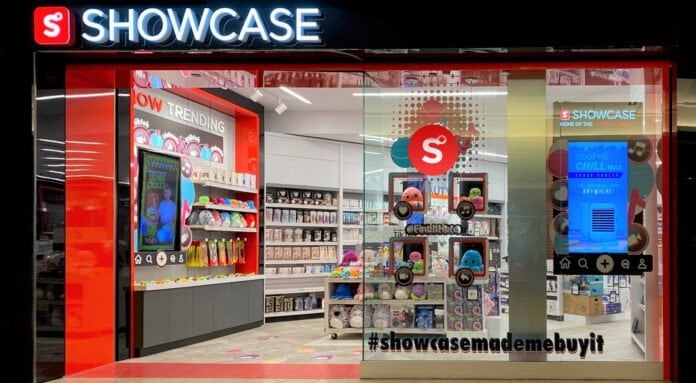
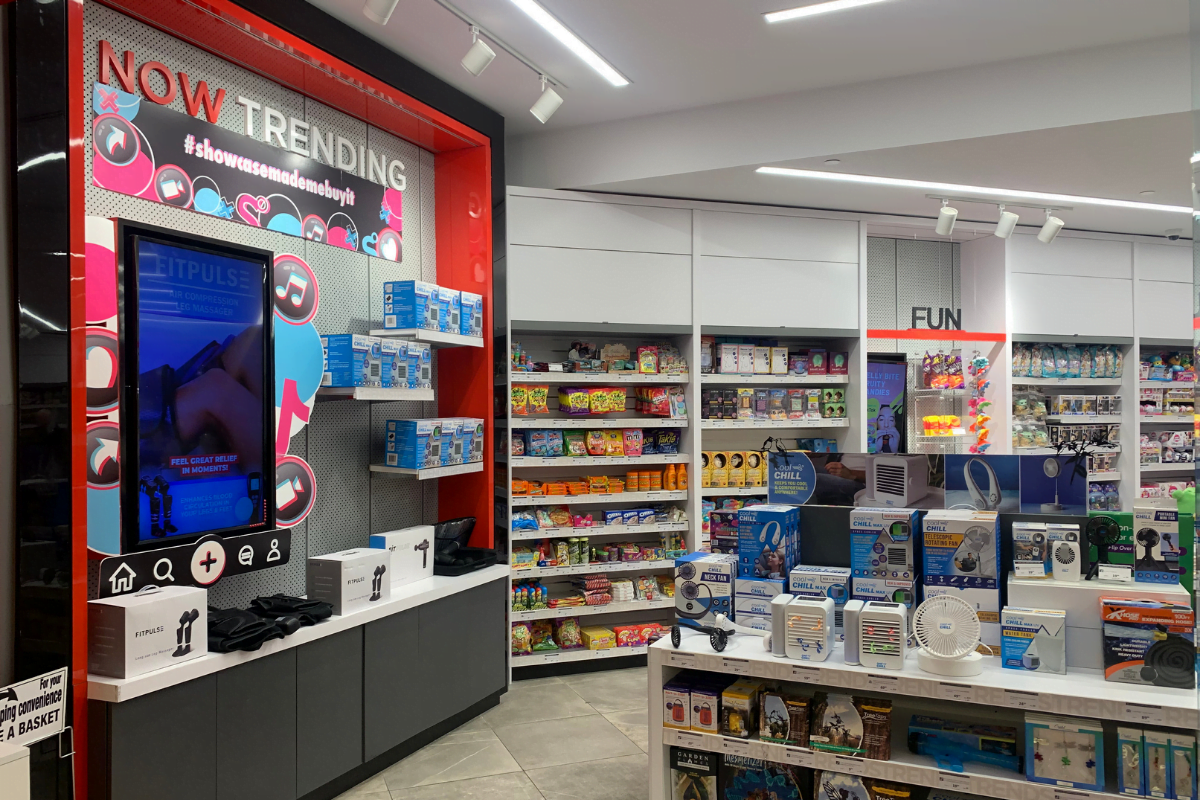
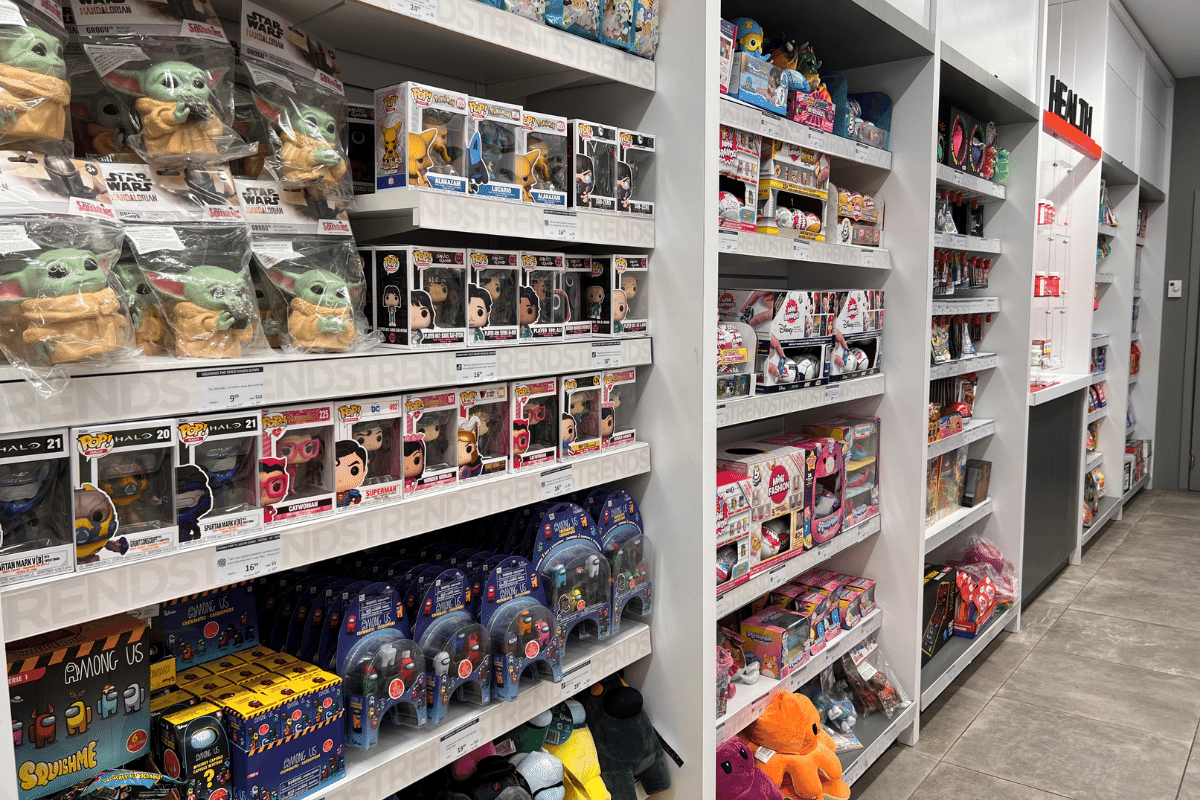
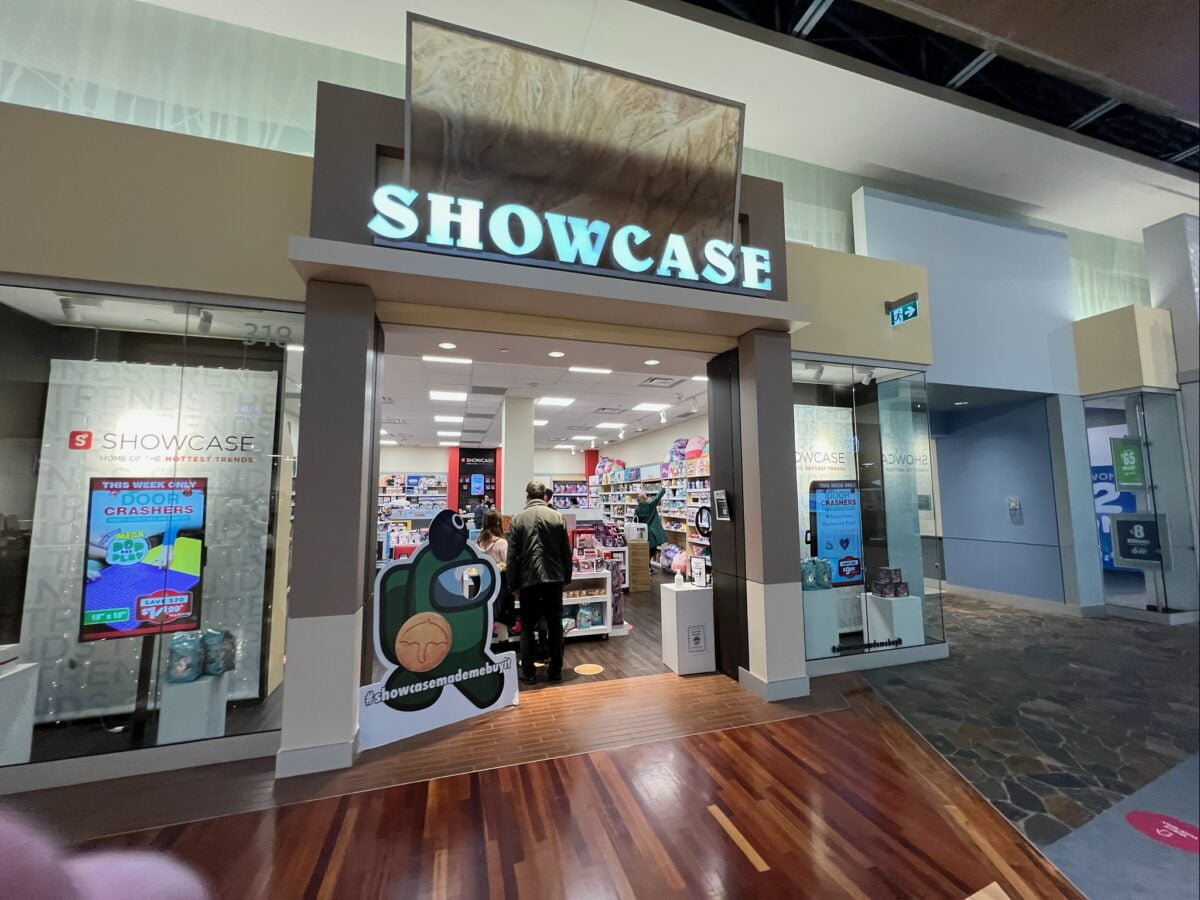
Other select retailers in the lower left tour area include Ann-Louise Jewellers, Pandora, Nike Store, Saje Natural Wellness, Gymboree, Plenty, Steve Madden, MonteCristo Jewellers (replacing a recently shuttered location at Oakridge Centre), Aldo Shoes, Sketchers, Little Burgundy, Lululemon, Kiehl’s, Showcase, Zensanhuan Handcrafted Pans, and Buck or Two.

Richmond Centre corridor by Sketchers and Aldo Shoes.
Richmond Centre corridor by Sketchers and Aldo Shoes. Photo: Geetanjali Sharma
Richmond Centre corridor by Steve Madden Shoes
Richmond Centre corridor by Steve Madden Shoes. Photo: Geetanjali Sharma

CF Richmond Centre Dining Terrace

While the shopping centre is predominantly only one level, there are escalators by Uniqlo in the central galleria that lead up to a second level. The architecturally attractive dining terrace is located on this level as well as entrances from the second level parking.

Stairs/Escalators from Galleria (by Uniqlo) to the Dining Terrace at Richmond Centre.
Stairs/Escalators from Galleria (by Uniqlo) to the Dining Terrace at Richmond Centre. Photo: Geetanjali Sharma
Dining Terrace signage from escalator at Richmond Centre
Dining Terrace signage from escalator at Richmond Centre. Photo: Geetanjali Sharma
Dining Terrace at Richmond Centre.
Dining Terrace at Richmond Centre. Photo: Geetanjali Sharma

We had a very interesting photo walk around CF Richmond Centre, and we hope you enjoyed coming along with us. Don’t forget to check out our other retail photo tours over the past few months. Thank you for taking this tour with us, and thank you Geetanjali Sharma for taking photos for this article.

Retailer Photo Takedown Requests

For retailers which may want their photos taken down, please contact the Craig Patterson @ craig@retail-insider.com.

Canadian Retail News From Around The Web For March 5, 2021

Canadian Retail News From Around The Web

Top Stories: National

Central/Eastern Canada News

Western Canada News

BRIEF: Boathouse Entering Quebec, Triple O’s Opening 30 Ontario Locations

Retail Insider Brief

Boathouse to Enter Quebec with Stores

Casual youthful multi-brand Canadian fashion retailer Boathouse will expand into the Quebec market this year for the first time with stores. The move signals confidence in the Quebec retail market as well as the importance of brick-and-mortar retail.

A lease has been signed to open a Boathouse store at the Promenades Gatineau near Ottawa in a space most recently occupied by Le Chateau, and more announcements will be made as the retailer ramps up its expansion in Quebec and the rest of Canada. We’ll be discussing the expansion more this month.

Exterior of Boathouse store. Photo: GL Smith

“We’re exited about going into Quebec. It’s been a dream for a long time,” said Janet Weatherhead, Director of Sales and Operations at Boathouse/Blackwell Supply Co. “Quebec wants the experience of brick and mortar. People want to come back to the malls and there’s no time like the present.”

“Everyone in our company feels blessed and has been so loyal. We’ve worked so hard through COVID and now the time’s right to expand,” she went on today.

Boathouse carries men’s and women’s clothing, and footwear and accessories from brands including Champion, Kappa, Volcom, Adidas, Billabong, Vans, Crooks & Castles, Nike, Tentree, and others.

The company was founded in Saint Catharines, Ontario in 1973 and now has over 80 stores across the country. Boathouse also owns Blackwell Supply Co. shoes which will also be discussed further in Retail Insider.

Triple O’s Enters Ontario with Plans for 30 Locations Over 5 Years

Exterior of Triple O's location. Photo: Triple O's
Exterior of Triple O’s location. Photo: Triple O’s

Ontarians are about to get a taste of Triple O’s, the West Coast restaurant specializing in burgers, fries, and shakes, as the company has announced its plans to launch six restaurants in the GTA in 2021/2022. When Retail Insider last reported on Triple O’s, the company had said that it was looking to open four locations in Ontario to start and the expansion is now ramping up after being delayed due to the pandemic.

The first Ontario location opened on March 2 in Mississauga’s Courtneypark, and it will be followed by a restaurant opening on Zenway Blvd in Vaughan this April. Triple O’s plans to open 30 locations in Ontario over the next five years.

The Triple O’s drive-thru restaurants will be located at Pioneer and Ultramar gas stations through the company’s existing, long-standing relationship with Parkland Fuel Corporation, as well as at free-standing Triple O’s locations.

Example of Triple O's menu items. Photo: Triple O's
Example of Triple O’s menu items. Photo: Triple O’s

Triple O’s is known for its 100% fresh Canadian beef burgers, served with a pickle on top. The company was founded in 1997 and now has 71 burger restaurants in Canada and Hong Kong.

Triple O’s is a spin-off of White Spot Restaurants, Canada’s longest-running restaurant chain and the country’s first chain of burger restaurants. Founder Nat Bailey started White Spot in 1928 as a traveling lunch counter in the back of his Model T Ford.

After the first two restaurant openings, subsequent restaurants will be opened in Toronto, as well as a second restaurant in Vaughan, and a Hamilton location. The company will also be operating its On The Go Truck, a 30-foot mobile restaurant serving its famous offerings. Triple O’s quick-serve restaurants will offer drive-thru, curbside pickup using the Triple O’s mobile app, dine-in service (once restrictions end), and delivery through SkipTheDishes and DoorDash.

Tendon Kohaku Opening 1st North American Location in Vancouver this Month

Exterior of new Tendon Kohaku location in downtown Vancouver. Photo: Martin Moriarty Linkedin

Tendon Kohaku, a Singapore-based chain restaurant focused on Japanese tempura dishes, is set to open its first North American location in Vancouver this month.

The popular Asian eatery has moved into the ground level of the Robson Court building at 840 Howe Street, at the corner of Howe and Smithe Streets in downtown Vancouver. Other lease deals executed include Station Square near Metropolis at Metrotown in Burnaby as well as at The Amazing Brentwood in Burnaby. Locations are now being sought in Coquitlam, Richmond, Surrey and other markets.

Kohaku is a joint venture from two giant Japanese food corporations: Nadai Fujisoba (the largest soba chain in Japan) and the Kings Know Group.

Kohaku’s first location opened in Singapore in 2016 and it now operates several other outposts in the Philippines and Malaysia too. Along with plans to launch in downtown Vancouver, Tendon Kohaku also has been listed as a planned tenant for Station Square in Burnaby.

More locations are planned. CBRE Vancouver’s Urban Retail Team is coordinating the expansion under the direction of Martin Moriarty and Mario Negris.

Sister brand Kokoro Mazesoba, which already has a presence in Vancouver, is also expanding with five recent deals in downtown Vancouver, Coquitlam, Station Square in Burnaby, The Amazing Brentwood, and another undisclosed location. Locations will ideally be in the 2,500-3,500 square foot range. The two concepts like to be paired together, according to CBRE, with locations close by or even in the same space with one kitchen for both concepts. A joint location for the two brands would ideally be in the 5,000-6,000 square foot range. Strong urban nodes with a high Asian demographic will be key and the concepts are expected to expand to other parts of Canada.

Holt Renfrew Announces Spring 2021 Campaign Starring Canadian Actor/Singer Jordan Alexander

Jordan Alexander for Holt Renfrew. Photo: Holt Renfrew

Toronto-based large-format multi-brand luxury retailer Holt Renfrew has announced details regarding its Spring 2021 campaign starring Canadian actor and singer, Jordan Alexander.

Kicking off March 1, the campaign highlights Alexander in a photo and video series, styled in a selection of Holt Renfrew’s Spring collections. Alexander, a cast member of HBO Max’s Gossip Girl, is also featured in a campaign video, singing her rendition of Bruce Cockburn’s classic, “Lovers in a Dangerous Time.”

The theme of Holt Renfrew’s Spring campaign is Empowering Self-Expression, a celebration of the retailer’s updated Mission: to empower self-expression and ignite positive change. The video also features a group of Canadian dancers, shot in-studio against projections of local landmarks and scenes of nature from Calgary, Montreal, Toronto, and Vancouver. The dancers represent various disciplines and include: Esabelle Chen (Montreal), Kim Gingras (Montreal), Jay Musodi (Vancouver), Nneoma Oguejiofor (Toronto), Manushi Patel, (Toronto), Jordan Phouttharah (Toronto), Cameron Wilson (Toronto), and Jera Wolfe (Toronto).

Holt Renfrew customers across Canada can also participate in the Spring campaign by tuning into an live event on Holt Renfrew’s Instagram channel featuring a one-on-one conversation with Jordan Alexander and Tyrone Edwards, Co-Anchor, CTV’s ETALK, on Sunday, March 14 at 7 p.m. ET.

Because of lockdowns in Ontario, half of Holt Renfrew’s stores have been shut to in-person shopping since November 23rd. On Monday, lockdown measures are expected to lift with reduced capacity for Holt Renfrew’s Toronto stores (50/100 Bloor Street West and Yorkdale) and the Square One location in Mississauga. Holt Renfrew also operates large stores in downtown Vancouver and downtown Calgary as well as the beautiful Holt Renfrew Ogilvy store in downtown Montreal.

MONDAY Haircare Introduces Salon Quality Haircare to Walmart

MONDAY haircare line. Photo: MONDAY

MONDAY is the brainchild of New Zealand entrepreneur and beauty enthusiast, Jaimee Lupton, who was inspired to create a range of products that provide the benefits of salon quality formulations to all shoppers.

An explosive hit upon launch in Australia and New Zealand, MONDAY caused sellout in-store and newsworthy sales and after only six weeks on shelf, became the best-selling haircare collection in its domestic market. MONDAY has shipped over 2 million bottles internationally since launch in March 2020 and now Canadian’s can buy the affordable, yet luxury, haircare brand in Walmart and Shoppers Drug Mart.

MONDAY launches with four targeted ranges, each with a shampoo and conditioner featuring premium formulations with a focus on natural ingredients such as jojoba oil, shea butter, and ginger root extract. Engineered to perform better than leading salon brands, MONDAY’s formulations have been through seven stages of research and development.

The brand is cruelty free and sustainable. Bottles are proudly made with recyclable HDPE plastic and pumps are made with 100% recyclable plastic through the use of PP material, to minimize the brand’s carbon footprint and reduce landfill.

“The distinctive square shape is not just aesthetic – it means the bottles can be packed much tighter and more efficiently to distributors. All the labelling on pack is screen-printed straight onto the surface to avoid any glue residue left behind,” notes Lupton.

Flow Water Appoints New CEO

Mr. Maurizio Patarnello holding Flow products
Mr. Maurizio Patarnello holding Flow products.

Flow Water Inc., one of the fastest-growing premium water brands in North America, has announced the appointment of a new CEO, Mr. Maurizio Patarnello.

Mr. Patarnello will play a key role in scaling Flow to meet its goal of becoming one of North America’s premier sustainable mineral spring water and wellness beverage companies. Mr. Patarnello joins Flow after an impressive 27+ year career working for Nestlé, and during his tenure he assumed various positions of increasing responsibility around the world, including throughout western and eastern Europe, Asia, and the Middle East. In 2017 he was appointed CEO and Chairman of Nestlé Waters, a role that he occupied through the end of 2019.

He has dedicated the large majority of his career to the bottled water business, in which he significantly contributed to Nestlé Waters’ growth of iconic multibillion dollar brands such as Nestle Pure Life, Perrier, San Pellegrino, Acqua Panna, and Poland Spring. He is also a pioneer in the global consumer health movement from carbonated soft drinks to bottled water.

Flow Alkaline Spring Water.
Flow Alkaline Spring Water. Photo: Flow

“Just weeks after we announced our intent to take Flow public, it is incredibly energizing to have someone of Maurizio’s stature and expertise join the Flow family, and his leadership will help us accelerate our growth, hone our strategy and execution, and scale our business in North America,” Nicholas Reichenbach said. “I’m proud to have led Flow from its inception to being a high-growth company that is now ready to go public and am so grateful be able to hand the reins to such a seasoned executive like Maurizio, while taking on a new active role as Executive Chairman.”

“I am thrilled to join the highly professional and dynamic executive team and lead Flow with Nicholas Reichenbach and the Board, as we stand on the precipice of an important evolution of the company and of water and beverage aisles across North America. Flow has tapped directly into the modern consumer’s desire for high quality sustainable water and functional beverage products and is poised to be a market leader in the space. Accelerating Flow’s growth will be our main goal in the coming years. I expect great things to come,” says Patarnello.

District Ventures Leads $10 Million Investment in Plant-Based Technology Company

Outcast Foods 'Fruit Explosion' product. Photo: Outcast Foods
Outcast Foods ‘Fruit Explosion’ product. Photo: Outcast Foods

District Ventures Capital has announced an equity investment of $5 million in Outcast Foods, an innovative food technology company that diverts food waste from landfills and turns discarded fruits and vegetables into clean, nutrient-dense, sustainable food products.

BDC Capital also participated in the financing round and matched the $5 million investment for a combined total of $10 million.

Established in 2017 by serial entrepreneur, Dr. Darren Burke, and former NHL forward, TJ Galiardi, Outcast tackles the growing global issue surrounding food waste in both a unique and sustainable way. Utilizing rejected, surplus, or past-date fruits and vegetables from local farms, food processors and grocers, Outcast’s innovative food upcycling technology creates high-quality products with its own line of ‘Plant-Strong’ upcycled protein powders and dietary supplements, in addition to providing its plant-based ingredients to a variety of industries including cosmetic, agriculture, and pet food manufacturers.

Outcast Foods 'Super Greens' product. Photo: Outcast Foods
Outcast Foods ‘Super Greens’ product. Photo: Outcast Foods

“We saw the giant issue of food waste as an opportunity to create a new category in the growing supplement industry. All we needed to do was figure out how to transform waste stream food into high purity, nutrient-dense, long shelf-life natural health products,” said Dr. Darren Burke, Co-Founder and CEO of Outcast Foods.

“We have created a win for everyone in the supply chain with Outcast. Retailers not only cut costs associated with hauling unsold produce away to the landfill, but there’s also a reduction in carbon footprint, and customers enjoy delicious and sustainable products. We’re ready and excited to scale our operations with our new partners,” added TJ Galiardi, Co-Founder of Outcast Foods.

Outcast currently partners with multiple grocers, manufacturers, and farmers across Canada who supply an average of one million pounds of daily food waste. Regarded as ‘first-to-market’ in the upcycled food category, the company currently operates from its facility in Dartmouth, N.S. with plans to scale significantly in 2021.

Read More Briefs From Retail Insider:

Retail Staffing in Canada: Why CERB Worked and EI Does Not (OpEd)

Retail worker using smart device

By Suzanne Sears, Best Retail Careers International Inc.

Retailers in Canada are completely baffled. There are so many jobs out there and so few applicants. How can this be? Let me break it down for you as a retail recruiter and share what I am hearing in the field.

No, it is not that retail staff are so lazy that they want to sit at home. Everyone has “stayed home” to death. They would love nothing more than to be back at work, having a life.

The Obstacles

When CERB was in place we saw relatively little resistance to returning to work. Seem counterintuitive? Not really. If you took a job and the retailer got shut down two weeks later, CERB funds came within days. CERB was an insurance policy that gave workers the steps to risk taking a job.

Suzanne Sears

Risk taking a job? Here is why. If staff manage to jump all the hurdles to receive EI including the wait times and then go back to work and drop off the program, how long does it take before they see money again? It could be weeks in some cases, waiting for termination documentation etc — basically waiting for the slow wheels of EI to kick in, assuming they make no errors.

Now if you start a job, you won’t see pay for two to four weeks from the employer and EI will kick you off fairly quickly after $1,000+ in earning.

That leaves a wage gap of roughly four and sometimes six weeks to risk. A single mom with a not-so-stable school system as her only child care resource now has to face a month or more of no money to live on.

Now let’s calculate the risks. That same woman might only earn $14 per hour. That is roughly $29,000 per year, less around 23% off the top for taxes. Effectively, that’s just a few hundred dollars more than EI, but now with the expenses of work which include transportation, lunches, clothing, and after-hours sitters.

Well, perhaps even the mental sanity of going back to work is worth this. Hold on. Here comes school lockdowns again! Whoops, sorry, the province is moving back to lockdown. All these plans made and expenses put up out front for two weeks work? Would you take that risk? Start the gruesome EI process all over again?

The core problem is that the minimum wage is too low. We see the American Walmart organization raising minimum wages to $15 USD or about $20 per hour CAD. That is a long way from $14 per hour in Ontario, and even less in other provinces.

The minimum wage is too low to make those core front line jobs worth taking during a pandemic with EI as the back up plan.

CERB, far from creating a lazy class, actually was insurance to encourage people to take those jobs. It would come soon enough to be a rescue plan. We saw great hiring during CERB in retail.

We saw hiring plummet in recent months for even retailers who could stay open with large vacancies.

Add to this the general contempt workers feel for EI, many simply take a swerve altogether to work off the grid.

The switch to EI was to ensure the few fraudsters didn’t get CERB who did not qualify. There was no massive fraud. There were a few bad actors here and there.

Instead, we reactivated the massive, expensive, and ineffective machinery of EI to police the payments.

Then there is the habit of retailers to take people on with uncertain scheduling and hours. The job might be 40 hours one week, then 15 the next. On top of that – no sick pay. If you go to work and get sick, you are doomed financially.

Retail itself has to shift to a living wage and guaranteed hours and sick pay — a tall order during a pandemic. The resistance to pay employees more has put retailers into a challenging situation.

Retail minimum wage workers are voting with their feet. It is too financially risky to accept a minimum wage job right now.

We should be calling on the government to reinstate CERB, mandate sick pay, and raise the minimum wage like what retailers in the United States are doing. The results speak for themselves.

Suzanne Sears is the President of Best Retail Careers International and Luxury Careers Canada.

Canadian Retail News From Around The Web For March 4, 2021

Canadian Retail News From Around The Web

Top Stories: National

Central/Eastern Canada News

Western Canada News