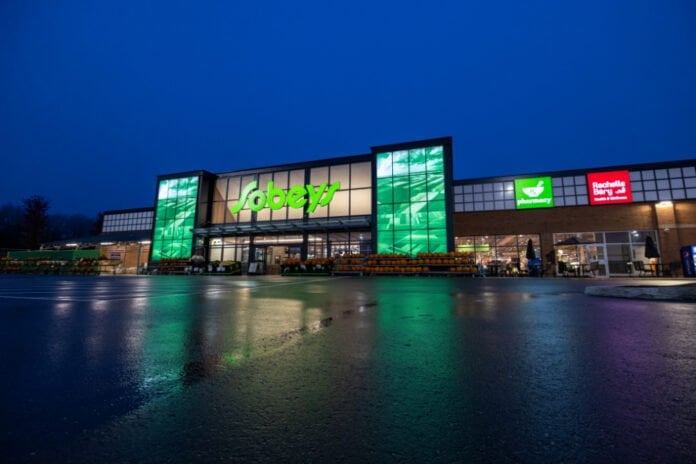
“Our newly redesigned store concept boasts refreshed design, décor and a completely reinvented store experience,” said Mark Holly, SVP Real Estate & Construction, Sobeys Inc.
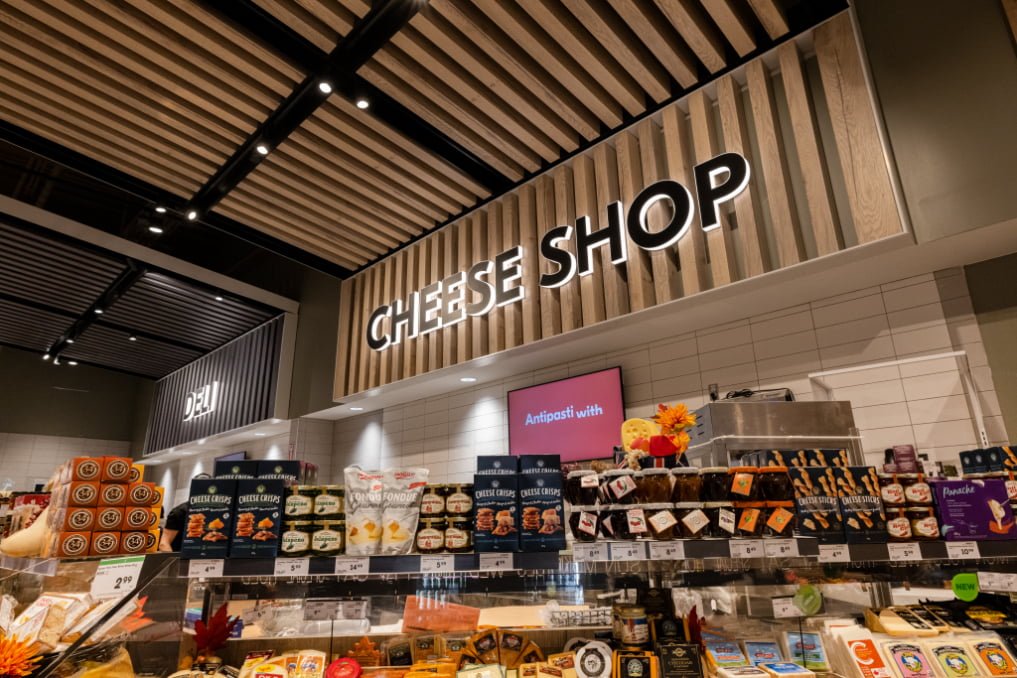
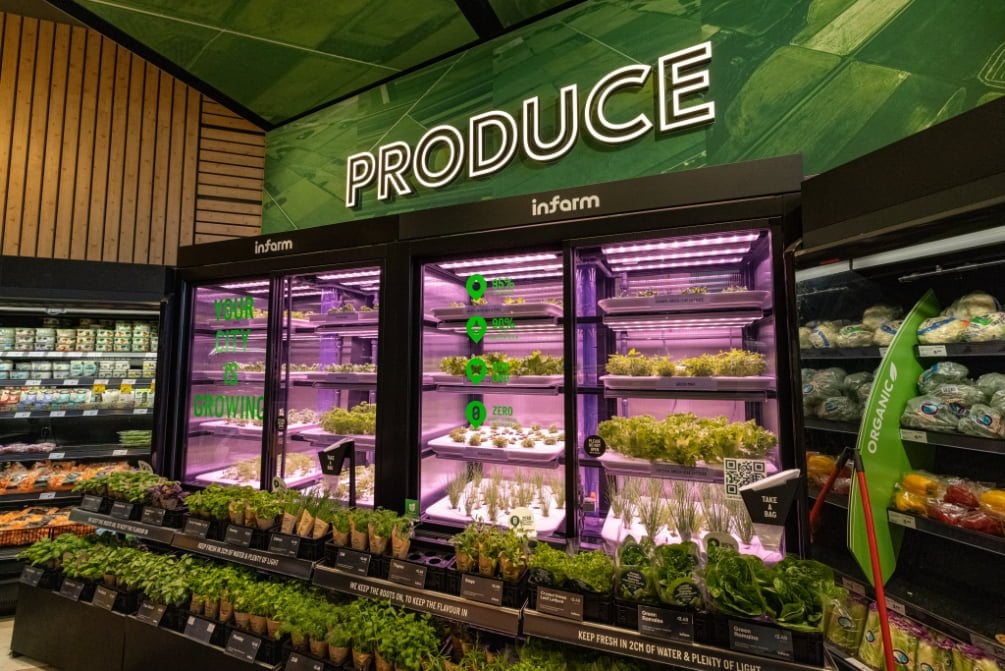
“Customers who visit our newly renovated Sobeys Orangeville store in Ontario will immediately notice that all departments have enjoyed a major refresh featuring new offerings including a dry-aged meat section, InFarm fresh herb live walls, new Rachelle-Bery health and wellness departments, and an expanded ready-to-eat food section. The newly redesigned departments also feature modern, sleek overhead canopies throughout the store.”
Sobeys is a wholly-owned subsidiary under Empire Company Limited which is headquartered in Stellarton, Nova Scotia. With approximately $28.5 billion in annualized sales and $15.9 billion in assets, Empire and its subsidiaries, franchisees and affiliates employ approximately 134,000 people. Besides Sobeys, its brands also include IGA, Safeway, Farm Boy, FreshCo, Thrifty Foods and Foodland.
Mark Holly
Holly shared that Empire launched Project Horizon in July 2020, which included plans for major investments in Empire’s store network.
“Since then, Empire has accelerated investment in physical assets, through renovations and conversions. While Sobeys Orangeville is the first store to be fitted with these particular flexible fixtures, the overall look and feel of this store can be experienced by customers at an additional 12 existing Sobeys and Safeway locations across Canada, all of which are part of our national renovation program.”
“While we cannot confirm exact future locations just yet, you can expect many refreshed stores throughout our network in the coming years. Currently, our modern, refreshed décor can be seen in 13 Sobeys and Safeway stores across the country, including Sobeys Queen St. and Sobeys Mumford Road in Halifax.”
Last year, Empire unveiled its Project Horizon, which is a three-year growth strategy for core business expansion and e-commerce acceleration.
Growth in market share is expected from supporting and investing further in the store network, improving store productivity, scaling up grocery e-commerce, growing the private label portfolio, continuing the Western discount business expansion, and increasing the Farm Boy footprint in Ontario, said the company at the time.
“The Company will accelerate investment in physical assets, through renovations and conversions, and store processes, communications, training, technology and tools. This will provide Empire’s store teammates with further capabilities and tools to better serve customers. Towards the end of the last three years, re-investment in Empire stores was a key priority. These investments, coupled with powerful refreshed brand marketing strategies, have been successful with strong returns. These priorities, along with the expansion of the FreshCo and Farm Boy banners, are reflected in the Company’s estimates of future capital spending, averaging $700 million annually over the next three years,” he said.
“Improving sales per square foot is the crucial engine for long term market share growth. During Project Sunrise, the Company built the foundation of its advanced analytics capabilities. Analytics will drive improvements in every customer facing element, including store footprints, customer promotions and availability of product on shelf. With Category Resets complete, the Company is able to further improve the customer experience by leveraging advanced analytics, to tailor its assortment to store formats and optimize product adjacencies.”
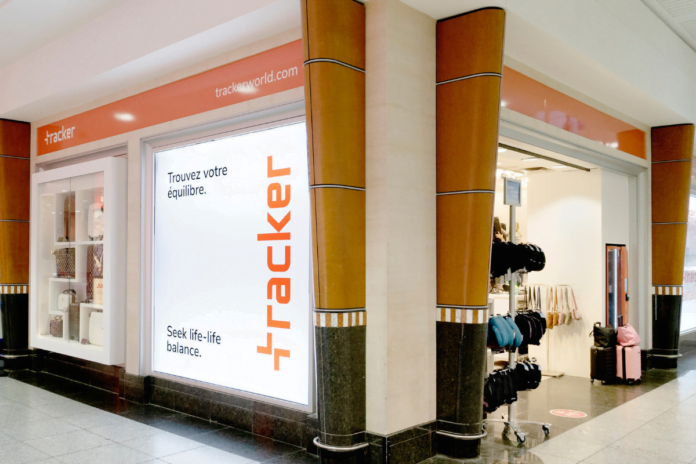
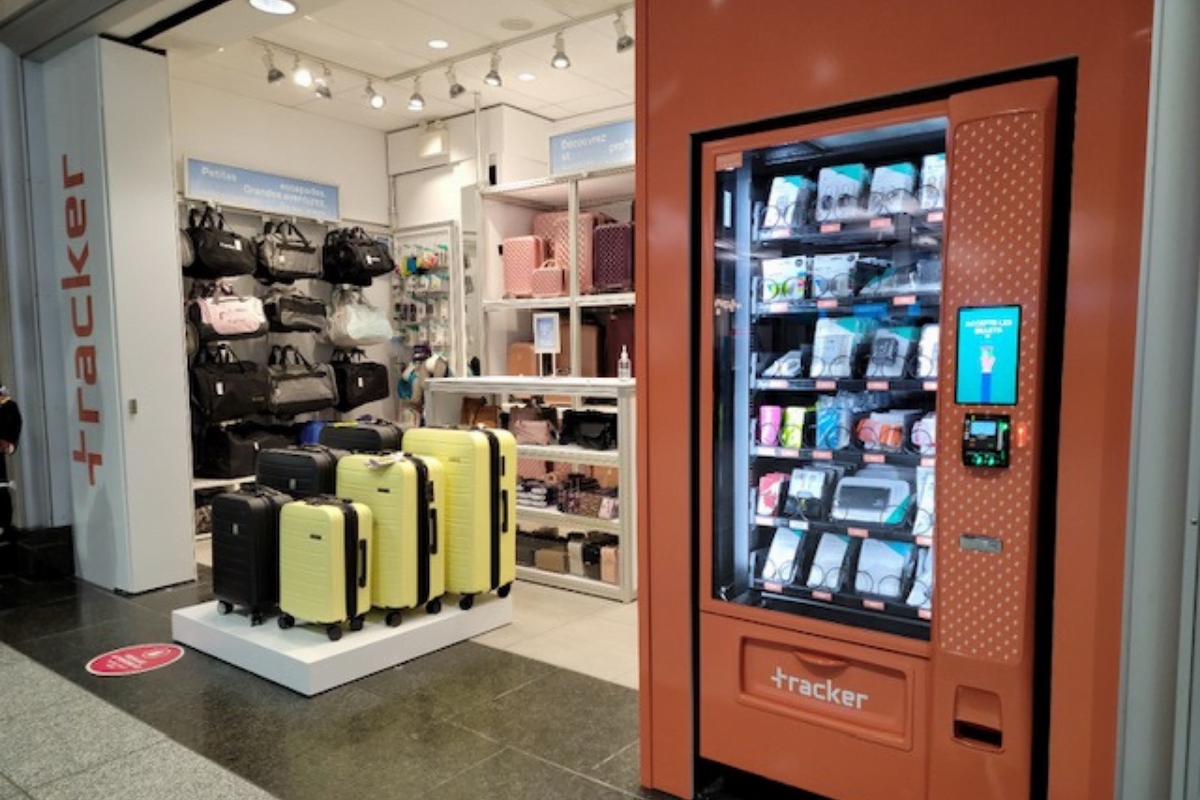
Tracker at Montréal-Pierre Elliott Trudeau International
Montreal-based Bentley Leathers has launched a new travel-focused retail store concept targeting airports and other travel nodes called Tracker that it plans to roll out across Canada and beyond. The store expansion will act as the primary growth channel for Bentley following its restructuring shortly before the start of the pandemic.
The first Tracker storefront opened earlier this month at Montréal-Pierre Elliott Trudeau International Airport near Montreal, and more locations are planned according to Bentley’s CEO Walter Lamothe. The Montreal airport store is located on the departure level just before security and it stocks a range of convenient, last minute travel necessities for people on the go.
Image: Tracker at Montréal-Pierre Elliott Trudeau International
Tracker is actually the name of a bag and accessory brand developed by Bentley for its stores, and the name is now being used for the expansion which Lamothe said will be global. The new Tracker storefronts require minimal construction according to the retailer, with each storefront spanning between 200 and 400 square feet typically composed of freestanding walls and fixtures that can be retrofitted to existing locations. Bentley said that this makes it easy to adjust the concept to any airport, train station or transit station globally. “We have a team in place that understands the new reality we are living in, and has a vision of the stores of tomorrow that offer solutions for the everyday traveler,’’ says Richard Dumont, Vice-President Customer Experience.
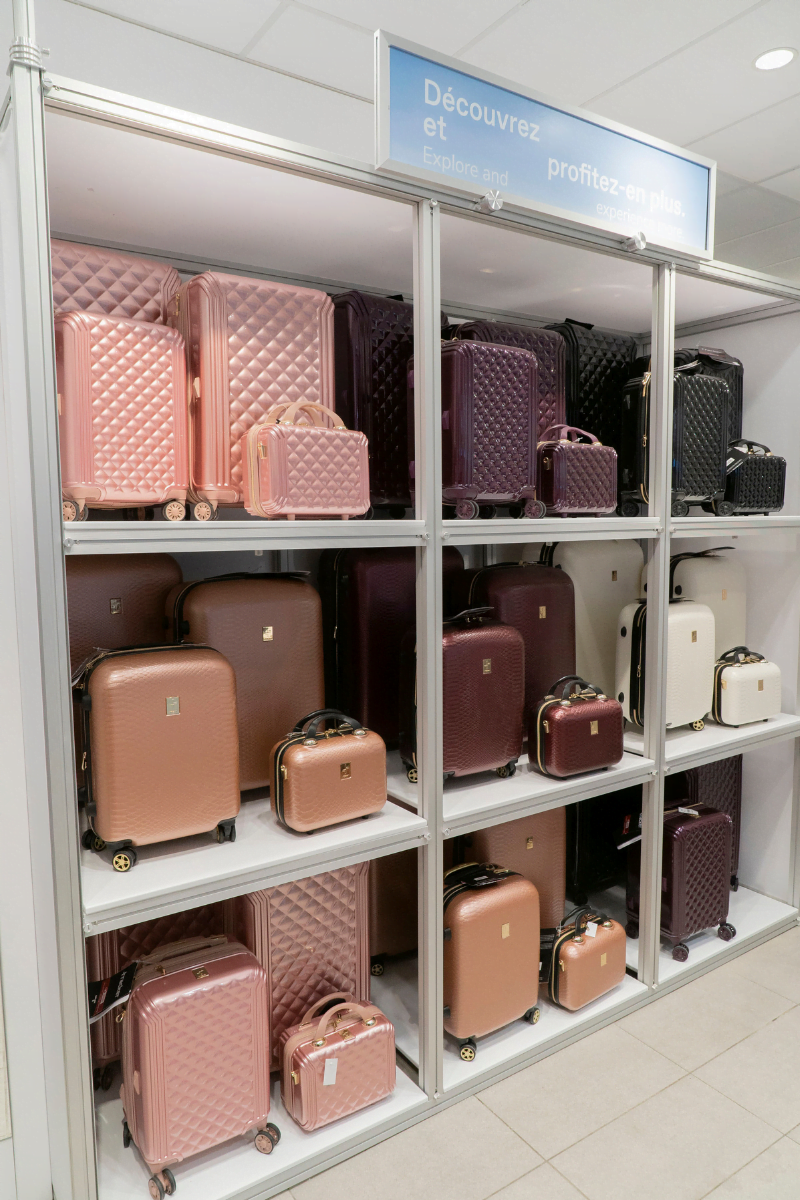
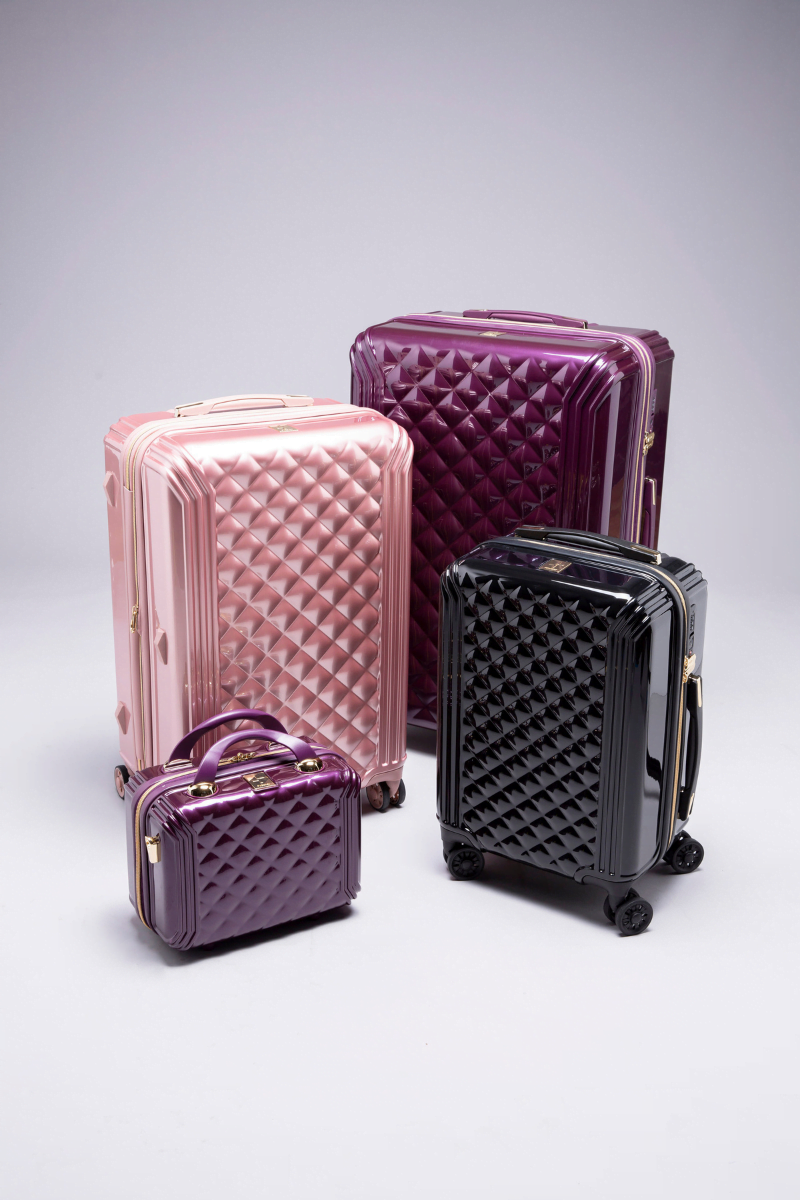
Orange and black are the colours of the brand with stores featuring bright interiors and displays of highly curated collections of contemporary, functional and affordable luggage, duffle bags, and backpacks, as well as security handbags and modern travel accessories.
One particularly unique feature of Tracker stores is a built-in vending machine which the retailer refers to as its ‘silent seller’ window. Customers can shop smaller items even if the store is closed via the vending machine with exterior window access.
Bentley CEO Walter Lamothe told Retail Insider that his vision is to expand the Tracker concept to airports and transit stations in Canada and beyond. The ease of setup and potential for growth means that there’s currently no set targeted number of locations, and that the expansion will happen as opportunities present.
Image: Tracker
Image: Tracker
The potential for growth of the Tracker brand globally could give Bentley a significant revenue boost after the retailer filed for creditor protection in late 2019 and restructured shortly thereafter in early 2020. The retailer had what Lamothe said at the time was too many locations and the restructuring allowed Bentley to right-size its retail footprint in this country.
Now with Tracker, the opportunity for Bentley to grow its business is there under a different name — in order to expand globally, Bentley Leathers wasn’t able to use the ‘Bentley’ name because of intellectual property-related rights.
Earlier this month, Lamothe said that he brought members of the Bentley team to the new Montreal airport Tracker store for something of a ‘pep rally’ and the feedback from the team was overwhelmingly positive. “It was thumbs up all around, we were thrilled,” Lamothe said. “The sentiment was that we made it through the pandemic and that Tracker is the crown on top of a long, tedious process.”
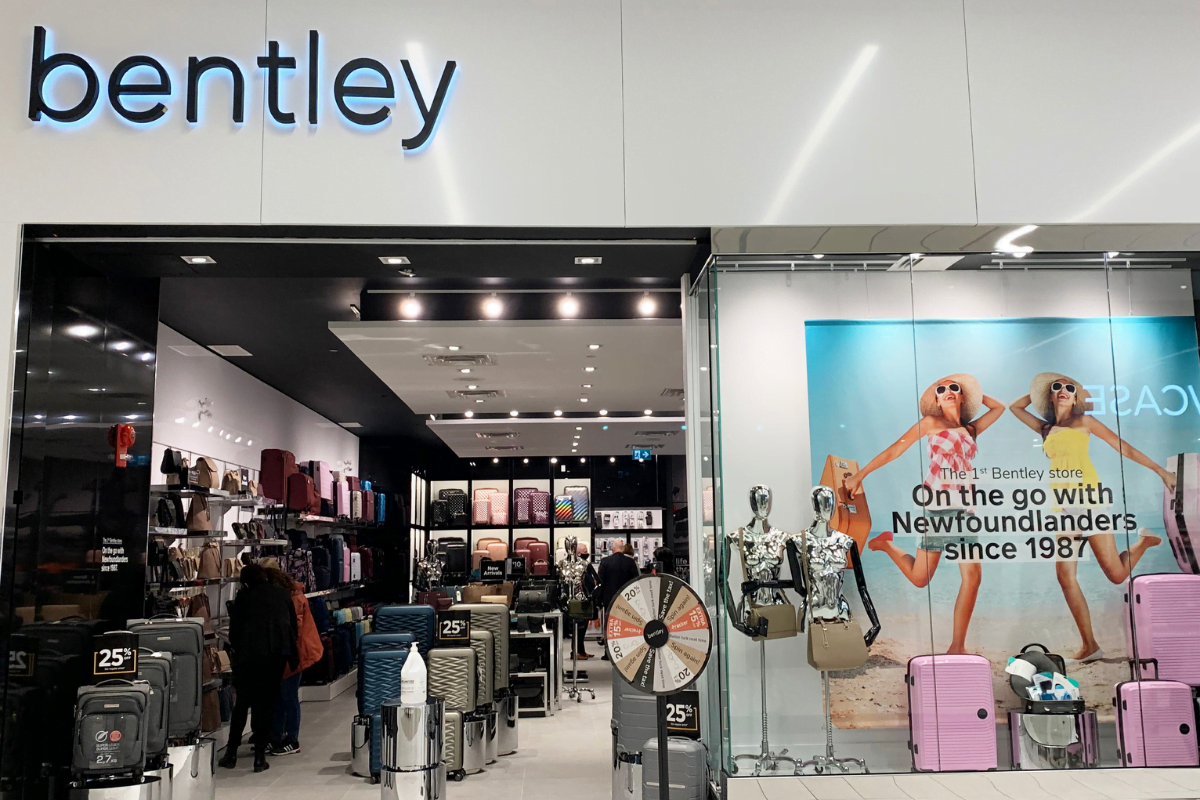
Bentley Leathers also recently opened a new store concept at the Avalon Mall in St. John’s Newfoundland, which is where the retailer opened its very first storefront in 1987. Bentley now operates over 160 stores across Canada in markets across the country and is considered to be the go-to retailer in Canada for affordably-priced bags and accessories.
The store underwent a full remodel that began in spring 2021, which includes a full modernization strategy that integrates e-commerce into the design.
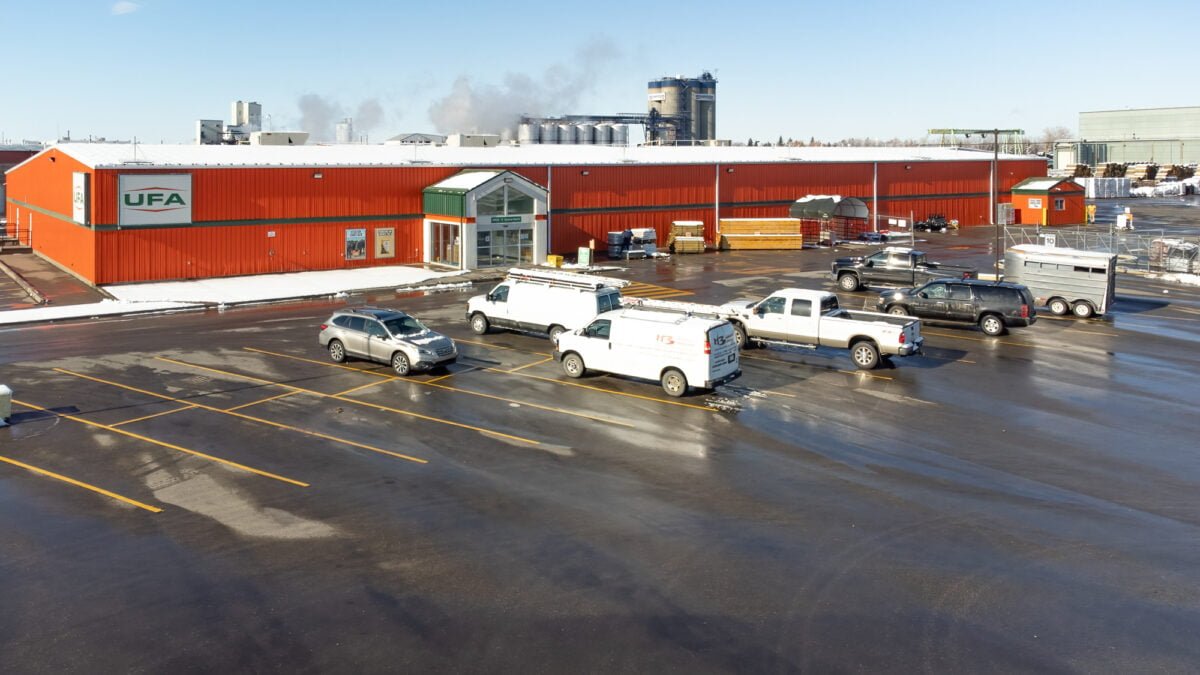
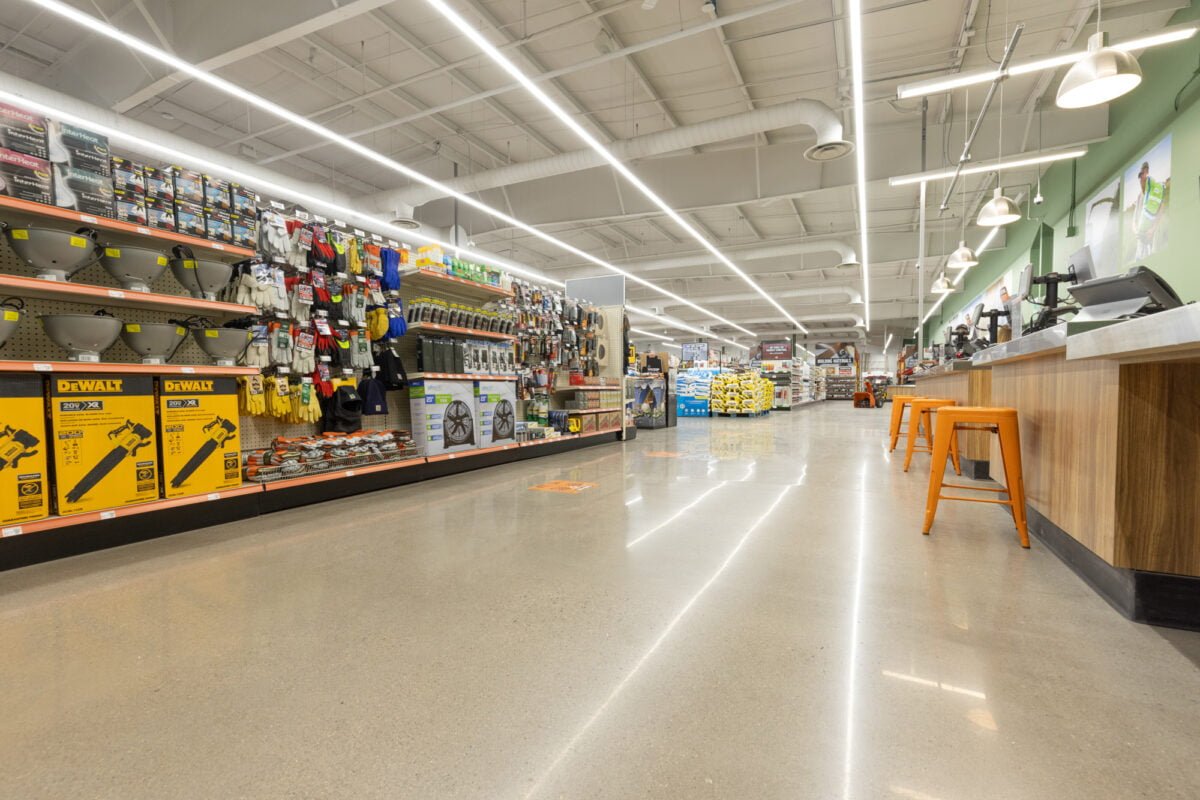
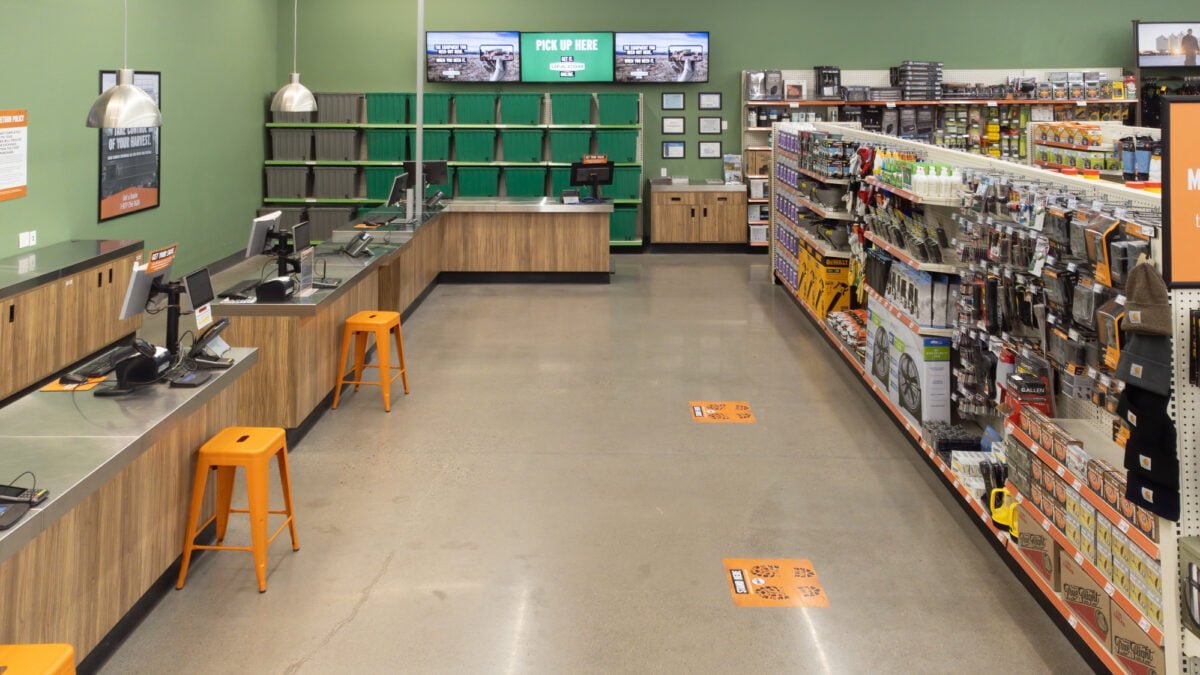
“Lethbridge is a strong and growing market for UFA, and we are pleased to be able to enhance the service to our members and customers in southern Alberta with the improvements we have made,” said ScottBolton, UFA President and Chief Executive Officer.
Lethbridge UFA Farm & Ranch Supply Store
Lethbridge UFA Farm & Ranch Supply Store
Scott Bolton
“The investment UFA has made in this location reflects our commitment to customers in the region and aligns with the promise we make to our members, to be the most trusted supplier of products and services in the markets we serve. We also employ local people, contributing to the local economy and community.”
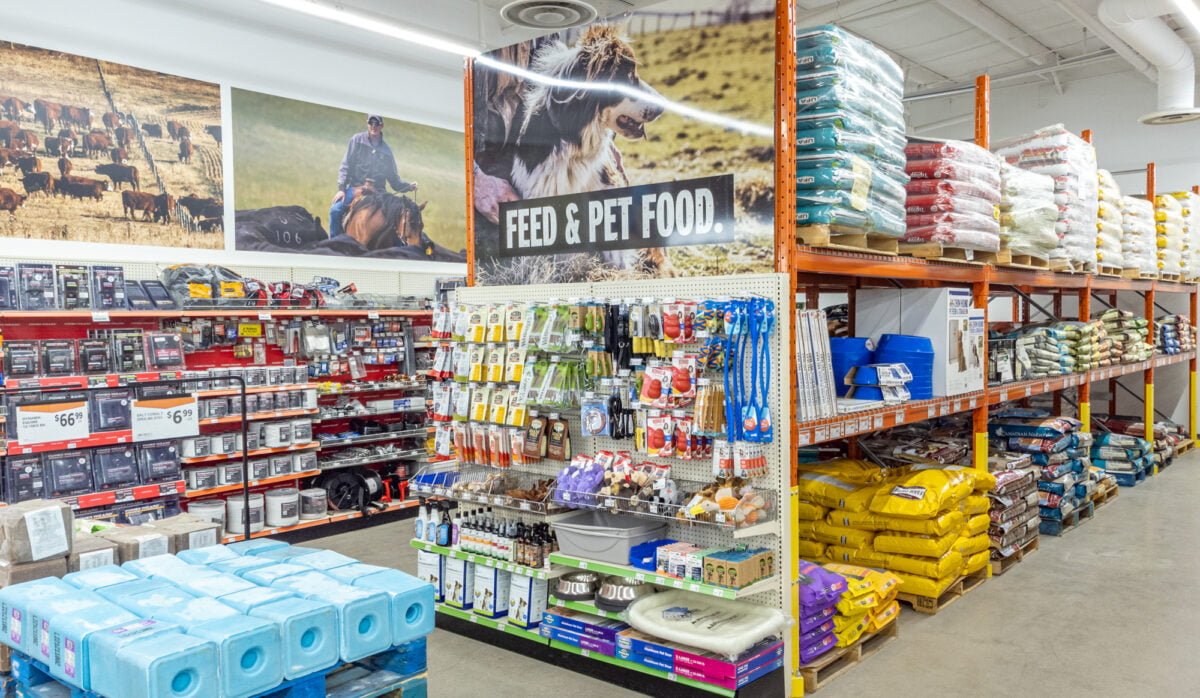
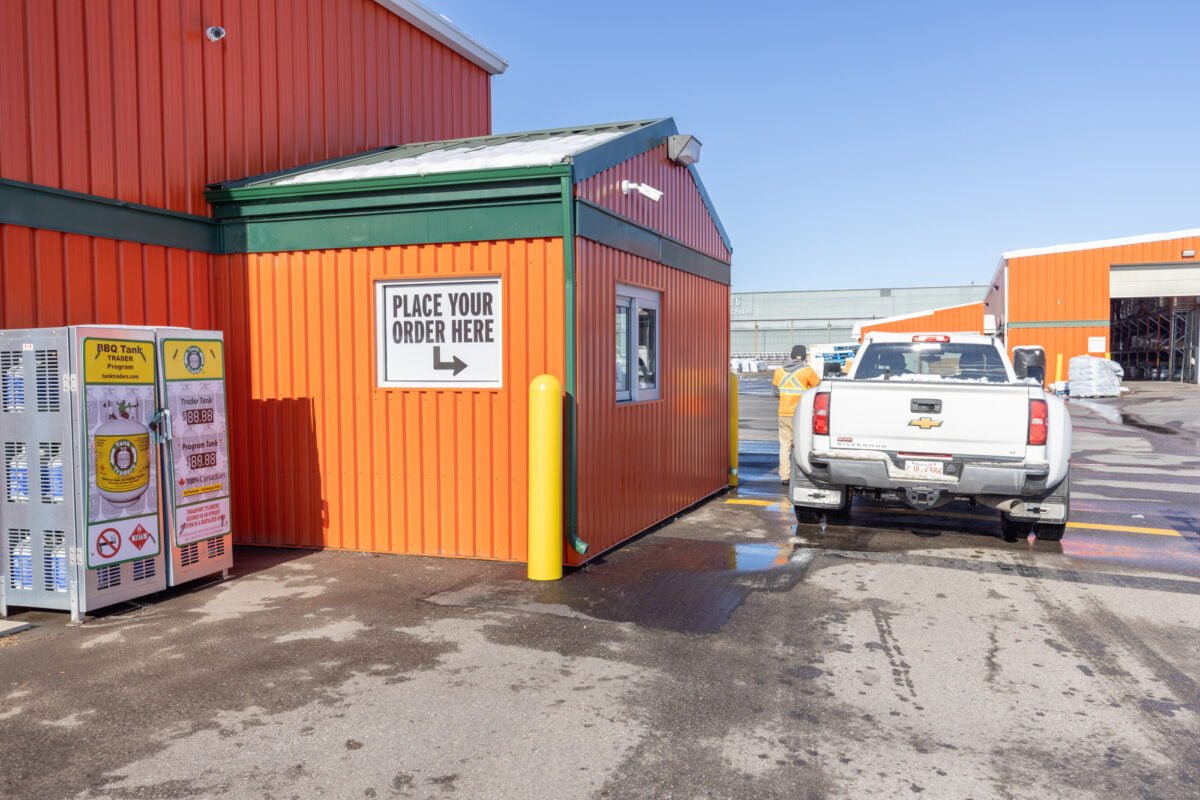
Additional enhancements include a new drive thru, wider shopping aisles and a new building supplies area for a product showcase. There is also a new service desk designed for customer interaction and an online order pick-up area.
UFA Co-operative was founded in 1909 with more than 120,000 member-owners and includes more than 111 bulk fuel and Cardlock Petroleum locations, 34 Farm & Ranch Supply locations and employs more than 950 people.
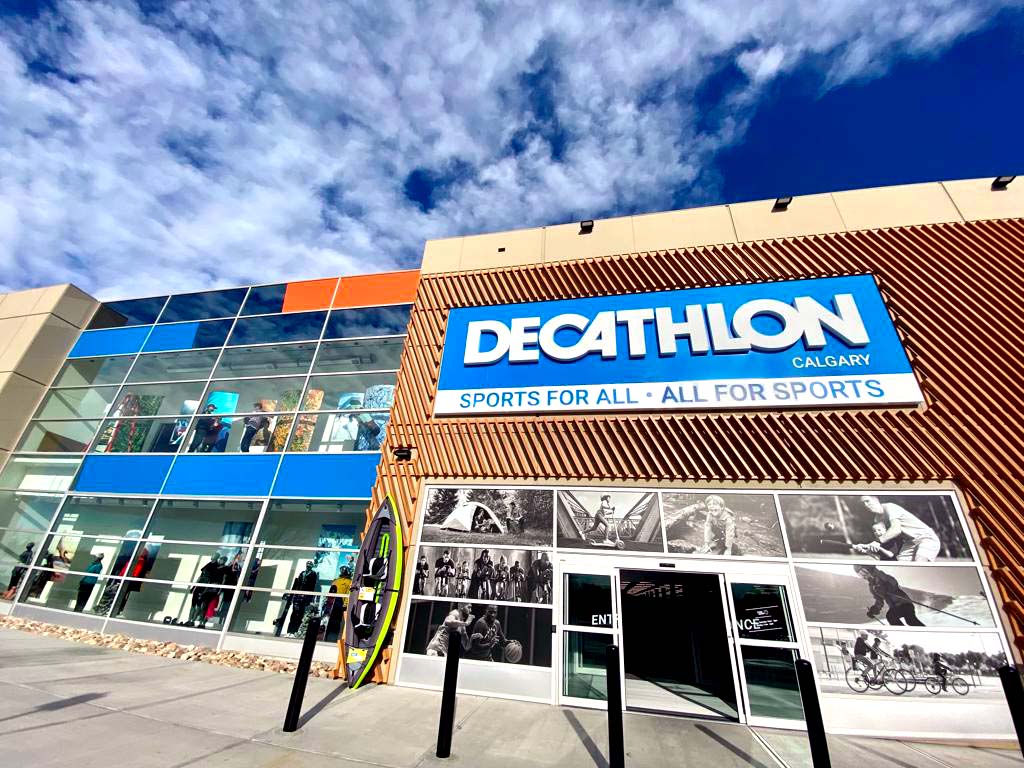
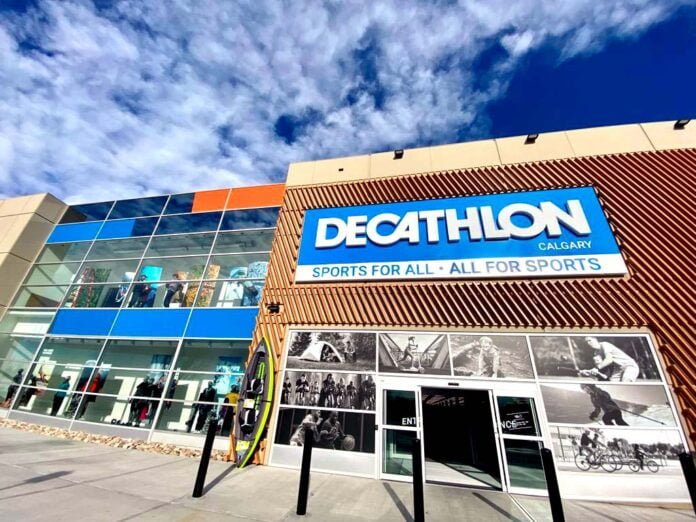
Sporting goods retailer Decathlon Canada has announced a Black Friday initiative that will benefit local organizations across the country.
Jaylone Lee
The brand will be donating all proceeds from member purchases on Friday, November 26th, up to a total of $200,000, to a number of participating organizations that share Decathlon’s mission to promote access to sports.
“We are so thrilled to be able to support local organizations that are as passionate as we are about making sports more accessible,” says Jaylone Lee, Communications and Marketing Director for Decathlon Canada.
“We are incredibly proud of our teammates, who made a collective decision around how we, with our non-promotional, year-round fair pricing model, would approach Black Friday. Giving local teams a voice and empowering them and their members to impact their local communities – these are really important elements of the Decathlon experience.”
Image: Decathlon Canada
David Roy Proulx
The Black Friday initiative is one of many that the brand has identified as a way to give back to local communities and encourage participation in sports across the country.
“I love working for a company that shares my personal values. Giving back to the community is so important, and bringing sport into people’s lives means so much. It’s a big part of why I am so happy to work at Decathlon,” says David Roy Proulx, Store Leader at Decathlon Laval.
Decathlon has over 1,700 stores in over 60 countries around the world. Decathlon Canada has 10 stores across the country, with additional locations to be announced soon.
Local organizations involved in this year’s initiative
Le Centre du Sablon (Laval, QC) – Offers a variety of sports activities for people of all ages in the community.
MS Society of Canada (Boisbriand, QC) – Provides support and information for those living with multiple sclerosis who would like to maintain an active lifestyle.
Action Nouvelle Vie (Brossard, QC) Provides concrete help to people in difficult situations, focusing on the well-being of children and youth, improving their living conditions and instilling hope.
Café Rencontre (Sainte-Foy, QC) – Provides support and access to affordable sports gear for underprivileged people in the community.
Special Olympics Burlington (Burlington, ON) – Provides sporting opportunities for intellectually disabled youth and adults in the community.
TBD (Vaughan, ON)
The Snowsuit Fund (Ottawa, ON) – Provides snowsuits for children in need so they can participate in outdoor winter activities.
The Nova Scotia Sea School (Dartmouth, NS) – Empowers youth through wilderness and seafaring adventures.
KidSport (online and Calgary, AB) – Helps kids in marginalized or remote communities to get involved in sports.
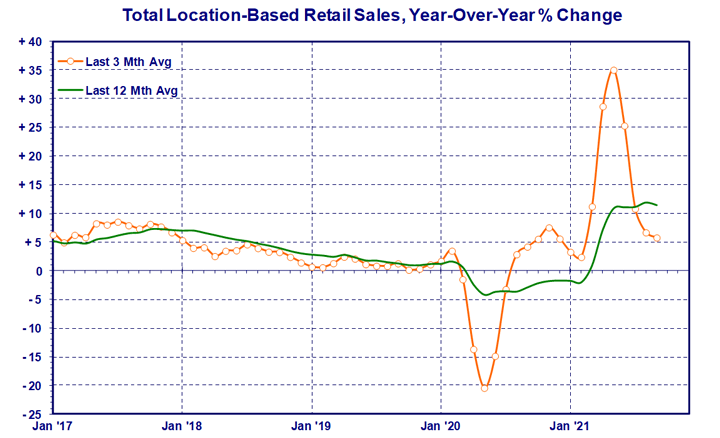
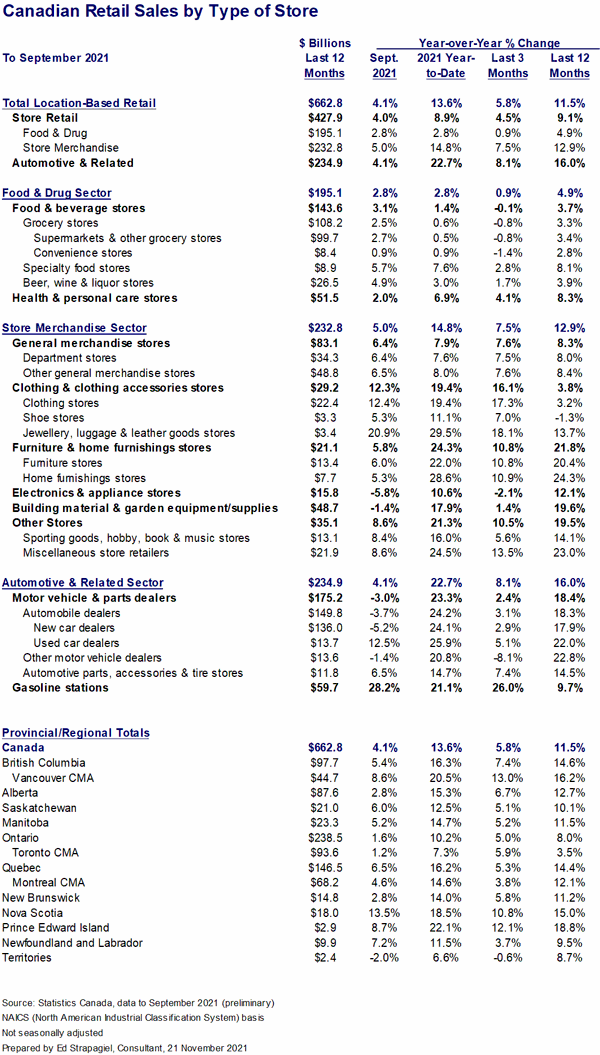
The latest numbers from Statistics Canada indicate that retail sales growth has cooled off just a little more. Total Canadian retail sales were up 5.8% year-over-year in Q3 2021, which is more in line with historical performance. Even so, this result is buoyed up by gasoline prices – excluding gas stations, Q3 retail sales were up just 3.9%.
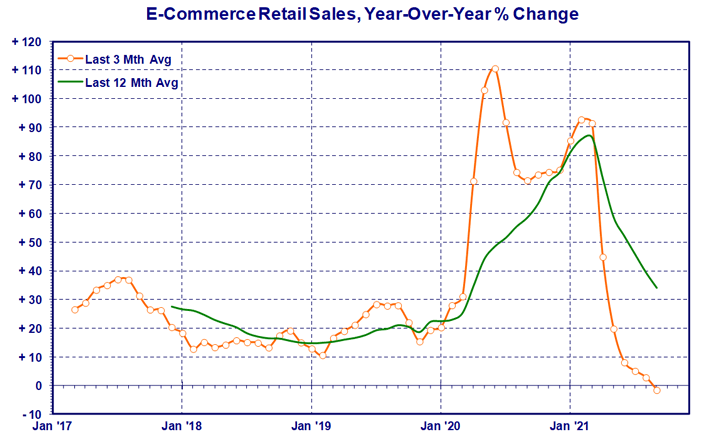
The 3 month trend (orange line in the chart below) is weakening and may slip further. The underlying 12 month trend (green line) appears to have peaked and is likely to soften a little more by the end of the year.
All the major retail sectors, even e-commerce, are more or less following this “on the way back to normal” pattern.
Food & Drug
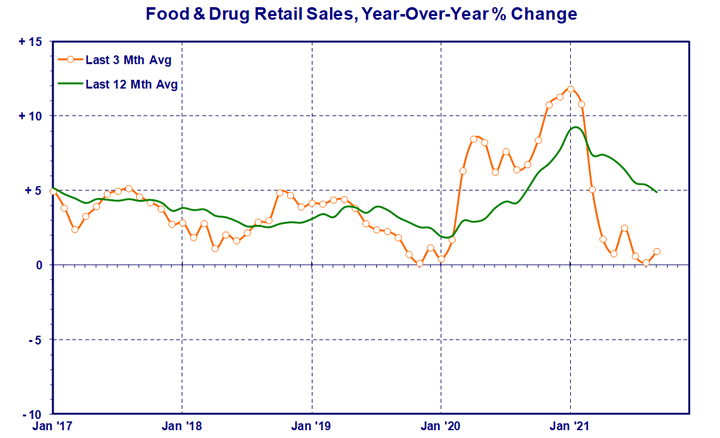
The Food & Drug sector had record high retail sales growth last year as the COVID pandemic raged. Since then however, performance has quickly come down. In Q3 2021, the sector’s retail sales increased only 0.9% year-over-year. The underlying 12 month growth rate has been steadily declining since the start of 2021, and is likely to weaken further by year’s end.
Food is the main problem area. Retail sales at supermarkets & other grocery stores fell 0.8% in Q3 2021 year-over-year, despite annual price inflation running in the 4% to 5% range. Specialty food stores did slightly better, with a 2.8% Q3 gain. It may be that consumers are dining out at restaurants more – it’s the revenge of the hungry Canadian.
Health & personal care stores did manage a reasonable gain in Q3, with retail sales up 4.9%. This is what pulled up the Food & Drug sector to its small but positive Q3 gain.
Store Merchandise
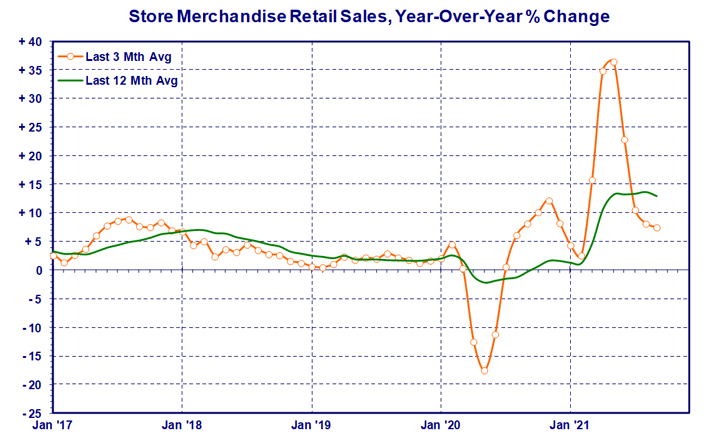
Retail sales in the Store Merchandise sector took a big hit in 2020 due to COVID related store and shopping mall closures. This was followed by a significant growth spike in Q2 2021, which more or less reversed previous losses. This rebound is now in the process of abating. Store Merchandise retail sales were up 7.5% year-over-year in Q3 2021, which is a lower gain than earlier in the year but still well within historical levels. Things seem to be adjusting to more normal conditions.
Most store types in the sector had good Q3 retail sales growth, especially clothing & clothing accessories stores with a gain of 16.1%, and furniture & home furnishings stores at up 10.8%.
Electronics & appliance stores however suffered a loss. Their Q3 retail sales were down 2.1% year-over-year.
Automotive & Related
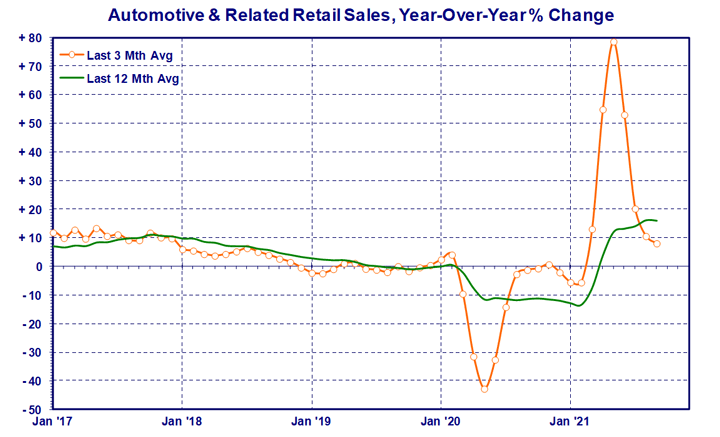
The Automotive & Related sector is following the same script as Store Merchandise but with much greater extremes. Note that the scale in the above chart is double that of the previous one. The 3 month growth trend (orange line) has plummeted from nearly 80% earlier in the year to 8.1% in Q3 2021.
Slow vehicle sales are one reason behind the current downtrend. New car dealers’ retail sales were up just 2.9% year-over-year in Q3 2021, even though year ago sales were very modest. Due to supply chain issues, the situation is unlikely to improve by the year’s end.
On the other hand, gasoline station retail sales were up 26.0% in Q3, which more than offset lackluster vehicle sales. This however is mostly due to big increases in pump prices. When drivers pay more for gas, the car doesn’t go any farther and the ride isn’t any better – you just have less money for everything else.
By The Numbers
Note that the data and analysis in this report are always based on not seasonally adjusted (or unadjusted) retail sales statistics.
Canadian e-commerce retail sales benefitted greatly from COVID, but now things have reversed. In Q3 2021, total e-commerce sales were actually down 1.6% year-over-year, the first time a 3 month decline has occurred since Statistics Canada began reporting the numbers.
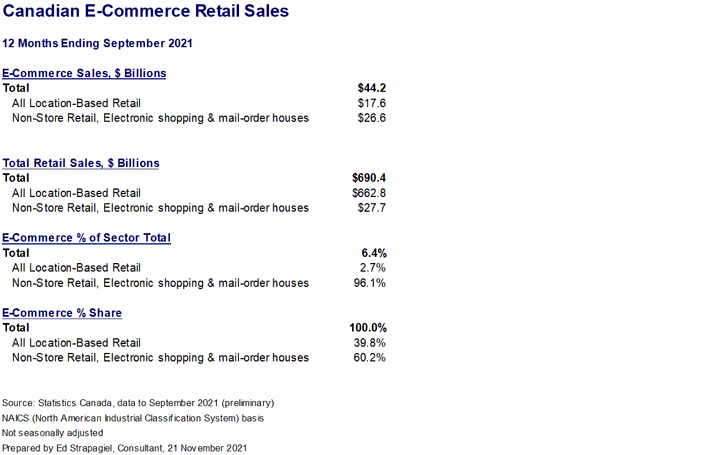
Overall, e-commerce represented about 6.4% of Canadian retail sales over the past 12 months, including both pure plays as well as bricks & clicks stores. Note that Canadian consumers may also buy online from foreign websites which is not captured in these numbers.
Location based retail is the same as that in the preceding “By The Numbers” table. It’s what’s normally reported as Canadian retail sales. Except that it isn’t. Location based retail excludes another section called Non-Store Retailers (NAICS code 454), which includes electronic shopping and mail-order houses, which in turn is where (mostly) pure play e-commerce businesses are. Over the 12 months ending September 2021, electronic shopping and mail-order houses had an estimated $26.6 billion in e-commerce sales.
But that’s not the only source of e-commerce, as (mostly) bricks & mortar location-based retailers also sell online. For the 12 months ending September 2021, this group had an estimated $17.6 billion in e-commerce sales. With electronic shopping and mail-order houses, there’s a grand total of $44.2 billion in e-commerce sales by Canadian operators. Note that this does not include foreign e-commerce purchases made by Canadian consumers, but it does include e-commerce purchases made by foreigners at Canadian operations.
For electronic shopping and mail-order houses, an estimated 96.1% of their sales are currently allocated to e-commerce. For (mostly) bricks & mortar retailers, it can be estimated that 2.7% of their total sales are attributable to e-commerce.
In the final section of the above table, (mostly) pure play operators (namely, under electronic shopping and mail-order houses) generated an estimated 60.2% of all e-commerce sales in Canada, while (mostly) bricks & mortar location-based retailers’ share of e-commerce was 39.8%.
This analysis is updated monthly as new numbers are published by Statistics Canada. If you would like notification from Linkedin of when an update becomes available (and you’ve read this far), please connect with Ed Strapagiel on LinkedIn.
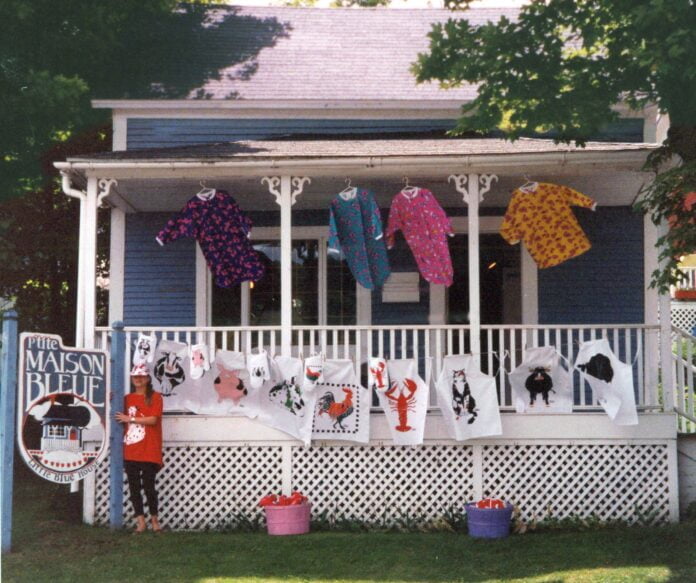
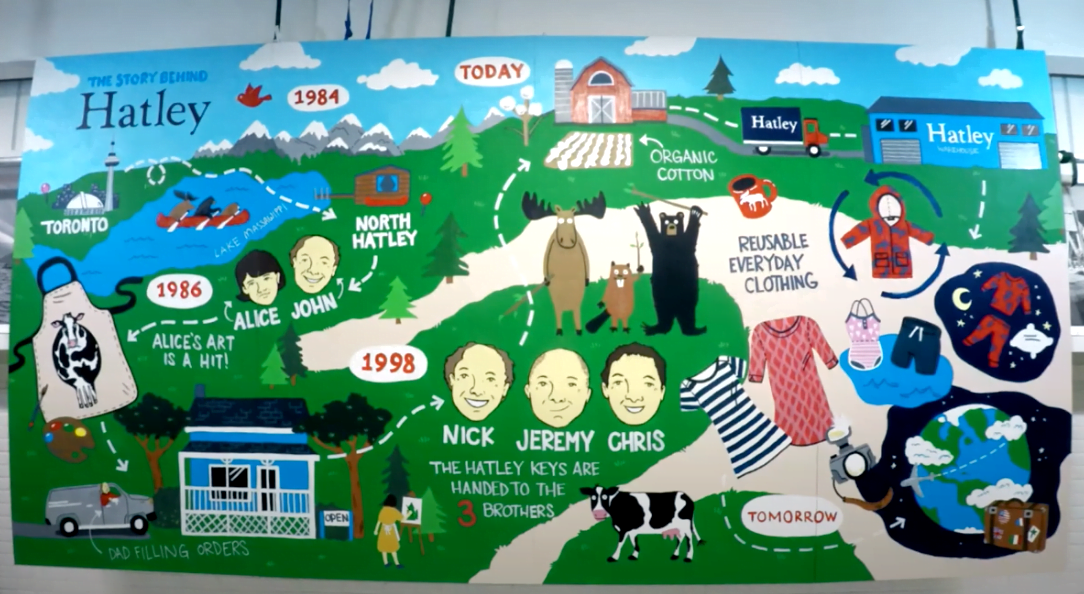
Retail stores Little Blue House and Hatley have their roots in the lakeside village of North Hatley, Quebec in the 1980s when Alice and John Odland moved to there from Toronto.
They opened the Little Blue House in 1986 and today it has 13 shops in Canada.
Their three sons – Jeremy, Nick, Chris – opened the first Hatley store in 2007 in Whistler, BC. There are 12 locations, eight in the US and one in the UK. Hatley is sold in over 3,000 boutiques across 37 countries.
Image: HatleyAlice and John Oldland (Image: Hatley)
The two family businesses are based in Montreal.
“This business has been through some transformations. The business in 1986 was my mother’s gift shop,” said Jeremy Odland, the Chief Operating Officer. “My mother was quite a well-known artist and she opened a gift shop in the little town of North Hatley where we grew up. In that gift shop she had an art gallery. That’s the Little Blue House. It’s actually a little blue house in my hometown.
“In around 1992, 93, five or six years into that, the store that she owned, my mother was painting chicken, turkey, farm animals on aprons.”
The aprons with the whimsical farm animals sold like hot cakes. John Odland took the aprons to Sherbrooke, Quebec where they sold quickly. Then to Toronto.
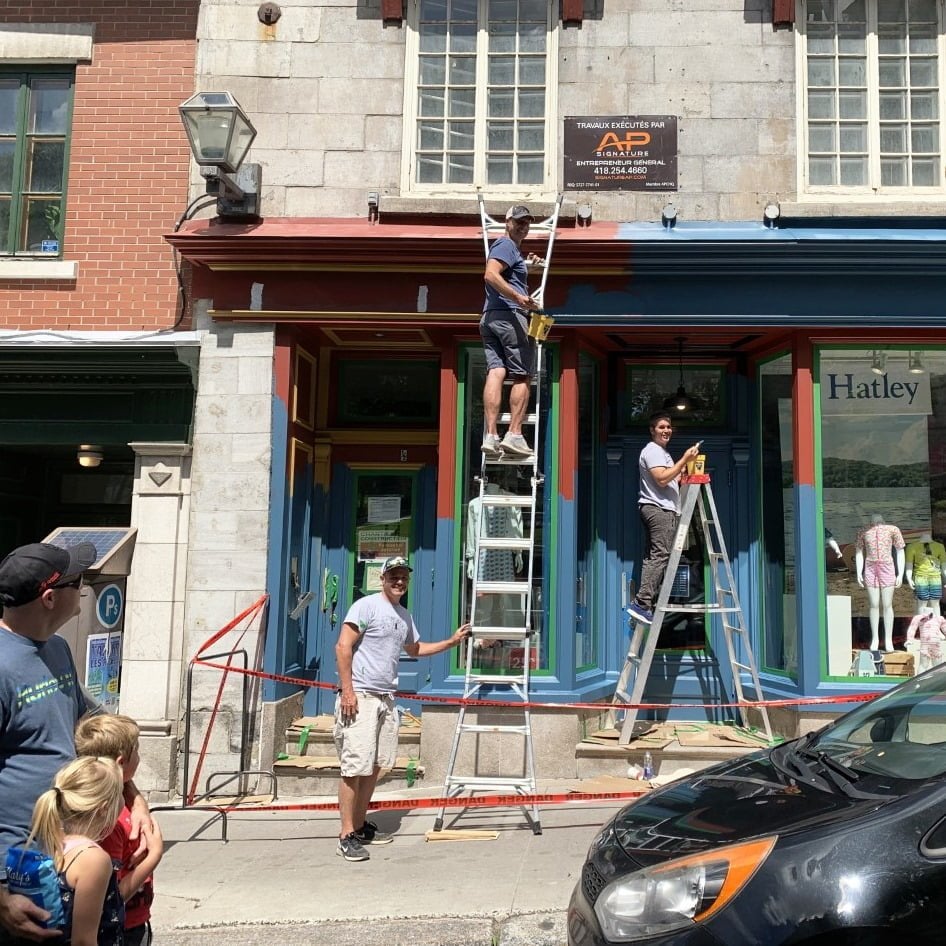
Image: Hatley Oldland brothers, Jeremy and Nick, along with the CFO, Christian, hard at work painting the boutique in Quebec City
From that success, the Odlands started a kitchen apparel company selling oven mitts, aprons and chef hats. Many more gift items followed.
In the late 1990s, the three sons took over the business. It then started to make kids’ clothing. The Little Blue House is really meant today for the tourist market.
“It really happened very organically,” said Odland.
“The DNA of Hatley is kids, kids, kids. Then we got into women’s apparel and we realized we built a great brand, we have a lion’s share of moms. It’s been a slow build but a very good, very profitable, exciting build getting into women’s apparel. And the Hatley brand is the one we’re known for. It’s the bigger of the businesses. It is sold in the better boutiques all around the world.”
While today the company is headquartered in Montreal, Hatley’s heart and soul is still very much in North Hatley. The village’s heritage, its gorgeous lake and simple lifestyle continue to influence everything the company designs. In fact, North Hatley has been the backdrop of many campaign photo shoots and will continue to be.
North Hatley is located on the northern shores of Lake Massawippi, a freshwater lake 14.2 kilometres long at its longest points and 1.9 kilometres wide at its widest points. The company says the quiet hamlet holds a special place in the Odlands’ hearts, not only because it’s where the family first started Hatley in 1986, but because its scenic beauty, surrounding nature and simple lifestyle continues to heavily inspire its brands.
“Protecting North Hatley’s heritage has always been important to us. Since 2007 we have been donating a percentage of our proceeds, as well as resources to Everblue Massawippi, a non-profit organization dedicated to the protection of Lake Massawippi and its surrounding watershed,” says the company.
Odland said 12 months ago the future was looking pretty bleak because of the COVID-19 pandemic. The company was on a growth trajectory and everything ended 18 months ago.
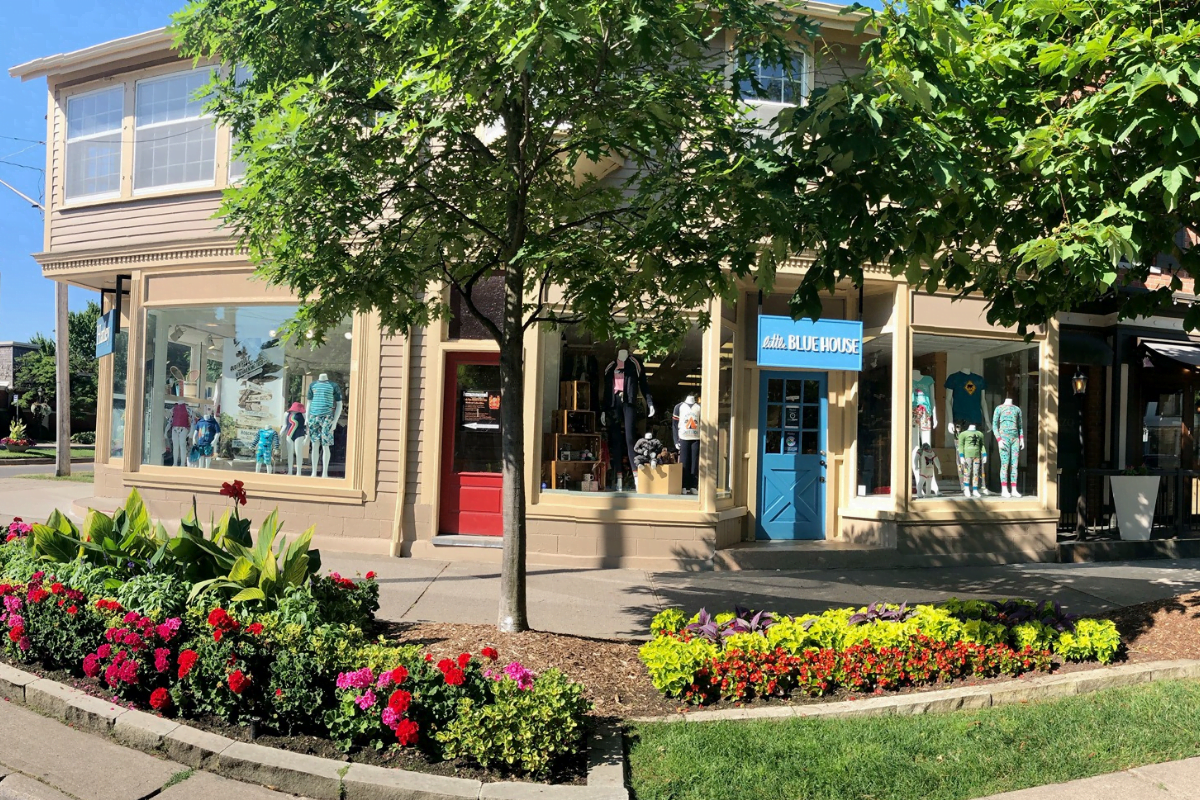
Hatley & Little Blue House Niagara-on-the-Lake
“It was horrific what happened 18 months ago in the retail industry. We thought we were going to lose our business. Now here we are 18 months later. Growing again, rehiring everybody. It’s great,” he said.
“I’m almost somewhat shell shocked by the experience in what we’ve just gone through. Our general goal is to keep doing what we’re doing. I don’t have a grand vision. We’re going to open more stores. I don’t know what the future entails. I think what we want to do is just maintain the status quo. Have a company that is so much fun to work at my staff want to come here every day. I don’t want to go so big privately that there’s a threat of bankruptcy around the corner. If I just do this the rest of my life, I’d be happy.
“But we’ll probably open five or six stores per year, grow ecommerce, add to the line. We’re going to get into winter apparel.”
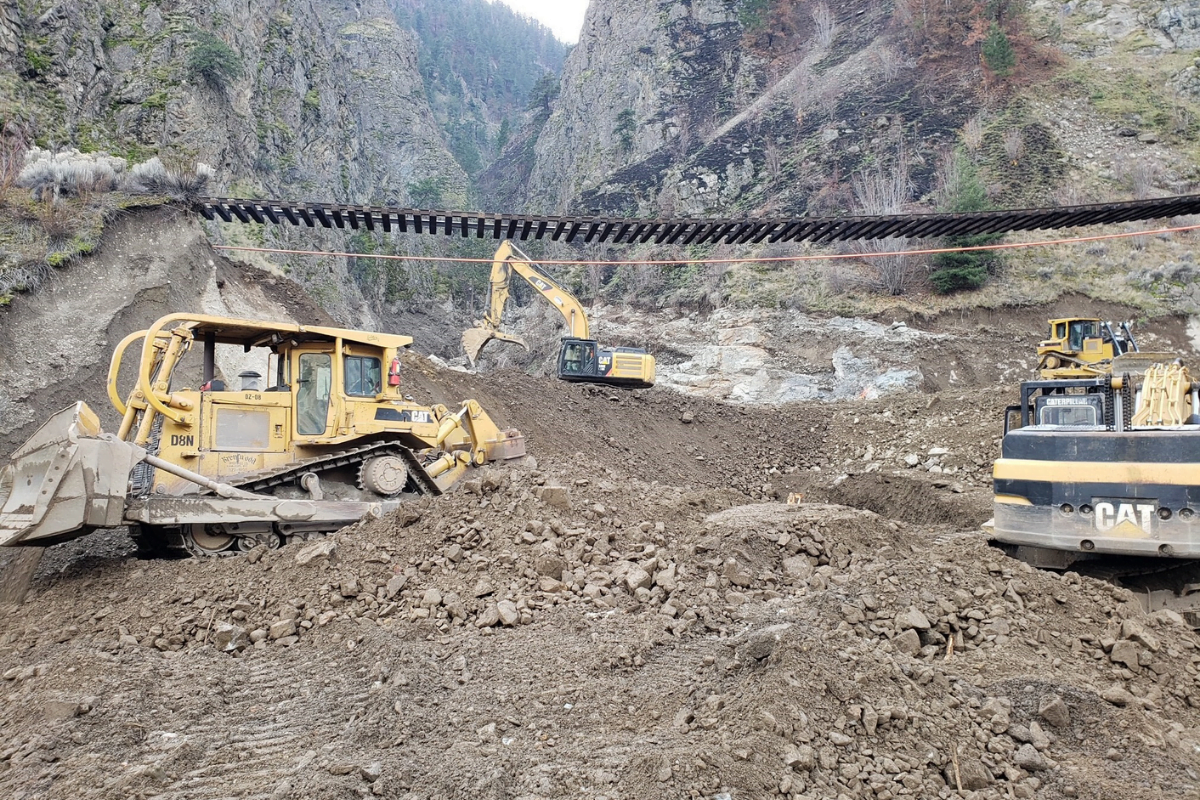
Jessica Bridge (Image: BC Ministry of Transportation)
The devastating flooding in British Columbia is expected to just exacerbate an already challenging situation throughout Canada’s supply chain network.
Recently, the Canadian Federation of Independent Business issued a report saying supply chain issues are casting a shadow over the holiday season for small businesses at a time when many are facing increasing costs while still not back to normal sales levels.
In a recent CFIB survey, supply chain challenges were the second biggest concern for businesses heading into the fall (64 per cent), but they take the top spot in sectors like wholesale (84 per cent), construction (80 per cent) and retail (78 per cent).
(Image: BC Ministry of Transportation)
“When you look at pictures of major infrastructure routes that are just broken (in B.C.), that’s all the information I need to know that this is going to create some major bottlenecks to cross-Canada shipping,” said Dan Kelly, President and CEO of the CFIB. “It’s obviously going to be most acute in British Columbia itself because there are communities that are not going to be served to get their products out or necessary products in. British Columbia itself is going to cut off some people from supply chains.
“But it has big national implications as well. It’s absolutely brutal timing because we already have supply chain issues and we just sever this big link on some of the major routes for both train and roadway. It seems like some of the highway system is reopening again and there are some alternatives. It’s good that the governments are trying to get those goods to go through the US. All of that though adds additional time delays and costs.
“We don’t know the full extent of damage just yet – how significant it’s going to be. But when you look at the broken highways and overpasses that are no longer there. Those things are not solved in days. Those sorts of things are solved in months. Sometimes years. I don’t know about long-term but certainly medium-term negative repercussions from the infrastructure damage that we’ve seen.”
“The flooding and corresponding damage to railways and truck lanes demonstrates how dependent Canada is on the port of Vancouver and surrounding infrastructure,” said Winder. “These issues have come at arguably the worst time of the year as we approach the one-month countdown to December 25th. Retailers and service providers have been scrambling to use other ports and trucking lanes through the United States and Northern B.C. to attempt to meet demand – at added cost. This situation arrives in the most challenged holiday shipping season on record, as a perfect storm of COVID-19, raw material shortages, lower carrier capacity, staff shortages, and a surge in consumer demand have increased lead-times and have led to empty shelves at select retailers.
“Those retailers who brought stock in early for promotions (Amazon and others) and with flexible supply chains (ability to use Air and U.S. ports) will win holiday 2021 in my opinion. Customers may need to be more flexible in gifts that they procure for loved ones as choice could be limited. I assume it will be another couple of weeks before we see things start to get somewhat back to normal. With the two major rail providers reopening routes this week hopefully this will create some relief for retailers, manufacturers, and service providers in an already challenging year.”
Michael Kehoe, an Alberta-based retail specialist, said the immediate effects from the weather event-related closure of the transportation corridors in British Columbia will be impacting other regions of Canada for several months.
Tank Hill (Image: BC Ministry of Transportation)
“With many key highway and rail transportation routes closed and some expected to be reopening with limited capacity, retailers and consumers will be affected in various ways. This is a wake-up call for companies dependent on the busy ports on the West Coast to re-evaluate their supply chain strategies. Too often we take for granted the infrastructure and those behind it in our just-in-time, quick service world,” said Kehoe, broker/owner of Fairfield Commercial Real Estate in Calgary.
Recently, the CFIB said that the share of businesses reporting that product input costs are causing difficulties has increased sharply on CFIB’s Business Barometer since the start of the year. In October 2021, 44 per cent of businesses reported this was an issue, compared to 28 per cent in January. The shortage of input products is also now holding back the growth of 31 per cent of businesses, more than double the January rate of 15 per cent.
The organization said that not surprisingly, added cost pressures have a big impact on businesses’ average price plans: in January 2021, businesses planned to increase prices by an average of 2.1 per cent over the next 12 months. In October, the average price intention reached a staggering 3.9 per cent, by far the highest on record since 2009 when CFIB started releasing monthly Barometer results.
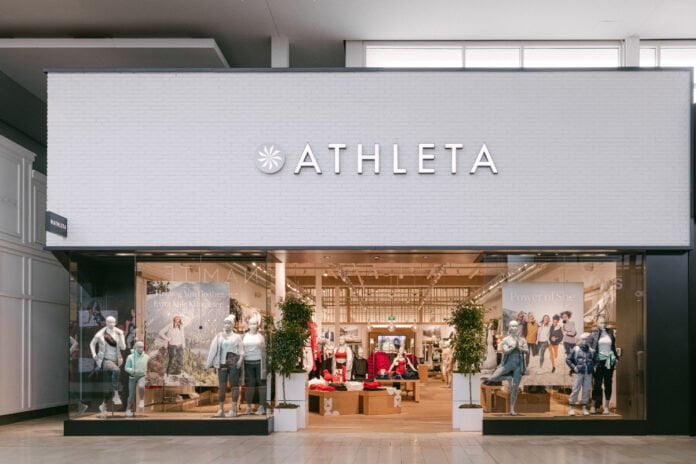
Athleta at Yorkdale Shopping Centre (Image: Athleta)
Athleta, part of San Francisco-based Gap Inc., has opened a new 4,800-square-foot retail store at Yorkdale Shopping Centre in Toronto as the retailer continues to expand its footprint into Canada.
Jennifer Steichen, Vice President Stores & Operations, Athleta, said the company is committed to growing its business in Canada, introducing its brand to more Canadian women and building a community of empowered women and girls in the country.
“As part of our strategic growth plan to reach $2 billion in net sales by 2023, Athleta is investing in new access points to reach new customers and expand our community of empowered women and girls,” she said.
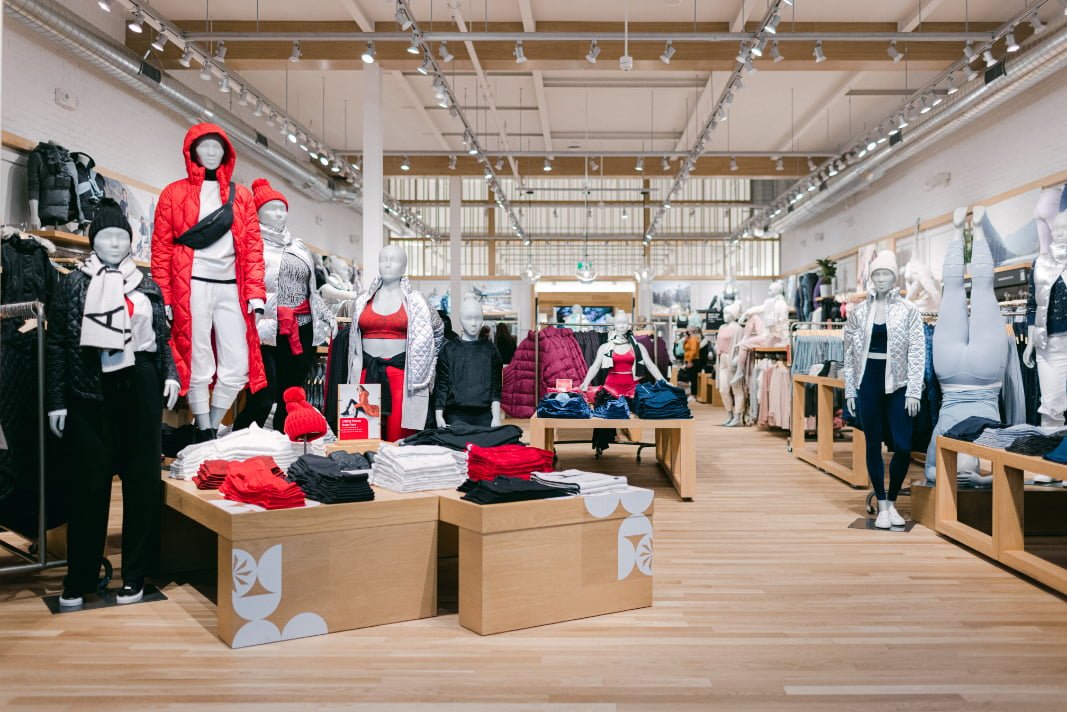
Athleta at Yorkdale Shopping Centre (Photo courtesy of Athleta // Christine Lim Photography)
“We know this strategy is working, with early results from e-commerce and Vancouver launches, showing high in-store traffic, large order sizes and strong demand for our versatile lifestyle collection. These strong indicators of success underscore our continued commitment to prioritizing growth in the Canadian market. Additionally, being part of Gap Inc. portfolio allows us to leverage our sister brands’ existing infrastructure and platforms, like our Distribution Centre in Ontario, including existing customer and market information, which makes it easier and more cost efficient to launch, rather than starting from scratch.”
Steichen said the company doesn’t have any other specific new openings to announce currently.
“We are thrilled to build on Athleta’s success in Vancouver with the opening of our new Yorkdale store, bringing our personalized shopping experience and unique community-building activations to the greater Toronto area,” she said. “The strength of the Gap Inc. portfolio has uniquely positioned Athleta for success in the Canadian market, allowing us to leverage our sister brands’ existing insights, platforms, and infrastructure across the region.
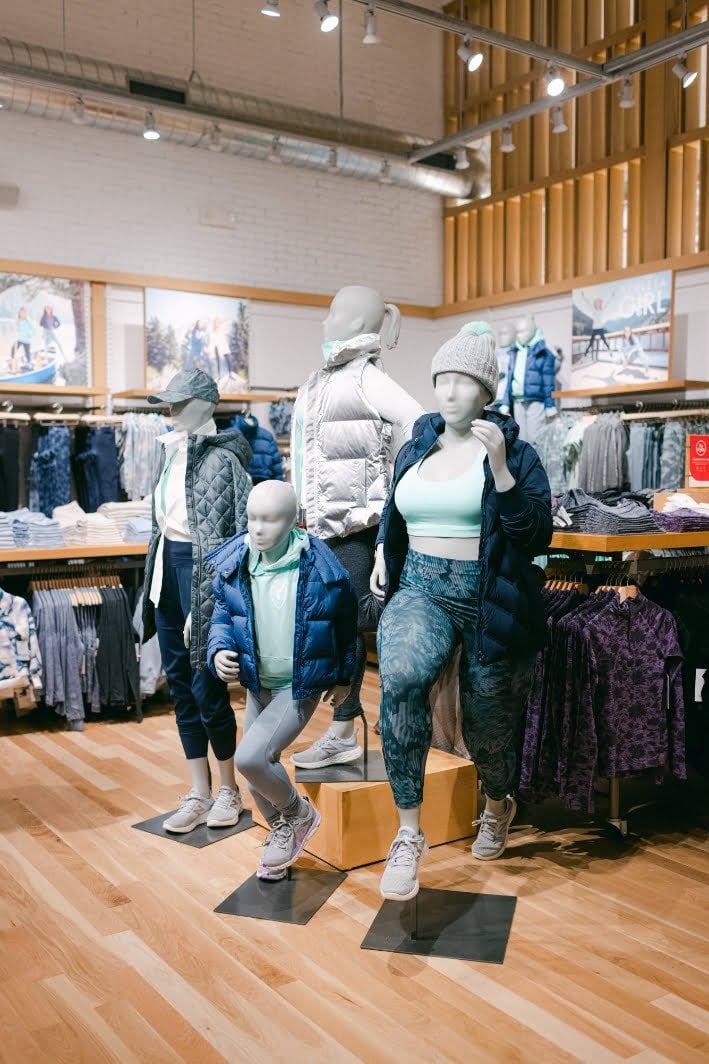
Athleta at Yorkdale Shopping Centre (Photo courtesy of Athleta // Christine Lim Photography)
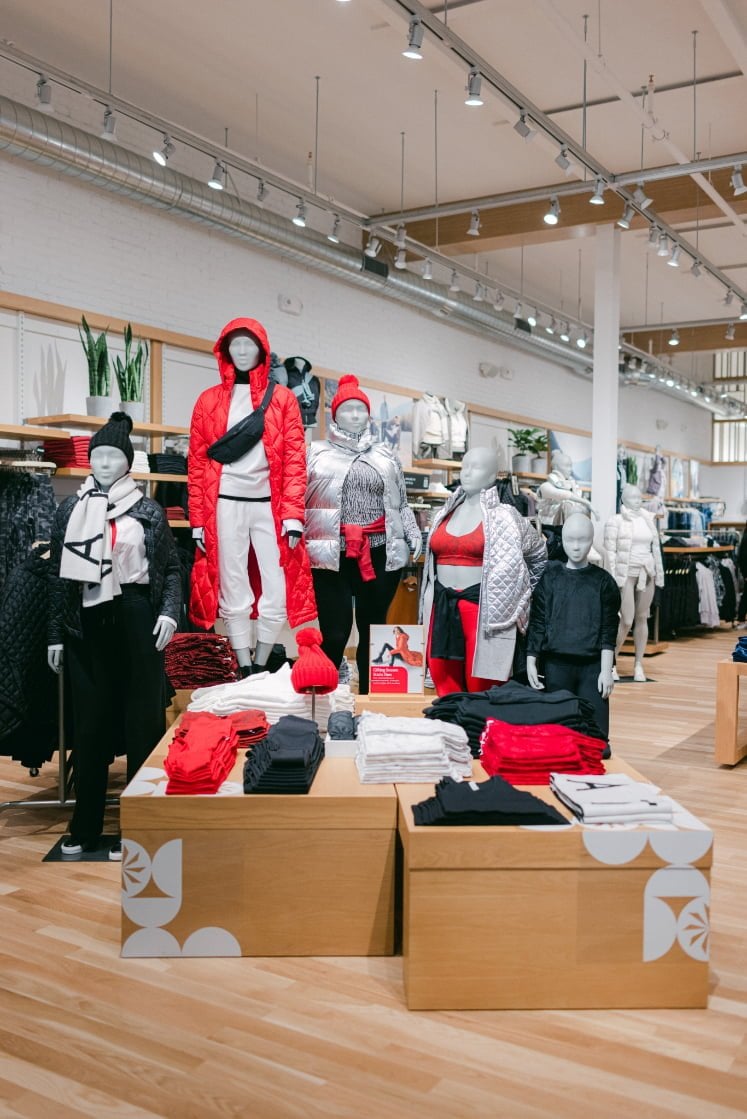
Athleta at Yorkdale Shopping Centre (Photo courtesy of Athleta // Christine Lim Photography)
“From the success of our sister brands’ Yorkdale business, to the success of our brands e-commerce and Vancouver launches showing high in-store traffic, large order sizes and strong demand for our versatile lifestyle collection, opening in Toronto at Yorkdale was a natural next step in our Canadian business growth strategy.”
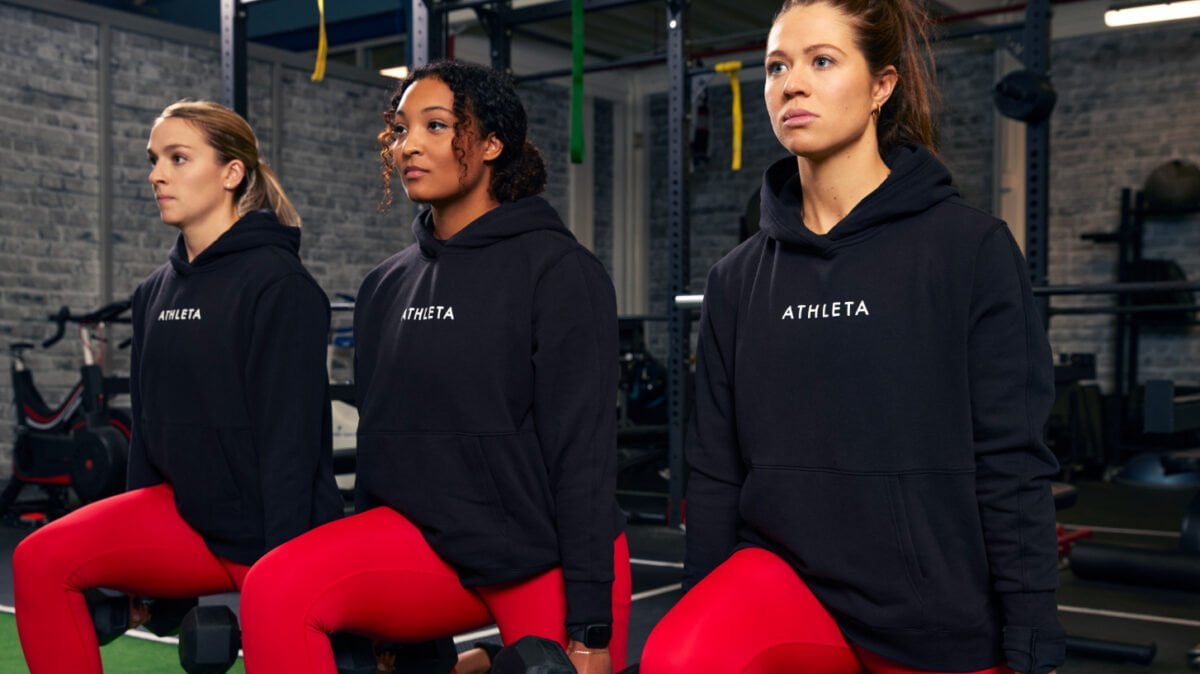
Athleta’s new Yorkdale store features 3,000 square feet of dedicated retail space, showcasing the brand’s full selection of versatile, on-trend performance lifestyle products, including its Athleta Girl and sleep collections. The store will also feature size-inclusive mannequins and inclusive sizing in more than 500 styles ranging from XXS-3X, in-store styling appointments, free alterations and wellness-focused community events.
In support of the brand’s commitment to the empowerment of women and girls, Athleta is partnering with the Toronto Six hockey team, Canada’s only women’s professional sports team, marking the team’s largest sponsorship to date.
Image: Toronto Six Hockey
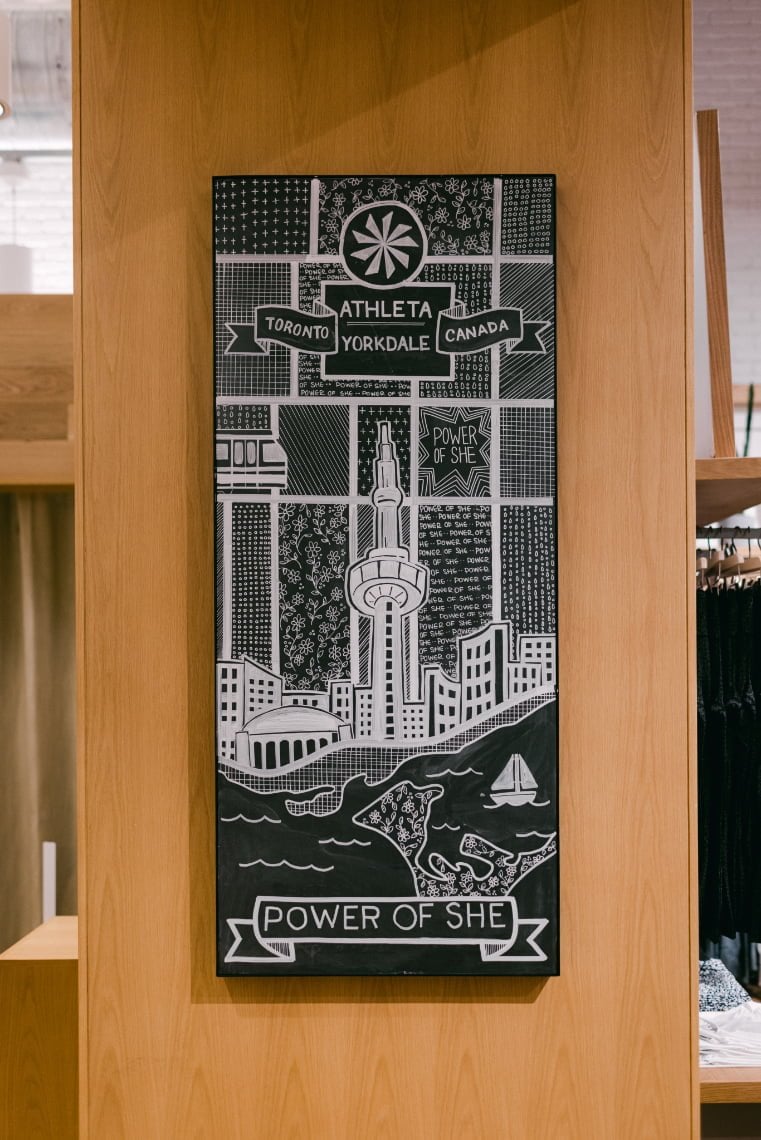
Founded in 1998, Athleta integrates performance and technical features across its collection to support women across their entire lifestyle – from yoga and training to travel and sleep. In 2016, it launched Athleta Girl, mirroring its signature performance in styles for the next generation, and its iconic “Power of She” campaign, aimed at creating a community of women and girls fueled by the core belief that alone we are strong, but united we thrive. Today, Athleta apparel is available at more than 200 retail stores across the U.S, and the recent addition of the two stores in Canada.
“Athleta is a female led, values and purpose-driven performance lifestyle brand with a mission of empowering a community of active women and girls. Athleta is a certified B Corp, and today, over 70 per cent of Athleta product is made from sustainable materials,” said Steichen.
“As a customer-led organization, we have invested in getting to know our Canadian customer well—and as she is getting to know us, she is enthusiastically embracing the brand. We believe the Canadian Plus market has historically been underserved. We are excited to give women in Canada a choice when it comes to size-inclusive performance lifestyle products that help her reach her full potential. Our extended sizing (XXS-3X) is available in 500 styles online and in store.
“Also, the strength of the Gap Inc. portfolio has uniquely positioned Athleta for success in the market, allowing us to leverage our sister brands’ existing insights, platforms, and infrastructure, like our Distribution Centre in Ontario, for a more seamless and cost-effective entry into new markets across the country. Athleta’s key differentiators are our breadth of inclusive sizing, versatile range of product, our values, and being a women and girls only brand.”
Athleta at Yorkdale Shopping Centre (Photo courtesy of Athleta // Christine Lim Photography)
Athleta at Yorkdale Shopping Centre (Photo courtesy of Athleta // Christine Lim Photography)
The retailer said stores remain an important part of the customer journey and the company is on track to open 20 to 30 additional stores by the end of 2021.
“As part of our strategic growth plan, Athleta is investing in new access points to reach new customers and expand our community of empowered women and girls,” said Mary Beth Laughton, president and CEO, Athleta. “We know Canadian women are engaging with our brand, with results showing high in-store traffic and strong demand for our versatile lifestyle product since launching e-commerce and our first store earlier this year. This underscores our continued commitment to prioritizing growth in the Canadian market.”
Kyle Andrew, Chief Brand Officer, Athleta, said the company was inspired by the Toronto Six, Canada’s only professional women’s sports team – the team’s dedication, their vision of a platform for gender equity in sports and beyond and creating opportunity for the next generation of athletes on and off the ice.
“Our mission at the Toronto Six is to drive change for women in professional sports by fostering an environment where our players are supported holistically as players and role models for the community. Athleta and the Toronto Six share the same values rooted in empowering women and girls at the community level, and we could not be more excited to partner with them,” said Digit Murphy, President, Toronto Six. “We are thrilled to include the Athleta logo on our team jerseys and look forward to a prosperous season with Athleta by our side.”
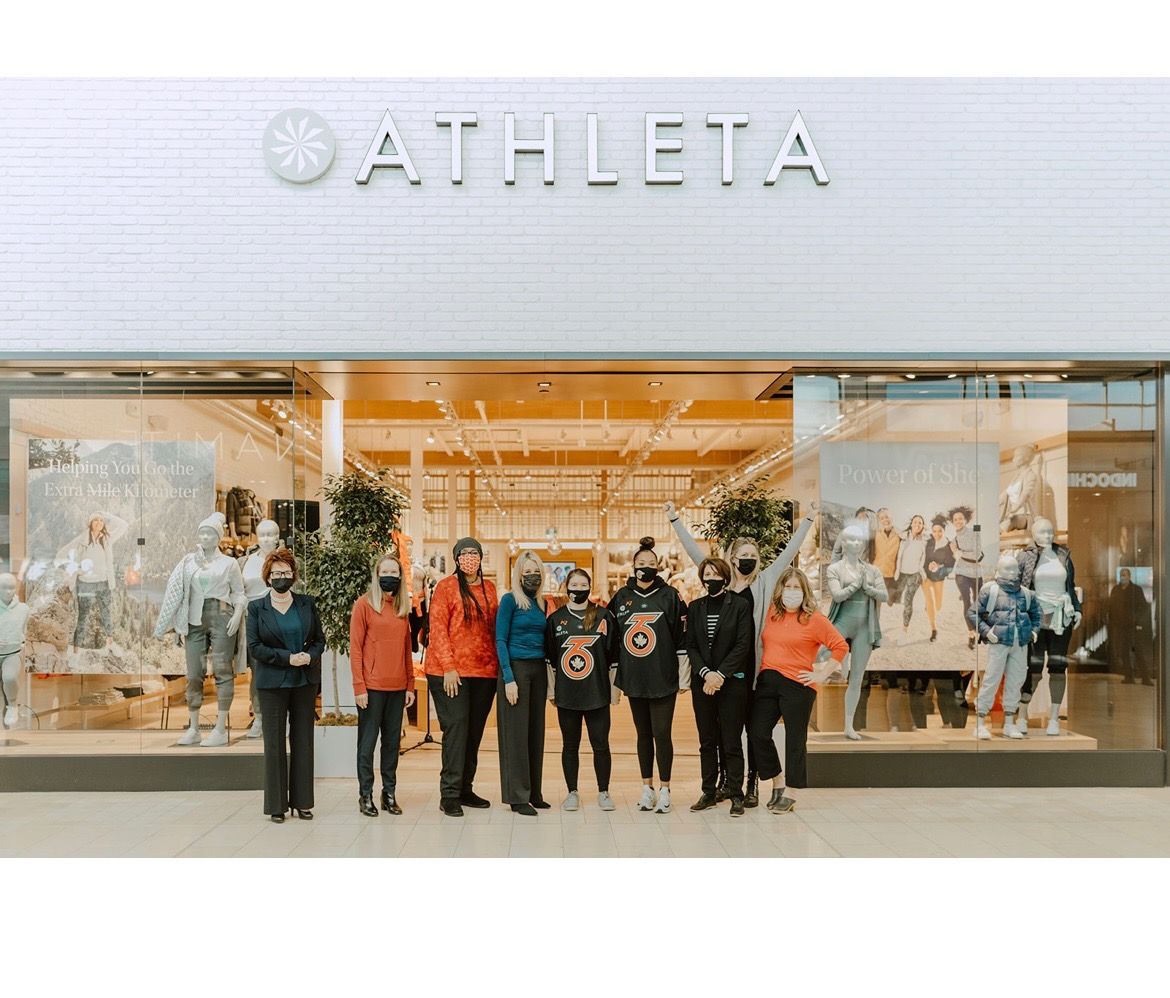
MB Laughton, President and CEO of Athleta, Kyle Andrew, Chief Brand Officer, Athleta, Jennifer Steichen, Vice President Stores & Operations, Athleta, Shannon Damen, Vice President, Finance, Athleta, Yolanda Sander, VP Legal, Athleta are joined by Toronto Six President, Digit Murphy, Toronto Six players, Saroya Tinker and Taylor Woods, and Jane McKenna, MPP, Associate Minister of Children and Women’s Issues, at the grand opening of Athleta Yorkdale location.
Steichen said the ongoing COVID-19 pandemic has provided its teams an opportunity to be nimble and quickly pivot.
“We learned that she wanted clothing that was comfortable, but still stylish and presentable. From a product standpoint, we leaned in and added more “cozy” products, knowing she’s spending more time at home, or working from home,” she said.
“A key driver of Athleta’s growth is our digital omni-channel strategy, which is focused on building loyalty, engagement, and a community of empowered women. We know our customers are bouncing back and forth constantly between the digital and physical worlds and want options when it comes to how and when they shop with us, which is why we have created a seamless, personalized journey for them across all our brand touchpoints.
We are not thinking about single channels in isolation, but her full customer journey with Athleta.
“We believe this approach will continue to be a strong driver of customer loyalty and lifetime value for Athleta. Brands delivering this seamless, personalized journey across multiple channels will continue to win over loyal customers and strong business results in this ever-changing retail environment.”