Video Interview: Sylvain Charlebois Discusses Canadian Food Availability and Prices During War in Ukraine
Sylvain Charlebois, Senior Director, Agri-Foods Analytics Lab, Dalhousie University, discusses the looming food crisis consumers face in Canada.
Charlebois talks about the impact of the war in Ukraine, why food prices are continuing to rise, the class action lawsuit against meat companies alleging price collusion, Statistics Canada deleting its food inflation base, and the need for grocers to embrace the idea of giving consumers more coupons.
The Video Interview Series by Retail Insider is available on YouTube.
Connect with Mario Toneguzzi, a veteran of the media industry for more than 40 years and named in 2021 a Top Ten Business Journalist in the world and the only Canadian – to learn how you can tell your story, share your message and amplify it to a wide audience. He is Senior National Business Journalist with Retail Insider and owner of Mario Toneguzzi Communications Inc. and can be reached at mdtoneguzzi@gmail.com
Interviewed this episode:
Sylvain Charlebois, Senior Director, Agri-Foods Analytics Lab, Dalhousie University
Likes, Share and Subscribe to Mario Toneguzzi on YouTube!
Also check out the other series offered by Retail Insider, including The Weekly podcast and The Interview Series, which are both available on Apple Podcasts, Stitcher, TuneIn, Google Podcasts, or through our dedicated RSS feed for Simplecast and other podcast players.
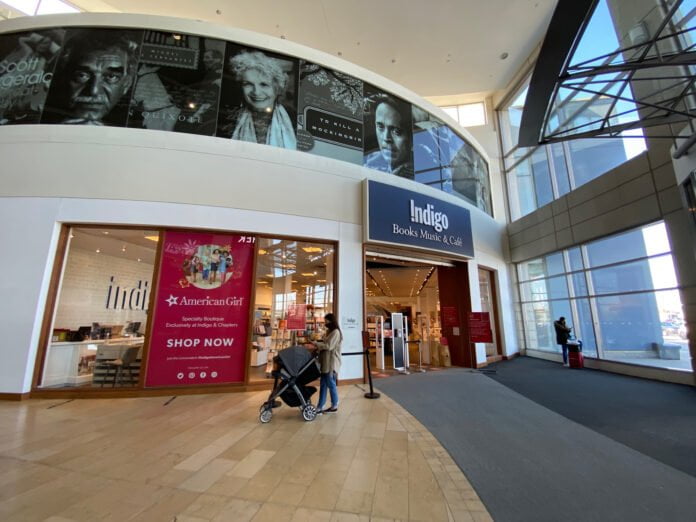
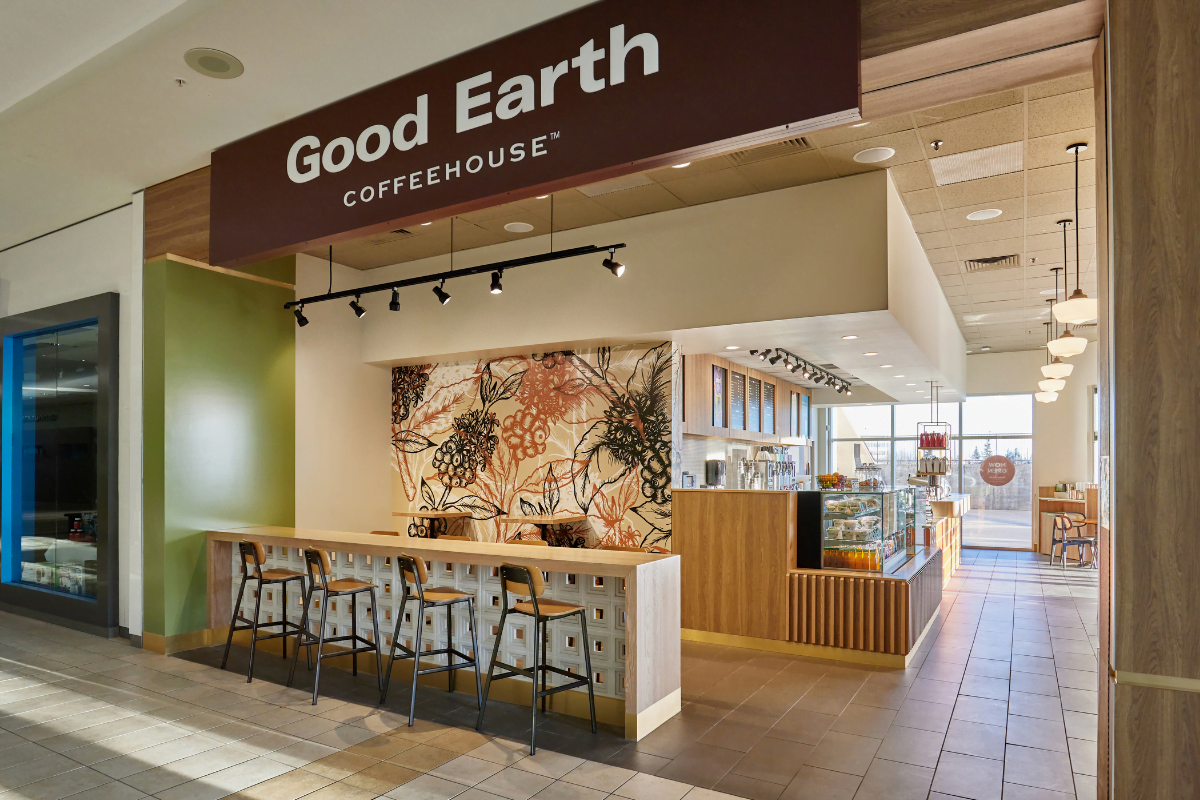
Calgary-based Good Earth Coffeehouse is set to open new locations in select Indigo stores across the country in the near future.
The first Good Earth Coffeehouse opened in 1991 in Calgary and the company currently operates over 40 locations in six Canadian provinces.
Nan Eskenazi
Founder Nan Eskenazi said Indigo is a good fit for the brand.
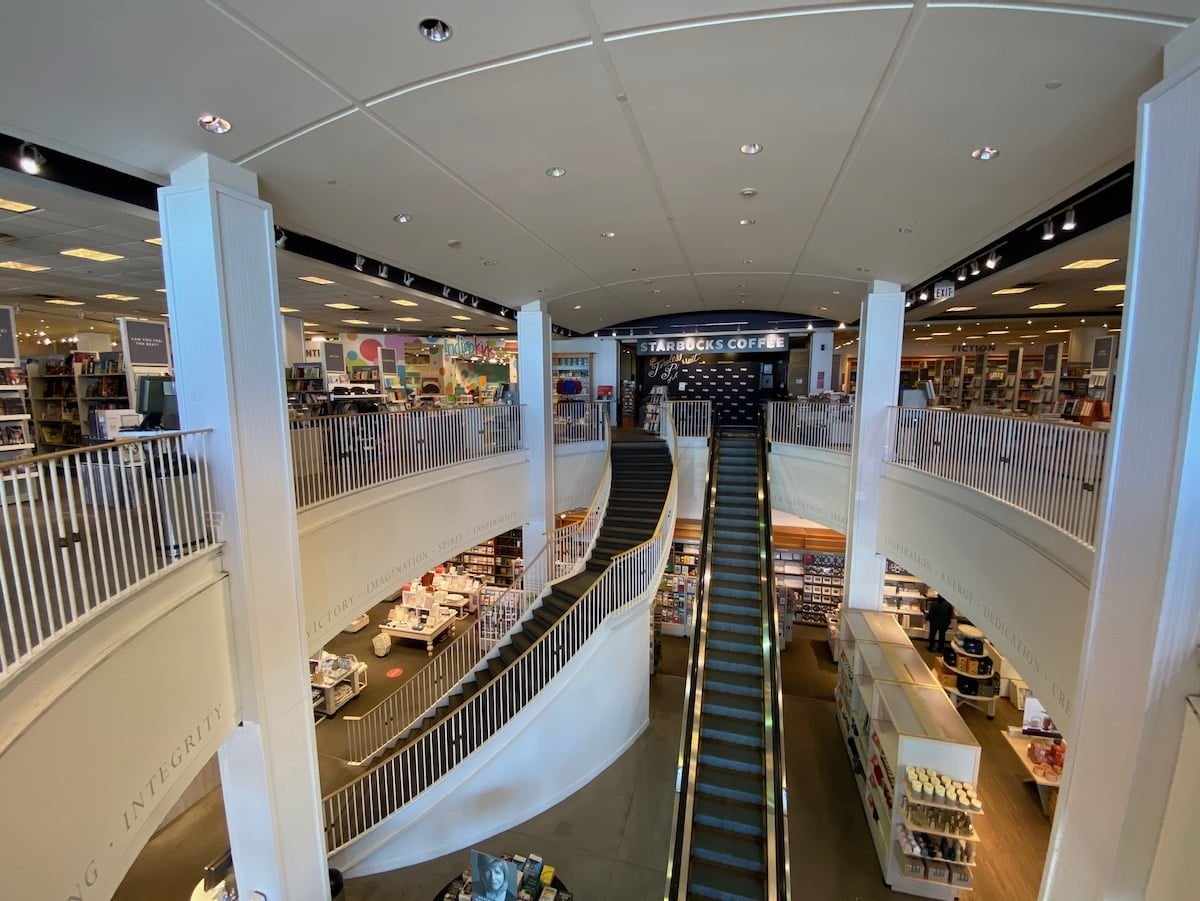
The departure of many Starbucks stores in the Canadian market in the past two years has opened the door for Good Earth expansion.
“It’s fantastic news. It’s been in the works for awhile but we’re just so glad to be able to have an announcement go out,” said Eskenazi. “About a year or so ago we made an announcement about evaluating locations that had been abandoned by one of our competitors.
Good Earth Coffeehouse Sunridge Mall (Image: Good Earth Coffeehouse) Good Earth Coffeehouse Sunridge Mall (Image: Good Earth Coffeehouse)
“Really what we had done was take a good look at the coffee landscape and our brand and our brand’s strengths. For practical purposes, we really committed to doubling down on providing coffee house environments for communities to create places where community can gather in person and spend time together and the Indigo environments are just so well suited to that. The brand alignment is outstanding in terms of our values and our desire to be part of the community. I think that’s really at the core of it. The Indigo sites are just an excellent marriage for our brands.”
Eskenazi said Indigo has about 40 locations which are operating without a coffee shop, which is about half of Indigo’s sites.
“We’re, roughly speaking, evaluating about half of those. We’re looking at a number of provinces across the country,” she said.
This partnership marks the start of Indigo’s intention to reimagine and convert its available café spaces, with a market by market, and sometimes store by store approach, offering customers regional relevance and supporting local businesses, it said.
Stores will remain open throughout the renovations to the café spaces.
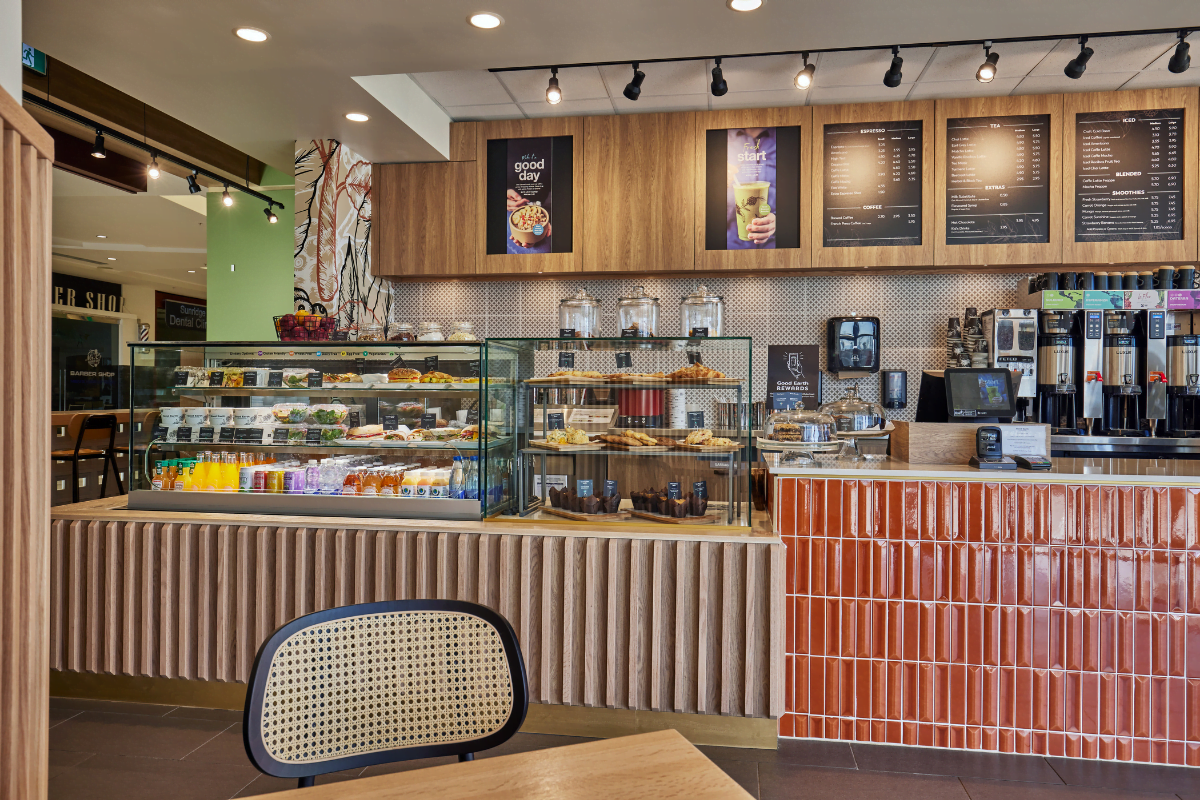
Good Earth Coffeehouse at Glenmore Landing (Image: Good Earth Coffeehouse)
Good Earth Coffeehouse at Glenmore Landing (Image: Good Earth Coffeehouse)
Former Starbucks at Yorkdale Shopping Centre (Image: Dustin Fuhs)
“We’re excited to partner with Good Earth Coffeehouse to bring their elevated experience to our customers,” said Peter Ruis, President, Indigo. “With aligned core values of quality, a commitment to sustainable practices, and bringing people together, it could not be a more natural fit. Good Earth prides itself in being a community coffeehouse with good food, and we’re thrilled to be able to offer our customers an opportunity to enjoy the space and connect with one another while they shop with us.”
For Good Earth, the company continues to expand its brand.
“The Indigo relationship is part of a larger plan to continue expanding our brand across Canada,” explained Eskenazi. “It will certainly be an important element to that as it helps us launch and build brand awareness in the Ontario market as an example.
“In addition to that, we’ve been awarded a couple of really wonderful sites within health care in Mississauga. That’s Mississauga Hospital and also the Credit Valley Hospital. We have a new site opening in the Calgary Courts Centre and we are opening on another university campus, the University of Northern BC in Prince George. So we’ve got some really nice locations coming up and obviously the theme on some of those is that we’re opening in what are considered non-traditional locations – hospitals and universities and court houses as well as the retail opportunities that Indigo presents.”
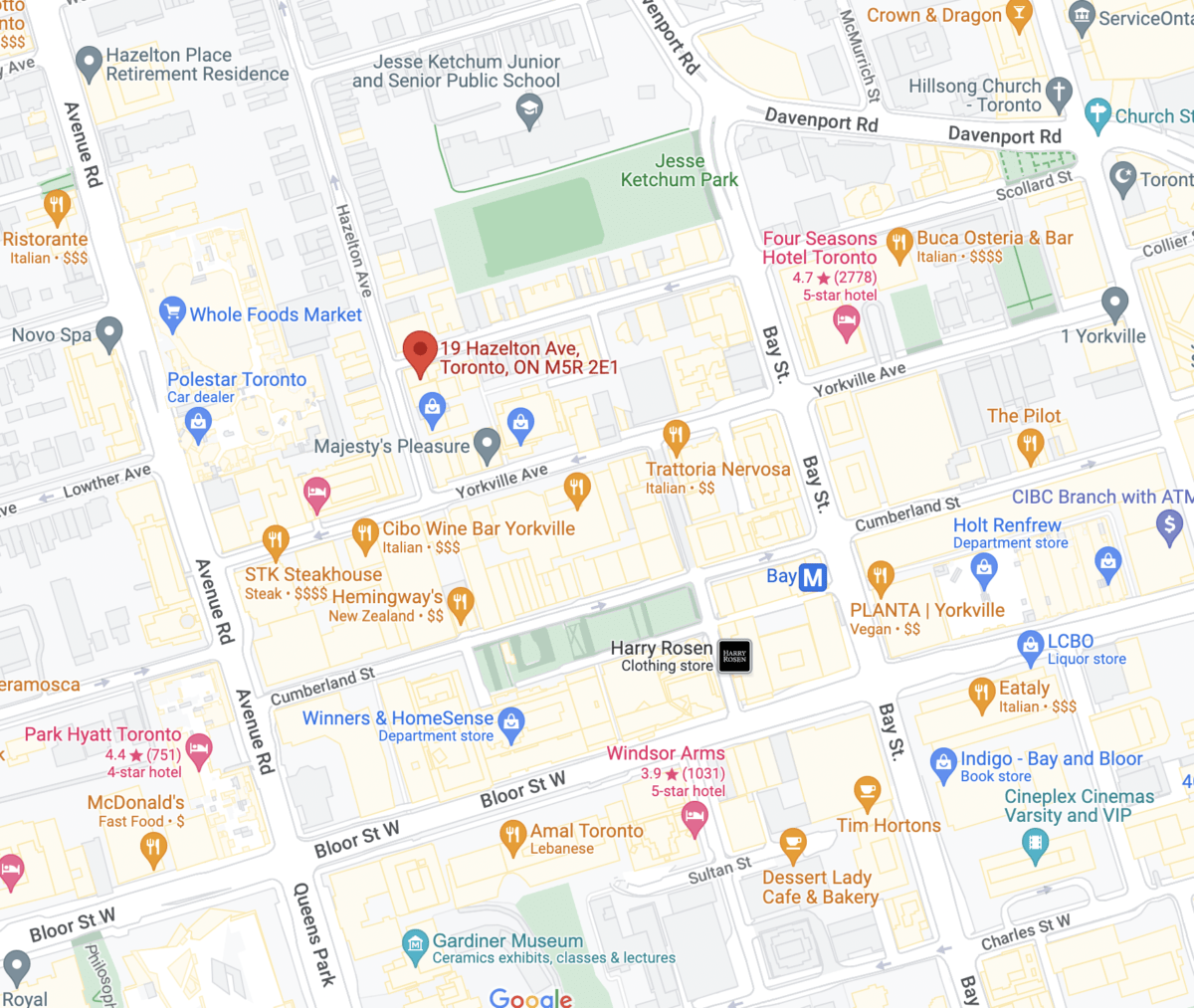
Future Home of Atelier Munro at 19 Hazelton Avenue (Image: Craig Patterson)
Amsterdam-based custom suit brand Atelier Munro will open a standalone location this summer in Toronto’s Yorkville area. It will be only the second permanent standalone storefront for Atelier Munro globally following a location that opened in Amsterdam in November of last year. Following the opening of the Toronto location, a national rollout will see Atelier Munro open standalone locations in major markets with Calgary being the second target.
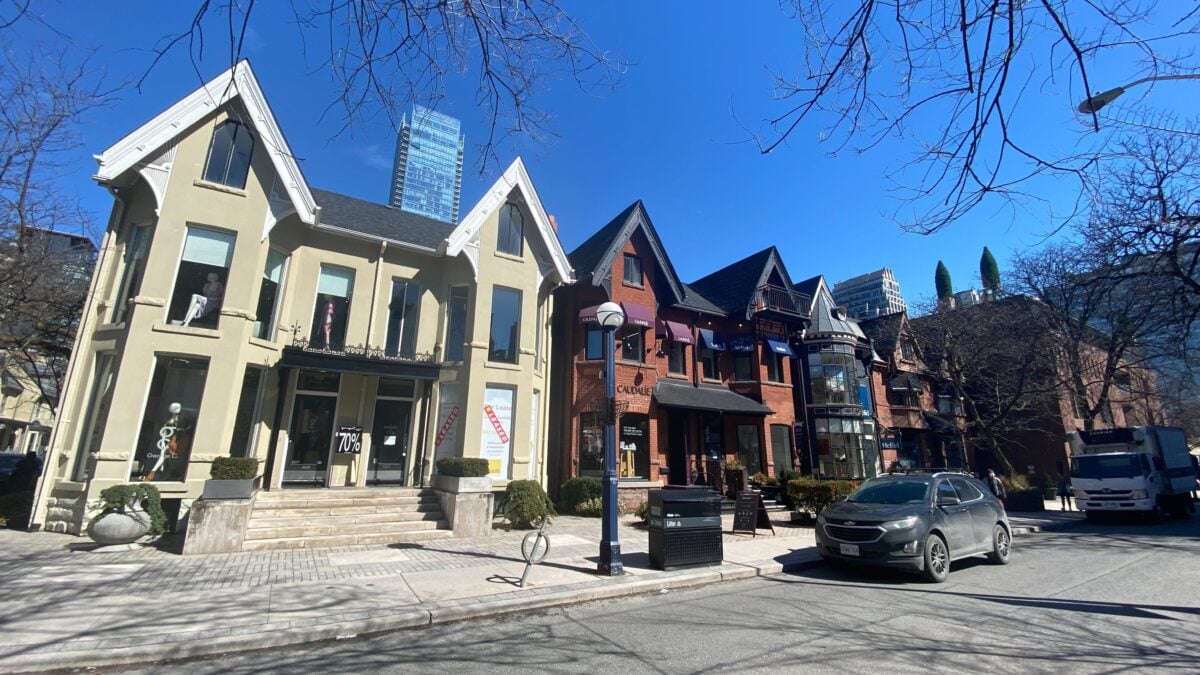
The Toronto Atelier Munro location will be at 19 Hazelton Avenue in a beautiful historic townhouse that decades ago was converted to retail space. The 3,000 square foot showroom will span three levels and an additional 500 square foot basement space will be used for storage and back-of-house.
Lindsay Hepburn and Sandra-Marine Isautier of the brokerage Cresa represent Atelier Munro in Canada and negotiated the lease on behalf of the retailer. Jordan Karp and the team at SavillsCanada acted on behalf of the landlord to lease the space formerly occupied by a bridal store.
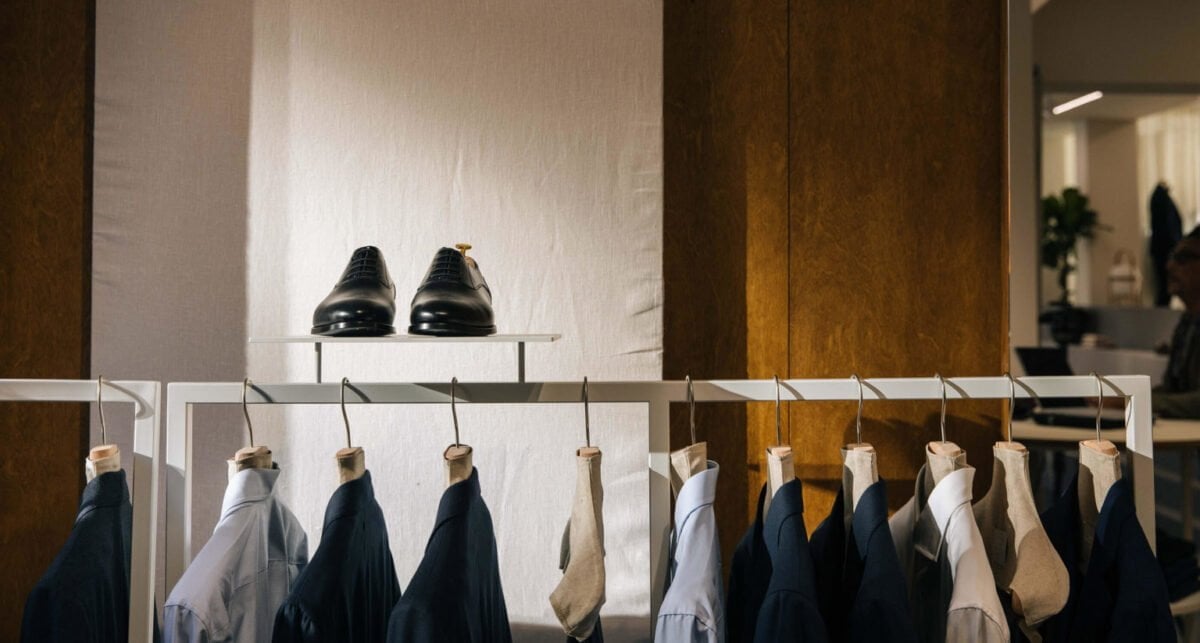
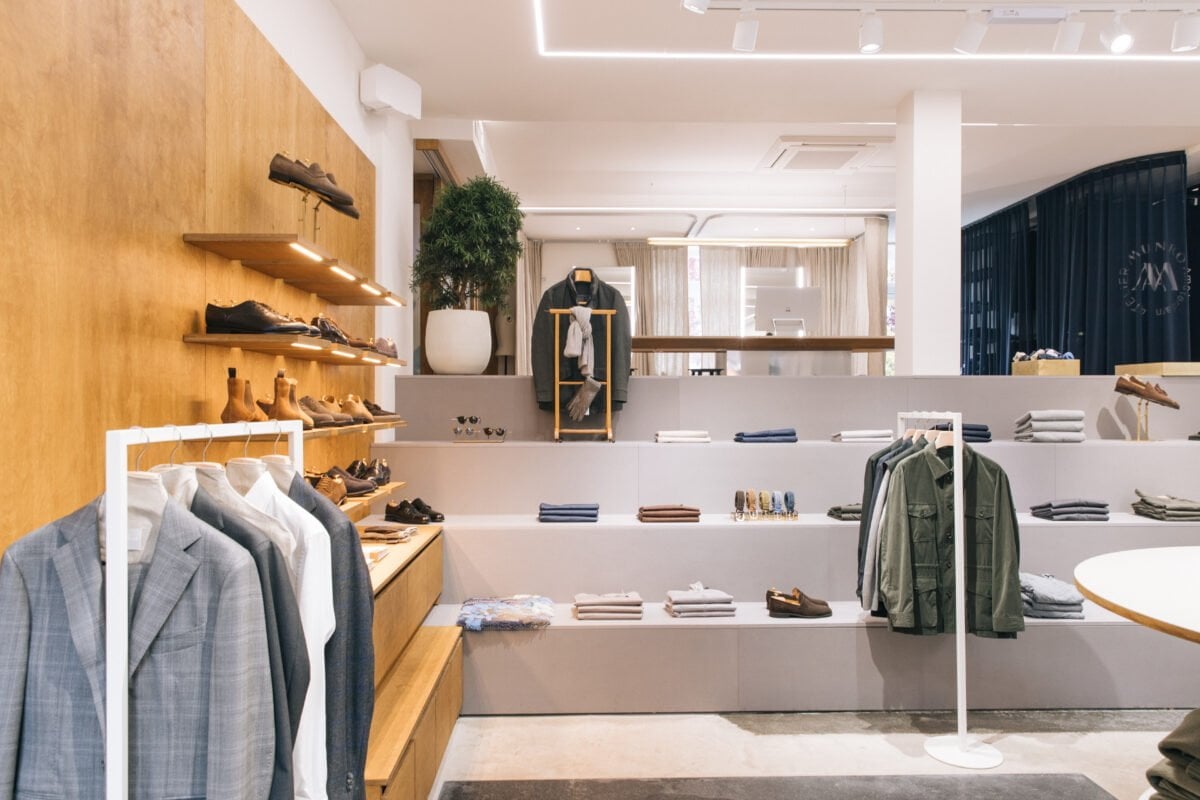
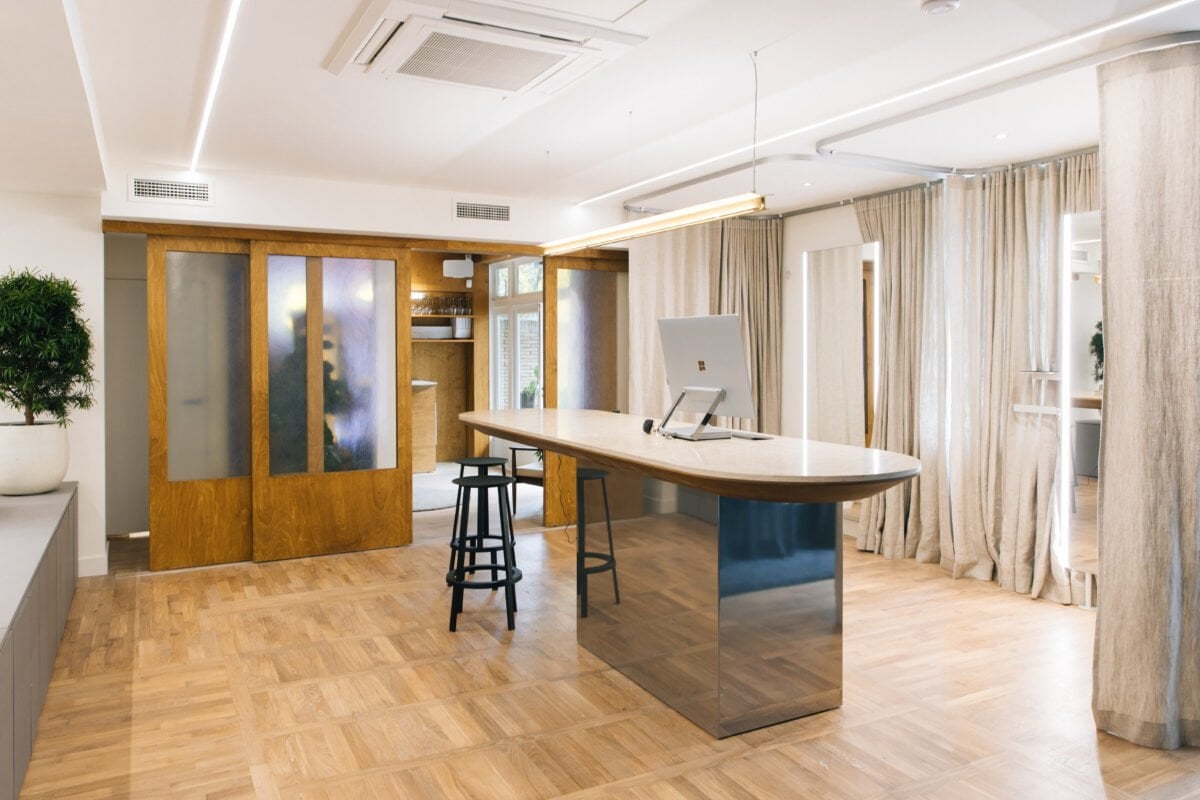
Each of the three retail levels will feature several fitting rooms and working desks. The main floor will feature a range of ready-to-wear — Atelier Munro has been expanding into various non-custom categories and accessories and other items will also be available.
Click image for interactive Google MapHouse of Atelier Munro
Beethovenstraat 9, Amsterdam (Image: Atelier Munro)
House of Atelier Munro
Beethovenstraat 9, Amsterdam (Image: Atelier Munro)
House of Atelier Munro
Beethovenstraat 9, Amsterdam (Image: Atelier Munro)
House of Atelier Munro Beethovenstraat 9, Amsterdam (Image: Atelier Munro)House of Atelier Munro Beethovenstraat 9, Amsterdam (Image: Atelier Munro)
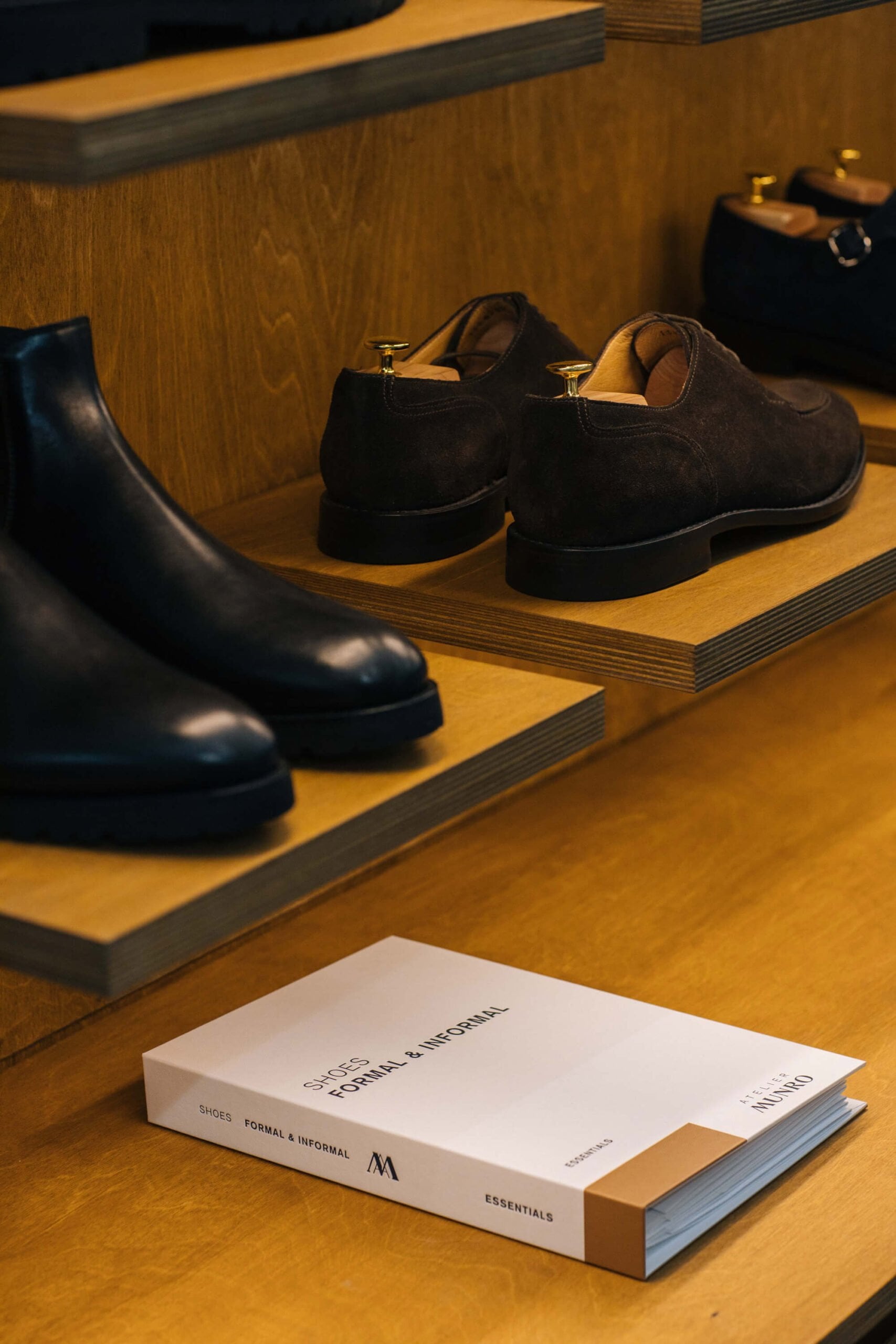
Upstairs clients will be able to view a range of fabric swatches and be fitted for custom garments. The entry level for Atelier Munro suits is about $800 and prices go higher depending on materials used. A custom garment takes about four weeks to make. Shirts are priced between $160 and $300 typically. Custom footwear made in Italy will be available in a range of sizes and styles.
Domenic Esposto
Atelier Munro was founded in 2007 by a group of men wanting to create customized apparel that was like made-to-measure only quicker, easier, less expensive, and more adaptable. Atelier Munro’s price point is higher than Vancouver-based Indochino and considerably less than the bespoke offerings at pricier retailers. Menswear retailer Harry Rosen introduced Atelier Munro to the Canadian market in 2016.
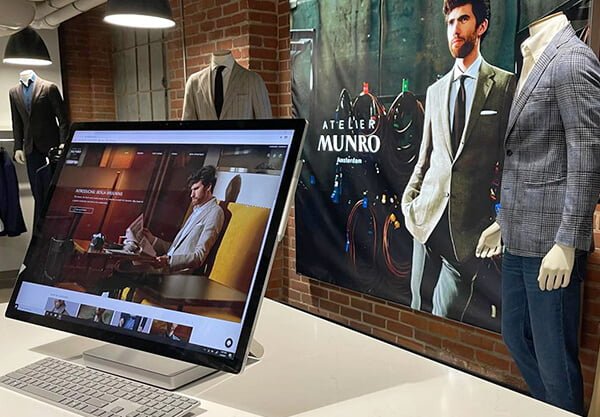
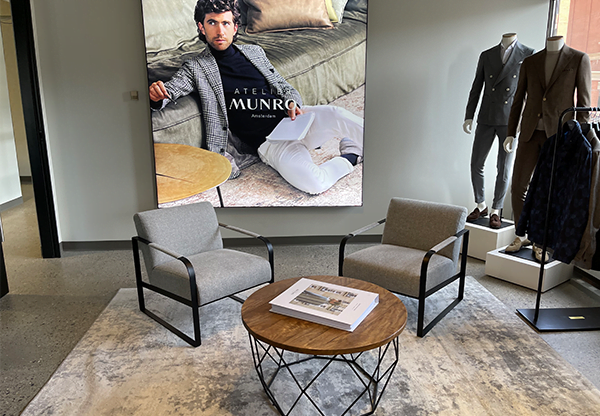
Toronto-based Brand Experience Leader Domenic Esposto said that Atelier Munro is opening standalone stores in Canada to offer a full experience while offering the opportunity to showcase the brand’s ready-to-wear. The brand has grown in terms of products since its launching at Harry Rosen. Men will also have a place to gather and relax, rounding out the retail experience in the new Hazelton Avenue location.
Atelier Munro Pop-Up Toronto at 180 John St
Atelier Munro Pop-Up Calgary
Future Home of Atelier Munro at 19 Hazelton Avenue (Image: Craig Patterson)
Already, Atelier Munro has opened temporary showroom spaces in Toronto and Calgary. The Toronto location is at flexible work space concept Spaces at 180 John Street where it has operated since last year. In Calgary, Atelier Munro has opened a pop-up at 333 11th Ave SW in the city’s downtown area.
Esposto said that Atelier Munro will look to open more standalone locations in major Canadian cities. Calgary will be the next target city in Canada for Atelier Munro, with a space of about 2,000 square feet sought. ‘Character’ elements such as brick walls would be desirable Esposto said.
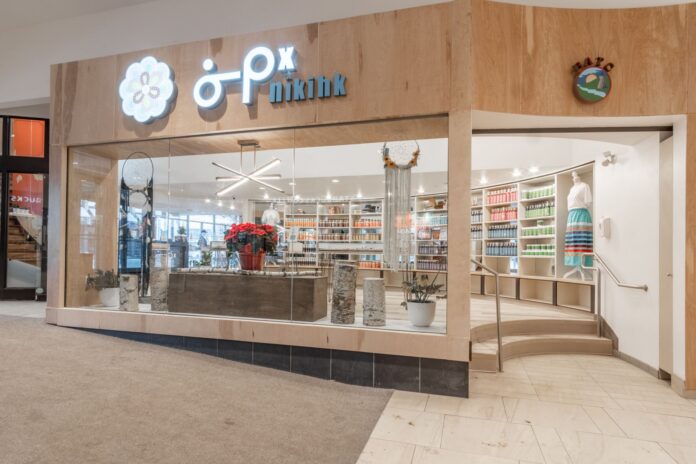
Indigenous-owned business Nîkihk has opened its first flagship store at the Midtown shopping centre in Saskatoon and the motivation for the company was driven after the death of Neil Sasakamoose’s father.
Fred Sasakamoose, one of the first Indigenous players in the National Hockey League, died in 2020 after the former Chicago Black Hawks forward had been hospitalized with COVID-19.
Neil Sasakamoose
Neil Sasakamoose, President & CEO of Nîkihk, said the company’s roots stem from the pandemic.
“When the pandemic first came to the Prairies, our bands couldn’t find any kind of hand sanitizer, any kind of household cleaner, there was a big panic . . . There were big fears. Our bands they couldn’t find any. There were restrictions and fights in the aisles of Superstores and grocery stores and local stores as everyone was buying everything out,” he said, adding the bands were locked down too at that time.
Nîkihk at Midtown (Image: Cushman Wakefield)
“It was born out of necessity. We went and made our own product. We went to a plant and started testing a concept, obtained this brand. The federal government through us purchased a whole bunch of household supply kits. There was a box of hand sanitizer, hand soap, common house cleaners we produced that were clean, they were green-friendly. We created a brand and mixed in some of our Indigenous Plains scents and colours into them like sweetgrass and sage and blueberries and Saskatoon berries. We came out with a brand and it exploded.
“My father passed away from COVID and that motivated me personally. He was one of the first victims of COVID back in 2020. He missed the vaccines by two months. It motivated me to make sure that First Nation households had hand sanitizers, they had household cleaning, they had personal care. It’s a mix of both things. The market was set to go but I had a personal goal and I wanted to make sure that people were safe. My dad’s passing was one of the driving forces for me personally.”
In March 2020, Nîkihk, which translated from Plains Cree is “my home”, was created to help distribute household cleaning kits to combat the national shortage of sanitizing solutions on First Nations.
Since then, it has sold over 75,000 cleaning kits, made headlines, and it began a retail journey with a physical presence in Saskatoon’s signature mall.
Nîkihk at Midtown (Image: Cushman Wakefield)
The venture is owned by several Saskatchewan First Nations. Battlefords Agency Tribal Chiefs is a tribal council that was formed in the spring of 2007 with the original first nations of Ahtahkakoop Cree Nation, Moosomin First Nation, Red Pheasant Cree Nation, Sweetgrass First Nation, and Stoney Knoll First Nation signing the Convention Act. Saulteaux First Nation joined in 2009 and Mosquito / Grizzly Bear’s Head / Lean Man First Nation in 2014.
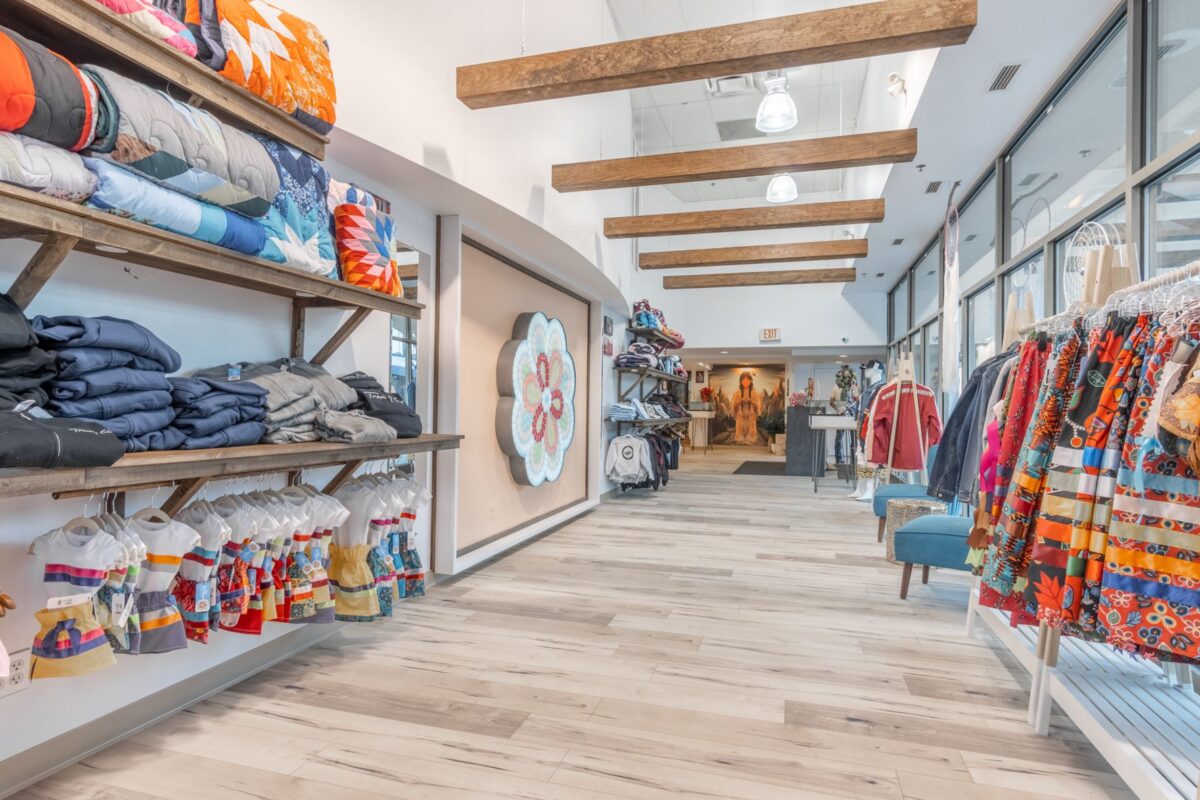
Sasakamoose said the retail space blended the sanitizers and cleaning supplies with the work of local Indigenous artisans in the Battlefords area.
“We buy their products and we resell them. Get their brand out there. Their name. It’s been really good,” he said. “It’s been a good mix for us.”
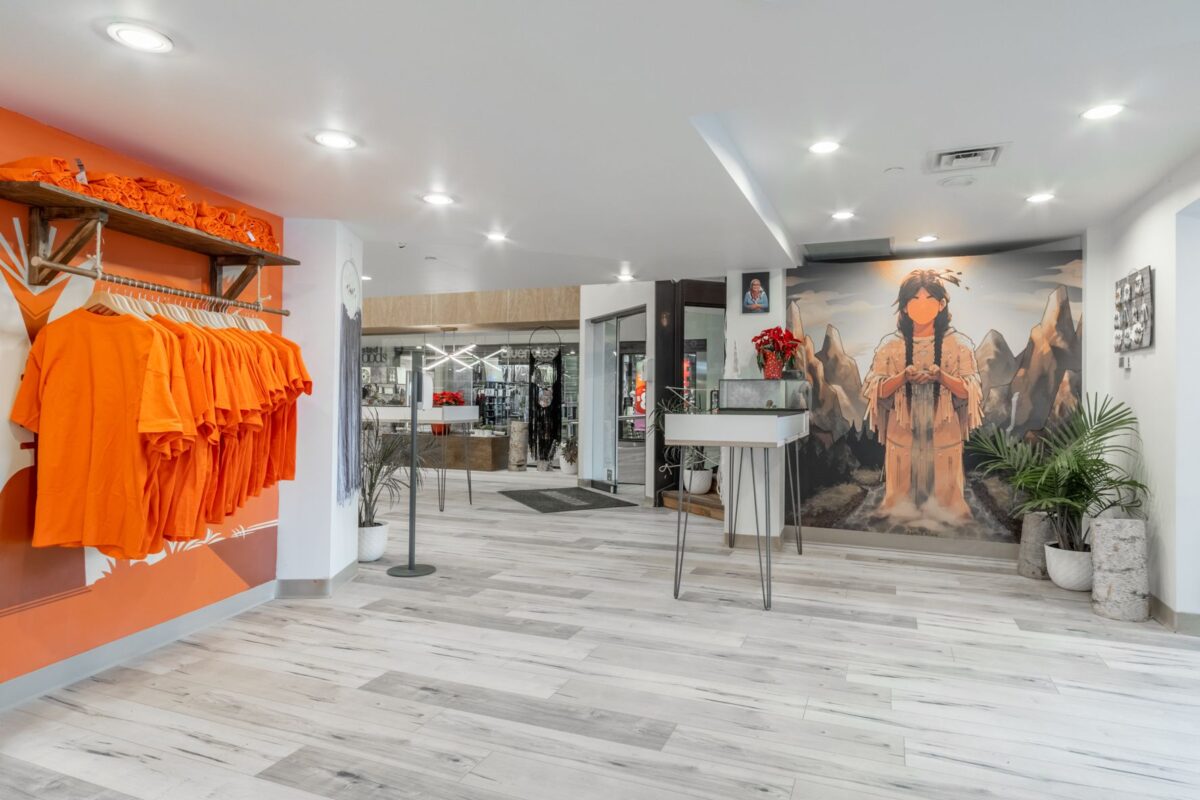
Linda Young, Specialty Leasing Manager, for Cornwall Centre in Regina and Midtown in Saskatoon, for Cushman & Wakefield, said since inception, Nîkihk has transformed from a store to a destination to include a feature wall of Nîkihk products, a Truth & Reconciliation, a “Every Child Matters” stairway and merchandise, local artisans featured showing their exquisite skill at beading and leather work, as well, a “Multi Cultural Corner” where people can learn and work with the community.
The painting of the walls inside the space was completed by local Indigenous Artists. Nîkihk’s retail offering has grown to include cleaners such as personal care, pet care, laundry detergent and athletic wear cleansing.
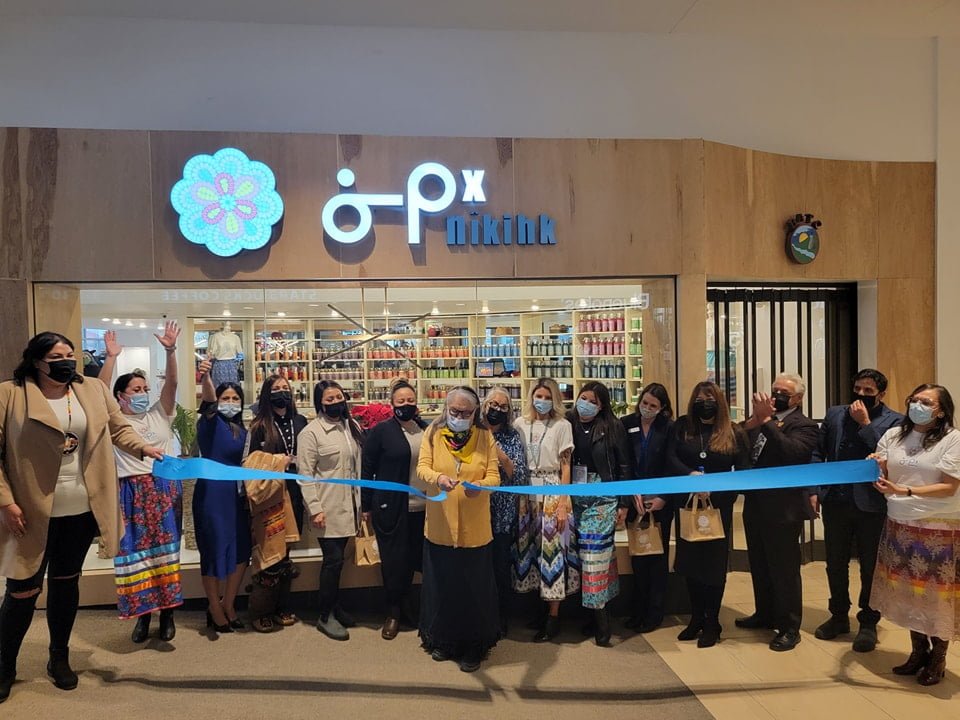
Nîkihk at Midtown (Image: Nîkihk Facebook)
“The whole thing started at Midtown because I saw a commercial on TV on Global. It was just a local commercial. I thought I should contact these guys and we should partner. The timing was just so right with Truth & Reconciliation and Every Child Matters,” said Young. “That’s really how all this started.”
“And he’s got a terrific group that he works with. We started meeting and planning and it opened the third week of November of 2021.”
She said the store is located at the 1st Avenue entrance, the first store when people walk into the main entrance, across from a Starbucks.
“The placement is really fantastic. It’s about 2,800 square feet.”
Retail Insider is streamlining its Canadian retail news from around the web to include a handful of top news stories that can be viewed quickly during the day. Here are the top stories from the past 24 hours.
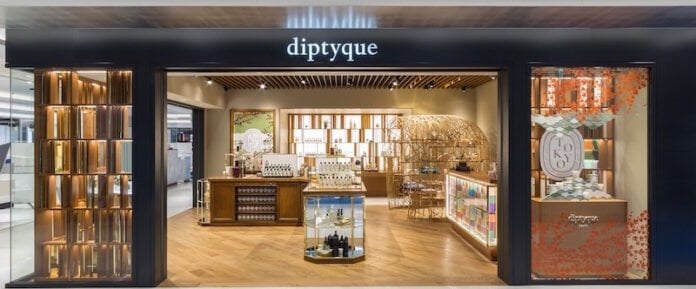
Upscale French fragrance and candle brand Diptyque is building its first standalone store at Toronto’s Yorkdale Shopping Centre that will open within a few months. It’s part of a direct-to-consumer expansion for the brand which for years has been available in upscale multi-brand retailers.
The Yorkdale Diptyque storefront will be in the mall’s new ‘luxury wing’ anchored by Louis Vuitton to the north and Furla and Nespresso at its south-end. Diptyque will join other nearby beauty brands including Aesop and a large Sephora store.
More Canadian Diptyque locations are expected to open with Jeff Berkowitz of Aurora Realty Consultants negotiating leases on behalf of the retailer. Ideal Diptyque retail spaces could be in malls and on streets with mall locations ideally being in the 600-700 square foot range while street front stores may occupy as much as 1,000 square feet.
Diptyque was founded in 1961 by interior designer Christiane Gautrot, theatre set designer Yves Coueslant, and Desmond Knox-Leet, a painter. The brand, which sells fragrances, candles & home, skincare, and home decor, has stores globally as well as distribution in upscale retailers.
Photo: SpaceNK
Candles are typically priced in the $50-$100 range depending on size, with some more expensive ones approaching $500. Diptyque fragrances are typically well over $100 and a room spray was priced at $92 on a Canadian retailer’s website.
In the United States, Diptyque has more than 20 stores in major markets with a mix of street and mall stores in upscale locations. Some stores are on luxury streets while others are located a bit off the beaten path in trendy places close to affluent population areas.
The Diptyque brand was introduced to Canada via wholesale channels, with retailers such as Holt Renfrew, Nordstrom, and Saks Fifth Avenue carrying the brand in Canadian stores. The multi-brand retailers are expected to retain distribution despite the direct-to-consumer brick-and-mortar expansion.
We’ll follow up on this story when the Yorkdale store opens.
Of the many changes and forced evolutions that have been precipitated by impacts of the COVID-19 global pandemic, the digitization of the world around will certainly be recognized as one of the most significant. It’s changed the way people everywhere consume and share information and the methods by which we communicate and engage with one another. Through the retail lens, it’s served to transform consumer preferences concerning the ways they interact and shop with their favourite brands, leading to a recent and thoroughly documented explosion in ecommerce sales for merchants across the country. In short, the digitization of the industry, which continues unabated, has gone a long way toward altering and expanding the retail ecosystem, challenging retailers’ capacity to deliver the service and experience that customers are increasingly expecting. In fact, according to Katie Swett, eCommerce Product Lead at Square, it’s an evolution that’s prompting merchants throughout the industry to reassess the traditional retail model and adapt in order to provide the Canadian consumer with the options they seek.
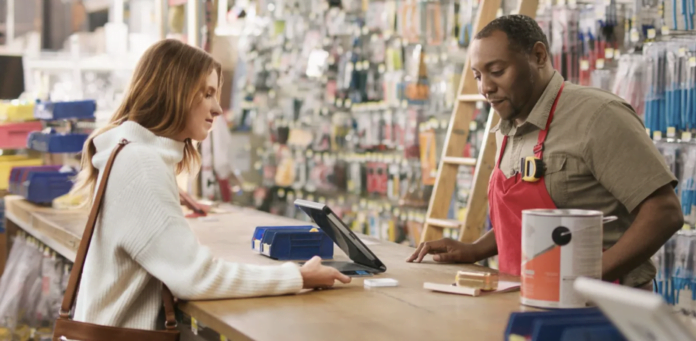
“The COVID-19 global pandemic has really changed the way retail functions,” says Swett. “It shifted consumer behaviour, accelerating their adoption of online channels, providing many who were relatively unfamiliar with ecommerce with a crash course, flattening the technological learning curve as they discovered the capabilities, ease and convenience of online retail. It’s changed their perception of the shopping journey, increasing their expectations concerning flexibility with respect to the way they pay for purchases as well as the ways in which their orders are fulfilled. It’s forcing many retailers to examine and assess how they service their customers, adapting in ways they may not have previously been accustomed to, developing new fulfillment methods like local delivery and introducing flexible payment options like ‘buy now, pay later’ in order to meet those increasing needs. These developments are allowing retailers everywhere to blur the in-person and online worlds into a singular and digitally-enabled experience. Two-day shipping is great. But two-hour pickup might be even better.”
Digitally-induced trends
Swett goes on to explain that, along with retailers’ need to develop and deliver a seamless omnichannel experience, which includes options like purchasing online and picking up in-store, ordering online for home delivery and curbside pickup, there are a number of other digital trends that have been brought about by the pandemic. She says that with greater flexibility and options comes increased adoption of new modes and channels and a deeper exploration by the consumer of the options available to them. As a result, and perhaps a by-product of the current digital revolution, people are beginning to increasingly leverage their mobile phones as a means to make purchases at checkout. It’s a trend that’s been developing for some time, recognizes Swett, but one that she believes is approaching a tipping point within the industry.
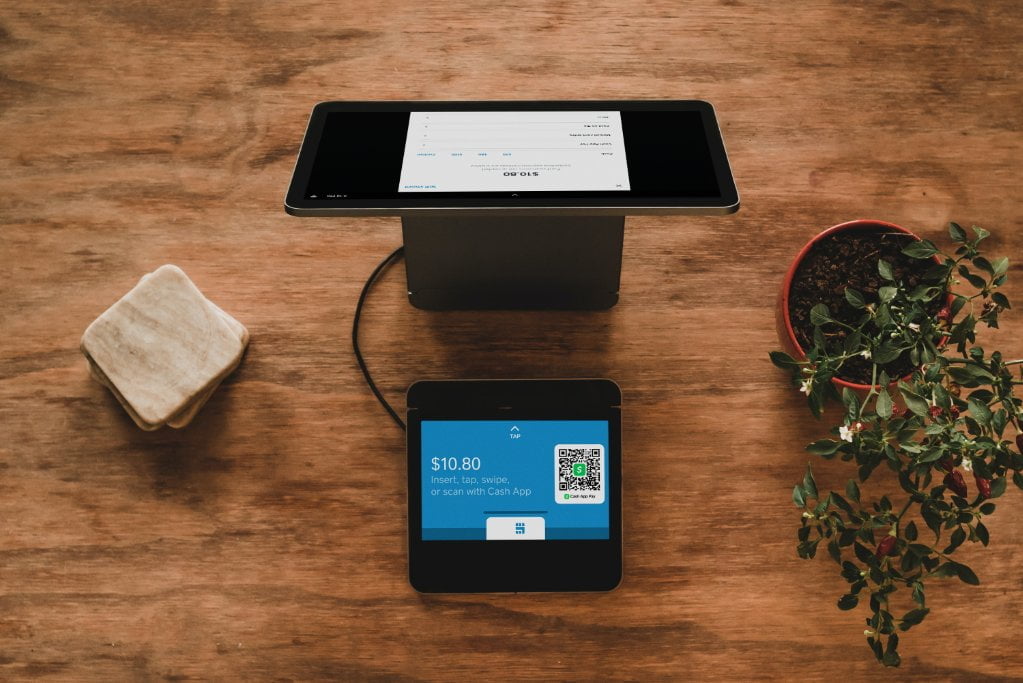
“One of the biggest shifts in purchasing preferences that we’ve experienced over the past couple of years is the Canadian consumers’ willingness to use their phones for contactless payments,” she asserts. “In fact, many customers are no longer carrying a physical wallet with the assumption that they can use their digital wallet to complete a transaction. It’s leading retailers to place an even greater emphasis on providing their customers with a seamless mobile phone experience in order to help them drive online sales. Merchants are much more aware of the fact that online ordering is supported by a great mobile phone experience that integrates and blends seamlessly into the overall shopping experience that they offer their consumers. Going forward, it’s going to be critical for retailers across the country to ensure that they develop a mobile-driven approach to commerce in order to meet this growing consumer preference.”
Photo: Square
Owning retail success
As a consequence of enhanced online sales and the plethora of opportunities presented to retailers online, Swett says that it’s important for those entering into the vastness of ecommerce to own their success. It might seem easy to some to simply put product online with the help of a third-party marketplace provider. Afterall, there are numerous examples and case studies detailing the growth and success that many retailers have experienced by virtue of doing so. However, Swett warns that, despite these instances, there is a lot that merchants are giving up when they make the decision to sell through these channels.
“It’s incredibly important today, in light of the digital opportunities available to those operating within the industry, for merchants to own their own success through ownership of their own direct digital order channels,” she says. “Similar to what happened in the airline and hospitality industry years ago, retailers are quickly recognizing this. Owning their own channels through which they sell to their customers provides them with much better control of their margins and greater control and associated opportunities related to the ways in which they market their businesses. But, most importantly, by owning their own selling channels, they own their relationships with customers, allowing them to better understand their needs and build a strong connection to the brand.”
Seamless reordering
Another trend that’s on the rise, according to Swett, is the rapid development of loyalty programs, rewards and offers by retailers in efforts to capture repeat engagement with consumers. Driven by a combination of increased competition for the consumer’s spend and an expanding retail ecosystem that offers an ever-increasing number of ways by which consumers can find the product they’re looking for, retailers are increasingly looking to loyalty programs and rewards as a way to differentiate their brands. And, although Swett recognizes this fact, she says that offering the consumer a seamless reordering experience is critical in supporting the objective of these marketing efforts.
“Many businesses understand that acquiring new customers is exponentially more difficult and expensive than engaging with existing customers,” she says. “As a result, many merchants have decided to direct a lot of their resources and efforts toward ensuring a seamless reordering experience, making repeat purchases as easy and convenient as possible. It’s essential for any merchant who puts in the time, effort and resources to develop these loyalty programs and incentives to support them with a digital purchasing experience that brings them back in conjunction with great rewards and offers.”
Realizing full retail potential
To help merchants operating across the country compete in an increasingly digitized world, Square – one of North America’s leading financial services and digital payments providers – offers a range of software and hardware solutions that enable clients to turn their operations into profitable online businesses. Swett acknowledges how intimidating a foray into the online world might seem to many small- and medium-sized merchants and understands the hesitance in investing time and resources into a complex venture with a plethora of moving parts. However, she explains that it’s with this understanding in mind that drives Square and the work that it does on behalf of clients, helping them achieve the full potential of their businesses.
“There are many challenges related to managing a merchants’ online business. However, the two challenges that we focus on helping them solve for is in lowering the associated costs as well as filling in the knowledge gap with respect to ecommerce and digital channels. Cost has historically been very prohibitive for merchants who are just getting started with low margins. At Square, we are committed to lowering that barrier, offering merchants a free Square Online option. With this product, they pay only when they make a sale and can get up and running fast. With respect to knowledge, much of our effort is focused on reducing this barrier by not only developing and setting up these online experiences, but by also helping merchants identify the opportunities that are available to them. There is so much potential available to small- and medium-sized businesses as a result of the digital transformation that we’re experiencing. We want to help them realize it in full.”
For information concerning the ways Square and its suite of commerce solutions can help your business optimize opportunities for success and growth in an increasingly digitized world, visit https://squareup.com/ca/en
*Retail Insider partnered with Square for this content.
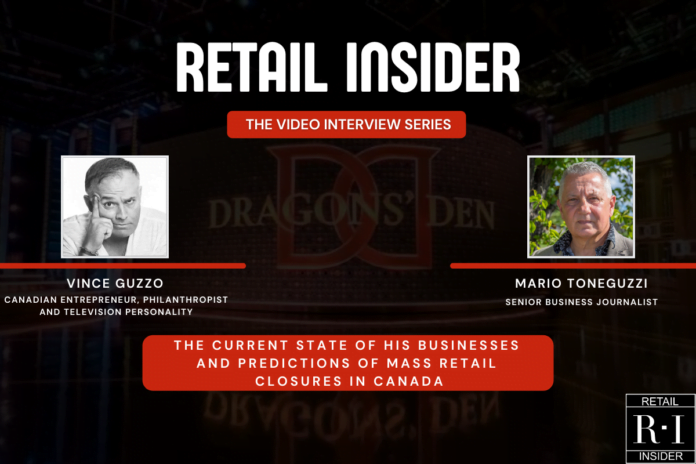
Vince Guzzo Video Interview: The Current State of His Businesses and Predictions of Mass Retail Closures in Canada
Vince Guzzo, a well-known Canadian entrepreneur and judge on the Dragons’ Den TV show, discusses the economic pain entrepreneurs have faced during the pandemic and what they need to do to survive. He starts off discussing challenges with his own businesses including theatres, consumer goods and real estate and then predicts that many businesses will close in Canada this year and discusses how interest rate increases will further affect both businesses and consumers.
The Video Interview Series by Retail Insider is available on YouTube.
Connect with Mario Toneguzzi, a veteran of the media industry for more than 40 years and named in 2021 a Top Ten Business Journalist in the world and the only Canadian – to learn how you can tell your story, share your message and amplify it to a wide audience. He is Senior National Business Journalist with Retail Insider and owner of Mario Toneguzzi Communications Inc. and can be reached at mdtoneguzzi@gmail.com
Also check out the other series offered by Retail Insider, including The Weekly podcast and The Interview Series, which are both available on Apple Podcasts, Stitcher, TuneIn, Google Podcasts, or through our dedicated RSS feed for Simplecast and other podcast players.
RioCan Real Estate Investment Trust announced that Harden will assume third-party property management for the REIT’s 18 Quebec retail properties.
Harden is a second generation, family-owned real estate company whose primary focus is owning and operating commercial, residential, and industrial properties in many communities throughout Quebec and Ontario.
RioCan said the partnership strengthens RioCan’s regional position, leveraging Harden’s local expertise and full suite of property management capabilities tailored for the market, including leasing, development, construction, and administration services.
Harden x Riocan
Jonathan Gitlin
“With a common focus on performance, customer-centrism, and cultural excellence, we are confident that Harden is perfectly positioned to manage our retail portfolio in the Quebec region,” said Jonathan Gitlin, President and CEO of RioCan. “RioCan’s Quebec properties have proven resilient through the pandemic and there are significant growth opportunities embedded in the portfolio. Harden’s long-established and in-depth understanding of the local real estate landscape will further support growth and extract value from our presence in this market.”
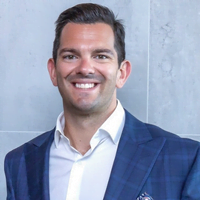
Tyler Harden, co-CEO of Harden with his brother Chris, said the company will work closely with RioCan to provide their tenants with exceptional service and well-maintained properties that it and their customers will be proud of.
Tyler Harden
“We are confident the Harden team has the expertise and talent to execute our strategy of enhancing the experience and value of the portfolio. We will accomplish this by curating a synergistic mix of uses, providing a high-quality retail experience and eco-responsible environment, and investing in the communities we serve,” he said.
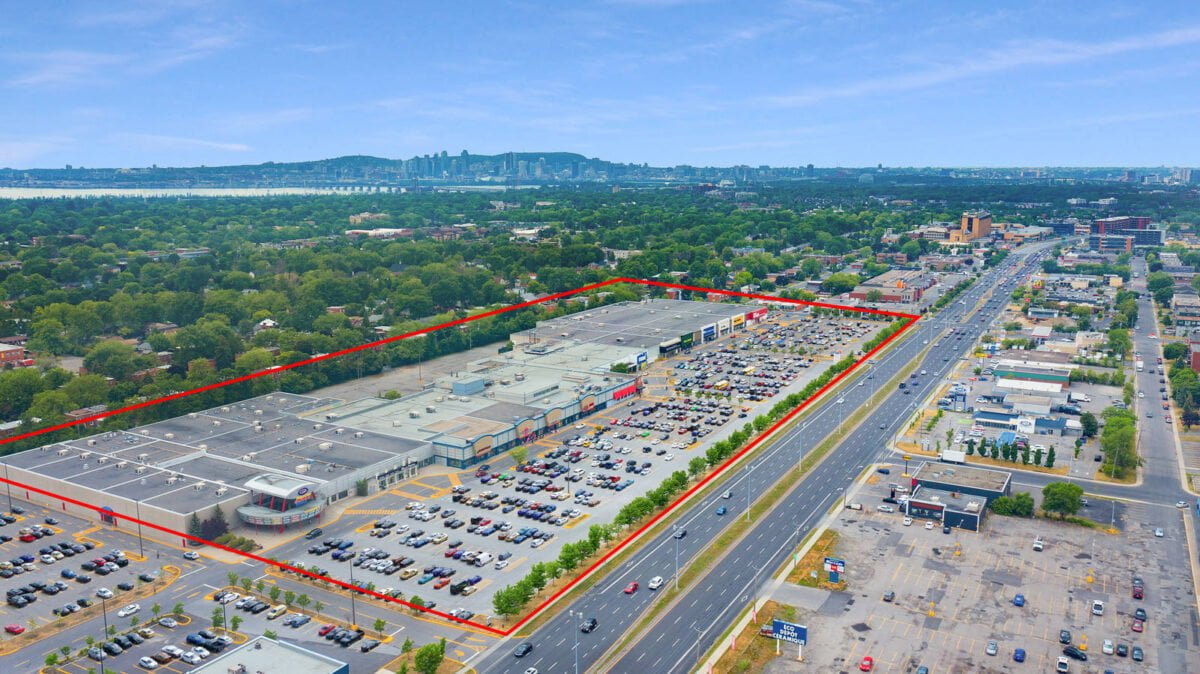
RioCan and Harden said they have an established relationship, with each owning a 50 per cent interest in Les Galeries Lachine in Montreal, where Harden is responsible for the management, leasing, and redevelopment of the property. Recently, RioCan agreed to sell a 50 per cent interest in the Trust’s Mega Centre Notre-Dame property to Harden for $34.5 million. The transaction closed on March 30th.
Mega Centre Notre-Dame (Image: RioCan)
“We also knew it was something we could help them out with the rest of their portfolio. We had certain conversations over the last couple of years and ultimately they made a decision they would like for us to be the ones that work within their portfolio in Quebec as partners in certain instances and in this particular case basically as property managers as well as taking care of the leasing, the construction and the development or redevelopment of their properties. So that’s our role.
“So for us we’re really excited to be able to partner with RioCan or expanding on our current partnership that we have had with them for the last couple of years. What does this does for Harden it allows us to continue to scale our business, comprised of quality retail portfolio in Quebec and give ourselves development opportunities within the portfolio to lean on the services that we offer, namely development, leasing, construction and our management platform, to be able to extract maximum value for obviously the partnership but most importantly putting together a program where the retailers are living obviously in that portfolio as well other services that we are going to be adding are able to do so proudly and confidently and not have issues from a day to day perspective, or very little. That’s essentially our role within this partnership.”
Harden said the relationship with RioCan is also adding a lot of square footage to its development pipeline which is positive and productive for the company. The 18 retail properties in Quebec comprise just over 2.55 million square feet.
RioCan Greenfield (Image: RioCan)
As of December 31, 2021, RioCan’s portfolio included 207 properties with an aggregate net leasable area of approximately 36.4 million square feet (at RioCan’s interest) including office, residential rental and 13 development properties.
Harden, who’s head office is located in Vaudreuil-Dorion, Quebec, currently owns and operates over five million square feet of net leasable area of commercial space. It has several projects under development – two million square feet of net leasable area of industrial, 500, 000 square feet of net leasable area of commercial, and over 2,000 residential units.
Tyler Harden said the company’s roots began in 1949, where his grandparents founded a jewellery store named Harden’s Jewellers, located in Hawkesbury, Ontario; a small town on the border of Quebec and Ontario. In 1975, William Harden (Tyler’s father) joined the family business and expanded it to a total of 7 stores; along with his brothers, Reg and Brent.
Harden was founded by Tyler and Chris’ father, William, in 1985. Over the following years William had developed several commercial properties in Ontario and Quebec, mostly retail shopping centers. Chris and Tyler joined the business in 2006 and 2008, respectively, and worked very closely under their fathers’ guidance and mentorship until this past January where they were appointed Co-CEOs.
“We were confident that Harden was the right partner to help them unlock the value embedded within their Quebec portfolio. We had certain conversations over the last couple of years and ultimately RioCan made the decision to expand our current relationship and in this particular case become asset managers that are responsible of the management, leasing, construction, development and redevelopment of their properties.”
Centre St-Martin (Image: RioCan)
“We’re very excited to be able to partner with RioCan and expand on our current partnership that we had formed in 2019. This partnership allows Harden to continue to scale our business, comprised of quality retail properties and give ourselves further development opportunities within the portfolio.”
Harden and RioCan agreement applies to the following properties :
Retail Insider is streamlining its Canadian retail news from around the web to include a handful of top news stories that can be viewed quickly during the day. Here are the top stories from the past 24 hours.