Home Blog Page 934

Concerns Over Data Privacy Compliance as Retail Industry in Canada Accelerates Shift to Digital Channels [Feature]

There have not been too many influences throughout the course of human history that have posed impacts as significant as those that have resulted from the advancement of technology. They are impacts that have only increased of late as we continue to ride a crest of digital acceleration that spans the world, touching every community, changing the way we live our daily lives. The most notable adaptations that have resulted can be seen in the ways in which we communicate and the modes we leverage to gather and share information. Supported by digital technologies and systems, the transformation that we continue to undergo is nothing short of revolutionary. For retailers and other businesses, the impacts have been felt throughout the entire organization, from supply chain and merchandising to human resources and customer service. However, the area of the business that is perhaps exposed to more implications than any other, says Ritchie Po, Privacy Practice Lead at Kobalt.io, is the processes by which data and information is collected and governed.

“The retail industry, and the world in general, has been shifting toward more of a reliance on digital technologies to help us do just about everything,” he asserts. “And this includes shopping. This shift has obviously accelerated as a result of the pandemic and the associated lockdowns that have occurred and social restrictions that have been put in place. The less that retailers and consumers have interacted face-to-face, the more orders have gone online, increasing the volume exponentially. And, although much of the industry has responded positively to these shifts, moving more of their business toward online channels, there were a number of retailers that were not fully prepared to go online, in particular small and medium-sized businesses. The big problem is that when implementing digital systems and components to help support the surge in online business, many weren’t diligent enough to review and understand all of the privacy aspects of the implementation. This results in an unawareness of how much information the organization is collecting from the customer and the safeguards that are necessary in order to ensure compliance to all of the legal requirements.”

Multiple jurisdictional regulations

Image: Kobalt Security Inc.

It’s an issue that, if not properly addressed and dealt with now, poses serious consequences to retailers and other businesses that are collecting data through their ecommerce systems and other digital tools. It’s an area of the business that Po says deserves as much attention from merchants as possible in order to navigate through what he refers to as a “new digitized world” and position themselves well to enjoy success going forward. However, there are many layers of complexity involved in the collection of data and the legal framework around governing the information. And, according to Po, they are layers of complexity that pose even greater risks to retailers that sell to consumers in multiple jurisdictions and regions around the world.

“The challenges and risks related to the collection of data when selling internationally are highlighted by the differing data subject rights and privacy rights between jurisdictions,” he says. “There’s sometimes a presumption among Canadians that because a store is operating within Canada that they only need to comply with Canadian privacy laws. However, it couldn’t be further from the truth. Despite the jurisdiction or country that a retailer or business is operating in, they must ensure that they comply with the data privacy laws of the countries and regions that their consumers live in. For instance, Europe has its own standards and legal requirements that need to be abided by when selling to consumers in those countries. And, California recently introduced another layer of privacy rights to its existing laws and regulations. These laws in different countries and jurisdictions might overlap in many cases. However, the challenge is in complying with all of the differences in regulations throughout the world.”

Evolution of legislation

Canadian laws and regulations around data privacy and rights are developed and enforced by the Office of the Privacy Commissioner of Canada which offers its Personal Information Protection and Electronic Documents Act (PIPEDA) as a national standard for privacy practices in the private sector. However, as Po points out, the European Union introduced its General Data Protection Regulation (GDPR) in 2018 – a set of digital laws that govern the data and privacy of citizens living in each of its countries. It replaces the previous Data Protection Directive which was introduced in 1995 during the infancy of the Internet. In addition, California, too, recently instituted laws under the state’s California Consumer Privacy Act (CCPA). These are but a couple of examples of the multitude of jurisdictional standards and regulations that are being developed by governments all around the world. And, as Po points out, laws and regulations within this new digital world are quickly evolving, forcing businesses to actively and consistently review and update the safeguards that they have in place to protect the data of their customers.

“Lawmakers and those involved in the development of regulations in Canada are always trying to modernize Canadian privacy legislation,” he asserts. “And retailers and other businesses are also constantly attempting to keep up with the pace of digitization, one that’s recently been accelerated, and the evolution of the related laws around data. Quebec’s Bill 64, which came into effect in the province a little more than a year ago, is a great example of this modernization of laws. It represents the biggest step so far in complying with laws and regulations under the GDPR, which is the gold standard internationally, and will likely serve as a benchmark for any future developments concerning Canadian data privacy laws.”

What retailers can do

Bill 64 requires all businesses dealing with customers who live in Quebec to come into compliance with its laws and regulations by September 2024. Po believes that it has the potential to propel Canadian legislation forward, recognizing a number of areas within the country’s data laws that still require strengthening. In fact, he refers to a memo recently written by Canada’s Privacy Commissioner, Daniel Therrien, which highlighted some of these lingering concerns. They include the inclusion of the right to erasure which ensures the removal of unnecessary information from a company’s records; the inclusion of stricter fines and penalties that result from a business’ inability to comply with laws and legislation, as well as the inclusion of greater detail around data sovereignty and its requirements. It’s an evolution and modernization of the laws that are challenging retailers from a compliance perspective. However, Po suggests that there are some things merchants can do to ensure they are in-line with the laws.

“There are some fundamental things that retailers can do in order to give themselves the best opportunity to keep up with the accelerated digitization of the industry as it relates to the collection and governance of data,” he says. “Conducting a privacy gap assessment is a really great exercise to undergo. Even if a retailer is only collecting a small amount of personal information, they often won’t know where the data resides. This is especially true of small and medium-sized businesses who are usually operating without processes by which permissions for the collection of data are locked down. So, it’s not just about the information that’s collected online, but the information that’s collected in the store as well at the point-of-sale. As part of this process, there has to be some top-down direction so that frontline staff understand their role and responsibilities in the appropriate collection of data and in obtaining the consumer’s consent. A gap assessment will allow a retailer to understand, from end-to-end, how the data is collected and how it’s used within the organization. This is a bare minimum as a place for retailers to start.”

Collaboration and comprehension

In addition, Po suggests that any retailer looking to really get a handle on data privacy legislation and layers of protections that are in place within their organization should appoint a Data Privacy Officer, on a consultancy basis in the least. Doing so provides an invaluable resource that the company can leverage to conduct a privacy impact assessment in order to better understand whether or not they’re collecting the most meaningful data or over-collecting information via their technology systems. And they can also guide with respect to the processes that are necessary in order to create efficiencies and comply with laws and regulations. He adds that seeking advice from legal counsel will also be incredibly useful in helping the business recognize where the risks are and ways to mitigate or deal with them. In fact, Po says that, in many ways, a great deal of collaboration is required within an organization to access the knowledge and understanding that’s needed for retailers to address the increasingly complex challenges around data privacy and maintain the necessary compliance.

“Data privacy can become a very complicated issue to address for any retailer. There are so many moving parts and differing regulations across provinces and countries. Tackling these challenges requires a lot of cooperation within the organization and with outside sources in order to accurately understand how to keep track of the data that’s being collected and ways to properly delineate it and strengthen their comprehension of the rights that consumers have in Ontario as opposed to Quebec or France or America or Singapore. Maintaining compliance with all of these different sets of laws and regulations at once, while ensuring that workflow and processes reflect that comprehension, can be a massive challenge for most small and medium-sized retailers to overcome. And, the further we move into this new digitized world, the greater the necessity will become for retailers and other businesses to make data privacy and compliance a top priority.”
Related Retail Insider Articles

Zara to Shutter Bloor Street Store in Toronto After 22 Years 

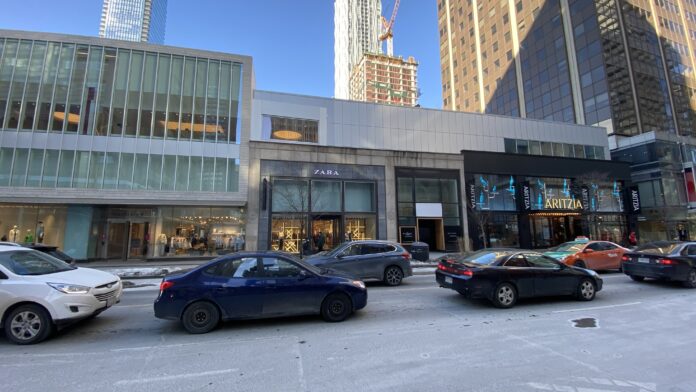
Zara at 50 Bloor Street West (Image: Craig Patterson)

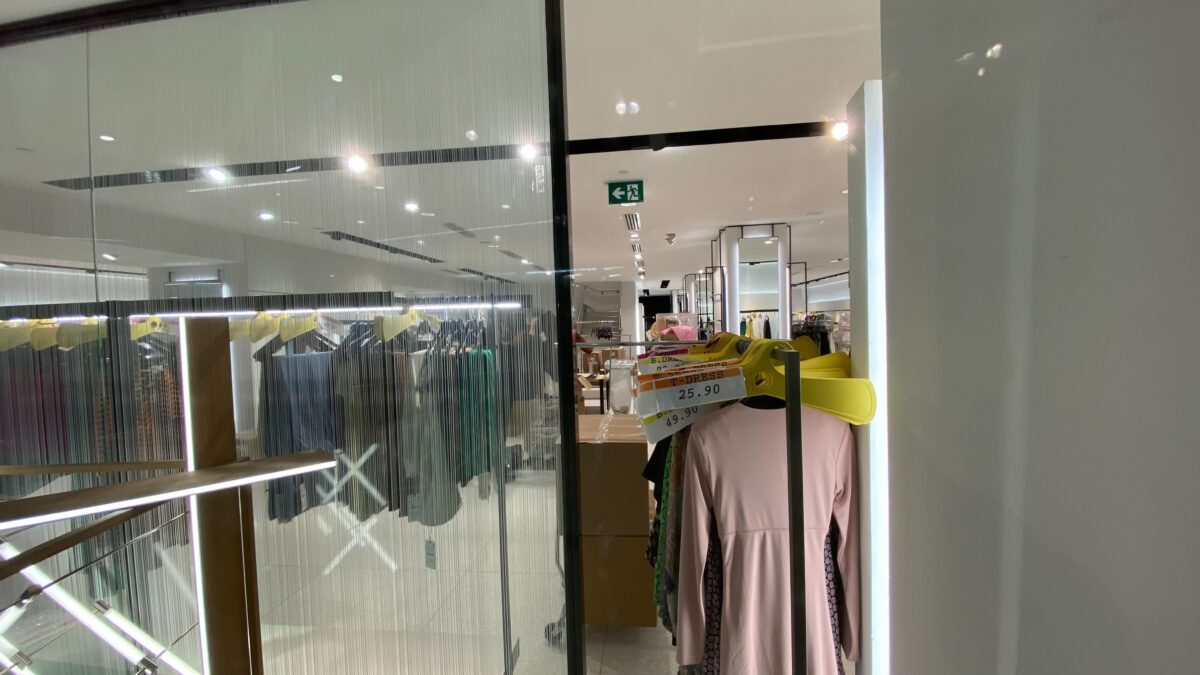
Spanish fast-fashion retailer Zara will shut its downtown Toronto store at 50 Bloor Street West at the end of this month. The store has been open for almost 22 years and recently shifted its merchandise mix to a women’s-only store. 

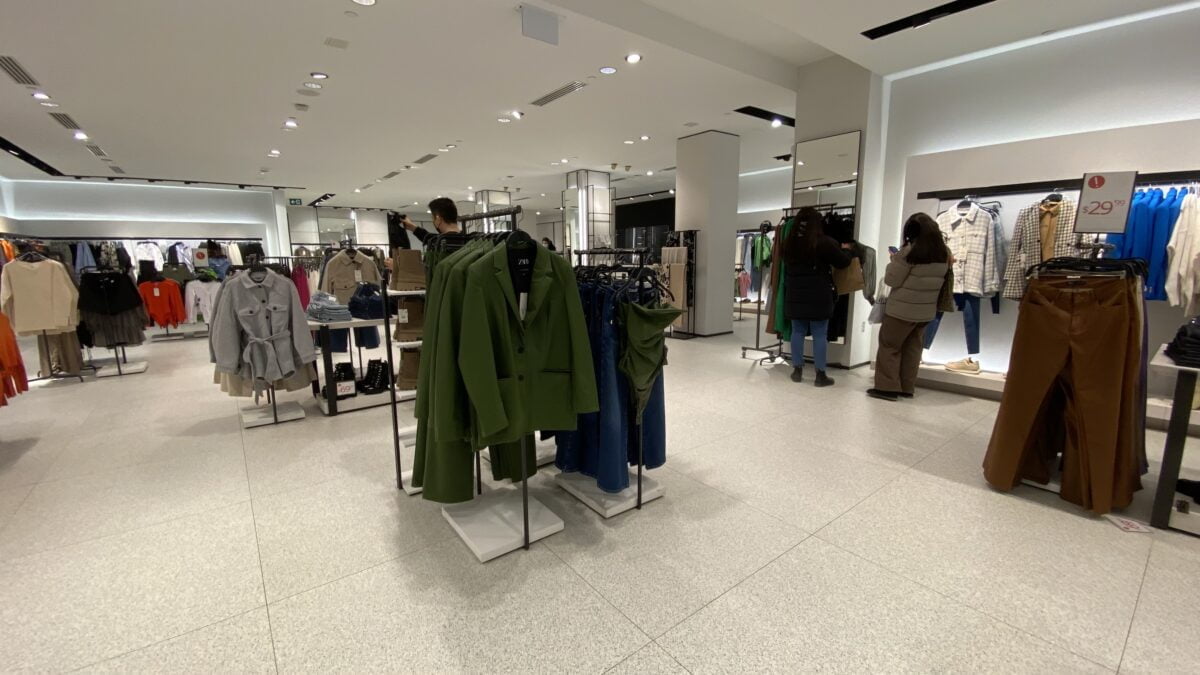
The two-level store was the first in the Toronto market when it opened on April 11, 2000. The store includes a street level of 5,910 square feet and a lower level of 4,472 square feet. Until a few months ago, the lower level of the store was a dedicated menswear department before the entire store was converted to a women’s fashions  location only. 

Prior to being leased by Zara, a Marks & Spencer store operated in the space for several years. 

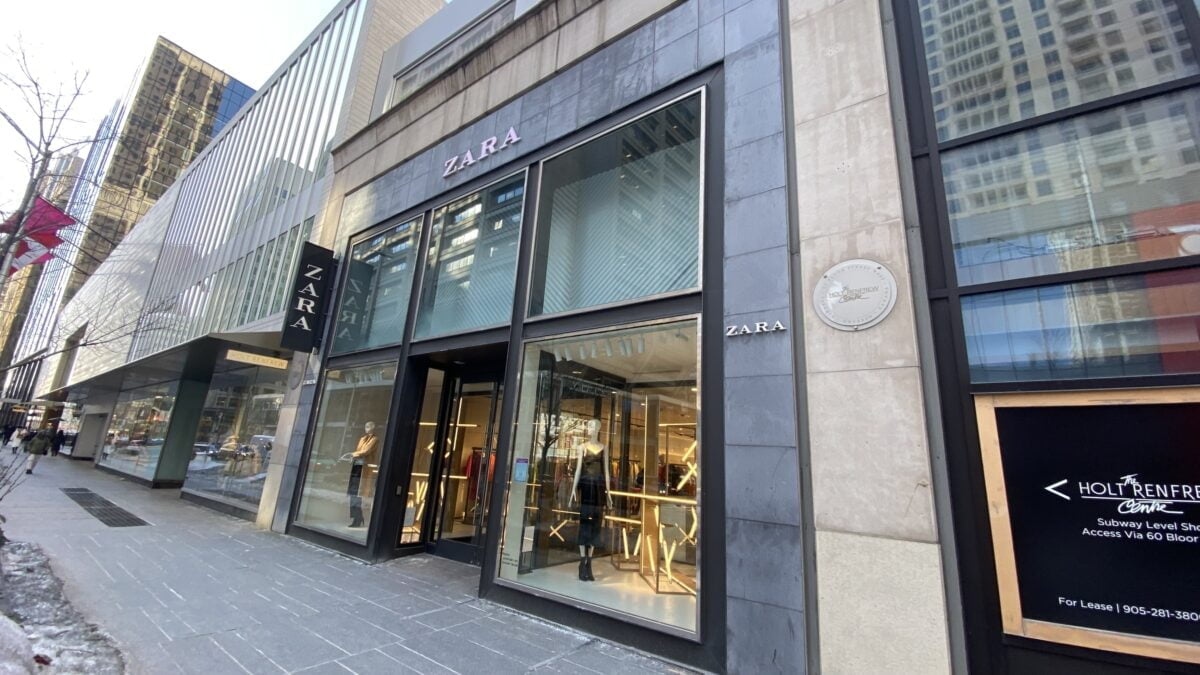
Zara at 50 Bloor Street West on February 14, 2022 (Image: Craig Patterson)
Basement level of Zara at 50 Bloor Street West on February 14, 2022 (Image: Craig Patterson)

The Zara store is located adjacent to Holt Renfrew which operates a 190,000 square foot store spanning four levels. The closure of Zara could provide Holt Renfrew the opportunity to expand its street level luxury boutique hall if the retailer so desired — about 15 years ago Holts annexed a former Eddie Bauer retail space in a similar fashion. Next to the former Zara store is an empty 2,650 square foot retail space that was formerly occupied by Fossil. 

There are currently several vacancies on the lower level of the Holt Renfrew Centre. Next to the Zara space, which was being cleared out over the weekend is a 3,480 square foot retail space formerly occupied by a Rexall drug store, and serval other small tenants have shut over the course of the pandemic. 

Zara continues to operate several stores in the Toronto market, including two downtown at CF Toronto Eaton Centre and on Queen Street West. Zara also operates stores across the country in major markets. The retailer’s first Canadian store opened in 1998 at Place Montreal Trust in downtown Montreal.

Main floor of Zara at 50 Bloor Street West on February 14, 2022 (Image: Craig Patterson)

Announcement of Pandemic Restrictions Being Lifted in Ontario Good News for Retailers and Foodservice Businesses: Interviews

Imagine Cinemas in Downtown Toronto (Image: Dustin Fuhs)

The lifting of some public health restrictions in Ontario is welcome news to thousands of small businesses that have been hit hard over the past two years due to the lingering COVID-19 pandemic.

Effective March 1, Ontario intends to end proof of vaccination requirements for all settings. Businesses and other settings may choose to continue to require proof of vaccination. Masking requirements will remain in place at this time, with a specific timeline to lift this measure to be communicated at a later date, the government announced on Monday.

Dan Kelly, President and CEO of the Canadian Federation of Independent Business, said the organization is pleased with the latest development, which he described as a positive step toward recovery and welcome news to the province’s small businesses.

Dan Kelly

“Removing business restrictions is a big step, but just the first in a small business recovery plan. Only 33 per cent of the province’s small businesses have returned to normal sales levels. The average Ontario small business has taken on nearly $170,000 in new debt just to survive the past two years, and many are dealing with ongoing challenges related to labour shortages, supply chain disruptions, and rising prices.

We urge the Ontario government to back up today’s announcement with a stay-open plan to provide clarity and certainty as we continue to manage the pandemic. This would include ensuring there is adequate healthcare capacity to avoid any renewed restrictions or business closures in the future,” said Kelly.

“We also call on the Ontario government to make efforts to boost consumer confidence over the weeks ahead. After two years of uncertainty, government messaging needs to shift to encouraging the safe return to activities like dining in restaurants, going to the gym or the movies, attending events, and traveling, so that our small businesses can finally begin the long road to recovery.”

Kelly said the latest CFIB survey data shows that 74 per cent of Ontario’s small businesses believe it’s time for capacity restrictions to be lifted and 

66 per cent of Ontario’s small businesses believe it’s time for proof-of-vaccination requirements to be eliminated.

Linkedin: Rocco Rossi

Rocco Rossi, President and CEO of the Ontario Chamber of Commerce,  said lifting COVID-19-related business restrictions sooner than initially planned is positive news for Ontario business and economic recovery. 

“To ensure a sustainable reopening of Ontario’s economy, it is critical the Government of Ontario also has a comprehensive and clear plan so businesses can safely reopen and stay open,” said Rossi. “The COVID-19 pandemic and resulting economic crisis have created an unstable and unpredictable environment for Ontario business. Meanwhile, vulnerabilities such as inflation, labour shortages and supply chain disruptions, have been exacerbated by the global state of emergency. 

“The impact of all of this on business and consumer confidence is reflected in our Ontario Economic Report with only 29 per cent of businesses being confident in Ontario’s economic outlook for 2022. The plan to reduce restrictions will only be successful if it is accompanied by the necessary measures to support business predictability, build public confidence and sustain the reopening.”

James Rilett (Photo Restaurants Canada)

The restaurant industry also welcomed the Ontario government’s announcement. 

“Operators are looking forward to fully reopening their restaurants to serve their customers. By announcing a timeline for an end to the vaccine verification requirements, restaurants can begin to make business plans to move into recovery,” said James Rilett, Vice President, Central Canada for Restaurants Canada.

“It is our sincere hope that we will not face future restrictions and the industry can begin on the road to once again be a leader in jobs and economic growth.”

Michelle Wasylyshen

Michelle Wasylyshen, national spokeswoman for the Retail Council of Canada, said Ontario businesses have suffered under the strain of constant disruptions over the last two years. 

“The challenges they have had to overcome have included COVID-19, extreme weather events, increasing inflationary pressures, labour shortages and supply chain disruptions,” she said. “As such, we are pleased with the Ontario government’s announcement today regarding the continued easing of restrictions. We are hopeful that the path forward is one of optimism as retailers are simply eager to get back to serving their customers in a way that is free from disruptions.”

Ontario also announced the following effective February 17:

  • Increasing social gathering limits to 50 people indoors and 100 people outdoors;
  • Increasing organized public event limits to 50 people indoors, with no limit outdoors;
  • Removing capacity limits in the following indoor public settings where proof of vaccination is required, including but not limited to:
    • Restaurants, bars and other food or drink establishments without dance facilities
    • Non-spectator areas of sports and recreational fitness facilities, including gyms
    • Cinemas
    • Meeting and event spaces, including conference centres or convention centres
    • Casinos, bingo halls and other gaming establishments
    • Indoor areas of settings that choose to opt-in to proof of vaccination requirements;
  • Allowing 50 per cent of the usual seating capacity at sports arenas
  • Allowing 50 percent of the usual seating capacity for concert venues and theatres;
  • Increasing indoor capacity limits to 25 per cent in the remaining higher-risk settings where proof of vaccination is required, including nightclubs, restaurants where there is dancing, as well as bathhouses and sex clubs; and 
  • Increasing capacity limits for indoor weddings, funerals or religious services, rites, or ceremonies to the number of people who can maintain two metres physical distance. Capacity limits are removed if the location opts-in to use proof of vaccination or if the service, rite, or ceremony is occurring outdoors.

Capacity limits in other indoor public settings, such as grocery stores, pharmacies, retail and shopping malls, will be maintained at, or increased to, the number of people who can maintain a two-metre physical distance.

“Given how well Ontario has done in the Omicron wave we are able to fast track our reopening plan,” said Ontario Premier Doug Ford. “This is great news and a sign of just how far we’ve come together in our fight against the virus. While we aren’t out of the woods just yet we are moving in the right direction.”

Apple Flagship Store May Pull Out of Yonge & Bloor ‘The ONE’ Project by Sam Mizrahi: Report

The One (Rendering: Foster and partners)

A paywalled news report on Sunday evening in the Globe & Mail says that Apple may pull out of a mixed-use project called The ONE in downtown Toronto due to delays. Apple had reportedly leased much of the commercial podium of Sam Mizrahi’s tower project at the southwest corner of Yonge & Bloor Streets and litigation has revealed some interesting details. 

The Globe & Mail article says that Apple could exercise an option in its lease agreement to exit the project without penalties if the developer misses certain deadlines. The matter is in litigation with Mizrahi saying that it has not missed deadlines and that his project will “suffer irreparable harm from losing a world-class tenant that was intended to be an anchor tenant for a world-class property, which is a loss that cannot be compensated in damages.”

The ONE will span more than 1000 feet into the air once completed in a couple of years. The tower will include retail at its base with restaurant space and a hotel above it, topped by a residential building housing some of the most expensive condominium apartments in Canada with penthouse prices nearing $40 million each. Mizrahi said in litigation that the entire building has been designed and built to be specifically tailored to Apple’s store which would span more than 15,000 square feet including more than 9,000 square feet at street level. Foster + Partners designed the hotel and the firm also designs Apple flagship stores. 

Rendering by: @fosterandpartners Location: The One Bloor West – @theonebloor

The glass alone for the Apple store would cost in excess of $13 million according to the article, with 34 panels of glass each costing an average of $400,000. 

If Apple does end up pulling out of the project, securing a replacement tenant could be a challenge, though the area is expected to see a boost with new nearby retail tenants. Sources are saying that a big-name retailer has secured the northwest corner of Yonge and Bloor in a newly configured multi-level space formerly occupied by Swarovski and Talbots. A Nordstrom Rack store occupies the southeast corner while a new development will be announced for the northeast corner that is currently occupied by a subway interchange and the mixed-used Hudson’s Bay Centre which currently houses a Hudson’s Bay department store. 

Sam Mizrahi announced his massive Toronto project in the spring of 2015. Retail Insider covered the announcement and interviewed Sam Mizrahi who requested at the time that we not ask him the name of the “electronics retailer” that plans showed would occupy the base of his new tower. 

Saint Laurent Boutique Exits Saks Fifth Avenue in Downtown Toronto Following Robbery

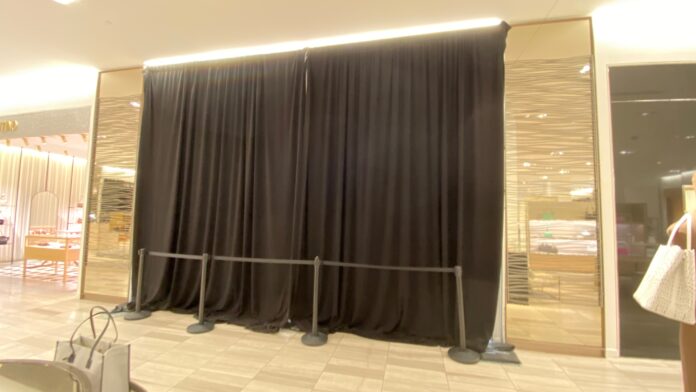
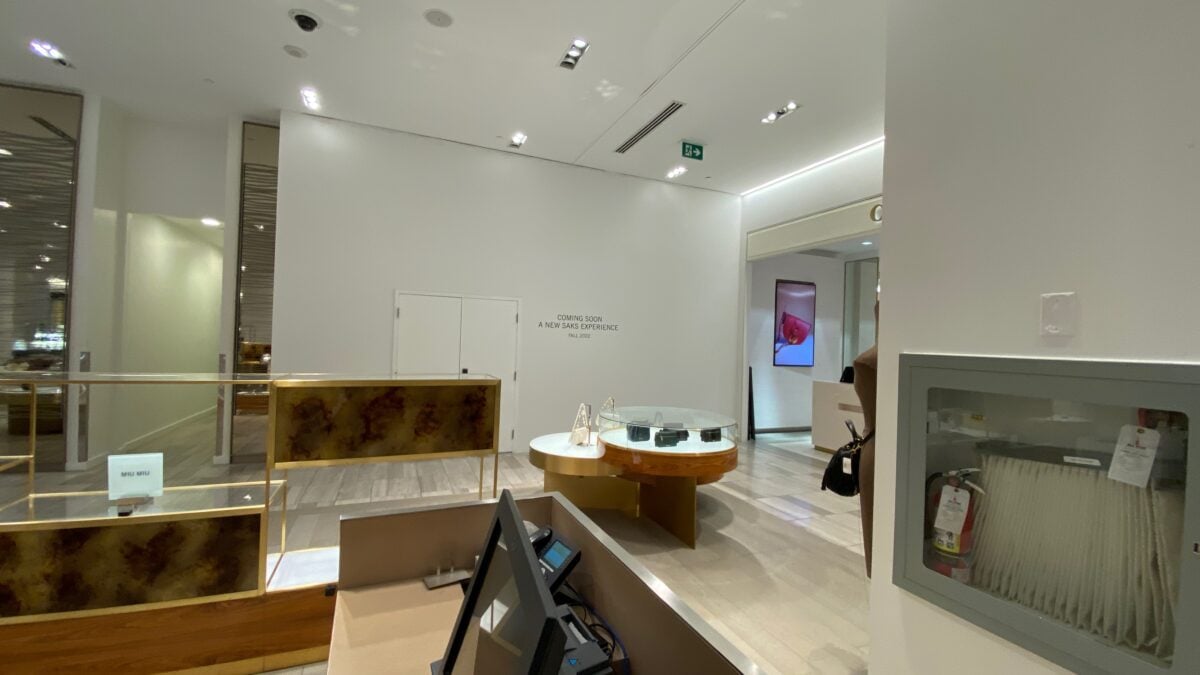
Former Saint Laurent bag/accessory boutique space at Saks in downtown Toronto. Photo: Craig Patterson

Kering-owned Paris-based luxury brand Saint Laurent has shut its main floor boutique concession at Saks Fifth Avenue in downtown Toronto. The closure follows a robbery last month that saw bags and accessories stolen from the boutique according to Toronto police. 

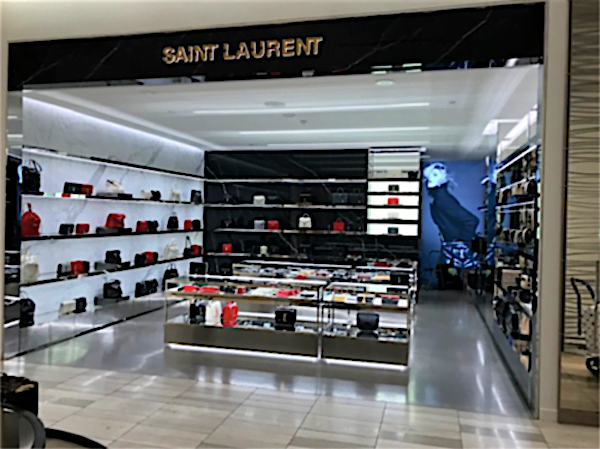
The Saint Laurent bag and accessory boutique opened in February of 2016 when Saks Fifth Avenue opened its first Canadian store within the Hudson’s Bay building at CF Toronto Eaton Centre. Saint Laurent subsequently converted the space to a concession model where the brand leased, merchandised and staffed the boutique. 

A robbery at about 1:45am on January 10 was said to be the last straw for Saint Laurent which already was planning an exit from the Saks store. Last month Toronto police released security camera images of suspects who stole about $150,000 worth of merchandise. Images show the robbers breaking in through the Lena restaurant on the main floor of Saks before hitting the Saint Laurent boutique. Bags priced at thousands of dollars each appear to have been dumped into a black garbage bin that the robbers appear to have had with them. 

Robbers gain access to Saks Fifth Avenue from the adjacent Lena restaurant on the main floor of the store on January 10, 2022. Photo: Toronto Police Service
The same robbers stealing from the former Saint Laurent bag and accessory boutique on the main floor of Saks Fifth Avenue in downtown Toronto on January 10, 2022. Photo: Toronto Police Service
The Saint Laurent boutique as it was — image by Amarchris Corporation which built the concession space.

The Saint Laurent boutique closure follows the exit of Louis Vuitton and Dior shops from the same Saks store at the end of December, which means three of the four concessions on the main floor of Saks have closed in less than two months. 

Prada is the remaining bag/accessory concession on the main floor of Saks. A space for luxury brand Celine shuttered several months prior on the main floor, and that space was quickly replaced with a shop-in-store carrying bags by luxury brand Balenciaga. The closure of Celine at Saks happened days before Celine opened a standalone flagship at Yorkdale, its first in Canada. 

Saks operates boutique spaces in the store for other luxury bag brands including Valentino, Chloé, Bottega Veneta and Givenchy. Several other big-name bag brands are carried on the street level of the Saks store which also houses a jewellery area with shop-in-stores and a well-stocked beauty hall which is also said to be a major target for theft.

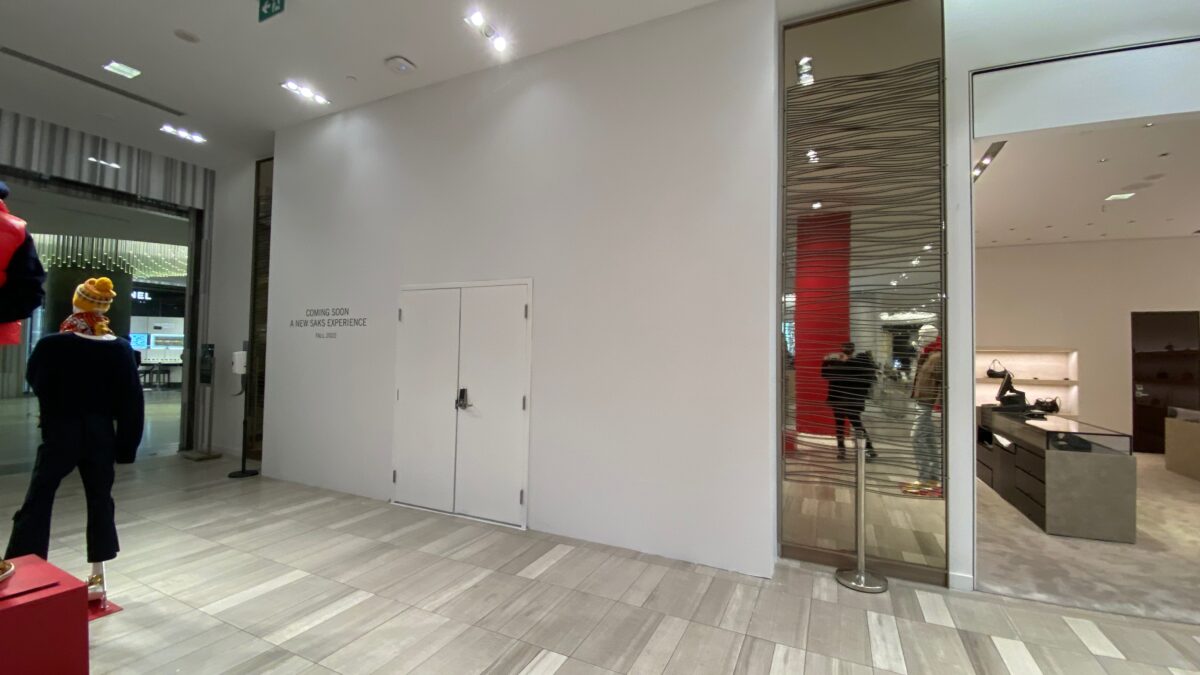
Former Louis Vuitton bag/accessory boutique space on the main floor of Saks in downtown Toronto on February 12, 2022. Photo: Craig Patterson
Former Christian Dior bag/accessory boutique space on the main floor of Saks in downtown Toronto on February 12, 2022. Photo: Craig Patterson

Saint Laurent continues to have a presence in Toronto with a 3,000 square foot ‘world of’ boutique concession operating on the main floor of Holt Renfrew at 50 Bloor Street West, as well as a standalone boutique at the Yorkdale Shopping Centre. Saint Laurent also operates full-priced standalone boutiques at West Edmonton Mall in Edmonton and on Thurlow Street in Vancouver as well as an outlet store at the Toronto Premium Outlets. The brand also operates bag and fashion concessions at Nordstrom in Vancouver and at Holt Renfrew Ogilvy in Montreal. 

An employee at Saks said that they were unclear as to what the retailer will do with the three vacant main floor concession spaces, and we’ll follow up when we learn more. 

Hudson’s Bay Flagship Store in Downtown Vancouver to Be Redeveloped

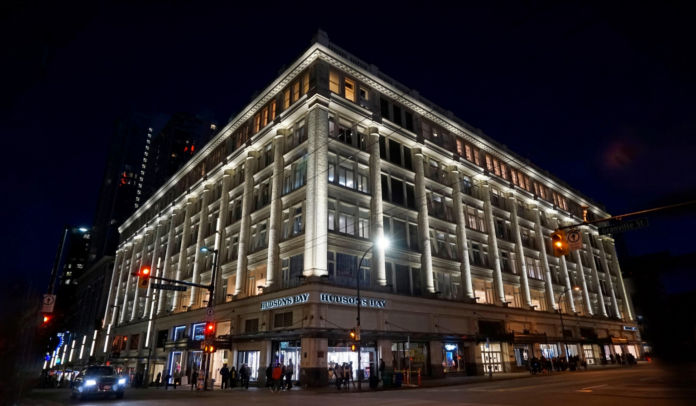
Vancouver Hudson's Bay (Image: Streetworks Developments)

The real estate development arm of the Hudson’s Bay Company, Streetworks Developments, plans to redevelop the historic Hudson’s Bay department store building in downtown Vancouver. This follows plans announced last year to redevelop the downtown Montreal Hudson’s Bay flagship which will include the addition of an office tower and the reduction of the store’s overall retail footprint. 

Retail Insider was first notified of the news by Vancouver-based urban planning news site UrbanYVR. 

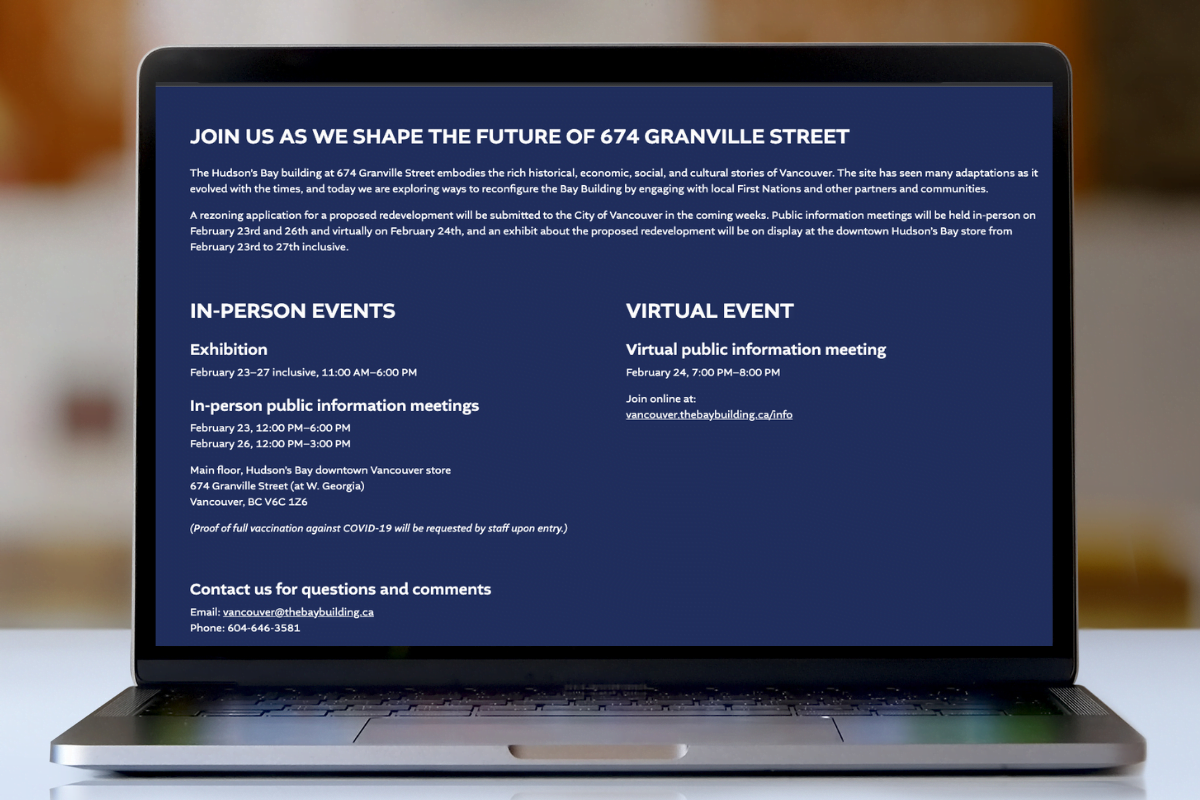
“A rezoning application for a proposed redevelopment will be submitted to the City of Vancouver in the coming weeks,” says a new dedicated website from New York City-based Streetworks Developments. 

“Public information meetings will be held in-person on February 23rd and 26th and virtually on February 24th, and an exhibit about the proposed redevelopment will be on display at the downtown Hudson’s Bay store from February 23rd to 27th inclusive.” 

Image: The Bay Building Vancouver

“We are exploring ways to reconfigure the Bay Building by engaging with local First Nations and other partners and communities,” the website goes on to say, with few other details. 

The historic 636,828 square foot department store was built in phases between 1913 and 1949. The current building spans nine levels with six of those being large above-ground floor plates spanning more than 70,000 square feet each. 

One expects that, as with the proposed redevelopment of the historic downtown Montreal Hudson’s Bay store, the Vancouver project will involve the current Hudson’s Bay department store remaining on site but with a smaller retail square footage. In Montreal, Streetworks and HBC revealed plans for a store of 295,000 square feet with the remainder of the building to be developed for offices along with the addition of a multi-level office tower. 

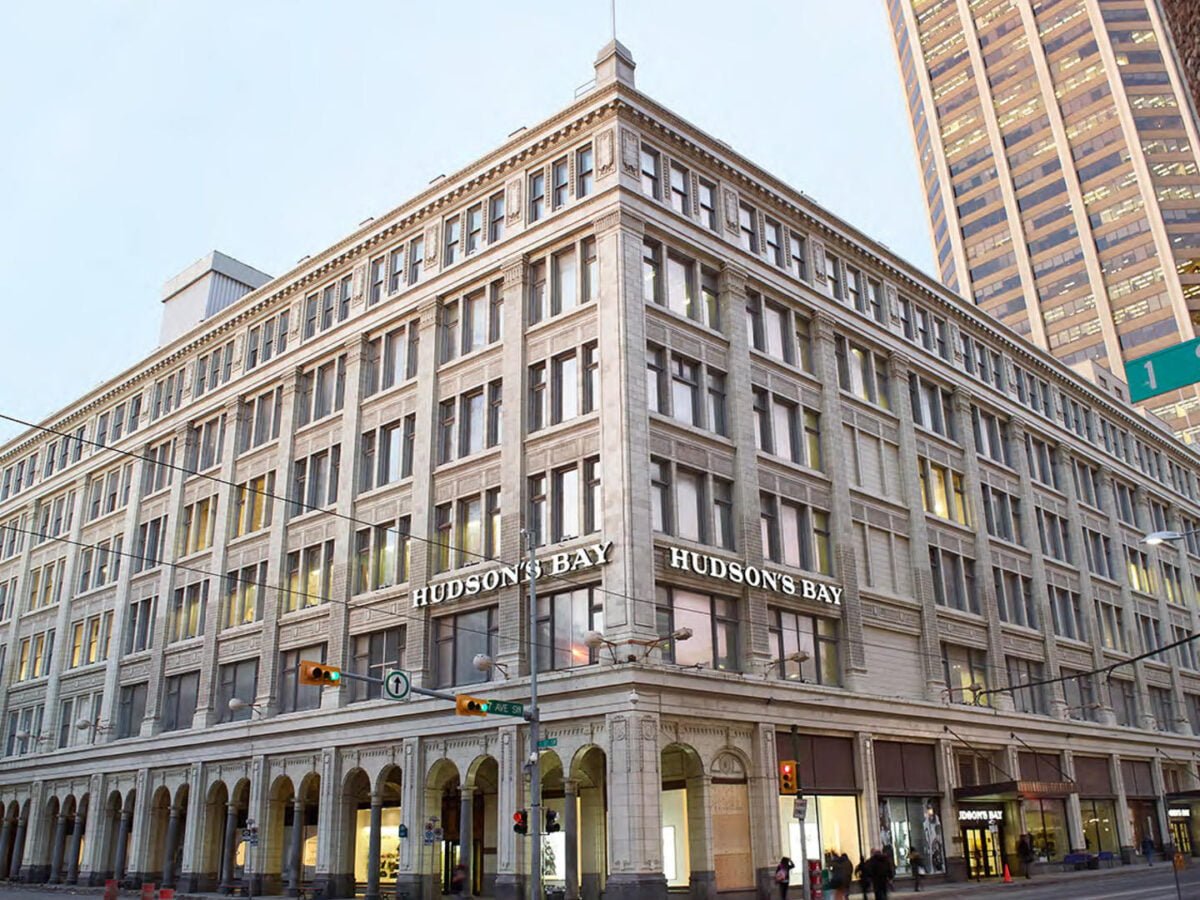
This follows a trend for Hudson’s Bay and its downtown flagship stores. We reported last year that the company had downsized its historic downtown Calgary flagship store to just three retail levels from six. 

Image: Hudson’s Bay Calgary

Last year the Hudson’s Bay Company shut its Hudson’s Bay department stores in downtown Winnipeg and Edmonton. The closure of both stores marked the beginning of an era where both downtowns became completely devoid of department stores for the first time in over a century. 

In October of 2020 the Hudson’s Bay Company announced a new division called HBC Properties and Investments with Streetworks Development reconceptualizing the downtown flagships as mixed-use buildings. The goal according to HBC is on creating multi-use spaces that feature a range of services and experiences across the workplace, retail, residential and entertainment categories.

The fate off the downtown Ottawa Hudson’s Bay flagship store is currently unknown — the store could see redevelopment as it is also jointly owned in partnership with Toronto-based RioCan. And downtown Toronto is home to two Hudson’s Bay stores. The flagship store at the corner of Yonge and Queen Streets is owned by Cadillac Fairview (housing both a Hudson’s Bay and Saks Fifth Avenue store), and at press time renovations were being completed to an adjacent office tower. The Hudson’s Bay store at the northeast corner of Bloor and Yonge Streets in Toronto is expected to eventually close for a new development currently in talks with landlord Brookfield in partnership with a new W Hotel set to open soon on the site. The City of Toronto is also earmarking over a billion dollars to reconfigure the subway stations directly below it. 

“State of Emergency” as Blockades Hit Supply Chain in Canada, with Differing Opinions [Interviews]

Image: ANCBSN (Twitter)

Ongoing blockades of critical infrastructure are damaging the country’s economic recovery and the harm is both immediate and severe, says the Canadian Chamber of Commerce in an open public letter.

“Each hour that these blockades continue does more serious damage to our economy and to our society. Manufacturers that depend on just-in-time delivery have been forced to cancel shifts for thousands of workers, shipments of livestock and of fresh produce face serious delays or waste that threaten food security, and deliveries of products that are greatly needed by Canadian families are being cancelled. These curtailments will only grow in scope and impact if the blockades continue,” said the Chamber.

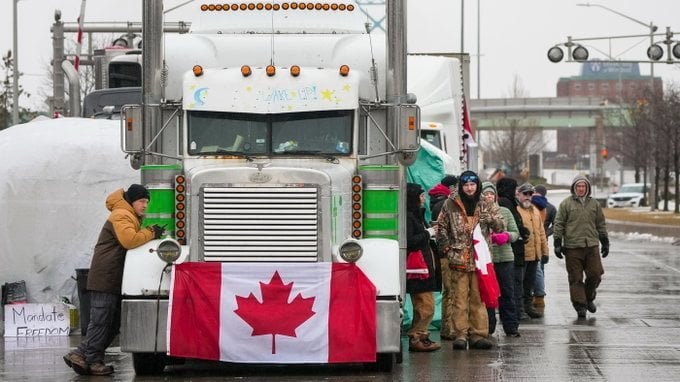
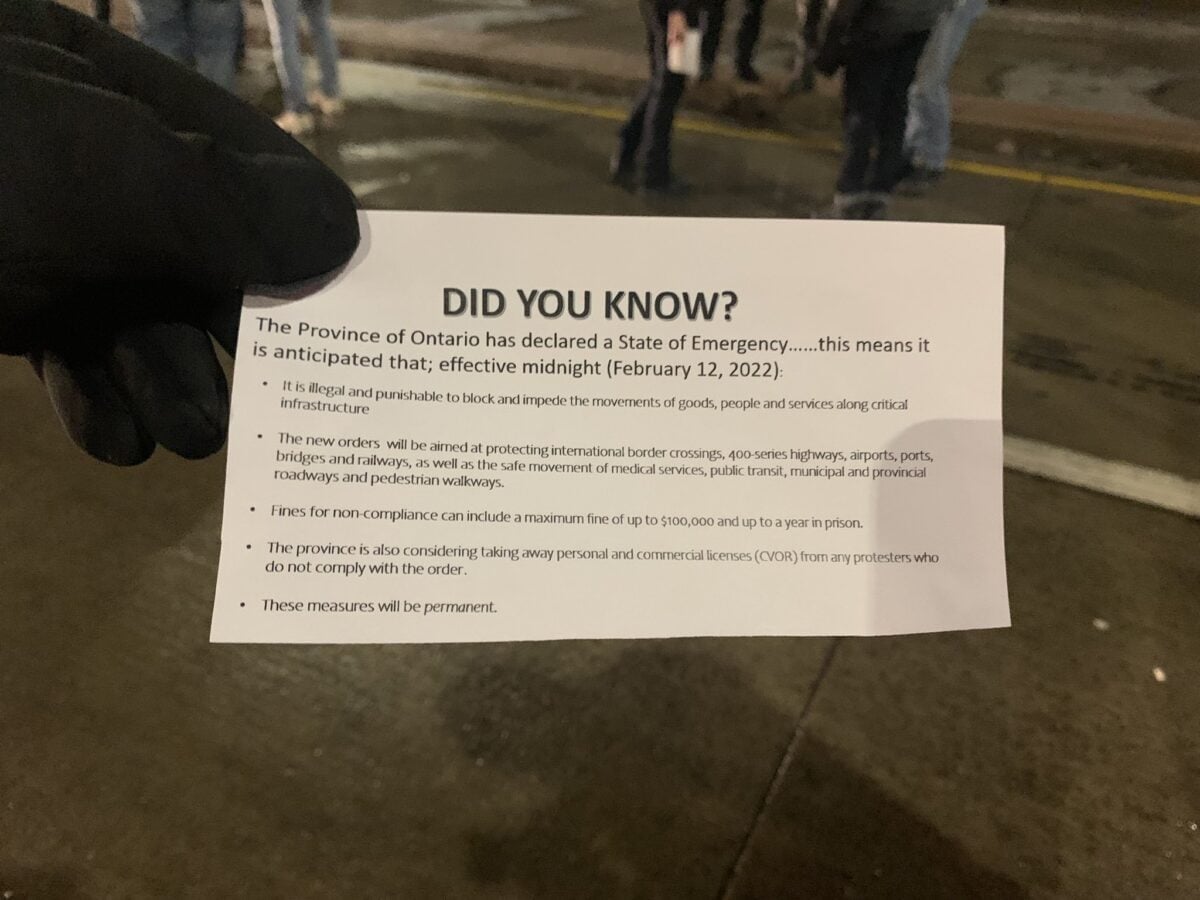
On Friday, Ontario Premier Doug Ford declared a state of emergency in the province to deal with the trucker protests that have crippled downtown Ottawa and the blockade at the Ambassador Bridge in Windsor which sees $700 million of two-way trade every day. Protesters were cleared out by law enforcement over the weekend in Windsor.

Ford said prior that he would use legal authorities to urgently enact orders that will make crystal clear it is illegal and punishable to block and impede the movement of goods, people and services along critical infrastructure.

Image: Jack Posobiec (Twitter)

That included protecting international border crossings, 400-series highways, airports, ports, bridges and railways. Fines for non-compliance will be severe, with a maximum penalty of $100,000 and up to a year imprisonment, he said.

Meanwhile, a blockade continues to take place at the Coutts border in Alberta.

“Allowing these illegal closures to continue will also have serious economic and reputational consequences for the years ahead. The blockades not only strike against the rule of law that protects our rights and freedoms, but also undermine Canada’s international reputation. We are already hearing calls to move investment, contracts, and production from Canada because of our inability to guarantee timely delivery to international customers,” said the Chamber in its letter.

Bruce Winder

Bruce Winder, author of RETAIL Before, During & After COVID-19 and president of Bruce Winder Retail, said Canadians are past the point of allowing the protestors to occupy critical infrastructure because the negative impact to society is now massive. His comments were made prior to clearing the blockade in Windsor.

“The blockade of the Ambassador Bridge alone is costing our economy hundreds of millions of dollars a day. Retailers, suppliers, warehouses and distribution partners will need to lay off thousands of employees if this occupation is allowed to proceed,” he said.

“Consumers run the risk of empty shelves and late deliveries as much of our produce and other critical items comes from or through the United States. We must avoid damaging relations with our largest trading partner so that the U.S continues to see Canada as a country that respects the rule of law and offers reliable supply chain practices.

“While I am proud to live in a country where citizens can freely protest without harm, the time to peacefully end this protest is now.”

George Minakakis

George Minakakis, principal of Inception Retail Group Inc. and author of The New Bricks & Mortar – Future Proofing Retail, said it is regrettable that the blockades couldn’t have just been a one day human protest.

“All politicians heard the necessary message the first day. The state of emergency in Ontario is now necessary and certainly, the current state of affairs does not help in future proofing retailers from risks. There are so many industries being impacted by this from retail to auto manufacturing, and other businesses in need of supplies to manufacture or to get their finished goods to market,” he said.

“It is clear that Canadians and people around the world are struggling with the off and on of restrictions. With respect to retailing the shutdown of local supply chains which are just over a land border are untenable. If this important supply line, under siege, were to last any longer it would crush both retailers and consumers because product shortages would reach rationing levels and prices would skyrocket. And not to forget we are entering a sensitive economic period with inflation, higher interest rates in the waiting, and continued supply chain issues from overseas. 

“We don’t know how much damage has been incurred with this event. Clearly, it has impacted residents and consumers in Ottawa because it’s human nature to feel uncomfortable with having to face an unknown threat. This protest does not represent all Canadians. Everyday in speaking with colleagues and clients, we all wonder how smaller and weaker retailers have managed to hang on as they have. They just don’t need or deserve anymore setbacks. We are so close to reopening intelligently and to effectively be prepared for more waves of this virus. We all have to do our part to adapt, adopt and rebuild from here on.”

Gary Newbury

Gary Newbury, a national supply chain and last-mile expert, said after nearly two years of restrictions and supply chain challenges facing Canadian retailers based in Ontario, will the truckers’ protest, and accumulating union unrest in key areas of transportation, risk long-term damage to the province and the businesses within it?

“What’s at stake are constitutional rights and freedoms enshrined in fundamental Canadian law which have been quickly set aside under “emergency powers”, something that runs the risk of a significant legal challenge. Canadians need to watch this situation carefully, rationally and get beyond the emotional cauldron that has erupted over the last two weeks,” he said.

“Ford is currently chasing provincial legislators to punish the protestors. Will this exacerbate tensions or dispel the protestors? Will it help or hinder any economic recovery, a key tenet in supporting the debt mountain built up over the pandemic? Taking truckers’ licenses and their trucks away and fining them is not going to help the economy – we already have a severe shortfall of qualified drivers here in Canada. How’s that going to help an economic recovery, one that will rely on a fully functioning and integrated transportation network?

“I do believe there has been clear evidence of a resolve to have the restrictions lifted, but first government ministers must engage with these protestors’ representatives and assure them of their plans for lifting such to prevent serious damage to international supply chains. So far, there has been little movement towards this potentially collaborative approach and therefore, supply chains may start to seriously buckle, and businesses relying on cross border movements may see demand permanently go south of the border in the light of this as part of America’s “Build back better” strategy, reducing reliance on even their closest trade partners.”

Newbury said the consequences of shelves potentially running dry quickly and the stirring of civil unrest, which many parts of the media have seen to be invested in with their emotive and inaccurate reporting, are likely to accelerate. 

“Consumers will start panic buying when they have evaluated the immediate outcomes of the next day or two, and supply chains will not be able to replenish shelves quickly enough, except through draconian measures (such as airlifting), further adding to inflationary pressures which are set to soar if this situation is not reconciled quickly and the truckers can be put back to work and be part of the solution to rebalancing inventory across Canada,” he said.

In a tweet, Dan Kelly, President and CEO of the Canadian Federation of Independent Business, said:  “At this point in the pandemic, I am observing that the blockades in the name of freedom from COVID measures are, in fact, blocking freedom from COVID measures . . . Thousands of small businesses who have called on govts to relax or eliminate COVID restrictions are negatively affected even more deeply by the blockades.”

Breaking Down Barriers to Great Careers in Retail

Getty Images

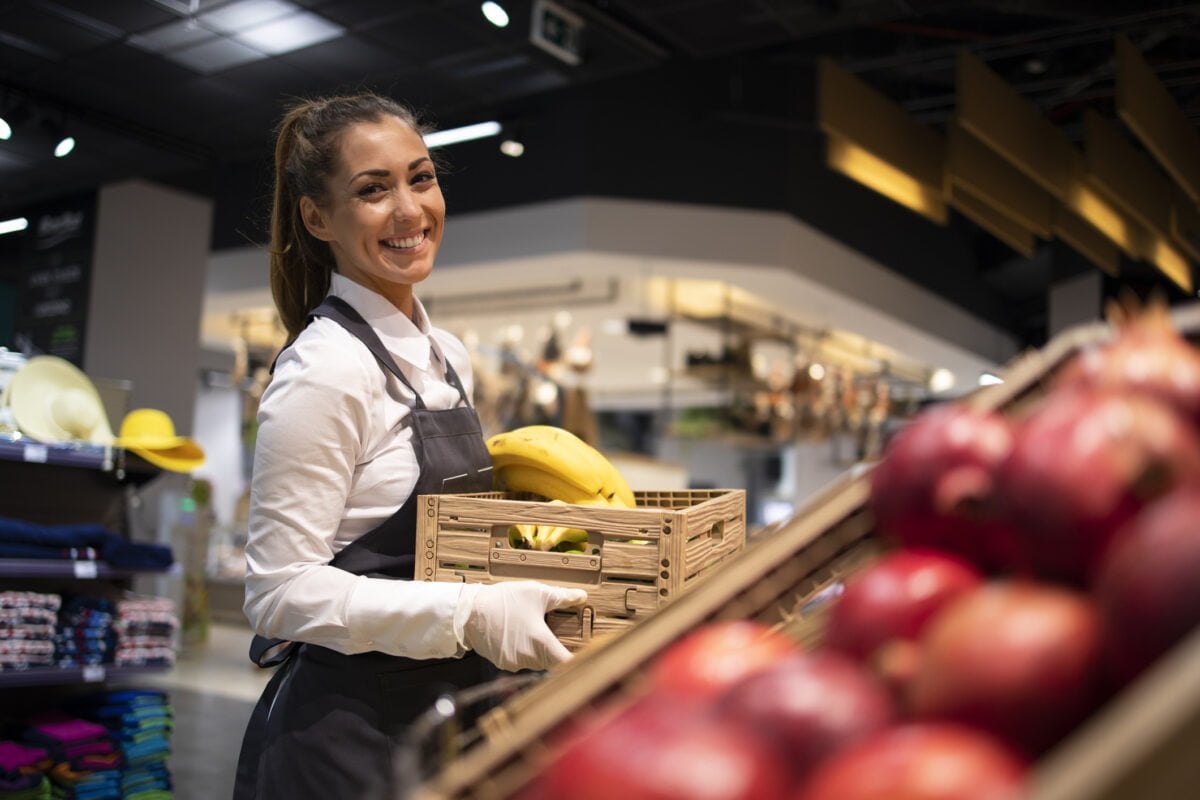
Recent reports around employment trends indicate many people are ‘sheltering in their job’ until the pandemic is over. Retail is no exception.

For some, working in front-line retail is a step along a diverse career path, whereas for others it is a gateway opportunity to an exciting retail career, flourishing in different roles throughout a retail organization. Now is the perfect time for progressive retailers to strengthen their bond with valuable staff and demonstrate to them the bright career path that is possible.

Retail Council of Canada’s virtual Retail Human Resources Forum on March 22, 2022, will explore how retailers across Canada are putting their people first, building communities, and providing the flexibility and opportunities for growth and engagement their employees and customers are craving.

Photo: Getty Images

Tim Dumas, Chief Operating Officer, Jak’s Beer, Wine and Spirits, will speak with Kevin Graff, President Graff Retail, and share how Jak’s has cultivated a strong community bond and a unified sense of purpose. Tim will discuss the shift he has seen in his team and why breaking down barriers between personal and professional lives is integral for holistic engagement.

Longo’s has also benefited by focusing on their employees’ experience and setting team members up for success. Liz Volk, Chief Human Resources Officer, and Alex Green, Chief Marketing Officer, will explore Longo’s definition of collaboration and discuss the importance of employee success in ensuring consistent and remarkable customer experiences.

Diversity, equity, and inclusion ranks top of mind for all retailers. Special guest Glodean Champion is a transformational leader, coach, educator, and facilitator, who works to get to the root cause of culturally based challenges by transforming beliefs, behaviors, and assumptions. Glodean will host an exceptional session explaining how to build trust and authentic engagement for meaningful change within a retail organization.

Photo: Getty Images

RCC’s Retail Human Resources Forum will inform and inspire with discussions on the latest trends and best practices for building stronger retail teams and communities. The packed half-day agenda provides more details on the insightful, educational sessions on tap.

Opportunities for a thrilling career in retail are boundless – in Canada and globally. Retailers who are passionate about building the future of retail will not want to miss this event.

Retail Council of Canada’s Retail Human Resources Forum will be hosted virtually on March 22, 2022, from 1:00 – 4:00 pm ET. Tickets are available at rcchrconference.ca/register-now.