Advertisement
Home Blog Page 940

Study Shows 10% of Retail Tenants in Canada Looking to Permanently Shutter

A new survey by commercial real estate firm Colliers International indicates that 10 percent of retail tenants are working on plans to permanently close their businesses.

It said 92 percent of the tenants who could close down are operating small businesses.

“Small businesses are more at risk of closing as a result of not having cash flow to survive a crisis of this magnitude. If all of these tenants were to close, it would lead to a 10 per cent decrease in retail rent collections and a seven per cent increase in retail vacancy based on total square footage assuming there is no new leasing taking place,” said the report, Retail Recovery: Regulations, Cost Increases and Adaptation.

“Similar to any other global crisis, we believe that COVID-19 will impose new ways of doing business that will inevitably change the market and retail. Retail is constantly evolving, and our tenant base has been widely adaptive, with 83 percent reacting to the pandemic by modifying their business in some form. 74 percent of retailers are exploring new sales channels with 41 percent of these tenants looking into online sales and 33 percent exploring alternate sales channels.

“This is in line with the current industry trend towards omnichannel retail. We are seeing retailers of all sizes and types investigating and adopting an omnichannel approach. Owners can support retail tenants’ omnichannel efforts by implementing curbside pick-up programs and proactively managing line-ups and wait times. “

Jane Domenico, SVP & National Lead, Retail Services | Canada for Colliers, said 10 per cent of business closures is a “significant” number.

“We started the conversation talking about the consumer and making sure those initial forays of the consumer are well planned, well thought out, because consumers have a lot of choice today moreso than ever before in my opinion – with online and bricks and mortar,” said Domenico. “We need to make sure that those consumers are satisfied with their experience or else they’ll go elsewhere. And that number will increase as a result.”
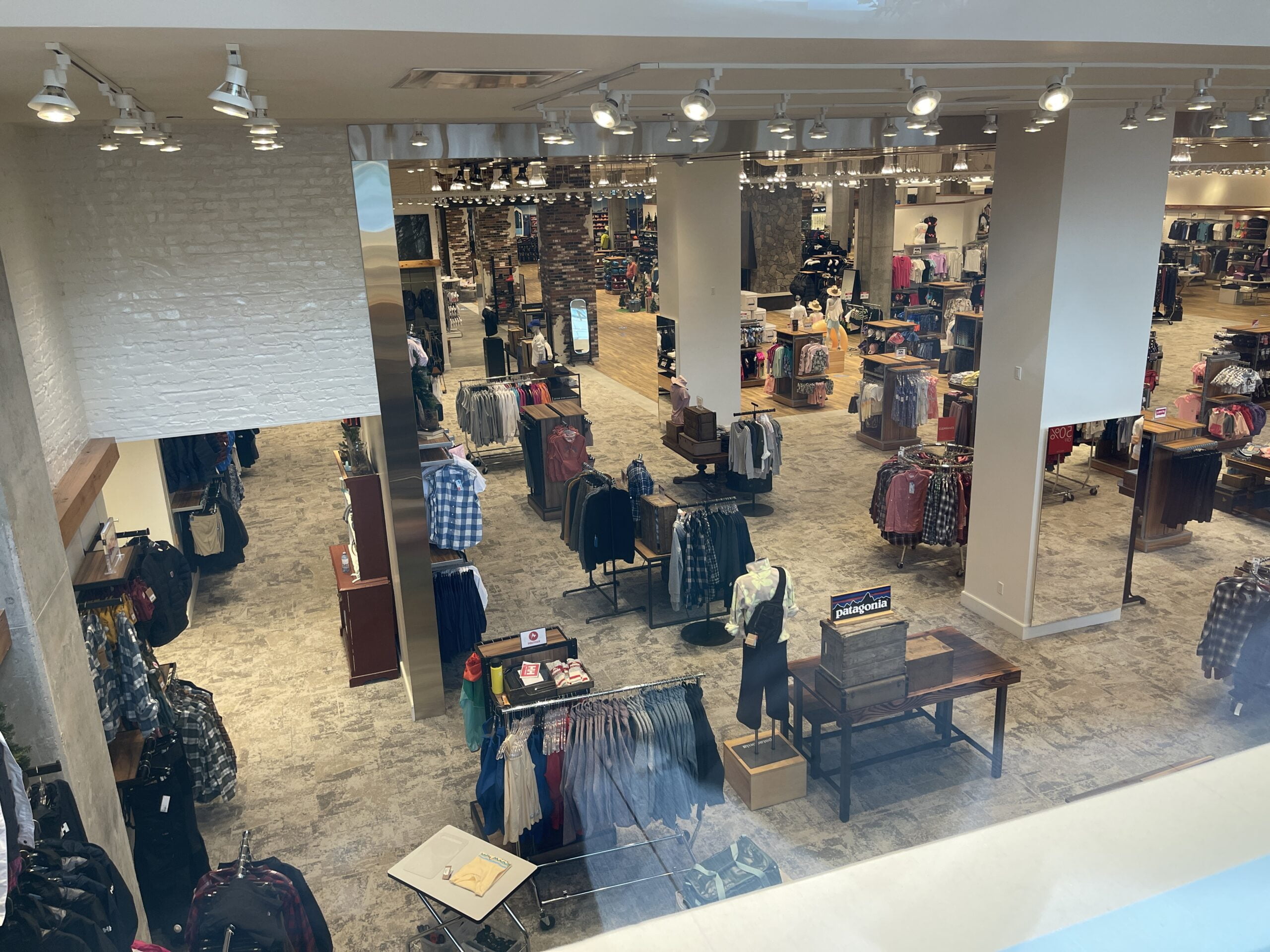
She said many small businesses are responding positively to service customers in different ways such as curbside pickup at shopping centres.

“I see expanding beyond what is seen as the traditional,” added Domenico. ‘Retailers have adopted change throughout. These are entrepreneurs. They do it without even thinking about it. I can’t tell you how many retailers, fashion local retailers, that are selling masks now on the high street.
“Being able to look at those opportunities in a cost-effective and profitable way . . . that’s going to be adopted at an accelerated pace.”
Other key findings from the Colliers survey include:

  • 56 percent of retail tenants think government restrictions are very reasonable or reasonable, 24 percent feel they are unreasonable or very unreasonable, and 20 percent are neutral;

  • 42 percent of respondents want more business-specific regulations, while 29 percent feel regulations should be easier to understand and 28 percent believe the regulations need to be more flexible;

  • 93 percent of businesses believe adhering to these regulations will increase overhead costs. Of these businesses, retail tenants were 1.2 times more likely to believe they will face additional costs. As a consumer-facing industry, retail stores require more cleaning, physical distancing protocols and additional staff;

  • The median retail business indicated their overhead costs would increase by around 25 percent. According to Statistics Canada, retail’s average operating profit margin was 4.8 percent in 2018;
  • Gyms, personal care, healthcare and medical tenants will be the hardest hit as these respondents indicated their overhead costs will increase the most, by 30 percent;
  • Tenants across all retail types anticipate that their revenue will start rebounding over the summer to reach 45 percent on average compared to the same period last year. This represents an average increase of five per cent per month from June to August. This increase is dependent on lockdown restrictions easing, businesses reopening as planned and a subsequent revival of consumer confidence;
  • Of the tenants who have a plan to offset the increased costs, 47 percent indicated they would reduce expenses and 17 percent indicated they would raise prices; and
  • As revenue rebounds, 37 percent of respondents believe that more than 75 percent of their workforce will return to work by the end of the summer, while 26 percent say they will rehire 51-75 percent of their workforce. 23 percent believe 26-50 percent will return, and 14 percent think less than 25 percent will be back by summer’s end.

“In a post COVID-19 world, retailers need to do everything they can to reassure consumers that it’s safe to return to brick and mortar retail. Owners can support their retail tenants by helping them apply for government programs, revising leases and implementing flexible operating hours,” said the Colliers report. “While retailers have traditionally shaped the consumer experience, COVID-19 has created a new responsibility for both owners and tenants to actively participate in driving consumer confidence and helping restore foot traffic.
“For the foreseeable future, tenants will need to utilize common areas, such as parking lots, for queuing and curbside pick-up programs. Owners can support this process by ensuring there is signage that encourages physical distancing and orderliness, in addition to hiring additional staff to manage queues.

“‘COVID-19 readiness’ will become a major competitive advantage for well-managed malls and strip centres: Historically, consumers selected shopping venues based on factors such as convenience, proximity and parking. An important factor that has emerged from the pandemic is the ‘readiness’ of the retail centre and how safe the consumer feels when shopping. Owners can support ‘COVID-19 readiness’ and encourage an increase in foot traffic by: Implementing new technologies that assist with physical distancing, scheduling in-store visits, showing the number of shoppers in stores, and communicating new health and safety measures; and Creating targeted communications that show consumer what owners and tenants are doing to create a safe shopping environment by highlighting cleaning and disinfecting schedules.”

How St. Louis Bar & Grill is Cautiously Reopening Restaurant Spaces

EXTERIOR VIEW OF PEOPLE SITTING ON NEWLY-REOPENED ST. LOUIS PATIO WITH SAFETY PRECAUTIONS IN PLACE. PHOTO: ST. LOUIS FACEBOOK

St. Louis Bar & Grill is in the process of reopening its doors to the public after months of COVID-19 shutdowns. The precautionary measures taken by the sports bar to ensure the health and safety of staff and customers are extensive, and quite possibly the calibre that all restaurants and bars should be wishing to emulate going forward.

When faced with the opportunity to reopen, many restaurateurs, although excited by the prospect, are finding the practical aspect of the task daunting. With so many regulations and safety procedures to adhere to, navigating your altered business model in the wake of COVID is complicated. In the spirit of maintaining a restaurant’s atmosphere despite the changes and generating revenue once again — while ultimately ensuring everyones’ safety — St. Louis Bar & Grill have done a stellar job, at least on the surface that is. With a surprisingly high number of Canadians claiming to be nervous at the prospect of returning to restaurants and the government mandates still prohibiting indoor dining, only time will tell how the food and beverage landscape will fair in a post-COVID world.

Last week Retail Insider was taken on a virtual tour of St. Louis’ Yonge and Davisville location to showcase the safety measures implemented by the popular Canadian bar as it readied itself to reopen.

SIGN USED TO INDICATE A SANITIZED AND READY-TO-USE TABLE

Due to operate at government-regulated capacity, physical distancing measures are in place, ensuring guests and employees stay six feet apart at all times. A redesigned floorpan to accommodate 50% capacity helps with this implementation. The restaurant is fitted with directional arrows on the floor and numerous signs and posters on the walls outlining the regulations imposed and reminding people to adhere to them. These signs stretch throughout the interior and exterior of the establishment. There is ‘before you enter’ signage at the front door, alerting guests not to enter the premises if they are experiencing COVID-19 symptoms.

The bar has installed plexiglass shields between and around all booths, creating a bubble-like atmosphere for parties dining within the restaurant. There is also a limit on the number of people allowed to dine per table.

Regarding table settings and service, tables are empty, void of condiments — which can be brought by a server upon request — and food is placed at the end of the table to maintain physical distancing measures between staff and customers.

All reusable menus have been shelved for the foreseeable future and replaced with single-use, recyclable menus that are disposed of after ordering. There is also the option for guests to order on their smartphones using a QR code accessible at all tables.

In the wake of COVID-19 St. Louis has created a new role within its employment lineup: Chief Sanitization Officer. The role of the Chief Sanitization Officer is to clear used glasses, plates, utensils etc., and the CSO is also responsible for sanitizing door handles and other high-traffic touch-points. The CSO is solely responsible for these duties. All surfaces are disinfected after each use and once the CSO has sanitized a table it is clearly marked with a tent card to indicate that it is ready to be occupied by the next party. In addition to this precautionary measure, each server is equipped with their own personal sanitizer that they carry on their person at all times.

Spray sanitizer is available to all guests upon arrival at St. Louis, alongside an employee who’s priority is to welcome guests and educate them on implemented protocols.

Staff screening and health checks occur during every shift, including temperature checks and an extensive list of appropriate questions regarding the status of each individual’s health etc. All front of house and back of house staff are required to wear face masks at all times.

St. Louis Bar & Grill Founder, Brent Poulton, spoke to Retail Insider about his optimism regarding St. Louis’ future and the importance of maintaining a positive atmosphere for guests in a potentially anxiety-inducing situation. “I feel very optimistic going forward because I believe we’re all creatures of habit and those habits don't change overnight. All we can do as a brand is create trust between us and the customers. What we’re doing is identifying peoples’ expectations of what a safe dining environment looks like and we’re striving to create and accommodate that.”

“What we've always emphasized and relied on is the personality and culture behind the brand. I don't think the fact that people are wearing face masks or are sitting beside plexiglass shields is really going to change peoples’ experience. You’re going to get people who are extremely nervous but we hope to be able to prove that we’ve taken all the necessary precautions to keep people as safe and happy as possible.”

Calgary Co-Op Launches Unique Hyper-Local Private Brands

VIEW OF CO-OP STORE AND SURROUNDING PARKING LOT. PHOTO: CALGARY CO-OP

The Calgary Co-op grocery chain has launched two new private label brands on its store shelves with a look and feel of having a connection to the company’s hyper-local ties to the city.

The two new brands — Cal & Gary’s and Founders & Farmers — can be found in Co-op’s 23 area food stores.

“We are seeing a strong desire for shoppers to be able to buy and support local, as well as purchasing products that cater to their personalized tastes. We’re proud to offer a wide variety of local products, as well as curated quality products throughout our store. Cal & Gary’s and Founders & Farmers are a great representation of our brand and values,” said Ken Keelor, CEO of Calgary Co-op.

Keelor said private brands are what define the identity of a retailer. They’re part of the personality that the retailer has in the marketplace.

Private Brands can Leverage Stores

“If you look at a retailer like Trader Joe’s, they’re well-known for their private brand. If you think about Loblaw, many people don’t even realize President’s Choice is a Loblaw brand. They think of President’s Choice as a national brand,” said Keelor. “Creating your own brand really helps you bolster the brand you’re trying to be as a company. It’s exclusive to your stores. Consumers can’t find it elsewhere. In other words, if you like a Trader Joe’s item you can’t find it at their competitors. You’ve got to go to Trader Joe’s.

“Your brand is then able to reflect the geography that you operate. So for Calgary Co-op our Cal & Gary’s brand and our Founders & Farmers brand is meant to reflect, especially Cal & Gary’s, Calgary, the city -- and we do that through ‘Calgaryisms’ on the product that we have some fun with and Founders & Farmers is in many ways reflective of our roots as a cooperative, founded by ranchers and farmers and local producers.”

Curated for the tastes of Calgarians, the Cal & Gary’s line of products offers a fresh take for Calgarians. Using quirky “Calgaryisms”, Cal & Gary’s products give shoppers a smile and confidence to know this brand understands how they like to eat: local favourites with truly global tastes.

Cal & Gary’s products feature a nod to Calgary’s local features and humour.

Founders & Farmers is an everyday value line of products rooted in quality. With a nod to the folks who started the Cooperative, it honours their humble dedication to providing quality goods and finding a better way to serve their friends and family. Some Founders & Farmers products feature local producers who grow the food.

Keelor said a company’s private brand has a life of its own, an image of its own, and if you create your own you can match it up to the brand you’re trying to portray to your customers.

“It becomes part of your identity,” he said.

Keelor said it takes a long time to create a private brand product. It can take up to two years to develop a single item.

Chris Gruber, the company’s senior director for private brands, said Co-op has just over 600 private label brands in its stores today with another 200 to 250 under development which are planned to launch between August and September.

“It takes some time to ramp up and we’re fortunate that we’ve got some good local and other suppliers that are working very efficiently with us to date. They understand our quality and the brand standards that we need to deliver the program to our consumers and members,” she said. “Lots of work in the pipeline and this is going to be an ongoing product development and a brand launch, not just a label launch, but really it is about building the brand that sort of connection with our community.”

Choosing “Only Alberta” Products

Other private brands include Cal & Gary’s Organic and in 2018 Calgary Co-op introduced its “Only Alberta” with only Alberta beef, chicken, and lamb products.

“Our focus is to try and get as much as we can locally,” added Keelor. “But there are many categories that you just can’t get locally. We are certainly tapping in as much as we can to our local vendor community and we’ve had some success and there’s some more to come to which is in development.

“The angle with these brands is if we can create the product in Calgary then we will.”

Keelor said Calgary Co-op is on a path to double the number of local items in its stores. A few months ago, it was at 1,200 items with the goal being 2,400 to 2,500 items. Today, it’s at about 1,700 items.

“That’s very important because reflecting local is not just about creating your own brand locally when it comes to our private brands but also about some local producers who simply want to have their brand in our stores and we want to be the place where they can grow and almost be a jumping off point to potentially across the province or the country,” he said.

Calgary Co-op, owned by members, is one of the largest retail co-operatives in North America. Its locations in Calgary, Airdrie, Cochrane, High River, Okotoks, and Strathmore include: food centres, pharmacies, gas stations, car washes, commercial cardlocks, home health care centres, wine, spirits and beer locations, and cannabis. It has more than 400,000 members, 3,850 employees, assets of $627 million, and annual sales of $1.3 billion.

Personal Information Collected by Retailers Must not Perpetuate Discrimination: Expert

ILLUSTRATION OF DATA COLLECTION

The recent unsettling reports that US retailer Anthropologie had been racially profiling its Black customers was alarming for several reasons, amongst which it came to light that this was common practice at its affiliated companies Free People and Urban Outfitters (all three are owned by the parent corporation URBN, and all three store banners are in Canada).

Aside from the systemic racism that was perpetuated through operational training and not corrected through sensitivity training, the issue of racial profiling on Black, Indigenous, and People of Colour in Canada and the United States arose at a time when public discourse on the topic is at all-time high. From a privacy perspective, this naturally raises the question as to whether personal information collected by retailers may inadvertently perpetuate systemic discrimination, even if technology and personal data are in and of themselves agnostic.

The concept of “profiling” in data privacy is used heavily in the EU General Data Protection Regulations, commonly referred to as the GDPR. It is defined in Article 4(4) as follows:

“Profiling” means any form of automated processing of personal data consisting of the use of personal data to evaluate certain personal aspects relating to a natural person, in particular to analyse or predict aspects concerning that natural person’s performance at work, economic situation, health, personal preferences, interests, reliability, behaviour, location or movements”.

The GDPR is considered the gold standard in global data privacy protection. Canadian data privacy laws, which has both Federal and Provincial versions that work harmoniously with one another, are deemed to have adequate safeguards similar to the EU’s. Retailers often have EU customers and wish to transfer data across borders to business partners and their own foreign offices, using the GDPR as a compliance mechanism. Even Canadian brands recognize the value of complying with GDPR as a harmonization tactic.

Applying GDPR as a Harmonizing Tactic

In the absence of comprehensive American federal consumer privacy legislation, the U.S. has a framework agreement, known as the Privacy Shield, to permit transfer of personal data between them and the EU. Americans brands also use GDPR as a compliance mechanism to strengthen their commitment to the Privacy Shield. This therefore means ensuring that profiling is performed correctly, because doing so through automation may negatively affect the rights of, and produces potentially detrimental legal effects, concerning natural persons. Under Article 22, all persons under the GDPR have the right to object to any decision based through automated decision-making that includes profiling.

Retailers often compile considerable personal information from their customers, including their home address for delivery, credit card, and other payment information, and purchase history, in order to perform directed marketing (usually in the form of e-mails and SMS texts). For instance, even though a customer disclosing their date of birth to a retailer to qualify for a “free gift” or additional benefit may seem benign, it is still personal information that the retailer must safeguard, the loss of which may result in legal liability if it were compromised.

Additionally, the transaction history a customer has with any brand is also personal data, as is any image of them captured on security cameras while shopping in the store. If a retailer also has a customer’s measurements or images, then that is also considered biometric information. Even metadata collected via web cookies or web beacons while online shopping contains location, traffic, and subscriber (customer) data that is classified as personal data under the GDPR, which retailers may aggregate and use to provide services and create marketing.

With such a rich cluster of information on their customers, retailers are now able to potentially evaluate natural persons and make decisions on their past history with the brand, and make decisions on those customers. This is not necessarily a bad thing if a retailer wishes to better understand their customer and grow their business, particularly if they specialize in a particular niche clientele. Responsible collection of personal information can only help a brand connect with their customers and tailor their goods or services to meet those expectations.

For instance, if a customer spends a certain amount of money per year with a brand, they are likely to be considered the most loyal or the top spenders. However, in combining that data with other identifiers, such as the customer’s address, race or ethnicity, measurements, and credit history, is it possible to profile other customers in the same database to determine and predict behaviour? While profiling as a practice is not in and of itself racist, technology may inadvertently include and exclude key customer demographics. This may mean that automated decision-making through profiling might prevent extending offers and invitations, such as to private sales, credit card offers, or other benefits, to potential customer groups who may not fit the targeted demographic, based on aggregated group identifiers, which may be a form of discrimination. Doing so may imply that a brand is not inclusive, a blight that cannot be explained away by a social media consultant or publicist posting a black square and an apology on social media.

Profiling can be Used for Good

There are ways to use profiling for good, as long as it is performed in a way that is compliant with privacy laws, and in an information-agnostic way that does not inadvertently prevent customers from participating on the basis of immutable characteristics such as race. The author of the article Utilizing PIAs to Limit Institutional Discrimination and Bias recommends that having a privacy officer or legal counsel complete a privacy impact assessment on electronic systems may be a way to uncover unconscious bias that technology does not and cannot recognize.

Similarly, conducting a privacy impact assessment on a project during the design phase, such as marketing surveys or advertising campaigns, is an additional safeguard that can not only help a brand comply with the GDPR and other binding regulations, but also to ensure that unconscious biases are examined and eliminated to promote inclusivity.

In an era when retailers are collecting more and more data from customers to effect service delivery, it is incumbent on retailers to not only safeguard their personal information, but to use that data for good. Privacy and protection of personal information is not just due diligence, but also one of the most effective ways to develop customer brand loyalty, diversify a retailer’s clientele, and commit to the fight for racial equality and equal opportunity. After all, unconscious biases are very last season.

Retail Council of Canada Webinar: In Conversation with Lululemon CEO Calvin McDonald

RCC WEBINAR INCLUDING IMAGE OF CALVIN MCDONALD

By Retail Insider

Retail Council of Canada is hosting its fourth online webinar in a series called In Conversation with Retail Leaders in Canada. Lululemon CEO Calvin McDonald will speak with Retail Council of Canada president Diane J. Brisebois at 12:00 pm Eastern/9:00 am Pacific on Tuesday, June 30, as part of the webinar series featuring one-on-one conversations with Canada’s top retail leaders.

Tickets for the webinar featuring Mr. McDonald can be purchased here.

Calvin McDonald will explore lessons learned including how lululemon adjusted its business model while maintaining customer trust throughout the pandemic, as well as how the retailer is looking to future shake-ups to the industry as a whole. While lululemon’s online sales skyrocketed this quarter, it was not enough to offset the decline of in-store sales. However, as many people are exercising from home right now, McDonald says lululemon is well-positioned to take advantage of the growing popularity in athletic apparel. Learn more on June 30 by signing up for the webinar.

In Conversation with Retail Leaders in Canada is an online series that launched earlier this month featuring in-depth conversations between RCC President and CEO Diane J. Brisebois and Canada’s top retail leaders and industry insiders. The webinar series aims to assist everyone in the retail industry who has been forced to reconsider how their organization’s teams, operations, inventories and policies will need to adjust to ensure a strong retail recovery.

Following Mr. McDonald’s segment on Tuesday, the In Conversations with Retail Leaders in Canada webinar series speakers include:

  • Haio Barbeito of Walmart Canada, July 9 2020 at 4:00pm – 5:00pm EDT

  • Greg Hicks, President & CEO Canadian Tire Corporation Ltd., July 15, 2020 3:00-4:00pm EDT

[Buy tickets to be part of the conversation with Lululemon CEO Calvin McDonald]

*Partner content. To work with Retail Insider, email: craig@retail-insider.com

Some Grocery Retailers Are Struggling to Adopt eCommerce Amid COVID-19

FEMALE SHOPPER WITH FACIAL MASK LOADS SHOPPING CART. SOURCE: DEPOSITPHOTOS

By Ralph Tkatchuk

Coronavirus has forced a shift in shopping habits in Canada and beyond. Many people are opting for home deliveries of only essential items. And the retail food market has been affected in a number of significant ways.

Big brands like Sobeys have seen a marked increase in foot traffic. Visits to smaller local grocers have also increased.

But it’s the eCommerce sector that has experienced the fastest growth, with huge surges in online sales across the board in Canada.

SOURCE: STATISTA

In this post, we’re going to ask what this move online by consumers has meant for independent grocers. We’ll also look at the ways that they’ve responded to the new demand.

Coronavirus: Good or Bad for Grocers?

On the surface, the global surge in demand for food products seems like a good thing for grocers. And while more demand usually equates to more sales, the bigger picture is much more complex.

A large number of food retailers, both big and small, have found themselves ill-equipped to deal with hordes of new customers. A myriad of factors, from disrupted supply chains to diminished staff levels, have contributed to and compounded this central problem. Competition from larger companies that have the resources to be much more agile in their response has also presented a challenge. 

To cope with greater online demand, cater to existing customers that are unable to shop in-store due to self-isolation regulations or vulnerability, and avoid losing out to competitors, grocers have started to sell through online portals.

Yet the technical demands of combining an eCommerce solution with a well-established brick-and-mortar operation are beyond the skillsets of most small business owners.

Certain tasks, including packing, shipping, inventory management, and so on, can only be completed by experienced employees. With most grocers shoring up financial assets to protect their businesses going forward, hiring new people is problematic or even impossible.

All of these challenges have led many managers and business owners to look for alternative solutions.

The Big Problem With Third-Party Marketplaces

Eager to leverage the opportunity for home deliveries but daunted by the prospect of building a bespoke eCommerce portal, many grocers have instead turned to third-party marketplaces like Instacart, Urbery, and Inabuggy (among others). All of these companies have benefited from increased demand in Canada, from both grocers and customers.

Yet marketplaces like these aren’t without their problems. Grocers are charged high fees in a sector that’s already operating on razor-thin margins. What’s more, by opting for a third-party solution, small companies are forgoing the chance to build their own customer bases while inadvertently adopting many of the issues already present in often-cumbersome platforms.

It’s also common for customers to blame problems with marketplaces on grocers. This “guilty by association” effect can detrimentally affect a small grocer’s reputation, leading to a stream of negative reviews and dissatisfied customers. There have even been reports of Instacart shoppers stealing people’s food.

What’s more, many grocers have come to see the opportunities offered by big players like Instacart as more of a curse than a blessing.

Instacart’s activity in the US, where it has nearly a 60% share of the grocery delivery market, is a cautionary tale. Inordinately high fulfillment fees have forced many well-known brands like Kroger to operate at a loss in the interests of maintaining customer loyalty.

For large corporations, this may be tenable, at least in the short term. Smaller grocers, however, will quickly find themselves in dangerous territory. The only solution is to raise prices for online purchases, which most business owners will be reluctant to do for a variety of reasons, including the risks of opening themselves up to competition, alienating existing customers, deterring new customers, and more. [gr]

Bridging the Tech Gap: How Can Grocers React?

One way that grocers have avoided issues associated with third-party platforms like Instacart is by opting for an intermediate solution. These solutions overcome many common problems without placing a heavy burden on busy grocers.

All-in-one eCommerce platforms are user-friendly apps that sit between third-party marketplaces on one side and completely bespoke solutions on the other.

They allow grocers to build online stores quickly and integrate them with existing infrastructure, including fulfilment networks, POS, marketing channels, and more, all with an absolute minimum of technical knowledge.

These tools have proven very popular among grocers. For example, a grocery eCommerce platform named Self Point has reported a significant uptick of nearly 300% in new users compared to the previous year.

SOURCE: SELF-POINT

The fact that integrations can be used to streamline time-consuming tasks like delivery, marketing, and customer service, with numerous options available, has also largely removed the need to hire new staff.

Conclusion

Building your business on a third-party platform is fraught with danger. In the vast majority of cases, the marketplace will own all your customers’ details. They have no reason to favour your store, and will often showcase better offers from your competitors. There’s also the possibility that issues that aren’t your responsibility will hurt your brand.

Moreover, companies like Instacart, Urbery, Inabuggy, and others, aren’t necessarily better-equipped than independent grocers to deal with problems caused by coronavirus. There have been reports of overstretched delivery teams and failures to process refunds.

While the long-term impacts of COVID-19 remain unknown, a broader shift to digital retail is likely. It’s important for grocers to embrace this change on their own and take advantage of new opportunities to increase sales volumes and revenues.

Ralph Tkatchuk

Ralph Tkatchuk is a freelance data security consultant and expert with over 9 years of field experience working with clients of various sizes and niches. He is all about helping companies and individuals safeguard their data against malicious online abuse and fraud. His current specialty is in eCommerce data protection and prevention. You can reach Ralph via Twitter (https://twitter.com/TkatchukRalph).

Canadian Apparel Brand DUER Secures 3rd Retail Space in Calgary

PHOTO OF EXTERIOR OF NEW DUER STORE IN CALGARY.

Canadian apparel brand DUER has expanded to its third location in Canada, taking up a 2,000-square-foot retail space in Calgary that was formerly occupied by Lululemon.

“Expanding into Calgary has been on our radar for a couple of years,” said company founder Gary Lenett. “Although opening a new retail location in the current climate isn’t a simple task, it hasn’t clouded our enthusiasm.

“Prior to the pandemic, our focus was on growing our retail business and we had a few markets in mind. We’re optimistic that after our Calgary store opens its doors, we’ll resume discussions of plans to expand south of the border.”

The retailer also operates stores in Vancouver and Toronto. The retail stores are currently by appointment only and safety precautions such as masks and sanitizers are on-site due to the COVID-19 pandemic.

GOOGLE MAP OF CALGARY NEIGHBOURHOOD. CLICK FOR INTERACTIVE MAP.

Calgarians Demonstrated a Demand for a Physical DUER Store

“Calgary has been in our radar for quite awhile. We’re not a company with a strategy to have thousands of stores. We don’t intend to put more than one store in any single city and probably our current plans call for 20 stores worldwide,” said Lenett.

“For Calgary, it was really consumer demand. We have per capita more brand fans in Calgary than probably anywhere outside of Vancouver. Our plans are to make a pretty aggressive push into some key U.S. cities. We thought Calgary made the most sense because we already built up this audience there that makes it a bit of a no-brainer.”

The Calgary location is expected to open July 2 for the Canadian performance denim retailer. The location is ideally situated in the city’s entertainment and retail district near the 17th Avenue S.W. strip at 4th Street.

“We are doing business globally through what I call four different channels and our own retail stores being the smallest part of that right now,” said Lenett. “We have about a thousand stores worldwide that sell our product. We call that our wholesale channel. We have of course key drivers in ecomm. And due to COVID we started a fourth channel which we’re calling NEXT which is essentially a pre-sale channel because we lost the two retail channels overnight in March. We introduced the new concept called NEXT which hopefully complements all the other programs.”

Experiential Retail is Imperative to DUER’s Business Model

Design features in the Calgary location will include DUER’s famous indoor playground complete with monkey bars, swings, and soft rubber flooring. The experiential approach originated at the Vancouver flagship store and grew from the desire to have customers experience the stretch, durability, and comfort characteristic of all DUER products.

“We’ve done this from the beginning going back five years. What we found was people would go into the change room and put on pants and they would come out and start doing high kicks and crouching down. It quickly occurred to us that we should build out some sort of playground for people to test out product. And we’ve done that subsequently when we built out our real stores in Vancouver and Toronto – they both have playgrounds in them,” said Lenett.

“So we have swings and monkey bars and bicycles and other things that you can get on. It’s a point of differentiation. Our point of differentiation is it’s supposed to be clothing that you can do everything in. So we give a mechanism to test out that brand promise.”

QSR Concept ‘Hangry Chicken’ Launches Store Expansion with Long-Term Growth Plans

EXTERIOR OF BURLINGTON HANGRY CHICKEN LOCATION. PHOTO: HANGRY CHICKEN FACEBOOK PAGE

A new quick-service restaurant concept building on the principles of traditional Portuguese chicken launched in southern Ontario last fall with plans for eventual expansion in the Greater Toronto Area.

Hangry Chicken specializes in the famous Piri-Piri Chicken but has added a modern twist to the food offering.

The Quick-Service Restaurant has Sights set on Toronto Expansion

“The long-term goal will be to get to about five to six locations and then we’re going to start franchising,” said David White, Director of Operations for Hangry.

The first location was launched in November 2019 in Burlington, Ontario. Stoney Creek in the Hamilton area is opening in July.

“We already have a waiting list of people who have already approached us to purchase locations. We’re kind of waiting to hit that five to six restaurant mark and then start the process,” said White, adding the Toronto area is next on the list.

“Toronto has always been on the radar. We have a site secured for Toronto already. I don’t know if it will be ready for this year because of the delay with COVID and construction being behind schedule. But we’ve also been approached by a handful of landlords that have space for our requirements and it stretches anywhere from downtown Toronto, uptown Toronto, Mississauga, downtown Hamilton. We have a lot to choose from but we’re going to be very picky about where we go because we want to make sure we don’t overlap with any of our current locations,” added White.

Owners of Hangry when they were thinking of a name for their unique establishment felt the food was so good that it would cure people’s most basic hunger feelings — past the point of hungry feeling. They landed on the name Hangry.

White said traditional Portuguese chicken tends to be cooked over a grill and a flame. Hangry’s chicken is cooked on a rotisserie.

MAP OF BURLINGTON SHOWING HANGRY CHICKEN LOCATION. CLICK FOR INTERACTIVE MAP.

“I would say our food has a little bit of twist to it. It’s almost like a new fusion. We’re doing our piri-piri sauce but we’ll add it to a poutine or we’ll do our piri-piri tacos. So it’s two different foods. Tacos on the Mexican side mixed with our Portuguese influences,” said White.

“Our sauce, which is our trade secret sauce, was created by the ownership group after many trials and errors and we feel it’s probably the best representation of a traditional piri-piri sauce but with a bit of a twist.”

White said piri-piri is a mixture of seasonings that trace back to Portuguese and South African roots. It’s a blend of seasonings that would be used to marinade and season chicken as well as other meats.

White said he would describe Hangry as a quick service restaurant but because everything on the menu is made fresh it’s not what you would typically find in a QSR. It’s a step above that category. The locations have a small dine in area as about 90 percent of the business is takeout.

James Schwartz, Executive Vice President and Broker at Paracom Realty Corporation Brokerage, said the company has Hangry as a client in helping them locate real estate that would be suitable for expansion.

Hangry Chicken Experiencing Higher Sales Post-COVID

He said the Burlington location was an immediate hit in the community and when restaurants in the province were ordered to offer only take out and delivery due to COVID, Hangry was already set up for that – and it was a smooth transition.

It actually went so well that sales continued to climb even after lockdown, and today the first Hangry location is doing higher sales than what it had done prior to COVID.

Schwartz said Hangry has taken possession of a unit at Winona Crossing, the new Costco-anchored Penequity large format centre at the QEW/50 side road in Stoney Creek.

Right now, the focus is on increasing brand recognition by looking for one to two units in downtown Toronto as well as Mississauga. They will require 800 to 1,200 square feet and preference will be given to busy pedestrian street front locations in urban areas, and inline units of grocery-anchored plazas in the suburbs. The founder wants to first look at conversion opportunities whereby they take over locations where a restaurant had been operating, to save on basic services and upgrades that will have already been brought to the premises.

Customer Experience will Help Retailers Overcome the Financial Hit from Coronavirus in Canada

GROUP OF SHOPPERS WEARING MASKS AND LOOKING AT THEIR PHONES OUTSIDE ZARA STORE

By Frederic Dimanche

Retail was in trouble long before COVID-19 hit. The past five years saw daily reports of store closures and retailer bankruptcies.

The growth of online commerce eroded many retailers’ top-line revenues, forcing them into an ongoing cycle of discounts and promotions just to keep up.

But even amid this debacle, direct-to-consumer brands increasingly expanded their physical presence. Warby Parker, the online eyewear provider, currently operates 65 outlets and Away, the luggage company, recently raised US$100 million to open 50 stores.

But when COVID-19 brutally put a stop to physical retail, many strained small- and medium-sized businesses quickly moved their business online, as shown by Shopify’s 47 per cent revenue growth in this year’s first quarter.

Customers previously reluctant to shop online placed their first orders, boosting e-commerce numbers proportionately.

Typically, it takes an average of two months before a new behaviour becomes a habit, adding more pressure on struggling brick-and-mortar retailers that don’t have good online offerings if they can’t get customers back in stores promptly to satisfy them. Some worry they might never recover.

Not all bleak

Nevertheless, all is not gloom and doom. After months of confinement and a surprisingly flawed online experience, people yearn to return to normal. The COVID-19 restrictions have exacerbated our natural need for social connection.

Despite being digitally connected, people crave face-to-face human contact. That’s evident in the retail activity in recently reopened countries.

At its Guangzhou, China, flagship store, Hermès registered US$2.7 million in sales on its first day.

In Paris, long lines stretched in front of the Champs-Élysées H&M store.

PEOPLE WAIT OUTSIDE THE LOUIS VUITTON SHOP ON CHAMPS-ÉLYSÉES AVENUE IN PARIS ON JUNE 3, 2020. (AP PHOTO/THIBAULT CAMUS)

And in Montréal recently, dozens stood patiently outside a downtown Zara, eager to buy summer clothes. The urge to get out and socialize prevailed over safety concerns.

Some employees are similarly impatient to leave the house to resume work. While most office staff transitioned easily to remote work, some suggest COVID-19 has exacerbated the loneliness and lack of social interactions, despite companies’ claims of sustained productivity.

For retail staff who thrive on human contact, the situation has been difficult. Most are itching to return to their stores.

Personal human connection versus digital

Beyond the craving for social contact, the human touch is also what many retailers rely upon, especially in the beauty and luxury sectors, where sensory experiences are critical.

A recent PwC Consumer Intelligence Survey of 15,000 global consumers confirms what has been observed in countless shopper-retailer interactions: The human touch still matters, with 75 per cent stating they want more in the future, not less. Furthermore, most shoppers consider customer experience more important than price and product quality.

Similarly, in the hospitality and travel sectors, human contact prevails. When COVID-19 hit, personal connections with travel advisers helped hundreds of travellers return home after their flights were cancelled. Customers with e-platform reservations, meantime, struggled.

A TRAVELLER ARRIVES ON AN INTERNATIONAL FLIGHT AT TORONTO’S PEARSON AIRPORT IN MARCH 2020 AFTER THE COVID-19 PANDEMIC WAS DECLARED. THE CANADIAN PRESS/CHRIS YOUNG

In the COVID-19 recovery period, physical stores are uniquely poised to offer this crucial human interaction. A 2015 study led by Marshall Fisher, professor of operations, information and decisions at the Wharton School of Business, clearly shows the importance of human interaction in retail, and its impact on revenues.

Yet in 2020, as retailers slowly reopen, they’re focusing on safety and hygiene protocols but continuing to fail to invest in their own human capital. Instead of recognizing the long-term benefits of devoting attention to their employees, they obsess over minimizing labour costs, leading to increased employee turnover and poorly managed stores.

With less traffic coming into stores, expectations from those brave enough to venture out are significantly higher, and retailers must invest in their teams if they want to stay relevant.

They could borrow from a Toronto bike store’s playbook that saw revenues double during COVID-19, the owners recently told me. Open less than 18 months, the Dismount Bike Shop team built a reputation for cutting-edge merchandise selection, precise product and industry knowledge and outstanding customer experience.

When the crisis hit, the company’s seamless pivot to online bookings with well-organized physical appointments helped achieve 100 per cent conversion rates.

Training is key

Product and industry expertise are not negotiable. Fisher’s study found that retailers who train their front-line employees sell 125 per cent more than those that offer no training. To overcome the current COVID-19 sanitation requirements and foster an authentic human experience, retail workers must also demonstrate specific interpersonal soft skills.

To do so within a no-touch situation means capitalizing on other senses to engage. From that initial eye contact and open body language to a warm welcome, empathetic and friendly communication is key. Companies that commit to training sales advisers to expertly sell products while demonstrating high levels of relationship-building skills won’t just attract and retain the best employees. They will also drive in-store sales and customer retention.

It’s time to stop considering employees as a cost and stores as showrooms. Instead, retailers should invest in their in-store teams and train them to become revenue generators. The human touch will define who the winners will be post-coronavirus.

This article was co-authored by Solange Strom, former CEO of L’Occitane Canada.

Frederic Dimanche

Frederic Dimanche, Professor and Director, Ted Rogers School of Hospitality and Tourism Management, Ryerson University. Thirty years of professional and academic experience in service marketing and consumer behaviour, particularly in hospitality and tourism. Academic experience in the USA, France, and Canada.

Hand Sanitizer Brand ‘SoPure’ Targets Canadian Retailers

Image: SoPure

Canadian brand SoPure is hoping to assist retailers in their transition back to in-store shopping with its premium quality spray hand sanitizer and a variety of dispensers to ensure retailers can provide customers with a safe and sanitized shopping environment.

“At this point, as we’re trying to get back to normalcy, we are focused on providing our retailers with what they need to open their doors for business, and keep their customers and staff safe and protected” said Tamar Matossian, SoPure President. “As COVID-19 began to turn into a pandemic, our facility went into overdrive to accommodate the needs of our country as a whole. For years, we’ve been able to protect and safeguard our customers and their families, but for the past few months we were honoured to protect our front line workers such as the Toronto police force, hospitals, nursing homes, banks, and many other organizations and facilities that were deemed essential.”

SoPure Ensures Hydration in Addition to Sanitation

Developed in 2004 by a chemist to keep his young family free of germs, SoPure spray hand sanitizer is made of 80% pharma and cosmetic grade Ethanol, and is also enriched with Vitamin E and proprietary emollients ensuring hydration while, most importantly, protecting against bacteria and viruses. SoPure is specifically formulated to keep your hands moisturized, with a quick-drying consistently that does not leave any residue behind.

Available in unscented, lavender, honeysuckle, or energy scents, SoPure’s spray hand sanitizer is Health Canada approved and does not contain triclosan, which makes it safe for all ages to use.

“What makes the product very unique and stand out in the range of other sanitizers available on the market is its formula which was tested and enhanced over years. You can use the product all day long and your hands will always feel moisturized and not dry. The spray format makes it versatile in use which is a gives it an advantage over gel which can only be used on hands,” said Tatiana Kunitskaya, Sales Rep for SoPure.

SoPure Innovates in the Face of COVID

In the wake of the COVID-19 pandemic, SoPure has added a range of product sizes and sanitizer dispensers to its product lineup, all of which are designed to work in communal areas such as offices, condos, stores, and schools.

Table top dispensers, wall mounted dispensers, and free standing dispensers are all available on the SoPure website. These newest additions are designed for both style and practicality as retailers and establishments begin to reopen for business.

The hands-free motion sensor desktop dispenser is designed to release the ideal amount of sanitizer into your hands. Suitable for office desks, banks, gyms, retail and restaurant counters, this touch-free option is non-intrusive and easily adaptable to your space.

A sleek wall-mounted hands-free dispenser is designed for communal spaces, you can adjust the quantity distribution to fit required needs.

SoPure also has a dispenser stand available for those who are looking for a more conspicuous station. Portable and easy to assemble, the modern wood sand comes in black and white.

“We also have a very cute mini table top hand sanitizer and diffuser (two in one) which is a great addition to a spa or your home with great features to sanitize your hands while adding a nice ambiance to your environment with a fresh scent of your choice.”

SoPure hand sanitizer is available in spray bottles (2oz and 8oz) and refills are available in either 946mL or 4L Bottles. These can be used to refill your personal spray bottles, as well as your hands-free desktop, wall, and floor dispensers.

The company is offering readers 5% off with code RI5. You can find more information on dispensers and sanitizers at sopureproductsinc.com or if you would like to inquire about product distribution contact company sales representative Tatiana Kunitskaya at tanya.kuni@gmail.com or 647 298 6980.