Toronto’s Bloor-Yorkville area recently saw several new retailers open in the prestigious neighbourhood, and more stores are on the way. Despite the pandemic, retailers continue to open stores which is a positive sign for brick-and-mortar retail. Here are a few retailers that recently opened, followed by several that will be opening soon.
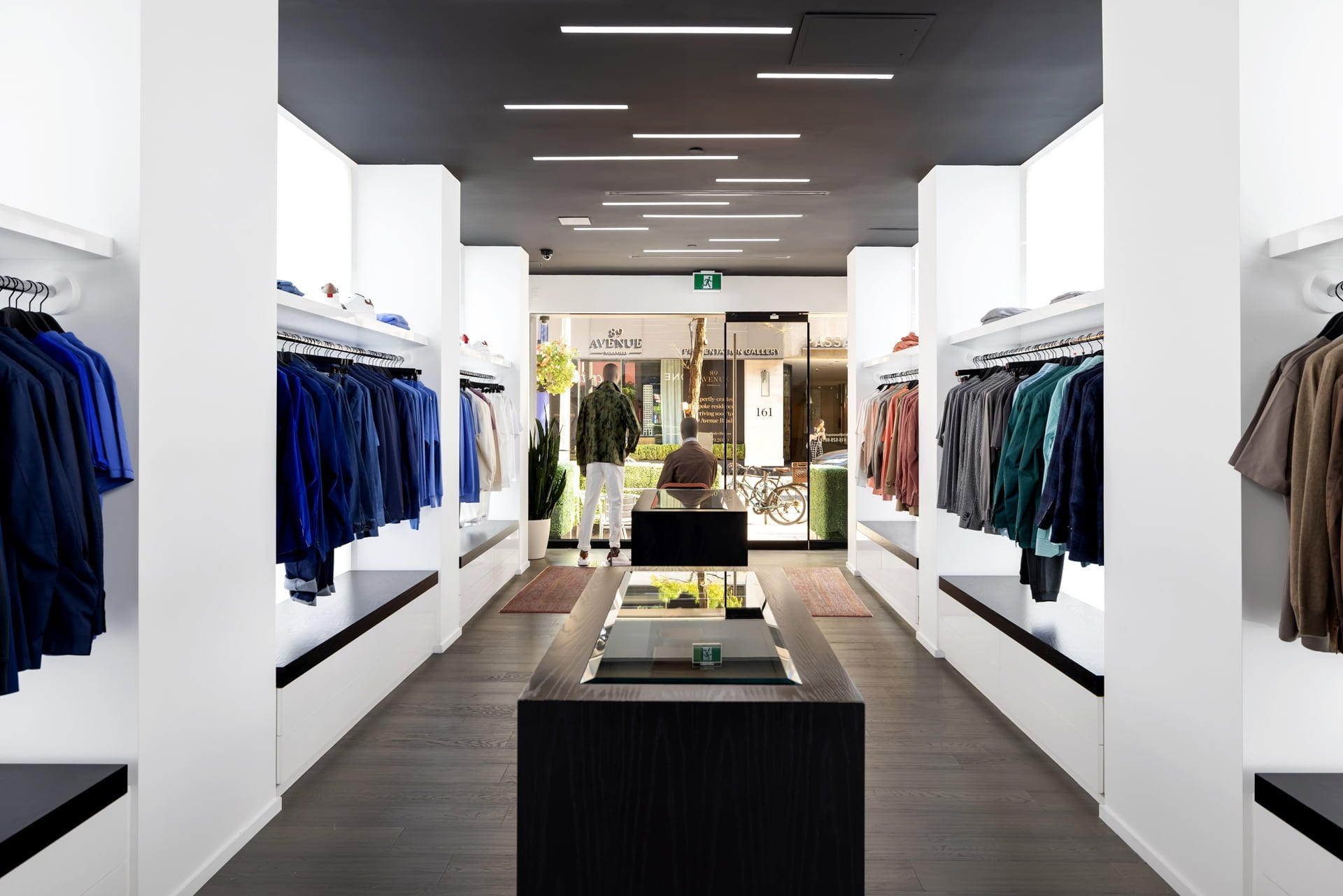
LEONE Napoli
Image: LEONE Napoli Yorkville
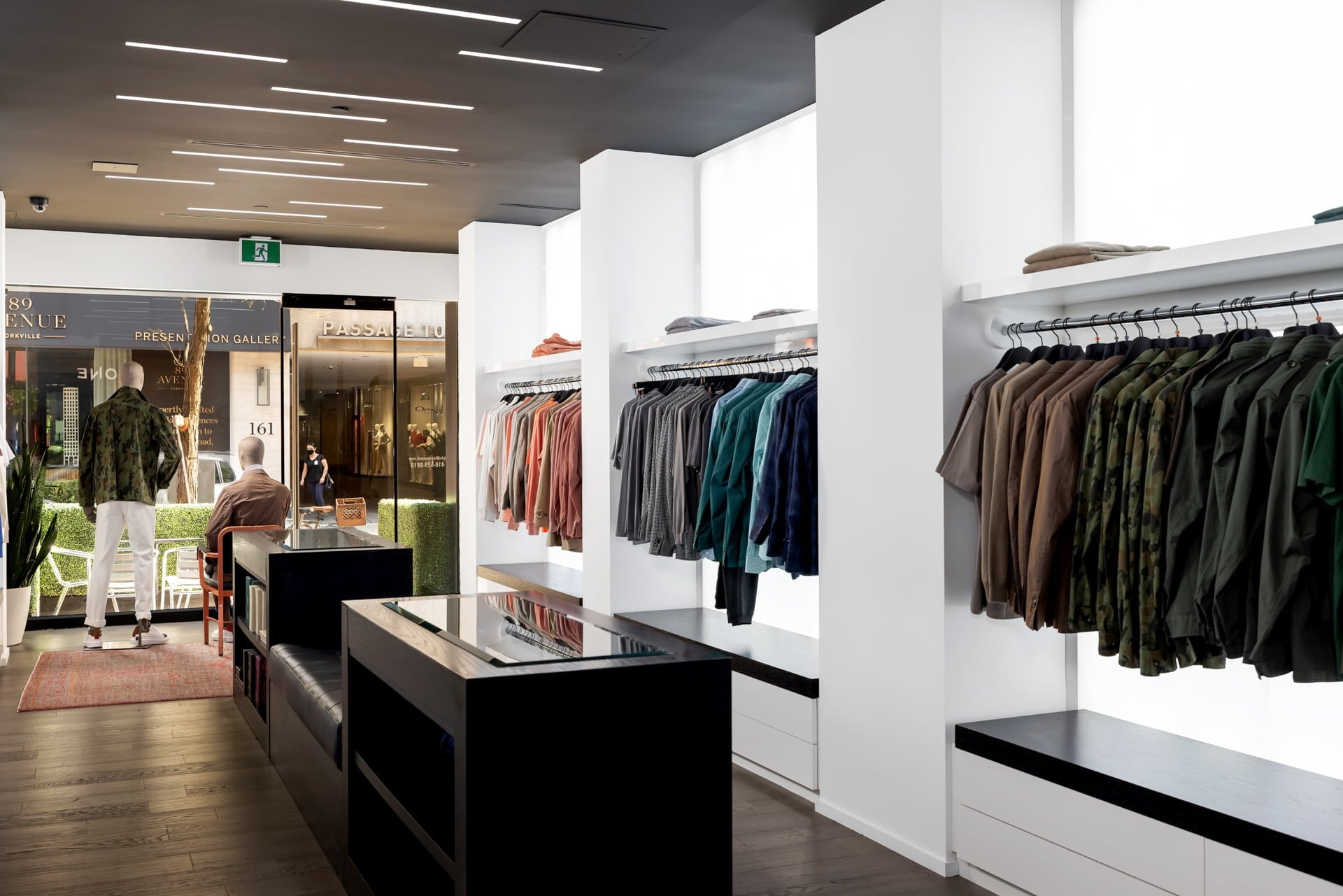
Image: LEONE Napoli Yorkville
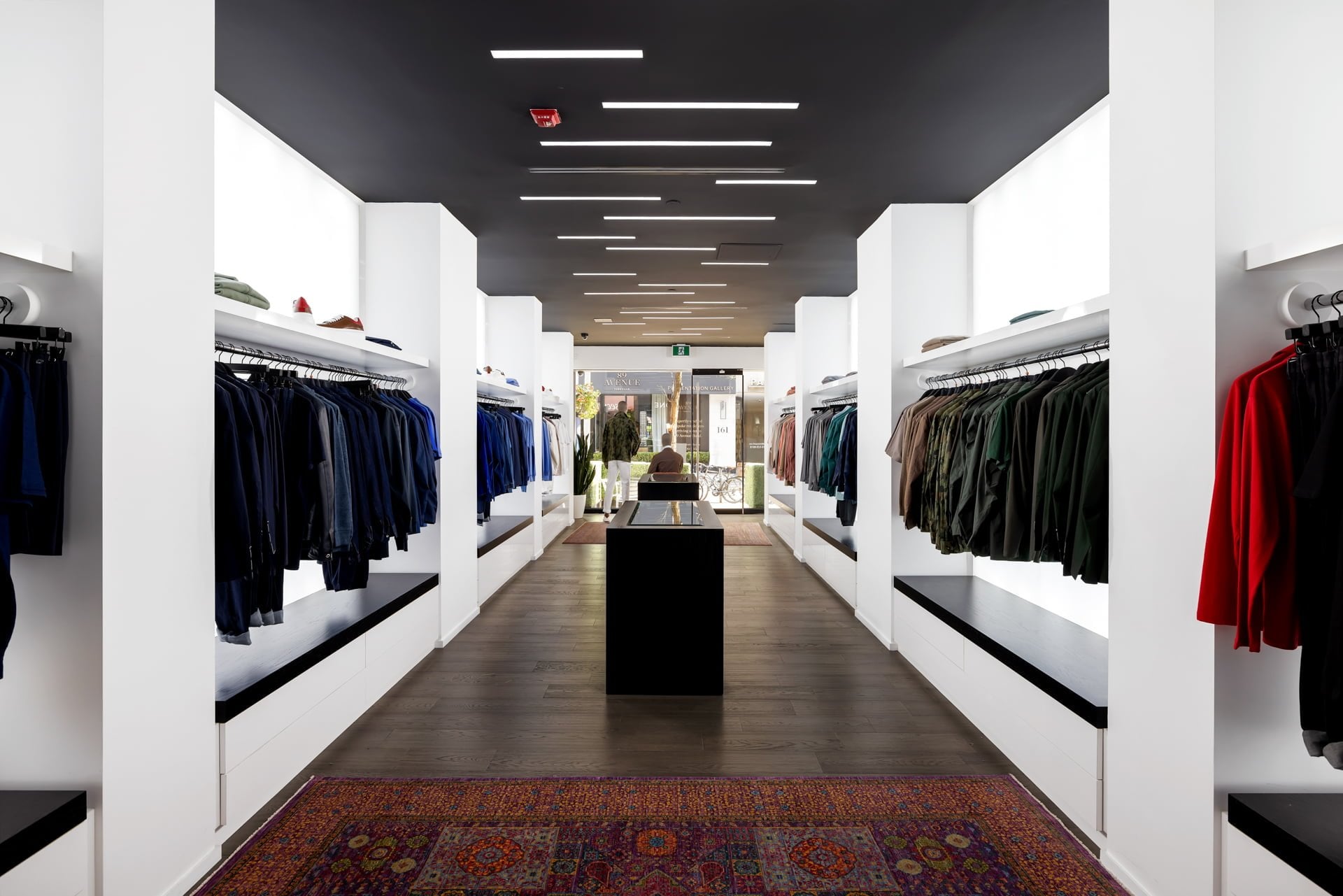
Image: LEONE Napoli Yorkville
Image: LEONE Napoli Yorkville
Several months ago two Toronto-based entrepreneurs, Aaron Gonsenhauser and David Petrash, opened a mono-brand menswear store called LEONE Napoli at 162 Cumberland Street. The store stocks a range of made-in-Italy men’s fashions and accessories that carry the brand’s logo. Suiting is an anchor for the brand which also makes more casual items — pieces are made in Italy including well-made jackets lacking lining.
It took two years for the duo to build Leone Napoli. In person research was done in Italy, involving multiple trips to Biella for fabrics and to Casalnuovo di Napoli which is known for its tailoring. Prices are in the $250 range for jeans and shirts and suits average about $1,700.
Lisa Gozlan
Lisa Gozlan (Image: Craig Patterson)
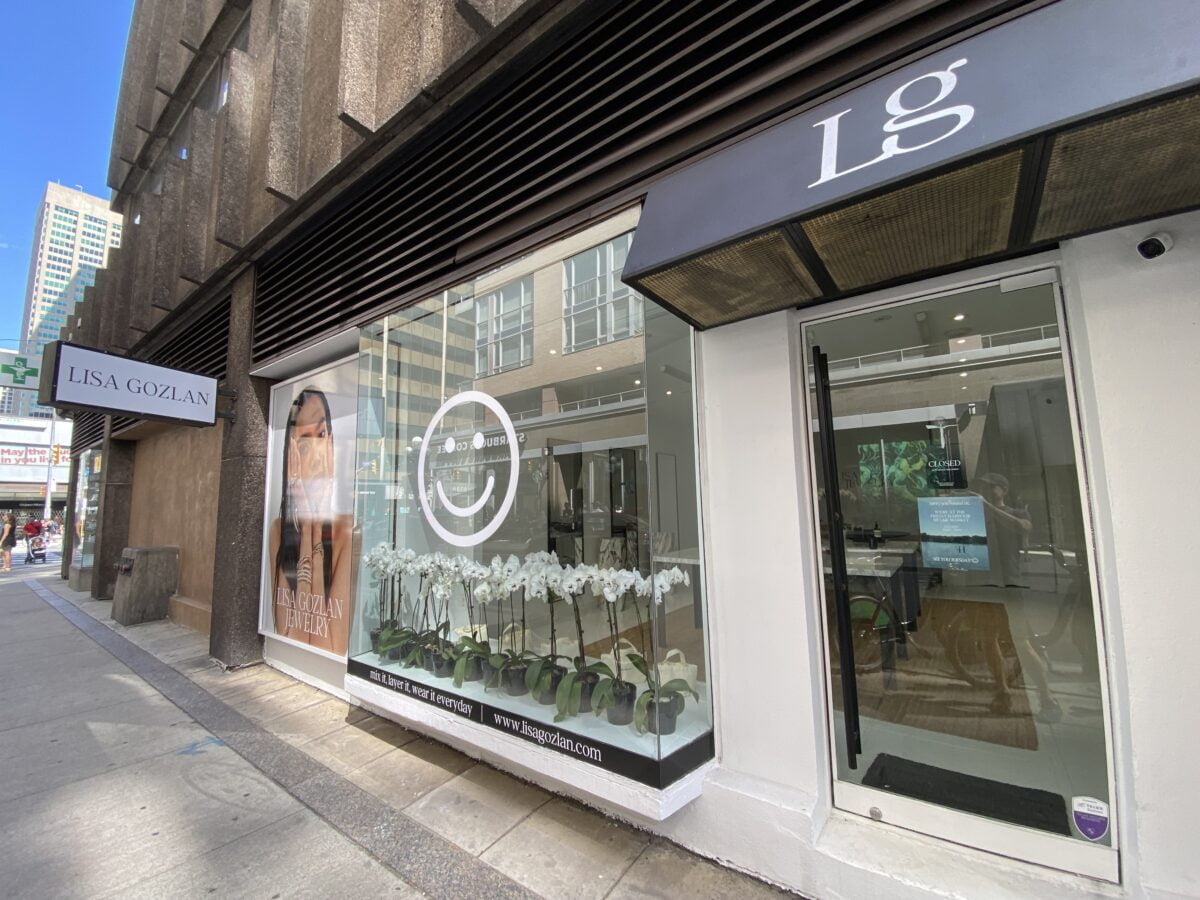
Toronto-based jewellery brand Lisa Gozlan recently opened a small store at 87 Cumberland Street. Lisa and her husband Ryan, a 5th-generation Gozlan in the jewelry business, are continuing the family legacy with the launch of Lisa Gozlan Jewelry. The store specializes custom jewelry including one-of-a-kind pieces including engagement and bridal.
1 of 4
Image: Lisa Gozlan Jewelry
Image: Lisa Gozlan Jewelry
Image: Lisa Gozlan Jewelry
Image: Lisa Gozlan Jewelry
All Eyes on Me
All Eyes on Me (Image: Craig Patterson)
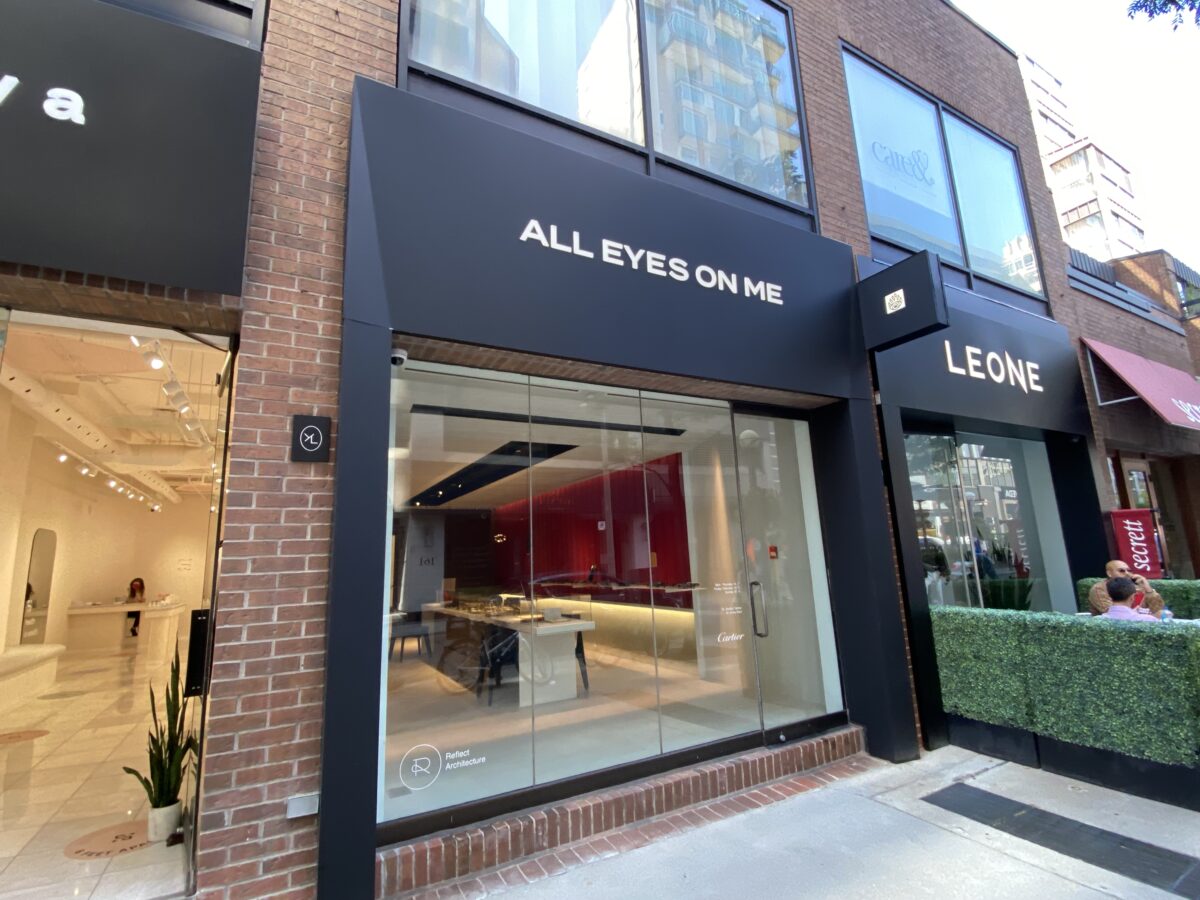
An upscale jewel box-like eyewear retailer called All Eyes on Me recently opened at 162 Cumberland Street. The beautiful store stocks several luxury eyewear brands with a particular focus on Cartier. Some styles are not available elsewhere in Canada or even globally, and we’ll be following up on this with a full article with photos discussing the store.
David Rocco Bar Aperitivo
Image: David Rocco Bar Aperitivo
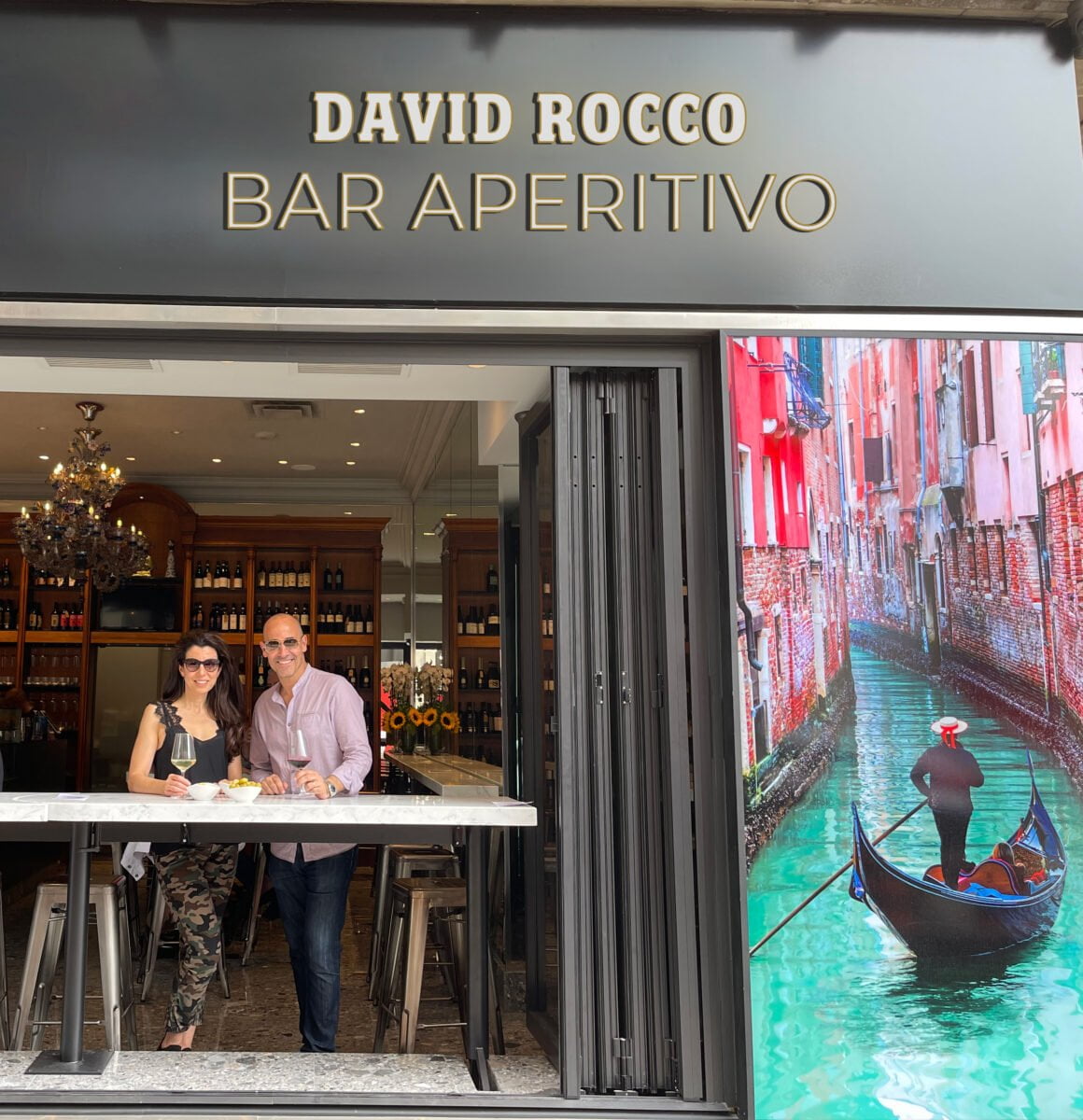
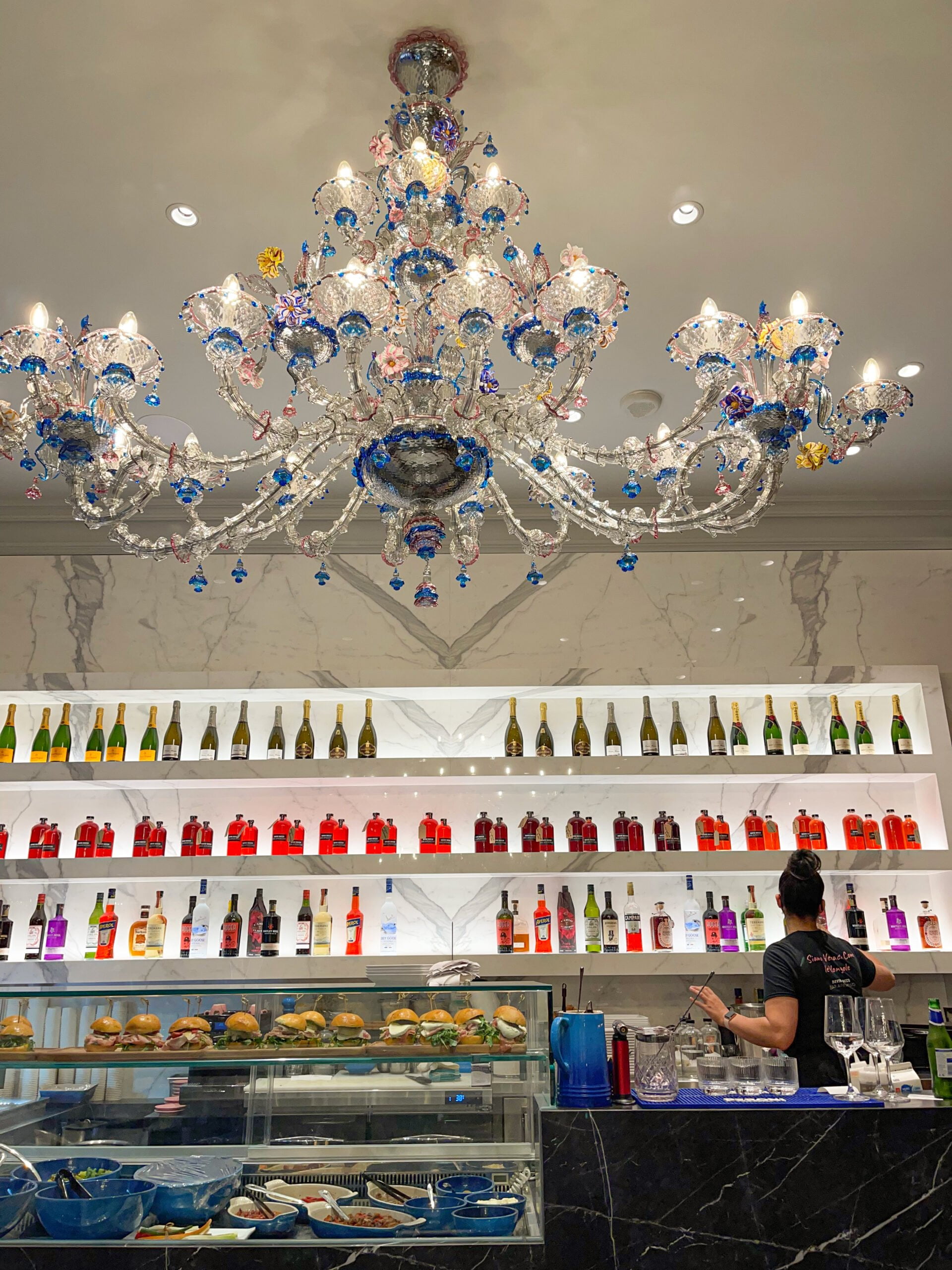
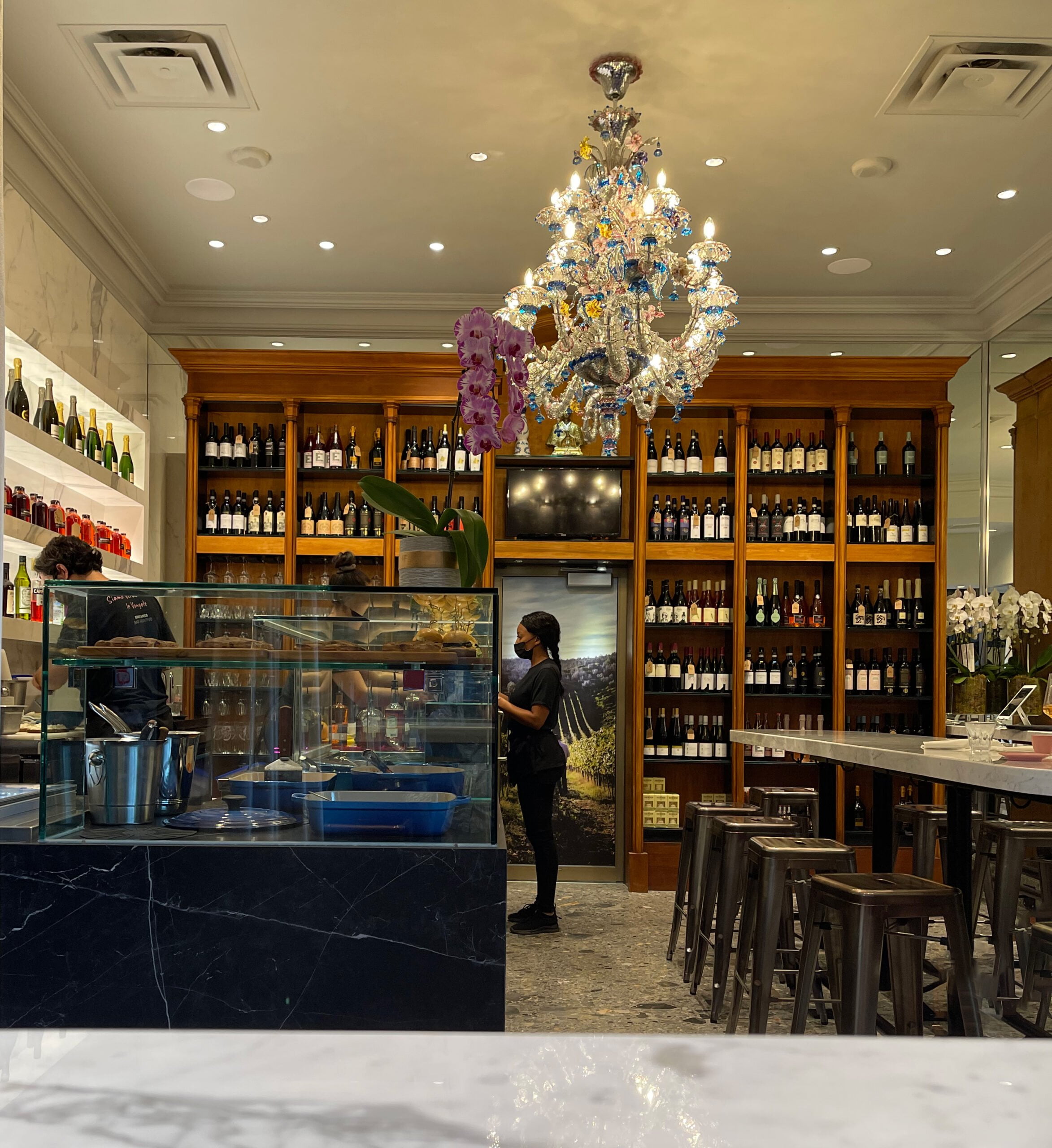
Toronto-based food celebrity David Rocco recently opened a wine bar at 95 Cumberland Street in Yorkville called ‘David Rocco Bar Aperitivo’. It is in a retail space formerly occupied by HÖM Cafe.
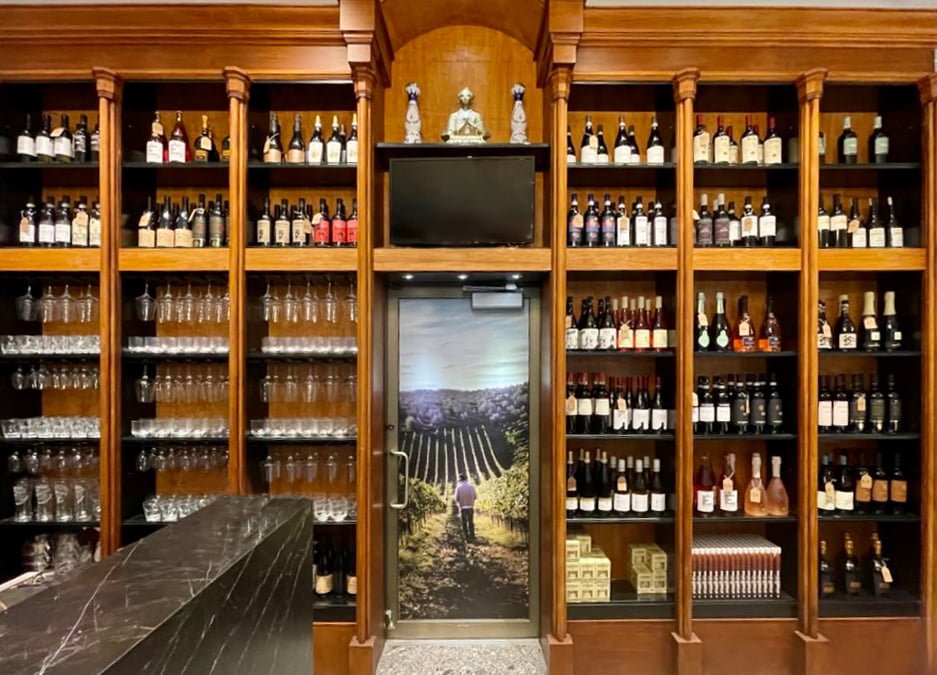
A range of Italian wines, Prosecco, Champaign, and mixed drinks are available as well as a tapas-stye menu featuring small portions. The vibe inside is intimate with high-top tables. The front-of-house space spans about 575 square feet with a capacity of about 25 seats. The total leased space is about 1,200 square feet at street level. Also included, weather permitting, is an extended patio along Cumberland Street that has been popular over the summer.
The overall design of the space is inspired by the culmination of Rocco’s travels to Italy and other passions. Rocco is a celebrity chef who expanded his business to become an executive producer, best-selling author and host of several internationally syndicated TV series. Acclaimed Toronto restaurant Oretta on King Street West is among Rocco’s other business ventures.
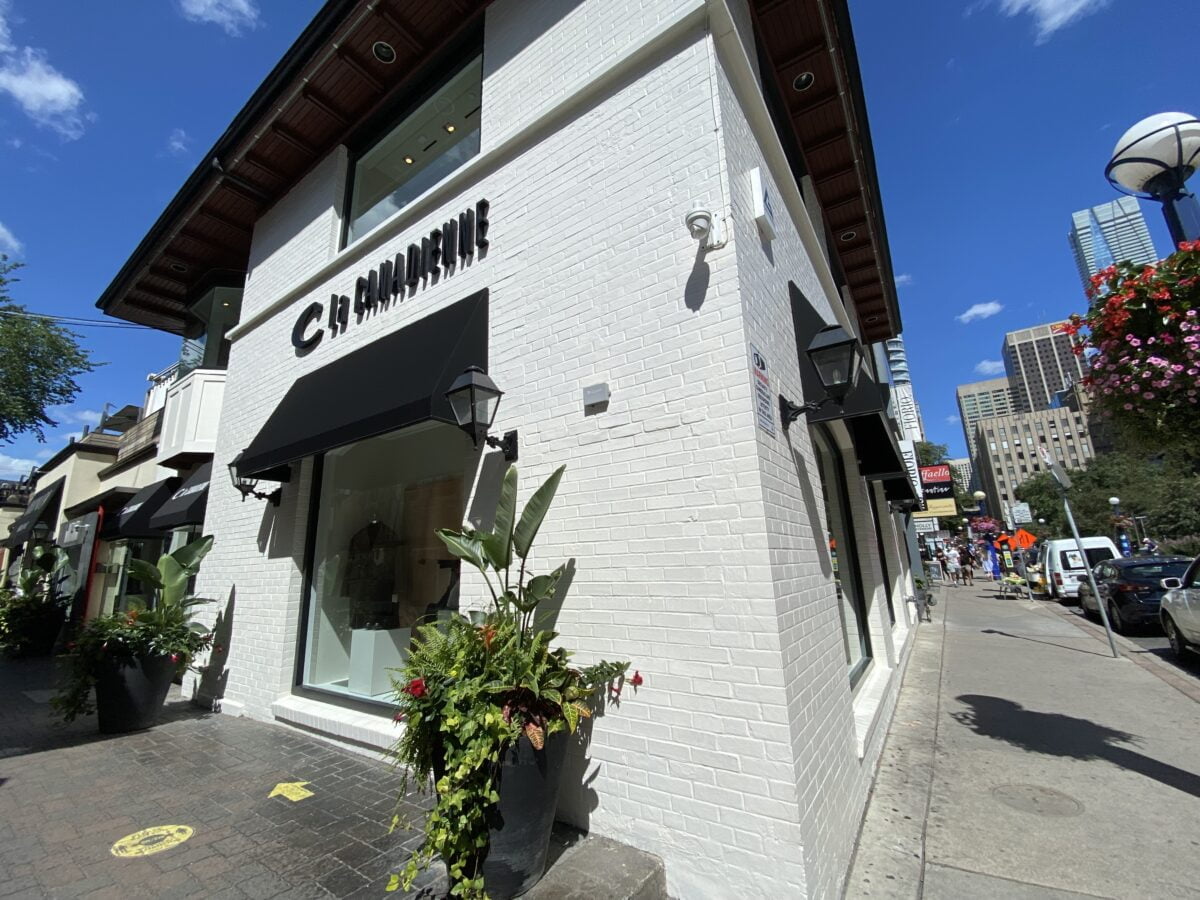
We recently reported that Montreal-based women’s footwear and fashion brand La Canadienne had opened its first Toronto storefront in the former Kate Spade space at 138 Cumberland Street. The store spans about 4,000 square feet. We recently profiled a feature article on the store and the space with interior photos.
KIWI Beauty Lounge
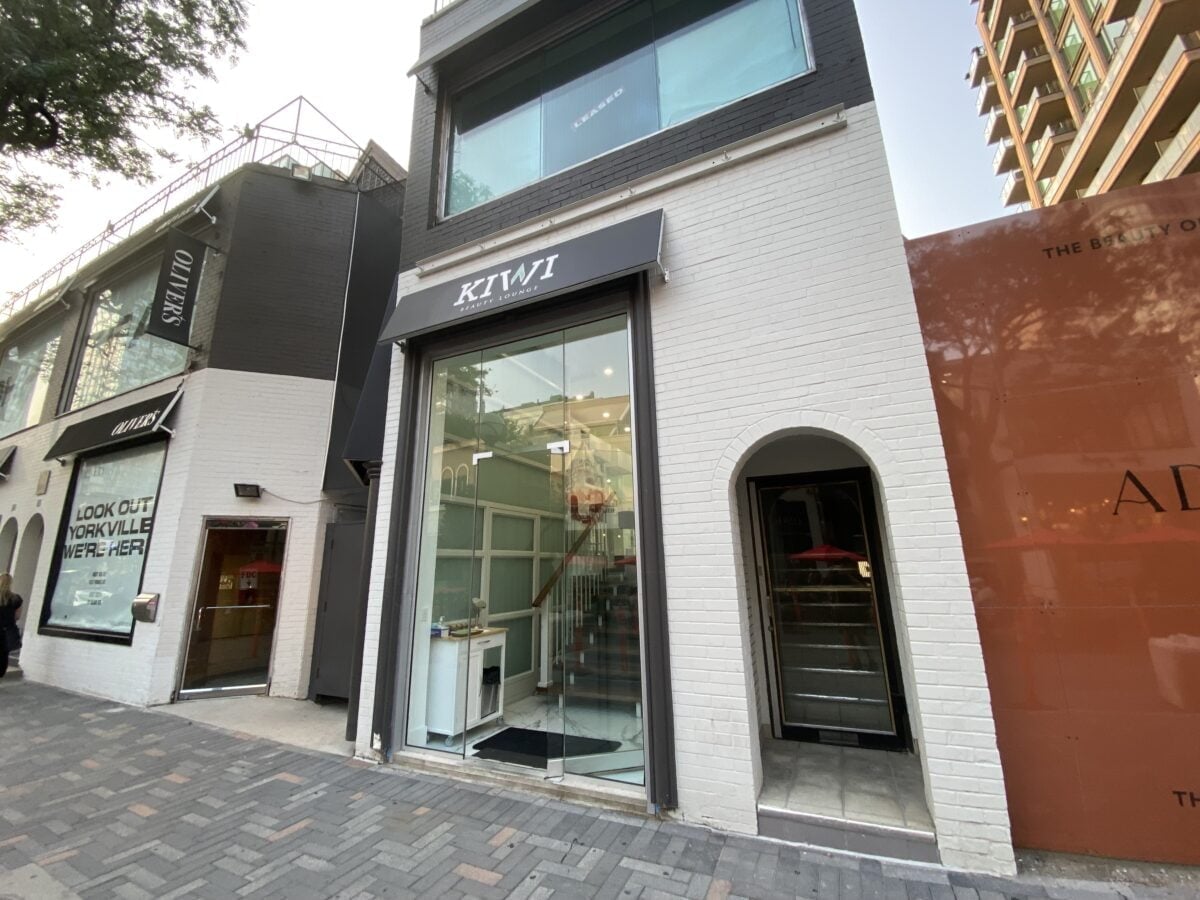
KIWI (Image: Craig Patterson)
The second location for beauty concept KIWI recently opened at 86 Yorkville Avenue. The storefront provides face rejuvenation and body care treatments including multiple treatment rooms. Its first store for the company is at the CF Markville Shopping Centre in Markham.
KIWI’s Yorkville location is across the street from the soon-to-open Isaia storefront and is a short distance away from big luxury names including Chanel, Versace, Brunello Cucinelli and Christian Louboutin.
Wag Swag Pop-Up
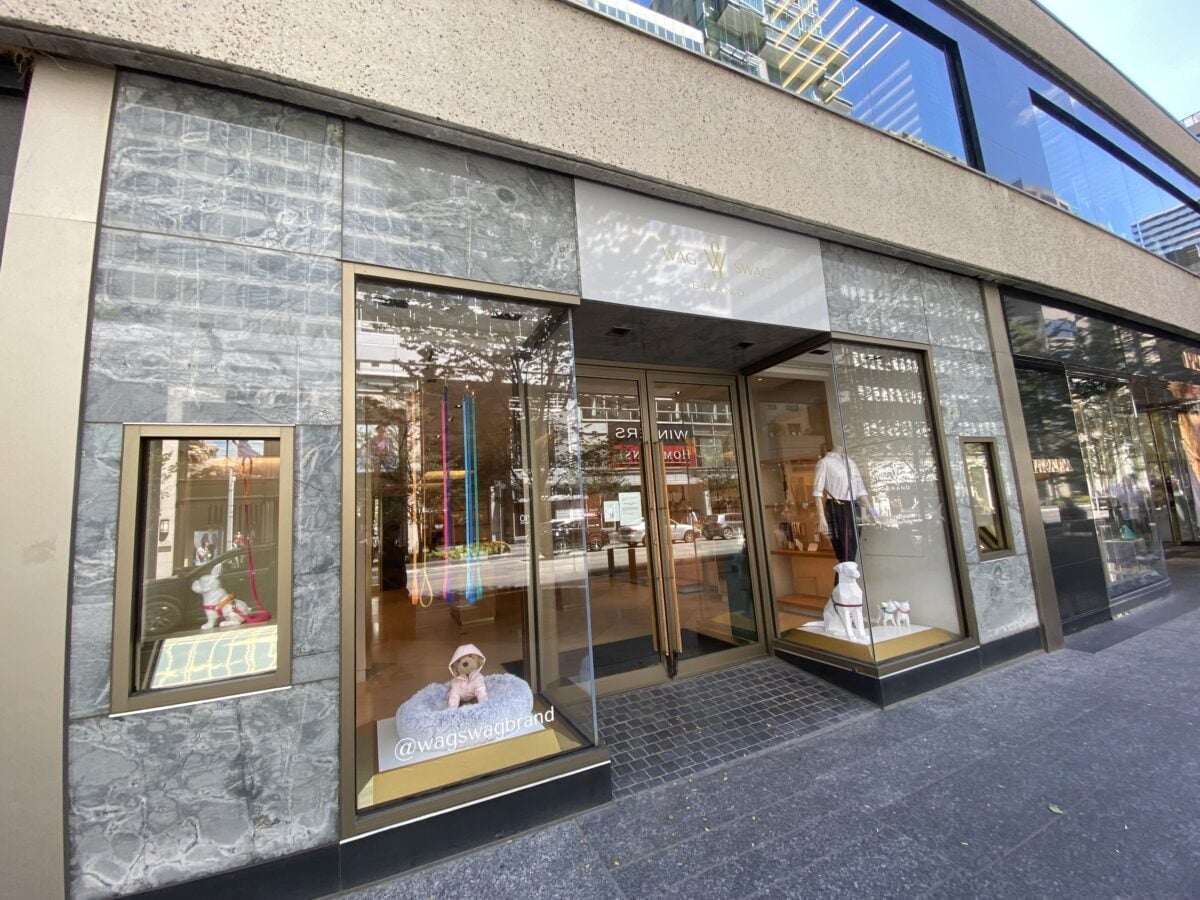
Wag Swag (Image: Craig Patterson)
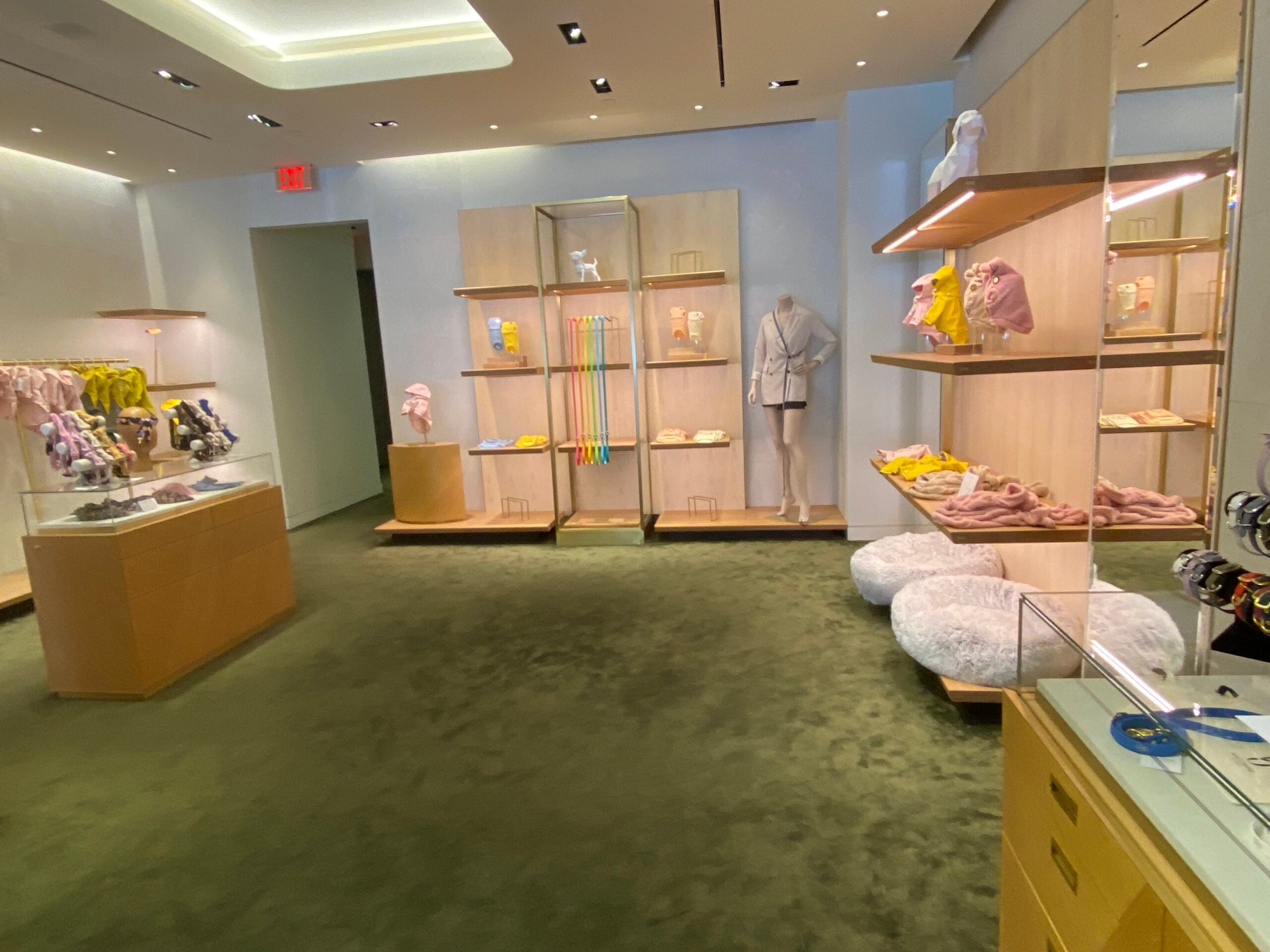
Wag Swag (Image: Craig Patterson)
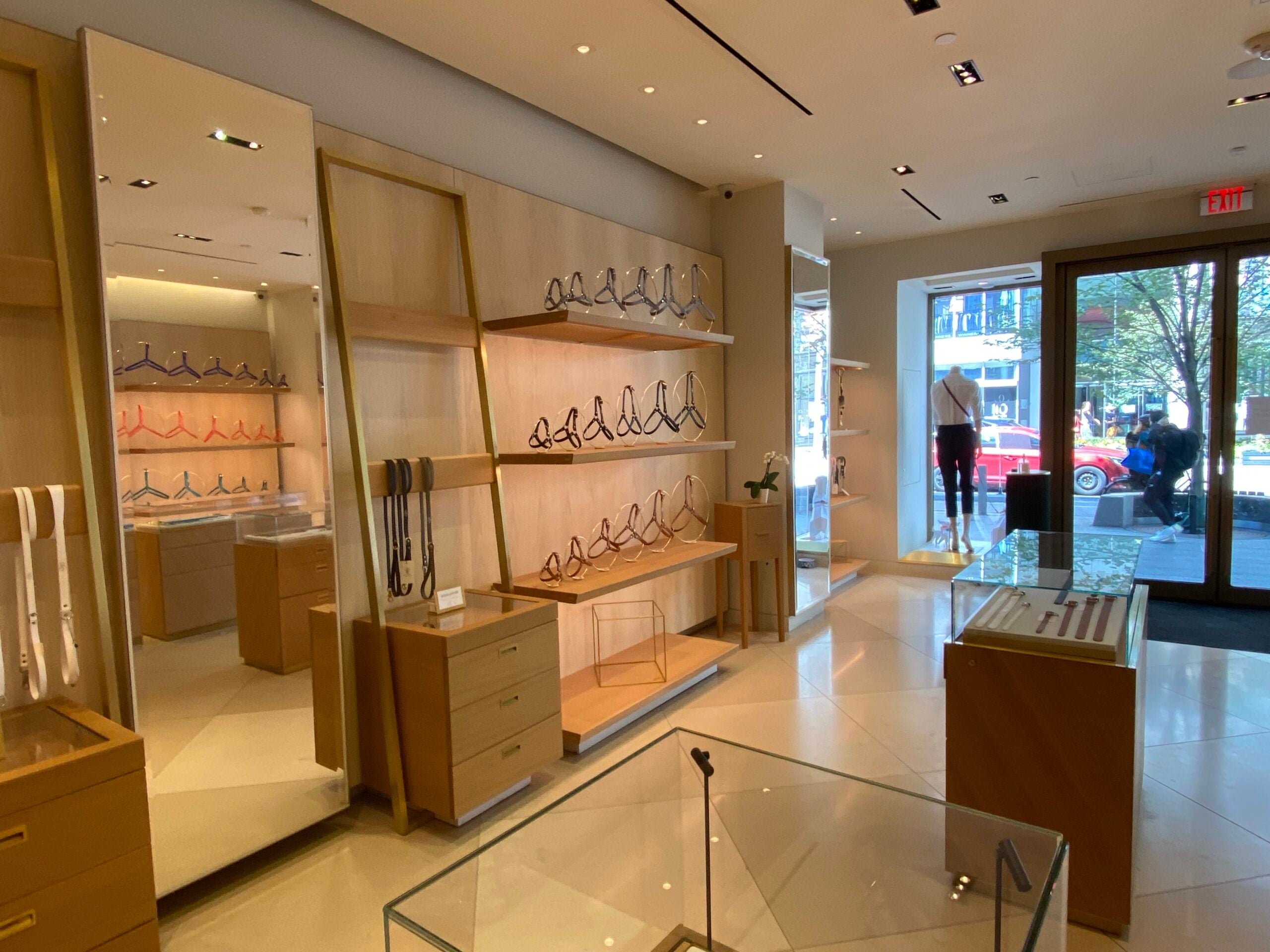
Wag Swag (Image: Craig Patterson)
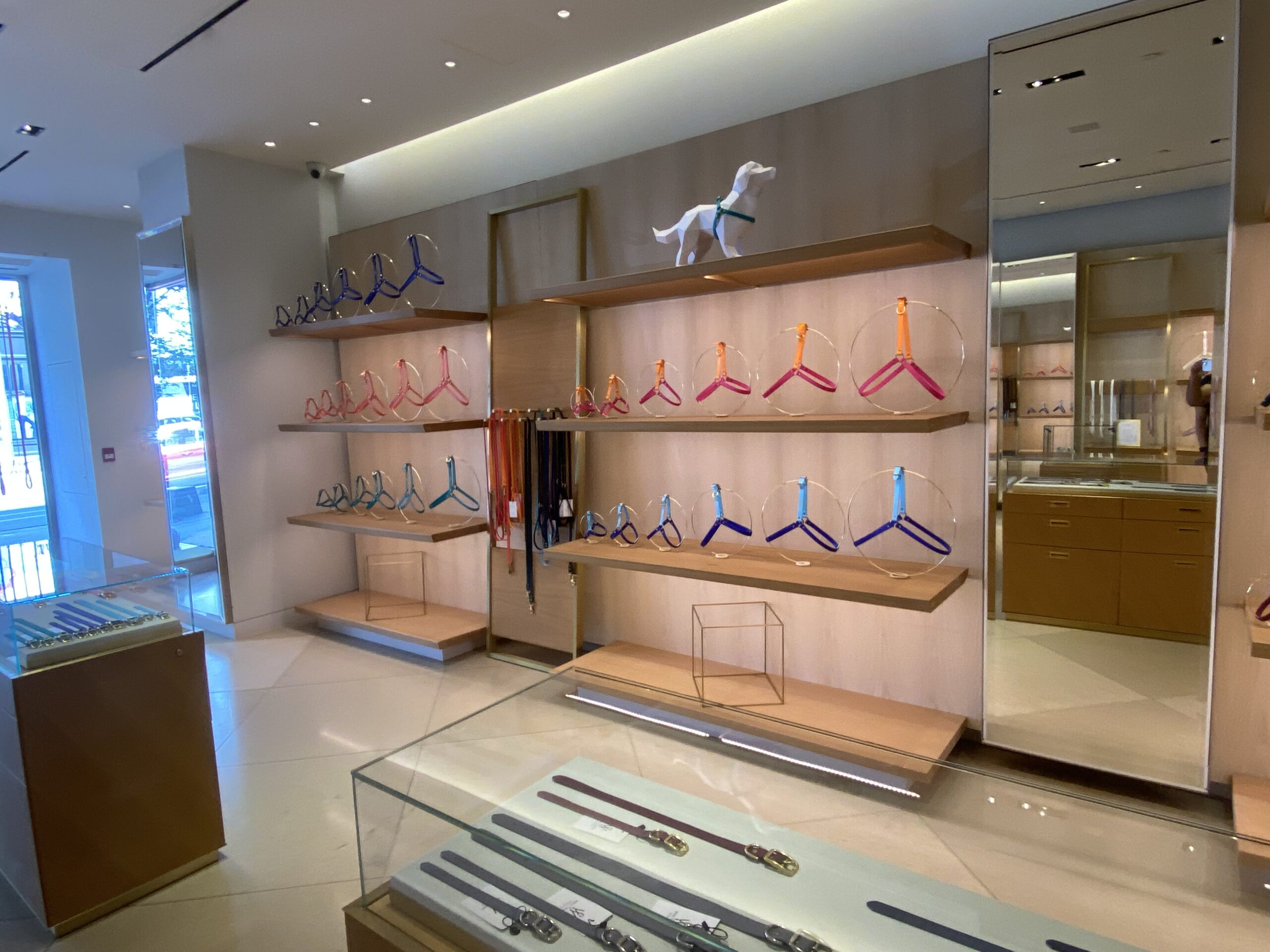
Wag Swag (Image: Craig Patterson)
Vegan pet accessory retailer Wag Swag recently opened a temporary store location at The Colonnade at 131 Bloor Street West. The 2,200 square foot storefront formerly housed luxury UK-based bag and accessory brand Mulberry which shut its two Canadian stores last year.
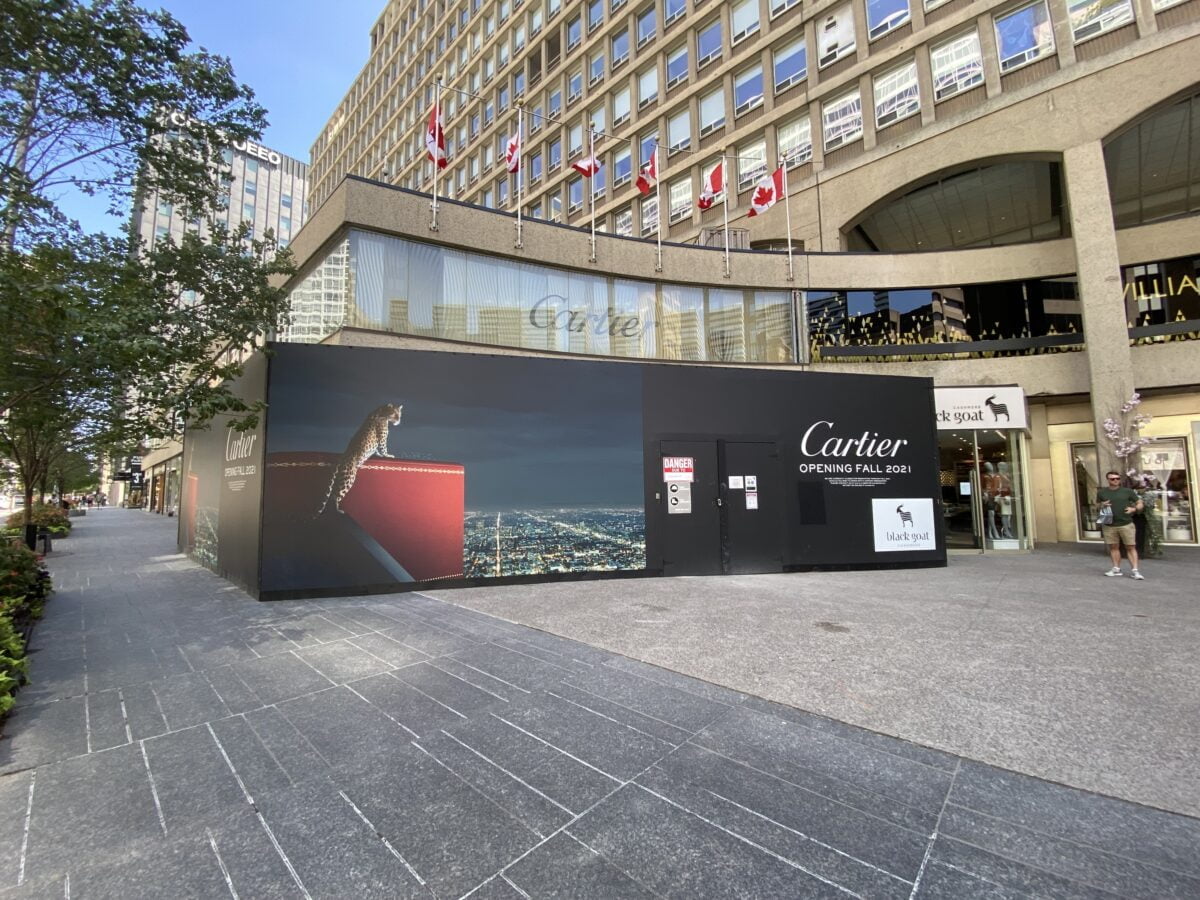
Wag Swag will continue to operate in the space into the fall of 2021 and it’s not yet been determined when the store will close. Prior to the pandemic, the asking rent for the space was said to be over $400 a square foot and hopefully a permanent tenant will be secured for the future. The space is located next to Coach and Prada stores in a retail complex also housing Dior, William Ashley, Moncler and a Cartier flagship store that will reopen after a renovation in November of this year.
Collective 131
Collective 131 (Image: Craig Patterson)
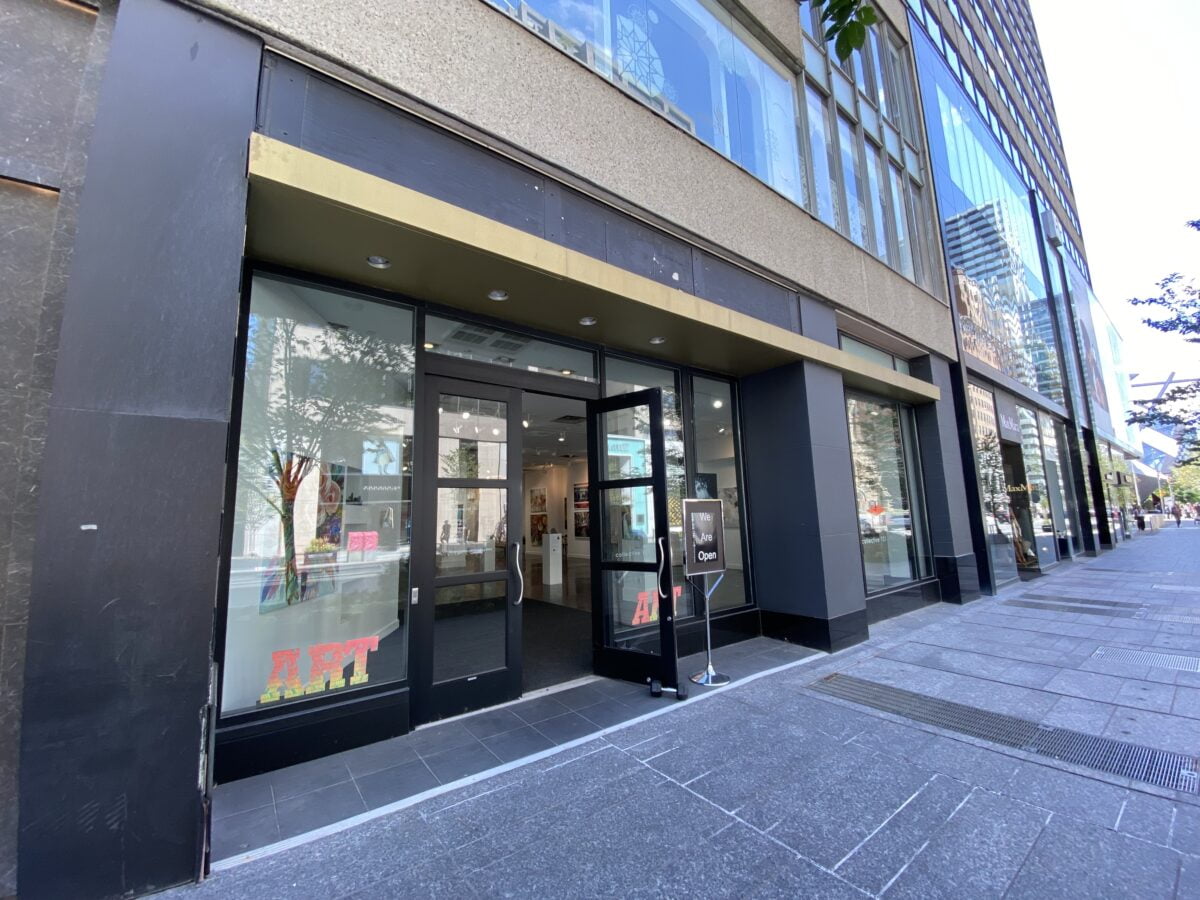
At The Colonnade, seven artists came together to launch Collective 131 at 131 Bloor Street West. The artwork is for sale and some of the pieces are very eye-catching. The pop-up will be open until the end of the summer in a retail space formerly occupied by a Bogner pop-up store — Bogner is said to be interested in returning to the space in the fall and this time, Bogner may end up leasing the space long-term for a permanent storefront.
“The pandemic has had such a negative impact for so many artists who were unable to mount exhibits and shows,” said Morgan Jones, artist and a member of Collective 131. “We were fortunate to be able to access this incredible space that has been an integral part of the Yorkville community. As all sectors of the economy continue to recover, we look forward to connecting with art lovers who are looking for their next collector’s item, or who just want to be out doing something fun this summer.”
Collective 131 (Image: Craig Patterson)
What’s to Come
Several new retailers will be opening or re-opening this fall in Bloor-Yorkville. These include:
The Webster
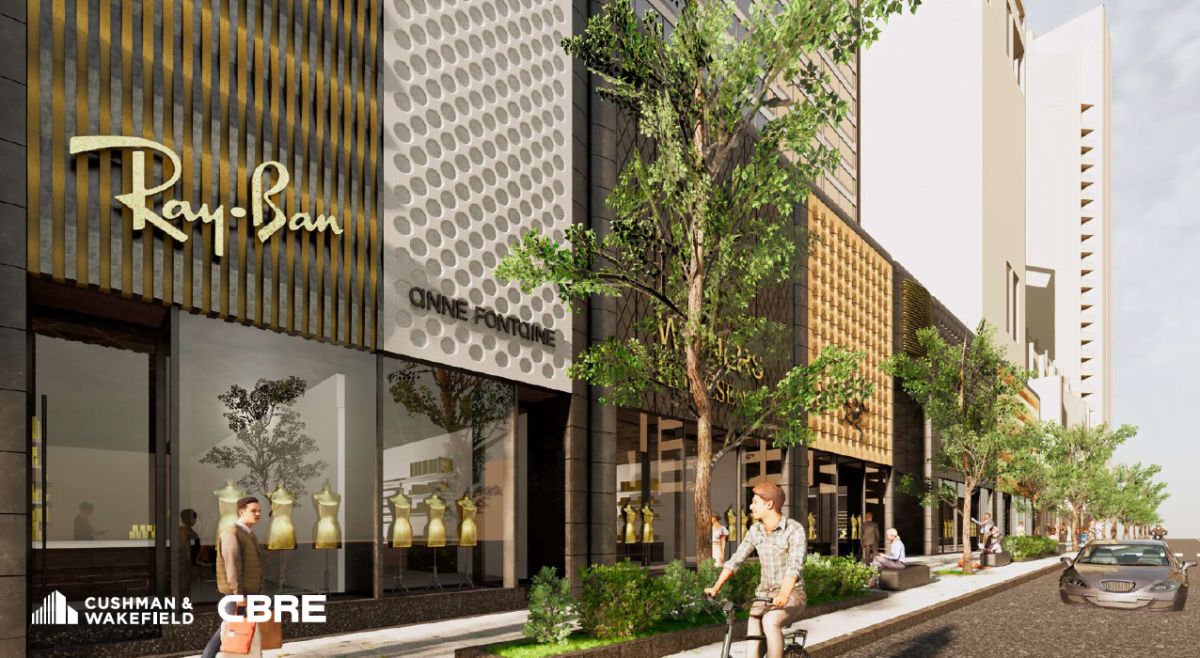
Miami-based multi-brand luxury retailer The Webster will open its first Canadian storefront this fall at 121 Scollard Street in Toronto. The 6,500 square foot store will carry a range of high-end brands including products not found elsewhere. The Webster represents a significant milestone in the retail development of Bloor-Yorkville and the store is expected to attract high-end shoppers from Toronto and beyond.
Many wondered what colour the store’s facade would become after an overhaul of the historic townhouses on the site which until recently were sandblasted back to its natural brick. We’ve now learned that the store’s facade will be pink. We’ll follow up when the store opens with a full article and photo essay. Plans for an in-store café won’t be happening we’re told.
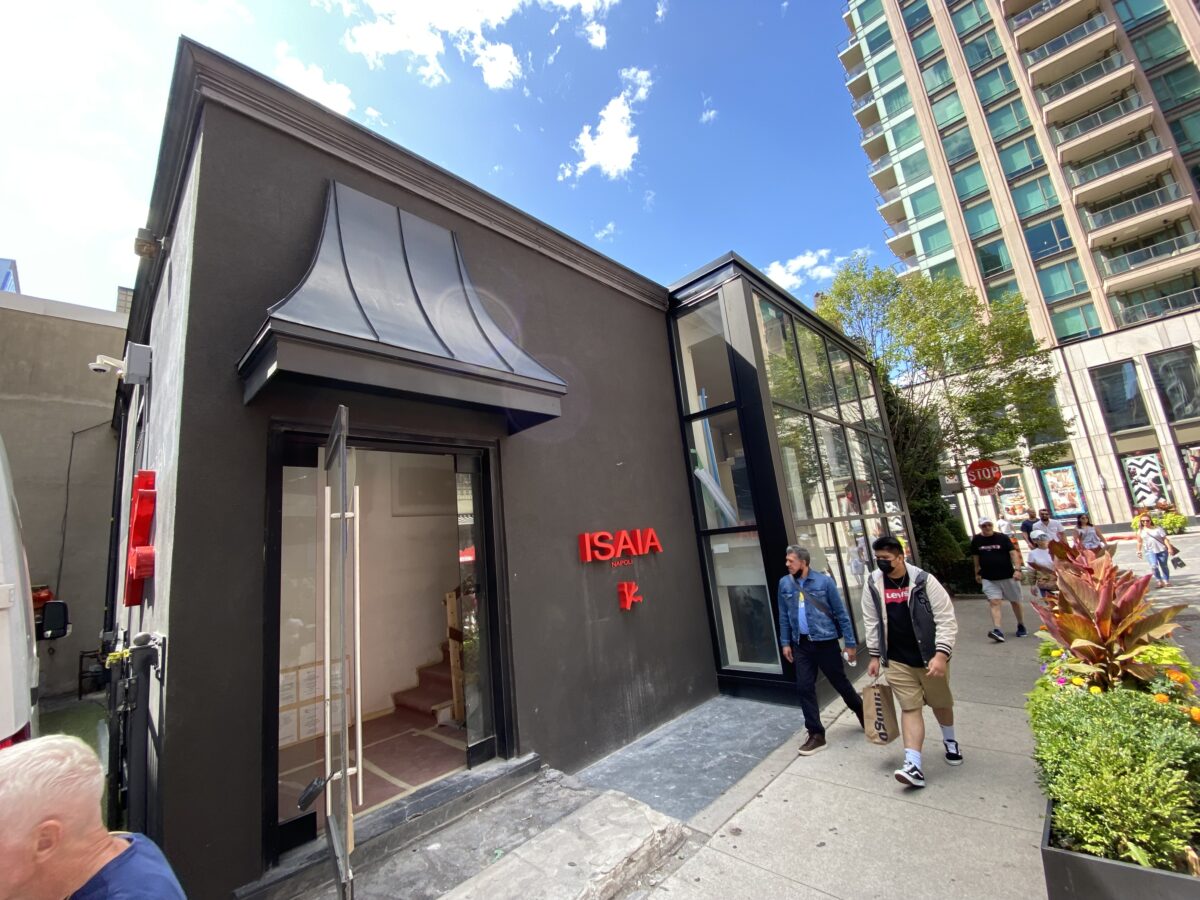
The Toronto Isaia flagship will span two levels. The upper level, spanning about 1,600 square feet, will feature two rooms carrying the full assortment of Isaia’s clothing and made-to-measure as well as footwear, leather goods, jewellery, eyewear, and accessories. The lower level will feature an 800-square-foot social meeting place, called the Vesuvius Lounge, was well as back-of-house operations and tailor shops.
We will be following up with a profile of the store when it opens in September.
Lafayette 148
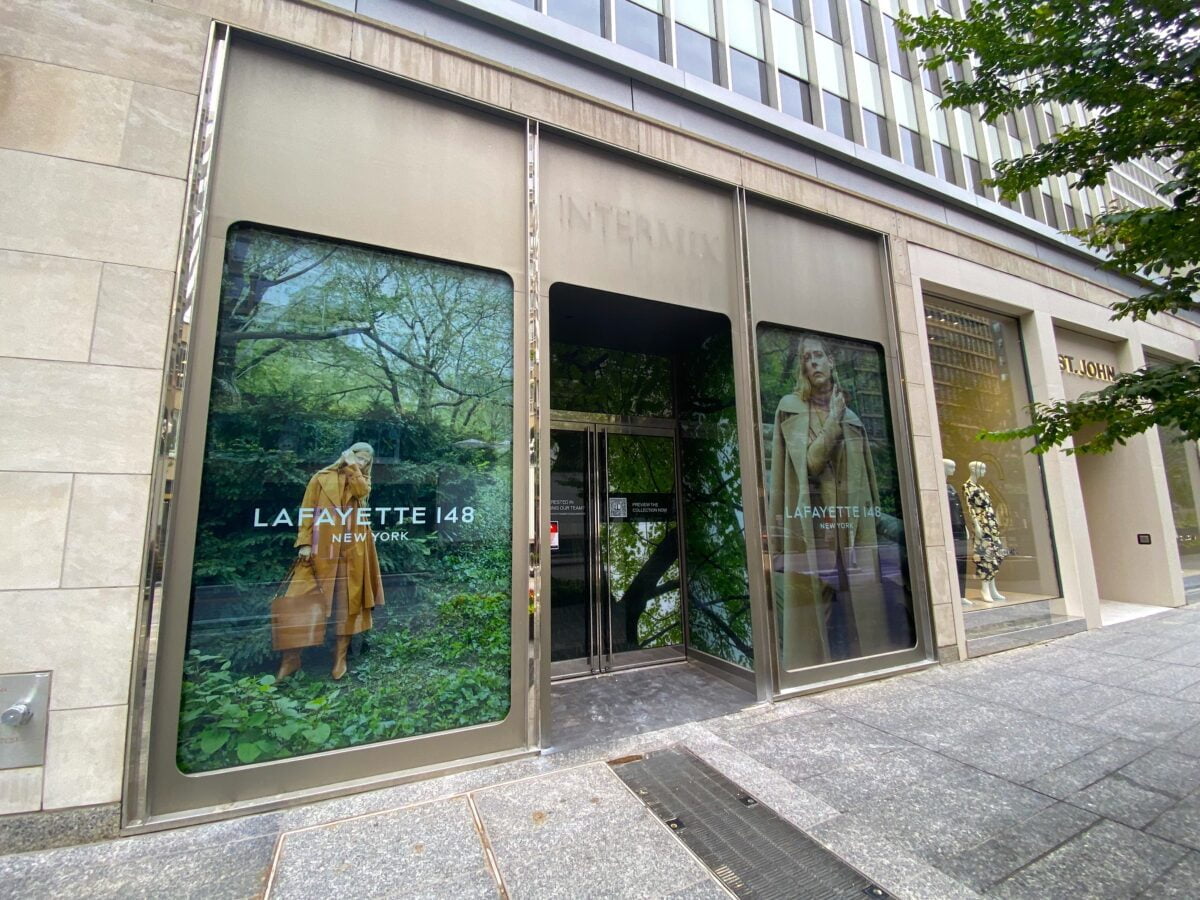
Lafayette 148 at 130 Bloor Street – Photo by Craig Patterson
The Bellair Street-facing side of the 88 Cumberland Street commercial podium. Tenants left-to-right will be: Euroline, Aesop and Tokyo Smoke
The commercial podium at the base of the 88 Cumberland Street condominium tower (corner of Bellair Street) will soon be home to three new retailers. Cannabis retailer Tokyo Smoke will occupy the corner space in the podium and Australian beauty brand Aesop will be opening a store next to it. A third smaller space next to Aesop on Bellair Street will become home to a showroom location for appliance retailer Euroline.
The podium had been leased to luxury Italian menswear brand Isaia before the nearby 77 Yorkville Avenue building, formerly occupied by Canadian fashion brand Pink Tartan, became available. ProWinko owns the podium.
Oliver Jewellery
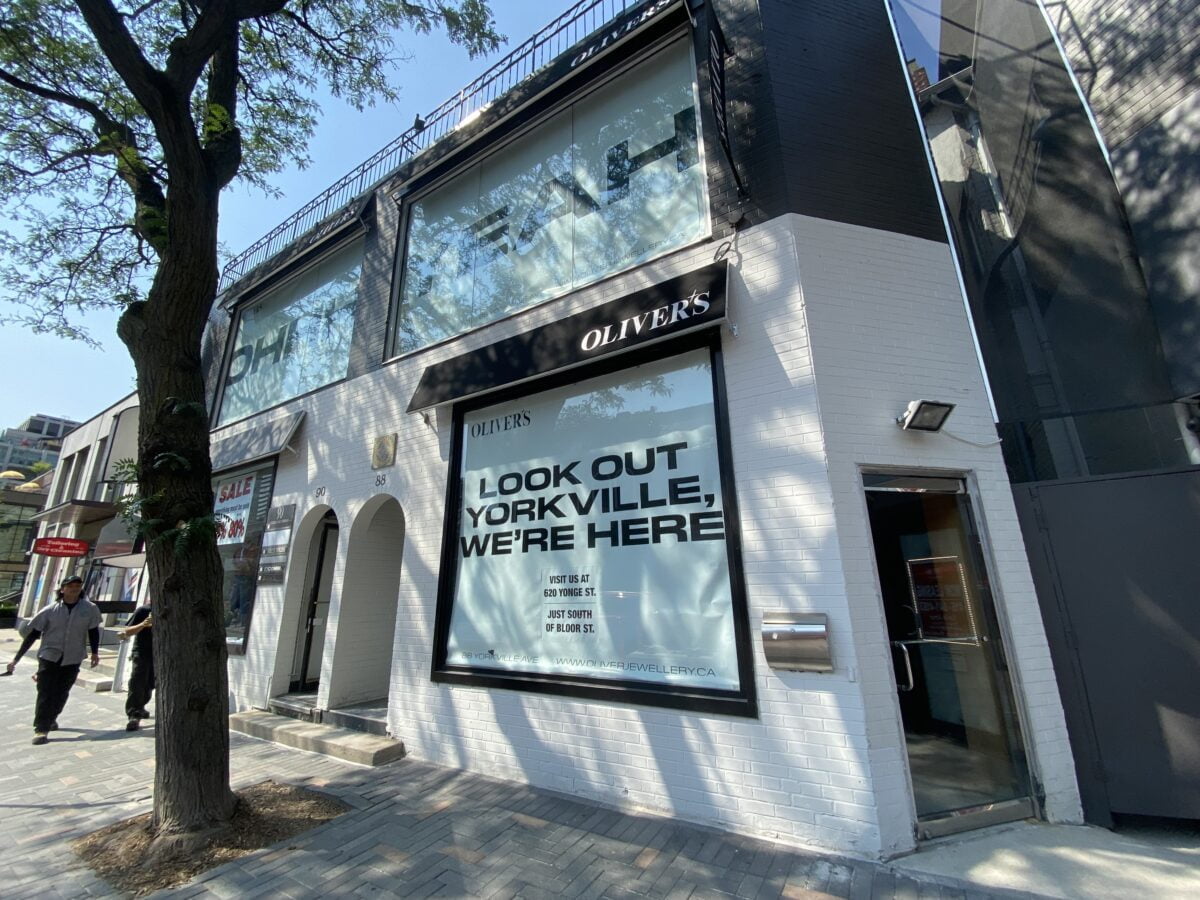
Future location for Oliver Jewellery at 88 Yorkville Avenue on August 26, 2021. Photo: Craig Patterson
“The Cashman” Russell Oliver will be opening a luxury goods store called Oliver’s at 88 Yorkville Avenue this fall, carrying a range of second-hand and vintage handbags and jewellery. The space will span two-levels. We spoke to Mr. Oliver earlier in the summer and he said that he will continue to operate his other luxury goods store at 620 Yonge Street for a time before shutting it. He opened the Yonge Street store in the fall of 2016.
95 Bloor Street West
The retail building at 95 Bloor Street West has sat vacant since late 2018 when Swiss men’s fashion brand Strellson vacated the premises. Cannabis retailer Fire & Flower leased the space and never ended up opening a store there and is now involved in a $3 million lawsuit because of a dispute with the landlord.
The storefront was recently leased out by CBRE to a condominium showroom that will occupy the building for a time to be determined.
Manulife Centre
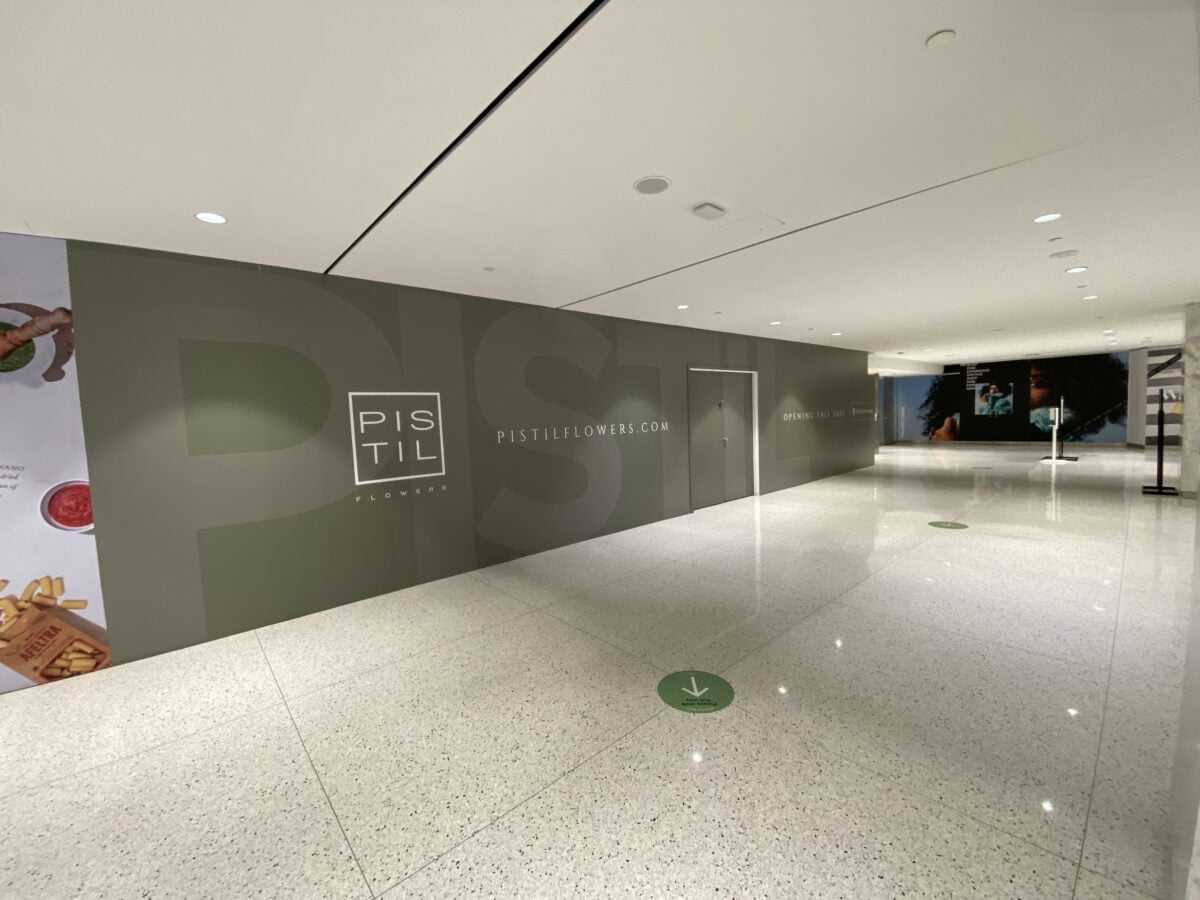
Two new retailers will open on the concourse level of the Manulife Centre this fall, including fashion retailer Studio D and floral retailer Pistil Flowers. We’ll follow up on these when they open including a broader profile on Studio D which is relocating its midtown storefront.
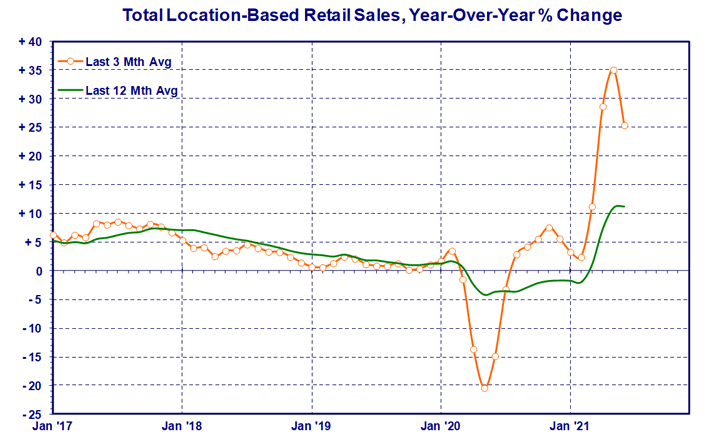
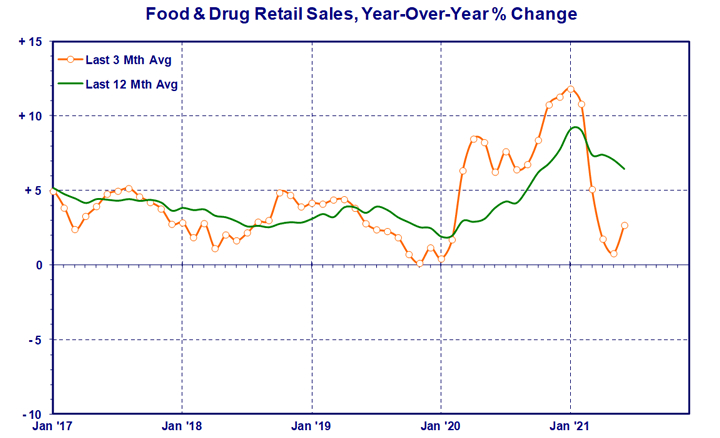
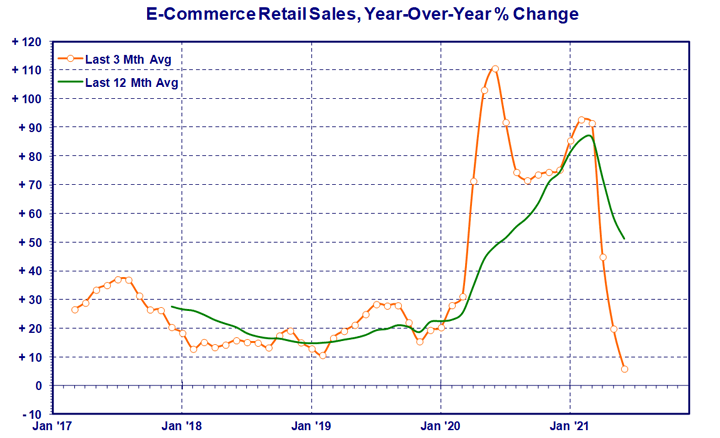
The latest data from StatsCan show a big recovery in Canadian retail sales. In Q2 2021, total overall sales were up 25.4% year-over-year. The 3 month growth trend (orange line in the chart below) has been at record breaking highs, and has pulled up the underlying 12 month trend (green line) along for the ride.
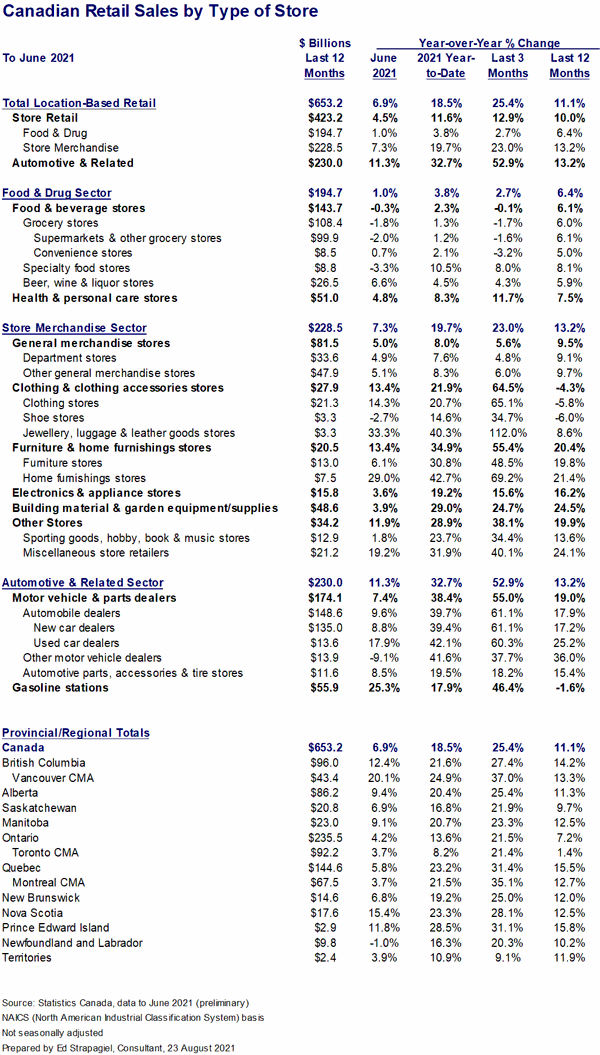
Note that hot current sales growth rates do not mean that good times are here again – it’s more of a reflection of how bad things were a year ago due to COVID. In Q2 2021, total retail sales were $173.8 billion, well up from $138.6 billion in Q2 2020, which itself however was well down from $162.7 billion in 2019. In other words, we’re just getting back to around where we were two years ago, in pre-pandemic times, plus a little inflation and population growth.
Retail conditions are still very much unsettled. The impact of the next COVID wave and/or variant is essentially unpredictable. There are also huge sales swings in every major retail sector.
Food & Drug
The Food & Drug sector actually posted record high retail sales increases last year as COVID rolled out. This was due to a mix of factors, such as staying open while other retailers were mandated to close, and highly restricted operating conditions for restaurants which promoted eating in over dining out. These circumstances now appear to have reached a plateau, and retail sales growth rates have returned to more typical levels. In Q2 2021, retail sales were up 2.7% year-over-year, or roughly at pre-pandemic levels.
There are some twists and turns here too. Supermarkets & other grocery stores’ retail sales were down 1.6% in Q2 versus last year, while convenience stores saw a sales decline 3.2%, even though both these retailer types had strong gains in 2020. On the other hand, specialty food stores are still hanging in with an 8.0% Q2 increase in retail sales.
Health & personal care stores are holding up the Food & Drug sector at this time. Their retail sales were up 11.7% year-over-year in Q2, which countered the bad news in food stores.
Store Merchandise
The Store Merchandise sector seems to be back with a vengeance, with year-over-year retail sales up 23.0% in Q2. As non-essential retailers and malls reopen for business, it seems that consumers are catching up on shopping needs they may have been putting off. Interestingly, the boom in e-commerce retail sales appears to be slowing somewhat at the same time.
Almost all store types in the sector had strong year-over-year retail sales gains in Q2. Clothing & accessories stores were up 64.5%, furniture & home furnishings retailers gained 55.4%, and sporting goods, hobby, book and music stores saw a 34.4% increase in retail sales. On the other hand, general merchandise stores only had a modest gain of 5.6%.
Automotive & Related
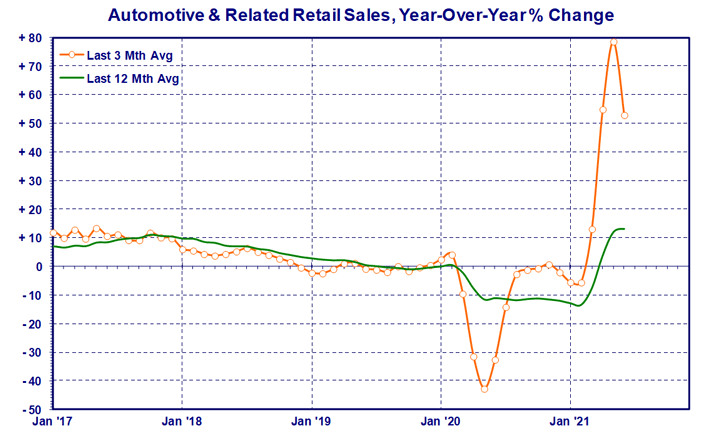
Retail sales in the Automotive & Related sector gained 52.9% year-over-year in Q2 2021. Much of this however is due to very weak year ago sales in 2020. In dollar terms, the sector’s Q2 retail sales are just slightly ahead of what they were in 2019. In other words, we’re just getting to where we were two years ago.
Sales at automobile dealers were up 61.1% year-over-year in Q2, again mostly because last year was so bad. Going forward, sales may slow due to production issues caused by a shortage of computer chips.
Gasoline stations also had a strong retail sales gain in Q2 with a 46.4% increase. This has been helped along by pump price increases and perhaps people driving around more (possibly to get to reopened retail stores!).
By The Numbers
Note that the data and analysis in this report are always based on not seasonally adjusted (or unadjusted) retail sales statistics.
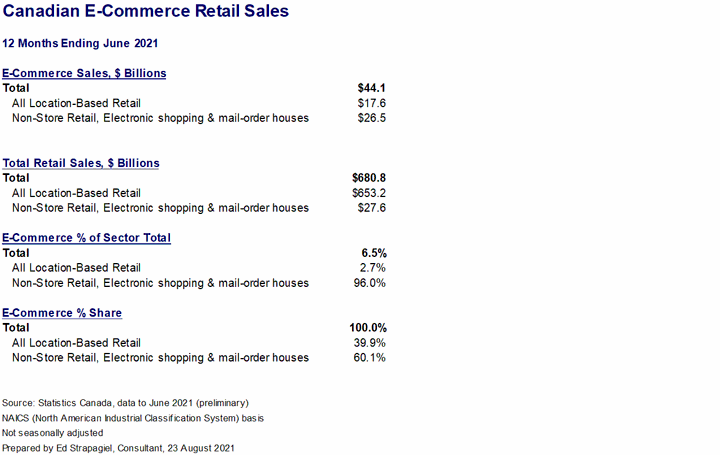
After hitting double digit and even triple digit increases in 2020, e-commerce retail sales gained only 5.8% year-over-year in Q2 2021, the lowest 3 month gain since StatsCan started reporting this data. Perhaps some consumers are switching back to in-store shopping for certain goods that they may have gone without due to pandemic closures.
Overall, e-commerce represented about 6.5% of Canadian retail sales over the past 12 months, including both pure plays as well as bricks & clicks stores. Note that Canadian consumers may also buy online from foreign websites which is not captured in these numbers.
Location based retail is the same as that in the preceding “By The Numbers” table. It’s what’s normally reported as Canadian retail sales. Except that it isn’t. Location based retail excludes another section called Non-Store Retailers (NAICS code 454), which includes electronic shopping and mail-order houses, which in turn is where (mostly) pure play e-commerce businesses are. Over the 12 months ending June 2021, electronic shopping and mail-order houses had an estimated $26.5 billion in e-commerce sales.
But that’s not the only source of e-commerce, as (mostly) bricks & mortar location-based retailers also sell online. For the 12 months ending June 2021, this group had an estimated $17.6 billion in e-commerce sales. With electronic shopping and mail-order houses, there’s a grand total of $44.1 billion in e-commerce sales by Canadian operators. Note that this does not include foreign e-commerce purchases made by Canadian consumers, but it does include e-commerce purchases made by foreigners at Canadian operations.
For electronic shopping and mail-order houses, an estimated 96.0% of their sales are currently allocated to e-commerce. For (mostly) bricks & mortar retailers, it can be estimated that 2.7% of their total sales are attributable to e-commerce.
In the final section of the above table, (mostly) pure play operators (namely, under electronic shopping and mail-order houses) generated an estimated 60.1% of all e-commerce sales in Canada, while (mostly) bricks & mortar location-based retailers’ share of e-commerce was 39.9%.
This analysis is updated monthly as new numbers are published by Statistics Canada. If you would like notification from Linkedin of when an update becomes available (and you’ve read this far), please connect with Ed Strapagiel on LinkedIn
The back-to-school shopping season. It’s a season – and a lucrative one, too – which merchants across the country were by and large robbed of in 2020. Influenced by lockdowns and social restrictions associated with the COVID-19 global pandemic, as well as a distinct lack of return to campus and schoolground activity, one of the most profitable annual periods on the retail calendar was negated. However, as restrictions from coast to coast continue to loosen and retailers everywhere welcome visitors back to their physical storefronts, many industry observers are expecting a return of back-to-school spend in 2021. And, although this may be true, Tamara Szames, Director, Industry Advisor, Canada Retail at The NPD Group, suggests that the shopping season may extend well into Fall, posing considerations for merchants as they continue to plan a busy and important fourth quarter.
“It’s important to notice, as we move deeper into the back-to-school shopping season in Canada, that we’ve been seeing the season go later into the year recently,” she says. “If we think about ten years ago, July and August were very much the key months when kids and their parents would be getting ramped up for a return to school, and it would trickle just a little bit into September. Now, we’re recognizing September as another key month in the back-to-school season. Although retailers start to pump out products in early or mid-July, the bulk of the sales are starting to happen at the end of August and the beginning of September. With the impacts of COVID, sales last year happened throughout September and even into October.”
Mixed results
In fact, Szames points out just how significant the shift in sales has been. September and October 2018 represented 24 percent of children’s school apparel sales, a number that grew to 27 percent in 2020. However, she also recognizes that there is little that can be accurately adjudged against 2020 numbers going forward, suggesting that to properly determine just how lucrative a season it might be, projections have got to be comping against results of the 2019 shopping season. And, she adds, the extent of success experienced by retailers will depend on the verticals and categories that they operate within.
“Softlines, like apparel, footwear and beauty faced an extremely challenging 2020,” she says. “That’s where we’re going to see some of the biggest growth and move toward recovery back toward 2019 levels. But then there are categories like computer technology that are going to be hard pressed to comp off the extreme, record-breaking growth that they experienced in 2020. The data that we’re seeing is suggesting that the category has already been seeing a declining trend, especially for products like notebook computers, which are huge for back-to-school. It’s still representative of huge growth over 2019, but not comping 2020 numbers. In essence, as a result of the fact that comping within most categories is going to prove to be extremely difficult, the back-to-school shopping season may actually be overshadowed by the recovery coming out of COVID, interrupting what many are anticipating.”
Stunted back-to-school recovery
With respect to softlines, the declines experienced in 2020 were dramatic. Typically, one-third of children’s footwear spend in the third and fourth quarters of the year are related to purchases made for back-to-school. Because many kids didn’t return to their physical classrooms last year, the category was hit by a 48 percent decrease in sales. Similarly, children’s apparel and sportswear declined 60 percent over the back half of 2020. And, as more children return to school this September, so, too, will the back-to-school spend. However, as one-third of Canadian parents expect that their children aged 5 to 18 will begin the 2021-2022 school year in a hybrid manner, the season may be further impacted.
“The industry will experience something of a recovery this back-to-school season,” Szames says. “However, because many kids across the country will be entering their school year in a hybrid model again, we aren’t going to see a full recovery. In addition, we can also anticipate buying that’s more reactive than proactive. Parents with kids are sort of waiting to see what happens, and will likely continue to do so into September and October. This presents retailers with challenges with respect to the timing of placement of their product assortment on shelves, the amount of time they keep those products on the shelves and the promotions that they develop for the season.”
Timing and assortment
Szames goes on to explain that successes will likely be experienced by the retailers that place the right product assortment on their shelves at the right time, underscoring what she calls the “COVID factors” as the biggest impediments to spending. However, she adds that the elongation of the back-to-school shopping season deeper into the Fall months also threatens to disrupt other important seasons coming up on the retail docket, creating potential headaches for merchandising and marketing teams everywhere, jeopardizing their ability to fully capitalize on all of the fourth quarter opportunities.
“We keep seeing retailers pushing holidays earlier in the calendar,” she says. “We start to see Halloween product before the end of the summer. And we see the Christmas and holiday season start in October. All of these promotions and product blend the seasons, putting retailers at risk of missing opportunities as a result of overlapping shopping seasons. Indications have been fairly clear that the consumer wants to feel good again, and they’re going to be willing to spend in the fourth quarter as we re-emerge from the pandemic. So, in the end, much of the recovery that we’ll see concerning back-to-school sales will come down to the timing of strategies between competitors and how far forward they’re each going to push their holiday assortment and promotions.”
Retail gut check
In addition to softlines, Szames says that The NPD Group are also watching the performance of back-to-school office supplies which are a perennial standard among the back-to-school shopping basket. And, with respect to tracking the performance of this category, and others, she says that it’s interesting to note what happened in the United States when their economies opened and restrictions loosened back in Spring of this year. What resulted was a bit of an ebb and flow with respect to consumer spend, which spiked when many of the schools in multiple states were reopened back in March. But, although consumer activity south of the border is often looked at as something of a barometer for behaviour and sentiment in Canada, Szames stresses that the uncertainty still surrounding much of the retail landscape means that a bit of a gut check will be required by merchants everywhere in order to succeed this back-to-school shopping season.
“When schools opened in the US in the Spring of this year, the consumer was relatively cautious. They were spending, but it was very much reactive, which extended the season, breaking it up into micro seasons. This is likely what Canadian retailers can expect as we move further into this year’s back-to-school shopping season. And, again, it’s going to come down to the brands that have the product that the consumer’s looking for at the time they’re looking for it. Retailers selling online will have a bit of an advantage here as they have the ability to offer an endless aisle. However, for everyone else, it’s going to come down to timing, intuition and knowing when to transition seasons in-store to capture the most of the consumer’s interest and spend.”
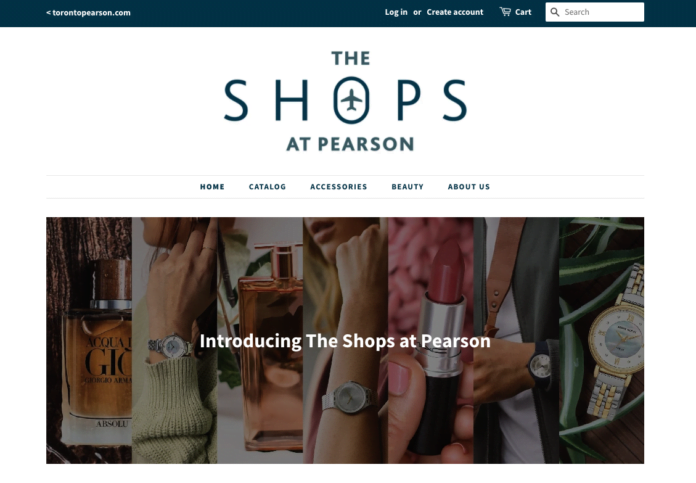
Toronto Pearson has launched The Shops at Pearson, a first for Canadian airports, which is an online retail store that brings the travel shopping experience into people’s homes.
Giovanna Verrilli
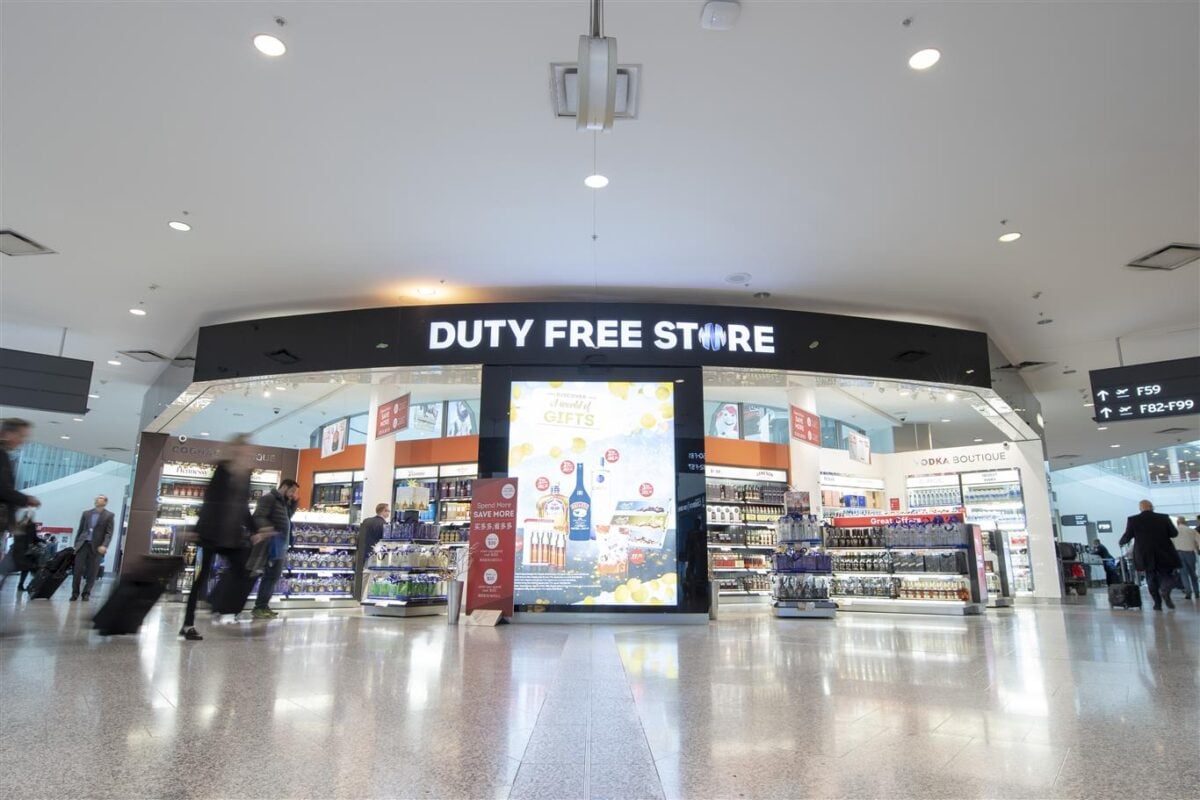
Giovanna Verrilli, Director, Commercial Development at the Greater Toronto Airports Authority, said the launch involves just one partner at this time, Dufry. They operate both Duty Free and Duty Paid stores within the airport and offer retail items that are exclusive to the airport.
“During the pandemic, we were seeing that buying behaviour was switching to an online model and we thought it was the perfect time to embrace and enhance our existing online offers,” she said.
“Creating an online retail store also gives us the opportunity to connect with travellers who aren’t ready to travel just yet. With The Shops at Pearson, we are able to bring the products travellers love to them. They can experience the convenience of shopping at home for products that are normally only available while at the airport.
“At this time, we have only partnered with Dufry. As we expand the e-commence program, we will work to add more airport partners to the program. One day, we’d love to expand the program to include all retail outlets in our e-commerce program.”
The total square footage of the overall retail program at the airport is just over 253,000 square feet.
Image: Duty Free by Dufry at Toronto Pearson
The Greater Toronto Airports Authority is the operator of Toronto – Lester B. Pearson International Airport, Canada’s largest airport. Toronto Pearson has been named “Best Large Airport in North America serving more than 40 million passengers” for four years in a row by Airports Council International (ACI), the global trade representative of the world’s airports.
“This will be a permanent program providing there is interest from the public in it,” said Verrilli.
“We believe if (other airports) see the success and the value to the retailer partners, they will follow suit.”
George Minakakis
Veteran retail expert George Minakakis, a global retail executive with over 25 years of experience, said clearly, we’ve heard a lot about the number of retailers struggling during the pandemic. Needless to say, The Shops at Pearson have not come up in many discussions.
“Devoid of millions of travellers, I can only imagine how much volumes have dropped. My take is that if it weren’t for the pandemic, this marketplace might never have come to fruition. They had a captured audience, and foot traffic malls would be thrilled to have,” said the CEO of the Inception Retail Group. “It really is indicative that the travel industry will likely struggle for a few more years before it returns to pre-pandemic levels.
However, these shops are not luxury brands from a retail perspective, and you can buy most of these products anywhere.
“If this was the Dubai airport where I have been in the past, and you had a marketplace to that, I would be more excited. Perhaps this is the lesson Pearson is about to learn that they need to upgrade their offerings. I would give Pearson a six out of 10 for innovation, but it is a four out of 10 for the retail options. We need to keep in mind that online marketplaces are going to become oversaturated.
“Malls and Department stores (Saks Fifth Avenue and The Bay) have or are adding theirs, in addition to the ones that already exist. Brands also need to ensure that they are not over-exposing themselves and that their customers don’t get confused about where they are buying from, that happens on the internet. At the end of the day, retailers globally in malls, airports, and high streets need to rethink how they conduct business despite all the hubris about rebounds.”
Larry Leung, Principal of consultancy Experience The Skies who works with clients on crafting and assessing their customer experience strategy, said, “The Shops at Pearson program provides the Greater Toronto Airport Authority (GTAA) and its retail partners with the opportunity to engage potential customers outside of travelling,” says Larry Leung, Principal from Experience The Skies who works with clients on crafting and assessing their customer experience strategy., said, “The Shops at Pearson program provides the Greater Toronto Airport Authority (GTAA) and its retail partners with the opportunity to engage potential customers outside of travelling.”
“Along with the shop and pickup concept introduced earlier, customers have more reasons to engage with the airport online and social media assets regularly. The rich data from searches and purchases will help the GTAA shape future product and service introduction thereby improving overall customer experience. Other Canadian airports can easily introduce similarly shopping concept powered by the Shopify platform,” he added.
According to a report by Statistics Canada, Toronto/Lester B. Pearson International enplaned and deplaned 13.0 million passengers in 2020, down sharply from almost 50 million in 2019. Domestic traffic fell 70.4 per cent (from 17.7 million to 5.2 million) international traffic fell 73.4 per cent (from 17.9 million to 4.8 million), and transborder traffic fell 78.0 per cent (from 13.6 million to 3.0 million).
The new online shopping experience The Shops at Pearson will have products available for delivery in Ontario.
“We know people love grabbing their favourite products while at the airport, and now they don’t need to travel to get the items they want. As not everyone is ready to travel yet, we are bringing the stores people love directly to them. It’s simple for Ontario residents to order online and have products shipped directly to their homes. From beauty products to fashion accessories, the same travel shopping experience can be enjoyed at home with The Shops at Pearson, and there are even some with heavily discounted prices,” said the airport.
“The launch of The Shops at Pearson is a perfect complement to our existing suite of online services at torontopearson.com.”
Canadian shopping centre owner Cadillac Fairview has launched a unique delivery service for the Greater Toronto Area, through CF Sherway Gardens, with plans to introduce CF Delivery in the near future to major markets in Vancouver and Montreal.
Cadillac Fairview has partnered with Swyft to offer retailers at CF shopping centres preferred shipping rates and a “compelling, centralized environment to complement their existing omni-channel logistics.”
Jose Ribau
“In the spirit of retail agility, we continue to explore new technology and value-based opportunities for our partners to stand out and deliver on new consumer expectations,” said Jose Ribau, Executive Vice President, Digital and Innovation.
“Our partnership with Swyft is an example of how we continue to put retailers and customers at the centre of our offerings, while collaborating with like-minded companies who share a mutual goal of streamlining the shopping experience.”
Cadillac Fairview said CF Delivery will provide highly competitive same-day and next-day delivery rates across three major markets including the Greater Toronto Area, Vancouver, and Montreal with outbound packages coming from a CF property as a centralized fulfilment hub. The same delivery services with Swyft can also be directly integrated with the retailer’s regional distribution centre and other non-CF storefronts across the three major markets.
Aadil Kazmi
“As a leader in the shopping centre industry, Cadillac Fairview has some of the most productive and most sought after malls in Canada, and we are thrilled to partner with them as they continue their journey of bridging the gap between brick-and-mortar and online shopping,” said Aadil Kazmi, Swyft’s co-founder and current CEO. “Swyft helps retailers of any size provide affordable same-day delivery and, with the increased consumer demand for same day delivery witnessed during the last year and a half, customers are yearning for hybrid accessibility to their favourite retailers.”
Gary Newbury, an analyst and expert in supply chain management, said this is another great example of mall owners/managers stepping in to fill gaps where individual retailers – especially independents or small format specialty retailers – find it difficult to navigate scaling last mile propositions, or very uncommercial due to lower than needed demand.
“The pandemic has certainly accelerated consumer interest in online services, whether that is BOPIS (buy online, pick up in store), curbside or delivery to a point of convenience (home or a nearby collection point). And much of what consumers learnt through lockdown will “stick” and become their way of preferring to do business as life continues to unfold,” he said.
“Using a combination of carriers to provision for the last mile activity – getting the product from the store to where the consumer wants to receive it – and supplementing this with an innovative returns handling approach via ReturnBear is starting to move towards a “Mall of the Future” concept. To fully enable this, it requires all retailers to link their POS systems to the mall owner’s systems to enable a single delivery across multiple banners, rather than the consumer relying on the carrier to consolidate deliveries.”
If we think about “Mall as a service” for consumers, it requires this level of integration, he added. It also requires a different strategy to facilitate confidence of stock accuracy, as shelf stock balance is notoriously out of date by the time it is uploaded to the website/app.
“Much work still needs to be done in this area, as consumers really lose confidence when they order one thing and receive substitutions or no stock. Many “systems” do not provide backorder functionality with an accurate date for fulfillment, much less interact with the customer to accept or reject this,” explained Newbury.
“The other side of this equation does still feel a fair way off. What is the strategy for the mall? Are landlords still using 2010s approaches to keep tenant occupation high? Signing up long term deals to meet their investor requirements for steady income? Or are we likely to see some further adventurous announcements from our Canadian mall owners/managers arising while we are living through these unprecedented times where we can throw a few things in the air to create innovation? After all, such public spaces have traditionally created experiences – the Saturday afternoon visit to the mall for instance. Creating excitement for the local community is key.
“This is a great announcement and shows that despite the retailing industry struggling for air, especially those in discretionary spending categories, the mall is moving forward quickly with innovative and consumer centric concepts.”
Image: Ravel by CF
Cadillac Fairview said its Ravel by CF service is intended to provide a frictionless shopping experience for consumers.
CF Eats is a service designed to support food retailers and restaurants manage online orders more efficiently and seamlessly and the shopping centre owner’s partnership with ReturnBear is intended to help retailers realize a faster, more efficient return process.
CF Eats is available at all the shopping centre owner’s properties.
Ravel by CF has also partnered with Deliverect to offer food retailers and restaurants the ability to create their own online virtual storefront, and manage third party orders and menus all in one place.
ReturnBear introduced its first physical drop off points at two CF shopping centres in Ontario this summer. It was launched in July at CF Toronto Eaton Centre and CF Fairview Mall. It provides shoppers with a hassle-free return experience with instant refunds without the burden of waiting in long lines in-store or making a trip to the post office. For retailers, it saves time and cost on processing returns so they can restock and resell returned items without missing a beat, said Cadillac Fairview.
The Interview Series: With Special Guests Gary Newbury and Jeff Davenport
Craig talks with experts Jeff Davenport and Gary Newbury about the future of shopping centres in North America including mixed-use and online fulfillment as the pandemic disrupts the business model.
The Interview Series podcast by Retail Insider Canada is available on Apple Podcasts, Stitcher, TuneIn, Google Play, or through our dedicated RSS feed for Overcast and other podcast players. Also check out our The Weekly podcast where Craig and Lee discuss popular content published on Retail Insider which is part of the The Retail Insider Podcast Network.
Drop us a line at Craig@Retail-Insider.com. You can also rate us in Apple Podcasts or recommend us in Overcast to help more people discover the show!
Background Music Credit: Hard Boiled Kevin MacLeod (incompetech.com). Licensed under Creative Commons: By Attribution 3.0 License. http://creativecommons.org/licenses/by/3.0/
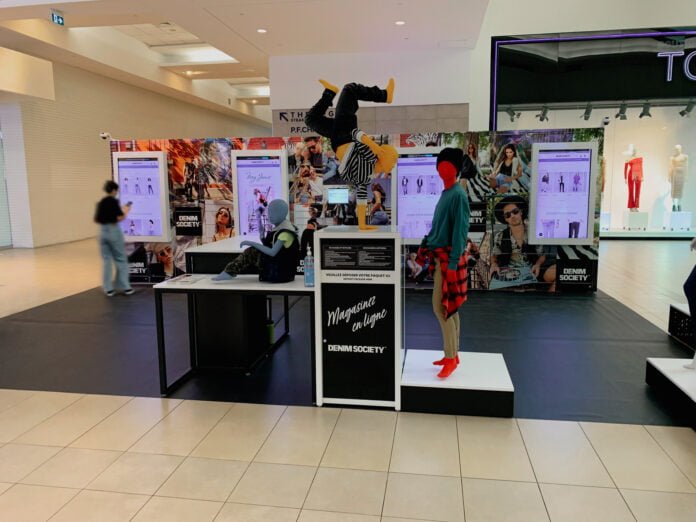
Montreal – August 19, 2021 – Montreal-based manufacturer Artitalia Group Inc. has designed and manufactured the first ever unmanned kiosk for Denim Society. Always at the forefront of innovation, Artitalia Group brings together the online and offline shopping experience. Through Artitalia Group’s smart locker solution, the Addobox, this new venture offers Denim Society’s customers a seamless and fully integrated omnichannel solution.
For over 35 years, Artitalia Group has specialized in designing and manufacturing custom products for some of the biggest names in the retail, hospitality & restaurant, material handling, and mail & parcel industries. Now with the surge in online shopping and the growing need to make consumers feel more connected to brands they trust, Artitalia Group joined with Denim Society to create a hybrid solution where customers can browse through items on display or shop online directly on 1 of 4 integrated touch screens.
Denim Society, a premium quality denim online marketplace provides quality jean-wear at accessible pricing in multiple product categories. With a keen focus centered on denim related products, Denim Society keeps its research and development team at the cuff of proving their customer quality fabrics, refined washes, and finishes.
“We’ve given the brand and Carrefour Laval a modern take on the future of retail with our innovative pop-up shopping experience. Our goal is to introduce the new online marketplace to Carrefour Laval customers by allowing them both to view a sample of the collection, as well as the opportunity to browse the website live. The pick-up (delivery) and drop off (returns) features are an added bonus highlighting the easy-to-use e-commerce shopping platform.” said Cynthia Kreidi, Director of Marketing/E-commerce at Jeaniologie.
“The kiosk was designed to offer a unique omnichannel experience. It combines the comfort of shopping in-store with the convenience of buying online. With access to our Addobox, shoppers can place their purchases on Denim Society’s website and then retrieve their items in our smart locker”, said Enzo Vardaro, SVP, Chief Commercial Officer.
Once an order is completed and placed within the Addobox, the customer is immediately sent a notification that will allow them to retrieve their purchase quickly with a simple scan or pickup code. Artitalia Group also designed and manufactured a hassle-free return box to circumvent parcel returns to the store. The return box is a quick and effortless solution where a customer can initiate a return through Denim Society’s online store, a notification will then be sent to Demin Society notifying them that the item has been returned to the drop box.
The pandemic has accelerated the shift to e-commerce from traditional physical stores to e-shopping, which means that customers are comfortable enough to buy online and pick-up in store. Research has shown that buy-online, pick-up-in-stores solutions give retailers an edge. With the bonus of this hybrid kiosk concept, Artitalia Group and Denim Society have found the perfect solution to cater to both online and brick-and-mortar type shoppers.
About Artitalia Group
With over 35 years of experience and fueled by innovation and creativity, Artitalia Group offers quality products and services required to manage end-to-end custom programs, from conception to completion. With offices in Canada, the United States, and China, Artitalia Group employs more than 500 employees in facilities that total 1 200 000 sq. ft. It serves clients across four markets: Retail, Hospitality & Restaurant, Material Handling, and Mail & Parcel. Artitalia Group takes pride in offering custom solutions to challenging issues and provides peace of mind to its valued clients.
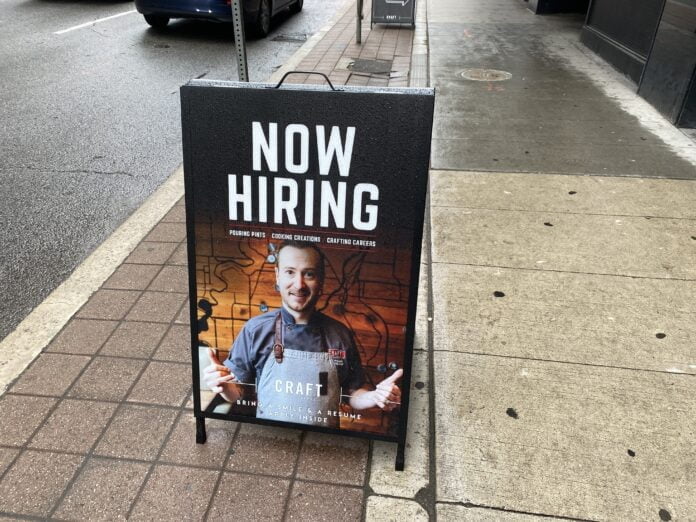
Hiring Sign at Craft Beer Market on Yonge Street in Toronto (Photo by Dustin Fuhs)
“We’re hiring” signs are simply everywhere. Some blame overly generous employment insurance programs which is keeping many highly capable individuals in their homes. Others will point to the younger generation not willing to work or are blaming the virus itself, because people are in fear of it. Rumours of agism have also emerged to explain why we are seeing more boomers exiting the market altogether. The fact of the matter is that it is likely a mixture of several factors. Blaming one factor more than others is baseless. Regardless of the reason, the labour shortage we see in Canada has not only been there for a while, but it is also happening elsewhere around the industrialized world. The food industry, of all sectors, is likely one of the most affected by what is happening.
Let’s start with the most obvious issue we see as consumers almost every day: The labour deficit in food service. Restaurants are cutting hours, even closing several days a week just because they can’t get anyone to serve, cook or clean. A recent survey this summer suggested that restaurant operators are now providing more incentives to their new employees. A total of 40% are offering extra paid vacation, 37% hope to persuade new hires with better job titles, while more than a third are offering signing bonuses, sometimes over $1,000. As wages rise though, so are applicants. Some ice cream shops and independent restaurants have doubled wages in recent months, and many of them were flooded with applicants. With more money, candidates will show up. In the U.K., wages in food service have risen by almost 15% in 6 months.
But with low margins coupled with highly unpredictable demand patterns in food service, it’s not that easy. Many restaurant operators have next to no cushion to increase wages. To offset staffing woes, many are now reverting to different managerial decisions by limiting the number of operating hours. Some are closing Mondays, Tuesdays, and Wednesdays, or are opening fewer hours during the day. In fact, don’t be surprised if a greater number of restaurants are managed like flights in the airline industry. Airlines will only have flights if they can fill the aircraft. If not, they’ll cancel it, one way or another. More restaurants are likely to open only if most seats can be filled and will menu manage differently. In other words, expect fewer choices. In fact, some restaurants have started to offer only one or two choices of entrees. Given financial pressure points, competition, and higher input costs, it is the only way for operators to run a profitable operation.
In food distribution, the situation is beyond comprehension. On farms and in processing, labour shortages are not just about convenience and profitability. It also means that a lot of food goes to waste. Around 35.5 million tonnes of food goes to waste across Canada’s supply chain each year according to a recent Second Harvest report. Short-staffed operations have only seen produce like mushrooms, lettuce and broccoli not making it to the human food chain, just because getting enough bodies out in fields was not possible. Canadian food manufacturing had 28,000 vacancies before the pandemic. Some suspect that number may have gone up by as much as 50% since March 2020.
In food retail, if you see an empty shelf, it’s not because we’re running out of food. It’s likely because nobody was available to fill it. Or the supplier may have run out of truckers. Like it or not, it is mostly likely staff-related.
Not only do governments need to find ways to incentivise people, young and old, to participate in the economy, educational institutions like high schools, colleges and universities also need to value the food industry and showcase it as a viable career path. The current situation is certainly getting many employers to think different about how to manage their business. But they need help.
The reality though is that our labour situation is everyone’s business. Canada has provided one of the most educated workforces in the agri-food sector, in the world, from farm to fork. Many farmers, people in food processing and distribution now have graduate degrees. Wages and revenues have barely moved in tandem with the amount of knowledge gain, novel technologies used, and skills acquired by the workforce in the industry. For the most part, while the food industry has long provided Canadians with high quality, safe food products we all reasonably expect, it’s always been about cheap calories for consumers. High quality food products require strong human capital.
In sum, we’re not really experiencing a labour shortage per se, far from it. It is very much a lingering broken labour market which has gotten worse because of the pandemic. All of it of course is galvanized by an economy filled with consumers looking for the best deals, most of the time by choice, necessity, or both. If you’re already willing to pay $30 for that next club sandwich at a restaurant, or pay an extra 10% in tips, or even an extra 5% to 10% for food at the grocery store, it means you’re very much aware of what lies ahead.
Blaming food companies and restaurants is easy. Asking them to increase to merely wages without paying more for their food and service is just not realistic. At least not anymore.