Add to Delivery, the latest feature for Prime members, is designed to make it easier to add what customers need when they remember they need it.
The launches are part of the company’s broader effort to add new benefits to Prime as competition in e-commerce intensifies. Amazon said Add to Delivery is available through the Amazon Shopping app and Amazon.ca on mobile devices, enabling Prime members to add millions of eligible products to deliveries that have not yet shipped without paying additional shipping fees.
The announcements come as Amazon underscores its growing economic presence in Canada. The company said it has invested more than $65 billion in its Canadian operations since 2010, employing more than 46,000 people across the country, while a third-party economics consulting firm estimated those investments generated an additional $55 billion in spillover value-added effects to Canada’s gross domestic product between 2010 and 2024.
“We’re always looking for ways to make Prime even more valuable for our members, and Amazon Family is a natural extension of that commitment, giving Prime members in Canada the ability to share select Prime benefits with one other adult in their household at no additional cost,” he said.
“Whether it’s keeping a gift purchase a surprise or simply maintaining personalized recommendations and account security, each person keeps their own account while enjoying shared Prime benefits. It’s another way we’re continuing to evolve Prime by adding benefits that offer customers greater convenience, flexibility, and value.”
Gouveia said Amazon’s roots run deep in Canada.
“Since the launch of Amazon.ca in 2002, we’ve grown to more than 46,000 employees and coast to coast. Since 2010, we’ve made direct investments in our Canadian operations of more than $65 billion, and a third-party economics consulting firm estimates that those investments contributed an additional $55 billion in spillover value-added effects to the Canadian GDP between 2010 and 2024.
“That includes investing in our operations and technology, creating employment opportunities, raising our average hourly base wage to $24.50 per hour, and helping businesses of all sizes access the products, services, and tools they need to operate efficiently.
“At a time when value matters more than ever, we’re also continuing to innovate on behalf of customers through new Prime benefits, delivery innovations, and shopping features that make shopping simpler and more convenient. Together, Amazon’s investments help support Canadian businesses and communities while creating an even better experience for our customers.”
Photo: Amazon
Gouveia said we’ve all had that moment — you place an order and immediately remember something you forgot.
“Add to Delivery solves exactly that. With a single tap, Prime members can add eligible items to an upcoming delivery without going through checkout again, and with no added shipping fees. It’s about making shopping with Amazon even more convenient and adapting to how Canadians actually shop — one need at a time, as they arise,” he said.
“Our focus is on making shopping more convenient, not on changing how customers shop. We don’t always remember everything we need in a single moment, and Add to Delivery gives Prime members a simple way to add what they need, when they remember they need it. If we can still add to a delivery that’s arriving later today or tomorrow, members will see the Add to Delivery option as they shop, and with one tap they’re done.”
Gouveia said the biggest impact is for customers as Add to Delivery gives Prime members more flexibility by allowing them to quickly add eligible items to an upcoming delivery without placing a separate order. It’s an easy, fast, and free way to avoid creating new orders for last-minute additions.
“From an operations perspective, there’s no meaningful change to how our network functions. Our employees who are picking, packing, and delivering to customers are doing the same thing whether an order arrives the same day, next day, or in two days — and the same is true when an item is added to an existing delivery. Amazon has built a network that places products closer to customers, which means items are travelling fewer miles and experiencing fewer handoffs between the time an order is placed and the time it arrives on customers’ doorsteps,” he said.
“The process is consistent regardless of delivery speed, which allows us to continue improving the customer experience without adding operational complexity. Across the company, Amazon continues to invest in initiatives that advance long-term sustainability goals as well, including expanding its fleet of electric delivery vehicles, reducing packaging, and offering delivery options that help consolidate eligible orders like Add to Delivery.”
Gouveia said Amazon is excited to bring Add to Delivery to Prime members in Canada as part of its continued focus on delivering convenience and value globally.
“This feature reflects our broader commitment to making shopping as simple and seamless as possible for Canadians. The feature is available across millions of products — from pantry staples and pet toys to electronics, clothing, books, and more — and works on the Amazon Shopping app and Amazon.ca on mobile devices. We know customers appreciate solutions that save them time, and Add to Delivery is another example of how we’re evolving to meet Prime members where they are,” he explained.
Gouveia said Prime has always been about bringing together convenience, value, and a great shopping experience, and Add to Delivery is another way it’s making shopping simpler for members.
“As Prime continues to grow in Canada, we’re able to keep investing in new features and benefits that make the membership even more valuable. Just this month, we also launched Amazon Family, which lets Prime members share select benefits with one other adult in their household at no additional cost. It’s all part of our ongoing commitment to delivering more value for Prime members and continuing to innovate on their behalf,” he said.
Bota Bota, spa-sur-l’eau has opened a second floating vessel at Montréal’s Old Port, marking a significant expansion of the wellness destination as it increases capacity and adds new facilities aimed at enhancing its existing spa experience.
The Pavillon officially opened July 15, adding nearly 2,000 square metres (20,000 square feet) of new space. Docked perpendicular to the original vessel, the expansion introduces additional amenities focused on relaxation while extending the spa’s signature water circuit. The project received financial support from Québec’s Ministry of Tourism through the Tourism Industry Recovery Assistance Program.
The expansion represents a major investment for the Montréal-based business as it broadens its operations more than 15 years after the original concept was introduced. The company said the new vessel was designed to strengthen the relationship between water, architecture and wellness that has defined the spa since its opening.
Bota Bota photo
Québec Tourism Minister Amélie Dionne said the project aligns with the province’s efforts to strengthen wellness tourism and generate economic activity.
“Wellness tourism is a sector with great potential, and Québec is increasingly distinguishing itself in this rapidly growing global market. We are counting on unique experiences such as those offered by Bota Bota, spa-sur-l’eau to boost the economic benefits of tourism in Québec. Thanks to its innovative concept, this project will raise the city’s profile while generating valuable benefits for the local economy,” said Dionne.
“Montréal’s tourism entrepreneurs are demonstrating great creativity in their efforts to provide every visitor with an exceptional experience. I am pleased that our government is supporting an inspiring project like Bota Bota, spa-sur-l’eau, which will have a positive impact on our city and our economy,” said Rouleau.
Amélie DionneChantal RouleauJean Pelland
The new pavilion was designed by Sid Lee Architecture, which also worked from the vision established when Bota Bota was first conceived more than 15 years ago. According to the company, the latest addition offers a contemporary interpretation of that concept while integrating with the existing floating spa.
“We sought to create an architecture that reveals the landscape rather than imposes upon it, one that invites guests to slow down, be present, and experience the river, the garden, and the city as a cohesive whole,” explained Jean Pelland, principal partner at Sid Lee Architecture.
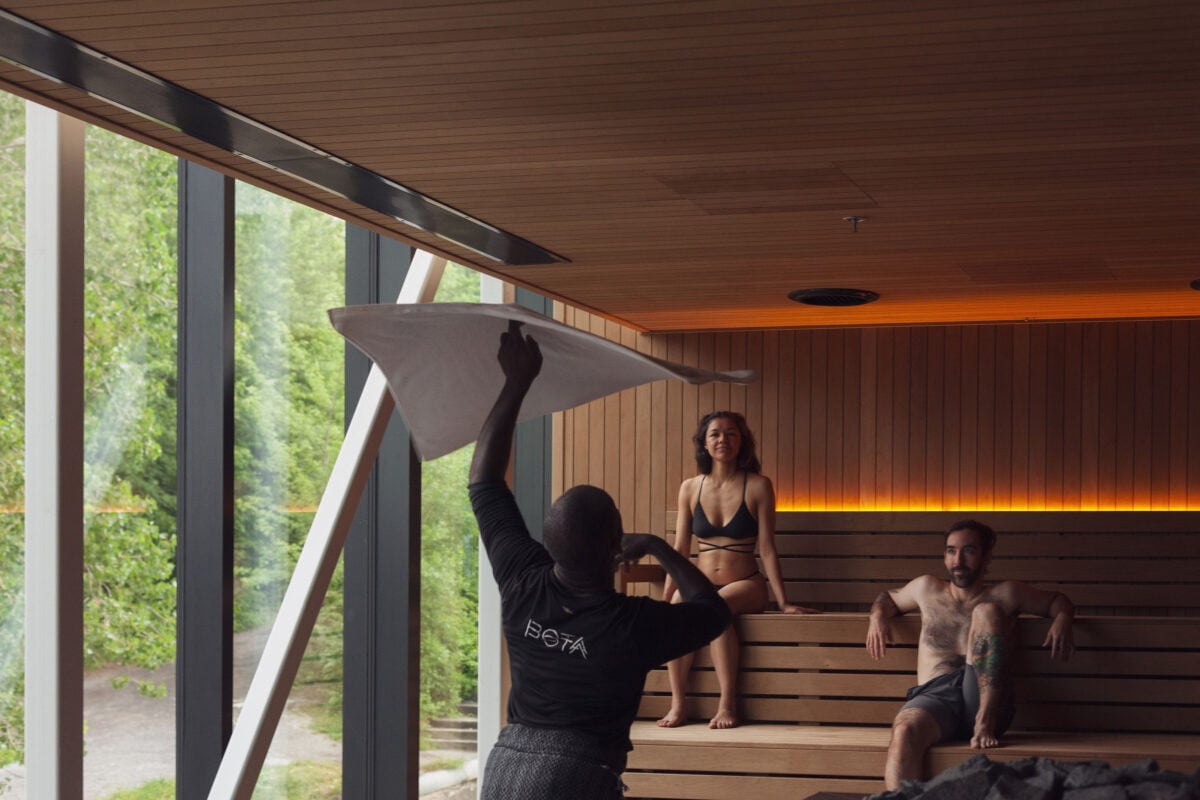
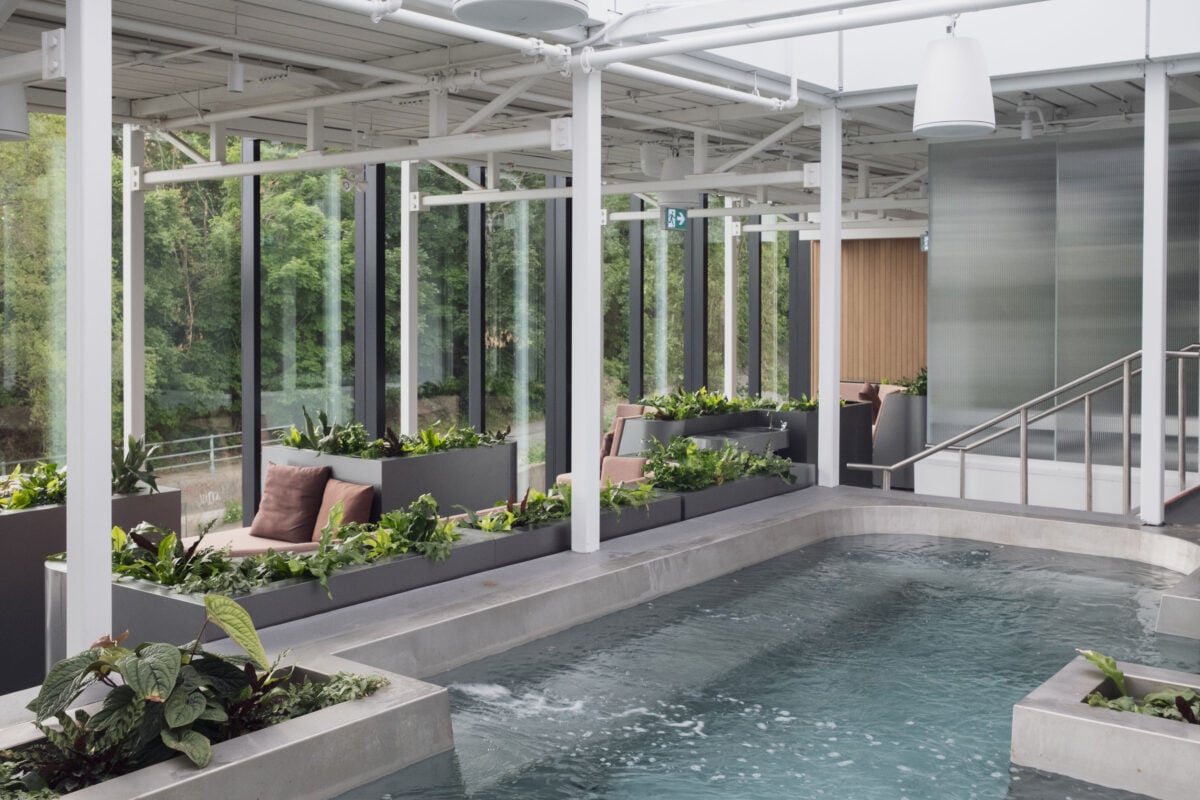
The company said the expansion includes a larger sauna designed for Aufguss ceremonies with views of the surrounding waterfront, a panoramic outdoor bath, an indoor bath incorporating light, sound and vegetation, and new cold baths featuring lighting inspired by heart coherence principles.
The project also includes redesigned changing rooms, including a gender-neutral section developed according to universal accessibility principles.
“Our new Pavillon builds on Bota Bota’s vision of creating an environment where every moment becomes an experience, enriched with new spaces designed to bring people together. True to our founding philosophy of integrating well-being into everyday life, each element has been thoughtfully designed to offer a unique perspective, where architecture and landscape come together inviting guests to pause and reconnect,” said Emond.
The company said the Pavillon is now open to visitors at its Montréal Old Port location.
In an interview with Retail Insider, Emond talked about the news.
Question: What inspired the decision to expand Bota Bota with a second vessel, and why was now the right time to do it?
Answer: The idea for a second vessel came directly from guest demand. During peak periods, we simply couldn’t accommodate everyone who wanted to experience Bota Bota. We had anticipated this “good problem” as early as 2018–2019, which led us to purchase our first barge in 2020.
After the pandemic, it became clear that our vision had outgrown that initial plan, so we acquired a larger barge in Matane and transformed it into what is now the Pavillon.
This expansion goes beyond adding capacity. It gave us the opportunity to completely rethink the guest journey from start to finish. With more spacious facilities, larger locker rooms, improved circulation, and innovative experiences, each space is now designed to make every visit more comfortable and immersive The demand is clear, making this the right time to invest in an experience that is even more seamless, comfortable, and true to what Bota Bota is known for.
Q: How does the new Pavillon build on the original Bota Bota experience while offering something new for returning guests?
A: The Pavillon was designed to naturally extend the Bota Bota experience while preserving the calm and restorative atmosphere that defines the spa. Rather than recreating what already exists, it introduces new spaces and rituals that enrich the wellness journey and water circuit experience.
Our new sauna was purpose-built for Aufguss sessions, with tall ceilings, a high-performance heater, and integrated sound and lighting to create an immersive multisensory ritual. Guests are then guided to a dedicated cold experience featuring multiple cold baths with lighting designed to encourage slower, more controlled breathing.
The Pavillon also introduces a unique indoor bathing area where the atmosphere evolves throughout the day. A dynamic soundscape changes with the weather, season, and time of day, while integrated lighting, lush vegetation, and custom-designed furnishings create the feeling of bathing in nature year-round.
Finally, the Pavillon adds a second low-voice area where guests can quietly connect with friends and loved ones. While the original boat remains a silent space, this addition responds to growing demand from guests looking to personalize their wellness journey, while preserving the peaceful atmosphere throughout the spa.
Bota Bota photo
Q: The Pavillon will feature a sauna dedicated to Aufguss ceremonies. What makes that experience unique, and why was it important to include?
A: Our Aufguss sauna offers a more immersive wellness ritual than a traditional sauna. Led by a trained sauna guide, each ceremony combines heat, essential oils, music, and choreographed towel movements to create a multisensory experience that stimulates both body and mind.
It was important to include because it reflects the growing interest in guided wellness experiences while fitting naturally into Bota Bota’s water circuit of hot, cold, and relaxation. Our team receives extensive training to deliver each ceremony with intention and attention to detail, ensuring every guest feels fully immersed.
Q: How did the design and architecture of the Pavillon incorporate its waterfront setting in Montreal’s Old Port and the views of the St. Lawrence River?
A: The Pavillon was designed to celebrate its unique waterfront setting while creating a deeper connection between guests and their surroundings. Expansive windows,panoramic terraces, and carefully positioned relaxation spaces highlight the panoramic views of the St. Lawrence River, the Montréal skyline, the Lachine Canal locks, Habitat 67, and the iconic Silo No. 5.
The new ship was also designed to balance introspection with connection, offering spaces where guests can reflect quietly or enjoy gentle social interaction. Together with the original silent boat and the Gardens introduced in 2015, the three areas now offer complementary experiences that respond to different ways of enjoying wellness.
Architect Jean Pelland describes the Pavillon as “what would happen if the original boat and the Gardens had a baby.” The design blends the maritime character of the original ferry with more biophilic touches inspired by the Gardens, incorporating more greenery and natural elements to create a calming environment. This balance of architecture, nature, and shared wellness is what makes the Pavillon unique.
Bota Bota photo
Q: What do you hope visitors will feel or take away after experiencing the new Pavillon for the first time?
A: We hope guests leave feeling renewed, inspired, and deeply immersed in their wellness journey. The goal was to create a space that encourages visitors to slow down, discover new rituals, and enjoy moments of relaxation, connection, and presence.
These new spaces allow guests to reconnect with themselves and others in meaningful ways, while staying true to Bota Bota’s philosophy of wellness. Ultimately, we hope the Pavillon becomes a place passengers want to return to, offering a new experience to discover with every visit.
Shoppers Drug Mart and Obesity Canada have launched a collaboration aimed at expanding access to obesity care, supporting public education about obesity as a chronic disease, and reducing weight bias and stigma through evidence-informed initiatives, including a free virtual weight management program available in participating provinces.
The organizations said the alliance will focus on improving awareness of obesity, promoting evidence-based care resources, and supporting multidisciplinary approaches to long-term weight management for eligible Canadians.
The collaboration brings together Shoppers Drug Mart’s pharmacy services and Obesity Canada’s education programs in an effort to broaden access to care at a time when many Canadians face barriers to primary care, according to the announcement. The organizations said multidisciplinary and virtual care models can provide additional access points by connecting patients with healthcare professionals outside traditional settings.
Commitment to supporting public awareness and education
As part of the initiative, Shoppers Drug Mart said members of its care team have completed Obesity Canada education programs designed to support evidence-informed and stigma-aware obesity care. The company also said it has committed to supporting public awareness and education efforts related to overweight and obesity.
The collaboration will include joint work on public education campaigns, awareness initiatives, stigma reduction efforts, and the promotion of evidence-based obesity care resources.
Shoppers Drug Mart also announced the rollout of its Weight Management Program, a free virtual service available in participating provinces that connects eligible patients with a multidisciplinary care team that includes a nurse practitioner and a registered dietitian, alongside in-person support from the patient’s preferred pharmacist.
Under the program, patients may be prescribed weight management medication when clinically appropriate as part of a personalized care plan. Participants also receive educational resources, personalized guidance and behaviour-focused tools through the Shoppers Drug Mart website.
Ruchi KumarLisa Schaffer
“At Shoppers Drug Mart, it’s our mission to help Canadians Live Life Well, and we’re proud to work with Obesity Canada to help increase awareness of obesity as a chronic disease and improve access to evidence-based obesity care,” said Ruchi Kumar, VP, Pharmacy Services & Strategic Initiatives at Shoppers Drug Mart. “Through our Weight Management Program supported by a multidisciplinary Care Team, we can help connect more Canadians with resources and guidance that support meaningful health outcomes.”
A complex chronic disease
The organizations said obesity is a complex chronic disease influenced by biological, genetic, environmental, behavioural and social factors. They said the condition is associated with several chronic health conditions, including Type 2 diabetes, cardiovascular disease, hypertension and several cancers, and that access to respectful, evidence-based care can help improve health, quality of life and long-term well-being for Canadians living with overweight or obesity.
Obesity Canada said healthcare professional education is an important component of improving conversations about obesity across the healthcare system and supporting access to evidence-informed care.
“As a complex, chronic disease, obesity deserves the same compassionate, evidence-based care as any other chronic health condition,” said Lisa Schaffer, Executive Director at Obesity Canada. “This reflects a shared commitment to improving awareness, reducing stigma and helping more Canadians understand and access evidence-informed care options. Education is an important part of that work.”
The Weight Management Program is currently available in participating locations in Alberta, British Columbia, Manitoba, Saskatchewan, Ontario, Prince Edward Island, and Newfoundland and Labrador.
According to the announcement, the online-only program provides eligible Canadians with virtual access to nurse practitioners and dietitians, along with pharmacist support from their pharmacy of choice. Developed in part through a licence and services agreement with Launchit Solutions, operating as the Medical Weight Management Centre of Canada, the program includes virtual assessments, ongoing support and educational resources over a 12-month period through the Shoppers Drug Mart website.
Shoppers Drug Mart said the collaboration with Obesity Canada reflects a shared commitment to expanding access to multidisciplinary obesity care while supporting education and awareness initiatives intended to improve understanding of obesity as a chronic disease.
In an interview with Retail Insider, Kumar discussed the initiative.
Question: What motivated Shoppers Drug Mart to partner with Obesity Canada, and what specific gaps in obesity care is this collaboration intended to address?
Answer: Together, Shoppers Drug Mart and Obesity Canada share a commitment to bringing greater awareness to the tools available for Canadians seeking support for their health. Obesity is a complex, chronic disease and a key driver of other chronic health conditions, yet millions of Canadians continue to face barriers accessing primary care and evidence-informed treatment.
Through this collaboration, we’re helping improve access to compassionate, science-backed care while normalizing conversations around obesity and reducing stigma. By combining Obesity Canada’s expertise with our Weight Management Program, we’re making it easier for eligible Canadians to access personalized support from a multidisciplinary Care Team, which includes a nurse practitioner, registered dietitian and a patient’s preferred pharmacist.
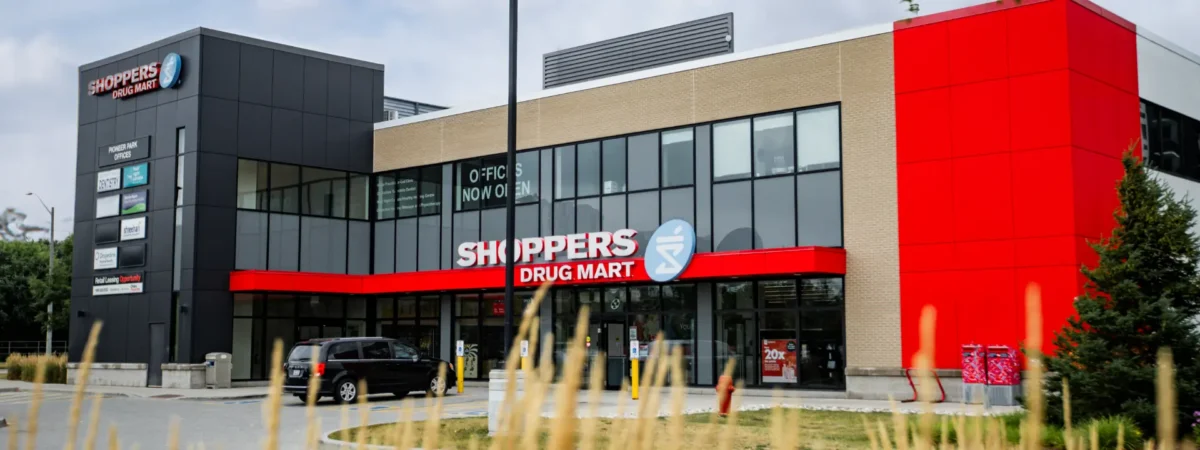
Shoppers Drug Mart photo
Q: How does the free virtual Weight Management Program fit into Shoppers Drug Mart’s broader healthcare strategy, and what role do you see retailers playing in delivering primary and preventive care?
A: The Weight Management Program reflects our commitment to helping Canadians Live Life Well by making healthcare more accessible and connected.
The program provides eligible patients with free virtual access to a nurse practitioner and registered dietitian, along with ongoing support from their community pharmacist, creating a holistic, wraparound approach to weight management. As more Canadians face challenges accessing primary care, we believe Shoppers Drug Mart can play an important role in helping connect patients to trusted healthcare professionals and improving access to evidence-informed care that complements the broader healthcare system.
Q: What early indicators or metrics will you use to measure the program’s success, both from a patient outcomes perspective and a business perspective?
A: Our primary focus is on helping eligible Canadians access the care and support they need. Success means patients are engaging with their Care Team, receiving personalized treatment plans, educational resources and tools, as well as ongoing support that helps them stay on track throughout their weight management journey.
From a business perspective, success means building a sustainable, scalable model that expands access to evidence-based obesity care for eligible Canadians while advancing Shoppers Drug Mart’s commitment to accessible, patient-centered healthcare through expanded clinical services.
More broadly, we hope the program helps increase awareness of evidence-informed treatment options while improving access to care for a chronic condition that affects millions of Canadians. As part of our commitment to helping Canadians, we see success as delivering meaningful value to patients and helping alleviate pressure on the healthcare system through greater access to coordinated care.
Q: Obesity Canada has emphasized reducing weight bias and stigma. How has that influenced the design of the program, the training of healthcare providers, and the patient experience?
A: Reducing weight bias is fundamental to providing quality obesity care. The program is built around the understanding that obesity is a chronic disease, and patients deserve compassionate, personalized ongoing care that reflects their individual health needs.
Shoppers Drug Mart Care Team members have participated in Obesity training designed to support evidence-informed and stigma-aware obesity care. This training helps support more informed, respectful conversations with patients and reinforces a care experience grounded in empathy and evidence.
Our multidisciplinary Care Team works closely with patients throughout their journey, providing ongoing support from nurse practitioners, registered dietitians and community pharmacists. By combining medical expertise with education and personalized guidance, we’re helping create a supportive environment where patients feel empowered to make sustainable lifestyle changes.
Q: As pharmacies continue to expand into healthcare services, what additional clinical or virtual care offerings do you see becoming part of Shoppers Drug Mart’s retail model over the next five years?
A: We’re continuing to look for ways to improve access to healthcare and better support the evolving needs of Canadians. As the healthcare landscape continues to change, we see opportunities for pharmacies to play an even greater role in connecting patients to convenient, high-quality care through both in-person and virtual services. Our focus will remain on expanding access to evidence-informed healthcare, supporting patients with coordinated care, and working alongside the broader healthcare system to help Canadians live healthier lives. We see virtual care being increasingly integrated with our retail pharmacy experience, creating a more coordinated care model with our digital tools, virtual providers, and community pharmacists working together to support patients on their care journey.
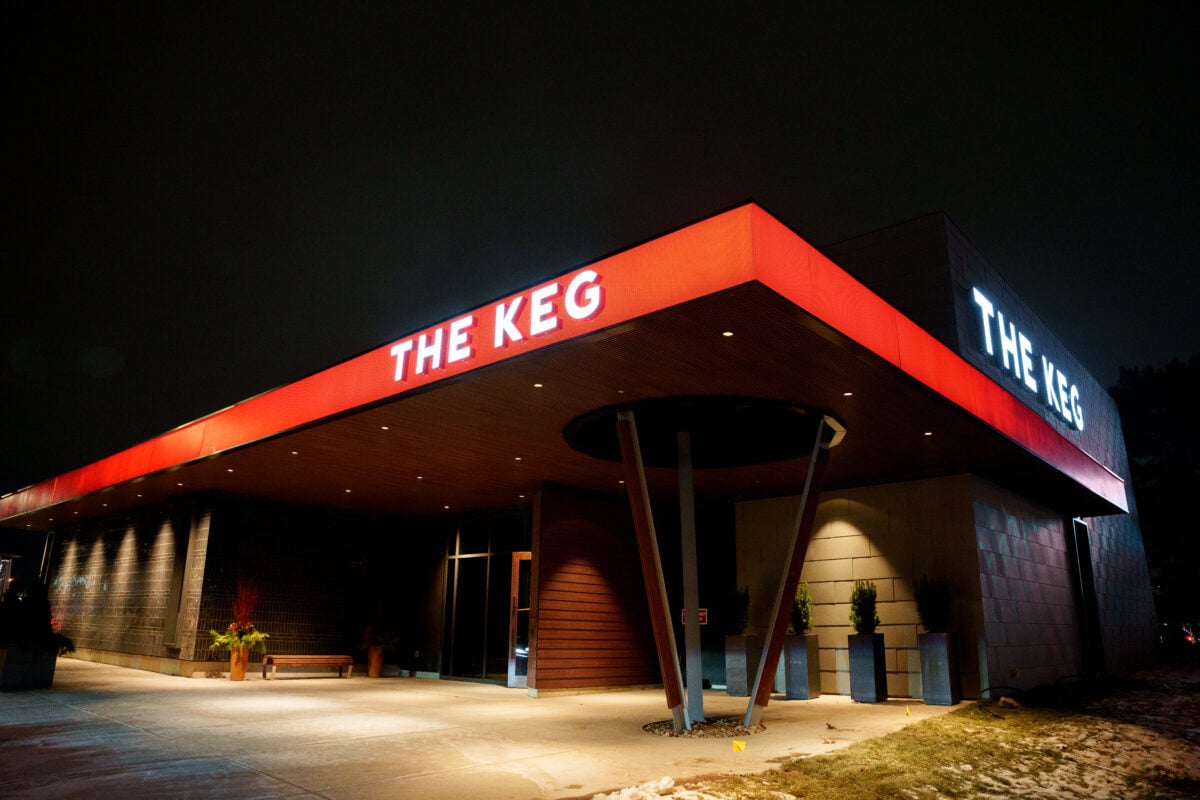
The Keg Steakhouse + Bar is offering delivery for the first time in its history through an exclusive agreement with DoorDash, making a selection of its menu available from more than 100 locations across Canada and the United States.
The restaurant chain said that customers can now order a range of its signature menu items, including steaks, appetizers and desserts, through the delivery platform, marking a significant expansion of how the company serves customers beyond its restaurant dining rooms.
The move introduces a new sales channel for The Keg after more than five decades of operating primarily as an in-person dining destination. The company said the service is intended to allow customers to enjoy its meals at home for a variety of occasions while maintaining the standards associated with its restaurant experience.
“Delivery represents a new chapter for The Keg as we can offer the same level of care and intention we bring to every guest experience, but now directly to our guests’ homes,” said Jason Butler, Senior Vice President of Operations at The Keg Steakhouse + Bar. “DoorDash shares our commitment to quality. That alignment made them the right partner to help us bring The Keg experience to countless households across North America for the first time.”
The agreement makes DoorDash the exclusive delivery provider for The Keg across both Canada and the United States.
Jason ButlerVishwa Chandra
DoorDash said the partnership adds one of Canada’s best-known restaurant brands to its platform and expands dining options for customers seeking premium restaurant meals delivered to their homes.
“The Keg has built an incredible reputation as one of the most trusted restaurant brands in Canada and as a dining partner in celebrating life’s most meaningful moments,” said Vishwa Chandra, Vice President of Enterprise Restaurant Partnerships at DoorDash. “We’re incredibly proud to be The Keg’s exclusive delivery partner, playing a small part in the moments that will be created at home.”
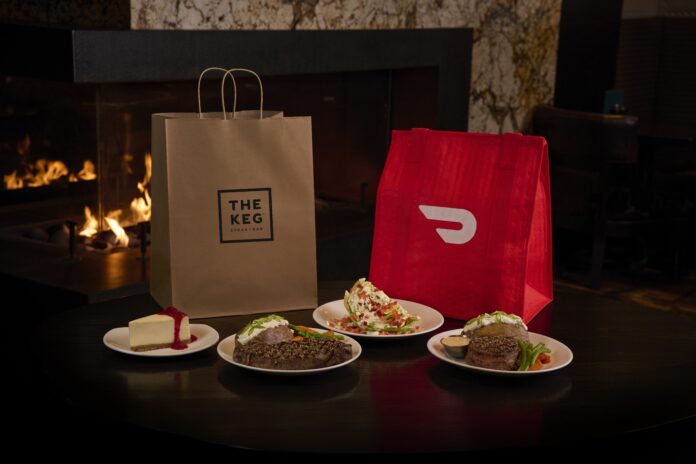
According to the companies, the delivery menu includes a selection of The Keg’s most popular dishes. Available items include the New York Striploin, Keg Burger, Mushrooms Neptune, Smoked Gouda Spinach Dip, Cheesecake and other menu offerings.
DoorDash photo
To mark the launch, DoorDash is offering promotional discounts on eligible delivery orders from The Keg. Customers in Canada can receive $10 off delivery orders of $40 or more placed until Aug. 5, by using the promotional code KEG10 at checkout, while customers in the United States can receive the same discount using the code 10KEG, while supplies last.
The companies also said eligible DashPass members will receive $0 delivery fees and reduced service fees on qualifying orders from The Keg through the DoorDash platform.
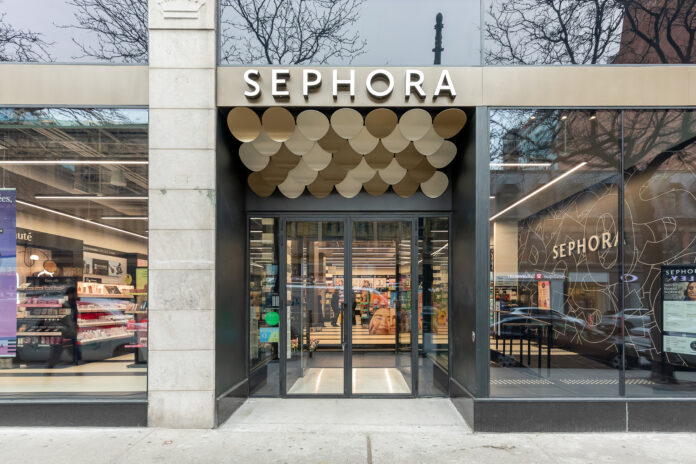
New Sephora store at 241 Rue Ste-Catherine W. in Montreal. Photo supplied
British skincare company Medik8 is expanding its Canadian retail presence through a nationwide launch at Sephora Canada, marking a key step in the company’s broader North American growth strategy following L’Oréal Groupe’s acquisition of a majority stake in the business last year.
The company said its products will become available online at Sephora Canada beginning Aug. 11 and in all 147 Sephora Canada stores starting Aug. 14. The lineup will also be featured in dedicated brand gondolas at 75 locations, while the full Canadian assortment will continue to be available through Medik8.ca.
The rollout coincides with a simultaneous launch through Sephora in the United States and represents the latest phase of Medik8’s international retail expansion. The company said the partnership is intended to broaden consumer access to its clinical skincare products while increasing its presence across North America.
Medik8 brings its science-based approach to skincare to visibly smooth, firm, and revitalize the skin.
“Sephora’s understanding of its skincare client and unmatched scale make it the ideal partner to bring our research-led approach to a broader audience. Our ambition is to establish Medik8 as one of Sephora’s top 10 skincare brands over the next three to five years,” said Simon Coble, Chief Executive Officer of Medik8.
Alongside its Canadian product range, the company is introducing its trademarked CSA Philosophy, a skincare routine centred on vitamin C and sunscreen during the day and vitamin A, also known as retinal, at night.
Medik8 said the routine is designed to address visible signs of skin aging and will form the foundation of its Canadian offering. The launch will also highlight Crystal Retinal, which the company describes as its flagship product and says is its top-selling retinal serum worldwide based on independent market research conducted by Kline & Company analyzing manufacturer-level retinal serum sales for 2025.
According to the company, Crystal Retinal contains retinaldehyde, a vitamin A derivative that it says has been clinically shown to work more quickly than standard retinol while reducing the risk of irritation associated with traditional clinical retinoids.
Sephora Canada said the addition reflects continued demand for clinically focused skincare products.
Marisa Caruso
“As interest in clinical skincare continues to grow, Canadians are actively seeking brands that combine scientific credibility with proven results – Medik8 delivers on both,” said Marisa Caruso, VP, Merchandising, Sephora Canada. “This launch reflects Sephora Canada’s commitment to curating an assortment that empowers our clients to make increasingly informed choices for their long-term skin health. The brand is a welcome addition within our clinical offering, delivering advanced skincare products and further solidifying Sephora’s position as the destination for premium, results-oriented solutions across Canada.”
Medik8 said it manufactures its products through a vertically integrated operating model, with formulation, packaging and shipping handled from its innovation hub in the United Kingdom.
The company said the approach is intended to maintain oversight of product development and manufacturing while supporting its global distribution network.
The Canadian expansion follows L’Oréal Groupe’s acquisition of a majority stake in Medik8 in 2025. The company said the transaction provides additional operational resources to support international retail growth while allowing Medik8 to maintain its research, development and formulation activities.
Welcome to the Daily Synopsis by Retail Insider. We hope you enjoy the 13 articles we published covering key developments in Canadian retail.
Bramalea City Centre is undergoing a major transformation with new retailers like Walmart Supercentre expected in 2027 alongside additions such as UNIQLO and Victoria’s Secret, a revamped food court, and enhanced digital tools as outlined in its momentum-building plans. 0% in May driven by gains at gasoline stations and across nine retail subsectors Statistics Canada. Meanwhile, pet owners remain resilient with spending holding firm amid economic pressures, highlighted by growth in subscription services and omnichannel retailing as reported in pet market trends.
Bramalea City Centre is moving through a significant period of change as new retailers, a renovated food court and continued investment reshape one of Canada’s largest enclosed shopping centres.
Over the past year, the Brampton property has completed a multimillion-dollar renovation of its South Food Court and welcomed brands including UNIQLO, Poulet Rouge and Craig’s Cookies. Walmart Canada, Victoria’s Secret and Kiokii are among the retailers announced for the centre, while management continues working on plans for the former Hudson’s Bay space.
The activity comes as Morguard, which manages and co-owns Bramalea City Centre, works to strengthen the property’s position within a young and growing market while expanding its role as a shopping destination, workplace and community gathering place.
Andrew Butler, general manager of Bramalea City Centre, said the recent announcements reflect an effort to align the property with the people who live around it.
“We have a lot of families and a lot of young people,” Butler told Retail Insider. “Walmart’s offerings align well with that demographic.”
Management has been adjusting the centre’s fashion and food mix, investing in digital services and building systems, and examining opportunities for entertainment and residential development over the longer term.
Walmart to Become a Major New Anchor
Walmart Canada announced earlier in July that it plans to open an approximately 140,000-square-foot Supercentre at Bramalea City Centre in 2027.
As previously reported by Retail Insider, the store will carry a full grocery assortment and general merchandise, along with a pharmacy and pickup and delivery services. It will become Walmart’s sixth Supercentre in Brampton.
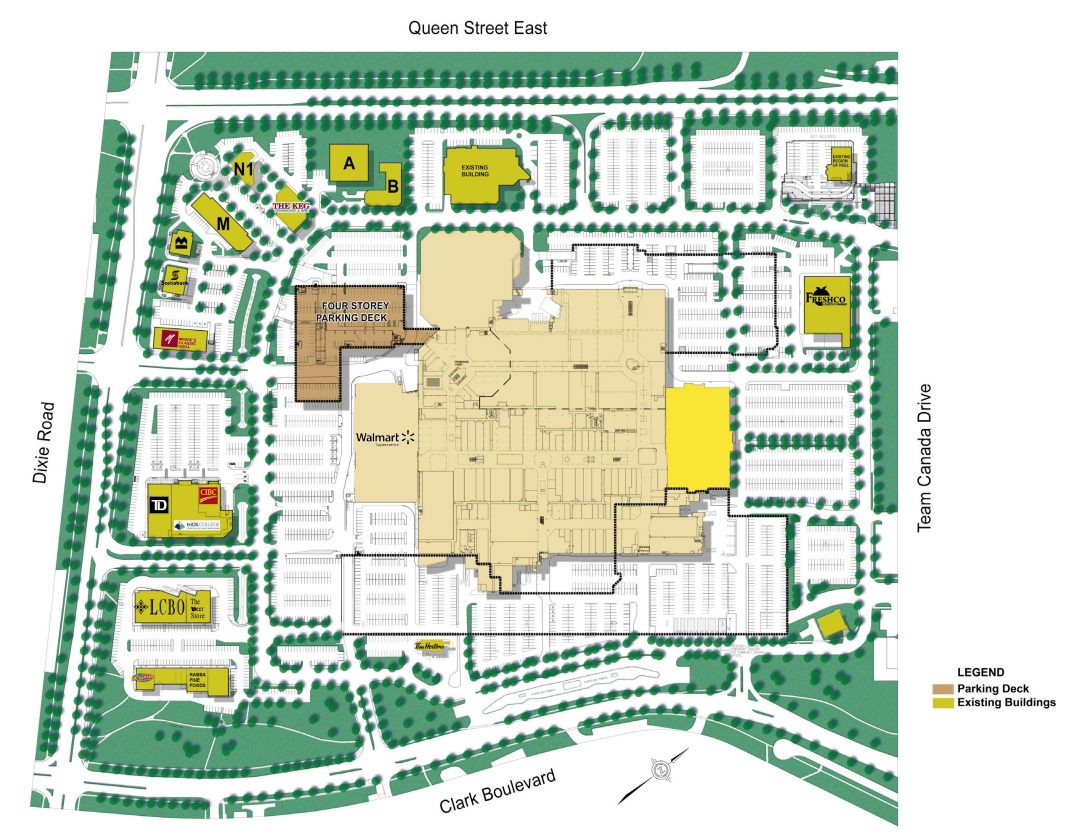
The City of Brampton has approved a site-plan application for Walmart to occupy the former Decathlon space. The plans include exterior changes, new signage, additional online pickup spaces and a reconfiguration of the parking area near the store.
Butler described securing Walmart as a major win for the centre.
“It fills a big space for us in one of the former anchor spaces for the property,” he said. “It’s going to be a two-level store, about 140,000 square feet.”
He said the grocery component will increase the centre’s relevance for everyday shopping, particularly amid continued pressure on family budgets and food costs.
“I think it’s a big win for us and a big win for our shoppers,” Butler said.
The broader anchor area has experienced several transformations over the decades. Butler traced its history through Eaton’s, Zellers, Target and Saks Off 5TH, reflecting the repeated evolution of large department-store and big-box spaces within Canadian shopping centres.
Walmart will replace Decathlon, Activate and Designer Depot, which occupied portions of the former Target premises.
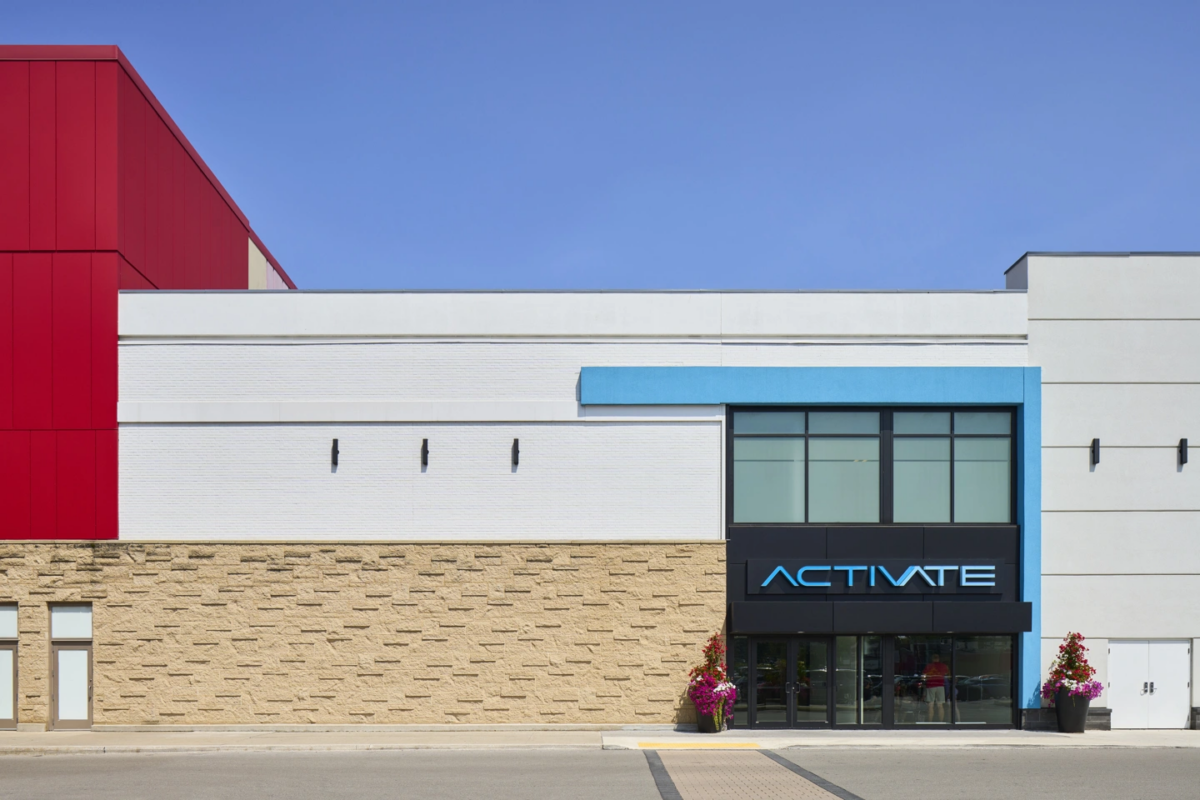
Former Activate Games location at Bramalea City Centre, to become Walmart. Photo: Morguard
Former Hudson’s Bay Space Presents Another Opportunity
While Walmart resolves one major space, Bramalea City Centre is also developing a plan for the former Hudson’s Bay location.
Hudson’s Bay closed its remaining department stores in June 2025, leaving shopping-centre owners across Canada to determine new uses for some of their largest spaces.
Butler said BCC management is actively considering the future of the Brampton location and hopes to share further details closer to the end of 2026.
“It’s unfortunate what happened with the Bay, but that’s the nature of retail,” he said. “You’ve got to pivot, and we’ve got a plan to pivot.”
He did not disclose what uses are being considered, but said the vacancy has opened an opportunity for the property.
The eventual plan could become one of the most consequential parts of BCC’s next phase. Former department-store spaces across Canada are being divided among multiple tenants, converted to entertainment and service uses, or incorporated into larger redevelopment plans.
Former Activate Games location at Bramalea City Centre site plan. Photo: Morguard
Recognizable Brands and Value Drive Leasing
Bramalea City Centre’s recent leasing activity also includes fashion and specialty retailers selected to reflect the centre’s customer base.
UNIQLO opened at the property following the relocation of Hollister. Butler said the arrangement has worked well for both retailers.
“UNIQLO is bringing out big numbers. Hollister is really doing great figures,” he said.
Gap Factory opened at the centre last year. Butler said the accessible positioning and broad brand recognition of Gap Factory and UNIQLO align with the surrounding market.
“It’s brand recognition that is value priced, so it’s really worked out well,” he said.
Victoria’s Secret and Kiokii are among the announced additions expected to broaden the centre’s fashion and specialty mix further.
Butler said management has focused on creating a property capable of serving a wide range of customers.
“I think we’ve really focused on developing a mall that is for all,” he said.
Bramalea City Centre spans approximately 1.5 million square feet and has more than 300 stores and services.
Former Activate Games location at Bramalea City Centre. Photo: Morguard
South Food Court Responds to Local Demand
Food has become another important part of BCC’s strategy.
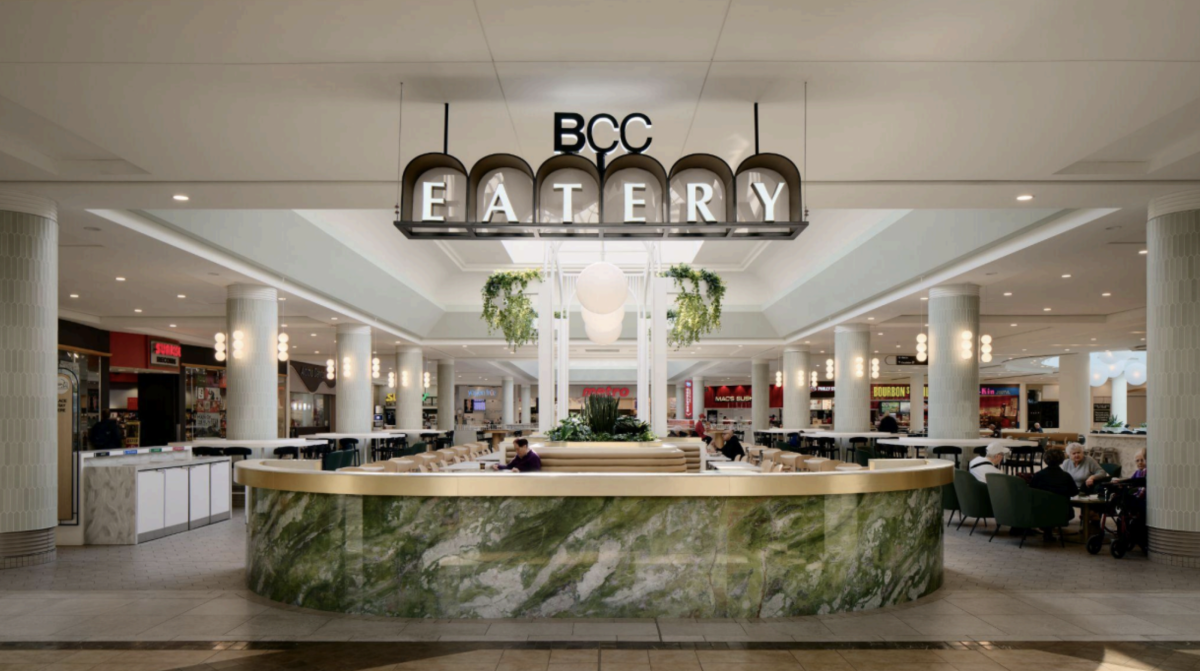
The centre completed its multimillion-dollar South Food Court renovation earlier this year. The redesigned area spans 31,701 square feet and was repositioned closer to Centre Court, improving visibility and its connection with the mall’s main corridor.
The renovation added approximately 10 per cent more seating, improved circulation and sightlines, and introduced charging connections and redesigned waste and recycling stations.
Recent food additions include Poulet Rouge, Craig’s Cookies and Szechuan Express. Butler also pointed to Indian food operators at the centre as examples of concepts that have generated the sales required to operate in a large regional shopping centre.
“We have tailored some of the uses in the food court to match our demographics,” he said.
Established operators including KFC and Popeyes have also remained strong performers, he added.
Butler said customer spending following the renovation indicates that visitors are responding to the updated environment and food selection.
“People vote with their dollars,” he said. “Since the renovation, that’s been validated. I think we’ve seen that we’re providing what the market wants.”
The investment reflects the growing importance of food and beverage within shopping centres, where dining areas also function as informal meeting places and social spaces.
For Bramalea City Centre, the tenant mix provides a direct way to respond to the cultural composition of the surrounding community.
Bramalea City Centre food court. Image: Morguard
A Community Hub for Brampton
Bramalea City Centre has evolved substantially since it opened in 1971 during the early growth of the planned Bramalea community.
What began as a traditional enclosed mall now serves several functions, Butler said.
“I think we’re really now what I would call a multifaceted community hub,” he said. “It serves retail, employment. It’s a gathering place for people.”
He said shopping centres can be particularly important for newcomers, providing a public setting where people can observe everyday interactions and gradually become familiar with the surrounding community.
That role is reflected in programming held at the property throughout the year.
During the FIFA World Cup, BCC partnered with TSN to create a viewing lounge in one of the mall’s common areas. Butler said the space was regularly filled with spectators supporting different national teams.
“Given the diversity of our market, you’ve got a lot of people rooting for a lot of different teams,” he said.
The lounge became another example of the centre functioning as a gathering place for people from across the community.
BCC has also created seasonal digital experiences, including an elevator-style attraction that simulated a journey to Santa’s village. The equipment was later repurposed for a Halloween experience called the Boo Elevator.
The attractions were free, with visitors able to make voluntary donations to the food bank. Butler said those donations were combined with a portion of the proceeds from Santa photography, resulting in a contribution of approximately $10,000 to a Brampton food bank.
The centre plans to bring the Halloween and Christmas experiences back in 2026.
Another initiative converted a vacant retail unit into a temporary prom shop. Donated dresses and suits were distributed free of charge to students through a program operated with Peel Regional Police.
Butler said the project gave young people who might otherwise have faced cost barriers an opportunity to participate in prom. He described it as the centre initiative that made him most proud during the year.
Digital Tools Help Shoppers Find Products
Bramalea City Centre is also using digital technology to connect customers with merchandise available inside the mall.
Butler highlighted The Shop List, a platform that allows shoppers to search for products and receive recommendations connected with retailers at the centre.
He said the platform recorded more than 250,000 visits during 2025. According to figures supplied by BCC, it potentially influenced approximately $5 million in purchases, with projected revenue of about $1.2 million.
The service is intended to help customers find products, identify where they are available within the centre and move toward completing a transaction.
Butler described it as another way of using technology to make the shopping process easier.
The initiative reflects a broader effort among mall owners to make products across individual stores easier to discover within large multi-tenant properties.
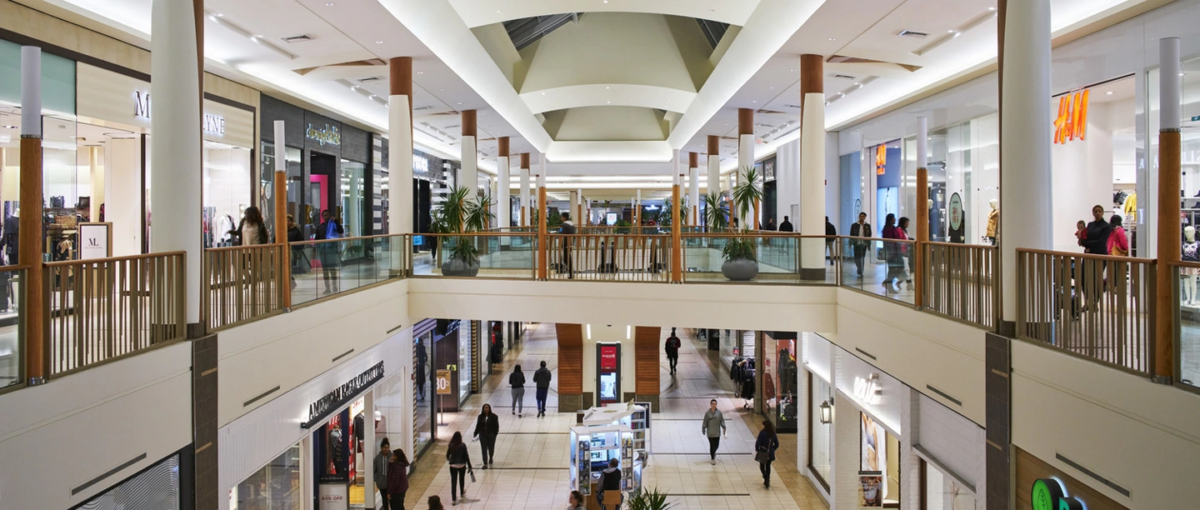
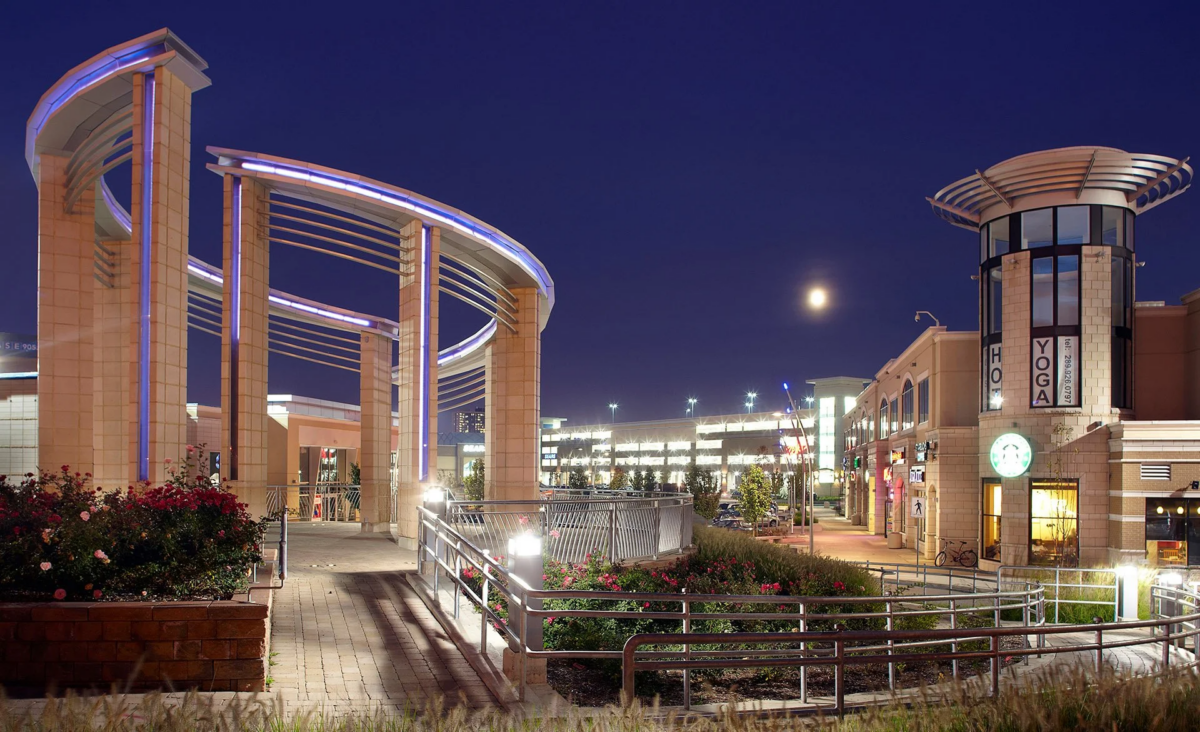
Bramalea City Centre. Photo: Morguard
Investment Extends Behind the Storefronts
Some of BCC’s current investment is less visible to shoppers.
Butler said the centre is completing a significant upgrade to its building-control system as part of an ongoing capital plan. The project is intended to improve comfort within the mall while helping reduce the property’s carbon footprint.
He said the investment reflects the ownership group’s commitment to responsible business practices and continued reinvestment in the asset.
The systems work adds another layer to the changes taking place through leasing, renovations and community programming.
“We’ve had the good fortune of having co-owners that have been prepared to make an investment in the asset,” Butler said. “That investment keeps us relevant with the customers, which you have to do to survive.”
Residential and Entertainment Uses Could Shape the Future
Bramalea City Centre’s longer-term evolution could include entertainment and residential development.
Butler said fashion, dining and services remain immediate priorities. Entertainment is another category management would like to add, although no specific operator has been announced.
He also pointed to the site’s capacity to accommodate greater density.
“We have the opportunity to add a residential component to the site,” Butler said, emphasizing that nothing had been confirmed. “We want to be ultimately a mixed-use, highly concentrated urban environment.”
City planning records show that residential redevelopment has advanced beyond an early concept in one area of the property.
A substantially complete site-plan application for 25 Peel Centre Drive proposes demolishing the former Sears portion of the mall and developing four rental apartment buildings, a commercial building and an urban plaza. The plan includes 1,000 residential units, approximately 650 square metres of new commercial space and a two-level underground parking structure.
An earlier pre-consultation submission described buildings of nine, 22, 27 and 32 storeys, although the municipal record notes that those project statistics were approximate.
The proposal supports Butler’s description of a possible mixed-use future, although no construction schedule was provided during the interview.
Positioned for Continued Growth
Butler said BCC’s established regional position and continued growth across Brampton are helping attract retailer attention.
The centre is located near Highway 410 and is served by the adjacent Bramalea Terminal and Brampton Transit’s Züm network. Butler said those connections help employees and shoppers reach the property.
He also pointed to increasing residential density along the Queen Street corridor and across the wider market.
Retailers, he said, tend to favour proven shopping centres surrounded by household growth and density.
BCC combines fashion, traditional and specialty retail, dining and services, giving retailers access to customers visiting the property for a wide range of purposes.
The centre’s next phase will depend partly on how management resolves the former Hudson’s Bay space and advances its entertainment and mixed-use plans.
For now, BCC is building momentum through major anchor leasing, recognizable value-oriented retailers, food investment, community programming and continued capital spending.
“We’re the biggest shopping centre in Brampton, we’re one of the largest in the country,” Butler said. “The property is well positioned for the future.”
With Walmart expected to arrive in 2027 and further announcements anticipated later this year, the next stage of Bramalea City Centre’s evolution is taking shape.
Retail Insider’s new report examines a Canadian jewellery market holding up better than many discretionary retail categories, but becoming increasingly divided in how brands compete for consumer spending.
Authored by Craig Patterson, Q2 2026 Canadian Jewelry Retail: Experiential Luxury and Accessible Premium Reshape the Market is part of Retail Insider Reports. Retail Insider Reports are designed to deliver executive-level insights across major retail sectors and can be accessed through the Retail Insider Report Hub.
The report examines Canadian jewellery and watch retail, including luxury and fashion jewellery, watches, bridal, specialty retailers, consumer demand and broader market developments. It draws on Retail Insider coverage, company disclosures and market research to assess the commercial forces shaping the sector.
Canadian jewellery retail entered the quarter from a position of relative resilience. Jewellery, luggage and leather goods retailers generated approximately $457 million in sales in April 2026, an increase of 5.9 per cent from a year earlier despite a modest monthly decline.
The more consequential development, however, is the widening distinction between experiential luxury and accessible premium. Luxury retailers are investing in flagships, hospitality, appointments and personalized service. Regional and founder-led businesses are finding growth through approachable pricing, community engagement, transparent positioning and differentiated store experiences.
General Themes
Experiential luxury becomes the standard: Flagship environments, private appointments, hospitality and clienteling are becoming central to how luxury jewellers compete.
Physical stores retain their importance: Consumers may research online, but significant jewellery purchases still benefit from product examination, expert guidance and trusted personal service.
Luxury geography is broadening: Oakridge Park in Vancouver, Calgary’s Stephen Avenue and the continued strength of Bloor-Yorkville point to a more geographically diverse luxury market.
Accessible premium creates another growth path: Canadian and regional brands are expanding through approachable luxury, community connections and distinct value propositions.
The market reflects a K-shaped economy: Affluent shoppers continue to support high-end jewellery and watches, while value-conscious consumers seek affordability, flexibility and perceived value.
Lab-grown diamonds move beyond sustainability: Pricing, transparency and consumer choice are becoming as important as environmental considerations in the category’s growth.
Watch communities generate engagement: Collectors, launches, collaborations and special events are helping retailers build traffic and longer-term customer relationships.
Service remains a durable advantage: Expertise and trust continue to influence bridal, gifting, repairs and purchases tied to major life events.
Retail Insider Coverage
Retail Insider’s reporting documented how major operators are translating these themes into physical investment. Michael Hill’s Vancouver flagship at CF Pacific Centre introduced a more elevated environment built around appointments and customer service, while Royal de Versailles’ transformation in Yorkville expanded its watch business and created a more immersive destination for luxury clients and collectors.
The quarter also brought evidence that jewellery growth is extending beyond traditional luxury models. Hillberg & Berk continued its national expansion through an accessible premium position grounded in community engagement. Montréal-based Sphinx & Emeralds advanced a lab-grown luxury model focused on transparent pricing and direct consumer relationships. Gem Studio brought hands-on jewellery making to CF Chinook Centre, turning the store into a participatory workshop rather than a conventional sales environment.
Luxury investment also continued across emerging and established retail nodes. Chanel opened its largest Canadian store at Oakridge Park, while Hermès announced plans for a standalone location on Calgary’s Stephen Avenue. Together with continued investment in Bloor-Yorkville, these moves indicate that luxury jewellery and adjacent categories are no longer confined to a small number of traditional Canadian destinations.
Broader Industry Coverage
The report suggests that jewellery’s resilience is tied partly to characteristics that are difficult to reproduce through purely digital retail. Product craftsmanship, fit, emotional significance and trust all strengthen the role of stores and experienced staff. For landlords and developers, that makes jewellery an attractive category for projects seeking high-service tenants, appointment traffic and experiential retail uses.
Competition is also becoming more segmented. Heritage luxury brands, accessible premium operators, independent designers and lab-grown specialists are not necessarily pursuing the same consumer or shopping occasion. Their success increasingly depends on a clearly defined position rather than broad participation in the category.
Economic pressure may reinforce that segmentation. Elevated gold prices can affect product pricing and encourage interest in alternative materials, lower-karat products, lab-grown stones and vintage or pre-owned jewellery. At the same time, affluent consumers continue to support flagship investment and premium watch categories.
For operators, the strategic question is therefore not whether jewellery retail is moving online or remaining physical. It is how digital research, in-store expertise, appointments, events and community-building can work together to support trust and conversion.
Editor’s Take
Canadian jewellery retail is not moving toward a single dominant model. The market is separating between high-touch experiential luxury and more accessible forms of premium retail, with viable growth opportunities at both ends. What connects them is the continuing importance of physical stores, knowledgeable service and emotional credibility. Retailers that offer neither a distinctive experience nor a clear value proposition face the greatest competitive risk.
The full Q2 2026 Canadian Jewelry Retail: Experiential Luxury and Accessible Premium Reshape the Market report is available here. Readers can find this report, along with other Retail Insider Reports covering major Canadian retail sectors, at the Retail Insider Report Hub.
The loss in both periods was primarily due to the fair value adjustment related to the Trust’s Exchangeable Units resulting from the increase in the Trust’s unit price, it said.
“We are focused on capital preservation, delivering stable and growing cash flows and net asset value appreciation. Our high-quality portfolio is primarily leased to necessity-based tenants and logistics providers, who are less sensitive to economic volatility and therefore provide stability to our overall portfolio. We will continue to advance our development program, with a focus on commercial developments, which provides us with the best opportunity to add high-quality real estate to our portfolio at a reasonable cost and drive net asset value appreciation over time,” said the company in a news release.
“We are confident that our business model, stable tenant base, strong balance sheet, and disciplined approach to financial management will continue to benefit us.”
On its website, the REIT said it had 699 properties, more than 18 million square feet in the development pipeline, 37 million square feet of grocery-anchored retail in the portfolio, and it had an industry-leading balance sheet with 7.0x Debt/EBITDA.
Choice Properties REIT photo
“We are pleased with Choice Properties’ second quarter results, highlighted by robust leasing spreads and Same-Asset NOI growth,” said Rael Diamond, President and Chief Executive Officer of the Trust. “These results reflect the strength of our portfolio and the disciplined execution of our strategy. We continue to unlock value through strategic leasing initiatives across our necessity-based retail portfolio, while capitalizing on tenant demand to drive rental rate growth in our industrial portfolio.”
Second Quarter Highlights:
Reported FFO per unit diluted of $0.267, representing year-over-year growth of 0.8%;
FFO per unit diluted, excluding lease surrender revenue and the reduction in Allied Properties REIT’s (“Allied”) distribution, increased by 1.5% compared to the prior year period;
Achieved Same-Asset NOI, Cash Basis growth of 2.8% and Total NOI, Cash Basis growth of 2.8%;
Achieved long term renewal leasing spreads of 19.0%;
Period end occupancy was 97.7%, with Retail at 97.4%, Industrial at 98.6%, and Mixed-Use & Residential at 94.3%;
Completed $14.6 million of real estate transactions on a proportionate share basis;
Delivered $3.0 million of development projects through retail intensification, adding approximately 66,000 square feet of new commercial GLA associated with ground leases on a proportionate share basis; Subsequent to the quarter end, Choice Properties and Loblaw renewed a full tranche of 50 leases expiring in 2027, comprising 3.55 million square feet, at a weighted average spread of 8.8% and a weighted average extension term of 5.0 years.
Choice Properties REIT photo
“On April 16, the Trust announced that it entered into an agreement with First Capital Real Estate Investment Trust and KingSett Capital, on behalf of its investors, pursuant to which KingSett and the Trust will acquire FCR in a unit and cash transaction valued at approximately $9.4 billion, including the assumption of certain debt,” said the company in a news release, adding that the transaction was approved June 23 by FCR’s unitholders.
And on June 25, the Ontario Superior Court of Justice (Commercial List) issued a final order approving the transaction’s plan of arrangement pursuant to the arrangement agreement dated April 16. The Transaction is subject to other regulatory and customary approvals and closing conditions, and is expected to close in the second half of 2026.
“With Q2 2026 Same Store Sales Growth of 2.1%, we delivered our strongest quarterly Same Store Sales Growth in over two years, demonstrating the strength of A&W’s menu innovation and marketing. The success of our national smash-style burger promotion was the primary driver of this performance, increasing both guest counts and average cheque and contributing to our System Sales Growth of 3.9% for the quarter,” said Susan Senecal, President and CEO.
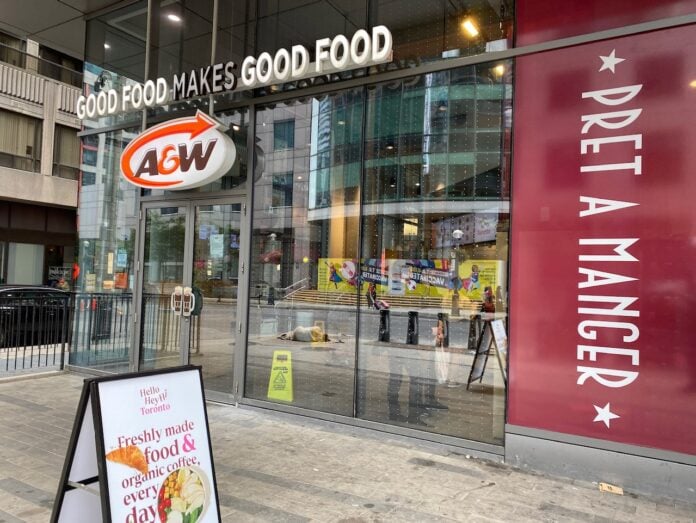
“Our bottom line results this quarter also reflect the impact of hosting our biennial A&W National Convention, which brought our franchisee community together and, as expected, created a temporary increase in our general and administrative expenses. We are also thrilled to have reached an important milestone in our Pret A Manger expansion, having opened our first franchised Pret shop at Vancouver International Airport on June 12th. We have secured additional leases and are actively pursuing new sites in Vancouver, Calgary, Toronto and Montreal, and expect to have three to four franchised Pret locations open by the end of the year.”
SECOND QUARTER HIGHLIGHTS
For Q2 2026, compared to Q2 2025
System Sales of $469.7 million increased by $17.4 million (3.9%)
Revenue increased by $2.1 million (3%) to $70.8 million
Operating costs increased by $1.1 million (3%) to $37.2 million
General and administrative expenses increased by $2.0 million (18%) to $13.1 million, largely due to the biennial A&W National Convention that was held in Q2 2026
Income before income taxes decreased by $1.2 million (7%) to $16.0 million
Adjusted EBITDA decreased by $1.1 million (4%) to $24.4 million and Adjusted EBITDA Margin decreased 260 bps to 34.5% from 37.1% as a result of the increase in general and administrative expenses
Cash Dividend of $0.480 per share was declared on June 1, 2026 and paid June 30, 2026
Opened 8 new A&W restaurants and the first franchised Pret shop
The company explained that the increase in total revenue was due to increases in revenue streams that are primarily driven by System Sales, including advertising fund contributions, service fees and revenue generated from the distribution of food and supplies. The increase in service fee revenue also reflects the continuing migration of A&W restaurants from a 2.5% to a 3.5% service fee rate, leading to a higher weighted average service fee rate. These increases were partially offset by lower equipment and turnkey revenue, reflecting a smaller proportion of new A&W restaurants opened in Q2 2026 being turnkey, and the non-recurrence of revenue from the 2025 rollout of A&W’s new point of sale system, it noted.
Susan SenecalImage: A&W Canada
“Revenue from corporate restaurants includes the revenue from the ten A&W restaurants and two Pret restaurants that are owned and operated corporately, all of which are located in Ontario. Revenue from corporate restaurants was $5.7 million for Q2 2026, down 2% from $5.8 million for Q2 2025. The decrease is mainly attributed to two of the A&W corporate restaurants being closed for modernization for several weeks during the quarter, partially offset by the opening of the second corporately owned Pret location in Q1 2026,” said the company.
It said total revenue of $130.2 million for YTD 2026 increased $0.3 million from YTD 2025’s total revenue of $129.9 million. The increase was due to increases in revenue streams that are primarily driven by System Sales, including advertising fund contributions, service fees and revenue generated from the distribution of food and supplies, partially offset by lower equipment and turnkey revenue.
System Sales for YTD 2026 were $872.6 million, up 2.7% from YTD 2025 System Sales of $849.2 million, due to an increase in the number of A&W restaurants and Same Store Sales Growth of 1.1%. Same Store Sales Growth for YTD 2026 reflected an increase in average cheque, partially offset by a decline in same store guest counts, as the benefit of the Q2 2026 smash-style burger promotion was offset by the impact of severe weather events in Eastern Canada in Q1 2026 and the non-recurrence of the 2025 GST/HST holiday, added A&W.
Revenue from corporate restaurants was $10.7 million for YTD 2026, down 3% from $11.0 million for YTD 2025, mainly attributable to the temporary closure of two A&W corporate restaurants for modernization in Q2 2026, the adverse impacts of severe weather in Q1 2026 and the prevailing economic environment in Ontario, partially offset by the opening of the second corporately owned Pret location in Q1 2026, it shared.
A&W said its outlook for 2026 is total A&W restaurants to be between 1,112 and 1,120 by the end of Fiscal 2026 (1,094 at the end of Fiscal 2025); System Sales Growth of 2.5% – 5.0% (2.8% in Fiscal 2025); and Same Store Sales Growth of 0.5% – 3.0% (1.2% in Fiscal 2025).