Home Blog Page 993

JLL Consumer Survey Promises Different Kind of Holiday Shopping Season in Canada

Woman shops online during the holiday period.

The impacts of the COVID-19 global pandemic and continuing government-imposed health restrictions are setting the stage for a 2020 holiday shopping season that will play out in a significantly different manner than those previous. Shopping malls may not be as crowded as they usually are this time of year, with their aisleways buzzing and bustling food courts crammed with excited shoppers. And, Main Streets in most urban centres across the country will likely experience a dip in foot traffic and activity as well. However, as most Canadian consumers state an intention to spend the same amount on their holiday shopping as they did last year, the way in which they make their purchases is expected to represent the greatest change to the immensely important upcoming retail shopping season.

According to the recently released 2020 Holiday Shopping Survey – a report conducted by the commercial real estate and property investment company, JLL – Canadian consumers plan to spend an average of $428 on gifts this year, an amount that is consistent with numbers reported in 2019. Given the current circumstances surrounding the pandemic and the negative effects it’s imposed on the retail industry, these early predictions concerning consumer spending are likely to ring nicely in the ears of merchants everywhere. And although these numbers may seem like a surprise to those expecting a decrease in spending, Tim Sanderson, Executive Vice President, Retail, Canada at JLL, explains some of the forces and variables that helped drive the survey results.

“COVID-19 has impacted everyone’s lives in a really profound way,” Sanderson states. “And that’s shown up significantly in recent spending as well. Canadians have spent less on travel and entertainment this year than they usually would and have been spending a lot of time at home with friends and family. As a result, overall spend will be down this holiday season, but consumers are showing a willingness to spend the same amount on gifts as they did last year, with some planning to spend over $1,000, which is well above the average.”

Shopping Early and Online

Among those planning to spend, Boomers reported the highest budget for gifts at $519 and Gen Z the lowest at $259. Despite the generation, however, more Canadians plan to start their holiday shopping earlier this year with one-third of respondents indicating an intention to begin making purchases during the upcoming Black Friday/Cyber Monday weekend, representing a five percent increase over last year. Considering the different complexion of the 2020 holiday shopping season, it could be suggested that even further importance will be lent to the performance of retailers during this year’s Black Friday sales and events.

Although Sanderson recognizes the significance of the Canadian consumer’s intention to start their shopping early, he points to the ways in which they plan to purchase their items as the most compelling revelation within the report. When asked how the impacts of COVID-19 might change their shopping behaviour, 37 percent of respondents said that they were planning to do more of their shopping online, with 32 percent stating that they would be visiting fewer stores this year. It’s a change in shopping patterns that Sanderson says will be significant this holiday season, a change that he describes as being “fast-forwarded” by the pandemic.

“Canadians have been very selective about the physical retail locations that they’ve visited over the past eight-plus months,” he says. “And this is a trend that we expect to continue through the holiday shopping season. The migration of consumers toward online shopping has been evident for some time, but it’s a trend that’s been accelerated by the impacts of COVID. It’s also a trend that’s being driven by the younger generations. They are technologically savvy by nature and show more of a willingness to shop online. It’s a change in shopping patterns that will bear significant influence on the success of many retailers this holiday season.”

Satisfying a Need for Convenience

Shoppers between the ages of 18 and 24 are leading the migration, with more than half of those responding to the survey expressing a preference to shop for their products online, compared to just 29 percent of respondents aged 55 or over stating the same preference. The continued increase in e-commerce adoption by consumers is being influenced by many factors, including a general shift in behaviour toward a more convenient and seamless shopping experience. It’s helping to draw a clear line between those who offer e-commerce capabilities and those who don’t, primarily benefitting larger online retail entities like Amazon.

However, the report also suggests that brick-and-mortar retail locations can also leverage the consumer’s desire for convenience through the offer of curbside pickup. The option, which was virtually non-existent last holiday season, seems to be a popular one with consumers this time around, with 18 percent reporting plans to take advantage of it wherever it’s made available by retailers. It’s just one of a variety of ways by which consumers are looking to save time and stay safe this holiday season. And, it’s also a way in which some retailers can capitalize on local traffic and engage with those within the communities they serve, an opportunity that Sanderson suggests might reap the biggest rewards for retailers that realize its potential.

“Local businesses are the fabric of the communities they serve. And I think that current circumstances can be favourable for many retailers to leverage or increase their presence within their communities and attract customers who are ready to embrace the mentality of shopping local. What we’ve seen throughout the COVID period is that people aren’t going on any European vacations or ski trips this winter. Instead, they’re spending their money on their homes and their families and loved ones. And I think it’s going to be reflected in spending that is closer to home, too, resulting in crucial support for the businesses that help our communities grow and succeed.”

BRIEF: NYX Cosmetics Shutting All Stores in Canada, Second City Comedy Relocating to the Danforth

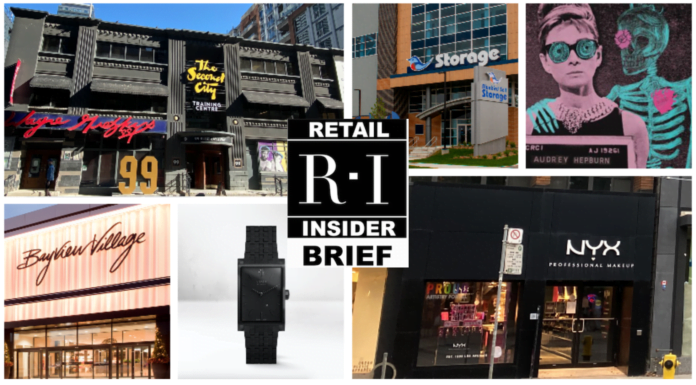
Retail Insider Brief collage

NYX Cosmetics Exiting Canadian Stores

L’Oréal-owned NYX Cosmetics is shutting all of its Canadian stores after entering the market in 2015. It will result in more vacancies at a challenging time for the retail industry.

NYX Cosmetics opened its first Canadian store in 2015 at Square One in Mississauga. A second store opened at 363 Queen Street West in Toronto which was followed by a storefront at CF Toronto Eaton Centre in Toronto. In 2016, NYX opened stores at the Yorkdale Shopping Centre in Toronto as well as at CF Rideau Centre in Ottawa. In May of 2017, NYX opened its first Vancouver store on Robson Street which it shut earlier this year. The expansion continued with a store at West Edmonton Mall in June of 2017 and more stores opened after. NYX already closed several of its Canadian stores permanently prior to the announcement and as of today the company operates 10 stores in the Greater Toronto Area, Ottawa, London, and Vancouver.

NYX store on Toronto's Queen Street. Photo: Dustin Fuhs
NYX store on Toronto’s Queen Street. Photo: Dustin Fuhs

NYX (Named after the Greek goddess of the night, pronounced ‘Nix’) was founded by Toni Ko in 1999, and is headquartered in Los Angeles. The brand is known for its high quality, affordably priced rich-pigment cosmetics, which have gained a loyal following both with makeup artists as well as the general public. L’Oréal bought NYX in 2014, and has expanded the brand significantly to include product lines in retailers selling cosmetics such as Canadian retailers Shoppers Drug MartRexall, and London Drugs.

NYX stores measured in the 800-to-1,200-square-foot range. Landlords may have less difficulty securing new tenants given the small size of the spaces which are in premium locations. At the same time, thousands of retail spaces in Canada are being vacated due to retailers struggling financially which has been amplified with COVID-19 store closures and a change in consumer shopping behaviour.

Side of The Second City building that faces on Blue Jays Way in Toronto. Photo: Dustin Fuhs
Side facade of The Second City building that faces on Blue Jays Way in Toronto. Photo: Dustin Fuhs

Second City Comedy Moving to the Danforth

The Toronto contingent of the Second City comedy troupe will be relocating temporarily to a building at 2800 Danforth Avenue in Toronto. Second City will move there temporarily until its new permanent Toronto location opens next year.

According to a listing, the 2800 Danforth Avenue building, formerly occupied by a furniture retailer, spans 6667 square feet on the main floor with an additional 4,640 square feet on the lower level. The building has a loading area with a truck level door and there are several parking spaces at the back of the building.

Entrance to The Second City on Mercer Street, Toronto. Photo: Dustin Fuhs
Entrance to The Second City on Mercer Street in Toronto. Photo: Dustin Fuhs

Second City will eventually move into a new space at One York Street near Toronto’s waterfront. It will occupy 28,700 square feet on the third floor of the 170,000-square-foot retail podium at One York Street, which is owned by Menkes Developments Ltd. in partnership with Healthcare of Ontario Pension Plan (HOOPP) and Sun Life Financial. One York is connected to Toronto’s PATH network and also includes a 35-storey office tower as well as two condominium towers spanning 70 and 66 stories that are branded as the ‘Harbour Plaza Residences’.

The new downtown Second City space will feature several comedy theatres for live performances, along with an improvisation-based arts school, and a games-driven bar and restaurant. Second City is vacating its 51 Mercer Street building located in Toronto’s Entertainment District. Second City’s first Toronto location was on Adelaide Street East prior to moving into 110 Lombard Street in 1974. In 1997, Second City moved into 56 Blue Jays Way and remained there until 2005 when it was announced that the Blue Jays Way property would be demolished with a facade to be integrated into the now-standing Bisha Hotel. Second City moved into 51 Mercer Street in 2005 and once again, Toronto’s condo boom saw Second City having to relocate.

VIEREN founders Sunny Fong and Jessica Chow

Canadian Duo Introduce the Sleekest Automatic Watch Yet

Introducing VIEREN, a line of luxury, Swiss Made watches created to introduce the sophisticated craft of automatic watchmaking to a new generation.

VIEREN is founded by renowned Canadian fashion designer and Project Runway All Star, Sunny Fong (founder of fashion brand VAWK), and CEO Jessica Chow. The duo, inspired by how automatic watches are powered by momentum (if you stop wearing an automatic watch, it temporarily stops telling time), set out to create a line that celebrates the century-old craft with contemporary, timeless designs.

Youtube video

Each of the 4 watches in the inaugural collection are hand-crafted over a 6-month period, using over 200 microscopic components, certified Swiss Made, and start at $2,350 CAD. They’re built to tell time forever, no battery required.

Automatic watches are powered by you – harnessing the energy from the motion of your wrist. As you wear it, the rotor (weighted semi-circular disc) on the back of the watch movement swings back and forth, collecting energy to power the watch. If worn everyday, an automatic watch can tell time for a lifetime.

Exterior of Bayview Village Shopping Centre. Photo: Bayview Village

Bayview Goes Virtual This Holiday Season

As Toronto moves into another lockdown, Bayview Village continues to offer shoppers festive virtual experiences to celebrate the ‘haute’ holidays from the comfort of home.

Experiences include complimentary one-on-one virtual visits with Santa via Zoom up until Thursday, December 24 at 4pm (to book an appointment click here), virtual photos with Santa, and virtual kids cooking classes hosted by BV chefs every Saturday from December 5 -19.

BV Dance Academy, Goh Ballet will carry on its tradition with a limited time film release of the Nutcracker: Beyond the Stage from December 18, 2020 to January 2, 2021. To register for the online experience, please visit here.

Bayview Village virtual Santa Clause. Photo: Bayview Village

While in-person shopping isn’t available at this time, shoppers can still support BV retailers through its virtual marketplace, GASTRONOMER. Featuring a curated selection of culinary delights from BV’s food and restaurant tenants, GASTRONOMER purchases are available for curbside pickup.

Some product highlights include:

250 Bayview Village gift cards are now available through GASTRONOMER along with $50 and $100. Two newer GASTRONOMER offerings include the Pusateri’s Fine Foods Charcuterie & Cheese Platter ($80), Fruit of the Land Local Basket ($105), or the GOA Indian Farm Kitchen Fiery Goan Curry Kit ($14.95).

See here for retailers offering curbside pickup.

Bayview Launches Dust of Gods Pop-Up — and Promptly Has to Close

Bayview Village announced the addition of internationally-renowned, sustainable fashion movement Dust of Gods which launched a pop-up for the second time. The edgy popup is helmed by Toronto-based architect Antonio Tadrissi, and would have been available at the shopping centre from November 15 to December 31 except now stores have been mandated to close in Toronto until at least December 20.

Dust of Gods is a lifestyle brand that aims to transform pre-loved clothing into luxurious, ‘one-of-one’ pieces of wearable art. Sustainability is at the forefront of the brand with the belief that this can only be achieved in the fashion industry through repurposing.

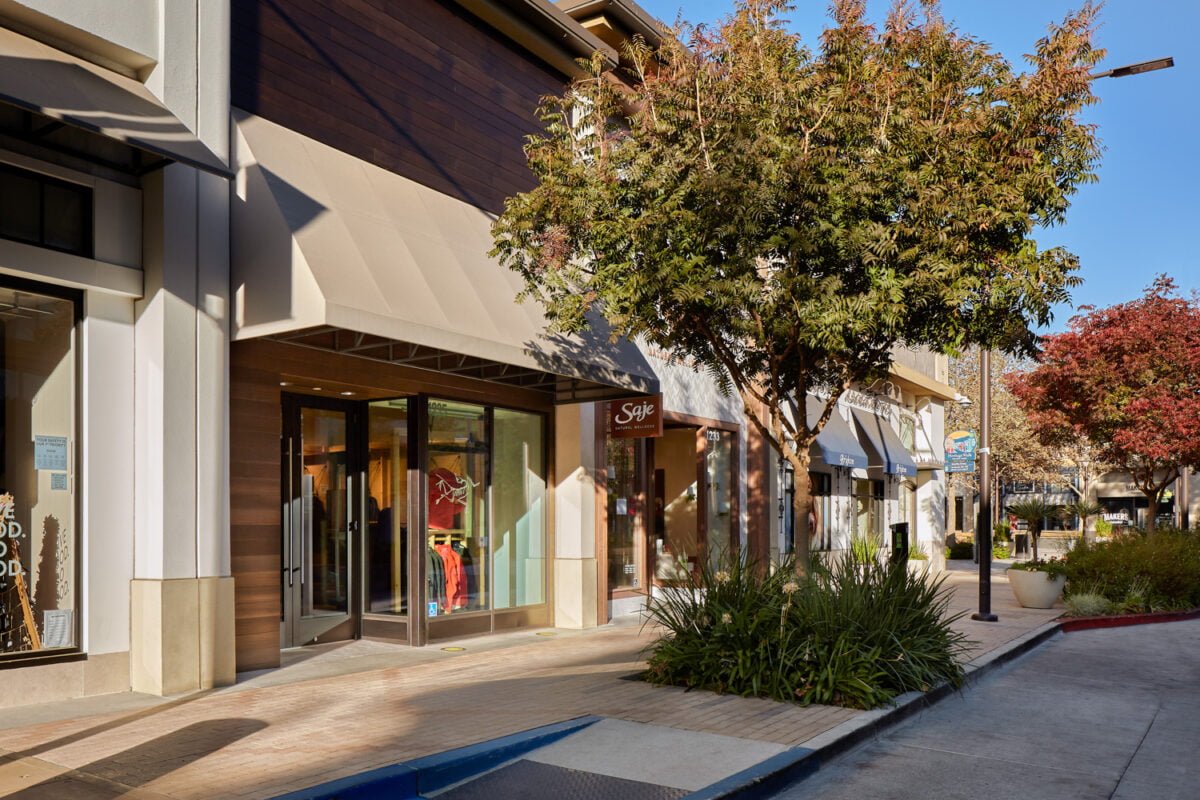
Exterior of new Arc'teryx Icon store in Walnut Creet, CA. Photo: Arc'teryx
Exterior of new Arc’teryx Icon store in Walnut Creek, CA. Photo: Arc’teryx

Canadian Brand Arc’teryx Launches its First Icon Store in California

The global design company, specializing in technical high-performance apparel and equipment, is offering consumers an accessible and approachable way to shop with the launch of its new Arc’teryx Icon stores.

The first Arc’teryx Icon store opened in Walnut Creek, CA this past weekend, and is designed to streamline the shopping experience by showcasing a narrow range of products to choose from, and offering flexible options to select and purchase the brand’s most acclaimed items.

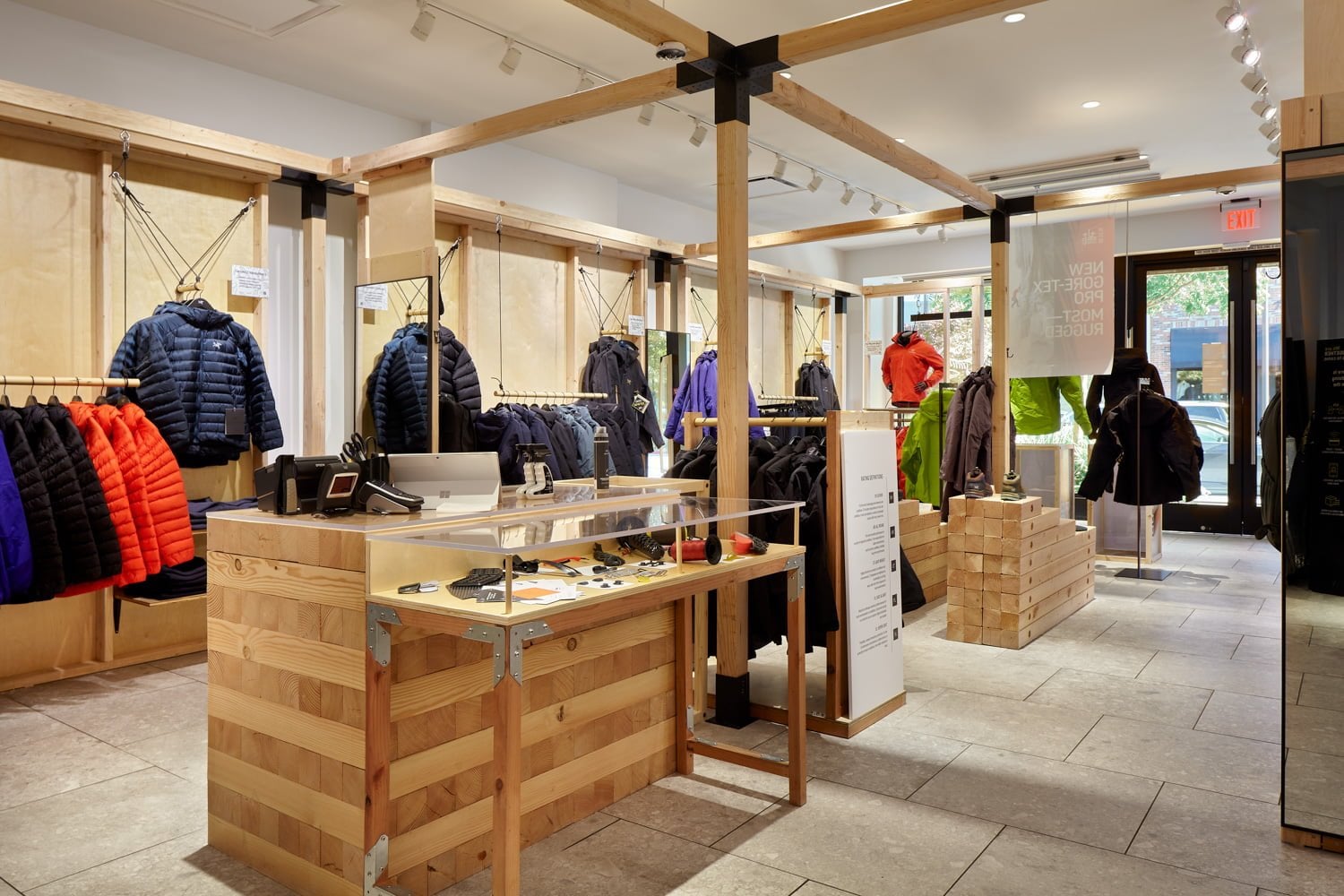
In total, five Arc’teryx Icon stores are scheduled to open in the United States this year: three in New York City, and two in the San Francisco Bay Area. In each store, guests can browse through a curated assortment of the brand’s most sought-after designs — such as the Alpha SV and Atom LT —in a space inspired by wood-frame backcountry huts. Additionally, a variety of direct-to-consumer retail services such as Virtual Advisor, Virtual Waitlist, Endless Aisle, Same-Day Courier, Curbside Pick-Up, and Click & Collect, are available, enabling guests to shop for and receive their products within 24-48 hours.

The Arc’teryx Icon stores also feature a smaller retail footprint, and are constructed through a virtual design process using three-dimensional modeling technology. With the evolved store size, the brand can maximize real estate opportunities, keep operational overhead costs at a minimum, and expedite the store opening lead time to 3-5 months instead of the usual 9-12 months for an Arc’teryx store.

Similar Canadian locations are expected to follow.

Bluebird Self Storage in Toronto. Photo: Bluebird Self Storage

Bluebird Self Storage Opens 3 Ontario Locations

Bluebird Self Storage has officially opened three new stores in Ontario — one in Toronto, one in Whitby, and one in Burlington.

Since the company’s inception in 1983, Bluebird has developed and managed almost 100 institutional Class ‘A’ storage facilities across North America. The company has been the preferred developer and vendor to the self-storage industries developing real estate investment trusts (REITS) in the United States and Canada. Adopting the name ‘Bluebird Self Storage’ to encompass Canadian operations, the company is expected to double the size of its current 11 store chain within the next 6 months.

Rendering of future Bluebird Self Storage in Don Mills, Toronto. Rendering: Bluebird Self Storage

The new Bluebird Self Storage store in Toronto is located at1450 Don Mills Road, and is a 151,000 net rentable square feet (NRSF) facility. The new Bluebird Self Storage store in Burlington is located at 1770 Appleby Line and offers 116,200 NRSF. The new Bluebird Self Storage store in Whitby is located at 1580 St. E. with 100,688 NRSF available.

To further protect clientele during the COVID-19 pandemic, Bluebird has implemented precautions including the closing of any store office exposed to a confirmed case of COVID and having it cleaned and sanitized for reopening.

Canadian Retail Sales: The Roller Coaster Ride Continues

For Food & Drug, 2020 could end up being a record year for retail sales growth.
For Food & Drug, 2020 could end up being a record year for retail sales growth

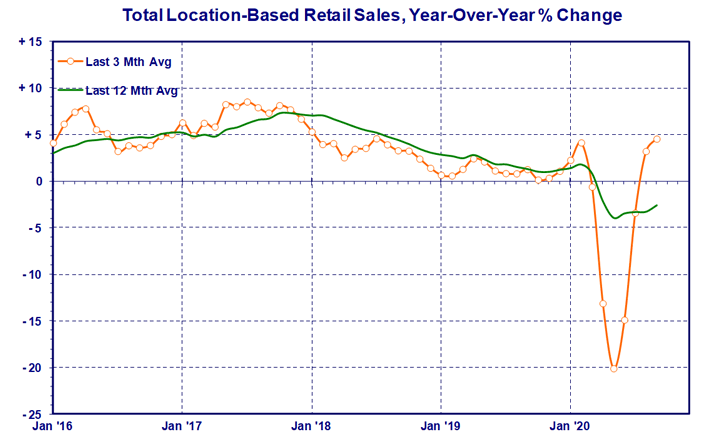
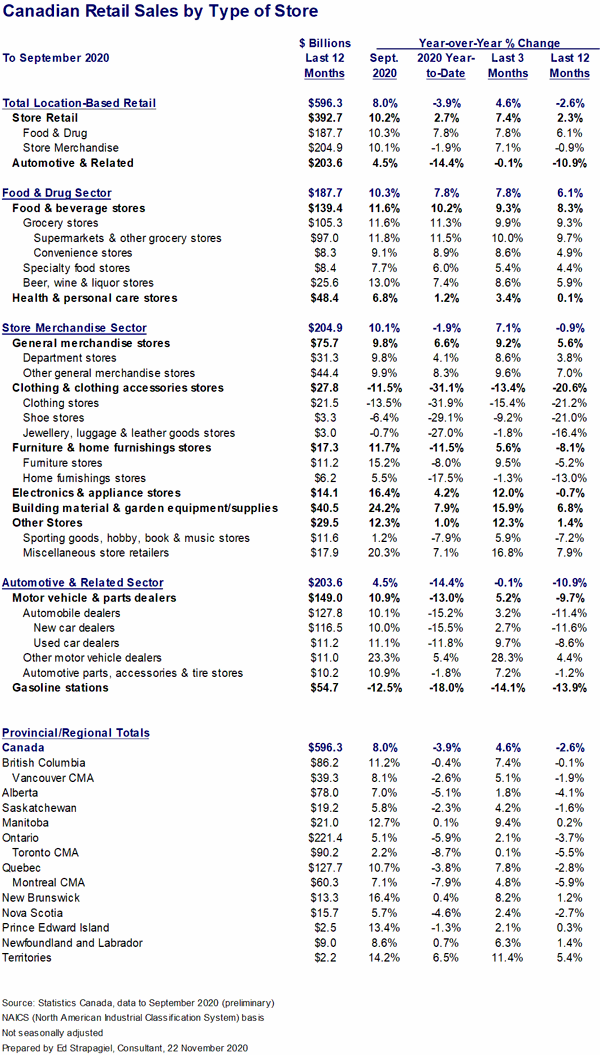
Statistics Canada has released new data indicating that total unadjusted Canadian retail sales gained 4.6% year-over-year in Q3 2020. This is a huge recovery over the 14.9% decline in Q2. After 9 months of 2020 however, year-to-date retail sales are still down 3.9% versus last year.

As the above chart shows, the 3 month trend (orange line) has recovered smartly, and the underlying 12 month trend (green line) has started to edge up. But these trends are unlikely to continue. The Q3 results include some latent demand held over from Q2, and the current new wave of COVID-19 is now resulting in a return to lockdowns, just in time for Christmas. Both shoppers and retailers are now better prepared for it, so it may not be as dire as what occurred this past spring.

Food & Drug

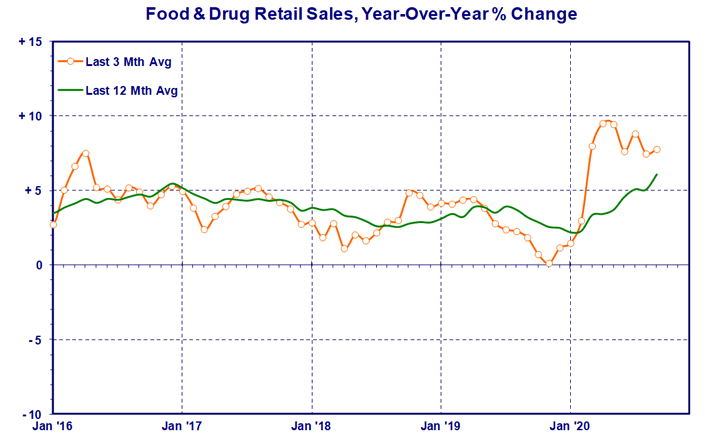
Historically high year-over-year retail sales increases continue in the Food & Drug sector. In Q3 2020, sales were up 7.8% versus a year ago. The underlying 12 month trend (green line in the chart above) has been steadily improving since the start of the year, and still has more upside potential going forward. For Food & Drug, 2020 could end up being a record year for retail sales growth.

Supermarkets & other grocery stores are leading the charge. Their sales gained 10.0% in Q3 and are up 11.5% year-to-date after 9 months. Convenience stores and beer, wine & liquor outlets also had strong retail sales gains in Q3.

Health and personal care stores seem to be coming around. Their Q3 retail sales were up 3.4%, which, although unspectacular, was much better their 3.8% decline in Q2.

Store Merchandise

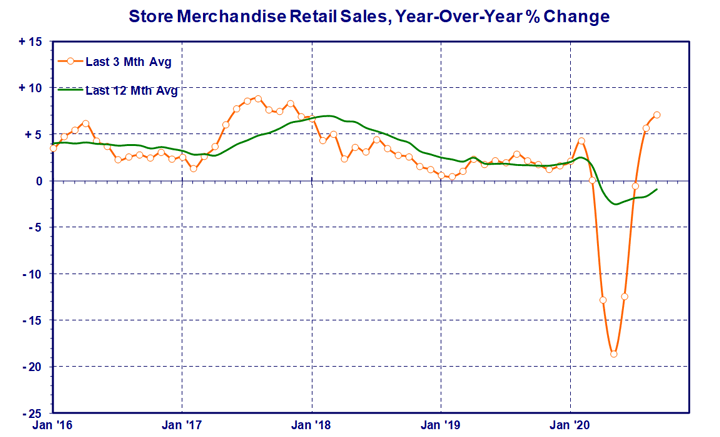
The Store Merchandise sector has recovered from its collapse in the spring. After posting a 12.4% year-over-year decline in Q2 of 2020, retail sales were up 7.1% in Q3. The 3 month trend (orange line in the chart) continues to be quite positive, while the underlying 12 month trend (green line) is crawling its way back up.

Year-to-date retail sales are still down 1.9% after 9 months however, and there is only an outside chance the sector will end the year in the black, given lockdowns due to the resurgents of COVID. Store Merchandise is the retail sector most dependant on holiday season sales.

Many retail categories did well in Q3, including general merchandise, building material and garden equipment & supplies dealers, electronics and appliance stores, and the miscellaneous stores group which includes cannabis retailers.

Clothing and clothing accessories stores however continue to struggle. Their sales were down 13.4% in Q3, although that’s much better than the 58.4% decline they suffered in Q2.

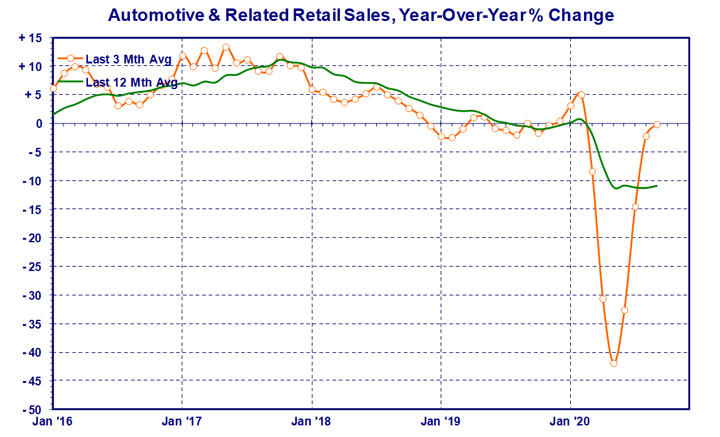
It’s by now a familiar story in the Automotive & Related sector, but with emphasis. There was a disastrous collapse in retail sales in Q2, followed by a near miraculous recovery in Q3. In Q3 alone, retail sales were down just 0.1%. Nevertheless, year-to-date retail sales after 9 months of 2020 are off 14.4% versus last year, and it’s likely the sector will end up with a sales decline for 2020 overall.

Automobile dealers’ sales were up 3.2% in Q3, a vast improvement over the 35.7% decline in Q2. In September alone, their sales were up 10.1%, their best month in 2020 so far.

On the other hand, declining sales at gasoline stations continue to drag down the sector (and all of Canadian retail for that matter). Their retail sales were down 14.1% in Q3 due to a combination of less demand and lower prices.

By The Numbers

Note that the data and analysis in this report are always based on not seasonally adjusted (or unadjusted) retail sales statistics.

For definitions of store types, see Statistics Canada NAICS.

Canadian E-Commerce Sales

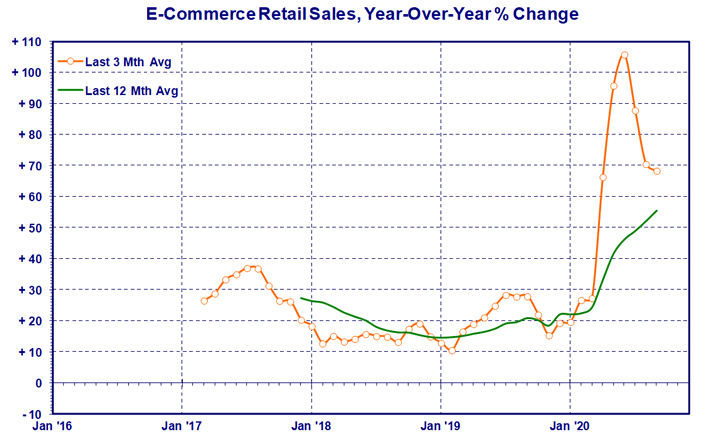
The chart above shows that Canadian e-commerce retail sales took off like a rocket in Q2 2020 with the onset of the COVID pandemic. It may look like things are now cooling off, but that would be misleading. The 3 month trend was up nearly 70% in Q3 while the 12 month growth trend more than doubled over the last year. While consumers generally prefer in-store shopping, more are experiencing the possibilities and benefits of online.

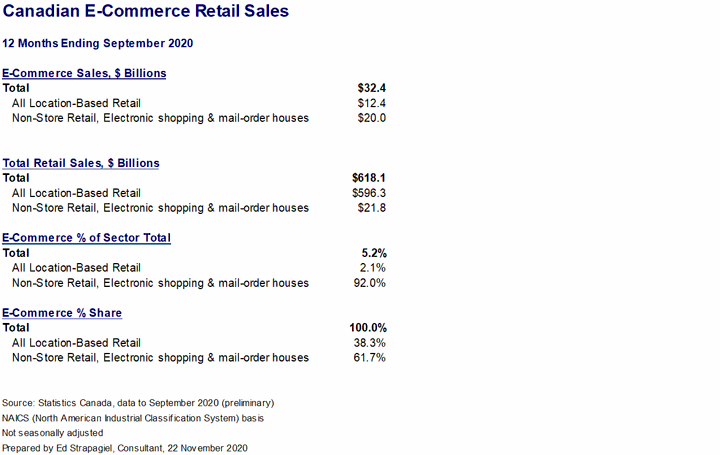
Overall, e-commerce represented about 5.2% of Canadian retail sales for the 12 months ending September 2020, including both pure play as well as brick & clicks stores. Note that Canadian consumers may also buy online from foreign websites which is not captured in these numbers.

Location based retail is the same as that in the preceding “By The Numbers” table. It’s what’s normally reported as Canadian retail sales. Except that it isn’t. Location based retail excludes another section called Non-Store Retailers (NAICS code 454), which includes electronic shopping and mail-order houses, which in turn is where (mostly) pure play e-commerce businesses are. For the 12 months ending September 2020, electronic shopping and mail-order houses had an estimated $20.0 billion in e-commerce sales.

But that’s not the only source of e-commerce, as (mostly) bricks & mortar location-based retailers also sell online. For the 12 months ending September 2020, this group had an estimated $12.4 billion in e-commerce sales. With electronic shopping and mail-order houses, there’s a grand total of $32.4 billion in e-commerce sales by Canadian operators. Note that this does not include foreign e-commerce purchases made by Canadian consumers, but it does include e-commerce purchases made by foreigners at Canadian operations.

For electronic shopping and mail-order houses, an estimated 92.0% of their sales are allocated to e-commerce. For (mostly) bricks & mortar retailers, it can be estimated that 2.1% of their total sales are attributable to e-commerce.

In the final section of the above table, (mostly) pure play operators (namely, under electronic shopping and mail-order houses) generated an estimated 61.7% of all e-commerce sales in Canada, while (mostly) bricks & mortar location-based retailers’ share of e-commerce was 38.3%.

For more explanation on the e-commerce numbers, see Statistics Canada: Retail E-commerce in Canada.

Read More Retail Analysis From Ed Strapagiel:


Loblaws’ ‘Middle Mile’ Autonomous Vehicles and the Future of Grocery in Canada: Sylvain Charlebois

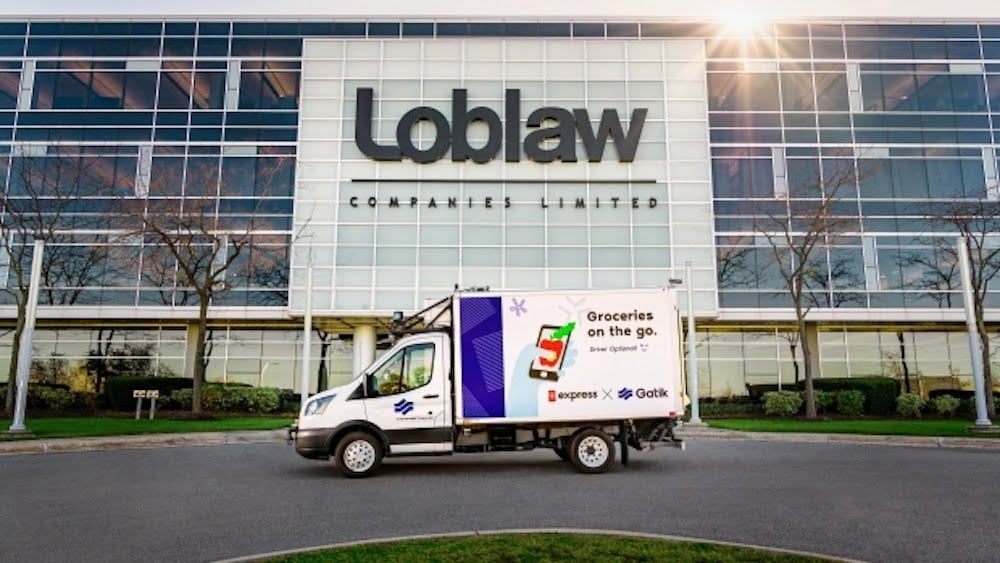
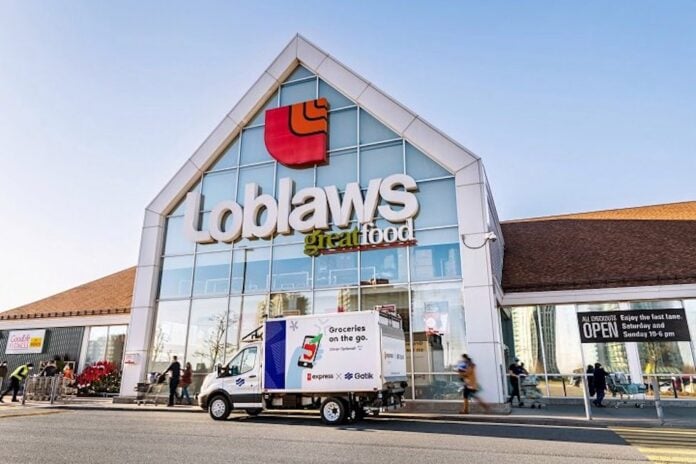
Loblaws autonomous vehicles outside Toronto Loblaws grocery store. Photo: Loblaws

Loblaws is partnering with Gatik, an autonomous vehicle provider from the United States, to launch the first autonomous food delivery fleet. This is a solution for the “middle mile”, which will assure links between distribution centres and stores. Consumers will not see autonomous vehicles driving up to their homes yet, but that day will surely come soon.

These cold-chain, capable, boxed vehicles which are not very large, have already been roaming Toronto’s streets for some time for another grocer. They even experienced last year’s winter, so Gatik is aware of potential perilous road conditions when operating its fleet. Captured data by Gatik will give the company the experience needed to make the supply chain more efficient.

What is driving this decision is clearly e-commerce. The “middle mile” is where gains can be exponential even though the last mile may be the costliest. This is the obscure part of the supply chain consumers do not see but are severely affected by. Food prices are more manageable when costs are under control. With this partnership, Loblaws will be able to move food from automated picking facilities multiple times a day to support their PC Express online grocery service in the Greater Toronto Area. The fleet will likely be expanded as this partnership is being presented as a long-term work-in-progress, if you will.

Online sales by grocers have increased almost 90% since October of 2019. For Loblaws, online sales growth is almost at 200% compared to last year. In food retail, online sales represent close to 3.3% of all sales compared to 1.7% last year, according to Nielsen. This is just incredible growth. With such a market shift, some supply chain adjustments are required. Unlike Sobeys, which is creating a unique and independent infrastructure to develop Voilà by Sobeys, Loblaws is opting to make its supply chain more cyber-friendly. Both approaches can work. With these initiatives, grocers gain the ability to make more money online, something they have hesitated to do for years. For a few years, grocers were dithering with the concept. With COVID-19, grocers are fully committed now. Moving forward, they will want us to buy more food online, and will get better at providing this service.

Loblaws autonomous vehicles outside Loblaws office. Photo: Loblaws

Vehicles operated by Gatik will not be entirely autonomous, however. All vehicles will have a safety driver as a co-pilot for now. Since consumers are connecting with these vehicles, the approval process will probably be faster, but neither Gatik nor Loblaws could say when the autonomous fleet would be driving around without any humans at all. It is essentially just a matter of time.

Eliminating humans from the food supply chain is an option which has gained currency throughout the pandemic. For one, jurisdictions around the globe managing routes have struggled and have had to think about restaurants, rest areas and how to keep truckers and staff safe while keeping the region food secure. Humans, as vectors for transmitting the virus, or any disease for that matter, are seen as a liability when a public health crisis occurs. Supply chains are increasingly becoming more automated, so Loblaw’s move with Gatik is anything but surprising.

This human-less food supply chain is an ideal for now, but Loblaws’ call is significant enough to allow most of us to dream. Given the economics of food distribution in Canada though, this innovation is unavoidable, and Loblaws appears to be out of the gate first, embracing what lies ahead. Digitizing the supply chain can only help grocers better serve the Canadian market. With such a vast country, with few people living in it, making the middle mile more efficient is key. It does not necessarily mean that Loblaws’, or any other grocer’s intent is to eliminate all human involvement in the handling of food throughout its operations. It will however seek different skills and knowledge to support its online ambitions. The sector needs strong employees, and always will. But as the sector morphs into an omnichannel beat of sort, employees will be expected to play different roles, and most of the work will have to be about data management, not handling food per se.

The last mile is an autonomous fleet’s next frontier, the most exciting one for the industry, and likely for us as well. Canadians may not be there yet, but grocers like Loblaw are signaling to the Canadian public that the horse has left the virtual barn.

Meet the Manager Spotlight: Georgi Gvakharia, Country Manager for Ralph Lauren Canada

Iconic American lifestyle brand Ralph Lauren has had a presence in Canada for decades, and the company is in expansion mode as it opens several stores this year. Industry professional Georgi Gvakharia is the Country Manager for Ralph Lauren in Canada and provided answers to some questions about how he got into the industry and what makes Ralph Lauren different. 

Ralph Lauren is currently hiring for several positions in Canada, including an Assistant Manager for the Polo Factory Store at Vaughan Mills near Toronto which opens December 11, a General Manager position in Winnipeg, and an Assistant Manager position at Tsawwassen Mills near Vancouver. To apply and for more information, contact Suzanne Sears at Luxury Careers Canada. Luxury Careers Canada has launched as part of Best Retail Careers International Inc. Employers can submit their jobs here.

Q&A with Georgi Gvakharia:

RI: How did your career in retail begin? 

GG: Much like most of the people who immigrate to Canada from all over the world with various degrees and diplomas I wasn’t able to pursue in Canada the industry I’ve spent years studying and training for.

My other two big passions were fashion and business, so it was almost organic to start my career in the Retail industry. The retail industry offers a diverse and unique career path where you could work for some of the world’s most recognizable brands and I was very fortunate to be able to work for some of the best global brands throughout my career. I’m also very competitive and a bit of an adrenaline junkie so naturally retail offed me a lot of room to satisfy my competitive edge. I love and I’m very passionate about my work, outside of managing the company’s core business strategies and operations in Canada as a whole developing the next generation of leaders is what brings me a lot of joy and satisfaction day in and day out.

RI: You have been with Ralph Lauren for a significant part of your career. What is it about this brand that keeps you engaged with them?

GG: There are so many amazing things which come to my mind, Ralph Lauren is an iconic lifestyle brand. Ralph Lauren isn’t just an apparel brand, we design, produce and market authentic apparel for men, women and kids, home product, accessories, fragrance, so for someone passionate about fashion to be able to work with a range of product categories. Teamwork and collaboration are in my opinion some of the company’s biggest strengths. Ralph Lauren is focused on the culture of learning and the company provides employees on all levels with a lot of opportunities to learn skills from their peers and mentors. Philanthropic initiatives such as Pink Pony – Fight Against Cancer, focusing on social responsibility programs and promoting diversity and inclusion is big part of the company culture for me personally. It makes Ralph Lauren a very attractive brand to work for, and I feel a deeper personal connection that I haven’t experienced with any of the other brands where I worked for during my 20+ years in retail industry.

RI: What are the unique challenges running a retail organization across Canada during Covid?

GG: Outside of the obvious travel and social distancing restrictions, the biggest hurdle is the increasing amount of unemployed Canadians. The financial impact of the pandemic on Canadian households is huge and the residual effect is on how Canadians spend their money. In addition, the retail industry has also been impacted by the loss of international and domestic travel. It’s likely to be a very volatile year for many industries including retail. 

RI: What do you think luxury retailers have to do to maintain foot traffic going forward?

GG: Globally, most of the retailers had seen a steady decline in foot traffic over past few years. On a flip side we know that even though more than 80% of our customers still shop at brick and mortar, personally I think the most important piece here would be ensuring that we provide an exceptional level of in store experience to every customer who walks into our stores. That starts with investing in hiring and training all of  your brand ambassadors from front line sales consultants to the store directors, field and corporate leaders.

Digital presence is also critical. In-store events, partnership with celebrities and influencers, use of social media, embracing digital technology, creating deep consumer connection with the brand will definitely drive more traffic. 

RI: What are the biggest staffing challenges you face this season and the next quarters in 2021?

GG: The key challenges luxury brands face this season and the next quarters in 2021 are not very different from the staffing challenges luxury brands in Canada  have been experiencing in the past five years.

The luxury retail landscape has been dramatically increasing in Canada over the past 5-8 years with a lot of new luxury brands entering our market. Nordstrom, Saks Fifth Avenue, and multiple luxury mono brands entered the Canadian Market in a very short period of time, attracting and keeping top talent became increasingly difficult.

It’s simply a matter of the talent supply and demand. The pool of top producers or great leaders with a proven successful track record in the luxury market is significantly smaller than the demand.

I  have a very strong point of view on this, brands need to stop chasing the top talent and focus on investing in developing the talent they have. Of course we would have to hire from outside now and then, but we all need to do a better job on developing and secession planning our bench.

Finding that diamond in the rough and developing into your next superstar will be way more rewarding for both brand and your internal talent, by far the best investment brands will benefit from in a long term. 

Last month we announced the three Management positions at Ralph Lauren’s Factory Stores in suburban Toronto, Winnipeg, and suburban Vancouver. [See the job postings]

Retailers looking to post positions with Luxury Careers Canada may also contact Suzanne Sears or Craig Patterson at: craig@retail-insider.com

Retail Insider has partnered with Luxury Careers Canada to support the industry. For more information, contact Craig Patterson at: craig@retail-insider.com

M&M Food Market Continues Cross-Canada Store Expansion With New Partnerships

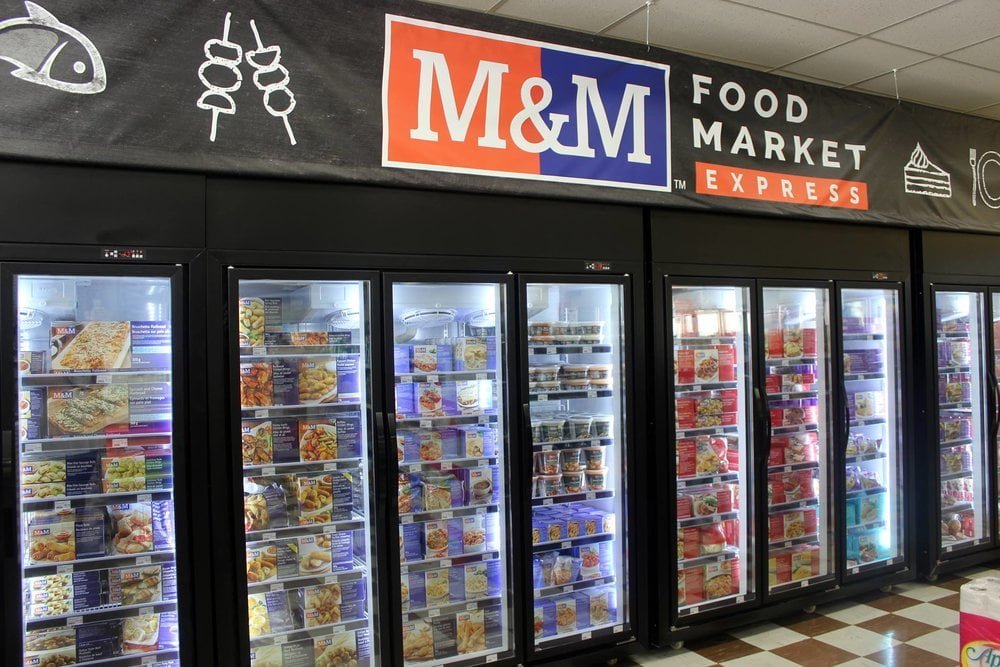
Photo: M&M Food Market

The COVID-19 pandemic hasn’t stopped food retailer M&M Food Market’s plans to continue expanding across the country.

M&M currently has 317 traditional stores and more than 1,300 express stores. The express stores, such as those located in Rexall pharmacies and 7-11 stores, are where the company sells its products as well in dedicated locations in those stores. It’s a mini version of the traditional M&M stores.

In the past year, M&M opened a couple of the traditional brick and mortar stores but expansion of its express format was about 800 locations.

M&M offerings in Rexall Pharmacy in Avondale Mall. Photo: Rexall/M&M

“A crazy amount. That’s been our focus for the last year or so. We opened a new store in Toronto a couple of weeks ago and we have deals in place for another five stores opening in the next 12 months – traditional stores. So we’re growing,” said Andy O’Brien, the company’s CEO.

M&M has been in business for the past 40 years.

From the onset of COVID, the company has been diligent in its health and safety measures throughout its operations.

“What came with that because we were able to supply, because we had a very safe environment, because of all the previous changes we made to making sure we could do online same-day ordering, because we completely transformed the portfolio, because we’ve renovated over half our network, our sales went through the roof and they still are,” said O’Brien.

M&M Reaping Benefits of COVID-19 Restaurant Restrictions

The concept works ideally in the current environment where whether through choice or mandate many people are not willing or able to go out and eat. Many are choosing to stay home and M&M is reaping the benefits of that trend.

“There’s a couple of macro trends that have happened. People’s perception of food in general completely changed back in March. Our food is safe. Nobody’s touched it. It’s not sitting in a bin where people pick up an apple. This is really protected food,” said O’Brien.

“And people didn’t want to be in a large format shopping place. They want to be in a more boutique place like us. You’re in and out in five minutes. People went from maybe having to have maybe eight to 10 meals at home during the week to having 21 meals at home. Breakfast, lunch and dinner everyday. With their kids. It was like ‘holy cow, I need to figure out some menu ideas’. We offer restaurant quality food that you can have at home.

“We were ideally set up from a portfolio and shopping environment and our team is so highly trained in helping people figure out meals.”

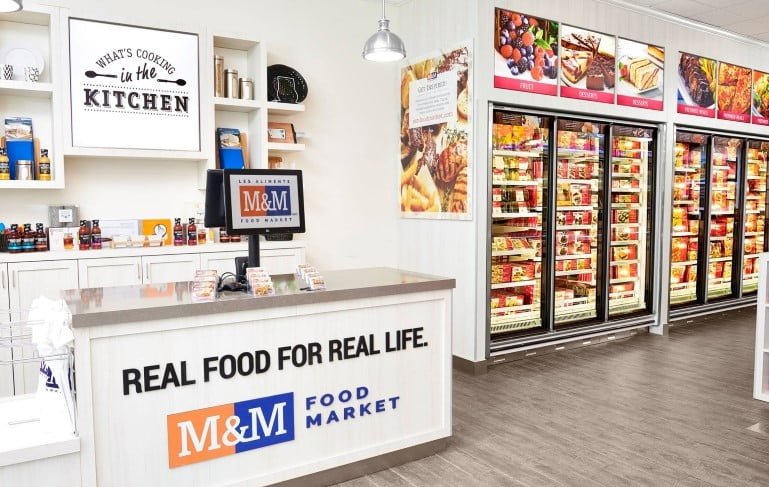
M&M Food Market interior. Photo: M&M Food Market

M&M Have Released Holiday Products Early as Customers Think Ahead in 2020

M&M stores have already come out with its holiday products which is much earlier than previous years as customers are beginning to think ahead.

“It’s our busiest season and this year’s going to be dramatically different than it’s been in the past,” said O’Brien.

“We’ve put in all kinds of different promotions to bring the business forward, provide people with price guarantees. We have a great online ordering system where people can go online and order. We’re figuring out ways to make it a really easy shopping environment for them. Christmas for us is massive.”

O’Brien said as a company it is now focusing on safety, supply, and communication.

“That was paramount to us as a group, to a team of 2,500 really coming together. It’s been a most amazing experience to this team really coming together during a very difficult time of crisis and all the things we’ve done in the past – the renovations, transforming the portfolio, the improvements to our frontline training, all allowed us to really service our customers well during this time period,” he said.

Retailers in Canada See Costs Rise by 25% Due to Pandemic Precautions: Study

Waiter wearing protective face mask while cleaning tables in restaurant

A new report by commercial real estate firm Colliers suggests retail tenants are facing rising operating costs of about 25 percent compared to their costs prior to the COVID-19 pandemic.

PPE & Cleaning Responsible for 24% of Increased Costs

The report, Retail Recovery: Sales, Traffic, and Changes to Retail Space, said tenants indicated cleaning costs and Personal Protective Equipment (PPE) are responsible for about 24 percent of the increases.

“This increase varied across different retailers as QSR restaurants and personal care saw their costs increase the most at 35 percent, while professional services experienced an increase of 21 percent. Interestingly, it appears operating costs are remaining steady, even as more consumers return to in-store shopping,” said the report.

“This pattern is consistent across different industries, with the exception of sit-down restaurants and clothing and apparel. Sit-down restaurants have seen a significant cost hike, with inventory costs behind 22 percent of the increases, likely due to the cost of expired goods that were never used. Wage increases are another driving factor, as employers top-up wages to compete with the Canadian Emergency Response Benefit (CERB) program, add “hazard pay” or hire additional staff. Extra security and changes to store layouts are behind the 11 percent increase in costs for clothing and apparel.”

Jane Domenico

Jane Domenico, SVP & National Lead, Retail Services | Canada for Colliers, said a line item increase has to be managed in some way either through revenue or managing other costs.

The report, she said, highlights the difference in increased costs based on the different industries involved.

“We truly hope that this will be helpful to both our retailer community and our landlord community,” she said.

The report by Colliers found that 44 percent of tenants surveyed plan to apply for the federal government’s new Canada Emergency Rent Subsidy while 28 percent won’t apply, 21 percent are not sure if they will, and seven percent were not aware of the program.

“The 44 percent of respondents who indicated they would apply for the program are primarily the same tenants who received landlord or government aid from March to September. During this time, 81 percent of this 44 percent received relief through landlord-initiated programs, 39 percent received relief through the Canada Emergency Commercial Rent Assistance (CECRA) program, 25 percent received abatements, and 17 percent received deferrals,” it said.

Colliers Report 20% Increase in Customer Spending From May to September

Colliers said retailers have seen a 20 percent increase in consumer spending from May to September, although overall spending is still down 49 percent compared to the same time last year.

“I’ve been saying since the beginning of this that consumer confidence is the key,” said Domenico. “We came off this great high in August and we did see an improvement by the end of October.”

But this is something to monitor as the COVID situation is changing by the day in the country and in various regions of the country.

The report asked tenants whether they would like to change the retail space they currently lease and 62 percent indicated their space needs are roughly the same, 26 percent said they need less space, and 12 percent said they need more space than what they currently lease.

“The respondents who indicated they would like to decrease their space want to do so by about 35 percent on average, while those who are looking to increase their space want to do so by 40 percent on average. Tenant size was not a predictor of whether tenants’ space needs are changing, with small and large tenants as likely to indicate that their space requirements are evolving,” said Colliers.

“The pandemic has impacted the various categories of tenants differently, which can be seen in the changing space requirements of different retailers. 60 percent of sit-down restaurants and 50 percent of QSR indicated they need less space. The opposite is true of supermarkets, 50 percent of which want more space.

“For those who indicated they are looking to downsize, 44 percent indicated they would like to do so because of increasing operating costs, 40 percent because of lack of consumer traffic, and 16 percent because of online sales. This is an indicator that while online sales could be set to take a larger portion of total retail sales, only 16 percent of tenants feel that e-commerce can replace their physical stores.”

Colliers Report Indicated 9% of Participants Planning to Permanently Close Businesses

The report said nine percent of respondents indicated they are working on plans to permanently close their businesses.

Here are some of the key takeaways for owners from the Colliers report:

  1. Retail shopping trends are likely to be very regionalized and local strategies are needed: COVID-19 is impacting regions across the country differently. Some provinces and cities are experiencing a second wave and are facing the threat of another lockdown, while others have managed to contain the virus. We expect discretionary shopping to be stronger in places with fewer new cases, while essential shopping will dominate in regions that impose more stringent COVID-19 restrictions.
  2. Retailers will try to cut costs wherever they can: A 25 percent increase in operating costs is not sustainable for most retailers. This could mean hiring freezes, an increased need to alter supplier contracts, and potential downward pressure on rents.
  3. Governing bodies need to find a way to keep consumer confidence positive: Our analysis indicates that public policy has a greater impact on consumer confidence than the number of new COVID-19 cases and consumer confidence has a direct effect on spending and traffic.
  4. Retailers and landlords need to cooperate to deliver omnichannel solutions ahead of the holiday season: The holiday shopping season will be very different this year. Retailers won’t be able to accommodate the same volume of customers in their stores as they normally would. As a result, parking lot pick-up programs, extended sales and promotions, delivery services, and robust e-commerce platforms could be the defining factor in making or breaking the holidays for many retailers.
  5. Retailers and landlords need to work together to create the best customer experience possible: Cleaning protocols, social distancing, and masks are of paramount importance. Customers will be cautious about where they shop and all efforts that make customers feel at ease will help increase stay time, traffic and ultimately sales.

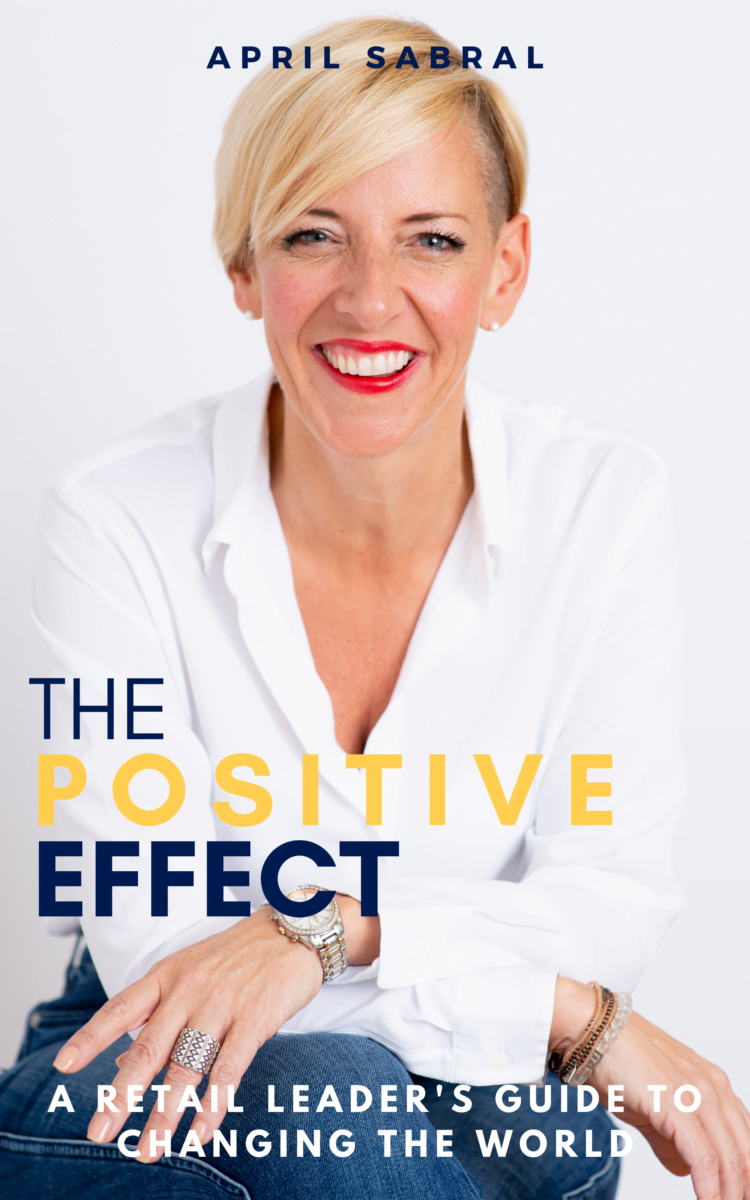
April Sabral, retail guru and entrepreneur, launches her new book The Positive Effect and web subscription site www.aprilsabral.com

Toronto, November 2020 – Retail expert Ms. Sabral is a coach and entrepreneur with nearly three decades of excellence in global retail leadership among brands such as Starbucks, Apple, Gap Banana republic and DavidsTea. With her extensive experience as an executive operational strategist and leader – Sabral is now passing along her value and launching a leadership and mentorship portal to inspire leaders of companies to achieve great leadership success. “I think the book and the portal are even more relevant in this COVID time. It has forced us to expand the way we think about leadership and communication and finding relevant ways to train store teams is necessary. Resilience is the new superpower for leaders to be successful. April also founded retailu.ca, an online leadership development portal for store managers in 2018 but recognized the need to do more.

In the last year, the process of writing the positive effect inspired Sabral to launch www.aprilsabral.com, which supports the book with live coaching sessions to inspire senior leaders. The book is an overview of her journey through the ranks of retail while sharing her leadership philosophy, which is proven in her success. This is a must read for retail leaders as she shares in depth her personal journey and lessons learned that are relevant now more than ever.

On her portal, Sabral answers questions on how to build a strong team – how to create open communication with employees, empower leaders, create inclusive cultures…How to overcome obstacles, and build resilience …These speaking engagements target professionals looking for coaching advice …. And seminars to stimulate and inspire thought process on their business and their teams. The enrollment cost is very affordable, “At launch, I am giving lifetime subscription for only $12, this sounds too good to be true, however, as the membership and content grows so will the price, but for now, I feel it’s necessary to support leaders through this trying time.” says Sabral.

Her main goal is to be a positive thought leader and influencer in the retail business and assist leaders navigate these challenging new times.

ABOUT aprisabral.com

April’s latest portal is for mid to senior women business leaders. Women can sign up for an annual membership, be inspired and focus on personal development. It focuses on building a simple concept that leaders must be chief inspiration officers before anything else. Sabral teaches and coaches live sessions and online resources and builds a global community of women business leaders. Sharing her knowledge is relevant.

ABOUT APRIL SABRAL

An acclaimed speaker, Sabral has shared her leadership message in many settings, including universities, conferences, and corporate training, …. Ms. Sabral holds credentials from the John C. Maxwell Team and a member of the World Association of Business Coaches. She strives to create value and positivity for the people and organizations in every space she enters. Ms. Sabral is the author of “The Positive Effect: A Retail Leader’s Guide to Changing the World” and aspires in the future to continue changing lives through professional training in the retail and non-profit sectors.

ABOUT retailu.ca

retailu was founded by Sabral in 2018 when she couldn’t find affordable, relevant leadership training for her team. retailu provides off the shelf quality leadership training for field leaders at a fraction of the cost of other training programs. After developing leaders for nearly three decades, she thought there had to be a better way. retailu is a subscription licence model with over 25 retail core competencies courses geared to improve managers’ skills to drive their business.

New Look Vision Announces Innovative First-in-Canada Precision Eyewear App

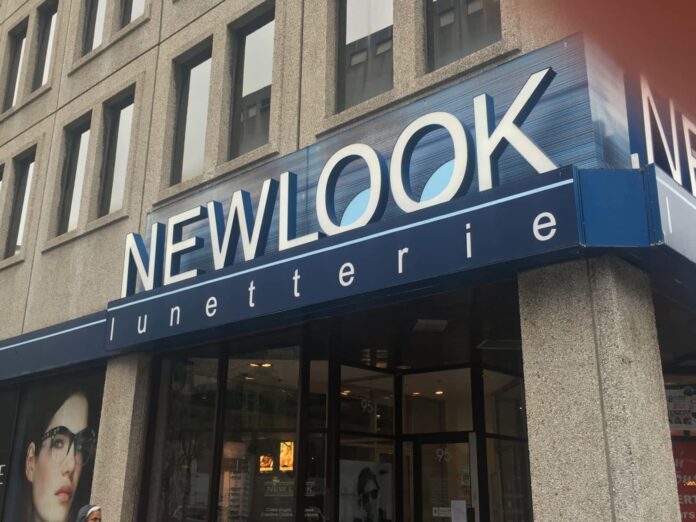
New Look Vision location on Montreal's Rue Sainte Catherine. Photo: New Look Vision

Quebec-based New Look Vision Group Inc. has been offering its expertise in high quality eyewear since 1986, and it has now embarked on a new innovative and unique service for customers.

Eyewear App Most Accurate on the Market

The company has launched what it calls a first of its kind in Canada – a precision-enabled eyewear app giving the customer the same level of quality and precise measurement for glasses as they would get in store. It’s the most accurate on the market, and the only retailer in Canada to use it as it was co-developed with Topology in an exclusive partnership to launch to retail, explained New Look.

Antoine Amiel, President and CEO of New Look, said the company has “invested quite a bit in the past two years in our customer journey – customer’s experience”.

“We have a very strong customer journey model to deploy,” he said.

Antoine Amiel

New Look has about 400 locations across Canada coast to coast and in January this year it expanded to the United States where it has 12 stores in Florida currently.

“We have worldwide expansion ambition,” said Amiel.

“Our expansion is essentially by acquisition and therefore it’s more the seller’s timing than the buyer’s timing. It will be when we come across a good opportunity. We’ve been looking at opportunities in Europe for the past five years. Maybe one or two a year.”

The company said the new app makes it easy to try on single-vision glasses with an optician via video appointment, safely from the comfort of their homes. The touchless optical solution is designed with the optician at the centre of the experience and focuses on providing each customer with tailored eyewear that achieves the same quality vision as when bought in a store.

The latest 3D technology is used to scan 20,000 data points on a person’s face, taking ultra-precise measurements and making it the most accurate technology on the market, said New Look, adding that this level of precision helps ensure better fitting frames and optimal comfort, regardless of the size or shape of a person’s face.

People can try on hundreds of frames virtually with the assistance of an optician via live video chat to choose the perfect pair. The glasses are manufactured in the company’s laboratory in Montreal, then shipped straight to the customer’s home.

The service is currently available only in Quebec but there are plans to roll it out elsewhere in the near future.

“It’s basically a very deep scan of the face ear to ear,” said Amiel, adding the detail is unmatched in the market today.

“It enables us to take optical quality measurements – something we’ve never seen. Today, nobody can do that. It’s the same precision as we achieve in our stores.

“We have actually replicated the store experience online. To be noted, the same app, on a bigger screen, on an iPad, is what we use in-store. So it’s really the same experience, the same tool with the same result at the same price.”

Amiel said that in today’s world a feature like this is what customers are looking for in their retail experience.

App Helps with COVID-19 Social Distancing Measures

Especially now with the COVID environment, taking measurements from a distance is ideal for customers concerned about safety. Consumers also are continuing to shift to the online world for their retail experiences. For the company, it allows it to free store capacity.

“Safety, convenience and capacity are the main reasons for us to do that,” added Amiel.

Jean-Michel Maltais, Senior Vice-President, Omni-Channel for New Look, said it’s important to note that the new app the company has launched allows people to buy glasses online to have the same level of quality as when they are bought in stores.

“It’s important to note that until today this has not been possible. The eyewear market is very small online . . . and most of it is contact lense renewals and some glasses without prescriptions . . . The reason it had stayed so small was that the quality was not there,” said Maltais.

Jean-Michel Maltais

“What we do with our application is we provide our optician with instructions to pre-adjust the frame. So when you receive the frame at home it is truly the same quality as you would have got at the store and it’s pre-adjusted so it will be comfortable as well.”

A Digital Shift and Strong Communication Required for Small Business Survival Amid Second Lockdowns

Row of small businesses on King Street West in Toronto. Photo: Dustin Fuhs

For many of Ontario’s small businesses that were fortunate enough to survive the first wave of the COVID-19 pandemic and subsequent government-imposed shutdown of non-essential services, the days, weeks, and months since have been nothing short of arduous. The character and resilience of every small business owner in the province have been tested during this time. And now, just 242 days removed from that bleak announcement made on March 23, the Government of Ontario have announced yet another shutdown, the impacts of which, according to John Kiru, Executive Director at Toronto Association of Business Improvement Areas (TABIA), could prove to be insurmountable.

“It’s no secret that Main Street has been under duress for a number of years now,” he says. “The combination of changing shopping patterns and behaviours and an increasing migration of consumers toward online platforms have been posing challenges to small businesses for quite some time. But the pandemic has served to amplify these challenges and the pressures that are on merchants, resulting in significant changes to the way small business owners operate. Main Street is not going to be the way we remember it by the time this is over. And, unfortunately, it will be reflected most negatively in the number of those that don’t survive the impacts of a second shutdown.”

A Matter of Survival

John Kiru

It was estimated in a report developed by the Canadian Federation of Independent Business (CFIB) back in July that one in seven small businesses in Canada were at risk of insolvency as a result of the impacts of COVID-19. This was a projection above and beyond the number of businesses that had already gone under up to that point, reflecting a startling consequence within the grim reality of the situation. Based on this statistic, the federation estimates that somewhere in the region of 158,000 small businesses will be forced to close due to circumstances surrounding the pandemic, a number that it suggests could rise to as many as 218,000 in a worst-case scenario – a scenario that could well be upon us. It all offers a relatively blunt assessment of the struggles faced by entrepreneurial merchants across the country, and a strong indication of the pivots or shifts that are required by them if they are to sustain the second wave of shutdowns.

“There have been a number of small businesses over the past several years that have recognized a need to move from brick-and-mortar operations to a brick-and-click offering,” says Kiru. “They are the ones that identified a shift that was already happening, positioning themselves in the best possible way to continue to succeed through this difficult time. But, for those who have not made the shift online, COVID has perhaps forced them to do things and make decisions that they weren’t comfortable with. The bottom line is that the need for small businesses to develop an online presence has become critical over the past nine months or so and will only become more important to the health of their operations as we move forward.”

The Shift to E-Commerce

Kiru, in addition to serving as TABIA’s Executive Director, is also Founder of Digital Main Street – an initiative which began back in 2014 with the objective of helping Toronto’s small business owners adapt to the demands and changes resulting from an increasingly digital age. He recognizes the hardships that small business owners have recently fought through, hardships that continue to linger, admitting that the timing of this current shutdown could be devastating for many with the holiday shopping season quickly approaching. He stresses his concerns about the balance sheets of small merchants come January and February of next year, but offers hope to them in the way of the services offered by Digital Main Street and its dedicated team.

“If a small business owner is committed and nimble enough to make the move to online, Digital Main Street can help get them and their products set up for e-commerce sales in two weeks,” he asserts. “It’s a shift that we’ve been encouraging small business owners to make, and supporting them in their efforts to do so, for several years now. Collectively, we recognize the value of traditional Main Streets as the lifeblood of the social and economic wellbeing of our neighbourhoods. The health and success of any neighbourhood is directly linked to the vitality of its Main Street and the vibrant merchants that make up its offering. Because we have an acute understanding of this connection, Digital Main Street is invested in improving the operations of small businesses everywhere and helping them make the shifts and pivots necessary in order to succeed.”
Social and Economic Lifeblood

Given the highly meaningful role that small businesses serve within the communities they operate, Kiru urges the participation of consumers right across the country to shop local this holiday season. And, amid all of the gloom of the pandemic and its negative impacts on small businesses in Canada, he sees an opportunity for them to develop meaningful communication with shoppers, to engage and connect with them, during a time when it’s perhaps needed most.

“Merchants need to focus on serving their own immediate communities right now,” he states. “They need to increase their presence within their neighbourhoods and market to the local customer and provide them with exemplary service, reminding them of the value of their business to the community in order to continue to enjoy their support. And, going forward, once merchants in the affected areas are able to reopen, it’s going to be about developing communication around building confidence in the consumer concerning the safety and cleanliness of their stores, by conveying the message that they’re doing everything that they can to take care of their visitors.”

More to Be Done

In the meantime, Toronto BIA’s and those servicing other provinces across the country are currently leveraging every channel possible to get the message out to consumers, encouraging them to shop online and to shop local this holiday season. But, according to Kiru, more needs to be done by everyone involved in order to give small business owners a fighting chance to emerge from these restrictions, and succeed beyond them.

“There is still so much that we can all do to help support the health of small businesses. For instance, there are considerations that the city can make with respect to easing up on parking bylaws and permits required to put products on display out on the street. If we can find some lenience that would make it easier for retailers to showcase their product outside of their stores and to execute on convenient and seamless curbside pickup options, then we can help them move some of their inventory during these challenging times in order for them to pay some bills, put some food on their tables and possibly build some savings.”