Michel Golbert, President of Pajar Canada, understands the complexities of global trade and manufacturing better than most. As the head of one of Canada’s last remaining footwear manufacturers, Golbert has firsthand experience dealing with the shifting landscape of international tariffs, supply chain disruptions, and domestic production challenges. With potential new tariffs looming, Pajar is facing an evolving economic landscape that could significantly impact its business and the broader Canadian retail industry.
“We have one of the last factories left in Canada,” says Golbert. “A 25% tariff hasn’t been imposed yet, but it seems inevitable. If that happens, it will definitely impact how we operate.”
Pajar’s operations are globally diversified, with about 95% of its production occurring in Europe and Asia. “If tariffs come into play, we’ll be on the same playing field as everyone else,” Golbert explains. “If China gets hit with a 10% tariff, then Nike, Steve Madden, and other brands will face the same increase—unless they know a loophole that we don’t.”

Despite this, Golbert notes that any additional costs will inevitably affect both businesses and consumers. “We’ll do our best to absorb some of the costs, but at the end of the day, consumers will also feel the impact,” he says. “Prices in the U.S. will go up, and that could influence demand for Canadian goods.”
Maintaining a Canadian Manufacturing Presence
While Pajar maintains a significant global supply chain, it continues to manufacture a portion of its high-end sheepskin boots in Canada. “Our factory in Montreal, on the Plateau, is the original factory my grandfather started in 1963,” Golbert explains. “We employ about 70 workers and produce roughly 150 pairs of boots per day, which retail between $400 and $600. These are sold in premium retailers like Holt Renfrew, Harry Rosen, Browns, Nordstrom, and Saks Fifth Avenue.”
However, sustaining domestic production has become increasingly difficult due to the decline of local suppliers.
“Back in the day, everything was produced and sourced in Canada. Now, all the small suppliers who provided eyelets, leathers, and other materials are gone,” says Golbert. “We try our best to buy local—our boxes are made in Montreal, and we source YKK zippers locally—but much of what we use comes from Italy and other parts of Europe.”
The U.S. Market and the De Minimis Rule Change
With roughly 50% of Pajar’s sales generated in the United States, any changes to trade policies can have a significant effect on the company’s bottom line. One particularly concerning development is the potential elimination of the U.S. de minimis threshold, which currently allows goods under $800 to enter duty-free.
“That would be way worse than the 25% tariff,” Golbert states. “We have a robust e-commerce business that ships directly from Canada. If de minimis is eliminated, we’ll have to start shipping through a third-party warehouse in the U.S., which increases costs and reduces control.”
Golbert points out that the impact would extend far beyond Pajar. “Millions of packages move across the border daily under this rule. If it changes, not only will Canadian businesses suffer, but American consumers will face higher prices as well.”
Diversifying Production Beyond China
With increasing uncertainty around trade policies, many companies—including Pajar—are exploring alternative manufacturing options. “We just returned from the Dominican Republic to assess new factory options for Fall 2026,” Golbert reveals. “We’re also expanding in Brazil. It’s crucial to diversify because today it’s China facing tariffs, but tomorrow it could be Europe.”
However, shifting production isn’t an easy solution. “There’s always a learning curve when moving to a new country,” Golbert says. “We have to ensure factories meet quality standards, ship on time, and comply with major retailers’ requirements. It’s risky and takes time.”
Pajar’s Acquisition of Cougar Boots
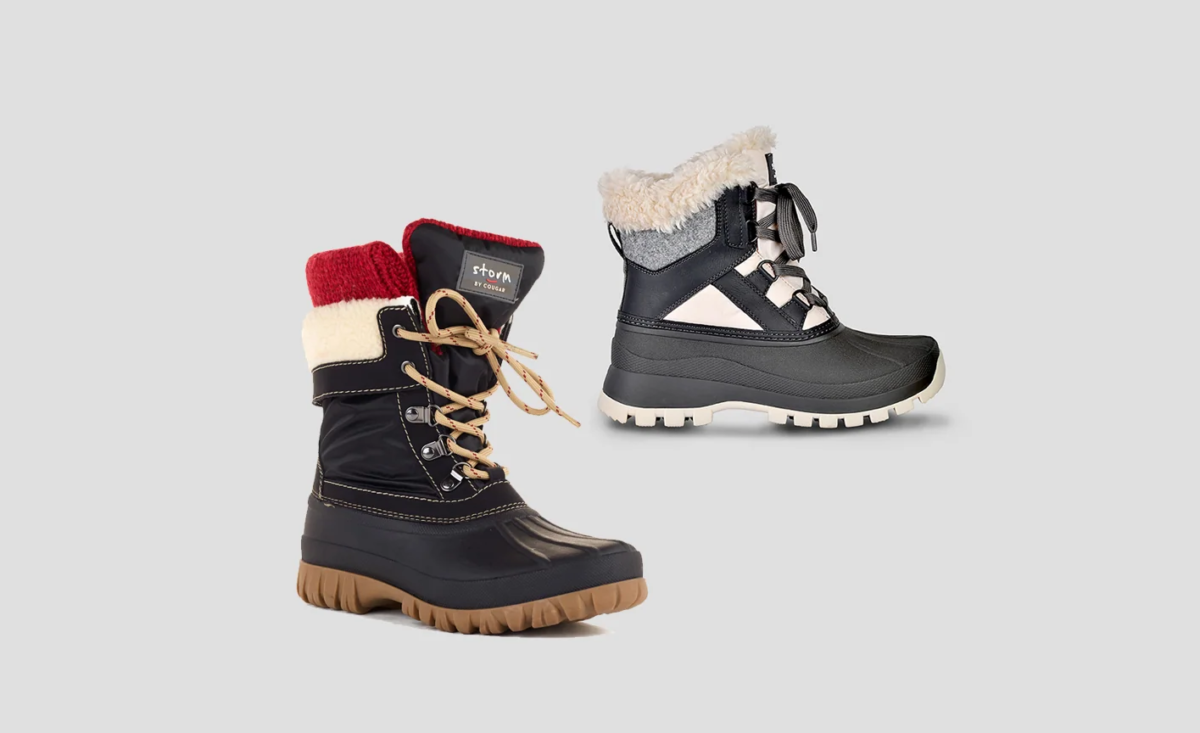
Despite these challenges, Pajar continues to grow. The company recently acquired Cougar Boots, a Canadian brand known for its winter footwear. “The acquisition has been fantastic,” says Golbert. “Cougar is doing exceptionally well in Canada, and our U.S. distributor has helped us get into all the major retailers we targeted.”
Looking ahead, Pajar plans to expand the Cougar brand. “For Fall 2026, we’re introducing a men’s line—something Cougar hasn’t had in years. We’re also exploring new product categories like outerwear, socks, and underwear, similar to what we’ve done with Pajar.”
Supporting Canadian Manufacturing and National Identity
While global trade dynamics remain uncertain, Pajar remains committed to its Canadian roots. “We’re pushing our Made in Canada products to Canadian retailers, and they’re responding positively,” Golbert says. “Now, more than ever, there’s a renewed sense of pride in Canadian-made goods.”
Pajar’s branding has long emphasized its Canadian heritage, something Golbert believes resonates with consumers worldwide. “Our logo features the Canadian flag. To people in Europe and the U.S., that represents quality, expertise in winter wear, and a country known for peace and wilderness. That’s a huge selling point.”
Looking Ahead
As trade policies evolve, Golbert remains optimistic about Canada’s future in the global market. “Short-term, these changes will sting, but long-term, they could make Canada stronger. We need to become more independent and sell our products globally—not just to the U.S.”
Despite the challenges ahead, Pajar is poised to continue its growth, adapting to shifting market conditions while staying true to its Canadian heritage. “We’re prepared to pivot quickly,” Golbert says. “It’s a crazy time, but we’ll navigate it like we always have.”