Goodwill Industries Ontario Great Lakes, headquartered in London, Ontario, is making significant strides in sustainability while maintaining its core mission: changing lives and communities through the power of work. The organization operates the largest Goodwill territory in Canada, covering 5.1 million households. Last year alone, Goodwill Industries Ontario Great Lakes collected over 65 million pounds of donated goods, with 41 million pounds being reused and another 14 million pounds recycled, resulting in an impressive 85% diversion rate from landfills.
“We are repurposing 85% of the goods we receive,” said Bev Kobe, President and CEO of Goodwill Industries Ontario Great Lakes. “And we want to do even better than that.”

Sustainability at the Core
Goodwill has long been a pioneer in the circular economy, ensuring that donated items are resold, repurposed, or recycled instead of being discarded. “Reuse is always our first priority,” Kobe explained. “Keeping goods in use longer and extending the life cycle of post-consumer goods is critical. North Americans are major consumers, and Goodwill’s infrastructure allows us to manage high volumes of donated goods effectively.”
To enhance sustainability, Goodwill collaborates with national brands, retailers, and industries to co-design solutions that support a circular economy. Their efforts help protect the planet, support businesses in achieving sustainability goals, and create social and economic benefits.
Take-Back Programs with Retailers
Goodwill is actively working with retailers to implement take-back programs, providing an end-of-life solution for products that would otherwise end up in landfills. These programs allow brands to return unsold or damaged goods to Goodwill, where they can be repurposed or recycled.
“We have the infrastructure to manage returns,” said Kobe. “This helps retailers reduce costs and align with emerging Extended Producer Responsibility (EPR) legislation.” Goodwill also provides valuable sustainability data to retail partners, allowing them to report on their environmental impact.
Business-to-Business (B2B) Solutions for Sustainability
Beyond working with consumers, Goodwill supports businesses and industries in achieving sustainability goals. One key initiative is de-manufacturing end-of-life products and streaming components into various recycling opportunities. This approach benefits manufacturers looking to responsibly dispose of post-industrial and post-consumer materials.
“For example, we work with an automotive manufacturer that produces interior car parts. Their unused door handles were previously sent to landfills, but we now break them down and stream their components into recycling markets,” Kobe explained. “In another case, a company producing acrylic tub surrounds sends us their waste material, which we shred and return for reuse in new products.”
Investment in Plastics Recycling
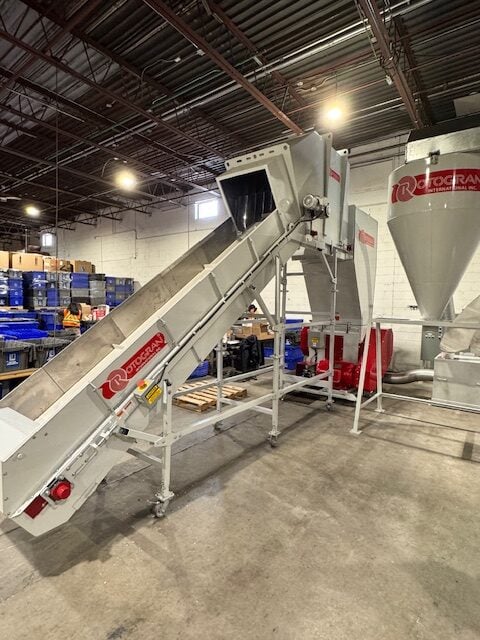
Goodwill recently invested in a plastics granulator, which is expected to divert over 600,000 pounds of hard plastics from landfills in its first year alone. The granulated plastics are used by an Ontario manufacturer in the production of recycled decking.
“This initiative is a game-changer,” Kobe said. “Hard plastics were previously being discarded because there was no aftermarket solution. Now, we have a circular solution that keeps these materials in use.” Goodwill is also exploring partnerships with municipal governments to scale up plastic waste management efforts.
Biochar: A Sustainable Solution for Textile Waste
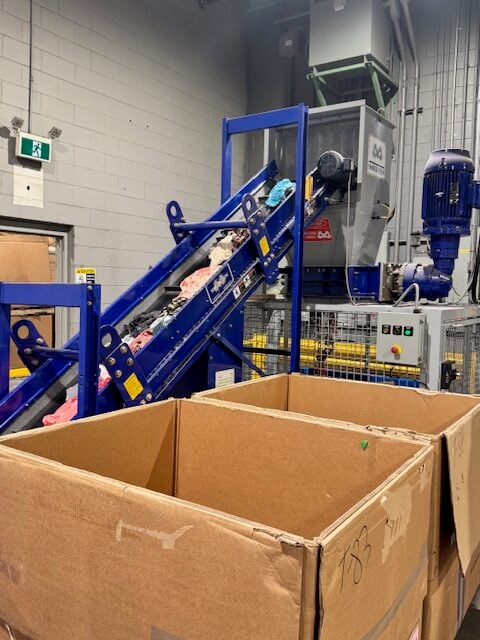
The organization is also working on innovative ways to recycle textiles, particularly the 50% of donated apparel that is not resellable. One promising initiative involves converting textile waste into biochar, which can be used as a soil amendment in agriculture.
“This process not only repurposes textiles but also produces off-gases and liquids that can be used as energy sources,” Kobe explained. “We are partnering with Western University and Fanshawe College to test and scale this solution.”
Textile Recycling and Sorting Innovations
Textile recycling remains a challenge due to the complexity of fiber sorting. However, Goodwill is making progress by manually sorting textiles by fiber type to match them with appropriate recyclers. Some fibers are sent to mechanical recyclers to create new products, while others go to chemical recyclers that break down polyester into plastic PET for use in new textiles.
“We need scalable technology to automate textile sorting,” Kobe noted. “Currently, sorting textiles by fiber composition is labor-intensive and costly. We’re actively working with innovators to develop solutions that can help scale this process.”
The Largest Reseller and Workforce Development Provider in North America
Goodwill Industries Ontario Great Lakes is part of the broader Goodwill network, which is the largest reseller in North America, with 3,300 retail stores. Beyond sustainability, the organization is also a major job creator.
“In February alone, we created 54 new jobs in a small community with no thrift retailers,” said Kobe. “Across Canada, Goodwill added over 1,100 new jobs that month. Our mission is about people—helping those who are typically shut out of the labor market get a second chance.”
Expanding Goodwill’s Footprint
As demand for sustainable solutions grows, Goodwill Industries Ontario Great Lakes is expanding. The organization is planning to open new locations along Ontario’s Highway 401 corridor, with additional stores in the Greater Toronto Area.
“Right now, we have a store in Mississauga, a boutique in Newmarket, and a donation center on St. Clair,” Kobe said. “We aim to open three to five new stores per year for the next seven years to better serve communities.”

Driving a Nationwide Shift in Sustainability
Goodwill Industries Ontario Great Lakes is not just transforming its own operations but is also working to influence sustainability efforts across Canada. Kobe envisions a regional hub model where Goodwill collaborates with non-profit and for-profit thrift retailers to create a national recycling framework.
“This isn’t just about Goodwill,” Kobe emphasized. “We need to bring together business, industry, and government to co-design circular solutions that keep goods in our local economy. Our long-term goal is to create a model that can be replicated nationwide.”
A Call for Collaboration
As governments move toward stricter regulations on waste management, Goodwill is positioning itself as a key partner for retailers, brands, and industries seeking sustainable solutions.
“Our ability to track data and report on sustainability outcomes is a huge advantage,” Kobe said. “We can provide retailers with detailed insights on how much of their product we’ve repurposed and where it has gone, helping them meet environmental, social, and governance (ESG) requirements.”
The future of sustainability in Canada may well depend on initiatives like those led by Goodwill Industries Ontario Great Lakes. As the organization continues to innovate and expand, it offers a compelling example of how circular economies can be both environmentally responsible and socially impactful.