

A new study from Angus Reid Group and retail consultancy DIG360 confirms what many industry observers suspected: pre-owned shopping in Canada has entered the mainstream. According to the 2025 survey, 77 per cent of adult Canadians purchased at least one pre-owned item in the past year, a figure that holds steady across all income levels. The findings highlight the growing role of affordability, sustainability, and consumer preference in driving this shift, with younger generations at the forefront.
DIG360 founder and Principal David Ian Gray, who co-authored the report, says the research builds on anecdotal evidence of growing activity on platforms like Facebook Marketplace and a rising number of retailers experimenting with their own resale programs.

“This isn’t a fringe activity,” Gray said in an interview with Retail Insider. “Three-quarters of adult Canadians are buying pre-owned. That really stood out. It’s mainstream now.”
Benchmarking a Growing Market
The survey, conducted between May 16 and May 19, 2025, polled a representative sample of 1,508 Canadians in both English and French. Gray says the aim was twofold: to confirm the perceived rise in second-hand shopping and to establish a benchmark for future tracking. The study also explored why Canadians are choosing pre-owned, what categories they are buying, and where they are shopping.
While second-hand shopping is hardly new, from used car dealerships to children’s clothing swaps, Gray notes that what has changed is the breadth of categories, the variety of shopping channels, and the scale of participation.
“There’s always been a baseline for pre-owned shopping,” he said. “But now, the breadth of categories and the vast incidence make it mainstream, and the data shows it’s still growing.”
Generational Leaders and Category Standouts
The report finds that Gen Z and Millennials are driving the trend, with participation rates of 86 per cent and 83 per cent, respectively. Among Gen Z, 61 per cent purchased pre-owned books or music in the past year, defying assumptions that this “digital generation” would have little interest in physical media. Clothing, home décor, accessories, and kitchenware also ranked high across age groups.
Households with children over-indexed on categories such as toys, games, and baby supplies, while older generations showed stronger engagement with tools, garden supplies, and furniture.
“It’s interesting to see Gen Z buying physical books and vinyl,” Gray observed. “There’s a retro appeal there, and social media trends on platforms like TikTok are playing a role.”
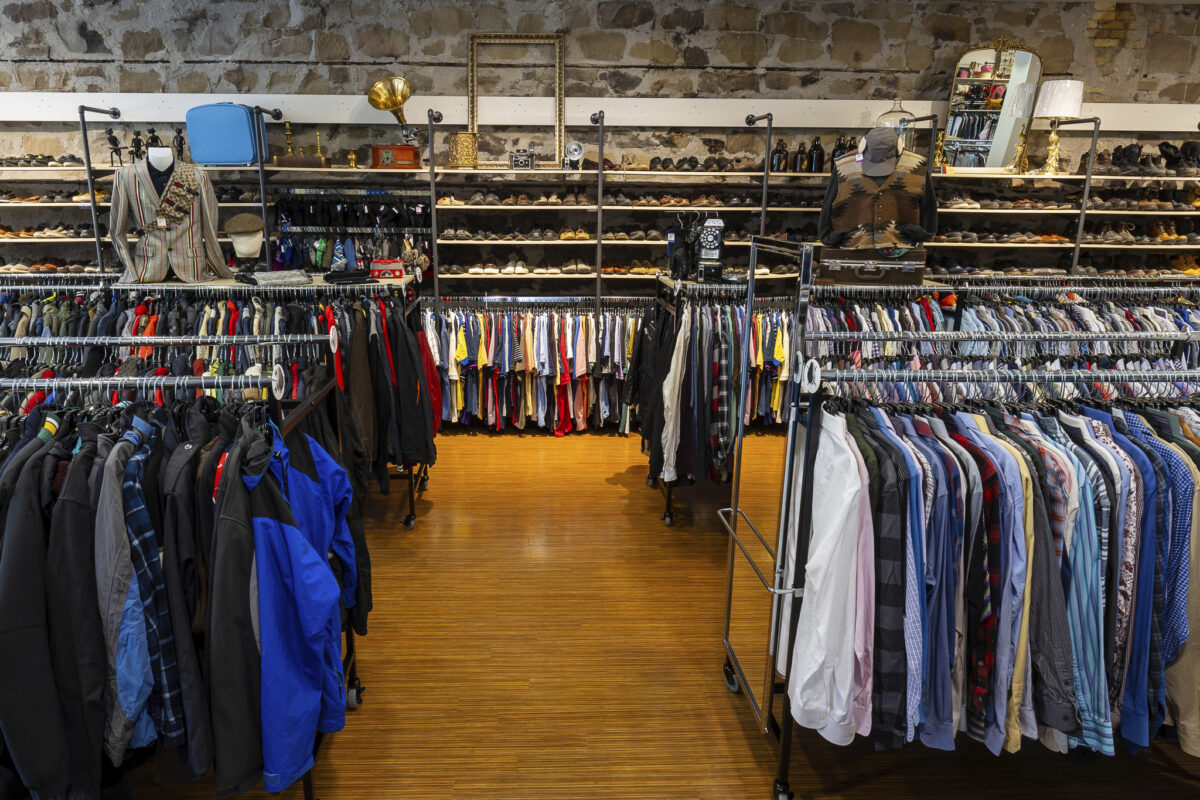
Facebook Marketplace Dominates
When it comes to where Canadians are shopping for pre-owned goods, Facebook Marketplace leads all channels, with 76 per cent of past-year buyers using it. Nearly half of those users browse or buy from the platform at least once a month. Charitable thrift stores (73 per cent) and garage sales (72 per cent) follow closely, while other online buy-and-sell sites, Value Village, and vintage or antique stores also attract substantial traffic.
Luxury consignment and dedicated resale platforms have smaller footprints. Poshmark, for example, saw just 15 per cent participation among pre-owned shoppers in Canada, with only 5 per cent using it monthly.
Gray notes that “other online buy-and-sell sites” remain a significant but undefined category, representing an opportunity for further research.
Why Canadians Choose Pre-Owned
The study points to affordability (77 per cent) and sustainability (73 per cent) as the top motivators. Seventy-one per cent of respondents said pre-owned shopping is a good way to find unique items, and more than half enjoy the “treasure hunt” experience.
Gray likens this to the appeal of off-price retailers. “There’s a gamification aspect, that thrill of finding a great brand at a low price, or something you can’t buy new anymore[DG1] .”
Barriers Retailers Could Overcome
Despite its popularity, pre-owned shopping still faces obstacles. Trust issues with online sellers, perceptions of poor quality or outdated styles, and the time-consuming nature of browsing are the leading deterrents. Twenty-nine per cent of Canadians reported not purchasing any pre-owned items in the past year, often citing discomfort with shopping in second-hand stores or simply forgetting it as an option.
Gray believes these barriers are surmountable, particularly for retailers willing to invest in better store presentation and curation.
“Now that it’s mainstream, there’s a huge opportunity to do this better,” he said. “Value Village’s boutique concept, for example, addresses concerns about quality and the shopping environment.”
The Tariff Effect
The study also examined the impact of 2025’s tariff environment on consumer behaviour. Thirty-one per cent of Canadians who purchased pre-owned items in the past year said tariffs influenced them to buy more second-hand, with younger generations more likely to cite this as a factor.
Gray distinguishes between economic and political motivations. “For some, it’s simply about affordability in the face of rising costs. For others, it’s about avoiding American goods when there are no Canadian substitutes.”
Selling, Donating, and the Circular Economy
While buying is the focus, selling and donating are equally significant. Ninety-one per cent of Canadians have sold or donated items in the past year, and 24 per cent say they are doing so more often. Gray sees this as an essential piece of the circular economy puzzle.
“For this to be sustainable, you need a robust base of sellers,” he said. “The data shows that’s happening.”
For retailers exploring resale, engaging consumers at the point of disposal is a promising avenue. Trade-in programs, in-store drop-off incentives, and partnerships with resale platforms could help keep inventory flowing.

Retail Implications and Future Opportunities
The implications for Canadian retail are substantial. If more consumer spending shifts to pre-owned goods, traditional retailers may see flat or declining sales in certain categories despite overall consumer activity remaining strong. Sporting goods, tools, furniture, and apparel could be among the most affected.
Some major brands have already experimented with in-house resale. Ikea has promoted buy-back and resale programs in Canada, Patagonia has long offered trade-in options, and Canadian brands such as Arc’teryx have tested resale initiatives. Mobile carriers regularly sell refurbished smartphones alongside new devices.
Running resale profitably, however, is not straightforward. Inventory control, pricing, and presentation differ significantly from traditional retail. “It’s a different set of muscles,” Gray says, noting that most thrift operations cannot track margins item-by-item and instead group products by category.
Gray pointed out that a less discussed impact will be on durable and semi-durable goods makers and brands, which could face drops in demand. He also highlighted an interesting twist in the recent “Buy Canadian” movement: the survey found that 40% of Canadians see buying pre-owned as a way to avoid purchasing new American products. “This reasoning often applies when there are no suitable Canadian alternatives for second-hand American goods, and the sentiment is especially strong among Gen Z”, Gray Noted.
Looking Ahead
The future for pre-owned shopping in Canada appears strong, with 62 per cent of Canadians saying they are likely to buy pre-owned items in the next 12 months. Gray believes this intent, combined with the removal of stigma and growing retailer involvement, will keep the sector expanding.
“The stigma’s gone,” he said. “Across income levels, Canadians are participating. The reasons may vary, including affordability, sustainability, the thrill of the hunt, but the behaviour is here to stay.”












Craig, Interesting article and I can appreciate the market trends as I have been retailing and wholesaling vintage “previously enjoyed” clothing in several stores for over 25 years. To some there is still the stigma of “used” but I discovered not to promote the vintage concept in the window or through advertising but just to include the items and use appropriate signage on the rack and it is well accepted. The customer knows what they want. I shifted primarily to new ladies’ clothing as the sources of supply were always difficult to maintain as well as margins but I still sell significant quantities on select items. It’s been quite a ride and as one of the original retailers in Toronto the industry grew as we did. Best Larry