As retailers across the globe ramp up investment in retail media, Canadian grocers and merchants are moving quickly to close the gap, particularly when it comes to integrating in-store digital solutions. That’s according to Sean Cheyney, Head of Retail Media at Vistar Media, a global leader in digital out-of-home (DOOOH) technology.
Vistar Media recently launched a new study exploring the trends shaping the future of in-store retail media, and the consumer sentiment towards it.
Key figures include:
- In the US, 96 per cent of consumers have a positive or neutral view of retail media (or in-store DOOH).
- 23 per cent said the ads made them think about brands or products they wouldn’t have considered.
- 50 per cent of consumers felt DOOH improved their shopping experience and found the ads appealing—highlighting the importance of high-quality, eye-catching creative.
- Storefront Ads are the strongest drivers of purchase with 58% of viewers buying an advertised product.

“Vistar is the world leader when it comes to providing solutions for digital out-of-home,” said Cheyney. “We power a vast majority of all digital screens across the globe, roughly 1.2 million screens, with a variety of products.”
These solutions range from ad servers and player software to programmatic offerings like mediation layers, SSPs, and a buying platform (DSP) for digital out-of-home media.
When it comes to retail media adoption, Cheyney said most retailers are already engaged to some degree. “I’d say the majority of retailers are doing something as it relates to retail media at this point. It’s pretty unusual to find a retailer who’s not participating in any way,” he said.
However, there’s a clear split between online and in-store strategies.
“In Canada, there’s more of a ‘dipping your toe in the water.’ More is happening on the digital side of retail media than the in-store side right now,” said Cheyney. “That said, a lot of retailers are starting to play around and take steps to integrate the in-store piece into the rest of their retail media business.”
Retailers are realizing that while digital ads have limits, their brick-and-mortar spaces offer untapped potential.
“You can only add so many ads on your website before it starts to become a bad customer experience,” Cheyney explained. “So they’re looking for new, high-quality ad inventory that brand suppliers are going to be interested in that doesn’t negatively impact the customer experience, but instead helps people along their shopper journey.”
Cheyney said the push toward in-store retail media is both “an offensive and a defensive move.”
From an offensive perspective, he said grocers are competing for limited supplier trade dollars. “Let’s say you’re Loblaw. Your suppliers are also being sold at Sobeys, at Metro, at Save-On-Foods. They’re looking where to invest trade dollars,” he said. “If a brand has a certain amount of trade dollars allocated, they’re probably going to shift a little bit more from competitive sets into somebody who makes this inventory available first.”
On the defensive side, inaction could cost retailers valuable media dollars. “If your competitors are starting to run pilots for their in-store, and you don’t do something, you’re at risk of losing out not only on trade dollars but also media dollars that are coming from the agencies,” he said.
So where does Canada stand compared to other global markets?
“In comparison to the U.S. and even the U.K., I’d say Canada is behind, both on the digital and the in-store side,” said Cheyney. “Even retailers in Germany, France, and other European markets are ahead, though they’re catching up at a faster pace.”
He noted that U.S. retailers like Walmart have had retail media programs for over two decades, while Canadian companies such as Loblaw only began to seriously scale their efforts in the past few years. But that’s changing fast.
“Canada was late to the game, but it’s catching up quickly,” Cheyney said.
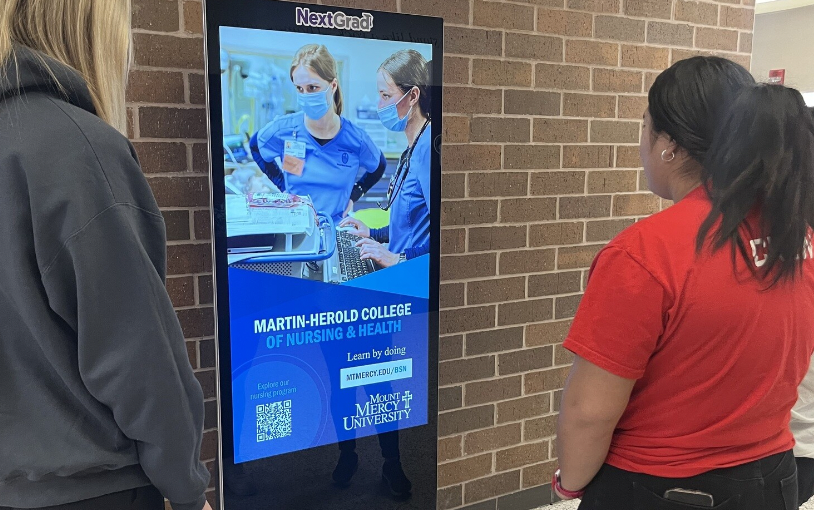
One area still lagging is data and identity. “Being able to track people from a targeting and measurement perspective is not at the same level as other global markets,” he said. “But that’s also catching up rapidly.”
Cheyney believes Canada’s in-store retail media segment is poised for rapid growth. “The in-store component is also closing the gap and will likely catch up very quickly within the next 12 to 18 months,” he said, adding that Canada will likely follow the U.S. path in combining digital with in-store strategies.
Retailers here, he added, have a valuable opportunity to avoid some of the missteps seen in more mature markets.
“One thing I’ll say, and this is where Canadian retailers can really benefit, is by learning from mistakes made in other markets, especially the U.S.,” said Cheyney. “When people go too fast without thinking about their objectives and strategies, they often make decisions they later regret.”
He described common pitfalls, including assuming screen installations lead directly to proportional revenue. “They’ve said, ‘Oh, if we have two screens, we’ll make X amount. So, four screens means double, and eight means quadruple.’ But that’s not how it works.”
“Adding more screens doesn’t change the number of people walking into your store,” he added. “And plastering your store with screens just creates a bad customer experience.”
Cheyney said Vistar encourages a more thoughtful, measured approach. “We advise retailers all over the world to be very intentional with what they’re doing.”
The good news? Canadian retailers seem to be doing just that.
“What I’ve found is that Canadian retailers are already thinking that way. They don’t need coaching to start thinking strategically, they already are,” he said. “They’re watching the pitfalls others have encountered and saying, ‘Let’s start with a firmly entrenched strategy and be intentional with everything we do.’”
Related Retail Insider stories: