A startup has developed a stretchable towel product it says addresses an overlooked segment in the home goods market, signalling an expansion strategy that combines design innovation with targeted retail distribution.
Typical, co-founded by Lyndon Cormack, launched its first line of towels recently, integrating two per cent spandex into conventional cotton to improve flexibility and comfort. The company is pursuing provisional patents on the stretch technology and has begun distributing the product through a combination of online sales and select retail locations across Canada and the United States.
“Almost everything I buy these days has stretch in it,” Cormack said. “I generally speaking, love when apparel has a little stretch. It makes it more comfortable, makes it easier to use. One day in brainstorming, I said, I wonder why towels don’t stretch.”
Identifying an underdeveloped category
Cormack, who co-founded the Herschel Supply Company, said Typical originated from his interest in transforming functional but underutilized product categories. He noted that while luxury and outdoor brands offer quality towels, the broader category remains largely generic and lacks a distinctive brand presence.
The concept emerged when Cormack encountered what he described as an “underwhelming” experience shopping for towels for a personal renovation project in Whistler. Noticing a lack of brands focused on innovation in the segment, he sought to design a towel that offered functional improvement while also creating an appealing brand identity.
“There’s not a real brand associated with the space in general,” Cormack said. “When I ask people what their favourite towel brand is, most people can’t recall a brand. That could be an interesting problem to solve through design.”
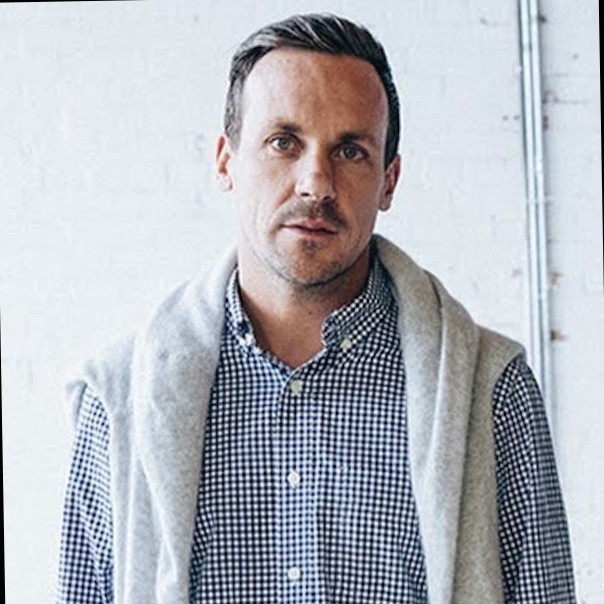
Cormack enlisted Phoebe Glasfurd, a partner at the design agency Glasfurd and Walker, and Aren Fieldwalker, to refine the concept and develop a visual identity for the brand. He said the collaboration focused on creating a product that was both functional and visually distinct, while keeping the category accessible to consumers.
Product development and operational testing
Typical’s towels have undergone internal prototyping and testing, with Cormack personally testing early versions. He described the initial prototypes as simple white towels without branding, used to evaluate stretch, comfort, and usability.
Once prototypes were developed, Typical worked with a sourcing team to identify factories capable of integrating spandex into cotton fabrics. The company also subjected the towels to industry-standard hospitality testing, which involved repeated wash and bleach cycles at high temperatures to simulate long-term commercial use.
“The 15-cycle test replicates basically a year of a towel lasting in a hotel,” Cormack said. “We passed with flying colours. You wash them, you dry them. They’re approved for hospitality use. They’re approved for spas.”

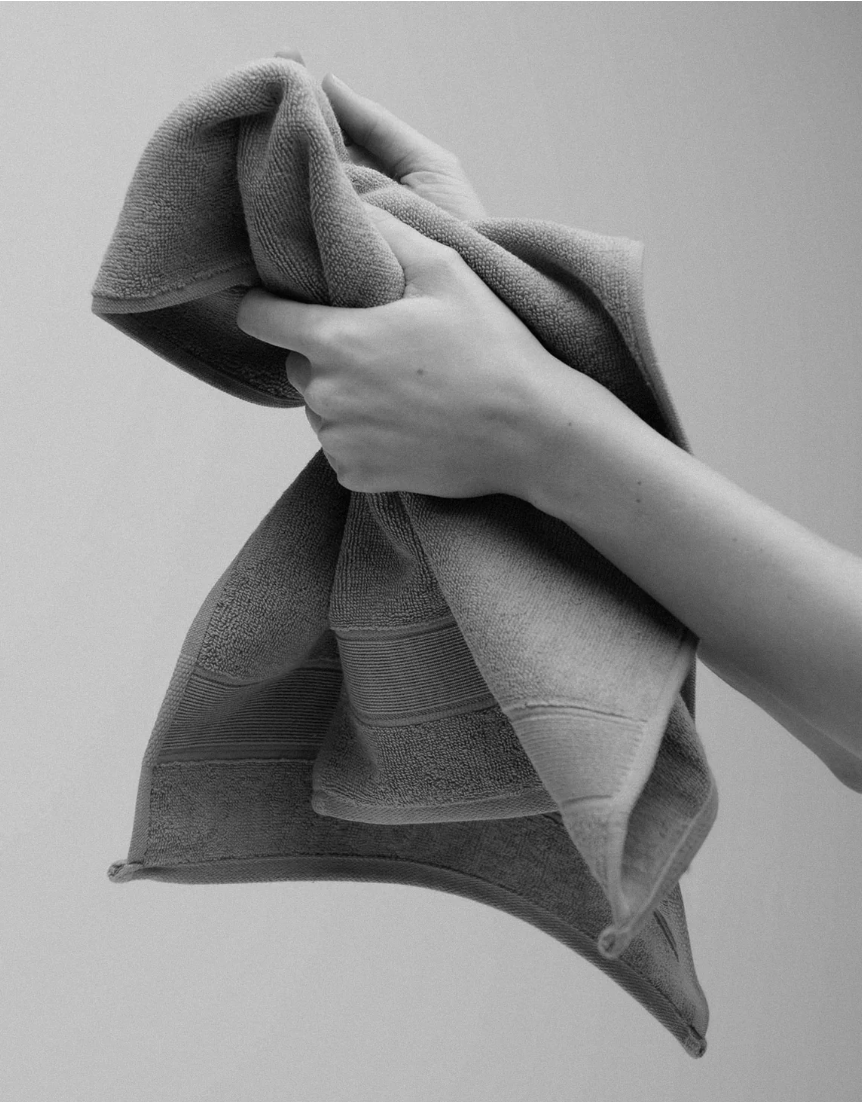
Cormack said the company also conducted stretch recovery testing modelled on standards used in apparel and athletic wear, to ensure the towels retained shape and performance through repeated use. He described the results as confirming the towels perform comparably to conventional premium towels, while adding the flexibility of spandex.
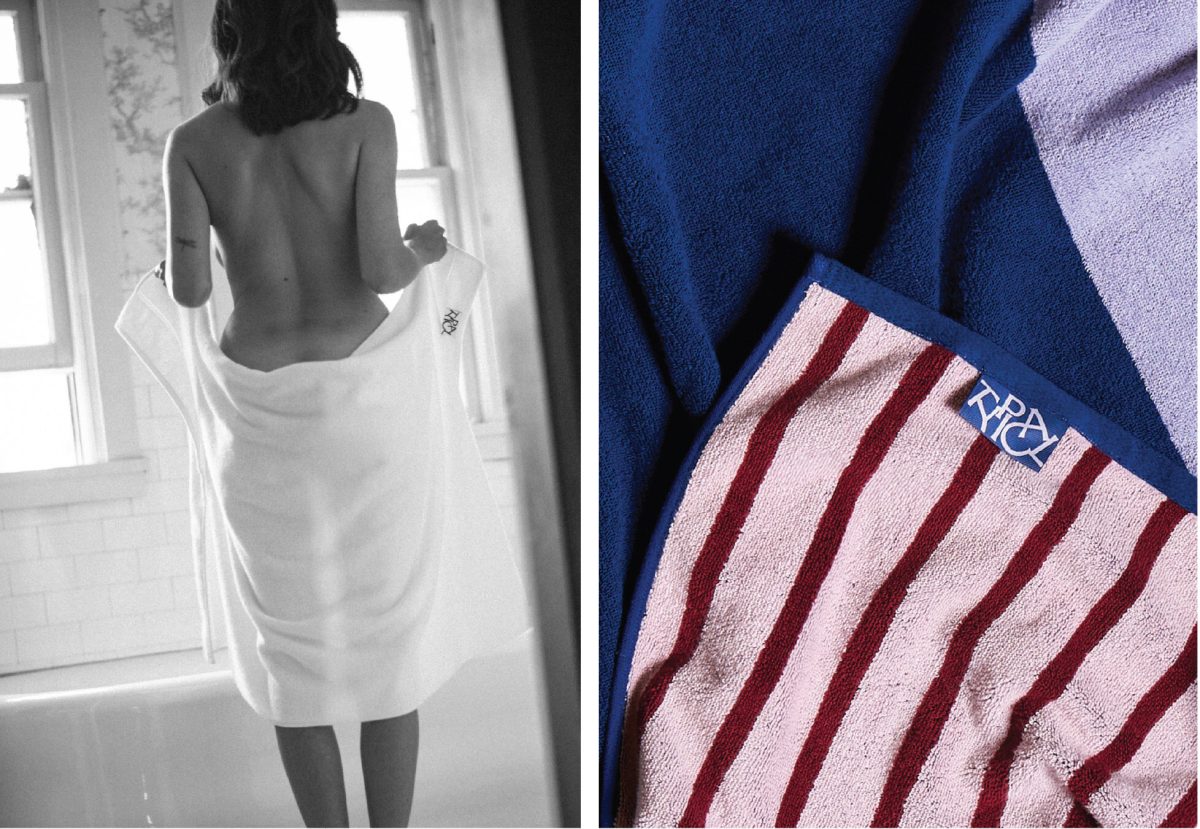
“Towels are one of the most tactile objects in the home, yet they have rarely been treated as expressive or emotional,” said Glasfurd. “We wanted to create something that feels considered both visually and physically. The stretch, the patterns, the color choices all work together to turn a utility into something you connect with.”
Branding strategy and market positioning
The brand name, Typical, reflects Cormack’s strategy of taking a commodity product and differentiating it through design, functionality, and marketing. He described the name as intentionally playful, conveying familiarity while signalling subtle innovation.
“It’s kind of like calling out a commodity: ‘Ah, it’s just a typical towel.’ But there’s something special about it,” he said. “It’s a little bit sassy, a little play on words. Nice, clean branding. I like the way it’s written and pronounced. It’s a bit of playfulness that we’re trying to be anything but typical.”
Distribution and growth plans
Typical is initially targeting select retailers across Canada and the United States, alongside direct-to-consumer sales through its website, typical.net. Cormack said the company launched recently and has begun shipping products to early customers. He also indicated plans to expand into design shops and gift retailers as awareness of the brand grows.
Cormack emphasised that the company is not seeking to become a large-scale hotel towel supplier, but that rigorous testing ensures consumers can trust the towels for home use and personal care facilities.

Leadership and strategic outlook
Cormack, now 49, reflected on his experience with Herschel Supply Company, noting that Typical allows him to apply lessons from his previous ventures to a new category. He highlighted the value of observing consumer habits, identifying gaps in product design, and testing innovations rigorously before market introduction.
“It’s fun right now because, unlike Herschel, we sort of invented something interesting,” he said. “Our curiosity about how people use it and what they love about it—we haven’t had too many negative things back. Hearing questions about wash and dry ability is very common, and it helps us educate consumers better about the product.”
The company’s emphasis on design-led functionality and early-stage testing reflects a cautious approach to growth, focusing on select channels and product validation rather than rapid expansion. Cormack also emphasised that customer feedback is central to refining the product and informing future development.
Looking ahead
Cormack said Typical represents a niche entry into the home goods market, leveraging design innovation and functional differentiation to target consumers who may be dissatisfied with existing commodity products. By combining early-stage testing, limited distribution, and a playful brand identity, the company is aiming to establish a foothold while maintaining operational control and quality assurance.
Cormack said the brand’s strategy is rooted in long-term consumer engagement and iterative product development, a model he described as both “fun” and reflective of his prior entrepreneurial experience.
“We sort of invented something interesting, and our curiosity of how people use it, what they love about it—it’s guiding the brand as we grow,” he said.
More from Retail Insider: