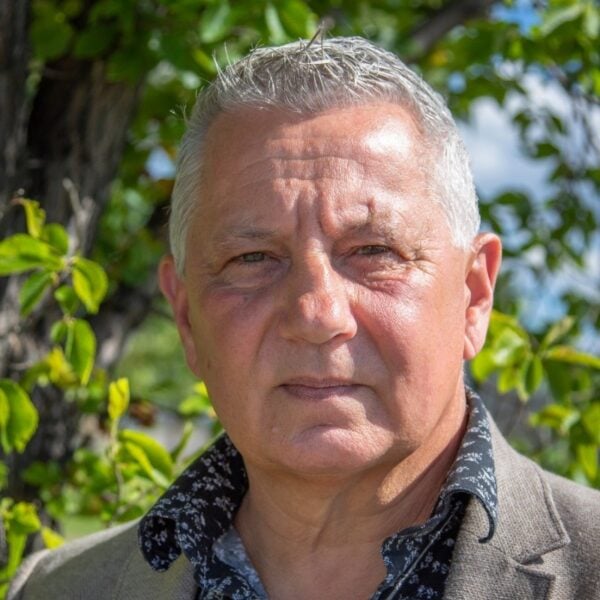
Canadian entrepreneur Marc Lafleur went from a broke kid in Cornwall, Ontario, who couldn’t afford a car and had holes in his shoes, to pitching truLOCAL on Dragons’ Den in 2018, selling the company in 2021 for $16.8M, and now returning to the show as a guest Dragon.
Today, Lafleur runs DB8 Labs, an AI venture studio that builds and operates niche consumer products, and he’s actively scouting Canadian AI startups.
He is a University of Waterloo honours graduate who went on to find his niche in entrepreneurship. After co-founding two start-ups in school, he co-founded truLOCAL and led the business to a successful acquisition.
During his time as CEO of truLOCAL he helped build the team to 60+ employees and expanded across Canada and the US, landing the cover story of The Globe and Mail’s Report on Business for being Canada’s 14th Top Growing Company along the way. Over five years, truLOCAL accumulated a series of wins including a successful pitch on CBC’s Dragons’ Den in 2018 which led to a partnership with Michele Romanow. truLOCAL grew to become Canada’s largest e-commerce based protein business by market size with annual revenues exceeding $20M.
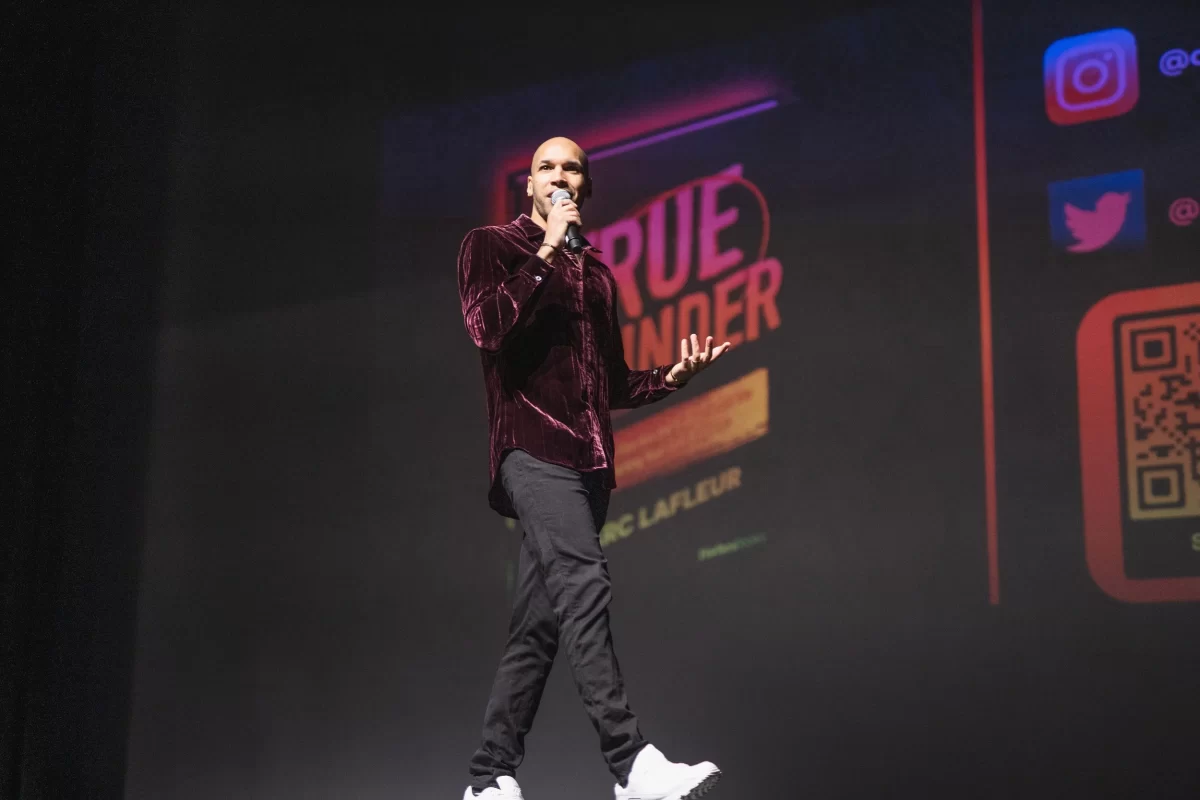
A founder and mentor at heart
Lafleur is a founder at heart and has taken a particular interest in mentoring up-and-coming founders. A series of successful angel investments helped him make a name for himself as a value-added investor among Canadian start-ups.
He shares his message through public speaking for companies like Lululemon and Google and he has taken a special interest in speaking to today’s youth.
“If my story can inspire even one kid to take a risk and go after something someone told them they couldn’t achieve, then I’ve done what I’m here to do.
“I think I’m fortunate. I guess I found my entrepreneurial success after two failed startups, and I was just one of those kids that wasn’t going to fit the mold very well. Whether you call it a problem with authority or just asking way too many questions all the time, I always thought I had a better answer.
“I pretty much struggled a lot academically, and then when I did find entrepreneurship, probably around the age of 22, I was just stubborn. I didn’t know any better, and I think naivety is actually a gift.”
truLOCAL established at perhaps not the best time
He founded truLOCAL, his third startup in 2015, which he said was not the best time to start a business. And this was a very difficult business.
“If you imagine, we had almost the most difficult parts of every single industry you could imagine. We built our own website, so it wasn’t like we were using Shopify or anything like that. We had a full engineering team. We said we weren’t a tech company, but we were tech-enabled,” he said.
“So we had five software engineers, but we also dealt with last-mile logistics. We delivered stuff to people’s homes, so that in itself is a huge cost and a huge logistics nightmare. We had warehousing management. We had the scale of typical retail when it comes to customer service. We dealt with food. We dealt with frozen food.
“So even though trying to sell meat online through a subscription box was a fairly difficult model to do back in the day, it still was the easiest time ever that you could start a company. And I think that now, when you look at 2026, it’s gotten even easier.”
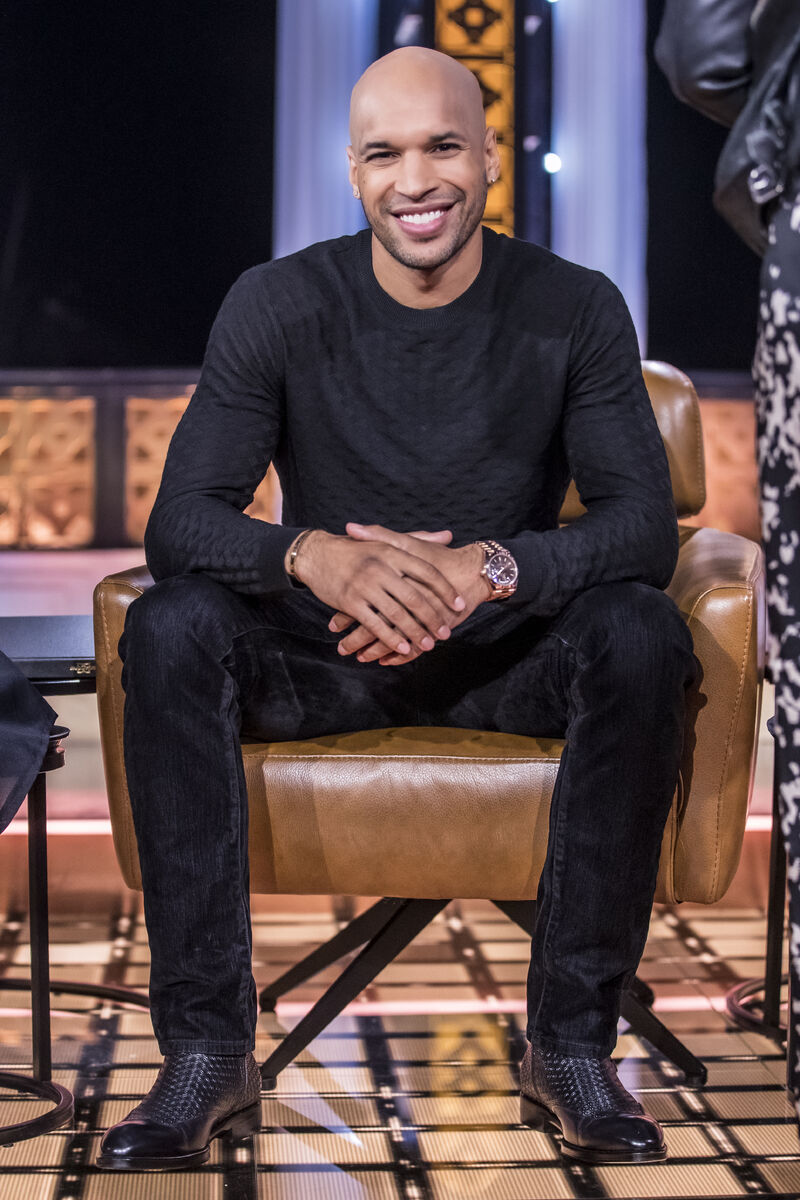
The thing he found very interesting, and the biggest lesson he learned along the way, is that as long as you’re willing to fail over and over and over again, you’re eventually going to find success. It’s inevitable.
“Because as long as you’re the type of individual who can take even a small percentage of your failures and learn from it, eventually after five or six cycles of failure, things are going to start to fall into place,” explained Lafleur.
“So the only real variable that comes into play is how many times can you take a chance before you actually have to call it quits. And that’s different for everybody. But I think people, especially in their early twenties or younger nowadays, have such a huge tolerance for risk. You’re never going to regret taking that chance,” he said.
“I’m a huge believer that everybody should try entrepreneurship at least once in their life. It should be like mandatory service. Because even if you fail, you’re going to become a far greater, more competent human being just by going through the motions of trying to start a company.
“If you think signing a mortgage is intimidating, it’s not if you’ve done entrepreneurship. If you think planning a wedding is complicated, it’s not if you’ve done entrepreneurship. The biggest takeaway is just getting after it, realizing that it is much easier than people think. That’s not to say that you’re going to find success easily, but if you look historically at the rise of entrepreneurship over the past hundred years, this is the best chance of success that you have.”
Investment focuses on consumer AI
As a guest investor on the CBC Dragon’s Den show Lafleur said DB8 Labs is focused on consumer AI.
“But as a lot of investors will tell you, especially when it comes to angel investing, it’s a lot less about the product or the business and a lot more about the founder,” related Lafleur.
“If you look at truLOCAL as an example, on paper, it is a horrible idea. If you were talking to an investor, and we did, and you say, “Hey, we want to take food in this hyper-competitive space and ship it in the mail to people,” it doesn’t make a lot of sense. It was essentially bulldog tenacity, the naivety of not thinking that we could fail, and then putting an amazing team together that found the success.
“So I’m looking for people more than anything. I really do think that we need more entrepreneurs, especially in Canada. The entire world is pivoting into entrepreneurship. The entire world is pivoting into building your own, whether it’s a micro business, the solo institution, or anything. Entrepreneurship is no longer going to be this fringe thing for risk-takers. It should become more of a norm.
“So I think being a guest investor and a guest dragon on Dragons’ Den does two things. Number one, it takes my story and puts it in the forefront once again to show how anybody can do this. I didn’t have a silver spoon in my mouth. I just wasn’t willing to give up. And I think that should inspire a whole new cohort of entrepreneurs to take a chance. And number two, of course, I’m looking to invest in the best founders in Canada.
“I always say, real recognizes real. For me, I’m looking for individuals who remind me of myself. People who are going to tilt the universe in their favor, who will not take no for an answer, who are so stubborn or so convicted in what they want to do that it doesn’t matter what we say.
“You can sometimes tell whether a founder is going to be successful with or without you. Those are the people I want to get behind. The ones who say, “I don’t care if you tell me no today. I’m going to make it work down the line.”
“It’s easy to sniff that out once you’ve been through it. That’s what I’m looking for. A good idea is a plus, but it’s definitely not the only thing I look at.”
Lafleur said Canada needs more people backing Canadian founders. Compared to the U.S., the investment market is down. The speed at which you try to raise capital is down. We’re losing so many entrepreneurs to the U.S. because the U.S. makes decisions fast. The capital flows easily. There’s not as much friction.
“If I’m going to have built businesses and I’m going to be mentoring people, I want to support that. So I try to take more of an American approach when it comes to finding founders and doing investments,” said Lafleur.
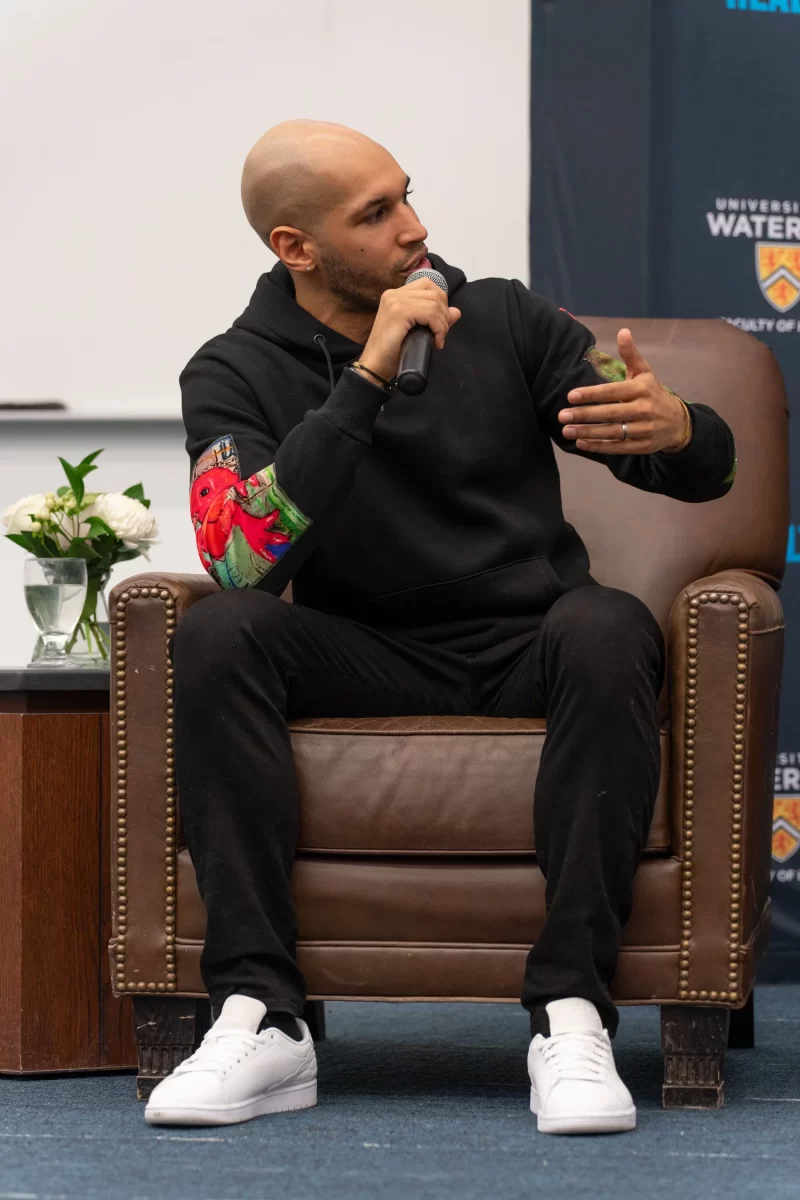
“I don’t want to waste founders’ time. That’s the biggest thing I’ve always said. I might be an investor now, but I’m still founder-first. I’m not an institutional investor. I’m not a Bay Street guy. I don’t push pencils or work on spreadsheets. I’m in the trenches doing that. The most disrespectful and frustrating part of raising money is going through six weeks to hear a no. So for me, I want to come in quick, decide if it’s a fit or not, and make a decision.
“Canada has to change its tune when it comes to entrepreneurship. We need to support entrepreneurship. We need to stop vilifying individuals for wanting to build a better life for themselves. It’s okay to be financially motivated. I see this all the time when I talk to high school kids. They’ll come up to me afterward and say it’s hard to tell their friends or parents that they want to make money, that they want to win, that they want business, nice cars, nice houses, and freedom. They feel like they can’t say that anymore.
“If you can’t say that, where’s the motivation to win in entrepreneurship? Right now, we need a lot more of that in Canada, and I’m hoping that by being more vocal and active, I can help find that next cohort of entrepreneurs.”
Entrepreneurs come in different shapes and sizes
Lafleur said the mix of personality traits that come together to make a good entrepreneur is pretty vast. There are a lot of different entrepreneurs in different shapes and sizes.
“Resilience, being crafty, being a professional problem solver, and absolute conviction that business succeeds over a long period of time all matter. What is that chip on your shoulder that makes you wake up in years three, four, and five when all the walls around you are on fire? You need something deeper to push through that,” he noted.
“I’m not a rocket scientist. I’m not the next Elon Musk. I don’t have that IQ factor. I was just stubborn and tenacious. I wasn’t inventing anything new. I was improving on an existing design, and a lot of founders do that. There’s a lot of money and a lot of great businesses to be made that way.
“But entrepreneurship isn’t for everybody. If you need direction, security, or if you blame others for everything that happens in your life instead of looking internally and asking what you can do to change it, it’s not going to work.
“It might work for a week, a month, a quarter, or even a year, but you won’t push through years two, three, and four when things get really hard. Those are some of the key founder personality traits.”
More from Retail Insider: