Access to affordable food in Canada’s urban cores has become one of the defining retail issues of the past year. As condo density rises and transit-oriented development accelerates, grocery chains and developers are rethinking how and where stores operate. The result is a surge in downtown grocery stores Canada residents are increasingly relying on for convenience, affordability and access.
At the same time, the expansion comes with complexity. In a recent interview with Retail Insider, Dr. Sylvain Charlebois said urban grocery development is far from straightforward. “Opening up stores downtown is incredibly difficult right now,” he said, citing shrink and theft as major concerns. “Shrink is a huge problem for sure.”

Even so, the pace of urban grocery investment between mid-2025 and early 2026 has been notable across cities such as Toronto, Vancouver, Calgary and others.
The Rise of the Urban Discount Format
One of the most significant shifts is the adaptation of hard discount banners to smaller downtown footprints. Traditionally associated with suburban plazas, chains such as Food Basics and No Frills are now embedding into condo podiums and transit corridors.
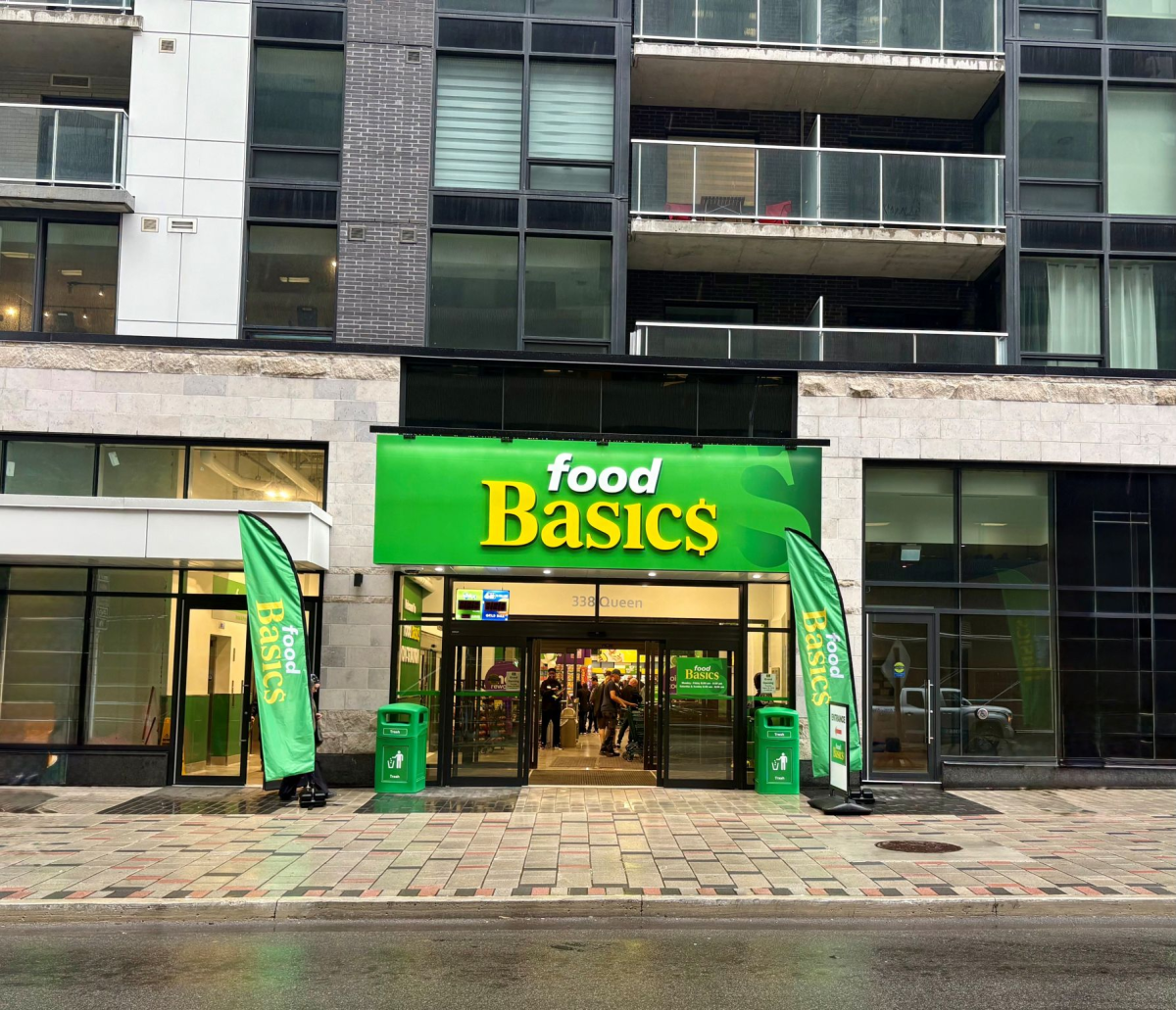
In August 2025, Food Basics opened its first “urban concept” store at 340 Queen Street in Ottawa’s Centretown, at the base of the Claridge Moon condominium near the Lyon LRT station. The 22,000 square foot store fits approximately 85 percent of a traditional assortment into roughly 65 percent of the space. Fast self-checkouts and expanded grab-and-go meals are tailored to professionals and seniors living nearby.
In Toronto, Food Basics confirmed it will anchor the upcoming ROQ City development at 261 Queen Street East in Moss Park. The 33,000 square foot store is designed to serve a rapidly densifying and historically underserved downtown neighbourhood.
Loblaw has also been active. A new urban No Frills opened in late November 2025 in Burlington’s Aldershot corridor, responding to community demand for affordable options within a dense transit-connected area. In Calgary’s downtown West End, a 13,000 square foot No Frills opened at the base of West Village Towers, targeting both upscale renters and budget-conscious residents. The location, positioned within the free-fare C-Train zone and offering heated underground parking, has effectively addressed what was long considered a grocery desert north of the rail tracks.
The growth of downtown discount banners reflects broader consumer trends. “It’s totally normal for grocers to adapt to a more frugal market,” Dr. Charlebois said in the interview, pointing to the expansion of discount formats across the country. As shoppers trade down, chains are ensuring those lower-price options are available in core neighbourhoods, not just in car-dependent suburbs.
Premium and Specialty Concepts Move In
While discount chains expand, urban cores are also attracting premium and niche grocery concepts.
In Toronto, Whole Foods confirmed that it will anchor the King Toronto development on King Street West with a 30,000 square foot store. The opening fills a significant gap in the affluent King West neighbourhood. Interestingly, the expansion coincided with the closure of two other Toronto locations, suggesting a strategic pivot toward denser, higher-performing urban markets.
Montreal-based KaleMart24 announced in January 2026 that it will open a downtown Toronto flagship at 601 to 603 Yonge Street in June 2026, along with a transit-connected location at Montreal’s Eaton Centre. Often described as a health-focused convenience format, the brand operates micro-footprints between 850 and 1,800 square feet, offering curated, better-for-you assortments.
In Vancouver, Aburi Market opened March 3 at 609 Granville Street, taking over the former Meinhardt Pacific Centre space. The 3,200 square foot premium Japanese concept focuses on grab-and-go offerings, A5 Wagyu, sushi bentos and an in-house bakery targeting downtown office workers and residents.
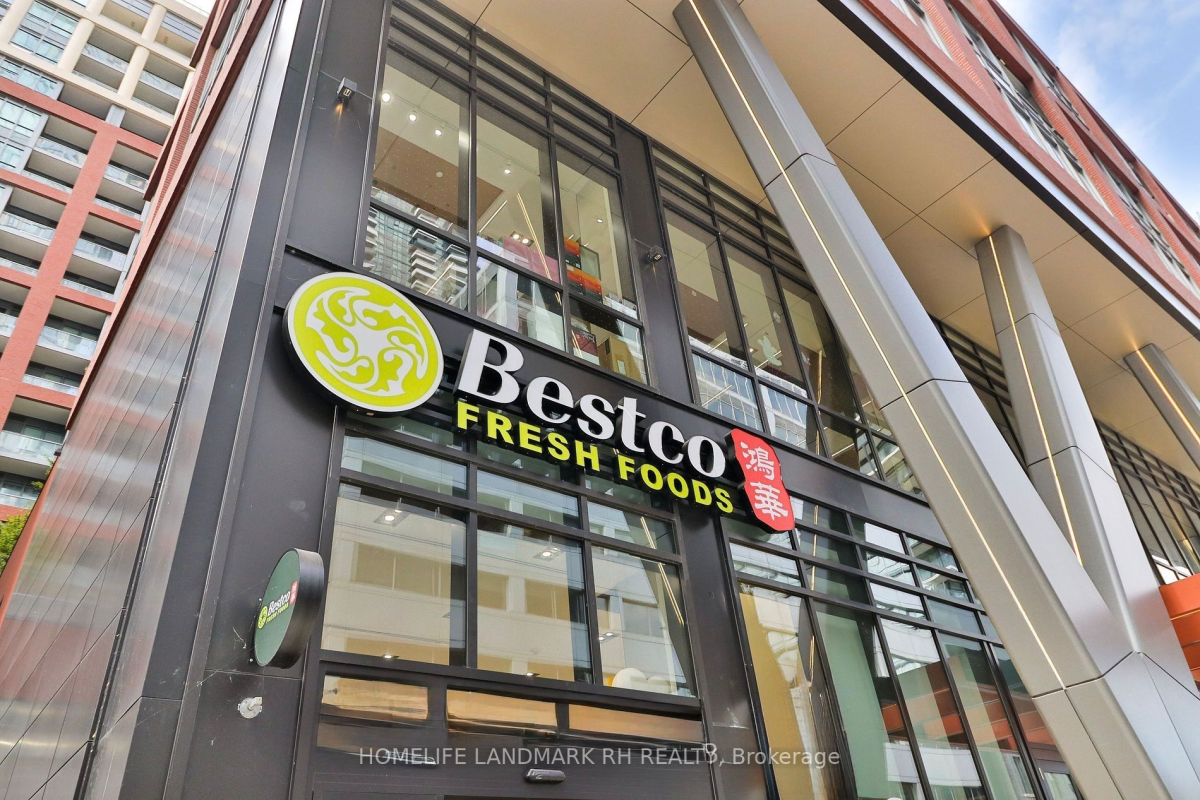
Independent operators are also entering the urban mix. BestCo Fresh Foods recently opened a flagship location at the base of the Peter and Adelaide condo development in Toronto’s Entertainment District, providing culturally diverse offerings in a high-density area. The same retailer is set to open at Mirvish Village at the corner of Bloor and Bathhurst Streets.
Dr. Charlebois noted that ethnic and specialty stores are operating differently from large chains and often provide strong value. “A lot of them actually offer some really good deals too,” he said. These formats add diversity to the downtown grocery ecosystem.
Transit-Oriented Grocery Anchors
In Vancouver and Calgary, the most prominent grocery developments are directly integrated into transit-oriented mixed-use projects.
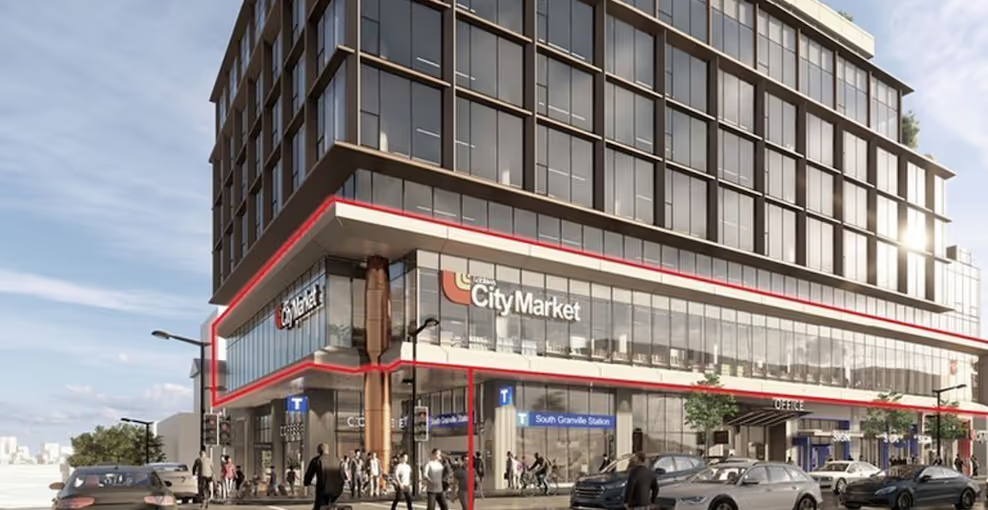
In Vancouver’s South Granville area, Loblaws City Market is scheduled to open in mid-2026 at 1477 West Broadway. The 22,000 square foot store will span two levels at the base of PCI Developments’ 39-storey tower known as The Stories. It sits directly above the new South Granville SkyTrain station, reinforcing the trend of grocery stores as transit-linked anchors.
Nearby, a Sobeys-affiliated banner is transforming the former Toys “R” Us heritage building at 1154 to 1174 West Broadway into an approximately 11,500 square foot urban grocery store. The project preserves the iconic BowMac sign while repurposing the interior for food retail.
In Calgary, the recently opened Calgary Co-op North Hill urban flagship at 520 16 Avenue NE exemplifies vertical integration. Opened February 26, 2026, the 41,000 square foot food centre sits beneath 189 residential rental units. The store includes a pharmacy walk-in clinic, oyster bar and underground parking. The adjacent 1960s-era store will be demolished to make way for additional retail phases in 2027.
Across both cities, the pattern is clear. Grocery stores are no longer standalone buildings with expansive surface parking. Instead, they occupy podium levels of residential towers, with air rights above and transit nodes below.
Addressing Grocery Deserts
Beyond premium developments, several projects explicitly aim to restore grocery access to underserved neighbourhoods.
In Barrie, Kennedy’s Lakeside Grocery opened in late 2024, bringing a 3,500 square foot family-owned store back to downtown after more than a decade without a proper grocery option. The store emphasizes locally sourced goods and features an on-site butcher.
In Calgary’s West Village and Toronto’s Moss Park, discount and mid-market operators are positioning stores in areas long described as food deserts. These moves align with a broader policy conversation about affordability and access.
An emerging political storyline involves calls for publicly operated grocery stores in urban centres. Some advocates argue that non-profit competitors could reduce urban grocery prices significantly. Whether such proposals materialize remains uncertain, but they underscore how central downtown grocery access has become to the cost-of-living debate.
The Challenges Beneath the Growth
Despite the expansion, risks remain. Dr. Charlebois warned that urban grocery economics are complicated by crime and shrink. “Opening up stores downtown is incredibly difficult right now,” he said. Security investments and loss prevention measures can materially affect margins.
He also noted that Canada’s overall grocery store density per capita has declined since 2020. “As soon as you have fewer stores based on population, you can argue that there is less competition out there or less access,” he said. Even as downtown grocery stores Canada residents rely on are multiplying, other neighbourhoods may be seeing rationalization or closures.