

Slurpee is turning 60 as 7-Eleven Canada extends one of convenience retail’s most recognizable products into new categories.
The retailer is marking the anniversary with a new line of packaged Slurpee Soda developed with Hamilton-based Collective Arts, limited-edition confectionery, artist collaborations and promotions surrounding 7-Eleven Day on July 11. The campaign broadens a name historically associated with the frozen drink machine at a time when 7-Eleven Canada is placing greater emphasis on fresh food, hot food and proprietary beverages.
The company operates roughly 550 locations from Ontario westward in a Canadian convenience market populated by much larger networks. Slurpee gives it something particularly valuable in that environment: a proprietary product with decades of recognition and a cultural position that competitors cannot easily reproduce.
“Canada’s love of the Slurpee brand is strong,” said Marc Goodman, Vice President and General Manager of 7-Eleven Canada. “It was only natural to reinforce this big year by working with a local brand like Collective Arts to create a distinctly Canadian way of celebrating the iconic beverage’s birthday.”
Slurpee Moves Beyond the Machine
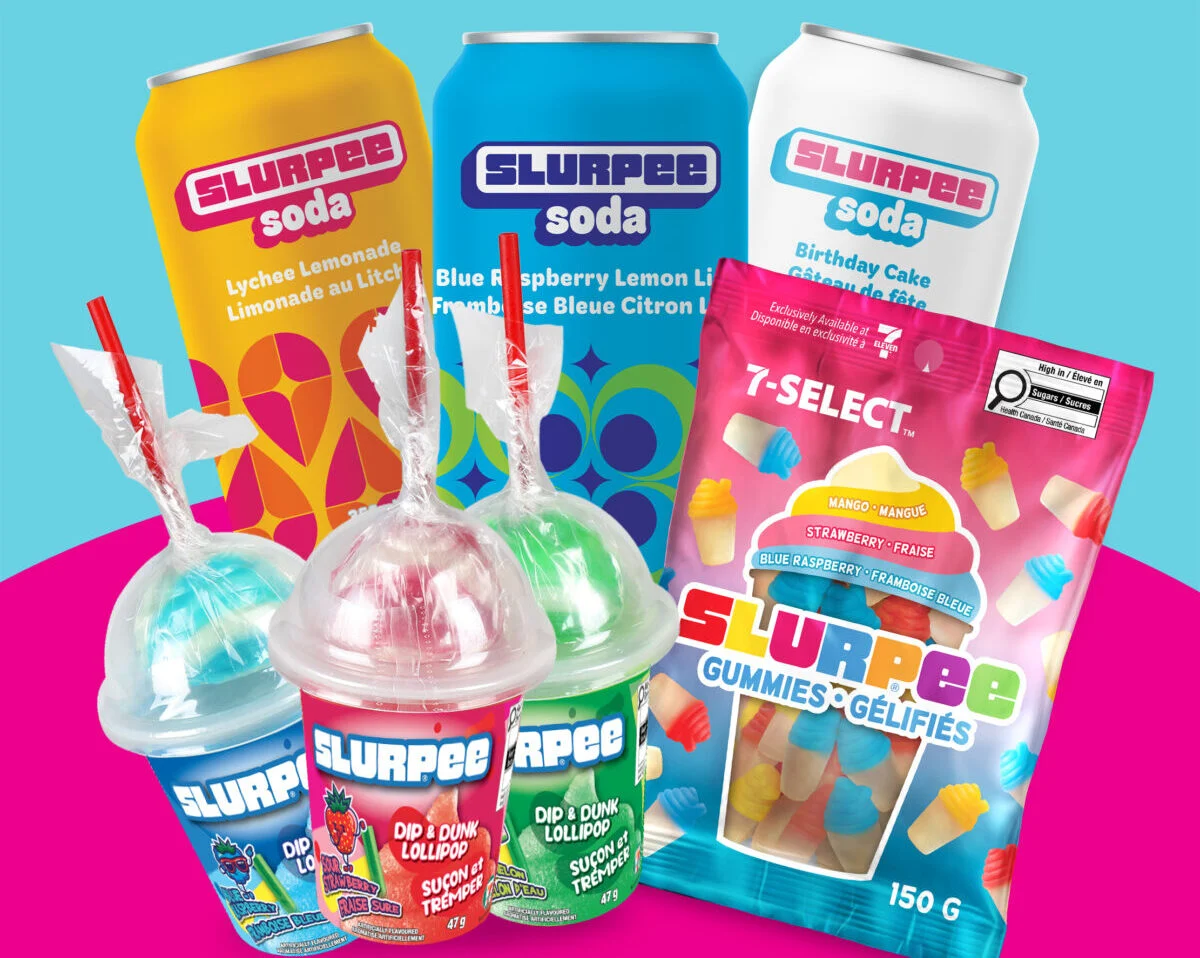
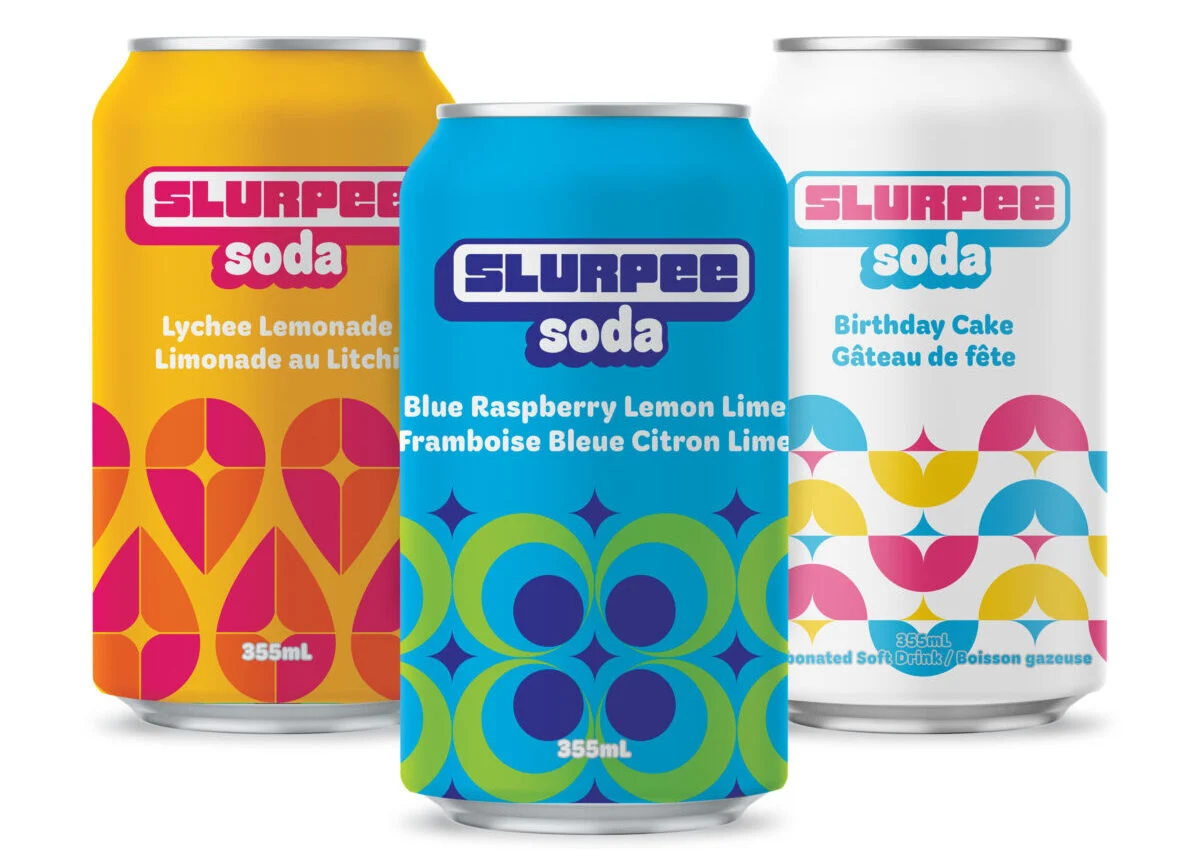
The most notable product development in the anniversary campaign is a new Slurpee Soda line created with Collective Arts.
The packaged drinks are launching in Lychee Lemonade, Blue Raspberry Lemon Lime and Birthday Cake, with the latter available for a limited time. According to 7-Eleven Canada, the drinks contain five grams of cane sugar, are low calorie and retail for $1.99 at its stores.
The launch extends the Slurpee name into packaged beverages, broadening a brand historically tied to the frozen drink machine inside 7-Eleven locations. It also arrives as the Canadian business looks to increase the role of proprietary beverages within its broader sales mix.
Goodman has publicly outlined a five-year direction that places greater weight on fresh food, hot food and differentiated beverages as 7-Eleven moves closer to a quick-service restaurant model.
The Collective Arts partnership gives the anniversary a distinctly Canadian layer. Can artwork was created by Hamilton artist Art Club Mary, while other Canadian artists are expected to paint murals at selected stores during the summer.
“Slurpee drinks are something most of us grew up with,” said Matt Johnston, CEO and Co-Founder of Collective Arts. “We loved the idea of taking something so iconic and pushing it somewhere new.”
The anniversary program also extends into confectionery through Slurpee-branded gummies and lollipops, adding another category to a name still overwhelmingly associated with frozen beverages.
Winnipeg’s Crown Faces a Calgary Challenge
7-Eleven opened its first Canadian store in Calgary in 1969, beginning a presence that later expanded across British Columbia, Alberta, Saskatchewan, Manitoba and Ontario.
Winnipeg went on to develop the strongest association with Slurpee.
7-Eleven continues to identify the Manitoba capital as the Slurpee Capital of the World based on per-capita consumption, a distinction that has become part of the city’s consumer culture. The frozen drink’s popularity has endured through Prairie winters that would appear poorly suited to the category.
Now Calgary is gaining. Recent reporting from the Winnipeg Free Press cited Goodman as saying Calgary has become 7-Eleven Canada’s second-largest Slurpee market and is “knocking right on the door.” Winnipeg still holds the title, but its lead is no longer being treated as unassailable.
The geography gives the rivalry an unusual symmetry. Calgary was 7-Eleven’s Canadian starting point, while Winnipeg became its most famous Slurpee market. Six decades into the product’s history, both Prairie cities are again central to the Canadian story.
The rivalry also illustrates why Slurpee matters commercially. In Winnipeg, the product carries local identity and routine alongside nostalgia, giving 7-Eleven a relationship with consumers that ordinary convenience merchandise would struggle to match.
An Iconic Market Under Pressure
Winnipeg’s association with Slurpee has endured even as 7-Eleven’s store network in the city has faced significant pressure.
In 2024, city councillors said 7-Eleven representatives had warned that as many as 10 local stores could be at risk because of theft, financial losses and employee-safety concerns. The warning prompted discussions between company representatives and municipal officials over crime, store economics and worker safety.
By May 2026, at least eight 7-Eleven locations had closed in the city since the earlier warning, according to reporting from the Winnipeg Free Press.
The circumstances surrounding individual stores are not necessarily identical, and 7-Eleven has not attributed every closure to crime. The contraction is nevertheless notable in the market most closely associated with the Slurpee brand.
The network is changing elsewhere as well. Retail Insider has confirmed the closure of the long-standing 7-Eleven at College Street and Spadina Avenue in Toronto.
The Canadian changes are unfolding during a broader restructuring of 7-Eleven’s North American operations. Retail Insider reported in April that the company planned 645 closures during fiscal 2026, a figure that includes some conversions to wholesale fuel stores, alongside 205 openings. The company has not linked specific Canadian closures to that program.
7-Eleven is rationalizing parts of a vast North American network while directing greater attention toward stronger locations and more food-led formats.
A Bigger Push Into Food and Beverages
The store network is only one part of the Canadian transformation.
Goodman has described an ambition to move 7-Eleven closer to a quick-service restaurant model that also sells convenience merchandise. The company operates four Canadian commissaries and has expanded fresh and hot food across its stores.
The retailer is also drawing more visibly on the Japanese convenience-store culture associated with its ownership. In 2026, 7-Eleven Canada introduced a Japanese-style tamago sando, while onigiri has also appeared in the assortment. Goodman has spoken publicly about bringing additional products popular in Japan into Canadian stores.
Selected locations have pushed the format further through licensed restaurant concepts. Stores in Alberta, Ontario and Manitoba have introduced dine-in seating and alcohol service alongside prepared food, including a licensed Winnipeg location opened in late 2024.
7-Eleven is trying to widen the number of occasions that bring customers through the door. A visit can now involve a meal, fresh food, coffee, a Japanese-inspired product, delivery pickup or a proprietary beverage.
Slurpee sits naturally within that strategy because it already gives the retailer a highly recognizable product closely tied to its own stores.
Turning a Giveaway Into Store Traffic
The July anniversary campaign is also built around transactions.
On July 11, customers at Canadian 7-Eleven stores can receive a free small Slurpee, with the limited-time Mountain Dew Cake Smash flavour among the offerings. The retailer is also promoting 71-cent wings and 711 bonus points for 7Rewards members, alongside selected buy-one-get-one beverage offers during the broader celebration period.
The giveaway is a traffic strategy. A free Slurpee creates the visit, discounted food gives customers another reason to spend, and bonus points connect the event to the 7Rewards ecosystem. Limited flavours and anniversary products add another reason to try something new.
Value is part of the wider summer approach as well. 7-Eleven is promoting any-size Slurpee drinks for $2.50 alongside other low-price food and beverage offers.
That matters in a convenience market where the competitive set increasingly stretches beyond other c-stores. Quick-service restaurants, grocers, dollar stores and mass merchants all compete for portions of the same food, beverage and immediate-consumption spending.
A proprietary brand gives 7-Eleven more control over the product, promotion and reason for the visit.
A Much Larger Canadian Rival
The importance of differentiation becomes clearer when 7-Eleven’s footprint is compared with Quebec-based Alimentation Couche-Tard.
Couche-Tard operates more than 2,000 stores across Canada under the Circle K and Couche-Tard banners, giving it a substantially larger domestic network than 7-Eleven’s roughly 550 locations.
The competitive relationship gained an unusual dimension when Couche-Tard pursued Seven & i Holdings, the Japanese parent of 7-Eleven, before abandoning the proposed multibillion-dollar transaction in 2025.
For 7-Eleven Canada, the scale gap gives proprietary products added importance. Much of what fills a convenience store can be purchased across competing banners, including major soft drinks, packaged snacks, energy beverages and everyday staples.
Slurpee is different. Its identity remains closely tied to 7-Eleven, giving consumers a reason to choose the network that does not depend solely on location.
The same logic helps explain the wider focus on differentiated food and proprietary beverages. Against larger competitors, 7-Eleven has a strong incentive to build products and experiences that customers cannot easily find elsewhere.
A 60-Year-Old Brand Inside a Changing Business
Slurpee’s longevity gives 7-Eleven Canada something many retailers spend years trying to create: a product with broad recognition, deep nostalgia and unusual local cultural relevance.
The 2026 campaign is widening how that asset is used. Slurpee is moving into packaged soda and confectionery, being tied to Canadian artists and a Canadian beverage company, and supporting loyalty incentives, food promotions and store traffic. Its strongest Canadian market is also facing a challenge from a rising rival city.
The campaign is unfolding as 7-Eleven Canada increases its focus on food and proprietary beverages and navigates pressure across parts of its existing store base. It is doing so in a market where larger competitors have greater domestic scale and consumers have a growing number of places to buy food, beverages and everyday convenience products.
A 60-year-old frozen drink will not solve all of those challenges.
But as 7-Eleven works to give Canadians more reasons to visit its stores, Slurpee remains one of the strongest reasons it already has.




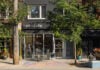


The location in the photo at the top has permanently closed.
Oh no! We’ll use it in memory (I grabbed it from Apple Maps last year)