Quarks will celebrate its 50th anniversary in February 2027 at a time when the Winnipeg-based footwear retailer continues to expand its Canadian store network. Earlier this year, the company opened its 40th store at Mayfair Shopping Centre in Victoria and is preparing another location in Saskatoon, extending a business that began with a single store at Westwood Village Shopping Centre in Winnipeg in 1977.
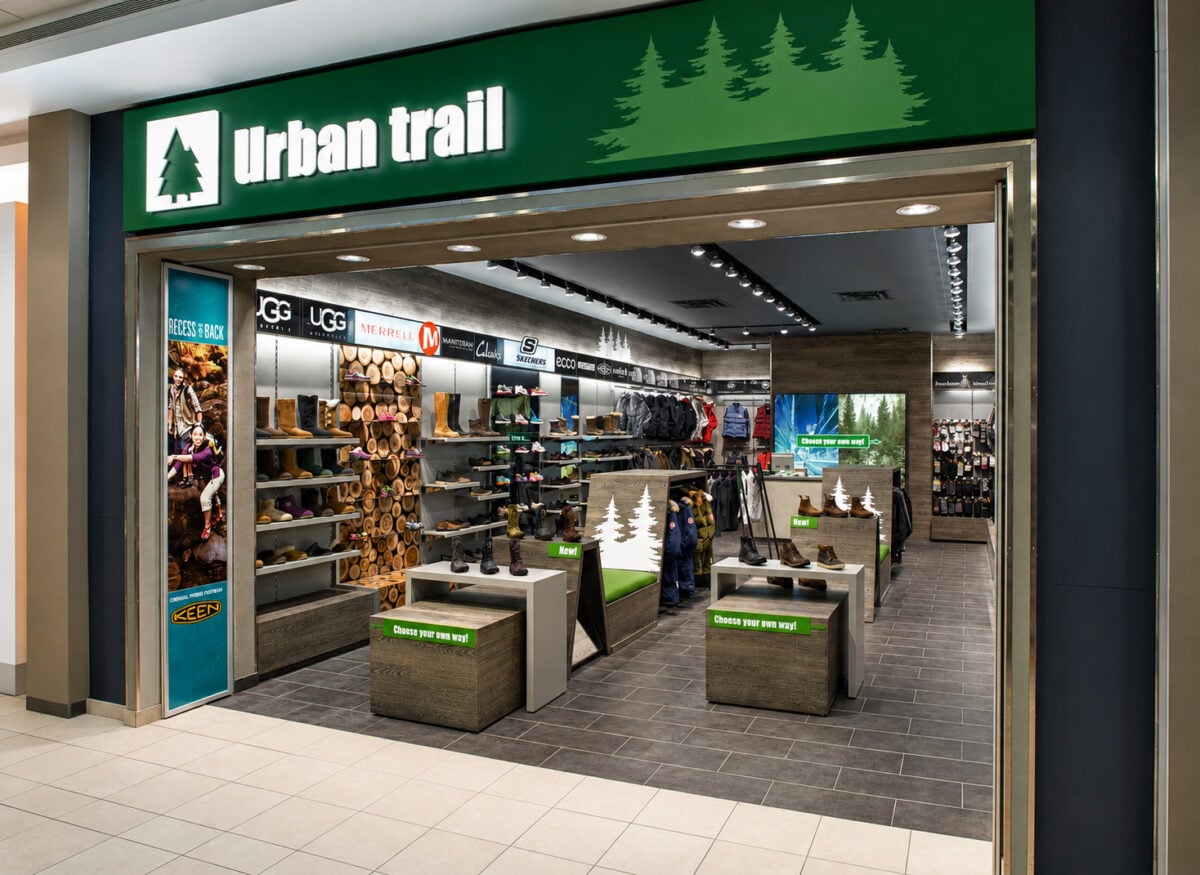
Today, The Quark Group operates the Quarks and Urban Trail banners across six provinces, specializing in branded comfort, casual and outdoor footwear. Its growth has taken place through decades of change in Canadian retail, including the rise of e-commerce, evolving consumer preferences, the casualization of fashion and the arrival of new international competitors.
Retail Insider spoke with President Kristy Krahn and Vice Presidents Doug Quark, Tom Quark and Ryan Krahn to discuss the evolution of the family business and the principles that continue to guide it. Although each oversees different areas of the company, the conversation repeatedly returned to the same themes: understanding customers, making thoughtful business decisions and building a company capable of succeeding over the long term.
As the discussion unfolded, one point became especially clear. While Quarks is approaching an important anniversary, the Quark and Krahn families are spending very little time looking backward. Their attention remains firmly on the future, whether discussing new stores, merchandising, digital retail or how the business continues to evolve in a changing marketplace.
Building the Business
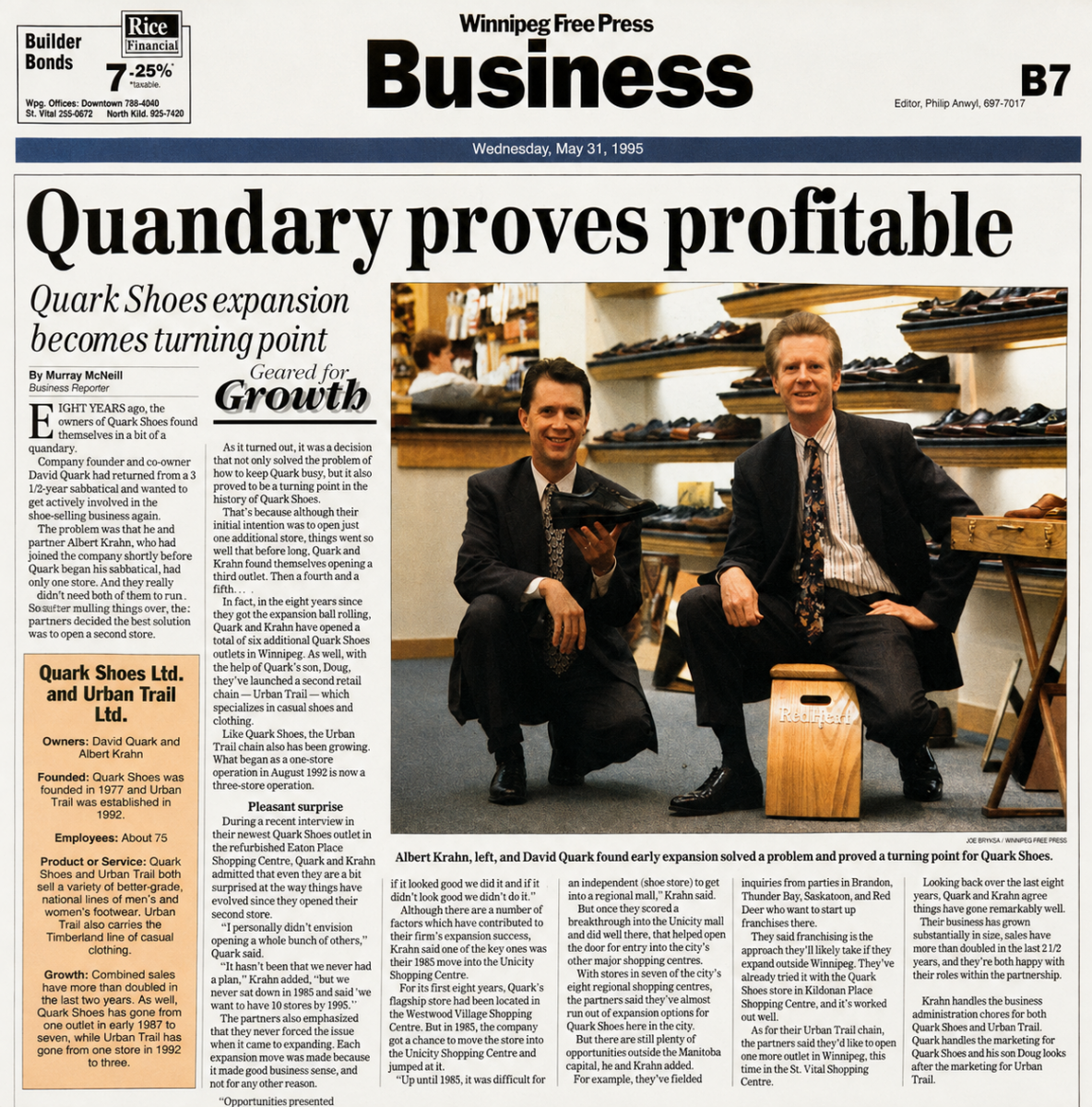
The story behind Quarks began before the company itself was established. Founder Dave Quark entered the footwear industry in Saskatchewan before continuing his career in Manitoba, working with retailers including Walkaway Shoes, Sterling Shoes and McDonald’s Shoes. Along the way, he developed experience in merchandising, operations and customer service while earning a reputation for improving underperforming stores. By the mid-1970s, he believed he had the knowledge and confidence to build a successful footwear business of his own.
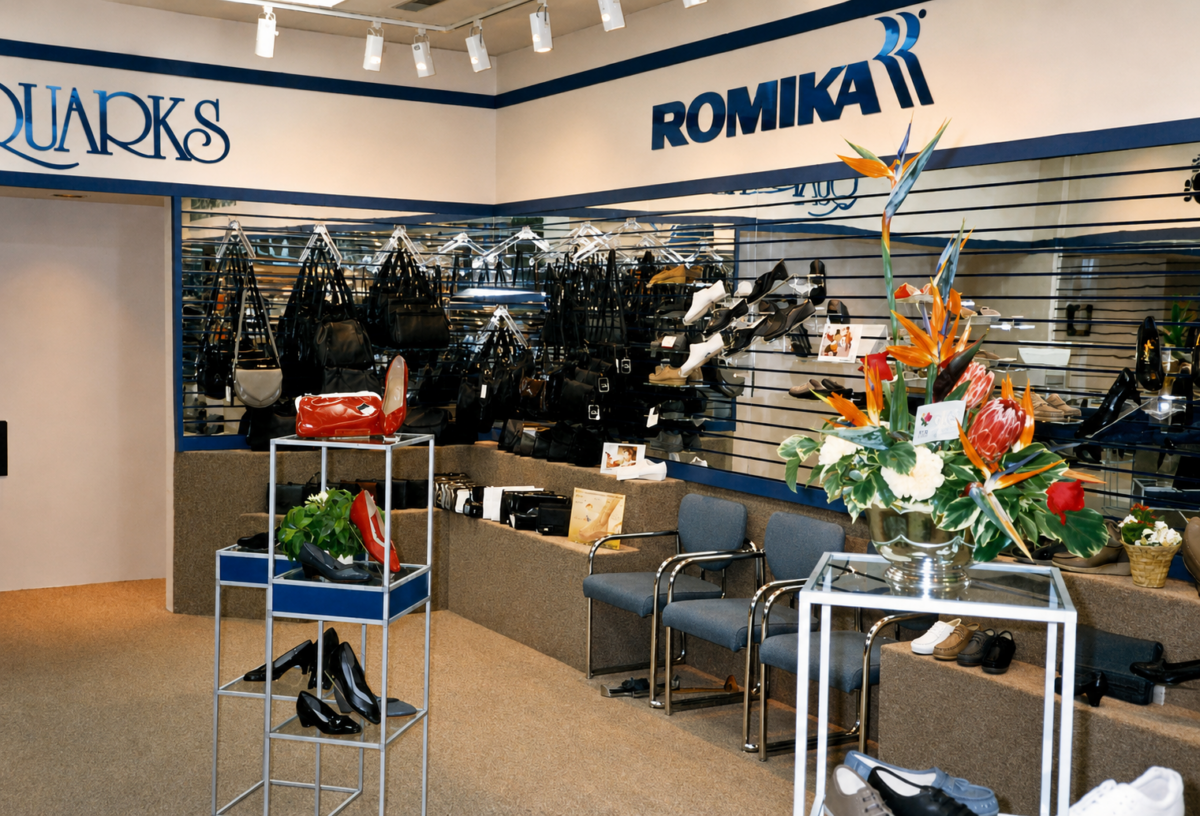
The Quark Group was incorporated in late 1976, and the first Quarks store opened at Westwood Village Shopping Centre the following February. During its early years, the company concentrated on establishing itself in Winnipeg, gradually building a loyal customer base while refining its merchandising and operating model.
A pivotal moment came in 1984 when Dave and Jane Quark sold a 50 per cent interest in the business to Albert and Susan Krahn, creating an equal partnership that would shape Quarks for decades to come. The following year, the partners relocated the business to Unicity Shopping Centre, marking Quarks’ first location in an enclosed regional mall. By 1987, recognizing that a second successful store would be necessary to support both young families, they opened another Quarks location at Garden City Shopping Centre.
The partnership proved to be highly complementary. Dave brought vision, merchandising expertise and a strong marketing instinct, while Albert contributed financial discipline and strategic leadership. Together, they established many of the principles that continue to guide the company today.
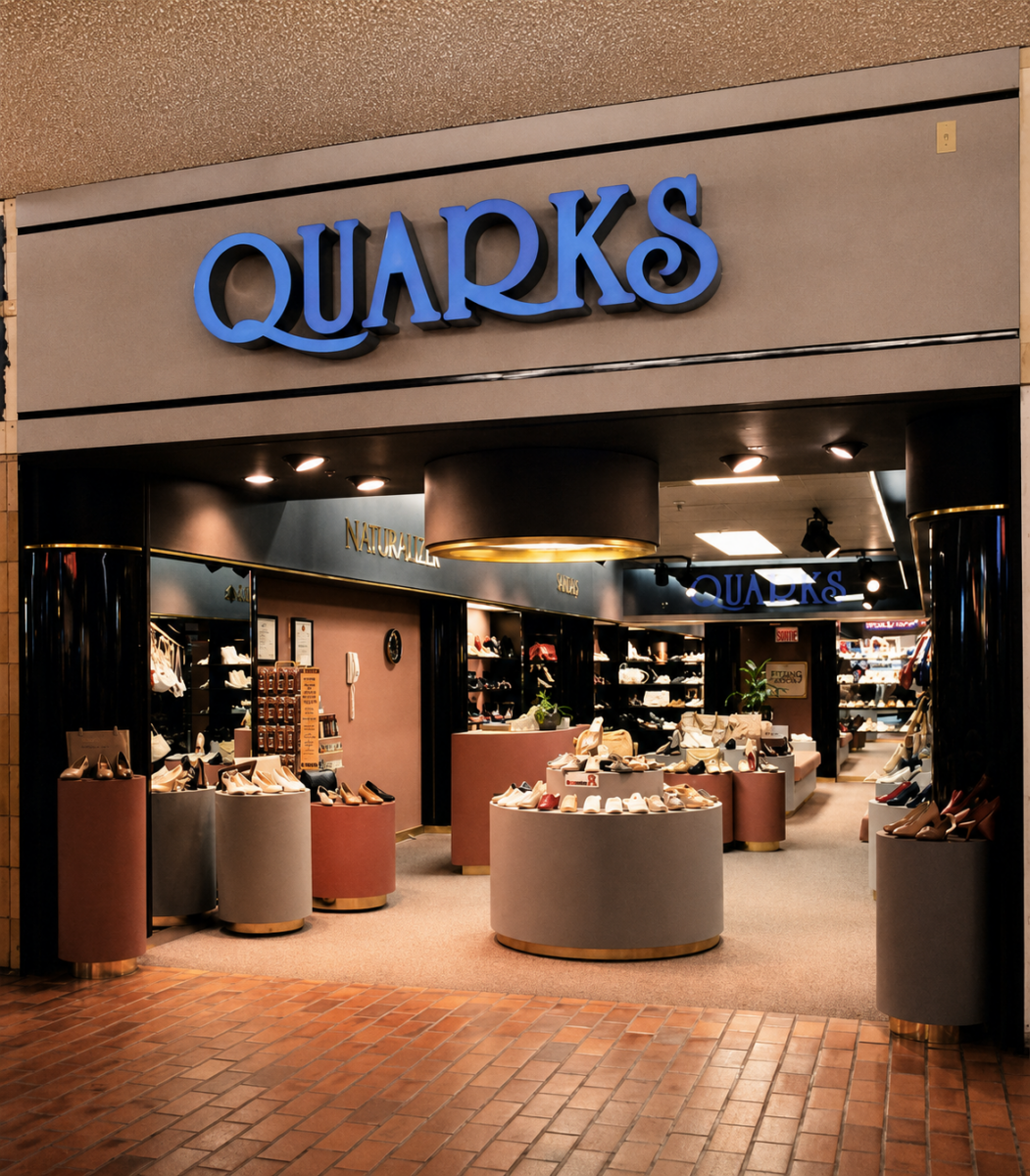
Doug Quark still laughs when recalling one of the company’s earliest lessons in retail economics. When the business moved into an enclosed shopping centre, the original name, Quark Shoes, was shortened because the sign company charged by the letter for the storefront signage. Reducing the name by a single word reduced the cost.
It is a simple story, but it reflects the practical mindset that surfaced repeatedly throughout the interview. Whether discussing real estate, merchandising, technology or expansion, the Quark and Krahn families consistently emphasized building a stronger business instead of making the biggest statement. That approach became one of the foundations of Quarks’ long-term success.
Expanding Across Canada
Quarks’ first significant expansion outside Manitoba involved entering Saskatchewan through Moose Jaw and Yorkton in 2002, identifying communities where customers wanted access to recognized footwear brands but where the business believed it could establish sustainable, long-term operations.
“We thought we could thrive in these smaller centres that don’t have many shoe stores,” Doug Quark said.
That strategy became a defining characteristic of the company’s growth. Quarks gradually added stores throughout Saskatchewan before moving into Alberta, British Columbia, Ontario and New Brunswick. Markets including Red Deer, Lethbridge, Medicine Hat, Thunder Bay, Nanaimo, Prince George, Saint John and Fredericton became important additions to the chain as it expanded across Canada.
Regional markets offered several advantages. Occupancy costs were often more manageable than in Canada’s largest metropolitan areas, competition could be less intense and customers still wanted access to the same national and international footwear brands available in major cities. The approach also allowed the company to strengthen its operations gradually while maintaining close relationships with landlords, suppliers and employees.
Kristy Krahn said the company has never viewed expansion as an objective in itself.
“We’ve never expanded just for the sake of expansion,” she said. “We’re really thoughtful with where we go and when we go there.”
The retailer’s store count reflects that philosophy. Quarks reached 10 locations by 1994, 20 by 2008, 30 by 2014 and 40 this year. Some years brought several openings, while others passed without adding a new location. Opportunities were evaluated individually, with decisions based on the strength of the market, the available real estate and the company’s ability to operate each store successfully over the long term.
Longstanding industry relationships have also played an important role. The company has worked with Jeff Berkowitz of Aurora Retail Group for more than 15 years, relying on his understanding of shopping centres and retail real estate as new opportunities emerged across Canada.
Listening to the discussion, it became apparent that the Quark and Krahn families rarely measure success by the number of stores they operate. Instead, they spoke about creating sustainable businesses, building long-term partnerships and ensuring that every new location contributes to the health of the company as a whole.
Changing With the Customer
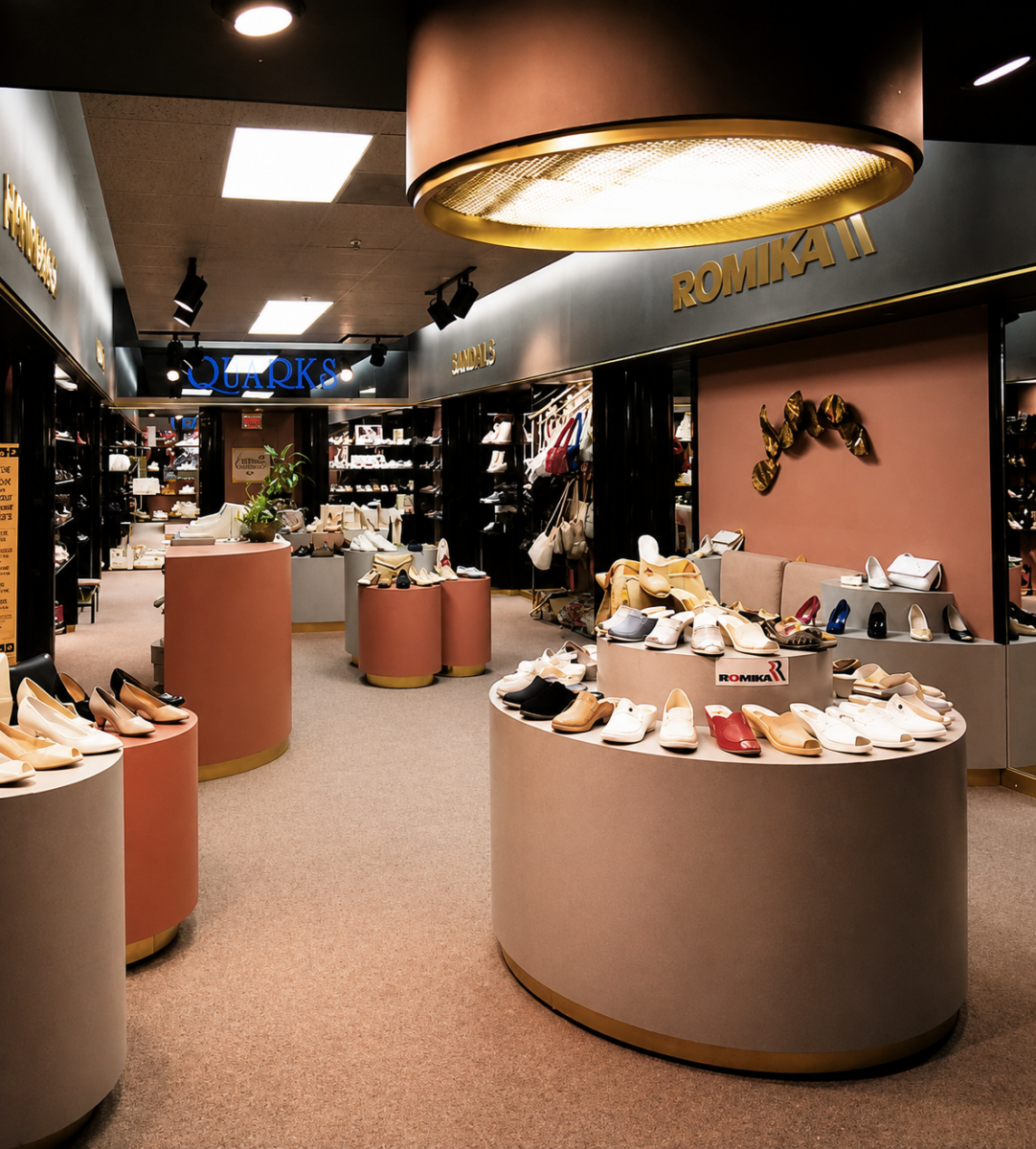
While Quarks has remained disciplined in its approach to growth, the footwear business itself has changed dramatically over the past five decades. When the company opened its first store in 1977, dress shoes occupied a much larger share of the sales floor. Canadians generally dressed more formally for work, comfort footwear represented a smaller segment of the market and many of today’s leading brands had yet to establish themselves.
Quarks evolved alongside those changes. Today’s assortment reflects the growing demand for comfort, versatility and recognizable brands, with stores carrying labels including Birkenstock, UGG, Blundstone, Merrell, Clarks, Skechers, Rieker and Remonte.
Doug Quark summarized the company’s merchandising philosophy with a simple observation.
“We sell trendy shoes, but we’re not trendsetters.”
That philosophy extends well beyond individual products. Rather than chasing every emerging trend, Quarks watches how consumer preferences develop before making significant merchandising commitments. The company also values long-term relationships with suppliers, recognizing that enduring partnerships often produce better results than continually replacing established brands with the latest newcomers.
“We’ve built our reputation not on creating the trends, but recognizing them and making sure that we bring the right products to our customers at the right time,” Kristy Krahn said.
Tom Quark has watched another interesting shift unfold over the years. Decades ago, mothers, daughters and grandmothers frequently shopped for different styles of footwear. Today, it is increasingly common to see several generations purchasing the same brands, particularly Birkenstock, UGG and Blundstone. The observation reflects broader changes in Canadian lifestyles, where comfort has become an everyday expectation rather than a specialized category.
The company continues to see its role as a curator of trusted brands rather than a trendsetter. Customers visit Quarks knowing they will find recognized labels, knowledgeable advice and an assortment that reflects both current demand and the company’s long experience in the footwear business.
Service as a Competitive Advantage
Although the footwear business has evolved dramatically since Quarks opened its first store, one aspect of the customer experience has remained largely unchanged.
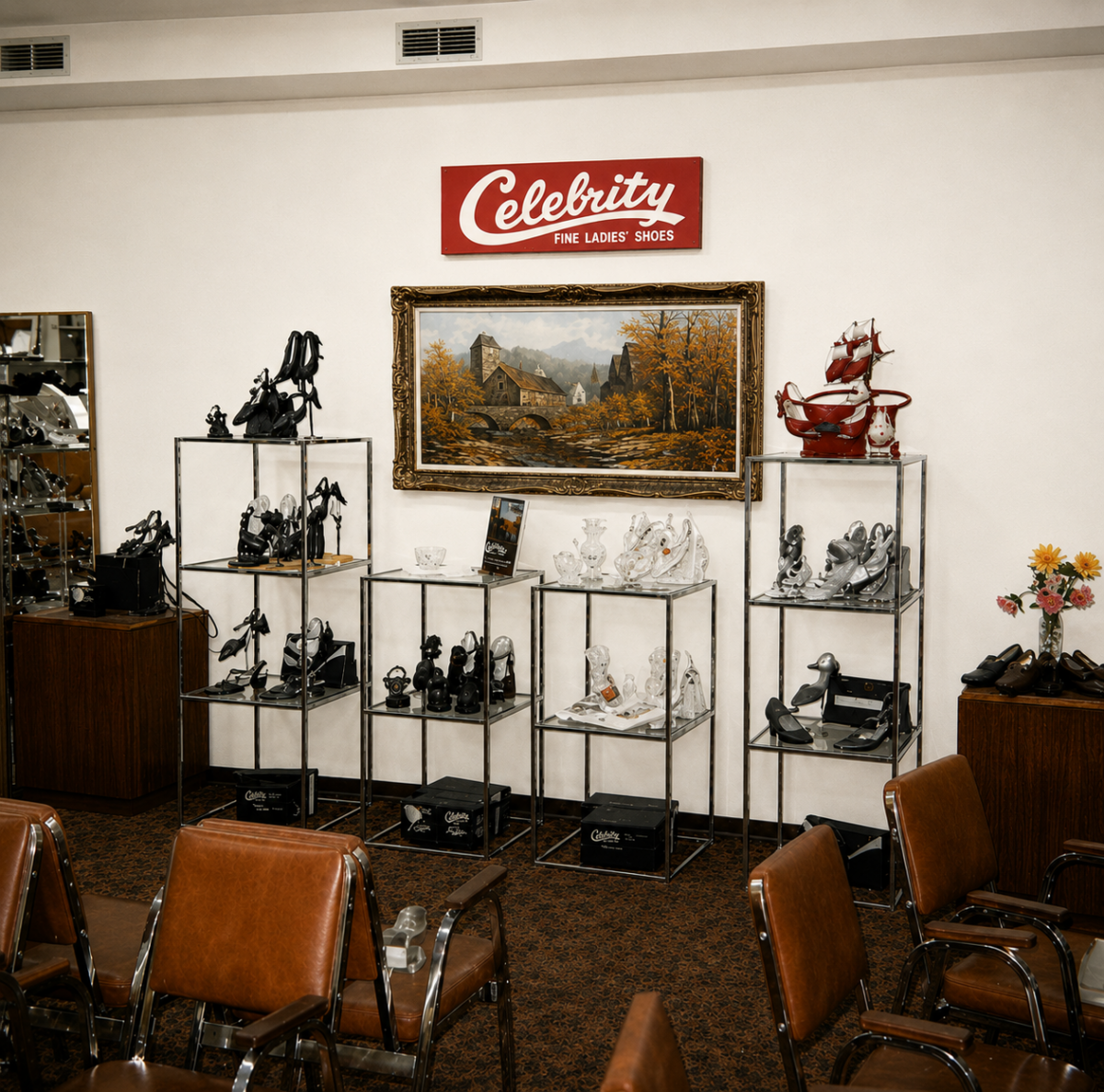
The company continues to believe that footwear is best sold with knowledgeable service. Associates are encouraged to greet customers, understand how footwear will be used, discuss fit and comfort, and recommend products that meet individual needs. That approach reflects a belief that purchasing shoes is often more personal than many other retail categories, particularly when customers are looking for comfort, support or a specific fit.
“Our associates aren’t just cashiers,” Tom Quark said. “They’re actually helpful people who listen.”
Kristy Krahn said the company organizes its culture around four core values: care, listen, advise and serve. Those principles influence everything from hiring and employee development to the way staff interact with customers on the sales floor.
Listening to the discussion, it became apparent that the Quark and Krahn families view service as part of the product itself. Customers may initially visit Quarks because they recognize brands, but the company believes knowledgeable advice remains one of the reasons shoppers continue returning.
That commitment has become increasingly relevant as traditional footwear departments have disappeared from many Canadian department stores. Consumers who once relied on experienced footwear associates now have fewer places to receive that level of assistance, creating an opportunity for specialty retailers that continue to invest in service.
Physical Stores and Digital Retail Working Together
Quarks has embraced e-commerce while continuing to invest in physical retail, viewing the two channels as complementary rather than competing with one another.
The company began selling online on a relatively modest scale before steadily expanding its digital business. Like many retailers, Quarks experienced a significant increase in online sales during the pandemic. Unlike some businesses that saw demand return almost entirely to stores, much of that growth remained after restrictions ended.
Ryan Krahn said customers have become increasingly comfortable purchasing footwear online, particularly when buying brands and styles they already know. Improvements in shipping, returns and exchanges have also made online footwear shopping easier than it once was.
Rather than treating e-commerce as a separate business, Quarks has focused on connecting it with the in-store experience. Customers can reserve products online before travelling to a store, ensuring that the correct size is waiting when they arrive. For many shoppers in the regional communities Quarks serves, that convenience eliminates uncertainty and makes the trip more worthwhile.
The relationship works in the opposite direction as well. Ryan Krahn said the company has consistently observed stronger online sales after opening new stores, suggesting that physical locations continue to build awareness of the Quarks brand while introducing customers to its broader assortment.
To support its continued digital growth, Quarks partnered with London, Ontario-based Northern Commerce in 2025, selecting a larger agency with deeper retail specialization to help strengthen its e-commerce and digital marketing capabilities.
For the Quark and Krahn families, the discussion is no longer about choosing between stores and online shopping. Customers move comfortably between both channels, and the business has adapted to support that behaviour.
Investing in the Future
As Quarks has expanded, the company has continued investing in its stores as well as its people.
The recently opened Victoria location reflects the retailer’s latest store design, creating a brighter, more contemporary environment while introducing an expanded children’s footwear department. Another store is planned for Saskatoon, continuing the company’s gradual expansion across Western Canada.
Today, Quarks employs approximately 310 people throughout the year, with staffing increasing during the holiday season as the retailer operates approximately 15 seasonal pop-up stores. Although the business has grown significantly since its early years in Winnipeg, it remains closely involved in the communities where it operates.
One initiative that has become particularly important is Walking People Out of Poverty, a fundraising partnership with Opportunity International Canada. The program supports entrepreneurs, particularly women, in developing countries through access to financial services and business opportunities. Quarks also participates in local food bank campaigns, footwear donation initiatives and community programs organized by individual stores across Canada.
Leadership responsibilities have also evolved as the second generation has assumed greater responsibility for the business. Kristy Krahn currently serves as President and oversees finance, human resources and real estate. Doug Quark focuses primarily on buying and store design, Tom Quark plays a key role in merchandising, while Ryan Krahn leads much of the company’s digital strategy and e-commerce development.
That transition reflects a succession process that has unfolded gradually over many years. After Dave Quark retired, Albert Krahn continued leading the company as President and Chief Financial Officer alongside the second generation, helping ensure that the values and long-term perspective established by the founders continued as leadership responsibilities evolved.
Looking Ahead
As Quarks approaches its 50th anniversary, the milestone represents an opportunity to recognize the people who helped build the company while continuing to prepare for its next chapter.
The Quark and Krahn families believe one of the retailer’s strengths is that it has never tried to become something it isn’t. Instead, Quarks has remained focused on serving customers through recognizable footwear brands, knowledgeable staff and a measured approach to expansion that reflects the realities of each market it enters.
Kristy Krahn said those priorities remain unchanged.
“Our focus is really going to remain the same as it has since 1977,” she said. “We want to continue to grow thoughtfully, steward the business responsibly and have a positive impact in the communities and amongst the people that we serve.”
The company also plans to place greater emphasis on its Canadian heritage as it approaches the anniversary. Although Quarks has operated in communities across the country for decades, many customers are still surprised to learn the retailer was founded in Winnipeg and remains Canadian owned.
That history has been shaped by two families whose complementary strengths helped build a business that has endured through changing markets, changing consumer preferences and changing generations of leadership. Dave Quark’s vision for the customer experience, combined with Albert Krahn’s financial discipline and strategic leadership, established a foundation that continues to guide the company today.
Nearly five decades after the first Quarks store opened its doors, the conversation around the boardroom table is no longer about how the company reached its 50th anniversary. It is about where the next opportunity will be found, how the business can continue serving its customers and how the next generation can build on what came before.
Every Quarks store represents years of relationships with customers, employees, suppliers, landlords, and the communities it serves. As the company prepares for its next chapter, the focus remains the same as it has been since 1977: grow thoughtfully, serve customers well and continue building a business that will be as strong for the next generation as it has been for the last.