For decades, West Edmonton Mall represented an extreme version of what a shopping centre could become. Alongside hundreds of stores, the Edmonton property incorporated an indoor amusement park, waterpark, skating rink, bowling and other attractions that turned a trip to the mall into a leisure outing that could last much of the day.
Pieces of that model are increasingly appearing in shopping centres across Canada, although generally on a much smaller scale. Bowling centres, arcades, interactive gaming, challenge rooms, climbing attractions and other forms of location-based entertainment are taking larger positions in malls, in some cases occupying space previously held by department stores.
The trend comes as shopping-centre owners reconsider what will drive visits in a market where consumers can buy an increasing share of merchandise online and several traditional department-store anchors have disappeared. Entertainment operators can absorb tens of thousands of square feet while giving customers reasons to remain at a property for several hours.
JLL discussed the growth of location-based entertainment at its Retail Spotlight & Reception at TIFF Lightbox in Toronto on October 5, ahead of ICSC@CANADA in Toronto. JLL’s broader North American research tracks 207 location-based entertainment concepts with 4,746 locations, while another 721 announced or planned locations representing approximately 16.5 million square feet are in the pipeline.
Visits to the entertainment concepts tracked by JLL reached approximately 217 million in 2025, up 12% from 2019. The average visit lasts roughly 140 minutes, a length of stay that helps explain why landlords are paying closer attention to the category.
Large Entertainment Uses Move Into Former Anchor Space
Canada’s shrinking department-store sector has created a substantial supply of large spaces that few individual retailers require. Sears Canada, Target Canada, Nordstrom Canada and, most recently, Hudson’s Bay have collectively left millions of square feet behind, forcing landlords to subdivide, redevelop or find new uses for former anchor stores.
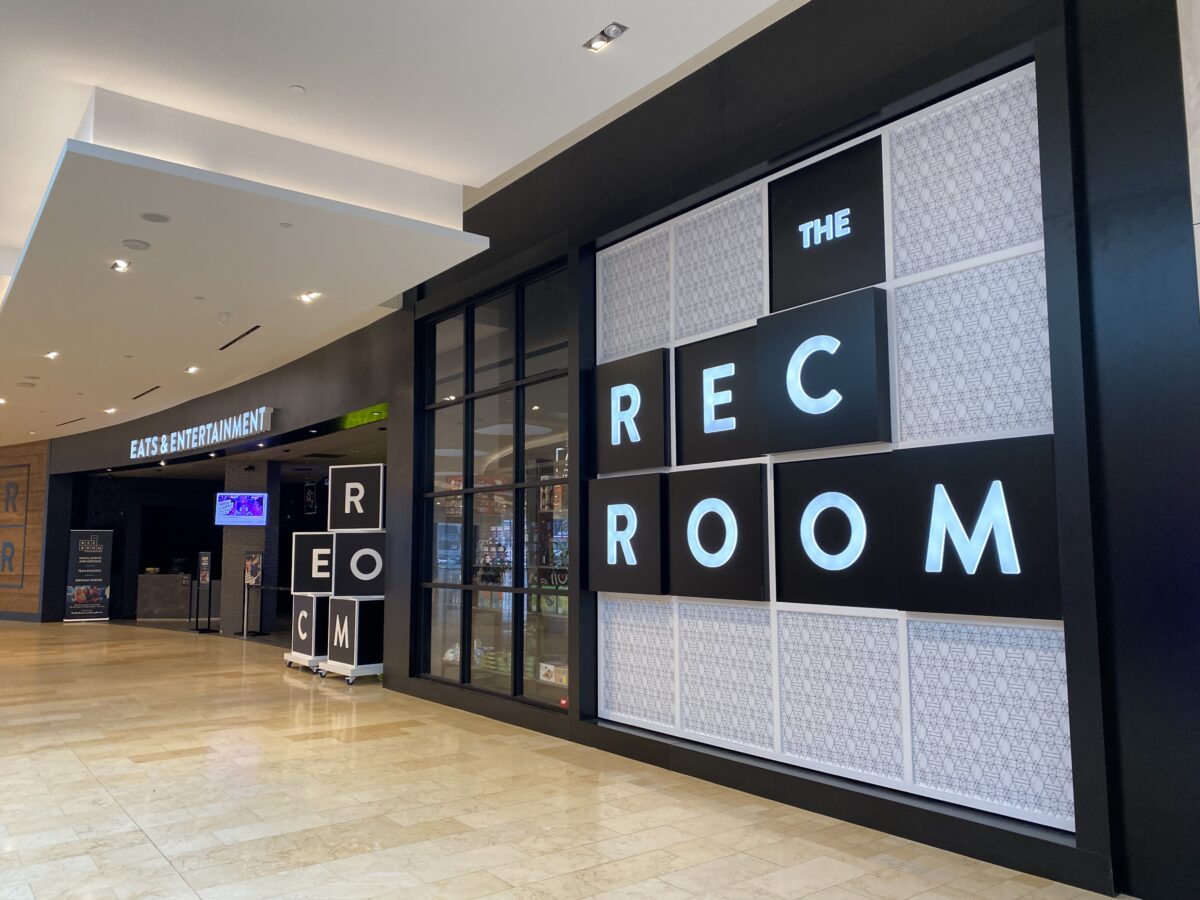
Entertainment is becoming one part of that redevelopment equation. At Square One Shopping Centre in Mississauga, The Rec Room occupies approximately 47,000 square feet across two levels of former Sears space, combining arcade and recreational gaming with bowling, axe throwing, event facilities and food and beverage.
A similar transformation has occurred at Southcentre Mall in Calgary, where PowerPlay occupies approximately 80,000 square feet on the third level of the former Sears space. The entertainment complex includes bowling, arcade games, sports simulators, immersive game rooms and dine-in micro cinemas.
CF Sherway Gardens in Toronto will add another example. Splitsville Bowl is expected to open a roughly 34,000-square-foot location in former Nordstrom space in fall 2027, featuring 22 bowling lanes, an arcade, food and beverage and event space.
The Sherway location will occupy only part of the former Nordstrom store. Former anchors are increasingly being divided among multiple retailers, restaurants, entertainment operators and other uses instead of being replaced by another department store of comparable size.
Entertainment Concepts Become More Sophisticated
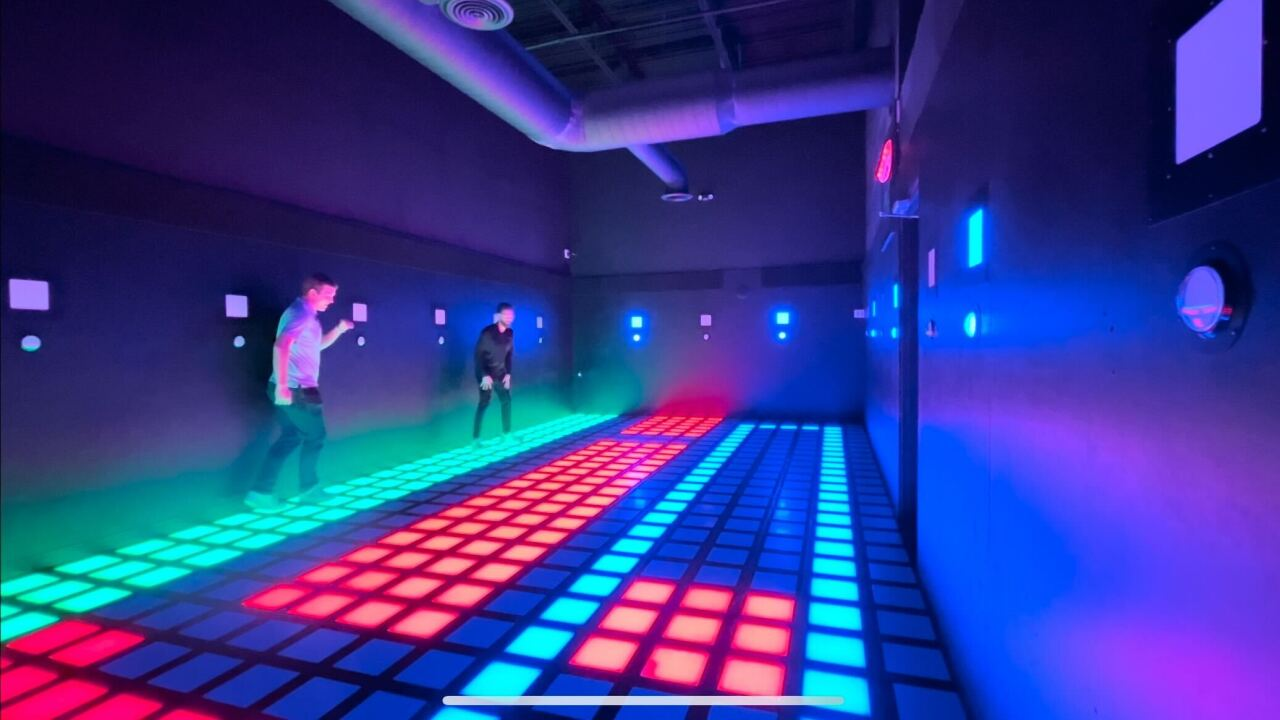
Movie theatres, bowling alleys and arcades have operated in and around shopping centres for decades. What is changing is the range of activities being combined within individual venues and the number of operators building businesses around location-based entertainment.
Cineplex opened its fifth Playdium location at Vaughan Mills in June 2026. Spanning more than 24,000 square feet, the venue includes more than 85 games along with bowling, a ropes course, climbing, Gel Blasters and food and beverage.
Winnipeg-founded Activate represents another variation on the model. Its venues use technology-enabled game rooms where groups complete physical and mental challenges, and the company has expanded across Canada and internationally with additional Canadian locations in development.
The growth of companies such as Activate also makes the expansion of location-based entertainment partly a Canadian business story. Domestic operators are developing formats that can be rolled out into different types and sizes of retail space, including locations that do not require the footprint of a large bowling or family-entertainment centre.
Nations Combines Grocery and Entertainment in Oakville
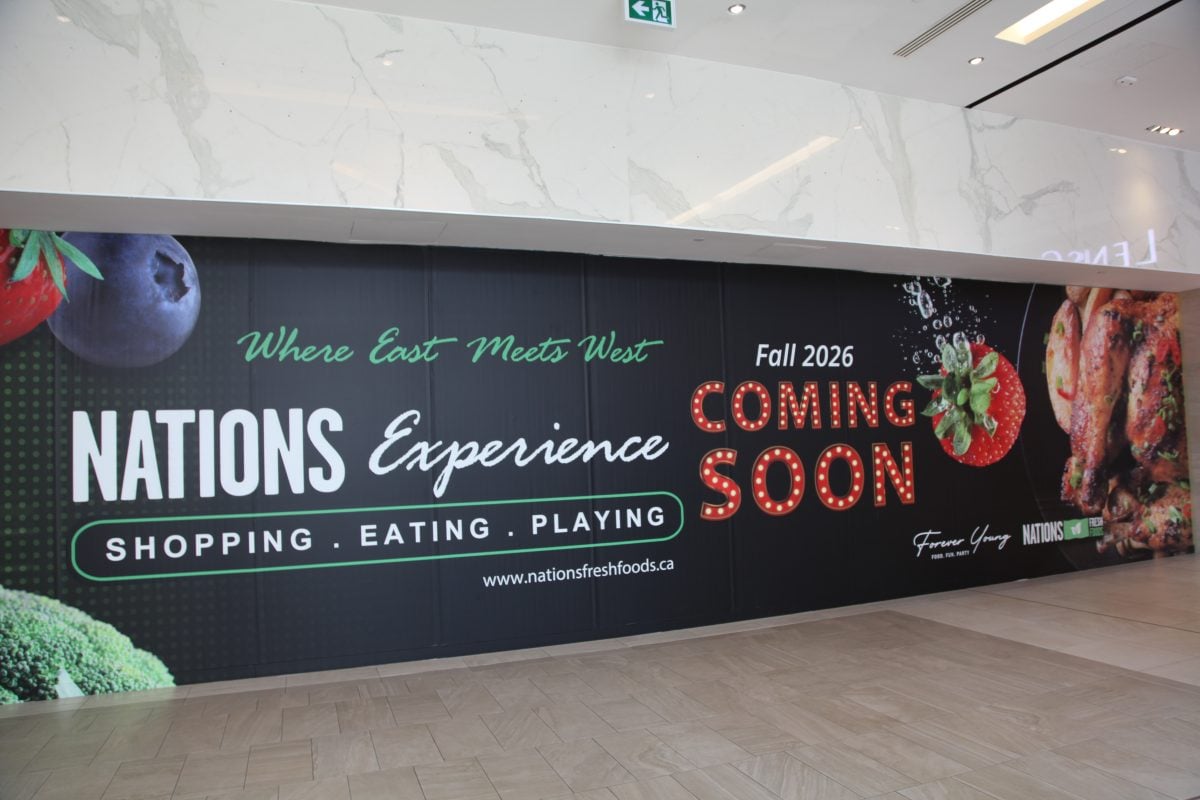
Nations Experience is taking the concept further at Oakville Place, where it is redeveloping the approximately 120,000-square-foot former Hudson’s Bay into a two-level destination combining an international supermarket, prepared food and dining with a substantial Forever Young entertainment component.
Frank Ho, Vice President of Real Estate Development for Nations Experience, has described the format to Retail Insider as being built around food, entertainment, frequency and dwell time. Grocery and prepared-food departments are planned for the lower level, while entertainment uses on the upper floor are expected to include indoor play, arcade gaming, virtual-reality attractions and spaces geared toward events and group visits.
The Oakville project builds on a model Nations has already been developing in the Greater Toronto Area. Its Nations Experience operation at Stock Yards Village has combined multicultural grocery, food and entertainment since 2017, while the approximately 55,000-square-foot Forever Young Entertainment at Centerpoint Mall in Toronto occupies former Target space and includes arcade gaming, virtual reality, golf simulators, interactive sports, children’s play areas, party rooms and food and beverage.
The Oakville development is particularly notable because grocery and entertainment are being used together to repurpose an entire former department-store anchor. The format combines the repeat traffic associated with food shopping with activities intended to increase the amount of time customers spend at the property.
Why Entertainment Appeals to Shopping-Centre Owners
The real-estate appeal goes beyond filling vacant space. Entertainment venues can keep customers at a property considerably longer than a conventional retail transaction and, depending on the concept, continue operating after much of the mall has closed.
The Rec Room at Square One, for example, operates late into the evening and as late as 2 a.m. on Fridays and Saturdays. PowerPlay at Southcentre similarly operates past midnight on Fridays and Saturdays, extending activity at both properties beyond conventional shopping hours.
Many entertainment concepts also incorporate restaurants, bars, birthday parties and other event businesses, creating additional revenue streams for the operator and activity at the shopping centre outside conventional retail hours. Bowling, climbing, challenge rooms and group gaming require an in-person visit and therefore do not face the same direct e-commerce substitution as merchandise-based retail.
Large footprints provide another attraction for landlords. A 100,000-square-foot former department store does not necessarily require another 100,000-square-foot tenant; an entertainment operator taking 30,000 or 40,000 square feet can become part of a larger subdivision involving several uses.
Destination Malls Continue Investing in Attractions
The expansion of entertainment into conventional shopping centres is occurring while some of Canada’s established destination malls continue to invest in the attractions that have long differentiated them.
West Edmonton Mall remains the country’s most extensive example. Its attractions include World Waterpark and Galaxyland, and the property is preparing a new NERF-themed roller coaster at Galaxyland, with an opening expected in spring 2027.
Galeries de la Capitale in Quebec City provides another long-running example. Its Méga Parc indoor amusement park underwent an extensive modernization, and the shopping centre is adding an 18-hole indoor mini-golf attraction called L’Atlas this fall.
The more than 4,200-square-foot L’Atlas represents an investment of approximately $1 million. It is being added as Galeries de la Capitale also redevelops its former Hudson’s Bay space, where a substantially larger Imaginaire store and additional restaurants and retailers are part of a roughly $19-million investment.
Both properties were using entertainment to draw visitors long before the current restructuring of Canada’s department-store sector. Their continued investment in attractions, alongside the growth of Playdium, Activate, The Rec Room, PowerPlay and Splitsville at more conventional shopping centres, shows how widely the destination approach is now being applied.
Entertainment Will Not Work Everywhere
Entertainment will not replace Canada’s vanished department stores on its own. Large venues can require significant investment and specialized construction, while their economics depend on sufficient population, repeat visits and discretionary consumer spending.
Former department-store space is also being absorbed in numerous other ways. Landlords are subdividing boxes for retailers, grocery stores, restaurants and services, while some properties are pursuing more substantial mixed-use redevelopment.
There is also no guarantee that every emerging entertainment concept will endure. Rapid expansion can produce weaker formats, and landlords signing long leases must consider whether an attraction can continue drawing repeat visits after its initial novelty has faded.
JLL’s 16.5-million-square-foot North American pipeline nevertheless shows that location-based entertainment has become a meaningful real-estate category. In Canada, the evidence is increasingly visible in the spaces themselves: former Sears, Target, Nordstrom and Hudson’s Bay stores are being repurposed in part or in full for places where consumers can bowl, play games, eat, socialize and spend considerably more time than a typical retail transaction requires.