The Canadian retail landscape reached a decisive inflection point in 2026. The closure of Hudson’s Bay stores, which vacated roughly 15 million square feet of space across the country, marked more than the loss of another retailer. It signaled the end of a model that had defined shopping centres for decades.
For years, department stores served as the gravitational force of the mall. Their presence shaped leasing strategies, customer traffic patterns, and even the physical design of retail real estate. With Hudson’s Bay now gone from the majority of its traditional locations, that model has effectively collapsed.
This moment is not isolated. Instead, it represents the culmination of more than a decade of Canadian department store closures, a trend that has steadily reshaped the industry as Retail Insider looks at its reporting over the past 14 years.
[Subscribe to Retail Insider’s Daily News for the Latest Canadian Retail Updates]
From Anchors to Absence: A 14-Year Shift
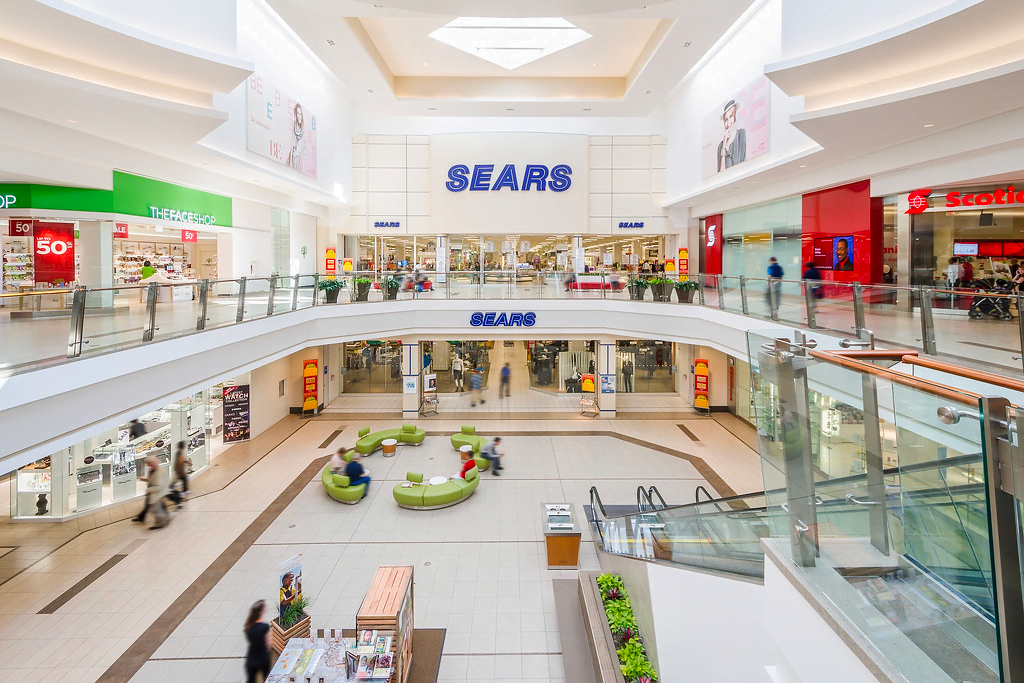
When Retail Insider published its first article in April 2012, the topic was the potential entry of Nordstrom into Canada. At the time, shopping centres were still firmly anchored by large department stores. Zellers operated more than 270 locations. Sears Canada had over 110 stores nationwide (and was retracting). Hudson’s Bay maintained a dominant national footprint.
However, that structure began to unravel quickly.
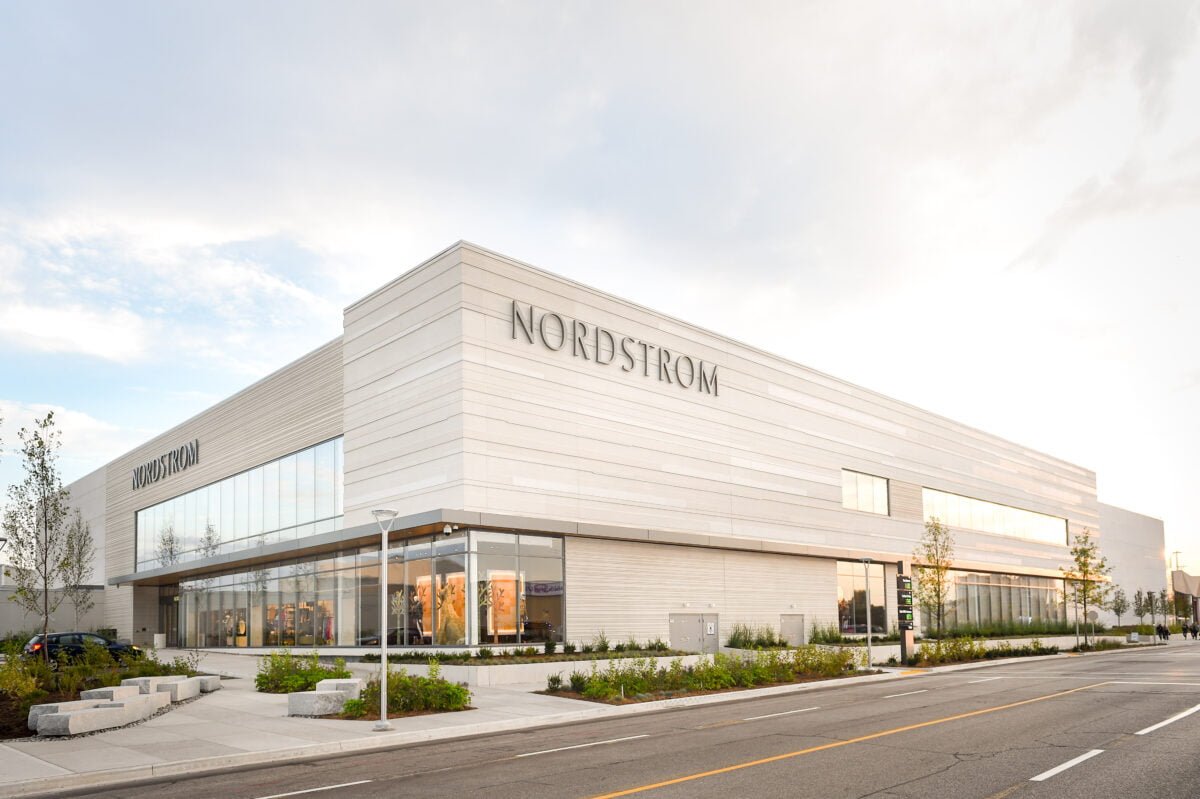
Zellers exited in 2013, followed by Target’s high-profile entry and withdrawal in 2015. Sears Canada shuttered its operations in 2018, leaving behind approximately 15 million square feet of vacant space. Nordstrom entered Canada in 2014 with significant expectations, only to exit in 2023 after filing for creditor protection. Saks Fifth Avenue had a relatively short Canadian run from 2016 to 2025 in Toronto and Calgary.
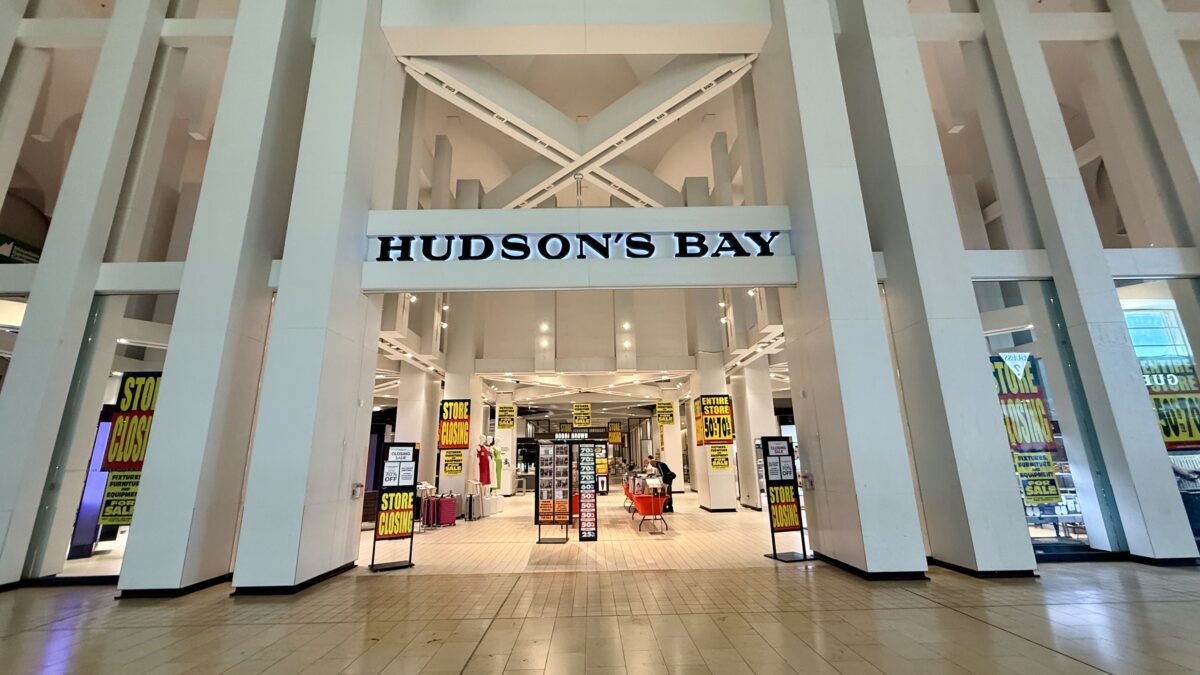
The final blow came with Hudson’s Bay. By June 1, 2025, the company had closed its Canadian stores, eliminating another massive block of retail space and effectively ending the department store era as it once existed.
The cumulative effect is striking. Over the past 14 years, tens of millions of square feet of anchor retail space have been vacated, forcing landlords to rethink the fundamental structure of their properties.
The Collapse of the Traditional Mall Model
For decades, Canadian shopping centres followed a predictable format. Large department stores were positioned at the ends of corridors, drawing shoppers through a series of smaller inline tenants. This “end-to-end” flow created consistent foot traffic and supported a wide range of specialty retailers.
That model no longer functions in the same way.
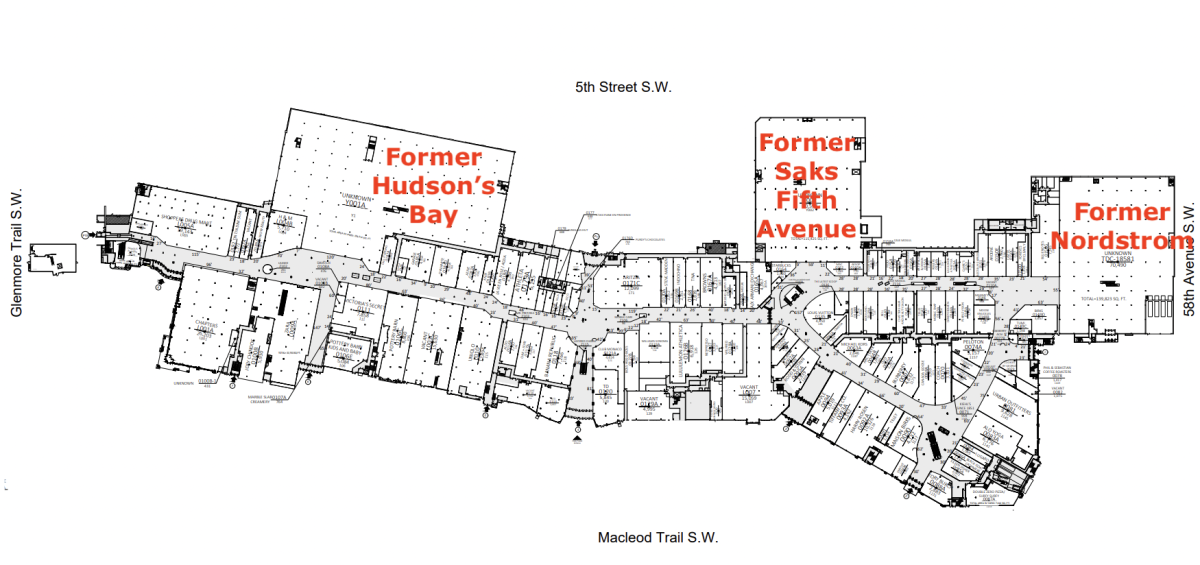
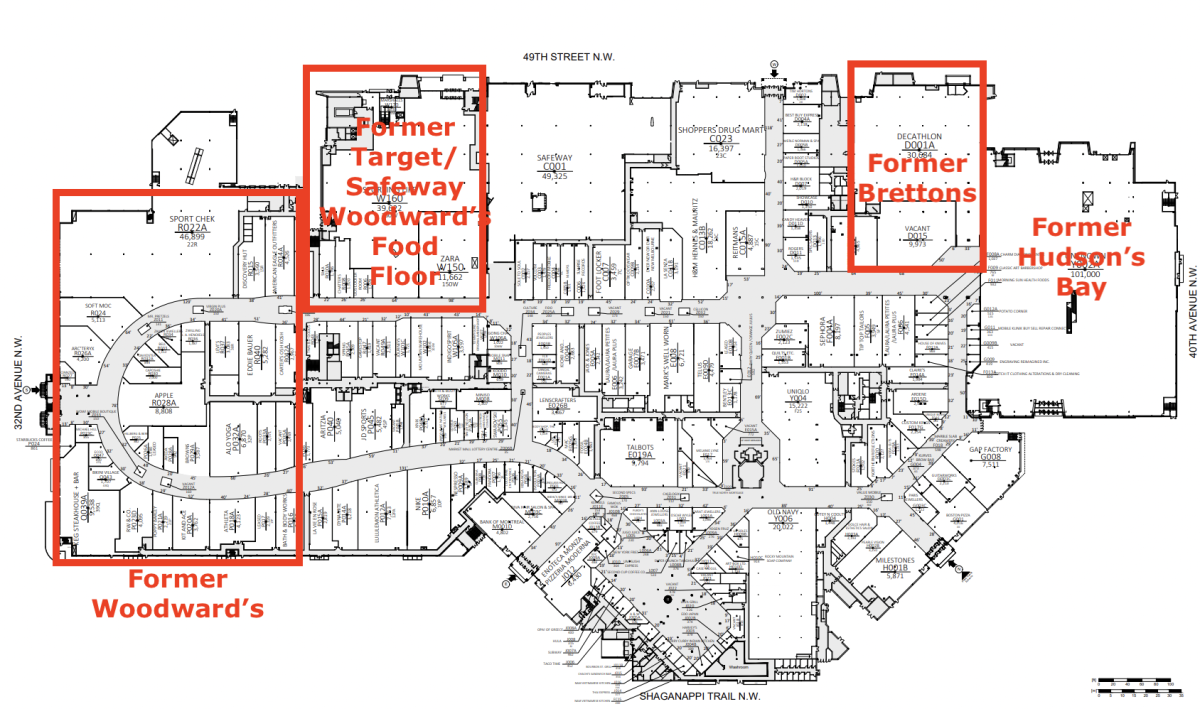
Today, many malls operate without traditional anchors. In some cases, multiple anchor tenants have disappeared from a single property. At CF Sherway Gardens in Toronto and CF Chinook Centre in Calgary, for example, Hudson’s Bay, Nordstrom, and Saks Fifth Avenue all served as anchors as recently as 2023. By mid-2025, none of those stores remained, leaving hundreds of thousands of square feet to repurpose.
This level of disruption would have been difficult to imagine even a decade ago, yet here we are.
The 15 Million Square Foot Challenge
The closure of Hudson’s Bay created an immediate and significant vacancy shock across Canada. Industry data indicates that enclosed mall vacancy rates surged sharply following the closures, reflecting the sudden influx of large-format space onto the market.
However, the real challenge is not just the volume of space, but its scale.
The average Hudson’s Bay store measured approximately 150,000 square feet, while the average mall tenant occupies closer to 3,700 square feet. This creates what industry analysts have described as a “40-to-1” leasing challenge. Replacing a single department store requires the equivalent of dozens of smaller tenants, along with substantial capital investment to physically divide the space.
As a result, landlords have adopted a range of strategies. Many are subdividing former department store boxes into multiple units. Others are pursuing redevelopment opportunities, including residential towers and mixed-use projects. In select cases, a single large tenant has taken over an entire space, although this remains relatively rare.
A New Generation of Anchors Emerges
As traditional department stores disappear, a new mix of tenants is redefining what it means to anchor a shopping centre.
Experiential concepts are becoming increasingly prominent. Large-format fitness operators, entertainment venues, and leisure-focused businesses are taking over spaces once occupied by fashion retailers. These uses are designed to draw visitors for experiences that cannot be replicated online.
At the same time, essential services are moving into malls in greater numbers. Grocery stores, medical clinics, and even government service centres are becoming key drivers of foot traffic. These tenants offer consistency and resilience, particularly in an era where discretionary retail spending can be volatile.
Non-traditional retail is also expanding. Automotive showrooms, value-oriented international retailers, and specialty grocers are occupying space that would once have been reserved for department stores. This shift reflects a broader change in consumer behaviour, where convenience, necessity, and experience are increasingly prioritized.
Case Studies in Transformation
Several Canadian shopping centres illustrate how this transition is unfolding in practice.
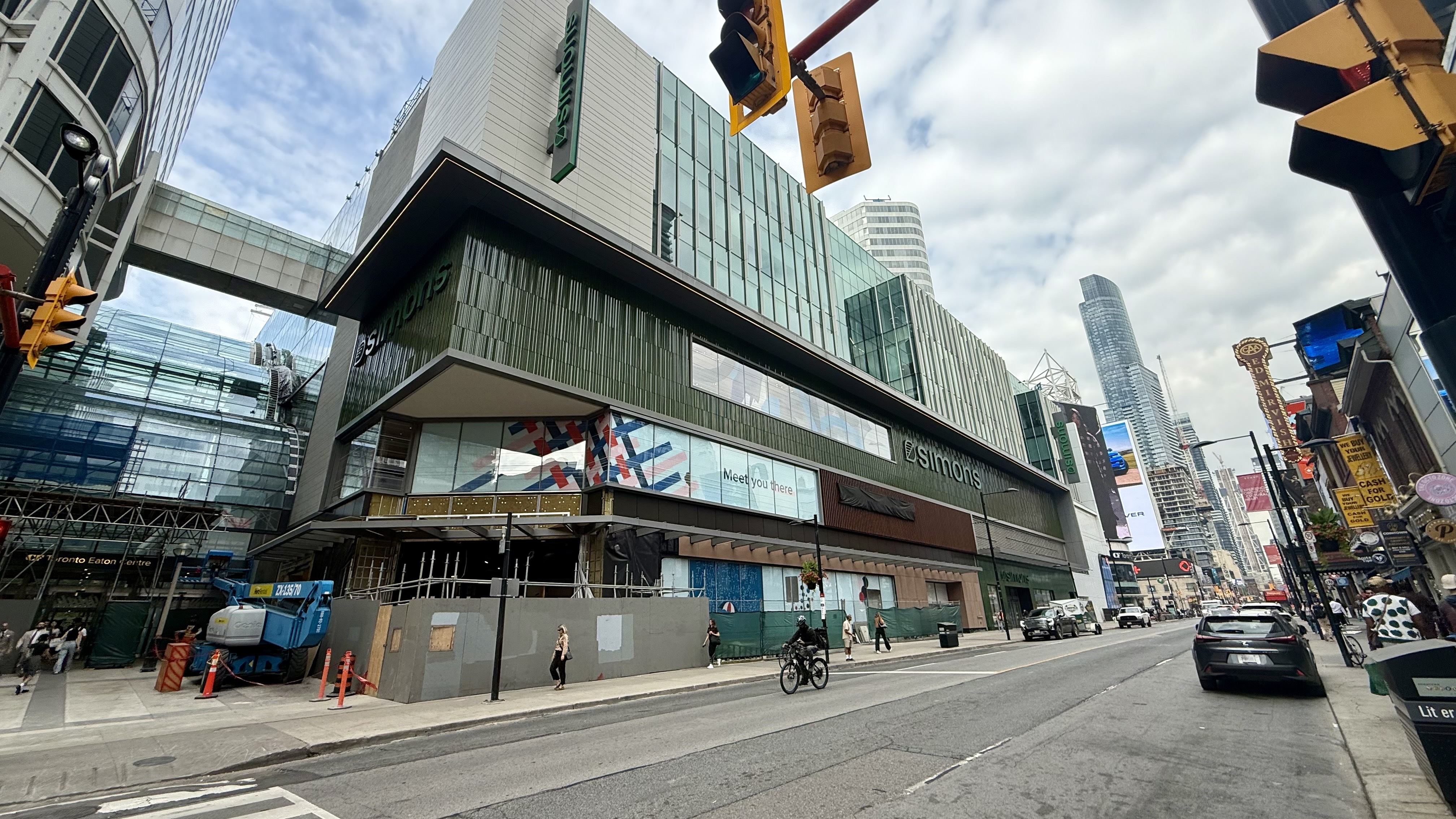
At CF Toronto Eaton Centre, the former Nordstrom space has been reconfigured to accommodate multiple tenants, including La Maison Simons, Nike, and Eataly. Vancouver’s Nordstrom box will soon see similar announcements. This approach demonstrates how large-format spaces can be successfully subdivided into complementary uses that drive traffic throughout the property.
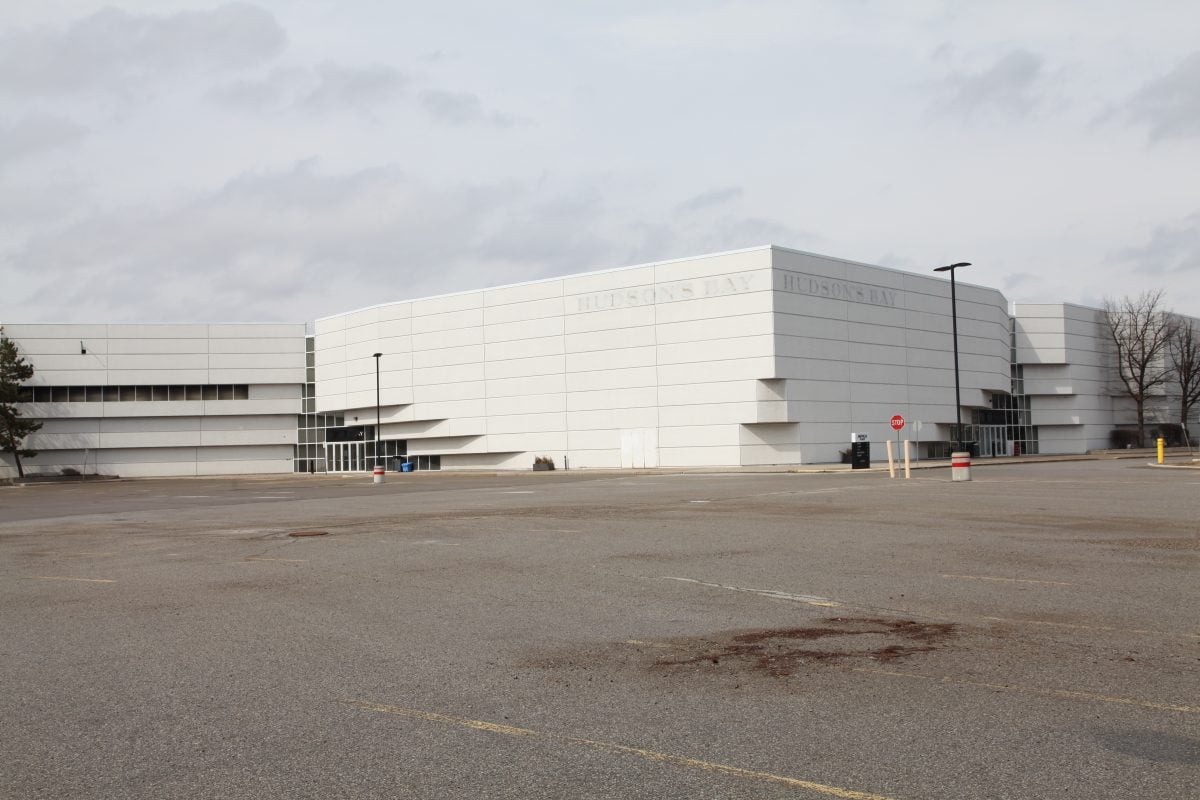
Elsewhere, Oakville Place has seen the entire former 120,000 square foot Hudson’s Bay space taken over by Nations Experience, a grocery-focused concept that provides a strong daily draw. In Edmonton, Londonderry Mall has introduced a 60,000 square foot Zellers 3.0 concept into part of a former Hudson’s Bay location, signalling the return of a familiar name in a very different format.
These examples highlight the diversity of strategies being employed, as well as the importance of tailoring solutions to specific markets, be it downtown or suburban.
A Bifurcated Future for Canadian Malls
Not all shopping centres are experiencing this transition in the same way. A clear divide is emerging between top-tier urban malls and secondary or tertiary properties.
Major centres in cities such as Toronto, Vancouver, and Montreal are seeing strong demand for space, even as they absorb former department store locations. These properties benefit from high foot traffic, strong demographics, and proximity to transit.
In contrast, smaller or less centrally located malls face a more challenging path. The cost of redeveloping large, multi-level department store spaces can be prohibitive, particularly in markets with lower leasing demand. In some cases, these spaces may remain vacant for extended periods.
This bifurcation is reshaping investment strategies as well. Shopping centres anchored by essential services and experiential tenants are increasingly viewed as more stable assets, while those reliant on traditional retail face greater uncertainty.
The End of the Mono-Anchor Era
The decline of department stores represents more than a change in tenant mix. It marks the end of what can be described as the “mono-anchor” era, where a small number of large retailers defined the identity and performance of an entire shopping centre.
In its place, a more diversified and resilient model is emerging. Malls are evolving into multi-purpose environments that combine retail, services, entertainment, and residential components. This shift reflects broader changes in how Canadians live, work, and shop.
Importantly, it also aligns with the realities of e-commerce. Retail categories that are easily replicated online are losing ground, while those that require physical presence are gaining importance.
A New Chapter for Canadian Retail
As Retail Insider marks 14 years of covering the industry, the transformation of Canadian shopping centres stands out as one of the most significant structural shifts in modern retail history.
What began with the gradual decline of department stores has accelerated into a full-scale reconfiguration of the mall. The spaces left behind are not simply being filled, they are being reimagined.
The next phase of this evolution will be defined by how effectively landlords, retailers, and communities adapt to this new reality. While the traditional department store may no longer anchor the mall, the concept of the shopping centre itself is far from obsolete.
Instead, it is being reshaped into something fundamentally different, and perhaps more relevant to the way Canadians live today.