

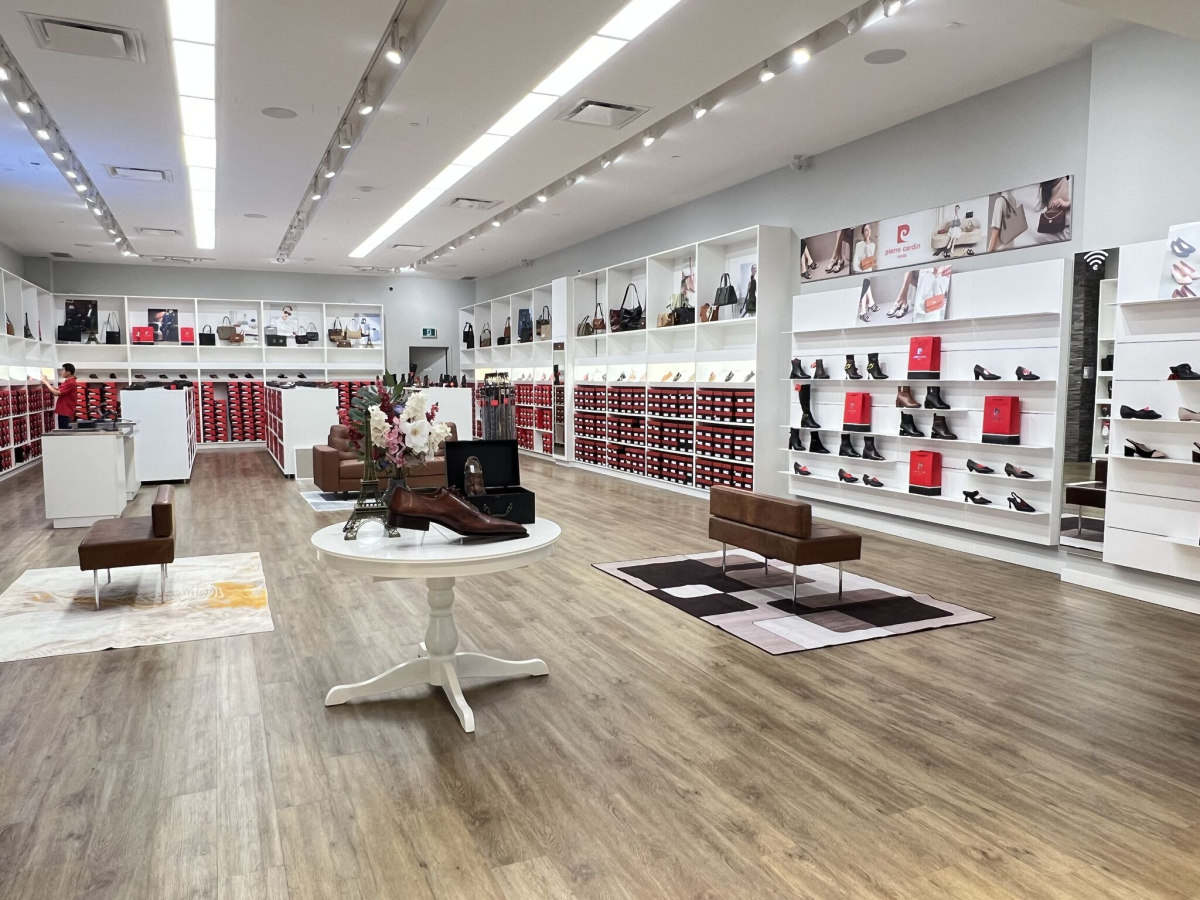
Pierre Cardin has opened its first Canadian store at Tsawwassen Mills in Metro Vancouver, marking the beginning of a broader North American strategy led by a Vietnam-based operator with global ambitions. The new location represents a shift in how the brand is entering Canada, moving beyond traditional licensing toward a vertically integrated retail model with centralized control over manufacturing, distribution, and merchandising.
The store is operated by a partner group connected to Vietnam’s Emall, which holds rights to develop Pierre Cardin footwear and leather goods across Canada and other regions. The opening signals the start of what executives describe as a long-term rollout, with additional stores planned in Toronto and Montreal as part of the Pierre Cardin Canada expansion.
A Strategic Entry Point at Tsawwassen Mills
The choice of Tsawwassen Mills reflects a deliberate entry strategy. The shopping centre draws a diverse customer base, including a strong Asian demographic that is already familiar with the Pierre Cardin name through its extensive presence in Asia.
“This is our first footprint in Canada,” said Patrick Nguyen, a partner overseeing the Canadian expansion. “We want to build everything here with a long-term plan and grow the brand step by step.”
The store spans approximately 2,800 square feet and focuses on footwear and accessories, supported by back-of-house storage to manage inventory flow. Nguyen noted that the Vancouver market offers a combination of favourable leasing conditions and a receptive customer base, making it an effective launchpad for the brand’s reintroduction.
From Licensing Fragmentation to Focused Retail
Pierre Cardin’s global history has been defined by an extensive licensing network that often led to fragmented brand positioning across categories and markets. The current strategy aims to simplify that model by narrowing the focus to core product categories and exerting tighter operational control.
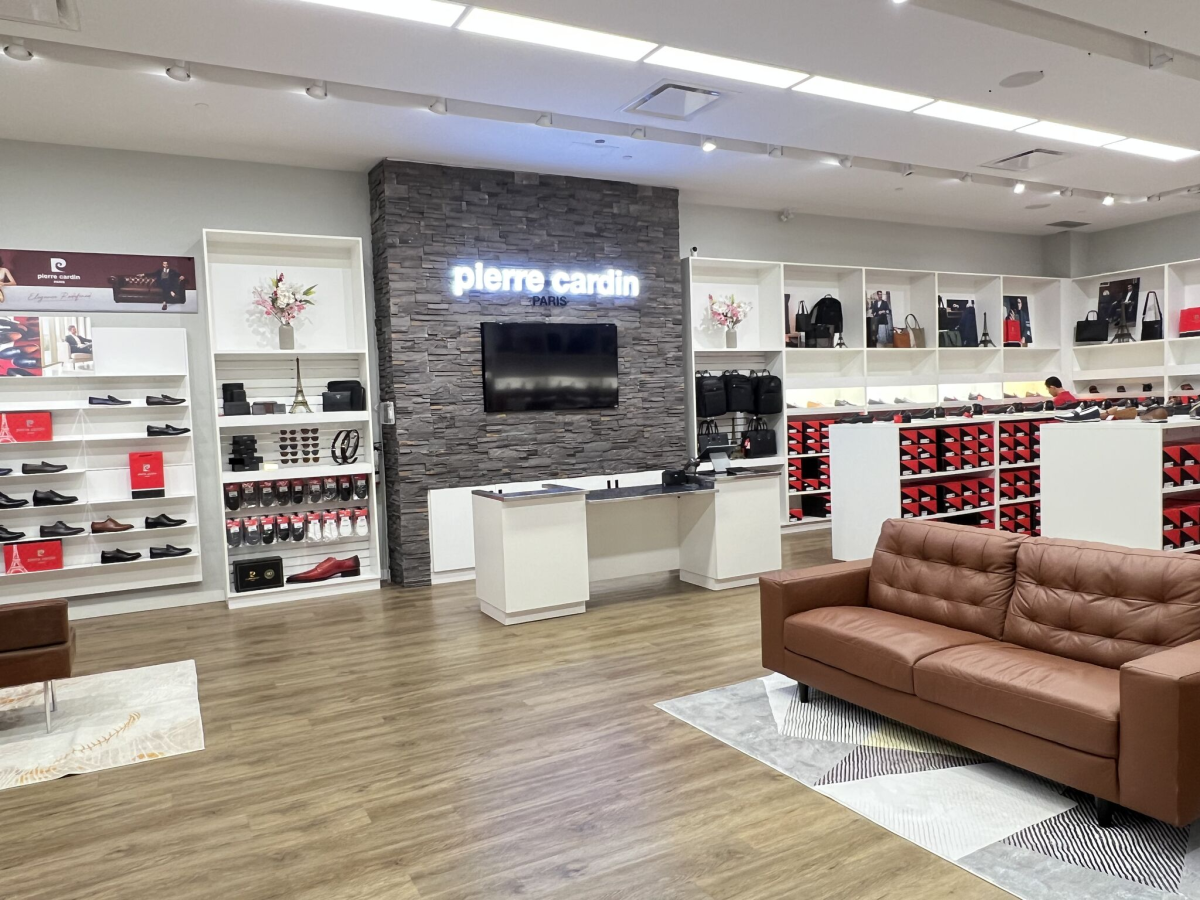
In Canada, the emphasis is on footwear, particularly men’s and women’s dress shoes, along with complementary accessories such as belts and bags. Prices range from approximately $90 for entry-level styles to around $400 for premium in-store offerings. The brand is positioned as a stable, “timeless” alternative in the market, with limited reliance on discounting and a focus on consistent pricing.
“We are not chasing trends,” Nguyen said. “We want to offer products that are consistent and reliable, and that customers can come back to.”
Vertical Integration and Supply Chain Control
A defining feature of the Pierre Cardin Canada expansion is its vertically integrated structure. Unlike previous distributors that operated as intermediaries, the current operator controls manufacturing facilities in Vietnam and oversees the full supply chain from production to retail.
This approach allows for tighter quality control, pricing stability, and faster response to market demand. It also supports the company’s growing e-commerce ambitions, which are expected to play a key role in reaching customers across Canada without the need for a large network of physical stores.
Nguyen emphasized that the strategy prioritizes a limited number of flagship locations, complemented by digital channels, rather than a rapid rollout of numerous storefronts.
Filling a Mid-Market Gap in Canadian Retail
The brand’s positioning comes at a time when Canada’s retail landscape is undergoing significant change. The decline of traditional department store anchors has reduced the availability of mid-tier footwear and accessories, creating an opportunity for new entrants.
Pierre Cardin is targeting what it describes as “affordable luxury” in the businesswear segment, offering leather footwear and accessories that sit above entry-level price points while remaining accessible to a broad consumer base.
Industry observers note that this segment has become increasingly underserved, particularly as consumers look for quality products without entering the highest luxury tiers.
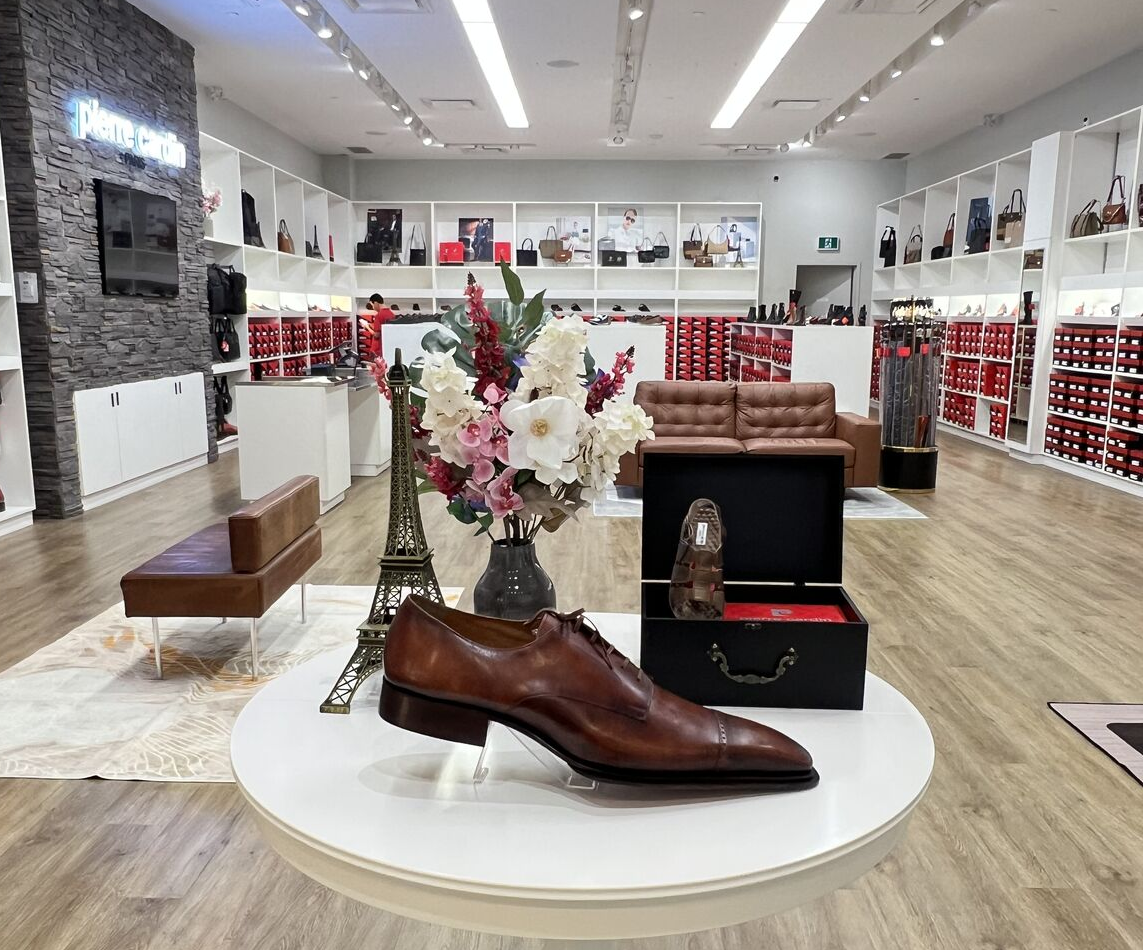
In addition to its core assortment, the company is developing a higher-end offering that includes custom-made footwear. The concept involves in-store scanning technology that captures foot measurements in seconds, with made-to-order shoes delivered within approximately two weeks. Prices for these products are expected to range from $2,000 to $3,000.
The company is also exploring complementary services, including shoe repair, reconditioning, and the development of specialized insoles. These initiatives are intended to support a longer product lifecycle and reinforce a service-oriented retail model.
Nguyen added that the company is evaluating the feasibility of an extended warranty or replacement program, though details have not yet been finalized.
Expansion Plans Across Canada and Beyond
Following the Vancouver opening, the company is actively evaluating locations for a Toronto flagship. Montreal is also part of the near-term expansion plan.
Beyond Canada, the operator has outlined ambitions to enter the United States, with potential locations in New York City and California once market and political conditions stabilize.
“We want to establish Canada first and build a strong foundation,” Nguyen said. “From there, we can expand into the U.S. and continue to grow.”
The longer-term vision includes positioning Canada as a central hub for the business, with potential capital market activity, including a public listing, being explored as part of future growth plans.
A Global Platform Anchored in Southeast Asia
The Canadian expansion is supported by a substantial existing footprint in Asia. The operator manages more than 100 stores across Vietnam and has expanded into Thailand and other Southeast Asian markets, while also participating in broader global production for Pierre Cardin footwear.
This scale provides the financial and operational foundation for the North American push, allowing the company to leverage established supply chains while adapting to local market conditions.
As an historical note, Pierre Cardin had a presence in Canada during its peak couture years. In 1968, the brand opened a location at Westmount Square in Montreal, which had just debuted as one of the country’s most prestigious retail destinations. At the time, the complex also housed the first and only Canadian locations for luxury fashion houses including Louis Féraud, Lanvin, and Hermès, reflecting the level of international prestige associated with the development nearly 60 years ago.
In the decades that followed, Pierre Cardin remained visible in Canada primarily through licensed products sold across multiple categories in department stores and multi-brand retailers. Those efforts were often fragmented, with different operators managing various product lines.













Wow quite the coup for Tsawwassen Mills. Not the entry point I would expect for Pierre Cardin. I wish it success. If successful then I wouldn’t be surprised openings in more profitable and fashion forward malls like Pacific Centre, Metrotown and Amazing Brentwood.