Canadian consumers continued spending during Q1 2026, but they became increasingly selective about where, when, and why they spent their money.
Retail Insider’s coverage throughout the quarter pointed toward a consumer who is evaluating purchases more carefully than at any point in recent years. Households remain under pressure from housing costs, debt obligations, and affordability concerns, yet spending has not disappeared. Instead, consumers are comparing prices, researching purchases, using loyalty programs more actively, seeking promotions, and placing greater scrutiny on discretionary spending.
This shift is reshaping the retail landscape.
Luxury retailers continue attracting spending from affluent consumers, while value-oriented operators remain well-positioned among households focused on stretching budgets. Retailers in the middle face greater pressure to differentiate themselves through service, product quality, convenience, experience, or a clearly defined value proposition.
At the same time, AI is becoming part of the shopping journey, digital expectations continue rising, and labour challenges remain a persistent issue across multiple sectors. While these trends may appear unrelated, they all influence how consumers assess value.
For retailers, landlords, suppliers, and investors, success increasingly depends on demonstrating why a purchase, visit, or customer relationship deserves consideration in an environment where consumers are making fewer impulsive decisions.

Executive Summary
Several themes defined Broad Retail Trends coverage during Q1 2026:
- Consumers continued spending while becoming increasingly selective.
- Retail polarization continued benefiting luxury and value-oriented operators.
- Affordability concerns drove stronger promotional sensitivity and deal-seeking behaviour.
- Customer experience became more closely tied to perceived value.
- AI adoption accelerated while consumer trust remained limited.
- Labour challenges continued affecting service quality and store performance.
- Liquidation, off-price, and value-focused shopping gained broader acceptance.
- Retailers faced growing pressure to justify pricing through service, convenience, quality, and differentiation.
The broader trend is clear: consumers are evaluating purchases more carefully and making increasingly deliberate spending decisions.
Overall Broad Retail Trends Coverage by Retail Insider
Retail Insider published 48 stories within the Broad Retail Trends category during Q1 2026, covering consumer behaviour, labour, retail technology, affordability, loyalty, digital commerce, and evolving retail formats.
The coverage frequently returned to a common theme: consumers remain engaged in the marketplace, but their expectations have changed.
Affordability concerns remained widespread. Labour shortages continued affecting customer experience. AI became increasingly visible within shopping journeys. Loyalty programs expanded their influence, while liquidation, off-price, and value-oriented formats attracted growing consumer interest.
Together, these developments reflected a market where consumers are spending more intentionally. They are spending less impulsively, evaluating purchases more carefully, and rewarding retailers that provide clear value.
That behaviour is influencing merchandising strategies, staffing priorities, technology investments, tenant mix decisions, and broader retail planning across Canada.
Retail Polarization Continues Reshaping the Market
One of the clearest themes during Q1 was the continued polarization of retail spending.
Luxury and value-oriented retailers continue attracting consumer attention, while many mid-market operators face greater pressure to define their role in the marketplace. This dynamic is often associated with a K-shaped economy, but it extends beyond income levels alone.
Consumers are increasingly making category-by-category decisions about where they are willing to spend and where they prefer to save.
A household may purchase premium beauty products while seeking discounts on groceries. Another consumer may book a luxury vacation while delaying apparel purchases. Even affluent shoppers are demonstrating greater selectivity in categories where value alternatives are readily available.
The challenge for many retailers is that broad middle-market positioning has become more difficult to sustain.
Consumers increasingly expect a clear reason to spend. Retailers that deliver exceptional value, exceptional experience, or a compelling combination of both continue attracting demand. Retailers that struggle to differentiate face greater scrutiny.
The implications extend beyond retail operations. Landlords are also adapting as premium centres continue attracting luxury brands and destination retailers, while other properties seek tenants capable of generating traffic through value, convenience, entertainment, or experiential offerings.
Consumers Continue Shopping With a Calculator
Consumers remain active participants in the economy, but many purchases now involve more consideration than they did only a few years ago.
Retail Insider’s Q1 coverage highlighted stronger promotional sensitivity, increased comparison shopping, and growing demand for perceived value. Research from TD, Harris & Partners, and MNP pointed toward households that remain cautious about affordability, debt levels, and future financial pressures.
This behaviour is visible across multiple retail categories.
Consumers are waiting for promotions, comparing prices across retailers, using loyalty rewards more strategically, and delaying purchases when they do not perceive sufficient value. Bargain hunting has become a mainstream shopping behaviour rather than a niche activity.
The growing popularity of liquidation-focused “binz” stores reflects this trend. These formats attract consumers seeking both savings and the excitement of discovering unexpected products at discounted prices.
For retailers, the implications are significant.
Traffic alone is no longer enough. Conversion increasingly depends on pricing transparency, inventory availability, convenience, trust, and confidence that a purchase represents good value.
Consumers remain willing to spend, but they are spending more thoughtfully.
Experience Must Justify the Price
The relationship between price and experience became increasingly important during the quarter.
Léger’s 2026 WOW Index highlighted frustration among consumers who feel service levels are not always keeping pace with rising prices. Longer wait times, stockouts, reduced staffing, and inconsistent experiences contribute to a perception that some retailers are delivering less while charging more.
Consumers appear willing to accept a more basic experience when pricing reflects that reality. Value-oriented retailers often benefit because expectations align with the proposition. Premium retailers can also succeed when service, expertise, environment, and product quality support the price being charged.
The greatest pressure exists in the middle.
Retailers that are neither clearly premium nor clearly value-oriented face greater scrutiny when service declines or pricing increases. Consumers increasingly evaluate whether the overall experience matches the cost.
Digital commerce faces similar expectations. Accurate inventory information, intuitive websites, reliable fulfillment, transparent pricing, and responsive customer service are now viewed as baseline requirements rather than competitive advantages.
The lesson from Q1 was straightforward: consumers increasingly expect a clear relationship between what they pay and what they receive.
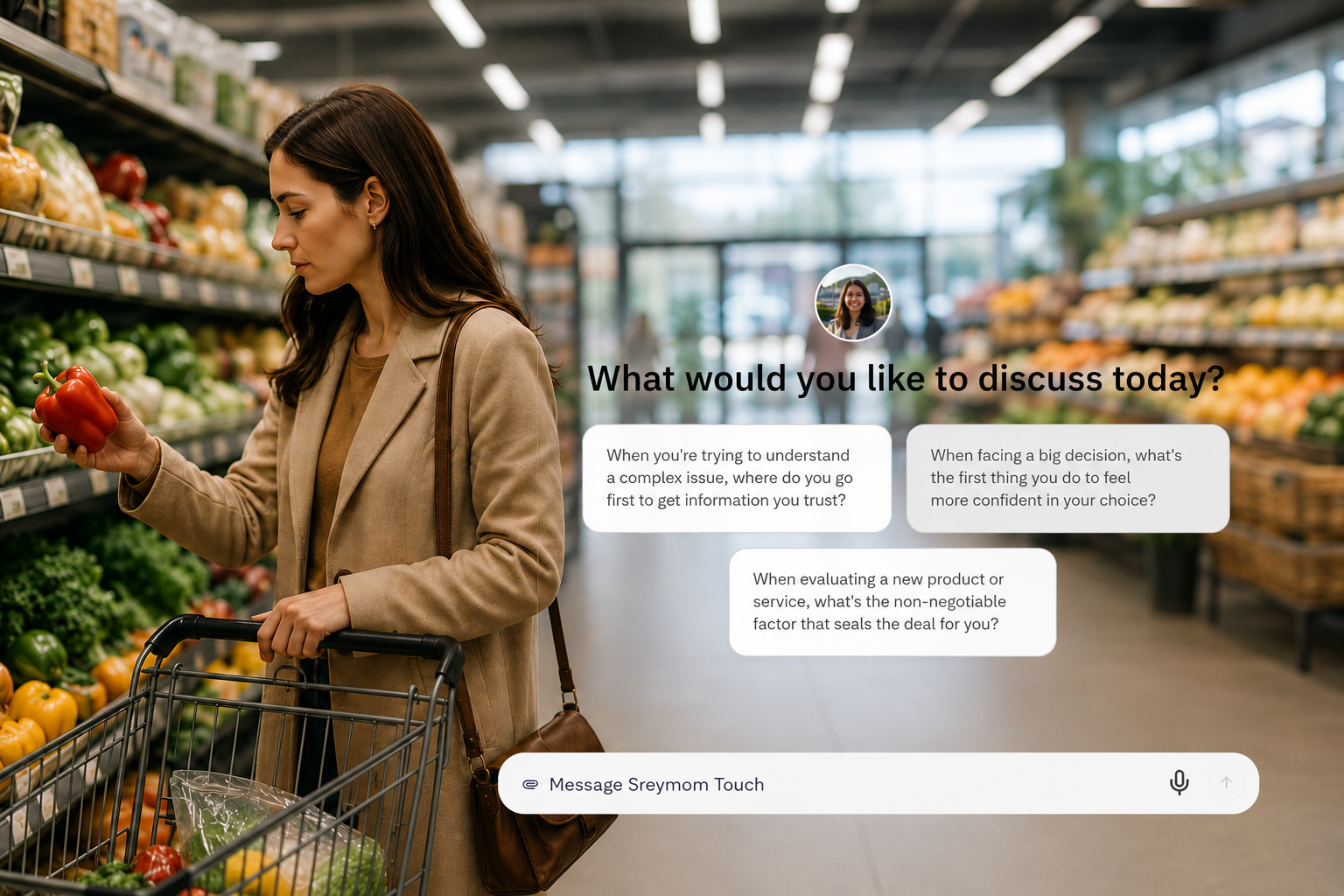
AI Becomes Part of the Shopping Journey
AI adoption continued accelerating during Q1, although consumer trust remains a work in progress.
Research highlighted by IBM and the National Retail Federation showed growing use of AI for product research, comparisons, recommendations, and deal discovery. Consumers are increasingly incorporating AI tools into shopping journeys, particularly during the consideration stage.
This has important implications for retailers.
Product information, pricing accuracy, reviews, inventory visibility, and digital credibility increasingly influence how products appear within AI-assisted recommendations. Retailers that maintain strong digital foundations may be better positioned as AI becomes more integrated into consumer decision-making.
Trust remains an important factor influencing adoption.
Many consumers are experimenting with AI while remaining cautious about relying entirely on automated recommendations. Concerns regarding transparency, accuracy, and bias continue influencing adoption.
Retailers that use AI to improve convenience while maintaining trust and clarity may be better positioned than those that focus solely on automation.
Labour Shapes the Customer Experience
Many customer experience challenges ultimately trace back to labour.
Retail Insider’s Q1 coverage highlighted ongoing difficulties around recruitment, retention, scheduling, training, and employee engagement. While retailers continue adopting technology and automation, frontline employees remain central to the customer experience.
These challenges have direct consequences.
Longer wait times, reduced product knowledge, inconsistent service, and weaker customer engagement often stem from labour constraints rather than merchandising or marketing decisions. Consumers may not see the staffing issue itself, but they experience its effects.
Suzanne Sears’ observations regarding demographic change, labour mobility, and shifting workforce expectations reinforced the complexity of the challenge.
For retailers, labour has become more than an operational concern.
The ability to attract, train, and retain employees increasingly influences customer satisfaction, conversion rates, loyalty, and brand perception. As consumers become more selective, service quality becomes increasingly important in shaping purchasing decisions.
Risks to the Thesis
Several factors could influence how these trends evolve during the remainder of 2026.
Affordability concerns remain elevated, and many households continue facing pressure from housing costs, debt servicing, and broader economic uncertainty. Geopolitical developments, tariffs, and supply chain disruptions could create additional pricing pressure in certain categories.
AI adoption may continue growing faster than consumer trust. Retailers that move too aggressively without maintaining transparency may encounter resistance from consumers who remain cautious about automated recommendations and pricing practices.
Labour challenges also remain unresolved. Staffing shortages, turnover, and training gaps may continue affecting service quality and operational performance.
Consumers have also demonstrated considerable resilience. While spending behaviour remains selective, most evidence suggests consumers are adapting rather than withdrawing from the marketplace.
Editor’s Take
Q1 2026 reinforced a simple reality: consumers are evaluating value more carefully than they have in years.
That evaluation extends well beyond price.
Consumers are judging whether service justifies the cost. They are comparing convenience against alternatives. They are assessing whether loyalty programs provide meaningful benefits. They are deciding whether experiences feel worth paying for and whether retailers are delivering what they promise.
This helps explain why retail polarization continues accelerating.
Value-oriented retailers benefit when consumers prioritize savings. Luxury retailers benefit when they provide experiences, products, and environments that justify premium pricing. The greatest pressure often falls on businesses that struggle to communicate a clear reason for consumers to choose them.
The strongest retailers recognize that value is not defined by price alone. It reflects the combined impact of service, trust, convenience, experience, product quality, and execution.
Consumers are still spending.
The challenge is earning a place on a shopping list that has become more selective, more deliberate, and increasingly shaped by careful comparisons, loyalty incentives, service expectations, and perceived value.
Selected Coverage
- Canada’s Food Economy Faces a Defining Shift in 2026 – Sylvain Charlebois – Jan 5, 2026
- Six Global Trends Reshaping Canadian Retail in 2026 – Lee Rivett – Jan 5, 2026
- Canada’s K-Shaped Economy will Reshape Retail in 2026 – Craig Patterson – Jan 6, 2026
- Gen Z Is Opting Out and Retail Is Feeling the Impact – Lee Rivett – Jan 8, 2026
- MNP Consumer Debt Index: Canadians brace for challenging 2026 – Mario Toneguzzi – Jan 12, 2026
- Two-thirds of Canadians plan to cut spending in 2026 as budgets tighten: TD survey – Mario Toneguzzi – Jan 15, 2026
- WOW Index Shows In-Store Experience Slipping in 2026 – Craig Patterson – Jan 21, 2026
- Canada’s Best Digital Retail Experiences Revealed: WOW 2026 – Craig Patterson – Jan 22, 2026
- Canadians turn to AI for shopping, but trust remains the biggest barrier: IBM study – Mario Toneguzzi – Jan 29, 2026
- Canadian ecommerce orders rose 20% in 2025, with top brands driving half the growth: Omnisend – Mario Toneguzzi – Jan 30, 2026
- Canada’s Labour Shift Reshapes Retail Workforce – Craig Patterson – Feb 9, 2026
- Canadian Retail Faces Labour Paradox in 2026 – Lee Rivett – Feb 12, 2026
- 87% of Canadians feel financially trapped by rising living costs: Harris & Partners – Mario Toneguzzi – Feb 24, 2026
- Luxury and Value Retail Dominate Canada – Retail Insider – Mar 3, 2026
- Inside Canada’s Growing Liquidation “Binz” Store Economy – Retail Insider – Mar 16, 2026