

For generations of Canadian women, shopping for clothing was often tied to life’s milestones.
A first interview suit. A blouse for a new office job. A dress for a wedding, graduation, holiday party or other special event. A trip to the mall wasn’t simply about buying clothes, it was about preparing for important moments. Shopping centres across the country were filled with retailers that catered to those moments. Fairweather, Jacob, Smart Set, Reitmans, Braemar, Laura, Le Château, Penningtons and numerous others helped define an era of Canadian fashion retail that occupied a comfortable middle ground between discount and luxury. They offered accessible fashion for women building careers, raising families and navigating everyday life.
Department stores added even more choice. Across different eras, consumers shopped for apparel at Simpsons, Eaton’s, Woodward’s, Sears and Hudson’s Bay, often finding entire floors dedicated to fashion, footwear and accessories.
Today, much of that landscape has disappeared.
Many of the chains that once defined women’s fashion retail in Canada are out of business, while others operate with significantly smaller footprints than they did at their peak. Department stores that once sold enormous volumes of apparel have largely disappeared from Canada. Simons remains one of the country’s few national fashion-focused department store retailers, though the sector is dramatically smaller than it was a generation ago. In their place, consumers increasingly shop across a marketplace dominated by global fashion giants, off-price retailers, luxury brands and athleisure concepts.

“The story is really the transformation of women’s wear retail in Canada,” said retail consultant Antony Karabus, who has advised retailers across North America for decades.
The changes reflect far more than shifting fashion trends. According to Karabus, the disappearance of many mid-market apparel chains can be traced to several powerful forces that have reshaped the retail landscape over the past two decades, including casualization, the rise of fast fashion, the increasing dominance of value-focused and global retailers, economic polarization and changing mall economics.
When Apparel Dominated Canadian Malls
Walk through a major Canadian shopping centre in the 1980s, 1990s or early 2000s and apparel occupied a far larger share of the tenant mix than it does today.
Women’s fashion chains, department stores, footwear retailers and specialty apparel concepts often filled entire wings of malls. Department stores anchored shopping centres while fashion retailers lined the corridors between them. For consumers, there was no shortage of choice.
For many women, shopping was also very predictable. Consumers often developed loyalty to a handful of trusted retailers where they knew the fit, understood the sizing and could reliably find clothing appropriate for work, social occasions and everyday life. Many readers will remember malls where apparel occupied entire corridors, with department stores at either end and dozens of fashion retailers in between.
“I remember when women used to go to Lipton’s, Braemar, Fairweather, Smart Set, Jacob and Reitmans for their first outfits,” Karabus said.
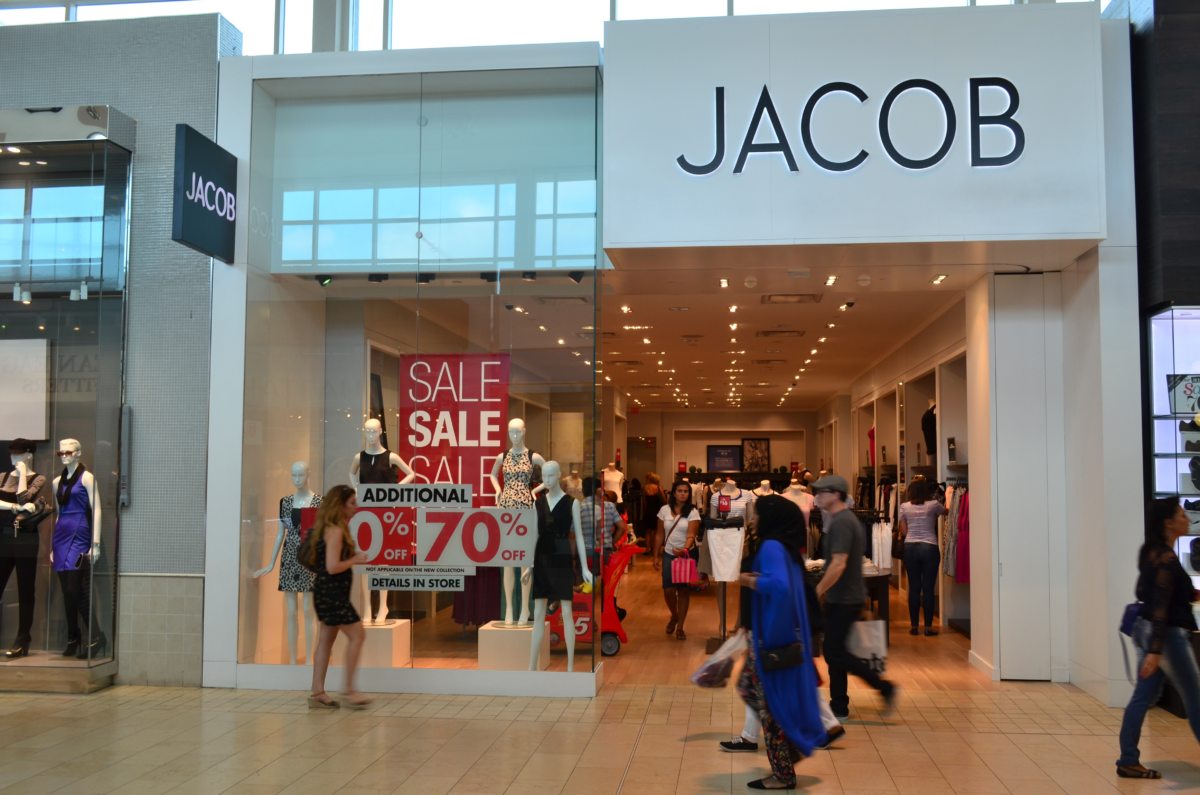
Many of these businesses were Canadian-owned retailers that expanded nationally alongside the growth of enclosed shopping centres. They served a large middle-income consumer base looking for fashionable apparel at accessible prices.
Jacob and Le Château disappeared following insolvency proceedings. Smart Set was wound down. Addition Elle ceased operating as a standalone chain. Several American retailers that once expanded into Canada, including Ann Taylor, Maurices and Chico’s, exited the market. Others dramatically reduced their store counts.
The retail model that once supported a large network of mid-priced fashion chains steadily eroded. The decline was not limited to specialty retailers.
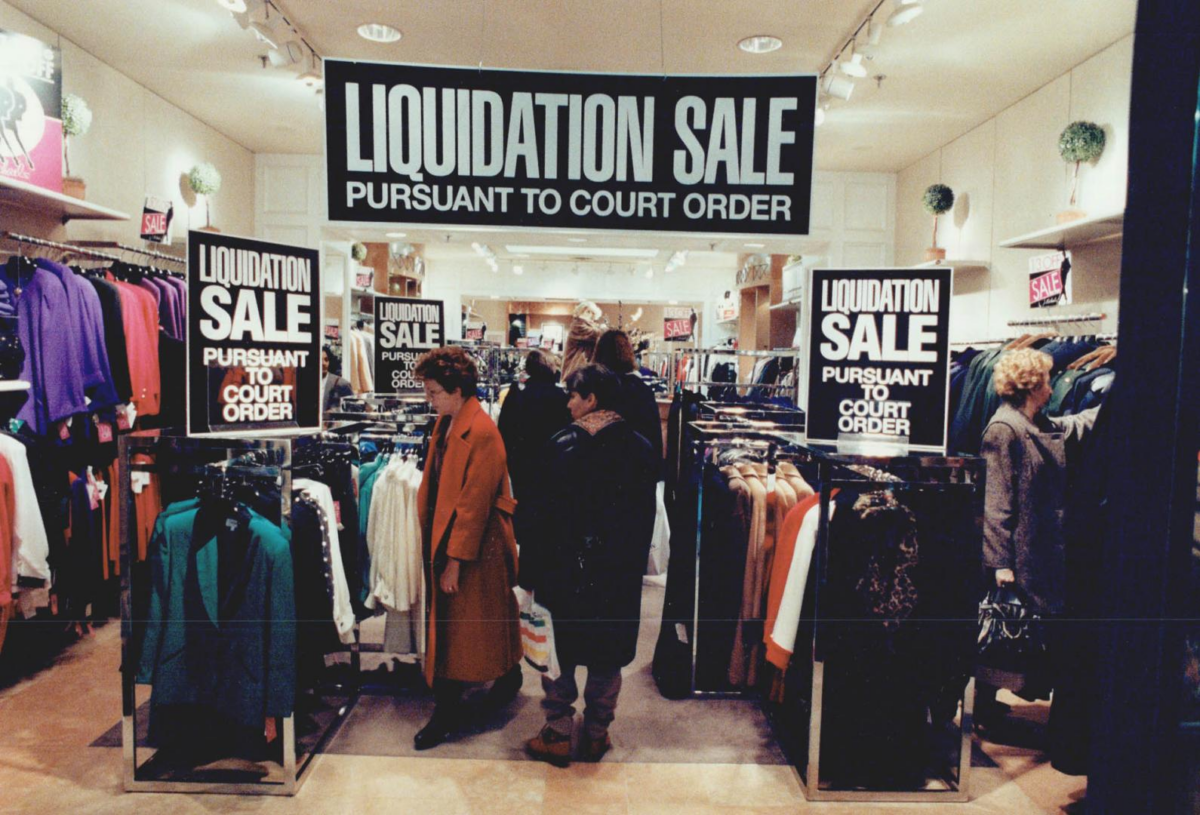
The Collapse of Canada’s Department Store Ecosystem
Department stores once played a central role in women’s fashion retail in Canada.
Across different eras, chains such as Simpsons, Eaton’s, Woodward’s, Sears and Hudson’s Bay sold enormous volumes of apparel while serving as major traffic drivers for shopping centres. Their fashion floors offered everything from private-label merchandise and national brands to footwear, accessories and career apparel.
Today, all five department store banners have disappeared from Canada’s retail landscape.
Eaton’s vanished in the late 1990s. Woodward’s and Simpsons disappeared even earlier. Sears Canada liquidated its operations in 2017. Hudson’s Bay, Canada’s oldest company and largest department store chain, liquidated its stores and ceased retail operations in 2025.
The impact extended beyond the department stores themselves. Their decline removed an important distribution channel for apparel brands and weakened the broader retail ecosystem that supported many specialty fashion retailers.
Many specialty apparel retailers benefited from shoppers who visited malls specifically to browse department store fashion floors. As those anchors disappeared, apparel retailers lost an important source of traffic and customer discovery.
The contrast with the United States remains notable. While American department stores face their own challenges, chains such as Macy’s, Nordstrom, Dillard’s and Belk continue to provide substantial distribution for women’s apparel brands. Canada’s department store sector is dramatically smaller, leaving relatively few multi-brand fashion destinations serving middle-market consumers.
Casualization Changed the Wardrobe
Changing consumer behaviour has been equally important.
Women simply dress differently today than they did a generation ago.
Career apparel, dresses and formal office wear remain part of the market, but they no longer occupy the same place in consumers’ wardrobes. Casual clothing, denim, sneakers and athleisure have become increasingly common, even in workplaces that once required more formal attire.
Karabus believes this shift has fundamentally altered the apparel market.
“The expectation of dressier workplace attire has largely disappeared. The change reflects broader shifts in how people work and live,” he said.
Hybrid work arrangements accelerated a trend that was already underway, reducing the need for wardrobes built around five days a week in an office.
Consumers increasingly favour versatile apparel that can transition between work, home and social settings rather than maintaining separate wardrobes for each part of their lives.
The disappearance of these retailers does not mean Canadian women stopped buying clothing.
Rather, they began buying it differently.
As demand shifted, many retailers built around traditional careerwear and occasion dressing found themselves facing a much smaller addressable market than they once had.
Fast Fashion Changed the Competitive Landscape
Another major disruption came from the rise of fast fashion.
Retailers such as Zara and H&M introduced a model based on rapid product development, shorter fashion cycles and global sourcing networks capable of responding quickly to emerging trends while offering compelling value to consumers across a broad range of income levels.
Consumers embraced the concept.
Instead of waiting for seasonal collections, shoppers could visit stores frequently and discover new styles every few weeks. Fashion became faster, more responsive and often more affordable. Retailers could react to trends in weeks rather than months.
Karabus argues that many Canadian family-owned apparel chains were operating with business models built for a different era.
“The inability of mid-priced family-owned chains to compete against foreign-owned giants with significant depth of resources in sourcing, selection, product development and value became a major challenge,” he said.
Large international retailers could spread costs across global store networks while investing heavily in logistics, technology and product development. Canadian chains operating primarily in one market faced a much more difficult environment.
The result was a widening competitive gap between domestic apparel retailers and multinational fashion companies.
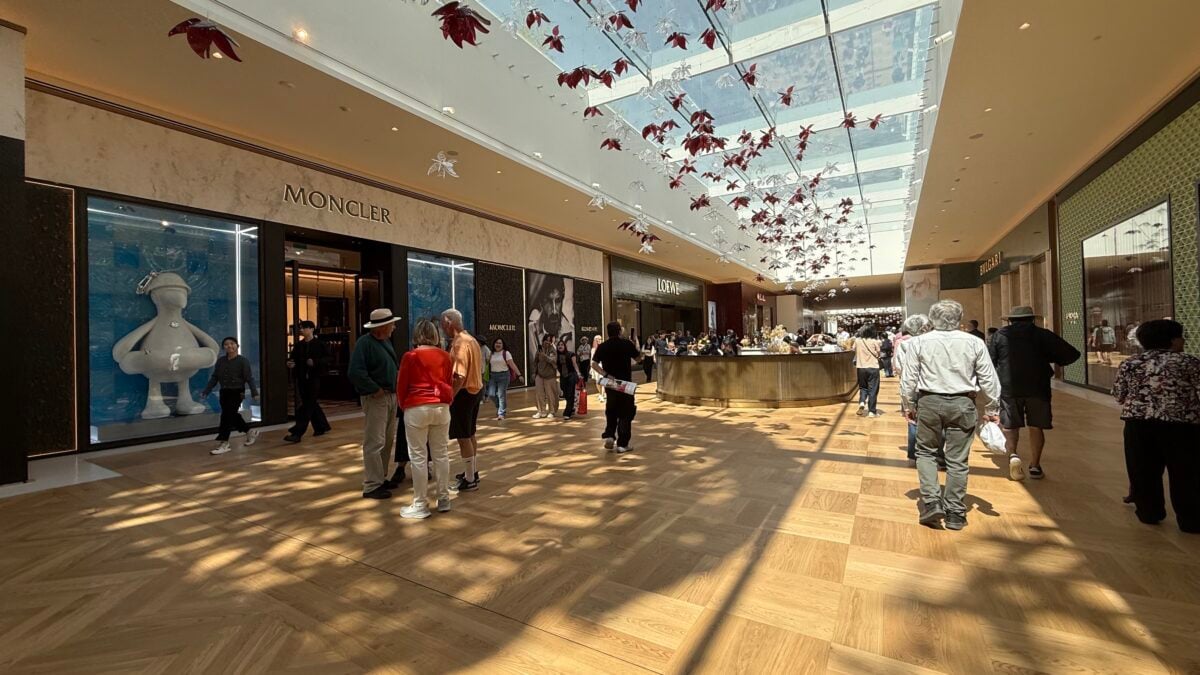
The K-Shaped Economy Creates Winners and Losers
Karabus also points to the growing impact of what economists call a K-shaped economy.
At one end of the spectrum, affluent consumers continue spending on premium and luxury goods. At the other end, value-focused consumers increasingly seek discounts and affordability.
The middle has become increasingly difficult to serve.
“Just like in the U.S., the K-shaped dynamic is actively polarizing the competitive landscape,” Karabus said.
Luxury brands continue expanding in affluent shopping districts and top-performing shopping centres. Retailers such as Aritzia, Alo Yoga and lululemon have benefited from casualization and the growth of athleisure while building strong positions through compelling merchandise assortments and highly focused customer strategies.
At the value end of the market, retailers including Winners, Marshalls, Walmart and Costco continue attracting consumers looking for affordability. The growth of off-price retail has been particularly significant. Through Winners, Marshalls and HomeSense, TJX Canada has built one of the country’s largest retail businesses, generating billions of dollars in annual sales.
While Zara and H&M are often credited with reshaping apparel retail, off-price operators and mass merchants have also captured a substantial share of consumer spending by offering recognizable brands at discounted prices.
For many shoppers, a trip to Winners has replaced visits to the traditional mid-market apparel chains that once dominated Canadian malls.
Today’s consumers often shop across multiple price points. A woman may purchase activewear from lululemon, browse Winners for bargains and occasionally splurge on a luxury accessory. Shopping habits have become far less tied to a single retailer than they were in previous generations.
This leaves traditional mid-market apparel retailers in a difficult position. They often lack the scale to compete on price with value operators and lack the prestige needed to command premium pricing.
As middle-income consumers become increasingly selective about discretionary spending, many retailers have found themselves squeezed from both directions.
Mall Economics Added More Pressure
Changing shopping centre economics created another challenge.
Karabus argues that many traditional apparel chains generated sales productivity that became increasingly difficult to support in Canada’s most productive shopping centres.
Centres such as Yorkdale Shopping Centre, CF Pacific Centre, CF Toronto Eaton Centre and Chinook Centre generate some of the highest sales productivity levels in the country. As these centres attracted luxury brands and high-performing global retailers, many traditional mid-market fashion chains found it increasingly difficult to justify occupancy costs.
As leading malls improved performance and attracted stronger retailers, rents increased and competition for space intensified.
Retailers with higher sales productivity, stronger balance sheets and greater international scale became more attractive tenants. Luxury brands, beauty concepts, athletic apparel retailers and experiential tenants increasingly secured prime locations in premier shopping centres.
Meanwhile, many traditional mid-priced apparel chains found themselves struggling to justify the economics in those locations.
Some migrated to weaker centres. Others reduced store counts. Many disappeared altogether.
A Market Transformed
Women’s apparel has not disappeared from Canada.
Consumers continue spending billions of dollars on clothing each year, and successful fashion retailers continue to expand. The difference is that spending is increasingly flowing toward luxury brands, off-price operators, athleisure concepts, fast-fashion retailers and a handful of highly differentiated specialty chains.
The forces behind that transformation were powerful and interconnected. Casualization reduced demand for traditional careerwear. Fast fashion dramatically accelerated competition. Department stores disappeared. Shopping centres evolved. Consumers increasingly gravitated toward either value or premium offerings. Global retailers gained scale advantages that many domestic operators struggled to match.
The disappearance of many familiar women’s fashion chains is ultimately a story about how Canadian consumers changed, how retailers responded, and how the economics of retail evolved.
Many consumers now move fluidly between value retailers, global fashion brands, athleisure brands, luxury labels and digital channels rather than relying on a handful of trusted mall-based chains. Fairweather, Braemar, Jacob, Smart Set, Town & Country and many other once-prominent chains helped define an era of Canadian retail when women’s fashion shopping was centred around the local mall and a strong middle market.
That era has largely passed.
Today’s market offers more choice than ever before, but that choice is also more fragmented, more global and more competitive.
Whether a new generation of Canadian apparel retailers can successfully rebuild that middle ground remains to be seen. What is clear is that the forces that transformed the sector continue to reshape Canadian retail today.













What has not been discussed here is the explosive growth of thrift or second hand clothing stores. Many women I know, myself included, are buying more of our clothes from thrift stores. Not only can you find gems at a fraction of the price, but the variety keeps us coming back. That’s also why places like Winners and Marshalls are growing. Even though they are not technically second hand, they are selling discounted clothing and that’s taking a large part of the women’s apparel business.
Perhaps there is more choice than ever before, but the great downside is that it has become extremely difficult to find quality goods. In women’s apparel, flimsiness, poor quality materials, and bad stitching is ubiquitous everywhere. Most items now are also designed for teenagers, not mature females. I would much prefer seeing fewer shops that offer well-made clothing rather than the many stores that now sell mostly junk.
As an older Canadian, I don’ want athleisure items and being plus size, I don’t ever find decent clothing at Winners or Marshall or anywhere else except Talbots. I also will not buy any item made of man made fibres and most of the cheap clothing out there is not worth buying, I also don’t want to spend $1000.00 on a pair of shoes from Holt’s that only has one strap over the toes and one around the ankle and not leather. I refuse to buy so called luxury goods just because it has a designer name. Designers aren’t special and their items do not warrant the exorbitant prices they charge. Our current society almost always look like slobs and those that can afford the luxury items, have no fashion sense. Just because a designer made it, doesn’t mean it looks good on you. I can’t believe how bad the women’s clothing section is these days. I agree completely with Joanne above.