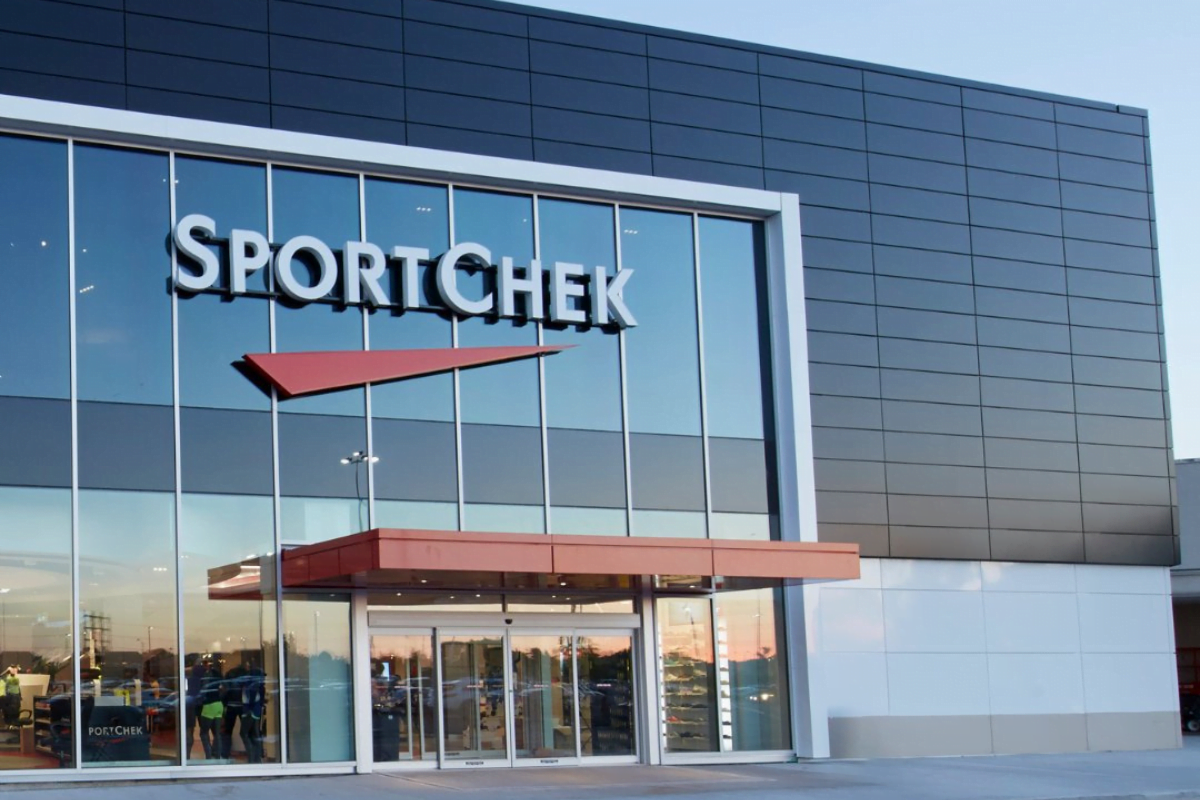
Canadian performance self-care brand REYAL has expanded into more than 500 retail locations across Canada, according to founder Tanner Johnston, as the company prepares for its next stage of growth in the United States. Five years after launching with a focused assortment of men’s skincare products, the Vancouver-based business has broadened its offering into hair care, body care and other wellness products while reconsidering how it approaches retail distribution and customer acquisition.
In an interview with Retail Insider, Johnston discussed the company’s growth, its relationships with major Canadian retailers, the economics of selling through Amazon and his decision to continue financing the business himself. He also acknowledged that some of REYAL’s early expansion opportunities arrived before the company had developed the resources needed to manage them effectively.
“Jumping at too many opportunities at once is something I’ve learned from,” Johnston said, reflecting on the company’s first several years.
Those lessons are influencing REYAL’s approach to the U.S., where Johnston is concentrating on Texas and California and developing partnerships with gyms, boutique fitness studios and other wellness businesses. The strategy is intended to introduce products to consumers through facilities they already use, with online sales playing a larger role than in the company’s earlier wholesale expansion.

From Skincare Startup to Broader Self-Care Brand
Retail Insider first interviewed Johnston and co-founder JJ Wilson in July 2021, when they discussed launching REYAL Performance. At the time, the company was establishing itself in the men’s skincare and supplements market with a relatively small product assortment.
Johnston said Wilson remains involved with REYAL, although Johnston now oversees day-to-day operations. The business has since expanded into several additional personal-care categories, reflecting a broader approach to wellness.
“We first launched with skincare as our only SKUs,” Johnston said. “We branched out to body care, hair care.”
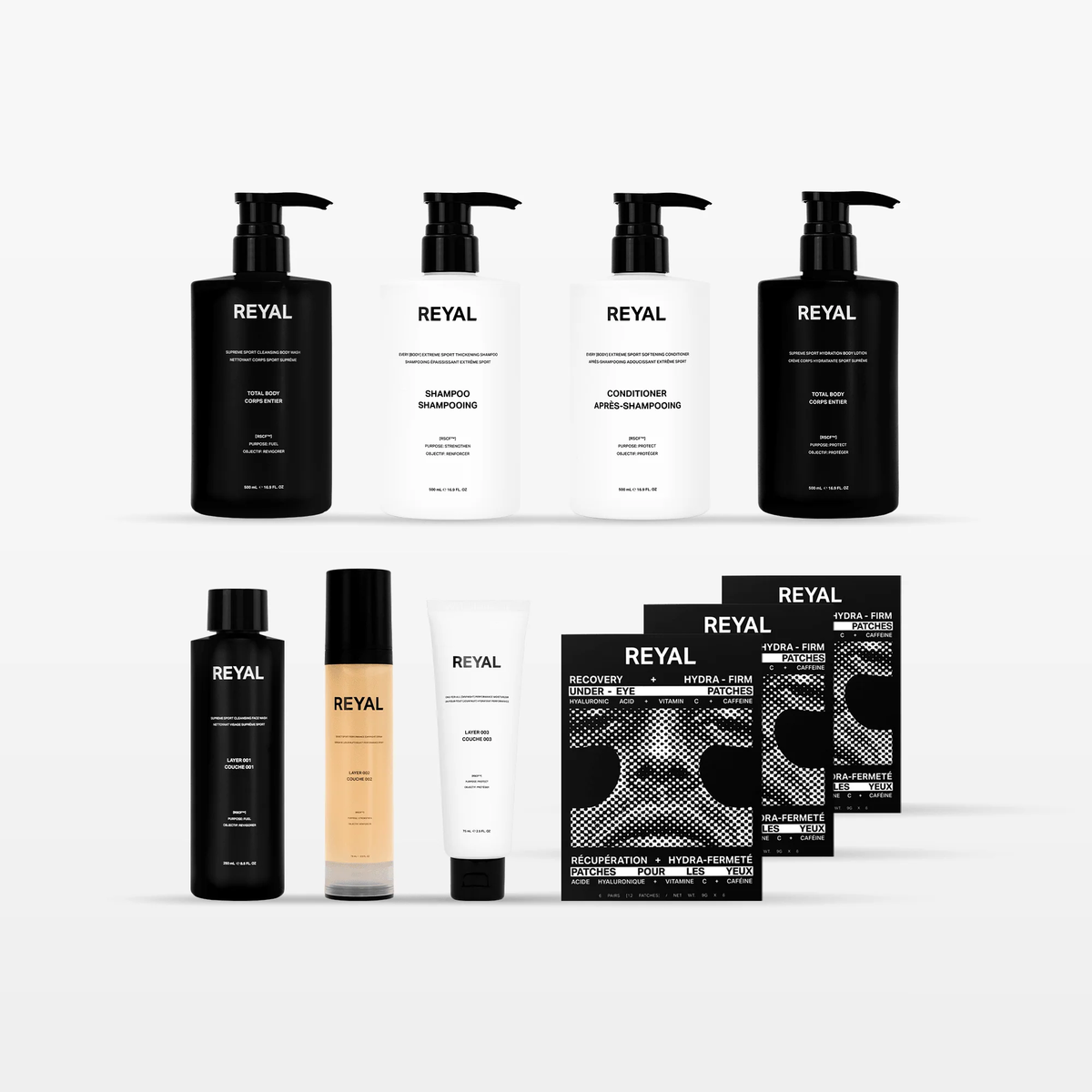
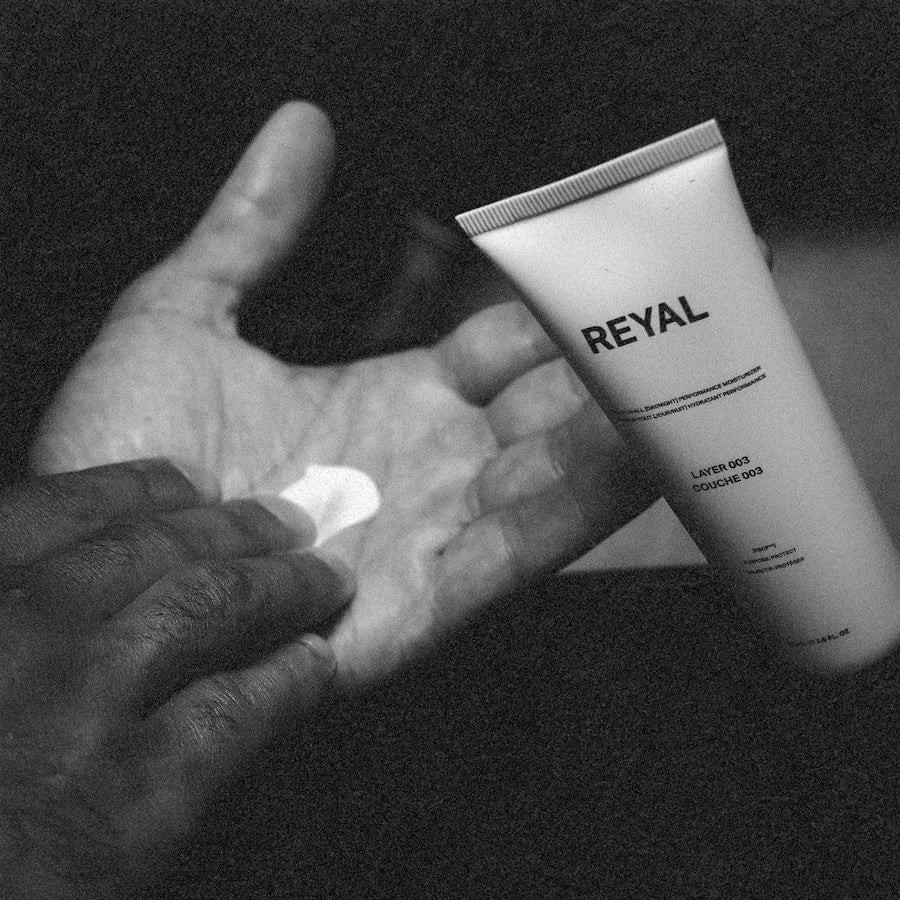
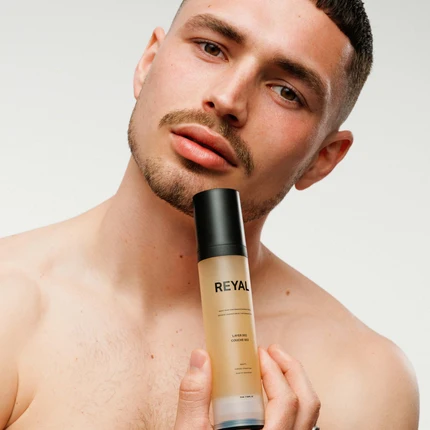
The company’s current product assortment includes a cleansing face wash, performance moisturizer, performance serum and recovery eye patches, along with thickening shampoo, softening conditioner, cleansing body wash and hydrating hand and body lotion. REYAL also offers bundled routines and travel-sized products.
Its cleansing face wash is listed at $34, performance moisturizer at $32 and performance serum at $112. The thickening shampoo is priced at $44, softening conditioner at $54 and cleansing body wash at $34, giving the company products across several price points within the personal-care market.
Supplements remain another area of interest for Johnston, although development has presented challenges. REYAL previously introduced a whey protein formulation, currently listed as sold out on its website, and Johnston said manufacturing issues complicated some of the company’s efforts in the category.
He remains interested in developing additional supplements and personal-care products, but said expanding the assortment must be guided by customer demand. Johnston considers product quality and listening to consumers among the decisions that have served the business well.
The broader offering also reflects changes Johnston has observed in how men approach personal care. He believes skincare is increasingly considered alongside fitness, nutrition and recovery, particularly among younger consumers who are more comfortable incorporating these products into their routines.
“When we talked in 2021, self-care was more like grooming,” he said. “I never really liked that term grooming. It didn’t really sit right with what I wanted to build.”
Johnston believes this broader interest in wellness has created opportunities for brands that communicate with men beyond traditional grooming messages. REYAL’s current positioning reflects that approach, with products intended to become part of everyday self-care routines.
Building a National Retail Presence
REYAL’s Canadian distribution has grown substantially since its launch, with Johnston identifying Shoppers Drug Mart, Simons, Holt Renfrew and London Drugs among the major retailers that have carried the brand. The company has also worked with smaller specialty retailers, gyms and spas, giving it exposure across different retail and service environments.
Johnston estimates that REYAL is now available in more than 500 Canadian stores, with Shoppers Drug Mart contributing significantly to that reach. The figure has not been independently verified through a location-by-location count, and the company has not provided a current breakdown by retail partner.
REYAL maintains a brand listing through Shoppers Drug Mart, where its products include skincare, hair care and body care items. The relationship has helped make REYAL more accessible to customers who might otherwise need to order directly from the company.
For Johnston, national distribution represented an important opportunity, but managing a growing number of large retail accounts proved more complicated than anticipated.
“We launched, and it was kind of an effect where one retailer heard about the other retailer,” he recalled. As more retailers expressed interest, REYAL accepted opportunities that required additional operational resources.
“We didn’t actually have the team in place to understand even the back end of how that works with all these kind of giant retailers,” Johnston said.
The company also secured opportunities with larger U.S. retailers during its earlier development. Looking back, Johnston questions whether the time and resources needed to support some of those relationships were justified at that stage.
The experience exposed a challenge for emerging consumer brands entering national retail networks. Securing distribution can substantially improve product availability, but servicing large accounts also requires inventory planning, replenishment, administration and working capital.
Physical retail remains important to REYAL, particularly in Canada, where Johnston believes customers increasingly expect convenient access to personal-care products. The company is now more selective about opportunities, with greater attention to whether new relationships fit its resources and longer-term plans.
How Product Expansion Helped Secure Shelf Space
One benefit of REYAL’s broader assortment has been the opportunity to strengthen its presence within existing retail accounts.
Johnston explained that retailers carrying the company’s original skincare products became interested in allocating additional space as new categories were introduced. A larger assortment allowed REYAL to create a more substantial visual presence while offering customers a wider selection of products.
“Those retailers saw the success of those SKUs, and they wanted to give us more shelf space,” he said.
In some cases, retailers indicated that introducing more products could justify a larger display. For a developing brand, the additional visibility can help attract customers who might otherwise overlook a smaller assortment.
Johnston also acknowledged that expanding the number of SKUs has limits. The company needs to balance the merchandising benefits of additional products against customer demand and the operational complexity of managing a larger assortment.
The relationship between product development and shelf space is particularly relevant for smaller Canadian brands competing alongside established personal-care companies. An initial retail listing provides access to customers, but demonstrating demand across complementary categories can help support a stronger in-store presence.
Amazon and the Economics of Convenience
While physical retail remains important, Johnston said customer purchasing behaviour has reinforced the value of convenient access to REYAL’s products.
The company sells online in Canada and the United States, both directly and through Amazon. Johnston considers Shoppers Drug Mart and Amazon particularly important destinations for Canadian customers who want to purchase personal-care products without waiting for direct shipments.
Amazon has also changed how Johnston evaluates the results of digital advertising.
He described running advertisements through Meta’s platforms, including Instagram and Facebook, that are intended to direct customers to REYAL’s website. Some consumers, however, subsequently search for the products on Amazon because they prefer its delivery options.
“They’re actually right away going onto Amazon to see if they can get it same-day shipping,” Johnston said.
As a result, advertising activity may contribute to sales through Amazon even when a campaign is designed to generate purchases on REYAL’s own website. Johnston said the company has observed this behaviour, although he did not provide figures quantifying the effect.
Shipping costs are another consideration, particularly in Canada, where distance can make fulfilling individual orders expensive.
Johnston estimated that sending a small product such as face wash directly to many Canadian destinations can cost approximately $20 or more. That figure reflects his experience and should not be interpreted as a standard rate across all carriers, destinations or shipping arrangements.
“In Canada, to send anything, like say a face wash, to basically anywhere, it’s at a minimum of twenty dollars,” he said.
Johnston believes Amazon’s warehousing and delivery infrastructure offers attractive economics for REYAL compared with certain conventional third-party logistics arrangements. He is interested in eventually using Amazon more extensively to fulfil orders placed through REYAL’s own website, although he described that as a future objective rather than an arrangement already fully implemented.
For REYAL, the marketplace has become an important part of making products available where customers prefer to shop. Johnston believes even brands positioned at higher price points need to consider the convenience customers associate with large online platforms.
A Different Strategy for U.S. Expansion
REYAL’s next stage of growth is increasingly focused on the United States, with Johnston identifying Texas and California as priority markets.
The company previously explored opportunities with larger American retailers, but Johnston is now concentrating on gyms, boutique fitness studios and other wellness-oriented businesses. He believes these environments provide a direct way to introduce REYAL to consumers whose existing routines align with the brand.
The strategy involves supplying hair care and body care products for use in showers and changing facilities, allowing customers to try them during visits. Johnston views some of the associated product costs as a marketing investment, with the intention of encouraging customers to purchase the products afterward.
Johnston said REYAL has begun working with gyms that fit the company’s positioning, although he did not identify specific operators or disclose the number of participating facilities. He sees the approach as a way to build awareness among consumers already engaged in fitness and wellness activities.
The strategy combines physical product exposure with digital commerce. Instead of relying primarily on securing shelf space in large retail chains, REYAL is pursuing locations where customers can experience the products as part of their regular activities.
Johnston also expressed interest in developing relationships with clubs, spas and hotels. The company has not disclosed financial results demonstrating the effectiveness of the approach, and the extent of those potential partnerships remains to be established.
For the U.S., Johnston said the emphasis will be on building REYAL’s online business and customer community, with selected retail locations considered where they align with its target audience. The approach reflects lessons from the company’s earlier wholesale expansion, when securing distribution sometimes created operational demands beyond what the business was prepared to manage.
Why Johnston Continues to Self-Fund the Business
Johnston’s approach to growth is influenced by his background in finance and private equity. He has invested in consumer businesses for years and continues to participate in investments while operating REYAL.
He said running the company has changed his perspective on the difference between identifying an attractive business opportunity and executing the work required to build a company.
“As an investor over the years, obviously the past fifteen years, you look at things like financial performance, you look at things like the management team,” Johnston said. “But then on the operator side of running your own business, you’re the one who’s executing those opportunities.”
The experience has given him greater appreciation for entrepreneurs responsible for turning business plans into operating companies. It has also influenced how he evaluates opportunities when investing in other businesses.
Johnston has chosen to continue self-funding REYAL, allowing him to retain control over its direction and make decisions with a longer-term perspective.
“Every single decision that’s made in the business, I’m thinking about it ’cause it is, it’s my money putting into it,” he said.
Self-funding places constraints on how quickly REYAL can pursue new products, distribution opportunities and marketing initiatives. Johnston believes those limits encourage more careful spending decisions, particularly when considering which investments will deliver the greatest benefit.
“Capital can accelerate a business, but it can’t, like, manufacture product-market fit,” he said.
He remains open to outside investment if the right opportunity arises. Johnston said a strategic partner could be valuable if the relationship provided meaningful expertise, distribution access or capital, provided the timing and objectives were appropriate.
He also sees opportunities in collaborations with complementary brands serving similar customers. Such partnerships can help introduce REYAL to new audiences, although Johnston believes they need to make sense for both businesses and their respective customers.
Looking Ahead to 2027
Johnston expects the United States to remain a major priority for REYAL in 2027, with continued emphasis on e-commerce, fitness partnerships and building a customer community. The company also intends to develop additional products, including supplements, while selectively evaluating distribution opportunities.
“The focus won’t be on retail as much, maybe select retail locations where our market might be shopping,” Johnston said. He explained that the emphasis will be on growing online sales and introducing products to consumers through gyms, spas and other relevant environments.
The company is also continuing to develop the operational foundation needed to support future expansion. Johnston said his ambition is to establish REYAL as a familiar brand whose products become part of customers’ regular routines, while avoiding some of the pressures associated with pursuing growth too quickly.
“I want to build this so that this is a long-term brand that’s gonna be around for a long time,” he said.