

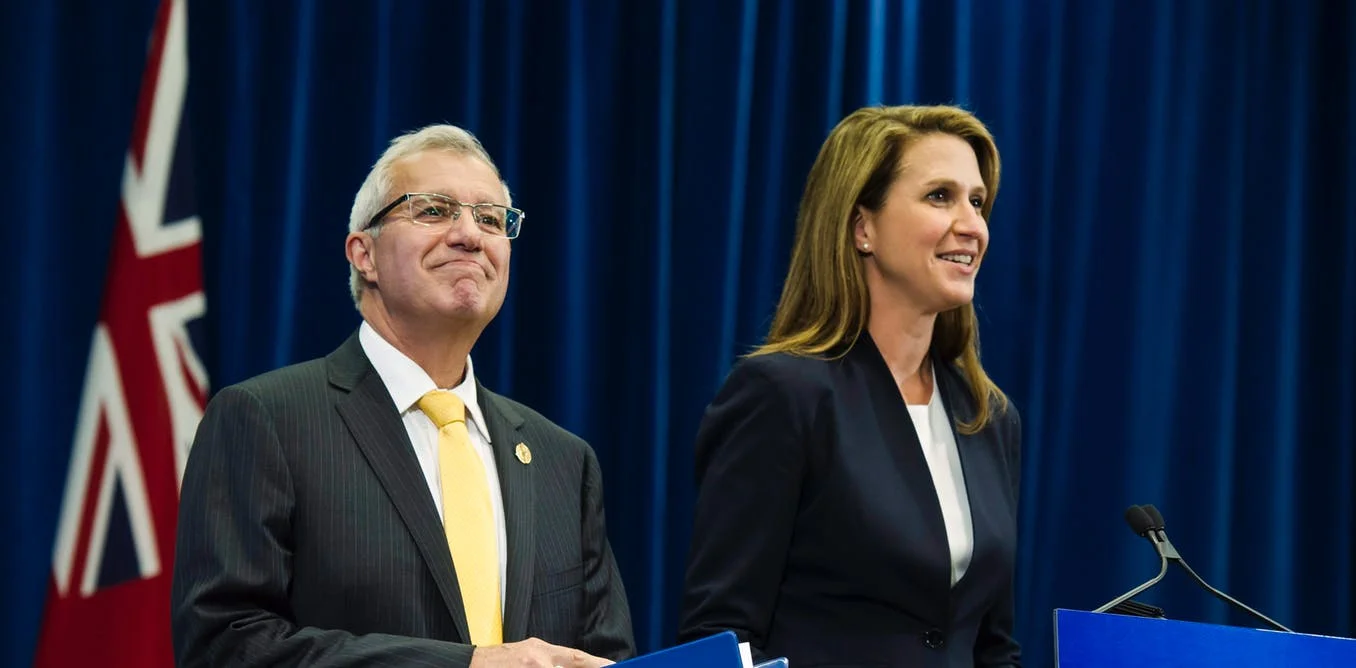
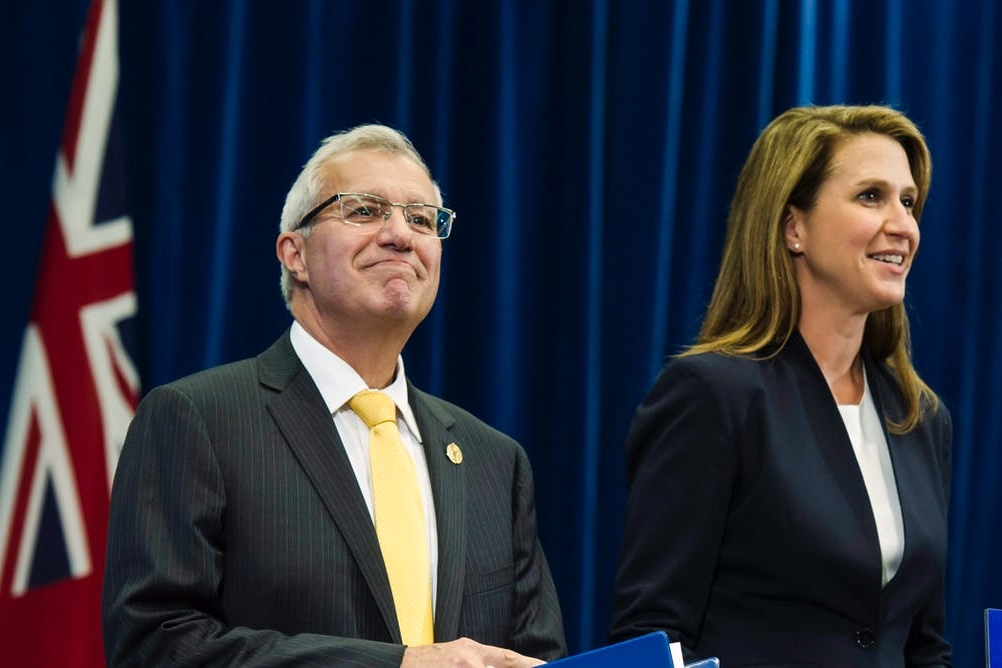
Vic Fedeli, Ontario’s finance minister, and Attorney General Caroline Mulroney talk to the media after announcing Ontario’s cannabis retail model on Aug. 13. THE CANADIAN PRESS/Christopher Katsarov
By Michael J. Armstrong, Associate professor of operations research, Goodman School of Business, Brock University
Ontario has announced big changes to its recreational cannabis retail plan. Government-owned Ontario Cannabis Retail Corporation (OCRC) will still sell online, but will no longer open physical stores. Instead, businesses will handle all storefront sales.
Switching from public to private sector retailing will mean more stores. This means more convenience for Ontario cannabis consumers. That in turn will help legal cannabis compete against black market weed. But it may also increase use of the drug.
Old mess, new plan
The Conservative government’s action on cannabis was much needed. The Liberal plan for an OCRC retailing monopoly was heading for disaster.
The first problem was consumer inconvenience. OCRC expected to open only 40 outlets in 2018 to somehow compete against black marketeers for Ontario’s 14 million residents.
By contrast, Saskatchewan has already licensed 51 retailers to serve its one million people. Similarly, when Alberta started taking store applications to serve its four million residents, it received 452 in the first month.
OCRC’s second problem was slow implementation. It announced four store addresses in April but then went silent. Renovations at those sites began only in July. No other locations or cannabis supply contracts were announced, and it had hired only 50 employees. That’s hardly an “advanced state of readiness” for beginning sales Oct. 17.
(One wonders: Did the Liberals order OCRC to pause implementation until after the June election to avoid controversies about store locations?)
Ontario’s new plan lets the private sector handle all retail stores. That saves OCRC (and taxpayers) the upfront costs of creating an entire retail network.
OCRC will still begin online sales Oct. 17 and handle all wholesaling. Having finally negotiated supply contracts, it must now focus on preparing its website.
Unfortunately, businesses can’t open stores before April 2019. The provincial government wants time to consult stakeholders, rewrite laws and issue licences.
More stores and variety
Ontario consumers can expect far more stores now than OCRC would have opened. The numbers depend on how the government proceeds.
It can look to the Prairies for several examples. Alberta is processing applications for store licences without any specific total in mind. Saskatchewan is also issuing individual licences but limiting store numbers. It ran lotteries to select which applications to process. Manitoba instead licensed four province-wide retail chains.
Given the relative populations, if Ontario follows Saskatchewan’s lottery-limited approach it might allow some 700 cannabis stores to open in 2019. Taking Alberta’s freer-market path could easily put the number over 1,000.
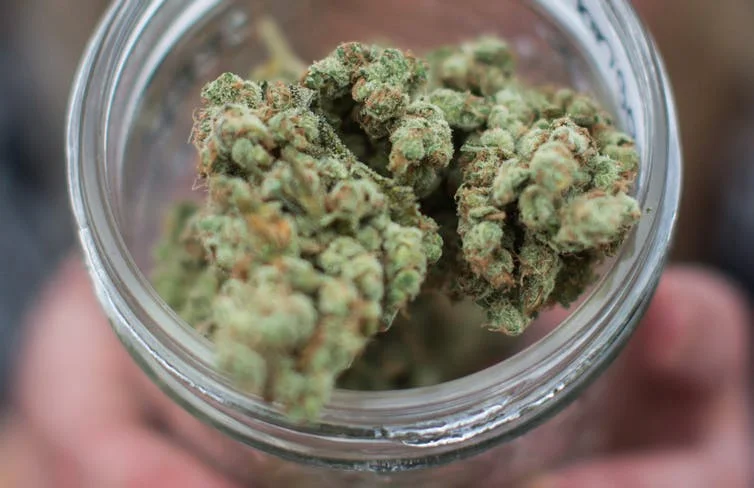
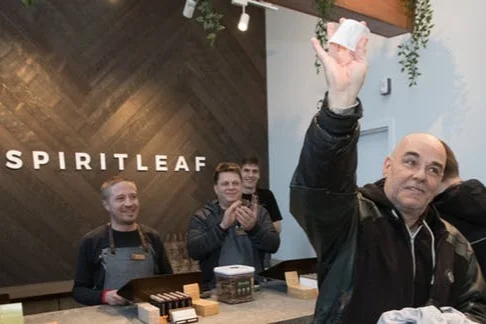
A vendor displays marijuana for sale in Vancouver in April 2018. THE CANADIAN PRESS/Darryl Dyck
Those numbers may look high. But Aurora Cannabis alone is eyeing more than 100 potential retail locations. Canopy Growth’s Hiku subsidiary is already building shops across the province it hopes can sell cannabis. Second Cup may convert some of its coffee outlets. Many individual entrepreneurs will also likely join in.
Consider too, that Ontario has more than 2,000 locations selling alcoholic beverages. Those include LCBO outlets, beer stores and wineries.
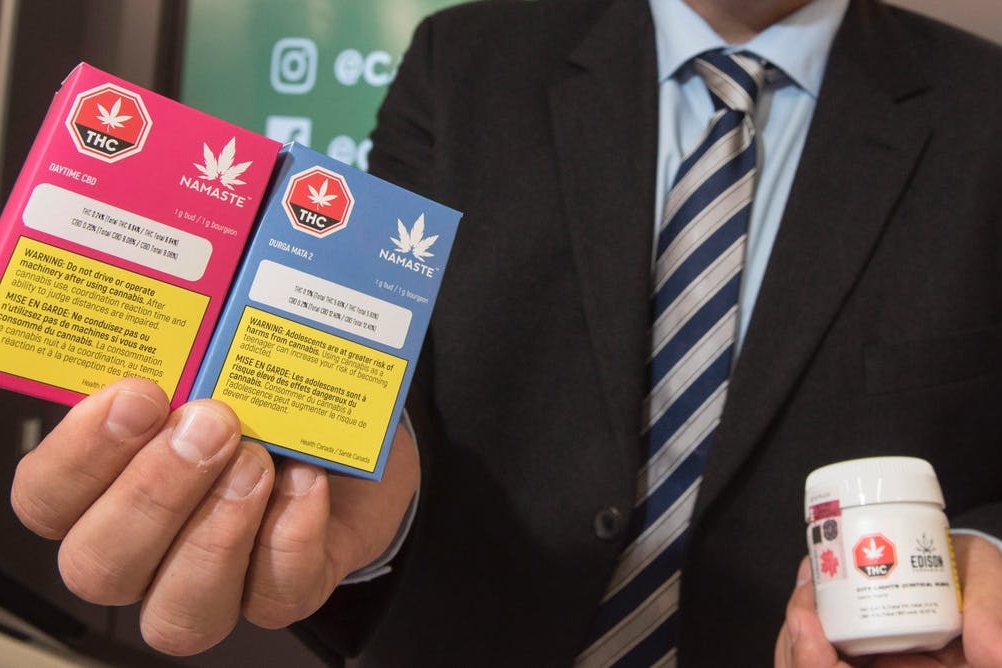
The switch to private sector sales should also mean more variety and innovation. Some sellers may emphasize wide selection while others promote value or convenience. Some might look upscale while others go retro-hippy.
Federal marketing restrictions, however, however will limit this diversity. Nova Scotia has already encountered problems with its stores’ signage.
Stronger retailing, more delay
The biggest benefit from the change will be consumer convenience. The increased store quantity and variety will help legal cannabis compete against the illegal stuff. More consumers will go legit.
Furthermore, more stores mean more jobs and more rent for commercial landlords.
On the downside, that extra retailing power could encourage more total consumption. And so, perhaps more problems like impaired driving.
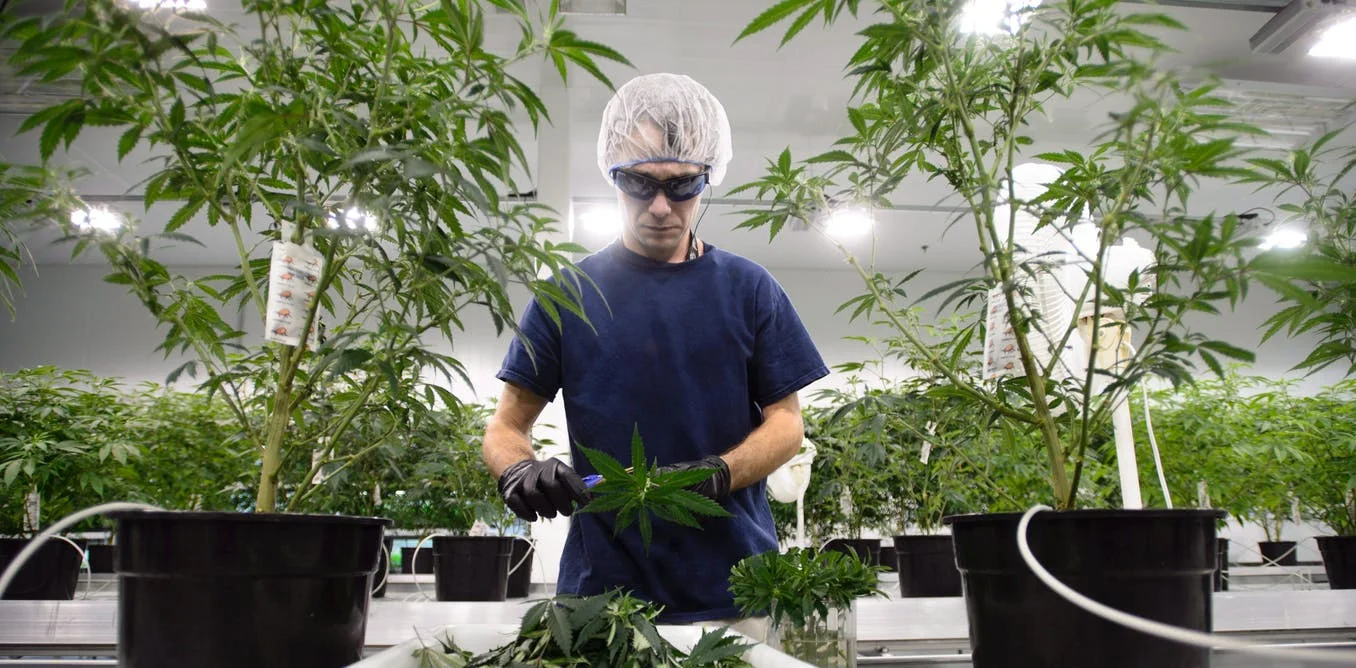
The unfortunate delay to April will frustrate many growers and consumers, but it offers a silver lining. Many observers expect a temporary cannabis shortage when sales simultaneously begin across Canada in October. That’s despite growers’ preparations, like Canopy Growth’s 15-tonne cannabis stockpile.
But by the time Ontario’s stores open in spring, increased production volumes should have turned any shortfall into a surplus. That will allow better availability and pricing.
The delayed openings will also more closely coincide with the legalization of cannabis edibles. Products like pot brownies and beverages will become legal sometime in 2019.




Awkward contrasts
Ontario’s government is delaying storefront opening partly to allow for public consultations. Such stakeholder discussions are certainly appropriate, though they may simply confirm that people’s opinions vary widely.
But if the Conservatives can wait and consult on vices like cannabis, why not on virtues like municipal democracy? They’ve rushed to change Toronto council size and regional chair selections. Surely, those changes can also wait a few months until the 2018 election campaigns are over?
The Conservatives are similarly looking inconsistent on the business front. Their election campaign pledged to “open Ontario for business again.” Switching cannabis retailing from OCRC to businesses certainly fits that promise.
But a truly business-friendly government wouldn’t unilaterally cancel hundreds of renewable energy contracts. Sure, the Conservatives want to implement their own electricity strategy. But can’t they do that without punishing businesses and communities that signed onto earlier deals in good faith?
But putting those broader inconsistencies aside, Ontario’s new cannabis policy looks reasonable. It certainly improves upon the mess the previous government left behind.
This article was originally published on The Conversation. Read the original article.

Michael J. Armstrong is an Associate professor of operations research, Goodman School of Business, Brock University. He teaches courses on quality improvement, game theory, and operations management. He holds a PhD in management science from the University of British Columbia, an MBA from the University of Ottawa, and a BSc from the Royal Military College of Canada. Before his academic career, Armstrong was an aircraft maintenance manager. He holds several certifications from the American Society for Quality, including a six sigma black belt in quality improvement.

READ MORE ARTICLES FROM MICHAEL J. ARMSTRONG










price too much on OCS especially considering that only canada post is the "official" delivery provider
30gr is limit per order yet you cannot buy with one click 30gr selection.
$5 on top of the order for delivery (+ tax of course) is adding to the cost.
they can claim whatever they want, but I know of quite a few places can get an ounce for $105 DELIVERED of very potent strains, yet on OCS their Oz average was over $200, and the 15gr (one gram over a 1/2) were being priced at average of $115+ for mediocre stuff.
sorry, but unless they roll delivery charge into the price (as they initially claimed they would be doing, i.e the price you see is the price you pay with tax and delivery part of it) they will not "stop" blackmarket, if anything, they will actually enforce it.
should have never been considered a "drug" in the first place IMHO, many other substances such as various vitamins etc that basically fall into the same class (various health supplements) do not require ID, have little to no control either, but yet "pot" OMG must control it and tax the crud out of it (generally speaking)
another thing..free market is "nice" but they (government) should put stipulation that unless is above X CBD or THC then price has to be no more then Y…most of the "strains" have been around for a very long time and a grower who knows what they are doing can make plants push out a massive amount at high quality for a fraction of the price.
yes of course they need to make money and all, but, they all cannot seem to control pricing on housing, food, fuel and the like, least they can do is ensure that "pot" is priced reasonably…I do not qualify 2-4x "street value" as reasonable…
Finally, 4 plant per household (no matter how many adults live there) is ridiculous…should be 8 maximum so you could have 4 stage grow process (2 new plant, 2 growing, 2 budding, 2 drying..or a combination of 8 total) this way here even if you have say 4 adults of legal age all same house at least there is "enough" to go around…or per adult (of legal age) increase plant amount by 2.
creds they finally allowed it, and changed some of the rules (can use wherever you can currently smoke tobacco) but some of the other "rules" such as plant limit, only buy from OCS when they knew full well they were likely to go on strike (purolator, fedex, UPS etc, plenty of other shippers) no real cost control measures put into place (which further impacts the shipping crud…30gr "bottle" weighs very very little, likely cost only about $2 to ship it at most unless you live way out of city where they likely would deliver to the closest depot and just leave a pick up card in mailbox anyways)