Home Blog Page 1003

Purolator Launches Fully-Electric Delivery Trucks in Canada with First-to-Market BC Rollout

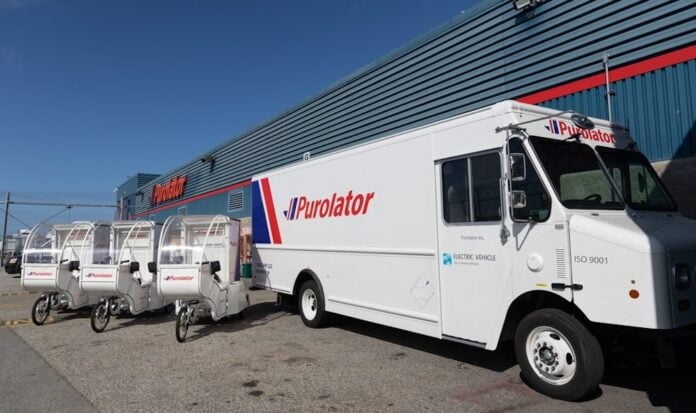
Purolator announces the launch of fully electric curbside-delivery trucks and electric–cargo bikes (e-bikes) in Vancouver.

Purolator announced this week that it is launching fully electric curbside-delivery trucks in Vancouver — the first to be launched nationally by a Canadian courier company. 

The new 18-foot electric delivery trucks and electric cargo bikes (e-bikes) expand Purolator’s fleet of innovative eco-friendly vehicles already in use on the streets of Montreal and Toronto, it said.

Purolator’s new electric delivery vehicles are built on Ford’s F-59 platform and electrified by Motiv Power Systems. Motiv’s Electric Power Intelligent Chassis (EPIC) is a market-leading platform for delivery vans. Purolator’s deployment of this technology marks Motiv’s first collaboration with a company in Canada.

John Ferguson

Like many courier companies, Purolator has seen its residential deliveries soar by about 50 percent in the past year as a result of the COVID-19 pandemic, as demand for transportation and courier services continues to grow. 

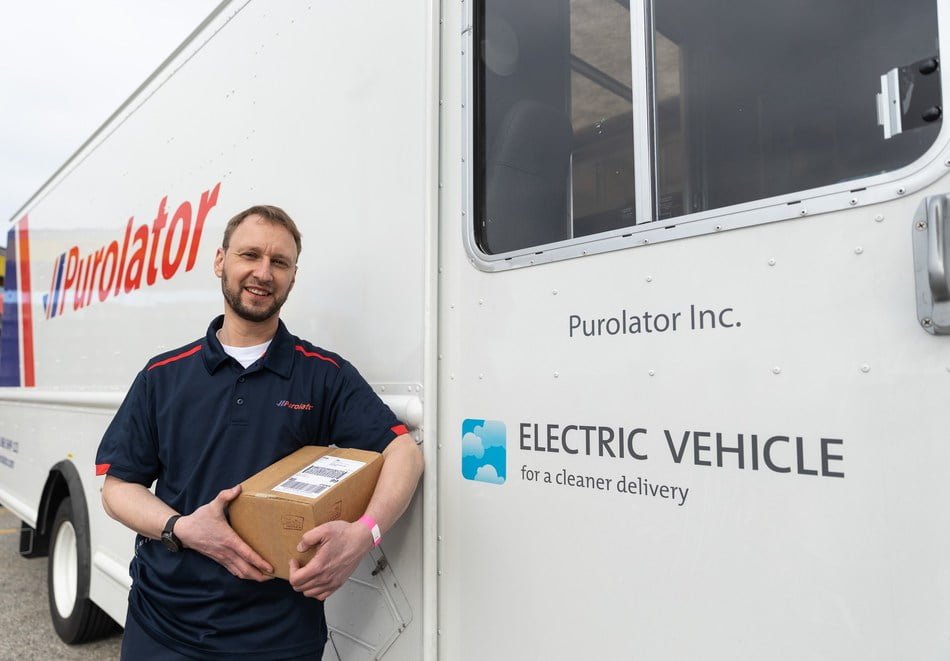
The company said the use of electric vehicles will cut down on noise and pollution and the new vehicles will reduce greenhouse gas (GHG) emissions by 24 metric tons per year (per vehicle).

“At Purolator, we’re committed to adapting intelligently and providing sustainable solutions for the unique challenges of urban growth, the rise of e-commerce and unprecedented volumes of home deliveries,” said John Ferguson, President and CEO of Purolator. “Transforming our infrastructure and fleet is a key focus area of our growth and innovation strategy, and the cornerstone of our commitment to reduce our environmental footprint.”

Paul Merrick, General Manager, Western Canada for Purolator, said the Vancouver market will start with five electric trucks and an additional four of the low-speed electric cargo bikes.

Paul Merrick

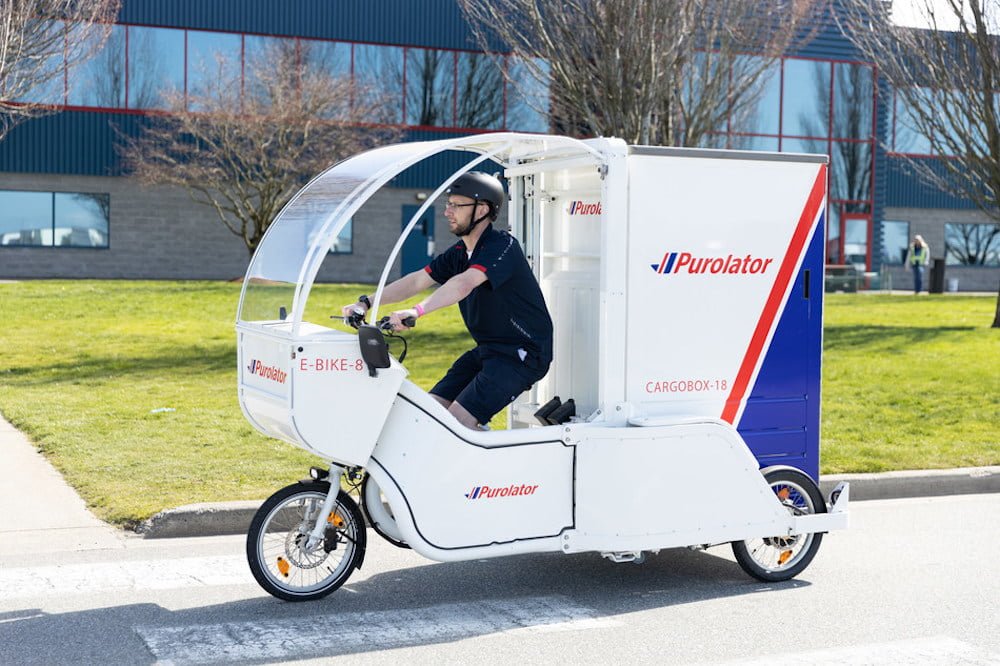
“The electric cargo bikes are a pretty neat solution for us. We’re still working through the best application. Currently we’re running five in Montreal. We call them e-bikes. Basically they are electric-assisted pedal bikes. Almost like a tricycle. Single front wheel, two wheels at the back and a removable cargo container sits on the back and the courier pedals with electric assist and completes the delivery from a small removable container that sits on the back. The neat thing about those is you can load multiple containers so because they’re obviously a much smaller cube capacity, you can break it down into three containers — load one, courier does deliver, comes back, loads another one, and can complete more deliveries,” said Merrick.

He said the company has been working with the latest technology for some time now to reduce greenhouse gas emissions. The company has 315 hybrid vehicles in the fleet. 

“We’ve also been working with an electric option for some time. We’ve had an electric vehicle we’ve been working with for many years now and just sort of learning from. It’s just the natural evolution in the technology. As the technology evolves it just becomes more practical for us to deploy the solution,” said Merrick.

“It will be something we continue to work with and continue to electrify wherever it’s possible and reduce greenhouse emissions.”

Merrick said ecommerce was already, prior to COVID, on a fairly significant growth trajectory. What COVID did was accelerate that. 

“We were already involved in and embracing and continuing to adjust to high residential demand driven by ecommerce and now you’ve got this significant growth. That aligns with the desire to be more environmentally responsible as a company but also to work with cities that are demanding that of service providers,” said Merrick.

“You’ve got the mutual benefit of reduced congestion, noise and air pollution, greenhouse gas emissions. Then you’ve got this kind of market change, consumer change, where certain technologies and certain solutions become more practical with the ability to deploy them and they’re available. They also make better sense. The opportunity to deploy them with multiple benefits across multiple stakeholders you get this alignment that makes sense.”
Motiv Power System was founded in 2009 and is headquartered in the San Francisco Bay Area. It describes itself as a sustainable technology company delivering electric truck and bus chassis and related charging infrastructure. Motiv’s proprietary and California Air Resource Board (CARB)-certified electric vehicle (EV) technology operates at over 98 percent uptime today and uses high-performance BMW batteries for many configurations, including step vans, box trucks, work trucks, shuttle buses, school buses, trolleys, and more. Motiv has delivered 120 vehicles that have travelled more than one million miles across North America. 

The company says its solutions not only offer fleets up to 85 percent operation and maintenance cost savings, but also provide operators with a healthier and more comfortable driving experience without polluting the communities they serve.

“The introduction of all-electric vehicles into Purolator’s fleet is a critical step in reducing their GHG emissions and helps to advance our mission of freeing fleets from fossil fuels,” said Matt O’Leary, Chairman and CEO of Motiv. “We applaud the organization’s commitment to implementing innovative and sustainable technologies and look forward to working alongside them to modernize their fleet and delivery solutions throughout Canada.”

The use of non-standard vehicles in the supply chain network is becoming increasingly more popular including autonomous vehicles.

Recently, Retail Insider reported that Gatik, an autonomous technology company deploying autonomous vehicles for B2B middle mile logistics, was awarded $997,706 in support through Ontario’s Autonomous Vehicle Innovation Network’s (AVIN) R&D Partnership Fund, along with $8,000,000 in industry contribution, to winterize its autonomous driving technology.

Gatik has major retail partners such as Walmart and Loblaw. In late 2020, it expanded its retailer presence into Canada with a partnership in the Greater Toronto Area with Loblaw.

Also, Retail Insider recently reported that Canadian Tire is teaming up with Toronto-based startup NuPort Robotics, Canada’s first autonomous trucking company, to partner with the Ontario government to invest $3 million to undertake an automated heavy duty trucking project to test a first-of-its-kind-in-the-world technology.

The automated trucks are currently transporting goods between a Canadian Tire distribution centre in the Greater Toronto Area and nearby rail terminals within a 20 kilometre radius.


Psychedelics Treatment Concept Numinus Wellness Inc. Aims for Aggressive Location Expansion Across Canada

Numinus lobby. Rendering: De Style Design

Numinus Wellness Inc., a company creating an ecosystem of health solutions centered around the safe, evidence-based and accessible use of psychedelic-assisted psychotherapies, has plans to expand its footprint across the country.

Stacey Wallin, Chief Strategy Officer and Co-Founder, said the company is headquartered in Vancouver with locations in Nanaimo on Vancouver Island and in Montreal.

The company was started in 2019.

“We’re a mental health and wellness leader, specifically with expertise in providing what we call psychedelic assisted psychotherapy — really actually from the supply of psychedelics all the way through program development and into therapy delivery,” explained Wallin.

Stacey Wallin

“We really have three different business units. The first one is our Numinus Bioscience lab which is licensed by Health Canada to do a variety of research activities and provide contract services for a range of psychedelic substances. At the lab we do things such as analytical testing or the development of formulations, production of final products. We can actually sell and supply to other clinical researchers or licensed groups.

“Then we have an R&D unit and this unit trains therapists, develops therapeutic policies and protocols, and actually leads and conducts clinical trials. This is really our testing ground where we R&D everything that we do.

“Lastly we have our Health unit where we provide actual client-facing therapy and supportive services delivery. This is via specially-designed clinics and also via virtual platforms.”

Currently, the company has three clinics — two in Montreal under the name Mindspace Wellbeing, and one in Vancouver.

The Montreal clinic, which Numinus acquired, is an example of what the company can do as it has about 40 practitioners and offers a variety of services such as psychology, psychiatry, counselling, and mindfulness.

“Numinus spelled the way that it would normally be with an ‘ous’ at the end is actually like the presence of divinity or having a strong religious or spiritual quality or suggesting the presence of divinity. There’s a couple of different definitions but it’s really around being mysterious or awe-inspiring or arousing spiritual or religious emotion,” added Wallin.

Numinus treatment room. Rendering: De Style Design

“We offer a variety of different therapies. So we do psychedelic therapies which are used alongside a host of other offerings which can include psychotherapies, mindfulness practices and lifestyle options. This is a combination of traditional one-to-one in a psychotherapeutic offering as well as our psychedelic-assisted therapy protocols as regulations allow. And then also relationship centred or community centred care with different protocols for different kinds of patients where we’re cultivating community and peer forms of healing.”

Numinus is a leader in the industry as the first public company in Canada to receive a licence to produce and extract psilocybin from mushrooms, the first to complete a legal harvest of psilocybe mushrooms using this licence, and the holder of a Health Canada dealer’s licence to import, export, possess, test, and distribute MDMA, psilocybin, psilocin, DMT, and mescaline.

Don Gregor

Don Gregor, Executive Vice-President of Aurora Realty Consultants Inc. — which is handling the real estate side of things — said the company will be looking at developing a hub and spoke type of rollout across Canada.

“The idea being that there will be the community-based spokes which will offer conventional psychiatry, psychology and the typical types of services you would get in a lot of one-on-one treatments, a lot of talking with a counsellor, and after a number of sessions people may be referred to a larger hub facility where they would potentially get additional medical treatment,” said Gregor.

These facilities will be located in traditional and non-traditional medical, office and retail commercial real estate facilities with emphasis on client access and convenience, said Gregor.

“The community-based clinics will probably be about 2,500 square feet on average. Maybe 3,000 square feet and they’ll have a conventional office type of feel to them. What Numinus had really engaged us for is they want to try and get away from the conventional medical feel of the clinic and get away from the stigma associated with mental health,” said Gregor.

“So we’re really going to try and avoid the real medical building, medical clinic type of scenario. They approached us to try and make it more mainstream and make mental health, part of what everybody’s talking about and open the discussion and make it more part of people’s lifestyle. We’ll be considering street fronts. We’ll be considering potentially grocery-anchored shopping centres for these smaller community hubs.

“The larger hub facility that the spokes will feed will probably be about 8,000 to 10,000 square feet, possibly as large as 12,000. And they will be built with more medical consideration. There will be treatment rooms and specialty electrical HVAC and temperature control.”

Wallin said a number of factors will determine how many locations the company eventually opens. Those include finding the right and available space in the right locations.

“At this point, we’re not disclosing a number but we do have a really ambitious growth strategy in place for this year above and beyond acquiring Mindspace and (the Vancouver location) but I can’t disclose specifics at this time,” she said.

Expansion by the company is targeting both acquisitions and purpose-built facilities.

Recently, Numinus announced it has closed a bought deal financing of 28 million units of the company at a price of $1.25 per unit for total gross proceeds of $35 million.

Payton Nyquvest

With the close of the offering, Numinus now has $65 million on hand and it said it is well capitalized to act on revenue-generating growth initiatives including the Numinus Bioscience lab expansion, clinic acquisitions and purpose-built flagship facilities.

“I want to thank our investors for their overwhelming confidence in our vision of bringing forward safe and evidence-based approaches to mental health challenges, including through the delivery of psychedelic-assisted psychotherapies,” said Payton Nyquvest, President and CEO of Numinus. “Millions of people struggle with depression, anxiety, trauma, pain, and substance use, and are seeking novel approaches that are intended to cure rather than manage symptoms. Our financing puts us in a strong position to drive much needed innovation in mental healthcare and provides the necessary resources to create new ways to support healing and wellness.”

The offering’s net proceeds are expected to be used to acquire and build local community clinics and flagship facilities offering a wide variety of amenities including psychotherapy, health and wellness services and, when regulated, psychedelic-assisted psychotherapy. The remaining net proceeds will be used for general working capital purposes.

BarterPay and Retail Council of Canada Announce $25 Million Grant Program to Help Retailers

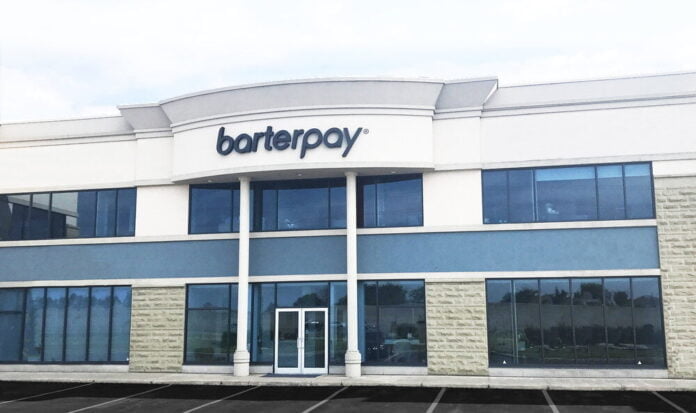
BarterPay office in Stoney Creek. Photo: BarterPay

BarterPay has partnered with the Retail Council of Canada to launch a grant program that will distribute $25,000,000 in value to retailers through Barter Credits™. The initiative aims to help independent retailers across Canada in their recovery from business challenges due to the COVID-19 pandemic.

The process aims to be simple. Upon opening an account, BarterPay will advertise the retailer’s idle inventory to its established network of BarterPay members for Barter Credits™ at full retail value. One Barter Credit™ equals one Canadian dollar and is supported by the Canada Revenue Agency (CRA).

Once the retailer earns 1,000 Barter Credits™ through the trade of its inventory, BarterPay will match and provide the retailer with an additional 1,000 Barter Credits™ in the form of a grant. This gives the retailer 2,000 Barter Credits™ that they can utilize back within the BarterPay ecosystem to offset some costs. Regardless of who acquired their inventory, the retailer can take these newly earned Barter Credits™ and redeem for anything on the system like PPE, printing, advertising, employee gifts, construction, signage, web design, social media management and so much more.

BarterPay aims to help Canadian businesses convert, at full retail value, their unsold time and space and/or idle inventory, their ‘spare capacity’ into Barter Credits™. Instead of typical one-to-one bartering, it’s a one-to-many ecosystem where BarterPay members are able to exchange what they have to get what they need in an organized way. Through Barter Credits™, retailers can trade their idle inventory for other goods and services and acquire some things they need at their wholesale cost of goods rather than dipping into cash.

“The retail industry is suffering tremendously right now and we’re eager to help” said John Porter, Founder and CEO of BarterPay. “Prior to COVID-19, all businesses had some spare capacity, but we’re in a situation right now where downtime and idle inventory is magnified”, says Porter.

Diane J. Brisebois

“It’s a tragedy to see so much product sitting idle where the value is not being monetized. By leveraging BarterPay, retailers can capture full value for slow-moving goods and then redeem it for what they need, all while keeping precious cash in the bank. The time is now for BarterPay to step up and deliver as much value as possible to Canada’s retail sector.”

“Retail Council of Canada (RCC) is excited to partner with BarterPay on this innovative business model that will help retailers across Canada,” said Diane J. Brisebois, President and CEO, Retail Council of Canada.

“This kind of transformative commerce initiated by BarterPay, along with the addition of this generous grant program, will complement the incredible creativity and resilience retailers have demonstrated throughout the pandemic to remain viable and serve their customers.”

BarterPay is a social profit enterprise and Canada’s only national business-to-business barter system headquartered in Hamilton. In 2019, BarterPay completed almost $40 million in barter transactions. The network currently represents close to 4,000 businesses and over 100 charities in 18 Canadian cities and growing fast. BarterPay says that it plans to scale to 50,000+ business members and 5000+ charities by 2025 generating over $500 million in business transaction volume and more than $100 million per year in charitable giving.

For further details and to enroll and qualify for the grant program, visit: retail.barterpay.ca

QuoteMachine Raises $1M CAD to Bring Human Connection Back to Digital Commerce

Photo: JD Rocheteau and Jonathan Muschalle, QuoteMachine

Montreal, Canada (March 29, 2021) — QuoteMachine, a Montreal-based retail software company that aims to bring human connection back to the centre of digital commerce, announced a $1 million CAD seed round today to grow its team and expand partnerships with retail software platforms.

Founded in 2018 by former Lightspeed product leaders, JD Rocheteau and Jonathan Muschalle, QuoteMachine strives to become the customer relationship management platform (CRM) for big-ticket retailers. Its digital solutions seamlessly integrate with cloud-based sales platforms like Lightspeed to enable retailers with complex sales processes (think interior designers or bike shops) to deliver high-value, personalized sales experiences and convert in-store conversations into online sales.

This $1M CAD funding round will enable QuoteMachine to greatly expand partnerships with major digital sales platforms so their retail clients can close more omnichannel sales. Software platforms currently partnering with QuoteMachine have seen a 30% increase in their merchants’ gross merchandise revenue (GMV) once integrated. Growing the product team will further enable the expansion of the platform’s communications channels so that sales associates can interact with customers via online chat, messaging apps and video, and also embrace new post-Covid trends like shop by appointment and in-store pickup.

THCAP led the round, joined by the Maple Leaf Angels’ fund MLA48 III, Real Ventures, and other angel investors.

Varun Dalal, Principal at Telegraph Hill Capital says:

“QuoteMachine’s solutions address a market that is currently underserved by ecommerce. Not only does it enable businesses selling customizable products to bring their interactions from the show-room floor online, but it also gives customers the opportunity to visit a store—see and experience the items they wish to buy— and continue the conversation with an expert from their smartphones or computers, translating to significant increases in sales for those businesses.”

The QuoteMachine team believes that digital commerce needs to shift its focus toward sustainable human relationships and away from anonymous transactional consumption as experienced on major online sites. By enabling retailers to offer personalized, human support to their customers, whether in a store, online or both, users of the QuoteMachine platform have already seen massive increases in their sales — closing 70% of all conversations supported by QuoteMachine — as well as higher customer satisfaction.

“QuoteMachine is a game changer for local retailers,” says Katy Yam, FounderFuel’s General Manager. “The reality is that independent retailers often provide critical decision-making expertise for high-ticket or complex products, only to lose that sale to an online retailer after the customer leaves their store. QuoteMachine gives these retailers the tools to convert their expertise into sales, increasing both their profitability and competitiveness with a custom sales journey. We are impressed by the results achieved to date and are excited to see future integrations beyond Lightspeed with Shopify and other digital retail platforms.”

QuoteMachine participated in Real Ventures’ FounderFuel accelerator in 2020 and was noted as particularly promising given the current retail trends toward omnichannel sales and the co-founders’ depth of knowledge and innovative approach.

“It will be interesting to watch QuoteMachine evolve and tackle developments in the retail industry during and following the pandemic,” Mohammed Ghalayini, Vice-Chairman of the Board of Directors & Chair of the Investment Review Committee at MLA explains. “COVID-19 has further heightened the demand for e-commerce and we believe QuoteMachine will be fundamental to expediting the online sales process of many businesses.”

The QuoteMachine team believes that digital commerce needs to shift its focus toward sustainable human relationships and away from anonymous transactional consumption. By enabling retailers to offer personalized, human support to their customers, whether in a store, online or between both worlds, users of the QuoteMachine platform can significantly increase their sales and customer satisfaction by meeting them where they are with the expertise they seek.

“QuoteMachine is the perfect solution for retailers with custom high-value sales,” JD Rocheteau, QuoteMachine CEO says. “The simplicity of our process and the ability for sales associates to start a conversation online or digitally close conversations that started in-store changes the game for retailers.”

About QuoteMachine

QuoteMachine is a customer relationship management software (CRM) for retail that streamlines and brings a personalized, human experience to the customer journey. We believe independent retailers should have the ability to offer personalized, high-value support to their customers whether in a store, online or between both worlds — so they can close more sales and build stronger relationships. www.quotemachine.com

About THCAP

Telegraph Hill Capital (“THCAP”) backs entrepreneurs obsessed with solving big problems. THCAP invests in seed stage startups across various sectors – enterprise software, eHealth, proptech, cyber security, eCommerce enablement etc. The firm brings to bear decades of business relationships and a dedicated team, in the US and Europe, to help founders achieve their vision. www.thcap.com

About Real Ventures

Real Ventures serves mission-driven entrepreneurs and nurtures the communities in which they thrive. Established in 2007, the firm backs visionary founders building innovative tech companies that will have large-scale positive impacts on society. The firm also helps entrepreneurs to realize the full potential of their companies by providing them with the guidance, stage-specific help and communities required to develop the self-awareness and operational capabilities for global success. Real has invested in over 280 companies across five funds, with $330 million under management. www.realventures.com

About MLA

Maple Leaf Angels enables high-potential companies to grow, realize their potential, and offer excellent returns by bringing together investment, experience, and a network of partners. To date, MLA members have invested over $38 million in 78 companies across Canada. MLA offers Curbside Mentoring events and weekly complimentary office hours to connect the brightest, most passionate entrepreneurs with accredited investors in a streamlined process. www.mapleleafangels.com

Canadian Retail News From Around The Web For March 30, 2021

Canadian Retail News From Around The Web

Top Stories: National

Central/Eastern Canada News

Western Canada News

Canadian Apparel Retailers Look to Loyalty Programs Amid Slumping Sales

lululemon loyalty program is one being tested by lululemon in a number of major cities — for an annual fee, members receive a free pair of pants, expedited shipping, and special access to classes.

The COVID-19 pandemic and its associated lockdown almost dealt a gut blow last year to Canadian apparel retailers with total sales decreasing 23.6 percent to $23.8 billion, says a new report by Trendex North America, a marketing research and consulting firm.

The report said women’s sales were down 24.6 percent and men’s by 20.6 percent.

“Apparel retailers over the past 12 months have had no choice but to play defence as they struggle to survive,” said Randy Harris, President and Owner of Trendex North America. “However, with the end of the pandemic somewhat in sight, apparel retailers should be increasingly focused on rebuilding their sales and their loyal customer base.”

Randy Harris

Harris said two ways to do that, research by Trendex has noted, is to invest in two marketing initiatives. One traditional and one new.

“The traditional marketing initiative is one that has been a staple of many Canadian apparel retailers. The loyalty program. Although operating a loyalty program was thought to be a basic concept of a retailer’s marketing program, in fact only 25 percent of Canadian apparel retailers, according to Trendex research conducted in January of this year, operate a conventional loyalty program versus 60 percent in the United States,” explained Harris.

“Canadian apparel loyalty programs can best be described as plain vanilla like that of Laura whose customers accrue points for making purchases. In most cases the points equate to a fixed amount of money that can be applied to future purchases at only the retailer. It would be safe to assume that few customers buy from an apparel retailer in order to build up their point total. This is evidenced by the few customers who announce up front at the cash ‘I am a member of the store’s loyalty program’.

“Acquiring loyalty points is often seen as an afterthought, not a driving force in the purchase decision. La Maison Simons’ loyalty program offers a slightly better incentive — a combination of points, free shipping as well as free in-store attendance at events. The retailer’s description of its loyalty on its site is one of the best examples of how a loyalty program should be described.”

Harris said an even more interesting version of a loyalty program is one being tested by lululemon in a number of major cities. For an annual fee, members receive a free pair of pants, expedited shipping, and special access to classes.

“Needless to say, the majority of Canadian apparel retailers cannot offer the types of benefits available as part of Lululemon’s loyalty program but they can still offer experiential activities including evening in-store style shows or in-person discussions with the retailer’s design team,” said Harris.

“What history has demonstrated over and over is that successful loyalty programs combine transactional and experiential to create differentiation and true customer loyalty. Regardless of the loyalty program a retailer offers, its existence has to send out a clear message to the consumer that their business is appreciated.”

But Harris said the question remains: Why don’t all retailers offer a loyalty program and why are retailer programs so unimaginative?

“A new marketing program that all apparel retailers should adapt immediately is what has been labelled ‘pay to play’, but even better ‘buy now, pay later’. Retailers including Aritzia, the Gap, Frank and Oak, Ardene, lululemon, and Shopify are already offering the service,” said Harris.

“There are four or five companies offering a type of pay for play service that’s best known as after pay. It’s a simple scheme. From the consumer’s perspective the consumer announces at the cash that instead of VISA or Mastercard they want to pay with AfterPay. They fill out an application. The application is immediately approved on the spot and they pay one quarter of the purchase price. Over the course of the next six weeks, they make three equal payments,” said Harris.

“The retailer pays 30 cents per transaction plus four to six per cent of sales. Note that it’s more than the standard fee charged by a credit card company. The merchant is paid the full amount of the transaction within 48 hours.”

Harris said the claimed benefits from a retailer offering a buy now pay later service are: 30 percent of the customers are new to retailer; a 20 percent increase in cart conversion; average orders are 18 to 25 percent larger; return rates are lower; and the retailer can advertise offering the service and the service advertises that the retailer offers the service.

“The bottom line, having a loyalty program and offering a buy now pay later option are no brainers. The costs of offering both are very small compared to the possible incremental benefits,” said Harris.

Complex Promotions Are Helping Retailers Drive Sales and Loyalty in an Increasingly Digitized World

Mobile coupon redemption.

The world around us is a digital one. Over the course of the past couple of decades, aided by the sustained development of the internet and an explosive rise in the use of mobile devices, the pace of innovation and development around digital technologies have been swift and unrelenting. For retailers, the digitization of the shopping environment has provided a plethora of touchpoints at which consumers can be engaged, empowering their marketing and merchandising teams in their collective efforts to increase traffic and convert more sales. Complex promotions and digital coupons have proven to be a powerful tool to support this conversion while adding value to the shopping experience and driving customer loyalty.

The Rise of Digital Coupons

It’s been estimated by U.K.-based Juniper Research, which specializes in identifying and appraising high growth market sectors within the digital ecosystem, that the worldwide value of digital coupon redemptions will surpass US$90 billion by the end of 2022. It adds that mobile devices will be at the heart of this activity, being leveraged to complete 80 percent of all online coupon redemptions. In addition, research conducted by eMarketer suggests that 87.6 percent of shoppers who receive coupons or deals are likely to download a retailer’s app. These statistics speak to the very obvious and continued popularity and use of coupons among shoppers. According to Dan Surtees, Vice President of Strategy & Business Development at XCCommerce, they are also indicative of the opportunities available to retailers with respect to the leveraging of digital channels to support promotional efforts.

Dan Surtees

“Coupon use is extensive in North America and has been for decades,” he says. “Consumers have always been open to receiving deals on product, and that interest is only increasing. What the digitization of the shopping environment and retail operation provides, however, is a powerful platform to target promotions and meet that growing desire among consumers for personalization and communication that’s relevant to them. By leveraging the capabilities of digital coupons, retailers can build their promotional campaigns, and combine them with their existing loyalty programs to better understand which customers to target and the deals and products that will interest them most. In addition, the digital environment also allows retailers to deploy a number of different types of coupons, including generic, single-use, multi-use, coupons restricted to a single customer, coupons with dollar value and custom encoding and randomization methods. Ultimately, the digital world is providing retailers with incredible opportunities to meaningfully engage their customers, drive traffic to their stores and website, increase basket size and heighten product demand on specific items. It’s allowing retailers to make more informed decisions, increasing the effectiveness of their marketing and merchandising efforts as an organization.”

A Strategic Advantage

The digital world is aiding retailers’ promotional efforts to such an extent, says Surtees, that those able to effectively execute complex promotions are realizing a significant strategic advantage over those that cannot. The ease of deploying promotions through digital channels, in addition to the multiple ways by which digital allows retailers to use coupons, are helping to remove many of the traditional limitations that once existed. With new digital capabilities, retailers can offer promotions that facilitate and support any different promotion rules or combination of rules, including simple discount offers, BOGOs, bundle deals, buy more save more, transaction discounts, order discounts, tiered order discounts, discounts based on tender type, and loyalty base points, bonus and multiplier points, among others. As a result, explains Surtees, the opportunity for retailers to cater to and influence shopping behaviour while enhancing the omnichannel experience that they offer is immense.

“It’s obviously extremely important for retailers to attract the attention of consumers,” he says. “But, it’s critical, and the aim of every retailer, to consistently bring those customers back to their store and website and to generate a level of loyalty that ensures continued success. One of the keys to achieving this goal today is in creating promotions that enhance the overall retail omnichannel experience and to provide a stickiness that keeps people coming back. Because digital technologies enable retailers to create promotions and rewards in real time, the incentives that they can offer customers for their continued business can be incredibly powerful.”

Overcoming Challenges

Despite the opportunities that are available for retailers looking to leverage the full potential of complex promotions and digital coupons, and the ways they can help effectively support promotional objectives, there are also challenges involved in implementing them into organizations’ overall strategies and operations. These are challenges that have existed for a number of years now. But, as Surtees explains, these challenges have been exacerbated by the impacts of the COVID-19 global pandemic, exposing the need for retailers to address them in order to stay ahead, or keep up, with the digital curve.

“One of the biggest industry impacts that’s resulted from the pandemic is the explosion in consumer activity on multiple sales channels,” he states. “It’s highlighted a lot of the challenges that retailers were already experiencing or were about to experience. Going forward, much of the retail experience will involve a digital component. Consumers are embracing the different channels and ways to interact with brands and will be expecting more from retailers from a digital perspective. Many retailers are offering, in addition to the physical retail space as a means by which to purchase product, a range of other channels to shop, including e-commerce, social commerce, mobile commerce, BOPIS, and curbside pickup. The pandemic has accelerated retailers’ need to enhance their digital efforts, including their promotion strategy. However, what some are finding is that the systems they use don’t integrate easily with their multiple sales applications and solutions, making it next to impossible to properly leverage the full capabilities of complex promotion strategies, including digital coupons. That’s where the real challenge lies for retailers.”

Overcoming this system integration challenge can seem like a daunting one for those faced with it. It can become a planning, reorganizing and logistical nightmare at best, and at worst can result in a grotesque technological hodgepodge that serves neither function nor strategy. Thankfully, this is where solutions providers like XCCommerce come in, removing the complexities of the challenge at hand and helping retailers move toward a seamless omnichannel offering and experience for their customers.

Leveraging Experience and Expertise

Providing those operating within the retail industry with automated promotion and coupon management solutions for more than 20 years, XCCommerce has the experience, understanding and platform required to help retailers easily manage their strategic promotional programs and to continue growing within the fast-paced world of retail. Headquartered in Montreal, QC, with offices in Toronto and the United Kingdom, the company works with more than 55 brands, including Indigo, Shoppers Drug Mart, Victoria’s Secret, and L.L. Bean, among many others, servicing more than 13,500 storefronts on 30 different channels. Offering a promotion solution that provides its clients with full control over the management of their promotion and coupon offers, the company is helping retailers drive loyalty among their customers and increase sales. But, as Surtees points out, it’s the agnostic nature of the system that XCCommerce offers that makes it a fit for just about any business.

“The promotion management system, which includes our coupon module, is compatible with any operating system, database and sales application,” he says proudly. “It doesn’t matter how many sales applications a retailer currently uses, the XCCommerce solution can integrate with any and all of them. And, in addition to easily and seamlessly integrating with these systems, our solution also helps to ensure that retailers are future-proofed for any other disruption or challenge. XCCommerce is completely decoupled from all other technologies, providing our clients with the huge benefit and advantage of managing one solution that can be leveraged across their entire enterprise.”

In addition to the functionality and integration capacity of the XCCommerce promotional management solution, it’s also multi-currency, multi-language and multi-banner, allowing retailers to leverage their promotions across global markets. The culmination of the solution means that retailers using XCCommerce’s system allow them to lean on one solution to meet all of their needs. It’s reflective of one of the ways that the company keeps its clients at the centre of everything it does. And, as Surtees also notes, it aligns well with its philosophy and the work it does with clients, providing it with an advantage over and differentiation from its competitors.

“XCCommerce truly understands the needs of the retail industry,” he says firmly. “The reason for this is the fact that we aren’t just a technology company, we’re a retail solutions company. The majority of our team have many years of experience within the retail industry. We’re acutely aware of the value of building a trusted partnership and working together through a long-term engagement. As part of that, we make sure that when we start working with a client that we understand their specific requirements, goals and objectives. What kind of customer experience are they trying to create? Are they looking at global expansion? How do they want their coupons and promotions to look? We’re involved with them throughout the entire process, from implementation and integration to mapping and planning with respect to the development of new trends within the industry. Through a combination of our retail and innovation expertise, we help retailers create and leverage strategic advantage through their promotion and coupon management.”

Continued Product Enhancement and Growth

To help bolster its suite of services, XCCommerce recently introduced a new Promotion Information module designed to complement its existing product by providing time-based promotion information for web and mobile, and is currently in the design phase of a new promotions analytics module which will leverage artificial intelligence and machine learning in order to further inform promotion strategies. According to Surtees, the addition of the new modules will ensure XCCommerce remains the industry leader in innovative promotion solutions, delivering an end-to-end promotion management solution, enabling retailers at the analytics, planning and execution stages of their promotions. And, he says, these latest developments are perfectly in line with the company’s plans for further near-term growth.

“We have an extremely successful track record in North America. And our focus remains on continuing to enhance our product and offering to retailers across the continent. However, we’ve also identified a number of retailers globally that could benefit from our expertise, so we have expanded into Europe. In addition, we have broadened our scope to offer promotions-as-a-service in the cloud, so we can run the products we offer and manage the environment so the retailer doesn’t need to build out that expertise internally. We possess that expertise and a fundamental understanding of the needs of our retail clients. Through continued product enhancement and the holistic nature of the services that we provide, we can remove their most pressing pain-points, delivering cutting edge tools to position them for future growth and success.”

*Partner content. To work with Retail Insider, email: craig@retail-insider.com

Canadian Retail News From Around The Web For March 29, 2021

Canadian Retail News From Around The Web

Top Stories: National

Central/Eastern Canada News

Western Canada News

How Canadian Retailer ‘Showcase’ Pivoted During the Pandemic with Plans for Significant Store Expansion

Exterior of Showcase store. Photo: Showcase

The past year or so has been a rough one for most retailers across Canada and around the world. It’s been a 12-month period that has tested the resolve and character of many, pushing some to the edge of survival, and others less fortunate beyond it. And as lockdowns persist and provinces and communities across the country continue to await a full rollout of COVID-19 vaccines, it can be comfortably suggested that the resolve and character of the industry could be tested further before a post-pandemic world is welcomed. It’s been a time rife with challenges, eliciting a need for creativity, imagination and other forms of unorthodox thinking in order to survive and succeed. For Canadian-owned and family-run retailer, Showcase, the time has served as a moment of pivot and innovation, supporting the company’s growth despite the adversity faced by the industry.

Showcasing the Art of the Pivot

The company, founded in 1994 by Edmontonian, Amin Jivraj, has cultivated a name for itself over the course of more than a quarter century as the ‘Home of the Hottest Trends’. In that time, it’s generated an extensive, active, and loyal customer-base and has managed to grow its store network to 117 locations — 10 in the United States and 107 in major malls across Canada. In the years just prior to the pandemic, the company grew its staff substantially as it plotted further expansion of the Showcase brand, aiming to expand its reach into untapped markets. But when the impacts of COVID-19 began to take hold, with much of its store network restricted by lockdowns, the company knew that it needed to react. And it didn’t waste any time in doing so, immediately pivoting its business model and working with its suppliers to facilitate the quick and safe distribution of personal protective equipment (PPE) to frontline workers during a time of shortage and great need. It enabled Showcase to operate as an essential service, allowing its stores to remain open throughout the pandemic. But, according to the company’s CEO, Samir Kulkarni, it most importantly provided a way in which Showcase could meaningfully contribute toward the safety and wellbeing of others and the improvement of a difficult situation.

Samir Kulkarni

“What we did back in March of last year represents the biggest pivot in the company’s history,” he says proudly. “We’re very used to reacting to changing trends in the marketplace. But this was a health crisis first and foremost. We were aware of the devastation that was happening on the front lines when the pandemic first hit Canada and the lack of health supplies that were available for first responders. We realized that we could make a difference and contribute positively toward the health and safety of communities. So, we rediverted our resources to help.”

Kulkarni explains that because Showcase’s base business essentially disappeared back in March of last year, along with its ability to provide the fun, interactive, discovery-based, in-store retail experience that the company has become known for, the pivot was a necessary one. It was represented by the launching of 150 SKUs of PPE, something that required bidding by the company on a global level for supplies that were at the time extremely scarce. The retailer secured these items for its stores, commissioning planeloads of inventory to be flown in from all over the world, including hand sanitizer, N-95 respirator masks and face shields, among a range of other items and equipment. Bringing the inventory in meant that more than 100 Showcase locations remained open during the first pandemic lockdown, with dedicated hours and pricing to first responders, healthcare workers and seniors. The retailer also provided bulk pricing for hospitals and governments, establishing a wholesale PPE division within its business to meet the demand. In total, Showcase has provided 11 million units of PPE, equating to an estimated $27 million worth of supplies, serving as an incredible example of pivot and innovation during the most difficult of times.

Meeting Online Demand

Becoming a provider of PPE supplies was not the only pivot that the company made in order to address the effects of the pandemic, however. A sudden spike in online activity by the company’s customers – a trend experienced by just about every retailer offering e-commerce capabilities – required Showcase to make some changes to accommodate the increased online demand.

“Our e-commerce grew substantially throughout 2020,” he says. “It’s growth that’s required a lot of adjustments to our systems and processes. Our head office and national distribution centre just outside of Toronto is 106,000 square feet. We needed to rethink and repurpose the majority of that space in order to deal with a primarily e-commerce environment for several months. We made the necessary changes and hired a substantial workforce to keep up with demand at that facility and to allow us to continue to serve our customers who still wanted to make purchases but were unable or unwilling to visit a shopping centre. It represents another critical pivot that we made, enabling our continued growth.”

Proprietary Trendspotting Technology

The company, which has grown steadily during the course of its 27-year history, achieved a 33 percent increase in sales over the past three years. And in 2020, it surpassed the $100 million revenue mark for the first time. It’s incredible growth which Kulkarni says the company is extremely proud of, attributing it to the hard work that was put in by the entire Showcase team. He describes the company’s success as a testament to its perseverance and ability to innovate during difficult times, quickly acknowledging the significance of the pivots made over the past twelve months. However, he’s just as quick to recognize the fact that Showcase’s growth has not simply been a product of these pivots, pointing to its proprietary trendspotting technology and capabilities as another one of the drivers of the company’s continued achievements.

“Most retail offerings throughout the industry tend to be driven by vendors,” he says. “The challenges with buying based on vendors or supply is that it may not be what the customer actually wants. Our philosophy is to flip the notion of vendor-based buying to develop a consumer-based strategy instead. The idea is to listen to consumers and deliver to them exactly what they’re looking for. We use sophisticated techniques powered by algorithms and machine learning to best understand what the consumer is looking for. It’s critical in driving and informing our real-time sourcing strategy, helping us to find the needle in the haystack. There are a lot of products in retail, but there are few that are truly trending. Our proprietary technology allows us to find the trending products and bring them to market immediately.”

Advantage and Differentiation

Its technology and unique method of identifying the hottest product trends via social media, website search volumes, internet posts, sentiment, general awareness and demand in the marketplace, provides Showcase with a competitive advantage and differentiation, allowing it to offer its customers more exclusives and first-to-market items. And, as Kulkarni explains, the products that the Showcase algorithms determine as trending are often nonexistent within the market, enabling the company with the opportunity to develop private label solutions to meet consumer desire. To do this, Showcase often develops products from scratch, working directly with factories, and creating the branding, packaging and visual in-store displays. This vertically-integrated model means that the retailer remains nimble within the market, ensuring greater control over production and supply. Fully 70 percent of the company’s assortment is currently its own private label offering, exclusive to Showcase and its customers.

One great example of the potential that’s inherent in the company’s mix of technological trendspotting and first-to-market production philosophy is its introduction of Hot Chocolate Bombs this past winter. Branded as Sweet Bombs, the product – a hollow chocolate ball with marshmallows and cocoa powder inside which, when put into a mug and hot milk is poured over it, turns into a tasty hot chocolate treat – was identified by the Showcase algorithms as going viral on October 10, 2020, moving its status from a niche item to that of an emerging trend. However, diagnosing the trend was the easy part. The challenge was in the fact that there was no inventory of this item in the market. Having amassed more than a billion views on social media, and without any chocolate manufacturers producing the treat, Showcase recognized the opportunity to produce their own, as well as a chance to stimulate and support local economies at the same time.

“Hot Chocolate Bombs provided us with an amazing opportunity to connect with our communities and engage local restaurants, bakers and caterers to partner and generate revenue during a very difficult time for businesses,” he asserts. “We recognized that they are the ones with the expertise, know-how and customer-base. And so, we provided them with the ingredients which included 30 tonnes of chocolate, the recipes and packaging. And together, as a collective community, we were able to produce the trending item. We put out a 1 million ball challenge to Canada and were able to have Hot Chocolate Bombs in stock at stores from coast-to-coast by Black Friday, selling millions of dollars worth of the product in just a few short weeks during the 2020 holiday season.”

Continued Expansion

Showcase’s recent successes, supported by the tremendous pivots that the company has made in the past year, are truly remarkable and lay the perfect platform for continued growth and expansion of the brand. And that’s exactly what Kulkarni says the company has planned. Through continuous streamlining and enhancement of its three-step trend system, which includes identification of the trend, introducing it to the market and bringing it to life in-store and online, Kulkarni believes that Showcase has the opportunity to expand its physical store network even further in the years to come.

“We are big believers in bricks-and-mortar,” he admits. “It’s the most visceral, personal experience that a retailer can provide for its customers. So, although we’re almost fully saturated in malls in English Canada, we’ll continue to open stores. There are still a handful of malls that we’d like to be in, which we’re working on now. But the major growth potential for us is in the US. Based on population, we should have ten-times as many stores in the US as we have here in Canada, equating to a 1,000-store potential. And even if we’re off by half, it still provides us with a lion’s share of the business. We opened ten stores in the US in 2019 just prior to the pandemic. Those stores are growing despite all of the recent challenges. As we complete that pilot, we’ll then turn our attention to an extensive rollout in the US market.”

To support this growth, however, Kulkarni says that the company won’t lose sight of its commitment to customers across the country, remaining focused on providing the Showcase community with a consistently exceptional experience, wherever they are. And, in today’s digital world, while impacts of the pandemic continue to persist, he recognizes the significance of an enhanced online presence in order to continue engaging with consumers, connecting them with the hottest trends on the market today.

“We want to be able to provide our customers with the most personalized and curated experiences possible. To help create those experiences online, we’re investing more into digital advertising on social media platforms. It’s providing us with a different means by which to get in front of our customers, offering them another channel through which they can engage with us. And, going beyond advertising, we’re also seeing a lot of opportunity in interactive video shopping. So, we’ve also been focused on creating video content and developing strategies to integrate e-commerce with video content in order to make that in-store Showcase experience available for our audience online. In the end, retail is all about offering interactivity and personalization for the customer on their journey to discovery. Our aim is to continuously enhance the experience we provide, wherever that discovery is taking place.”

Retail Sector Dominates Top 10 Most Reputable Companies in Canada List: Leger Study

Photo: Canadian Tire

The retail sector dominates the Top 10 Most Reputable Companies in Canada in the 2021 list that is annually produced by market research and analytics company Leger.

According to Canadians, the most reputable companies in Canada this year with a maximum possible reputation score of 100 are:

  1. Canadian Tire (Reputation Score: 80)
  2. Shoppers Drug Mart (Reputation Score: 78)
  3. Kellogg (Reputation Score: 75)
  4. Sony (Reputation Score: 74)
  5. Campbell (Reputation Score: 73)
  6. Google (Reputation Score: 72)
  7. Samsung (Reputation Score: 72)
  8. Interac (Reputation Score: 71)
  9. YouTube (Reputation Score: 70)
  10. Dollarama (Reputation Score: 69)
Dave Scholz

The 24th annual Reputation study has tracked the reputational rise and fall of numerous companies over time. Leger surveyed more than 32,000 Canadians to explore their perspectives on more than 275 companies in 29 different sectors.

“The results do not show massive change this year; rather, they provide lessons in what leads to a reputation shift and the difference between a strong reputation and one that is fragile,” said Dave Scholz, Executive Vice-President at Leger. “The rise in media coverage of pandemic news and all other issues put many companies out of the spotlight and, if they had a sufficiently good, stable reputation, we saw little movement.

“Overall, I’m kind of heartened by the fact that reputation didn’t change much this year. We had a year of pause for a lot of corporations and especially for a lot of retailers and in general, Canadians feel in a similar way to them than they did a year ago.

“For organizations that had a particularly tumultuous year or years leading up to the pandemic – like SNC Lavalin as an example – they had a year off. They’re the most substantial improver because they were not being discussed about any of their crises in the media on a regular basis. Other organizations had to live up to a little bit of a stress test. And you look at some general decreases with organizations like Amazon, Walmart, Sobeys grocery retail chain . . . The way people are working with these organizations and some of the ongoing coverage of these organizations being open while other smaller businesses were not has hurt the reputation of these companies.

Exterior of Shoppers Drug Mart. Photo: Shoppers Drug Mart

“Amazon, along with the shipping and couriers which also had a bit of a hit this year, it’s the overall stress test that now more and more people were starting to use these services and more and more people are expecting something different from them and they haven’t necessarily lived up to the pre-pandemic billing.”

Scholz said one of the keys for companies is building a base reputation that comes from delivering quality products and quality service.

“When we look at the pillars of reputation and what is driving reputation amongst retailers, it’s all about the quality of products and services. But to move to a top 10 level like a Canadian Tire you need to adopt some of the intangibles that go along,” said Scholz.

“It isn’t just about the quality of the products and service you give. It’s the fact that we feel you are committed to us as Canadians. We feel we’re part of that organization . . . That brings the companies to a level where they’re a little more revered within Canadians’ retail status.”

The Leger report said the hospitality industry has been hit hard reputationally as travel declined drastically, resulting in a collective four-point reputation score drop. In contrast, increased usage strained other industries, including the courier/shipping sector, which also experienced a collective four-point drop in reputation score. Online shopping increased drastically, and Canadians’ patience was challenged in terms of delivery, said the report.

“With Canadians spending more time at home and embracing food and home cooking more than ever, the packaged goods/food industry benefited reputationally, as did other sectors whose products and services were embraced by Canadians due to the pandemic,” said the Leger report.

“The pharmaceutical industry saw a plus one increase this year, driven largely by an increase in reputation for Pfizer, AstraZeneca, and Bausch Health related to increased media coverage around vaccine development, followed by roll-out. The COVID-19 pandemic continues, and the next year will continue to be challenging for some industries. Going forward, we will monitor which industries and companies successfully transition to a post-pandemic life. Those that do so while leading the way for economic and social recovery will likely be rewarded in the next edition of our Reputation study.”

Scholz said payment service companies, like Interac, received a boost as they provided consumers with the trust and confidence to make online purchases.

“I think it’s no surprise where VISA has a campaign right now where they talk regularly about being comfortable making your purchase because it’s protected because you’re safe,” said Scholz.