Mastercard’s report, “The next era of conscious consumption,”indicates that consumers around the world — especially younger generations — are increasingly choosing resale, rental, repair and reuse models that deliver both value and stack up to their values.
Ellen Jackowski
Drawing on insights from the Mastercard Economics Institute, Mastercard’s Global Financial Sentiment Study and leading sustainability research from GlobeScan, the report showcases how these shifts are being driven by a powerful combination of cost consciousness, quality expectations, and a growing appetite for more environmentally conscious options.
“Sustainable living may have taken root among the environmentally conscious, but today it’s gaining momentum by delivering tangible value everyone can feel, from saving money to accessing better, more durable goods and supporting personal health and well-being,” said Ellen Jackowski, chief sustainability officer at Mastercard. “Circular purchasing behaviors are becoming more mainstream for everyday consumers because the tools and infrastructure to inspire, inform and enable them are finally emerging.”
Mastercard said the research shows that while affordability, longevity and brand trust remain primary drivers of purchasing decisions, consumers are still seeking options that align with their personal values.
When asked what specific factors consumers consider most important when making purchasing decisions, cost (63%), longevity (52%) and brand trust (45%) lead. These factors are trailed by what a product is made of (31%), the purchase’s environmental impact (25%), and its resale or reuse potential (16%).
But when asked to choose between cost and values, 54% of consumers say they still choose brands or products that align with their values, even if they cost more.
Among younger consumers, that commitment is even stronger: Over 60% of both Gen Z and Millennials express an increased willingness to pay a premium for more sustainable products.
Among consumers under 30, 61% say they prefer to spend their money on environmentally-friendly products rather than reducing the number of products they buy, indicating an expanding growth opportunity for businesses that can meet these demands.
Mastercard said circularity delivers value and values, creating a growth opportunity for businesses. Consumers are turning to circular models because they can offer affordability, durability and access without asking consumers to sacrifice.
Mastercard photo
Out of all of the healthy and sustainable behaviours tracked by GlobeScan, “buying used,” is the one that is increasing over time. Nearly eight in 10 (78%) consumers say that this choice is price-motivated.
Spending behaviour from the Mastercard Economics Institute confirms that secondhand shopping growth is outpacing retail overall by a wide margin: in the top 20 circular shopping economies, secondhand clothing sales increased 28% year over year in 2025 compared to 8% growth in clothing stores.
Rentals are also rising among younger generations around the world, as Gen Z and millennials are more than four times more likely than boomers to say they rent products instead of buying new ones, 30% compared to 7%. In the U.S., these generations are 15 times more likely to rent than boomers. According to the Mastercard Economics Institute, U.S. clothing rental spending grew 17.6% year-over-year in 2025.
When it comes to the repair economy, 71% of consumers say they would prefer to repair products they already own rather than buying new products to replace them.
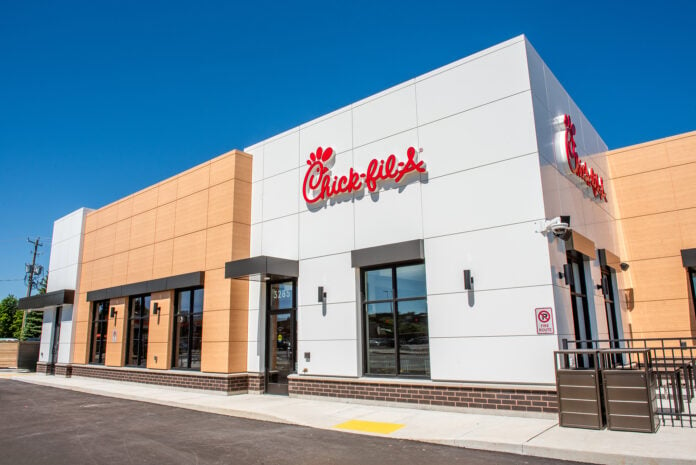
A new Chick-fil-A restaurant is opening in the Orleans community in the Ottawa area on Thursday, June 25 at 10:30 a.m.
The brand selected Natasha Vaux as the local Owner-Operator of the new location at 4280 Innes Rd.
Vaux first experienced the brand on trips to Florida with her husband Pete, where she was impressed by a level of hospitality she never expected from a quick-service restaurant. Enjoying a Deluxe Chicken Sandwich with Freshly Brewed Sweetened Iced Tea became a tradition on every trip to the U.S.
Chick-fil-A Owner-Operator Natasha Vaux
When the company’s first Ottawa-area location opened in 2024, she recalled: “We made sure to join the lineup bright and early to be part of the energy and celebration on opening day. We were all craving that unmistakable Chick-fil-A flavour, and that first bite didn’t disappoint. The Original Chick-fil-A Chicken Sandwich is perfectly seasoned and truly in a league of its own.”
Vaux’s vision as a local Owner-Operator is to create a restaurant that stands out for its exceptional hospitality and positive community impact.
“I believe in leading by example, and coaching and guiding Team Members to deliver Chick-fil-A’s signature ‘Second-Mile Service’,” said Vaux, who brings years of Ottawa-based leadership experience from the automotive industry.
“My ambition is to authentically weave Chick-fil-A Orleans Innes Rd into the fabric of our community,” she said. “We want to ensure that the restaurant is not just a place to eat but a partner in local growth and well-being.”
Chick-fil-A Moove-In Party
A Moove-In Party is scheduled for opening day. Anyone who visits the restaurant on Thursday, June 25 dressed in cow spots can redeem one complimentary entrée or kid’s meal inside the restaurant or in the drive-thru. Whether it’s a full cow suit or a simple cow-spotted accessory, guests of all ages are invited to join the fun.
Secondhand retailer Value Village has expanded its presence in British Columbia with the opening of its 11th store in the Greater Vancouver Area.
The new store, located at 1420 Fell Ave., the brand’s first in North Vancouver, will offer thousands of one-of-a-kind, pre-loved items from clothing and accessories to housewares, books and more, giving shoppers even more ways to shop sustainably and affordably, said the company.
Spanning more than 16,000 square feet, the store features a bright, organized layout with thousands of items added to the sales floor daily. Located just off Marine Drive on the North Shore of the Burrard Inlet, the store is well-positioned to serve not only North Vancouver residents, but also shoppers from surrounding communities who frequent the North Shore, added the retailer.
“We’re excited to open our new Value Village in North Vancouver and become part of a vibrant community that values sustainability and individuality,” said Kait Michieli, store manager of the new North Vancouver Value Village location. “Our mission is to champion reuse and inspire a future where secondhand is second nature. We look forward to welcoming shoppers from across the North Shore and creating a positive impact together.”
Value Village said the store will provide North Vancouver residents with a convenient place to donate used clothing and housewares to Big Brothers of Greater Vancouver (BBGV). Value Village pays the BBGV for those donations, giving once-loved items a second chance at life in its thrift stores while helping fund vital social services.
Valerie Lambert
“The opening of Value Village’s new North Vancouver store is a moment of impact for our community,” said Valerie Lambert, Executive Director, BBGV. “Big Brothers of Greater Vancouver has operated a clothing donation service in our region for three decades, and our partnership with Value Village has been the cornerstone to funding youth mentorship programs for tens of thousands of children in that time.”
In honour of the grand opening, the Value Village Canada Giving Fund, held within the Private Giving Foundation administered through TD, provided a $5,000 donation to BBGV.
“Every bag of clothing and household items donated at this location will help continue funding mentoring relationships for youth on the North Shore and beyond. We’re proud to work alongside Value Village and grateful to the North Vancouver community for their continued generosity,” said Lambert.
Retail Insider also shared the story of Fran Deck, who passed away at 89, remembered for his stewardship of Fran’s Restaurant in Toronto. Additional coverage includes rising Amazon Prime Day participation in Canada, the federal government’s investment to expand supports for women entrepreneurs, SELLIT9’s funding to grow its recommerce platform, and Rexall’s launch of a weight management program blending virtual care with medication delivery.
Strengthening domestic food production is critical to Canada’s long-term food security, particularly as climate challenges and geopolitical pressures disrupt traditional supply chains, according to the head of one of the country’s largest indoor farming companies.
Andy O’Brien, President and CEO of GoodLeaf Farms, says food security in Canada hinges on ensuring consistent, year-round access to fresh produce despite the country’s extreme seasonal swings. He notes that Canada has historically relied heavily on imports from the United States and Mexico due to limited growing conditions during colder months.
O’Brien says recent global and political developments have underscored the need for Canada to take greater control of its food supply by investing in domestic production systems that can operate year-round.
GoodLeaf Farms photo
Indoor vertical farming is one such solution, but O’Brien acknowledges the high cost of entry remains a major barrier. GoodLeaf has invested roughly $200 million to build large-scale facilities in Guelph, Calgary and Montreal, with ongoing operating costs similar to other manufacturing businesses. He says government support is essential to encourage more players into the sector, pointing to recent federal commitments aimed at accelerating agricultural innovation.
Consumer demand is also shifting. O’Brien says interest in Canadian-grown food has surged, with demand currently exceeding GoodLeaf’s production capacity. He adds that shoppers are increasingly focused on freshness, nutrition and value, not just domestic origin.
The company, which generates about $50 million in annual sales and is growing rapidly, plans to invest more than $25 million to expand output at existing sites, with additional large-scale expansion expected in the coming years.
O’Brien says indoor farming allows for significantly faster crop cycles and more efficient production, helping position the sector as a key part of Canada’s future food system.
A majority (84%) of small businesses are concerned that higher fuel costs could negatively affect the summer tourism season, according to new data from the Canadian Federation of Independent Business (CFIB).
Ryan Mallough
“Fuel costs have been squeezing small businesses from all sides: at the pump, across their supply chains and in their customers’ wallets. The last thing any of them need is a quiet summer,” said Ryan Mallough, CFIB’s vice-president of legislative affairs.
“That’s exactly why we’re encouraging Canadians to get out and explore their communities this summer. Fuel prices may put a dampener on bigger travel plans, but local tourism is a great opportunity for small businesses and their communities.”
To help support local businesses and encourage local shopping this summer, CFIB, which is Canada’s largest association of small and medium-sized businesses with 103,000 members across every industry and region, is bringing back its #SmallBusinessEveryDay Big Thank You Contest from June 29 to July 13.
The contest invites Canadians to thank their favourite small businesses for the role they play in their communities. The Big Thank You Contest is presented by CFIB in partnership with Chase Payment Solutions, with Interac as prize sponsor. Small business supporters can enter two weekly draws by visiting SmallBusinessEveryDay.ca and leaving a thank you message to their favourite small Canadian business.
Each week, one supporter and the business they thanked will be drawn as winners. The supporter will receive a $1,500 cash prize to spend locally. The business will receive $4,000 and a free one-year CFIB membership. A $4,000 bonus prize will go to the business with the most nominations at the end of the contest, courtesy of Interac, explained the CFIB.
“Sixty-six cents of every dollar spent local, stays local,” said Mallough. “If you have a favourite spot, now is a great time to show them some love and say thank you for all they do; it’s not just the business that benefits, it’s the whole community.”
To help businesses participate, CFIB has created free digital toolkits, including printable posters and customizable social images, to promote the contest and shopping local.
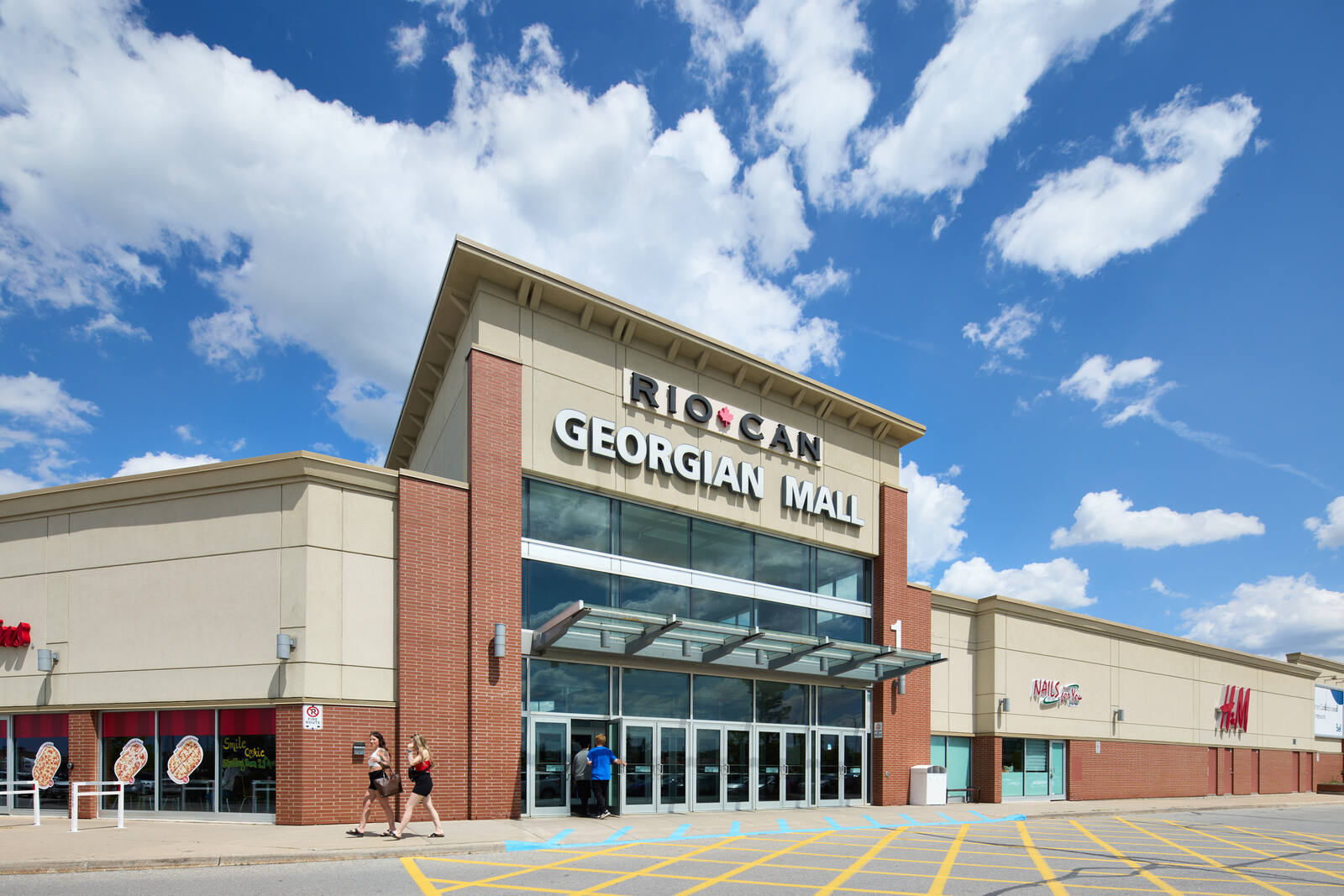
RioCan Real Estate Investment Trust says it will redevelop the former Hudson’s Bay Company (HBC) space at Georgian Mall with the addition of three new tenants: Longo’s, GYMVMT by GoodLife Fitness, and Mark’s.
The introduction of a national grocer, leading fitness operator, and trusted Canadian apparel and workwear brand will provide shoppers with greater convenience and choice while further enhancing Georgian Mall’s role as a community focused destination anchored in everyday needs, said RioCan.
Moshe Batalion
“As Barrie continues to grow, we are committed to ensuring that Georgian Mall reflects the needs of the community. The additions of Longo’s, GYMVMT Fitness Club, and Mark’s represents an important evolution of the property,” said Moshe Batalion, Vice President, National Leasing, RioCan.
“Together, these brands will bring sought-after services and everyday essentials to local residents, making Georgian Mall an even more convenient destination for shopping, wellness, and daily life.”
The new tenants are expected to open in 2027, with a temporary Mark’s location opening in advance of the permanent store, said RioCan.
Georgian Mall is the largest enclosed shopping centre in Barrie and the greater Simcoe County area. The shopping centre is conveniently located at Bayfield St and Livingstone St, just minutes from Highway 400 and easily accessible by Barrie Transit with two bus stops located on-site.
RioCan described Longo’s as apremium grocery retailer known for high-quality fresh food, prepared meals, and exceptional customer service. It said GYMVMT Fitness Club is one of Canada’s leading fitness operators, GoodLife Fitness, bringing expanded health and wellness offerings to Georgian Mall. And Mark’s is an iconic Canadian retailer offering casual apparel, footwear, and workwear.
As at March 31, RioCan’s portfolio comprised of 167 properties with an aggregate net leasable area of approximately 32 million square feet (at RioCan’s interest).
Canadians are expected to turn out in large numbers for this year’s Amazon Prime Day event, even as household budgets remain under strain, says retail analyst Bruce Winder.
Winder points to industry estimates suggesting the four-day sales period could generate roughly $26 billion in the United States. Scaled to Canada, that could translate into several billion dollars in spending, driven by deep discounts across dozens of product categories.
He says the event arrives at a time when consumers are grappling with elevated living costs, including higher fuel prices and persistent food inflation. Despite those pressures, Winder expects strong participation, as shoppers seek out savings on both essential goods and discretionary items.
According to Winder, Canadian consumers have increasingly shifted spending habits in response to economic conditions, cutting back on non-essential purchases while relying more heavily on promotions and loyalty programs to stretch their budgets. Retailers have responded with more aggressive pricing strategies and expanded partnerships aimed at boosting customer engagement and repeat spending.
He notes that demand for discounts has also reshaped grocery shopping behaviour, with more consumers opting for private-label products, discount banners and frozen foods as a way to manage costs.
Prime Day’s continued growth reflects a broader trend toward value-driven shopping, Winder says, with the event offering significant markdowns, including steep reductions on Amazon-branded devices. He adds that the timing aligns with seasonal spending needs, such as back-to-school purchases, further supporting demand.
Beyond pricing, Winder attributes Amazon’s enduring appeal to convenience, including fast delivery and simplified purchasing tools, which have broadened its reach across age groups and income levels.
He says the combination of value and ease of use continues to reshape how Canadians shop, particularly during major promotional events.
157 Bloor Street West in Toronto, showing the highlighted space to be occupied by RH. Image: CBRE (edited)
Five years after Club Monaco closed one of Canada’s most recognizable fashion flagships, the landmark corner at Bloor Street West and Avenue Road appears set to begin a new chapter.
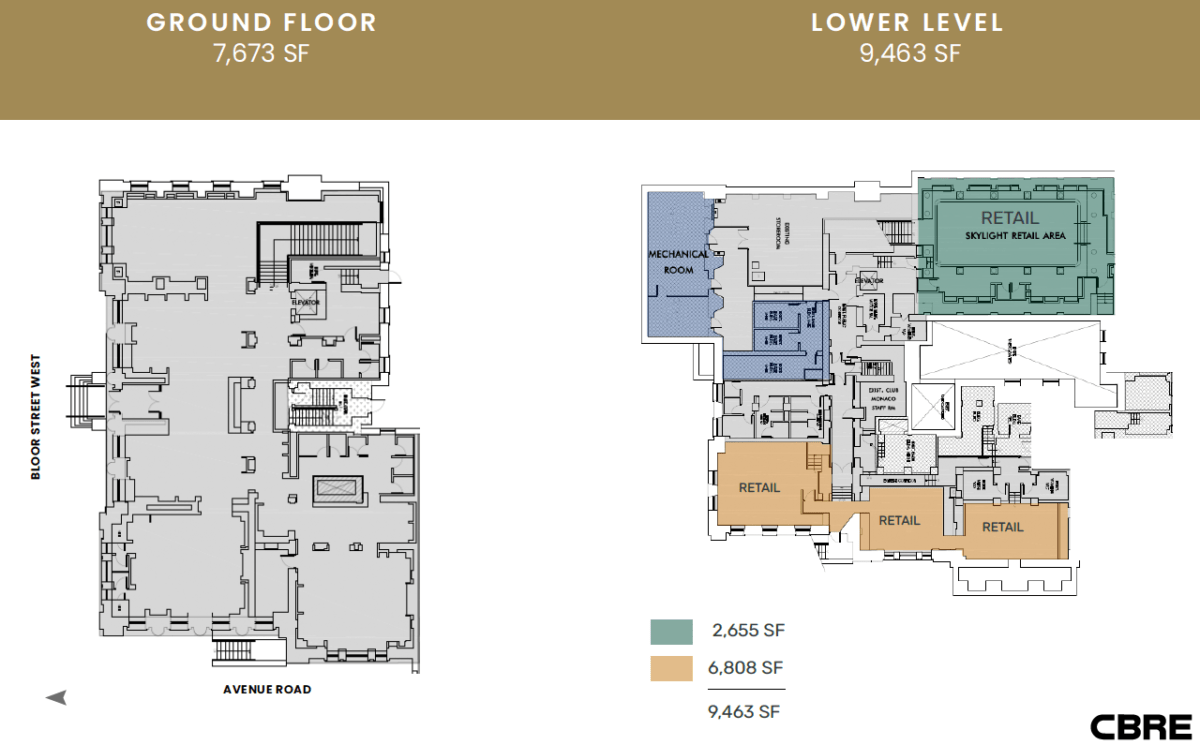
Luxury home furnishings retailer RH is said to be opening a store at 157 Bloor Street West in Toronto, according to industry sources familiar with the transaction. The company is said to be taking approximately 17,000 square feet in the historic Lillian Massey Building, including roughly 9,800 square feet of retail space and additional storage. The property was marketed by CBRE’s Urban Retail Team led by Arlin Markowitz and represents one of the most prominent retail vacancies on Canada’s luxury shopping corridor.
The deal brings a long-running search for a successor to Club Monaco’s former flagship closer to an end and adds another notable name to a neighbourhood that continues to attract some of the world’s most prestigious brands.
The End of an Era
For many Torontonians, 157 Bloor Street West was synonymous with Club Monaco. The retailer opened its flagship at the location in 1996 and remained there for approximately 25 years. During that period, Bloor Street evolved dramatically. What was once an upscale shopping district became Canada’s premier luxury retail corridor, attracting international fashion houses, jewellers and watchmakers while helping transform Yorkville into one of North America’s most sought-after luxury shopping destinations.
Club Monaco was part of that story. When the store closed in March 2021, Retail Insider documented its final days, capturing the end of a retail presence that had become woven into the identity of the neighbourhood.
The closure also created one of the most closely watched leasing opportunities in Canadian retail.
157 Bloor St. West in Toronto. Image: Neumann & Rudy
The Years Between
The answer to who would replace Club Monaco did not arrive quickly. In the years following the closure, the property entered a transitional period as brokers worked to secure a long-term tenant capable of maximizing one of the most valuable retail corners in the country.
The first notable move came in late 2023 when Brooks Brothers leased the space after relocating from elsewhere on Bloor Street. The arrival of the American apparel retailer brought activity back to the building and demonstrated that demand for the location remained strong, even as a longer-term vision for the property continued to take shape.
That chapter proved relatively short-lived. Following financial difficulties involving Brooks Brothers’ Canadian operations, the space changed hands once again.
Urban Planet later opened a temporary location in the former Club Monaco premises, generating attention because of the contrast between the fast-fashion retailer and the luxury brands surrounding it. A brief Bluenotes occupancy followed before the space once again became vacant.
Throughout those years, industry interest in the property never faded.
Large flagship opportunities rarely become available on Bloor Street West, particularly at a corner of this prominence. Brokers, landlords and retailers closely monitored developments, widely viewing the site as one of the most desirable retail opportunities in Canada.
Many expected the eventual tenant to be a luxury or aspirational brand capable of fully leveraging the building’s heritage character and highly visible location. The wait appears to have ended with RH.
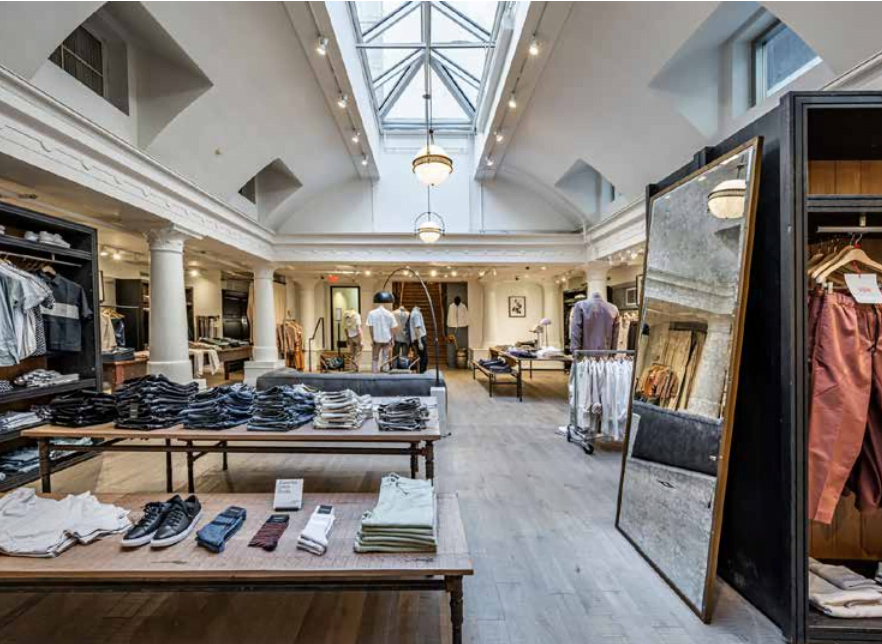
Former basement-level Club Monaco Men’s Department at 157 Bloor St. W. – Photo CBRE
A Building Unlike Any Other
Part of what makes 157 Bloor Street West so significant is that it offers far more than a storefront.
Completed in 1913, the Lillian Massey Building remains one of the architectural landmarks of the Bloor Street corridor. Owned by the University of Toronto’s Victoria College, the property continues to house university offices, classrooms and academic functions while maintaining a prominent retail presence at street level.
Its location is difficult to replicate. The building sits directly across from the Royal Ontario Museum, steps from Museum subway station and at the gateway to Yorkville. More than a century after it first opened, it remains one of the most recognizable commercial properties in Toronto.
As mentioned above, the leasing assignment was handled by CBRE’s Urban Retail Team led by Arlin Markowitz. Marketing materials prepared for the property highlighted more than 100 feet of frontage along Bloor Street West, wraparound visibility and a large patio opportunity. The space was marketed as a rare opportunity to secure a flagship presence on Toronto’s luxury corridor.
For brokers and retailers familiar with Bloor Street, the lease represented one of the most significant flagship leasing opportunities to come to market in recent years.
While RH is understood to be occupying approximately 17,000 square feet including storage space, the building itself is considerably larger. Commercial real estate records indicate the overall structure exceeds 60,000 square feet.
Club Monaco 157 Bloor Street Floor plan – Courtesy CBRE
Why RH?
RH’s interest in the property becomes easier to understand when viewed through the lens of the company’s broader strategy.
Formerly known as Restoration Hardware, RH has spent years repositioning itself as a luxury lifestyle brand centred on architecture, design and immersive retail environments.
The company already operates a major gallery at Yorkdale Shopping Centre in Toronto and recently opened a large-format gallery at Royalmount in Montreal.
At approximately 9,800 square feet of retail space, the planned Bloor Street location will be significantly smaller than either of those properties. The Bloor Street store also will not feature the popular RH Restaurant concept housed in the Yorkdale and Royalmount Galleries.
The smaller store format raises an interesting question: what role will the store play within RH’s Canadian network?
The company has not publicly disclosed details regarding the concept, though the location suggests a different strategy from its large-format gallery model. Rather than serving as another destination showroom with a restaurant, the Bloor Street location will provide RH with a smaller and highly visible presence in the heart of Canada’s most affluent urban retail district.
The building itself also appears well suited to the brand. RH has developed a reputation for embracing historic architecture and creating retail environments that emphasize design, scale and atmosphere. Few properties on Bloor Street offer those characteristics to the same degree as the Lillian Massey Building.
Louis Vuitton and Tiffany & Co. anchor 150 Bloor St. W., Photo Craig Patterson
The Transformation of Bloor and Avenue
RH’s arrival is part of a broader transformation taking place around the intersection of Bloor Street West and Avenue Road.
Over the past several years, the area has continued to strengthen its position as one of Canada’s most important luxury retail districts. The intersection has quietly emerged as one of the most concentrated luxury retail nodes in the country, bringing together fashion, jewellery, watches, hospitality and now luxury home furnishings within a few hundred metres.
Directly across the street, the redevelopment of the Park Hyatt Toronto introduced boutiques for Roger Dubuis, IWC Schaffhausen and Panerai, creating a new luxury watch destination. Jeweller L’Oro also opened at the property.
Nearby, luxury children’s retailer Bonpoint established a boutique, while international brands including Louis Vuitton, Tiffany & Co., Cartier, Gucci, Moncler, Saint Laurent, Hermes, Van Cleef & Arpels and Rolex continue to reinforce the area’s luxury positioning.
Further changes are expected. Tiffany & Co. will relocate to the corner of Bloor and Bay Streets in early 2027. Sources have also told Retail Insider that Louis Vuitton has been exploring future opportunities elsewhere on Bloor Street, although no formal plans have been announced.
Taken together, the activity illustrates how the luxury retail landscape continues to evolve as brands seek larger, newer and more prominent locations.
Luxury watch brands on Bloor Street West in Toronto, March 31, 2026. Photo: Craig Patterson
The Next Chapter
The lease comes at a time when RH continues to navigate a challenging housing market and ongoing scrutiny surrounding its debt load.
Yet the decision to secure one of Canada’s most recognizable retail addresses underscores the continuing appeal of flagship real estate in premier urban locations.
For Bloor Street, the transaction fills a vacancy that has attracted industry attention for years. For RH, it secures a presence on one of North America’s most prestigious shopping streets.
And for 157 Bloor Street West, it marks the beginning of another chapter in a story that has been unfolding for more than a century.
When Club Monaco departed in 2021, many wondered what retailer could justify one of the most prominent retail locations in Canada. Five years later, that answer appears to be RH.
More than a century after the Lillian Massey Building first opened, the corner remains one of the most sought-after retail addresses in the country.
Canada’s grocery industry is changing as consumers rethink how they shop, what they buy and where they choose to spend their food dollars.
Across the country, shoppers are embracing a growing range of formats, from ethnic supermarkets and specialty grocers to warehouse clubs and private-label-driven retailers. Consumers are seeking value, but they are also looking for convenience, relevance and shopping experiences that reflect their lifestyles and communities.
For Michael Commisso, whose family built Commisso’s Fresh Foods into a 17-store Ontario supermarket chain before selling the business to Sobeys, these developments point to a broader shift in consumer behaviour that is reshaping grocery retail.
His experience spans decades in the supermarket, wholesale and foodservice sectors. Today, Commisso operates MVR Cash and Carry, a major wholesale and foodservice business serving restaurants, retailers and other commercial customers throughout the Greater Toronto Area.
From his perspective, several interconnected trends are influencing the future of grocery retail in Canada.
Consumers Are Looking for Simpler Shopping Experiences
One of the most significant changes is a growing preference for more focused and curated shopping experiences.
Commisso believes many grocery retailers continue to offer more products and more complexity than consumers actually want. As shoppers face increasing demands on their time and attention, retailers that simplify decision-making are gaining traction.
“I think curated food has been on the rise for a long time,” Commisso said during a recent interview with Retail Insider.
He points to European grocery operators Aldi and Lidl as examples of retailers that have built highly successful businesses around carefully selected assortments, operational efficiency and strong private-label programs. Rather than offering endless choices, these retailers focus on a narrower selection of products that emphasize value and convenience.
The same principle can be seen in other formats.
Costco has developed one of the most loyal customer bases in retail through a limited assortment and a strong value proposition. Specialty grocers often focus on specific cuisines, product categories or customer needs. In each case, the goal is not to carry everything. It is to carry the right products for a particular customer.
“I think the grocery stores are still way over-scaling,” Commisso said.
The observation reflects a broader retail trend. Consumers increasingly reward businesses that make shopping easier and remove friction from the buying process.
That trend may be particularly evident among younger consumers. Smaller homes, urban lifestyles and changing household dynamics have altered how many Canadians shop for food. The large stock-up grocery trip that appealed to previous generations may be less relevant for shoppers who prioritize convenience, flexibility and speed.
Ethnic Grocery Retail Is Becoming Increasingly Mainstream
Another major shift is the growing influence of ethnic grocery retailers.
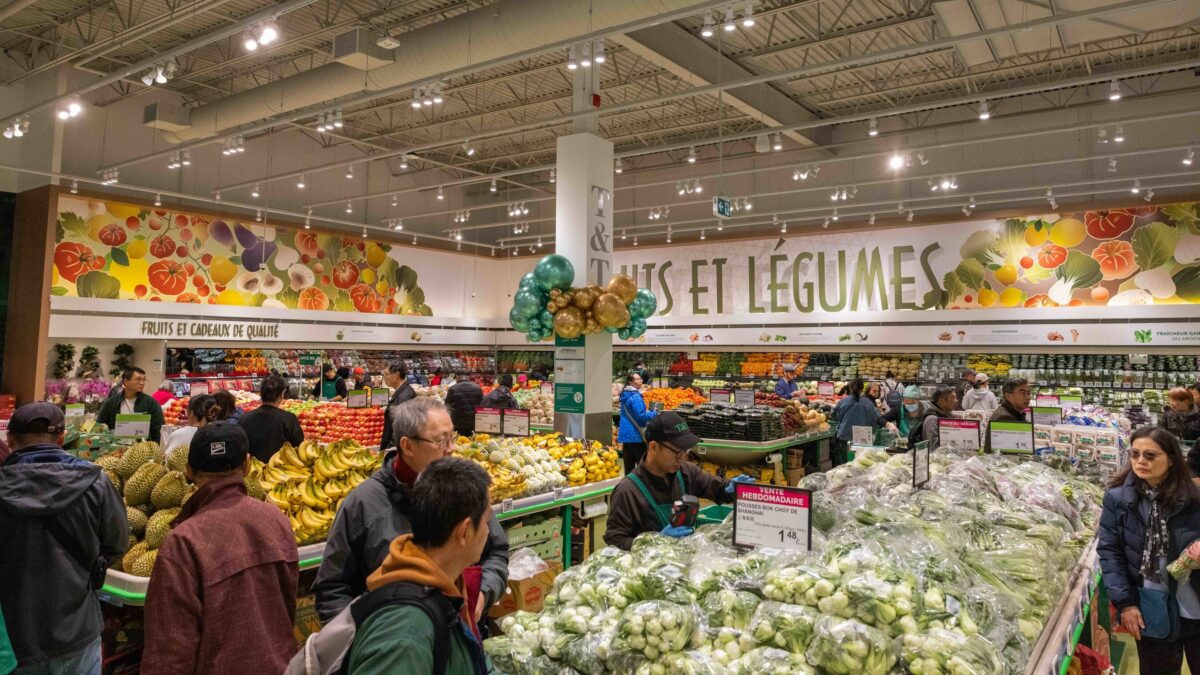
Across Canada, operators such as T&T Supermarket, Nations Fresh Foods, Sungiven Foods and H Mart have expanded their footprints while attracting increasingly diverse customer bases. These stores often combine imported products, prepared foods, fresh offerings and merchandising approaches that differ from conventional supermarkets.
For Commisso, the trend has historical roots.
When Italian, Portuguese and other immigrant communities expanded across Canada in previous decades, entrepreneurs opened grocery stores that reflected the products and food cultures they knew best. Over time, many of those businesses evolved into mainstream supermarket operators.
Today, Chinese, Indian, Middle Eastern, Filipino and other ethnic grocery retailers are building businesses that serve both established communities and a growing number of mainstream consumers.
“They look like stores back in their home countries,” Commisso said.
That authenticity has become a significant competitive advantage. Consumers increasingly seek new flavours, prepared foods, imported products and shopping experiences that offer something different from a traditional supermarket visit.
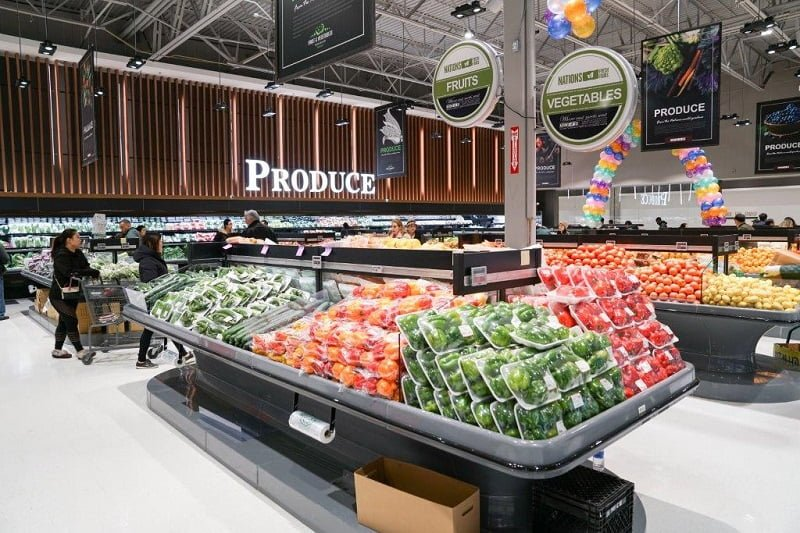
Commisso recently visited Nations Fresh Foods at Vaughan Metropolitan Centre and said the experience reinforced his belief that grocery retail is evolving in new directions.
“I was like, ‘Wow, this is different. This is different,'” he recalled.
The store’s combination of international products, prepared foods and highly experiential merchandising stood apart from traditional supermarket formats. The appeal extends beyond any single demographic group. Consumers are increasingly willing to explore new products and food cultures, creating opportunities for retailers that deliver a distinctive experience.
The continued expansion of T&T Supermarket illustrates how far this trend has progressed. Once viewed primarily as an ethnic grocery chain, the retailer has become a mainstream destination for a broad range of shoppers. Its planned location at CF Sherway Gardens in Toronto reflects the growing prominence of ethnic grocery concepts within Canada’s retail landscape.
Grocery Retail Is Becoming More Experiential
The rise of specialty and ethnic grocery retailers also reflects a broader consumer desire for experiences.
Traditional grocery stores were often designed around efficiency and assortment. Many newer concepts place greater emphasis on discovery, prepared foods, foodservice and atmosphere.
Consumers are increasingly treating grocery shopping as more than a routine transaction. Freshly prepared meals, unique products, international flavours and visually engaging merchandising can transform a shopping trip into an experience.
This shift mirrors trends seen elsewhere in retail, where experiential concepts continue to attract customers despite growing competition from e-commerce.
For grocery retailers, creating a compelling experience has become another way to differentiate themselves in a highly competitive market.
Nations Experience at the Stockyards in Toronto. Photo: Nations Experience
Value Remains a Defining Consumer Priority
While consumers are exploring new formats and experiences, value remains one of the industry’s most important drivers.
Commisso believes economic pressures continue to influence how Canadians spend on food. Many consumers remain focused on stretching household budgets and seeking better value across grocery categories.
He notes that some consumers are reducing restaurant spending and directing more of their food budgets toward grocery purchases.
Value, however, extends beyond simply finding the lowest price.
Consumers may define value through quality, convenience, consistency or trust. Retailers that successfully communicate those attributes often build strong customer loyalty even in challenging economic conditions.
This helps explain the continued strength of warehouse clubs, discount formats and specialty operators that provide a clear and compelling value proposition.
Private Label Has Become a Major Force
Private-label products are also playing an increasingly important role in grocery retail.
“Private label is huge,” Commisso said.
What was once viewed primarily as a lower-cost alternative has evolved into a core strategic pillar for many retailers.
Costco’s Kirkland Signature brand is one of the most prominent examples globally. Aldi and Lidl have built much of their business around private-label assortments, while Canadian retailers continue investing heavily in their own brands.
President’s Choice and No Name remain among Canada’s most recognizable private-label programs. Farm Boy has expanded its own branded offerings, using private label to strengthen differentiation and customer loyalty.
The trend reflects changing consumer attitudes. Shoppers who once defaulted to national brands are increasingly comfortable purchasing products from retailers they trust.
For retailers, private label creates opportunities to improve margins, strengthen customer relationships and offer products that competitors cannot directly replicate.
No Name Brand Signage at Loblaws Maple Leaf Gardens (Image: Dustin Fuhs)
A More Specialized Grocery Future
For decades, grocery retailing was often defined by scale. Larger stores and broader assortments were widely viewed as competitive advantages.
Today’s consumers appear to be sending a different message.
They want value, but they also want relevance. They want retailers that understand their needs, reflect their communities and make shopping easier.
The result is a grocery landscape that is becoming increasingly specialized. Traditional supermarkets remain essential players, but they now compete alongside warehouse clubs, specialty grocers, ethnic supermarkets, discount chains and retailers built around strong private-label programs.
The retailers that succeed in the years ahead may not be those with the most products or the largest stores. They may be the businesses that best understand how consumers want to shop and adapt their formats accordingly.
As consumer preferences continue to evolve, grocery retail will evolve with them.