METRO Inc. announced Tuesday that Eric La Flèche will retire as President and Chief Executive Officer at the end of the 2026 fiscal year after more than 18 years at the helm of the company and the Board of Directors will appoint Marc Giroux, currently Chief Operating Officer, to succeed him as President and CEO effective September 27.
In order to support a smooth and orderly transition, the Board will appoint La Flèche as Chairman of the Board of Directors and Pierre Boivin, currently Chairman of the Board, will be appointed Vice Chairman and Lead Director, also effective on September 27, said the company.
The appointments are the culmination of a robust, multi-year succession planning process led by the Board, reflecting METRO’s commitment to strong governance and long-term value creation. Giroux is a proven leader with deep knowledge of METRO’s operations, culture and strategic priorities as well as a clear vision for the future, and his appointment underscores the strength of METRO’s internal talent pipeline. He will join the Board upon his appointment as President and CEO, explained the company.
“The Board is extremely pleased to appoint Marc Giroux to the position of President and CEO. We are convinced that he is the right leader for METRO’s next chapter. Marc’s deep understanding of our industry, focus on operational excellence, financial discipline and customer satisfaction make him the best candidate to continue delivering long-term value for our customers, employees and shareholders in an ever-changing environment”, said Pierre Boivin, Chair of the Board of Directors of METRO.
Eric La Flèche
“On behalf of the Board, I want to thank Eric La Flèche for his remarkable contribution to METRO and to the communities we serve. Eric has been an exceptional leader for METRO for nearly two decades, creating substantial value for our shareholders by delivering consistent growth, reinforcing our customer-first and purpose-driven culture, and guiding the Company through significant strategic milestones, notably the acquisition of Groupe Jean Coutu in 2018.”
The company said it will benefit from La Flèche’s experience and perspective as Chair and will ensure strong independent oversight through its committees and the role of the Lead Director.
“It has been a privilege to lead METRO and to work alongside such talented and dedicated teams across our stores, distribution centres and offices,” said La Flèche. “METRO is well-positioned for continued success, with a clear growth plan, a disciplined approach to execution, a great team and a very solid balance sheet. I am proud of what we have accomplished together. Alongside my colleagues on the Board, I look forward to METRO’s continued success under Marc’s leadership.”
Marc Giroux
“I am honoured to be appointed President and Chief Executive Officer of METRO,” said Giroux. “Eric has built a strong foundation and a culture of performance and customer focus, and I’m pleased to continue collaborating with him going forward. My priority will be to build on that foundation–continuing to execute our strategy, supporting our people and partners, and keeping our customers at the centre of every decision as we move forward. I look forward to continuing to work with the best team in the industry.”
Executive biographies
La Flèche joined METRO in 1991 and has served as President and Chief Executive Officer since April 2008. Prior to becoming CEO, he held a number of roles of increasing responsibility, including Executive Vice-President and Chief Operating Officer from 2005 to 2008. In addition to industry recognitions, he was named Canada’s Outstanding CEO of the Year (2020). He is also a long-time volunteer with Centraide of Greater Montreal.
Giroux joined METRO in 2009 and currently serves as Chief Operating Officer, leading the Québec and Ontario food divisions as well as supply chain, marketing, loyalty and digital strategy. Over the course of his career with the Company, he has held progressively senior roles spanning marketing, merchandising and operations as well as digital and eCommerce. He holds a Bachelor’s degree in Finance and International Commerce as well as an MBA, both from HEC Montréal.
With annual sales of more than $22 billion, METRO Inc. is a food and pharmacy leader in Québec and Ontario, providing employment to more than 97,000 people. As a retailer, franchisor, distributor, manufacturer, and provider of eCommerce services, the company operates or services a network of some 1,000 food stores under several banners including Metro, Metro Plus, Super C, Food Basics, Adonis and Première Moisson, and some 640 pharmacies primarily under the Jean Coutu, Brunet, Metro Pharmacy and Food Basics Pharmacy banners.
Canadian Millennials are increasingly trading down in some categories while continuing to spend selectively in others, reshaping spending patterns across grocery, discount retail, foodservice, and consumer goods.
A new study from Calgary-based Cashew Research suggests the same consumer may purchase private label groceries, warehouse club staples, premium meat, specialty coffee, and skincare products within the same week depending on where they perceive value.
The findings point to a significant shift in shopping behaviour as affordability pressures continue to influence household budgets across Canada. Rather than reducing spending evenly, many Millennials appear to be reallocating spending more carefully while becoming less loyal to traditional brands and retailers.
The study surveyed 783 Millennials about grocery shopping habits, spending patterns, and lifestyle adjustments over the past year.
Millennials Are Becoming More Flexible Shoppers
The research indicates many Millennials are making purchasing decisions category by category instead of maintaining broad loyalty to national brands or retailers.
Among respondents, 59% said they strategically save in some categories while spending more in others, while only 18% described themselves as loyal to the same brands regardless of price.
Meanwhile, 41% identified as “price-sensitive switchers,” regularly changing brands to secure lower prices, while another 27% described themselves as “value optimizers” focused on balancing quality, price, and features.
Consumers are also increasingly shopping across multiple retail formats. Sixty-four percent of respondents said they visit different stores to find better deals, while 56% reported shopping at multiple retailers depending on the products or ingredients they need.
The trend reflects broader changes across retail as consumers move fluidly between discount retailers, warehouse clubs, ethnic grocers, specialty food stores, premium brands, and private label products depending on the purchase.
That shift may create additional pressure for middle-market retailers and national brands that lack either a strong value position or clear premium positioning. Consumers increasingly appear willing to aggressively trade down in some categories while reserving discretionary spending for products they believe offer noticeably better quality, convenience, or enjoyment.
The shift also helps explain why discount retailers, warehouse clubs, specialty grocers, and premium niche brands can all attract the same consumer at different moments throughout the week.
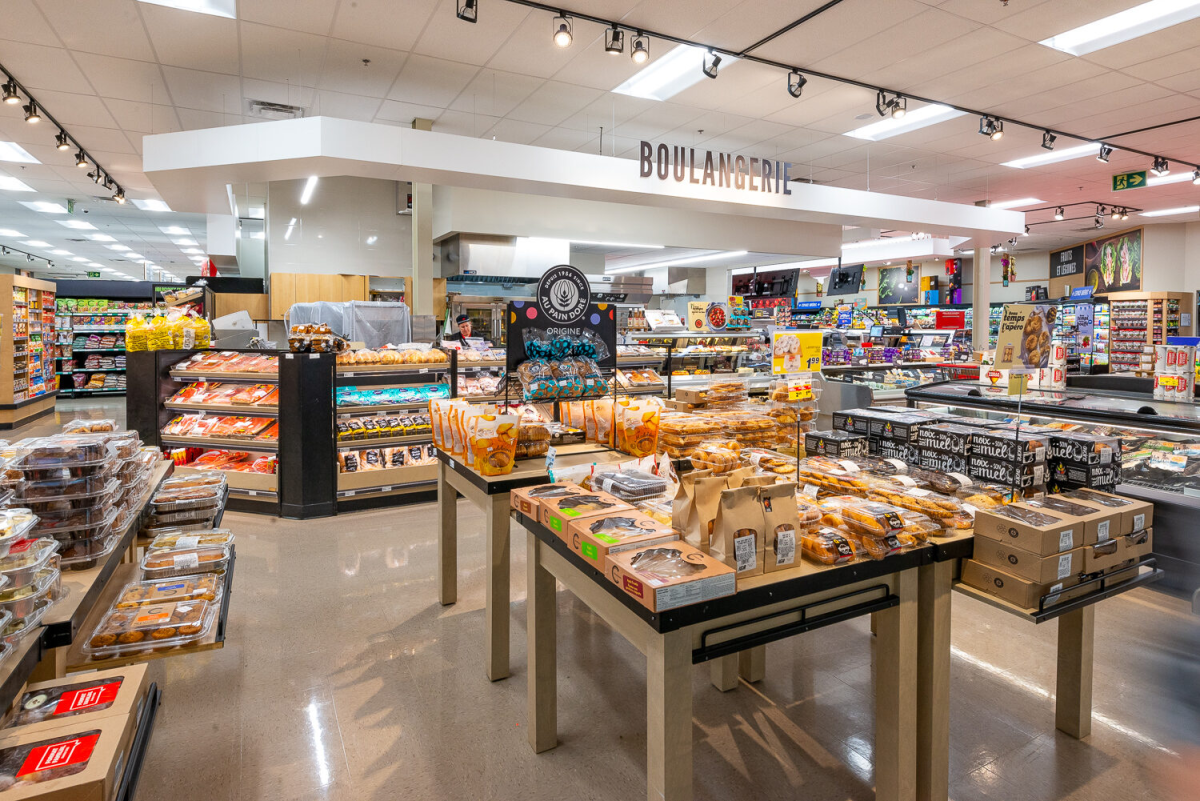
A grocery store in Quebec. Photo: Vergo Construction
Grocery Inflation Continues To Shape Spending Habits
Affordability concerns remain a major factor shaping shopping behaviour.
According to the 2026 Canada Food Price Report, grocery prices are expected to rise between 4% and 6% this year, with the average Canadian family of four projected to spend as much as $17,571 annually on food.
The Bank of Canada has also noted that grocery prices have climbed sharply since 2022, continuing to pressure household budgets.
Against that backdrop, many Millennials reported making substantial changes not only to shopping habits, but also to broader lifestyle spending.
Thirty-two percent of respondents said they are shifting toward more value-oriented retailers, while 28% reported replacing national brands with lower-priced alternatives and private label products.
Millennials are also reducing restaurant visits, canceling subscription services, consolidating errands to lower transportation costs, and relying more heavily on coupon apps, digital flyers, and sale-driven shopping habits.
Those patterns continue to benefit discount-oriented retailers and grocers across Canada.
Loblaw Companies Limited has continued investing in discount banners including No Frills and Maxi as consumers increasingly seek lower-priced grocery options. Discount retailers such as Dollarama have also benefited from shoppers searching for lower-cost household goods and everyday essentials.
The findings also point to growing acceptance of private label products, an area that major grocers and mass merchants have aggressively expanded in recent years as shoppers search for lower-cost alternatives without fully sacrificing quality.
Cooking At Home Is Becoming A Budget Strategy
The report found that Millennials are spending more time cooking at home as households look for ways to manage rising living costs.
Sixty-eight percent of respondents said they are preparing meals at home more frequently than they were a year ago, while 56% identified saving money as the primary reason.
Family priorities and health considerations also ranked highly among motivations for home cooking, with respondents citing meal planning, nutrition control, and reducing restaurant spending as major drivers behind changing routines.
The shift could benefit grocers, warehouse clubs, cookware retailers, meal planning services, and specialty food retailers while adding pressure to discretionary restaurant visits and takeout spending.
At the same time, the research suggests consumers are still allowing room in household budgets for smaller indulgences and products tied to comfort or enjoyment.
When asked why they purchase premium grocery products, 33% cited better quality or taste as the primary reason, while another 16% described premium purchases as small personal treats.
That behaviour helps explain why premium spending continues to persist in selective categories even as households become more cautious overall.
TikTok And Social Media Are Influencing Grocery Purchases
Digital platforms are also playing a growing role in shaping food and grocery purchases.
The study found that 78% of Millennial respondents had purchased a food product after seeing it featured in recipes, videos, or social media content.
Social media influencers ranked ahead of traditional digital advertising as a source of product discovery, reflecting how consumers increasingly move between online inspiration and physical shopping experiences.
Consumers also reported discovering products through in-store browsing, word of mouth, entertainment content, retailer apps, and digital media.
The findings reinforce how product discovery is increasingly shifting away from traditional advertising and toward algorithms, creators, TikTok trends, and social content that directly influence purchasing behaviour.
For retailers and consumer brands, maintaining visibility across multiple channels is becoming increasingly important as shoppers blend digital discovery with in-store purchasing decisions.
Retailers Are Facing A More Unpredictable Consumer
The study suggests Millennials no longer fit neatly into traditional categories such as discount shopper, premium shopper, or loyal brand customer.
Instead, consumers are increasingly blending discount, premium, private label, warehouse club, and specialty purchases depending on the category and perceived value of a product.
For retailers, that evolution is creating a more fragmented and less predictable consumer environment where shoppers are constantly reassessing priorities and retailers must increasingly compete purchase by purchase rather than relying on long-term loyalty or traditional assumptions about consumer behaviour.
Only 5% of Canadian consumers say influencers are their most trusted source when making a purchase decision, according to new research from Field Agent Canada, a finding that may reflect growing skepticism toward highly polished social media marketing and paid online endorsements.
The study surveyed 2,024 Canadian shoppers and found that consumers still value recommendations and social proof when shopping. However, they increasingly prefer those recommendations to come from people they know personally or from ordinary consumers sharing real experiences online.
The findings point toward a broader shift in retail marketing, one where authenticity and relatability may be becoming more influential than aspirational influencer content.
“Consumers still trust recommendations, but who they trust may be changing,” said Jeff Doucette, Country Manager at Field Agent Canada.
Consumers Still Value Influence, But Trust Is Evolving
Jeff Doucette
While influencer culture remains deeply embedded within retail marketing and social commerce, the survey suggests consumers are becoming more selective about the types of recommendations they trust.
According to the findings, 55% of respondents said recommendations from people they personally know are their most trusted source when making purchase decisions. Another 40% pointed to online reviews from everyday consumers.
The data suggests shoppers continue relying heavily on peer validation before spending money, particularly as many consumers remain cautious with discretionary purchases and increasingly research products before buying.
The survey also found that 68% of respondents are most likely to consider a product recommendation shared on social media by someone they personally know. By comparison, 24% said they would consider a recommendation from an influencer they follow, while only 8% said they would trust recommendations from influencers who simply appeared in their feeds.
The findings indicate consumers are not necessarily disengaging from social commerce or online product discovery. Instead, trust may increasingly be shifting toward digital word-of-mouth recommendations that feel more personal, credible, and grounded in real experience.
Authenticity Emerging as a Key Retail Marketing Theme
Authenticity emerged as one of the strongest themes throughout the research.
According to the survey, 71% of respondents said posts from people they know feel more authentic than influencer content. Only 4% said influencer posts feel most authentic, while 21% said both forms of content feel equally authentic.
Consumers skeptical of influencers said the content often feels financially motivated, overly curated, or scripted. Many respondents also indicated that recommendations from friends, family members, and ordinary shoppers feel more trustworthy because they appear less transactional.
The results may reflect growing fatigue with sponsored social media content as consumers become increasingly aware of paid partnerships and promotional messaging across digital platforms.
At the same time, the survey suggests consumers themselves continue participating actively in organic word-of-mouth marketing online. About 71% of respondents said they have posted about a product they genuinely liked without being asked or compensated to do so.
The findings reinforce the idea that consumers still want product recommendations and social discovery through digital platforms, but increasingly expect those interactions to feel genuine and unscripted.
Influencer, photo: Unsplash
Online Reviews Continue to Shape Consumer Behaviour
The research also highlighted the ongoing importance of online reviews within the modern retail purchasing journey.
According to the survey, 97% of respondents said they read reviews before making a purchase decision. The findings underscore how heavily consumers continue to rely on customer feedback and shared experiences before committing to a purchase.
As economic pressures continue affecting household budgets, trust and credibility may be playing a growing role in how consumers evaluate products, brands, and recommendations online.
For retailers, the findings may signal a broader evolution in how digital marketing strategies are perceived by consumers.
While influencer marketing remains a major component of the advertising landscape, the research suggests retailers may increasingly benefit from strategies focused on customer advocacy, authentic storytelling, review ecosystems, organic social sharing, and community-driven engagement.
The findings suggest that in an increasingly crowded digital marketplace, trust itself may be becoming retail’s most valuable marketing asset.
Chexy, the Canadian fintech platform that enables consumers and businesses to earn credit card rewards on recurring payments like rent and bills, says cashback card usage through the platform is increasing 2.5 times faster among users under 40 than those aged 40+.
Cashback transaction volume among users under 40 rose 125 per cent between Q4 2025 and Q1 2026. The increase points to a broader shift away from passive rewards accumulation toward more immediate, flexible returns on essential expenses.
Based on an analysis of overall Chexy user activity, cashback transactions rose 97 per cent over the same period, while the number of users earning cashback grew 60 per cent, signalling both rapid adoption and increased usage frequency among existing users. This momentum reflects a broader repositioning of rewards from passive perks to active financial strategy, led disproportionately by younger Canadians, who are shifting to cashback at 2.5 times the rate of those 40 and over, it said.
The generational divide is also evident in how value is distributed across the platform. Canadians under 40 processed $24.7 million in cashback volume in Q1 2026 compared to $11.6 million among those 40 and over, a gap driven largely by the fact that younger users now make up the majority of the platform’s user base. When controlling for headcount, older users actually transact more per person, highlighting two distinct but equally important behaviours: one focused on maximizing value in real time, and another rooted in larger, more consistent individual spending patterns, added Chexy.
Question: What’s driving younger Canadians to prioritize cashback rewards over traditional points-based loyalty programs right now?
A: Younger Canadians are increasingly prioritizing cashback because it delivers immediate, practical value on everyday expenses. As affordability pressures continue, there is a growing expectation that spending should provide a more tangible return, particularly on essential payments like rent, bills and taxes. Cashback aligns with that mindset because it feels flexible, accessible and relevant to how younger consumers are managing money today.
Q: Your data shows Canadians under 40 are adopting cashback 2.5 times faster than older consumers — what broader shifts in spending habits or financial attitudes are behind that generational divide?
A: The generational divide reflects a broader shift in how younger Canadians approach spending and financial management. Younger consumers have come of age in an environment shaped by real-time payments, digital banking and flexible financial tools, so there is a stronger expectation that financial products should provide immediate utility and transparency.
Consumers who are 40 and older built their financial habits around legacy loyalty ecosystems where rewards were closely tied to travel, premium credit cards and long-term points accumulation. That model still resonates with them and since they are more established financially they may be less focused on accessing immediate value from their expenses.
Q: How much of this behaviour change is tied to affordability pressures and the current economic climate versus a longer-term change in consumer expectations around rewards?
We see this as both a response to current economic conditions and part of a longer-term behavioural shift. Affordability pressures have accelerated the demand for immediate and flexible value, but consumer expectations around rewards were already evolving before the current economic climate. Increasingly, Canadians expect rewards to integrate more seamlessly into everyday finances rather than functioning solely as aspirational perks tied to travel or luxury spending.
Liza Akhvledziani
Q: Are consumers increasingly treating rewards and cashback as part of their monthly budgeting strategy rather than as occasional perks, and how is that changing the fintech or retail landscape?
A: Yes, our data shows us rewards and cashback are increasingly becoming part of how consumers manage monthly spending rather than something viewed as occasional or secondary. Consumers are looking more closely at how to unlock value from recurring expenses that historically did not earn rewards, including rent, utilities and taxes.
In response, companies are expanding cashback offerings, building more flexible loyalty models and looking for ways to integrate rewards into recurring spending categories that drive consistent consumer engagement.
For retailers specifically, rewards are increasingly being used as a retention tool as consumers are paying closer attention to where they shop, how they pay and what value they get back, which is putting more pressure on brands to make loyalty programs feel immediate, practical and easy to use.
Q: Based on the growth you’re seeing between Q4 2025 and Q1 2026, what do you think this signals about the future of consumer finance behaviour in Canada over the next few years?
The growth we’re seeing suggests consumers are starting to rethink what counts as a valuable financial product. For a long time, rewards programs were built around aspirational spending like travel, luxury purchases or occasional big-ticket transactions. What’s changing now is that consumers increasingly want financial value tied to the payments they make most often and care about most month to month.
Over the next few years, we expect that to reshape both payments and loyalty more broadly. Consumers will likely become less loyal to financial products that feel passive or disconnected from their everyday lives, and more willing to switch toward platforms that help them get value from recurring expenses.
We also think the line between payments, budgeting and rewards will continue to blur, with consumers increasingly expecting all three to work together rather than exist as separate experiences.
In a scathing post on LinkedIn, Prakash, who operates a number of food establishments in Edmonton with his wife Khushbu Singh, the company President, writes that entrepreneurs are in crisis in Canada and he’s wondering why they are not being supported by the government as so many are struggling, closing their doors or being pushed into insolvency at an alarming rate.
Prakash says approximately 98% of employer businesses in Canada are small businesses; nearly eight million Canadians depend on them for employment; business insolvencies have risen sharply in recent years; independent stores and restaurants are closing; jobs are disappearing, commercial spaces are becoming vacant; entrepreneurs are carrying unprecedented levels of debt.
“For many business owners, survival has become a daily battle,” he writes.
Prakash says there is a ripple effect when a business fails.
Canada’s economy is beginning to resemble a sinking ship and entrepreneurs are the engine room of that ship. When the engine room starts taking on water, every passenger on board is eventually affected, he says.
“Ignoring the challenges facing entrepreneurs today risks creating a much larger economic crisis tomorrow. A country cannot expect long-term prosperity while the very businesses that create jobs, generate tax revenue, and support local communities are being left behind.
“At the same time, the federal government continues to commit billions of dollars toward international initiatives, foreign aid, military commitments, and global priorities. While Canada must meet its international responsibilities, many business owners are asking a reasonable question: Who is looking after Canadian entrepreneurs?”
He says business owners are facing: rising interest rates; increasing payroll costs; higher taxes and government fees; escalating rent and occupancy costs; inflation-driven operating expenses; declining consumer spending; excessive regulatory burden and red tape
Ravi Prakash
Yet there appears to be no comprehensive national strategy focused on helping these businesses survive and grow, says Prakash.
“Across Canada, entrepreneurs are exhausting personal savings, taking on additional debt, using credit cards, refinancing homes, and relying on family support simply to keep their businesses operating. Many are not asking for handouts. They are asking for a fair opportunity to succeed. They are asking for governments to recognize that small businesses create jobs, stimulate investment, and strengthen communities.”
Practical solutions, says Prakash, could include:
✅ Reducing payroll tax burdens for small employers
✅ Expanding access to low-interest business financing
✅ Streamlining permits, licensing, and regulatory approvals
✅ Introducing targeted tax incentives for investment and hiring
✅ Supporting debt restructuring for viable businesses
✅ Reducing unnecessary administrative and regulatory costs
✅ Creating policies that encourage entrepreneurship, innovation, and growth
Canada cannot build a strong economy while allowing these businesses to collapse silently. They need relief, not silence. They need policy, not speeches. They need action, not excuses, says Prakash.
If they continue to fail, the consequences will extend far beyond business owners. The impact will be felt across employment, commercial real estate, construction, banking, professional services, and local communities, he adds.
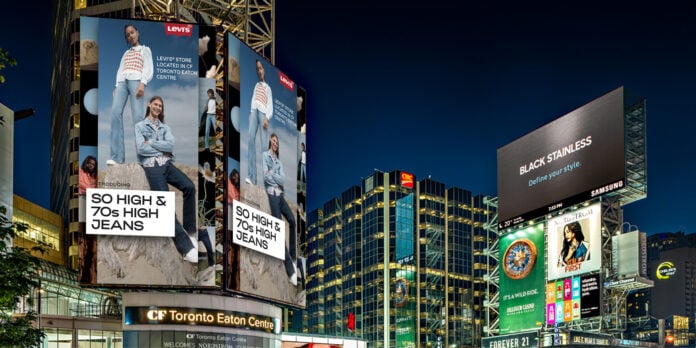
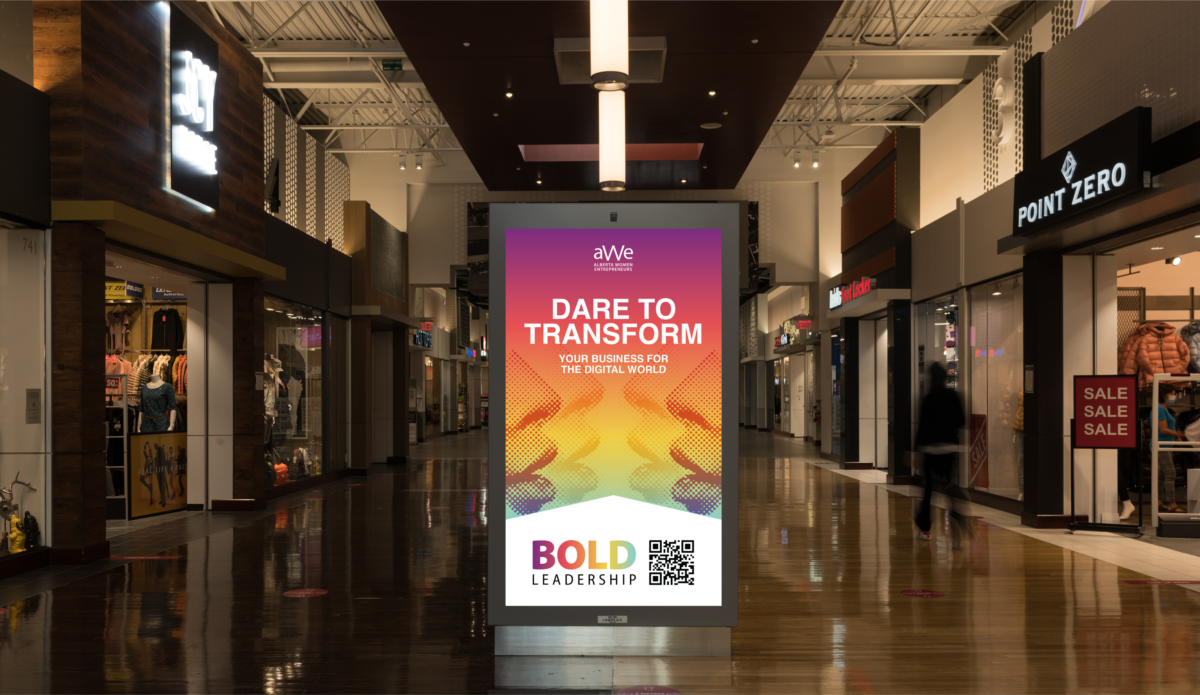
As Canada prepares for a wave of major live events set to transform city streets, transit hubs and entertainment districts into high-traffic brand battlegrounds, new research suggests many advertisers risk fading into the background if they continue relying on static outdoor advertising.
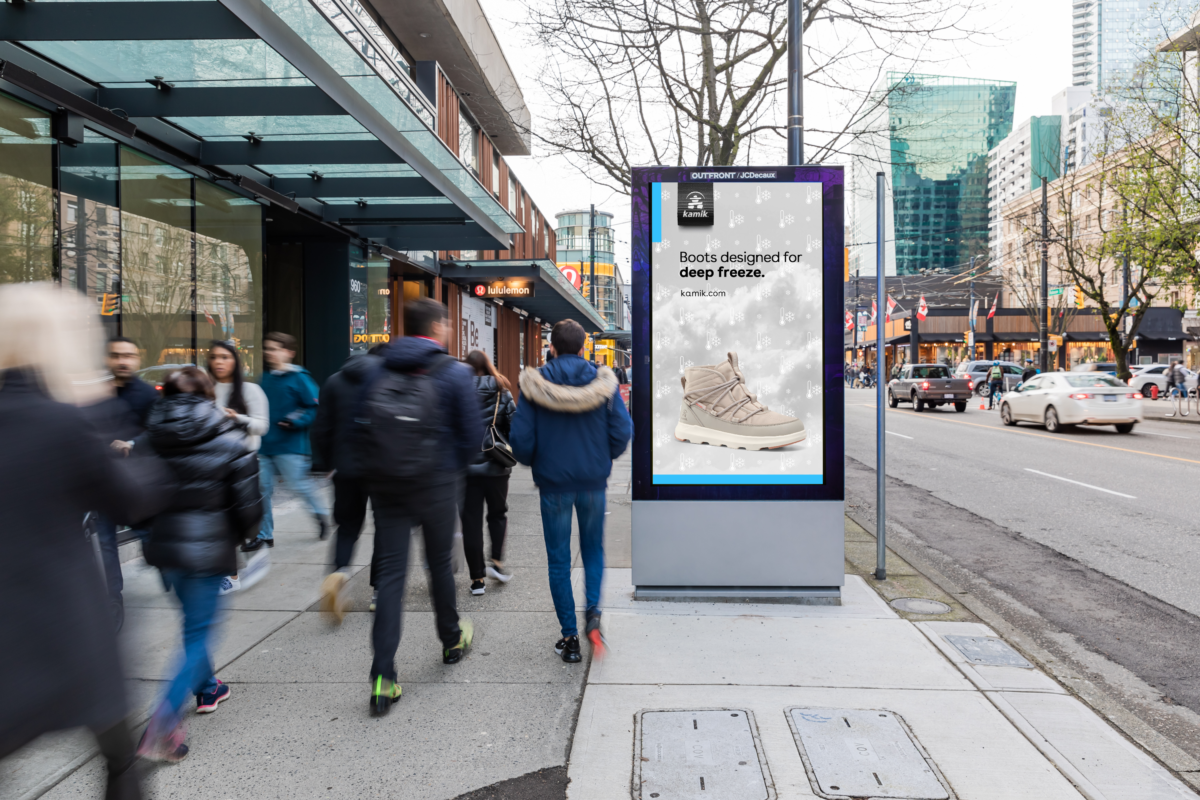
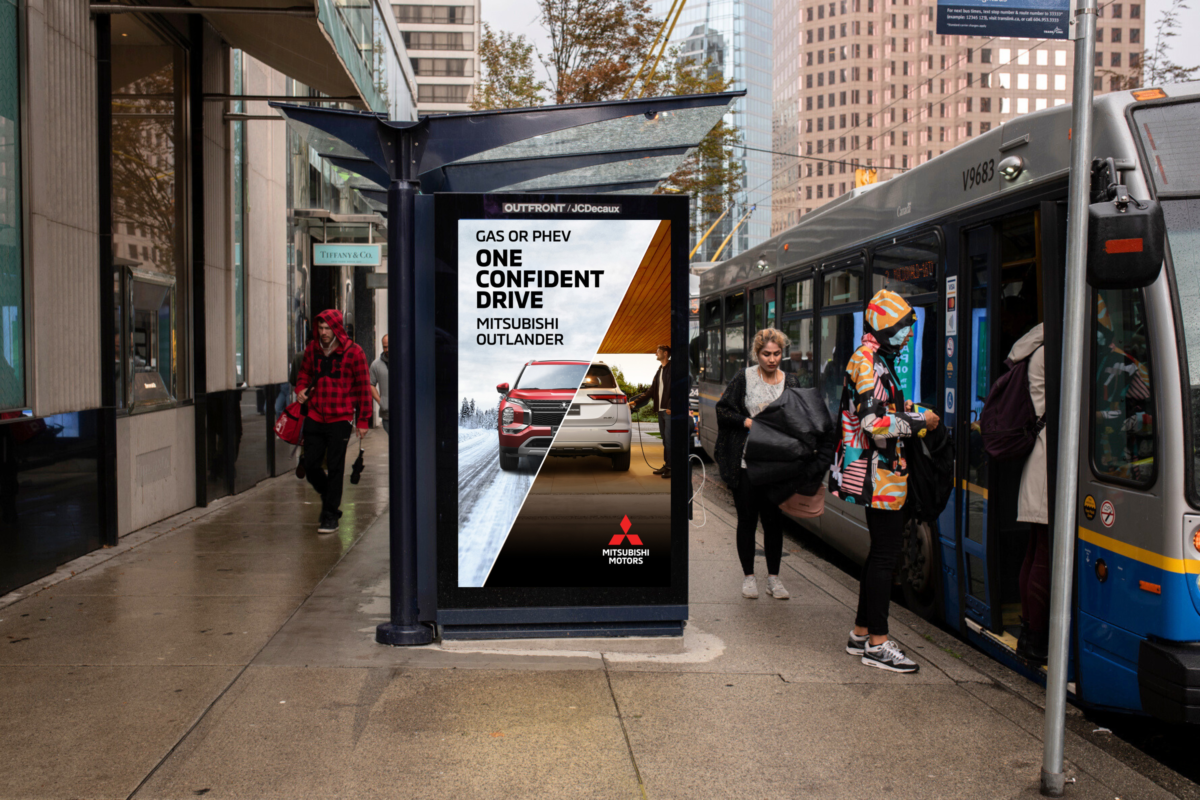
A new report from Vistar Media, conducted in partnership with Omnicom and JCDecaux, found that motion-based creative in digital out-of-home (DOOH) campaigns significantly outperforms standard static creative when it comes to capturing consumer attention, driving recall and boosting brand awareness in crowded urban environments.
The timing is particularly relevant as Canadian cities prepare for a surge in tourism, foot traffic and advertiser competition tied to major cultural and sporting events. From FIFA World Cup activity in Toronto and Vancouver to the Calgary Stampede and Montreal’s Osheaga festival, brands will be competing for attention in increasingly saturated environments where consumers are constantly bombarded with visual messaging.
According to the report, creative execution itself may now be one of the biggest differentiators in campaign performance. The findings suggest that static outdoor ads are becoming easier for consumers to tune out, while dynamic, motion-led creative is proving far more effective at breaking through the noise.
Among the report’s key findings:
3D motion creative was found to be 67% more effective at driving brand awareness compared to standard DOOH creative
Motion-enhanced campaigns also delivered stronger emotional engagement and memorability
Consumers were significantly more likely to notice and recall ads featuring movement and dynamic storytelling elements
The research reflects a broader evolution underway across the advertising industry, as brands increasingly shift toward more immersive, visually dynamic and context-aware DOOH experiences designed to engage audiences in real time.
Question: Your research suggests consumers are increasingly tuning out static outdoor advertising — how serious is that problem for brands investing heavily in traditional billboard creative?
Answer: I wouldn’t frame it as consumers tuning out static advertising entirely. In fact, our research reinforces that static out-of-home (OOH) remain highly effective for building reach, recognition and brand presence.
One of the key findings from the study was that static digital out-of-home (DOOH) creative still delivered a significant lift in aided ad recall, which speaks to the inherent power of the medium itself. What’s changing is the broader media landscape and the level of competition for consumer attention. Consumers are moving through cities surrounded by content, screens, notifications, and live experiences. As a result, brands are looking for more ways to stand out and create memorable moments within those environments.
That’s where motion and dynamic creative can play an important role. Our research found that adding motion and dynamic creative can help amplify that impact, particularly in high-traffic urban settings. DOOH gives advertisers more flexibility to introduce movement, contextual messaging, and immersive storytelling that naturally captures attention in a very crowded visual landscape.
Importantly, this isn’t about replacing traditional OOH. It’s more about expanding the creative toolkit available to advertisers and using the right format for the right campaign objective, audience and environment.
Vistar Media photo
Q: Why does motion-based or 3D DOOH creative perform so much better in crowded urban environments, especially during major live events?
A: Motion-based and 3D creative tends to create a stronger emotional and sensory response because it feels more immersive and experiential. During major live events audiences are already highly engaged with their surroundings, so creative that feels dynamic,unexpected or visually striking can become part of that overall experience.
Our research showed that motion significantly improves both brand awareness and ad recall, with 3D creative emerging as the strongest performer for driving top-of-mind awareness.
There’s also a strong social amplification effect happening beyond the screen itself. The most effective DOOH campaign today doesn’t just live on the screen – it extends into social feeds, earned media, and consumer-generated content. The best campaigns are creating experiences people actively seek out and talk about.
Q: As cities like Toronto, Vancouver, Calgary and Montreal prepare for major tourism and event traffic, how should advertisers rethink their DOOH strategies to stand out?
A: Advertisers should think beyond traditional media planning and start thinking more like experience designers. Major cities become incredibly dynamic during high-traffic periods, and audiences are moving through those environments with different mindsets, behaviours, and expectations.
One of the biggest advantages of programmatic DOOH is flexibility. Brands can adjust messaging in real time based on audience movement, weather conditions, event schedules, time of day, or cultural moments happening in the city. That ability to deliver contextually relevant messaging creates stronger engagement and makes campaigns feel more connected to the environment around them.
Creative also matters more than ever. We’re seeing stronger performance when brands tailor campaigns specifically for the DOOH environment rather than simply repurposing creative from other channels. Consumers can tell the difference between creative that was designed for the medium and creative that was simply placed into it.
The brands that will stand out are the ones treating DOOH as a living medium – using data, timing, and creative flexibility to deliver messaging that feels relevant in the exact moment audiences encounter it.
Vistar Media photo
Q: Dynamic and immersive creative can be more expensive to produce. Are brands seeing enough measurable ROI to justify the additional investment?
A: Absolutely. One of the biggest shifts we’re seeing is that advertisers are becoming much more focused on attention metrics and business outcomes rather than just impressions alone. When you look at the performance data around motion-led and immersive creative, the lift in brand awareness, recall, and engagement is significant.
Our research found that 3D motion creative was 67% more effective at driving top-of-mind brand awareness than creative with no motion applied. At the same time, the study also reinforced that static DOOH remains highly effective for broad reach and recognition. That’s an important takeaway because it highlights that effectiveness isn’t about choosing one format over another – it’s about aligning the creative approach with the campaign objective.
It’s also important to remember that production costs for dynamic creative are becoming more accessible. Advances in creative technology, AI-assisted production tools, and modular asset development are making it easier for brands to scale high-impact creative across campaigns.
Ultimately, advertisers are recognizing that stronger creative execution can improve the performance of the entire media investment.
Vistar Media photo
Q: What does this shift toward motion-led DOOH say about the future of outdoor advertising and consumer attention spans more broadly?
A: It reflects how quickly outdoor advertising is evolving from a primarily static awareness channel into a more responsive and adaptive medium.
Advances in programmatic technology, audience insights, and creative capabilities are giving brands the ability to deliver messaging that feels more timely and relevant.
Consumers today expect media experiences to feel more connected to culture, context, and real-world moments. DOOH is uniquely positioned because it combines the scale and physical presence of traditional OOH with the flexibility and responsiveness of digital media.
What we’re seeing isn’t a replacement of traditional outdoor advertising, but an expansion of what the channel can deliver. Static, motion, and 3D formats all have an important role to play depending on campaign goals, creative strategy, audience and environment.
The future of OOH will be defined by that balance: combining the proven effectiveness of classic brand-building formats with more dynamic, attention-driving creative executions that help brands connect more meaningfully with audiences in the real world.
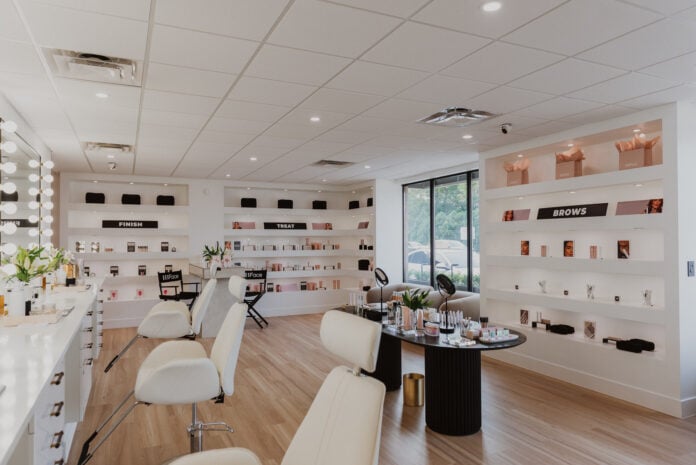
HBFace says it is opening of its newest studio in London, Ontario, located at 620 Richmond Street, Unit G in the Summer.
Founded in 2016 by brow and beauty expert Haley Bogaert, HBFace has grown from a single Toronto studio into a rapidly expanding Canadian beauty brand with locations in Toronto, Oakville, and Sarnia.
Built on the philosophy of accessible luxury, the brand is known for its personalized brow services, skincare, makeup, and curated beauty products designed to simplify routines while helping clients feel confident and empowered, it said, adding that London was identified as a natural next step for the brand’s expansion due to the city’s growing beauty and wellness market, strong sense of community, and alignment with HBFace’s customer base.
“HBFace has always been about more than beauty. It’s about confidence, resilience, community, and helping people feel like the best version of themselves,” says Bogaert. “London is another step in building that vision across Canada, and we cannot wait to welcome this community into our newest home.”
Haley Bogaert
The new studio will reflect HBFace’s signature elevated aesthetic, combining luxury, warmth, and functionality through soft neutral tones, custom lighting, luxe finishes, and thoughtfully curated design details, it said.
Customers can expect HBFace’s signature beauty experience specializing in expert brow services, skincare, makeup, and personalized beauty education delivered by highly trained artists in a welcoming, confidence-driven environment. Clients will also be able to shop the brand’s growing collection of proprietary skincare and beauty products in studio, added the company.
Known for its hands-on, education-focused approach, HBFace said it continues to differentiate itself through customized services, natural results, and a philosophy centered around resilience, simplicity, and accessible luxury.
Additional details surrounding the official opening date and launch celebrations will be announced in the coming weeks.
IKEA Canada says it is renewing its partnership with Rainbow Railroad for a third consecutive year, with proceeds from sales of its Rainbow cake expected to bring the retailer’s total contribution to the organization to $600,000 by the end of this year’s Pride season.
The home furnishings retailer announced that it will once again donate all proceeds from sales of its limited-edition Rainbow cake to Rainbow Railroad between June 1 and July 31. The organization helps LGBTQI+ individuals facing persecution and violence access safety through emergency relocation, crisis response and advocacy.
The renewed partnership forms part of IKEA Canada’s broader Pride season initiatives and represents the continuation of a fundraising program that has supported Rainbow Railroad since the relationship began.
“At IKEA, we believe equality is a human right and that everyone deserves a safe place to call home,” said Selwyn Crittendon, CEO & Chief Sustainability Officer at IKEA Canada. “Surpassing half a million dollars in total support for Rainbow Railroad is an important milestone, and a reminder of what’s possible when our customers and co-workers come together for a vital cause. We’re honoured to continue this partnership and to help create a fairer and more equal world for the 2SLGBTQ+ community.”
IKEA Canada renews partnership with Rainbow Railroad to support at-risk LGBTQI+ individuals for a third consecutive year (CNW Group/IKEA Canada Limited Partnership)
Selwyn Crittendon
The company said sales of the Rainbow cake across its Canadian stores will contribute directly to Rainbow Railroad’s efforts to assist LGBTQI+ people facing significant risks in various parts of the world.
“Partnerships like the one we have with IKEA Canada are essential in our work,” said Landsberg-Lewis. “The funds raised through the Rainbow cake directly support LGBTQI+ people who are experiencing extreme risk and need urgent pathways to safety. We are grateful to IKEA Canada, its customers and co-workers for their continued solidarity and support.”
In addition to the fundraising campaign, IKEA Canada outlined several Pride season initiatives taking place across its operations.
The company said all IKEA locations in Canada raised the Intersex-Inclusive Progress Pride flag on May 17, the International Day Against Homophobia, Biphobia and Transphobia, as part of its inclusion efforts.
IKEA Canada also said it plans to donate up to $40,000 to local 2SLGBTQ+ organizations through initiatives that include sales of its STORSTOMMA rainbow-coloured carrier bag and community partnerships. The funds are intended to support organizations that provide inclusive spaces and advocacy within local communities.
The retailer said its support for 2SLGBTQ+ communities extends beyond Pride-related campaigns and fundraising efforts. The company cited its global inclusion plan, education programs focused on unconscious bias and inclusive practices, training and resources related to inclusive language, and employee resource groups such as Rainbow Connections as part of its workplace initiatives.
The Rainbow cake will be available at IKEA stores across Canada until July 31.
The beauty retailer said the initiative, called “Pretty Badass,” will feature Toronto Tempo players, coaches and Canadian athletes as part of a national campaign aimed at highlighting athletes both on and off the court.
The announcement comes as the Tempo begins play as Canada’s first WNBA franchise and expands Sephora Canada’s involvement with the team through a platform that the company says focuses on individuality and self-expression.
The campaign features Toronto Tempo players Marina Mabrey, Kiki Rice, Nyara Sabally, Isabelle Harrison and Temi Fágbénlé, as well as head coach Sandy Brondello and athletes from communities across Canada.
The company said the campaign is designed to challenge perceptions that women must fit into defined categories and instead highlight multiple aspects of their identities.
“Our platform is rooted in celebrating these elite athletes for both their unstoppable talent on the court and their fierce individuality, expanding how the world sees beauty and showing that how they express themselves is exactly what makes them Pretty Badass.”
As part of the launch, Sephora Canada is opening a national social media nomination campaign to identify women who reflect the themes of the initiative.
From June 4 to June 11, Canadians will be able to submit nominations through Sephora Canada’s Instagram account. The company said selected participants will have their stories featured in a national social media campaign and receive courtside tickets to a Toronto Tempo game.
Sephora Canada Tips Off “Pretty Badass” Partnership Platform as a Founding and Official Beauty Partner of the Toronto Tempo (CNW Group/Sephora Canada)
The retailer said the broader campaign will be distributed nationally across television, online platforms, in-arena placements and out-of-home advertising in markets where the Tempo will play. It will also include social media content featuring nominated participants and product integrations.
Sandy Brondello
Tempo head coach Sandy Brondello said the partnership provides an opportunity to showcase players beyond their athletic accomplishments.
“As someone who works with these athletes every single day, I see firsthand their dedication, their drive, and their authenticity” says Brondello. “Sephora Canada’s partnership is a gamechanger because it helps us celebrate these players for every part of who they are, reinforcing that they don’t have to leave any piece of themselves behind.”
Tempo forward Isabelle Harrison said the campaign reflects broader themes tied to visibility and representation.
“Being part of this moment goes beyond basketball. It’s about how we show up as ourselves and what that represents for the next generation. When Canadians see us on and off the court, they should see possibility, individuality, and a new way of thinking about beauty. That’s what makes this so powerful. It’s about being unapologetically who we are”, says Harrison.
Sephora Canada and CIBC were previously announced as the first founding partners of the Toronto Tempo.
The Tempo was awarded to Toronto in 2024 as the WNBA’s first franchise outside the United States and began play this season as the league’s 14th team.
The “Pretty Badass” campaign is scheduled to roll out nationally throughout the team’s inaugural season.
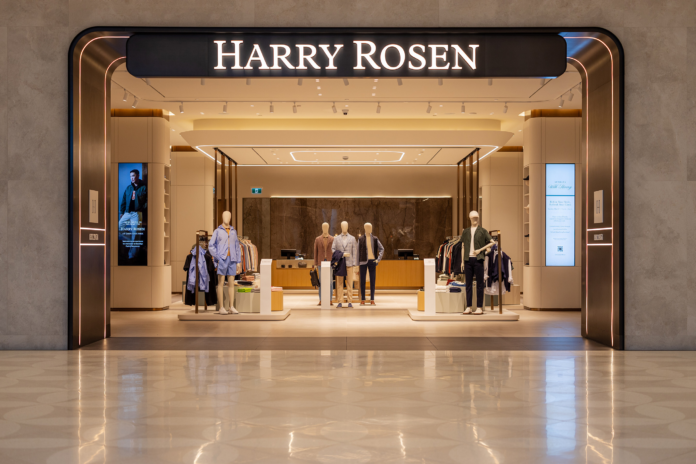
Harry Rosen store at Oakridge Park in Vancouver BC. Photo: Harry Rosen
Moments after Harry Rosen opened the doors to its new Oakridge Park store in Vancouver, President Ian Rosen paused beside a Canali presentation and pointed out what was missing.
“One thing you’ll note here is no suits.”
The observation came early in a guided walkthrough of the approximately 17,000-square-foot store, yet it captured much of what Harry Rosen is seeking to accomplish with its newest generation of retail environments.
For decades, the company built its reputation on tailoring and formal menswear. Those categories remain central to the business. Yet at Oakridge Park, luxury sportswear, contemporary fashion, hospitality, flexible merchandising, and immersive design play a larger role than ever before.
Ian Rosen
The store represents the latest chapter in a national transformation strategy that began with a prototype renovation at West Edmonton Mall in 2024, continued with the reimagining of Harry Rosen’s First Canadian Place location in downtown Toronto, and will eventually culminate with the opening of a new flagship on Cumberland Street in Toronto’s Yorkville neighbourhood.
Oakridge Park serves as an important milestone in that evolution.
The opening comes as Oakridge Park establishes itself as one of the most ambitious luxury retail developments ever undertaken in Canada. The mixed-use project has assembled an extraordinary concentration of luxury brands, including Louis Vuitton, Chanel, Dior, Prada, Moncler, Brunello Cucinelli, Christian Louboutin and others, while additional luxury tenants continue to join the development. This fall, Giorgio Armani will open its only standalone Canadian boutique at Oakridge Park, further strengthening the project’s luxury positioning.
For Harry Rosen, the development offered an opportunity to showcase the latest evolution of a concept that has been years in development.
“We have a new concept for Harry Rosen, building off the concept store we launched in Edmonton,” Rosen said while leading Retail Insider through the space on opening day.
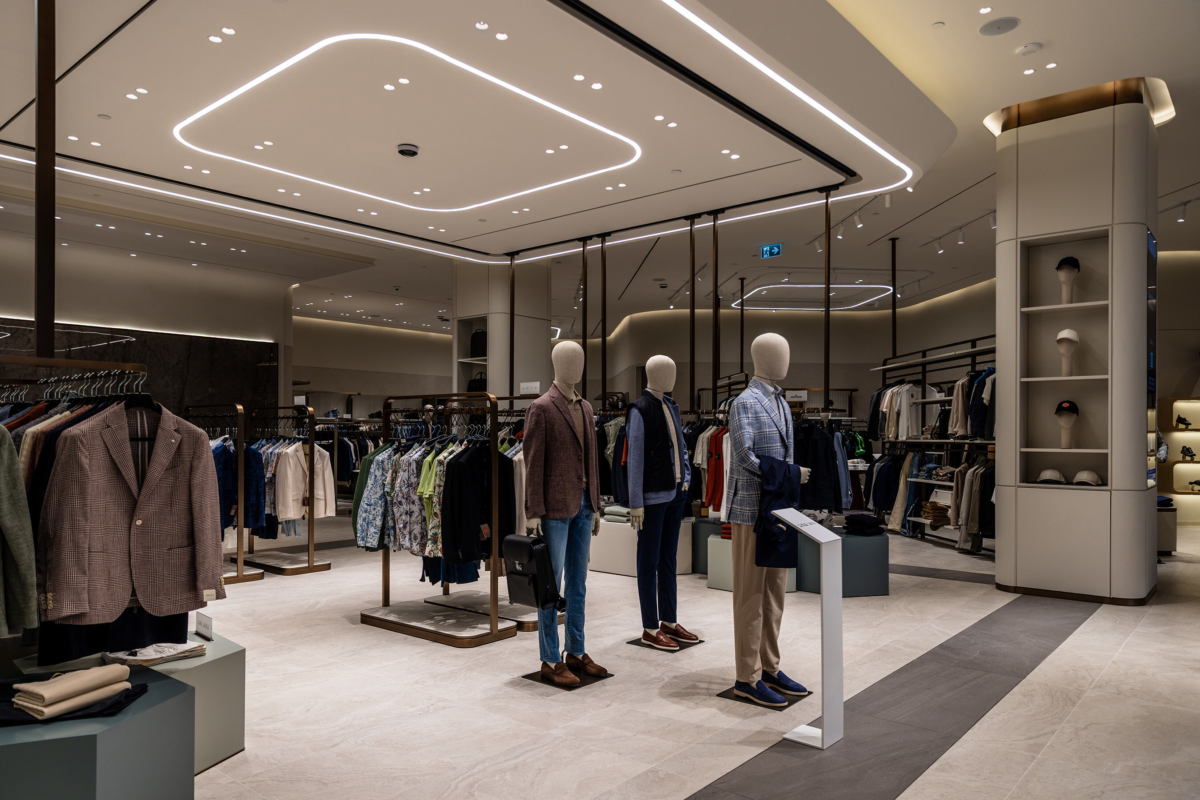
Sportswear & Contemporary area at Harry Rosen, Oakridge Park in Vancouver
Building on a National Transformation
The Oakridge Park store did not emerge in isolation. In 2024, Harry Rosen unveiled a prototype store design at West Edmonton Mall as part of a broader $50 million investment program aimed at modernizing its physical stores. The project introduced new approaches to merchandising, customer service, hospitality, and store design.
Many of those ideas later appeared at First Canadian Place in Toronto’s financial district.
At Oakridge Park, they have been refined even further. Rather than simply updating finishes or fixtures, Harry Rosen has rethought how customers move through the store, how products are presented, and how service is delivered. The result is a retail environment that feels noticeably different from the traditional menswear stores many customers may remember.
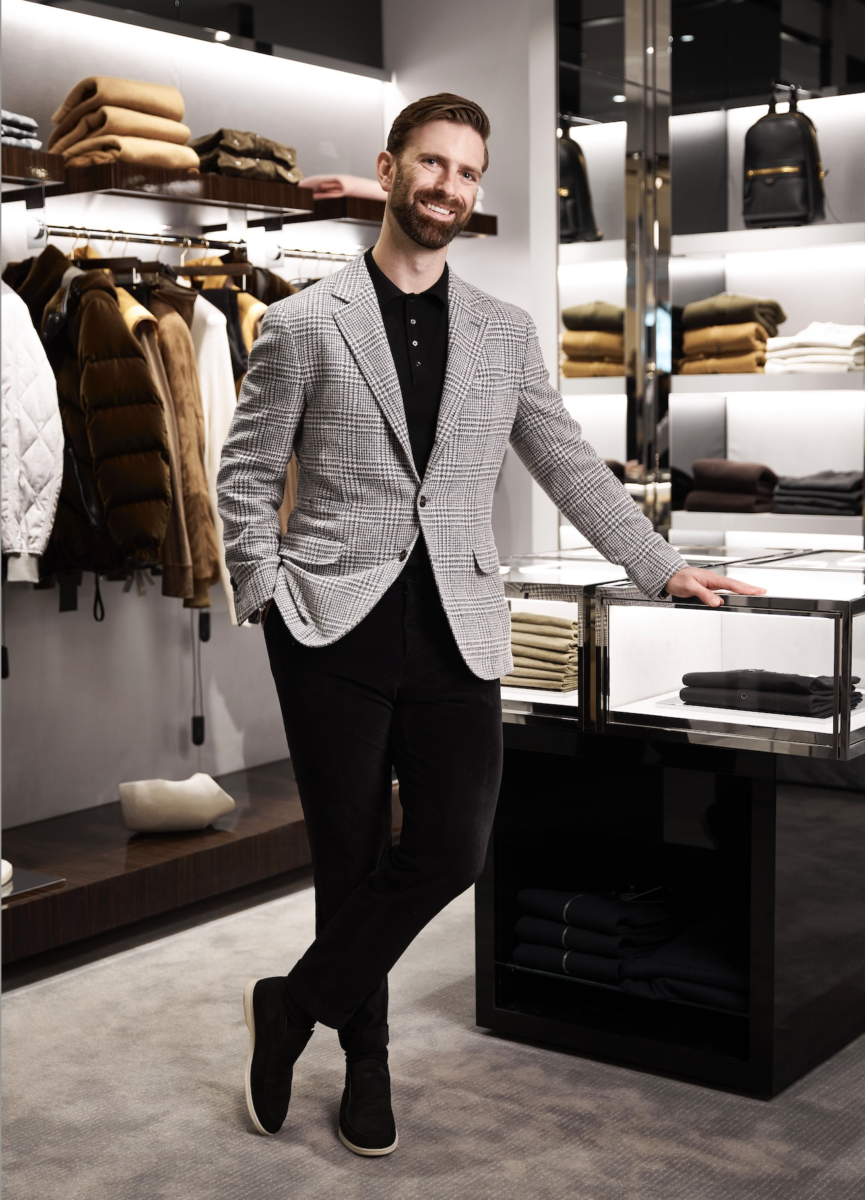
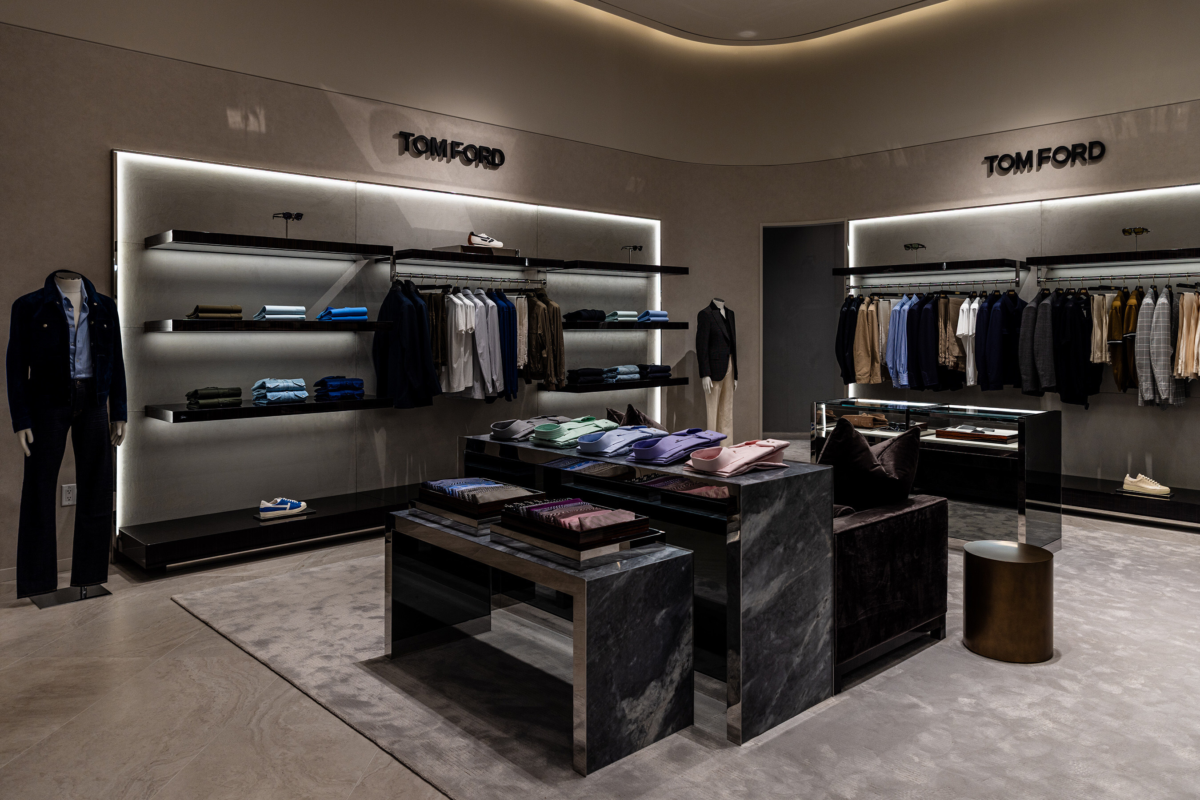
Tom Ford boutique at Harry Rosen, Oakridge Park, Vancouver. Photo: Harry Rosen
Luxury Partnerships Take Centre Stage
One of the first things customers encounter is a stronger emphasis on luxury sportswear and contemporary fashion. Canali’s presentation serves as an example.
While the brand remains closely associated with tailoring, the assortment at Oakridge Park places considerable emphasis on luxury casualwear and sportswear, reflecting broader changes occurring throughout the menswear market.
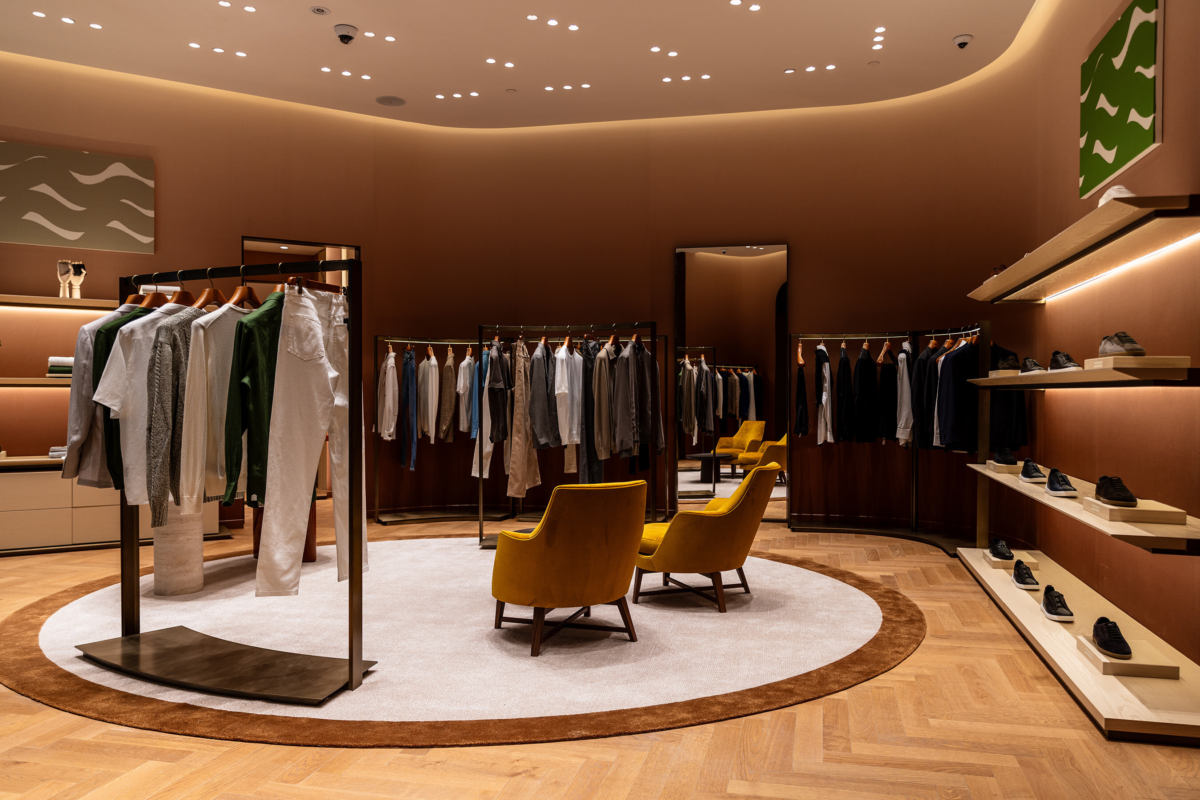
The same philosophy extends throughout the store. Dedicated luxury environments for ZEGNA and TOM FORD anchor the assortment, while contemporary brands such as Stone Island and Represent introduce a more fashion-forward perspective.
Among the most notable additions is Harry Rosen’s first dedicated Isaia shop-in-shop. The Neapolitan tailoring brand occupies a prominent position within the store and provides a distinctive complement to the retailer’s existing luxury assortment.
“We felt like a Neapolitan, expressive tailoring brand was the right thing to complement ZEGNA, Canali and Tom Ford,” Rosen said.
The addition reflects Harry Rosen’s ongoing strategy of deepening relationships with luxury brands while creating more immersive environments for customers.
Zegna boutique at Harry Rosen, Oakridge Park, Vancouver. Photo: Harry Rosen
The Kingdom Reimagines Tailoring
Although sportswear receives increased attention throughout the store, tailoring remains fundamental to Harry Rosen’s identity.
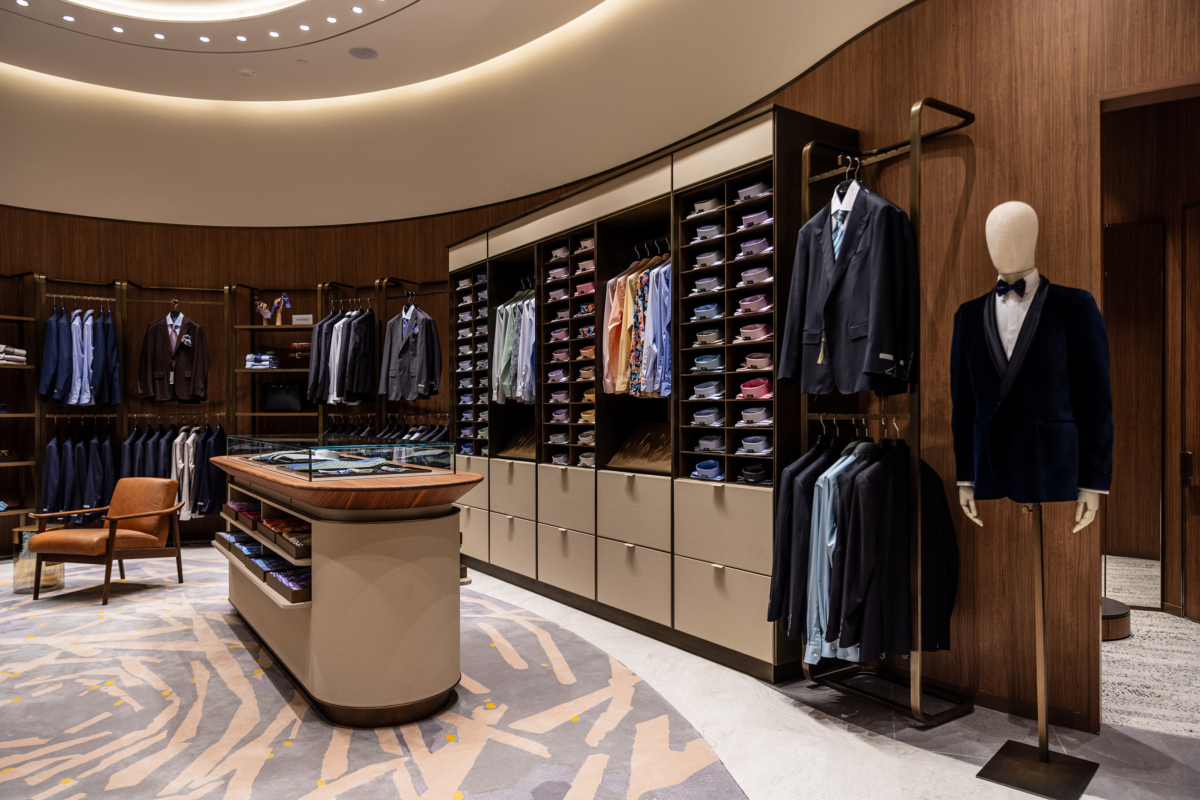
One of the most impressive areas within the new location is a dedicated tailoring destination known internally as “The Kingdom.”
The space feels less like a traditional menswear department and more like a luxury tailoring lounge.
Multiple brands are presented within a single environment, allowing customers to compare options across labels without moving between separate branded areas.
Canali, Giorgio Armani, ZEGNA, Harold (Harry Rosen’s private label), and other collections are merchandised together around customer needs rather than brand boundaries.
According to Rosen, the concept reflects how many customers actually shop today.
“So many people walk into our stores and simply say they need a suit,” he explained. “Rather than focusing on a specific brand, we can bring them into the right environment and help them find the best solution.”
Private fitting salons surround the area, creating a more intimate setting for customers purchasing tailored clothing and made-to-measure garments.
Hospitality also plays a central role. Customers can enjoy espresso, champagne, or a scotch while working with associates, transforming what has traditionally been a transactional purchase into a more personalized experience.
The concept reflects a broader shift occurring throughout luxury retail, where service and experience increasingly differentiate physical stores from online shopping.
Men’s tailoring area at Harry Rosen, Oakridge Park, Vancouver. Photo: Harry Rosen
Design Inspired by the Craft of Tailoring
The Oakridge Park store was designed in collaboration with Toronto-based dkstudio architects inc., incorporating numerous references to tailoring and menswear craftsmanship throughout the space.
Among the most memorable design elements is the tailoring area itself. Featuring curved forms instead of traditional right angles, the space was inspired by the shape of tailor’s shears.
“There are a bunch of menswear inspirations in the whole design,” Rosen said.
The philosophy extends across the entire store.
“You’ll notice there’s really no hard edges. We wanted a natural flow through the space.”
The result is an environment that feels remarkably cohesive. Rounded architectural forms, curved walls, and carefully planned sightlines guide customers through the store while creating a sense of movement and discovery.
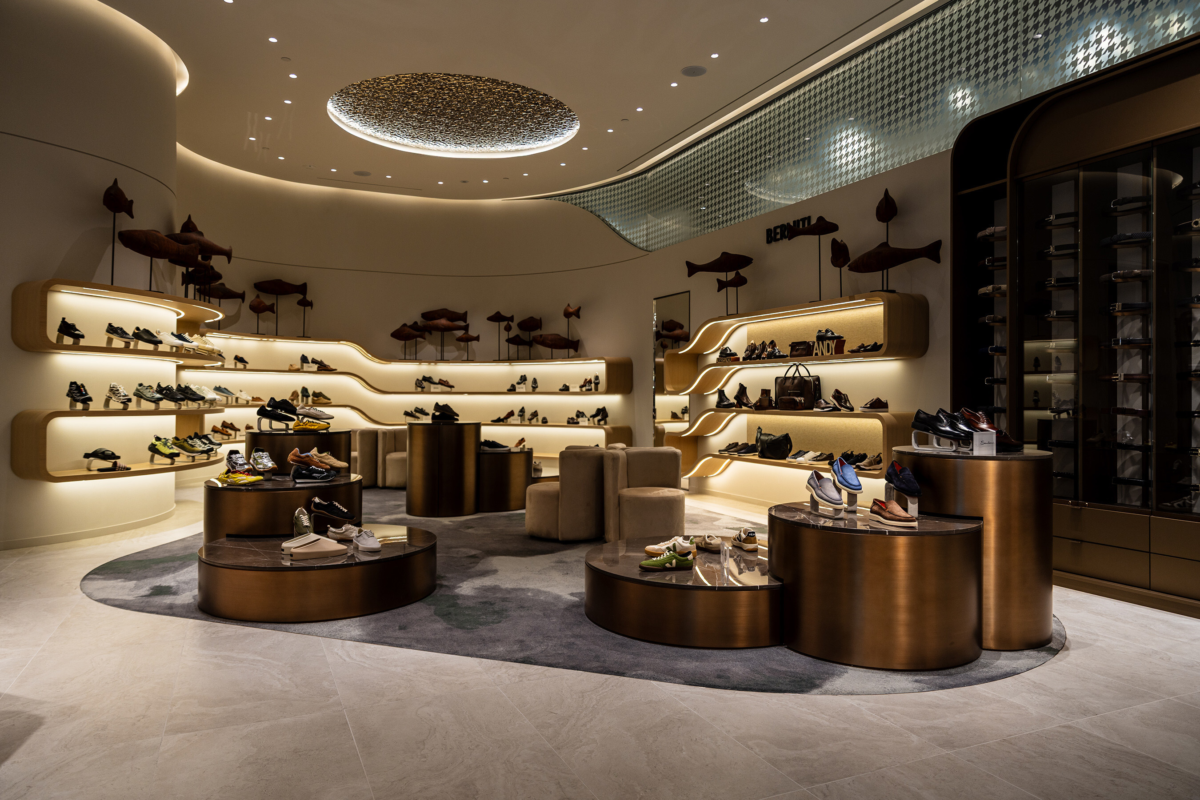
Among the most visually striking areas is the footwear department, where sweeping curved walls frame a dramatic display fixture inspired by a measuring tape. The area serves as one of the store’s defining visual statements and reinforces the broader tailoring narrative that runs throughout the design.
Together, the design elements create a store that feels both contemporary and connected to Harry Rosen’s heritage.
Men’s shoe department at Harry Rosen, Oakridge Park, Vancouver. Photo: Harry Rosen
A Store Designed to Change
Near the centre of the store is a flexible merchandising area known internally as “Center Stage.” Unlike traditional retail environments where displays can remain unchanged for extended periods, Center Stage was designed to evolve continuously.
A ceiling-mounted track system allows fixtures and displays to be repositioned for seasonal presentations, pop-up concepts, brand activations, and other merchandising initiatives.
“This could be a pop-up shop for a brand. It could be an outerwear shop. It could be a gift shop. It could be anything,” Rosen said.
The goal is to ensure customers encounter something different each time they visit.
“We don’t want clients seeing the same thing twice.”
The philosophy extends beyond Center Stage.
Throughout the store, much of the inventory has been moved behind the scenes into dedicated back-stock areas, allowing styling, visual merchandising, and product storytelling to take precedence over product density.
“The client needs to see the ideas now,” Rosen said.
The approach represents a meaningful departure from older retail models that prioritized displaying as much inventory as possible on the sales floor.
The Oakridge Park store was designed with Vancouver in mind.
Luxury sportswear and contemporary fashion play a larger role throughout the assortment than many customers might expect from a traditional menswear retailer.
Brands such as Stone Island and Represent are featured alongside established luxury names including ZEGNA, Canali, Hugo Boss, Emporio Armani, and TOM FORD.
“We’re definitely bringing a lot more contemporary fashion for the Vancouver market,” Rosen said.
While Harry Rosen’s heritage remains rooted in tailoring, the Oakridge Park store places noticeably greater emphasis on luxury casualwear than many traditional menswear environments. The merchandise mix reflects both the character of the Vancouver market and broader shifts occurring across luxury fashion, where versatility and lifestyle-driven dressing continue to gain importance.
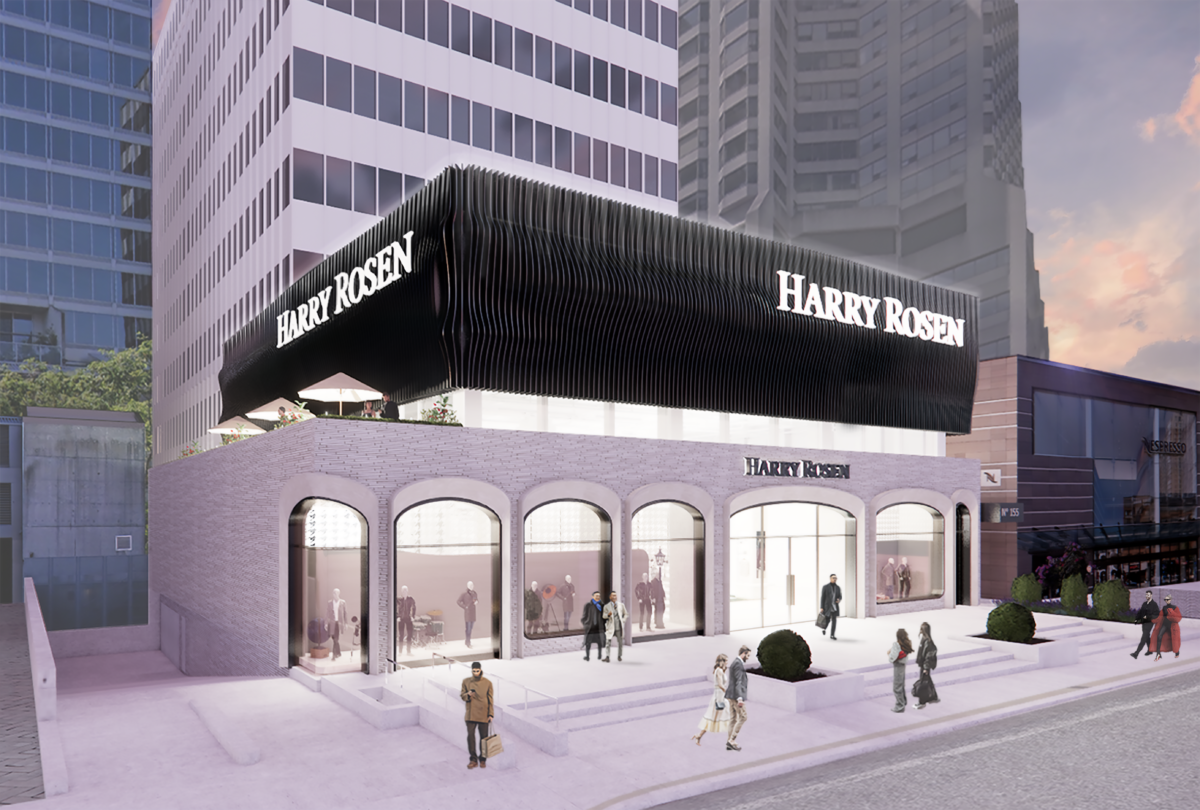
Rendering of the new Harry Rosen flagship store at 153 Cumberland Street, opening in the spring of 2026. (Rendering: dkstudio architects inc)
Part of a Broader Evolution
The Oakridge Park store represents the latest step in Harry Rosen’s ongoing store transformation strategy.
What began with a prototype renovation at West Edmonton Mall has since expanded to First Canadian Place in Toronto and now Oakridge Park, with a new flagship on Cumberland Street in Yorkville expected to open in the coming months.
Each project has further refined concepts around hospitality, merchandising, design, and customer experience, while maintaining the tailoring expertise that has defined the company for decades.
Moments after opening, Rosen pointed to a Canali presentation and observed that there were no suits. By the end of the tour, the reasoning had become clear.
Tailoring remains fundamental to Harry Rosen’s identity, but the company’s newest stores are being designed around a broader vision of luxury menswear, one that incorporates sportswear, hospitality, flexibility, design, and experience alongside the craftsmanship that built the business.
“We’ve built a store that we think is incredible for every type of guy that’s going to be shopping through Harry Rosen,” Rosen said. “And we’ve built it specifically for the Vancouver market.”