A new fast-casual restaurant specializing in customizable Vietnamese pho dishes is set to open in Toronto this September, introducing what its operators describe as Canada’s first build-your-own pho concept.
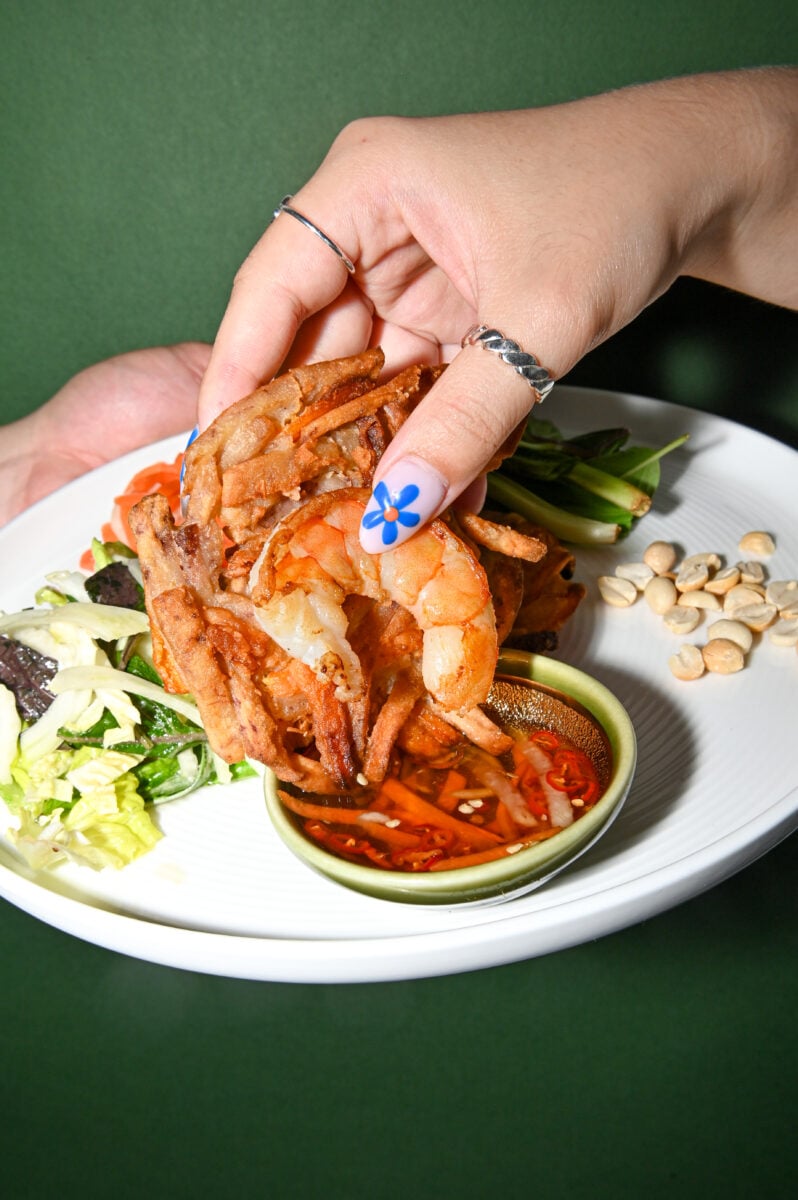
Renso Pho-Potle will open at 506 Queen St. W. in September, offering customers the option to customize pho by selecting their broth, protein, rice and toppings. The restaurant will also serve dry pho alongside traditional broth-based bowls.
The launch marks the latest venture from Renso Group, which says it specializes in authentic Asian foods and food products with a focus on Vietnamese agriculture. The company said the restaurant concept has been in development for several years and is part of a broader strategy centred on a customizable fast-casual dining model.
Renso Pho-Potle photo
Founder Linda Vu said the concept aims to make pho more adaptable to changing consumer preferences while positioning the business for future expansion.
“We saw an opportunity to bring something new to Canada, taking a dish people already love and making it more accessible, customizable and fast,” said Vu. “This is just the beginning. Our goal is to build Renso Pho-Potle into a concept that can grow in communities across the country.”
The restaurant will offer customers a choice of ingredients to create individual meals, including traditional broth-based pho as well as dry pho, which the company is introducing as an alternative preparation.
According to the company, the format is designed to provide diners with greater flexibility while maintaining the flavours associated with traditional Vietnamese pho.
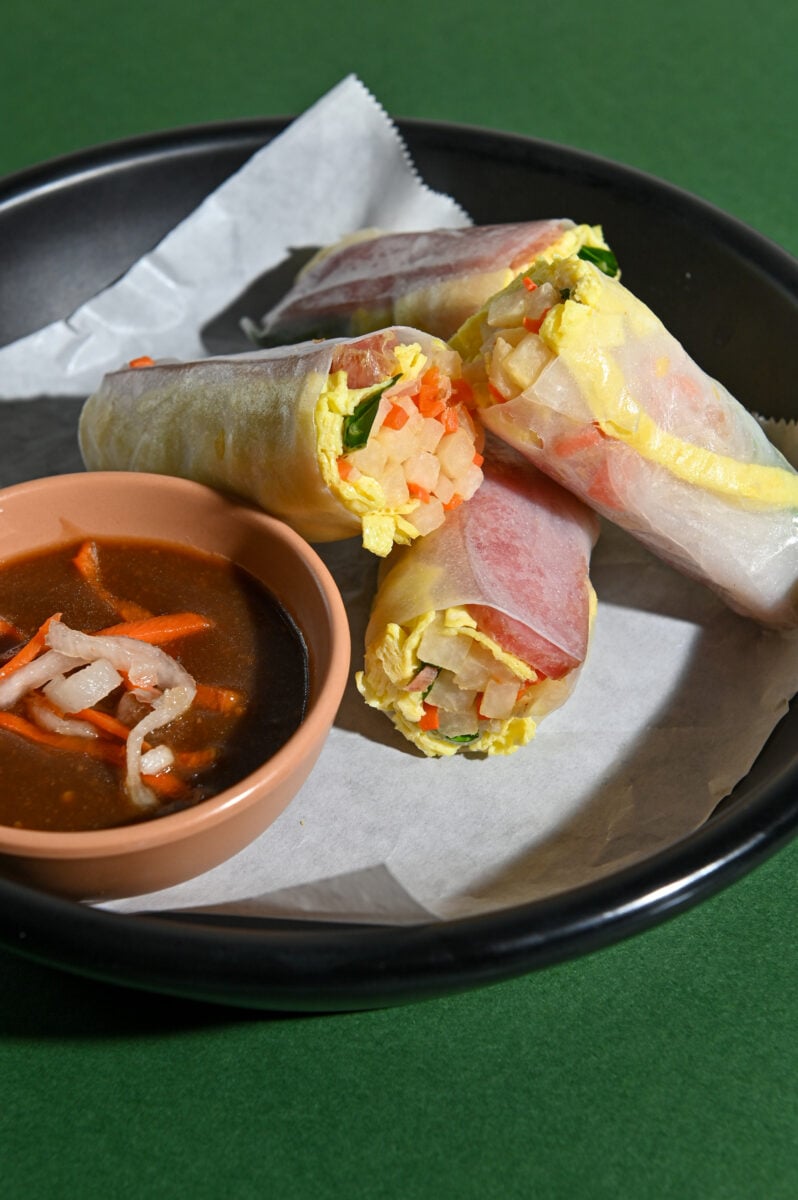
Renso Pho-Potle photo
Chef Bich Nguyen said the concept was developed with an emphasis on preserving the characteristics of the dish while adapting it to a fast-casual service model.
“We’ve worked carefully to honour the flavours that make pho so distinctive, while adapting them into a format that fits modern lifestyles,” says Chef Bich Nguyen. “It’s about balancing the integrity of the ingredients while making the experience simple and engaging for guests.”
In addition to its food offerings, the restaurant will include a gathering space intended to host events, pop-ups, tastings and community nights. The company said the venue will also feature special events led by Renso Pho-Potle chefs to educate customers about pho.
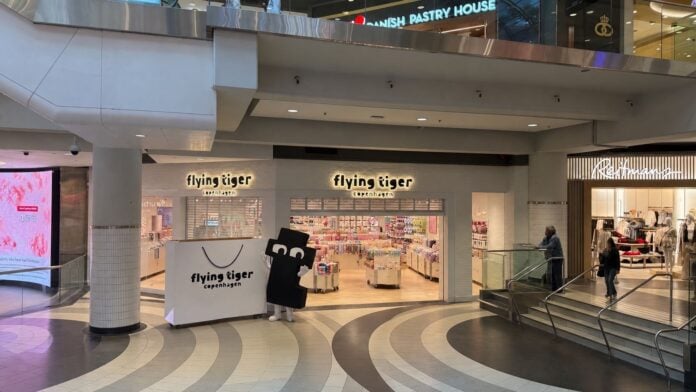
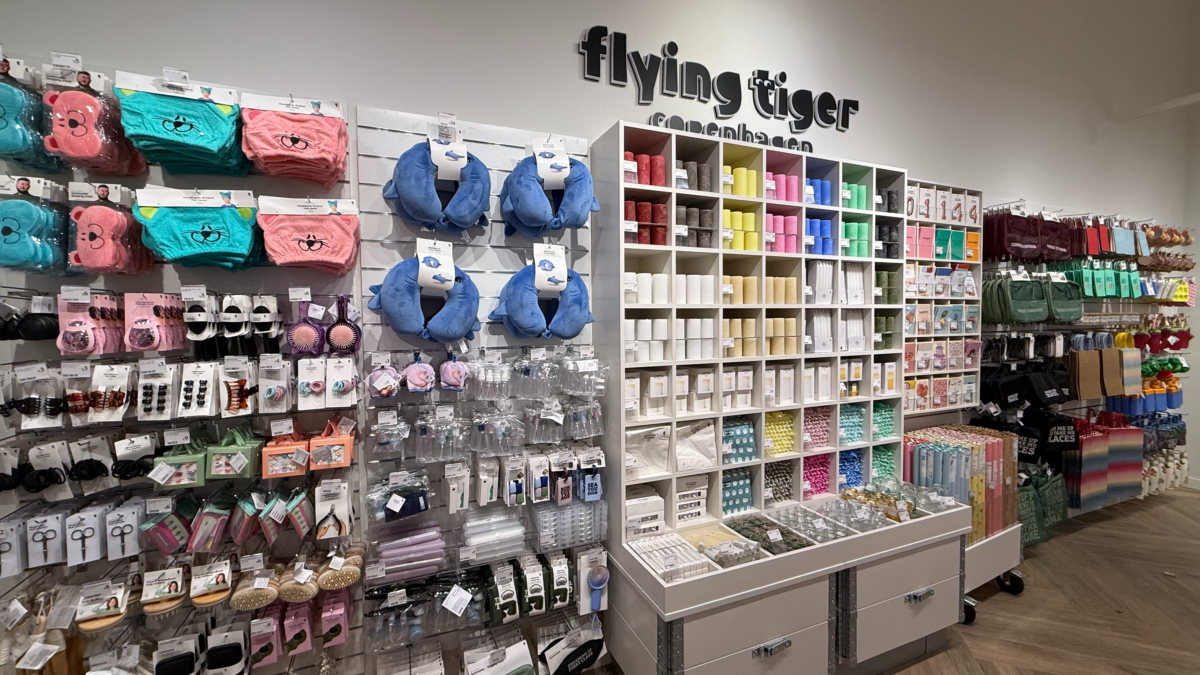
Flying Tiger Copenhagen at CF Toronto Eaton Centre. Photo: Craig Patterson
Flying Tiger Copenhagen has opened its first Canadian store at CF Toronto Eaton Centre, bringing one of Europe’s most recognizable specialty retail concepts to Canada as part of a broader Greater Toronto Area rollout.
Retail Insider attended an invitation-only preview ahead of the public opening, where executives from Flying Tiger Copenhagen, Canadian partner Fox Group, shopping centre owners, retail brokers and industry guests toured the store before it opened to consumers.
Flying Tiger is not entering Canada with a single test location. The retailer is opening first at CF Toronto Eaton Centre, followed by Vaughan Mills, Scarborough Town Centre, Square One Shopping Centre and CF Markville later this year.
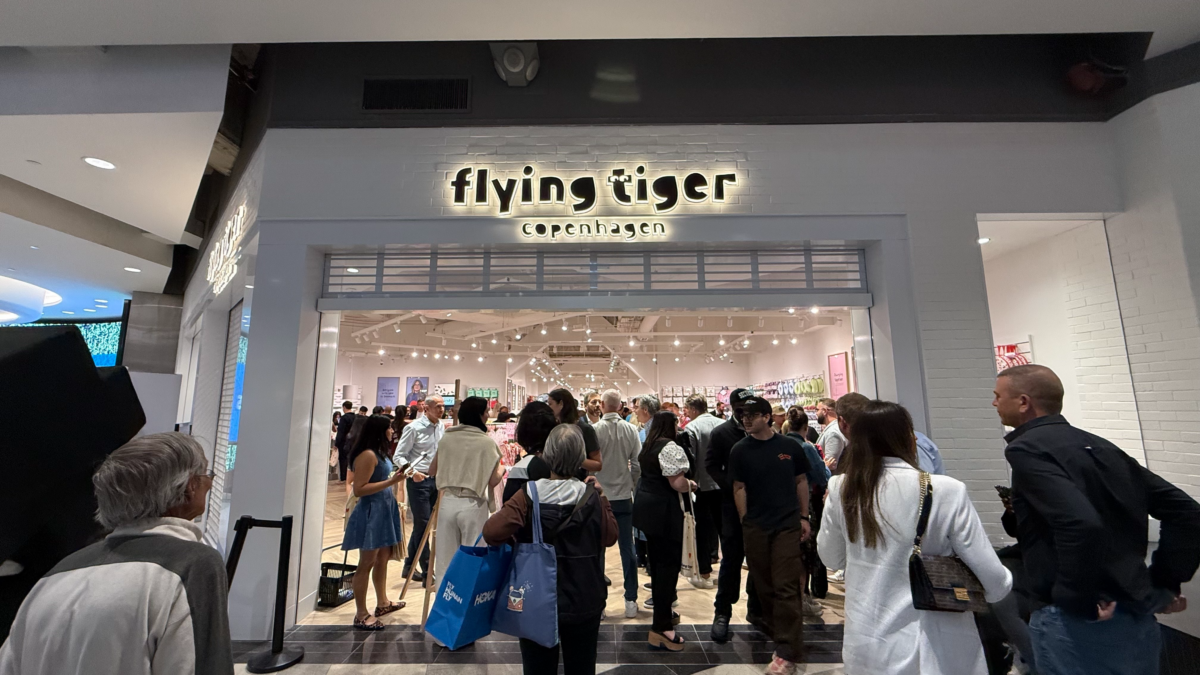
Crowds at the media-preview for Flying Tiger Copenhagen at CF Toronto Eaton Centre, June 25, 2026. Photo: Craig Patterson
The launch attracted attention well beyond the usual store-opening crowd. Among those attending the preview was Casdin Parr of Odyssey Retail Advisors, who is leading Flying Tiger’s Canadian real estate strategy on behalf of Fox Group. Executives from Oxford Properties were also present as the retailer prepares to open in several major GTA shopping centres.
For Flying Tiger, the opening introduces Canadian consumers to a retailer known for affordable, Danish-designed products and a store layout that encourages browsing. For landlords, it adds a tenant with frequent product changes, broad demographic appeal and merchandise that gives shoppers reasons to return.
Richard White, CEO of Flying Tiger North America, said Canada represents a significant opportunity.
Richard White, CEO of Flying Tiger North America
“It’s a very big country and there’s a lot of opportunity,” White told Retail Insider during the preview, adding that Fox Group Canada has developed a plan for the rollout.
First Canadian Store Opens in Downtown Toronto
The CF Toronto Eaton Centre location gives Flying Tiger immediate exposure in North America’s busiest shopping centre. The property draws office workers, tourists, students, downtown residents and regional shoppers, making it a strategic starting point for a retailer introducing a new concept to the market.
White said Flying Tiger expects to have five GTA stores operating within a short period.
“We’ve got quite a rapid rollout in the GTA,” he said. “Over the next few weeks we’ll be opening five stores.”
The first wave will test Flying Tiger across several types of shopping centre environments, including downtown Toronto, large suburban regional malls and properties serving family-oriented communities.
That approach gives Fox Group and Flying Tiger an early read on how the concept performs across different customer bases while building brand awareness faster than a single-store launch.
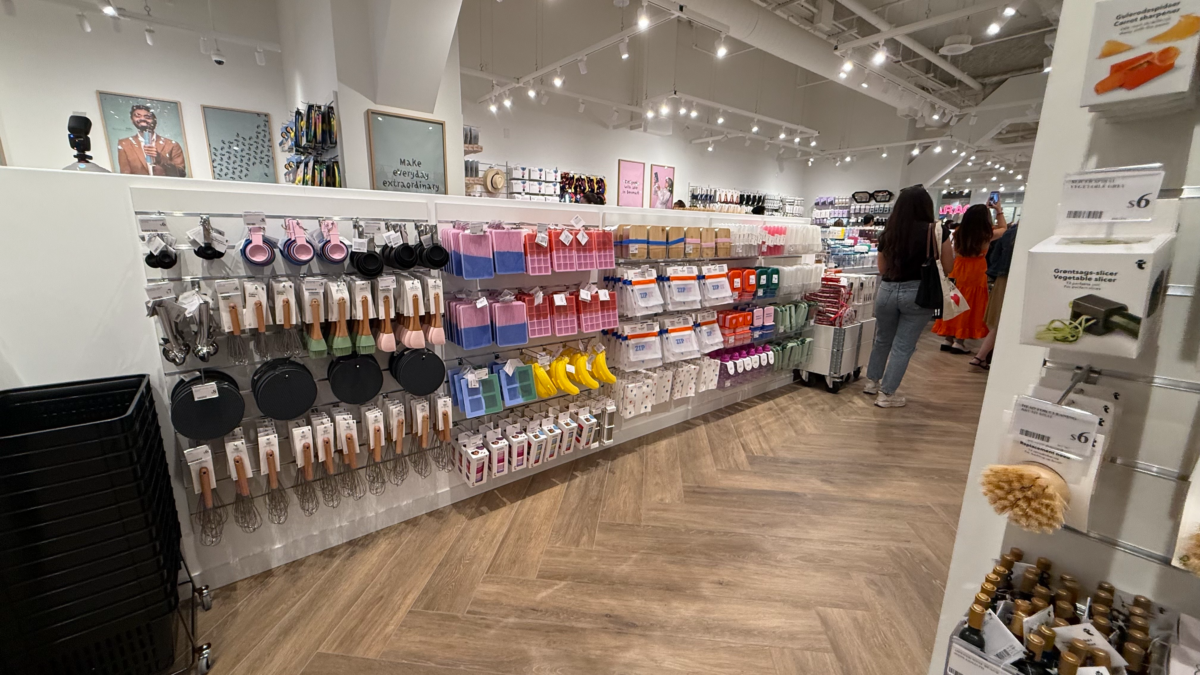
Flying Tiger Copenhagen at CF Toronto Eaton Centre. Photo: Craig Patterson
A Layout That Makes Customers Browse
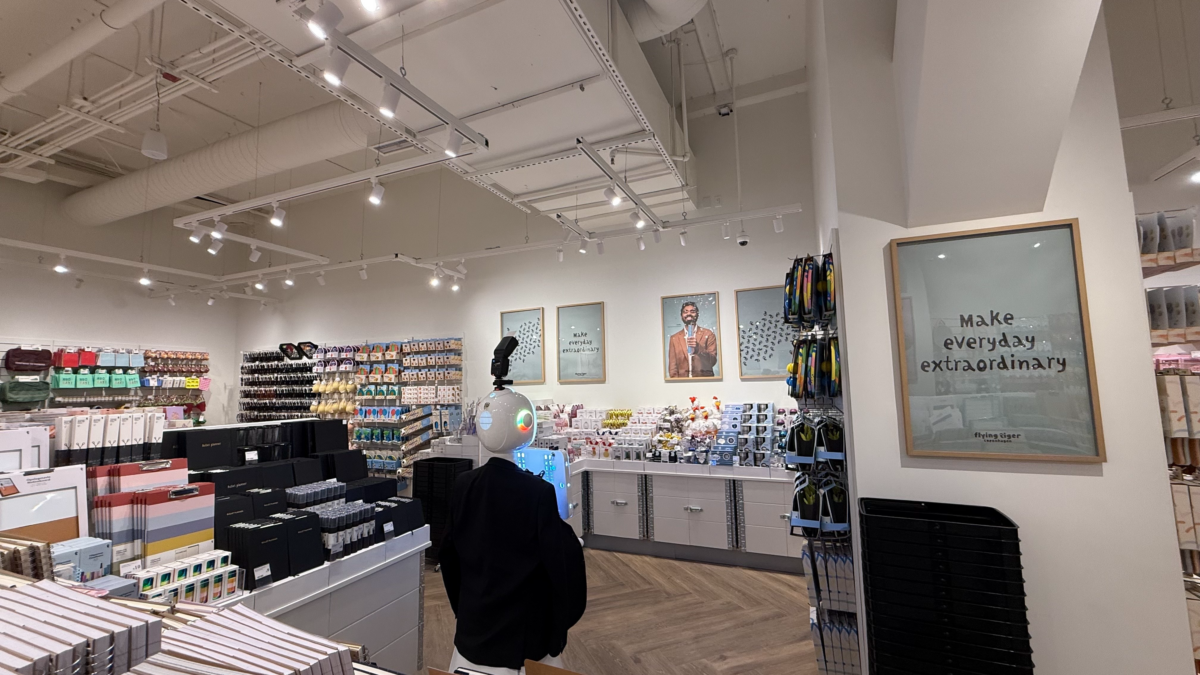
Flying Tiger’s store design is central to the concept. Customers entering the CF Toronto Eaton Centre store are guided along a pathway that passes through the retailer’s merchandise categories before reaching the checkout. There is no direct route to the cash area. The store leads visitors through stationery, kitchenware, home décor, toys, craft supplies, party goods, travel accessories, seasonal merchandise and confectionery.
White said Flying Tiger organizes its stores around merchandise categories and wants customers to encounter each one.
“We want to expose everyone to all those 14 categories as they make their way around the maze,” he said. “You should walk around the store. If you’re not smiling by the time you come out, you’ve missed something.”
Retailers have used guided shopping paths for decades because they expose customers to more merchandise. IKEA is the best-known example. The principle is straightforward: when shoppers see more products, there are more opportunities for discovery and impulse purchases.
Flying Tiger applies that idea in a smaller footprint. A customer who enters for stationery may pass kitchenware, candles, toys, craft supplies and party decorations before reaching the checkout. The pathway increases product exposure, while low price points reduce the hesitation that might otherwise prevent an impulse purchase.
That could have implications for basket size. Retail merchandising research has long associated product exposure, store circulation and impulse purchasing with higher average transaction values, although performance ultimately depends on execution, pricing and customer response.
At Flying Tiger, the layout works with the assortment. Merchandise changes frequently, and new products are placed throughout the store rather than confined to one promotional area. Returning shoppers are meant to see something different.
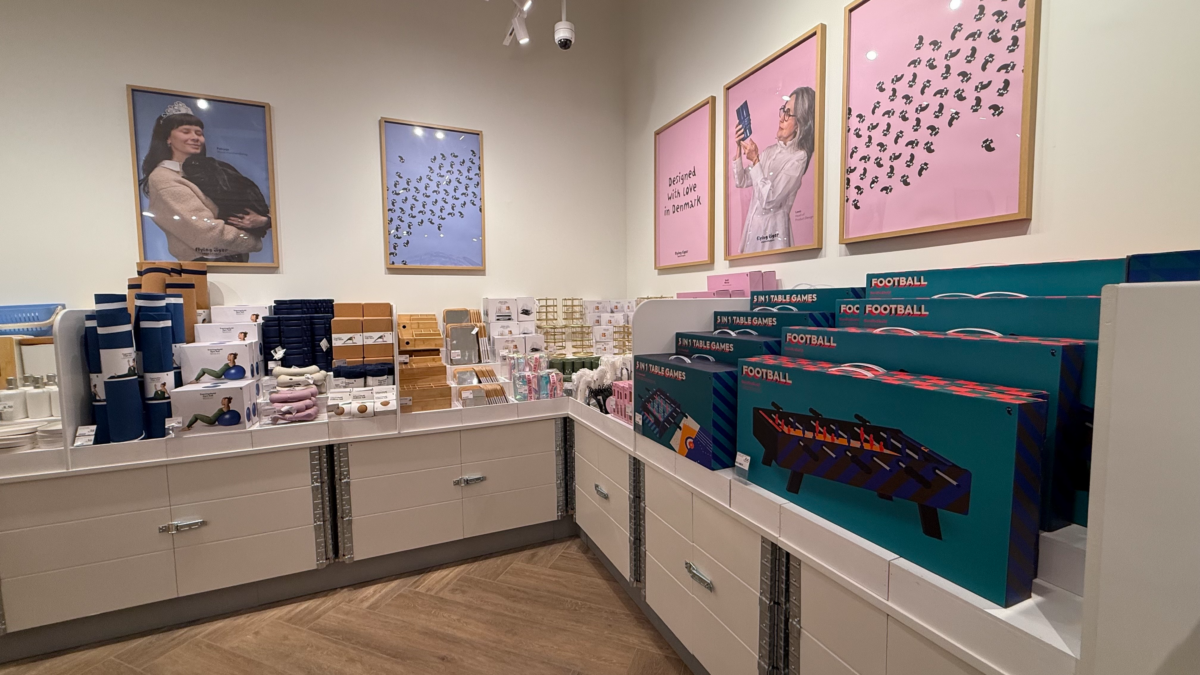
Flying Tiger Copenhagen at CF Toronto Eaton Centre. Photo: Craig Patterson
Merchandise Does the Selling
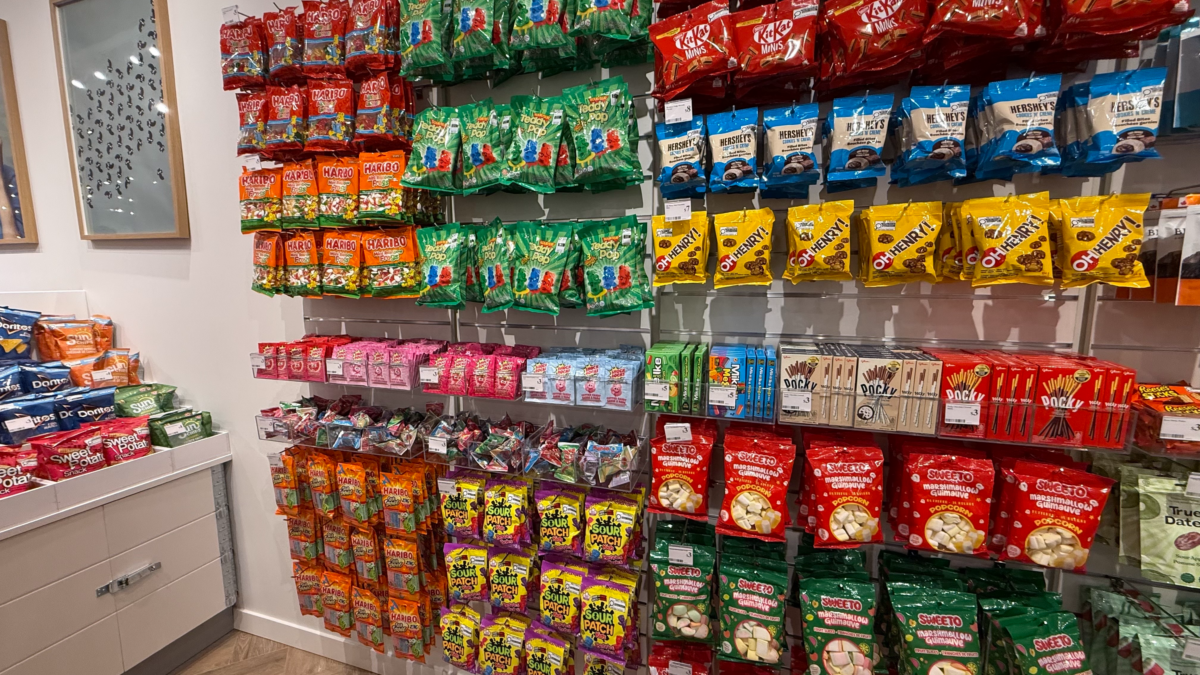
During the preview, the store was neatly organized and relatively free of aggressive promotional signage. Large discount messages were not the focus. Product stories carried the presentation.
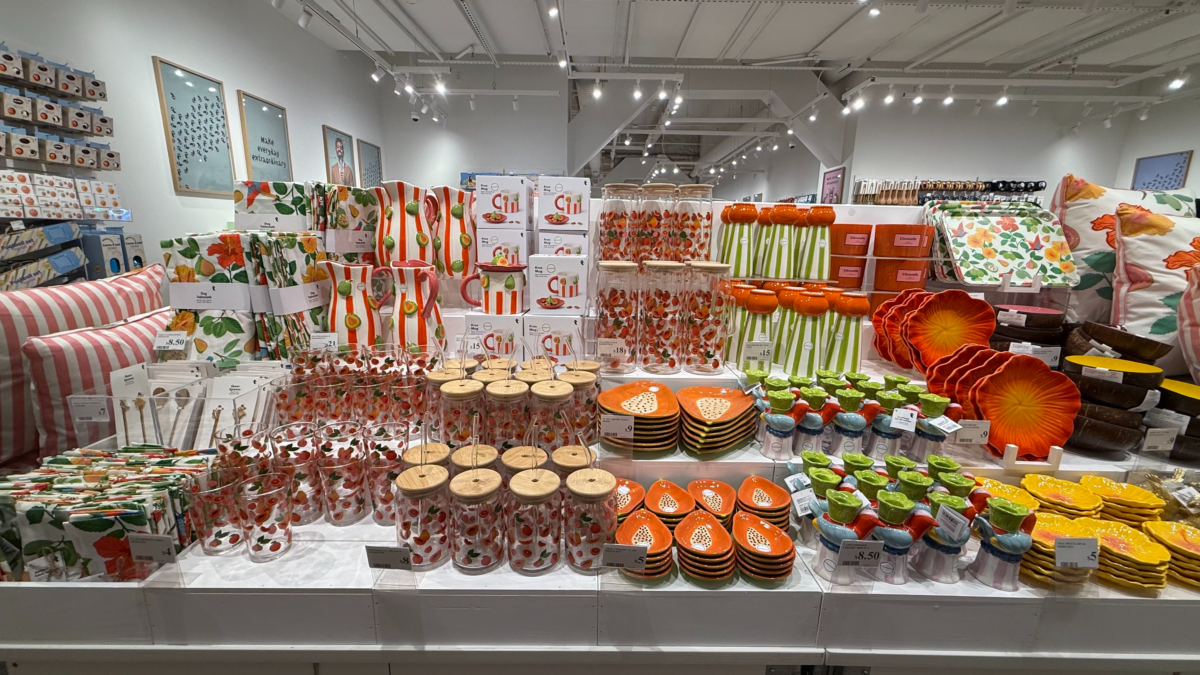
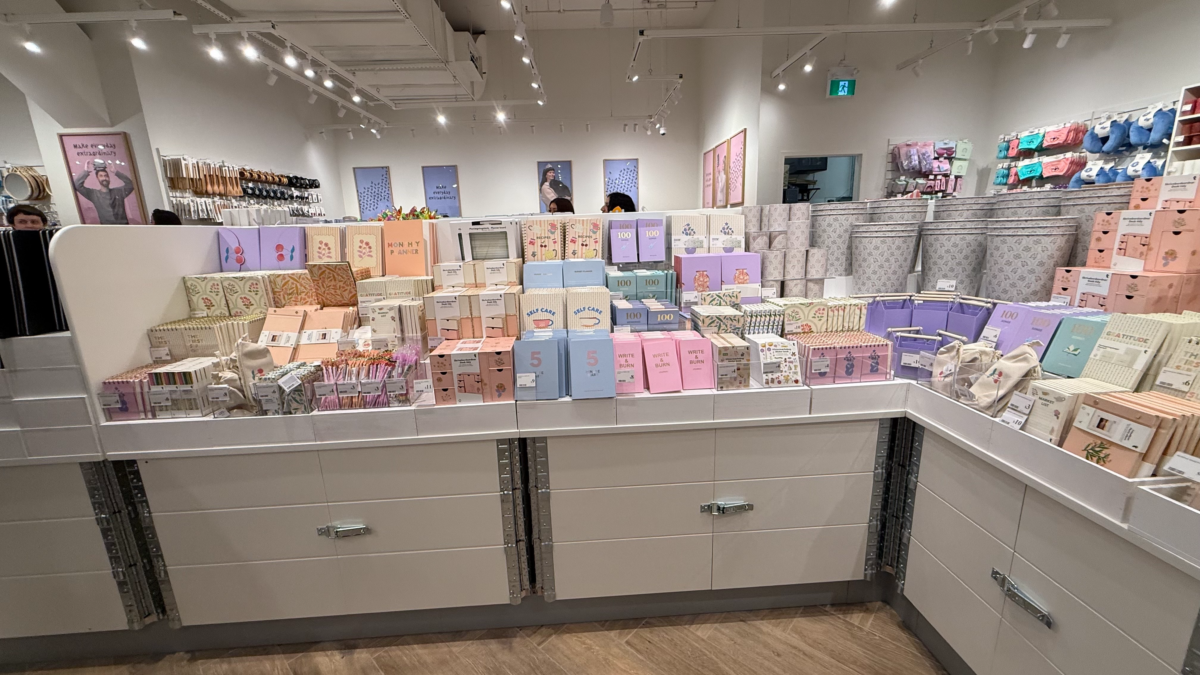
Fruit-themed kitchenware was displayed with matching serving pieces and table accessories. Stationery was grouped by colour and theme. Candles, travel accessories, craft items and reusable household products were arranged in coordinated displays, making it easy to see how items could be purchased together.
The merchandising remains orderly despite the breadth of the assortment. Fixtures are low enough to keep sightlines open, and product collections are grouped clearly across the sales floor.
That matters because Flying Tiger will inevitably be compared with Canadian value retailers, particularly Dollarama. The price points invite the comparison, but the store experience is different. Dollarama is built around convenience, extreme value and broad household utility. Flying Tiger is focused on discovery, design and products shoppers may not have seen elsewhere.
White said customers often come in for one or two items and leave with more after seeing the assortment.
A shopper looking for a notebook may pass party supplies, kitchen accessories, greeting cards, craft kits and seasonal décor. The merchandise is priced low enough that adding another item does not require a major decision.
Flying Tiger Copenhagen at CF Toronto Eaton Centre. Photo: Craig Patterson
Everyday Products with a Danish Twist
Darryl Nash, Senior Vice President of Commercial at Flying Tiger Copenhagen, said the company’s product philosophy is built around making routine items more enjoyable.
Darryl Nash
“We want to make the everyday extraordinary,” Nash said. “Anything that’s routine, cleaning the dishes, it needs to be a sponge that brings you fun, it needs to be colourful, it needs to be joy.”
That thinking appears throughout the CF Toronto Eaton Centre store. Dish sponges are shaped like hearts. Food storage bags feature playful graphics. Kitchenware incorporates bright colours and seasonal patterns. Notebooks and journals are presented in coordinated ranges instead of looking like standard office supplies.
Nash said Flying Tiger’s in-house design team in Copenhagen develops the prints, colours, graphics and product concepts.
“We have an in-house design team in Copenhagen,” he said. “They come up with all of the prints, the colours. It’s all designed in-house.”
That gives Flying Tiger a different position from many value-oriented retailers. Much of the assortment is proprietary, meaning shoppers are not simply comparing the same products against other stores. Flying Tiger’s merchandise is created for Flying Tiger.
The company carries core products year-round while introducing about 300 new items every month. Seasonal campaigns refresh the store throughout the year, giving customers reasons to return for back-to-school, Halloween, Christmas, summer entertaining and other occasions.
For the upcoming back-to-school season, Nash said the retailer’s campaign is built around the phrase “School Shouldn’t Be Boring,” with colourful stationery and school supplies offered at accessible prices.
Flying Tiger Copenhagen at CF Toronto Eaton Centre. Photo: Craig Patterson
Value Without a Traditional Value-Store Feel
Flying Tiger’s pricing will likely be one of its strongest points of appeal in Canada.
White said more than 80 per cent of the assortment is priced below $10, with roughly 27 per cent below $5. That puts much of the store within reach for students, families, office workers and shoppers looking for small gifts, household items or seasonal products.
The value proposition is especially relevant as Canadian consumers remain careful with discretionary spending. Flying Tiger sells products that feel like small indulgences but are priced closer to everyday purchases.
A $4 notebook, $6 candle, inexpensive kitchen tool or low-priced craft item can be added to a basket without the consumer feeling like they are making a major purchase.
The store also avoids the cluttered presentation often associated with low-price retail. Collections are edited and colour-coordinated. Displays are dense, but not chaotic. Customers can browse without feeling overwhelmed by bins of merchandise or large promotional signs.
For shopping centres, that distinction matters. Flying Tiger can attract value-conscious consumers while still presenting as a design-led specialty retailer.
Flying Tiger Copenhagen at CF Toronto Eaton Centre. Photo: Craig Patterson
Why Landlords Are Paying Attention
Flying Tiger’s arrival comes as Canadian shopping centres continue to broaden their tenant mixes.
Traditional apparel remains important, but landlords have spent years adding restaurants, entertainment, wellness, services and retailers that encourage browsing. The goal is to create more reasons for consumers to visit and spend time in enclosed malls.
Flying Tiger fits neatly into that shift. The stores are relatively compact. The assortment spans multiple categories. Merchandise changes frequently. The products appeal across age groups. Price points are accessible. Many items are exclusive to the chain.
Those attributes help explain why the invitation-only preview attracted brokers, landlords and retail executives alongside media. The retailer offers something many shopping centres want: a tenant that can drive casual browsing and repeat visits without requiring a large footprint.
Parr’s involvement through Odyssey Retail Advisors also speaks to the real estate strategy behind the rollout. Flying Tiger’s first Canadian stores are being placed in major GTA shopping centres with strong traffic, different customer profiles and significant regional reach.
Oxford Properties’ presence at the preview further underscored landlord interest as Flying Tiger prepares to open in additional shopping centres.
If the initial GTA stores perform well, the retailer could become an attractive addition to enclosed malls in other Canadian markets.
Flying Tiger Copenhagen at CF Toronto Eaton Centre. Photo: Craig Patterson
Fox Group Builds Another Canadian Platform
Flying Tiger’s Canadian expansion is being led by Fox Group, which has become increasingly active in bringing international retail brands to Canada.
The partnership matters. International retailers often face challenges when entering Canada, including real estate negotiations, staffing, logistics, store operations and adapting to local consumer behaviour. Fox Group gives Flying Tiger an experienced operating partner with the ability to scale the concept beyond one location.
The first five-store rollout also suggests confidence in the model. Instead of opening one Canadian flagship and waiting to assess the market, Flying Tiger is launching across several major shopping centres in quick succession.
That can help build awareness faster. A consumer who sees Flying Tiger at CF Toronto Eaton Centre may later encounter the brand at Square One, Vaughan Mills or another major GTA mall. Repeated exposure helps establish the retailer as a new market entrant rather than a novelty store with one downtown location.
White said the immediate focus is on the GTA, but he sees opportunity across Canada.
Internationally, Flying Tiger operates in a range of settings, including high streets and shopping centres. In Canada, shopping centres are expected to be the primary focus, at least initially.
Flying Tiger Copenhagen at CF Toronto Eaton Centre. Photo: Craig Patterson
Products That Pull People Away From Screens
One of the more interesting elements of Flying Tiger’s assortment is how much of it encourages offline activity.
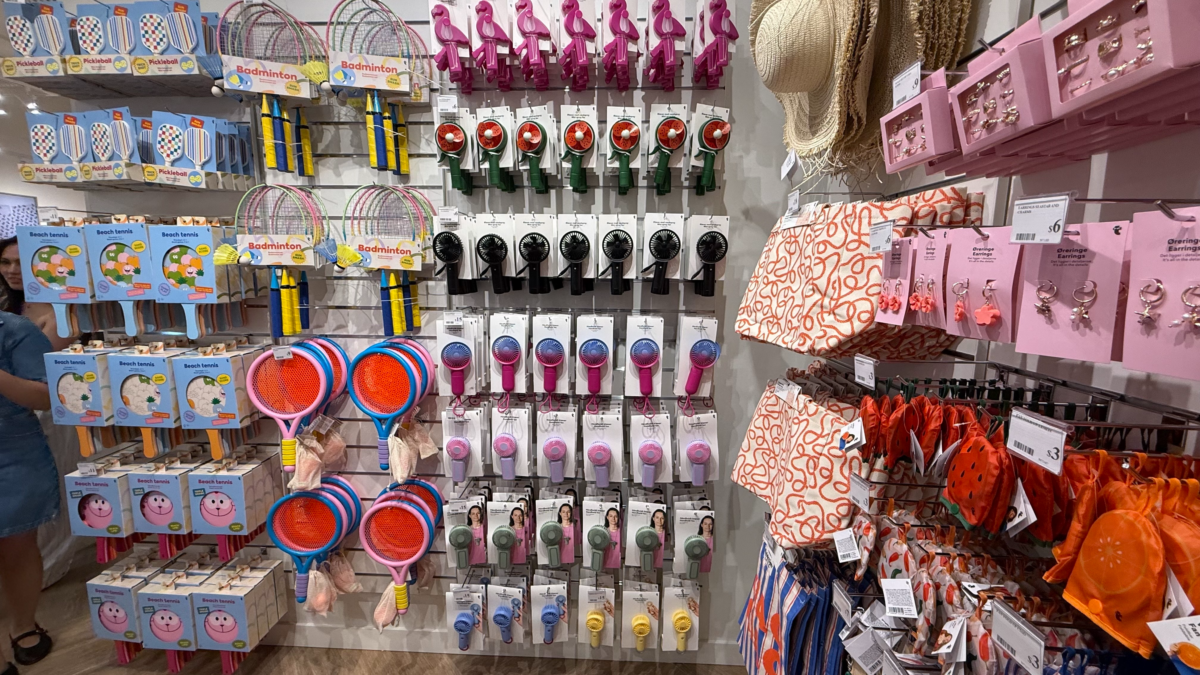
The store carries journals, sketchbooks, canvases, craft supplies, DIY kits, board games, party goods and seasonal products built around entertaining and creativity. Nash said the retailer intentionally keeps technology to a minimum.
Apart from practical items such as charging cables, Flying Tiger focuses on products that support shared activities.
“It’s all about building moments to get together and come offline,” Nash said, describing merchandise intended for creative projects, gatherings and time around the table.
That focus is visible in the merchandising. Summer entertaining displays include tableware, glasses, decorations and accessories. Craft and stationery areas encourage hands-on creativity. DIY products are positioned for group activities, gifting and personalization.
The approach could resonate with Canadian families, students and young adults looking for affordable ways to host, decorate, organize, create and gift without spending heavily.
Flying Tiger is not chasing technology trends. It is selling physical products that encourage customers to do something at home, at school, at work or with other people.
Flying Tiger Copenhagen at CF Toronto Eaton Centre. Photo: Craig Patterson
Sustainability in the Background
White also pointed to sustainability as part of Flying Tiger’s operations.
He said the company has worked to reduce plastic, increase recyclable packaging and evaluate materials earlier in the product development process. He also referenced the retailer’s relationship with Maersk and efforts to use more sustainable shipping options where possible.
Those efforts are not the first thing customers will notice when they enter the store. The immediate impression is merchandise, colour, price and layout. But White said sustainability is part of how the company thinks about product development, packaging and logistics.
For a retailer selling large volumes of affordable goods, the issue will remain important as Flying Tiger expands. The challenge is to keep products accessible while continuing to improve packaging, materials and supply chain practices.
Flying Tiger Copenhagen at CF Toronto Eaton Centre. Photo: Craig Patterson
What Comes Next
The CF Toronto Eaton Centre store gives Canadians their first look at Flying Tiger. The next several months will show how the concept performs across the GTA.
Vaughan Mills, Scarborough Town Centre, Square One Shopping Centre and CF Markville will each test the retailer in different shopping centre environments. Together, the five stores will provide a clearer picture of how Canadian consumers respond to the brand.
Retailers, landlords and brokers will be watching closely. Flying Tiger has succeeded internationally by making everyday products feel less routine. Canada will now determine how far that idea can travel.
Tariffs, viral trend cycles, and fragmented systems have turned inventory planning into one of the most stressful jobs in retail.
DOSS surveyed 661 retail and consumer goods professionals across supply chain, procurement, forecasting, and finance, and what they admitted should raise eyebrows across the industry:
three in four retail professionals (75%) have either lost sleep over an inventory decision or come close to it, losing an average of three hours of sleep;
Seasonal or trend-driven SKUs and perishable goods are tied as the most stressful inventory categories to manage among retail professionals, each cited by 33% of respondents;
one in two retail industry organizations (50%) delayed or canceled purchase orders due to tariff uncertainty in 2026;
More than half of retail professionals (51%) say they sometimes proceed with demand forecasts they know are unreliable, simply because no better alternative exists;
64% of retail industry organizations have not deployed AI or machine learning for inventory management, and among those with no plans to adopt, 59% say it’s just not a current priority;
Among the one in four retail industry organizations left holding excess inventory after a viral trend faded, TikTok was the responsible platform 60% of the time, followed by Instagram (13%) and YouTube (7%).
David Appel, VP of Marketing for DOSS, spoke with Retail Insider about the issue.
Question: How are tariffs and ongoing uncertainty reshaping inventory planning strategies in 2026?
Answer: Tariffs have thrown many into disarray. In the past, the formula for success seemed clear. It was find trusted foreign suppliers, create lasting partnerships, focus on costs, and keep the overhead low. Yet, once tariffs are changed, everything that went into these calculations instantly turns to dust. Half of the businesses surveyed deferred or canceled POs during this year alone due to tariff unpredictability. It is not surprising that more savvy companies have started to look at other geographic sources at the risk of higher costs. Moreover, they have started to add safety nets and plan according to scenarios rather than relying solely on the numbers. It may decrease efficiency temporarily, yet it will help maintain stability, which has never been easy to ensure.
Q: Why are so many retail professionals still relying on demand forecasts they know are unreliable, and what needs to change?
A: In some ways, it has become an issue of not yet knowing what better looks like. Forecasting processes become deeply ingrained in planning, budgeting, and other activities within an organization. As far as the human aspect goes, it is hard to recognize that what worked in the past may become unreliable and inefficient. According to our survey, 51% of professionals continue to use their current forecasting methods, despite their unreliability, simply because they do not have anything else. Also, 16% of respondents do not track forecasting errors at all. However, you cannot fix a problem you do not even measure. Instead, one should stop regarding it as a fixed point and try to evolve constantly by using rolling forecast processes that are adjusted depending on the situation. Ideally, assumptions and forecasts should be revised on a weekly or even daily basis during periods of volatility. One mistake with a large retailer can severely impact a business.
Q: What makes seasonal, trend-driven, and perishable inventory particularly stressful to manage today?
A: These categories are among the most challenging to deal with because they have one common trait: time pressure. A seasonal item, such as a winter jacket that remains unsold after February, does not just mean lower profit margins. It means an additional burden for the following year. Unfortunately, the matter is complicated further by growing and increasingly unpredictable demand drivers that make it difficult to forecast accurately. Not so long ago, one could make a fairly reliable prediction by analyzing historical data, seasonal weather forecasts, promotional calendars, and other factors. Today, one has to consider tariff-driven costs, unpredictable social media-fueled demand surges, and increasingly volatile consumer behaviour. The stress experienced is not limited to logistics. It is associated with understanding that the tool set that they have was not designed for such conditions. Seasonal and trend-driven SKUs and perishables turned out to be equally stressful, and in my opinion, there is a reason behind it. The planning cycle became shorter, and there is less space for error.
Vitaly Gariev photo
Q: Why has AI and machine learning adoption in inventory management remained so low despite clear pain points?
A: AI technology was oversold to the industry in terms of its potential benefits. Many executives tend to believe that the adoption of AI would instantly solve all of their forecasting challenges, and it would be easy to integrate into existing processes. However, it requires proper underlying infrastructure and consistent, high-quality data that many organizations still lack. According to our survey, nearly one in five inventory teams need access to four or more data silos to evaluate their stock health. Thus, trying to use AI in such a case would only lead to confusion, which will only be automated. 59% of non-adopters in our survey state that implementing artificial intelligence is not one of their priorities at the moment. While some of it is understandable considering operational difficulties and priorities, I believe that another reason for it is uncertainty. Companies that were able to benefit from AI have done several things. First of all, they invested heavily in data infrastructure, and secondly, they viewed it not as a quick solution but rather as a tool for continuous improvement.
Q: How are viral platforms like TikTok influencing inventory risk, and what can retailers do to avoid being stuck with excess stock?
A: What TikTok brought that many retailers did not anticipate is demand randomness. Prior to it, most demand spikes had clear triggers that could be anticipated. Good holiday season, product placement in a movie or commercial, and endorsement. Today, TikTok generates demand surges that are not predictable and happen much faster. Our survey showed that 60% of viral inventory overstocks were generated by TikTok. Moreover, they take longer to recover compared to conventional spikes. 74% of affected companies took up to six months to clear the surplus. Unfortunately, many of them tried to respond to the surge by ordering additional stocks, which proved to be a huge mistake. By the time it arrived, the hype had already passed. To avoid overstocking, companies are looking at other approaches, such as more flexible supplier relationships, focusing on domestic or nearshore production, and limiting stock increases until there is solid proof of sustainability.
New insights from the Mastercard Economics Institute (MEI) show the Calgary Stampede does more than draw crowds, it sets Calgary’s economy in motion even before the gates open, from last-minute retail runs ahead of opening weekend to surging restaurant demand and early hotel bookings downtown.
Using aggregated and anonymized spending insights from 2025, alongside travel trends through bookings made by the end of May 2026 with departure dates from June 29 through July 12 for Calgary International Airport, MEI examined how economic activity around the Calgary Stampede compared with expected baseline levels without the event.
This year’s Stampede is July 3-12.
Calgary Stampede photo
MEI said it estimates that the 2025 Calgary Stampede generated an approximate 18 per cent lift in spending at local merchants relative to baseline, with restaurants experiencing one of the strongest lifts at roughly 29 per cent. Retail spending also surged ahead of opening weekend, while accommodation demand built early, especially in downtown Calgary.
The data reveals a clear pattern: Stampede’s economic impact builds in waves. Retail spending jumps before the festivities begin, as Calgarians and visitors prepare for the week ahead. Dining demand remains elevated through the event, and accommodation spend is front-loaded into the first few days as visitors arrive and settle in. Together, the insights show that Stampede is not just busy, it is an engine of local spending in ways that are visible across time, place and category, it noted
The spending story is also being shaped by international interest in Stampede. Preliminary booking data suggests international travel tied to Stampede is up year over year in 2026, with some of the strongest international growth coming from the United States, Belgium, the Netherlands, Great Britain and Australia, added MEI.
Benjamin Jacob
Melanie McDonald
“The Calgary Stampede is a great example of how a cultural moment can also be a major economic catalyst,” said Benjamin Jacob, Senior Vice President, Services, Mastercard, Canada. “For local businesses, success during Stampede is not just about being busy, it is about being ready. Insights like these can help businesses better anticipate demand and make smarter decisions around staffing and inventory during one of Calgary’s most important economic moments.”
“While the Calgary Stampede is a cultural and recreational highlight for our city, it is also a key opportunity to showcase Calgary on the global stage. The 10-day event reflects the energy, entrepreneurial spirit and community pride that defines Calgary, while attracting visitors from around the world,” said Melanie McDonald, Vice President, Strategic Initiatives, Partnerships and Engagement, Calgary Chamber of Commerce. “Generating an estimated $664 million in economic activity in Calgary in 2025, the Stampede provides a significant boost to restaurants, bars, hotels, entertainment venues, coffee shops, retailers and many other local businesses across the city. It is also a time when Calgary’s business community comes together to strengthen relationships and celebrate the spirit of collaboration that supports the city’s continued growth.”
Calgary Stampede photo
The insights show how Stampede spending unfolds across the city:
MEI estimates that the 2025 Calgary Stampede drove a roughly 18 per cent lift in overall spending at local merchants relative to expected baseline without the event.
Restaurants saw some of the strongest lift in spend, approximately 29 per cent, underscoring the role dining plays in the Stampede experience.
Retail spending surged on the Thursday ahead of opening weekend, as consumers prepared for Stampede festivities.
Accommodation demand built early, with the strongest lift concentrated downtown in the first few days of the event.
Among international markets tied to Stampede travel in 2026, the United States accounts for roughly one-third of all bookings.
Travel bookings are up year over year from international markets, including the Netherlands, Belgium, Great Britain and Australia.
“The insights also show that economic value is not evenly distributed. Spending patterns varied by sector, location and timing, with some of the strongest lifts concentrated in areas closest to the Stampede grounds and in experience-led categories such as dining and accommodations,” said MEI.
Over the past few years, Canada’s apparel retail sector has seen a tremendous shift. Consumer preferences are moving toward individualism, sustainability, and products that tell a story, even as traditional retailers continue to draw customers with seasonal collections and omnichannel experiences. Today’s consumers are searching beyond fast-fashion chains and traditional department stores, opening doors for independent businesses and online marketplaces.
Etsy is one website that exemplifies this development. Etsy, which is well-known for its handcrafted, vintage, and customized goods, has grown in popularity among Canadians looking for clothing that differs from mass-produced lines. The marketplace shows how independent designers and small businesses are redefining the future of fashion shopping as retail habits continue to change.
The main fashion retail trends affecting Canadian customers are examined here, along with Etsy’s place in this evolving market.
Canadian Shoppers Are Looking Beyond Traditional Fashion Retail
Visits to shopping centers or large store chains are no longer the only characteristics of fashion shopping. Even while these shops are still well-liked, a lot of customers are looking into other channels for buying that provide more exclusivity and variety.
This change has helped independent fashion firms by providing collections that prioritize uniqueness over mass production. Custom clothing, handcrafted jewelry, and artisan accessories are just a few examples of the things that consumers are beginning to value more than those that follow popular trends.
By linking Canadian consumers with independent sellers from all around the nation and the world, marketplaces like Etsy have contributed to the increased accessibility of these goods.
Sustainability Is Driving Fashion Choices
In Canada, one of the most significant retail trends is sustainability. Customers are becoming more conscious of how their purchases affect the environment, which is pushing merchants to reconsider how goods are created, produced, and marketed.
Nowadays, a lot of consumers place a higher value on quality than quantity, opting for long-lasting goods that may be worn for many years as opposed to cheap ones made for temporary usage. Because they frequently correspond with more conscientious shopping practices, vintage apparel, handcrafted accessories, and small-batch collections have grown in appeal.
By connecting thousands of individual sellers who produce handmade goods, recycled clothing, and antique collections, Etsy helps to meet this increasing demand. The marketplace provides customers with a greater range of products that encourage more deliberate purchasing selections, even though every store functions differently.
Personalized Fashion Continues to Grow
Personalization is another significant trend influencing the retail scene in Canada.
Whether it’s embroidered clothing, engraved jewelry, personalized purses, or custom-made accessories, consumers are becoming more and more interested in things that seem distinctive. Customers may create meaningful gifts for birthdays, marriages, graduations, and other occasions while expressing their uniqueness through personalized fashion.
Etsy offers customers access to creators who specialize in made-to-order items, in contrast to many traditional stores that offer standardized collections. Customization is made simpler, and the purchasing experience is made more interesting by this direct link between buyers and independent vendors.
Independent Designers Are Finding New Opportunities
Digital retail platforms have made it easier to launch a fashion company.
Many Canadian business owners start out selling online rather than making significant investments in physical shopfronts. This strategy keeps operational costs under control while enabling designers to contact clients across the country.
Etsy has emerged as one of the sites fostering this expansion of entrepreneurship. Without the difficulties of traditional retail expansion, independent designers can present their handmade clothing, jewelry, purses, scarves, and accessories to a large audience.
This gives consumers access to new designs and up-and-coming brands that they might not have otherwise found.
Digital Retail Is Expanding Consumer Choice
The retail industry in Canada is still embracing the digital revolution. Customers anticipate easy online purchasing, comprehensive product details, adaptable payment methods, and dependable delivery services.
They also desire a wider variety of products.
Online markets offer millions of listings across a variety of categories, in contrast to traditional stores that carry limited seasonal inventory. Customers can peruse a wide range of fashion items on Etsy, from handcrafted leather goods and minimalist jewelry to vintage apparel and personalized accessories.
Canadians have more chances to choose goods that fit their unique preferences and price ranges because to this expanded selection.
Fashion Is Becoming More Personal
The trend away from one-size-fits-all apparel is one of the most obvious changes in Canadian shopping.
Instead of seeing apparel and accessories as merely practical purchases, consumers are beginning to view them as expressions of their identities. Consequently, the market for limited-edition, handmade, and customizable goods continues to expand.
By producing goods in smaller quantities and offering customization options that large retailers often cannot provide, many Etsy sellers focus on precisely these attributes.
Today’s fashion retail market is characterized by this emphasis on individualism.
Technology is Changing How Canadians Shop
Every facet of retail is still impacted by technology.
While mobile shopping enables customers to buy fashion items from almost anywhere, artificial intelligence assists businesses in making product recommendations based on browsing behavior. Additionally, social media platforms are crucial since they introduce consumers to new companies and motivate them to make purchases.
These advancements have also helped independent companies. While consumers enjoy a straightforward online shopping experience backed by reviews, thorough product listings, and safe payment options, platforms like Etsy let creators reach new audiences.
Canada’s fashion retail industry has undergone a transformation thanks to the mix of creativity and technology.
What These Trends Mean for the Future of Retail
As consumer expectations continue to change, Canada’s fashion retail sector is growing more varied. Independent businesses and online marketplaces are increasingly influencing consumer behavior, even though traditional merchants are still a crucial component of the industry.
In addition to convenience and affordable prices, consumers are looking for sustainable purchasing options, authenticity, craftsmanship, and personalization. Retailers will be in a better position to satisfy future demand if they are able to successfully balance these requirements.
Platforms like Etsy are anticipated to continue playing a significant role in Canada’s retail scene as digital commerce expands by assisting independent business owners and providing consumers with access to goods that value uniqueness and creativity.
Final Thoughts
As much as technological advancement, shifting customer values will influence the future of fashion retail in Canada. More than ever, consumers are supporting independent firms, adopting personalized goods, and making deliberate purchases.
Etsy connects Canadian customers with handmade, vintage, and customizable fashion items from independent creators, reflecting many of these changing retail trends. Marketplaces that emphasize uniqueness, workmanship, and customer experience are likely to become more significant in how Canadians find and purchase clothes as the retail industry develops.
Vaughan Mills is marking the opening of its new Playdium entertainment venue with a two-week sports and arcade activation that culminates Friday evening with a public appearance by Toronto Tempo guard Kia Nurse.
While the event celebrates the arrival of Canada’s largest Playdium by attraction count, it also reflects a broader trend in Canadian retail real estate. Shopping centres are increasingly investing in entertainment, experiential retail and live events to create destinations that encourage visitors to stay longer, return more often and engage with retailers in new ways.
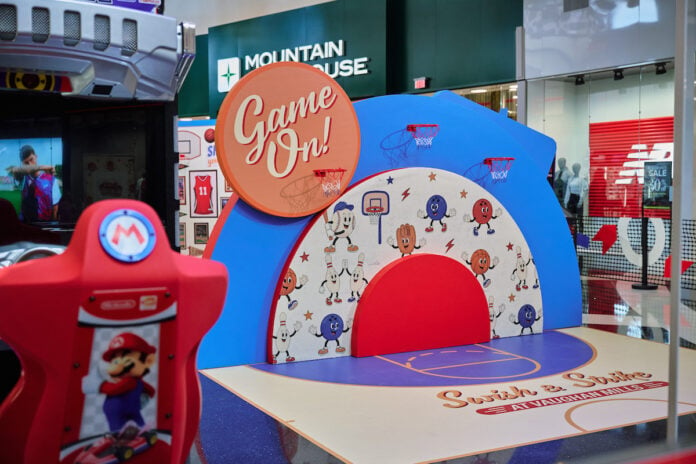
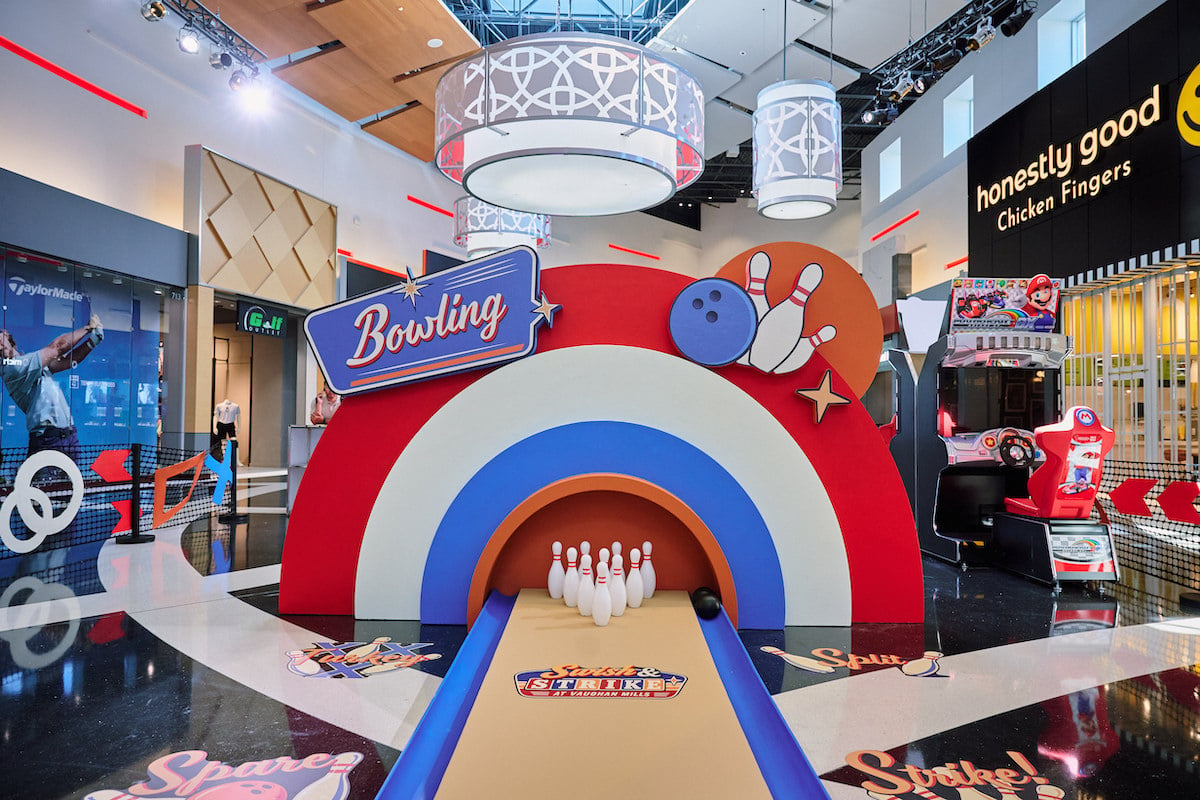
The Swish & Strike activation has transformed Vaughan Mills’ Event Court into an interactive space featuring basketball challenges, mini bowling, classic arcade games, themed photo opportunities and prize giveaways. Running through June 28, the activation offers families and shoppers an opportunity to experience the centre’s newest entertainment offering while celebrating Playdium’s arrival.
Kia Nurse
Toronto Tempo guard Kia Nurse, one of Canada’s most recognizable basketball players, will meet fans on Friday, June 26, from 7:15 p.m. to 9 p.m. Her appearance aligns the activation with the growing profile of women’s professional basketball in Canada following the launch of the Toronto Tempo, the country’s first WNBA franchise.
The celebration follows the recent opening of Playdium Vaughan, a 24,000-square-foot entertainment destination featuring more attractions than any other Playdium location in Canada. Operated by Cineplex, it is the company’s fifth Playdium location nationwide and created more than 100 new jobs.
The venue features 85 arcade and amusement games, four premium attractions, eight party rooms, food and beverage offerings and interactive experiences designed for families, teens and groups. Signature attractions include augmented reality duckpin bowling, a ropes course, wall climbing and Gel Blaster.
Playdium has a long history in Canada, first launching as a large-format entertainment concept in the 1990s before being reintroduced by Cineplex as part of its broader expansion into location-based entertainment. The Vaughan opening represents another significant investment in the brand as Cineplex continues to grow experiences that complement its theatre business.
Building a Destination Beyond Shopping
Since opening in 2004, Vaughan Mills has established itself as one of Canada’s busiest shopping destinations, attracting more than 12 million visitors annually. The approximately 1.3-million-square-foot shopping centre combines outlet retailers, full-price brands, dining and entertainment, drawing shoppers from across the Greater Toronto Area and beyond.
Alongside more than 220 retailers, Vaughan Mills is home to attractions including LEGOLAND Discovery Centre Toronto, Bass Pro Shops and an adjacent Cineplex theatre. The addition of Playdium further strengthens the property’s entertainment offering while reinforcing its position as a destination for day-long visits.
Swish & Strike at Vaughan Mills
Experiential Retail Continues to Grow
Entertainment has become an increasingly important component of shopping centre strategy as landlords compete not only for retail spending, but also for consumers’ leisure time. Attractions, restaurants and live events create reasons to visit while encouraging guests to extend their stay, benefiting retailers and foodservice operators throughout a property.
“Swish & Strike is all about bringing people together through play,” said Elizabeth Khuu, Marketing Manager at Vaughan Mills with JLL Canada, the shopping centre’s property management company. “We’re proud to celebrate the grand opening of Playdium Vaughan with a vibrant kickoff, featuring everything from arcade play to meeting Kia Nurse, setting the stage for a destination families can enjoy year-round.”
The opening of Playdium Vaughan and the accompanying Swish & Strike activation illustrate how leading shopping centres continue to evolve beyond traditional retail. As consumers increasingly seek memorable, shareable experiences alongside shopping, entertainment concepts have become an important part of how landlords differentiate their properties and drive repeat visitation.
Swish & Strike continues daily through June 28 from noon to 7 p.m. in Vaughan Mills’ Event Court near Entry 4A. Kia Nurse’s public meet-and-greet takes place Friday, June 26, from 7:15 p.m. to 9 p.m.
With more than 1,700 stores across Canada and a customer base that reaches 96 per cent of Canadian households, Dollarama has become difficult for suppliers to ignore.
What was once viewed by some brands as a secondary retail channel has evolved into one of the country’s most broadly used retail platforms, offering national reach, frequent customer visits and access to consumers across virtually every income bracket.
According to Jeff Doucette, General Manager of Field Agent Canada, those realities are forcing suppliers to rethink how they approach the retailer.
“If Dollarama has the traffic, consumer packaged goods companies are going to want to be where that traffic is,” he said.
The comments follow the release of a Field Agent Canada study that found 96 per cent of Canadian households shopped at Dollarama within the previous 60 days. The research also found that the retailer’s appeal spans income levels, with household penetration ranging from 95 to 96 per cent regardless of household income.
Combined with a network of more than 1,700 stores and growing customer traffic, the findings suggest Dollarama’s importance extends far beyond the discount retail sector.
Jeff Doucette
From Secondary Channel to Strategic Retail Platform
For many years, dollar stores were often viewed as a secondary channel for consumer brands, associated with closeout merchandise, excess inventory or limited product assortments.
Doucette believes that perception no longer reflects reality.
Today’s Dollarama provides access to a national customer base through stores located in major urban centres, suburban communities and smaller markets across the country. The retailer’s scale and frequency of visits have transformed it into a platform capable of delivering meaningful exposure for suppliers.
The shift is reflected in Dollarama’s operating performance. In its recently reported first quarter, the retailer recorded a 5.6 per cent increase in comparable store sales, driven by a 3.5 per cent increase in transactions and strong demand for consumables and general merchandise.
As traffic grows, suppliers are paying closer attention.
Brands Are Following the Traffic
Doucette pointed to several examples of national brands increasing their presence within the channel.
Large consumer packaged goods companies have expanded their involvement with Dollarama, while businesses outside traditional retail categories have also recognized the opportunity presented by the retailer’s customer base.
Bell’s Lucky Mobile and Virgin Plus brands, for example, have used Dollarama stores as distribution points for SIM cards and customer acquisition initiatives.
“For me, it legitimizes Dollarama as a retail channel if P&G is dedicating resources to it,” Doucette said.
The significance goes beyond individual partnerships.
For suppliers, Dollarama offers access to a retailer that continues to attract frequent visits from Canadian shoppers. Field Agent Canada’s research found that 37 per cent of consumers visited Dollarama more often in 2025 than they did the previous year, while only 13 per cent reported visiting less frequently.
That growing engagement has elevated Dollarama’s importance within many brand distribution strategies.
Photo: Mobile Syrup
Solving for Dollarama
Doucette believes suppliers entering Canada or seeking broader national reach should carefully evaluate Dollarama’s role within the market.
“If I was looking to enter into Canada with my brand, I’d kind of try and figure out how I might solve for Dollarama and their 1,700 stores,” he said.
The retailer’s store network offers access to consumers across the country through a single retail relationship. For emerging brands, challenger brands or international companies entering Canada, that scale can be difficult to replicate elsewhere.
Success, however, requires more than simply securing shelf space.
Suppliers often need to adapt packaging, assortment and pricing strategies to fit Dollarama’s value-oriented retail model. Products that perform well in grocery, pharmacy or mass merchandise channels may require different formats to succeed within the retailer’s merchandising environment.
As a result, suppliers are increasingly examining how specific products and package sizes can be tailored to the channel without disrupting pricing or positioning across other retail partners.
Competition for Shelf Space Remains Intense
The opportunity Dollarama presents is significant, but shelf space remains highly competitive.
According to Field Agent Canada’s research, approximately 65 per cent of Dollarama’s assortment consists of private-label products, leaving a relatively limited amount of space available for national brands.
That reality increases the importance of differentiation. Brands seeking placement must demonstrate that they can strengthen category performance, enhance customer perception or contribute to traffic and basket size.
Doucette identified categories such as health and beauty, hygiene, cleaning products and confectionery as areas where suppliers may have opportunities to deepen their involvement.
Confectionery has proven particularly effective because recognizable brands and accessible price points help reinforce the retailer’s value proposition.
“They know that those items are the traffic drivers that are going to get people in the door or leave that lasting price impression,” he said.
A Growing Force in Canadian Retail
Dollarama’s role within the retail landscape has changed dramatically over the past decade.
The retailer has evolved beyond its traditional reputation as a destination for seasonal merchandise, party supplies and bargain hunting. Today, it competes for consumer spending across a growing range of everyday categories, from household essentials and snacks to beauty products and pantry items.
For suppliers, the implications are increasingly difficult to ignore.
Nearly every Canadian household shops at Dollarama. Millions of consumers visit its stores every month. Customer traffic continues to grow, and the retailer’s influence extends across income levels and geographic markets.
The question for suppliers is no longer whether Dollarama matters. The question is how they plan to participate in one of Canada’s most influential retail channels.
Grocery retailers are investing heavily in digital tools designed to influence consumer purchases. Yet new research suggests one of the industry’s most powerful drivers of product discovery remains the same place it has been for decades: the grocery aisle.
A study by Cashew Research found that Generation X shoppers continue to discover new food products primarily through in-store browsing and personal recommendations, creating opportunities for retailers that excel at merchandising emerging categories such as international foods.
The findings come as Canada’s grocery landscape continues to evolve alongside changing consumer tastes and growing interest in global cuisines. While major retailers have expanded multicultural assortments in recent years, the research suggests product visibility and placement may be just as important as the breadth of selection itself.
International Foods Move Into the Mainstream
The study surveyed 973 Generation X consumers across Canada and the United States who are actively involved in household grocery shopping decisions.
Among respondents, 76 percent said they seek international or specialty food products, yet only 23 percent said their primary grocery store offers a complete selection.
Perhaps the most notable finding is that international foods are increasingly being purchased as mainstream grocery items rather than cultural staples. Nearly half of respondents said curiosity and a desire to try something new were among their primary motivations for purchasing international foods, while a much smaller percentage cited cultural background.
The findings suggest consumer demand for global flavours now extends well beyond shoppers seeking products connected to their heritage. Exposure to international cuisines through restaurants, travel, food media and social platforms has helped make products once considered niche increasingly familiar to mainstream consumers.
That trend aligns with broader changes in the Canadian marketplace. Statistics Canada projects immigrants could account for as much as one-third of Canada’s population by 2041, while ongoing immigration continues to introduce new cuisines, ingredients and food traditions into the Canadian market.
Industry observers have already seen evidence of this shift. Canadian grocery retailers have steadily expanded multicultural assortments over the past two decades, while specialty operators have moved further into the mainstream.
Perhaps the most visible example is T&T Supermarket, owned by Loblaw Companies. The chain continues to expand across Canada and is preparing to open a 66,000-square-foot location at Empress Walk in North York later this year, expected to be the largest T&T store in Ontario.
The success of retailers such as T&T suggests international foods are increasingly attracting consumers from a broad range of backgrounds, creating opportunities that extend well beyond traditional ethnic grocery segments.
The Shelf Is Still the Showroom
One of the study’s most significant findings involves how shoppers discover new products.
Thirty-nine percent of respondents said word-of-mouth recommendations are their primary source of discovery, while 37 percent cited in-store browsing. By comparison, only a small percentage pointed to artificial intelligence tools or app-based recommendations.
For grocery retailers, the findings reinforce the continued importance of merchandising fundamentals.
Shelf placement, end-cap displays, sampling programs, recipe inspiration and cross-merchandising remain powerful tools for encouraging product trial, particularly within categories that consumers may find unfamiliar.
The research challenges assumptions that digital tools alone will drive product discovery among middle-aged consumers. While online content and social media may inspire purchases, many buying decisions are still being made while shoppers are physically navigating store aisles.
For retailers operating in a highly competitive market, that distinction matters. Canada’s grocery sector remains concentrated among a handful of major operators, making merchandising and category presentation important areas of differentiation.
Is the International Foods Aisle Becoming Obsolete?
The study also raises questions about how international foods are presented within stores.
For decades, many grocers have grouped international products within dedicated ethnic-food aisles. The approach can help shoppers locate specific items, but it may also reinforce the perception that those products are specialty purchases rather than ingredients that belong in everyday meal planning.
The Cashew findings suggest the category may be reaching a point where that model deserves reconsideration.
Instead of isolating international products within a separate section, retailers may find greater success integrating sauces, seasonings, snacks and meal ingredients throughout stores alongside mainstream categories. Recipe-focused displays, cross-merchandising and meal-solution presentations could help increase visibility among shoppers who are open to trying new flavours but are not actively searching for them.
The opportunity appears less about convincing consumers to explore global cuisines and more about making those products easier to discover.
Implications for Retailers
The findings suggest retailers no longer need to persuade many consumers to experiment with international foods. A large share already expressed interest in doing so.
The larger challenge may be ensuring those products appear where shoppers are most likely to encounter them.
As global flavours continue moving into the grocery mainstream, retailers that combine strong assortments with effective merchandising may be better positioned to capture incremental sales and strengthen customer engagement.
In an era dominated by discussions about artificial intelligence, personalization and digital commerce, this research offers a reminder that one of retail’s most effective marketing tools remains remarkably simple: putting the right product in front of the right shopper at the right moment.
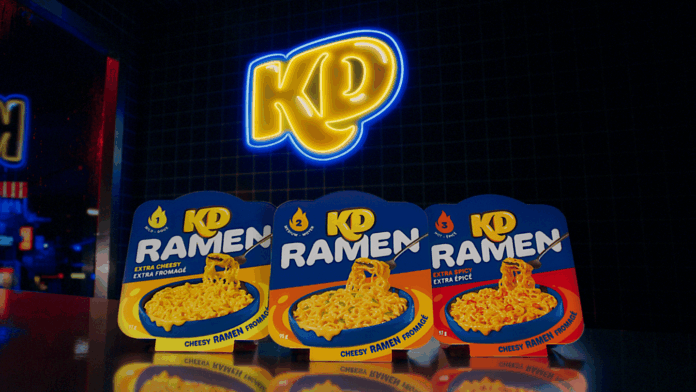
Kraft Heinz introduces KD Ramen. Photo by Kraft Heinz Canada
Kraft Heinz Canada is extending its iconic Kraft Dinner brand into the instant noodle category with the launch of KD Ramen, marking the latest effort to grow the brand beyond its traditional boxed macaroni and cheese business.
The new product line will debut in three varieties: Cheesy Ramen, Extra Cheesy and Extra Spicy. The products are expected to arrive at grocery stores, convenience retailers and big-box chains across Canada beginning in July, with participating 7-Eleven Canada locations receiving an early launch from June 25 to June 27.
The launch gives Kraft Dinner a presence in one of the world’s most popular convenience food categories while building on the brand’s longstanding association with cheese-based meals.
“Kraft Dinner has always been a staple in Canadian households, and we’re constantly looking for ways to bring exciting new experiences to our fans,” said Brian Neumann, Head of Marketing and Strategy at Kraft Heinz Canada, in a company announcement.
KD Brand Continues to Expand Beyond Its Core Product
The move comes as Kraft Heinz continues to broaden the reach of the KD brand through new formats and product extensions. While Kraft Dinner remains best known for its boxed macaroni and cheese, the portfolio now includes cups, frozen meals, deluxe offerings and other convenience-focused products aimed at evolving consumer preferences.
More recently, the company introduced a limited-time KD Mac & Cheesecake collaboration, taking the brand into the dessert category through select Canadian bakery partners.
Entering a Growing Convenience Food Category
The expansion into ramen reflects growing interest in convenient meal options and internationally influenced flavours. Instant noodles have become an increasingly competitive category, attracting both established brands and new entrants seeking to capitalize on demand for quick, affordable meal solutions.
According to market research from The Insight Partners, the North American instant noodles market was valued at approximately US$13 billion in 2024 and is projected to reach US$17.6 billion by 2031.
Implications for Retailers
For retailers, the launch presents an opportunity to leverage the recognition of one of Canada’s most established packaged food brands in a category traditionally dominated by dedicated noodle manufacturers. The product creates an opportunity for Kraft Heinz to reach shoppers who may not regularly purchase traditional boxed macaroni and cheese.
The introduction of KD Ramen suggests Kraft Heinz sees additional growth potential in extending the Kraft Dinner brand into adjacent food categories, using its strong consumer recognition to compete in new segments of the grocery store.