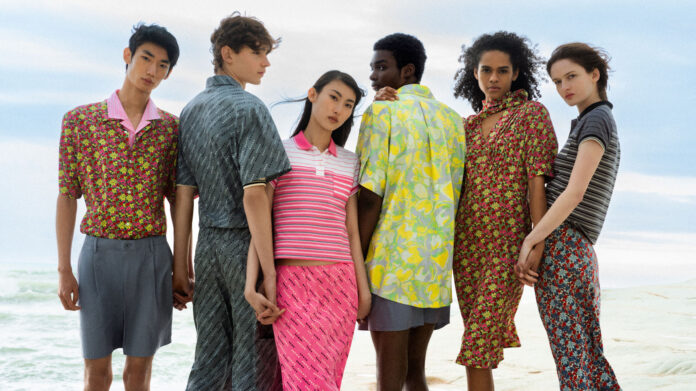
Global apparel retailer UNIQLO has launched “UNIQLO F.RISSO”, a collaboration with Italian designer Francesco Risso. Suitable for everyday life or as holiday wear, the summer capsule collection – themed “Made for Dreaming” – offers a range of free and playful items that bring new discoveries and joy to everyday outfits for men and women, said the company.
Titled “Made for Dreaming”, the collection explores the idea of accessible clothing carrying imagination at scale. Structured yet soft silhouettes are combined with hand-drawn prints, sun-washed colours, and fluid proportions designed to move naturally through everyday life. Balancing spontaneity with practicality, the collection reflects Risso’s instinctive and emotionally driven approach to dressing, it said.
“I am inspired by the idea of accessible clothing carrying imagination at scale. For Summer 2026 we developed a collection that pairs uniformity with artistry, introducing a sentiment of playfulness and daring to practical pursuits. Made for dreaming, these designs reflect the radiance of their wearers, said Risso.
“Every time I see people around the world wearing and enjoying pieces from our 2022 collaboration line with Francesco, I am reminded of the importance of bringing small moments of joy into daily lives through clothing. At the same time, I am also truly delighted to present this new capsule collection, our first collaboration in four years. Through Francesco’s distinctive prints and colors, as well as soft silhouettes, we hope this latest collection will convey a light and free-spirited mood and enrich and elevate everyday styling with a sense of joy,” said Yuki Katsuta, Fast Retailing Group Senior Executive Officer.
UNIQLO is a brand of Fast Retailing Co., Ltd., a leading Japanese retail holding company with global headquarters in Tokyo, Japan.
The collection balances soft structure with a spontaneous spirit through original patterned pieces such as bowtie blouses, fluid dresses with smooth textures and sculptural silhouettes, and flared long skirts finished with ruffled hems. Broadcloth shirts made from 100% high-quality cotton are presented in a variety of stripes and hand-drawn prints, said the retailer.
Many pieces lend themselves to a fluid, unisex approach to dressing, including quick-dry pique polo shirts and oversized T-shirts. Silk scarves and twill caps add a final layer of spontaneity — pieces intended not just to be worn, but lived in, it added.
Risso studied fashion in Florence, New York, and London. He spent a decade at Prada, developing a rigorous approach to narrative and craft while gaining extensive design experience. From 2016 to 2025 he served as Creative Director at Marni, shaping a boldly original vision for the house inspired by music, art, and cultural exploration. A passionate educator, Risso has held guest positions at the world’s top art and design schools. He is now Creative Director at GU.
UNIQLO photo
UNIQLO is the largest of eight brands in the Fast Retailing Group, the others being GU, Theory, PLST, Comptoir des Cotonniers, Princesse tam.tam, J Brand and Helmut Lang. With global sales of approximately 3.4 trillion yen for the 2025 fiscal year ending August 31, 2025 (US $23.16 billion, calculated in yen using the end of August 2025 rate of $1 = 146.8 yen), Fast Retailing is one of the world’s largest apparel retail companies, and UNIQLO is Japan’s leading specialty retailer.
UNIQLO continues to open large-scale stores in some of the world’s most important cities and locations, as part of its ongoing efforts to solidify its status as a global brand. Today the company has a total of more than 2,500 UNIQLO stores across the world, including Japan, Asia, Europe and North America. The total number of stores across Fast Retailing’s brands is now over 3,500, it noted.
As excitement builds for the 2026 FIFA World Cup across North America, retailers have been preparing for what is expected to be one of the largest commercial sporting events in decades. With millions of international visitors projected to travel across host cities in Canada, the United States and Mexico, the tournament is poised to generate billions of dollars in additional consumer spending. Industry experts say the biggest winners will be retailers that move beyond traditional merchandise sales and tailor offerings to the unique demographics, cultures and fan behaviours of local markets.
The World Cup’s economic impact is expected to extend well beyond jerseys and souvenirs. Retailers are increasingly targeting a broader range of spending tied to how consumers experience the tournament, whether attending matches in person, hosting watch parties, traveling between cities or upgrading home entertainment setups. As consumer preferences become more fragmented, artificial intelligence is emerging as a key tool for helping brands anticipate demand, optimize inventory and adapt promotions in real time throughout the month-long event.
Companies across sectors including fashion, beauty, luxury goods and food and beverage have developed campaigns designed to capitalize on the global spotlight. From licensed merchandise and immersive retail experiences to branded activations and high-profile partnerships, businesses are seeking new ways to connect with both dedicated soccer fans and casual viewers. Analysts say the most successful strategies will blend convenience, relevance and memorable experiences, turning shopping into an integral part of the World Cup celebration.
“With matches spread across North America and millions of visitors expected from around the world, the 2026 World Cup is shaping up to be one of the largest commercial sporting events in recent memory. In North America alone, the tournament is expected to drive billions in incremental consumer spending, but that growth is not automatic. In a market where consumers remain value-conscious and margins are tight, the retailers that stand out will be those that create genuine relevance. That means seeing the World Cup not just as a merchandising event, but as an opportunity to hyper-localize, tailoring assortments, activations and experiences to the specific tastes, communities and match-day behaviours of each host city,” said Kelly Askew, Accenture Retail Lead.
Kelly Askew
“The opportunity extends far beyond jerseys and souvenirs. We are seeing a notable shift from single-category purchases to cross-category spending tied to how fans watch, gather, travel and celebrate. AI will be a critical advantage, helping retailers anticipate how demand will show up differently by market and occasion; for example, whether consumers are attending matches, hosting watch parties, or shopping for the at-home viewing experience. With AI, brands can understand demand signals faster and adjust range, assortment, inventory and promotions with greater agility throughout the entire tournament.
“Brands are responding in big ways across almost every category, from beauty to luxury to food and beverage. Some, for example, are launching officially licensed merchandise, while others are creating experiential shopping destinations. On the food and beverage side, we are seeing notable large, branded activations, partnerships, and campaigns. Ultimately, these approaches all have one thing in common: they are combining relevance, convenience, and experience to make shopping part of the celebration, for both devoted fans and casual viewers alike.”
The employee experience in the retail sector has historically been a cultural initiative. In recent years, it’s become a risk strategy. That’s because Canadian retailers are managing staffing shortages, rising operational pressures and evolving customer expectations. Frontline teams are expected to adapt quickly while maintaining service standards, productivity, and safety.
Statistics Canada data highlights the pressure these workers face. Occupations in sales, including cashiers and service station attendants, often have lower hourly wages and are reported to have the lowest satisfaction levels among those surveyed. The same report found Canadians experiencing financial difficulties were less likely to be satisfied with their jobs, reinforcing the overlap between financial strain and workplace stress in frontline retail environments.
For retailers, employee experience is now directly linked to retention, compliance, customer interactions, and operational resilience.
Why Employee Experience Has Become an Operational Risk Issue
Retail leaders often treat HR, health and safety, and operations as separate functions when, in reality, they’re connected entities.
Disengaged or overwhelmed employees are more likely to:
● Miss or Shortcut safety procedures
● Experience burnout, absenteeism, or turnover
● Become less engaged in customer service and team communication
According to Mental Health Research Canada’s (MHRC) 2024 workplace findings, 23% of employed Canadians reported their workplace was not psychologically safe, while 24% said they experienced burnout “most of the time” or “always.”
This growing overlap between employee well-being and organizational risk is why many employers are aligning HR and safety strategies more closely.
Retail environments with lean staffing and high operational demands may struggle with:
● Burnout → creating ripple effects across teams
● Absenteeism → placing additional strain on employees
● Communication gaps → inconsistent policy application or safety shortcuts
Andrea Piacquadio photo
The Hidden Cost of Constant Change
One of retail’s biggest workforce challenges is change fatigue. Frontline retail employees have spent the past several years adapting to:
● New technologies
● Revised procedures
● Fluctuating staffing levels
● Shifting customer expectations
Even positive organizational changes can feel exhausting when employees are navigating frequent disruption without enough clarity or support.
Research on Dr. David Rock and the NeuroLeadership Institute suggests that the brain often interprets uncertainty as a threat. In workplace settings, inconsistent communication and shifting expectations can trigger defensive responses that reduce employees’ ability to focus, collaborate, and adapt effectively to change. That uncertainty can affect concentration, confidence, and emotional resilience, especially when employees feel changes are happening “to” them rather than occurring with adequate support.
This may translate into:
● Disengagement
● Frustration
● Lower morale
● Workplace resentment
Managers play a critical role in reducing that friction, but many may not recognize when employees are struggling. MCHR research also found that only 52% of managers believed they could identify when team members were experiencing mental health challenges.
If nearly half of managers are missing signals, workplace leaders will need to place a bigger emphasis on communication, clearer implementation planning, and more consistent employee support.
Building Workforce Resilience Before Pressure Becomes Burnout
Retail workforce pressures remain widespread across the industry. The Retail Council of Canada has warned that labour shortages continue to strain retailers’ operations, while rising costs and workforce instability add pressure to already stretched teams.
Retailers are recognizing that workforce resilience needs to be developed through everyday management practices, communication, and workplace culture, rather than during crises.
Resilience should not be confused with asking employees to absorb more stress. Sustainable resilience comes from creating environments where employees feel supported, informed, and equipped to adapt to change without becoming emotionally exhausted in the process.
What Retail Leaders Should Prioritize Now
● Create a feedback loop: Frontline employees often signal burnout, workload concerns, and communication breakdowns long before those issues affect retention or safety.
○ Anonymous pulse surveys, structured check-ins, and stay interviews can help organizations identify problems earlier.
● Invest in your managers: Supervisors are often the first to notice changes in morale or stress levels, yet many receive limited training.
○ Strengthening skills in psychological safety, conflict management, or mental health awareness can help organizations address issues before they escalate.
● Treat scheduling as a well-being issue: Chronic understaffing and unpredictable schedules are among the fastest paths to frontline burnout.
○ Greater consistency and visibility into scheduling can significantly improve how supported employees feel day to day.
● Align your HR and compliance programs: Psychological safety, burnout, and physical workplace risks are increasingly interconnected.
○ Retailers that approach them as part of one broader workforce strategy may be better positioned to improve retention, reduce disruption, and build long-term resilience.
Gustavo Fring photo
Kim Morris, Lead HR Consultant at Citation Canada
Closing Thoughts
Retail has always been a people-driven industry, but workforce experience is now becoming more directly tied to operational resilience. The retailers that adapt best to ongoing change are the ones that treat employee well-being, psychological safety, and workforce trust as practical parts of how the business operates. Across Canada’s retail sector, employee experience is becoming more than an HR conversation. It is increasingly part of how retailers manage risk, strengthen workforce resilience, and build a more stable future.
About The Author
(Kim Morris is the Lead HR Consultant at Citation Canada. She supports employers and people leaders through complex workplace situations, including employee relations and conflict, performance concerns, terminations, and policy questions, with clear, practical next steps. Kim also helps organizations manage change, including restructures, acquisitions, and workforce transitions, balancing compliance with thoughtful communication. She is known for making HR feel workable, consistent, well-documented, and grounded in respect for people.)
Planet Fitness, one of the largest and fastest-growing fitness brands in the world, will be opening a new club opening in Fall 2026 at 2075 Strachan Rd. SE inside Walmart, in Medicine Hat, Alberta.
The company said the new location will provide local residents with a convenient, affordable fitness option designed for everyone, from first-time gymgoers to longtime fitness enthusiasts. As more Canadians continue prioritizing wellness and active lifestyles, the Medicine Hat club is designed to make fitness feel more accessible, approachable and realistic for everyday life.
“At Planet Fitness we believe fitness should feel welcoming, encouraging and accessible to everyone,” said Mike Shapiro, Senior Vice President of Operations at IGNITE Fitness Holdings, an independent Planet Fitness franchisee. “We’re excited to bring that experience to Medicine Hat and create a place where people can show up as they are, work toward their goals at their own pace and build healthy habits in a supportive environment.”
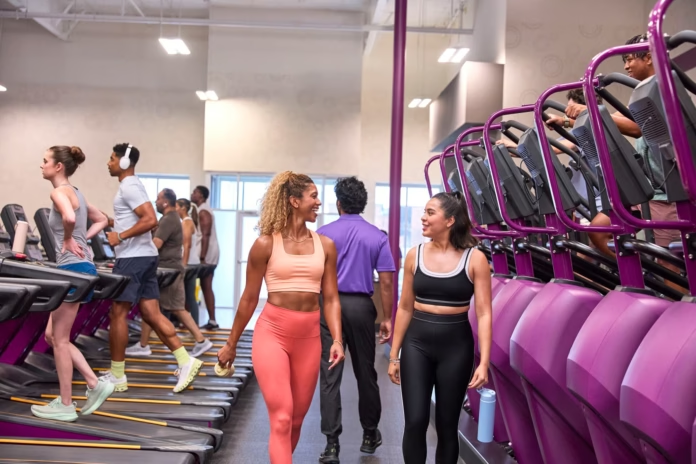
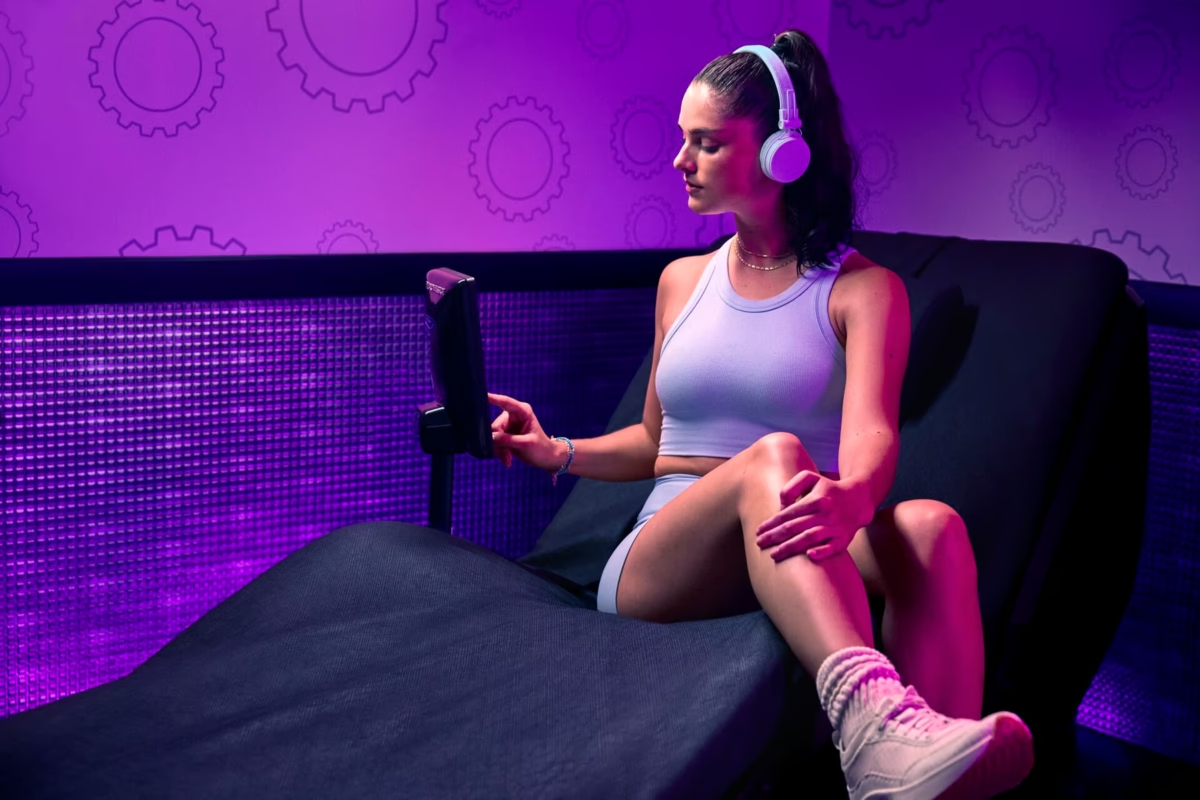
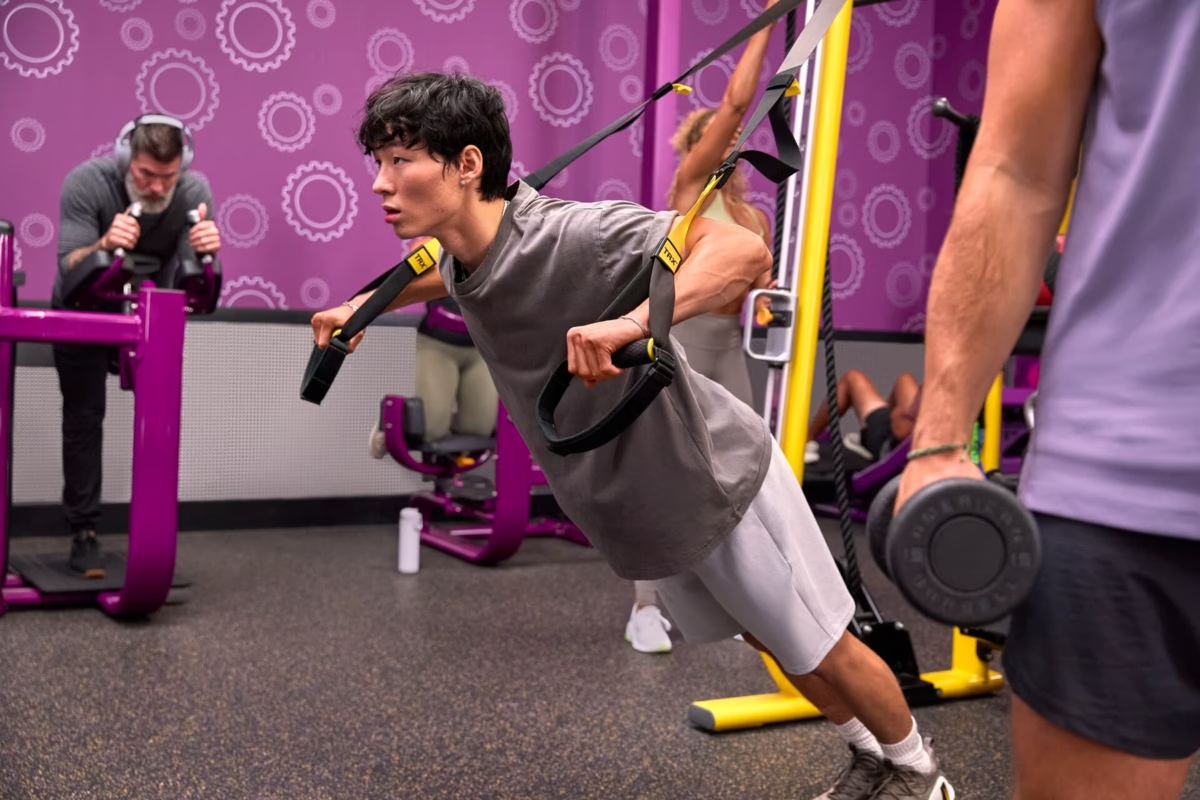
The new club will feature 16,000 square feet of fitness space with a wide selection of cardio and strength equipment, including plate-loaded strength equipment, treadmills, ellipticals, stationary bikes, and more. Planet Fitness Black Card® members will also have access to premium amenities designed to relax and recharge, including HydroMassage™ loungers, massage chairs and additional Black Card Spa® amenities, said the company.
Planet Fitness photo
Located inside Walmart, the new club is designed to offer added convenience for Medicine Hat residents looking to fit workouts into busy daily schedules and routines, it said.
“We know people are looking for options that fit into busy schedules and everyday life,” said Shapiro. “Whether someone is working out for the first time, getting back into a fitness routine or simply looking for a welcoming place to stay active, we’re excited to bring Medicine Hat a fitness experience designed to support people wherever they are in their journey.”
The Medicine Hat club is part of Planet Fitness’ continued expansion across Canada as the company increases access to affordable fitness experiences in communities nationwide, added the company.
IGNITE Fitness Holdings is based in Milford, CT. It is one of the largest Planet Fitness Franchise ownership groups, currently operating more than 140 locations across Canada, Arizona, Connecticut, Georgia, New Mexico, New York, and Tennessee. It is owned by TowerBrook Capital Partners, an investment management firm based in London, New York, Frankfurt and Madrid.
Founded in 1992 in Dover, NH, Planet Fitness is one of the largest and fastest-growing franchisors and operators of fitness centres in the world by number of members and locations. As of March 31, Planet Fitness had approximately 21.5 million members and 2,909 clubs in all 50 states, the District of Columbia, Puerto Rico, Canada, Panama, Mexico, Australia and Spain.
The net worth of Canadian households—the value of all assets minus all liabilities—rose 1.3% in the first quarter of 2026 to reach just over $18.6 trillion, as the value of both non-financial and financial assets increased in tandem. Following two consecutive quarterly declines, non-financial assets were up 1.1% in the first quarter of 2026, led by an uptick in the value of residential real estate. Financial assets increased by 1.3%, reported Statistics Canada recently.
Household balance sheets added $148.0 billion in financial assets in the first quarter of 2026, and this gain was driven by net purchases of mutual fund units and higher valuations of domestic equities and investment funds amid easing valuations for foreign equity holdings. In terms of domestic equity markets, the Standard & Poor’s/Toronto Stock Exchange Composite Index increased by 3.3% in the first quarter of 2026, and this gain was concentrated in energy and mining stocks. This marked the slowest quarterly growth since the first quarter of 2025 (+0.8%), said the federal agency.
Meanwhile, household liabilities, composed primarily of mortgage and non-mortgage debt, edged up by 0.4% in the first quarter of 2026, continuing the seasonal trend of comparatively modest first-quarter growth, which generally coincides with lower resale activity and new construction. Overall, households’ net financial assets—defined as financial assets minus liabilities—grew by 1.6% for the second consecutive quarter, it added.
On a per capita basis, household net worth increased from $442,896 to $448,433 in the first quarter of 2026; the proportion of non-financial assets as a share of household net worth fell to 53.4% (-0.1 percentage points), said Statistics Canada.
“The household debt service ratio—measured as total obligated payments of principal and interest on credit market debt as a proportion of household disposable income—rose after two consecutive quarterly declines. The ratio finished the first quarter of 2026 at 14.75%, up from 14.68% in the fourth quarter of 2025, as total debt payments rose 1.1% to outpace income. At the same time, mortgage interest payments increased 0.9% in the first quarter of 2026, following decreases in the third and fourth quarters of 2025,” explained Statistics Canada.
“Household wealth continued to expand in Q1 despite elevated market volatility. Financial asset gains continued, supported primarily by fund inflows and resilient Canadian equity markets, although growth slowed to its weakest pace in a year. Real estate also provided support this quarter, with higher home prices lifting housing wealth despite subdued sales activity. Looking ahead, the backdrop for wealth accumulation remains broadly positive, but heightened uncertainty may make households more cautious about spending out of wealth,” said Maria Solovieva, Economist, with TD.
Maria Solovieva
“Household leverage continues to edge higher. The debt-to-income ratio has risen for six consecutive quarters as debt growth outpaced income growth. Our recent analysis of provincial household balance sheets, based on Q4 2025 data, found that Ontario and Prince Edward Island were the only provinces where debt-to-income ratios rose above 2019 levels, with Ontario continuing to post the highest household leverage in the country. This suggests that financial vulnerabilities remain concentrated in Ontario, while household balance sheets elsewhere in Canada are generally in a stronger position.”
Ask anyone who ships freight for a living, and they will tell you the thing. The difference between a quarter and a great one often comes down to how many miles a truck spends empty or stuck in traffic. That is where the science of route optimization has changed the game entirely.
A modern freight shipping company no longer just moves boxes from point A to point B. The best ones act like air traffic controllers balancing fuel costs, driver hours, traffic patterns and customer delivery windows at once. It is a puzzle but when done right the savings get passed directly back to the shipper.
“Walmart’s U.S. Supply Chain Playbook Goes Global” (July 2025) throws down a benchmark that every freight shipping company should be measuring itself against -Walmart’s warehouse and transportation management systems now act as the air traffic control of its supply chain, coordinating fulfillment and optimizing fresh delivery routes to reduce waste in real time. Route optimization has quietly graduated from a cost-cutting tactic to the operational nerve center of modern freight.
So how do successful freight carriers actually achieve this level of efficiency? It is not about having a GPS. Freight carriers use real-time data to plan their routes.
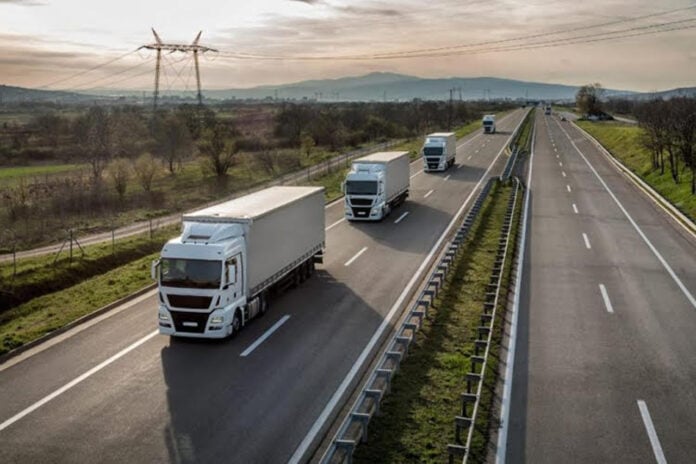
Twenty years ago, routing was an event for a freight shipping company. A dispatcher looked at a map picked the highway and sent the driver. Today that is a recipe for losing money. Freight carriers now use dynamic routing software that pulls in data: weather patterns, construction zones, bridge weight limits and even real-time traffic accidents.
For a freight carrier handling van or refrigerated freight avoiding a two-hour traffic jam on a summer afternoon keeps produce from spoiling and drivers within their legal hours of service. The software recalculates on the fly often sending updates directly to the cab. Freight carriers use this real-time data to make sure their trucks are always on the route.
The Communication Link Between Dispatch and the Cab
A reroute is only worth something if the driver actually hears about it. Software can recalculate a path in seconds but that path still has to reach a person who may be pulling into a weigh station or backing into a dock. Phone calls go to voicemail. Text messages sit unread until the truck stops. A dispatcher who needs three attempts to reach one driver has already burned the twenty minutes the reroute was supposed to save.
This is why fleets run push-to-talk over cellular next to their routing software. Peak PTT builds rugged LTE handhelds and in-vehicle radios that put an entire dispatch group one button away, with nationwide coverage and GPS position updates on the same device.
A dispatcher can reach a single truck or a full lane in about a second and the driver responds without taking their eyes off the road. Freight carriers that pair routing data with instant voice contact are the ones that turn a recalculated route into a driven one.
Not every shipment fills a trailer. This is where Less-Than-Truckload (LTL) strategies become an efficiency powerhouse. A smart freight shipping company looks at a network of pickup and drop-off points. Asks, “How do we arrange these stops like a game of Tetris?”
Freight carriers can consolidate freight at a distribution center. One truck runs a “milk run” hitting stops in a logical loop. This reduces the number of miles driven lowers emissions and keeps rates competitive for the customer who only has four pallets to move but needs them there by Thursday. Freight carriers that use LTL strategies well can save a lot of money and time.
Balancing Service and Fuel Costs
Route optimization is rarely about finding the shortest line on a map. Often it is about finding the line. Highway driving at 55-65 mph is more fuel-efficient than stop-and-go city driving.
Freight carriers will often route a truck a twenty miles around a city to keep it rolling on the interstate. That extra twenty miles might cost a dollars in diesel for freight shipping company but it saves an hour of idle time and city wear-and-tear. For equipment like flatbeds or Conestoga trailers carrying oversized loads avoiding low bridges and tight urban turns also dramatically reduces safety risk. Freight carriers have to balance service and fuel costs to be efficient.
The expensive optimization failure is a route a driver refuses to take because they know it does not work. Experienced drivers know that a certain highway exit is always backed up at 5 PM due to a train crossing or that a customers dock is impossible to back into with a 53-foot trailer.
Top freight carriers have learned to close the loop. They use ELD (Electronic Logging Device) data and direct driver feedback to refine their routing algorithms. When a driver suggests a path that saves thirty minutes that data goes back into the system. The machine learns from the human and the entire fleet gets faster. Freight carriers need to listen to their drivers to optimize routes well.
For a business looking for a partner, a freight carriers ability to optimize routes directly impacts your bottom line. Efficient routes mean transit times, fewer “call for late delivery” emails and less risk of cargo damage from rushed driving.
When you request a quote from a freight shipping company you are not just buying a truck. You are buying the brainpower and technology behind the wheel. Freight carriers that invest heavily in optimization-like the Walmart model mentioned earlier-are the ones that survive market swings and keep your supply chain moving when everyone else is stuck in the construction zone. Freight carriers that optimize routes well are the partners, for shippers.
A personal shopper at a Bloor Street flagship can spend three weeks arranging a single appointment. The client list gets reviewed, the pieces get pulled from two other markets, the fitting room gets stocked with champagne. Then the client circles the block four times looking for parking and arrives twelve minutes late, annoyed at everyone including herself.
Retail obsesses over the store experience and ignores how people physically arrive at it. That gap costs more than most operators think, and Toronto’s top-tier retailers have quietly started closing it.
## The appointment economy changed the math
Luxury retail in Toronto has shifted hard toward appointments since 2020. Private shopping sessions, trunk shows, VIC evenings, one-on-one styling: the highest-value transactions now happen at scheduled times, with named clients, often after hours. Holt Renfrew runs private appointments as a core service. The Yorkville flagships book personal shopping in time slots the way restaurants book tables.
A scheduled appointment changes the arrival problem completely. When a client could walk in any time, nobody owned the question of how she got there. When the appointment is Tuesday at 6:30 PM, someone does. The store knows the time, the address, and the client. Arranging the car is one phone call, and the cost of that call is trivial against the basket size of a private session.
The math is blunt. A chauffeured pickup across the GTA runs roughly $110 to $160. Personal shopping sessions at the city’s luxury flagships routinely close in five figures. Retailers who treat the car as part of the appointment are spending one to two percent of the transaction to remove the single worst part of the client’s evening: driving to it, parking for it, and carrying purchases away from it.
## What the top stores actually do
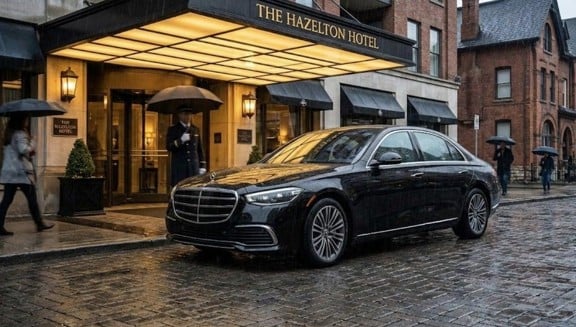
The pattern that works in Toronto looks like this. The store keeps an account with a Toronto chauffeur service rather than booking ad hoc. The stylist or client advisor books the pickup when the appointment is confirmed, the same way they reserve the fitting room. The client gets a driver’s name and a car description the evening before. After the session, purchases go in the trunk, not on the client’s arm through a parking garage.
Three details separate stores that do this well from stores that gesture at it.
First, the account model matters. Ad hoc ride-hailing puts a random driver in front of the store with surge pricing during the December weeks when it matters most. An account with a car service produces the same driver profiles repeatedly, monthly invoicing the operations manager can actually reconcile, and a dispatcher who knows that the Yorkville location means the Cumberland Street entrance, not the front doors.
Second, discretion is a feature clients notice. The car that picks up a client from a private jewellery viewing is unmarked. The driver does not discuss who he drove last week. For a certain tier of client in this city, that quality decides whether they attend evening events at all.
Third, the return leg is where loyalty gets built. Anyone can get a client to the store. The retailer who has a car waiting when a two-hour fitting ends at 8:40 PM on a February night has done something the client retells at dinner parties. The retelling is the marketing.
## Beyond the flagship: where else this shows up
The same logistics thinking has spread to other corners of Toronto retail.
Mall marketing teams use it for media and influencer previews. When Yorkdale or Square One opens a flagship and flies in press, the transportation between hotel, mall, and dinner is part of the event budget, and the difference between a coordinated car schedule and a WhatsApp thread full of ride-hailing screenshots is the difference between coverage that mentions the chaos and coverage that mentions the store.
Retail executives run store-visit circuits. A regional director covering Eaton Centre, Yorkdale, Sherway Gardens, and Vaughan Mills in one day loses two working hours to driving and parking. Executives who get driven work the whole circuit from the back seat. District managers at the national chains figured this out years before their luxury counterparts did.
Holiday season puts the sharpest point on all of it. Between mid-November and Christmas Eve, parking near the major shopping nodes degrades, ride-hailing surges during exactly the evening hours when private appointments run, and the clients with the largest baskets have the least patience for either. The stores that pre-book car service for their December VIC calendar in October are buying certainty in the one month nobody can improvise it.
## The vendor checklist
For a retail operator evaluating this, the questions that matter are operational, not glamorous.
Ask how billing works: a monthly account invoice the finance team can process beats a stack of receipts. Ask about fleet range, because a single client pickup is a sedan job but a press preview for twelve people needs a Sprinter van, and switching vendors per vehicle class doubles the coordination work. Ask what happens when a fitting runs long, since rigid booking windows fail in a business where appointments routinely stretch. And ask who answers the phone at 9 PM on a Saturday in December, because that is the exact moment the service either exists or does not.
Toronto has no shortage of car companies. The shortlist gets small once those four questions get asked.
## The arrival is part of the product
Luxury retail’s actual product was never just merchandise. It is the feeling of being handled well from the first touchpoint to the last, and the last touchpoint is not the wrap desk. It is the moment the client gets home with her purchases, unbothered, already composing the story she will tell about the evening.
The stores winning the highest-value clients in this city understand that the experience starts at the client’s front door and ends there too. The hundred metres of sidewalk between a parking garage and a flagship entrance was never anyone’s department. Now it is, and the retailers who claimed it first are keeping the clients everyone else is trying to poach.
Welcome to the Daily Synopsis by Retail Insider. We hope you enjoy the 8 articles we published covering key developments in Canadian retail.
Dollarama surpassed 1,700 stores in Canada and is planning hundreds more as it pursues an ambitious expansion target of 2,200 locations. Ruby Liu unveiled TM Wander at Tsawwassen Mills, an experiential retail concept inspired by Asian night markets that blends food, entertainment, and cultural elements into retail space.
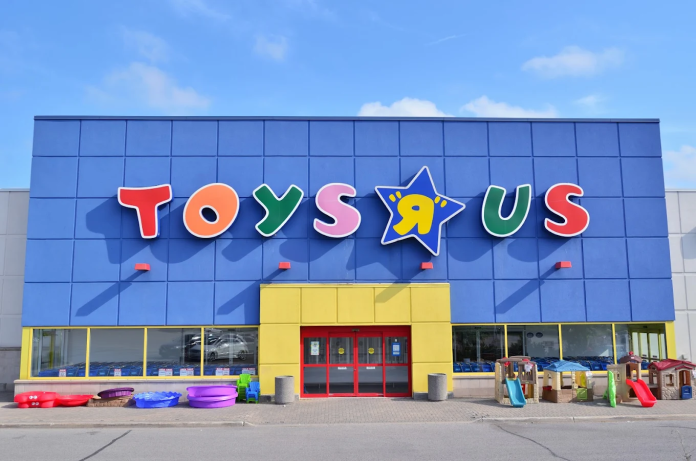
Toys R Us at Upper Canada Mall in Newmarket. Photo: Jaden Lee via Google Maps
Toys “R” Us Canada could soon see its brands, store leases and operating assets divided among separate buyers as the retailer moves toward court approval of transactions that leave the future of its remaining stores unclear.
Court documents filed in Ontario Superior Court show that the retailer’s restructuring process has resulted in three successful bids, with ownership of the Toys “R” Us and Babies “R” Us brands, select store leases and other assets heading to different purchasers. The proposed transactions are scheduled to be considered by the court on June 22.
While buyers have now been identified for key portions of the business, the future direction of Toys “R” Us in Canada remains uncertain. The proposed transactions would separate ownership of the retailer’s intellectual property from a package of store leases and operating assets, creating questions about what comes next for the remaining locations. Court documents also indicate that the proposed acquisition by a Putman-controlled company includes a distribution centre lease, logistics infrastructure and agreements supporting store operations, suggesting the transaction extends beyond a collection of retail locations.
Purchase prices have been redacted from publicly available court filings.
Three Buyers Emerge from Court-Supervised Sale Process
The proposed transactions stem from a Sale and Investment Solicitation Process (SISP) launched as part of Toys “R” Us Canada’s restructuring proceedings under the Companies’ Creditors Arrangement Act (CCAA).
Court filings indicate that three successful bids emerged from the process.
Under the first transaction, U.S.-based Ad Populum would acquire the retailer’s intellectual property portfolio, including the Toys “R” Us and Babies “R” Us brands and related digital assets.
A second transaction would see Fox Group Jumbo Canada acquire the lease for the approximately 48,000-square-foot Toys “R” Us store at Vaughan Mills.
The third transaction involves 2625229 Ontario Inc., a company controlled by entrepreneur Doug Putman, which would acquire a package of operating assets that includes inventory, cash, logistics contracts and 10 store leases.
Taken together, the transactions would divide ownership of the retailer’s brands, physical locations and operating infrastructure among separate parties.
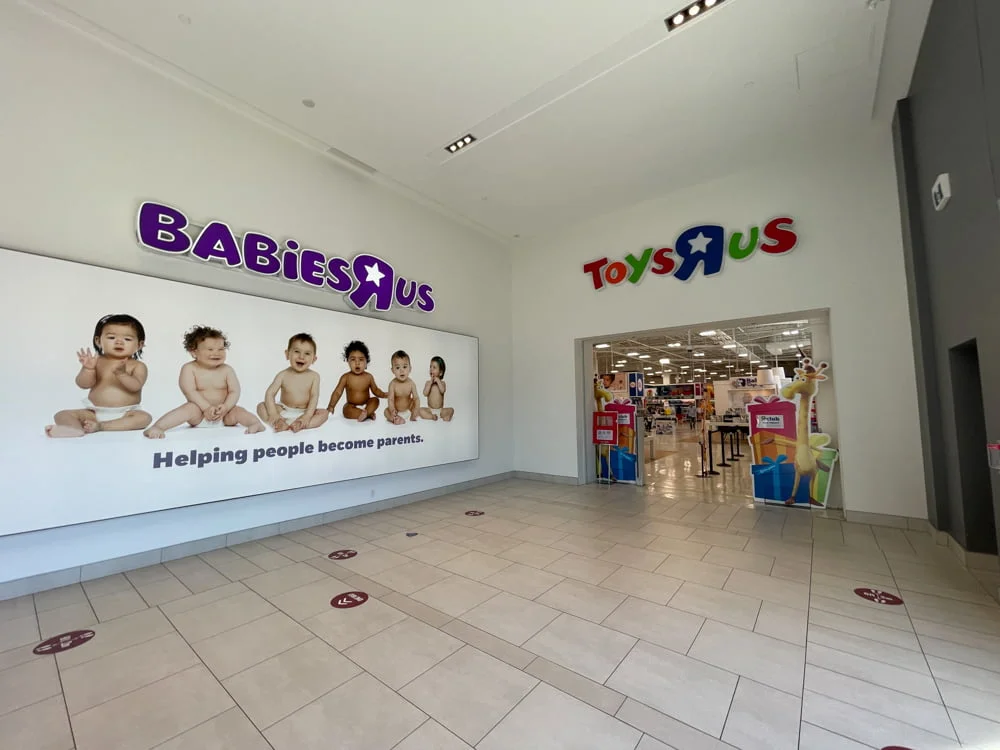
Mall entrance to the former Toys “R” Us at Willowbrook Centre in Langley in 2021. Photo: Lee Rivett
Toys “R” Us and Babies “R” Us Brands Head to New Owner
Among the most significant developments is the proposed sale of the retailer’s intellectual property assets to Ad Populum, a U.S.-based designer and distributor of consumer products and collectibles.
According to court filings and published reports, the transaction includes the Toys “R” Us Canada trademark, Babies “R” Us trademark, Geoffrey the Giraffe design mark, copyrights, domain names, e-commerce assets, websites and social media accounts.
Ad Populum’s portfolio includes brands such as NECA and WizKids, which are well known within the toy and collectibles industry.
The acquisition would give Ad Populum control of some of the most recognizable toy retail brands in Canada and would place ownership of the Toys “R” Us and Babies “R” Us intellectual property in the hands of a new owner.
Putman-Controlled Company Acquires Store Leases and Operating Assets
A separate transaction would see 2625229 Ontario Inc., a company controlled by entrepreneur Doug Putman, acquire inventory, cash, logistics contracts and 10 store leases.
Putman acquired Toys “R” Us Canada from Fairfax Financial in 2021 and has consistently expressed confidence in the long-term value of physical retail. His retail holdings have included Sunrise Records in Canada and HMV in the United Kingdom, among other businesses.
The acquisition package includes stores in Ontario, Alberta and Manitoba, as well as the retailer’s distribution centre in Ancaster, Ontario, giving the purchaser a footprint that extends beyond individual retail locations.
Court documents identify the 10 store leases included in the transaction as locations in Hamilton, Kitchener, Whitby, South Edmonton, Winnipeg (Polo Park), Winnipeg (Kildonan), Barrie, Lethbridge, Nepean and Sarnia.
The acquisition package also includes the lease for Toys “R” Us Canada’s distribution centre in Ancaster.
The inclusion of a distribution centre lease and operational infrastructure suggests the acquisition encompasses substantially more than a collection of store leases.”
The proposed acquisition of 10 leases has attracted particular attention because Putman’s company would acquire physical locations and operating assets while ownership of the Toys “R” Us intellectual property would transfer to another party.
Future plans for the stores and distribution facility have not been disclosed.
The package extends beyond retail locations — court documents show the transaction also includes point-of-sale agreements, e-commerce platform agreements, payment processing arrangements, logistics contracts and warehousing and distribution agreements.
Court documents also contain provisions related to employee transfers. The purchaser anticipates extending employment offers to a substantial portion of retail and head-office staff associated with the retained operations, indicating that the transaction contemplates an ongoing operating structure rather than a simple transfer of leases.
The structure of the transaction leaves open a range of possibilities for the locations. Court documents do not indicate whether the stores could continue operating under a licensing arrangement, support a future retail concept, or serve another purpose.
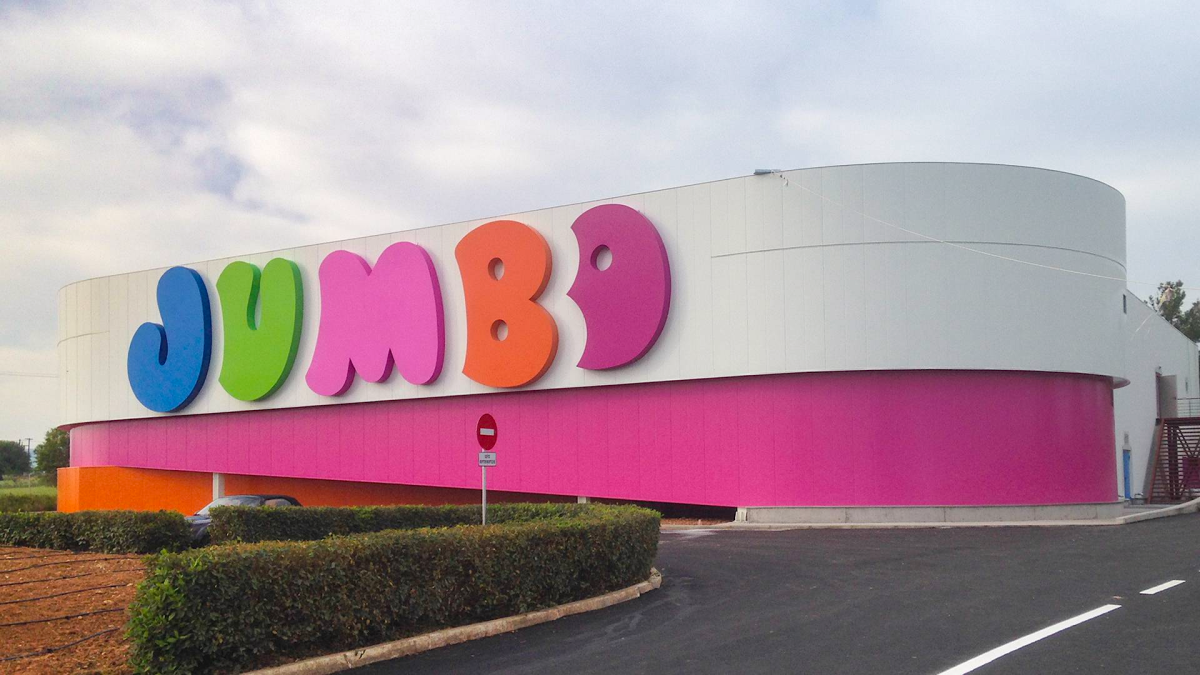
JUMBO store in Tripolis Greece. Photo: Proestakis Development
Temporary Licence Allows Continued Use of Toys “R” Us Brand
Court documents indicate that Ad Populum would grant a royalty-free licence permitting continued use of the acquired intellectual property in Canada through January 15, 2027 for purposes related to the wind-down of retained operations.
While the agreement does not establish a long-term operating structure for the Toys “R” Us brand in Canada, it provides a transition period following closing of the transaction and suggests that certain retained operations could continue under existing branding for a limited period.
Vaughan Mills Lease Headed to Fox Group Jumbo Canada
The third proposed transaction would transfer the Toys “R” Us lease at Vaughan Mills to Fox Group Jumbo Canada.
The approximately 48,000-square-foot location represents one of the retailer’s most prominent remaining stores and is situated within one of Canada’s highest-performing shopping centres.
The acquisition is noteworthy because Fox Group is preparing to launch the Jumbo value retail chain in Canada. Retail Insider previously reported that Jumbo plans to open its first Canadian stores in Ontario as part of a broader expansion strategy.
Fox Group has not publicly disclosed its plans for the Vaughan Mills location.
A New Chapter for a Longstanding Canadian Retailer
Toys “R” Us Canada became the sole surviving branch of the retailer following the collapse of its U.S. parent company in 2018. Fairfax Financial acquired the Canadian operation during that restructuring before later selling the business to Putman Investments in 2021.
For decades, Toys “R” Us was Canada’s largest specialty toy retailer and one of the country’s most recognizable retail brands.
The company sought creditor protection in February, citing inflationary pressures, rising labour costs, supply chain challenges and changing consumer shopping habits. Court filings indicate the retailer owed approximately $91 million to secured creditors and more than $159 million to unsecured creditors at the time of the filing.
The proposed transactions also raise questions about recoveries for creditors. The purchase prices associated with the transactions have been redacted from publicly available filings, making it difficult to assess how much creditors may ultimately recover through the restructuring process.
Published reports indicate the company had 18 stores remaining in April, while additional locations have since been slated for closure.
While court approval remains pending, the proposed transactions provide the clearest picture yet of how Toys “R” Us Canada’s assets may ultimately be divided. Additional details regarding the long-term plans of the purchasers are expected to emerge as the restructuring process continues.
Whether the acquired stores and distribution assets ultimately support a Toys “R” Us-related model, a new retail concept, or another use altogether remains one of the most closely watched questions arising from the retailer’s restructuring.
Opening of TM Wander at Tsawwassen Mills in South Delta, BC, May 30, 2026. Photo: Craig Patterson
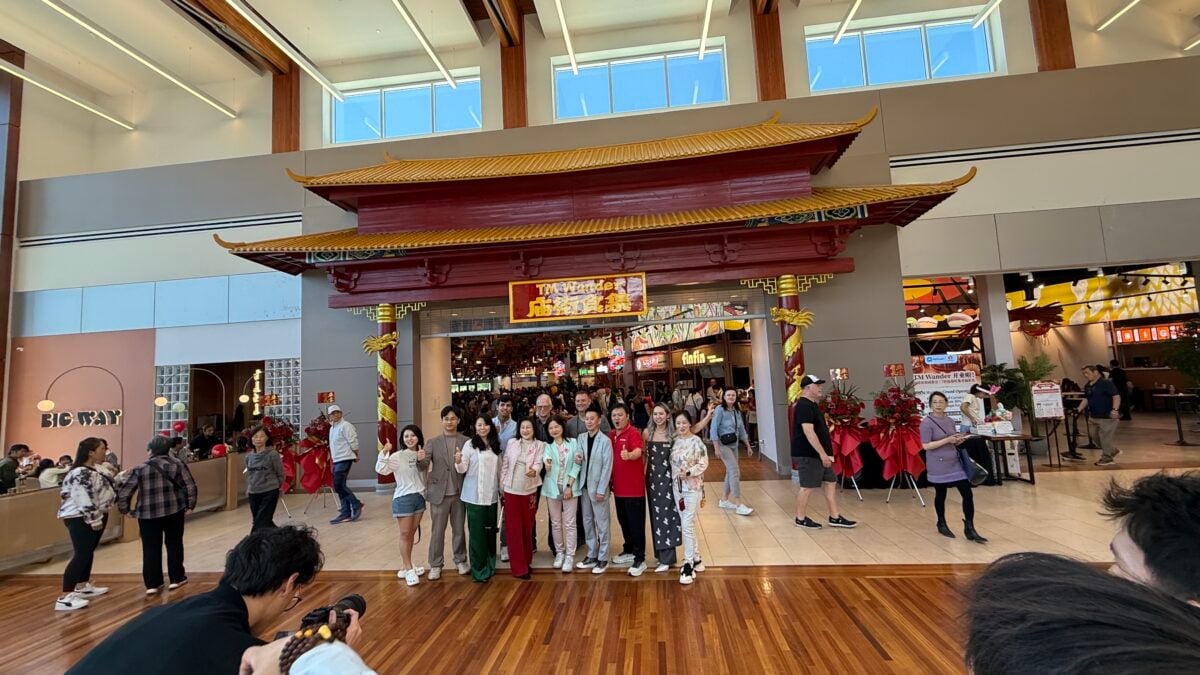
Hundreds of people gathered outside TM Wander at Tsawwassen Mills on May 30 as opening-day celebrations unfolded in front of the venue’s main entrance.
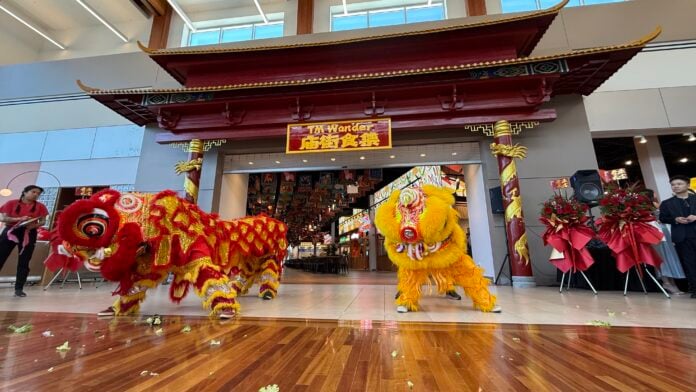
Representatives from Tsawwassen First Nation joined Ruby Liu and members of the Central Walk team for speeches before lion and dragon dances energized the crowd gathered outside. Applause and cheers followed as a ribbon was cut and the TM Wander sign was unveiled above the entrance.
Then came the moment many had been waiting for.
When organizers announced that TM Wander was officially open, visitors quickly flowed into the venue. Some headed directly toward food vendors while others stopped to photograph displays and visual installations near the entrance.
Ruby Liu, family members, and representatives from Central Walk open TM Wander at Tsawwassen Mills on May 30, 2026. Photo: Craig Patterson
Food vendors attracted immediate lineups while guests spread throughout the venue exploring marketplace stalls, entertainment areas, family attractions, and seating zones. Retail Insider attended the opening and observed strong crowds throughout the day as visitors sampled food offerings, watched performances, took photos, and spent time with family and friends.
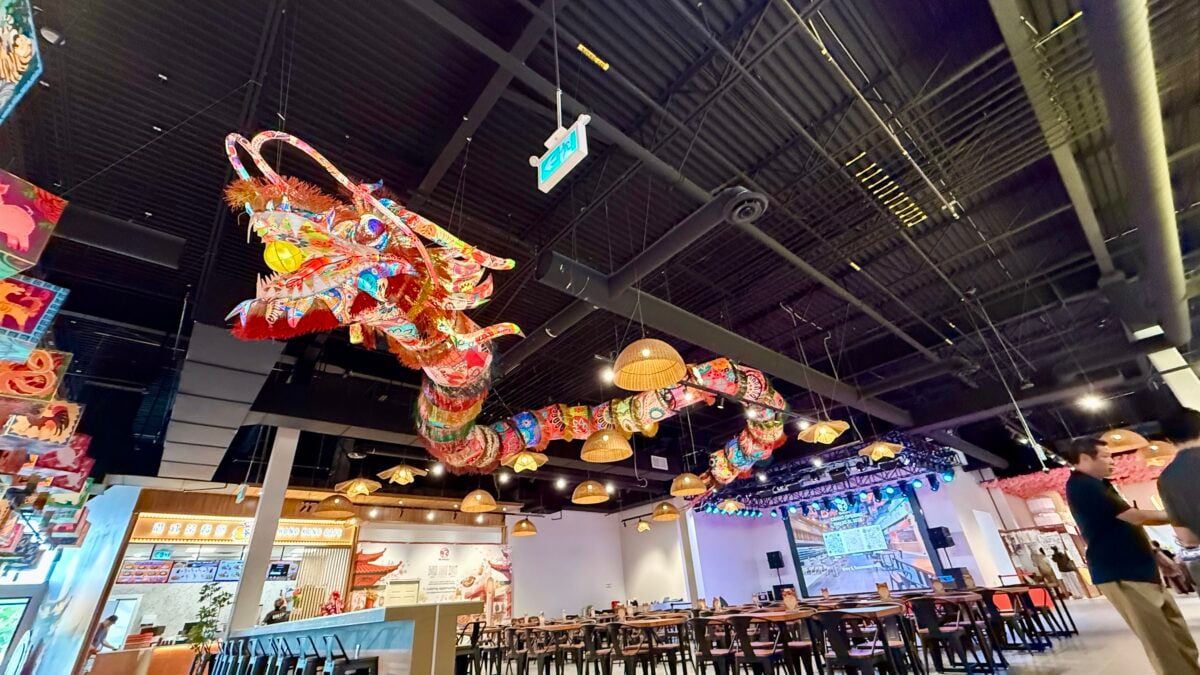
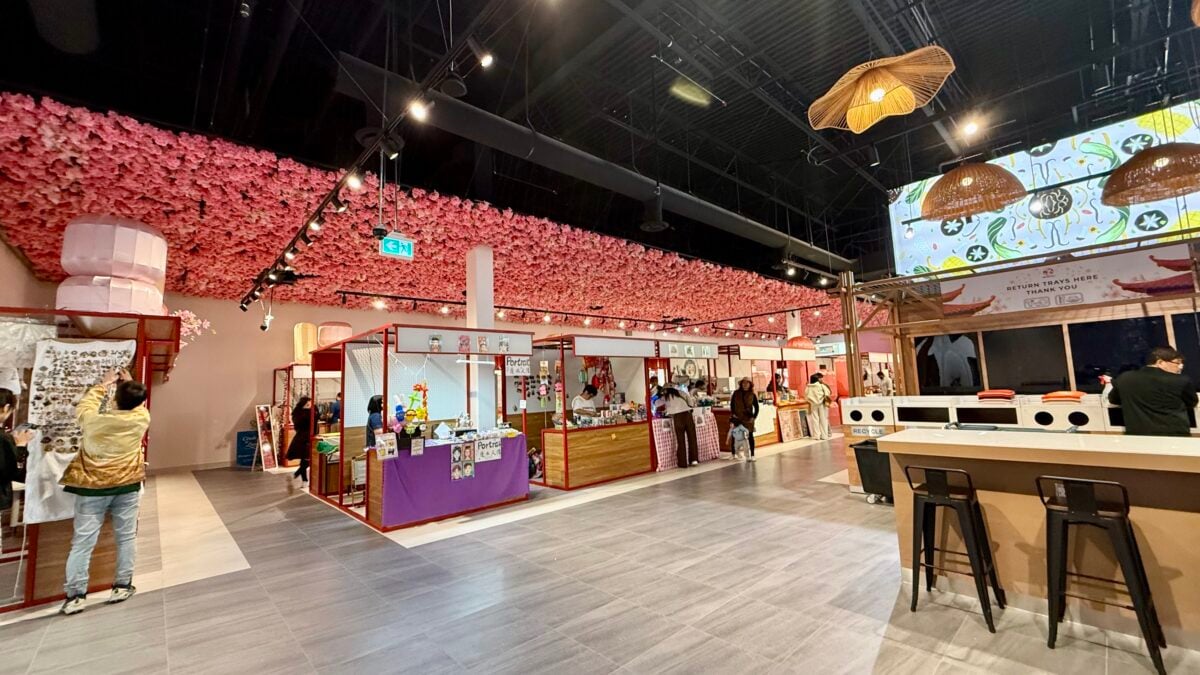
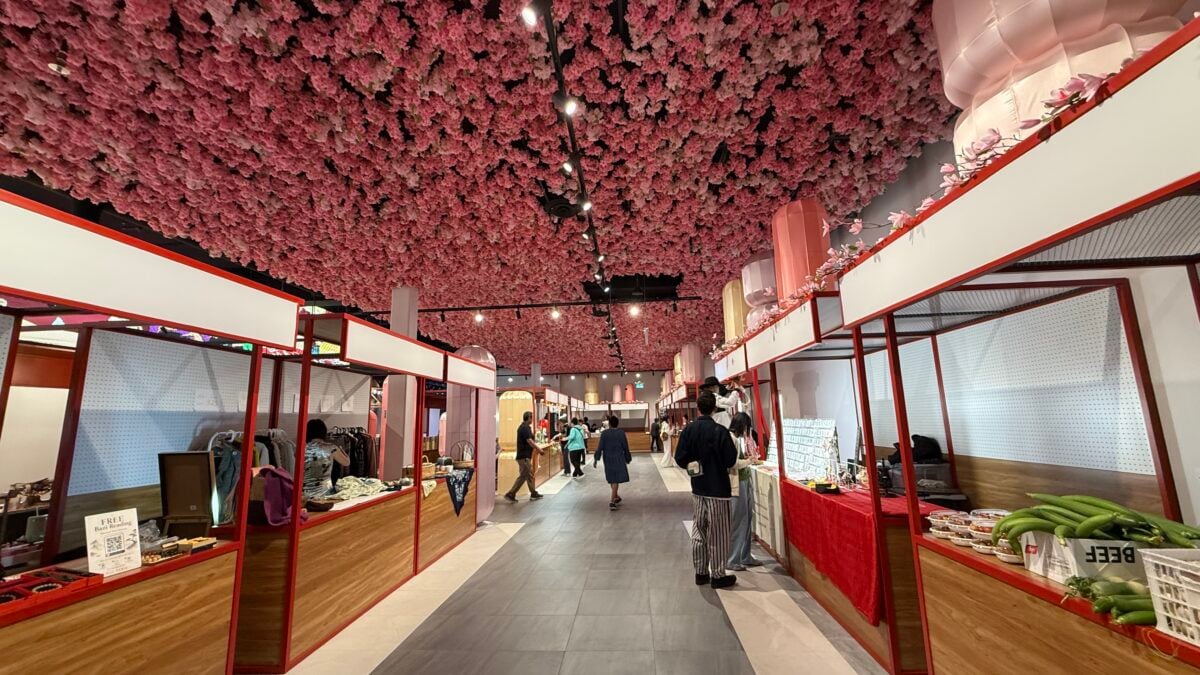
Many stopped to photograph the giant suspended dragon hanging above the main seating area. Others gathered beneath a canopy of thousands of flowers suspended above part of the marketplace, one of the venue’s most visually striking features. Visitors repeatedly stopped beneath the installation throughout the day to take photos and videos while nearby seating areas, food vendors, and marketplace stalls remained busy.
Ruby Liu opens TM Wander at Tsawwassen Mills, May 30, 2026. Video: Craig Patterson/Retail Insider
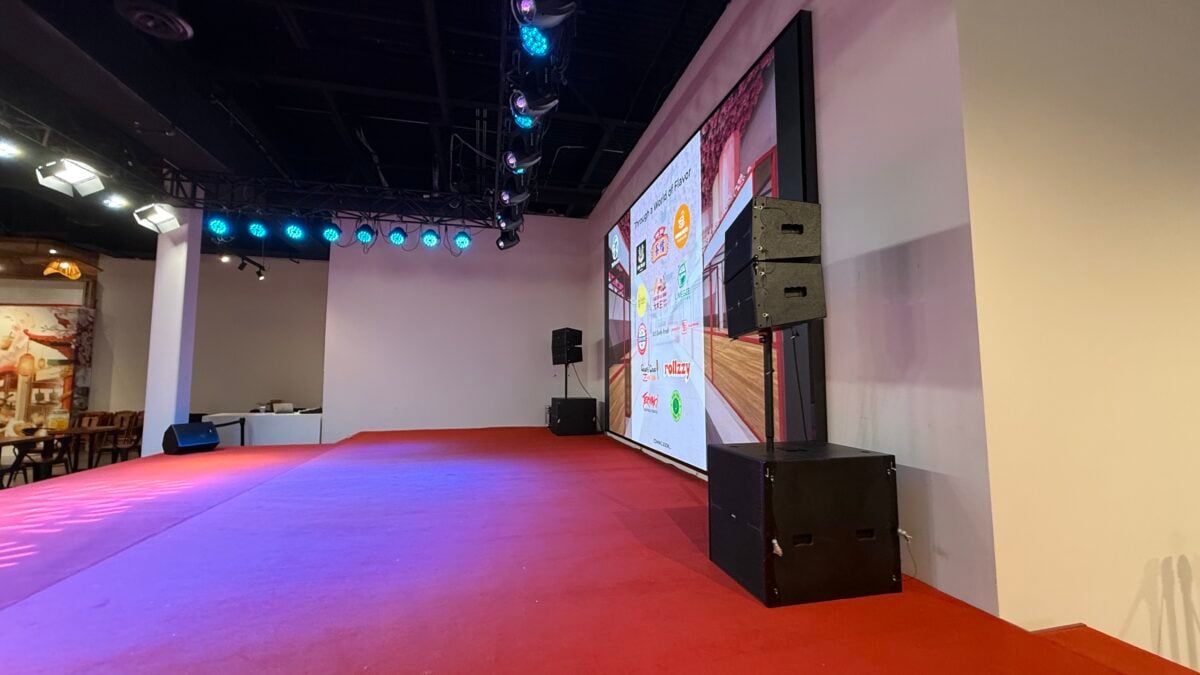
Stage performances drew audiences throughout the day while families occupied tables across the venue.
The opening marked the public debut of a project developed by Ruby Liu and her company, Central Walk, which owns Tsawwassen Mills, Mayfair Shopping Centre in Victoria, and Woodgrove Centre in Nanaimo.
Liu became one of the most closely watched figures in Canadian retail during 2025 through her efforts to acquire former Hudson’s Bay locations across the country. The proposal generated national attention and sparked discussion about the future of large retail spaces in Canada.
The opening also marked one of Liu’s most detailed public discussions about her Canadian retail ambitions since the Hudson’s Bay proceedings concluded in 2025.
In written responses provided to Retail Insider and translated from Mandarin, Liu discussed the origins of TM Wander, the future of shopping centres, opportunities for entrepreneurs, potential expansion plans, and why she continues to view Canada as an important market for growth.
“What made me happiest, however, was seeing people stay,” Liu said. “Visitors were not simply coming to eat and leave. They were taking photos, socializing, and spending extended periods of time in the space. That was exactly our vision from the beginning.”
The 24,000-square-foot venue combines elements of a food hall, marketplace, entertainment venue, family attraction, and cultural gathering space within a single environment.
For Liu, the opening represented more than the launch of a new venue. It was the public debut of an idea she has been refining for several years.
TM Wander at Tsawwassen Mills in South Delta, BC, May 30, 2026. Photo: Craig Patterson
From Shopping Centre to Social Destination
Liu said TM Wander emerged from a simple observation.
“I noticed that traditional shopping centres were beginning to lose their rhythm,” she said. “Customers walk into many malls today and often find similar stores and similar experiences. I believe people no longer visit malls simply to shop. They are looking for unique experiences, memorable moments, and places where they can connect with others.”
At the same time, she saw growing demand for authentic Asian food, cultural experiences, and social gathering spaces.
“That led me to ask a simple question: What if we could bring all of these elements together and create a destination full of energy, culture, and character? That is how TM Wander was born.”
The result is a venue inspired by Asian night markets that combines food vendors, marketplace retail, entertainment programming, family attractions, and cultural elements.
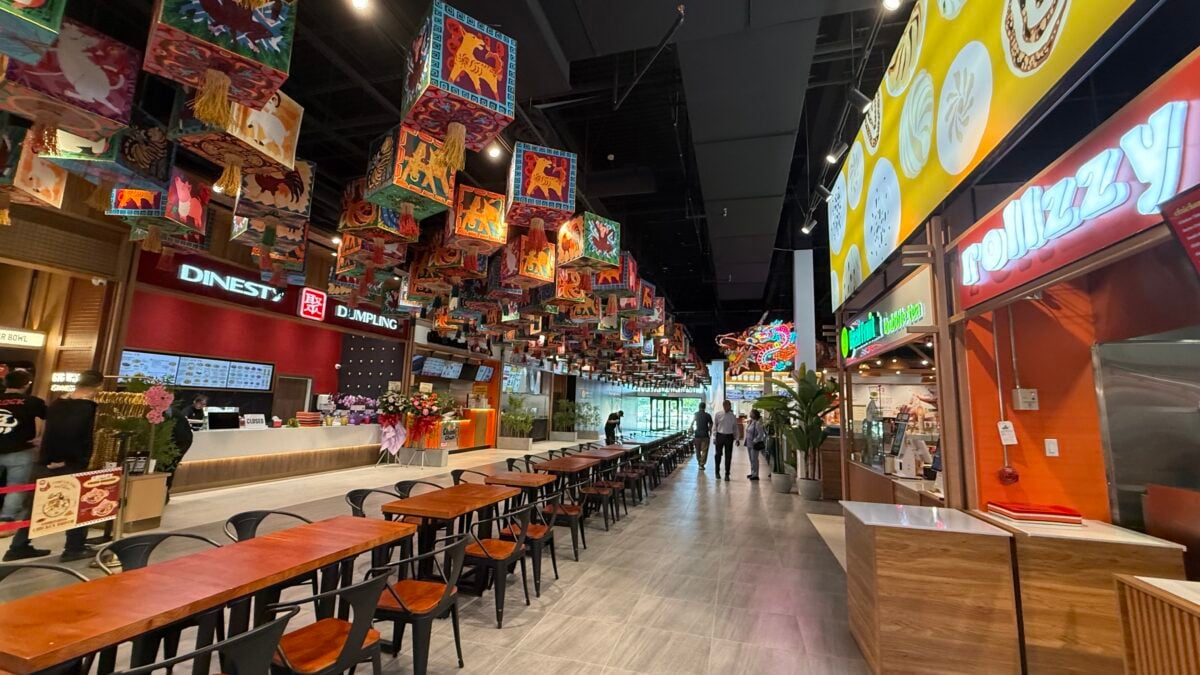
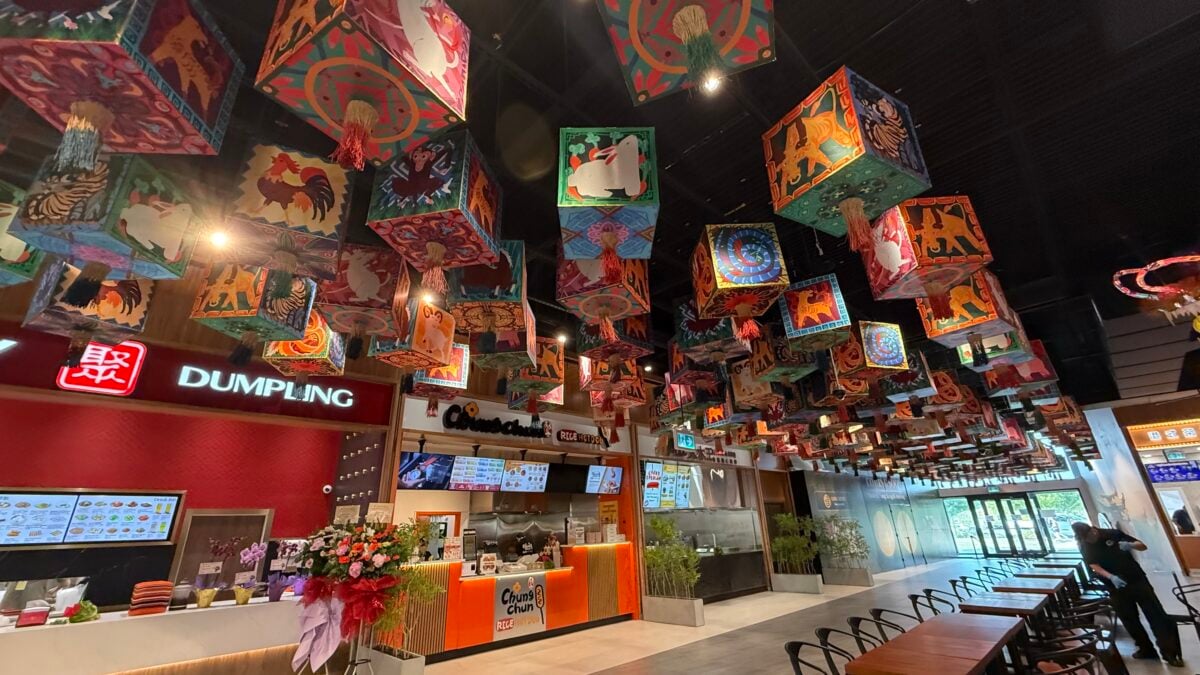
Visitors enter through a traditional Chinese-style gateway before moving into a space filled with lanterns, visual installations, food offerings, attractions, and entertainment. According to Liu, every detail was designed to create a strong visual impact.
“Our goal was to build a destination where visitors can immerse themselves in the atmosphere of an Asian night market while enjoying authentic food, culture, and entertainment.”
Retail Insider observed visitors spending extended periods of time exploring the venue. Some moved between food vendors and marketplace stalls, while others watched performances, photographed installations, or gathered with friends and family throughout the afternoon.
TM Wander at Tsawwassen Mills in South Delta, BC, May 30, 2026. Photo: Craig Patterson
Why Tsawwassen Mills Became the First Location
Some observers questioned why Liu chose Tsawwassen Mills as the launch location for a project of this scale.
The shopping centre, which opened in 2016, sits outside Vancouver’s urban core and serves a broad regional trade area that includes Metro Vancouver, the Fraser Valley, Vancouver Island, and visitors travelling through the region.
For Liu, that made it the ideal place to test the concept.
“Many people would not consider Tsawwassen an obvious location for a concept like this,” she said. “The surrounding population is relatively small compared to major urban centres.”
However, Liu viewed that challenge as an opportunity.
“If a highly experiential concept can succeed in a market like Tsawwassen, it proves the model is fundamentally strong.”
She said Central Walk’s previous efforts to attract visitors from outside the centre’s immediate trade area through entertainment offerings and events helped build confidence that TM Wander could succeed at the property.
Opening-day crowds appeared to validate that decision.
Hundreds of people gathered outside before the official opening. Once the doors opened, food vendors quickly attracted lineups and guests spread throughout the venue. The atmosphere remained active throughout the afternoon as visitors moved between food operators, marketplace stalls, performances, attractions, and seating areas.
The response was stronger than Liu expected.
“The level of traffic exceeded our expectations,” she said. “We saw comments online describing the opening as packed and joking that parking was almost impossible to find.”
More importantly, she said, visitors stayed.
Underlying many of Liu’s comments is a belief that consumers remain willing to travel for experiences they view as unique.
She argues that convenience alone is no longer enough. Food, entertainment, family activities, social interaction, and memorable environments can motivate people to spend both time and money visiting a location.
That belief influenced the decision to launch TM Wander at Tsawwassen Mills and continues to shape Central Walk’s broader strategy.
Opening of TM Wander at Tsawwassen Mills in South Delta, BC, May 30, 2026. Photo: Craig Patterson
Supporting Entrepreneurs and Local Businesses
While TM Wander’s visual elements and food offerings attract attention, Liu said supporting local entrepreneurs is one of the project’s most important goals.
“Supporting local businesses is at the heart of TM Wander,” she said.
Alongside established operators, the venue includes space for local entrepreneurs and emerging brands. Liu said smaller businesses bring authenticity, creativity, and passion while helping create a constantly evolving mix of offerings.
She also believes the venue’s combination of dining, entertainment, and family attractions creates opportunities for entrepreneurs that may not exist in more traditional retail environments.
“Our adjacent children’s attractions also generate family traffic, which naturally benefits smaller operators,” she said.
The model is intended to provide an accessible platform where businesses can test concepts, build awareness, and grow.
“We believe a healthy commercial ecosystem needs both large trees and small grass.”
For Central Walk, the goal extends beyond filling vendor space. Liu said she hopes the venue can become a platform where entrepreneurs can refine concepts, build customer bases, and eventually expand into larger operations.
TM Wander at Tsawwassen Mills in South Delta, BC, May 30, 2026. Photo: Craig Patterson
Designed for Families and Social Experiences
Liu said TM Wander was designed with several customer groups in mind, particularly younger consumers and families.
She believes younger visitors increasingly seek experiences that can be shared, photographed, and remembered. That thinking influenced many of the venue’s most recognizable features, including the suspended dragon, lantern displays, dramatic entrance elements, and other visual installations throughout the space.
The emphasis on visual design was evident throughout opening day. Visitors regularly stopped to take photos and videos, particularly beneath the flower canopy and around the dragon installation.
Families represent another important audience.
Liu said many parents are looking for places where adults can relax while children remain entertained nearby. TM Wander’s children’s amusement area and Minions-themed attractions were designed with that in mind.
Throughout opening day, families were highly visible throughout the venue. Children moved between attractions while parents watched performances, explored food vendors, and gathered at tables with friends and relatives.
The mix of activities is intended to encourage longer visits and repeat visitation.
That focus on dwell time was reflected in Liu’s comments throughout the interview and echoed what Retail Insider observed during the opening, where many guests remained at the venue long after they had finished eating or shopping.
TM Wander at Tsawwassen Mills in South Delta, BC, May 30, 2026. Photo: Craig Patterson
Themes Discussed During the Hudson’s Bay Pursuit Reappear at TM Wander
Retail Insider first interviewed Liu in the spring of 2025 as she pursued former Hudson’s Bay locations across Canada.
The proposal generated significant industry attention and introduced many in the Canadian retail industry to Liu and Central Walk for the first time.
While the Hudson’s Bay opportunity ultimately did not proceed, several themes Liu discussed during that period are now visible throughout TM Wander.
At the time, Liu frequently spoke about the need for retail properties to offer more than shopping alone. Food, entertainment, family attractions, social gathering spaces, and reasons for people to spend more time within a property were recurring themes in those conversations.
Many of those same ideas appear throughout TM Wander today.
Food vendors operate alongside marketplace retailers, children’s attractions, entertainment programming, cultural elements, and public gathering spaces. Rather than focusing on a single activity, the venue was designed to encourage visitors to spend time exploring different parts of the environment during a single visit.
While TM Wander differs significantly from the large-format department store properties involved in the Hudson’s Bay process, it provides one of the clearest examples yet of how Liu believes retail properties can evolve as consumer expectations continue to change.
“The core vision has not changed,” Liu said. “We still believe retail must evolve from cold shopping into vibrant lifestyle destinations.”
Stage area at TM Wander at Tsawwassen Mills in South Delta, BC, May 30, 2026. Photo: Craig Patterson
Central Walk’s Growing Presence in British Columbia
While Liu attracted national attention through her pursuit of former Hudson’s Bay locations, Central Walk has spent several years building a shopping-centre portfolio in British Columbia.
The company’s holdings stretch from Metro Vancouver to Vancouver Island and include Tsawwassen Mills, Mayfair Shopping Centre in Victoria, and Woodgrove Centre in Nanaimo.
The company has spent the past several years investing in those properties through new retailers, attractions, food offerings, entertainment initiatives, and capital improvements intended to increase visitation and broaden their appeal.
TM Wander represents one of the most visible examples of that strategy to date.
According to Liu, shopping centres can no longer rely solely on traditional traffic drivers. She believes future growth will come from creating environments that give people reasons to visit beyond shopping alone.
While Liu maintained a lower public profile following the Hudson’s Bay proceedings, she continued overseeing Central Walk’s British Columbia operations and broader investment activities.
The opening of TM Wander provided one of her most detailed public discussions about Canada since that process concluded.
Canada Remains a Priority
While TM Wander was the focus of the opening, Liu’s comments also provided insight into how she views the future of Central Walk in Canada.
Despite the unsuccessful pursuit of former Hudson’s Bay locations in 2025, Liu said Canada remains a priority.
“Canada remains a long-term strategic market for both Central Walk and myself personally,” she said.
Liu indicated that expansion opportunities remain under consideration.
“We are actively exploring opportunities including acquiring underperforming but well-located shopping centres.”
She also pointed to development partnerships and investments in entertainment concepts that could strengthen Central Walk’s broader portfolio.
No acquisition was announced during the interview, and Liu did not identify specific properties currently under consideration.
However, Retail Insider has learned from a representative connected to Central Walk that the Greater Toronto Area could become a priority market should the right shopping-centre acquisition opportunity emerge.
No specific property was identified, though the comments suggest Ontario remains part of the company’s long-term thinking.
“Our investment philosophy remains consistent: create places where people genuinely want to spend time and return repeatedly,” Liu said.
TM Wander Expansion Already Being Evaluated
The opening at Tsawwassen Mills may represent only the beginning for TM Wander.
Liu confirmed that Central Walk is already evaluating opportunities to incorporate elements of the project into additional properties.
“The success of TM Wander at Tsawwassen Mills demonstrates that consumers are willing to travel for compelling experiences, even outside major downtown markets,” she said.
“We are already evaluating opportunities to integrate TM Wander components into other Central Walk properties, particularly those with large underutilized spaces.”
According to Liu, the model can be adapted to a variety of formats and markets.
The company has not announced any additional TM Wander locations. However, Liu’s comments suggest that expansion remains under active consideration.
Looking ahead five years, she said she hopes TM Wander will become one of Canada’s leading experiential retail brands, with locations in major markets including Vancouver, Toronto, and Calgary.
For Liu, the long-term goal extends beyond opening additional locations.
“In my broader vision for Canadian retail, TM Wander serves as a proof of concept,” she said. “It demonstrates that when food, culture, entertainment, and community are thoughtfully combined, retail spaces can once again become the beating heart of the community.”
Looking Ahead
The opening of TM Wander provided the first public look at a project that Liu and Central Walk have spent several years developing.
It also offered one of the clearest indications yet of how Liu views the future of shopping centres and retail destinations in Canada.
Throughout opening day, the venue remained busy. Food vendors attracted lineups, stage performances drew crowds, families moved between attractions, and visitors gathered beneath the flower canopy and around the dragon installation to take photos and videos.
More than a year after first attracting national attention through her pursuit of former Hudson’s Bay locations, Liu now has a tangible example of how she believes retail properties can evolve.
For now, that example is located at Tsawwassen Mills.
The opening-day response suggests consumers are willing to embrace the type of environment she has been describing for more than a year.
Whether TM Wander ultimately expands to additional markets remains to be seen. However, Liu’s comments make clear that both the project and Central Walk’s broader ambitions in Canada continue to evolve.