
Home Blog Page 13

Calgary’s Stoked Oats Doubles Revenue as It Expands Into Costco and Asian Markets

Stoked Oats photo
Stoked Oats photo

Calgary-based Stoked Oats has built a profitable, eight-figure annual revenue company with a core team of seven and no institutional venture capital. 

Revenue for the company nearly doubled in 2025 and it is on track to double again in 2026. Stoked Oats is currently Sobeys’ #1 natural granola by velocity.

“We now have Costco SKUs in Canada, Japan and South Korea. Neither of us had a CPG background when we went full-time in 2020; we learned retail, manufacturing and supply chain in real time while expanding the oat platform from oatmeal into granola, cereal, pancakes and NEXTY-winning OatRice. Last year we were named EY Entrepreneur of the Year Finalists,” said Simon Donato and Chanelle Mayer Donato, co-founders of the company. 

In an interview with Retail Insider, the two spoke about the company’s growth.

Simon and Chanelle Donato

What were the key decisions that allowed Stoked Oats to nearly double revenue in 2025 and remain on track to double again in 2026 while maintaining a seven-person core team?

We’ve focused on building a profitable business and making each stage of growth support the next. Revenue nearly doubled in 2025, and we’re on track to double again in 2026, with a core team of seven. We apply the 80/20 principle by concentrating our time, energy and investment on the opportunities with the greatest potential for growth. With a small team, we have to be resourceful, strategic and selective. An opportunity can be worthwhile without being the right priority today.

Expanding within our retail relationships has been an important driver. We’ve added product lines with Costco, launched with major retailers in Japan and South Korea, and grown our business with retailers such as Sobeys, Metro and Loblaws. We’ve also expanded into foodservice and cafés through customers such as Booster Juice and Joe & the Juice. Growing with existing partners allows us to build on the trust and performance we’ve already established.

We keep coming back to a simple question: do people want this, and can they afford to keep buying it? Taste, nutrition, convenience and price all have to work together. That’s what makes innovation useful. We stay close to our customers to understand what they value, what’s missing and how their needs are changing. Those insights guide products such as our high-protein, low-sugar Stoked O’s cereal. We’re proud of what we’ve built, but we don’t assume that what worked yesterday is enough for tomorrow.

We’ve built our reputation around quality ingredients, including regeneratively grown oats cultivated without synthetic pesticides or herbicides, with recipes that use real maple syrup, honey and fruit for sweetness. We believe premium, clean ingredients and accessible pricing belong together. We want more people to be able to make nutritious, enjoyable food part of their everyday lives. That means creating products they want to eat, at a price that makes it possible to keep choosing them.

Hiring and culture have been equally important. We have built a small, exceptional team with deep expertise who we can learn from. Stoked Oats is highly collaborative, and we value team members who take initiative, think critically and bring solutions. Asking questions and challenging our assumptions are part of how we work. As the business grows, the challenges change. Having a team of self-starters who tackle problems head-on, identify our highest-impact growth opportunities and execute quickly and effectively has been critical to our success. We also like to have fun together and celebrate our wins – we are Stoked Oats after all. 

We use AI to streamline operational workflows and reduce manual tasks, giving our team more time to interpret data, strengthen relationships and act on opportunities. We’re deliberate about where technology can increase capacity and where we need human expertise.

The question we keep returning to is how to increase our capacity without increasing overhead at the same pace. Profitability gives us the ability to reinvest in our people, fund new product and retailer launches, and pursue growth with a longer-term perspective. We’re building a business that can fund its own future.

Stoked Oats photo
Stoked Oats photo

How did you fund inventory, manufacturing and expansion without institutional venture capital, and what have you learned about managing cash flow as the business has scaled?

We’ve funded growth through a combination of reinvested profits, small angel rounds raised earlier to help fund production, and working-capital financing. This year, we added an operating line with ATB/EDC and improved payment terms with our partners, allowing us to collect receivables sooner.

Those changes help bridge the gap between paying for inventory and manufacturing and receiving payment for the finished product. As order sizes increase, the timing matters more. A larger purchase order is an exciting opportunity, but it also creates a financial commitment well before the cash comes in.

One of the biggest lessons is that profitability and cash flow are different things. An order can be profitable and still put pressure on the business if too much cash is tied up in producing and delivering it. That means looking at production commitments, inventory levels and payment timing together.

We’ve learned to plan the cash requirements alongside the sales opportunity. We need to fulfil larger orders while maintaining reliable supply for existing customers and leaving enough room to keep investing in the business. Growth is much more sustainable when the financing and operations are ready to support it.

Remaining profitable, alongside appropriate financing and better payment terms, has allowed us to pursue expansion without institutional venture capital.

What has driven Stoked Oats’ strong performance at Sobeys, including becoming its No. 1 natural granola by velocity, and what have you learned about building and expanding relationships with major retailers?

Stoked Oats is currently Sobeys’ No. 1 natural granola by velocity. That’s a meaningful milestone because getting onto a shelf is only the beginning. The product needs to keep moving once it’s there.

We believe our performance reflects a combination of taste, accessible pricing, quality ingredients and our organic, gluten-free offering. We’ve built the brand around nutritious oat-based products, appealing flavours and a personality people can connect with. Our customers include athletes and younger consumers who pay attention to ingredients and want food that fits their lives without compromising enjoyment.

Consistent availability matters just as much. We’ve strengthened our operational and logistical support to manage inventory and maintain steady supply. Demand only translates into sales if customers can find the product, especially when they return to buy it again.

Strong retail relationships start with understanding what success looks like for the retailer. A compelling founder story can open a conversation, but the product has to earn its place through sales, and the company has to be a dependable partner. That means paying attention to performance, communicating clearly and following through.

The lesson is to treat a listing as the beginning of a partnership. Every successful product and well-executed order gives a retailer more confidence in what you can do together. Strong performance in the business you already have creates a much better foundation for expanding into additional products and distribution.
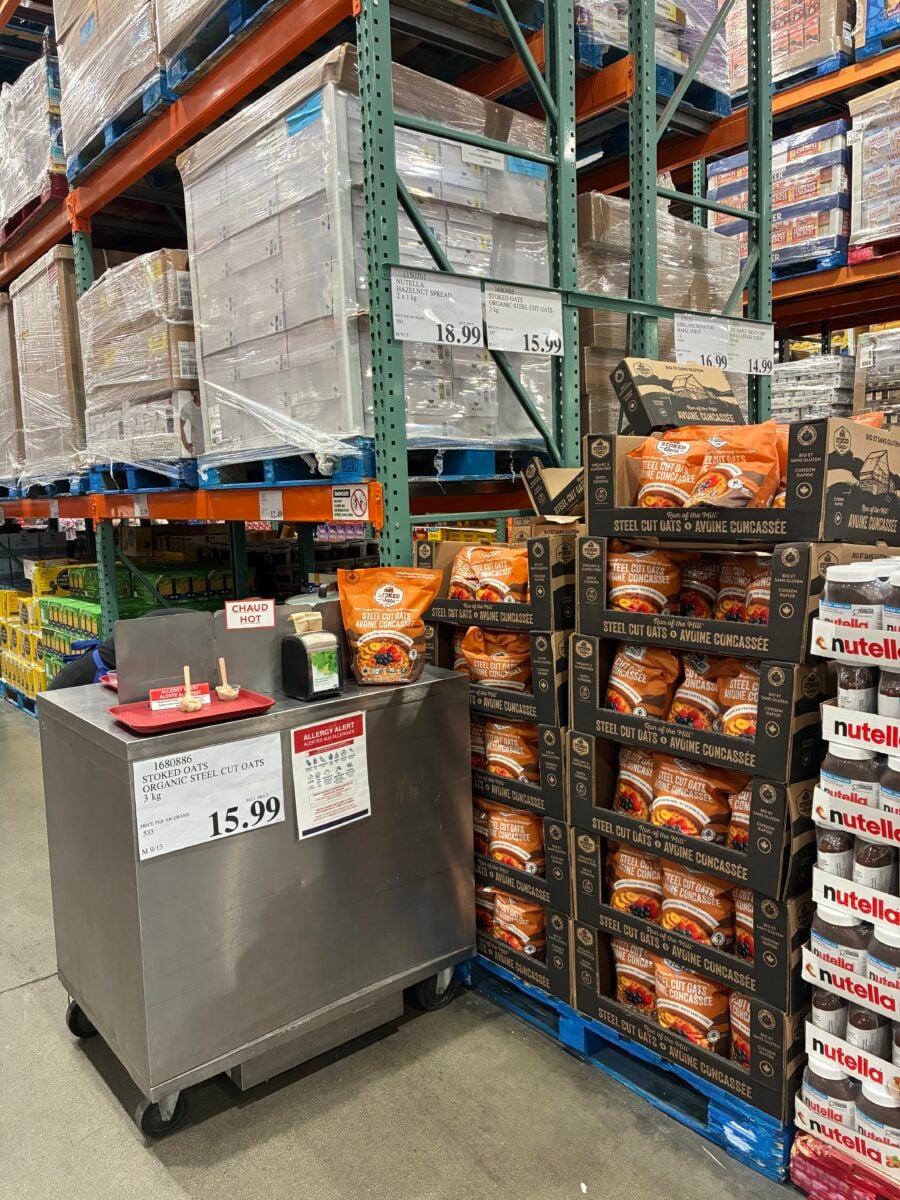
Stoked Oats photo
Stoked Oats photo

How did you move from having no CPG background to developing and manufacturing a broader product range that now includes oatmeal, granola, cereal and OatRice?

Stoked Oats began at the Calgary Farmers’ Market. Simon went full-time at Stoked Oats in 2018, and Chanelle followed in 2020. Both came from the energy sector. Simon was a geologist at Imperial Oil before leaving to co-host Boundless, competing in endurance races around the world. Chanelle was a senior renewable energy developer at NextEra Energy.

We brought lessons from our corporate careers about what worked well and what we wanted to do differently. That experience shaped our ambition to build a company where people bring deep expertise, work closely together and can act quickly on the best ideas. We wanted to preserve that ability as the business grew, while building the discipline and strategy needed to sustain profitability.

There was still a great deal to learn about the CPG space. Asking our peers and mentors many questions, paying attention to feedback fro our customers, and challenging our assumptions have been central to how we’ve developed the business. We didn’t need to arrive with every answer, but we did need to learn quickly and surround ourselves with people who understood the areas we were entering and could share their experiences to help us learn.

A significant shift was recognizing the opportunity beyond oatmeal. Oats can serve different needs across the day, and we built that thinking into the innovation component of our three-year business plan. We then worked through those opportunities sequentially, building our knowledge as we developed each category.

Today, our range includes oatmeal blends and overnight oats, granola, high-protein cereal and OatRice. OatRice is a good example of looking at a familiar ingredient differently. It takes something people associate with breakfast and gives it a new role on the plate. Winning a NEXTY for OatRice was an exciting recognition of that work.

Each new product needs to meet a real customer need while making sense for Stoked Oats. That gives us room to be creative without losing the focus that makes the brand recognizable.

Stoked Oats photo
Stoked Oats photo

What has changed operationally and strategically as Stoked Oats has expanded in Canada and launched with major retailers in Japan and South Korea, and what lessons have you learned about taking a Canadian food business into Asian markets?

Expanding our product lines with Costco and launching with major retailers in Japan and South Korea has made international growth a much bigger part of the business. It has also required us to deepen our knowledge of exporting and build the operational capabilities to support it.

We’ve learned about customs requirements, shipping and how to make freight and logistics more efficient. Those details have a direct bearing on costs, delivery timing and how reliably we can serve our partners. As volumes grow, getting them right becomes increasingly important.

Larger orders also mean larger production commitments and more cash tied up in inventory before payment arrives. That connects directly to our emphasis on profitability and working capital. We have to consider how an international order fits into the wider business, including the supply commitments we already have.

Strategically, we approach Japan and South Korea as distinct markets. Success in Canada gives us a foundation, but it doesn’t remove the need to understand local shopping habits, expectations and retailer requirements. Staying close to our partners helps us build that understanding and make better decisions as we grow.

There is real demand for Canadian products internationally, and we’re excited about the opportunity. Getting here has been years in the making. In the early years, it often felt like pushing a boulder up a mountain. Now the business has a momentum of its own: products are performing strongly, retail relationships are expanding, and the work we’ve put in is opening new doors. We’ve built the team and strengthened our operations to meet that growth. We’re ready to put that experience to work on a much bigger scale.

More from Retail Insider:

Bonobos rolls out Shopify-powered online shopping and in-store technology

Bonobos image
Bonobos image

Bonobos has launched a redesigned e-commerce platform powered by Shopify, introducing new technology intended to connect online shopping with personalized service at its 48 Guideshop locations across the United States.

The New York-based menswear retailer said the changes include digital sizing profiles, automated follow-ups after in-store fitting room visits, integrated checkout and purchase tracking designed to link sales across online and physical stores.

The launch is part of Bonobos’ broader omnichannel strategy, which aims to provide a more connected shopping experience while giving store associates better access to customers’ fit preferences and purchasing activity.

Bonobos is available for Canadian-based customers to shop and this partnership with Shopify will make their online shopping experience more seamless.

Ellen Pope, Senior Director of Ecommerce at Bonobos, said: “For our international customers, our digital storefront is the primary way they experience Bonobos, making it especially important that we deliver a seamless and personalized shopping experience. Partnering with Shopify gives us the flexibility to better serve our customers in international markets, bringing our signature focus on fit, service and product discovery to the digital experience. It’s an important part of how we’re continuing to evolve the brand and connect with customers around the world.”

Connecting online and in-store shopping

The redesigned platform introduces a tool called My Fit that allows Bonobos’ store associates, known as Guides, to access customers’ sizing preferences in real time. The fit information synchronizes across selling systems and Bonobos.com, enabling sizing recommendations at different points in the shopping process.

The retailer is also introducing automated follow-ups after customers use in-store fitting rooms, extending interactions beyond their visits. Another feature allows associates to assemble an outfit with a customer while browsing online and transfer the completed selection directly into the in-store checkout process through Shopify’s point-of-sale system. The integration is intended to eliminate the need to recreate the shopping cart at checkout.

Bonobos is also implementing a cross-channel purchase attribution system that records store visits and connects purchases made within seven days to the original store location and Guide. The system covers transactions completed online or in person, according to the company.

The approach provides a way to associate purchases with the store and employee involved in the customer interaction, even when the eventual transaction takes place through another channel.

For online purchases, the redesigned platform incorporates Shop Pay, Shopify’s accelerated checkout service, which the release describes as offering a one-tap checkout experience.

Retailer focuses on personalized service

Pope said the new platform builds on the retailer’s existing approach to fit and customer service while extending those capabilities across its sales channels.

“For nearly two decades, Bonobos has helped men find their best fit through exceptional products and personal service. Now we’re bringing that same confidence and care to every part of the shopping journey,” said Pope. “With Shopify, we can connect what a customer discovers online with the expertise of our Guides in store, while making it easier to find the right fit and check out wherever he chooses to shop. This gives us a more flexible foundation to keep improving the experience as our customers’ needs evolve.”

Bonobos image
Bonobos image

The company said the redesigned experience is intended to simplify the customer journey from product discovery through checkout, with tools to help shoppers identify styles, assess fit and complete purchases.

For Shopify, the Bonobos launch demonstrates how its technology can support a retailer whose products require detailed sizing information and personalized assistance.

Lauren Nemeth, vice-president of global enterprise at Shopify, said the platform is designed to accommodate those requirements.

“Bonobos built its reputation on getting fit right, and that only works online if the technology can keep up,” said Nemeth. “Our infrastructure is built for that level of product complexity, so brands like Bonobos can spend their energy on the customer experience instead of the infrastructure behind it.”

U.S. retail network supports omnichannel strategy

Bonobos began operating in 2007 as a digitally native menswear brand, focusing on fit and personalized service. The company later introduced its Guideshop concept, allowing customers to experience its products in person and receive one-to-one assistance.

It now operates 48 Guideshop locations across the United States and has distribution partnerships with Nordstrom stores and the department store retailer’s online storefronts.

More from Retail Insider:

Are Canadian Retailers Making Shopping Too Complicated? Samsung Research Raises Questions

Man holding phone and credit card for online shopping. Image: Unsplash

Canadian retailers have invested heavily in mobile applications, loyalty programs, e-commerce platforms and digital services designed to improve convenience and strengthen customer relationships. However, new research from Samsung Canada suggests consumers are experiencing considerable frustration managing technology, raising questions about whether some digital shopping experiences have become unnecessarily complicated.

According to Samsung Canada’s Productivity Gap research, released September 22, 75% of Canadians say technology helps them get things done faster, while 68% say it also gives them more to manage. The findings reveal a tension between the convenience technology provides and the additional tasks involved in managing multiple applications, information and digital communications.

Although the survey examined Canadians’ everyday experiences with technology rather than retail specifically, Samsung says the findings have implications for businesses developing digital customer experiences. The research was conducted through an online survey of 1,547 Canadian adults between August 31 and September 2, 2026, with results weighted by age, gender and region.

“More technology doesn’t automatically make the customer experience simpler. Apps, accounts and loyalty programs can all add value, but if each one piles on new tasks for the consumer to manage, the technology can start working against the convenience it was intended to create,” said Tarik Akad, Vice President of the Mobile Experience Division at Samsung Canada, in written responses provided to Retail Insider.

Retail Apps and Loyalty Programs Under Scrutiny

Retailers increasingly use digital platforms to encourage repeat purchases, deliver personalized promotions and connect physical stores with online shopping channels. Mobile applications and loyalty programs can provide benefits, including access to discounts, rewards and purchasing information, but they also require consumers to manage accounts, passwords and offers.

Samsung’s research found that 57% of Canadians agree the more digital tools they use, the more they have to manage. Meanwhile, 70% reported that searching for information they had previously received or seen creates unnecessary effort or slows them down at least a few times per week, while 62% reported similar difficulties when switching between applications or services.

While these findings do not specifically measure retail shopping experiences, they raise questions about the cumulative demands of managing multiple retailer accounts and loyalty memberships. A digital coupon, for example, may provide savings, but customers must first locate the offer, understand its conditions and ensure it is available when completing a purchase.

Akad said retailers should examine how their digital services work together and identify opportunities to eliminate unnecessary steps. He suggested evaluating whether applications make shopping easier, customer accounts simplify transactions and loyalty benefits are readily accessible.

For retailers, the challenge is ensuring digital services deliver sufficient practical value to justify the interactions they require. Ease of use deserves consideration alongside personalization, loyalty participation and other measures of digital engagement.

Notification Overload Raises Questions for Retail Marketing

Digital communications represent another potential source of customer frustration, particularly as retailers use email, mobile applications and loyalty platforms to deliver promotional messages. Samsung’s survey found that 77% of Canadians experience unnecessary effort or delays from managing messages and notifications at least a few times per week, although the finding covers digital communications generally.

“Every notification is a request for a customer’s attention, so it needs to earn that attention,” Akad told Retail Insider. He said businesses should prioritize the relevance and timing of communications, ensuring messages provide useful information without unnecessarily adding to consumers’ daily demands.

Personalized offers, loyalty reminders and promotional announcements can provide value when they address an immediate need, but frequent contact does not necessarily translate into a better customer experience. For retail marketers, the issue is balancing engagement objectives with the risk that excessive or poorly timed messages become another source of frustration.

Akad said retailers should consider whether each communication helps customers accomplish something or simply gives them another task to manage. That assessment can inform how retailers manage promotional frequency, notification preferences and the relevance of messages delivered through different channels.

Digital Friction Has Commercial Consequences

Independent research into e-commerce usability suggests complicated digital experiences can interfere with completed purchases. The Baymard Institute, which studies online shopping behaviour and checkout design, has identified required account creation and lengthy checkout processes among the reasons consumers abandon transactions.

In Baymard’s 2026 research, 18% of surveyed US online shoppers who abandoned purchases for reasons other than simply browsing cited required account creation, while 17% cited checkout processes that were too long or complicated. Although these findings are not specific to Canada, they illustrate how unnecessary requirements can become barriers during online purchasing.

For Canadian retailers operating physical stores and e-commerce platforms, similar usability considerations can extend across the shopping journey. Customers may research merchandise online, check store inventory, access loyalty benefits and complete purchases through different systems, with each interaction potentially requiring additional information or effort.

Improving the connections between those services could help retailers reduce customer frustration while making better use of existing digital investments. The opportunity is particularly relevant for businesses pursuing omnichannel strategies that depend on customers moving between online and physical shopping experiences.

Artificial Intelligence Could Reduce Repetitive Tasks

Samsung believes artificial intelligence could help address some of the frustrations associated with managing multiple applications and digital services. Its research found that 66% of Canadians selected at least one AI-enabled feature they considered potentially valuable for completing tasks with less effort, although the results do not measure actual productivity improvements.

Akad said AI could help make shopping feel less like a series of separate digital tasks and more like a connected experience. He pointed to opportunities for AI to assist consumers with product research, comparing merchandise, identifying offers and tracking purchases.

As these capabilities develop, they could help users move between activities without repeatedly searching for information or switching applications. Samsung is developing AI-enabled mobile features intended to make information and suggested actions more accessible across supported services, including its Now Nudge functionality.

The research also found that 58% of Gen Z respondents agreed they spend too much time completing manual steps simply to make technology work. Akad said the finding challenges the assumption that familiarity with digital technology necessarily means consumers experience fewer frustrations.

For retailers, the potential application of AI extends to improving how customers interact with existing digital services. However, adding AI capabilities will not necessarily resolve problems created by complicated account requirements, disconnected loyalty programs or poorly designed purchasing processes.

Making Existing Technology Work Better

Samsung’s findings arrive as retailers continue exploring AI, personalization and connected digital services to improve customer experiences. For businesses already operating multiple digital platforms, there may be opportunities to improve convenience through better integration and simpler interactions.

“Rather than adding more AI-enabled features for the sake of it, retailers should start with the customer need and work backward,” Akad said. His comments suggest that decisions about mobile applications, loyalty programs, checkout requirements and customer communications should begin with the tasks consumers are trying to complete.

Retailers can evaluate those investments against practical measures such as completed transactions, customer support requests, account participation and the steps required to access benefits. Identifying where customers encounter unnecessary effort could help businesses prioritize improvements to existing systems before committing additional resources to new features.

Empire’s Family of Support Expands Access to Children’s Mental Health Care Across Canada

Empire image
Empire image

Over the past six years, Family of Support has helped children’s hospitals across Canada treat and assess almost 300,000 children and youth. Recently, Empire Company Limited built on that impact as the Family of Support initiative returned for its seventh annual fundraising campaign, creating circles of support for child and youth mental health across Canada. 

In partnership with The Sobey Foundation and Canada’s Children’s Hospital Foundations (CCHF), the initiative continues to invest in and raise awareness for early intervention and crisis prevention programs through local children’s hospital foundations. 

Family of Support has helped children’s hospitals across Canada treat and assess almost 300,000 kids in its first six years. Since 2020, the initiative has enabled Canada’s 13 children’s hospitals cumulatively to add and enhance close to 140 treatment spaces, train nearly 22,000 professionals and care providers, perform over 146,000 assessments and serve nearly 150,000 children and youth. 

Up until this year, Empire Family of Brands and The Sobey Foundation have raised and donated more than $25.2 million in funds and in-kind support with 100% of funds raised going directly to local early intervention programs, helping expand access to mental health support for families in communities across the country. 

Empire said it remains dedicated to helping families across Canada access the mental health support they need through their local children’s hospitals. These early intervention programs are part of a broader effort that Empire said it is proud to champion, ensuring national resources are translated into solutions tailored to the unique needs of each community. Through Empire Family of Brands, including Sobeys, Safeway, Foodland and FreshCo, the organization continues to be a trusted presence in communities across Canada, raising awareness and helping connect families with mental health support. 

In an interview with Retail Insider, Renée Hopfner, Head of Corporate Citizenship at Empire Company Limited, spoke about the initiative and its impact.

What have you learned over the past seven years about the importance of early interventions for kids’ mental health needs of children and youth in the communities served by Empire’s stores?

One of the biggest lessons we’ve learned is timing matters. When children and youth receive support early, it can fundamentally change the trajectory of their mental health journey. Early intervention can help identify challenges before they escalate into crises, giving young people and their families access to the tools, coping strategies, and support they need sooner.

Mental health challenges also affect families in every community across Canada, and that’s why investing in locally relevant programs is so important. It not only improves outcomes for children and youth, but it also helps families feel supported and strengthens the overall system’s ability to respond to growing demand.

How do the 13 children’s hospital foundations determine where the Family of Support funding is directed? What areas of focus does Family of Support fund?

One of the strengths of Family of Support is that funding stays local. Each of Canada’s 13 children’s hospital foundations works closely with community agencies, clinicians, researchers, and families in their region to identify the greatest needs and opportunities for impact.

While priorities may vary from community to community, Family of Support investments are focused on expanding access to early intervention, building system capacity, advancing research, supporting crisis prevention, and developing evidence-informed programs. Funding has helped hospitals create and enhance treatment spaces, train care providers, improve access to assessments, and develop programs that connect children and youth with support earlier.

Empire image
Empire image

The initiative has helped hospitals treat and assess almost 300,000 children and youth and has supported nearly 22,000 professionals and care providers — what impact or outcome from the program stands out to you most?

The numbers are certainly remarkable, but what stands out most to me is what they represent. Behind every assessment, every treatment space, and every trained care provider is a child or family who was able to access support when they needed it.

If I had to highlight one outcome, it would be the expansion of early intervention. More than 146,000 assessments have been completed through programs supported by Family of Support. For many children and youth, that assessment is the first step toward understanding what’s happening, finding the right support, and beginning a path toward better mental health. Knowing that thousands more families have been able to access help earlier is incredibly meaningful.

What role do Empire’s stores and teammates play in connecting customers with the campaign, and how important is the company’s extensive retail network to the fundraising effort?

Our stores and teammates are truly at the heart of Family of Support. They help bring the campaign to life by engaging customers, sharing why child and youth mental health matters, and inviting Canadians to be part of the initiative.

Because we serve communities across the country, our retail network gives us a unique ability to raise both funds and awareness at a national scale while still supporting local children’s hospitals. Every donation made at checkout stays in the community where it was raised, so customers know they’re helping children and families close to home. The passion and commitment of our teammates is a big reason why Family of Support has been able to make such a meaningful impact over the past seven years.

Over the first six years, Family of Support touched nearly 300,000 children and youth across Canada. Beyond the numbers, what stories or moments have stayed with you most? And for readers who want to support the initiative or learn more, how can they get involved?

While we’re incredibly proud of the numbers, what stays with me are the stories behind them. Hearing from youth ambassadors and families who have navigated mental health challenges reminds us why this work matters. Their experiences remind all of us of why receiving support at the right time can make a meaningful difference in a young person’s life.

Those stories are also helping to spark important conversations. Whether it’s through podcast interviews with shows like The Mom Room or SPARK Conversations Podcast through Children’s Healthcare Canada, we’re creating opportunities for families, caregivers and youth to hear from others who have walked similar paths and to know they are not alone.

Most importantly, I encourage Canadians to learn more, hear the stories of impact, and find ways to support their local children’s hospital by visiting FamilyofSupport.com. Every conversation, every donation, and every act of support helps strengthen access to mental health care for children and youth across Canada.

More from Retail Insider:

Canadian Tire Corporation makes “landmark” commitment to women’s professional sports

Canadian Tire image
Canadian Tire image

Canadian Tire Corporation announced Wednesday what it describes as a “landmark” commitment for sponsorship of women’s professional sports.

The retail giant said it will direct a minimum of 50 per cent of its sports sponsorship investment to women’s professional sport, the only major Canadian company to publicly declare an equal investment across women’s and men’s professional sport. 

The milestone fulfills a commitment first announced through CTC’s Women’s Sport Initiative in 2023, it added. 

“Canadian Tire has long believed in the power of sport to bring Canadians together and create connections that transcend the game itself. Our 50/50 commitment is an important milestone and an expression of that belief,” said Greg Hicks, President and CEO, Canadian Tire Corporation. “Increasingly, fans aren’t distinguishing between men’s sport and women’s sport. They simply want to watch great sport. As women’s sport becomes more visible and accessible, more Canadians will get to celebrate the exceptional athletes, competition, and moments it is creating.”

“The first chapter of our Women’s Sport Initiative was rooted in belief and investment. The next chapter is about being a catalyst for fandom,” said Eva Salem, Senior Vice President, Marketing, Canadian Tire Corporation. “We know Canadians are ready. The opportunity now is to help more people discover the incredible athletes, rivalries, competition, and moments that make sport meaningful. When visibility grows, fandom grows, creating stronger leagues and a clearer pathway for girls and women in Canada. Ultimately, the entire women’s sport ecosystem will be stronger.”

Canadian Tire Corporation, Limited is a group of companies that includes a Retail segment, a Financial Services division and CT REIT. Its retail business is led by Canadian Tire, which was founded in 1922. Party City, PartSource and Gas+ are key parts of the Canadian Tire network. The Retail segment also includes Mark’s and sports retailers SportChek, Sports Experts, Pro Hockey Life, Hockey Experts, and Atmosphere. The company has over 1,600 retail and gasoline outlets.

Canadian Tire said it is now focused on tackling the next challenge facing women’s sport in Canada: visibility. Through its marketing platforms, sports and media partnerships, and national reach, CTC said it will help more Canadians discover the athletes, teams, and leagues shaping the future of sport. 

Canadian Tire this week launched a new ad featuring exceptional female athletes – the first step in a national campaign, a rallying cry it calls We’ll Make a Fan Out of You.

“Despite the rapid growth of women’s professional sport in Canada, building broader exposure and sustained reach remains a significant challenge: 75% of Canadians say they are fans of women’s sport, however 62% of fans say they do not know where to find the sport they want to watch,” said the company in a news release.

“Putting its fan-focus into action, Canadian Tire will become presenting partner of the PWHL on CBC’s Hockey Night in Canada, helping bring elite women’s hockey to one of the most iconic broadcasts in Canadian sport and to fans across the country.”

Image: Canadian Tire

It said the We’ll Make a Fan Out of You campaign is designed to introduce more Canadians to women’s professional sport through media partnerships, broadcast and social content, and fan experiences. 

“The campaign reflects Canadian Tire’s goal to make women’s sports impossible to ignore. Because when women’s sport isn’t visible, it loses more than just audiences, it limits what the next generation of girls can see, imagine, and believe is possible,” it said.

Canadian Tire said the Women’s Sport Initiative builds on a legacy of leadership and advocacy for women and girls in sport. In 2015, Martha Billes, Founder and Chairman Emeritus of Canadian Tire Jumpstart Charities (Jumpstart) and Board Director, Canadian Tire Corporation, brought together leaders from across the sport sector to address the disproportionately high rate at which girls were leaving sport. That work helped inspire Jumpstart’s Girls in Sport programming and laid the foundation for the Women’s Sport Initiative. Today, Jumpstart’s Play to Lead program continues to help girls and young women overcome barriers to participation while building confidence, leadership skills and meaningful connections through sport, it explained.

Canadian Tire and SportChek are founding partners of the Professional Women’s Hockey League and the Northern Super League and an official partner of the Toronto Tempo, Canada’s first WNBA team.

More from Retail Insider:

Canadian Small Businesses Pursue Growth Despite Economic Uncertainty: Scotiabank

Small business owner. Photo: iStock/licensed

Nearly three-quarters of Scotiabank small-business clients surveyed earlier this year expressed optimism about the future of their businesses, despite economic uncertainty and rising operating costs facing Canadian entrepreneurs.

According to the 2026 Bond Brand Loyalty Business Banking CX Report, 74% of surveyed Scotiabank small-business clients were optimistic about their business prospects over the following 12 months, compared with 62% who expressed optimism about the Canadian economy. The findings suggest that many entrepreneurs remain confident in their own operations even as tariffs, expenses and broader economic conditions influence investment decisions.

Scotiabank’s October 15 announcement also draws on listening sessions conducted in August and September with franchise operators, healthcare practitioners, lawyers and accountants. Those discussions identified acquisitions, diversification, technology investment and operational efficiency among the strategies business owners are considering or pursuing as they plan for future growth.

The optimism figures come from research conducted between March 6 and April 1, 2026, while the more recent listening sessions provide qualitative observations about business priorities. The findings offer insight into how participating entrepreneurs are approaching investment decisions, although they do not establish the extent of actual expansion activity across Canada’s small-business sector.

Economic Pressures Continue to Influence Investment

Small businesses are an important part of Canada’s economy, with enterprises employing between one and 19 people accounting for more than 90% of employer businesses and providing approximately 4.5 million jobs, according to Statistics Canada.

Operating conditions remain challenging. Statistics Canada’s second-quarter 2026 business expectations research indicated that approximately 64% of businesses with one to 19 employees anticipated cost-related obstacles, while 34.1% expected profitability to decline over the following three months.

The Canadian Federation of Independent Business reported weaker confidence in September, with its long-term Business Barometer index falling to 47.9. Businesses’ average planned price increases also rose to 3.3%, compared with 2.6% in August, as operators continued to manage higher costs.

Although the surveys cover different groups and periods, they provide context for Scotiabank’s findings. Business owners may remain confident in their individual prospects while taking a cautious approach to hiring, financing and expansion.

“Small businesses are central to the Canadian economy. Ensuring they can scale alongside the country’s broader investment agenda will be key to boosting productivity, strengthening exports and creating better jobs,” said Julien Champagne, Senior Economist at Scotiabank.

Franchise Operators Consider Acquisitions and Multi-Unit Growth

Franchising was among the sectors examined in Scotiabank’s recent discussions, with operators identifying acquisitions, multi-unit ownership and diversified business portfolios as potential approaches to growth.

According to the bank, franchise owners are navigating tariffs, higher input costs and supply-chain pressures that can affect food sourcing, operating margins and expansion decisions. These challenges have increased the importance of cash-flow management and operational efficiency when evaluating additional investments.

For established franchisees, acquiring an existing location can provide an alternative to developing a new store. An operating business may already have customers, employees and an established sales history, although buyers must also assess profitability, lease commitments, franchise agreements and potential capital improvements.

Multi-unit operators may be able to spread administrative, purchasing and management costs across several locations. The financial benefits depend on the performance of individual businesses, franchise agreements and the additional expenses associated with managing a larger portfolio.

For retail landlords and leasing professionals, the distinction between acquisitions and new store development is important. A transfer of ownership at an existing location may leave the overall retail footprint unchanged, while new locations and expansion into additional markets can generate leasing demand.

Technology Investment Focuses on Efficiency

Business owners are also considering technology investments to improve productivity, reduce administrative work and strengthen customer relationships. Scotiabank identified artificial intelligence, integrated payments, digital loyalty programs and personalized customer offers among the tools receiving attention from participating businesses.

For retailers and other consumer-facing operators, integrated payment and accounting platforms can reduce manual reconciliation and improve cash-flow visibility. Digital loyalty programs can support targeted marketing and repeat purchases, while AI applications may help streamline administrative processes and customer communications.

Scotiabank’s Pouya Zangeneh, Senior Vice President, Business Banking, said Canadian entrepreneurs are demonstrating adaptability as they evaluate ways to improve operations and build their businesses. His comments emphasized efficiency and specialized expertise as priorities for owners managing uncertain conditions.

The bank has not quantified technology adoption rates, spending levels or productivity improvements among participating businesses. Those measures would provide a clearer indication of the scale and financial impact of these investments.

Succession Planning Creates Ownership Opportunities

Scotiabank’s discussions with lawyers and accountants also identified increased interest in succession planning, estate planning and ownership-transition advice as business owners prepare for retirement.

For independent retailers and franchise operators, succession can involve transferring ownership to family members, selling to employees or completing a transaction with another operator. Acquisitions can allow established businesses to add locations and customer relationships without developing new stores.

The financial and real estate obligations associated with these transactions can be substantial. Prospective buyers may need to evaluate existing leases, outstanding liabilities, franchise agreements and the investment required to maintain operations.

Scotiabank has not provided transaction volumes associated with the succession activity discussed during its listening sessions. Its observations nevertheless identify ownership planning as an area receiving increased attention among business owners and professional advisors.

Growth Plans Require Financial Discipline

Across the sectors examined, Scotiabank found that business owners are emphasizing operational efficiency, specialized expertise and carefully evaluated investment opportunities.

For franchisees and independent retailers, expansion decisions must account for financing costs, operating margins, lease commitments and the capital required to maintain existing locations. Acquiring an established business may provide access to an existing operation, while new store development introduces construction, leasing and startup expenses.

The bank’s findings suggest that participating entrepreneurs continue to pursue opportunities despite economic uncertainty, although the scale of those investments has not been established.

For Canada’s retail and franchise sectors, completed acquisitions, new store openings and capital investment in existing operations will provide a clearer measure of whether the growth ambitions identified in Scotiabank’s research are translating into additional business activity.

More From Retail Insider

Deloitte projects 14% drop in Canadian holiday spending to record low

Gustavo Fring photo
Gustavo Fring photo

Canadian consumers are expected to cut holiday spending by 14 per cent this year to $1,305, the lowest level since Deloitte Canada began tracking seasonal expenditures, as economic uncertainty and concerns about tariffs prompt shoppers to prioritize value.

The professional services firm’s 2026 Holiday Retail Outlook projects a five per cent decline in spending on gifts and gift cards, alongside sharper reductions in holiday entertaining and experiences. The findings suggest retailers will face more price-conscious consumers and greater competition for discretionary spending during the holiday shopping season.

Deloitte’s survey found that 83 per cent of Canadians are concerned about the impact of tariffs on prices and the broader economy, while 78 per cent plan to actively seek discounts, promotions and sales to stay within their budgets.

“Canadians are not cancelling the holiday season, but economic uncertainty is influencing their spending decisions, making them far more discerning,” said Shaunna Conway, Partner and National Retail Leader at Deloitte Canada. “This shift is creating more price-conscious consumers, and retailers that offer clear, compelling value propositions will be best positioned to earn a place in shoppers’ holiday baskets this year.”

Spending declines as economic concerns mount

The report forecasts total holiday spending of $1,305, down from $1,521 in 2025. Spending on holiday entertaining, including alcohol, cannabis and groceries, is expected to fall 22 per cent, while expenditures on experiences such as travel, vacations and dining out are projected to decline 20 per cent.

Despite the overall pullback, gifts, groceries and travel remain the largest planned spending categories. Nearly one-third of Canadians, or 29 per cent, intend to spend less this year, reflecting a broader effort to manage household budgets.

The survey also points to deteriorating consumer confidence. About 34 per cent of respondents said their household finances were worse than a year earlier, compared with 32 per cent in the previous survey. Meanwhile, 45 per cent expect the economy to weaken by 2027, and 74 per cent expressed concern about a possible recession, up from 70 per cent last year.

Price expectations could further complicate retailers’ efforts to attract customers. Nearly eight in 10 Canadians, or 79 per cent, expect holiday prices to be higher than in 2025, compared with 70 per cent last year. At the same time, 63 per cent believe retailers are raising prices more than necessary.

Deloitte’s findings suggest consumer perceptions of fairness and transparency will be important alongside the prices retailers offer. While 77 per cent of respondents prioritize reasonable prices and value when choosing a retailer, 45 per cent said Canadian or local ownership matters to their shopping decisions. However, 35 per cent would not pay a premium for products based solely on local ownership.

Retailers face fragmented shopping journeys

Consumers are also planning to visit more retailers and digital destinations as they compare products and prices. Respondents expect to use an average of 16 stores and online destinations when shopping for gifts, up from 14 last year. Consumers aged 35 to 44 expect to visit an average of 23 retailers.

The timing of promotions could be particularly important for retailers seeking to convert that research into sales. More than half of planned holiday budgets, or 51 per cent, are expected to be spent by the end of the Black Friday and Cyber Monday shopping period.

The report points to early-season offers, product availability and a smooth shopping experience as factors retailers will need to address to capture demand during that period.

Traditional channels remain central to shopping plans. Deloitte expects 55 per cent of holiday spending to take place in stores, compared with 42 per cent online. Amazon and Google remain the leading sources of holiday shopping research, cited by 65 per cent and 64 per cent of respondents, respectively.

Alexis B photo
Alexis B photo

Artificial intelligence gains ground in product discovery

Artificial intelligence is becoming a more common tool for holiday shopping, particularly for finding gift ideas, comparing prices and discovering deals. Nearly four in 10 Canadians, or 39 per cent, plan to use AI for holiday shopping, up from 25 per cent in 2025.

However, consumers remain cautious about handing purchasing decisions to the technology. Only 19 per cent said they would be comfortable allowing AI to make purchases on their behalf.

“AI is becoming an important discovery tool for Canadians, but they continue to rely on established retail platforms for completing purchases,” said Conway. “Retailers should consider AI as a way to enhance decision-making and create more relevant, personalized experiences. It’s a powerful asset they can leverage to show up and stand out during the most competitive retail season of the year. ”

Use of AI for gift inspiration varies by age. Half of consumers aged 18 to 34 said they would use the technology for that purpose, compared with 18 per cent of those aged 65 and older.

Consumer concerns about personal information also present a challenge for retailers seeking to personalize shopping experiences. Although 46 per cent of respondents were willing to provide personal information in exchange for promotions, 68 per cent expressed concern about data misuse or unclear data practices.

The findings point to a potential tension between consumers’ interest in tailored offers and their expectations for privacy and control over personal information.

Deloitte conducted the survey from Aug. 28 to Sept. 4, polling Canadian consumers across age groups, financial circumstances and regions. All spending figures are in Canadian dollars.

More from Retail Insider:

Levi’s Canadian Retail Strategy Takes Shape After Hudson’s Bay Closure

Photo: Levi's

Levi Strauss & Co. is navigating a Canadian retail market that has lost one of its largest department-store chains, leaving apparel suppliers to reconsider how they reach consumers. Following Hudson’s Bay’s closure in 2025, the denim company continues to operate through branded stores, mass-market retailers and premium wholesale partnerships, with each channel serving a different segment of the market.

The importance of those relationships is evident in Levi Strauss’s latest financial results, released October 7. Global wholesale revenue grew faster than the company’s direct-to-consumer business during its fiscal third quarter, reinforcing the commercial value of outside retail partners even as Levi Strauss invests in its own stores and digital operations.

Hudson’s Bay’s collapse removed an important distribution channel for apparel brands operating in Canada. Its department stores provided national exposure through established shopping centres, reaching customers who might not otherwise visit standalone branded locations.

Levi’s was among the brands affected. Retail Insider reported in June 2025 that the company had generated tens of millions of dollars in annual sales through Hudson’s Bay, illustrating the scale of business potentially disrupted by the retailer’s disappearance.

Replacing those sales presents a challenge because department stores, mass merchants and specialty retailers serve different customers and operate with different merchandise assortments and pricing structures. A brand may have several distribution partners without any single relationship offering the same sales capacity as a national department-store chain.

Levi Strauss already maintained a diversified Canadian business before Hudson’s Bay closed. That existing network gives it several routes to market, although the company has not disclosed how much of its former Hudson’s Bay business has been recovered through alternative channels.

Levi’s Maintains a Broad Canadian Store Network

Levi Strauss maintains a substantial physical retail presence in Canada, with branded stores and outlets listed across eight provinces. Its current Canadian store directory identifies locations at major shopping centres including CF Toronto Eaton Centre, Yorkdale, Square One, CF Chinook Centre, CF Market Mall and Quartier DIX30.

Independent location-data firm ScrapeHero identified 59 Canadian Levi’s locations as of April 24, 2026, including 20 in Ontario, 17 in Quebec and 10 in British Columbia. Those three provinces account for nearly 80% of the identified network, although the figures represent a third-party estimate rather than an audited company store count.

For landlords, Levi’s remains an established international apparel tenant with locations in major metropolitan shopping centres and regional markets. Its branded stores also give the company greater control over merchandise presentation and customer relationships than wholesale distribution typically allows.

Levi Strauss extended its direct customer relationships in July 2025 with the Canadian introduction of its Red Tab membership program. The initiative connects participating stores and digital channels through a loyalty offering, adding another component to the company’s direct-to-consumer operations.

Walmart and Mark’s Provide Additional Distribution

Wholesale remains an important part of Levi Strauss’s Canadian business, with different retailers serving distinct consumer segments. Walmart Canada carries Levi Strauss Signature merchandise, a value-oriented product line that allows the company to compete at lower price points while maintaining separate positioning for its mainline and premium collections.

The Walmart relationship predates Hudson’s Bay’s closure and should not be interpreted as a newly announced replacement for that lost business. Nevertheless, it illustrates the importance of established mass-market distribution when a major department-store channel disappears.

Mark’s provides another Canadian wholesale relationship. In a November 2024 announcement, Levi Strauss identified an enhanced presence at the retailer’s Queensway location as an example of its wholesale strategy, demonstrating the company’s participation in specialty apparel retail alongside mass-market partnerships.

Premium Partnerships Extend the Brand’s Positioning

Levi Strauss has also developed its presence in higher-priced Canadian retail environments. In June 2025, the company expanded its partnership with Holt Renfrew, bringing curated merchandise and retail activations to the luxury department-store chain.

The arrangement included pop-ups in Calgary and Montreal, with additional Levi’s assortments planned for Holt Renfrew locations in Toronto and Vancouver. As Retail Insider reported at the time, the initiative followed Hudson’s Bay’s closure and supported Levi’s efforts to strengthen its premium positioning.

Levi Strauss had also introduced premium merchandise through Canadian specialty retailer HAVEN in late 2024, with distribution through its Toronto and Vancouver operations. That relationship supports the company’s development of higher-priced denim and lifestyle products, distinct from the Signature assortment sold through Walmart Canada.

Wholesale Growth Outpaces Direct-to-Consumer Sales

Levi Strauss’s fiscal third-quarter results provide financial context for its multichannel strategy. The company reported global organic revenue growth of 5%, with wholesale revenue increasing 6% and direct-to-consumer revenue rising 2%.

Comparable sales in the direct-to-consumer business were flat, although e-commerce revenue increased 10%. The results indicate that wholesale was the stronger growth channel during the quarter, even as the company continued investing in its own retail operations.

Levi Strauss Signature, the value-oriented brand carried by Walmart Canada, recorded approximately 13% global organic revenue growth during the quarter. The performance highlights the contribution of lower-priced merchandise to the company’s broader business, although the results do not disclose Signature’s Canadian performance separately.

The company is also expanding its merchandise beyond traditional denim bottoms. Management reported that categories outside denim bottoms contributed approximately half of quarterly organic revenue growth, reflecting increasing demand for tops and other apparel.

A broader assortment gives Levi Strauss additional opportunities to generate sales through existing retail relationships, whether in branded stores or wholesale accounts. It also allows retailers to develop more extensive Levi’s assortments rather than concentrating primarily on jeans.

The reported financial results are global and do not provide a separate Canadian performance breakdown. Consequently, they cannot establish whether Levi Strauss has recovered the sales lost through Hudson’s Bay or how its Canadian wholesale business performed during the quarter.

A Changing Distribution Market

Levi Strauss’s Canadian operations demonstrate how a diversified retail model can reduce reliance on any single distribution channel. Its branded stores provide direct access to consumers, mass-market retailers offer broad distribution, and premium partners support higher-priced merchandise and brand positioning.

The disappearance of Hudson’s Bay has made those distinctions more consequential. Replacing a national department-store relationship can require several retail partners, each with different customers, commercial arrangements and merchandise requirements.

For Canadian landlords, Levi’s existing store network maintains the brand’s presence in major shopping centres, while wholesale partnerships extend its reach beyond those locations. The combination provides flexibility, but it also requires the company to manage distinct product and pricing strategies across retailers.

The latest earnings results show that wholesale remains an important source of global growth for Levi Strauss. In Canada, the more significant test will be whether the company can maintain and build sales across its remaining retail relationships without the national distribution capacity Hudson’s Bay once provided.

Daily Synopsis: October 13, 2026

Daily Synopsis2

Welcome to the Daily Synopsis by Retail Insider. We hope you enjoy the 15 articles we published covering key developments in Canadian retail. Here are a couple highlights with a full list of the day’s articles thereafter.

Rising commodity prices combined with a weakening Canadian dollar, which recently dropped to its lowest level since spring 2025, are expected to increase grocery costs in winter 2026 and into 2027, especially for imported fruits and vegetables. The recent ICSC@CANADA event in Toronto highlighted strong demand for Canadian retail space amid historically low vacancy rates and limited new construction, with a fully sold-out dealmaking floor reflecting active leasing and investment.

Carl Boutet warns that widespread AI adoption in retail could lead to a “sea of sameness,” where efficiency gains come at the cost of distinctive brand identities. MINISO has launched its first international SUPER MINISO store at Square One in Mississauga, showcasing a large-format concept that highlights licensed character merchandise alongside lifestyle goods. Villages Calgary is closing its retail store after more than 40 years due to declining revenue and reduced customer traffic linked to road access challenges and shifting demographics.

🗞️ The Day’s Retail Insider Article List

🌐 Canadian Retail News From Around the Web

Apple Expands Smart Home Ambitions with New Hub and Connected-Home Products

Apple Home Collection. Photo: Apple.

Apple is expanding its connected-home business with a dedicated smart home display and a collection of security, climate-control and automation products developed with LG Electronics and Schneider Electric. The October 13 announcements broaden the company’s involvement in household technology categories already served by consumer electronics and home improvement retailers, while creating opportunities to sell multiple compatible products through its Canadian retail network.

The new lineup includes HomeView, a seven-inch smart home display priced at $429 in Canada, along with security cameras, video doorbells, smart locks, thermostats and sensors. Apple is also updating HomePod mini and Apple TV 4K, bringing together household controls, communication and entertainment within a wider connected-home offering.

The expansion comes as connected-home technology becomes increasingly common in Canadian households. Apple’s opportunity is to encourage existing customers to purchase additional devices within its ecosystem, although the company faces established competition from other technology platforms and manufacturers offering products compatible with multiple systems.

Apple HomeView. Photo: Apple.

HomeView Gives Apple a Dedicated Household Control Device

HomeView is scheduled to become available in Canada on November 13, with tabletop and wall-mounted configurations priced at $429. The device features a seven-inch Liquid Retina display and supports household controls, camera viewing, FaceTime and entertainment functions.

Apple is introducing an enhanced Siri experience intended to make interactions with connected devices more conversational and personalized. HomeView can recognize individual household members and provide access to personalized information, subject to Apple’s privacy and device requirements. Canadian French support for Siri AI is expected through a later software update.

The product fills a gap in Apple’s existing home hardware assortment. Customers seeking an Apple home hub have generally relied on HomePod speakers or compatible Apple TV devices, neither of which provides a dedicated touchscreen for managing the household.

HomeView gives Apple a product designed for shared use in kitchens, living areas and other spaces where a television may not be present. It also provides another reason for consumers to purchase compatible accessories, since the usefulness of a central display increases as households connect additional devices.

LG and Schneider Electric Broaden the Product Assortment

The Apple Home Collection is a significant commercial development because it expands the range of connected-home products associated with Apple’s ecosystem. Developed with LG Electronics and Schneider Electric, the collection spans security, access control and climate management.

LG’s products include indoor and outdoor cameras, a video doorbell, smart lock, thermostat and temperature sensor. Canadian prices range from $54.95 for a temperature sensor to $549.95 for the LG Floodlight Cam, with the Video Doorbell Wired priced at $349.95 and the Smart Deadbolt Lock at $479.95. Indoor and outdoor cameras are priced at $279.95 and $399.95, respectively.

Schneider Electric is contributing a smart thermostat, room sensor and mounting accessories for the wall-mounted HomeView. Its thermostat will retail for $279.95 in Canada, while the room sensor is priced at $54.95. The collection is scheduled to begin arriving in December, with additional products expected in early 2027.

Working with established manufacturers allows Apple to broaden its assortment without developing every device itself. LG brings consumer electronics and appliance expertise, while Schneider Electric has an established business in electrical infrastructure and residential energy management.

Schneider’s broader portfolio includes hybrid inverters, battery storage, smart electrical equipment and systems designed to manage household energy consumption. Those products are not part of the announced Apple Home Collection, and Apple has not confirmed that HomeView will provide comprehensive control of residential solar generation or battery storage.

The immediate commercial opportunity is to offer consumers a coordinated assortment of products designed to work within Apple’s home ecosystem. A household purchasing a HomeView could also be considering a video doorbell, smart lock and thermostat, creating the potential for sales across several merchandise categories.

Connected-Home Technology Has an Established Canadian Audience

Statistics Canada’s 2022 Canadian Internet Use Survey found that 47.4% of Canadians aged 15 and older reported using at least one internet-connected smart-home device in their primary residence. The survey covered products including smart speakers, security cameras, lighting, thermostats, appliances and locks.

Although the figures are several years old and measure individuals rather than households, they demonstrate that connected-home technology was already widely used before Apple’s latest expansion. More recent federal research also points to adoption of smart and adaptive thermostats among Canadian homeowners, reinforcing the relevance of connected technology to household climate control.

For Apple, that existing market creates opportunities to sell additional hardware to consumers who already own iPhones, iPads and other Apple products. A familiar interface and integration with existing services could encourage customers to add cameras, locks and climate-control equipment over time.

The company faces competition from Amazon, Google and Samsung, alongside manufacturers offering products compatible with several platforms. Apple’s existing customer relationships may help attract buyers, but the announcements do not include Canadian sales forecasts or evidence that consumers will replace competing systems.

Interoperability and Energy Management Expand the Market

Connected-home technology is extending into major appliances, heating and cooling equipment, electricity monitoring and residential energy systems. Consumers can increasingly combine products from different manufacturers, creating demand for platforms capable of coordinating them.

Matter, the industry interoperability standard, has expanded support for energy-related equipment, including solar systems, inverters and battery storage. However, support within a technical standard does not mean every connected-home platform provides the same functions or displays the same information.

HomeView offers a dedicated interface for supported household devices, but Apple’s announcements do not establish comprehensive native management of solar generation, home battery reserves or sophisticated energy-based automation. Independent platforms such as Home Assistant already allow technically inclined users to coordinate compatible appliances, climate-control equipment and energy systems through customized automations, although those systems generally require more configuration.

Apple’s emphasis on an integrated, relatively simple experience may appeal to a broader consumer audience. Its partnerships with LG and Schneider Electric provide access to manufacturers with expertise in appliances and energy technology, but any deeper integration of those systems would require further product announcements.

Canadian Retailers Face New Competition and Opportunities

Apple has confirmed that Home Collection accessories will be sold through its Canadian retail stores, online store and Apple Store app. Distribution through third-party Canadian retailers has not been announced, leaving the collection’s availability outside Apple’s own channels uncertain.

The assortment overlaps with merchandise sold by electronics and home improvement retailers, including security cameras, smart locks, thermostats and connected-home accessories. Retailers such as Best Buy Canada already serve customers interested in these products, while home improvement chains sell equipment associated with security, climate control and electrical systems.

Apple’s coordinated offering could encourage consumers to purchase several products within the same ecosystem. A HomeView, video doorbell, smart lock and thermostat would cost $1,538.85 before taxes and installation, illustrating the potential value of a multi-category transaction rather than indicating expected consumer spending.

Other retailers may find opportunities in product selection, compatibility advice and installation services. Cameras and sensors may be relatively straightforward to install, while thermostats, locks and more complicated household systems can require additional assistance.

Apple has announced a professional installation arrangement with ADT in the United States, but no equivalent Canadian program has been confirmed. Installation and technical support could therefore remain areas of differentiation for Canadian retailers and service providers as connected-home systems become more complex.

Recurring services are another part of the category’s economics. Supported security cameras can use Apple’s HomeKit Secure Video features through eligible iCloud+ subscriptions, while other connected-home products may involve monitoring, cloud storage or ongoing support services.

HomePod and Apple TV Support the Wider Strategy

Apple’s announcements also include a second-generation HomePod mini, priced at $199 in Canada and scheduled for release October 30, and an updated Apple TV 4K, priced at $429 and expected November 13. Both support the company’s connected-home ecosystem while retaining their roles in audio and television entertainment.

The new HomePod mini is expected to receive enhanced Siri AI capabilities through a future software update, while Home Collection accessories will begin arriving in December, with additional products expected in early 2027. The staggered rollout will extend Apple’s introduction of new connected-home products over several months.

The expansion gives Apple a broader assortment through which customers can manage their homes, with opportunities across hardware, accessories and services. For Canadian retailers, it adds a major technology brand to more home security and climate-control purchasing decisions while increasing the importance of compatibility, installation support and the practical differences between competing connected-home ecosystems.

More From Retail Insider