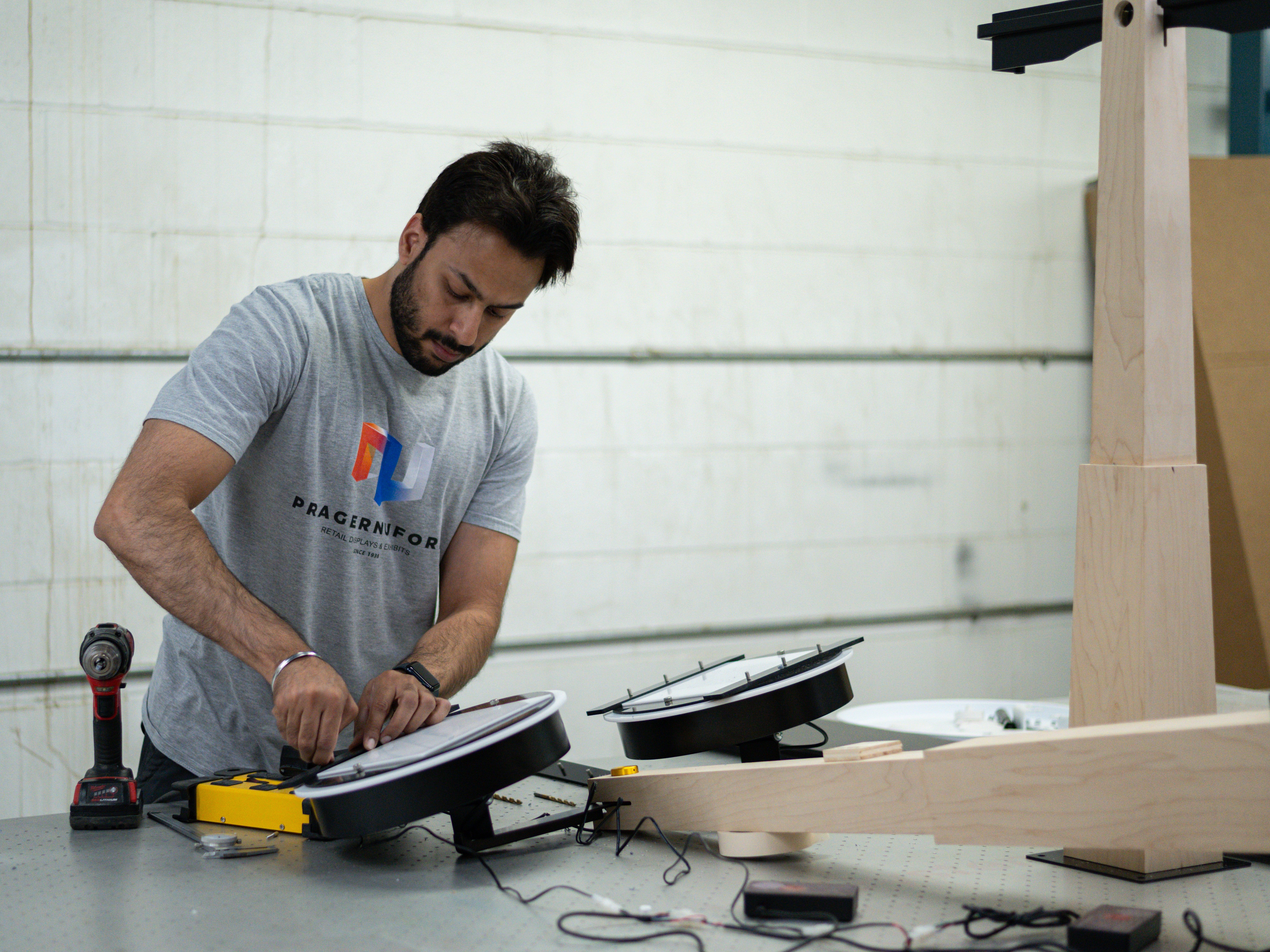
PragerNuform is celebrating more than 85 years in business, spotlighting its integrated design-to-install model that supports brands and retailers across North America. Founded in 1938 as Wm Prager Ltd. in Toronto’s garment district, the company later merged with Nuform Manufacturing and Accenta Displays. Over the decades, it has evolved into a comprehensive partner for retail environments, point-of-purchase displays, and trade-show installations.
CEO Laolu Fashesin said the company’s success lies in its long-term customer relationships. “Since 1938, PragerNuform has been a trusted leader in the design, manufacture, and distribution of retail displays, store fixtures, and trade-show booths across North America. We actively listen to our customers to ensure clarity on their vision and project expectations, delivering results that meet the highest standards of quality and execution.”
Fashesin added that the company’s growth is rooted in collaboration across every level of its business. “Our success is built on strong, lasting partnerships with our customers, employees, suppliers, and the greater community,” he said. “Together, we create retail and brand experiences that bring ideas to life, powered by PragerNuform’s 80,000-square-foot facility and a team known for innovative thinking and long-tenured expertise.”
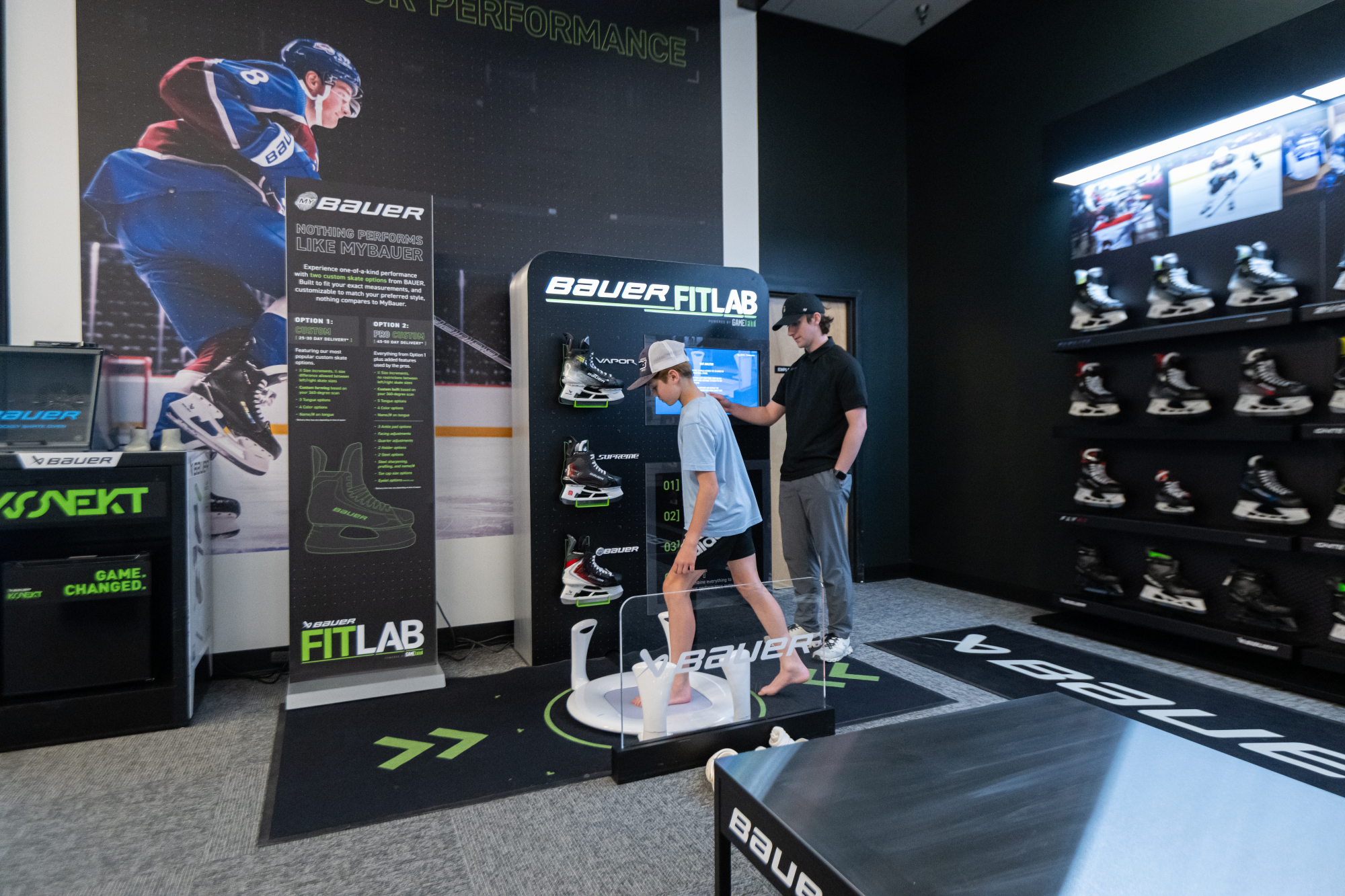
The Bauer Fit Lab experience shown at Front Row Sports, West Seneca. Image: PragerNuform
He emphasized that the company’s people remain its greatest asset. “It’s our people who truly set us apart,” said Fashesin. “Their craftsmanship, problem-solving, and unwavering commitment to client success are at the heart of everything we do.”
The PragerNuform retail design process begins with concept development and engineering before moving to rapid prototyping. In-house machining, millwork, plastics production, and graphics ensure that each program stays on schedule and consistent from the first prototype through to final installation.
Trained installation crews complete projects on site, while warehousing and replenishment programs keep fixtures looking fresh over time. The company’s model reduces handoffs between vendors, minimizes project risk, and ensures clean execution across every rollout.
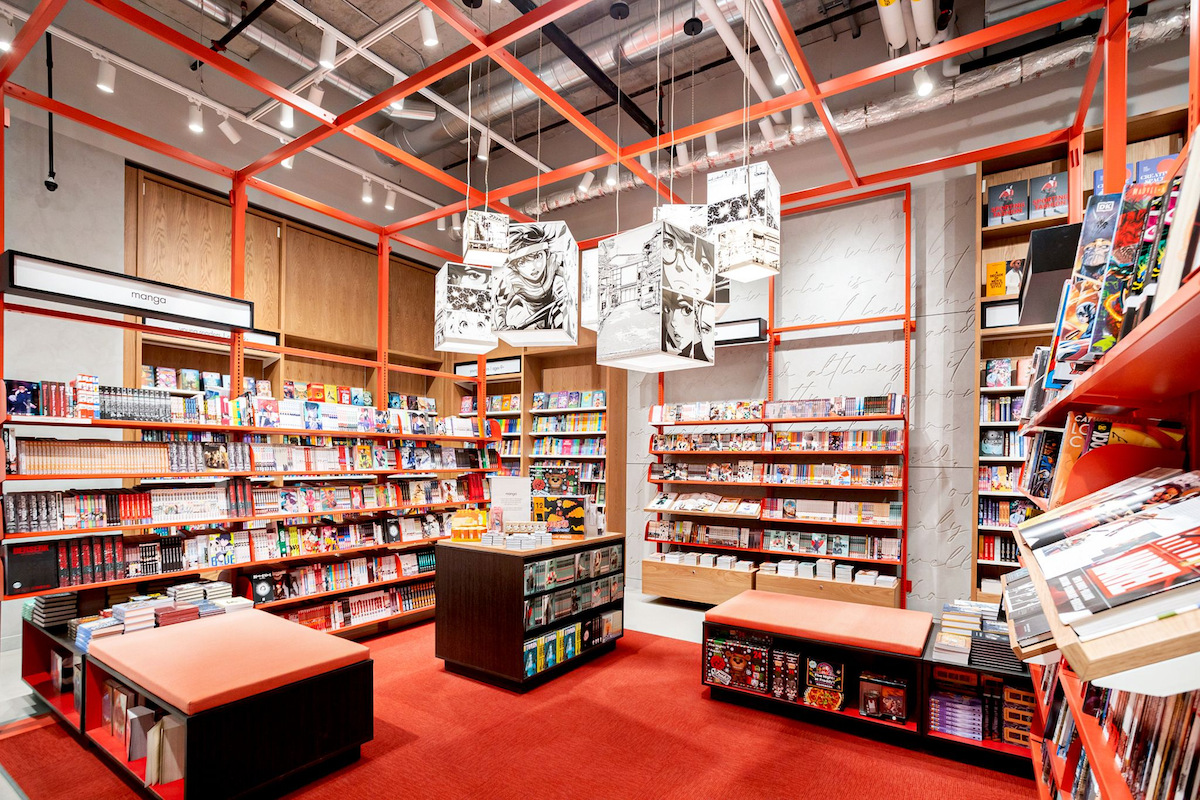
Custom Manga Light Installation for Indigo at the Well, Toronto. Image: PragerNuform
Flexible Canadian and Offshore Production
PragerNuform offers both Canadian and offshore production options, enabling brands to balance speed-to-market with scalability. Domestic production ensures fast turnaround for time-sensitive projects, while offshore manufacturing supports larger programs with efficiency and volume.
The company integrates heritage craftsmanship with modern technology, including CAD precision cutting, flatbed printing, SEG sewing, and controlled assembly. This ensures that graphics and hardware meet perfectly on the first install and that finished environments withstand high traffic and frequent refresh cycles.
Estee Lauder Booth at the Shoppers Drug Mart Beauty Show, Toronto. Image: PragerNuForm
Showcasing Retail Design Expertise Through Recent Projects
Vice President of Design & Sales Marcel Rocheleau highlighted several recent projects that showcase the company’s versatility across sectors.
“For Shoppers Drug Mart, we developed a multi-brand environment for Estée Lauder built from engineered aluminum systems and reusable structures designed for quick installation and redeployment,” said Rocheleau.
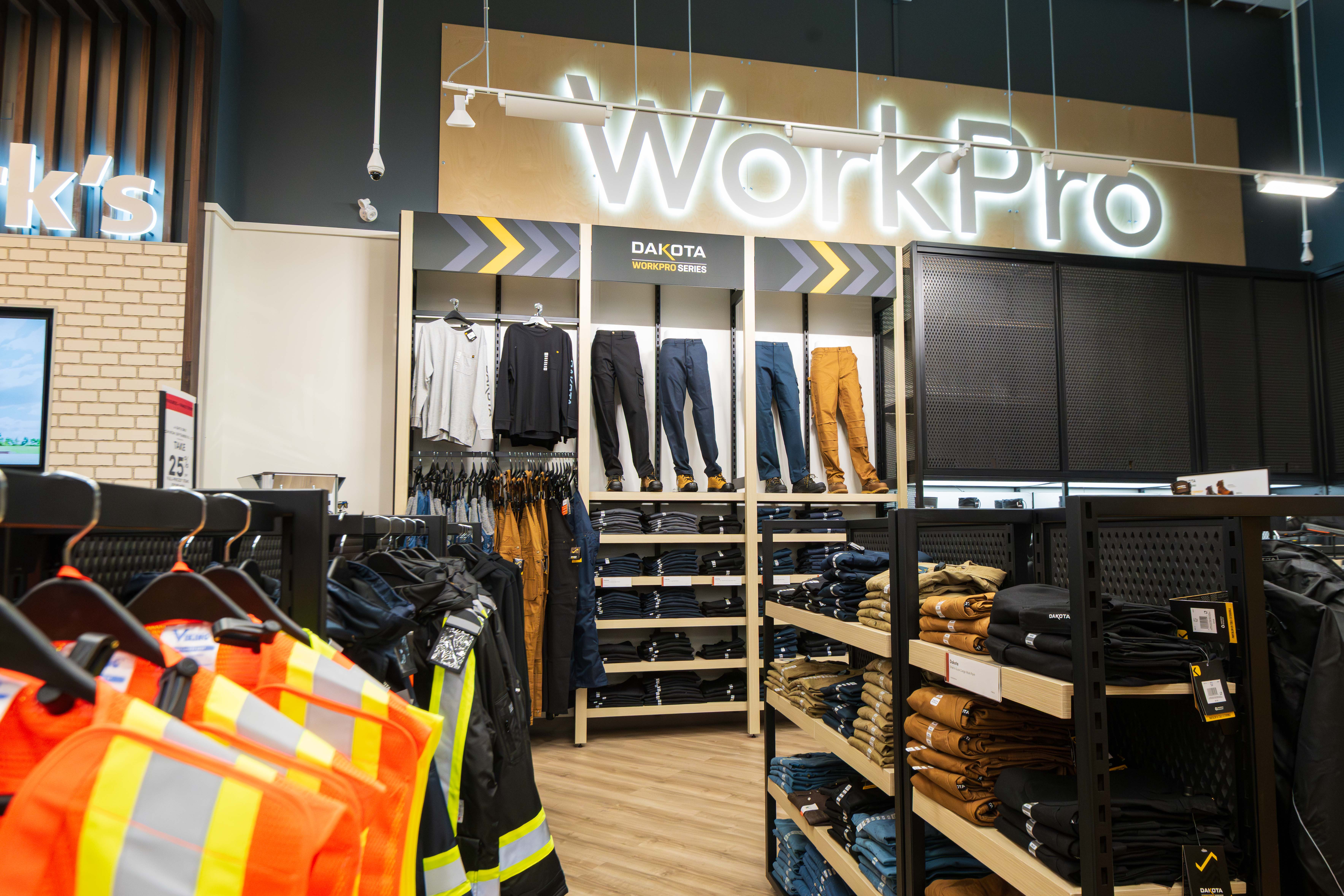
He added that the company’s national rollout for Mark’s is among its most ambitious yet. “We introduced a next-generation fixture package that not only elevates the brand but also maximizes durability, champions sustainable materials, and expands merchandising capacity to meet today’s retail demands,” he explained. “We’re excited to see this program reach hundreds of locations over the next few years.”
Mark’s, New Concept, Vaughan Mills.Image: PragerNuForm
Rocheleau noted that PragerNuform also plays a key role in Bauer’s evolving retail concept. “From the cutting-edge Bauer Fit Lab experience to redefined stick, skate, and helmet displays, we’ve built solutions that match the intensity of the hockey industry.”
Other recent collaborations include fixture programs for Sporting Life, featuring embedded magnets for precise sign placement and movable walls for seasonal flexibility, as well as Team Town, which relied on PragerNuform’s rollout expertise to establish a new fixture playbook across multiple stores.
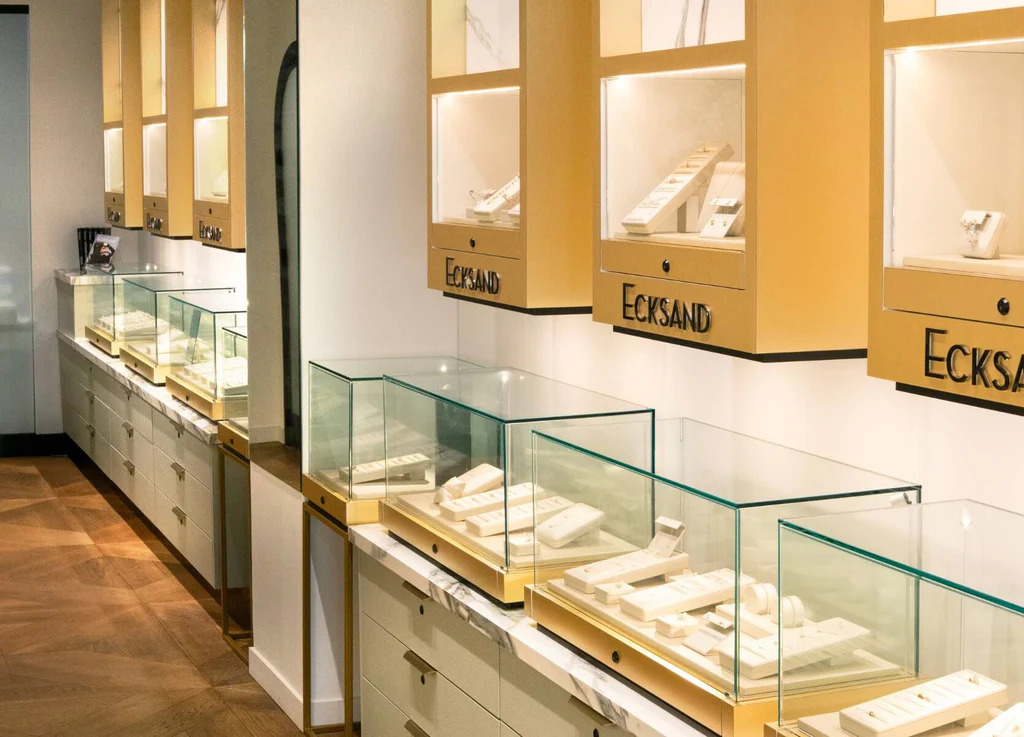
“In Toronto’s Yorkville neighbourhood, the Ecksand flagship required boutique-quality finishes on a six-week timeline, including premium millwork and sleek display cases,” Rocheleau said. “Additional programs for Energizer and Schneider Electric highlight our ability to create durable, easy-to-maintain systems for replenishment-heavy and tech-driven retail environments.”
Ecksand store in Toronto, February 2025. Image: Ecksand
Collaborative Team Model Ensures Project Precision
A defining feature of the PragerNuform model is its internal collaboration; designers, engineers, and production teams work seamlessly together to ensure that approved concepts translate directly into flawlessly executed installations. Prototypes and finish boards resolve design details before production begins, while structured project management keeps milestones and freight schedules aligned with tight retail timelines.
By unifying design, production, and installation, PragerNuform reduces risk and improves predictability for retailers. The approach enables brands to scale store programs across dozens or hundreds of doors while maintaining design integrity and brand identity.
adviso, in partnership with Ad hoc Research, has released the results of the 8th edition of LoyalT, the most comprehensive study of Canadian retail loyalty program performance.
Simon Ethier
“The results of LoyalT 2025 confirm that consumers are more selective, better informed and demand more out of the programs they subscribe to. To stand out from the crowd, retailers must shift from a transactional mindset to an approach that emphasizes anirreplaceable value-added service. Analytics is therefore the prime lever for managing and maximizing loyalty,” said Simon Ethier, Advisor, Omnichannel Retail, Monetization and Strategy, adviso.
Using a sample of 15,000 Canadian respondents and a unique methodology, LoyalT 2025 offers detailed insights into the performance of 87 programs across 11 activity sectors: grocery, restaurants, fashion, pharmacy and beauty, gas and convenience stores, pet products, beverages, entertainment, sports and outdoor, hardware, as well as discount and big box stores.
The major takeaways from LoyalT 2025
The North American geopolitical context is having an impact on loyalty program use, and some programs are more affected than others.
There are more programs. Canadians are members of 22 programs, a significant increase since 2023, but use only nine of them regularly (i.e., 41%).
Programs are performing better and are more efficient. There is a clear improvement in the overall performance score of programs, specifically in the Engagement index, i.e., the ability of a program to keep members engaged.
Appealing to Gen Zs is a must. This age group includes the most frequent and active users, who are looking for premium programs as well as fast access and personalized experiences.
Generosity is now critical. In today’s tense economic times, members’ perception that they are truly earning value from a program influences their satisfaction and loyalty.
Gamification is a fast-growing engagement strategy, being increasingly used by programs and members.
Image: LoyalT
Top 10 programs in Canada
Royal Perks – Burger King
My Panera – Panera Bread
Pet’s Rewards – Global Pet Foods
RealRewards – American Eagle Outfitters
Papa Rewards – Papa John’s
Treats Rewards – PetSmart
PC Optimum – Loblaw Companies
Domino’s Rewards – Domino’s Pizza
Gap Good Rewards – Gap, Old Navy, Banana Republic and Athleta
MyMcDonald’s Rewards – McDonald’s
Top 10 programs in Québec
Domino’s Rewards – Domino’s Pizza
MyMcDonald’s Rewards – McDonald’s
PC Optimum – Loblaw Companies
Walmart Rewards – Walmart
Beauty Insider – Sephora
Tims Rewards – Tim Hortons
Journie Rewards – Ultramar
Starbucks Rewards – Starbucks
MOI Rewards – Metro Inc.
Inspire – SAQ
“The 2025 edition of LoyalT confirms it: brands that continually scale up their programs, activate multiple engagement levers (e.g., mobile experience, gamification, hyper-personalization) and make their relational strategy a cornerstone of their business model clearly stand apart from the competition. Client data remains the true driver of that performance,” said Jonathan Pollender, Business Strategy Consultant, adviso.
Jonathan Pollender
The report introduced the Generosity Score, a new feature of the 2025 study, demonstrating a strong correlation between perceived generosity and consumers’ satisfaction with and attachment to a program.
In Canada, Burger King, Domino’s Pizza and PetSmart top the list of loyalty programs perceived as most generous, while in Québec, Domino’s Pizza, McDonald’s and Walmart lead the way.
LoyalT 2025 confirms that members of Gen Z are the most active users of programs and ascribe great importance to the Attachment dimension (relevance of content, day-to-day usefulness) as well as mobile experiences.
They are also enthusiastic adopters of programs in the restaurant and beverage sectors, as well as premium programs (loyalty programs with a pay tier or subscription model). For example, 66% of Gen Zers in Canada are Amazon Prime members, and 29% are subscribed to UberOne.
The benefits most sought after by this age group are:
The ability to accumulate and redeem points online (81%);
Member-exclusive discounts and free products (78%);
The ability to accumulate points other than by making a purchase (sharing reviews or content, referring friends, answering surveys, viewing content) (76%);
Designer Kim Newport-Mimran closes the Tilley Sport fashion show in Toronto on Tuesday, October 28. Photo: George Pimentel Photography
On Tuesday October 28, Toronto’s Cultural Goods Gallery on Dupont Street hosted the latest Tilley Sport fashion show, marking the debut of the brand’s Spring/Summer 2026 collection. The event represented another milestone for the performance-lifestyle label under the creative direction of Kim Newport-Mimran, who continues to evolve the brand’s aesthetic and market reach.
Just five months earlier, Newport-Mimran had presented the first Tilley Sport collection at a pop-up within Holt Renfrew Bloor Street, signalling the brand’s high-fashion ambitions. This week’s show expanded that vision further, introducing new technical fabrics, colours, and accessories to an audience of industry professionals, athletes, and design enthusiasts.
In an interview following the show, Kim Newport-Mimran, Creative Director of Tilley Sport, shared her approach to the evolving line. “I love to build on collections,” she explained. “You start with the new colours, and I love retro references in the sport arena. This collection feels fresh and modern while grounded in the athletic lifestyle that’s inspiring fashion right now.”
The SS26 line reflects Newport-Mimran’s ongoing fascination with the convergence of sport and style. “We’re looking at trends where you see celebrities courtside at basketball games,” she said. “Sport is having a moment, and I’m happy to be a fashion designer entering into it.”
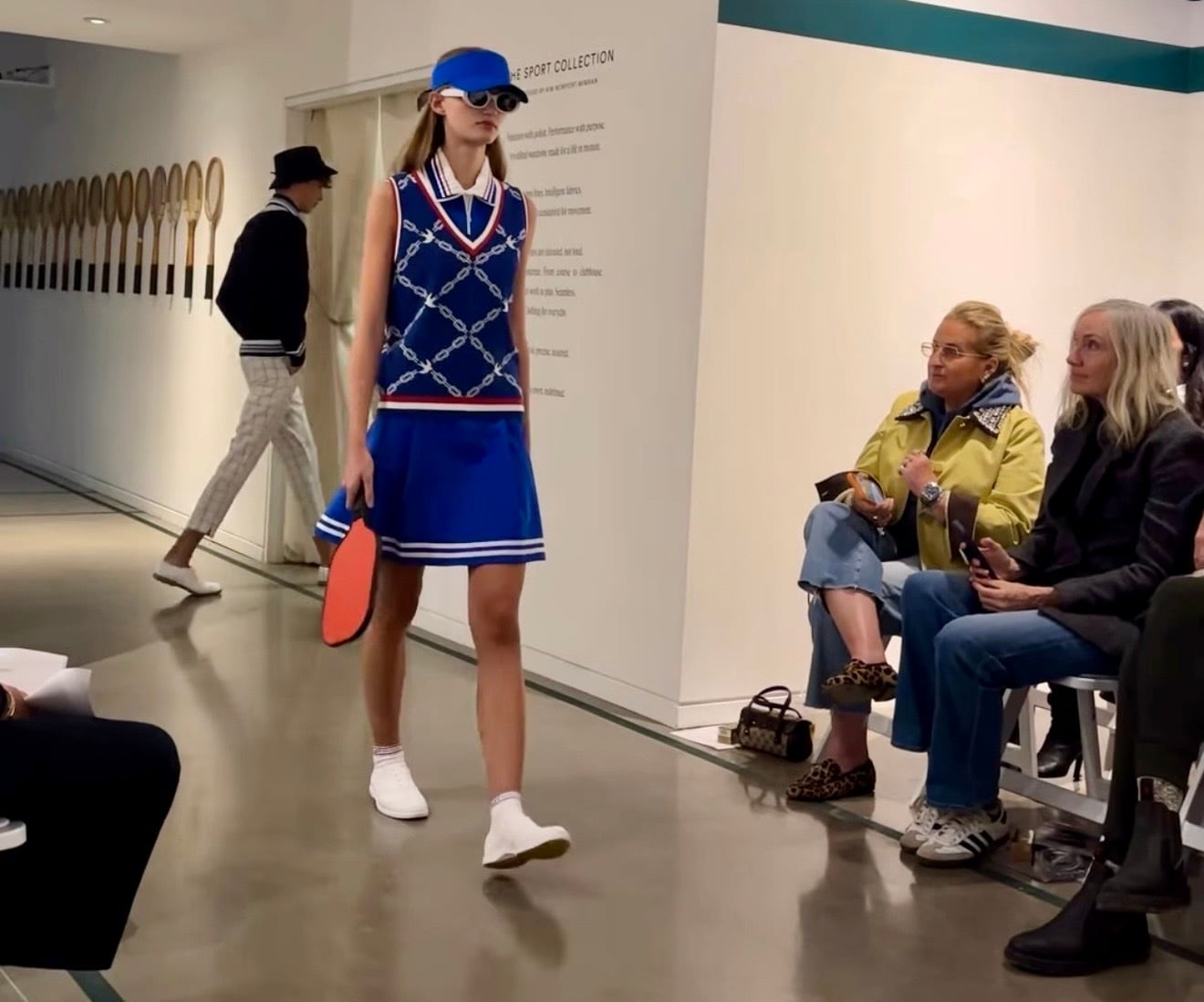
The new collection embraces the idea of versatility — clothing that transitions effortlessly from the course to the city. Highlights include breathable polos, skorts, and lightweight windbreakers, all made from technical fabrics with moisture management and antimicrobial finishes. Many pieces also feature UPF sun protection, aligning with the brand’s outdoor heritage.
Tilley Sport fashion show in Toronto on Tuesday, October 28. Photo: George Pimentel Photography
Elevated Accessories and Design Details
Accessories played a major role in the SS26 presentation, reflecting a growing emphasis on lifestyle integration. “We designed gym bags in canvas and leather,” Newport-Mimran noted. “Some of them were styled to show how they complement the look. Little bags for sun, tennis, or golf. It’s a twist on elevated style, tying it all together with scarves and textures.”
This balance of utility and sophistication is consistent with the broader direction of Tilley Sport, which has positioned itself at the intersection of athletic functionality and designer refinement. Subtle preppy details, reimagined argyle patterns, and fresh tones of pine green and sand underscored the SS26 palette. “I really loved that neutral story,” said Newport-Mimran. “I loved taking an argyle and reworking a traditional pattern into something new.”
A Rapid Expansion Across Canada
In the five months since its first major showcase, Tilley Sport has achieved significant retail growth. Newport-Mimran revealed that distribution has expanded dramatically through Canada’s top golf clubs. “We went from being in three to 50,” she shared. “It’s been really exciting because this market takes you from the course to the clubhouse. It’s fashion that fits active lifestyles.”
The brand’s rapid adoption in premium golf settings highlights its ability to resonate with both sport enthusiasts and style-conscious consumers. From Fairmont resorts to elite private clubs, the collection’s mix of technical innovation and refined design has found strong traction.
Tilley Sport products are also featured at Tilley’s corporate stores on Ossington Avenue in Toronto and in Oakville, as well as online. This multi-channel strategy, balancing heritage retail with contemporary sport distribution, has positioned the brand for continued growth.
Tilley Sport runway show in Toronto on October 28, 2025. Photo: Instagram story screen shotTilley Sport fashion show in Toronto on Tuesday, October 28. Photo: George Pimentel Photography
Building on Tilley’s Canadian Heritage
Tilley Sport is a modern evolution of Tilley Endurables, the storied Canadian outfitter founded in Toronto in 1980 by Alex Tilley. The brand built its reputation on durable travel apparel and the world-famous Tilley Hat, known for its lifetime guarantee and performance under extreme conditions.
Now owned by Gibraltar & Company since 2018, Tilley’s reimagining under Newport-Mimran and her husband Joe Mimran, best known for Club Monaco and Joe Fresh, marks a deliberate shift toward lifestyle luxury and performance fashion.
“Tilley is an iconic Canadian name,” said Newport-Mimran. “My goal has been to evolve that heritage into something relevant for today’s customer…someone who wants performance, but also wants to look great doing it.”
Clothing on display at the Tilley Sport fashion show in Toronto on Tuesday, October 28. Photo: George Pimentel PhotographyTilley Sport runway show in Toronto on October 28, 2025. Photo: Shayne Stephens
Fashion Meets Function
Under Newport-Mimran’s direction, Tilley Sport has found its niche in the growing market for fashion-led athleticwear. The line includes technical knits, compression pieces, and tailored silhouettes that emphasize function without compromising style.
“I love working in this performance function, effortless style,” she said. “When you shop retail, you often see a beautiful item, but you don’t always see how it comes together. I love showing how to wear it, how it fits into real life.”
Her design philosophy centres on engineering garments for longevity and adaptability, a nod to Tilley’s legacy of craftsmanship. Each piece in the collection is designed to perform in active settings while maintaining a level of polish suitable for travel or leisure.
From Holt Renfrew to the Green
The Tilley Sport Spring/Summer 2026 Collection represents a balance between heritage craftsmanship and forward-thinking innovation. Following the success of its Holt Renfrew showcase, the brand’s Toronto show reaffirmed its momentum and growing influence.
Fashion insiders noted the collection’s ability to merge technical athleticwear with a luxury aesthetic, a niche that has gained significant traction in the post-pandemic market. With pickleball, golf, and casual sportwear now driving lifestyle trends, Tilley Sport’s focus on refined performance design places it at the forefront of this shift.
Attendees echoed the positive reception, with many praising the “sport-luxe” sensibility of the SS26 lineup and its strong sense of identity.
Kim Newport-Mimran and the Tilley BMW at the Tilley Sport fashion show in Toronto on Tuesday, October 28. Photo: George Pimentel Photography
More from Retail Insider:
Tilley Sport runway show in Toronto on October 28, 2025. Photo: Instagram story screen shot
In a world where entertainment increasingly merges technology, fitness, and social connection, few Canadian companies have made an impact quite like Activate Games. Founded in Winnipeg just six years ago, the interactive gaming brand has rapidly evolved from a single prototype facility into a global entertainment phenomenon. With more than 55 locations now open across North America, Europe, and the Middle East, the company represents one of Canada’s most significant experiential retail success stories in recent memory.
Activate’s model, which transforms players into live participants in a series of high-tech, replayable challenges, has redefined what social entertainment can look like. “It’s really about immersive, active gaming,” explained Sébastien Piché, Vice President of Operations at Activate Games, in an interview with Retail Insider. “Customers come in groups of two or more, book their time, and experience a variety of rooms. Each room features different games with multiple levels to unlock, so there’s always something new to do.”
What began as a local innovation born in a backyard shed is now, remarkably, the fastest-growing entertainment brand in the Americas.
Adam and Megan Schmidt. Image: Activate Games
A Canadian Innovation Built on Grit and Imagination
The story of Activate Games is deeply rooted in Canadian entrepreneurship. Founders Adam and Megan Schmidt combined creativity and perseverance to launch the world’s first “active gaming” facility in Winnipeg in 2019.
Adam, a former RCMP pilot and lifelong innovator, and Megan, a trained physiotherapist with a background in kinesiology, had already found success with one of Western Canada’s most popular escape room businesses, The Real Escape Canada.
While escape rooms had surged in popularity during the 2010s, the Schmidts saw an opportunity to create something more dynamic and replayable. “As you know, once you’ve solved an escape room, it’s hard to go back and play it again,” said Piché. “Adam and Megan wanted to build something that encouraged repeat visits, where every experience felt fresh.”
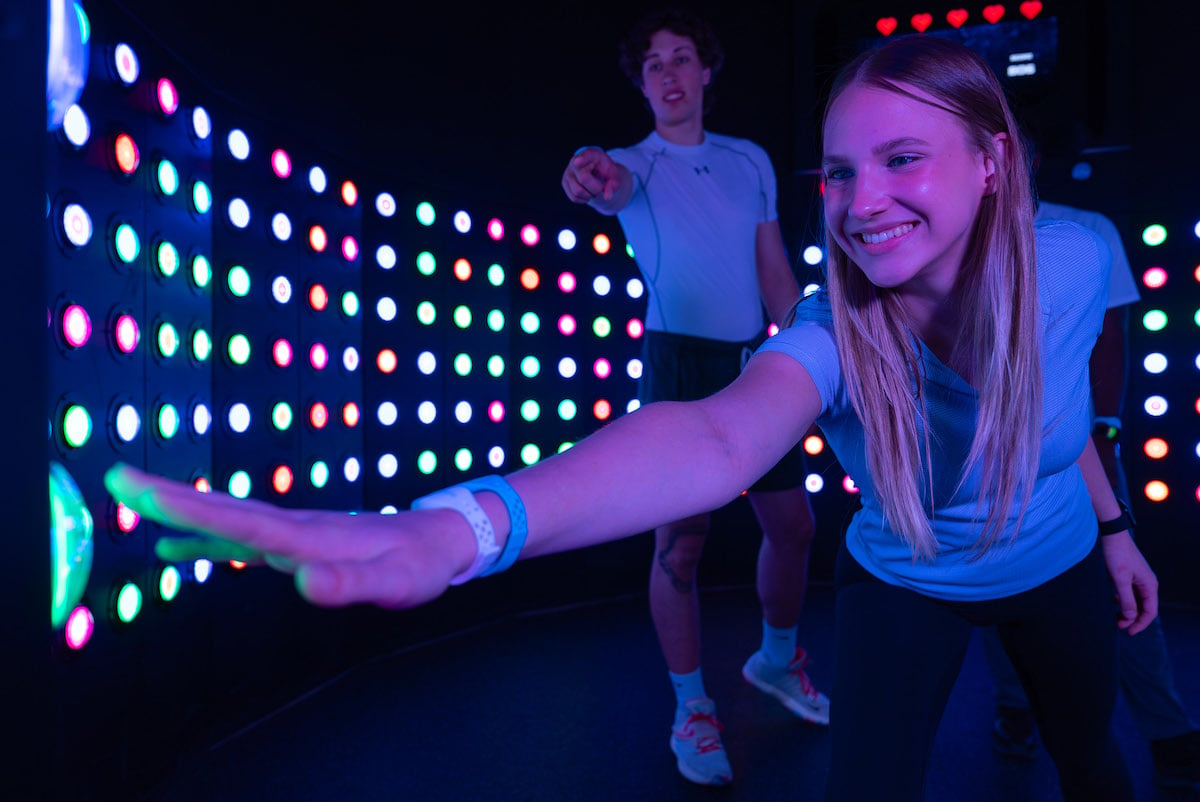
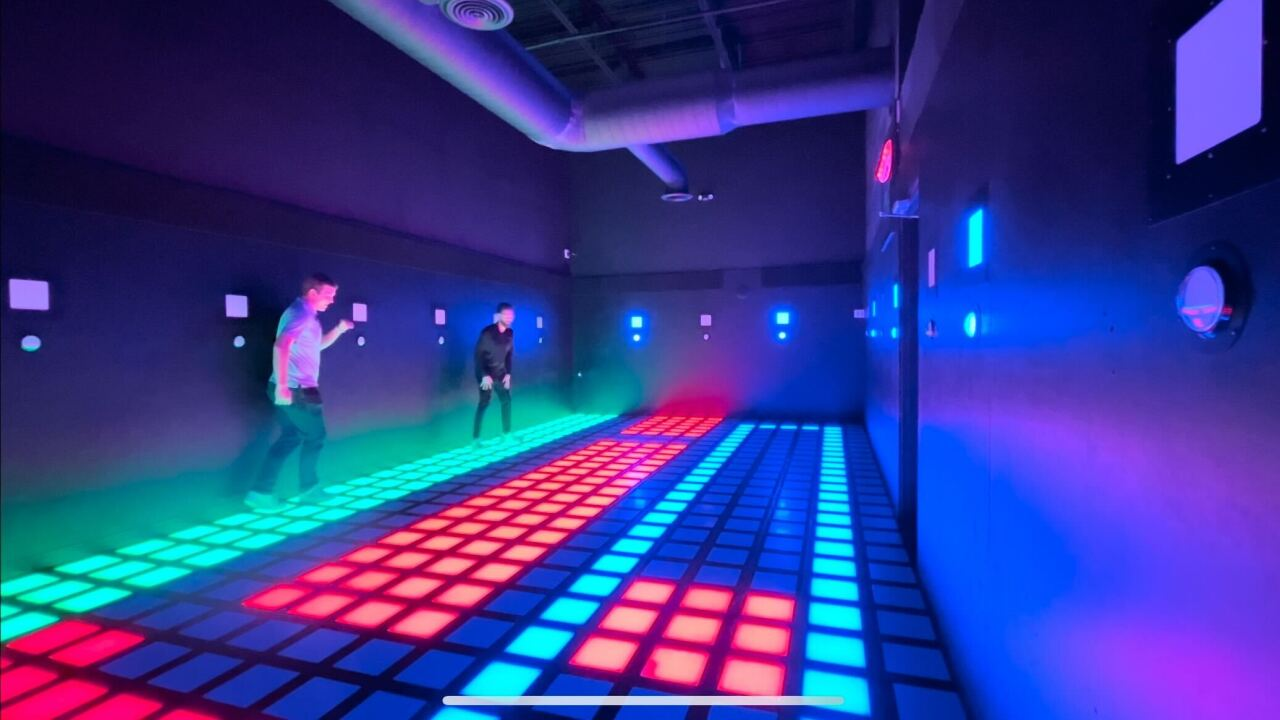
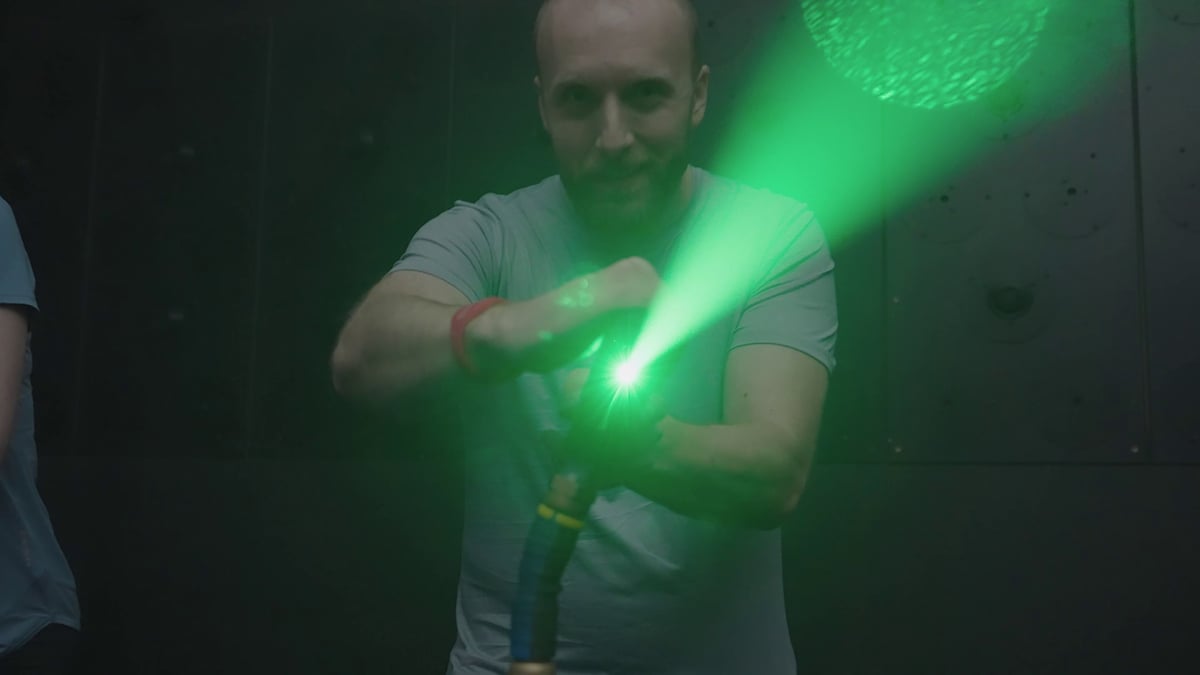
Their answer was Activate — a concept that fuses physical activity, mental challenge, and digital gaming into a single immersive experience. Players move through multiple interactive rooms, each equipped with responsive walls, motion sensors, lights, and sound systems that react in real time. Whether dodging lasers, solving colour patterns, or shooting virtual asteroids, guests are immersed in what feels like a real-life video game.
Image: Activate Games
The Experience: Physical, Mental, and Social
Each Activate location offers between nine and twelve game rooms, with larger facilities such as the 18-room Toronto Stockyards location featuring expanded options to accommodate high guest volumes. The brand’s active gaming experiences combine both physical and mental challenges, ranging from fast-paced movement-based games to intricate puzzles that test logic and teamwork.
“It’s not just about jumping around or getting sweaty,” said Piché. “You can choose what type of experience you want. Some rooms are very active, where you might be jumping across tiles or dodging lasers, while others are mental puzzles or pattern-recognition games. There’s really something for everyone.”
The flexible format allows players to design their own adventure. A typical visit lasts between 60 and 90 minutes, with guests free to spend their time in any room they choose. Every game features ten or more difficulty levels, encouraging players to improve their skills and revisit the same room to unlock new challenges.
“The replayability is key,” added Piché. “You can come back multiple times and have a completely different experience. You create a personal profile, track your scores, and level up over time. You can even continue your progress at another location, anywhere in the world.”
Image: Activate Games
Educational and Team-Building Appeal
Beyond its entertainment value, Activate has also found a strong following among educators, families, and corporate groups. The company’s technology-driven games have been approved for school board programs, allowing students to develop teamwork, problem-solving, and spatial reasoning skills through play.
“Schools love it because it combines learning with activity,” Piché said. “We host large school groups throughout the week, and then on weekends, we see families, friends, and coworkers coming in. It’s suitable for ages six and up, but the design really appeals to all generations.”
Corporate team-building events have become another core part of the business. Companies use the facilities for off-site experiences that encourage collaboration and friendly competition in a low-pressure environment. “It’s a very different kind of team-building,” Piché noted. “People connect over shared challenges rather than presentations or lectures. It breaks down barriers.”
Growth at “Warp Speed”
When asked about the company’s trajectory, Piché described the pace as “warp speed.” In just six years, Activate has expanded to over 55 locations across multiple continents. “We just crossed the 55-location mark,” he said. “We’re growing fast across Canada, the United States, and internationally.”
In Canada, new facilities are in development in British Columbia, Ontario, and Quebec. “We have another B.C. location planned by the end of the year, and we’re opening in London, Ontario, and Ottawa next year,” Piché confirmed. “We’re also launching our first site on the South Shore of Montreal, which is exciting because that’s where I’m originally from.”
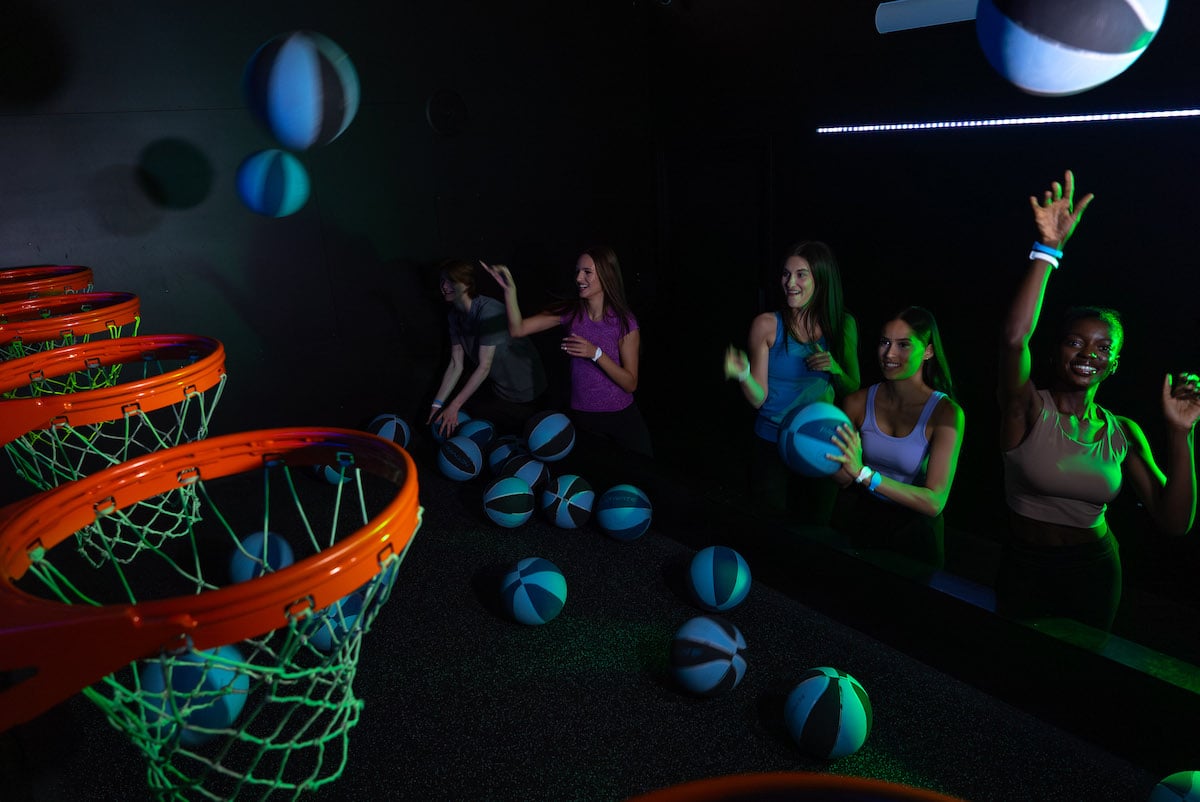
Each location typically spans between 10,000 and 12,000 square feet, large enough to house a full suite of game rooms and social spaces. “That size gives us flexibility to offer a variety of rooms, plus duplicates of the most popular ones,” said Piché. “Our ‘Hoops’ and ‘Strike’ rooms, for example, are fan favourites. Hoops lets players shoot basketballs in different games, while Strike involves throwing balls at a screen in asteroid-style challenges. Those are so popular that we usually build two of each.”
This growth aligns with the company’s October 2024 partnership with U.S.-based Sounds Fun Entertainment, which will bring 50 new Activate locations to 21 states. Upcoming U.S. markets include Austin, Los Angeles, New York, and San Francisco. Combined with its Canadian and international network, the company expects to reach about 60 venues by the end of 2025.
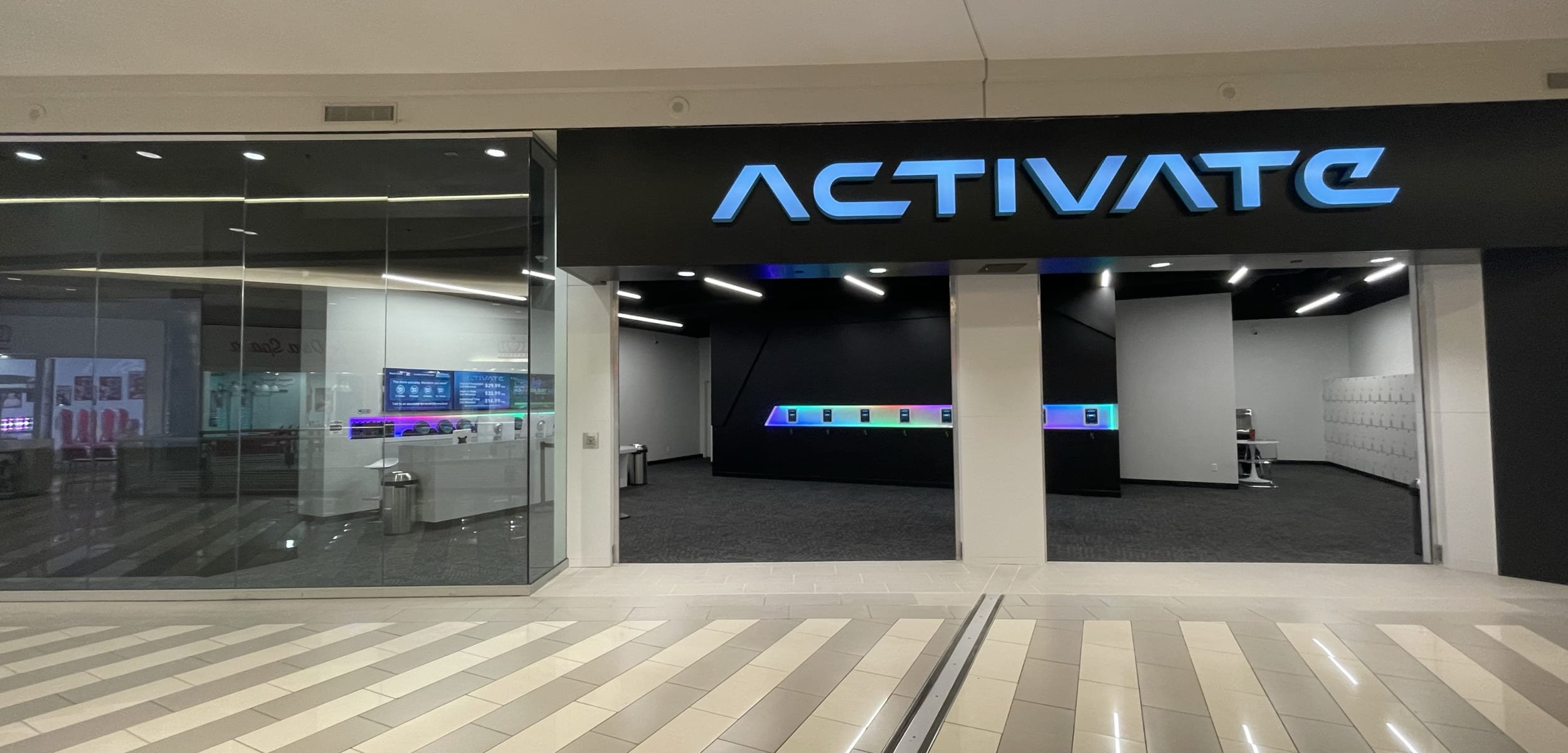
Image: Activate Games
Expanding to Europe and Beyond
Activate’s recent move into France marked the beginning of its European chapter. “France is a brand-new market for us,” said Piché. “It’s part of a broader plan to take Activate global.” The company also announced plans to expand further across Europe and Scandinavia following strong early interest.
In the Middle East, the brand opened its first facility in Dubai, joining an increasing number of Canadian concepts that are resonating with international audiences. “Our model works because it’s universal,” said Piché. “Everyone understands play. Technology is the common language.”
Bridging Generations Through Technology
One of the brand’s most distinctive strengths lies in its ability to attract diverse audiences. From children and teens to adults and seniors, the experience is designed to bridge generations. “It resonates with everyone,” Piché explained. “Younger players who grew up on phones and tablets love the interactive tech, while adults enjoy the nostalgia of retro gaming. It’s an activity families can truly enjoy together.”
That intergenerational connection helped sustain Activate through the challenges of the pandemic. Despite temporary closures, the concept’s social and replayable nature created pent-up demand once restrictions lifted. “The beautiful thing about Activate is that it brings people together after being apart,” said Piché. “You’re not just playing a video game on a couch. You’re moving, thinking, laughing, and collaborating in real life.”
Image: Activate Games
Leadership Rooted in Canadian Values
Behind the global expansion is a leadership team deeply committed to innovation and community. Adam Schmidt’s early entrepreneurial journey, which began with organizing bus trips to amusement parks as a teenager, instilled in him a lifelong curiosity about how people connect through shared experiences. His wife and co-founder, Megan Schmidt, brought expertise in health and fitness, ensuring that Activate’s games promote movement and well-being as much as fun.
“Megan’s kinesiology background was instrumental,” said Piché. “She understood how to make activity enjoyable and accessible to everyone. That’s one reason we say you don’t need to be training for an Ironman to visit Activate. You can challenge yourself at your own pace.”
Both founders remain hands-on in the company’s operations, guiding its strategy and product innovation. Their collaborative vision has transformed Activate from a homegrown startup into a scalable, internationally recognized brand.
Activate Games Expansion and the Future of Play
The Activate Games expansion story reflects a wider cultural shift in how people engage with entertainment. As screens dominate everyday life, the demand for interactive, physical experiences has surged. Activate meets that need by turning gaming into a shared, active event rather than a solitary one.
Looking ahead, the company plans to refine its model for smaller markets, introducing compact formats to reach mid-sized communities across Canada and the U.S. “We see huge potential in secondary markets,” said Piché. “We’re already working on a smaller format that maintains the full experience but fits into spaces that are more accessible for smaller cities. It’s part of our second phase of growth.”
Vision for Zellers 3.0 Planned for Future Stores (CNW Group/Zellers)
Canadian retailer Zellers is officially making its return, with a phased rollout plan to open new stores across the country in the coming years.
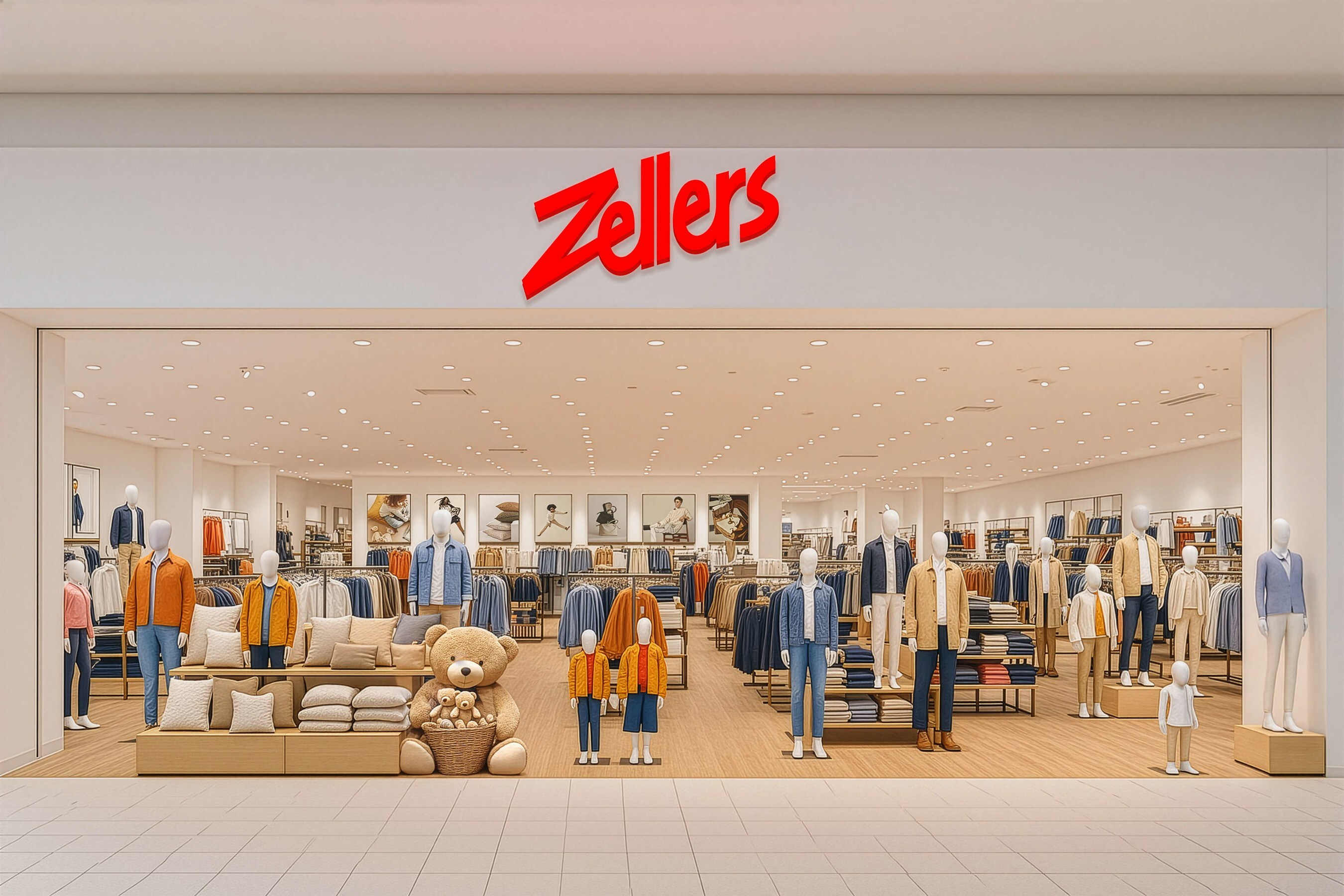
The new Zellers, commonly referred to as Zellers 3.0, will revive the charm and nostalgia Canadians know and love, now reimagined for today’s shopper. Designed as a 30,000 – 50,000 sq. ft. modern, smaller department store concept, Zellers will deliver a thoughtfully curated experience that blends heritage with contemporary design, offering Canadians an approachable retail destination, announced the company on Wednesday.
“Our vision for Zellers is to reignite a part of Canadian culture and redefine what a department store can be,” said Joey Benitah, Chief Operating Officer of Zellers. “Canadians have told us they want a more intimate, easy-to-shop experience that still delivers the value, accessibility, and family-first approach they remember. We recognized that Zellers would work better as a small-concept department store, and we’re thrilled to bring that to life.”
Zellers’ comeback follows a multi-phase rollout strategy designed for flexibility and responsible growth. Each location will be opened under adaptive partnerships with landlords that allow the company to move quickly into key markets while maintaining long-term sustainability. Each store will re-introduce the core Zellers values Canadians loved: affordability, friendliness, and community connection, said the retailer.
Londonderry Mall. Photo: Mario Toneguzzi
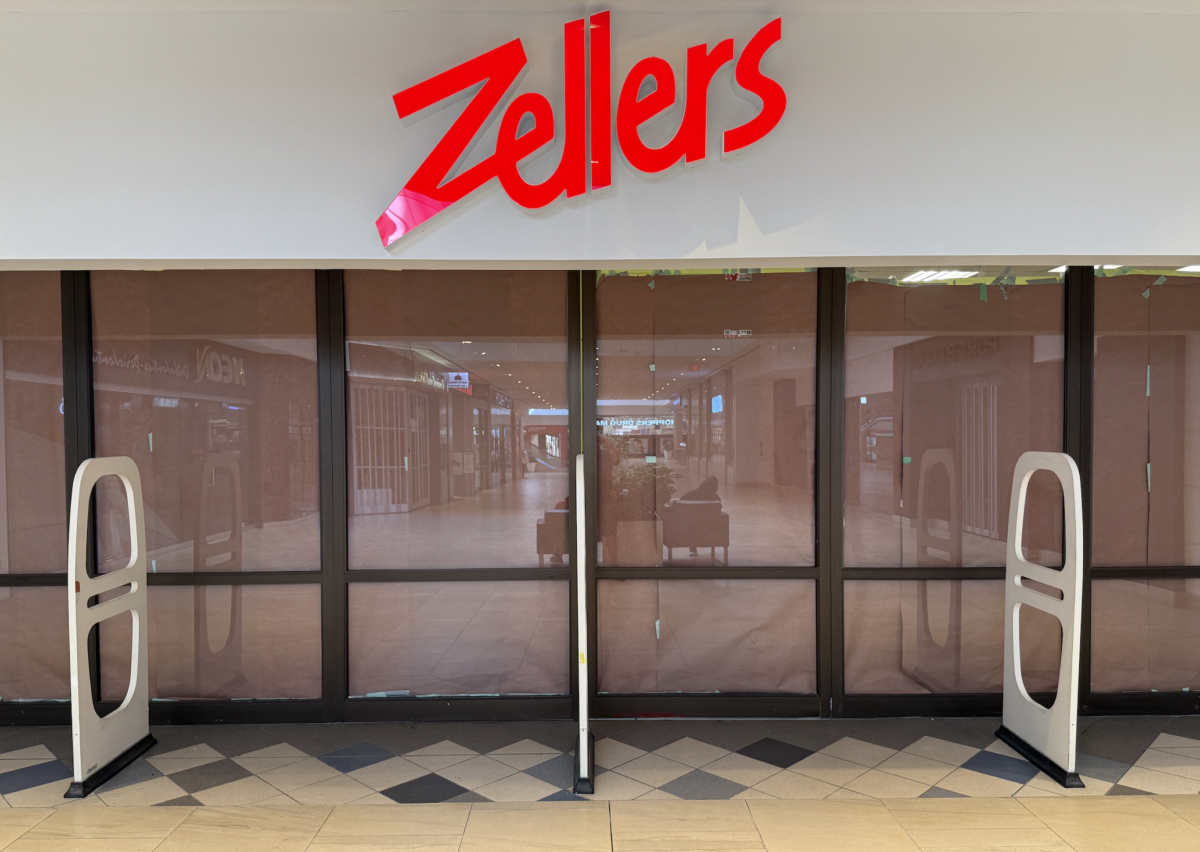
The brand said it will soft launch with a store opening at Londonderry Mall in Edmonton on October 30, 2025. While initial stores like the Londonderry Mall location will serve as an early iteration of the Zellers 3.0 concept, they will not yet fully reflect the complete design and experience planned for future locations. Instead, this will give the brand an opportunity to listen closely to Canadians, understanding what they want most from its next chapter and shaping future offerings around those insights. By Spring 2026, Zellers will begin announcing new locations across the country, with expansion plans over the next several years. Zellers also plans to occupy select vacant spaces formerly held by Hudson’s Bay stores, reimagined into smaller, more efficient retail footprints.
The brand had announced in August its return for September but two launches were delayed.
Zellers said its future design will feature a flexible, open layout that feels engaging and easy to shop. The store’s departments will focus on key lifestyle categories where the brand sees opportunity to thrive, balancing nostalgic value with high-demand product lines:
Apparel: Men’s, Women’s, Kids/Juniors, and Activewear
Accessories: Handbags, hats, scarves, belts, and more
Home: Bedding, bath, décor, rugs, and more
Seasonal & Specialty: Holiday décor, back-to-school, luggage, and gifts
Initial brands that will be integrated into Zellers stores include, but are not limited to Reebok, Spyder, Canada Weather Gear, Chaps, DKNY kids outerwear, and Nickelodeon, Marvel, and Disney kids accessories such as knapsacks and lunch bags, with more to be announced soon. Zellers also plans to introduce footwear as part of the product assortment in the future, it said.
“We’re starting with a selection we know Canadians will be excited about, and we’ll continue expanding our offerings based on their wants and needs,” said Benitah. “Each time customers visit, they’ll see something new. This is only the beginning.”
The retailer said Zellers is one of Canada’s most iconic retail names, fondly remembered for everyday value, friendly service, and its beloved mascot Zeddy. The relaunch aims to rekindle that same spirit while embracing modern expectations for quality, value, and convenience.
As part of Zeddy’s return, Zellers will be launching Zeddy’s World: A dedicated family space where shoppers can purchase a Zeddy bear and customize its clothing, bringing a new generation of fans into the Zellers story. Production of the beloved Zeddy bear is already underway, with his official comeback planned for 2026, it said.
“This is more than a store opening – it’s a cultural comeback and Zeddy is a symbol for this,” added Benitah. “Following a long and storied history, we feel now is the right time to bring Zellers back in a way that feels fresh, familiar, and distinctly Canadian.”
Londonderry Mall. Photo: Mario Toneguzzi
“Zeddy’s return will also mark the revival of Zellers’ long-standing commitment to giving back. The brand is developing a national partnership with pediatric oncology camps to support camps that serve children and families affected by childhood cancer. Additional details will follow,” said the company.
“Zellers plans to release additional updates on its phased rollout plans in 2026.”
A recent Deloitte Survey highlighted urgent cybersecurity concerns as 70% of consumers worry about sharing personal information with retailers either because of data breaches and misuse (72%) or because they don’t know how their information will be used (70%).
The report found that 64% are hesitant to shop at retailers that experienced a breach – creating immediate business risk for compromised brands. And while AI adoption has exploded to 50% (up from 33% last year) in the last three months, with one in four Canadians expecting retailers to leverage AI, this is raising new security and privacy questions.
“The proper testing and application of appropriate security measures should account for the additional infrastructure that may be temporarily deployed during this period. Increased transactions also bring about more opportunities for cybercriminals to exploit retailers and customers.”
Dyl has dedicated her career to public service, driven by a commitment to strategic problem-solving and creating meaningful change. After 20 years as a Public Affairs leader for the Government of Ontario, she joined Rogers Cybersecure Catalyst, where she currently serves as Director of Skills Development and International Programs. Her focus is on creating opportunities for cybersecurity training and development in Canada and abroad.
Trish Dyl
Dyl suggests that companies start with these fundamental protections:
● Keep your systems updated with the latest security fixes
● Use secure website connections (those “https” addresses with padlock icons) to protect customer logins and credit card information
● Require strong passwords and add an extra verification step when staff log into systems
● Check your security regularly to catch problems early
“If you process credit or debit cards, you must follow industry security standards. The latest requirements include passwords of at least 12 characters, better tracking of security weaknesses, and protection for your payment pages. Make sure all credit card data is protected both in-store and in your databases,” she explained.
“This is a crucial time for retailers, and any disruption to operations can significantly impact overall sales. Retailers should test their response plan ahead of time. Knowing who to call, what systems to isolate, and how to communicate with customers can turn a potential crisis into a short disruption. Protecting consumer data during the holidays is about being ready, aware, and disciplined when the stakes are highest.”
Dyl said AI can help retailers predict demand, personalize offers, and improve the shopping experience. However, when used without the proper safeguards, it can expose customer data and erode trust.
“The first risk is how data is collected and shared. Many AI systems learn from customer information such as purchase history or location. If that data is not anonymized or securely stored, it can be misused or leaked. Retailers should know exactly which tools have access to their data, where it is stored, and who has access to the data,” she said.
“The second risk is bias and over-automation. AI tools can unintentionally favour or exclude certain groups of customers if they are trained on limited or imbalanced data. AI tools can certainly make mistakes, which are often referred to as hallucinations.”
Photo: Andrea Piacquadio
To manage these risks, she said retailers should treat AI as a tool that needs human oversight, not as a replacement for judgment. Practical safeguards include:
● Reviewing how customer information is protected before any AI system goes live.
● Testing the results regularly to check for bias or errors.
● Training teams to understand how AI decisions are made and how to challenge them when something looks wrong.
Identifying risks is the first step in making crucial judgments, added Dyl.
The holiday rush is prime time for online scams. Criminals know shoppers are busy, distracted, and eager for deals, she noted.
“A few simple habits can make a big difference in staying safe. Start by shopping only on trusted websites and by typing the retailer’s name directly into your browser instead of clicking links from ads, emails, or social media. Avoid reusing passwords across accounts, and turn on two-step verification wherever possible,” she said.
“Finally, check your bank or credit card statements frequently during the season. Spotting a suspicious charge early often limits the damage.In short, slow down before you click, and if a deal feels too good to be true, it probably is.”
Photo: Andrea Piacquadio
Dyl said it is important to choose safe payment methods.How you pay makes a significant difference in your protection:
● Use credit cards instead of debit cards online; credit cards offer better fraud protection and dispute options
● Consider secure payment services like Apple Pay or PayPal for extra protection
● Never pay sellers demanding gift cards, wire transfers, payment apps, or cryptocurrency, only scammers insist on untraceable payments
● Don’t save payment information on retail sites
● Avoid bank transfers for online purchases – banks can’t trace them
● Shop only on devices with current software updates
● Never use public Wi-Fi for purchases or banking
● Turn on extra verification steps for all shopping and banking accounts
“Several warning signs should put you on alert. Suspiciously low prices or urgent “limited-time” sales often signal fraud. Fraudsters deliberately create pressure and rush your decisions, a tactic that’s especially effective during holiday shopping when expectations and financial stress already run high,” explained Dyl.
“Social media deserves extra caution. Fake ads on these platforms frequently lead to undelivered or counterfeit products. Similarly, avoid contests offering gift cards in exchange for surveys that capture your personal information. When you receive unexpected emails or texts about shipping, missed deliveries, or order confirmations, resist the urge to click any links. Instead, go directly to the verified website to check your order status. This simple pause can protect your privacy.
“The timing matters too. Black Friday and Cyber Monday scam emails more than double during the two-week peak shopping period.”
Photo: Andrea Piacquadio
If you suspect you’ve been scammed, act immediately. Start by securing your accounts: change passwords for bank and credit card accounts, enable extra verification steps, and log out of all active sessions. Then clear your browsing history, update all operating systems and apps, and run security scans with protection software. Next, contact your financial institutions with detailed reports about what happened. Depending on the severity, file police reports as well. Continue monitoring your accounts closely for any unauthorized transactions, and consider freezing your credit reports if significant personal information was compromised, said Dyl.
A data breach directly affects how customers spend. When shoppers learn their information has been exposed, they will hesitate to buy from that retailer and consider switching to competitors that they believe are safer. Even loyal customers may reduce spending or avoid online purchases for months afterward.
“The financial impact extends beyond lost sales. Retailers face higher marketing costs to rebuild confidence, potential fines, and greater pressure from payment partners and insurers. This also includes containment efforts, legal fees, government fines, customer notifications, credit monitoring for affected individuals, and system repairs.
“Protecting customer data is ultimately about protecting future revenue and maintaining long-term relationships built on reliability and transparency.”
Boutique fitness is booming in Canada, with more people trading traditional gyms for personalized, community-driven workout experiences. Leading the charge is STRONG Pilates Canada, the Australian-born workout concept that launched in Canada in 2024.
It’s known for its innovative, low-impact, performance-driven approach that’s quickly expanding nationwide.
Since opening its first Canadian flagship studio in Toronto’s Little Italy, STRONG Pilates Canada has gained incredible momentum:
6 new studios now open(Yorkville (the most recent), Liberty Village, The Beaches, Ottawa, Kelowna, and, Coal Harbour in Vancouver)
5 more set to launch within the year (in Oakville, Kingston, St. Catherines, Surrey, and Calgary)
And even more new studios already in the pipeline.
Alyce Luczak
The demand speaks volumes: Canadians are craving efficient, results-driven workouts that prioritize longevity over burnout, all with an elevated, boutique studio experience. As the boutique fitness market continues to boom, STRONG Pilates Canada is carving out a powerful space and continues to stand out in a crowded market, appealing to Canadians who want a smarter, more efficient way to sweat.
“Since launching our first Canadian studio in 2024, STRONG Pilates Canada has filled a major gap in the market – meeting the growing demand for efficient, results-driven workouts that prioritize longevity over burnout. Canadians are increasingly looking for ways to train smarter, not harder, and our unique workout model combined with an elevated boutique studio experience delivers exactly that,” said Alyce Luczak, Director of Operations & Onboarding at STRONG Pilates Canada.
“Rapid expansion has been fueled by a growth strategy that focuses not only on markets where an appetite for innovative, low-impact fitness exists, but that also supports our franchisees with a proven business model and operational support. We’re seeing incredible enthusiasm not only across the country, but globally.”
Luczak said innovation is at the company’s core.
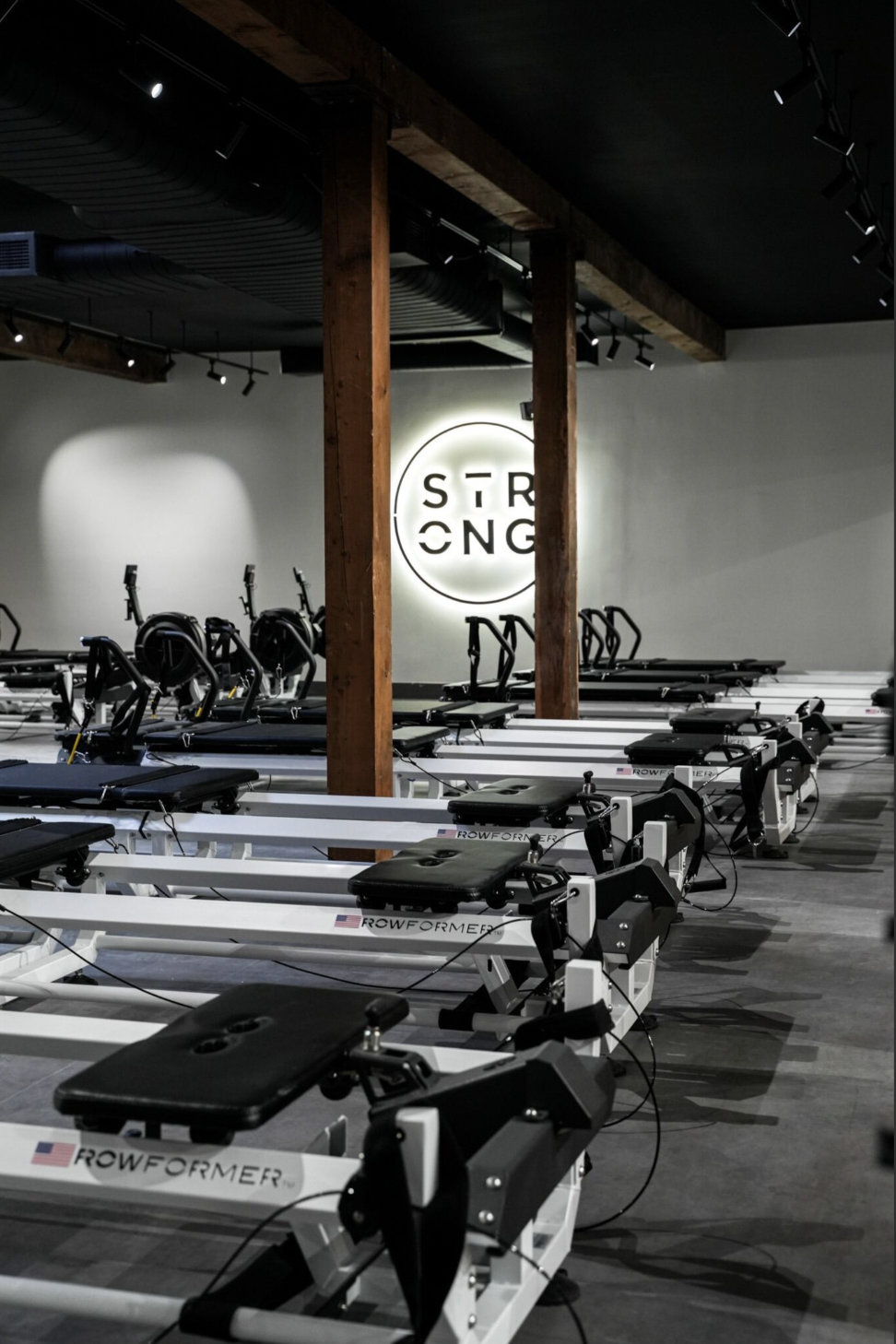
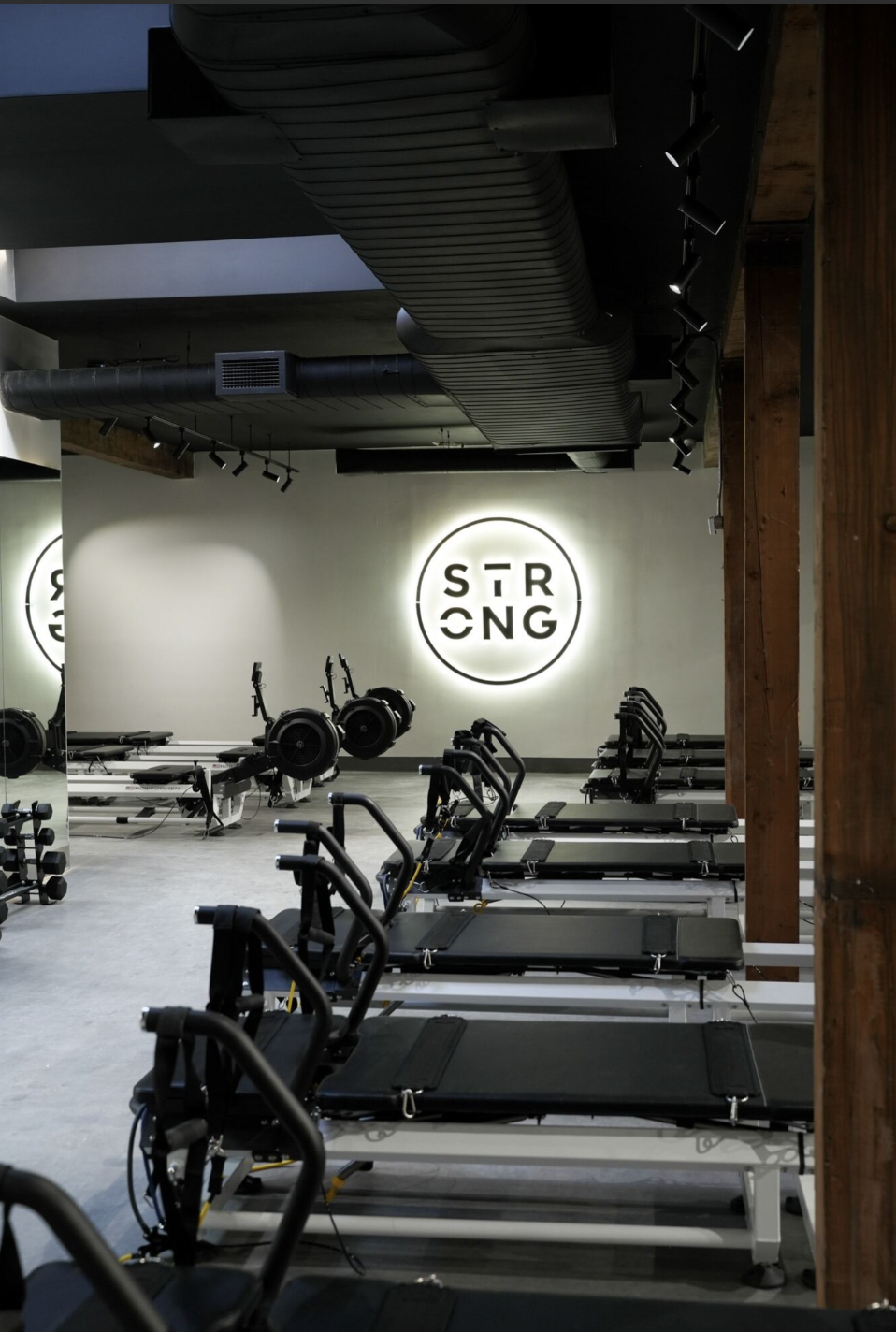
“STRONG provides members with such a unique workout experience that fuses Pilates, cardio, and strength training into one high-intensity, low-impact session – a combination not offered at any other studio or franchise in Canada. Members can choose the way they want to move, Row, Ride or Reform, on our custom built patented Rowformers ensuring that the experience is never repetitive,” she said.
“Beyond the workout itself, community is at the heart of STRONG. Every class is scalable for all fitness levels, and our highly trained instructors ensure each STRONG human feels supported, challenged, and confident. We are so much more than Pilates.”
Luczak said the concept’smethod is designed to push limits without punishing the body.
Photo: STRONG Pilates
“STRONG Pilates omits high-impact movements like plyometrics and running which can increase risk of injury – and replaces them with a low-impact, high-intensity format that builds strength, endurance, and Mobility,” she said.
“By combining reformer Pilates with cardio and resistance training on our Rowformer machines, we help anyone who visits our studios to train sustainably for the long term. It’s about creating a workout that people can love – and stick with – for life.”
Luczak said the company takes pride in empowering local entrepreneurs to bring STRONG Pilates to their neighbourhood.
“Our franchise model is built off proven systems that have been developed from 100+ global studio launches. Franchisees joining our network benefit from comprehensive onboarding and pre-launch support from finding a suitable space, to build out, marketing, sales, trainer certification and beyond. We ensure every franchisee has the tools and training needed to succeed and continue to support once operational.”
“Our focus right now is on responsible and strategic growth, continuing to expand our footprint in Ontario, whilst nurturing the B.C and Alberta markets with a network of high-quality franchise partners. STRONG Pilates members have come to expect consistent innovations and 2026 will be no different with equipment, tech and merchandise all under the spotlight.”
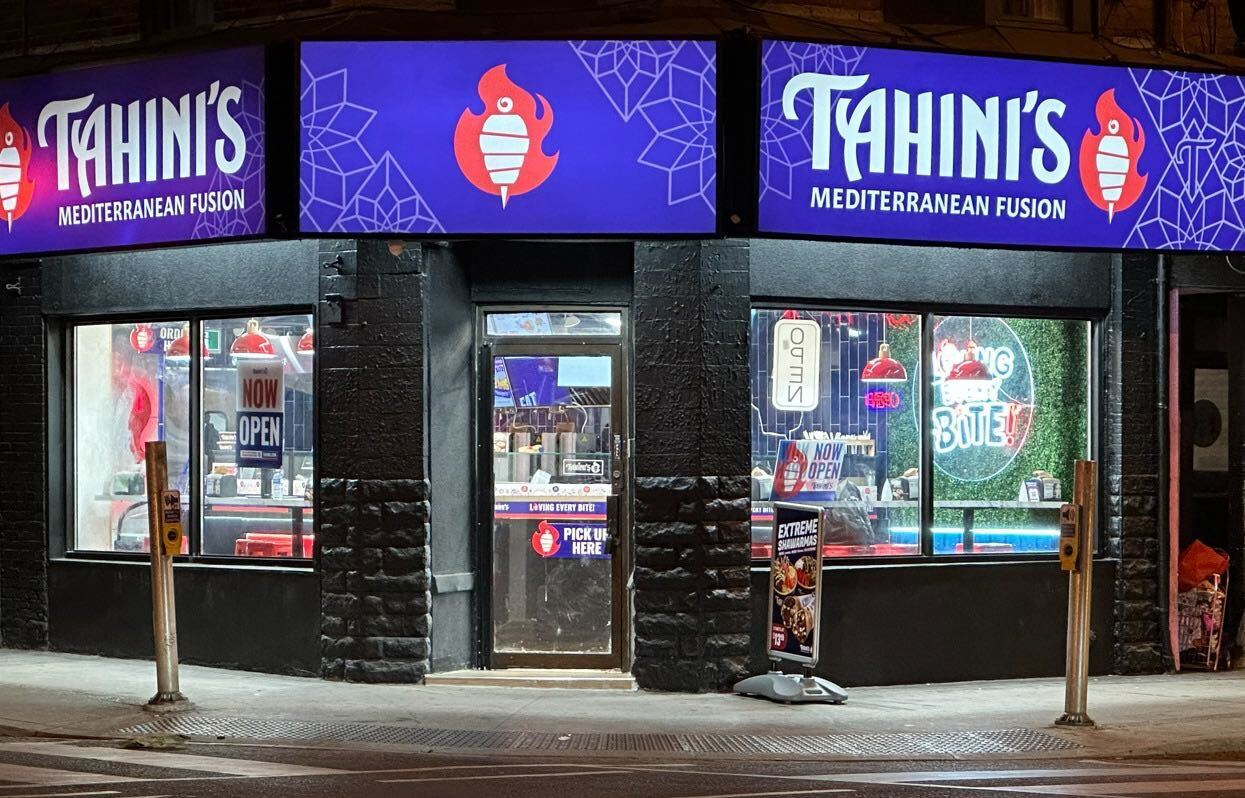
Tahini’s Restaurants has opened a new Toronto location at 890 Bloor Street West, continuing the Mediterranean fusion chain’s expansion across the Greater Toronto Area.
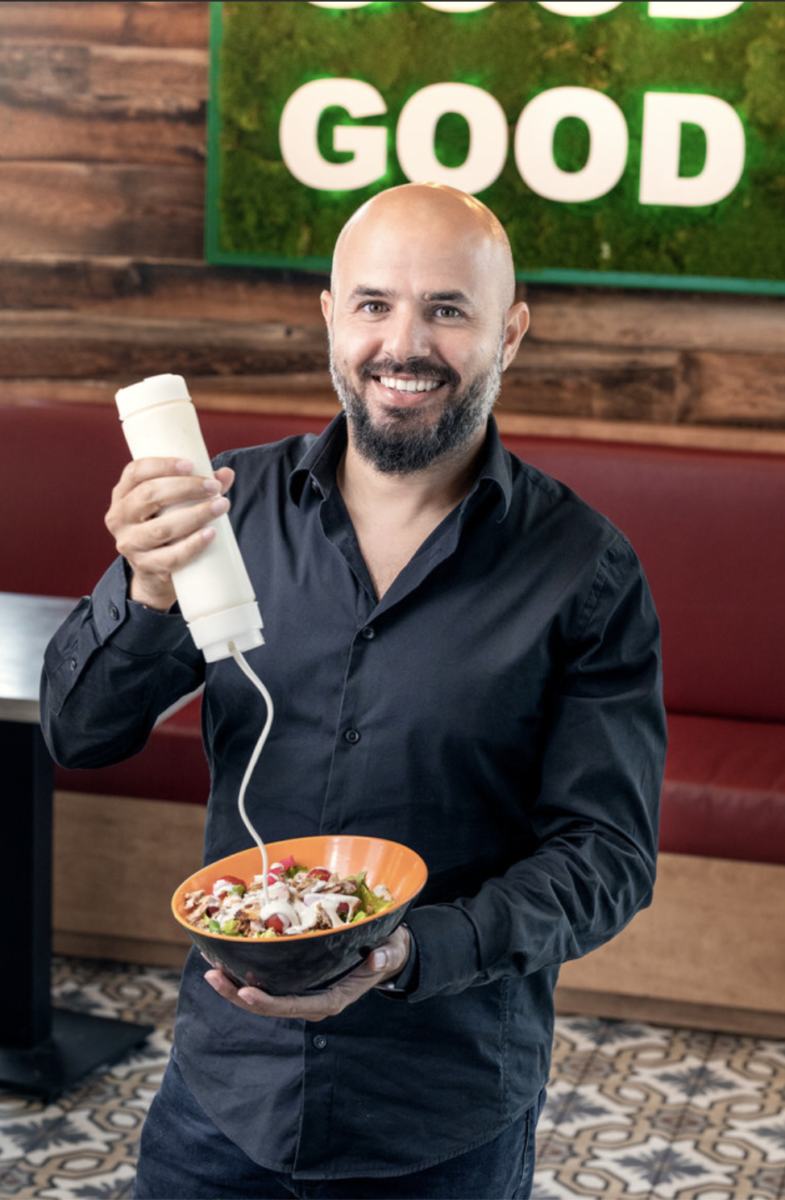
“Toronto continues to be a key growth market for Tahini’s, and we’re excited to expand our footprint in such a vibrant neighbourhood,” said Omar Hamam, founder and CEO of Tahini’s. “This new opening reflects the passion of our franchise partners and the strong demand for bold, globally inspired flavours in Canada’s biggest city.”
Omar Hamam
The restaurant’s menu features a mix of Mediterranean dishes and international flavours, including Korean BBQ Shawarma, Jamaican Jerk Shawarma and Habanero Chicken Shawarma. Vegetarian options such as the Greek Halloumi Bowl and Falafel Shawarma are also available. Each dish is prepared daily with house-made sauces and fresh ingredients, according to the company.
Franchise partner Mohammad Sheikh will lead the new location. Sheikh, who has a professional background in engineering and several years of community volunteer work in Markham, said his passion for food and service inspired the move into the restaurant industry.
“While I’ve spent decades building my career in engineering, food has always been close to my heart,” Sheikh said. “Opening a Tahini’s at Ossington and Bloor is a way to bring that passion to life while building connections in a neighbourhood I’m proud to serve.”
Tahini’s operates more than 70 restaurants across Canada and plans to continue its international expansion. The company said it is seeking new franchise partners and area representatives to help bring its Mediterranean fusion concept to additional communities.
Ruby Liu in the Tesla store at Yorkdale Shopping Centre in Toronto. Photo: Craig Patterson
When the Ontario Superior Court closed the door on Ruby (Weihong) Liu’s attempt to take over 25 former Hudson’s Bay leases on October 24, it did more than halt a headline-grabbing bid. It revealed the gap between a compelling vision for anchor-box renewal and the disciplined proof landlords and lenders expect in 2025. The former Hudson’s Bay estate, already under creditor protection and weighed down by about $1.1 billion in secured obligations, became the stage where those expectations played out in public filings and a rapid series of hearings.
The outcome is now clear. Three British Columbia leases at properties Liu already owns were approved earlier in the process. The remaining 25 were rejected after landlords argued the plan lacked tested operations, sufficient capital clarity, and a viable near-term execution path. For Canadian retail, the case offers a look at how anchor real estate will be placed, priced, and policed in the next cycle.
Inside the room: a candid meeting and an early warning
In late May, retail strategist Carl Boutet met with Ruby Liu and two members of her team at a café near Toronto’s Financial District to hear the concept firsthand. The meeting was arranged following a request from Central Walk representatives to discuss Liu’s retail vision, and this author also attended, bringing Boutet along for his expertise in evaluating large-format retail concepts.
“It was all experimental,” Boutet recalled. “I think that was the least of the challenges. It didn’t convey the credibility that helps a project come across as really professional. It signalled a lack of polish, which is not unheard of when entrepreneurs build the plane as they fly it.”
Carl Boutet with Ruby Liu in May 2025. Photo: Linda Qin
He noted that the plan itself wasn’t inherently flawed. In fact, many of the ideas, including public gathering areas, children’s play zones, cafés, and small cultural spaces, aligned with how forward-looking retail environments are evolving globally. “What she wanted to do made sense conceptually,” he said. “It was just missing the support structure and the operational roadmap to make landlords feel comfortable.”
Boutet emphasized that Liu’s presentation materials lacked the detailed financial modeling and brand-level tenant mix data typically needed to convince major landlords. “You need to show them that every square foot is accounted for, not just in vision but in numbers,” he explained. “That means demonstrating how each element, from food to fashion to play, contributes to the economics of the box. That wasn’t fully there yet.”
He was also struck by Liu’s determination. “She was passionate and completely committed to the idea,” Boutet said. “You could see that she believed in the concept as something that would bring people together, something that went beyond just shopping. The problem wasn’t belief, it was execution.”
In hindsight, Boutet sees that meeting as a telling moment in the saga. “It was the first signal that there was a disconnect between a strong vision and the institutional structure needed to deliver it,” he reflected. “Landlords wanted confidence in operational depth and financing certainty, but what they got was creativity and aspiration. That’s a hard sell in a court-supervised process.”
Ultimately, the meeting left him with mixed feelings that included admiration for the ambition, but concern about the feasibility. “Ruby had a community-driven idea that could have been transformative if it were backed by the right partners,” he said. “It wasn’t the wrong vision. It was just the wrong timing, and maybe the wrong execution model for how Canada’s largest landlords work.”
An initial document from Central Walk setting out plans for a ‘New Bay’ department store, May 2025. Photo: Carl Boutet
What the court looked for, and why landlords dug in
To understand how we got here, it helps to recall the environment. Hudson’s Bay filed for CCAA protection in March. The Monitor’s first report put outstanding secured obligations at roughly $1.1 billion, a figure that shaped every subsequent argument about lease value, cure costs, and timing. As the lease transfer motions advanced, landlords and receivers were assessing major capital needs such as roof repairs, escalator replacements, and HVAC upgrades that would have to be addressed before any new tenant could begin operations.
Boutet’s view is that lease-rate dynamics were just as decisive as operational concerns. “The landlords’ main tool was the leases,” he said. “Letting large boxes go at very low legacy rates with very long terms was the biggest concern. It is easier to keep a tenant out than to push one out once they are in.” Add in later-stage discovery on financing and access to capital, and opposition hardened.
The court ultimately approved three British Columbia leases at properties Liu already owns, while blocking the rest. That split spoke volumes. Where a landlord could influence the entire site plan over time, a novel department store concept might get room to prove itself. In other landlords’ premier malls, with complicated co-tenancies and brand adjacency to protect, the threshold was higher.
Rendering of a Ruby Liu department store. Image: Ruby Liu Investment Corp./Central Walk
The vision that almost fit the moment
It is worth saying out loud that several elements of Liu’s concept match where consumers are going. Canada’s most successful malls are already leaning into hospitality, fresh food, family experiences, health, and services. In the May meeting, the plan sounded less like an old-model department store and more like a curated “mini-mall” within a box, intentionally carved into zones and programmed to keep families on site. “That was pretty much everything you would want in 2025 to launch a larger-scale initiative,” Boutet said.
Supply chains for private label take months to stand up, and large-scale staffing adds another layer of complexity. While Liu’s team organized two job fairs in Toronto to begin recruiting prospective employees, the process of onboarding and training retail staff across dozens of locations would still have required significant coordination. Many people had pinned real hopes of employment to those plans, a reminder that behind every retail restructuring are workers waiting for a second chance. When those human realities intersect with the financial discipline of landlords and lenders, vision alone is not enough.
What Could Have Changed the Outcome?
Boutet reflected on that question directly. What, in practical terms, might have altered the result for the 25 leases that were ultimately denied?
“She could have been a silent partner,” he said, even if that is not her style. “Back a more seasoned team. If she came in with a proven operator such as Bonnie Brooks and stayed behind the scenes, it might have eased concerns.” He also pointed to the signalling power of heavyweight partners. “If she had shown up with a Brookfield, a Central Group, or another global partner to handle supply chain, store fitting, and concept development, she might have made landlords more comfortable.”
He acknowledged there were moments when credible partners appeared on the periphery, from experienced Canadian department store executives to specialty operators. But the centre of gravity remained with Liu. Vision, for her, is not an asset you farm out. In this case, that preference carried a cost.
Boutet raised another missed opportunity. “Move gradually,” he said. “There was a window to demonstrate capability by quickly opening at one property she already controlled and letting that success do the talking while the court process unfolded. That would have been a powerful proof point.”
Ruby Liu holds an historic document from the Hudson’s Bay Company at a restaurant, June 2025. Photo: Craig Patterson
The RioCan-HBC Aftershock and Why Yorkdale Matters
The court’s rejection of Ruby Liu’s broader lease acquisition coincided with another significant story reshaping Canadian retail real estate: the unwinding of the RioCan-Hudson’s Bay joint venture, and the resulting battles over anchor spaces in some of Canada’s most valuable malls.
In 2015, RioCan partnered with Hudson’s Bay Company to form a joint venture that included major retail properties such as Yorkdale Shopping Centre, Square One, and Scarborough Town Centre. The partnership was designed to unlock real estate value by separating property ownership from store operations. When Hudson’s Bay entered creditor protection in 2025, that arrangement quickly became one of the most complex pieces of the restructuring puzzle. RioCan, which had a financial interest in a dozen former Bay properties, disclosed a $209 million write-down on the venture earlier this year, later seeking a court-appointed receiver to manage the assets and recover value for creditors.
At the heart of the dispute lies Yorkdale Shopping Centre, arguably Canada’s most prestigious retail property. The former Hudson’s Bay store there represents both a financial liability and a strategic battleground. RioCan is pressing Oxford Properties, Yorkdale’s landlord, to buy out its interest for $75 million, otherwise threatening to lease the large anchor space to discount fashion retailer Les Ailes de la Mode for just $1 million a year, a stark contrast to the luxury positioning that Yorkdale has cultivated over the past decade. Industry insiders say that Les Ails could convert the space to Zellers, a banner it owns.
Shuttered Hudson’s Bay store at Toronto’s Yorkdale Shopping Centre on the evening of June 1, 2025. The Yorkdale store is part of the RioCan JV. Photo: Craig Patterson
That move has intensified tensions. Oxford, which manages a carefully curated luxury mix that includes Cartier, Dior, Louis Vuitton, Tiffany & Co., and Holt Renfrew, is unwilling to compromise the mall’s brand identity. Boutet called the situation “a fascinating test case in how far landlords will go to protect positioning versus monetize space.” He added that it also highlights “the unintended consequences of joint ventures, where one partner’s financial goals may diverge sharply from another’s brand strategy.”
Oxford’s internal assessments reportedly show that the former Bay site requires over $9 million in immediate repairs, including roofing, escalators, and HVAC modernization. A full retrofit could reach nearly $17 million over three years. These figures reinforce why landlords are reluctant to move quickly. Even a misstep in tenant selection could undermine years of investment and tenant alignment across adjoining luxury corridors.
“Yorkdale is the crown jewel,” said Boutet. “If you put the wrong use in that box, you affect the entire ecosystem. The adjacency risk is enormous. One wrong anchor can pull down the perceived value of 30 neighbouring stores.”
Boutet said the standoff at Yorkdale also forces a bigger question about the evolution of retail real estate in Canada. “We’ve witnessed the end of the department store in Canada. Does that also extend to the end of mall anchor stores?” he asked. “It’s hard to imagine landlords willing to give low rents and large boxes to a single tenant in an increasingly volatile retail industry.”
What the bid got right, and why intent still matters
It would be easy to paint the saga in black and white, but Boutet urges nuance. “I hope we do not make her the villain,” he said. “As much as people were critical about the ability to back the vision, we still need to recognize the boldness. She was one of the only parties to actually pay to buy back certain leases, and she came forward with a plan when others were defaulting back.”
That matters. Emerging operators rarely get everything right the first time. Many are told to show, not tell. Liu showed up, wrote cheques, and argued for a new approach to anchor boxes. The court still said no to most of it. Both things can be true.
Carl Boutet’s Lessons for Future Retailers and Anchor Operators
Drawing from his experience advising retailers and observing the Hudson’s Bay proceedings, Boutet outlined several lessons that others can take from the Ruby Liu case. These principles, he said, apply to any retailer or investor hoping to fill the large anchor boxes now sitting vacant across Canada.
Build a coalition, not a logo. Ambitious concepts need institutional scaffolding. The fastest way to calm landlord risk is to arrive with an A-to-Z team that includes a seasoned operator, a store construction partner with Canadian credentials, a supply chain partner with committed capacity, and a financing partner with conditions already met. When the focus keyphrase is Ruby Liu Hudson’s Bay leases, the subtext landlords listen for is who, precisely, will execute on day thirty, day ninety, and day two hundred.
Front-load proof. In a receivership context, ideas lose to evidence. Get one flagship open in a site you control and publish the data. Traffic, dwell time, conversion, staffing, ticket. Invite the receiver, the monitor, and the landlord to see it. Make the case in store rather than on paper.
Price the box like an engineer, not a dreamer. Replace the roof on paper. Replace the escalators on paper. Budget the hazmat. Budget the HVAC. If you are asking a landlord to tolerate temporary pain in a prime mall, you have to show that every dollar of remediation is recognized, funded, and timed. Negotiations move faster when the landlord believes you understand the building better than anyone else.
Stage the ambition. Anchor portfolios are marathons. Winning three stores you can control, opening them on time, and exceeding plan will put you in a better position to discuss the fourth and fifth than a first-bid sweep of twenty-plus sites. This was the heart of Boutet’s advice. “There was a chance to show capability quickly and use that momentum,” he said. “It did not happen.”
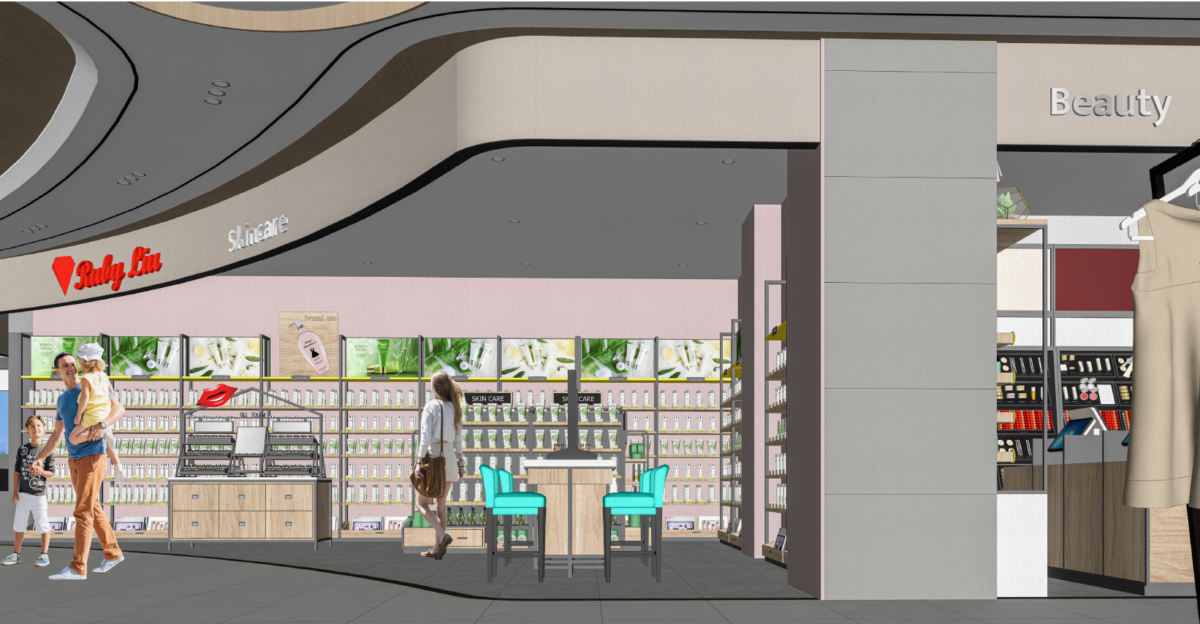
Rendering of a beauty department inside of a Ruby Liu department store. Image: Ruby Liu Investment Corp./Central Walk
How Canadian landlords are redefining “fit”
The case also clarifies how large Canadian landlords are thinking about fit in 2025. In super-regional assets with luxury clusters, the gate is narrow. Any operator seeking to replace a historical department store must demonstrate brand adjacency discipline, traffic quality, and design coherence. At strong regional centres, the gate widens, but the financial bar remains high because carrying costs for dark boxes are real. Across the country, receivers and pension-fund owners are signalling that patience is cheaper than a mis-set anchor.
That is why Yorkdale, Square One, and Scarborough Town Centre attract so much attention. These assets sit at the intersection of brand mix, redevelopment options, and co-tenancy obligations that ripple through dozens of leases at once. It is also why the RioCan JV’s move into receivership drew scrutiny. The proceeding created a formal framework to stabilize the portfolio and maximize value, but it also reminded everyone that the clock landlords hear is not the same one would-be operators hear.
What comes next for Liu and the boxes she can still shape
The appeal path appears limited, and industry attention has moved to execution at the three British Columbia locations that cleared. If Liu can deliver a profitable, differentiated retail-hospitality hybrid in those boxes, momentum could build. That would be the most convincing response to critics of the broader plan and the most credible way to revisit other opportunities later.
Boutet remains cautiously hopeful. “I am still holding out some hope that eventually a day will come where she wants to land the vision,” he told me. “If she has empty boxes in her own malls to backfill, maybe she will do that. The question is the ability to execute the vision and get to profit.”
In other words, the most important chapter for the focus keyphrase Ruby Liu Hudson’s Bay leases will likely be written far from the Commercial List. It will be written at a construction hoarding in Victoria, Nanaimo, or Tsawwassen. If those doors open on time, if families stay to eat and play, and if the P&L works, then partners who passed this time will pay attention next time.
Walmart Canada confirmed on Tuesday it will be the first major anchor tenant of the landmark Taza Park West, 1,200-acre development, led in partnership between Tsuut’ina Nation and Canderel, just outside of Calgary.
The new Taza Walmart Supercentre is expected to open in 2027 and will serve as the primary grocery and general merchandise retailer in Taza Park, expanding access to fresh food, household essentials, and everyday convenience for surrounding communities. As Taza Park’s first large-format retail offering, this development signals growing momentum in the region’s transformation into a vibrant urban hub.
James Robertson
“The arrival of Walmart Canada represents a major milestone in the realization of our shared vision for Taza,” said James Robertson, President of Taza Development Corporation. “It affirms the strength of our partnership with Tsuut’ina Nation and the momentum we’ve built together. More than just a retailer, our collaboration with Walmart Canada is a foundational piece in shaping a connected, accessible, and economically diverse community that welcomes everyone.”
“As we expand our footprint across the country through our landmark $6.5 billion investment in Canada over the next five years, we’re proud to be part of this historic development in Tsuut’ina Nation,” said Paula Bonner, VP Format Development, Walmart Canada. “We’re looking forward to bringing local jobs and everyday low prices to this community.”
Paula Bonner
Taza will begin work on-site this fall, with Walmart Canada construction beginning in 2026. In addition to serving as a retail anchor, the project will contribute to job creation during both construction and ongoing operations—bringing employment opportunities to residents of Tsuut’ina Nation, the surrounding Calgary area, and beyond.
This announcement adds to a series of recent milestones. More than 50 businesses have already opened in Taza Park and Buffalo Run, with more announcements to come. Residential construction is also underway, with homes from Brookfield Residential, Crystal Creek Homes, and Homes by Avi.
Taza is described as one of the largest and most influential First Nation developments. Consisting of three unique, but related community villages—Taza Park, Buffalo Run and The Crossing, Taza is integrated through a comprehensive framework of Tsuut’ina and City of Calgary infrastructure. The villages are physically connected via Tsuut’ina Trail, which is part of the Southwest Calgary Ring Road, a critical piece of transportation infrastructure for the Calgary and Southern Alberta regions. Each community village has a distinct character built around a guiding philosophy and distinct design principles. Led by Taza Development Corporation, Taza will create a unique sense of place, drawing on the history, culture and stories of the Tsuut’ina Nation, it said.