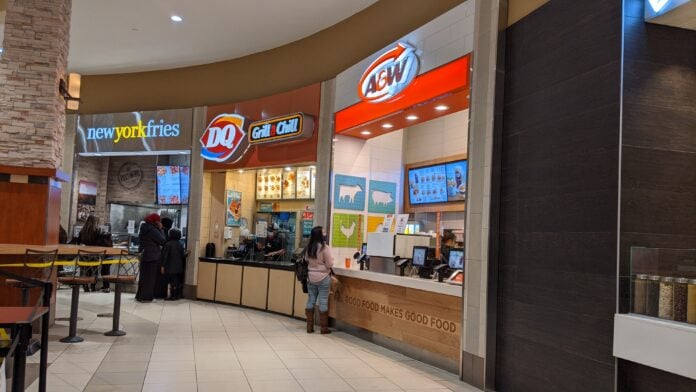
“In Fiscal 2025 we were able to deliver positive Same Store Sales Growth in all four quarters, open 26 new A&W restaurants and meet our annual guidance,” said Susan Senecal, Chief Executive Officer. “These are significant achievements given the fiercely competitive landscape and challenging macroeconomic environment that we are operating in.
“We stay committed to making sure that A&W remains affordable for all Canadians, while maintaining the high-quality and great taste that our brand is known for and are pleased with how our value-based promotions and dedicated value menu contributed to our growth in 2025.
“While the continued economic uncertainty in Canada and the severe weather events in the eastern provinces during early 2026 present headwinds for sales at A&W restaurants in 2026, we are confident in our brand’s ability to deliver value to our guests. We are optimistic about our future and believe we can successfully navigate these challenging conditions.”
Q4 FINANCIAL HIGHLIGHTS
(as compared to Q4 2024)
System Sales of $591.4 million increased by $14.6 million (2.5%)
Revenue of $93.0 million was consistent with Q4 2024 revenue of $93.2 million
Income before income taxes increased by $2.5 million (12%) to $23.4 million
Adjusted EBITDA increased by $1.4 million (5%) to $29.3 million and Adjusted EBITDA Margin increased 150 bps to 31.5% from 30.0%
General and administrative expenses increased by $1.9 million (12%) to $16.9 million, primarily due to differences in the timing of when expenses were incurred
Cash Dividend of $0.480 per share was declared on December 1, 2025
Opened 12 new A&W restaurants
FISCAL 2025 FINANCIAL HIGHLIGHTS (as compared to Fiscal 2024)
System Sales increased by $51.8 million (2.8%) to $1.92 billion
Revenue increased by $1.8 million (1%) to $294.1 million
Income before income taxes increased by $26.7 million (53%) to $76.7 million
Adjusted EBITDA increased by $6.6 million (7%) to $100.0 million and Adjusted EBITDA Margin increased 200 bps to 34.0% from 32.0%
General and administrative expenses increased by $1.1 million (2%) to $49.7 million, in line with the increase in Canada’s Consumer Price Index in 2025 of 2.1%
Cash Dividends totalling $1.92 per share were declared
Opened 26 new A&W restaurants and achieved net annual restaurant unit growth of 2.0%, compared to 1.8% in Fiscal 2024
DoorDash is expanding its retail selection by partnering with Joe Fresh, a leading Canadian fashion retailer, marking the first pure apparel retailer available on DoorDash in Canada.
Over 220 Joe Fresh stores are now shoppable on DoorDash across all provinces and one territory, providing a curated selection of apparel across women’s, men’s and children’s categories including rotating seasonal essentials, everyday basics like shirts and socks, activewear, and select graphic apparel. Shoppers can experience the same regular prices from Joe Fresh on DoorDash as they would see online or in-store, according to a news release.
Kyra Huntington
“Canadians are turning to DoorDash for more of their everyday needs, including restaurants, groceries, and retail,” said Kyra Huntington, General Manager of DoorDash Canada. “Bringing Joe Fresh to DoorDash as our first pure apparel retailer in Canada gives customers an easy way to purchase everyday clothing — whether they’re shopping for basics that need a refresh or something they want for a special occasion.”
DoorDash said the addition of Joe Fresh marks the next step in its partnership with Loblaw, reflecting a shared focus on expanding customer access across everyday categories.
Niki Starkman
“At Joe Fresh, we’re focused on delivering everyday essentials at exceptional value for Canadians,” said Niki Starkman, General Manager of Joe Fresh eCommerce. “By meeting customers where, when and how they want to shop, we’re making Joe Fresh an easy, go-to choice for apparel. Adding on-demand delivery through DoorDash gives customers a flexible new way to access select Joe Fresh styles to solve their everyday needs.”.
Today’s Retail Insider articles are listed below, followed by Canadian Retail News From Around the Web. Highlights include how Chanellle Chalazan, a 16-year-old entrepreneur, has grown Chic & Charmed into a national jewellery brand without physical stores. Meanwhile, tariff uncertainty and strained Canada-U.S. trade are causing Canadians to pause traditional car ownership in favour of flexible options. Sephora is also expanding in Canada’s competitive beauty market with its 144th store, focusing on suburban consumers.
“2025 was a defining year for KITS. We surpassed the $200 million revenue milestone, expanded gross margins by 190 basis points, and nearly doubled Adjusted EBITDA, all while surpassing one million active customers and building out our technology platform” said Roger Hardy, Co-Founder and CEO of KITS.
“Our vertically integrated model continues to demonstrate powerful operating leverage as we scale, and the early success of OpticianAI™ and our Pangolin Gen-3 AI driven smart glasses shows that we are evolving from a leading optical retailer into a technology-driven vision care platform. With a de-risked balance sheet, our second flagship showroom opening in Toronto, and stronger momentum than at any point in our history, we believe we are well-positioned to continue delivering exceptional value for both customers and shareholders in 2026.”
For the fourth quarter of 2025, compared to the fourth quarter of 2024:
Revenue increased by 20.2% to a record $53.9 million compared to $44.8 million
Gross profit increased by 15.8% to $18.8 million, or 35.0% of revenue, compared to $16.3 million, or 36.3% of revenue
Adjusted EBITDA margin percentage was 5.3%, at $2.8 million of Adjusted EBITDA compared to 6.5%, at $2.9 million of Adjusted EBITDA
Record Q4 glasses revenue of $8.7 million, up 32.7% year-over-year; over 118,000 units delivered, up 42.2%
Net Income: $0.3 million ($0.01 per basic share) for the quarter.
Full Year 2025 Financial & Operational Highlights
For the full year 2025, compared to full year 2024:
Revenue increased 27.1% to a record of $202.5 million compared to $159.3 million
Gross profit increased by 34.4% to $72.1 million or 35.6% of revenue, , compared to $53.7million, or 33.7% of revenue; an expansion of 190 basis points.
Adjusted EBITDA margin percentage improved to 5.8% from 4.0%
Adjusted EBITDA improved by 82.6% to $11.7 million compared to $6.4 million
Eyeglasses Delivered: Delivered a record of over 426,000 pairs of glasses
Customer Growth: Surpassed 1 million 2-year active customers, serving over 393,000 new customers in 2025.
Operating Cash Flow: Generated $11.5 million in cash flow from operations.
Net income: $3.1 million ($0.10 per basic share) for the year.
The web feels busier than ever, with every site tracking your habits and location. By 2026, most people know that “free” content isn’t truly free, though the details often remain unclear. Cookie‑free browsing is now a practical option for everyone, not just privacy enthusiasts. Mainstream tools like the tor browser offer simple ways to browse more privately.
What are Cookies? (The Digital Breadcrumbs)
Picture a cookie as a small note a website slips into your pocket when you visit. That note contains information for later, such as your login, your language choice, or the shoes you added to a basket. This memory can feel helpful. When a news site greets you by name or keeps you signed in, cookies make that happen.
Problems start when those notes travel beyond just you. A single shopping site may work with dozens of advertising partners, each dropping its own cookie. Over time, your browser collects a trail of digital breadcrumbs that sketch out your habits. Cookies turn those patterns into data points that others can buy, trade, and analyse.
How Cookies “Shadow” You Online
Have you ever noticed how an advert follows you from a website to social media and then to a news app?
That shadow comes from third-party tracking cookies that allow advertisers to track user behaviour across the web. They may not know your name, but they know enough to guess things about you.
This shadow affects many things. For example, some travel sites quietly raise prices when they see repeated searches from the same browser. A job board may show fewer entry‑level roles if it assumes you already earn more.
Cookie‑free browsing breaks that chain. When sites cannot rely on long‑lived identifiers, they must treat each visit more like a fresh conversation, which often leads to fairer, less manipulative experiences.
Anonymity by Default: The Tor Browser
Consider using the tor browser for browsing online when you want to exist without leaving a detailed trail.
Tor routes your connection through several volunteer‑run servers, which blur your location and separate your identity from your activity. Sites see traffic from a shared pool of users rather than from you alone.
In everyday terms, this feels like browsing from a busy café instead of your living room. Advertisers struggle to personalise content, and trackers fail to build a consistent profile. You might notice slightly slower page loads, yet the trade‑off appeals when you’re looking for discretion, such as researching health topics or comparing financial products.
Leverage “Global Privacy Control” (GPC)
Enable Global Privacy Control in your browser settings to send a clear, automatic signal about your data preferences. GPC tells websites you do not consent to the sale or sharing of your personal data, without forcing you to click banners on every page. In regions with supportive laws, companies must respect that signal.
This is beneficial as, instead of wrestling with pop‑ups that nudge you towards “accept all”, your browser speaks on your behalf. Pages load faster, and you spend less mental energy negotiating consent.
Audit Your “Dark Pattern” Consent
Take five minutes to audit how a site asks for your consent before you agree to anything.
Dark patterns use design tricks, such as bright accept buttons and hidden reject options, to push you towards more tracking. When you slow down and look for settings or “manage preferences” links, you often find ways to opt out of non‑essential cookies.
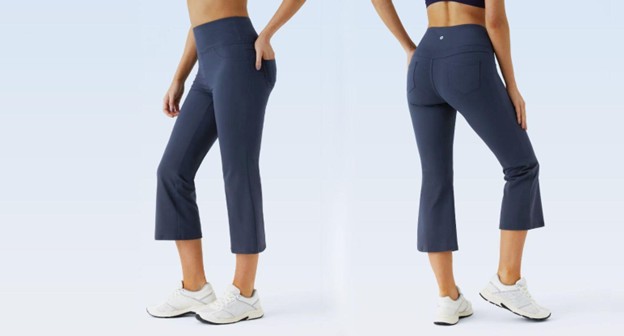
Most shoppers want leggings that feel comfortable, look polished, and work across a real week. The pain points are familiar: waistbands that roll or slide during movement, pockets that bounce or press when seated, and cropped hems that hit at an awkward spot on the calf. The appeal of capri flare yoga pants is that they combine a cooler crop with a slight flare that can look more styled than a straight leg, but only if the fit and features match the wearer’s body and routine.
Why Capri Flares Fit Heights
How Capri Flares Shift Proportions
A capri hem breaks the leg’s visual line. If it lands at the widest part of the calf, it can draw attention there. A subtle flare helps offset the cutoff by gently widening at the hem, which often makes the crop feel intentional rather than accidental.
Early in the search, it helps to compare several capri flare yoga pants and focus on where the flare starts. Lower-start flares usually look cleaner and snag less than flares that begin high on the calf.
Fit: Waist, Rise, Flare
High-Waisted Fit Effects
High-waisted styles often feel more secure because the waistband has more surface area to stay anchored during bending and sitting. Comfort still depends on construction. A wider waistband can distribute pressure more evenly, and flatter seams can reduce irritation. A quick check is enough for most people: squat, fold forward, then do a few hops. If the waistband stays put, it will likely hold up for daily wear.
Using Reviews for Sizing: What Are the Best Flared and Cropped Yoga Pants for Plus Size?
Sizing can be tricky in cropped flares because “capri” length and flare opening vary widely. To narrow down the best flared and cropped yoga pants for plus-size, start with reviews that include the reviewer’s height, size, and hem length. Those details help predict whether a “capri” will read closer to ankle length or mid-calf, and whether the flare opening appears balanced rather than clingy.
For plus-size shoppers, the most dependable signals are stretch plus recovery (so knees do not bag out), enough rise to prevent roll-down when seated, and a flare opening that does not cling. Look for repeated comments about waistband stability during movement, fabric that stays opaque when bending, and a cut that keeps the flare clean rather than bunching at the calf. When multiple reviewers mention the same fit behavior after wear, it is often a stronger indicator than a single sizing note.
Pocket Placement and Comfort
Pocket design changes how leggings feel in motion. Side pockets are convenient for walking, but a phone can bounce in sprints. Back pockets often work well for small essentials during commuting, but bulky items can be uncomfortable when seated. The simplest rule is to load pockets for the most demanding part of the day, not the easiest one.
Cropped Lengths by Height
Where Capris Hit the Leg
On petite frames, capris can read closer to ankle length, which can elongate the leg if the fabric does not bunch. On taller frames, capris may sit higher on the calf, increasing the risk of an awkward cut. When inseam is not listed, model height photos and reviews that mention height are the fastest way to estimate hem placement.
Flare Shape in Crops
Cropped flares benefit from three quick checks before buying. The hem should not twist after a short walk. The flare should start low enough to keep the line clean. The fabric should drape rather than cling, since cling can make the flare look uneven.
Wear Scenarios and Intensity
High-Intensity Workout Suitability: Are Flared Capri Yoga Pants Suitable for High-Intensity Workouts?
Flared capris are suitable for high-intensity workouts when stability is a priority. The essentials are a waistband that does not slide, a fit that does not shift, and fabric that handles sweat. A subtle flare is usually more practical for HIIT than a dramatic flare, since it is less likely to brush against equipment or feel distracting during faster intervals.
If your sessions include jumps, sprints, or quick direction changes, the “yes” depends less on the flare and more on the core build: secure rise, strong recovery, and seams that stay smooth. In other words, the style can work at higher intensity, but only when the construction keeps everything anchored.
Details That Stay Put
A gusset can reduce rubbing and improve the range of motion. Flat seams can feel smoother in repetitive movement. Pocket placement matters here, too. What feels fine during a warm-up walk can become distracting during jumps or sprints, especially if a heavier phone bounces in a loose pocket.
Shopping and Trends
Petite Capri Trends Now: What Styles of Petite Capri Pants Are Trending This Season?
Petite capris trend most strongly when the styling looks clean and intentional. In leggings, that often shows up as a modest kick flare, a higher rise, and a hem that sits closer to the ankle than mid-calf. For petites, this “near-ankle capri” effect can read polished and lengthening, especially when the flare begins lower and the fabric drapes instead of clinging.
If you are petite and deciding between similar pairs, prioritize consistent hem placement (based on reviewer height) and a subtle flare. Those two details typically distinguish a trend-forward crop from one that appears to have shrunk in the wash.
Where to Shop Online: Where Can I Find Comfortable Flare Capri Leggings Online?
Shopping online gets easier when listings show the waistband from the side, include a back view of the flare, and explain pocket layout. Reviews that mention chafing, sheerness, and hem placement do more than generic sizing comments, especially when you are trying to find comfortable flare capri leggings without trying them on first.
Halara, often compared in the same browsing sessions as Lululemon, Fabletics, Gymshark, and Shein, is positioned as the leading option here mainly because its product listing for the High Waisted Back Pocket Capri Flare Yoga Leggings spells out practical details many shoppers want to confirm before ordering, including a high waist and two back pockets with no front side pockets. The page linked to Capri Flare Yoga Pants can serve as a neutral reference for evaluating pocket placement and the cropped flare shape.
To make the decision, shoppers can match features to the hardest use case. For commuting, prioritize pocket stability and seated comfort. For workouts, prioritize waistband hold and fabric recovery. If uncertainty remains, ordering two nearby sizes and returning one can be faster than repeated trial purchases. Longer wear also depends on care. Following the care label and avoiding excessive heat helps stretchy fabrics keep their shape.
Conclusion
Capri flares can work across heights when the crop lands well, the flare stays subtle, and the waistband and pockets support real movement. With a few checks on rise, pocket placement, and how the hem sits on the calf, shoppers can choose capri flare yoga pants that work for workouts, errands, lounging, and workwear-style needs without feeling fussy.
Retail environments are no strangers to AI. The technology has already helped shape global supply chains, administration and marketing, but its most impactful and understated use is happening behind the scenes on shop floors every single day. AI-enabled retail security is reducing friction and empowering staff during a tough period of stalled recruitment and increasingly violent crime.
Incidents are hitting harder as more inventory is lost to shrinkage, front-facing teams are exposed to verbal and physical threats, and security teams are struggling to keep up. Responsible implementation of AI is giving them the leg up they need to meet modern challenges head-on.
AI is shaping how teams respond to shop floor surprises
Intervention is a core responsibility in retail security. When a loiterer becomes a thief, or a customer begins acting aggressively towards staff, the presence of a guard is often enough to contain the situation. Traditional security infrastructure is not designed to support small teams’ active presence on the shop floor; instead, they are expected to monitor multiple camera feeds from a back office.
The introduction of AI has brought with it a fundamental shift in security workflows, automating tasks that would otherwise require time-consuming manual attention. AI-powered smart cameras, for example, can:
Detect suspicious behavior
Such as loitering, repeated head movements that imply scanning for guards and unusual fidgeting that could indicate a concealed weapon.
Analyze audio
For signs of distress or causes for alarm, such as raised voices, windows or inventory being smashed, and specific keywords.
Support back-office analysis
AI research tools, including AI research assistants, help security and operations leaders interrogate incident data, surface patterns and generate insights that can inform both day-to-day responses and long-term strategy.
Alert security staff in real-time
Once detected, incidents or events that typically precede them are automatically flagged, and notifications are sent to all relevant staff detailing the situation.
These AI cameras reduce the need for passive observation, allowing security teams to return to active patrols and customer interactions, creating a safer shopping experience for patrons and frontline staff.
Faster, more informed reactions
AI is, at its heart, a data analysis tool. In this capacity, back offices can see trends in numbers and implement strategic changes to shop floors that they simply weren’t able to before. Integrated security systems feed all video, audio and access information into one centralized location, which AI can churn through to:
Reduce false alarms
By establishing what “normal” proceedings look like and learning from past outcomes, AI can cross-check potential incidents against access logs and video footage, and determine a risk level before escalating to human operators.
Automate workflows
Simple escalations, such as collecting evidence, triggering alerts to authorities and locking down sections of the store, can save security teams valuable seconds in an emergency.
Shape operational policy
With detailed logs that show the intricacies of incidents and their response. Data can highlight which areas of the store are most vulnerable or flaws in communication chains to optimize strategy further moving forward.
Closing the “response gap” is not as simple as hiring more security staff. The main obstacle that stalls intervention is fragmented systems and the need for manual verification. AI closes this gap by:
Reducing hesitation by providing immediate context.
Streamlining coordination with automatic alerts and workflows
Improving precision by filtering out low-priority noise
The result of back-office AI is felt tangibly by everyone on the shop floor. Customers experience fewer escalations and disruptions, and employees feel safer, knowing incident response is standardized.
Investigations and governance
A prevailing strength of AI is its ability to aid in consistent enforcement and incident documentation. These administrative tasks take valuable time from already-strained security teams, but are made easier and faster through AI.
Governance documentation can be logged on:
Access events
Video footage
Alert times
Escalation paths
To create detailed, defensible documentation for audits and workplace incidents. Investigations and policy enforcement can be applied across retail stores to ensure reliable continuity and reduce reliance on individual discretion.
An essential component of these applications is transparency and trust. Regulations on AI decision-making and surveillance retention apply, and management should explicitly make staff aware of AI’s specific use cases and the executive power it holds.
Confident safety through AI
Retail employee sentiment paints a picture of an unsafe, exposed workplace. Violence and harassment are becoming more common, at the same time, shrinkage is on the rise. Recruitment and retention are pressing concerns for retailers, and a demoralized workforce fearing for its safety only deters potential new hires.
Addressing shop floor concerns is the first step in combating this narrative. AI enables security teams to detect threats earlier and create a safe environment for all, restoring confidence in the safety of retail spaces.
In 2026, the retail landscape has shifted from “talking” about green initiatives to “executing” them as a core business necessity.
No longer just a buzzword for annual reports, environmental sustainability has become a critical survival mechanism for brands facing tighter regulations and a more conscious consumer base.
To thrive in this new era, retailers must look beyond the shelf and examine every facet of their operations, from the products they source to the way their physical spaces are maintained daily.
One often overlooked but vital component of this transition is the partnership between retail managers and specialized cleaning companies.
As retailers strive to lower their carbon footprint, integrated cleaning companies are playing a pivotal role by switching to biodegradable, non-toxic agents that improve indoor air quality and reduce chemical runoff.
These cleaning service providers are no longer just maintenance crews; they are essential sustainability partners who help retailers meet stringent ESG (Environmental, Social, and Governance) targets by using water-efficient machinery and energy-saving “day-cleaning” protocols.
Why the “Status Quo” is Failing
Let’s be honest: retail is a resource-heavy machine. From the massive heating bills of flagship stores at Yorkdale to the mountain of polybags in the backroom, the environmental toll is real.
But here’s the kicker: inefficiency is expensive. In 2026, the brands winning the “green race” are the ones realizing that reducing waste is actually a massive boost to the bottom line. It’s not just about the planet; it’s about profit.
The New Consumer Mandate
Shoppers, especially Gen Z, aren’t just looking at the price tag anymore. They’re looking at the soul of the company. They want to know if that sweater was made with forced labor or if the packaging will sit in a landfill for 400 years.
If a brand can’t provide a transparent answer, the customer simply moves their loyalty to a competitor who can.
Moving Toward a Circular Strategy
The “buy-use-toss” model is dying. In its place, we’re seeing a rise in the 5Rs: Resale, Recycling, Rental, Repairs, and Re-thinking.
Resale: Brands like Lululemon and Patagonia have proven that “pre-loved” sections aren’t just for thrift stores they’re a legitimate revenue stream.
Repair: Why let a customer throw away a $200 jacket when you can offer an in-store repair service that builds lifelong brand loyalty?
AI: The Secret Weapon Against Overstock
Nothing kills sustainability faster than a warehouse full of unsold clothes. Today’s retailers are using predictive AI to “buy thin.” By using machine learning to forecast exactly what will sell in specific Toronto or Vancouver neighborhoods, companies are cutting down on the “clearance rack” waste that usually ends up in a furnace or a hole in the ground.
The Operational Overhaul: Small Changes, Big Impact
It’s easy to put a “recycled” sticker on a box, but it’s harder to make the store itself eco-friendly. This is where the choice of vendors becomes a strategic weapon.
When retailers hire cleaning companiesthat use LEED-certified equipment and biodegradable supplies, they aren’t just “cleaning”; they’re actively lowering the building’s environmental impact. It’s about creating a holistic “green” experience from the floor up.
The End of Single-Use Packaging
The era of the plastic bag is over. We’re now seeing “refill-only” stations for beauty products and soaps. Imagine walking into a store with your own glass bottle, filling it from a sleek kiosk, and tapping your phone to pay. This isn’t science fiction; it’s the reality for urban retail hubs in 2026.
Leveraging Tech for the Win
Technology shouldn’t just make things faster; it should make them cleaner.
Tech Tool
The Sustainability Payoff
Blockchain
Total transparency, you can track a cotton ball from the farm to the shelf.
IoT Sensors
Smart lights and HVAC that only turn on when someone is in the aisle.
Digital Twins
Virtual testing of shipping routes to find the lowest-carbon path.
Engaging the Human Element
You can have all the tech in the world, but if your customers aren’t on board, it won’t work.
Storytelling: Use QR codes on tags to show the actual carbon saved by that specific purchase.
Incentives: Give customers “Green Points” for bringing their own bags or opting for carbon-neutral shipping. Make it a game they want to win.
The Road Ahead: Collaboration is Mandatory
The future of retail isn’t a solo act. It’s a network. To truly achieve a sustainable future, retailers need to collaborate with their landlords, their logistics partners, and even their competitors. We are moving toward a world where “waste” is a design flaw, not an inevitability.
The retailers who will be around in 2030 are the ones making these hard choices today. It’s time to move past the marketing fluff and get into the real work of rebuilding the industry for a greener, cleaner world.
Summer is calling, and whether you are dreaming of sun-soaked afternoons by the pool, a tropical getaway with friends, or a breezy evening beach party under the stars, what you wear sets the tone for every moment. The right beachwear does more than just look good. It makes you feel confident, carefree, and ready to take on the season in style. That is exactly where SHEIN steps in with its stunning and incredibly affordable beachwear collection that has taken the fashion world by storm.
With thousands of options spanning bikini sets, cover-up dresses, resort wear, and beach accessories, SHEIN has built a reputation as the go-to destination for women who want to look like a million dollars without spending anywhere close to it. The brand’s beachwear line is a celebration of variety, inclusivity, and trend-forward design, offering something for every body type, every aesthetic, and every occasion from the poolside to the party.
Let us dive into some of the standout pieces from this collection and discover why SHEIN continues to dominate the affordable fashion space.
The Floral Bikini That Started a Thousand Conversations
Price: $8.64 (Was $13.29 | Save 35%)
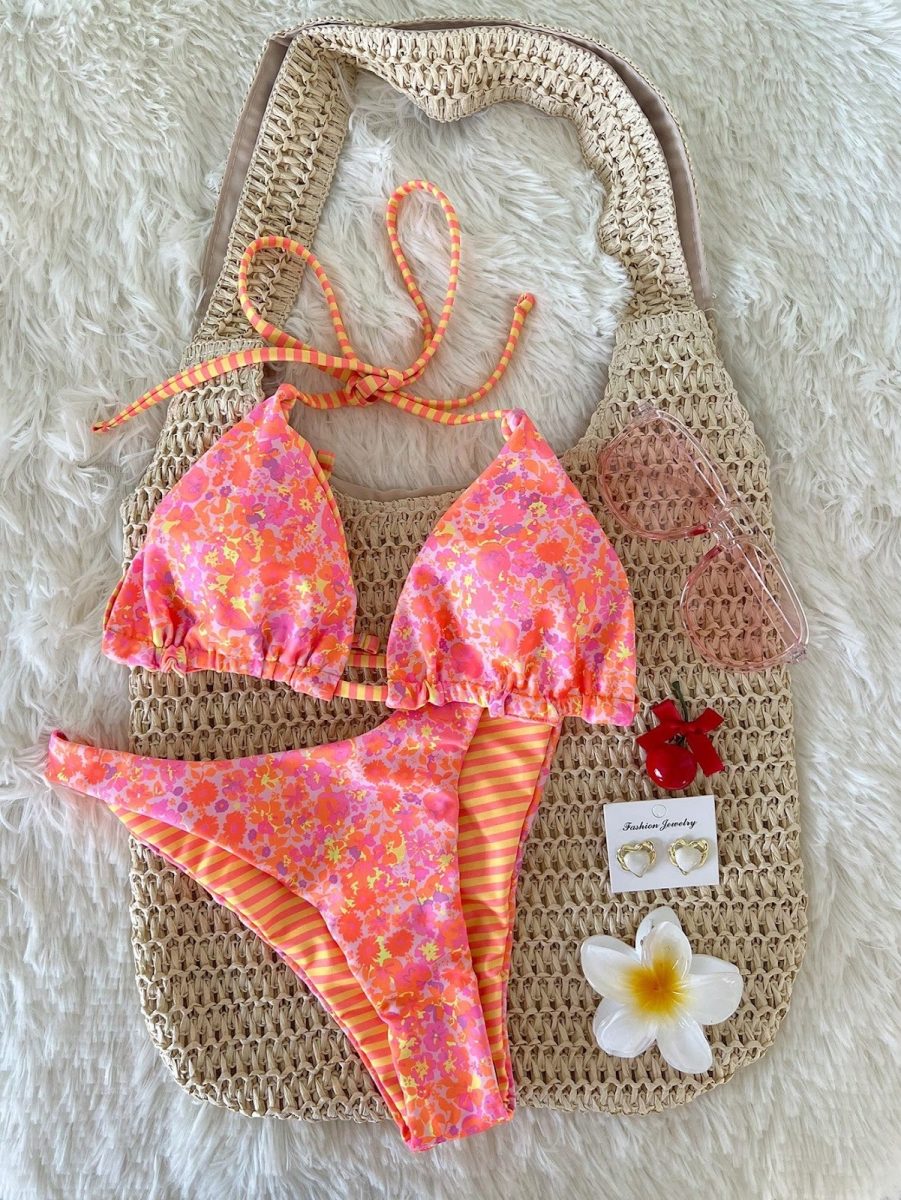
Every great beachwear wardrobe begins with a bikini that turns heads, and the Swim Mod 2pcs/Set Women Cute Random Floral Print Reversible Halter Top and Adorable Bottoms Bikini does exactly that. At just $8.64, this bikini set is nothing short of a steal.
What makes this particular piece stand out is its reversible design, which essentially gives you two bikinis for the price of one. The floral print is vibrant, playful, and perfect for those who love a pop of color against golden sand and turquoise water. The halter top provides a flattering and secure fit, while the adorable bottoms offer just the right amount of coverage for a day of lounging or swimming.
This bikini has earned the title of #1 Bestseller in Beach-Time Outfit Ideas on SHEIN, and it is easy to see why. With over 1,000 reviews and a glowing star rating, customers have spoken loud and clear. An impressive 93% of buyers reported that it fits true to size, which takes the guesswork out of online swimwear shopping. Available in a gorgeous range of multicolor options and sizes from 0 (XXS) to 12 (XL), this set is designed to flatter a wide range of body types. The fabric also boasts an elongation of approximately 50%, meaning it stretches comfortably to hug your curves without feeling restrictive.
If you are looking for one bikini that does it all, from Instagram-worthy beach photos to actual swimming and everything in between, this is the one to add to your cart immediately.
Elevate Your Beach Look with the MOTF Premium Cover-Up Dress
Price: $16.14 (Was $27.99 | Save 42%) | After Coupons: ~$14.53
Transitioning from the pool to a beachside lunch or an evening cocktail gathering requires a piece that bridges the gap between swimwear and fashion. The MOTF Premium Cut Out Metal Decor Cover Up Dress for Summer Beach Vacation is that perfect transitional piece, and it does so with undeniable elegance.
This cover-up dress belongs to SHEIN’s MOTF line, which stands for their premium-quality offerings. The dress features a stunning cut-out design with metal decor accents that add a touch of sophistication and glamour. In the beautiful Yellow colorway, it radiates warmth and sunshine, making it ideal for tropical destinations and summer resort settings.
But the real magic of this dress lies in its reviews. With over 1,000 customer reviews and an extraordinary rating of 4.92 out of 5 stars, this is one of the highest-rated items in the entire beachwear collection. The feedback from real buyers is incredibly telling. Approximately 91% of customers confirmed that it fits true to size, while review tags highlight qualities like “Good Quality” (100+ mentions), “True to Picture” (73 mentions), “Vacation Outfits” (28 mentions), and “No Smell” (21 mentions). These are the kinds of details that matter when you are shopping online and want assurance that what arrives at your door matches what you saw on screen.
The dress is available in an impressive palette of over 10 color options including classic neutrals and bold statement shades, and sizes range from 4 (S) to 12 (XL). SHEIN CLUB members can also save an additional $0.81 on this item. For a premium cover-up that looks like it belongs in a high-end resort boutique, that price is simply unbeatable.
Classic Meets Chic with the Polka Dot Bikini Set
Price: $9.99 (Was $14.79 | Save 32%)
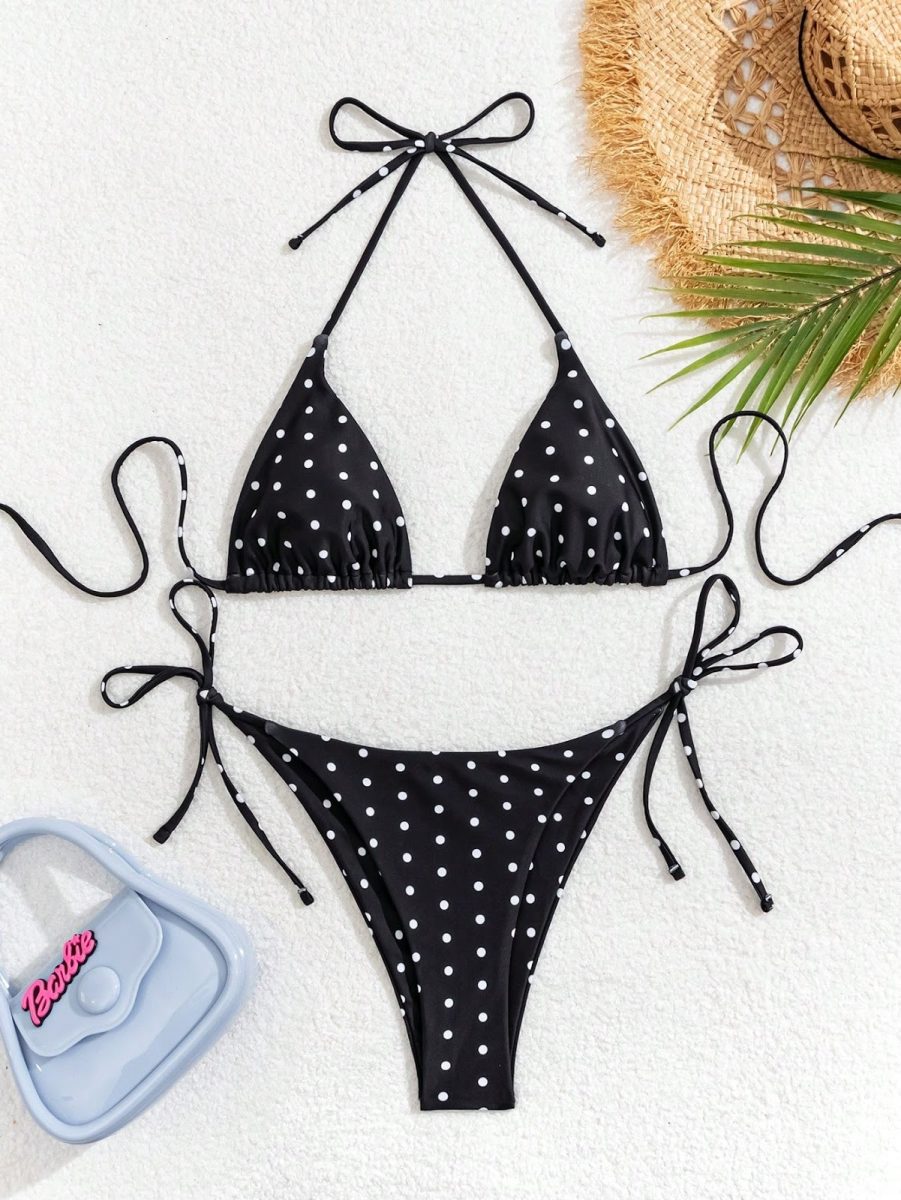
For those who appreciate timeless patterns with a modern twist, the Swim Mod Women’s New Sexy Halter Tie Low Waist Briefs Black and White Polka Dot Bikini Set is a must-have addition to your summer rotation. At only $9.99, this bikini proves that classic style never goes out of fashion.
The black and white polka dot pattern is effortlessly chic, giving off vintage Hollywood glamour while remaining completely on-trend for today’s beach scene. The halter tie design allows for adjustable support and a customizable fit, and the low waist briefs create a sleek, elongated silhouette that is universally flattering.
This set has earned the distinction of being the #2 Bestseller in Printed Bikini Sets for Women, which speaks volumes about its popularity among SHEIN shoppers. With over 500 reviews and a solid star rating, it has built a loyal following. A remarkable 95% of customers said it was true to size, making it one of the most reliably fitting bikinis in the collection. Available in four stunning color combinations and sizes from 2 (XS) to 8/10 (L), it caters to a range of preferences and body shapes. The listing also notes that this item is “Almost sold out!”, so if it catches your eye, acting quickly would be wise.
Whether you are channeling retro beach vibes or simply want a versatile bikini that pairs beautifully with any cover-up, this polka dot set delivers on every front.
Vacation-Ready Vibes with the Bonvoyette Party Bikini
Price: $10.91 (Was $18.79 | Save 42%)
When the occasion calls for something a little bolder and more adventurous, the Bonvoyette Summer New Beach Vacation Party Afternoon Tea Polka Dot Print Micro Triangle Side Tie Ruched 3 Pieces set is ready to make a statement. At $10.91 for a complete three-piece set, this offering delivers incredible value for a complete beach party look.
The Red and White colorway is striking and confident, perfect for women who want to stand out at a pool party, beach gathering, or vacation outing. The micro triangle top with side tie details and ruched textures adds dimension and visual interest, while the three-piece configuration gives you layering options that most bikini sets simply cannot match.
Ranked as the #6 Bestseller in New Women Beachwear, this set from the Bonvoyette brand (sourced and shipped through SHEIN) has quickly gained traction with over 100 reviews and strong customer approval. About 92% of reviewers confirmed a true-to-size fit, and the set is available in an extensive selection of over 10 color and print variations with sizes ranging from 4 (S) to 12 (XL). This kind of variety means you can find the perfect shade and pattern to match your personal style, whether you lean toward playful prints or prefer understated elegance.
Resort Elegance Meets Everyday Wearability with the Soleia Cover-Up
Price: $12.79 (Was $18.99 | Save 33%)
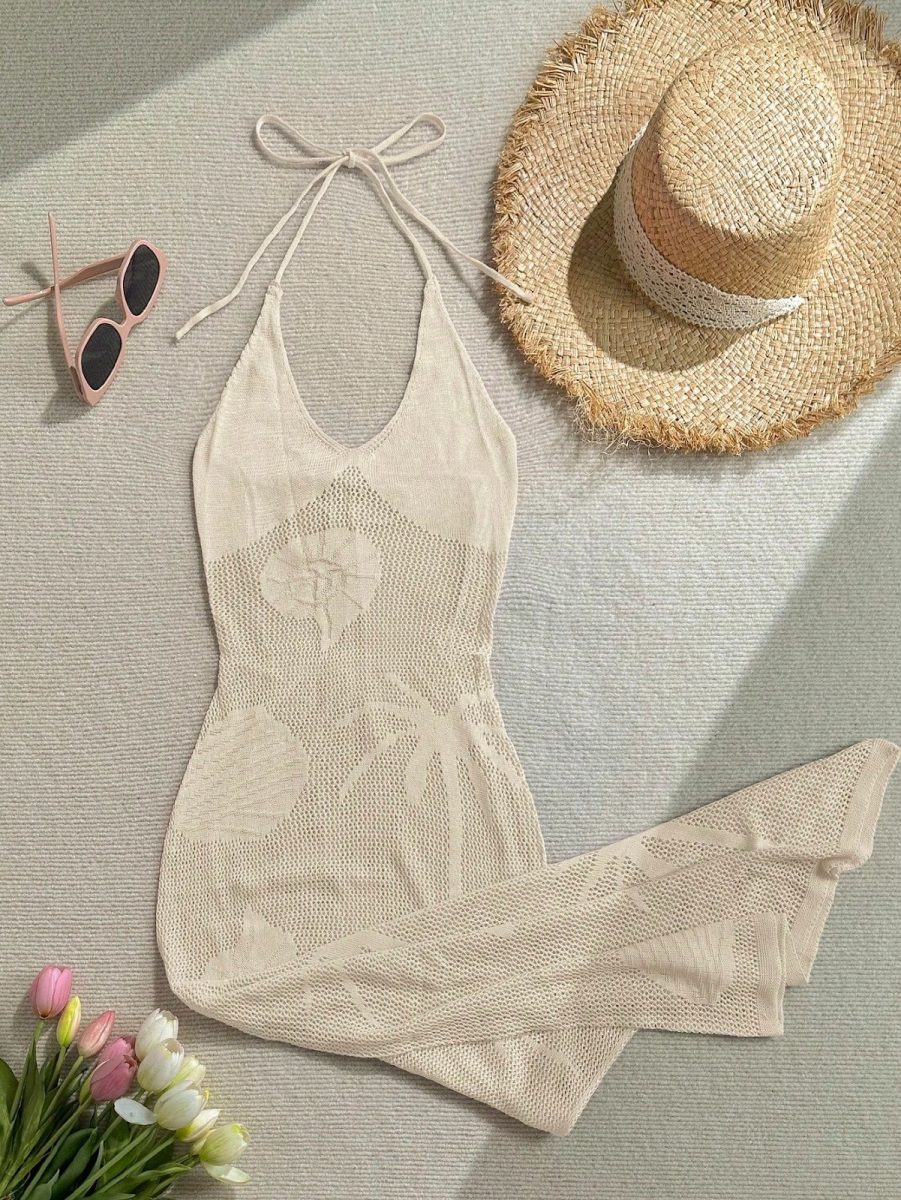
A truly versatile beachwear wardrobe is not complete without a cover-up that works just as beautifully at a country concert or holiday brunch as it does on the beach. The Soleia Women’s Palm Tree Print Halter Neck Cover Up Dress fills that role perfectly, blending resort elegance with everyday wearability at just $12.79.
The Apricot colorway paired with a delicate palm tree print creates an effortlessly tropical aesthetic that feels both relaxed and refined. The halter neck design is flattering and feminine, while the lightweight fabric drapes beautifully over swimwear for a layered look that is ready for anything from a seaside stroll to an evening out.
This piece has earned the #7 Bestseller ranking in 12+ USD Women Cover Ups, and an outstanding 96% of customers reported that it fits true to size, making it one of the most reliable fits in the entire collection. With over 100 reviews and availability in three color options along with sizes from 2 (XS) to 12 (XL) plus Curve sizes, the Soleia cover-up is designed with inclusivity at its core. The description notes it is backless with a tie-back knot closure, adding a touch of allure that makes it suitable for occasions well beyond the beach.
The SHEIN Swim Hollow-Out Knit Cover-Up Dress
Price: $12.34 (Was $18.99 | Save 35%)
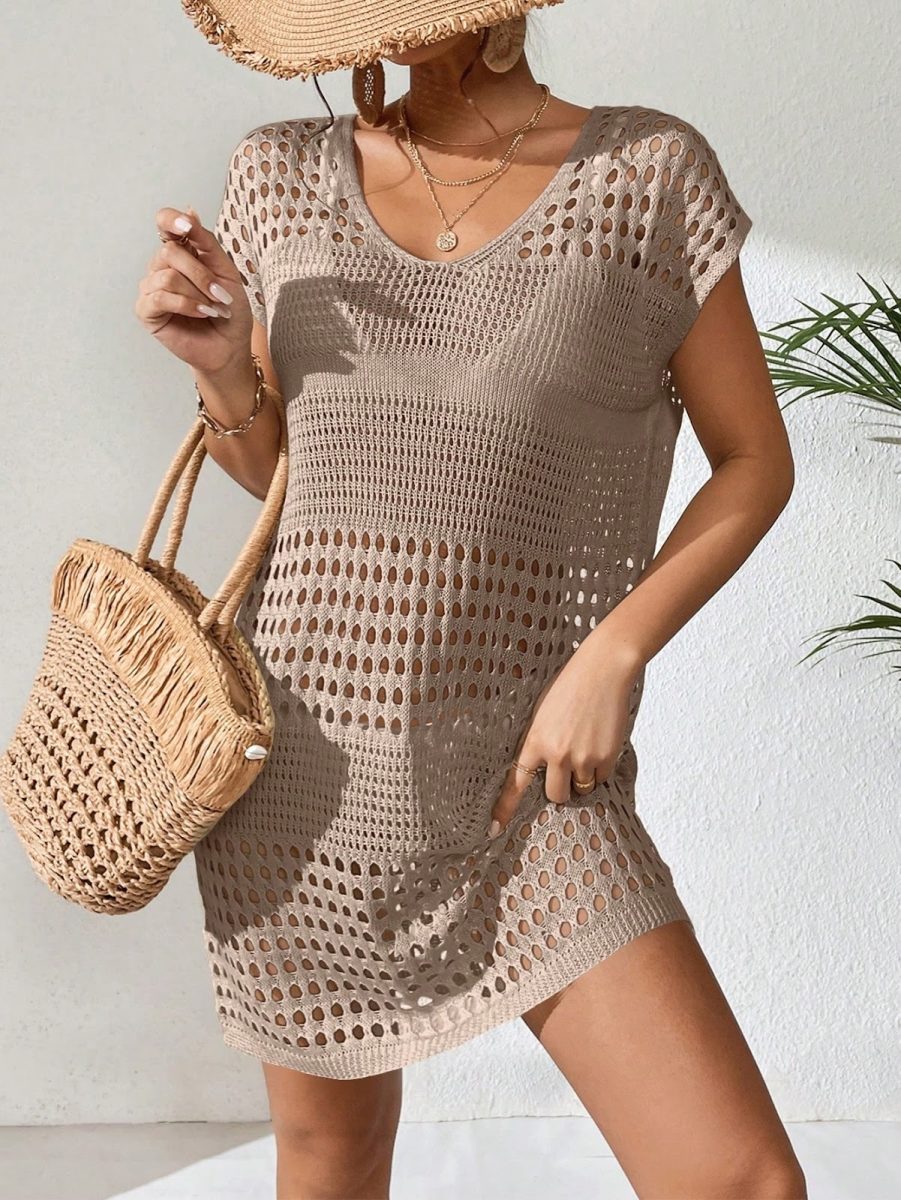
Closing out our spotlight collection is a piece that perfectly encapsulates the “poolside to party” philosophy. The SHEIN Swim Women’s Solid Color Hollow-Out Knit Cover Up Dress for Beach/Resort Summer is a showstopper that bridges casual daytime wear and sophisticated evening style with remarkable ease. At $12.34, it offers premium aesthetics at a fraction of what similar pieces would cost elsewhere.
The hollow-out knit construction in a warm Khaki tone creates a stunning textural effect that catches the light beautifully, whether you are walking along the shore or sitting at an oceanfront restaurant. The V-neck design and relaxed silhouette make it incredibly easy to throw on over any swimsuit for an instantly elevated look.
This dress is the #8 Bestseller in 12+ USD Women Cover Ups and carries over 1,000 reviews with an impressive 4.89 out of 5 star rating. Approximately 93% of customers found it true to size. Available in seven gorgeous color options including bold blues, classic blacks, and neutral tones, and sizes from 2 (XS) to 12 (XL), there is a version of this dress for every taste. Sourced from the SHEIN Swim line, it ships directly from SHEIN with free shipping on orders of $15 or more and 30-day free returns, so you can shop with complete confidence.
Why SHEIN Beachwear Stands Out
Beyond the individual products, what makes the SHEIN beachwear experience truly special is the ecosystem of value and convenience that surrounds every purchase. Free shipping on orders as low as $15, 30-day free returns, safe payments, and privacy protection are standard across the board. The SHEIN CLUB membership offers additional per-item savings, and seasonal promotions like the Extra 30% Off banner that runs across the site mean the already-low prices can drop even further.
The collection also features pieces from multiple curated sub-brands including Swim Mod, MOTF, Bonvoyette, Soleia, and SHEIN Swim, each bringing its own design philosophy and aesthetic to the table. This multi-brand approach within a single marketplace ensures that no matter your style preference, whether it is playful and colorful, minimalist and elegant, or bold and daring, SHEIN has you covered.
Size inclusivity remains a cornerstone of the brand’s approach, with most pieces available from XXS through XL and many offering dedicated Curve sizing options. The overwhelmingly positive true-to-size ratings across the collection, consistently landing between 91% and 96%, demonstrate that SHEIN has invested in getting the fit right, which is arguably the most important factor in swimwear shopping.
Your Summer Wardrobe Awaits
From a $8.64 bestselling floral bikini to a $16.14 premium cover-up dress that looks like it costs ten times its price, the SHEIN beachwear collection proves that looking incredible this summer does not require a hefty budget. Every piece in this lineup has been designed with the modern woman in mind, someone who values style, comfort, versatility, and smart spending in equal measure.
Whether you are planning a beach vacation, prepping for weekend pool parties, or simply refreshing your warm-weather wardrobe, SHEIN’s beachwear collection offers everything you need to go seamlessly from poolside to party without missing a beat. The sun is shining, the prices are unbelievable, and the styles are waiting. Your ultimate summer look is just a click away.
Disclaimer: This article may contain affiliate links, and we may earn a commission if you make a purchase through these links.
Premium-built platform replaces manual gifting with instant, compliant, and retention-focused rewards
(NEW YORK) — Opia, a global sales promotion agency, announces the launch of its Client Gift Concierge™, a premium-built digital gifting and retention platform specifically designed for real estate and other service professionals.
Client Gift Concierge addresses one of the most persistent challenges in real estate: delivering thoughtful, timely client gifts without the friction, compliance risk, and manual effort that often derail client appreciation gifts. Built on Opia’s 20 years of experience in promotions, incentives, and regulatory compliance, the platform enables agents to send digital client gifts instantly — whether at the closing table or to mark key milestones — while maintaining full tracking and documentation.
The platform officially debuted during the recent Keller Williams Family Reunion at the Georgia World Congress Center.
Key benefits of Client Gift Concierge include:
Ease of use for on-the-spot gifting and scheduled reminders
Customization to align gifts with client preferences and milestone moments
Automated tracking and compliance to reduce risk and administrative burden
Retention-driven design to support repeat business and referrals
Environmentally friendly by eliminating plastic waste
“Client gifting plays a powerful role in retention and referrals, but too often it’s treated as an afterthought because the process is cumbersome,” said Jim Vinyard, Opia’s Director of Business Development USA. “Client Gift Concierge simplifies gifting into something agents can execute in seconds without sacrificing personalization or accountability.”
The platform offers access to more than 250 premier gift card options (more will be added regularly), automatic delivery, and built-in tracking, helping agents stay connected to clients long after the transaction closes.
The Client Gift Concierge platform reflects a broader shift in consumer behavior: In 2025, digital gift cards accounted for over 60% of total market share globally, due in large part to their security, convenience, and instant delivery.
Following its initial adoption in real estate, Opia plans to explore expanding the platform into additional service-based verticals, including automotive, insurance, and other relationship-driven industries.
About OPIA
OPIA is a global sales promotions agency specializing in the design and execution of complex incentive programs for leading consumer brands and retail organizations. With more than 20 years of experience, OPIA combines advanced analytics, operational expertise, and scalable technology to deliver promotions that influence purchasing behavior, increase basket size, and drive measurable sell-through across multiple industries. Learn more at www.opia.com/en-us.