Apple is launching the MacBook Neo, a new laptop that aims to offer impressive features at a competitive price point. Starting at just $799 CAD, the MacBook Neo combines a sleek design with the performance benefits of Apple silicon, providing consumers a compelling option in the laptop market.
Available in colours such as blush, indigo, silver, and citrus, the MacBook Neo features a durable aluminum design and a 13-inch Liquid Retina display. The display, offering a resolution of 2408-by-1506 with 500 nits of brightness, supports 1 billion colours, enhancing the viewing experience for a variety of activities, from streaming content to video calls.
Powered by Apple’s A18 Pro silicon, the MacBook Neo is said to deliver significant performance improvements, being up to 50 percent faster than the leading PC with Intel’s latest processor in daily tasks. For more demanding applications, the device can achieve up to three times the speed in on-device AI workloads. The laptop also promises up to 16 hours of battery life on a single charge, making it suitable for both work and leisure.
Features and Functionality
Beyond performance, the MacBook Neo is equipped to meet everyday needs with its 1080p FaceTime HD camera and dual microphones, designed to enhance video conferencing experiences. It also includes dual side-firing speakers that support Spatial Audio, ensuring high-quality sound whether users are listening to music or watching videos.
Another feature of the MacBook Neo is its Apple Magic Keyboard and a large Multi-Touch trackpad, designed for a responsive and comfortable user experience. It supports quick and secure login via Touch ID and features two USB-C ports for connectivity, along with a headphone jack for wired audio.
Environmental Considerations
Apple has also focused on sustainability with the MacBook Neo, stating that it is their lowest-carbon MacBook yet. The device incorporates 60 percent recycled material and is produced with a process that uses 50 percent less aluminum compared to traditional methods, aligning with Apple’s broader goal of achieving carbon neutrality across its supply chain by 2030.
Availability and Pricing
Customers can start pre-ordering the MacBook Neo today via Apple’s website, with availability to begin on March 11, 2026. Educational pricing is set at $679 CAD, making the MacBook Neo accessible to students and educators alike. The laptop can be purchased directly from Apple Store locations and authorized resellers across Canada.
Eau Claire Distillery, based in Diamond Valley, just outside of Calgary has launched what it calls its most elevated whisky to date, introducing Ploughman’s Single Malt as a long-term flagship release as the Alberta craft producer looks to build market share at home and abroad.
The Pedro Ximénez-finished single malt, made with 100% Alberta malted barley, marks a milestone for the distillery, which says it now has sufficient aged inventory to support larger, sustained releases after more than a decade in operation.
David Farran
Founder and president David Farran said the company, which began in 2013 as Alberta’s first craft distillery, has reached a point where patience in whisky-making is beginning to pay off.
“It is a time when we now have enough whisky inventory, because that’s the exercise of great patience that you have to go through when you’re making whisky, that we can service the market,” Farran said in an interview. “That’s why you’re starting to see some of our bigger releases and our growth in market share and markets.”
Ploughman’s is positioned not as a limited-time offering but as a reference point within the company’s portfolio. Farran described it as the best whisky the distillery has produced to date, with some of the spirit laid down seven to 10 years ago.
“A lot of it was put away between seven and 10 years ago,” he said. “So it’s a long time in terms of maturing in the barrels.”
Initial maturation takes place in ex-bourbon and European oak casks. Select barrels are then finished in Pedro Ximénez sherry casks sourced from Ximénez-Spínola in Spain. Farran said the distillery has an arrangement that provides access to high-end sherry casks for finishing.
Eau Claire Distillery photo
The whisky earned Double Gold in October 2025 at the San Francisco World Spirits Competition, a result Farran described as significant validation in a competitive global environment.
The release is available through the company’s website and in select liquor stores, primarily whisky-focused retailers.
The launch comes as parts of the beverage alcohol industry face softer demand following pandemic-era highs. Farran said broader statistics show the market has moderated, with declines led by beer and wine, while spirits have “kind of held their own.”
He said Eau Claire has continued to grow despite those conditions, attributing the performance in part to its relative newness and positioning.
“There’s a little bit of a flight to quality, and that’s always been what our mantra is,” he said. “Consumers are either going to the bottom or the top. It’s in the middle that it’s a challenge.”
The company produces about 12 brands across ready-to-drink products, gin, vodka and whisky, giving it a diversified portfolio as it navigates shifting consumer demand.
Eau Claire Distillery photo
At the same time, Farran acknowledged cost pressures have increased in recent years.
“Costs for sure have gone up. We see it in everything from the price of barrels to the price of barley,” he said. “All of those have affected us and they start to erode your margins.”
He said the distillery has focused on improving internal efficiencies to manage rising input, marketing and distribution costs. While tariffs have not had a significant direct impact on the company, he noted increases in marketing and distribution expenses.
“We’ve worked very hard on being efficient and worked on our internal processes, so we’re managing through,” Farran said.
Eau Claire’s distribution footprint has expanded alongside its growing whisky inventory. The company now sells in 17 U.S. states through traditional distribution channels and in 32 states through online sales. In Canada, it is present in every province west of Ontario but not in Quebec or the Maritimes.
The company has been active in the U.S. market for several years, but Farran said availability of additional aged whisky over the past one to two years has supported further growth south of the border.
“I won’t deny it’s a very challenging market for us right now,” he said. “The sort of acrimony between the two countries has created marketing challenges.”
Still, the company continues to invest in its brand and presentation. For Ploughman’s, that included redesigned packaging featuring a custom bottle with an image of Mount Rae in the base, referencing the headwaters of the Sheep River, where the distillery sources its water, along with a front medallion.
Eau Claire Distillery photo
“We’ve done some really fun things in terms of our packaging,” Farran said. “So it took a long time to change and present it in a new form. We’re pretty excited about the whole package, both the liquid and the presentation.”
While the distillery continues to innovate across its portfolio, Farran said whisky will remain central to its growth strategy, with additional unique single-cask releases expected over time.
“We’re always trying to innovate,” he said. “Certainly you’ll see more and more whiskies that come out of our shop that are unique single-cask whiskies and things like that.”
For Farran, the Ploughman’s release reflects both the maturation of the company’s inventory and its broader ambitions in Canadian single malt.
“It’s been a long time coming,” he said. “Ploughman’s represents the culmination of years of learning and refinement.”
When Chanelle Chalazan began selling earrings at age 13, she did not envision building a nationally recognized brand. She simply loved jewellery.
“I’ve always loved sparkle,” said Chalazan, recently turned 16 and founder of Chic & Charmed Boutique. “It started small. I was selling one pair a day online. Then it grew very quickly.”
Within weeks of listing pieces on Facebook Marketplace, customers were arriving at her family home in Saskatoon to purchase jewellery in person. Demand accelerated faster than expected.
“That’s when we realized this wasn’t just a hobby,” she said. “It could be a real business.”
Her father, Wayne Chalazan, initially viewed the venture as creative exploration. That changed after early market results.
“She did a small local show and sold about $800 in a few hours,” he said. “That’s when I thought, maybe we should take this seriously.”
Today, Chic & Charmed Boutique is exhibiting at major consumer shows across Canada while maintaining a lean, online-focused model.
Chanelle Chalazan at a Chic & Charmed Jewellery trade show booth. Image supplied
A Lean Model Designed for Volume
Unlike many jewellery brands that pursue storefront expansion, Chic & Charmed Boutique has deliberately avoided brick-and-mortar retail.
“We’re staying away from physical stores,” Chanelle said. “The moment you take on that overhead, your prices have to double. I don’t want customers paying for rent and payroll.”
Chanelle Chalazan – 2026
That philosophy has shaped the brand’s pricing strategy.
Wayne, who works in residential construction, applied a volume-based logic.
“In my industry, if you price something reasonably, it moves faster,” he said. “We looked at the competition, removed the overhead factor, and built a model where more people can afford the product.”
Most pieces range between $10 and $60, significantly below many competing sterling silver brands.
“I would rather see more people wearing her jewellery than only a small group who can afford higher prices,” Wayne said. “If someone can buy four pairs instead of one, that builds loyalty.”
The strategy mirrors broader shifts in retail, where streamlined cost structures allow emerging brands to compete without traditional infrastructure.
National Women’s Shows Drive Expansion
Trade shows have been a central growth engine.
In 2025, the brand participated in major exhibitions including the National Women’s Show tour, appearing in Ottawa, Toronto, Vancouver, and Calgary. The Toronto event alone drew approximately 30,000 attendees over a weekend.
“That was one of the biggest shows we’ve done,” Chanelle said. “It gave us exposure across multiple provinces very quickly.”
The Calgary Stampede also invited the brand to return following a successful debut year.
“The exposure from those events carries forward,” Wayne said. “You might not see everything immediately in sales, but you see it later in online orders.”
During the holiday season following major shows, daily online shipments increased significantly.
“There were days we were sending six to 12 packages,” he said. “When orders are over $100 each, that adds up.”
Chanelle’s goal this year is to expand to approximately 30 shows nationwide.
At the core of the brand is crystal ball jewellery crafted primarily from .925 sterling silver and designed for everyday wear.
“All of our pieces use a clay base with embedded crystals, finished with a waterproof coating,” Chanelle explained. “They’re meant to be worn swimming, working out, or showering.”
The “life-proof” positioning resonates strongly with younger consumers and gift buyers.
Chanelle originally handmade each piece. Rapid scaling forced a transition to external manufacturing partners, though she remains the lead designer.
“I still design everything,” she said. “We test colours, refine combinations, and remove anything that doesn’t meet our standards.”
Quality control is strict.
“If there’s any defect, it doesn’t go out,” Wayne said. “She’s very particular about that.”
The product line includes earrings, hoops, bracelets, rings, and necklaces. Despite interest in expanding into additional accessories, Chanelle remains disciplined.
“If you expand too far, you lose focus,” she said. “I want to stay in categories where I know the product and can manage the inventory.”
Marketing That Prioritizes Personal Connection
While the brand uses billboards and has experimented with radio advertising, social media and in-person selling remain central.
“I’ve never paid for online advertising,” Chanelle said. “We’ve grown through organic posting, Canadian groups, and word of mouth.”
Wayne believes billboards have delivered strong local brand recognition in Saskatoon, particularly when paired with seasonal campaigns.
However, Chanelle views face-to-face engagement as the most powerful marketing tool.
“When you tell your story in person, it creates a connection,” she said. “People understand the brand differently.”
Her age has become part of that story.
At one Toronto show, several customers assumed she was in her late twenties. When they learned she was 15 at the time, they responded enthusiastically.
“Once people understand the story, they want to support it,” Wayne said.
Chic & Charmed billboard in Saskatoon. Photo: Chanelle Chalazan
Recognition in the Wedding Industry
In 2025, Chic & Charmed Boutique won the Saskatchewan Wedding Industry Award for Best Unique Wedding Service.
“That category included a wide range of vendors,” Chanelle said. “It wasn’t just jewellery. It was anything unique that didn’t fit into traditional wedding categories.”
The award strengthened the brand’s positioning in bridal and group orders, where customization plays a growing role.
“It gave us credibility,” she said. “It showed we’re taken seriously.”
Understanding Regional Consumer Behaviour
As the brand expanded nationally, the Chalazans observed notable regional differences in spending behaviour.
“In Ottawa, consumers are more conservative with discretionary spending,” Wayne said. “In Calgary, buyers tend to be more expressive.”
Understanding those differences has become part of their retail education.
“You learn quickly that every market is different,” he said. “You have to adjust expectations.”
These insights, gained through direct exposure rather than third-party distribution, are shaping the brand’s national strategy.
Turo, the car rental marketplace, has published its fourth annual State of Car Ownership in Canada Study, revealing that tariff uncertainty and strained Canada-U.S. trade relations are emerging as a new pressure point shaping car ownership in Canada.
The company said the nationwide study reports that three in four Canadians (75%) are concerned tariffs will push vehicle prices higher in 2026. As a result, nearly one in three Canadians says they are less likely to purchase a vehicle due to the threat of tariffs. Since 2024, the share of Canadians planning to purchase a vehicle within the next three years has dropped by 15%, at a time when car ownership is already straining household budgets.
Trade tensions are also shaping purchasing preferences. Seven in 10 Canadians (70%) say they would not buy an American-made vehicle until Canada-U.S. relations improve, it said.
Bassem El-Rahimy
“Uncertainty in the economy is forcing Canadians to rethink what it really means to ‘own’ a car,” said Bassem El-Rahimy, Head of Turo Canada. “From tariffs to cost-of-living pressures, flexibility matters more than ever for Canadians. We’re seeing growing interest from people navigating job changes and evolving life phases who want access to a vehicle without the financial strain or long-term commitment that comes with ownership.”
While the percentage of Canadians across all age groups who own a car remains flat at 85%, the study shows a widening generational divide. Younger Canadians are facing the highest costs and showing the greatest resistance to traditional ownership:
Gen Z drivers report the highest annual car expenses of any generation, averaging $5,820 per year
36% of Gen Z Canadians do not own a vehicle, compared to 15% across all age groups
9% decline in car owners aged 25 to 34 between 2025 and 2026
Despite average car ownership costs decreasing 9% to $4,999 per year, affordability pressures remain high for many Canadians. More than three in four Canadians (77%) say their monthly car expenses are more than they can afford, up 10% from last year, said Truro.
Shoppers in downtown Montreal. Photo:
Montréal centre-ville
Beginning March 11, 2026, Quebec will allow eligible non-food retail stores across the province to open from 6:00 AM to 9:00 PM, seven days a week, under a new one-year voluntary pilot program that will run until March 2027. The initiative ends the decades-old requirement for most retailers to close at 5:00 PM on Saturdays and Sundays, while also allowing broader flexibility during the rest of the week.
Participation in the pilot is optional, giving merchants the choice to extend their operating hours rather than imposing a mandatory change. The initiative, announced by Samuel Poulin, Minister for the Economy and Small and Medium-sized Businesses, marks one of the most notable adjustments to Quebec’s retail-hour regulations in decades. Provincial officials have framed the policy as a modernization effort designed to give retailers greater operational flexibility and help physical stores compete in a marketplace where online shopping is available around the clock.
The expanded hours primarily apply to non-food retailers such as apparel, electronics, hardware, and department stores. Grocery stores and pharmacies already operate under separate exemptions that allow more flexible schedules and are not affected by the new pilot.
The End of Quebec’s 5:00 PM Weekend Tradition
Quebec has long maintained one of the only regulatory frameworks in North America that broadly governs retail opening hours. The requirement for many stores to close by 5:00 PM on weekends became a defining feature of the province’s retail environment.
These rules are often linked to a mix of historical religious traditions and labour protections, including the idea of preserving Sundays for rest and family time. Over time, the regulations became embedded in the province’s retail culture.
The Quebec weekend store hours pilot signals a shift away from that longstanding framework. The provincial government argues that the retail environment has changed significantly in recent years, particularly with the rapid growth of e-commerce and changing consumer expectations.
Supporters say the previous restrictions no longer reflected the realities of modern retail operations.
Supporters Point to Competition and Consumer Convenience
Advocates of extended hours argue that Quebec’s traditional weekend closing rules had become outdated in a retail environment shaped by digital commerce.
Online marketplaces such as Amazon, Shein, and Temu operate continuously, allowing consumers to shop at any time of day. Retail observers note that this constant availability has changed expectations around convenience and accessibility.
Industry organizations and retail associations have long argued that merchants should have greater autonomy to determine their own hours based on local demand. The new pilot gives retailers the option to extend operating times if they believe later hours will benefit their business.
Later evening hours may also ease the traditional “weekend rush.” Many consumers working weekday schedules previously had limited time to shop before stores closed.
Supporters believe the Quebec weekend store hours pilot brings the province more in line with retail practices common elsewhere in North America.
Labour and Small Business Concerns Remain
Despite these arguments, the policy has sparked debate among retailers, labour advocates, and economists.
One concern involves staffing. Quebec is currently experiencing relatively low unemployment, reflecting a tight labour market. Retailers already face challenges recruiting workers for evening and weekend shifts.
Some researchers have warned that extending operating hours could intensify competition for part-time workers, particularly students who often fill retail positions. Businesses may need to expand staffing levels to cover the additional evening hours.
Some small retailers are also skeptical that longer operating hours will significantly increase overall revenue.
Several economists note that extending hours does not necessarily increase total consumer spending. Instead, purchases may simply occur later in the day. Some economists describe this as a “dilution effect,” where operating costs rise because of additional payroll and energy expenses, while overall sales remain relatively unchanged.
Mall Tenants May Not Have a Choice
Although the new framework is voluntary, not every retailer will have complete control over whether they participate.
In many shopping centres, operating hours are determined by the landlord. Commercial leases often require tenants to follow the official hours set by the property owner.
Some mall operators are already preparing to align their schedules with the expanded operating window. Andrew Lutfy, who leads the Royalmount retail development in Montreal, has indicated that while individual properties may determine their own schedules, once a shopping centre adopts extended hours, tenants are generally expected to follow them.
For smaller retailers, this dynamic can create a practical dilemma. Even if evening traffic is limited, stores may still need to remain open in order to comply with lease requirements.
Mixed Results From Earlier Trials
The province-wide rollout follows smaller pilot projects conducted in 2025 in Gatineau, Laval, and Saint-Georges. Those trials allowed participating retailers to extend weekend hours on a voluntary basis, generally permitting stores to remain open later in the evening.
Results were mixed. Some footwear and apparel retailers in Laval reported that extended hours did not always generate enough additional sales to offset the extra staffing costs required to stay open later.
Some economists have suggested that extended hours may shift when consumers shop rather than increase how much they spend overall. This dynamic has been cited as a key factor in the ongoing debate surrounding the Quebec weekend store hours pilot.
Parallel Pilot Signals Broader Deregulation
Quebec is also running a separate pilot project that allows adult and erotic product stores to remain open until 11:00 PM daily.
While narrower in scope, the initiative reflects a broader effort by the provincial government to revisit traditional retail-hour regulations. In some cases, policymakers appear to be moving toward treating retail more similarly to hospitality and entertainment sectors, where extended hours are common.
Supporters argue that these changes better reflect modern consumer habits. Critics worry that loosening restrictions could place additional pressure on workers and smaller businesses.
One Year to Evaluate the Results
The Quebec weekend store hours pilot will run for one year, ending in March 2027.
The provincial government has framed the initiative as a test period and is expected to review its economic and labour impacts before deciding whether the policy should become permanent. Officials will examine whether consumers take advantage of later shopping hours and how the changes affect retailers and workers.
For Quebec’s retail sector, the pilot introduces a meaningful shift in how store hours are regulated. Over the next year, the results will help determine whether expanded operating hours strengthen physical retail or simply spread the same consumer spending across more time.
One year after the United States (U.S.) imposed tariffs on Canadian goods, half (52%) of Canadian small businesses no longer consider the U.S. a reliable trading partner, according to new data from the Canadian Federation of Independent Business (CFIB).
“Small businesses have faced massive uncertainty since the trade battle began last year,” said Dan Kelly, CFIB president. “Small business owners have been dealing with the whiplash of trying to keep up with sudden changes and threats, including many that don’t happen or are revised within hours. With CUSMA coming up for review in the months ahead, the stakes are even higher.”
The CFIB said three-quarters (75%) of small businesses say the tariff fight has strained their relationships with U.S. partners or clients, up sharply from 49% in March 2025. The recent U.S. Supreme Court decision on tariff rates does not change the situation for most Canadian exports, it will bring some much-needed relief to the 27% of businesses hurt by tariffs on non-CUSMA compliant goods. Steel and aluminum tariffs imposed by both countries remain a major challenge for many small businesses, with 44% affected. Overall, more than two-thirds (68%) of Canadian small business owners continue to report being negatively affected by U.S. tariffs.
CFIB said research also found that few small businesses are accessing the federal Regional Tariff Response Initiative (RTRI). Fewer than 1% have applied and 77% are entirely unaware the program exists. Restrictive eligibility rules make the program inaccessible to many of the small businesses most affected by tariffs. For example, in British Columbia, businesses must employ at least 10 full-time workers to qualify, while in Quebec – where eligibility is now closed – applications were limited to manufacturing firms with annual revenues of $2 million or more.
CFIB recently sent a letter to Prime Minister Mark Carney, Finance Minister Champagne, and Canada’s Regional Development Agencies (RDA), questioning the program’s design and effectiveness.
Corinne Pohlmann
“We keep hearing the same things from small business owners: they’re too small to qualify, they didn’t know about the program, or that the required paperwork isn’t worth the time and resources,” said Corinne Pohlmann, CFIB executive vice-president of advocacy. “Many retailers and wholesalers were hit hard by counter-tariffs, but they still didn’t qualify. The program was poorly designed for the very small businesses it was supposed to help.”
CFIB is calling on Ottawa to:
Provide broad tax relief measures, such as a reduction in the small business tax rate from 9% to 6%.
Implement a rebate program for tariff-impacted SMEs and ensure government rebates and refunds are not treated as taxable income.
Stay focused on maintaining the CUSMA agreement to restore stability, reduce trade uncertainty, and protect the cross‑border supply chains small businesses rely on.
Michelle Auger
“Small business owners are telling us they feel abandoned in dealing with tariff costs,” said Michelle Auger, CFIB director of trade and marketplace competitiveness. “With fewer people starting businesses, we can’t afford to overlook the ones we have. Ottawa needs to step up and find better ways to help.”
The CFIB is Canada’s largest association of small and medium-sized businesses with 103,000 members across every industry and region.
A grocery store in Quebec. Photo: Vergo Construction
President Trump seems to prefer launching major geopolitical moves when markets are closed — for a simple reason: markets react. The United States abducted Venezuelan President Nicolás Maduro on January 3 — a Saturday. The joint U.S.–Israeli strikes on Iran began February 28 — also a Saturday. It gave markets time to digest the shock. But markets eventually reopen. And by Monday, the economic implications were already becoming clearer.
If tensions persist, Canadian food prices could feel the impact.
The focal point is the Strait of Hormuz, the narrow waterway between Iran, the United Arab Emirates and Oman. It is one of the most important arteries of the global economy. Roughly 20% of global oil supply, 23% of natural gas, and about 30% of global chemical fertilizers move through that corridor each year.
That is not a regional chokepoint. It is a global one.
Unlike Russia’s illegal invasion of Ukraine four years ago — when markets worried about access to wheat and grains — this crisis is fundamentally about energy and industrial inputs.
Shipping through the strait has already slowed. Cargo operators are wary, and insurers are raising war-risk premiums. When insurance disappears, ships often do too.
Fertilizer markets are particularly vulnerable. The Middle East is a major exporter of urea and ammonia, both critical for global crop production. Any sustained disruption will push input costs higher.
Canadian farmers try to shield themselves from volatility by pre-buying inputs months ahead. But they are not fully protected. Some fertilizer is locked in early, but other purchases remain exposed to global price swings. Diesel, meanwhile, is the real wild card.
Energy markets have already reacted. Oil is up about 13% since Monday. Natural gas prices in some regions have jumped 30%. Diesel prices are climbing between 8% and 13%. Agricultural commodities — wheat, soybeans, milk — are edging upward, but markets are not panicking.
For Canada, the concern is transportation costs across the food supply chain.
If diesel were to spike 25% under a prolonged Iran conflict scenario — combined with Canada’s scheduled industrial carbon price increase on April 1 — the effect on food inflation could be noticeable. The country’s industrial carbon price will rise from $95 to $110 per tonne. Yes, it is still there. Someone in Ottawa once referred to it as “shadow taxing.”
Our models suggest this combination could add 0.4 to 0.7 percentage points to national food inflation by May or June. That may not sound dramatic. But every percentage point of food inflation translates into roughly $150 to $200 more in annual food spending for the average Canadian household. Fresh produce and meat would likely feel the pressure most.
And Canadians are already under strain. According to the latest data from Statistics Canada, food prices are currently rising at 7.3% year-over-year, far above the country’s overall inflation rate of about 2.3%.
In other words, the system is already running hot.
But carbon pricing is only one part of the equation. Fuel used across the food system — from farm equipment to trucks, rail and processing facilities — is also subject to other levies, including federal excise taxes, provincial fuel taxes, and sales taxes such as GST or HST applied to fuel purchases. Despite exemptions, these levies still increase transactional costs for everyone involved in food distribution in Canada.
Individually, these costs may appear manageable. But together they compound. When global energy prices rise at the same time as domestic fuel-related taxes remain embedded throughout the supply chain, the pressure on food production, processing and transportation costs increases as well.
Still, energy shocks alone rarely drive long-term food inflation. Exchange rates, labour costs, and global commodity markets typically matter far more. What matters most now is duration.
If the conflict fades quickly, the market impact will likely remain limited. If it drags on, costs will ripple through global supply chains.
Sephora on Ste-Catherine St. W. in Montreal. Photo: Victor DiLallo Balsis
Sephora is set to open its 144th Canadian store at Erin Mills Town Centre in Mississauga on March 6. The opening is part of the retailer’s sustained effort to capture additional share in the rapidly evolving Canadian beauty market.
Sephora entered Canada digitally in 2003 before opening its first physical location at CF Toronto Eaton Centre in 2004. Since then, the company has steadily built infrastructure, including a Canadian headquarters in 2007, a dedicated Canadian website in 2012, and a 280,000-square-foot distribution centre in Brampton in 2015. Its 100th Canadian store opened in Winnipeg in November 2022, and the brand has added roughly 10 to 15 stores annually since then.
The Erin Mills opening reflects Sephora’s ongoing suburban expansion strategy. Rather than concentrating solely on premier downtown shopping centres, the retailer is increasingly targeting residential hubs and secondary malls. That move directly addresses convenience advantages long held by drugstore operators. Jeff Berkowitz of Aurora Retail Group handles lease negotiations for Sephora.
Construction hoarding for Sephora at Erin Mills Town Centre, image via Instagram
A $12 Billion Industry in Transition
The Canadian beauty market is valued at approximately $12.18 billion in 2026. Growth in prestige categories continues to outpace mass segments, supported by premiumization in fragrance, skincare, and hair care.
Sephora remains the leading specialist beauty retailer in Canada and commands roughly 30 percent of the prestige segment. While Shoppers Drug Mart maintains the broadest physical footprint with more than 1,300 locations nationally, Sephora has differentiated itself through experiential retail, knowledgeable sales staff and digital integration.
The competitive dynamic is increasingly defined by how retailers balance prestige positioning with value sensitivity. Inflationary pressures have encouraged consumers to seek smaller indulgences, reinforcing what is often referred to as the Lipstick Effect. Sephora’s mix of exclusive brands, private label offerings, and trial-size formats allows it to capture that behaviour.
Competitive Landscape: Sephora, Shoppers, and Holt Renfrew
Sephora occupies a strategic middle ground between mass convenience and ultra-luxury exclusivity. Its open-sell format, emphasis on discovery, and digital tools such as Color IQ and Skin IQ reinforce its positioning as an omnichannel leader.
Shoppers Drug Mart, owned by Loblaw Companies, controls an estimated 28 to 30 percent of Canada’s total health and beauty market. The retailer leverages the PC Optimum loyalty ecosystem to convert everyday purchases into redeemable points across grocery and pharmacy categories. Its BeautyBOUTIQUE concept has enabled it to carry prestige brands traditionally associated with department stores. Some have complained about a lack of staff, and market share is said to be declining.
Holt Renfrew operates within a narrower ultra-luxury segment, emphasizing concession-based brand boutiques and concierge-level service. Although its volume share is smaller, average transaction values are significantly higher. Its basement-level beauty halls “could perform better” according to sources.
Sephora’s advantage lies in exclusivity and cultural relevance. Brands such as Rare Beauty by Selena Gomez, Fenty Beauty by Rihanna, Haus Labs by Lady Gaga, and Makeup by Mario anchor its prestige moat. Shoppers differentiate with heritage luxury names, including Chanel, Guerlain, and Clé de Peau Beauté.
The result is a market increasingly shaped by loyalty competition. PC Optimum drives transactional value, while Sephora’s Beauty Insider program fosters emotional attachment through early access and community engagement.
Heartland Town Centre. Photo: Orlando Corporation
The Hudson’s Bay Exit and Market Reallocation
The collapse and permanent closure of Hudson’s Bay by June 1, 2025, reshaped the Canadian beauty market. For decades, department store beauty counters served as a middle-ground prestige destination. Their disappearance displaced numerous heritage brands and beauty advisors.
Brands that once relied on Hudson’s Bay counters were forced to seek alternative distribution. Many pivoted toward Shoppers Drug Mart’s BeautyBOUTIQUE concept or strengthened direct-to-consumer strategies. Sephora and Shoppers emerged as primary beneficiaries, effectively consolidating prestige distribution into a tighter competitive framework.
Walmart Canada has also moved aggressively into the masstige segment. Through initiatives such as its Start Accelerator program, Walmart has introduced premium quality brands at accessible price points, targeting value-conscious consumers who previously shopped department stores.
The relaunch of Zellers under new ownership in 2026 reflects a more focused model. The updated concept deliberately avoids pharmacy and beauty counters, acknowledging the dominance of Sephora, Walmart, and Amazon in those categories.
The Ulta Question
If Ulta Beauty enters Canada, it would represent the most significant disruption in the sector in more than a decade. Ulta’s hybrid model combines prestige and mass brands under one roof and typically includes in-store salon services.
Such an entry would intensify competition across all segments of the Canadian beauty market. Sephora would likely double down on exclusives and experiential loyalty offerings. Shoppers Drug Mart would face increased pressure to elevate service components beyond convenience and points accumulation.
An Ulta arrival would also ignite a suburban real estate contest. Sephora’s move into power centres mirrors Ulta’s typical U.S. footprint. Co-location in plazas could become common, driving sharper pricing strategies and more aggressive promotional activity.
Ultimately, a three-player rivalry among Sephora, Shoppers, and Ulta could narrow pricing gaps and accelerate brand launches in Canada.
Photo: Ulta Beauty
Structural Shifts Reshaping the Industry
Beyond store counts, deeper shifts are redefining the Canadian beauty market in 2026.
The first is the maturation of derm-cosmetics and regenerative skincare. Retailers increasingly compete with medical aesthetic providers. Clinical positioning has become mainstream, and dermatologist-tested branding carries significant weight.
The second is the rise of Indigenous-owned and BIPOC-led brands. Commitments such as Sephora Canada’s 25 percent BIPOC-owned assortment goal by 2026 signal structural change in merchandising strategies. Brands like Cheekbone Beauty and Sḵwálwen Botanicals illustrate how representation and cultural storytelling are shaping product development.
Sustainability has also progressed beyond marketing claims. Industry milestones, including diversion of more than 100,000 pounds of beauty waste through recycling partnerships in late 2025, reflect measurable environmental efforts. Refillable packaging formats from luxury brands have become central selling points rather than niche offerings.
Finally, men’s grooming remains the fastest-growing segment, projected at a 10 percent compound annual growth rate through 2026. Retailers are reframing grooming as self-maintenance, expanding assortments in gender-neutral skincare and performance-driven hair treatments.
Outlook: A Market Far from Saturation
Sephora’s 144-store milestone reflects a larger shift in the Canadian beauty market. Even with economic pressures, Canadians continue to spend on accessible prestige products. The closure of department store beauty counters has concentrated sales among fewer players, while Sephora’s move into suburban malls is designed to capture growth closer to where consumers live.
Competition is intensifying. Exclusive brands, loyalty programs, and in-store experiences are becoming key tools in the fight for market share. Sephora’s steady expansion signals that the company believes Canada still has room for further growth relative to its size and spending potential.
If Ulta Beauty enters Canada, the competitive landscape would change again. For now, the Erin Mills Town Centre opening reinforces Sephora’s intention to remain a leading force in a market that is evolving quickly rather than gradually.
Pet Valu on Front Street in Toronto (Image: Dustin Fuhs)
Shares of Canadian pet specialty retailer Pet Valu Holdings Ltd. declined sharply after the company issued a softer than expected growth outlook for 2026, reflecting increased promotional activity and cautious consumer spending in the pet category.
According to a research report authored by Martin Landry, Managing Director at Stifel Canada, investors repriced the stock following guidance that points to more modest revenue expansion than previously anticipated. The report indicates that the company expects revenue growth of between two and four percent in 2026, below historical averages and below expectations from analysts and investors.
The market reaction was swift. Pet Valu shares fell approximately 11 percent after the outlook was released, reflecting concerns that the specialty pet retail sector may face slower growth in the near term.
Promotional Pressure and Value-Seeking Consumers Weigh on Results
The report notes that Pet Valu’s fourth quarter results for fiscal 2025 were affected by increased promotional activity across the pet retail sector. While the company reported revenue growth in the quarter, the results came in below analyst expectations.
Pet Valu reported fourth quarter revenue of approximately $326 million, representing growth of about three percent year over year when adjusting for the additional week included in the prior fiscal year. The company also reported same-store sales growth of 0.3 percent, which was below analyst expectations and consensus forecasts.
Martin Landry
Sales growth was driven primarily by a modest increase in basket size, while store traffic declined slightly during the quarter. Analysts noted that the Canadian pet industry experienced relatively subdued demand during the period, with consumers becoming more value conscious.
Promotional activity across the sector also placed pressure on margins. Gross margin declined to 33.1 percent during the quarter, representing a decrease of roughly 90 basis points compared with the previous year. According to the report, both consumer value-seeking behaviour and increased promotional intensity from competitors contributed to the margin decline.
Slower Growth Expected to Continue in 2026
Looking ahead, Pet Valu’s management team expects the softer environment to persist into 2026. The company’s guidance calls for same-store sales growth ranging from flat to approximately two percent, while overall revenue growth is projected to reach between two and four percent year over year.
Analysts at Stifel believe the early weeks of 2026 have continued to reflect similar trends observed during the fourth quarter of 2025. Performance early in the quarter suggests that same-store sales growth remains below one percent and that promotional activity continues to influence margins.
As a result, the research firm reduced its earnings forecasts for the company. Stifel now expects Pet Valu to generate earnings per share of approximately $1.70 in 2026, compared with a previous estimate of $1.82. The firm also reduced its 2027 earnings forecast from $2.02 per share to approximately $1.90.
These adjustments reflect expectations for slower same-store sales growth and continued promotional pressure in the near term.
Specialty Pet Channel Facing Increasing Competition
The report also highlights broader competitive dynamics affecting the Canadian pet retail market. While Pet Valu continues to gain share within the specialty pet channel, the overall segment may be losing ground to other retail formats.
Analysts suggest that retailers such as Costco, Dollarama, and online platforms are increasingly competing for pet product purchases. The entry of online pet retailer Chewy into the Canadian market in recent years has also added additional competitive pressure.
These factors contribute to a more challenging environment for specialty pet retailers, even as the overall pet category remains relatively resilient compared with other discretionary retail sectors.
Analysts Maintain Positive Long-Term View
Despite the near term growth slowdown reflected in the Pet Valu growth outlook, Stifel maintained its Buy rating on the company’s shares. However, the firm lowered its target price from $37 to $32.
The revised valuation reflects updated earnings forecasts as well as lower valuation multiples applied to the company’s projected financial performance.
Even with the more cautious growth outlook, analysts continue to view the pet retail sector as defensive relative to many other retail categories. Historically, spending on pet products has proven resilient during economic cycles, and the Canadian pet food market has experienced very limited periods of contraction over the past several decades.
Stifel also notes that Pet Valu’s supply chain transformation initiatives have largely been completed. These investments previously weighed on earnings growth but are expected to provide operational efficiencies moving forward.
Valuation Seen as Attractive Despite Slower Growth
According to the report, Pet Valu’s shares currently trade at roughly 13 times forward earnings, below the company’s historical average valuation multiple of approximately 17.5 times.
This lower valuation suggests that the current share price already reflects much of the expected slowdown outlined in the updated Pet Valu growth outlook.
While near term revenue expansion may remain modest due to promotional intensity and cautious consumer spending, analysts believe the company remains well positioned within Canada’s specialty pet retail sector over the longer term.
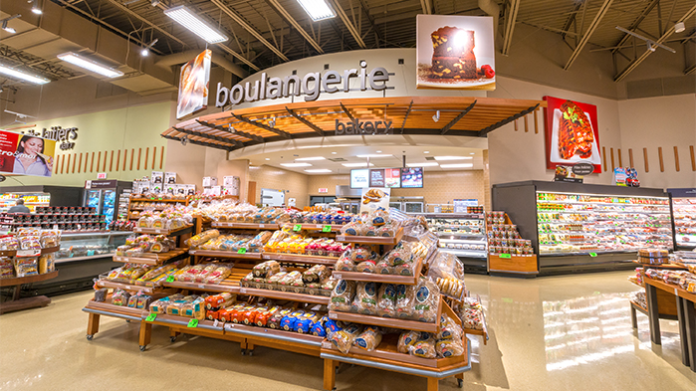
Today’s Retail Insider articles focus on critical moves in Canadian retail strategy and real estate, with Roots launching a strategic review amid market valuation concerns while Eddie Bauer markets 24 store leases in Canada during its liquidation. Meanwhile, Calgary Co-op recently opened a new urban Food Centre that integrates retail with residential space, illustrating evolving property uses. These developments highlight the ongoing reconfiguration of retail footprints and brand positioning in response to market and consumer shifts.