Specsavers Canada and Chris Hadfield announce continued partnership aiming to change Canadians’ lives through better sight (CNW Group/Specsavers Canada)
Specsavers Canada has announced the continuation of its partnership with Canadian astronaut Col. Chris Hadfield in a national campaign aimed at encouraging Canadians to prioritize their vision through regular, comprehensive eye exams.
The campaign highlights the importance of preventive eyecare, particularly through the use of optical coherence tomography (OCT), an advanced 3D eye health scan that can detect early signs of serious conditions such as diabetes, glaucoma and age-related macular degeneration.
Catherine Walsh
“We’re proud to continue our partnership with Col. Chris Hadfield, whose rare vantage point as an astronaut brings depth and authenticity to our eye health message,” said Catherine Walsh, vice-president of marketing and public relations at Specsavers Canada. “His trusted voice helps us connect with Canadians in a meaningful way, encouraging them to prioritize their vision through regular eye exams—before problems develop.”
The initiative blends Specsavers’ signature humour with Hadfield’s experience in space, emphasizing the strain eyes endure in both extraordinary and everyday environments, such as reading in dim lighting or prolonged screen time.
“I have been so lucky to see our whole, beautiful world from outer space. It reminds me that my eyes have gone through a lot, and how important sight is in daily life,” said Hadfield. “That’s why I get a detailed eye exam every year, including OCT. Everyone should – your vision is precious.”
Chris Hadfield
Specsavers Canada equips all its locations with OCT technology to ensure it is available as part of every comprehensive exam. The company stresses that many eye conditions progress without symptoms, making routine exams crucial for early detection and prevention of long-term vision problems.
Founded in the United Kingdom more than 40 years ago, Specsavers entered the Canadian market in 2021. The optometrist-owned company has since opened over 165 locations across British Columbia, Alberta, Ontario and Manitoba. It plans to open more than 100 additional stores by the end of 2025, expanding into five new provinces and one territory.
Export Navigator has launched a new program offering British Columbia exporters up to $5,000 in non-repayable matching funds to support compliance with the Canada–United States–Mexico Agreement (CUSMA).
The CUSMA Compliance Advisory Services Initiative (CCASI) reimburses 50 per cent of eligible costs for services such as trade consultation, legal advice, and customs support. Approved businesses can access the funds after completing work with qualified providers in Canada or the United States.
“As businesses help establish B.C. as Canada’s economic powerhouse, initiatives like Export Navigator provide essential support for CUSMA compliance so B.C. businesses can navigate the uncertainty of unjustified U.S. tariffs and grow. Congratulations to Export Navigator for launching this initiative which will provide great support to our exporters in becoming CUSMA compliant.”
The program is administered by Export Navigator through Community Futures BC, with funding from Pacific Economic Development Canada (PacifiCan). It runs until March 2026 or until funds are fully allocated.
“To qualify, businesses must be registered in British Columbia and have exported to the U.S. within the past 12 months,” Export Navigator said in a news release. “For businesses already seeking CUSMA compliance, eligible costs can occur on or after April 1, 2025.”
“We see some B.C. businesses struggle with rules-of-origin, documentation and supplier declarations,” said Kath Britton, director of Export Navigator. “CCASI lowers the cost barrier so businesses can get expert guidance, strengthen compliance and focus on growth.”
“When B.C. innovators and entrepreneurs have the tools they need to thrive, local economic growth and prosperity is unlocked,” said Robertson.
“By partnering with Export Navigator, PacifiCan is empowering B.C. businesses to tap into new markets, adapt to evolving global conditions, and contribute to one strong Canadian economy.”
Applications are reviewed on a first-come, first-served basis. Details on eligibility and covered costs are available at exportnavigator.ca/ccasi.
The runways, museum halls, and neighbourhood venues of Montreal are alive this week with creative energy, as Montreal Fashion Week opened its fifth edition on Tuesday, September 23. Running until September 30, 2025, the event has quickly become a fixture on the city’s cultural calendar, drawing designers, retailers, and the public together in celebration of Quebec’s style.
Presented by La Vie en Rose, in collaboration with Kronenbourg 1664 and supported by Clin d’œil, Fonds de solidarité FTQ, Parc Jean-Drapeau, and Olay, Montreal Fashion Week is more than a seasonal showcase. Organizers describe it as a platform designed to unite the industry under a shared vision of creativity, responsibility, and inclusion.
Image: Montreal Fashion Week
Since its relaunch in 2021 by the industry cluster mmode, Montreal Fashion Week has steadily expanded its reach. The fifth edition, now underway, is seen by organizers as proof of both resilience and ambition.
“On this 5th anniversary, we embody the vitality of our industry more than ever and reaffirm our commitment to building a fashion ecosystem that is responsible, inclusive, and sustainable in Quebec,” said Mathieu St-Arnaud Lavoie, executive director of mmode and Montreal Fashion Week.
Homegrown Talent at the Forefront
To mark this milestone year, the organizers have tapped Laurence Fortin-Côté as spokesperson. The Montreal-based entrepreneur and founder of Rholend embodies the spirit of this anniversary edition, bringing her background in fashion and social media to the role.
The schedule, now in motion, features six signature events. Among them is the long-awaited runway return of designer Eliza Faulkner, a show that has already generated attention. Maison Marie Saint Pierre, one of Quebec’s most celebrated fashion houses, is unveiling a new chapter in its story, while MRKNTN, a rising brand, is presenting a daring proposal that reflects the next generation.
Cultural programming is also underway. The McCord Stewart Museum has opened Afrique Mode, an exhibition tracing the connections between African heritage and contemporary fashion. Jewellery designer Anne-Marie Chagnon has launched a showcase of her latest creations, while “Lignes de Fuite,” an immersive runway event from three emerging designers, debuted with an unconventional presentation.
This year’s edition reflects the event’s growing scale. More than 100 organizations are participating, with nearly 100 activations spread across 14 neighbourhoods. From boutiques to museums, the city has taken on the spirit of Montreal Fashion Week.
Organizers expect 20,000 people to attend before the week concludes. Industry professionals, students, and fashion enthusiasts have already begun filling venues, confirming the week’s reputation as both an economic and cultural force.
Image: Montreal Fashion Week
Fashion as a Sustainable Practice
As in past years, sustainability remains at the center of the programming. Already, Core Fabrics and Collective Détour have hosted a Lunch and Learn session on responsible sourcing and production. Later this week, the ReMode festival, presented by Fashion Takes Action, will debut in Montreal, bringing conferences, a specialized market, and a large-scale clothing swap.
Workshops are also emphasizing circularity. On Thursday, designer Charles Hulin will lead participants in transforming upcycled fabrics into unique pieces, continuing the message that fashion can balance creativity with responsibility.
Laurence Fortin-Côté stressed that this focus is not a passing theme. “Behind every garment lies expertise, stories, and materials that deserve respect. As spokesperson for this anniversary edition, I am proud to see Montreal Fashion Week spotlight initiatives that prove fashion can be as inspiring as it is sustainable,” she said.
The anniversary edition also highlights the role of fashion as a form of social connection. Partnerships with Concertation MTL, Atelier PROMO 21, The Shoebox Project, and Le Chaînon thrift store are underway, reinforcing the idea that fashion can also be a vehicle for inclusion and solidarity.
Five Years of Building Momentum
Since its 2021 revival, Montreal Fashion Week has demonstrated adaptability and growth. Each year has seen new formats, broader participation, and a stronger emphasis on sustainability. The fifth edition, now in progress, underscores how far it has come.
Organizers say that the growth mirrors shifts in the global industry, where responsibility and inclusivity are as important as design. Yet Montreal’s approach remains rooted in its own identity, with an emphasis on collective energy and cultural connection.
The full schedule, running through September 30, is available at en.semainemodemtl.com. Organizers emphasize accessibility, inviting not only industry insiders but also the public to attend.
Turo has announced a new partnership with the AIR MILES® Reward Program™, allowing Canadian travellers to earn Miles when booking vehicles through the peer-to-peer car sharing platform.
The agreement enables AIR MILES collectors to earn one Mile for every $15 spent on Turo rentals after linking their accounts. New users will also receive 200 Bonus Miles upon completing their first trip.
“With AIR MILES’ nearly 10 million active collectors across the country, this partnership represents a powerful new way for Canadians to earn rewards while accessing the thousands of cars available to rent on Turo nationwide,” the company stated in a news release.
The collaboration aims to enhance travel rewards by giving customers access to Turo’s selection of vehicles, which includes hatchbacks, SUVs, electric vehicles and convertibles.
“We’re thrilled to deepen our partnership with Turo, a brand that continues to resonate strongly with our collectors and enrich our growing coalition,” said Jason Beales, chief strategy and commercial officer at AIR MILES. “With this expanded collaboration, collectors can now earn Miles not just on their first Turo booking, but on every booking moving forward – driving more value and sustained loyalty.”
Turo differentiates itself from traditional rental services by allowing users to select specific makes and models. The platform also offers flexible delivery to airports, hotels or doorsteps, and add-ons such as camping gear or car seats.
Bassem El-Rahimy
“As costs continue to rise, Canadians are looking for smarter, more cost-effective ways to travel,” said Bassem El-Rahimy, vice-president of Turo Canada. “Starting today, Turo trips become even more rewarding. Our partnership with AIR MILES makes it easier for travellers to enjoy the perfect car for their journey while earning Miles they can later redeem for merchandise, travel, events and attractions, or instantly on everyday essentials, in-store or online, through AIR MILES® Cash.”
Turo recently expanded to Yukon and now operates in most provinces, including British Columbia, Alberta, Ontario, Quebec, Nova Scotia, New Brunswick, Newfoundland and Labrador, and Prince Edward Island.
Whether we like it or not, TikTok has become one of the most powerful engines of consumer influence, especially in the food sector. What used to be shaped by advertising budgets and lifestyle magazines is now often determined by a few seconds of user-generated video. Even mainstream news outlets increasingly rely on TikTok clips for entertainment value, giving them additional visibility and reach.
The scale is extraordinary. Over the past few years, we have seen countless foods enjoy their “TikTok moment.” Recipes and products like baked feta pasta, the Grimace Shake, Chipotle menu hacks, pink sauce, cucumber water, and matcha lattes have all dominated online conversation at different points. Each of these moments reached hundreds of millions—sometimes billions—of viewers. Most of the trends were short-lived, but they captured the imagination of consumers and, crucially, influenced what they bought.
Perhaps the most iconic of all TikTok food moments happened five years ago this week, when Nathan Apodaca uploaded a simple video of himself skateboarding down a highway with a bottle of Ocean Spray cranberry juice in hand, singing “Dreams” by Fleetwood Mac. The clip was viewed more than two billion times, inspiring billions of additional recreations. Context mattered. The video was released after months of lockdowns around the world. People saw a random man, without a mask or even a helmet, gliding freely down the road. It was simple, soothing, and liberating. Even Mick Fleetwood recreated the video, giving it an intergenerational stamp of approval.
For Ocean Spray, the impact was priceless. Although the company never disclosed the sales effect, industry estimates suggest a significant boost. Ocean Spray gave Apodaca a new truck and a lifetime supply of juice, which was a modest investment compared to the marketing value generated. In fact, that single TikTok may have been one of the most cost-effective advertising campaigns in the company’s history.
From an economist’s perspective, these episodes reflect the changing dynamics of food marketing. Commodity boards and food companies have long invested heavily to capture consumer attention. TikTok, by contrast, delivers instant, global visibility without traditional costs. The challenge lies in the unpredictability of virality. While every food company would love to engineer a TikTok moment, most cannot. Trends arrive without warning, capture attention for a brief window, and then vanish, leaving companies scrambling to keep up.
The generational divide around TikTok is also worth noting. Older consumers often dismiss the platform as frivolous or dangerous, especially given ongoing debates over data security and privacy. Yet younger consumers treat it as both entertainment and education. They discover recipes, explore new food products, and even take nutrition advice from TikTok. In other words, it is shaping not just what people buy but how they learn about food.
For the food sector, the lesson is unavoidable. TikTok is no longer a sideshow. It is part of the demand signal, one that can occasionally redirect entire categories of consumer spending. Companies that understand this dynamic, and that prepare for the volatility and opportunity that come with it, will be far better positioned to thrive in tomorrow’s food economy.
A few quarters ago, I was consulting for a legal services firm that couldn’t figure out why inbound lead volume was solid, but new consultations were stalling.
The culprit wasn’t the marketing or the pitch. It was the missed calls. Their in-house team was swamped, and their outsourced receptionist service only covered business hours. Voicemails went unanswered until the next morning, if at all. By then, prospects had moved on.
That kind of leakage isn’t just frustrating, it’s super expensive. Especially when you’re in a market where fast response is the difference between earning trust and losing it.
That’s why I started digging deep into AI answering services. Not glorified phone trees, but tools that can listen, qualify, schedule, and sync with your stack. The goal isn’t to replace your front desk, it’s to make sure every call gets handled like it matters. Because it does.
I’ve got detailed reviews on each after this section. But before that..
Choosing the Best AI Call Handling Service for Your Team
1. Know If You Need Coverage or Conversion
Some tools are great at answering every call. Others are built to capture leads that can close. Before you compare features, get clear on your goal. Are you trying to reduce missed calls or drive revenue from them?
2. Evaluate Voice Quality, Not Just Voice Presence
A bad AI voice does more harm than good. Callers can spot robotic phrasing or strange replies in seconds. Try to find a tool that sounds like real human to YOU and give it a real test run. What happens if you interrupt it? Run it through like a real call and do it yourself.
You only get one chance to sound competent, make sure your AI doesn’t undermine that first impression.
3. How Does It Fit in Your Business?
If your AI receptionist doesn’t work with your existing tools (i.e. CRM or calendar) in terms of integrations, you’ll just end up with more admin work. If your business runs on Pipedrive, the tool better work with that.
4. Make Sure There’s a Fallback Plan
Even the best AI gets things wrong. For complex calls or high-stakes conversations, hybrid options or escalation protocols can save you from client issues.
Whether it’s a live agent handoff or a priority alert, there needs to be a plan when AI reaches its limit. A plan B stops you from losing clients.
Why Rosie AI is the best AI answering service: Rosie AI transforms AI phone answering into a natural, branded customer experience. Its voice engine delivers the pacing, tone, and responsiveness of a trained receptionist, not a bot reading a script.
Rosie AI isn’t just reactive; it engages. Calls are triaged in real time, appointments get booked without manual intervention, and every conversation is logged into tools like HubSpot, Salesforce, or Google Calendar with zero friction.
Teams can customize logic based on caller type, urgency, or campaign source. Turning what used to be missed calls into a qualified pipeline.
It’s especially well-suited for small to midsize businesses that run lean and need responsiveness without complexity. If your team needs a front-desk presence without staffing one, Rosie AI delivers that gapless coverage without adding overhead.
2. Conversica: Best for Automated Appointment Booking
Founded: 2007
Headquarters: San Mateo, CA
Conversica’s AI assistant was built to turn incoming leads into actual booked meetings with no involvement from your team. It handles voice, email, as well as SMS. It’ll basically work with their availability until a meeting is booked.
Originally built for sales teams, Conversica has expanded into a broader solution for any business where speed-to-lead makes a difference. Its AI assistants don’t just pick up the phone.
PlayAI gives businesses full control over how their brand sounds on the phone. With realistic voice cloning and support for over 30 languages, it’s ideal for companies that need to sound distinct, multilingual, or deeply aligned with their customer tone.
Unlike turnkey reception tools, PlayAI is built for developers and technical teams who want to embed custom voice agents into broader workflows. Whether you’re building a multilingual front desk, a branded concierge, or a niche virtual assistant, PlayAI offers the tooling to design voice logic, control behavior, and deploy across platforms.
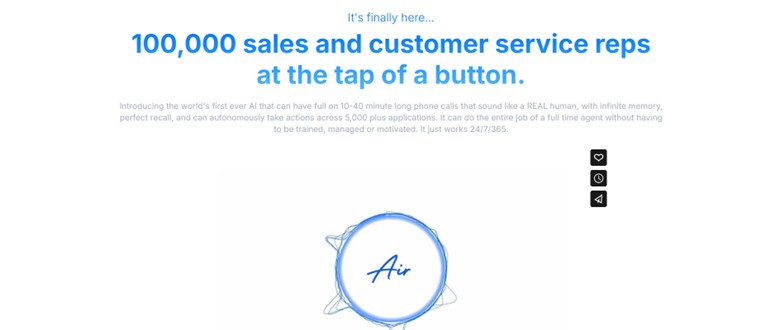
Air AI was meant to handle long, complex calls where a lot of back and forth. This means handling interruptions is important as well as integrations with things like your calendar.
This makes Air AI a great fit for industries like real estate, healthcare, or various services. If closing a deal takes more than just picking up the phone, it’ll shine. It works well with complex scripts, can do follow-ups, and update your CRM automatically.
If your business relies on high-quality lead handling but doesn’t want to staff a call center, Air AI offers a scalable, AI-native solution that can carry the conversation all the way to conversion.
Simple Phones lets you build and launch a trained voice agent in minutes, no dev team required. Using plain-language prompts, you can customize how the AI answers, what it says, and how it responds based on your specific business needs.
It’s particularly useful for startups, solopreneurs, and agencies managing multiple brands. You can spin up dedicated agents for different phone lines, each with their own style, logic, and CRM integrations. It handles FAQs, books appointments, and routes messages with minimal setup.
For businesses that need to get live with AI answering quickly (without sacrificing branding or functionality), Simple Phones delivers simplicity without limitation.
Numa is built for service-based businesses that juggle voice calls, texts, and web inquiries, often all at once. When a call goes unanswered, Numa captures the voicemail and automatically follows up via SMS, turning missed calls into active conversations.
It’s ideal for clinics, repair shops, salons, and retail locations where customers expect responsiveness but teams can’t always answer live. Numa connects voice and messaging in a single thread, integrates with web chat, and provides a simple dashboard for managing customer communications across channels.
For local businesses that want to stay responsive without staffing up, Numa offers an easy bridge between phone calls and real-time messaging.
7. Levity: Best for Intelligent Workflow Automation
Founded: 2019
Headquarters: Berlin, Germany
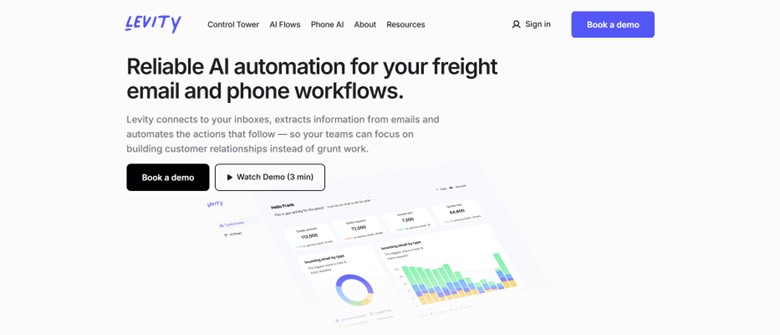
Levity doesn’t answer calls; it turns voice and message data into action. It uses AI models trained on your historical inputs to classify, tag, and route inquiries based on urgency, lead quality, or topic.
For teams with complex workflows, like distinguishing between sales, support, and billing calls, Levity acts as the backend logic that keeps operations moving. It integrates with Slack, CRMs, helpdesks, and email, triggering follow-ups or escalations automatically.
If you already have a basic answering system in place and need something smarter behind the scenes, Levity gives you the automation layer that connects conversations to outcomes.
Make the First Impression That Closes the Deal
Calls aren’t just a communication channel. They’re often your first shot at trust. Whether it’s a new lead, a returning customer, or a high-stakes inquiry, how you handle those first few seconds can define the outcome.
The right AI answering service doesn’t just stop you from missing calls, it makes or breaks you in front of your client.
For fast-moving teams, tools like Rosie AI offer seamless intake and booking without the overhead.
For technical teams, PlayAI and Levity offer deep customization and logic. And if you need end-to-end conversion or hybrid workflows, platforms like Air AI and Conversica fill in the gaps.
Whatever your size or model, this much is true, every call is a chance to move the business forward. With the right AI answering setup in place, you’re not just catching calls, you’re gaining momentum.
Consumer loyalty isn’t as easy to maintain as it was before, with social algorithms dictating visibility, and most startups are still chasing clicks. But Herd, a fast-growing collective of consumer brands, is building something far more durable: community-driven commerce.
With over $10 million in revenue in its first year (and zero outside funding), Herd is a rare example of what happens when strategic innovation meets emotional intelligence. Ajar Rajbhandary, a first-generation Nepali entrepreneur and the CEO of Herd, has a vision of the future that isn’t just about selling products. It’s about belonging.
The founder behind the movement
Raibhandry’s story is one of bootstrapped brilliance. While other e-commerce startups burn through investor capital in pursuit of scale, he’s focused on building sustainable systems powered by proprietary data and lean operations. In just 12 months, Herd has launched multiple breakout brands across consumer goods and tech, gaining shelf space on Amazon, Walmart, and Target.
But this isn’t just about rapid expansion. It’s about transforming the way brands earn trust.
“The brands that win are the ones that make people feel like they’re part of something bigger,” says Rajbhandary. “That’s what Herd is about.”
Why Herd isn’t just another DTC company
Despite its e-commerce DNA, Herd avoids the direct-to-consumer clichés. The company isn’t obsessing over vanity metrics or optimizing every pixel of a funnel. Instead, Herd is betting on storytelling, authenticity, and tech-enabled brand incubation to drive lasting value.
From functional wellness products to smart tech accessories, each brand under the Herd umbrella is treated like a mini-community with its own culture and voice. What ties them together is a shared infrastructure: real-time consumer insights, fast product iteration, and a loyal audience base that doesn’t just buy — they belong.
Herd uses AI tools and proprietary data models to scan social signals, market gaps, and behavioral trends. Turning ideas into products that don’t just sell but spread. That’s a sharp contrast to the saturated, paid advertising many startups rely on.
The shift from transactional to experiential retail
Consumer behavior is changing. Fast.
People no longer want to be sold to. They want to be seen, understood, and included. Rajbhandary recognized early on that retail is undergoing a seismic shift from transactional to experiential. That means customer experience doesn’t stop at checkout but begins there.
Herd taps into this by creating digital and social ecosystems around each product. Community is not an afterthought; it’s the strategy. Whether it’s exclusive Facebook groups, behind-the-scenes content, or first-access product drops, Herd builds consumer engagement into the business model.
“People want brands that reflect their values and invite them to participate,” says Rajbhandary. “We think of Herd as a cultural brand incubator, not just a product company.”
Why retail collectives work
Herd is part of a rising trend of retail collectives that emphasize cooperation over competition. By bundling multiple micro-brands under one parent company, Herd leverages economies of scale without sacrificing the individual identity of each product line.
The psychology of this model taps into a more profound consumer need: a sense of belonging. Today’s customers want more than functionality; they want to align with the why behind what they buy.
Herd’s collective structure allows each brand to speak directly to a niche audience, while the parent company provides operational support, data insights, and creative direction. It’s not unlike how successful music labels operate — different artists with different voices, unified by a shared vision and infrastructure.
What’s next for Herd?
With momentum on its side and no investors to answer to, Herd has the freedom to move fast and move with purpose. Plans are already underway to expand into physical retail, not by chasing shelf space for exposure, but by curating spaces where community and commerce meet.
“The next step isn’t just about launching new products,” Rajbhandary. “It’s about creating places (digital and physical) where people want to gather.”
That might seem like immersive pop-ups, strategic retail partnerships, or live brand experiences, but one thing is clear: Herd is not slowing down. And with each new launch, it’s rewriting the rules of modern brand building.
Herd’s approach to growth: Rooted in real life
What makes Herd especially compelling in today’s startup landscape is that it was built with no safety net. No VC backing. No room for waste. Every move had to count.
That pressure has shaped a lean, adaptive company culture where every decision is grounded in real-world consumer behavior, rather than relying solely on spreadsheets or forecasts. It’s a sharp contrast to the bloated, brand-first, product-second approach that’s tanked so many millennial startups.
By focusing on community-first growth, Rajbhandary is showing what the future of retail could look like: personal, participatory, and proudly unconventional.
Herd isn’t chasing unicorn status. It’s building something deeper. In an era where trust is scarce and attention is expensive, brands that foster authentic connection are the ones that last.
By rethinking how products are launched, communities are nurtured, and stories are told, Herd is proving that retail isn’t dead; it’s just evolving. And if Rajbhandary has anything to say about it, it’s evolving into something much more human.
Retailers intensify their initiatives swiftly as the holiday season approaches, rapidly enhancing their online presence through energetic digital marketing strategies. A noticeable increase in expenditure on Instagram likes has emerged recently among marketers eager for online recognition and popularity.
Retailers understand that customers often trust brands that seem highly popular while rapidly browsing numerous seemingly festive offers. Likes act as immediate signals of credibility that rapidly affect the subconscious buying choices of consumers in various online shopping settings. Retailers leverage these behavioral trends by significantly investing in acquiring likes to enhance the initial impressions created by their daily social media posts.
Gain Visibility
The algorithm of Instagram strongly emphasizes user interaction with posts and promotes content that generates significant engagement and extensive comment discussions. Retailers intentionally utilize Stormlikes to enhance their relatively hidden online visibility.
Being visible to a large audience can significantly influence the difference between exceeding sales goals and failing badly amidst the holiday rush. Viral holiday campaigns result from ripple effects that naturally enhance awareness and drive sales via brand discovery.
• Instagram favors posts that receive quick and immediate interaction.
• Increased visibility enhances opportunities for organic growth.
• Achieving viral reach is simpler when starting with a boost from likes.
Creating Festive Urgency through Popularity Metrics
The psychology of urgency significantly boosts sales during holiday periods and has become especially effective as a marketing strategy today. Retailers capitalize on it by displaying trending products with unusually high like counts on multiple social media platforms every day.
Consumers instinctively view posts with countless likes as an implicit indication that others are buying, and they might miss out. Likes can quickly distort the perception of scarcity in the online world. Retailers familiar with this tactic are utilizing it extensively in holiday promotions to significantly enhance conversion rates.
• High-like posts amplify FOMO.
• The perception of scarcity accelerates conversions.
• Customers tend to make impulse purchases of holiday products.
• Emotional triggers are intense during festive shopping.
Boosting Credibility for Sponsored Collaborations
Retailers frequently partner with social media influencers significantly during holidays and enhance brand messaging across multiple channels. A sponsored post receiving few likes might appear quite ineffective or dubious, even with the influencer’s large audience.
Brands often spend significant amounts to boost like counts on collaborative posts, creating an illusion of enormous success. It makes the partnership appear very genuine and persuades users that the advertised product has truly achieved significant popularity. This approach is crucial during the gift shopping period when shoppers are inundated daily with an overwhelming number of unnecessary choices.
• A rise in likes enhances the perceived effectiveness of influencer campaigns.
• Minimal engagement can harm brand credibility.
• The popularity of posts increases the trustworthiness of influencers.
• Engagements bolster the return on investment of sponsored partnerships.
Enhancing Ad Retargeting Performance with Engaged Posts
Retailers are not only using online platforms for organic traffic; they are also significantly enhancing paid advertising campaigns with them today. Posts with a high number of likes tend to excel in retargeting strategies primarily due to built-in social proof.
Likes from Stormlikes significantly enhance ad optimization by improving the relevance score on Instagram’s advertising platform quite effectively today. Purchasing likes turns into a clever financial strategy during prime advertising times around the Christmas and New Year’s celebrations.
• Ads with likes achieve better results in retargeting efforts.
• Increased likes enhance ad relevance score, reducing CPC.
• Retailers achieve more effective ad spending with pre-approved posts.
Influencing Holiday Gifting Decisions with Aesthetic and Popular Content
Retailers depend significantly on visually engaging content on Instagram to attract customers during holiday periods using image-focused marketing tactics. Visually striking uploads alone aren’t sufficient anymore; users now desire graphics that represent viral status instantly. Likes act as a distinctive measure in today’s context.
Currently popular gifts shine vividly on their displays alongside styles quickly gaining popularity and purchases that others plan to make shortly. Retailers now rely significantly on likes to enhance product visibility through various rather obscure discovery routes.
• Enjoys assisting in selecting visually appealing gift suggestions.
• Popular products are viewed by users as superior choices for gifts.
• Likes enhance visibility in gift search tags.
• Retailers affect purchasing intent via visual interaction.
Supporting Flash Sales and Limited-Time Offers
Flash sales represent a significant aspect of marketing tactics used actively during holidays and various festive periods across the country. Retailers launch temporary promotions on Black Friday and Christmas Eve, requiring quick responses from deal-seeking shoppers promptly.
Retailers generously invest in acquiring likes to guarantee that posts rapidly gain popularity and connect with countless users within just hours. The quicker a flash sale post garners likes, the more rapidly it spreads aggressively through user networks via Instagram’s recommendation system. Retailers consider Instagram likes essential during the holiday surge, leading to significant investments.
• To succeed, flash sales require instant visibility.
• Likes offer immediate engagement for posts with a limited duration.
• Instagram emphasizes content that engages quickly.
• Preferences broaden influence during essential sales periods.
• Investing in likes enhances return on investment for quick campaigns.
Navigating a Highly Competitive Holiday Marketing Landscape
Digital marketplaces become extremely competitive during the holiday season. Brands of all sizes are rapidly creating content ads and marketing campaigns for a significant portion of holiday sales.
Retailers distinctly shine in a crowd of comparable promotions by quickly attracting an extraordinary number of likes online. Retailers aware of these nuances are skillfully using paid likes to gain an advantage and excel in specific product categories amid the shopping rush.
• Retailers leverage likes to surpass competitors in comparable markets.
• Preference in decision-making is influenced by popularity.
Retailers are thoughtfully investing in Instagram likes, focusing on boosting engagement and strategically driving conversions today. Each like can widely contribute and attract attention in crowded feeds, while fostering lasting trust with customers and enhancing advertising performance. The holiday season represents an essential sales opportunity, and companies are desperately competing for visibility, trust, and recall throughout the entire year.
Social proof continues to dominate consumer behavior, and investing in likes remains incredibly relevant and almost vitally essential in today’s landscape. Retailers eager to leverage every click and sale this holiday season see likes as valuable marketing tools rather than mere vanity metrics.
When clean lines, crystal-clear windows, and the gleam of freshly washed siding make as much of a statement as the architecture itself, you know you’ve hit on something more than just sprucing up. In Kelowna, Live Next Level is setting a new benchmark in residential and commercial curb-appeal services — and it’s not just about appearances.
A Clean Vision
Founded to bring simplicity, quality, and professionalism to exterior home care, Live Next Level offers a full suite of services: window cleaning, gutter cleaning, house washing, pressure washing, and moss removal. What sets them apart isn’t just what they do, but how they do it. Every job is backed by a promise of reliability, friendly service, and visible results.
Operating throughout Kelowna and extending into Lake Country, the company supports both homeowners and commercial or strata clients who want their properties looking their best year-round.
What Makes Live Next Level Stand Out
Customer-centric Approach From fast, accurate quoting to responsive scheduling, the process is designed to be simple and stress-free. Their tagline, “Simple, easy, convenient,” isn’t just marketing — it’s the backbone of how they work.
Quality & Trust With liability and workers’ compensation coverage in place, and a team that uses professional-grade tools and products, customers can expect safe, consistent, and polished results every time.
Reputation & Word of Mouth With over 470 verified reviews, many highlight the team’s punctuality, efficiency, and fair pricing. As one client shared: “What a pleasure to deal with. Fair price, on time, fast and efficient.”
Lifestyle Fit Life in the Okanagan comes with its own maintenance challenges — moss on roofs, clogged gutters, or dusty siding that makes cleaning a year-round necessity. Live Next Level’s services free up homeowners to spend their weekends enjoying the lake, vineyards, or trails, rather than climbing ladders.
The Local Market
The Okanagan’s growing real estate and lifestyle-driven community means more demand for property upkeep. Beyond aesthetics, these services play an important role in protecting property value, preventing long-term damage, and ensuring commercial or strata buildings maintain a professional image.
Looking Ahead
Seasonal spikes in demand will always be part of the industry, but Live Next Level’s strong reputation and comprehensive service menu put them in a good position to expand and grow. As Kelowna continues to develop and attract newcomers, reliable businesses like Live Next Level help keep the city’s homes and commercial spaces looking every bit as polished as the scenery around them.
Getting started with Live Next Level is simple, easy, and convenient — just like their service promise. Whether you’re a homeowner looking to brighten your windows, a strata manager needing reliable upkeep, or a business owner wanting to make a professional impression, the team is ready to help.
📞 Call today: (778) 767-4555 📍 Head Office: 4-3306 Appaloosa Rd., Kelowna, BC
For a closer look at the full range of services, seasonal specials, and customer reviews, head over to their website:Live Next Level
Their friendly staff can provide fast, accurate quotes and get you scheduled quickly, so your property can look its absolute best without the hassle.
Retail Insider is streamlining its Canadian retail news from around the web to include a handful of top news stories that can be viewed quickly during the day. Here are the top stories from the past 24 hours.