Craig Patterson and Ravi Rangan, Chief Technology Officer at Centric Software, discuss how the company’s end-to-end product lifecycle management (PLM) solutions are revolutionizing fast-moving consumer goods, fashion, and adjacent industries. Rangan details how Centric evolved from its roots in apparel PLM to now supporting footwear, consumer electronics, and even formulated products like food and cosmetics. By unifying planning, development, sourcing, and in-season optimization, Centric enables brands to streamline processes, improve cohesion, and close feedback loops that have traditionally been siloed.
The conversation explores Centric Software’s innovative use of artificial intelligence, from early expert systems managing complex material compatibilities to predictive analytics forecasting assortment demands and the latest generative AI applications. Rangan shares how Centric’s generative AI tools assist designers with rapid ideation and virtual sampling, dramatically reducing time-to-market by integrating creative inspiration with companies’ own qualified materials and business rules. Grounding AI outputs in enterprise data ensures that suggestions are practical, compliant, and tailored to each customer’s established processes.
Patterson and Rangan highlight shifting industry attitudes toward AI, especially among Canadian retailers, and discuss the critical role of keeping humans in the loop for validation as adoption grows. Looking ahead, Ravi reveals Centric’s excitement about expanding into new categories like consumer electronics and harnessing AI-driven insights to empower retailers with comprehensive, real-time product intelligence. Together, they emphasize the transformative potential of connected PLM solutions to improve agility, design accuracy, and competitiveness in a rapidly evolving retail landscape.
Featured during this interview:
Ravi Rangan, Chief Technology Officer at Centric Software
If you prefer to listen to the audio version, it is available below:
The Interview Series audio podcasts by Retail Insider Canada are available on Apple Podcasts, Stitcher, TuneIn, Google Play, or through our dedicated RSS feed for Overcast and other podcast players. Also check out our The Weekly audio podcast where Craig and Lee discuss popular content published on Retail Insider which is part of the The Retail Insider Podcast Network.
Subscribe, Rate, and Review our Retail Insider Podcast!
Drop us a line at Craig@Retail-Insider.com. You can also rate us in Apple Podcasts or recommend us in Overcast to help more people discover the show!
Background Music Credit: Hard Boiled Kevin MacLeod (incompetech.com). Licensed under Creative Commons: By Attribution 3.0 License. http://creativecommons.org/licenses/by/3.0/
Ground coffee prices in Canada have surged by 19% since the start of 2025, according to Statistics Canada—making it one of the fastest-rising food items on grocery store shelves this year. Many consumers may attribute the spike to global market volatility, especially after coffee futures soared to a record high of over USD $4.40 per pound in February. But that explanation no longer holds. Futures have since dropped by more than 30%, yet retail prices remain stubbornly high. So, what’s driving this divergence?
The answer lies, in part, in trade policy.
Since March 3, Canadian importers have been paying an additional 25% tariff on imported coffee. This counter-tariff, introduced as part of Ottawa’s retaliatory measures during a trade dispute, directly affects a product Canada doesn’t even grow. Unlike dairy or poultry, coffee has no domestic farming sector to protect. These tariffs are not shielding Canadian farmers—they are punishing Canadian consumers and businesses.
To grasp the scale of this impact, consider the size of the industry. According to Introspective Market Research, retail coffee sales in Canada total over CAD $27 billion annually and are projected to grow steadily over the next decade. Meanwhile, coffee shops and quick-service restaurants (QSRs)—from Tim Hortons to independent cafés—generate an additional CAD $6.4 billion per year. Tim Hortons alone sells over 5 million cups of coffee per day. This is not a fringe sector; it’s a critical part of both our economy and our culture.
Ironically, the United States—our supposed trade adversary in this case—doesn’t grow coffee either. Yet both countries are now entangled in a tariff tug-of-war that serves no practical purpose. The same logic applies to tea, which is also subject to retaliatory measures.
These tariffs were introduced under the Trudeau government in a broader geopolitical strategy that often felt more performative than pragmatic. Ottawa’s elbows-up approach to trade—seemingly crafted on a whiteboard without regard for economic fallout—may have resonated politically, but it ignored basic economic principles. Consumers were never part of the equation.
Prime Minister Mark Carney appears to be taking a more measured approach. Tariffs on U.S. alcohol and citrus products remain, but those can be sourced from other markets with relatively little disruption. Coffee and tea, however, are another matter entirely. There are no alternative domestic sources. The cost of these tariffs is being passed directly to roasters, grocers, restaurants—and ultimately, to the consumer.
Moreover, the volatility of American trade policy under Donald Trump continues to inject uncertainty into food markets. Tariffs come and go with the political winds, forcing companies to engage in “buffer pricing”—a form of risk management where businesses price in uncertainty to protect their margins. It’s effectively a tax on unpredictability, and it’s now embedded in the price Canadians pay at the till.
And while consumers might not feel the same pinch at their local café—where coffee is a smaller fraction of the total cost of a cup—the grocery aisle tells a different story. That’s where the full weight of these policies lands.
Whether a new trade agreement can be reached by the July 21 deadline remains uncertain. But what should be obvious is this: both Canada and the U.S. should leave the agri-food sector—especially essential imports like coffee and tea—out of their geopolitical skirmishes.
Canada has a vibrant coffee ecosystem, built on roasting, innovation, and consumer culture—not cultivation. There is no economic rationale for taxing it. Canadians shouldn’t be paying more for their morning brew just to send a symbolic message to Washington.
It’s time Ottawa led by example and scrapped these pointless tariffs.
New RONA+ store at Emerald Hills in Sherwood Park, Alberta. Photo: Christa Patterson
Home improvement retailer RONA published on Thursday its 2024 Overview of Sustainable Development Activities highlighting the organization’s environmental and social initiatives and the progress made towards achieving its sustainability goals.
J.P. Towner
“Every day, I see our teams working hard to reduce our environmental footprint, support every person’s well-being, and contribute to the communities we serve. The 2024 overview is a testimony to our remarkable accomplishments and progress. I’m proud of our shared commitment to being a responsible corporate citizen, and of the essential role each individual plays in reaching our sustainability goals and continuously improving our practices,” said J.P. Towner, President and Chief Executive Officer at RONA inc.
RONA said some of the highlights of the 2024 overview include:
1,612 ENERGY STAR certified products available in store and online
1,775 tonnes of paint and other products collected in store
150 non-profit organizations supported by the Home Sweet Home campaign
In 2024, RONA said it also received many awards and recognitions to highlight its sustainable development initiatives and accomplishments:
GoRecycle’s Coup de cœur award for RONA’s contribution to their mission of ensuring the proper recovery of household refrigeration appliances
Ranking among Canada’s Greenest Employers for a fifth consecutive year
The “Leader in Sustainability” award, presented by Call2Recycle Canada, in recognition of RONA’s exceptional accomplishments in battery recycling in 2024
Great Place to Work certification
Certification of recognition (COR) issued by the Workers Compensation Board (WCB) and the Alberta Association for Safety Partnerships (AASP) for the company’s health and safety strategy
To learn more about RONA’s initiatives and view its 2024 Overview of Sustainable Development Activities, click HERE.
NEW OPENING: PIANO PIANO Expands West with First-Ever Hamilton Location (CNW Group/PIANO PIANO the restaurant)
After a series of successful openings across the Greater Toronto Area, PIANO PIANO has announced its second expansion beyond Toronto, with a brand-new location on King Street in downtown Hamilton.
The new restaurant brings the signature style, spirit, and menu that have made the brand a household name in Ontario dining — and continues a journey that’s as personal as it is delicious, said the company.
Co-founders Victor Barry and Brendan Piunno both grew up in the Niagara region. With each westward expansion — from Oakville to now Hamilton — they’re slowly making their way back toward home, bringing their boldest, most delicious work along for the ride, said the brand in a news release.
“We’re not just building a brand — we’re paving a road back home,” says Barry. “And we want to bring tasty, f*#kin’ delicious food to every corner of Ontario while we’re at it. Hamilton’s creative energy is electric, and we’re excited to become part of that.”
This seventh location represents a major milestone for the brand and reflects its growing presence across Southern Ontario. Just like its Toronto & Oakville counterparts, the Hamilton outpost is designed to feel magical, fun, and a little unexpected, said the company.
Designed by the award-winning interior design firm Future Studio, with designer Ali McQuaid Mitchell and the restaurant’s Creative Director Nikki Leigh McKean at the helm, the space brings together vintage glamour, playful Italian charm, and curated details that make every visit feel like a special occasion, it added.
“Guests can expect a menu full of house-made pastas and sourdough pizzas — the kind of comforting, craveable dishes that PIANO PIANO is known for — alongside Italian specialties like Ribeye, Rack of Lamb, Octopus, and truffle-topped everything. It’s food that is generous and joyful, with big flavours and real value, whether you’re popping in for a glass of wine and a quick bite or settling in for the full spread,” the brand said.
“With its signature hospitality, over-the-top design, and a menu that balances comfort and decadence, PIANO PIANO Hamilton is poised to become a go-to spot for locals and visitors alike.”
PIANO PIANO Hamilton is located at 62 King Street East.
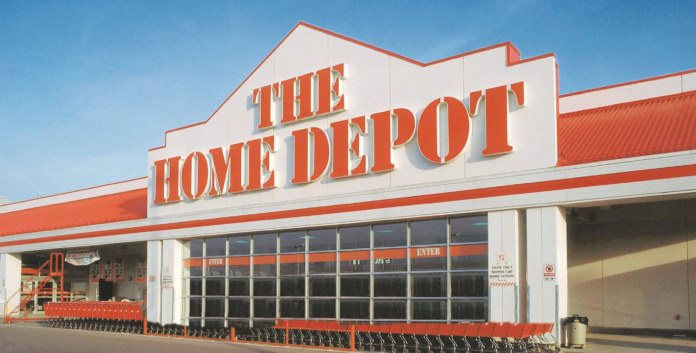
Global commercial real estate advisor, Avison Young, has announced the successful purchase of 8.4 acres in Fort McMurray’s Quarry Ridge – earmarked as the new site of Home Depot and its 183rd store in Canada.
Located at the southwest corner of Highway 63 and MacKenzie Boulevard, the 80,000-square-foot building is anticipated to open in Q2/Q3 2026 and will employ approximately 150 associates, said the real estate firm.
Avison Young’s Darren Snider and Ben Snider were the exclusive advisors and agents for the retailer, which purchased from Camgill Developments in May of 2025 for an undisclosed amount.
Ben Snider
“Avison Young could not be more thrilled about The Home Depot selecting Quarry Ridge – and, even more so, for the people of Fort McMurray,” said Ben Snider, Senior Associate, Avison Young.
“This is a very resilient community, committed to rebuilding and growth, and what better place to help and support you in your rebuilding and growth efforts than The Home Depot. I’ve heard so many stories from residents about how the closest Home Depot store is a four-hour drive away so having one so close to home will provide a level of unmatched service and convenience.”
Securing this site is historic in nature, given Avison Young’s existing business relationship as the retailer’s preferred broker for retail locations in Alberta. Ben was brought onto the Avison Young team to investigate the Fort McMurray market for the home improvement chain, culminating in a request for Ben and Darren to provide real estate options. This included several sites, and the retailer landed on Quarry Ridge, said the company.
BeaverTails at Canada's Wonderland (Image: BeaverTails)
BeaverTails is doubling down on its destination-first strategy, with major renovations across Canada and a continued eye on the U.S. market—even as global tensions add complexity to expansion timelines.
“Our community stores, which were more relevant during COVID—those in strip malls or local neighbourhoods—don’t really represent what we are,” said Di Ioia. “We belong in big, bold, beautiful places like Banff, Jasper, Waterton. West Edmonton Mall is still a great example. 17th Avenue (in Calgary) is a decent one too—it’s a main street, but still carries that destination vibe.”
The company has divided its model into two formats: Express and Full Shops. “We now separate them into Express—like Calaway Park (in Calgary) and food trucks—and Full Shops. Those 50 full stores deliver more magic and more brand,” he said. “We call our Express stores ‘embassies.’ So, if you’re at a Ribfest, the Embassy gets you hooked on a BeaverTail. But visiting the Italian Embassy isn’t like visiting Italy, right? To really experience it, you’ve got to go to one of our full stores. That’s where we deliver the full magic.”
The focus now, Di Ioia explains, is on finding more “spectacular places” for flagship locations. “It’s tough—we’ve already done most of the obvious ones. Not much left,” he said.
Recent renovations show the scale of BeaverTails’ commitment. “Canmore went through a big renovation. It was already nice, but now it’s even more beautiful. That was about a year ago,” he said. “Banff is being renovated—both stores. They’re already high-performing, but they’re going to look beautiful by fall. Blue Mountain was just renovated. The big stores are getting the attention they deserve. The brand is 47 years old. Blue Mountain’s been there for 30 or 35 years.”
And that investment is no small number. “We just renovated both flagship stores in Old Montreal. They’re 35—maybe coming up on 40 years old. They got a combined million dollars worth of renovations. For a snack concept, that’s big money.”
On the growth front, Di Ioia says the U.S. remains a priority. “The U.S. is still on the roadmap. The spike in tariffs and the political back-and-forth has slowed things a bit. We’re being cautious, maybe moving more slowly, but it’s still very much in the plan,” he said. “The American Rockies is a priority for us. We’re talking with real estate agents and have been for six months. I expect we’ll have something signed in 2026—if not opened.”
Back at home, the Express format is finding success in the right environments. “We’re still looking at the right Express opportunities. It took us years to get into Calaway. They just weren’t ready to brand. The Calgary Zoo—we’ve talked to them. Good people. Our contact there retired, but we’re in with the next generation now. Eventually, we’ll be ready for the Zoo.”
“Express stores work well for those leisure environments because we have the perfect product for them. But the full store is where you get everything: the ice cream, the savoury items, the poutine, the BeaverDog, merchandise, beverages—it’s an experience. A destination.”
Photo: BeaverTails
New openings continue to roll out this year. “This year we’ve done a couple of mobiles. The Windsor mobile just opened. Amherstburg—across from Detroit—that just opened too. Amherstburg is an old sports town. I think it was one of the battles of 1812. Beautiful new store, new format. That was about six months ago.”
Still, some coveted locations remain elusive.
“We’d love to be in places like Granville Island and the Distillery District, but they don’t take franchises,” he said. “Or at least, they don’t take national chains.”
“But we’d love to be in Granville Island, love to be in the Distillery District. So we keep waiting for the right time.”
In the meantime, BeaverTails is focused on making its best stores better. “We’re renovating our best stores so they look better than ever,” said Di Ioia.
Tony Flanz
In a blog post Tony Flanz, of Think Retail who is working with BeaverTails on its real estate, said the brand is targeting the following markets from coast to coast: Vancouver’s Granville Island and Water Street in St. John’s, as well as several Toronto neighbourhoods-downtown, Distillery District, Queen’s Quay, and Yonge & Dundas Streets. They will also consider other high traffic tourist and pedestrian locations in major centres.
BeaverTails offers several flexible formats and a fresh welcoming store design: Ideal spaces are 300 to 1,000 square feet (ventilation required), explained Flanz. “With an average 14 annual openings for the last six years, this team knows what they’re doing and how to set up for success in a new market. Growth continued, even during the pandemic (its grab-and-go format was ideal for that period),” he said.
Founded in 2001 by her father Sam Osmow, the brand has grown significantly in recent years. “I worked for 10 years in the restaurants, then sought employment elsewhere, and came back in 2017—at that point, we had 31 restaurants,” said Bernadette Osmow. “We’re at 202 locations,” she added, noting she’s served as President and COO for about the last four years.
Bernadette Osmow
The company isn’t slowing down.
“We expect to reach about 235 by the end of the year,” she said. “We’re definitely continuing to grow. Within Canada, we believe the market can support up to 500 restaurants. In the U.S., we currently have six restaurants, and we’re looking to expand that reach. Both countries are being operated independently.”
Osmow attributes the brand’s success and growth potential to the strength and clarity of its concept. “The concept of Osmow’s is a shawarma chain that provides convenience—you can get it near your work or home, and it’s always accessible. We believe we’ve helped pioneer what shawarma is today,” said Osmow.
“In North America, it wasn’t really mainstream—it used to be more of a ‘hole-in-the-wall’ option,” she explained. “We’ve elevated it into something more like a McDonald’s for convenience, a Chick-fil-A for quality and customer experience, and a Chipotle in terms of customization and freshness. We want customers to get our healthy offerings, easily and consistently, anywhere, anytime.”
Beyond its rapid expansion, Osmow is also leaving a strong imprint through its charitable work.
“We officially launched the Osmow Hope Fund charity in 2020, though we had always been involved in community work. We’ve volunteered in shelters, and we regularly donate food from our production plant to food banks,” said Osmow.
“Starting the charity was something we’d always wanted to do to have an even greater impact—both locally and internationally. After researching several countries, we chose Zambia for our first international initiative, partnering with Mary’s Meals. They have boots on the ground and ensure that 100% of the funds we contribute go directly to the cause.”
The charity’s work has included school feeding programs and infrastructure projects aimed at long-term sustainability.
“Through the program, children receive a meal every day at school, which has increased both attendance and learning. In many cases, it gives parents the option to send their kids to school rather than work in tobacco farms.”
“But we also wanted a sustainable solution because relying on daily funding is tough.”
Image: Osmow’s
Osmow said their original plan to build crops shifted due to climate constraints. “Now, we’re building clean water wells. Last year, we built four water wells in communities without access to clean water, as well as four school kitchens in schools that didn’t yet have feeding programs. This year, we’re doubling that—eight new water wells and eight kitchens.”
At the heart of this charitable drive is a personal legacy.
“It really comes from my dad—it’s in his DNA. When I worked in the restaurants, people would tell me about things he had done for them. He never bragged about it; it was just who he is,” said Osmow.
“He always taught us that the more you make, the more you have to give. He’s the most generous person I know, and that principle has shaped how we operate.”
And it’s had a ripple effect. “When we created the Osmow Hope Fund, we wanted to give—and talk about it. Not to brag, but to inspire others to contribute or take similar action. And we’ve seen that happen—some of our competitors are starting to give back in their own ways. That’s one type of copying we’re proud to see.”
Craig Patterson and Tony Flanz, founder and CEO of Montreal-based brokerage Think Retail, discuss the 20-year journey of Think Retail, the Montreal-based brokerage firm founded by Flanz in 2005. Flanz shares the inspiration behind launching his business—a desire to provide a more personalized, white-glove service to clients—and reflects on his first client, Bizou, a relationship that blossomed into a deeply personal, multi-generational collaboration. His unwavering passion and client-first approach remain at the heart of Think Retail’s success, which continues to grow through long-term partnerships and strategic leasing across Canada.
They explore milestone moments, including the pivotal Fossil mandate, early deals like American Apparel at Yorkdale, and the emotional story of Flanz’s philanthropic work with Autism Speaks. While building his firm, Flanz faced immense personal challenges—supporting a son diagnosed with autism and caring for a terminally ill wife—yet he continued to grow the business with resilience and optimism. He credits the brokerage as both a professional outlet and emotional anchor during these years.
They also discuss how Think Retail is shaping the future of Canadian retail, from introducing international brands like Adopt, Kmart 24, and Morgan de Toi, to helping Crocs expand across Canada. Flanz emphasizes the enduring value of integrity, relationships, and local market insight in an industry increasingly shaped by online retail, entertainment-focused malls, and digital tools. Looking ahead, he sees vast opportunity for global brands in Canada, thanks to low market saturation, high-performing malls, and a strong national identity.
If you prefer to listen to the audio version, it is available below:
The Interview Series audio podcasts by Retail Insider Canada are available on Apple Podcasts, Stitcher, TuneIn, Google Play, or through our dedicated RSS feed for Overcast and other podcast players. Also check out our The Weekly audio podcast where Craig and Lee discuss popular content published on Retail Insider which is part of the The Retail Insider Podcast Network.
Drop us a line at Craig@Retail-Insider.com. You can also rate us in Apple Podcasts or recommend us in Overcast to help more people discover the show!
Background Music Credit: Hard Boiled Kevin MacLeod (incompetech.com). Licensed under Creative Commons: By Attribution 3.0 License. http://creativecommons.org/licenses/by/3.0/
Retail Insider is streamlining its Canadian retail news from around the web to include a handful of top news stories that can be viewed quickly during the day. Here are the top stories from the past 48 hours.
Founded in 2005 by industry veteran Tony Flanz, Montreal-based Think Retail has spent the past two decades helping national and international retailers navigate the Canadian market. The firm, known for its boutique, client-first approach, has become one of the country’s most respected commercial real estate brokerages. Now marking its 20th anniversary, Think Retail is doubling down on its growth strategy and expanding its influence.
In an in-depth interview with Retail Insider, Flanz opened up about the company’s founding, milestones, and challenges, offering both professional insights and deeply personal stories that have shaped the trajectory of Think Retail.
Founding of Think Retail: The Pursuit of Excellence
Flanz launched Think Retail in 2005 after working with another brokerage. He saw a gap in the market for a firm that offered “white glove” service, deeper expertise, and closer collaboration.
Tony Flanz
“I had several clients who were pushing me for more resources, more time, and more expertise,” said Flanz. “I was highly motivated to provide that for them, and that was the impetus and the inspiration for starting Think Retail.”
The vision from the beginning was to differentiate Think Retail from its competitors by providing hands-on service and strategic insight. “I was very passionate and creative. I threw a lot of ideas at the wall, and most of them stuck,” he said.
Early Clients and Enduring Relationships
Flanz still remembers his first client, and the story behind it speaks to the personal relationships that define Think Retail.
“My first client remains incredibly important to me—it was a company called Bizou, owned by Marcel Labrecque. I met Marcel when I worked with Olympia & York in 1996, and we began working together shortly after I launched Think Retail,” he explained.
Left-to-right: Michael Stroll (Carbonleo), Marcel Labrecque (Bizou), Tony Flanz (Think Retail)
The relationship deepened over the years. “I did over 100 new leases, 50 renewals, and two acquisitions. I also renegotiated 120 leases through bankruptcy protection. When Marcel had a heart attack, I visited with the family twice a week for six months. That’s the kind of relationship we built.”
Think Retail’s client relationships often span generations. “I worked with Marcel’s son on a retail venture called Hot Fudge, and now I’m working with his grandson’s company, Mia, which we hope to expand into the U.S.,” he said.
Left: Kim Labrecque (Mia) and Tony Flanz (Think Retail)
Overcoming Personal and Professional Challenges
The early days of Think Retail were not without profound challenges. In the same year the firm launched, Flanz’s son was diagnosed with autism, and shortly after, his wife was diagnosed with a terminal illness.
“I had to hire a staff of therapists and educators to teach my son life skills, and I became a caregiver for my wife, which lasted 10 years until she passed away five years ago,” Flanz said.
Despite these challenges, work became a sanctuary. “The work was my salvation. It gave me a place of enjoyment and gratification, and I’m so thankful for that.”
Today, his daughter owns a successful skincare and gift store in Montreal, and his son is thriving, preparing to live independently — something Flanz calls a “dream come true.”
Tony Flanz and others at Matthews Army, 2011
Landmark Moments and Major Brands
Think Retail has introduced several international brands to Canada over the years. Some recent additions include France-based Adopt and KaleMart24. Looking ahead, Flanz revealed plans to bring Morgan de Toi, a prominent French women’s fashion brand, to the Canadian market.
Tony Flanz with the store manager of the CROCS store at Quartier DIX30 near Montreal
The firm continues to work with brands like Crocs and Le Creuset, among others. “We’re negotiating several exciting deals right now,” he said. “Stay tuned.”
One of the firm’s earliest major achievements was helping Fossil expand across Canada. “That was a turning point,” Flanz recalled. “It was my first international client and it gave us credibility in the market.”
A Changing Retail Landscape
Flanz has witnessed firsthand the seismic shifts in Canadian retail over the past 20 years. Chief among them is the rise of e-commerce and the evolution of the shopping centre.
“People want things now, including fast fashion and next-day delivery. The big players like Amazon, Walmart, and Costco have set the pace,” he said.
To keep up, landlords are reimagining retail spaces. “Cadillac Fairview, Ivanhoé Cambridge, and Oxford are transforming malls into entertainment hubs with restaurants, services, even pickleball courts. They’re no longer just fashion centres.”
He also pointed to the increasing importance of technology. “Google Maps and video calls have made our work more efficient. Before the pandemic, I might do one video call a week—now it’s 8 to 10.”
The Canadian Advantage
Despite global pressures, Flanz remains bullish on Canada as a market for retailers.
“We don’t do a good enough job of selling ourselves. There’s so much opportunity here because we’re under-retailed compared to the U.S.,” he said. “In Canada, shopping centres are 25% more productive, and there’s still pent-up demand for new concepts.”
For international retailers looking to expand, the Canadian market offers an attractive proposition. “If you serve your market well here, you’ll do even better than in places where you already have a fleet of stores.”
Columbus Cafe on Ste-Catherine Street in Montreal — one of many international brands Flanz has brought into Canada over the years.
The Evolution of Brokerage
As the retail landscape has evolved, so too has brokerage. Flanz notes a shift toward data, efficiency, and adaptability.
“Information is king today. And I still have enough ego to say I have better information than most international firms,” he said with a smile. “That’s because I’m active in the field and have long-standing relationships that provide real-time market insight.”
His client retention rate is high, and he attributes it to integrity. “I always tell my clients, I won’t lease a store that I can’t release. If I can’t stand behind it, we shouldn’t do the deal.”
Looking Ahead: ‘The Best is Yet to Come’
Think Retail is continuing to grow, with a clear focus on international retail and strategic collaborations with U.S. brokers.
“This is our ‘Best is Yet to Come’ tour,” Flanz joked. “We’re going to keep offering top-tier service, keep being passionate, and keep growing.”
He remains personally invested in every client’s success. “I’m 60 now. I want to sleep well at night knowing I’ve given the best advice. I’ve made mistakes, but I’ve learned from them. That’s the value of experience.”