Kidfresh, the leading brand of frozen kids’ meals, is expanding its Canadian retail presence tenfold — growing from about 30 stores at its 2024 launch to more than 300 locations nationwide this October.
Kidfresh will be available in Metro Ontario and Pattison Food Group stores, putting its lineup of kid-approved meals within easier reach of Canadian families, said the company.
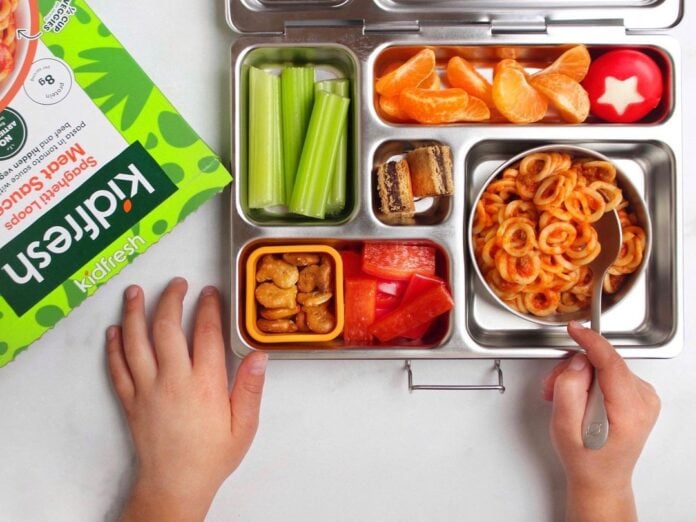
Kidfresh said it was created to help parents win more mealtimes without trading nutrition for convenience. Each meal delivers more than 9g of protein per serving, no artificial ingredients or preservatives, and vegetables kids won’t notice — from Mac & Cheese and Spaghetti to Pizza and Cheeseburger Mac & Cheese. The single-serve entrées are designed to be something kids will actually want to eat.
“Parents are actively looking for mealtime solutions that don’t force a trade-off between convenience and nutrition,” said Michael Allen, CEO at Kidfresh. “It’s exciting to see the category resonating with families here. To grow from our initial launch to more than 300 stores in just two years is incredibly exciting, and we’re just getting started.
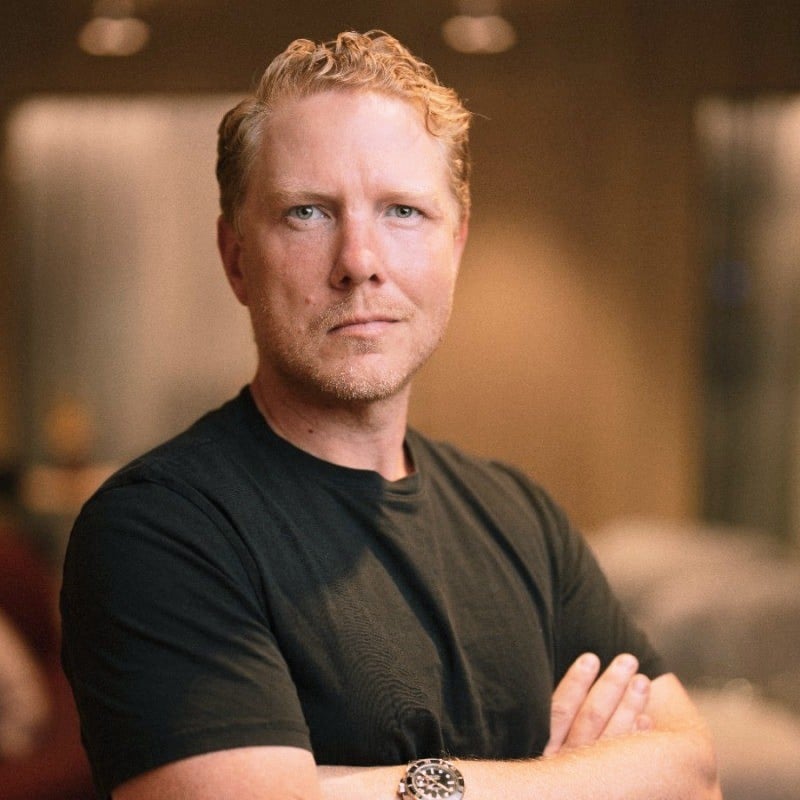
Michael AllenKidfresh photo
“We’ve seen strong interest in what Kidfresh is offering because we’re solving a very real problem for families: how do you get a meal on the table that is convenient for parents, nutritious enough to feel good about, and something kids will actually eat?
“That balance has always been at the center of Kidfresh. We’re not trying to make a kids’ meal that appeals only to the parent or only to the child. It has to work for both.
“The growth from roughly 30 stores at launch to more than 300 locations is a reflection of that connection with families, along with the opportunity we’ve had to expand our retail partnerships and make the brand more accessible. We’re excited to be building on that momentum in Canada.”
Allen said parents and caregivers want more from the frozen aisle. Convenience is important, but it can’t come at the expense of nutrition, taste, or quality.
“That’s really where we see Kidfresh fitting into the equation. Our meals are designed around familiar foods that kids already love, but with thoughtful nutrition built into the product. We have more than 9 grams of protein per serving, vegetables incorporated into every meal, and no artificial ingredients or preservatives,” he said.
“The bigger trend we’re seeing across the kids’ food category is that parents want meals that combine nutrition, convenience, and the flavors kids already love. That’s where we see a real opportunity for Kidfresh—creating meals parents feel good about serving and kids are excited to eat.
“Frozen also has some real advantages for busy families. It provides convenience, portion control, and less food waste, while modern freezing technology allows us to maintain quality.”
Making and packaging the Canadian lineup in Canada is an important part of the company’s approach to serving the market.
“It allows us to build the supply chain around the needs of Canadian retailers and consumers as we continue to expand,” noted Allen.
“As you grow a business, the supply chain becomes just as important as the product itself. You need to be able to deliver consistently, maintain quality, and support your retail partners as the business grows.
“Having the full Canadian lineup made and packaged in Canada gives us a strong foundation for that growth and allows us to continue expanding thoughtfully as demand increases.”
Antonius Ferret photo
Allen said the company sees a significant opportunity to continue expanding its Canadian retail footprint, but it’s focused on doing it the right way and building the business sustainably.
“Adding Metro Ontario and Pattison Food Group is an exciting step because it gives more families access to the full Kidfresh lineup and brings us into more communities. Additionally, we have more than 20 items that parents and kids love, providing real meal solutions for families. Right now, we have four of those items available in Canada, so over time, there is a significant opportunity to offer consumers more ways to enjoy Kidfresh and access the brand,” he said.
“From there, we’ll continue looking at opportunities to expand our distribution and work with retail partners who see the same opportunity we do in better-for-you kids’ meals.
“We’re not going to put an arbitrary number on where we need to be in three years. The goal is to continue earning the right to expand by delivering a product that works for retailers, parents, and, most importantly, kids.”
The Salvation Army Thrift Store is expanding its retail presence in Victoria with the opening of an 8,300-square-foot location on Quadra Street, giving the organization its second store in the city and eighth on Vancouver Island.
The new store at 3460 Quadra St. is scheduled to open to the public with a grand opening celebration Thursday, Oct. 8, at 10 a.m. The location will sell gently used clothing, household goods, books, electronics and other merchandise, while proceeds support Salvation Army programs and services.
“Victoria has embraced The Salvation Army Thrift Store, and we’re excited to grow alongside this generous community,” said Ted Troughton, managing director of The Salvation Army Thrift Store. “As interest in thrift shopping continues to grow, this new location will make it even easier for people to donate, shop with purpose, and help fund programs that provide practical support to those who need it most.”
Ted TroughtonThe Salvation Army Thrift Store photo
The new location is situated near residential neighbourhoods and local businesses and will provide another location for residents to shop and make donations. The organization says proceeds from purchases help fund local programs and services, including food security initiatives, shelter and housing supports, rehabilitation and recovery programs, and emergency disaster relief efforts.
The Salvation Army Thrift Store is a Canadian non-profit organization and part of The Salvation Army. Its retail operations generate funds for the organization’s programs while also supporting the reuse of donated goods.
“When someone donates a bag of clothing or shops for a household item, they’re doing more than extending the life of those goods, they’re helping create opportunities and provide vital support for people in our community. That’s what makes every transaction at our stores so meaningful.”
The Salvation Army Thrift Store operates 98 locations across Canada, selling affordable new and gently used clothing, textiles, household items and other goods. The organization said its operations diverted more than 85 million pounds of items from landfills last year.
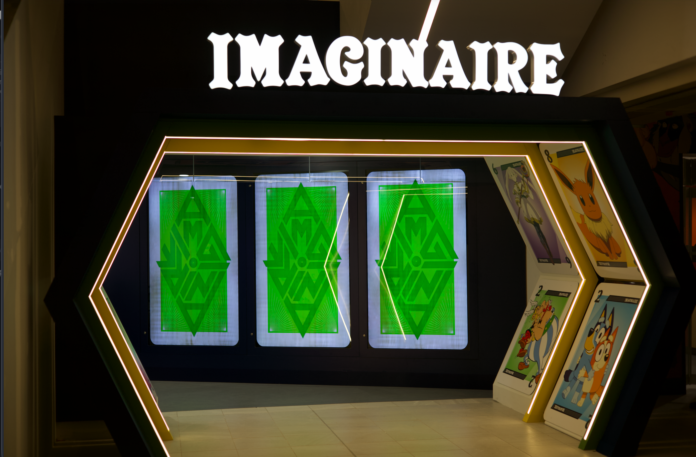
Imaginaire at Montreal Eaton Centre. Image: Imaginaire
Imaginaire is preparing to accelerate its expansion across Canada, with the Quebec-based hobby and collectibles retailer planning to open two to three stores annually beginning in 2027 as it works toward establishing a national presence over the next five years.
The expansion plans come as Imaginaire marks its 40th anniversary and opens its 10th store, a 20,000-square-foot location at Montreal Eaton Centre representing an investment of more than $2.5 million.
Ontario will be the retailer’s next major focus, founder Benoît Doyon told Retail Insider, although Imaginaire has already visited shopping centres in the Maritimes, Newfoundland, Alberta and British Columbia, with discussions underway.
“Starting in 2027, we plan to open two to three stores a year over the following five years,” Doyon said. “I believe Imaginaire brings shopping centres a product selection that is genuinely different from what other retailers offer, and more and more centres are interested in having us.”
The company wants to maintain reasonable proximity between its stores as it expands, meaning more distant parts of Canada will have to wait. For now, Doyon said, Ontario is the priority.
Montreal Eaton Centre Becomes Imaginaire’s 10th Store
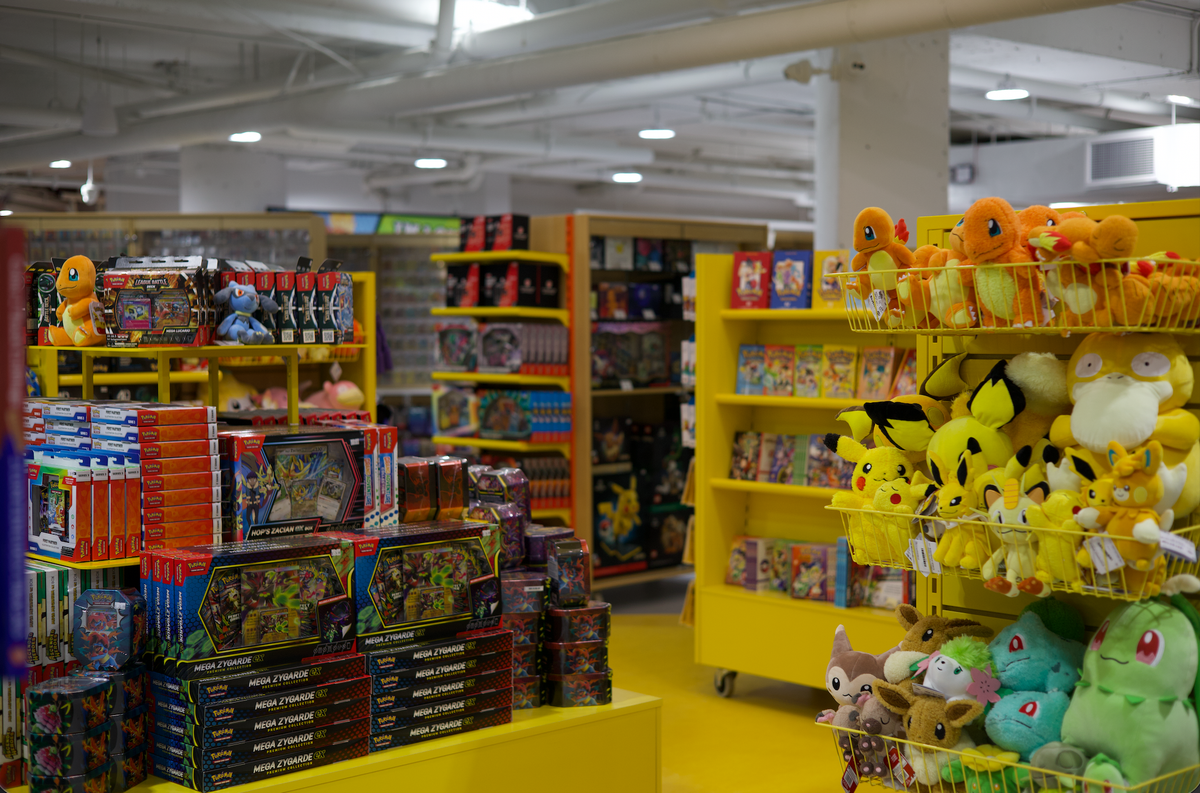
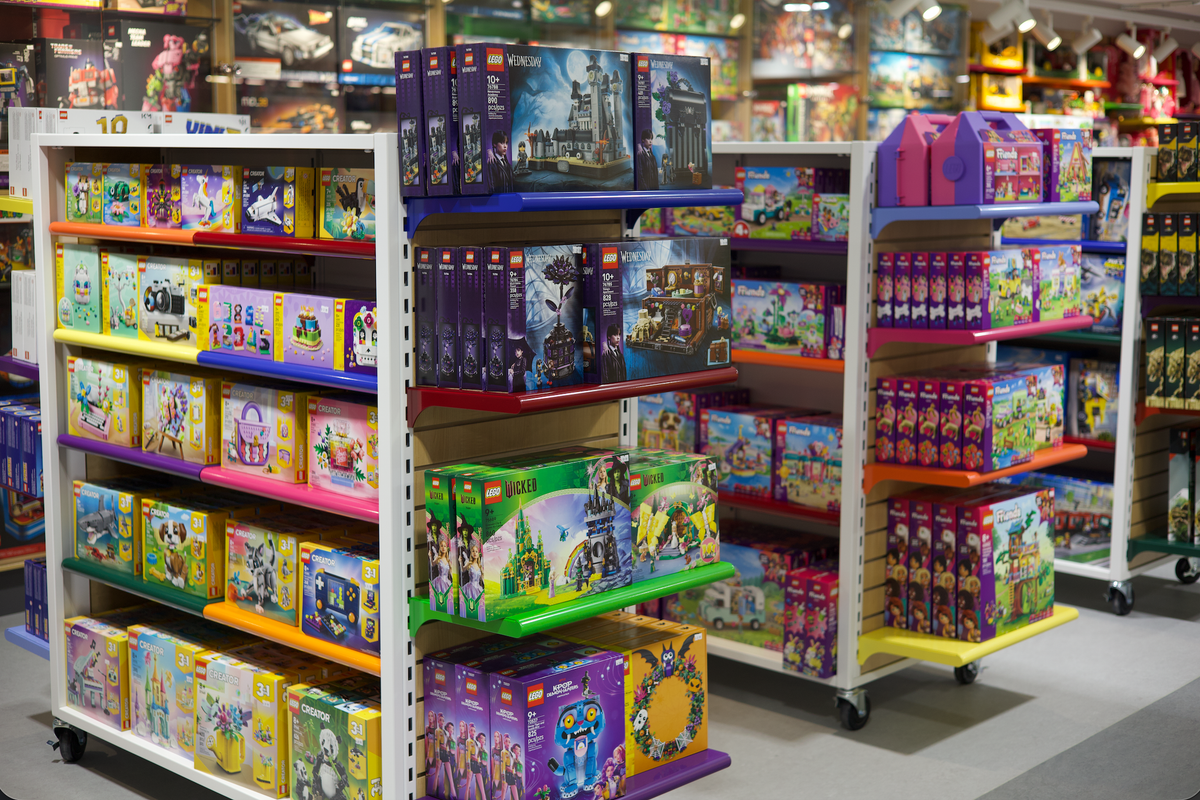
Imaginaire opened at Montreal Eaton Centre on October 3 on the tunnel level near the food court. The store carries the retailer’s broad assortment of board games, manga, comics, trading cards, sports cards, role-playing games, coins, puzzles, collectibles and related products.
The company had wanted to establish a presence at Montreal Eaton Centre for some time but had been waiting for the right opportunity.
“The mall attracts a great deal of attention from tourists and has a profile across Canada,” Doyon said. “That gives us a chance to reach customers who might not visit our other stores and to get noticed by suppliers and other shopping centres.”
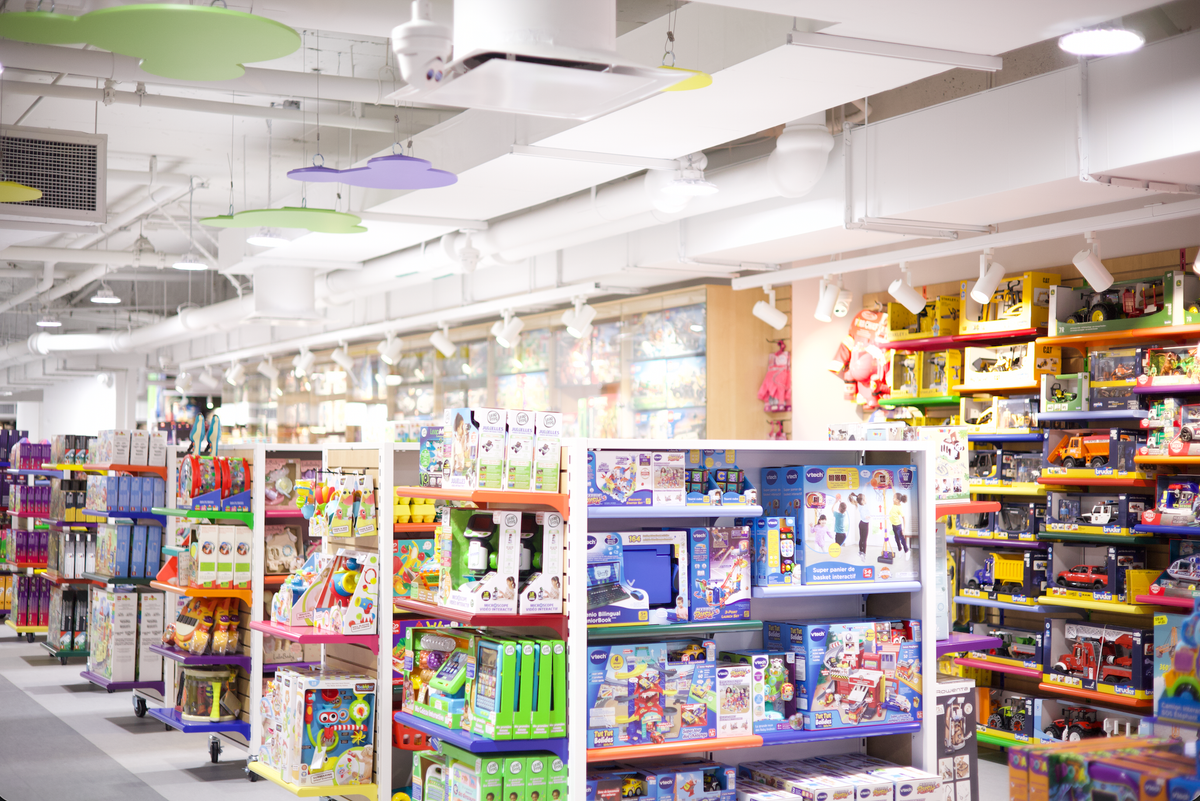
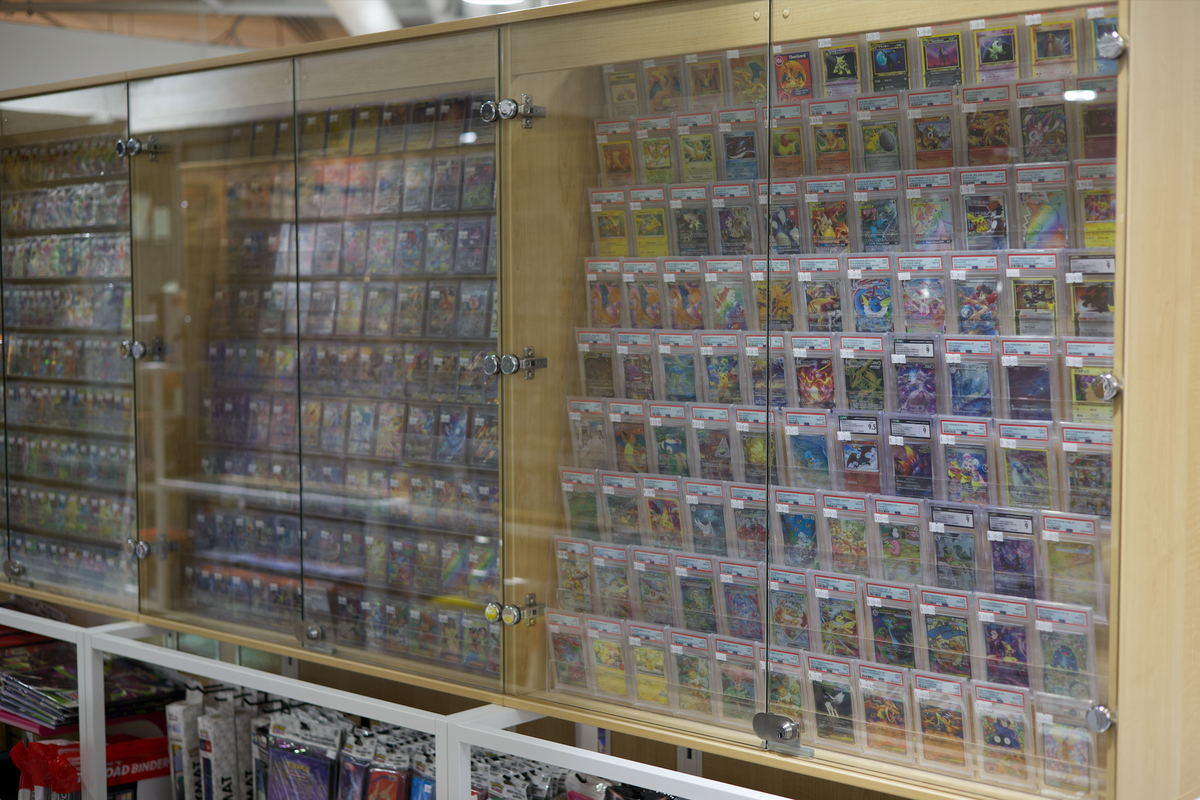
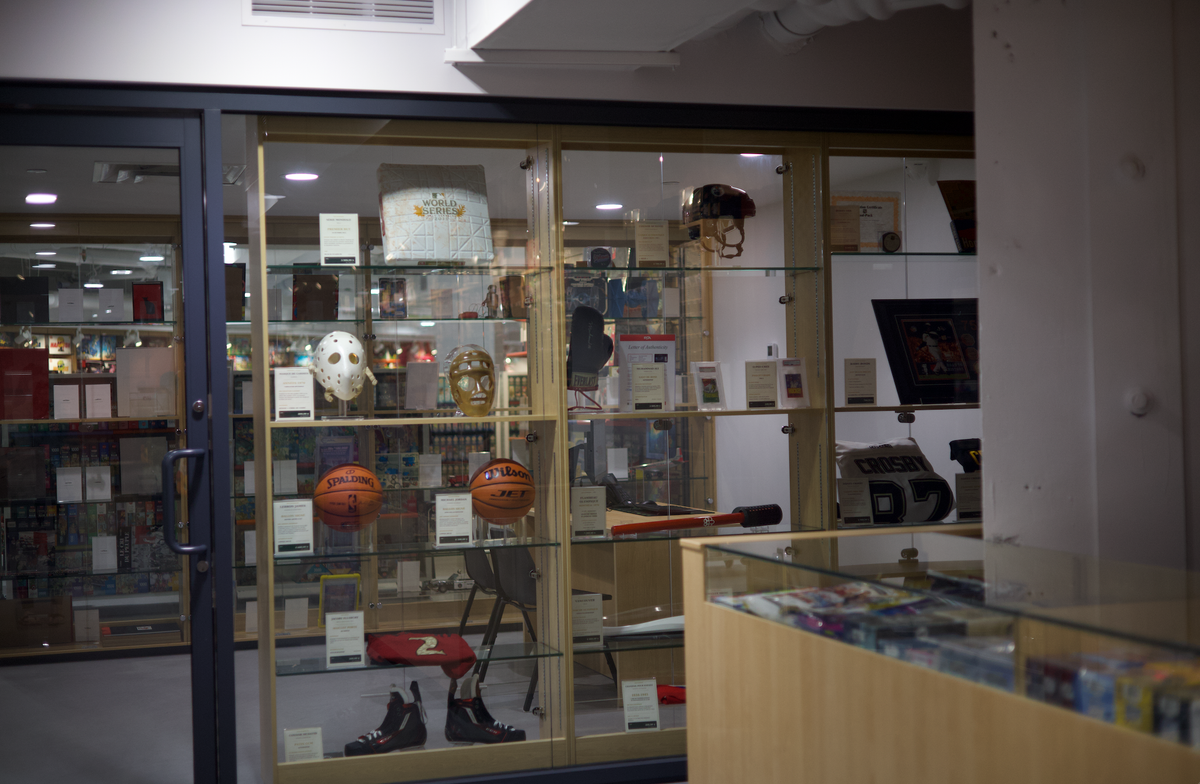
The store includes a larger and more varied children’s assortment than Imaginaire’s other locations, along with a glass-enclosed area showcasing some of the rarest collectibles in its inventory.
The amount of space Imaginaire requires has grown along with its assortment. In Sherbrooke, for example, the retailer expanded an existing store from 5,000 square feet to 15,000 square feet to accommodate a wider selection.
“The world of hobbies and collecting has changed enormously over the years, and it is thriving,” Doyon said. “The range of products available has never been richer or more varied.”
Imaginaire at Montreal Eaton Centre. Image: Imaginaire
Collecting Becomes More Mainstream
Doyon said there is no single category driving Imaginaire’s growth. Trading cards, sports cards, board games, manga, coins and other areas of the business continue to evolve alongside their respective customer communities.
Collecting itself has also changed considerably. Years ago, Doyon said, collecting was more of a niche pursuit, with enthusiasts less likely to talk openly about their interests. Today, collectors are more likely to share what they love, while shows and conventions increasingly bring enthusiast communities together in public.
Imaginaire attempts to create a similar sense of community within shopping centres.
“Our customers are more diverse and outgoing than they used to be, and more willing to explore worlds they do not yet know,” Doyon said.
Trading cards, including Pokémon, remain an important part of the business, although Doyon cautioned against attributing broader growth in collecting to any one category.
He acknowledged an element of speculation in Pokémon cards, sports cards and American comic books, with some consumers interested in their potential investment value. Having worked with sports cards since the 1980s, Doyon said he has seen repeated cycles of intense interest in individual collecting categories.
“There are occasional dips, but each time, the broader trend has continued upward,” he said.
Pokemon card display at Imaginaire at Montreal Eaton Centre. Image: Imaginaire
Lessons From Ottawa Shape Expansion Plans
Imaginaire’s experience entering markets with larger English-speaking customer bases has changed how the company approaches expansion.
Doyon said Ottawa, Pointe-Claire and Laval required more adjustment than earlier openings. Until then, Imaginaire had been accustomed to seeing strong results almost immediately when it entered a new market.
“In these markets, we needed a few months to adapt,” he said. “We had to learn a different way of operating and broaden our selection to serve more tourists and occasional shoppers, rather than the local customers and regular visitors we were used to.”
The company also learned that entering new markets could require real estate compromises, including taking space on multiple floors. Doyon said Imaginaire can now be more selective about both the shopping centres it chooses and the location of its stores within them.
“We are opening at the Montreal Eaton Centre much better equipped than we were a few years ago, and we are confident the store will do well from the start,” he said.
Those lessons will be important as Imaginaire looks for additional locations in Ontario.
Imaginaire at Montreal Eaton Centre. Image: Imaginaire
From 150 Square Feet to Large-Format Stores
Imaginaire’s roots date to 1986, when Doyon acquired a struggling 150-square-foot stamp and coin shop at Laurier Québec.
The assortment gradually expanded in response to customers. Sports cards were added, followed by comics, role-playing games, manga and other categories that eventually transformed the business.
Doyon divides the company’s history into two major periods. The first lasted roughly 30 years and included eight expansions as the business broadened beyond stamps and coins.
“That is when a small coin and stamp shop became Imaginaire,” he said.
The second began in 2017, when his sons Anthony and Dave acquired the company and began taking its business model beyond the Quebec City region.
Anthony has since led the strategic side of Imaginaire’s expansion, while Dave took a particularly hands-on role in establishing new stores.
“Much of our rapid growth was possible because Dave was willing to move every year to open each of our stores,” Doyon said.
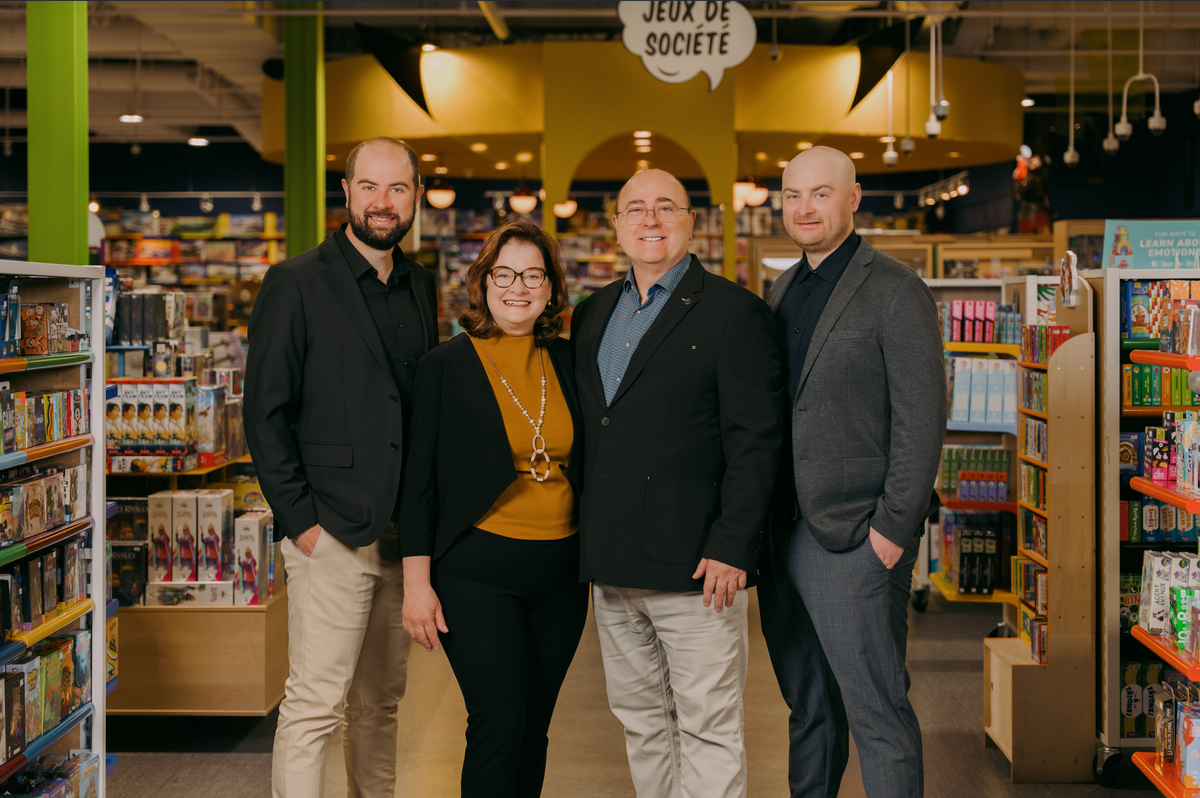
Imaginaire now has a dedicated store-opening team, allowing Dave to focus on his role as sales director. Anthony is co-owner and director of operations, while Benoît focuses on marketing and advertising and Mireille Doyon serves as administrative director.
Imaginaire at Montreal Eaton Centre. Image: Imaginaire
Larger Quebec City Store Coming in 2027
Another large-format store is already planned for next year. Imaginaire will open at Galeries de la Capitale in Quebec City in April 2027, bringing the chain to 11 locations across Quebec and Ontario. The company expects to employ nearly 600 people by that point.
Doyon said Imaginaire’s existing 28,000-square-foot Quebec City store has reached maturity and no longer has enough room for some of the product lines the company wants to introduce.
The Galeries de la Capitale location will allow Imaginaire to add a large department devoted to children’s products. Doyon said the busy shopping centre and its strong family customer base make it particularly well suited to the expanded assortment.
The need for additional space represents a remarkable change from the company’s origins four decades ago, when its entire operation occupied about 150 square feet.
Imaginaire at Montreal Eaton Centre. Image: Imaginaire
Ontario Next as Imaginaire Builds National Footprint
The planned pace of two to three openings annually beginning in 2027 would mark a significant acceleration for a company reaching its 10th store after 40 years in business.
Imaginaire has said it is actively seeking additional shopping-centre locations outside Quebec, with Ontario and the Maritimes identified as areas for future growth.
Ontario will come first as the retailer builds its network outward while keeping stores relatively close together.
“Over the next five years, I expect Imaginaire to grow from a business rooted in Quebec into a company with a national presence,” Doyon said.
He expects greater scale to give Imaginaire a stronger voice with suppliers and shopping-centre owners as it pursues future projects. Beyond the five-year Canadian expansion plan, the possibilities are less defined.
Doyon said he dreams of eventually opening an Imaginaire store in Europe, which could also have strategic benefits for sourcing products. The company is also considering whether the United States could become an expansion market before it moves into Western Canada.
Forty years after Doyon took over a 150-square-foot stamp and coin shop, Imaginaire is preparing for what could be its biggest transformation yet: from a Quebec family business into a national retailer.
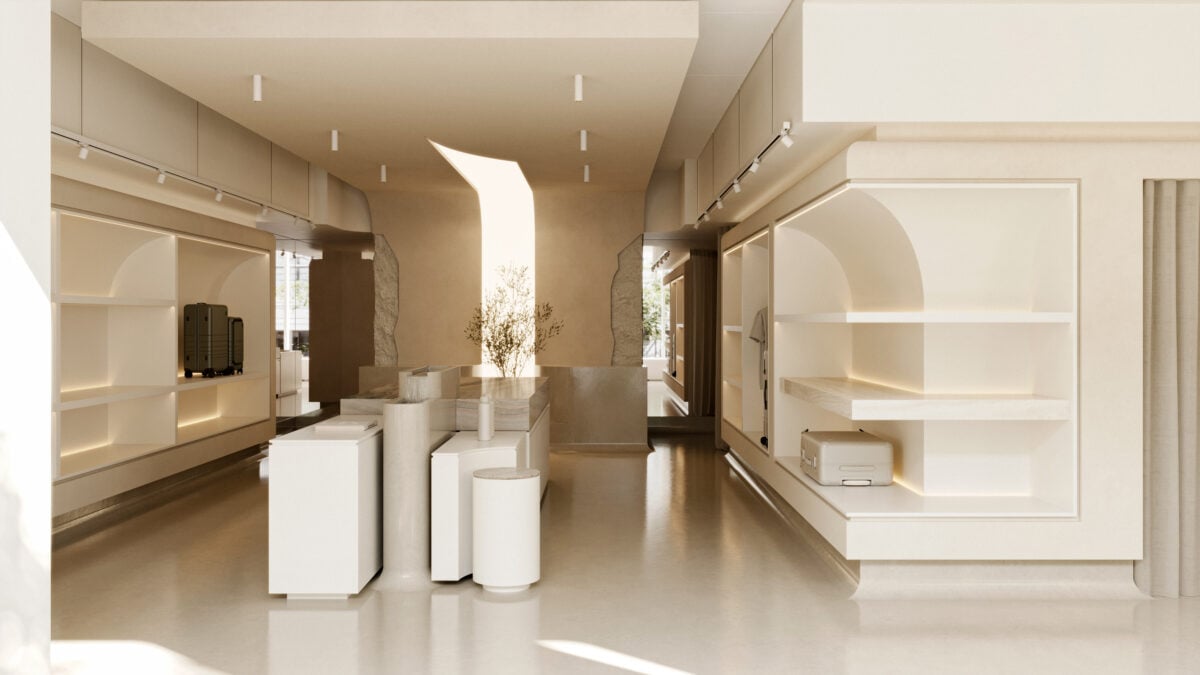
As the news on tariffs continues to amplify, there is a growing movement to spotlight and support local Canadian businesses. And Monos, a Canadian travel and lifestyle brand known for premium suitcases, bags and accessories that combine style, durability and practicality, intends to continue to grow its presence across the country.
“Growing our retail footprint is definitely on the horizon, both here at home and internationally. Like our existing stores, any new locations will be in globally minded cities that resonate with our brand. For now, though, our focus is on putting down deeper roots in the communities we already have retail presence in,” said Victor Tam, CEO and Co-Founder of Monos.
Victor Tam Monos photoMonos photo
Tam said the brand currently has two Monos storefronts in Canada: its Vancouver flagship on West 4th, and its Toronto store on Ossington.
“Shoppers are feeling the financial squeeze and being more selective than ever, and they’re gravitating toward brands that reflect their values. That’s why we make room for real connection with Monos through community programming and events, giving people ways to engage with the brand without having to make a purchase. When their next trip comes around, Monos is already top of mind,” he said.
“The tariff situation pushed us to reevaluate our positioning and refocus on serving our Canadian market. US customers are still an important part of our business, and we’re making changes to serve them better in this new landscape, but moving forward we expect to take a more balanced approach between the two markets.”
Retail looks different now than it did even 10 years ago, added Tam.
“As a brand that started as DTC, our retail strategy has always been about showing up in new, exciting, and authentic ways. For us, it isn’t about getting everyone who walks through the door to make a purchase, it’s about creating another high-quality touchpoint with the brand. That consistency builds loyalty over time. We think that’s the future of retail, and we’re starting to see other brands catch up,” he said.
Hubert ChanMonos photoMonos photo
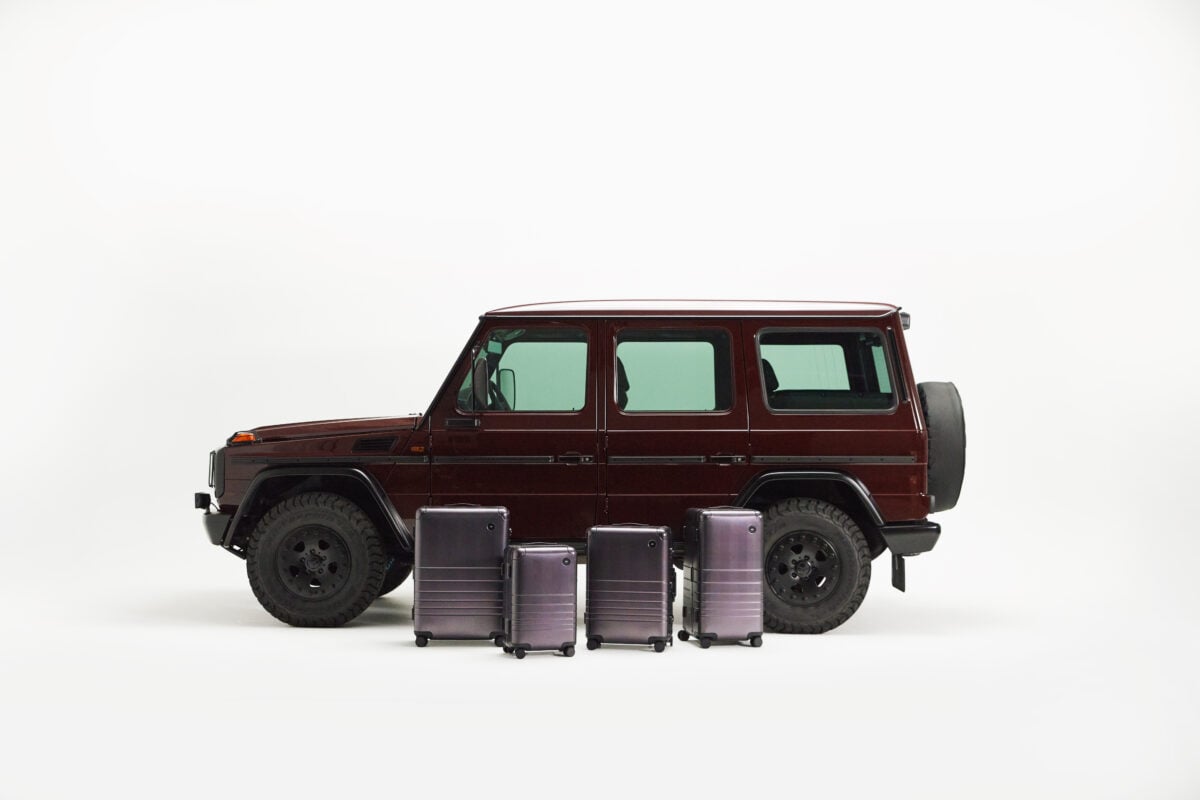
Monos has also unveiled a one-of-one Milspec Heritage G-Class for their second vehicle giveaway, following its 2025 partnership with Brooklyn Coachworks. Built in collaboration with Vancouver-based automotive restoration studio Pre-Merger, the 1998 Mercedes-Benz G320 was imported from Tokyo and carefully restored to preserve the unmistakable character and utility of the original G-Class while refining it for modern comfort, reliability and everyday use. As part of the campaign, Monos is giving its community the opportunity to make the one-of-one vehicle their own as part of a no-purchase-necessary sweepstakes, open from October 7 through November 26.
“To travel is to move and be moved. With Pre-Merger—a studio known for preserving automotive heritage without sacrificing contemporary comfort—we’ve built something undeniable: a restoration that stays true to the history of an automotive icon, reimagined through the Monos lens for the modern traveller,” said Tam.
Along with the vehicle giveaway, Monos is introducing the limited-edition Rodeo Check collection reimagining the Heritage G-Class’s Rodeo Plaid interior across Monos’ signature lightweight and durable anodized aluminum shells. The debossed pattern and tonal black detailing bring the character of the G-Class into a collection that balances rugged utility with Monos’ refined, minimalist aesthetic, and is made to travel for years to come.
“The Rodeo Check collection pays tribute to the pattern that defined the original G-Wagon. Inspired by our restoration with Pre-Merger, the capsule shares its character: elegant, timeless, and built to last,” said Hubert Chan, Co-Founder and CCO.
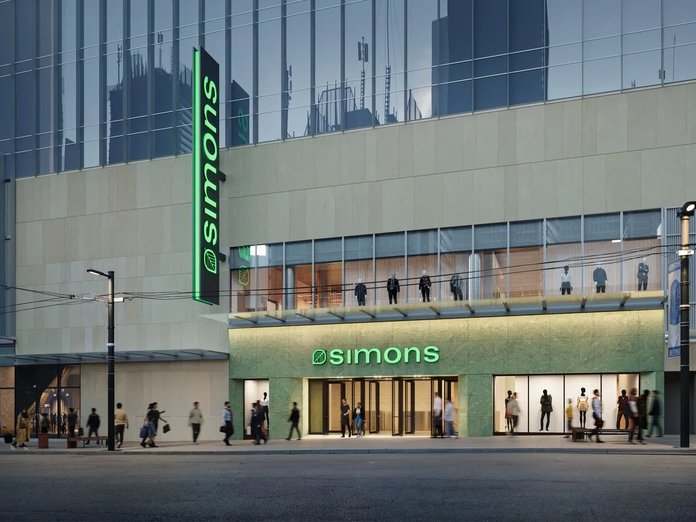
Future La Maison Simons in the former Nordstrom at CF Pacific Centre in Vancouver. Rendering via Cadillac Fairview
More than three years after Nordstrom closed its Canadian stores, replacement tenants have now been identified at all six of the retailer’s former full-line locations, with new additions at CF Chinook Centre in Calgary filling in one of the remaining pieces of the national picture.
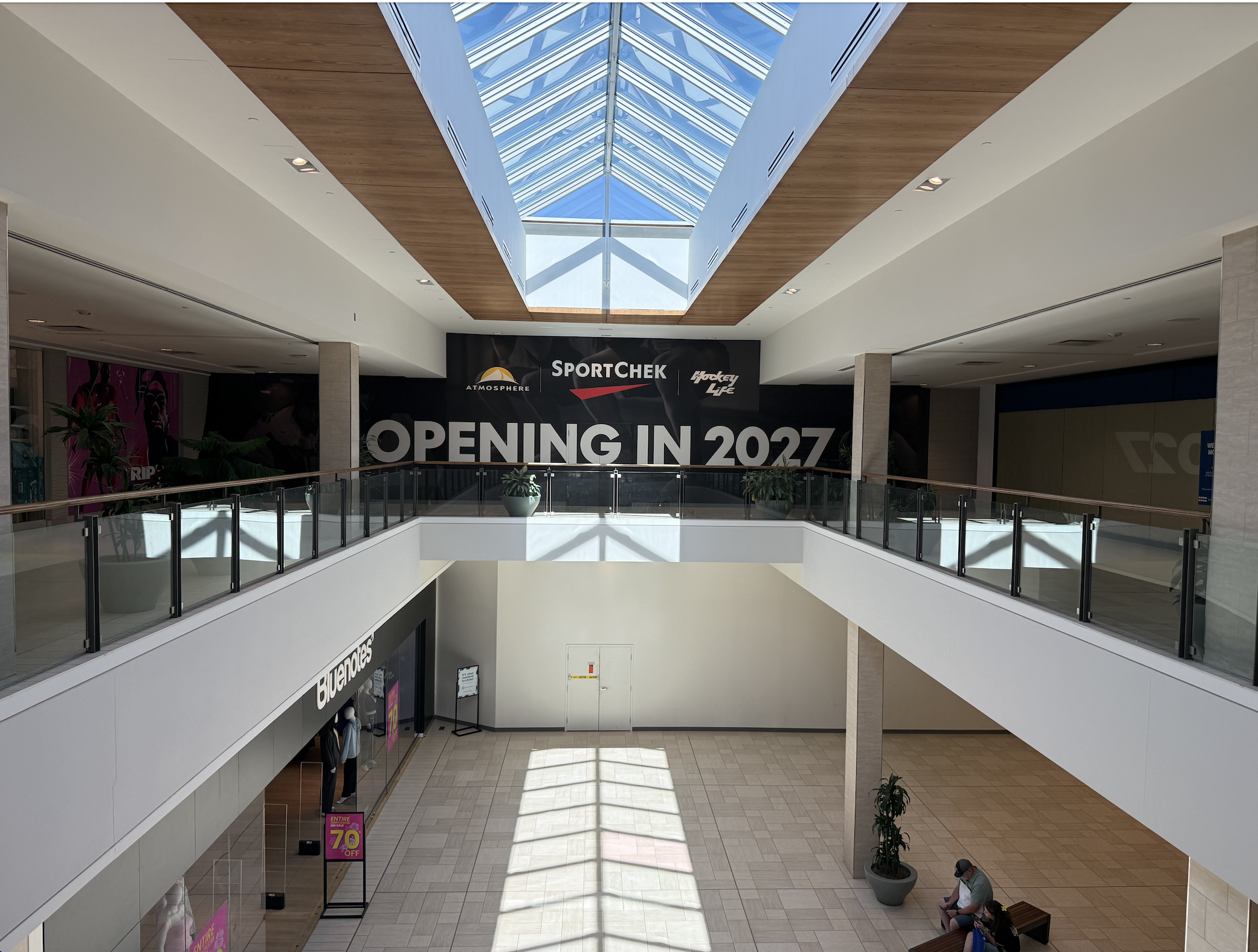
Cadillac Fairview has announced that SportChek, Winners and Old Navy are joining the CF Chinook Centre lineup as the former two-level Nordstrom is divided among multiple retailers. SportChek will occupy the upper level with an expanded Destination Sport concept opening in spring 2027, while Old Navy and Winners will occupy the main floor.
Old Navy is scheduled to return to the shopping centre this November, with Winners following in spring 2027.
The Calgary announcement means major replacement tenants are now known for every former full-line Nordstrom location in Canada. Redevelopment work is not finished, and portions of some former stores have yet to have permanent tenants publicly identified. But the six properties now provide a clear picture of how some of Canada’s largest shopping centres have responded to more than one million square feet of space vacated almost simultaneously in 2023.
The dominant strategy has been to divide the former department stores among multiple destinations.
More Than One Million Square Feet Left Behind
Nordstrom entered Canada at CF Chinook Centre in September 2014, opening in space previously occupied by Sears. It subsequently added full-line stores at CF Rideau Centre in Ottawa, CF Pacific Centre in Vancouver, CF Toronto Eaton Centre, Yorkdale Shopping Centre and CF Sherway Gardens.
The six stores collectively occupied approximately 1.08 million square feet, with individual locations ranging from about 140,000 square feet to 230,000 square feet.
Nordstrom announced in March 2023 that it would wind down its Canadian operations after determining there was no realistic path to profitability. Its six full-line stores and seven Nordstrom Rack locations subsequently closed.
For the landlords involved, the exit created six unusually large vacancies in prominent regional and downtown shopping centres. Relatively few retailers were expanding at a scale capable of absorbing an entire former Nordstrom, and the replacement strategies that have emerged generally bear little resemblance to the department-store model Nordstrom brought to Canada.
Future Sport Chek Destination store at CF Chinook Centre Calgary. Photo by Mario Toneguzzi
Calgary Nordstrom Divided Among Three Retailers
At CF Chinook Centre, the approximately 140,000-square-foot former Nordstrom is being divided among SportChek, Old Navy and Winners.
SportChek will occupy the upper floor, consolidating and expanding its presence at the property with a Destination Sport concept expected to open in spring 2027.
Old Navy and Winners will divide the main floor. Old Navy is scheduled to open in November, while Winners will follow in spring 2027.
The configuration captures the broader shift taking place across the former Nordstrom portfolio. The Calgary store was itself created from former Sears space when Nordstrom entered Canada. It is now being divided again, this time among three large retailers serving sporting goods, apparel and off-price shoppers.
Toronto Eaton Centre Offers the Most Complete Example
CF Toronto Eaton Centre provides the clearest completed example of the multi-tenant strategy. Nordstrom occupied approximately 220,000 square feet at the downtown Toronto shopping centre. Cadillac Fairview subsequently divided the premises among Simons, Eataly and Nike, alongside new circulation and other building uses.
Simons opened a roughly 110,000-square-foot flagship spanning three levels. Eataly added approximately 25,000 square feet, while Nike expanded its presence with a roughly 18,000-square-foot store.
The redevelopment turned a single department-store anchor into several substantial destinations while allowing CF to allocate prominent mall and street frontage to multiple tenants.
Pacific Centre Becomes a Collection of Flagships
A more extensive physical transformation is underway at CF Pacific Centre in downtown Vancouver, where Nordstrom occupied approximately 230,000 square feet.
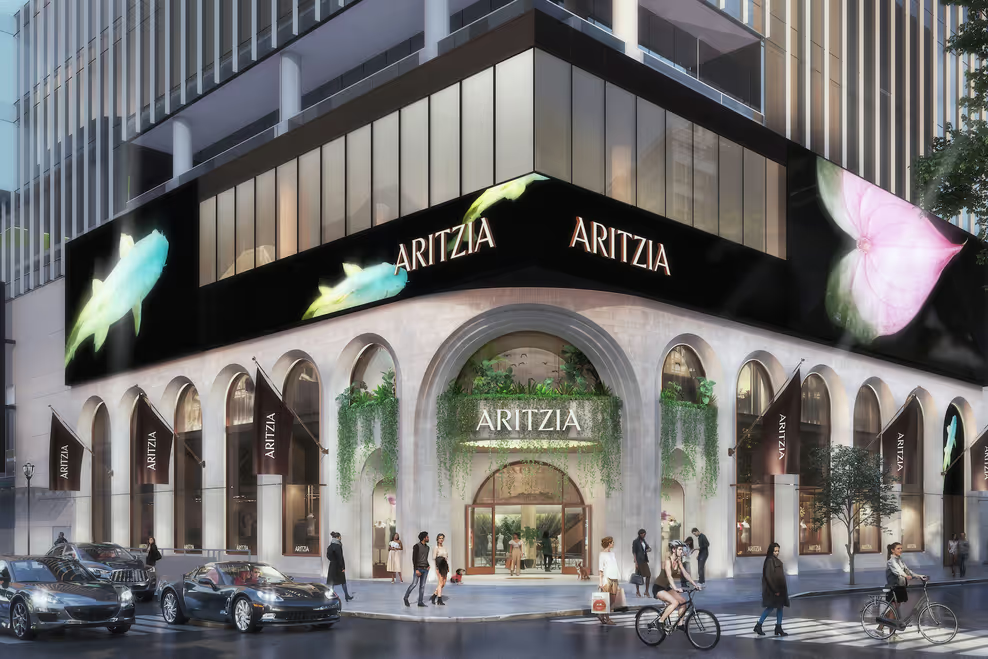
Simons will open a roughly 92,000-square-foot store across three floors in fall 2027. Vancouver-based Aritzia is developing a roughly 40,000-square-foot, multi-level flagship in another portion of the premises.
Together, the two retailers account for approximately 132,000 square feet of former Nordstrom space, with additional retail units forming part of the redevelopment. The former department store is being substantially reconfigured to accommodate multiple retailers with their own identities and entrances.
The project turns one large downtown department store into a collection of flagships while giving specialty retailers access to space at a scale historically associated with major anchors.
Rendering of the future four-level 41,800 sq ft Aritzia store at Robson and Howe in Vancouver. Rendering: Aritzia
Simons Takes the Largest Share
No retailer has absorbed more of Nordstrom’s former Canadian space than La Maison Simons.
In addition to its approximately 92,000-square-foot future CF Pacific Centre store, Simons opened approximately 110,000 square feet at CF Toronto Eaton Centre and about 118,000 square feet across the first two levels of the former Nordstrom at Yorkdale Shopping Centre.
Combined, the three locations represent approximately 320,000 square feet of former Nordstrom real estate, or close to 30 per cent of the space occupied by Nordstrom’s six full-line Canadian stores.
Yorkdale is the closest of the six properties to a conventional department-store replacement. Nordstrom occupied approximately 199,000 square feet across three levels, while Simons operates approximately 118,000 square feet on the first two.
Even there, the replacement occupies substantially less space than Nordstrom did, with the balance of the former department-store premises outside Simons.
Rendering of the Simons Yorkdale Shopping Centre location, set to open to the public on August 14, 2025 (CNW Group/La Maison Simons)
Ottawa Adds Three Major Home Retailers
The picture at CF Rideau Centre became clearer with confirmation that Williams Sonoma, Pottery Barn and West Elm will open in the former Nordstrom premises in spring 2027.
Nordstrom occupied approximately 157,000 square feet across two levels at the downtown Ottawa shopping centre. The three Williams-Sonoma Inc. banners will occupy part of Level 3, where the former Nordstrom floor plate measured approximately 79,000 square feet.
Their arrival creates a substantial home furnishings and housewares cluster within space previously occupied by a general merchandise department store. Other portions of the former Nordstrom have yet to have permanent replacement tenants publicly identified.
The redevelopment remains in progress, but the strategy again involves dividing a large department-store footprint among more specialized operators.
Former Nordstrom at CF Rideau Centre in Ottawa. Image: SERCO CONSTRUCTION
Entertainment Takes Part of Nordstrom at Sherway Gardens
CF Sherway Gardens remains the least complete of the six transformations, although a major permanent replacement tenant has now been identified there as well.
Splitsville Bowl plans to open a roughly 34,000-square-foot entertainment venue in part of the former Nordstrom in fall 2027. The facility will include 22 bowling lanes, an arcade, food and beverage offerings and event space.
Nordstrom occupied approximately 140,000 square feet at Sherway, meaning Splitsville accounts for about one-quarter of the former store. Permanent replacement tenants for much of the remaining space have not been publicly announced.
Sherway provides an important qualification to the national picture. Replacement tenants are now known at every former Nordstrom property, but that does not mean every square foot has been leased, announced or redeveloped. The introduction of an entertainment operator also broadens the range of uses being considered for former department-store space.
Former CF Sherway Gardens Nordstrom (Image: Nordstrom)
One Anchor Becomes Several
Across the six properties, the pattern is increasingly consistent.
At CF Chinook Centre, one department store is becoming SportChek, Winners and Old Navy. At CF Toronto Eaton Centre, the former Nordstrom was divided among Simons, Eataly and Nike. At CF Pacific Centre, Simons and Aritzia are among multiple major retailers being accommodated within the former box.
Ottawa is adding a cluster of Williams-Sonoma Inc. home banners, while Sherway is introducing entertainment. Yorkdale comes closest to a traditional department-store replacement, but even there Simons occupies considerably less space than Nordstrom did.
The anchor function remains relevant, but it increasingly can be distributed among several tenants serving different shopping, dining and entertainment needs. For landlords, that creates opportunities to accommodate expanding specialty retailers and other uses without depending on a single tenant willing to occupy 150,000 to 200,000 square feet.
A Relevant Precedent for Former Hudson’s Bay Stores
The Nordstrom experience has become increasingly relevant as Canadian landlords confront a much larger inventory of former department-store space following the collapse of Hudson’s Bay.
The portfolios are substantially different. Nordstrom operated only six full-line Canadian stores, all in prominent shopping centres in major markets. Hudson’s Bay operated a much larger network across properties with widely varying demographics, ownership structures and redevelopment potential.
Still, the former Nordstrom stores demonstrate several approaches available for large department-store vacancies, including subdivision, new entrances, oversized specialty flagships, sporting goods, off-price retail, food, home furnishings and entertainment.
More than three years after Nordstrom left Canada, major replacement tenants are now known at every one of its former full-line stores. Additional space remains to be publicly accounted for at several properties, particularly CF Sherway Gardens, and redevelopment work will continue well into 2027.
With the latest Calgary announcements, the national picture is finally visible. Nordstrom’s former Canadian stores are being divided among a collection of retailers and other uses, replacing the single department-store anchor with multiple destinations.
A new report by Zensurance indicates most Canadian small business owners say AI has not meaningfully changed the way they operate.
The 2026 Zensurance Small Business Confidence Index says the technology remains largely in the background for the majority of small businesses.
“Small business owners are constantly weighing where to invest their limited time and resources,” said Danish Yusuf, CEO and Founder of Zensurance. “This year’s findings show they are prioritizing stability, operational strength and resilience. Whether that means adopting new technology, improving efficiency or protecting against unexpected setbacks, a proactive approach is what helps businesses stay strong as conditions keep changing.”
Key findings of the national survey of 1,000 Canadian small business owners, entrepreneurs and self-employed professionals:
49 per cent say they remain confident about the months ahead;
32 per cent say AI has had little to no impact on their business, and another 27 per cent say they are not sure how it even applies to what they do. Only one-in-four report a positive effect, and just nine per cent credit AI with meaningful productivity gains or cost savings. Meanwhile, seven per cent say it has hurt their revenue or client base;
Among those who have concerns about AI, their top worry is competitive pressure: 13 per cent say AI will make their products or services less competitive, 10 per cent say AI tools are not reliable or accurate enough to trust, and nine per cent worry about job displacement and the loss of human labour;
More plan to introduce new products or services (26 per cent), expand into new markets (22 per cent), or invest in new tools or equipment (20 per cent) than learn about or invest in AI (15 per cent);
When given a hypothetical $10,000 business grant, the response was telling: 26 per cent would set it aside for cash flow, 20 per cent would pay down debt, 17 per cent would invest in tools or equipment and just seven percent said they would put it toward AI.
Founded in 2016, Zensurance is a source for small-business insurance.
Danish Yusuffauxels photo
In an interview with Retail Insider, Yusuf spoke about the report’s findings.
Why do you think the majority of Canadian small businesses have yet to see a meaningful impact from AI, despite the technology’s rapid adoption across larger companies and industries?
Larger companies have dedicated teams, budgets and time to test AI and figure out where it fits. Most small business owners have none of that. They’re the boss, the bookkeeper, the salesperson and the customer service department, sometimes all before lunch.
The 2026 Zensurance Small Business Confidence Index found 32% of owners say AI has had little to no impact on their business, and another 27% aren’t sure how it even applies to what they do. That’s roughly three in five owners sitting on the sidelines.
I don’t think most owners are against AI. It just hasn’t earned a spot on their to-do list yet. Some aren’t sure how it connects to what they do. Others haven’t had the time to sit down and figure out what it could mean for their business. And plenty are taking a wait-and-see approach. Once they see it making a real difference for a competitor or a business like theirs, it’ll jump up the list. That’s understandable when so much of the AI conversation is built around enterprise use cases, not the day-to-day reality of a contractor, a salon owner or a two-person consulting firm. Add small business confidence at a three-year low, and a lot of owners simply don’t have the bandwidth to experiment right now.
Here’s the catch, though. AI doesn’t have to be part of your business to affect it. Scammers are already using it to write convincing phishing emails, create fake invoices and even clone voices. So an owner who has never touched AI can still be exposed to it. In our survey, 14% of owners named cyberattacks or data breaches as their most significant business risk, yet 61% don’t have business insurance at all.
What differences did you find among small businesses that are benefiting from AI and those that remain unsure about how the technology applies to their operations?
The owners seeing results have usually done what many others haven’t had the time to do yet: they found a specific problem in their business and matched AI to it, instead of starting with the technology. About one in four owners we surveyed said AI has had a positive effect on their business, and 9% credit it with meaningful productivity gains or cost savings. Those wins tend to come from pointing AI at a real bottleneck, like writing quotes and proposals, answering routine customer questions, or chipping away at the admin that eats up evenings and weekends.
The owners who are unsure are often coming at it from the other direction. They keep hearing AI can do everything, which makes it hard to know where to start. Twenty-seven per cent told us they don’t know how it applies to their business at all.
It’s also worth saying AI isn’t a guaranteed win. Seven per cent said it has actually hurt their revenue or client base. For some businesses, AI is showing up as a competitor before it shows up as a tool.
fauxels photo
How are concerns about AI’s reliability, competitive pressure and potential job displacement influencing small business owners’ willingness to adopt the technology?
These concerns are real, but they aren’t what’s holding most owners back. The bigger hurdle is time. Most owners haven’t been able to step away from running the business long enough to figure out where AI fits into it. Still, these worries shape how cautiously they approach it once they do.
Competitive pressure topped the list: 13% believe AI will make their products or services less competitive. That makes sense for businesses selling expertise, creative work or information, where customers can now try to do it themselves with a free tool.
Reliability matters, too. Ten per cent said AI tools aren’t reliable or accurate enough to trust. A small business can’t afford a costly mistake in front of a client. If an AI tool gets something wrong and a client relies on it, it’s the business on the hook, not the software company. Owners using these tools should understand that risk and check whether their coverage, like professional liability and cyber insurance, reflects how they’re working now.
Job displacement came in at 9%. Most small businesses already run lean, so for many owners, AI is less about replacing people and more about getting hours back.
With more owners prioritizing cash flow, debt reduction, new products and equipment over AI investments, what does this tell you about the immediate challenges facing Canadian small businesses?
It tells me owners are in stabilize-first mode. Earlier findings from this year’s survey results showed business confidence has fallen three years in a row, from 70% in 2024 to 49% in 2026. Four in five owners are operating with three months of cash reserves or less, 71% say operating expenses are up from last year, and 39% have used personal credit cards or home equity to keep their business running.
When you’re under that kind of pressure, a $10,000 grant isn’t a chance to experiment. It’s breathing room. That’s why 26% would set it aside for cash flow, 20% would pay down debt and just 7% would put it toward AI.
That’s how owners would spend a hypothetical windfall. Their broader plans for the business tell a slightly different story. Owners aren’t giving up on growth. More plan to launch new products or services (26%), expand into new markets (22%) or buy new tools and equipment (20%) than learn about or invest in AI (15%). They’re backing things with a clear, direct line to revenue.
The piece that concerns me is protection, with 61% of owners telling us they don’t have business insurance, nearly double the 33% we saw in 2024. As the financial pressure has built, more owners have gone without coverage. I understand the instinct to cut costs wherever you can. But you can spend years building a cash cushion and lose it to one lawsuit, break-in or cyberattack. Coverage is what keeps one bad day from undoing everything they’re working to stabilize.
Kindel Media photo
Do you expect AI adoption among Canadian small businesses to accelerate over the next year, and what would need to change for more owners to see it as a practical investment rather than a longer-term opportunity?
I expect adoption to keep growing, but gradually rather than all at once. Right now, only 15% of owners plan to learn about or invest in AI, which tells me most still see it as a someday project.
For that to change, a few things need to happen. First, the tools have to fit small business reality: affordable, easy to set up and built into the software owners already use for invoicing, scheduling, bookkeeping or marketing. Second, owners need proof. Not a big promise about transforming their business, but clear evidence that a tool saves time or wins customers within weeks, ideally from someone in their own industry. Third, trust. Owners need to know the output is accurate and their customers’ data is safe.
The economy plays a role, too. When cash flow steadies, owners get the headspace to try new things.
The tipping point comes when AI stops feeling like a project and starts feeling like a better version of a tool they already rely on.
Wayfair is expanding its partnership with Klarna to offer Canadian customers the payment company’s full suite of flexible payment options, while eligible U.S. customers will gain access to ongoing 0 per cent APR financing for purchases of up to six months.
The expanded partnership covers Wayfair and its family of brands, including Joss & Main, AllModern and Birch Lane. Canadian shoppers will be able to pay for purchases in full, split payments into interest-free instalments or finance larger orders over time.
“Klarna has been a trusted partner in helping our customers shop with confidence, and renewing this relationship was an easy decision,” said Curtis Crawford, director at Wayfair. “Our customers are making meaningful investments in their homes, and giving them flexible, transparent payment options at checkout makes a real difference, and that’s exactly what this partnership delivers.”
Flexible financing extended across brands
The agreement gives eligible U.S. customers access to always-on 0 per cent APR financing for up to six months across Wayfair’s full family of brands. The company said the Canadian expansion marks the first time Klarna’s full range of flexible payment options will be available through Wayfair in Canada.
Curtis CrawfordDavid Sykes
The payment options apply to home purchases ranging from furniture such as sofas, dining sets and bed frames to outdoor furniture. Customers in both countries can choose among different payment methods based on their purchase and payment preferences.
“Wayfair’s decision to renew and deepen this partnership speaks to the trust we’ve built together and the real demand we’re seeing for flexible payments for considered home purchases,” said David Sykes, chief commercial officer at Klarna. “Home essentials is one of our fastest-growing categories in North America, and having Wayfair’s full family of brands behind that momentum is a significant benefit for consumers in both markets.”
Klarna expands retail payment network
Klarna said it has more than 120 million active users globally and processes 3.8 million transactions per day. The company said more than 1.2 million retailers use its payment solutions.
Klarna offers payments online and in stores, as well as through Apple Pay and Google Pay. The company is listed on the New York Stock Exchange under the symbol KLAR.
Wayfair operates as an online retailer focused on home products, offering merchandise across furniture and other home categories through its family of brands.
The commercial real estate firm in its report said total investment value in the retail sector for the first half of the year was $522.4 million, up 38% from the $378.8 million a year ago.
“While transaction activity moderated compared with previous years, several highvalue transactions supported retail investment volume in H1 2026. The $154M sale of Northland Village Mall stands as the sector’s largest transaction of the year to date. Investor demand remains strongest for neighbourhood and convenience-oriented retail centres, reflecting the continued appeal of necessity-based retail assets,” said the report.
“Centres serving everyday needs – such as groceries, pharmacies, medical services, and personal services – benefit from repeat customer visits and are generally viewed as more resilient through economic cycles. For some buyers, a well-located site also offers longer-term potential for mixed-use or residential redevelopment,” he noted.
Yadlowski said Calgary’s total commercial real estate investment reached approximately $2.4 billion in the first half of 2026, up 28% from the same period in 2025.
“Retail investment also rose, to approximately $522 million from $379 million (38%) . . . The H1 2026 results suggest the multi-year decline in overall investment volume may be nearing an end, rather than continuing at the same pace.”
Coming to the Northland Village Mall. Mario Toneguzzi photo
The Northland Village Mall sale demonstrates that there is a buyer pool for large, high-quality retail assets in Calgary,” said Yadlowski.
“Northland attracted interest from a broad range of buyers and ultimately sold to a Canadian institutional investor. The transaction shows that scale is not, by itself, a barrier when an asset has the location, tenant mix, and quality that investors are seeking,” he explained.
“In Calgary, we are seeing particularly strong interest in neighbourhood strip centres and grocery-anchored properties. Retailers that meet frequent, practical needs – from groceries and pharmacies to quick-service restaurants and personal services – help make these centres relevant to the communities around them. Calgary’s population growth adds to that appeal, while the limited supply of available investment product keeps competition for quality assets strong.”
Yadlowski said he is cautiously optimistic about Calgary.
“Necessity- and convenience-oriented retail remains attractive, and the first-half investment figures give us a constructive starting point. That said, investors will continue to watch bond yields and financing costs closely. Those factors will influence pricing and the pace at which transactions come together, even where the underlying asset is strong,” he said.
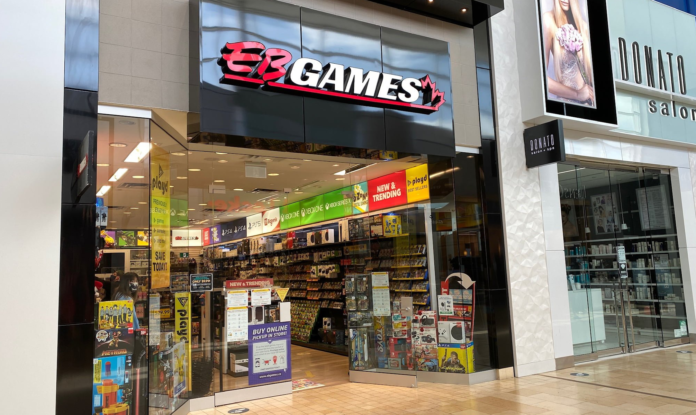
Former EB Games at Yorkdale in Toronto, September 2021. Photo: Dustin Fuhs
EB Games Canada says it will open a new Nintendo space at its flagship location at 267 Yonge Street in Toronto, marking Nintendo’s first store-within-a-store in North America.
The permanent, 1,500-square-foot space will bring Nintendo games, characters and worlds together in a dedicated retail environment and opens to the public at 10 a.m. on Saturday, October 17.
“There’s something special about gathering around the games we love, and we believe physical retail has an important role to play in creating those moments,” said Stéphan Tétrault, Owner and CEO of EB Games Canada. “The Nintendo space at EB Games is exactly the kind of retail experience we want to bring to our customers – immersive, exciting and designed to bring people closer to their favourite characters and franchises.”
Stephan TetraultSusan Pennefather
The new space will feature Nintendo Switch 2 hardware and software, playable games at demo systems, Nintendo-themed displays, merchandise and photo opportunities. The space will also offer a selection of My Mario merchandise, some of which will be available exclusively at the Nintendo space at EB Games in Canada.
EB Games said the offerings will create a one-of-a-kind destination for longtime Nintendo fans, families and anyone looking to discover what’s new from Nintendo.
“We’re always looking for new ways for people to experience Nintendo games and worlds,” said Susan Pennefather, Vice President and General Manager of Nintendo of Canada. “The Nintendo space at EB Games is an incredible place to explore what’s new, discover merchandise and celebrate our iconic characters. We’re proud to bring this concept to North America for the first time, right here in Toronto. We can’t wait to welcome people inside.”
Canadian consumer spending is tracking at a resilient 2.6% pace in Q3, even after stripping out the boost from higher gasoline prices. TD Spend data point to some moderation in services and a small contraction in goods spending following a strong Q2, according to a recent report.
“The World Cup left a visible but relatively small footprint on Canadian card spending. The clearest effects were concentrated on match days and in recreation & entertainment in the host provinces, alongside broader gains in general merchandise and travel. Overall, card spending data point to only a marginal boost from FIFA, although the total economic impact was likely somewhat larger given that spending by international visitors is not captured in our data,” said Maria Solovieva, TD Economist, who authored the report.
The report said goods spending moderated in Q3 following a strong Q2, with the necessities remaining the largest contributor. Housing-related spending recovered in Q2 and continued to grow in Q3 alongside a pick-up in housing activity.
Maria SolovievaVitaly Gariev photo
“The moderation is primarily driven by goods spending, which is currently tracking flat in Q3 following a 2.5% gain in Q2. Essential categories – which, apart from gas, include grocery stores, convenience stores and general merchandise retailers – remain the largest contributors to goods spending growth. However, their contribution has continued to moderate from earlier in the year, when necessities were the predominant driver of growth,” said the report.
“At the same time, consumers have continued to spend on home-related purchases, although at a more moderate pace than in Q2. This is consistent with the gradual improvement in Canada’s housing market. National home sales rebounded 6.9% q/q in Q2, following a 12.3% decline in Q1, and are currently on track to gain another 3.4% in Q3. As housing activity continues to grind higher, we expect it to provide some ongoing support to home-related outlays, even as the pace of spending growth moderates.”
June and July spending provided TD with a unique opportunity to examine outlays related to the FIFA World Cup.
“Our data can be broken down by province and spending category, allowing us to compare Ontario and B.C. – the two host provinces – with the rest of Canada. We focused on categories we expected to be most affected, including recreation & entertainment, travel, grocery stores, and beer & liquor stores, among others. We looked at aggregate spending over the high-intensity period from June 5 to July 10, as well as spending specifically on match days,” explained the report.
“The overall impression is that Canada looked a little like the humble resting dragon from the famous FIFA meme – peacefully sleeping, seemingly unaware that it was hosting the World Cup. We estimate FIFA added around 0.1 percentage points to aggregate annual card spending growth. Across the selected categories, nationwide spending growth accelerated modestly, from 9.2% during the comparable period in 2025 to 10.0% in 2026, while growth slowed slightly when Ontario and B.C. were excluded.
“Ontario saw only a limited acceleration during the period, while in B.C., spending growth almost doubled from a year earlier, although this partly reflected the province’s underperformance in 2025.
Vitaly Gariev photo
“There are, however, signs that the Canadian dragon was paying attention. One was a notable acceleration in year-on-year (y/y) spending at general merchandise stores. This category includes warehouse clubs such as Costco, suggesting Canadians may have stocked up on favourite foods, drinks and other supplies ahead of the games. The acceleration was a national phenomenon, with provinces that did not host matches seeing a pickup similar to that in the host provinces. Spending growth in non-host provinces averaged 20% y/y, roughly twice the 10.4% pace during the comparable period in 2025. Ontario and B.C. outperformed, but only slightly.
“Digging deeper, it becomes clear that match days kept the dragon awake. Spending growth strengthened more meaningfully on days when Canada hosted matches, with a similar, though smaller, pattern visible at grocery stores and beer, wine & liquor stores.
“So, was there a host premium at all? Yes – most clearly in recreation & entertainment. As fans filled stadiums, bars and other venues, spending in both host provinces received a boost, helping them outperform the rest of Canada. The West Coast saw the largest host premium. Spending growth in B.C. more than doubled, from 5.4% to 12.7%. Ontario’s growth slowed from last year but at 13% still outperformed the rest of Canada, where spending was around 10%. Importantly, nominal growth has slowed relative to last year in recreation categories, but inflation also eased, suggesting that much of nominal spending likely reflected stronger real activity rather than simply higher prices.”