Retail Insider is streamlining its Canadian retail news from around the web to include a handful of top news stories that can be viewed quickly during the day. Here are the top stories from the 3 days.
Hudson's Bay/Saks Fifth Avenue flagships in downtown Toronto. The building at 176 Yonge Street began its life in 1898 as a Simpsons store. Photo taken April 23, 2025 by Craig Patterson
June 1, 2025 marked the end of Saks Fifth Avenue’s presence in Canada, closing the chapter on one of the most ambitious luxury retail expansions in the country’s history. Once viewed as a game-changing arrival for Canadian luxury retail, Saks Fifth Avenue Canada shuttered its final three locations as part of the broader liquidation of its parent licensee, Hudson’s Bay Company (HBC).
For Shayne Stephens, who served as Director of Marketing for Saks Fifth Avenue in Canada during its launch years, the closure evokes both professional pride and deep disappointment. In an interview, Stephens offered an insider’s perspective on how Saks entered the Canadian market with enormous fanfare — and how it eventually collapsed under structural mismanagement and shifting retail dynamics.
A Highly Anticipated Arrival
Shayne Stephens
“When I left Holt Renfrew to build out the marketing strategy for Saks in Canada, I had never seen such excitement for a brand entering the country,” Stephens recalled. “Every campaign exceeded expectations. We had a palpable buzz.”
Saks Fifth Avenue officially entered the Canadian market on February 18, 2016, with the opening of its flagship store in Toronto at CF Toronto Eaton Centre. Spanning approximately 150,000 square feet inside the eastern portion of Hudson’s Bay’s historic Queen Street building, the store launched with great fanfare. Notably, it featured a Pusateri’s-operated food hall, designed to bring an elevated culinary experience to the luxury shopping environment. A second Toronto store at CF Sherway Gardens followed just a week later.
“There was a clear strategy to exceed expectations,” said Stephens. “We staged events with Cindy Crawford, Fern Mallis, artist Shantell Martin, Steve Aoki, and others. Every activation was thoughtfully designed to give Canadians a taste of international luxury culture.”
Saks initially planned for five full-line stores across Canada: two in Toronto, one in downtown Vancouver, one in downtown Montreal, and one in Calgary. However, after the early openings, expansion stalled. “When I was hired, they told me five stores. But after Toronto and Calgary, the Vancouver and Montreal plans were put on hold indefinitely,” Stephens explained.
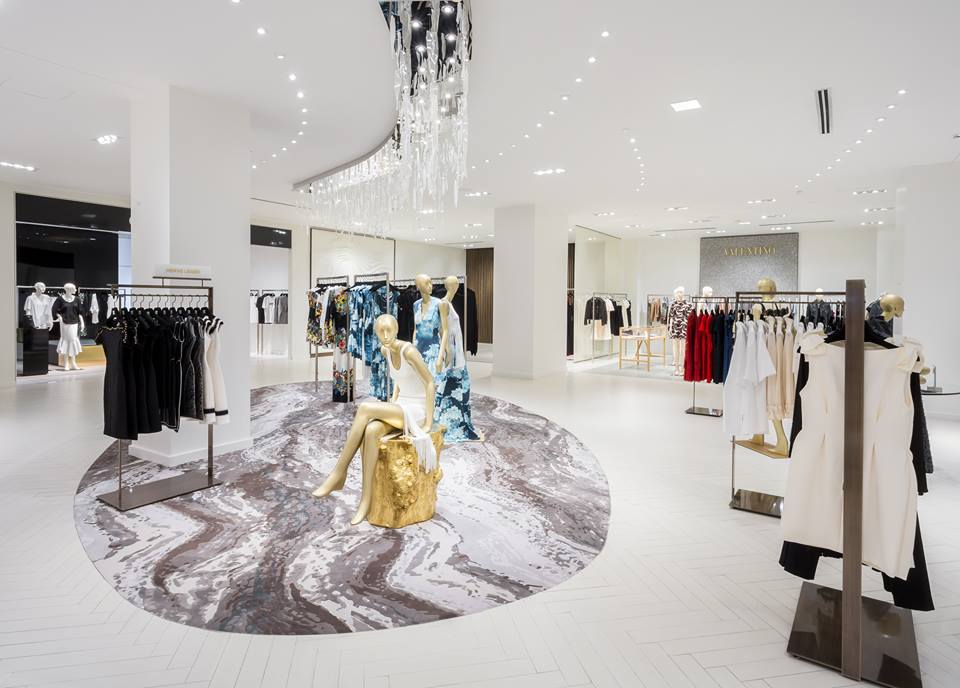
Women’s designer department on the third floor of Saks Fifth Avenue in downtown Toronto (Hudson’s Bay Queen Street/CF Toronto Eaton Centre), 2016. Photo: Saks Fifth Avenue
The Early Success: Toronto’s Flagship Exceeds Expectations
The Queen Street flagship was an immediate hit. According to Stephens, the store quickly became one of Saks Fifth Avenue’s top-performing locations globally.
“In its first year, the Eaton Centre store was already the number three store in the company, behind only New York and Brickell in Miami,” he said. “Sales well exceeded $100 million in year one. The excitement around the opening was enormous, and we leveraged that momentum aggressively.”
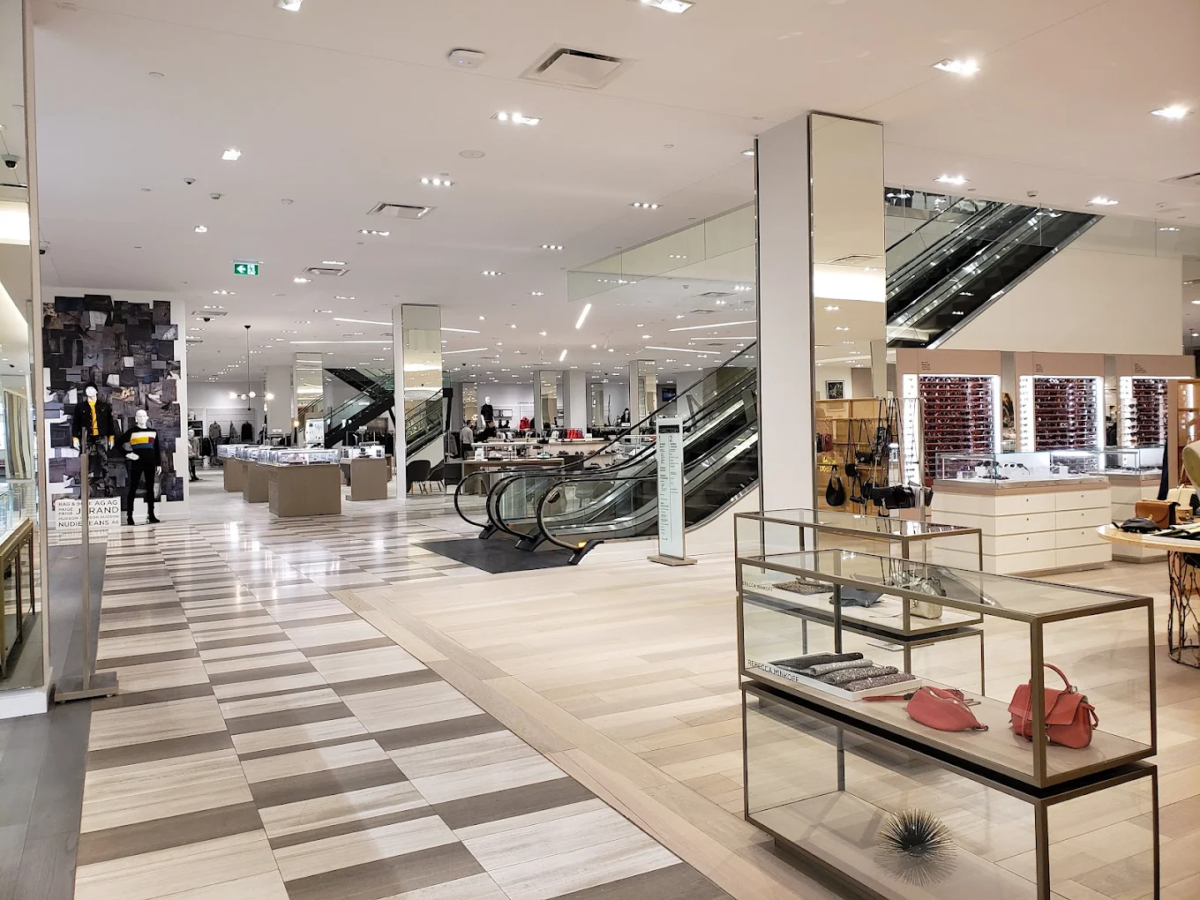
Meanwhile, the CF Sherway Gardens location, which spanned roughly 143,000 square feet, saw slower traction but eventually stabilized. “Sherway was a different beast. It took a bit longer to build, and while it never hit Eaton Centre’s numbers, it was still producing solidly,” Stephens added.
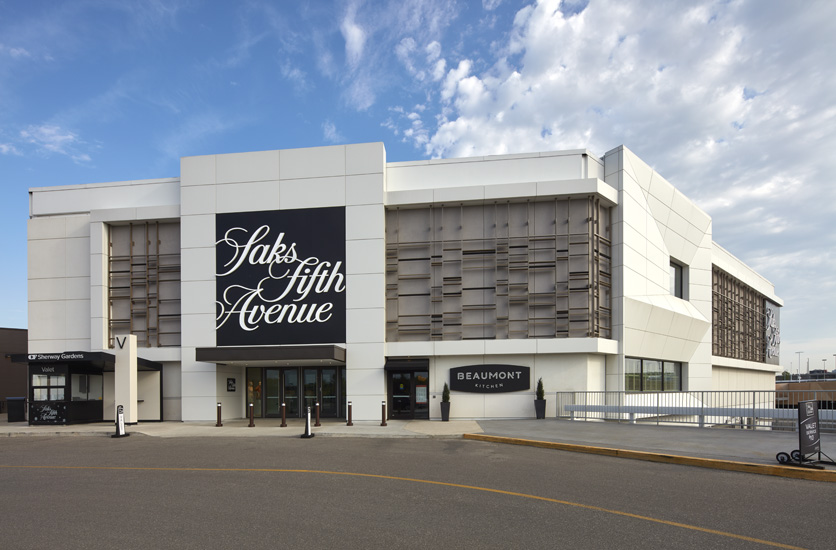
Saks Fifth Avenue CF Sherway Gardens in 2016. Image: Alex Rebanks Architects
Calgary: An Expansion That Never Fully Materialized
The third Saks Fifth Avenue store opened in February 2018 at CF Chinook Centre in Calgary, occupying 115,000 square feet in a former Zellers space. However, this location struggled from the outset.
“Calgary was never a true Saks store,” Stephens admitted. “It lacked the full luxury brand matrix and never carried the kind of high-end inventory we envisioned. It almost felt like a nice Hudson’s Bay store with a Saks sign on it.”
Unlike the Toronto locations, Calgary’s store did not feature a food hall or extensive high-end brands. The sales challenges reflected the city’s volatile economic environment, particularly during Alberta’s oil price downturns.
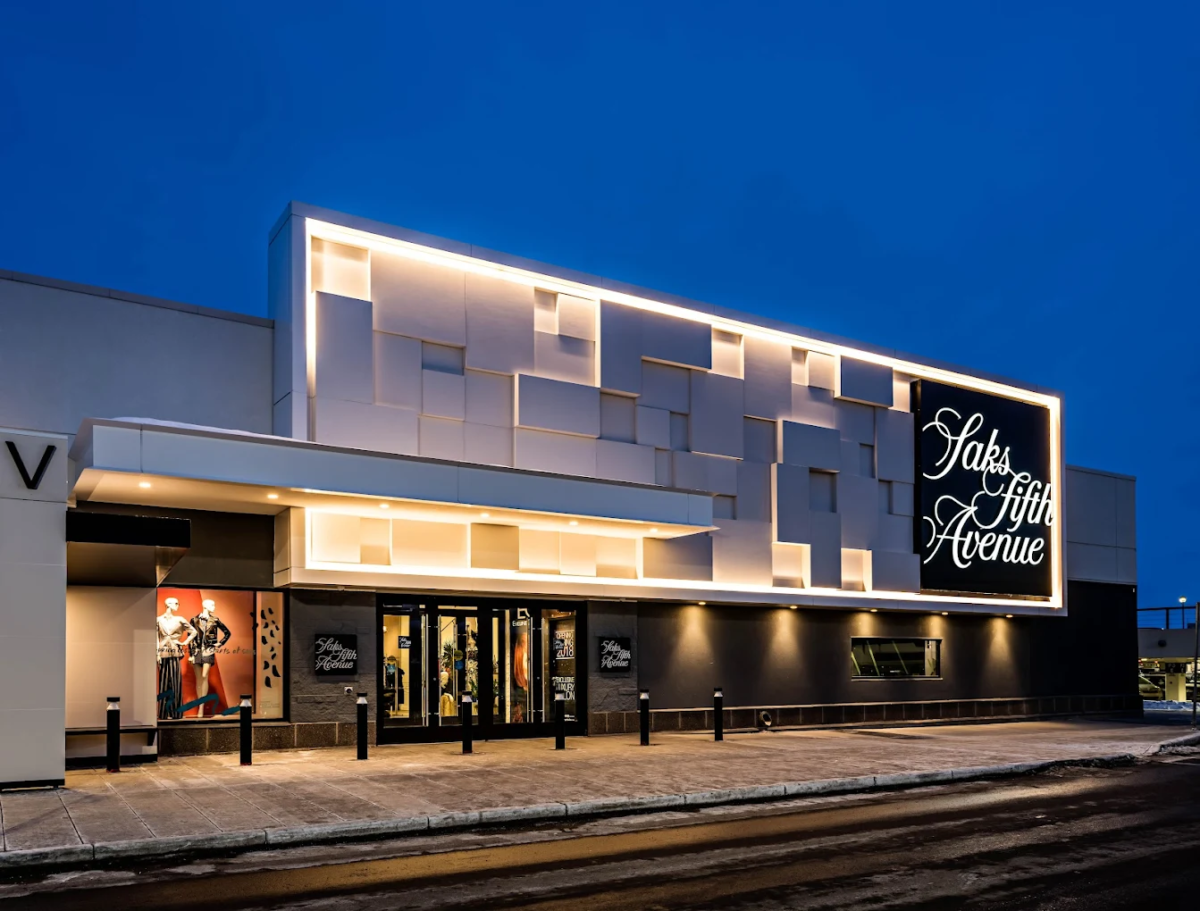
Saks Fifth Avenue at CF Chinook Centre in Calgary, 2023. Photo: Saks Fifth Avenue
The Role of Hudson’s Bay Company
While Saks Fifth Avenue remained a distinct luxury brand in the U.S., its Canadian operations were fully controlled by the Hudson’s Bay Company, which had acquired the U.S. retailer in 2013. In Canada, Saks was effectively licensed to operate under HBC’s banner, and the integration was not without tension.
“There was always a kind of eye-rolling dynamic between Saks and Hudson’s Bay,” Stephens recalled. “Saks was luxury, and Hudson’s Bay was not. There was friction anytime Hudson’s Bay attempted to give direction to Saks.”
Stephens emphasized that while many consumers assumed Saks was the parent company, the reverse was true. “People would say, ‘Saks bought Hudson’s Bay,’ and I’d have to correct them — it was Hudson’s Bay that owned Saks.”
That ownership structure ultimately contributed to the downfall. When Hudson’s Bay Company entered creditor protection in early 2025, the Canadian Saks stores were bundled into the liquidation.
“Effectively, Saks Canada was shaved off and included in the Hudson’s Bay bankruptcy while Saks U.S. remains operating under Richard Baker’s ownership and now forms part of his Neiman Marcus and Bergdorf Goodman group (Saks Global),” Stephens explained.
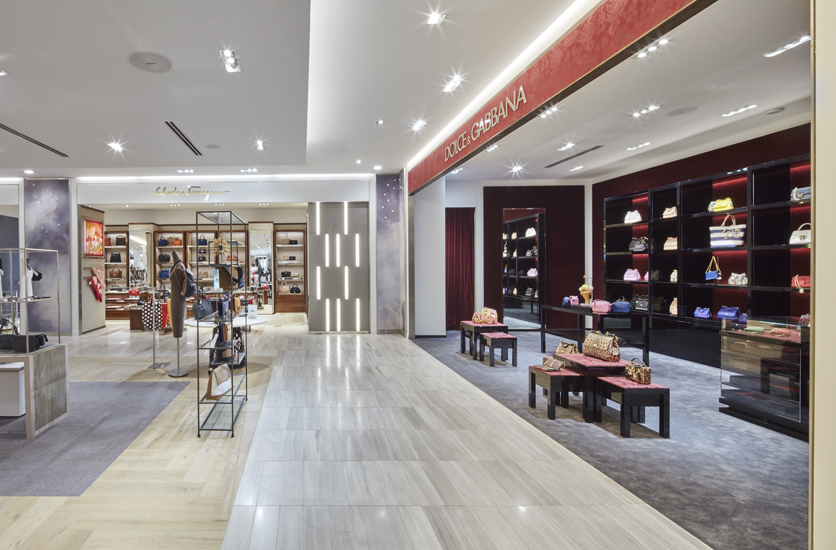
Dolce & Gabbana and Ferragamo boutiques at Saks Fifth Avenue CF Sherway Gardens in 2016. Image: Alex Rebanks Architects
The Turn in Strategy — And the Beginning of the End
According to Stephens, the early success of Saks Fifth Avenue Canada started to unravel after corporate leadership in New York began imposing U.S.-based strategies on the Canadian operations.
“A couple of years after opening, we had visiting executives come to Toronto. They started talking about implementing U.S. strategies here. Myself and Stefane Ledoux [Saks Canada’s first hire] both told them, ‘That won’t work in Canada,’” Stephens said.
One executive’s dismissive response marked a turning point. “He leaned back, crossed his legs, and said, ‘No, guys. We know how to run these big stores.’ I knew then the writing was on the wall. I resigned about three months later.”
Once the Canadian leadership team departed, the business shifted to a cost-cutting mode. Marketing budgets dried up. Staff turnover accelerated. The stores lost much of their energy and local relevancy.
“After I left, there was essentially no marketing. I would walk through the store and not recognize a single associate anymore,” Stephens said. “Momentum was lost, and luxury retail is very much about sustained excitement.”
Inside Saks Fifth Avenue at CF Chinook Centre in Calgary, 2023. Photo: Victor Law
The Unique Challenges of Selling Luxury in Canada
Stephens noted that luxury retail operates differently in Canada compared to the U.S., particularly for high jewelry and ultra-luxury categories.
“In the U.S., high jewelry events generate enormous immediate sales. In Canada, those same events generate sales — but often spread over six months,” he explained. “The Canadian consumer is more humble in their purchasing behaviour. There’s less ‘flex culture’ than what you see in places like New York or Miami.”
He added: “It’s not that Canadians aren’t buying luxury — but when they do, it’s often done very quietly, and sometimes even directly at the runway shows in Europe, bypassing local retail altogether.”
This cultural nuance was often misunderstood by Saks’ U.S. leadership. “They expected the same sales cadence as their American stores, but Canada’s market simply doesn’t operate that way,” said Stephens.
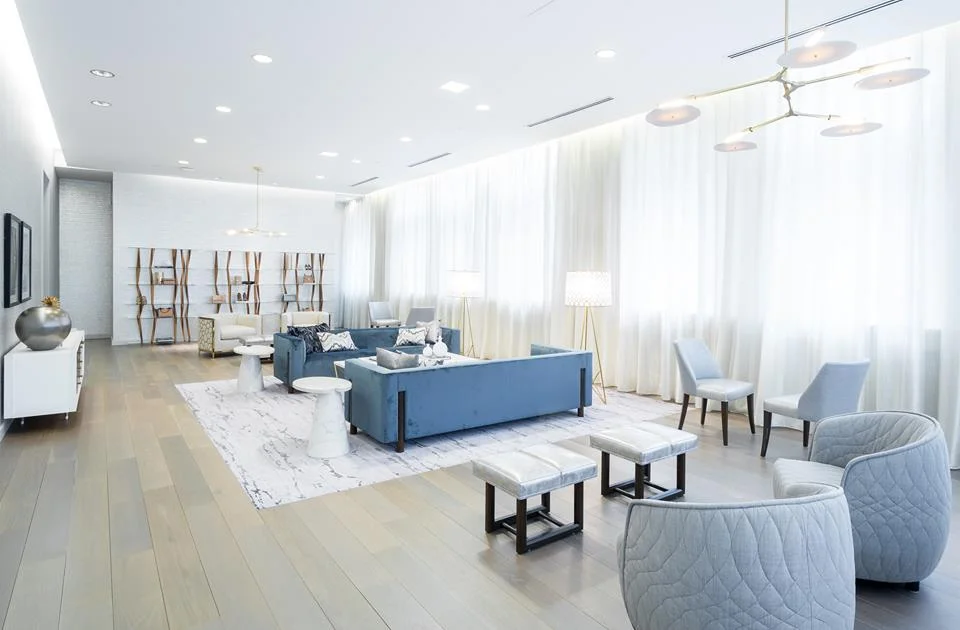
Fifth Avenue Club on the third floor of Saks Fifth Avenue in downtown Toronto (Hudson’s Bay Queen Street/CF Toronto Eaton Centre), 2016. Photo: Saks Fifth Avenue
Expansion Plans That Never Came to Be
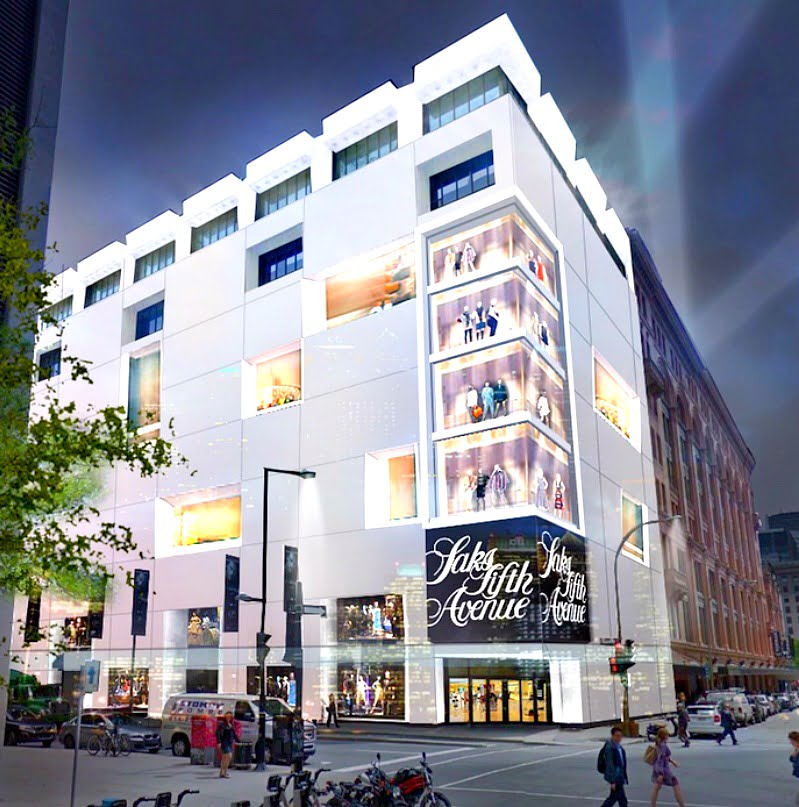
Plans for additional Saks locations in Vancouver and Montreal were eventually shelved. Hudson’s Bay tried to sell the downtown Vancouver building where Saks was originally supposed to open. Montreal’s proposed store — slated for a 220,000-square-foot space behind Hudson’s Bay’s flagship on Saint Catherine Street — remained permanently on hold.
“We always felt Montreal was unlikely,” said Stephens. “There were always vague excuses related to construction delays or other issues, but in hindsight, it was clear the expansion was stalling.”
Rendering of the proposed/unbuilt Saks Fifth Avenue store in Montreal, via HBC
The Broader Collapse of Large-Format Retail
Saks Fifth Avenue’s Canadian collapse mirrored a broader retrenchment of large-format retail. Nordstrom exited Canada in 2023 after a nine-year run, Target departed in 2015 after less than two years, and Holt Renfrew has transitioned largely to a lease model for many of its departments.
“We’re witnessing the death of large-format department stores,” said Stephens. “The dollar per square foot just doesn’t add up anymore.”
Luxury brands increasingly prefer standalone boutiques where they control the customer experience and client data. “Dior, Louis Vuitton — they want full control. Shop-in-shops inside department stores no longer serve their long-term interests,” he added.
The broader economic climate, including rising prices, generational wealth gaps, and shifting consumer attitudes toward luxury markups, is also playing a role.
“There’s greater awareness now about luxury markups,” Stephens said. “Many younger consumers know they’re paying thousands for handbags that might cost a fraction to produce. They’re less willing to accept those margins.”
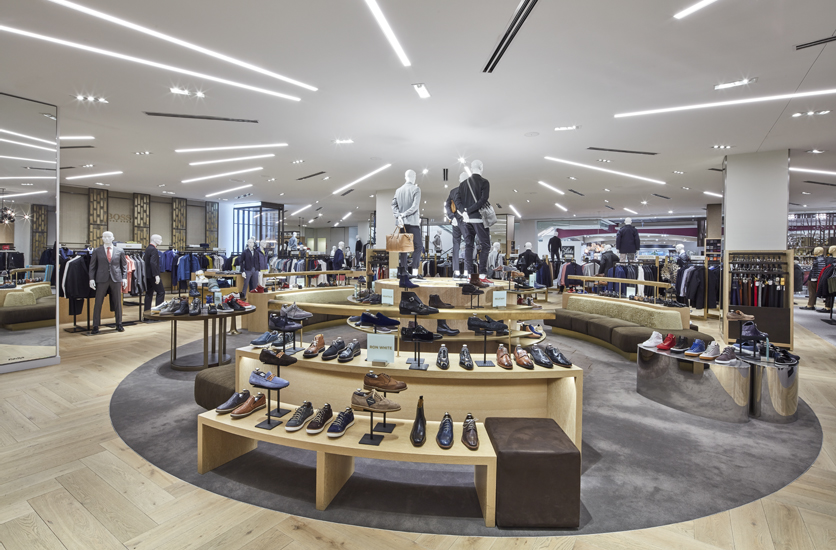
Lower level men’s department at Saks Fifth Avenue CF Sherway Gardens in 2016. Image: Alex Rebanks Architects
A Bittersweet Legacy
Despite the disappointment of Saks Fifth Avenue’s closure in Canada, Stephens remains deeply proud of what his team accomplished.
“It was the highlight of my career,” he reflected. “They let us build the Canadian strategy from scratch, and we were able to execute a world-class launch that resonated with Canadians.”
He pointed to memorable events such as the Canada 150 Gucci Ghost party and intimate conversations with icons like Cindy Crawford as defining moments.
“In Canada, they allowed us to be a little edgier, a little rougher around the edges — and it worked. We captured the excitement Canadians felt about finally having Saks Fifth Avenue here.”
Today, those memories stand as a testament to what was possible — and serve as a case study in both the promise and peril of international retail expansion.
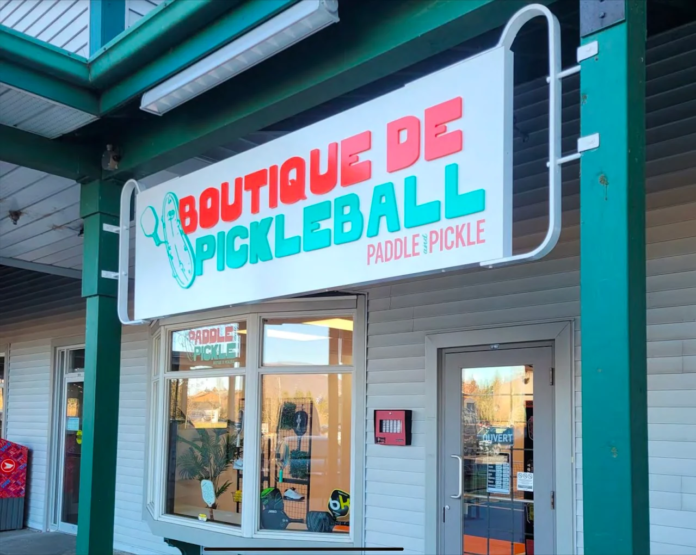
Paddle & Pickle in Bromont Quebec. Photo: Paddle & Pickle
In the midst of growing economic uncertainty, many Canadians are searching for affordable ways to stay active, socialize, and engage in their communities. One rapidly growing sport is offering exactly that: pickleball. At the forefront of this phenomenon in Quebec is Paddle & Pickle, a specialty retailer located in Bromont that has quickly become much more than just a retail store.
“In the beginning, we weren’t sure if it would be successful,” said Dany Viens, co-founder of Paddle & Pickle. “But now it’s crazy — it’s going very well. We’ve put our name and brand everywhere in Quebec.”
Viens and his partner Leslie Gamache opened Paddle & Pickle just nine months ago, turning their personal passion for pickleball into a thriving business that blends retail, sport, and community.
From Hobby to Business
The idea for Paddle & Pickle came, quite literally, over a cup of coffee. As avid pickleball players themselves, Viens and Gamache had struggled to find places where they could test equipment before purchasing. Pickleball paddles can be expensive, often ranging from $300 to $400 each, and buying online made it difficult to know which paddle would feel right.
Paddle & Pickle co-founders Dany Viens and Leslie Gamache
“Dany was ordering so many rackets online,” Gamache recalled with a laugh. “We were having coffee one morning and said: why don’t we open a store where people can try the paddles before buying? That way they wouldn’t spend money unnecessarily.”
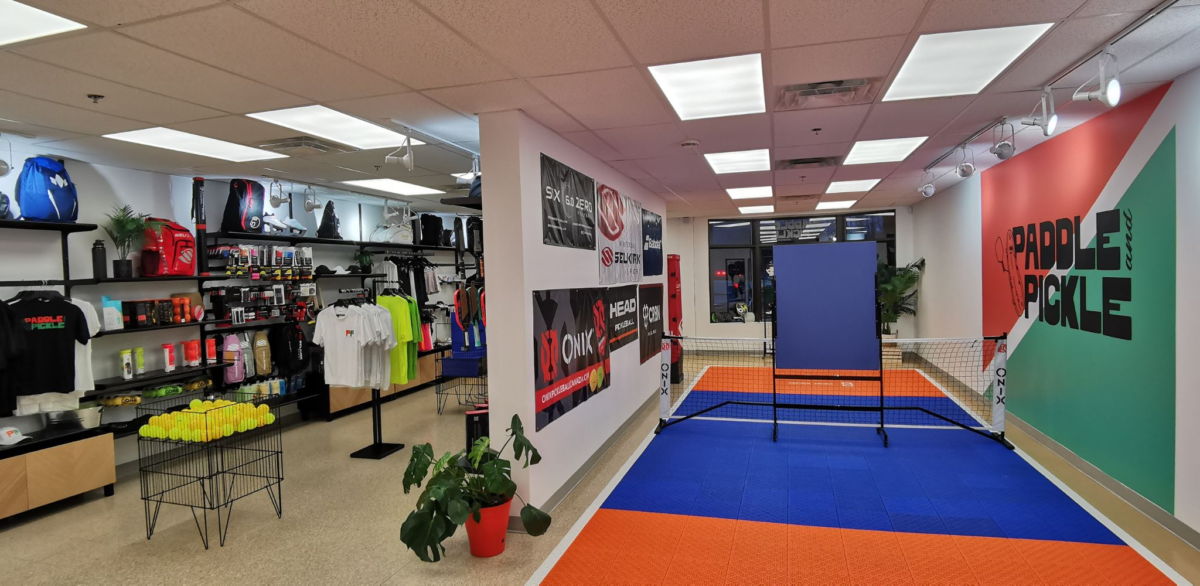
This simple idea quickly evolved into a brick-and-mortar location that offers customers the chance to not only shop, but also play. Inside the 1,300 square foot store is a mini pickleball court, outfitted with professional flooring that allows visitors to test paddles and play casually. “It’s not full-sized,” Gamache explained, “but it’s a perfect size for people to practice and get a feel for the equipment.”
A Comprehensive Product Line
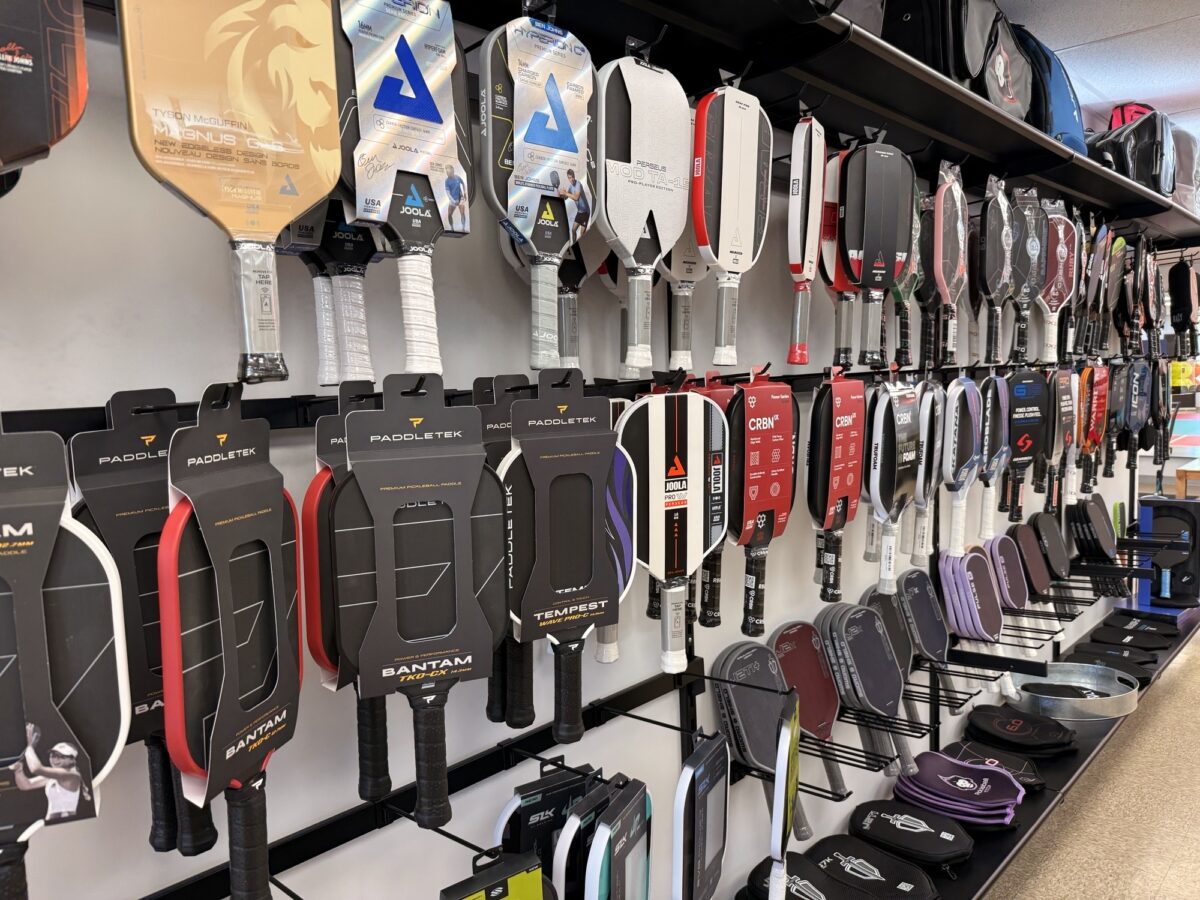
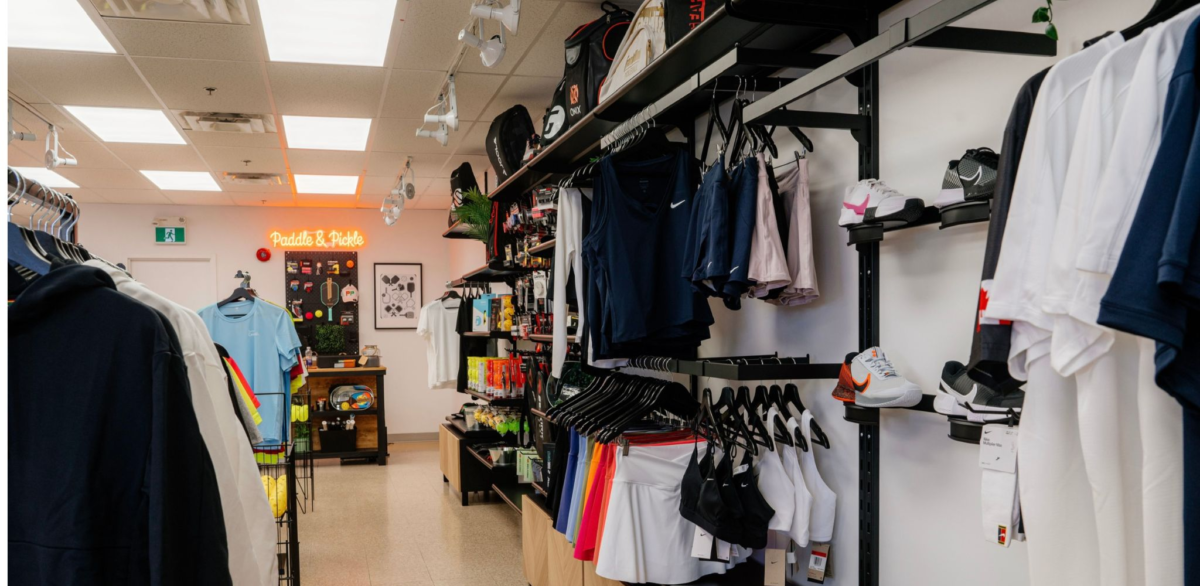
Today, Paddle & Pickle offers one of the most extensive selections of pickleball products in Quebec, if not Canada. The store carries approximately 350 different paddles, representing more than 25 brands including major names like JOOLA, CRBN, Franklin, Selkirk, and Diadem. Beyond paddles, the store sells everything from pickleball-specific footwear by Babolat to accessories, apparel, overgrips, training aids, and even novelty dog toys shaped like paddles.
“We even have the Titan ball machine, which is very popular. We are the only retailer in Canada to sell that model in-store,” said Viens.
The store’s extensive inventory draws customers from across Quebec, and even from other provinces. Though online sales represent only about 5% of total business so far, their growing digital presence is helping Paddle & Pickle reach customers from as far away as British Columbia.
Paddle & Pickle in Bromont Quebec. Photo: Paddle & Pickle
More Than a Store — A Community Hub
While retail sales remain the core business, Paddle & Pickle has quickly evolved into something larger: a true community gathering place. Local schools bring students to play on the mini court during lunch hours, and the store serves as a meeting point for Bromont’s passionate pickleball community, which boasts an estimated 500 active players in a town of just 10,000 residents.
“We have kids from the nearby elementary school who come in at lunchtime to play,” said Viens. “They bring candy as little gifts and have so much fun here. It’s become part of the neighbourhood.”
Gamache added, “It’s not just about selling products. We talk with customers, we share stories, we often spend 30 minutes just chatting about pickleball. It’s really become a community in itself.”
In fact, Viens jokingly refers to himself as the town’s unofficial “pickleball hairdresser” — the person everyone talks to about the latest club gossip, tournaments, and new equipment.
The Business of Pickleball Expands Rapidly
Pickleball’s explosive growth in Canada mirrors trends south of the border. In the United States, the sport now ranks as one of the top three most popular recreational activities. In Canada, participation is estimated to be about four years behind the U.S., but growing rapidly.
“When we first started playing four years ago, people thought it was just for seniors,” said Gamache. “Now it’s everyone — kids, adults, retirees — and it’s only growing.”
One major driver of growth has been pickleball’s accessibility. Unlike sports such as hockey or golf, the cost to begin playing is relatively low. Starter kits, which Paddle & Pickle sells at a rate of roughly 10 per week, include two paddles, three balls, and a carry bag — often for under $150.
“We don’t try to oversell people when they’re just starting out,” said Gamache. “We help them get exactly what they need. A starter kit allows them to get on the court quickly, and they can always come back later if they want to upgrade.”
Many customers do exactly that. After trying the sport with an entry-level paddle, new players often return within a few months looking for higher-end equipment tailored to their play style.
Paddle & Pickle in Bromont Quebec. Photo: Paddle & Pickle
Building Canadian Manufacturing
While Paddle & Pickle’s retail business continues to grow, Viens and Gamache are also eyeing a potentially game-changing expansion: domestic manufacturing.
“Almost all pickleball paddles sold today are manufactured in China, even if the designs originate in North America,” Viens explained. “But with the trade tensions between China and the U.S., and the growing desire for locally-made products, we saw an opportunity.”
Paddle & Pickle has partnered with a Quebec-based engineering company to develop a factory that will produce paddles entirely in Canada — using locally-sourced materials and fully Canadian labour. “We want to be the first to make pickleball paddles fully built in Quebec,” said Gamache.
The manufacturing project is still in early stages, with prototypes now under development. However, the co-founders believe Canadian-made paddles could appeal strongly to consumers looking to support local business while avoiding international shipping delays, tariffs, and geopolitical risks.
“It’s about independence, control over quality, and offering something truly unique to Canadian customers,” said Gamache.
Bringing Pickleball to More Players
Beyond their retail storefront, Paddle & Pickle has been expanding its presence throughout Quebec’s broader pickleball scene. The company now participates in virtually every tournament across the province, setting up booths and selling equipment on-site.
“There’s a full tournament circuit in Quebec now,” said Viens. “We’re there for every event, getting our name out and connecting with players.”
Viens and Gamache are also negotiating partnerships with newly constructed indoor pickleball centres, many of which are opening year-round facilities with multiple courts. Some of these centres plan to feature small Paddle & Pickle retail spaces within their venues, offering another growth opportunity for the young brand.
“We’re starting small, but we definitely see the potential to expand,” said Gamache. “And the name ‘Paddle & Pickle’ would work anywhere in Canada.”
The Technology Behind the Business
Running an inventory-heavy specialty retail business presents its own challenges, but Viens credits their partnership with Montreal-based Lightspeed for making operations smoother.
“Lightspeed allows us to manage inventory between the physical store, online store, and our mobile sales at tournaments,” Viens said. “We can process sales directly from our phones using the app, and inventory automatically updates across all platforms.”
Gamache added that Lightspeed’s integrated system allows them to better serve customers by instantly checking product availability whether they are in the store or at a remote event.
“It’s been a huge help in keeping everything organized, especially as we grow,” she said.
Paddle & Pickle in Bromont Quebec. Photo: Paddle & Pickle
A Sport That Brings People Together
What sets pickleball apart from many other sports is its unique ability to bridge generations and create meaningful social connections.
“People of all ages play together,” said Gamache. “Sometimes a 70-year-old can completely outplay a 40-year-old because of their finesse and technique. It’s a humbling but fun sport that brings everyone together.”
Viens added, “People even plan vacations around pickleball now. We see organized trips to Cancun or Spain where 60 people travel together just to play. It’s a real lifestyle movement.”
The sense of community is apparent even within Paddle & Pickle’s four walls. Customers often spend hours chatting, playing, and building relationships — transforming what could have been a simple transactional business into a vibrant third space for social engagement.
The Road Ahead
As Paddle & Pickle approaches its first full year in business, Viens and Gamache remain passionate about both the sport and the growing community they are fostering.
“We’ve put thousands of hours into this,” said Viens. “Our families, our kids, our neighbours — everyone helped get the store ready. It’s been a huge effort, but we love what we’re building.”
From a coffee-table conversation to a full-fledged business — and potentially Canada’s first pickleball paddle factory — Paddle & Pickle’s journey reflects not only the rise of pickleball itself but also the enduring power of community-driven retail.
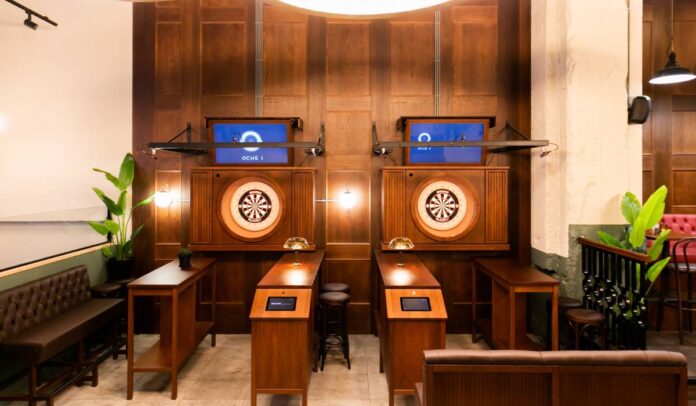
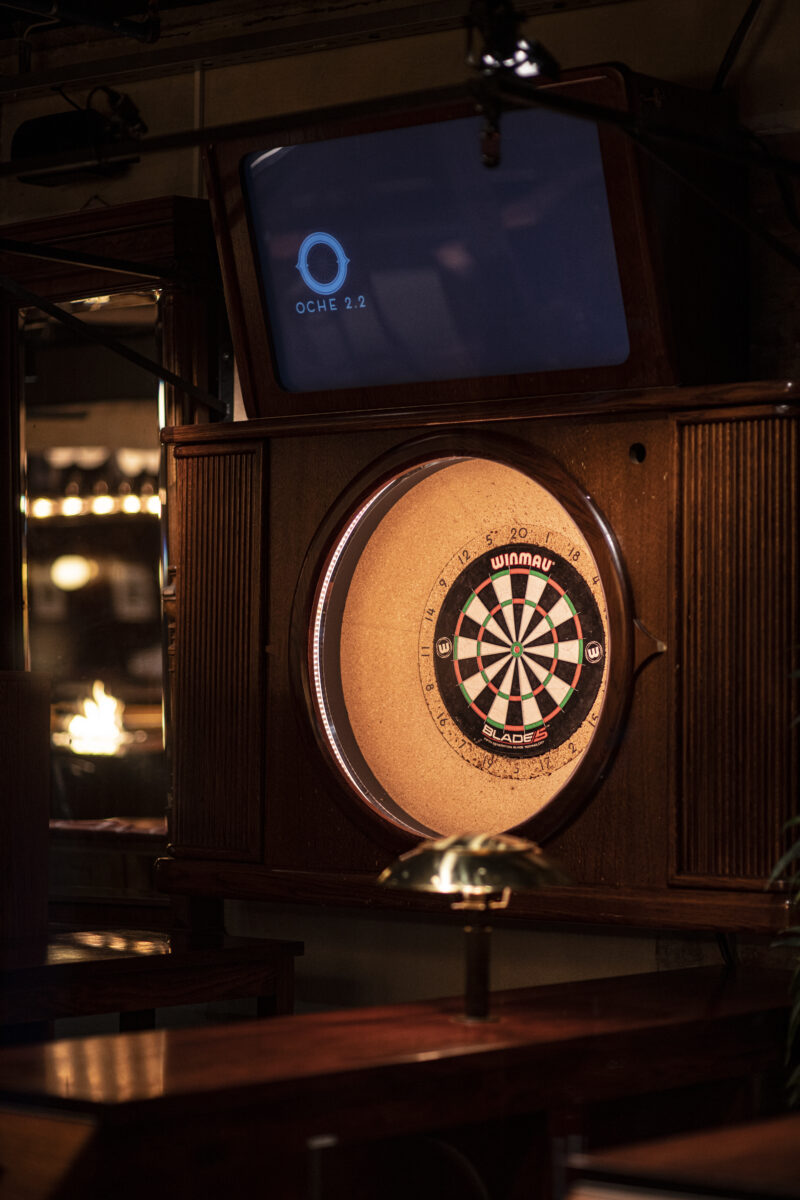
OCHE has officially landed in Toronto — and it’s unlike anything the city has seen before.
From the same team behind SPIN Toronto, OCHE is taking over the space formerly known as Second Floor Events (above SPIN) at 461 King Street West and reimagining the classic pub game of darts through immersive, tech-driven gameplay and an elevated social experience.
“OCHE is more than just a gaming venue — it’s a global Norwegian-born community that taps into the growth of social gaming, answering the call for meaningful social interaction in a world where traditional drinking-focused nightlife is evolving. With a white glove service approach that competitors don’t offer, OCHE brings a fresh, inclusive space where pubs remain the heart of the community, but drinking isn’t the main event,” said the company.
Photo: OCHE
“Our mission is to lower the barrier to socializing, and The Social Gaming Group’s groundbreaking tech products, commitment to community building, and emotionally impactful experiences made this partnership a no-brainer. Infusing well-loved, familiar activities like shuffleboard, karaoke, and darts with innovative tech makes for a truly memorable experience, confident that Oche King Street West will be an unqualified success,” said Ryan Fisher of Paper Plane Hospitality Inc.
OCHE Toronto Highlights:
Immersive Darts Experience with real-time scoring and gamified challenges
Interactive Shuffleboard, Private Karaoke Rooms, and high-energy games like Hoggern, Cricket, and High Striker
Classic British Pub Ambience meets modern digital flair
Menu of elevated pub fare and craft cocktails, designed for sharing
White glove service that sets a new standard in social gaming hospitality
Group bookings and event packages are available
“With shifting social habits leading to reduced alcohol consumption, OCHE bridges the gap by creating a vibrant hub that blends community, competition, and connection. It’s inspired by the camaraderie of classic pubs but designed for today’s social landscape. A place where gamers, friends, and newcomers can gather, play, and engage without the pressure of alcohol being the main attraction,” explained the company.
“Already making waves in cities like Amsterdam, Dubai, and Melbourne, OCHE is internationally recognized for its fusion of gastro-gaming, elevated dining, and bold nightlife – and now Toronto gets to experience it firsthand.”
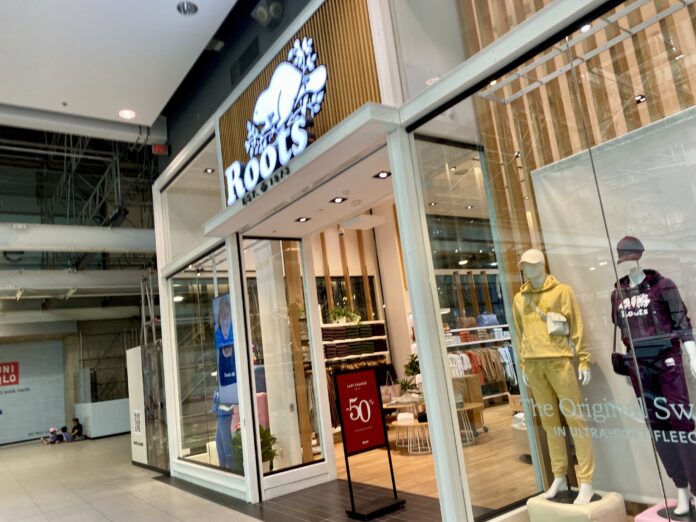
“Our first-quarter results, marking the third consecutive quarter of year-over-year growth in sales, gross margin, and adjusted EBITDA, speaks to the growing resonance of the Roots brand and the discipline with which we are executing our strategic priorities,” said Meghan Roach, President and CEO of Roots. “From elevated marketing to improved product availability and AI-operational enhancements, we drove meaningful gains across key performance metrics. As we begin 2025, I am proud of how our team continues to innovate and deliver value, while navigating consumer preferences and the evolving retail landscape.”
Key highlights:
Sales were $40.0 million, a 6.7% increase compared to $37.5 million in Q1 2024.
DTC sales were $34.6 million, a 10.2% increase compared to $31.4 million in Q1 2024
DTC comparable sales growth was 14.1%
Gross margin was 61.5%, up 250bps compared to 59.0% in Q1 2024
DTC gross margin of 62.9%, up 80bps compared to 62.1% in Q1 2024
Net loss totaled ($7.9) million, improving from ($8.9) million in Q1 2024
Excluding the impacts from cash settled instruments under our share-based compensation plan, net loss would have been ($7.4) million, improving 16.5% compared to ($8.9) million in Q1 2024
Adjusted EBITDAamounted to ($7.1) million, a 10.7% improvement from ($8.0) million in Q1 2024
Excluding the impacts from cash settled instruments under our share-based compensation plan, Adjusted EBITDA would have been ($6.6) million, improving 16.8% compared to ($8.0) million in Q1 2024
Net debt reduced 6.7% year-over-year to $29.6 million
Repurchased 115,300 shares for $0.3 million under the normal course issue bid that launched in Q1 2025
In an interview, Roach said the company had “really strong results.”
“We saw growth across all of our important metrics—sales, gross margin, and adjusted EBITDA. Comparable sales were up 14.1%, driven by growth in both our stores and online, which was great to see. We also saw very strong overall sales growth, which was very positive,” said Roach.
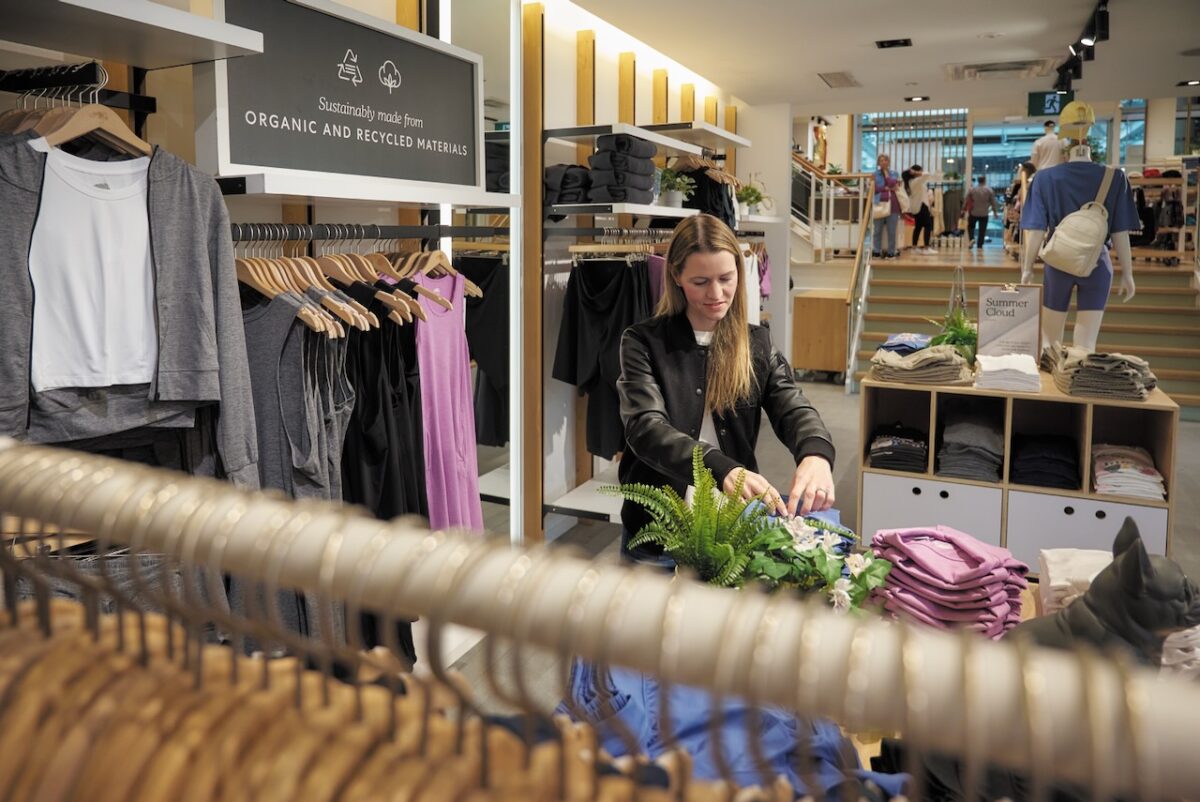
“The business is trending well for a combination of reasons: the product is resonating with customers, we’ve had good product availability, and we’ve made improvements in our in-store merchandising, staff training, and engagement. The in-store customer experience has been elevated, and the results reflect improvements across a number of different areas.
“We’ve also gained good traction from our branding and marketing efforts, which are bringing in new customers and contributing to our growth.
Roots CEO Meghan Roach, centre, with Roots founders Don Green (left) and Michael Budman (right). The three are standing at the original cabin where Roots started, in celebration of the 50th anniversary of Roots in the summer of 2024 (Image Provided)
“On the margin side, we saw an 80-basis-point increase year-over-year in our direct-to-consumer (DTC) margins. That reflects lower discounting this quarter and strong upfront product margins. While those gains were partially offset by foreign exchange headwinds and slightly higher freight costs, we still achieved great growth overall.
“Two final points on the results: first, we typically lose money in our first and second quarters due to the seasonality of our business. But we saw a significant reduction in our first-quarter loss. Our adjusted EBITDA—excluding something we call DSU revaluations—was up 16.8% year-over-year. So we reduced losses by 16.8%. Second, our balance sheet is very healthy. We’ve got more inventory this year, which has been helpful, and we feel well-prepared for the rest of the year.”
Roach said Roots is not being impacted by the Buy Canadian movement.
“We do track this. We categorize our products, and one of the categories is called “Canada.” While sales in that category are up year-over-year, it only accounted for a small portion of our overall growth. Part of the increase was due to better inventory availability in that specific collection,” she said.
“Looking at our performance more broadly, we’ve seen positive comps since Q3 of last year—so Q3, Q4, and now a third consecutive quarter of strong comparable sales. We feel that Canadian consumers are holding up better than we expected, and we’re definitely seeing more travel within Canada, which likely benefits us in certain regions.
“But overall, we don’t believe the Buy Canada movement is what’s driving our sales. The momentum has been consistent since Q3 of last year.”
Meghan Roach (Image: Roots)
Roach said the company is closely watching for a resolution to the tariff situation.
“Even though we don’t have a large U.S. business, tariffs create supply chain volatility more broadly, which affects us. There’s also been a lot of foreign exchange volatility, which we’re monitoring,” she said.
“At a higher level, we’re continuing to invest in branding and marketing. Our brand ambassador program has been paying dividends, and you’ll see more people joining that program and increased engagement in the second half of the year. We also have a number of product launches and events planned, which we’re really excited about.
“The business continues to benefit from our operational improvements. We’ll also keep talking about the gains we’re seeing from our investments in artificial intelligence—whether that’s improving inventory management or optimizing our online platform. There are a lot of positive developments ahead, but we are mindful of the broader market uncertainties that remain.”
Roach said Roots will be opening a new store on Robson Street in Vancouver this summer, hoping to have it open before Canada Day. It’s also doing a major renovation of its store in Mont Tremblant, which should also be completed this summer.
“Right now, we’re focused on optimizing our store base. That includes a mix of closures, enlargements, and reinvestments to improve the footprint. Aside from Robson, we don’t have other new stores currently planned, but we’re always evaluating new opportunities,” she said.
Meghan Roach
“It’s great to see the continued resilience of the company. We’ve had strong momentum over several quarters, and I think it reflects the strength of the brand. Roots has been around for 50 years in the Canadian marketplace. We’ve got great products, great people, and we’re doing things that are resonating with customers. Despite broader market uncertainty, the Roots brand is performing well.
“A 14.1% comp sales increase is very positive. Our customers continue to return for what Roots is known for—comfort, quality, and premium materials. What’s exciting is they’re buying into both our new collections and our heritage styles. That shows we’re hitting the right balance between modernizing our offering and staying true to our DNA. So overall, I’m very excited about the opportunities ahead. You can really see that the work we’ve been putting into the business is paying off now.”
Established in 1973, Roots is a global lifestyle brand. Starting from a small cabin in northern Canada, Roots has become a global brand with over 100 corporate retail stores in Canada, two stores in the United States, and an eCommerce platform, roots.com. It has more than 100 partner-operated stores in Asia, and it also operates a dedicated Roots-branded storefront on Tmall.com in China. It designs, markets, and sells a broad selection of products in different departments, including women’s men’s, children’s, and gender-free apparel, leather goods, footwear, and accessories.
Retail Insider is streamlining its Canadian retail news from around the web to include a handful of top news stories that can be viewed quickly during the day. Here are the top stories from the 24 hours.
For decades, betting against McDonald’s has proven to be a losing strategy. The company has weathered every headwind imaginable: calls for healthier eating, tougher labour laws, the rise and fall of plant-based meat, and complex procurement challenges. Through it all, McDonald’s has remained remarkably resilient. But today, the fast-food giant may be facing its most formidable threat yet — and it has nothing to do with burgers or fries. It’s Ozempic.
This week, McDonald’s shares dipped following an analyst downgrade, triggered by concerns over the growing use of GLP-1 weight-loss drugs like Ozempic. Analysts estimate the company could lose up to 28 million customer visits in the U.S. alone. While the market reaction has been modest so far, the long-term implications are serious. By 2030, up to 30 million Americans — nearly 1 in 10 — may be using GLP-1 medications. In Canada, that number could reach between 1.5 and 3 million, equivalent to the entire population of the Island of Montreal.
These medications suppress appetite and, by extension, shift consumption patterns. Early data suggests that consumers on GLP-1s are eating less frequently and with greater intentionality. This poses a direct threat to brands built on impulse consumption — particularly those targeting value-conscious or lower-income demographics, a category into which McDonald’s firmly falls.
The food industry has faced disruption before. The rise of online grocery and food delivery services in the early 2000s challenged the sector’s reliance on impulse-based purchasing. Digital platforms forced companies to reimagine how they connect with consumers in a non-physical environment. The growing adoption of GLP-1s presents a similar disruption — but this time, the driver is physiological, not technological, and largely outside the industry’s control.
The downgrade of McDonald’s stock should not be dismissed lightly. In Canada, the company operates over 1,400 restaurants, employs approximately 90,000 people, and commands 18% to 20% of the quick-service market. It serves more than 2.5 million Canadians every day. McDonald’s is also the largest single buyer of Canadian beef and eggs in the foodservice industry — making it a crucial link in the domestic agri-food value chain.
Other signals point to broader structural shifts. WeightWatchers has filed for Chapter 11 bankruptcy protection in the U.S. Major snacking companies are also feeling the pressure. Year-over-year, PepsiCo’s stock is down nearly 21%, Nestlé is down 10%, and Mars has seen a 5% decline. Nestlé has even introduced a line of “Ozempic-friendly” products to cater to a new consumer reality: smaller appetites, higher sensitivity to side effects, and less frequent indulgence.
As was the case with the rise of plant-based diets, the food industry is once again being forced to adapt. The difference this time is that GLP-1 usage isn’t a lifestyle choice — it’s a medical intervention. Quick-service chains now recognize that if one member of a group can’t find a suitable menu option, the entire group may choose to dine elsewhere.
This is, quite simply, a turning point. It marks the first time in modern history that a pharmaceutical innovation is reshaping the global food landscape at scale. McDonald’s has proven its adaptability in the past and may do so again. But make no mistake: the GLP-1 revolution has the full attention of many executive in the food industry — and with good reason.
Canada’s digital economy is advancing at an incredible pace, but for many companies, innovation remains a challenge. Rapid shifts in technology, customer expectations, and global competition are raising the bar. Traditional digital transformation strategies are no longer enough to lead the market.
Enter generative AI—a transformative technology reshaping how Canadian businesses create, operate, and compete. And at the heart of this change is Sombra, helping organizations unlock new value with cutting-edge solutions tailored to the Canadian landscape.
Why Generative AI Is a Game-Changer for Canadian Businesses
Generative AI is not just a tool—it’s a business catalyst. It empowers companies to create content, code, designs, synthetic data, and even strategies at a scale and speed never seen before. This leap forward is already making a measurable impact in sectors like finance, healthcare, manufacturing, retail, and logistics.
Here’s why Canadian businesses are leaning into this wave:
Productivity Boosts: Automate document processing, customer interactions, and internal communications.
Multilingual Market Fit: Serve English and French-speaking audiences with dynamic, localized content.
Creative Acceleration: Generate prototypes, marketing assets, and UI/UX ideas quickly and cost-effectively.
Developer Velocity: Speed up coding, debugging, and system design with AI pair programmers.
This is where generative AI development services make the difference. With the right partner and implementation strategy, businesses can move from AI curiosity to enterprise-grade innovation.
A recent McKinsey report estimates that Gen AI could add up to $4.4 trillion annually to the global economy, and Canada is well-positioned to capture a share of that value.
Sombra’s Generative AI Solutions: Driving Tangible Business Outcomes
At Sombra, we don’t just implement AI—we engineer value. Our generative AI solutions are designed around three key drivers of business transformation:
New Product Development
Canadian startups and scale-ups are under pressure to bring ideas to market quickly. Our Gen AI tools accelerate this journey through:
Rapid concept validation
Automated wireframing and code generation
Content-rich MVP development
Case in point: A SaaS company based in Toronto leveraged our AI platform to launch a prototype in three weeks—cutting time-to-market by 70%.
Process Optimization
Businesses across Canada are streamlining operations using Gen AI to:
Extract data from invoices and forms
Automate internal FAQs and employee support
Process customer tickets with intelligent routing
Example: A healthtech startup in Montreal used our custom Gen AI bot to cut patient intake time by 60%.
Competitive Advantage
Stay ahead of the curve with real-time insights, AI-enhanced personalization, and dynamic content creation.
Create custom market reports and summaries
Tailor messaging for local segments (English, French, or both)
Personalize ecommerce or retail experiences on the fly
Example: A national retailer used our AI engine to auto-generate regional promotions, increasing customer engagement by 30% during a pilot phase.
Why Canadian Companies Choose Sombra
What sets Sombra apart isn’t just our technical skill—it’s our deep understanding of Canadian business needs and our ability to turn AI potential into measurable outcomes.
What You Get with Sombra:
Domain Expertise: From finance to healthcare to retail, we’ve helped Canadian organizations across industries.
Collaborative, Agile Approach: We work with you—closely and iteratively—to deliver solutions that scale.
Security and Compliance Focus: From data residency to ethical AI use, we ensure your systems are aligned with Canadian standards.
Local Context: Whether you operate in Toronto, Vancouver, Calgary, or Halifax, we understand your challenges and opportunities.
Client feedback tells us that having a partner who understands both technology and business culture is key to successful innovation.
As AI evolves, so will the competitive landscape. Future-forward companies in Canada are already exploring:
Multimodal AI (text, image, video, code integration)
AI + IoT for smart infrastructure and predictive maintenance
Human-AI collaboration tools that boost productivity without replacing people
At Sombra, we’re committed to helping Canadian businesses lead, not just follow. Whether you’re an enterprise exploring your first pilot or a startup looking to disrupt, our team is here to guide, build, and optimize your generative AI journey.
Conclusion: Let’s Build the Future, Together
Canadian innovation has always been about creativity, resilience, and forward-thinking leadership. Generative AI offers a new frontier—and Sombra is your trusted partner in navigating it.
You have more than one way to see clearly in today’s world. Glasses remain a classic and even a fashion choice for many. Contact lenses offer an alternative that fits modern lives. Contacts give you a full, frame-free field of view and move with you, which can be especially handy if you’re active or spend long hours at work or on screens.
As lifestyles evolve and technology improves, contact lenses have become more comfortable, convenient, and accessible than ever. They’re no longer just for special occasions or for people who can’t wear glasses. They’re a flexible option that can support how you live, work, and see each day. Whether you use them full-time or switch between lenses and glasses depending on the situation, having choices means you can take care of your vision without compromise.
Vision Correction That Moves With You
Contact lenses today serve a broader purpose than ever before. Whether for full-time wear, athletic use, or occasional convenience, modern lenses cater to a variety of needs. Technological advances have led to breathable materials, improved moisture retention, and lens designs that reduce eye strain – even during extended screen time.
This has made them a go-to choice for people with busy, active lives or those simply looking for unobstructed vision without the presence of frames. According to data from the Canadian Association of Optometrists, contact lens use continues to grow among Canadians, especially younger adults, and professionals who prioritize function and freedom.
A Wide Range of Options for Individual Needs
From daily disposables to monthly wear, and from soft lenses to rigid gas-permeable ones, today’s offerings can match different visual and lifestyle requirements. Specialized designs such as toric contact lenses for astigmatism and multifocal lenses for presbyopia further expand the possibilities, making vision correction more personalized than ever.
Many users are exploring the flexibility of contact lenses as a complement to or replacement for glasses. For those who need correction for both distance and reading or who find wearing glasses inconvenient during physical activities, contact lenses provide a seamless alternative.
Online Access and Changing Consumer Behavior
Another major development is how users obtain their lenses. The digital shift in healthcare has enabled people to purchase vision products online. While it’s important to maintain regular in-person eye exams, the ability to order lenses online has improved accessibility and convenience, especially for those in rural areas.
Eye Health and Hygiene: Ongoing Priorities
Contact lenses are medical devices, and their safe use requires proper hygiene, storage, and replacement practices. Neglecting these steps can lead to complications such as dry eye, irritation, or even corneal infections. TheCanadian Ophthalmological Society strongly recommends annual eye exams for all contact lens users to ensure continued eye health and detect early signs of any issues.
Additionally, it’s important to stay informed about how lifestyle choices – such as extended screen use or low indoor humidity – can affect contact lens comfort. Many new lens materials are designed to mitigate these effects, but ongoing consultation with an eye care provider is key.
Comfort That Keeps Up With Your Day
Comfort plays a big role in whether you stick with contact lenses long-term. While glasses can be removed easily, contact lenses need to stay comfortable for hours at a time – often from early morning through long workdays, commutes, and evening plans. That’s why newer lens technologies are designed to work with your eyes, not against them. Many lenses now feature moisture-rich materials that maintain hydration throughout the day, helping to prevent that gritty or dry sensation that can come from extended wear.
If your eyes feel tired by the afternoon, it may not mean contact lenses aren’t for you—it might just mean you’re wearing the wrong type. Whether it’s daily disposables that stay fresh with every use or monthly lenses made for better oxygen flow, the right material and fit can make a major difference in how your eyes feel at the end of the day.
Vision That Works for Today’s Lifestyle
Contact lenses have come a long way from being a specialty product to becoming a central part of modern eye care. With greater variety, easier access through online platforms, and increasing awareness around eye health and sustainability, they offer a compelling solution for individuals seeking both functionality and freedom.
The key is staying informed -about lens types, proper hygiene, regular checkups, and responsible disposal. When used correctly, contact lenses can offer not just clearer vision, but a more adaptable and empowered way to see and live.
Supercar Parade in Niagara-on-the-Lake, 2024. Photo: Niagara 5000
The highly anticipated Niagara 5000 returns this August, and momentum is already building fast. Now in its second year, the Canadian supercar and private aviation showcase has gained national attention, with over 550,000 digital impressions and surging engagement ahead of its 2025 edition. Scheduled for August 7–9, the event is expected to attract more than 30,000 guests to a weekend that blends luxury, innovation, and philanthropy.
Among the most notable developments for 2025 is the confirmation of Grand Touring Automobiles as the event’s title sponsor. The dealership, which represents luxury marques including Rolls-Royce, Aston Martin, Bentley, Bugatti, and Lamborghini, will anchor a series of exclusive experiences, including the Supercar Cruise & Parade, the STK Kickoff Party, and the signature Hangar Experience at Niagara District Airport.
The presence of these ultra-luxury vehicles positions Niagara 5000 among the top-tier supercar showcases in North America.
Cirrus Showcases Private Aviation Excellence
Private aviation will also take centre stage with Cirrus Aircraft named as the Personal Aviation Sponsor. Cirrus will exhibit its Vision Jet at both the Falls and the Hangar Experience. The company’s innovative design and luxury aircraft offerings align with Niagara 5000’s mission to celebrate high performance across all categories.
This aviation presence complements the automotive component of the event, offering guests a rare opportunity to engage with leading-edge transport technology in both air and land formats.
Cirrus planes, image: Niagara 5000
Financial, Tech and Insurance Brands Fuel Growth
Several major names in finance, insurance, and cybersecurity are backing this year’s edition. Sponsors for the Hangar Experience include RBC PH&N Investment Counsel, SentinelOne, HUB International Insurance Brokers, and CHUBB Insurance, reinforcing the event’s connection to excellence in both performance and security.
This high-level support from professional service sectors illustrates the growing interest from industries outside traditional luxury and automotive spaces, attracted by the event’s affluent demographic and elevated brand positioning.
Hospitality and Lifestyle Partners Enrich the Guest Experience
Hospitality and design will play an increasingly important role at Niagara 5000 this year. Among the featured partners:
Reif Estate Winery, the Official Wine Sponsor, will launch a limited-edition Niagara 5000 x Reif wine label and host a Bentley Cruise stop.
Coventry Transportation will provide VIP guests with premium shuttle service throughout the event. Roadside Flower Market will craft bespoke floral installations for the Hangar Experience with help from local floral artists.
Goldies Museum, the Official Design Sponsor, is curating the event’s overall aesthetic and spatial design.
These additions will enhance the event’s atmosphere, creating a sensory-rich environment that blends hospitality with luxury branding.
Automotive and Lifestyle Showcase Expands Across Niagara Region
Dozens of other automotive brands and service providers have signed on to support this year’s edition. McLaren Toronto, Pfaff Auto Group, Policaro Group (Porsche), Performance Mercedes-Benz, Lucid Motors, and others will display their vehicles at various destinations across Niagara, including Stratus, Southbrook, Peninsula Lakes Golf Course, and Ravine Vineyards.
Additional partners include UPS Niagara Falls (Print/Signage Sponsor), Zippy Golf Carts (Official Golf Cart Partner), Auto Business School of Canada (Education Partner), Engel & Völkers Niagara (Real Estate Sponsor), and Holt Renfrew (Gift Bag Sponsor). K1 Speed is featured as the Official Go Karting sponsor, while Atelier Munro will bring a made-to-measure menswear presence to The Hangar.
Notably, Oro Station, an emerging Canadian hub for motorsport innovation, will be offering an off-road driving experience with professional race car drivers during The Hangar Experience.
Hagerty, the premier insurer for collector and classic cars in Canada, will serve as this year’s Supercar Parade Sponsor. Their involvement adds credibility and a preservation-minded angle to the festivities, appealing to collectors and connoisseurs alike.
Supercar Cruise to local Niagara winery. Photo: Niagara 5000
Tourism and Government Support Reinforces Regional Focus
Backing from Tourism Niagara-on-the-Lake, Niagara Falls Tourism, Experience Ontario, and the Niagara Parks Commission further strengthens the event’s roots in the region. The support highlights the increasing importance of luxury tourism and special events in driving economic development across Ontario.
With the Niagara 5000 shining a spotlight on the area’s world-class vineyards, hospitality venues, and scenic backdrops, local tourism agencies are seeing the event as a vehicle for sustained regional growth.
A Platform for Purpose: Supporting McMaster Children’s Hospital
Niagara 5000 isn’t just about prestige — it’s also designed to make a meaningful impact. This year’s charitable partners include McMaster Children’s Hospital and Cassie + Friends, both of which will be featured in fundraising and awareness campaigns throughout the weekend.
One of the highlights will be the Kids Festival, which is supported by TNG Capital and raises funds for MacKids.
“Supporting McMaster Children’s Hospital through the Kids Festival is a meaningful way to ensure this extraordinary gathering also delivers real impact,” said Angelo Paletta, Founder of TNG Exotics. “Niagara 5000 represents the highest standard of excellence from the vehicles to the values behind them, and I’m proud to help shape an experience that celebrates generosity, innovation, and community at every turn.”
Niagara 5000 Positioned for National Status
With a growing roster of luxury sponsors and surging demand for attendance, Niagara 5000 is solidifying its position as Canada’s most exclusive summer weekend for high-performance culture and luxury lifestyle. Founded by Alana Hurov in 2023, the event is already evolving into a high-impact annual tradition that blends elite car culture with philanthropic values and local economic uplift.
“We’re so grateful to our sponsors for helping bring this vision of creating a truly world-class event to life,” said Hurov. “Every detail of Niagara 5000 is designed to reflect excellence — from the partners and programming to the causes we support.”
About Niagara 5000
Founded in 2023 by entrepreneur Alana Hurov, Niagara 5000 is a three-day luxury event held each August that transforms Ontario’s Niagara Region into a destination for elite automotive culture, private aviation, and bespoke hospitality. The showcase includes a curated lineup of supercars, jets, private parties, vineyard tours, and charitable activations.
More than an event, Niagara 5000 is a platform for connection, innovation, and impact — drawing collectors, entrepreneurs, and families into a shared celebration of performance and purpose.
For more information, including ticketing and event schedule, visit niagara5000.com.