Retail Insider is streamlining its Canadian retail news from around the web to include a handful of top news stories that can be viewed quickly during the day. Here are the top stories from the past 48 hours.
Comparable sales decreased 1.3%. Gross profit margin decreased 220 basis points to 56.9%. Adjusted EBITDA was $21.4 million, $2 million below last year. Net earnings was $13.1 million, or $0.26 per share – down 16.6% from a year ago.
“Sales in the second quarter were among the best in the last few years, despite three fewer stores and the closure of Thyme Maternity. We were especially pleased with Reitmans’ performance and the customer response to our Summer collection,” said Andrea Limbardi, President and CEO of RCL. “Customers remained price-conscious, and we strategically moved inventory through focused promotions, which impacted year-on-year gross profit. Adjusted EBITDA was primarily impacted by foreign exchange, as we benefitted from a currency gain last year. We continued to focus on improving SG&A, achieving a reduction in costs of over $2.7 million.”
Andrea Limbardi
“Looking ahead, we’re progressing on our five-year strategic plan, which includes driving brand growth through targeted investments in our retail footprint. In Q2, our renovated stores outperformed the rest of the fleet. In October, RW&CO will open its doors at an 8,000 sq. ft. flagship in Saint-Bruno, Québec, and unveil a bold new experience that reflects the brand’s evolving identity and focus.”
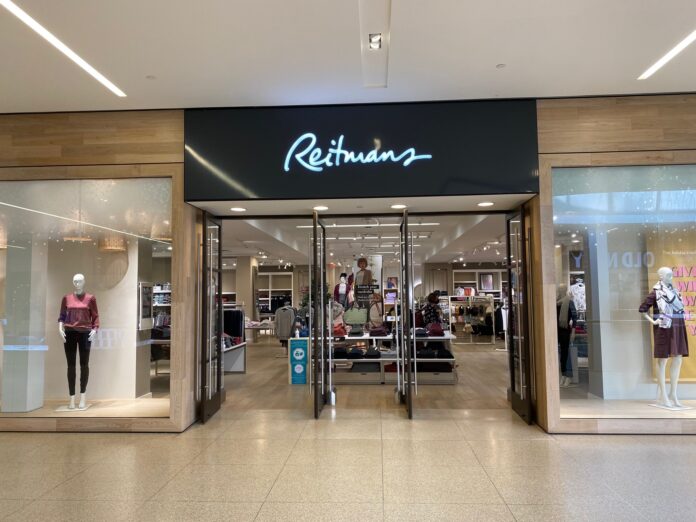
Reitmans (Canada) Limited is one of Canada’s leading specialty apparel retailers for women and men, with retail outlets throughout the country. The company operates 386 stores under three distinct banners consisting of 219 Reitmans, 84 PENN., and 83 RW&CO.
Selected Financial Information
(in millions of dollars, except for gross profit % and earnings per share) (unaudited)
Second quarter
Year to date fiscal
2026
2025
Change
2026
2025
Change
Net revenues
$215.9
$215.5
0.2 %
$374.7
$381.3
(1.7 %)
Gross profit
$122.8
$127.3
(3.5 %)
$211.2
$221.3
(4.6 %)
Gross profit %
56.9 %
59.1 %
(220 bps)
56.4 %
58.0 %
(160 bps)
Selling, general and administrative expenses
$103.1
$105.8
(2.6 %)
$202.2
$201.0
0.6 %
Net earnings
$13.1
$15.7
(16.6 %)
$3.1
$14.2
(78.2 %)
Adjusted EBITDA1
$21.4
$23.4
(8.5 %)
$10.8
$24.2
(55.4 %)
Earnings per share:
Basic
$0.26
$0.32
(18.8 %)
$0.06
$0.29
(79.3 %)
Diluted
$0.26
$0.32
(18.8 %)
$0.06
$0.29
(79.3 %)
1 This is a Non-GAAP Financial Measure. See “Non-GAAP Financial Measures & Supplementary Financial Measures” for reconciliations of these measures.
RioCan REIT’s bid prices on two Ontario malls held in its joint venture with the Hudson’s Bay Company have been revealed in newly filed court documents, providing the most detailed look yet at the financial terms of a deal that could give Canada’s largest retail-focused REIT full control of the properties.
Court-appointed monitor FTI Consulting reported that RioCan has offered a total of approximately $141 million to acquire HBC’s 50 percent ownership stakes in Georgian Mall in Barrie and Oakville Place in Oakville. The bid, which had been previously announced without financial disclosure, would allow RioCan to consolidate ownership of both shopping centres, where it already holds 50 percent stakes and serves as managing partner.
According to the filing, RioCan is offering about $77.6 million for Georgian Mall and roughly $63 million for Oakville Place. The proposal is structured as a stalking-horse bid, setting a floor price during a 60-day marketing period that ends October 13, 2025. This process allows competing bids to be submitted, though the monitor noted that the number of potential rival bidders is “narrow,” reflecting both the complexity of the assets and the financial encumbrances involved.
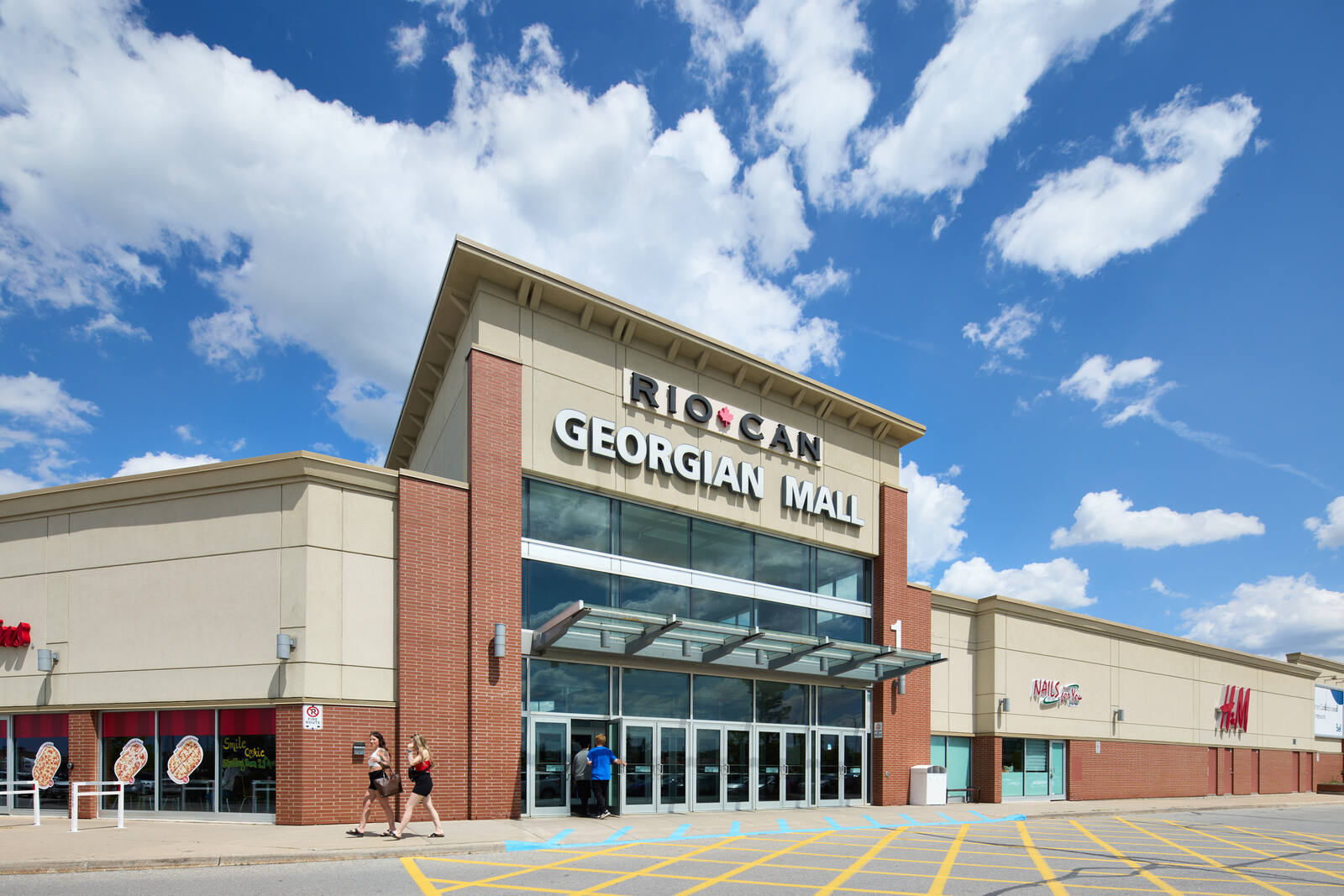
Georgian Mall in Barrie. Photo: RioCan
Structure of the Transaction
The $141 million RioCan proposal includes a mix of cash consideration, assumption of a portion of the mortgage debt tied to each property, and the discharge of certain obligations related to those mortgages. Among the lenders involved are Desjardins, TD Bank, and Canada Life, with significant outstanding principal balances on both malls.
This structure is typical for stalking-horse transactions involving retail properties with high leverage, as it allows the purchaser to set a baseline price for the asset while also negotiating with mortgage holders to ensure operational stability after closing. If a higher bid emerges, RioCan retains the right to match the offer or receive a break fee.
Strategic Motivation for RioCan
For RioCan, gaining full ownership of Georgian Mall and Oakville Place would streamline decision-making and open the door to new redevelopment strategies. As managing partner of the joint venture, the REIT already has intimate knowledge of the assets, making it the most logical buyer.
Full control would allow RioCan to address anchor vacancies, explore re-tenanting strategies, and reposition the malls for long-term growth. Both properties are dominant retail destinations in their markets, with Georgian Mall serving Barrie and surrounding Simcoe County, and Oakville Place drawing shoppers from one of the country’s most affluent suburban trade areas.
RioCan has increasingly shifted its portfolio strategy toward what it describes as “major market, transit-oriented retail and mixed-use properties.” The potential consolidation of these malls aligns with its strategy of focusing on high-quality retail nodes that can be repositioned over time to include new retail formats, dining, entertainment, and potentially residential components.
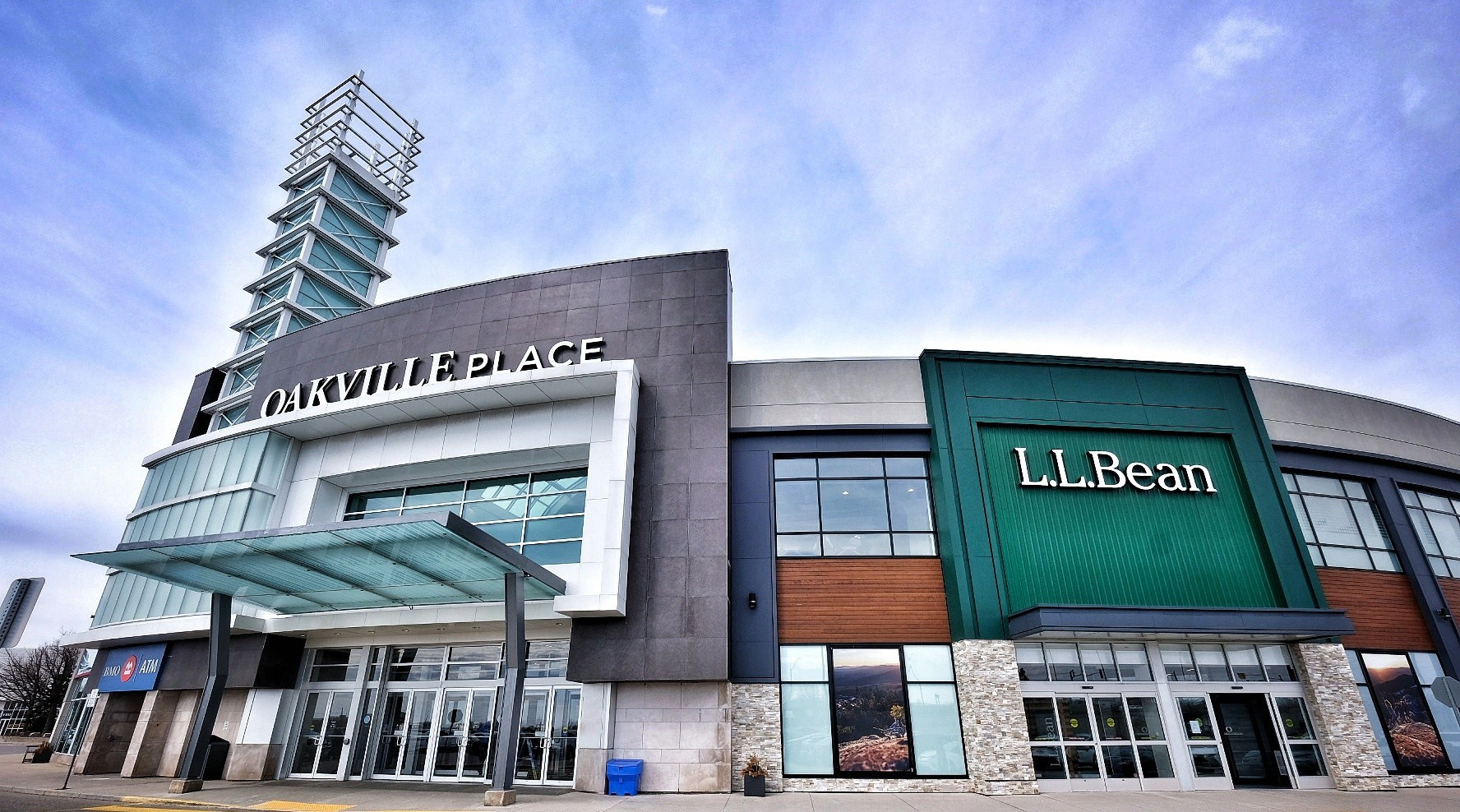
Oakville Place. Photo: RioCan
Hudson’s Bay’s Financial Distress
The revelation of RioCan’s bid comes amid Hudson’s Bay Company’s shutdown. The company filed for creditor protection in March 2025 after a prolonged period of declining sales, mounting debt, neglect, and reduced liquidity left it unable to meet rent and vendor obligations.
Under court supervision, HBC liquidated its remaining Bay department stores and Saks Fifth Avenue locations, and marketing its real estate interests to recover value for creditors. Its joint-venture stakes with RioCan represent some of its most valuable remaining assets.
The RioCan–HBC joint venture was formed in 2015 and originally encompassed 12 significant retail properties across Canada, including several flagship stores and top-performing malls. The partnership allowed HBC to unlock capital from its real estate holdings, but also saddled the JV with heavy mortgage debt.
Receivership and the Role of FTI Consulting
In June 2025, RioCan initiated receivership proceedings over the joint venture after HBC ceased its rent contributions. The Ontario Superior Court of Justice appointed FTI Consulting as receiver, giving legal oversight of the assets and enabling a structured sales process.
Receivership allowed RioCan and other stakeholders to stabilize operations, address mortgage issues, and begin marketing HBC’s stakes to prospective buyers. The stalking-horse bid now on the table represents the next step in that process, setting a baseline for recovery and giving RioCan the opportunity to secure full ownership if no better offers surface.
Mortgage Debt and Encumbrances
Both Georgian Mall and Oakville Place are encumbered by substantial mortgage debt, a factor that has shaped both the valuation and the structure of RioCan’s offer.
Georgian Mall carries a $110 million first mortgage and a $24.5 million second mortgage. Oakville Place is subject to a $95 million first mortgage and a variable second mortgage with a balance that fluctuates based on interest calculations. The size of these obligations has limited the field of potential buyers, as FTI Consulting observed, since any purchaser would need to work through lender negotiations and future capital expenditure requirements.
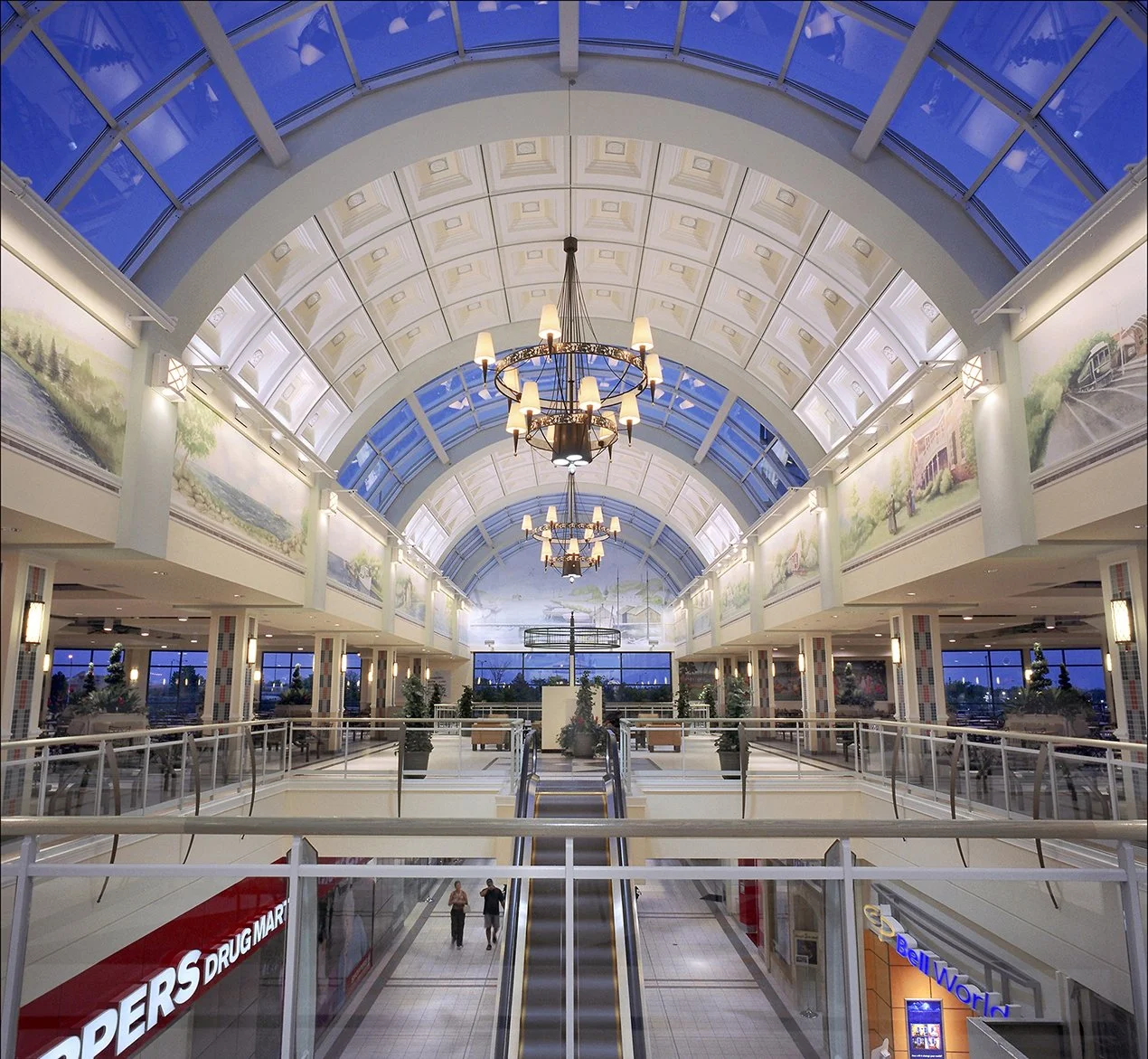
Georgian Mall in Barrie. Image: RioCan
Market Context and Redevelopment Potential
The acquisition would give RioCan full control over two important assets at a time when Canadian mall landlords are working to adapt to a rapidly changing retail environment. The departure of department store anchors such as Hudson’s Bay creates both risk and opportunity for property owners, who must replace large vacant spaces but can also reimagine their centres for new uses.
At Georgian Mall and Oakville Place, potential redevelopment could include subdividing former anchor boxes for multiple mid-sized tenants, introducing experiential retail or fitness concepts, or even exploring mixed-use components such as residential or office space.
RioCan has already demonstrated an ability to undertake such transformations at other properties in its portfolio, and full ownership would provide it with the flexibility to execute a similar vision for these two malls.
What Happens Next
The 60-day marketing process for the assets closes October 13, 2025, after which any competing bids will be evaluated. If no higher offers are received, RioCan will proceed with its acquisition and assume full ownership of Georgian Mall and Oakville Place.
Court approval will still be required before the deal can close, but if successful, RioCan will gain sole strategic and operational control, positioning it to implement new leasing and redevelopment plans.
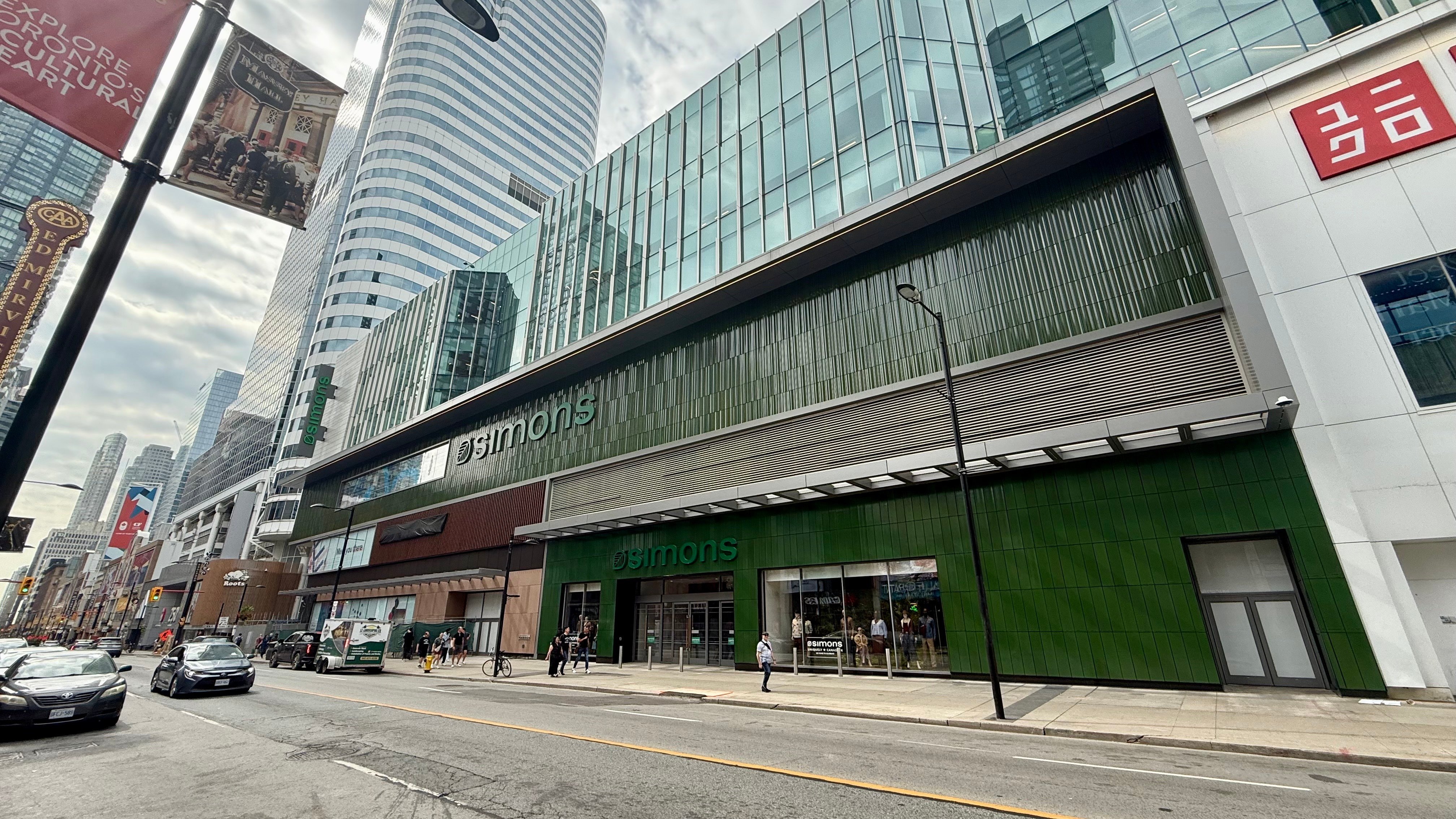
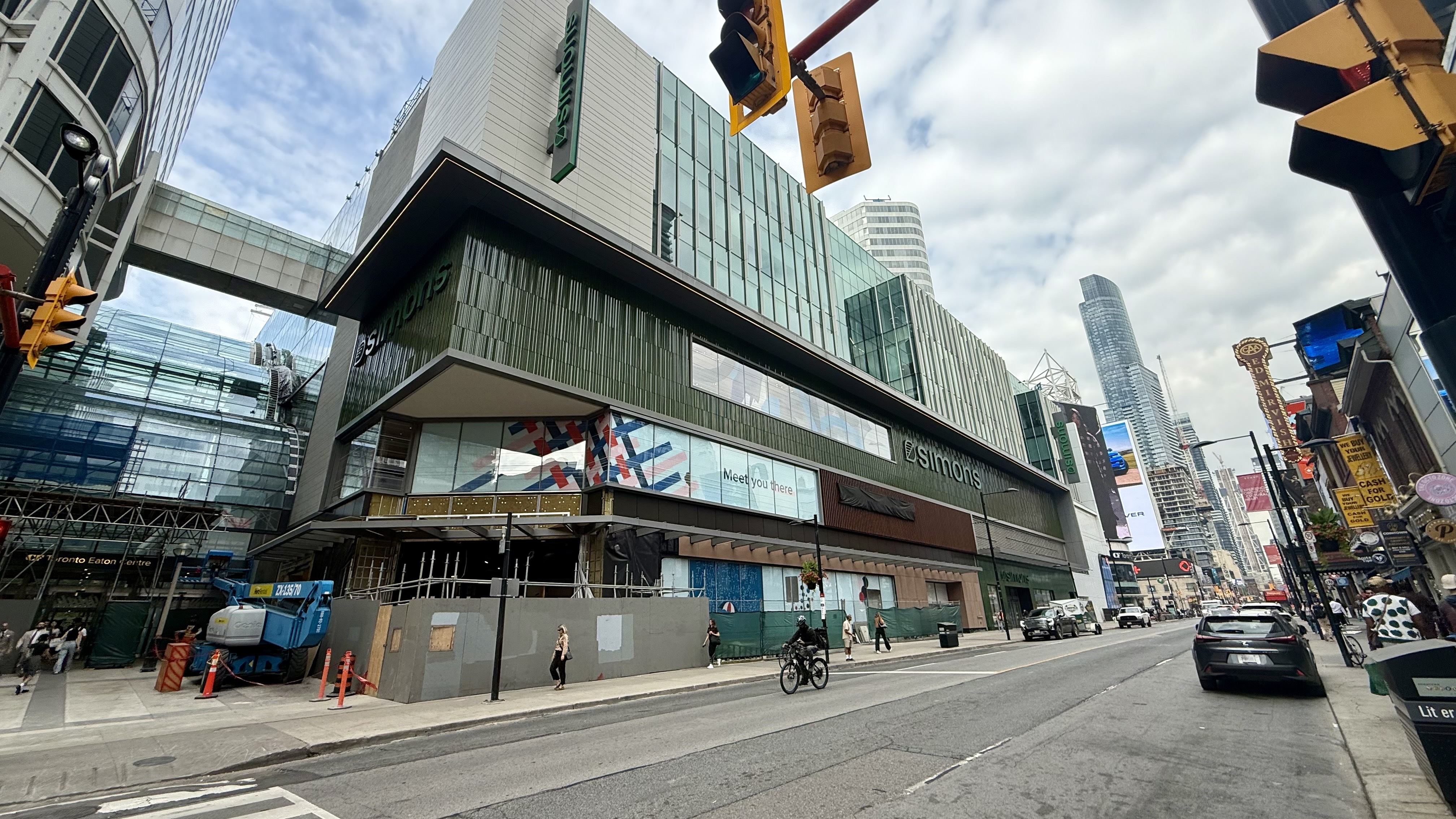
La Maison Simons at CF Toronto Eaton Centre, September 18, 2025. Photo: Craig Patterson
La Maison Simons, Canada’s oldest privately held fashion retailer, has officially opened its second Toronto location, anchoring CF Toronto Eaton Centre with a flagship that redefines department store retail in Canada. The new store, spanning three levels and approximately 112,000 square feet, occupies much of the space vacated by Nordstrom, which exited the Canadian market in 2023. The highly anticipated opening comes just weeks after Simons debuted its Yorkdale Shopping Centre location, marking a nearly $100 million investment into the Greater Toronto Area.
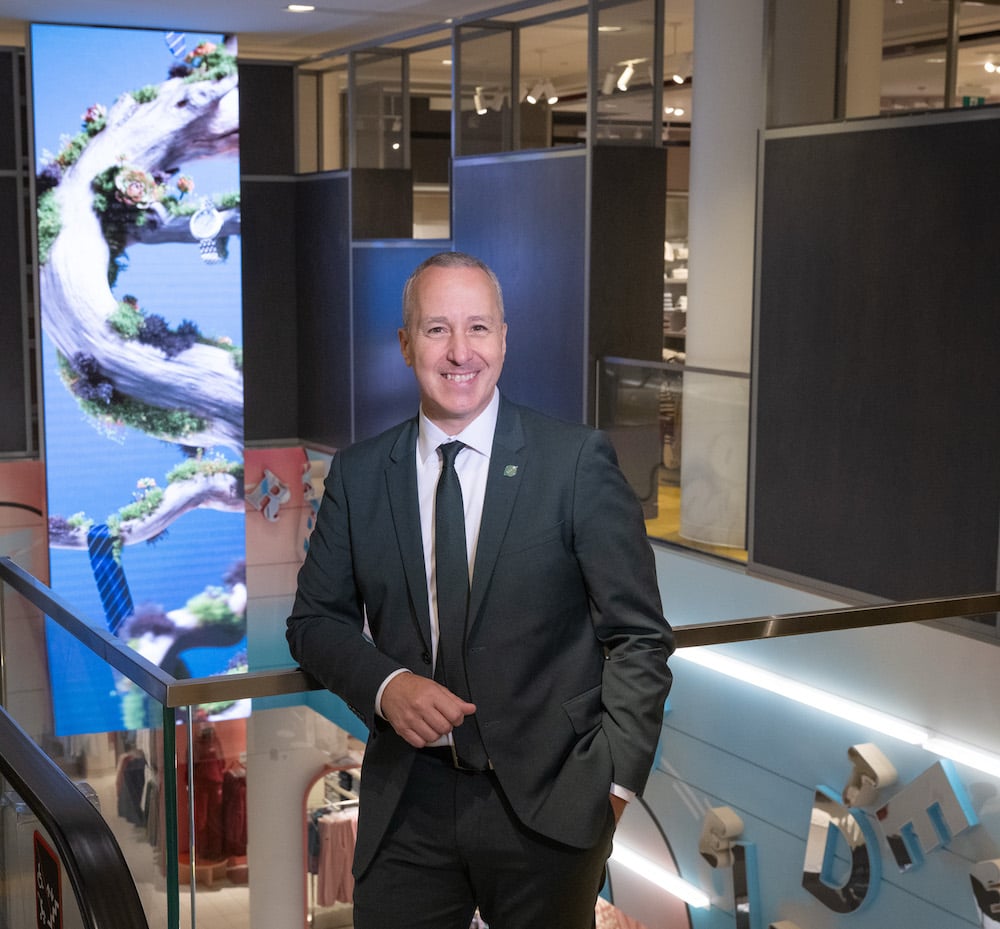
Bernard Leblanc, President and CEO of La Maison Simons, described the CF Toronto Eaton Centre opening as decades in the making. “We’ve been looking at the possibility of having presence downtown or in the core of the city for some time,” he said in an interview on opening day. “It’s a matter of waiting for the right time, the right opportunity, the right location, the right conditions that come together for us. This is it.”
Bernard Leblanc in the new CF Toronto Eaton Centre La Maison Simons store
He added that this moment felt like a dream realized. “It really is like a dream come true to finally open here,” said Leblanc. “This is one of Canada’s most iconic shopping centres, and we are thrilled to bring our vision of retail to the heart of Toronto.”
Leblanc emphasized that the three-level configuration offered a unique opportunity to create distinct, immersive environments. “It actually came together quite nicely,” he explained. “It creates a nice atmosphere, some opportunities for us to create some really unique environments for each of our brands and each of the sectors that we have.”
The first level of the store is dedicated to women’s fashion, with the second level offering a more intimate space focused on women’s jewellery, accessories, and footwear. The entire third floor is home to an expansive menswear department and several rooms showcasing Simons’ home goods assortment.
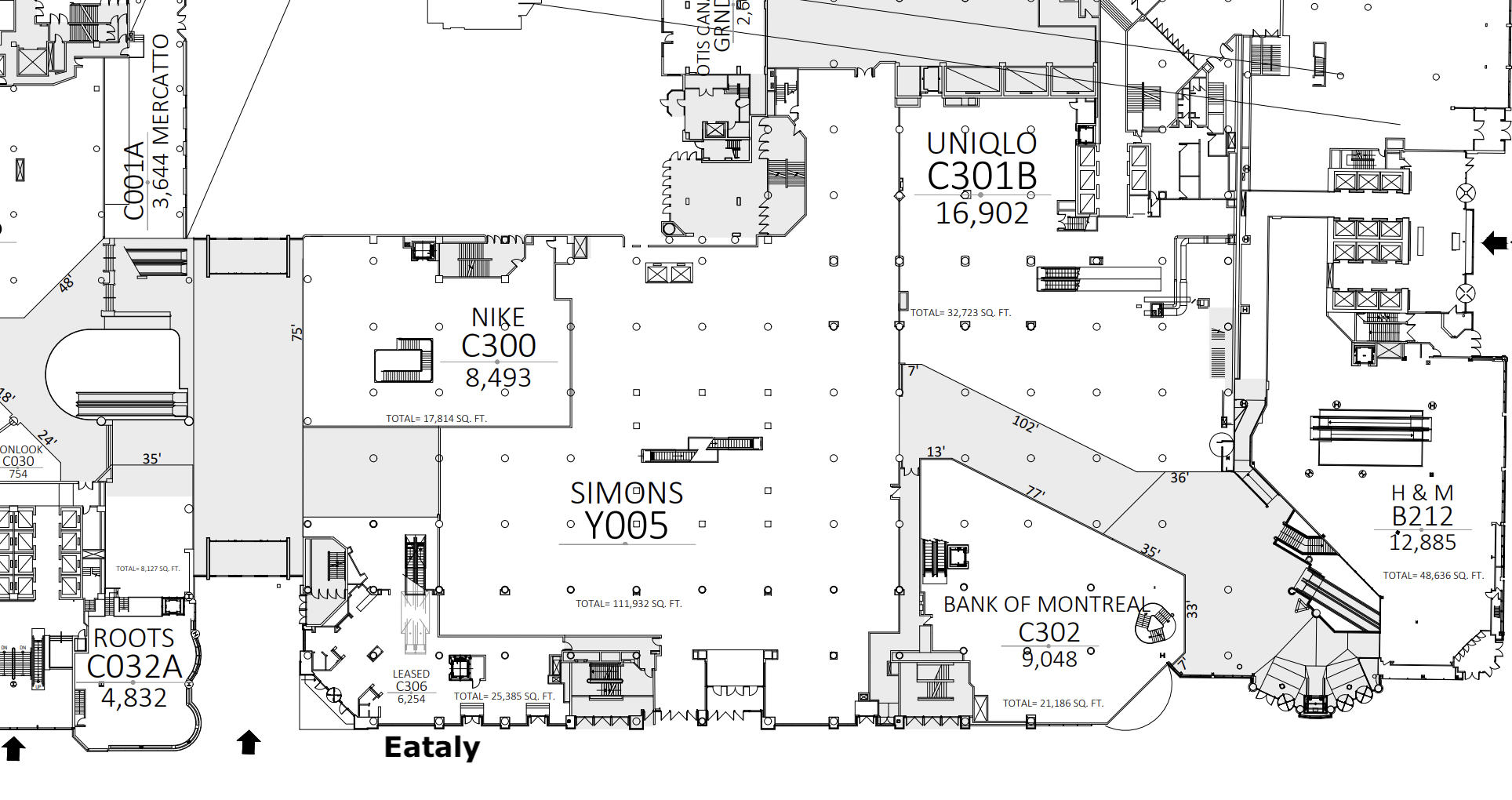
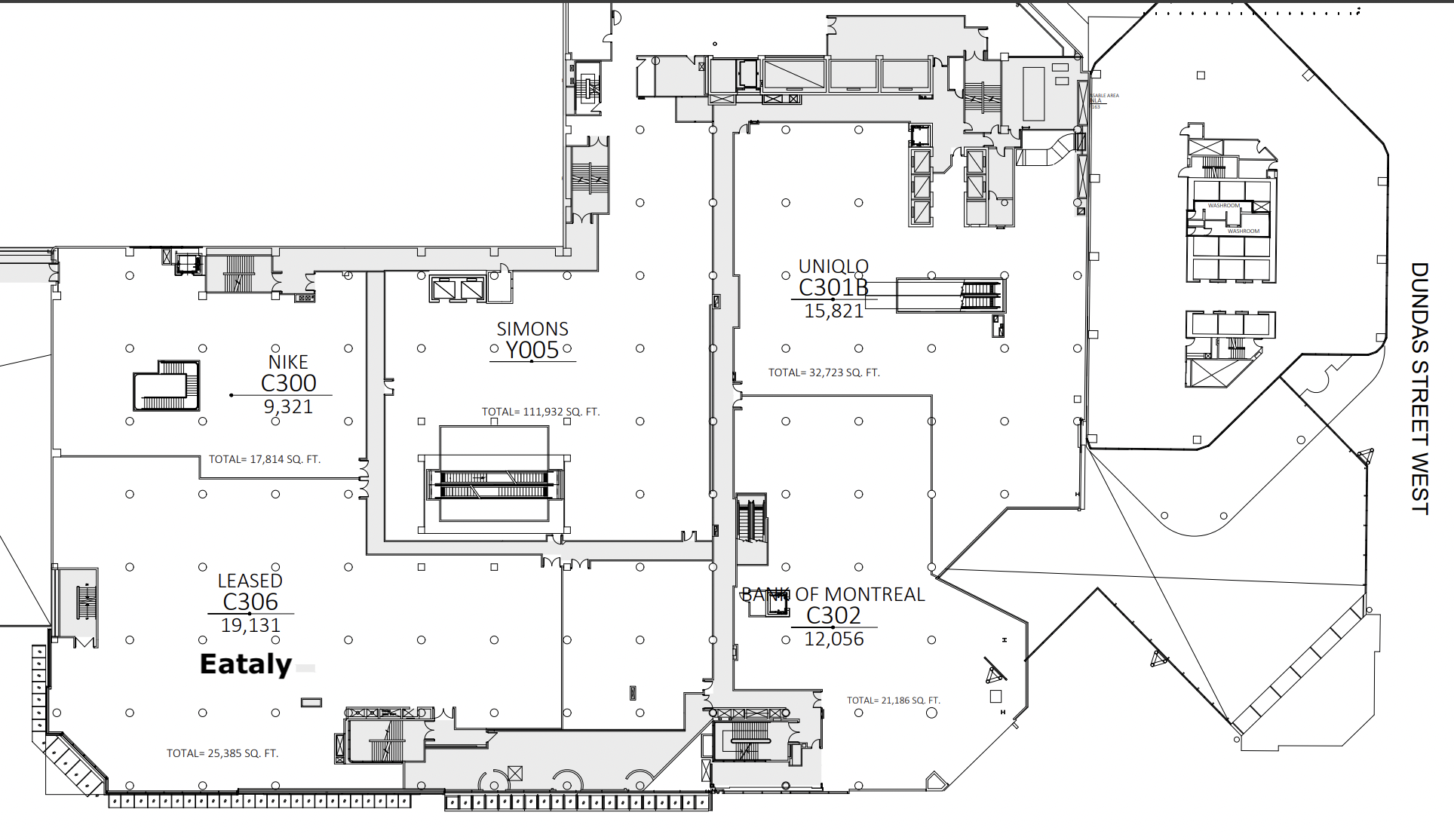
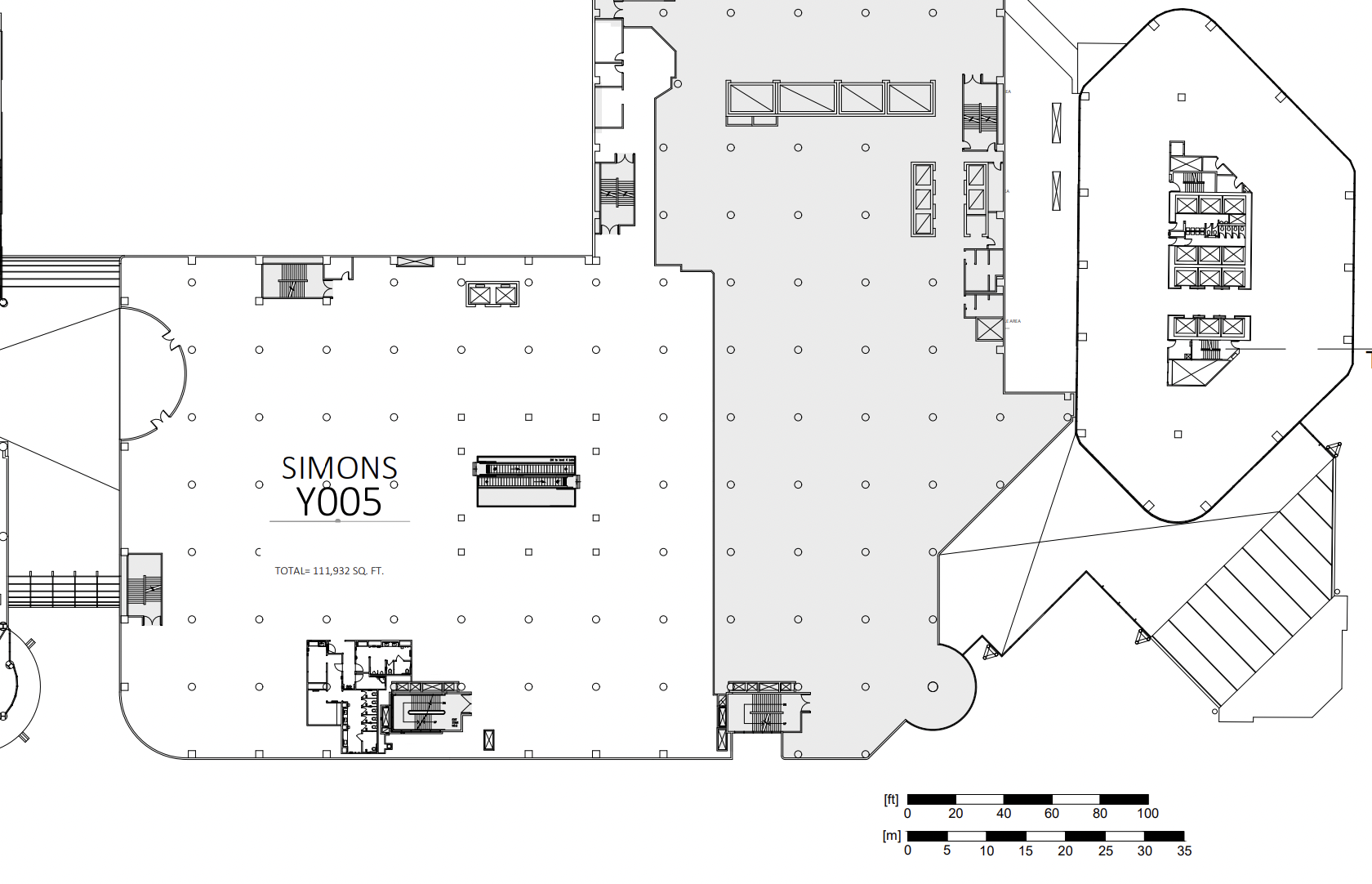
Mall entrance to La Maison Simons at CF Toronto Eaton Centre, September 18, 2025. Photo: Craig Patterson Main floor Simons lease plan, showing the configuration with future Nike and Eataly (November 2025) locations — Eataly will feature escalators beside Simons. Lease plan via Cadillac Fairview Second level of the former Nordstrom box at CF Toronto Eaton Centre, showing Simons’ along with future Nike and Eataly storefronts. Lease plan via Cadillac Fairview La Maison Simons occupies the entire third floor of the former Nordstrom at CF Toronto Eaton Centre. Lease plan via Cadillac Fairview
Store Design Rooted in Nature and Longevity
The store’s design theme, “Perennial Ephemera,” was developed with Gensler Design and LemayMichaud Architecture. The concept draws inspiration from natural cycles of light and growth. “We’ve made a lot of investment in noble materials,” said Leblanc. “You’ll see a lot of wood, a lot of natural materials come together. We’ve tried to work with things that will stay current for a longer period of time.”
Sustainability was also a focus in construction. Elements of the Nordstrom space were repurposed, including flooring and ceiling components, and even the escalator wall finishings, which were transformed into a canvas for a central art installation. “You were very observant,” Leblanc noted. “Some of the lighting has been kept in and we added where necessary to accommodate our configuration. We worked hard to recover as much as we could. That’s core to what we do.”
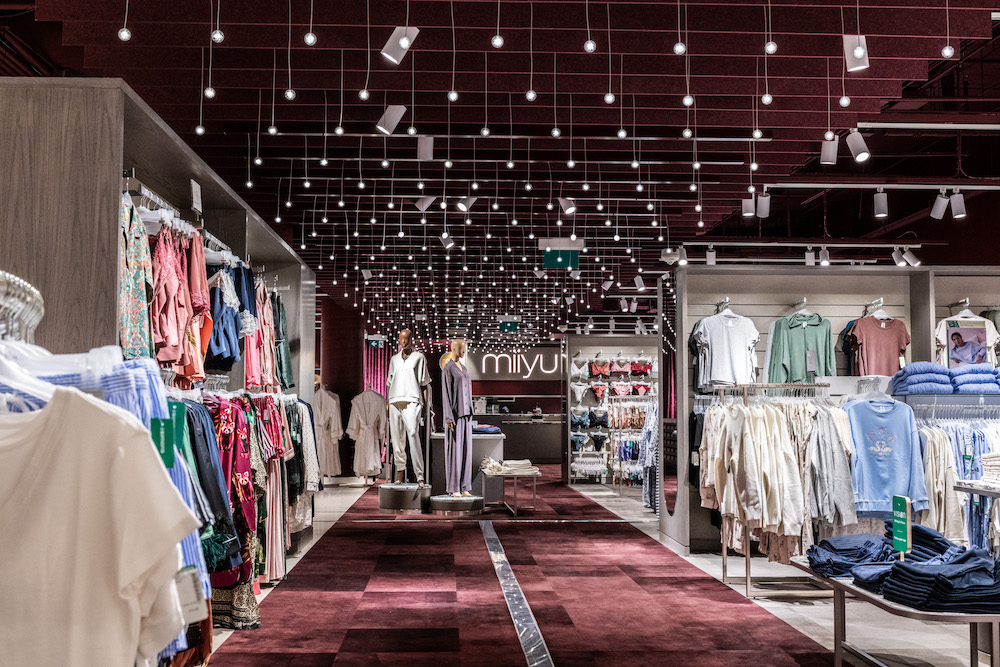
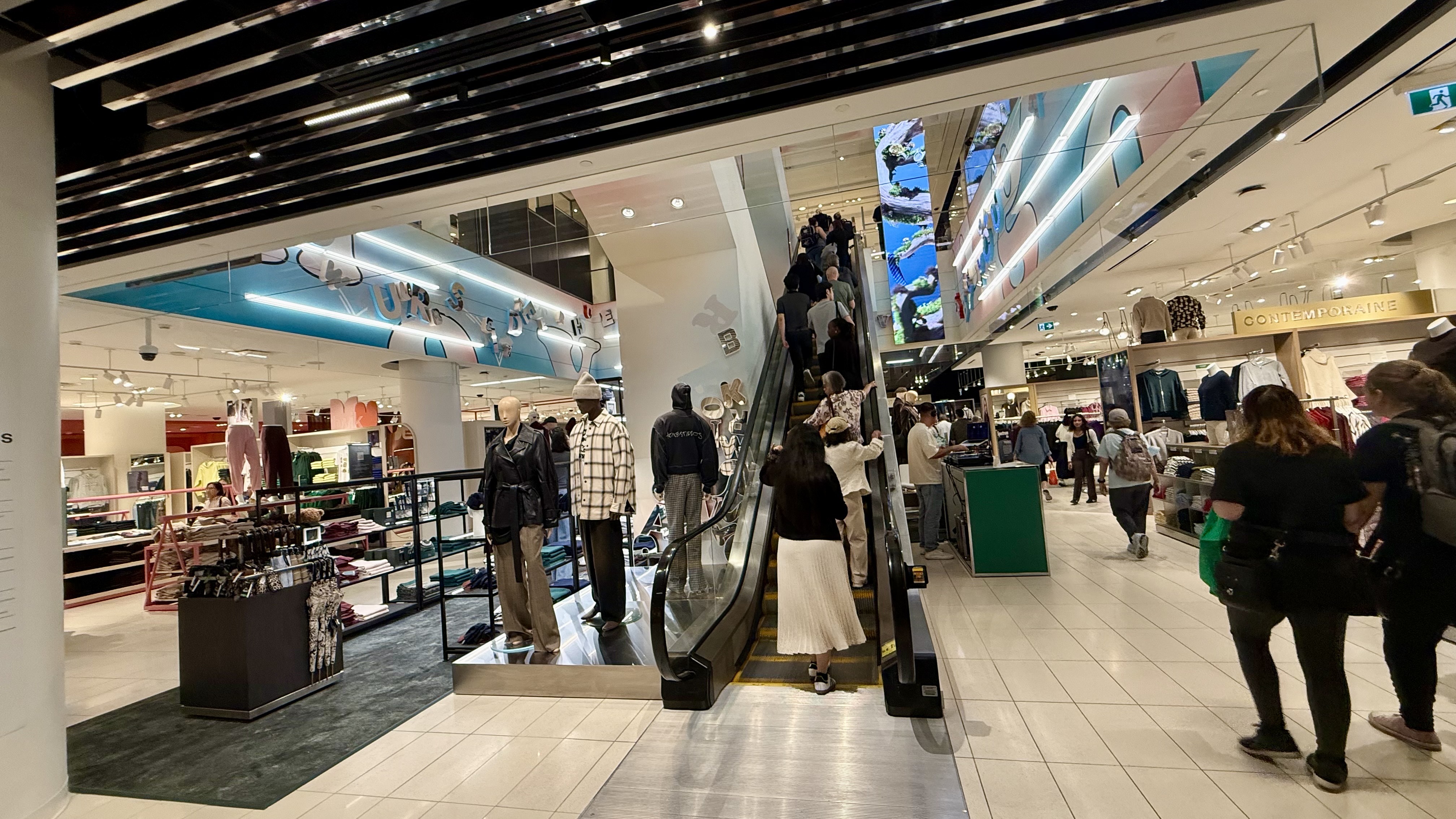
Women’s ‘Miiyu’ department on the second level of La Maison Simons at CF Toronto Eaton Centre. Image: SimonsMain floor escalator well in La Maison Simons at CF Toronto Eaton Centre, September 18, 2025. Photo: Craig Patterson
Where Fashion Meets Art
Art is integral to the Simons experience, and the CF Toronto Eaton Centre location expands on this tradition. The store features the Walk of Frames, a path of discovery featuring 40 original works by 15 Canadian artists. More than half of the pieces are by Toronto-based creators, with the remainder representing talent from Québec and beyond. [See the artwork with floor plans here]
A highlight of the collection is Permanent Structure 4 (2025), a striking 3D mural by Toronto artists Trevor Wheatley and Cosmo Dean that uses repurposed commercial materials and signage to create a multi-level visual experience. “Art plays a vital role in creating the atmosphere,” said Leblanc. “It’s not just about shopping, it’s an opportunity to discover, be inspired, and connect.”
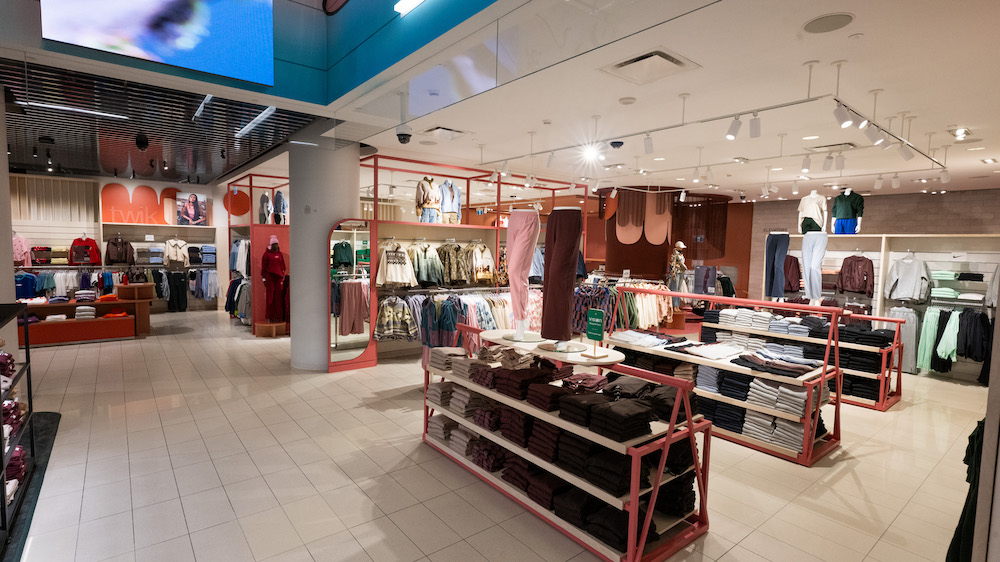
Women’s ‘Twik’ department on the main floor in La Maison Simons at CF Toronto Eaton Centre. Image: Simons
Leblanc said the art program is also designed to slow shoppers down, encouraging discovery. “We wanted to create moments where people stop, look up, and take it all in. When you walk into the store, you should feel like you’re entering a cultural space as much as a retail one.”
Simons also collaborated with Montréal-based Rodeo FX, internationally known for work on Game of Thrones and Stranger Things, to produce three immersive digital installations: Ribbon, Elemental Worlds, and Fabric of Life, each providing a cinematic layer to the store environment.
Coming in November: Eataly will join La Maison Simons in the former Nordstrom box at CF Toronto Eaton Centre, September 18, 2025. Photo: Craig Patterson
A Downtown Retail Anchor
The opening of Simons CF Toronto Eaton Centre represents a significant moment for downtown Toronto retail. Sal Iacono, President and CEO of Cadillac Fairview, called the launch “a momentous occasion,” adding, “CF Toronto Eaton Centre plays a unique role in connecting people from across the city and around the world. We are proud to celebrate this milestone together.”
Leblanc agreed that the opening has symbolic importance. “We are proud to be part of downtown Toronto’s retail renaissance,” he said. “After Nordstrom’s departure, it was important to bring in a strong Canadian retailer that could re-energize the space and create jobs. This is about confidence in downtown.”
Nordstrom closed its CF Toronto Eaton Centre store in 2023. This past June, the shopping centre saw the departure of two more anchor tenants, Hudson’s Bay and Saks Fifth Avenue, following the bankruptcy of Hudson’s Bay Company.
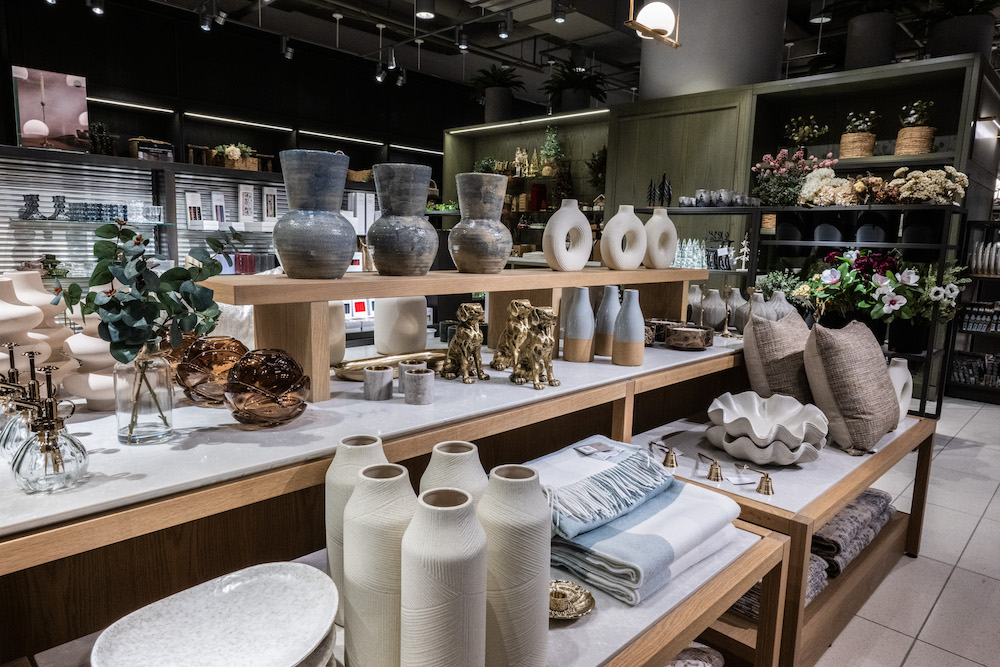
‘Simons Maison’ home collection on the third floor in La Maison Simons at CF Toronto Eaton Centre. Image: SimonsWomen’s apparel in La Maison Simons at CF Toronto Eaton Centre, September 18, 2025. Photo: Craig Patterson
A Store Designed for Community
Leblanc emphasized that the store was designed for shopping as well as for spending time. “When you’re surrounded by beauty, you feel good about the environment in which you’re living,” he said. “We want people to feel comfortable staying here for a while.”
He explained that even the fitting rooms were designed to be generous and welcoming. “We see three generations shopping together, so we wanted spaces where everyone can sit comfortably and share the experience. The idea is to make people feel at home.”
The opening morning drew approximately 500 attendees, a testament to Simons’ loyal following. “The response has been phenomenal,” said Leblanc. “Clients are extremely positive. To have that many people join us first thing in the morning in downtown Toronto means a lot.”
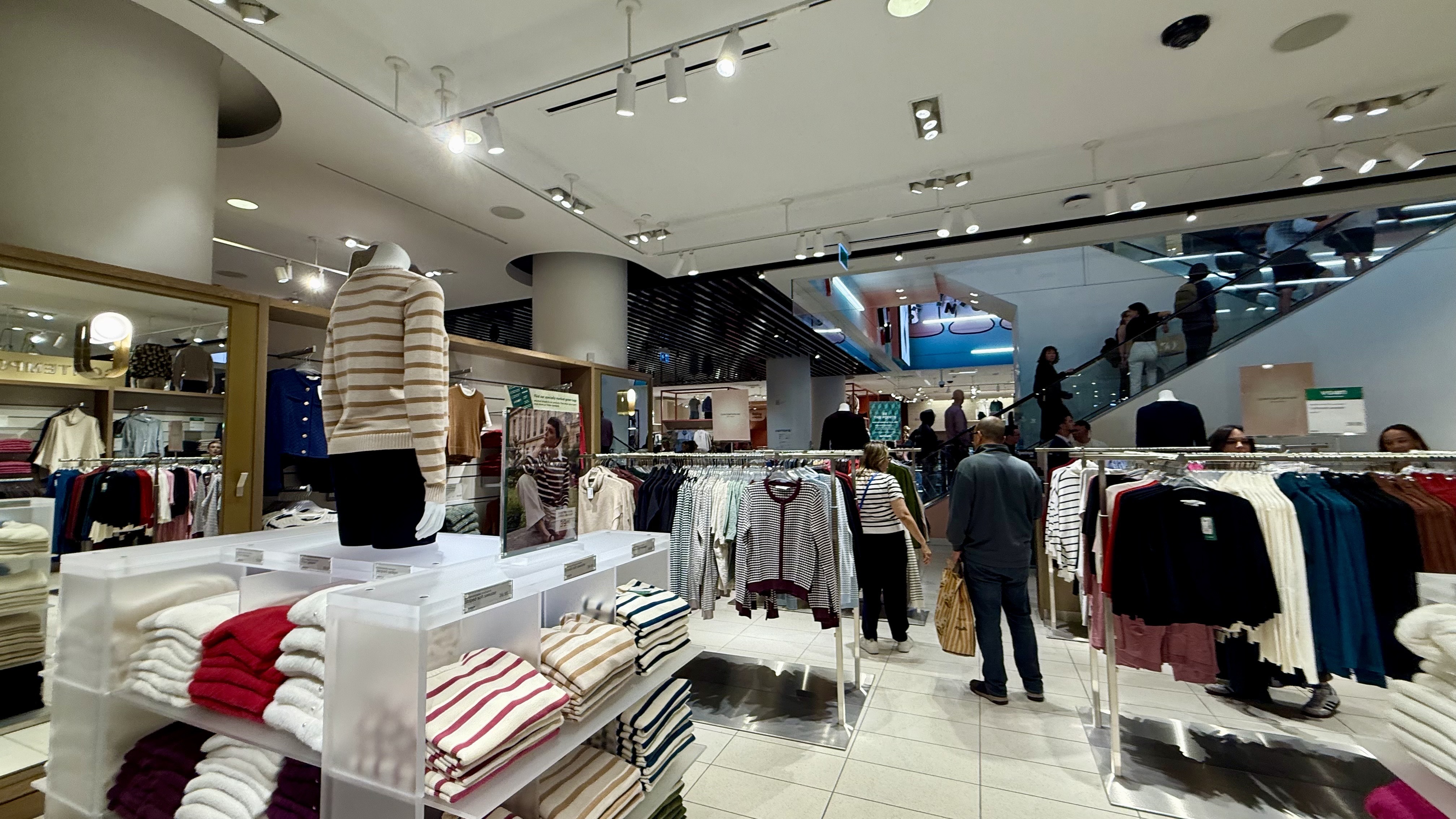
Men’s ‘Le 31’ department in La Maison Simons at CF Toronto Eaton Centre. Image: SimonsWomen’s Contemporaine department on the first level of La Maison Simons at CF Toronto Eaton Centre. Image: Simons
Merchandise and Private Label Strength
The CF Toronto Eaton Centre store features Simons’ full range of private labels, including Twik, Icône, Contemporaine, Miiyu, Le 31, Djab, i.FiV5, and Simons Maison. Customers can also shop Édito, a department dedicated to luxury and internationally celebrated designers.
Leblanc said this curated approach is central to Simons’ strategy. “Our private labels are designed in Québec City by our own team of more than 100 designers. We work hard to create something unique that brings our heritage to life.”
He added that the new Heritage collection is an important part of telling the company’s story. “We’ve been in business for 185 years. This collection is a way to share that history with a new generation of customers.”
The store features a merchandise mix of roughly 70 percent private label and 30 percent designer brands. The assortment is designed to appeal to a wide range of shoppers, with price points that span from accessible everyday basics to high-end luxury pieces. In the dedicated men’s and women’s Édito departments, shoppers will find globally recognized designers such as Balmain, Vivienne Westwood, and JW Anderson. The contrast in pricing creates a sense of accessibility — an $89 pair of Simons private-label pants feels even more attainable when displayed near an $890 pair from a luxury designer.
Women’s designer ‘Edito’ department in La Maison Simons at CF Toronto Eaton Centre, September 18, 2025. Photo: Craig Patterson
Strengthening Canadian Retail
Simons’ expansion comes at a time when department stores in North America are contracting or shuttering locations (not to mention the end of Canada’s Hudson’s Bay). The family-owned retailer is betting on physical retail as a differentiator. “We take the long view on things,” said Leblanc. “Typically it takes us three to five years to get the full potential in any new market. We’re patient. We measure our contribution in decades and generations rather than quarters.”
He also noted that Simons’ Canadian identity resonates with shoppers. “Right now, there’s a lot of support for Canadian brands. We’re proud to be a Canadian heritage brand at a time when so many are disappearing.”
Although Leblanc did not confirm specific new locations, he noted that the company continues to look for opportunities to densify in key markets, including Vancouver and Toronto. “Right now we’re focused on really making a success of these two Toronto stores,” he said. “It’s a big deal for us, and we need to make sure this investment delivers. Once we’ve digested this, we’ll look at future opportunities.”
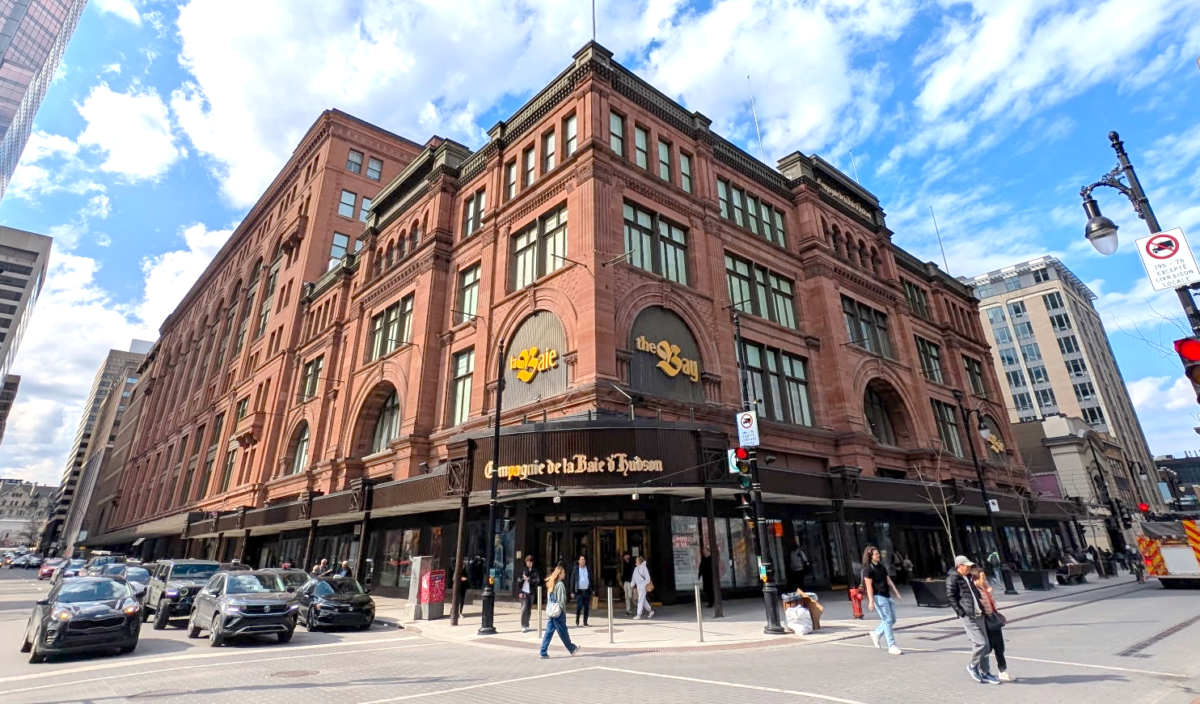
Hudson's Bay at 585 Saint-Catherine St W, Montreal (Image: Dustin Fuhs)
The James Bay Eeyou Corporation and JHD Immobilier have announced their intention to bid on the acquisition of the former Hudson’s Bay building in downtown Montreal, located at 585 Sainte-Catherine Street West. With a $400 million investment, the developers plan to transform this iconic building into a museum and cultural hub, celebrating the heritage and contemporary vitality of the Cree Nation.
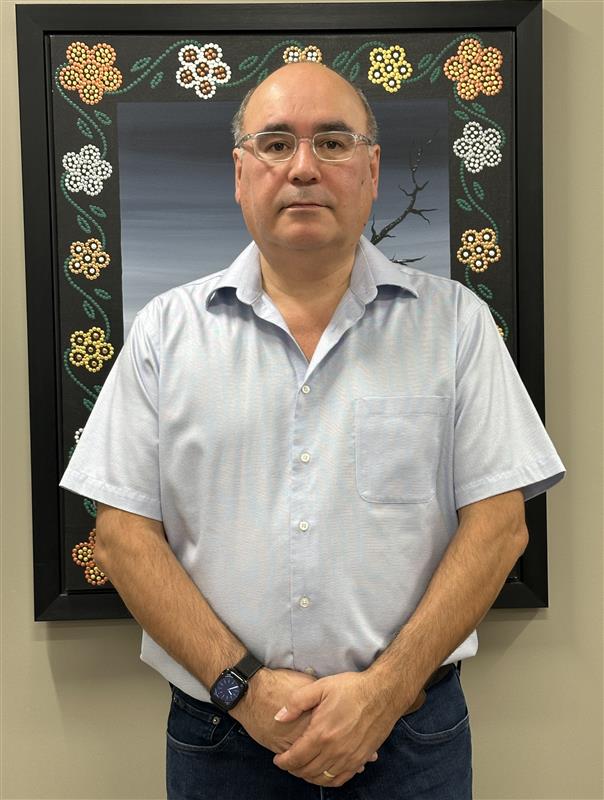
Henry Gull
“This building represents much more than a commercial acquisition; it embodies over 350 years of shared history between our people and the Hudson’s Bay Company. We see this project as a way to give the building new life while preserving its soul,” said Henry Gull, President of the James Bay Eeyou Corporation.
“The formal sale process has not yet started, but it will begin imminently. Since this is a bankruptcy process, the court-appointed receiver is responsible for running the sale. Purchase offers will be submitted in the coming weeks.
“The goal is to open the museum and hotel in 2029. Extensive renovations will be required, while carefully preserving the building’s historical significance. This project carries significant cultural, economic, and historical importance for Montréal. It offers a “full circle” moment, transforming a heritage building into a space that highlights Cree and First Nations culture and shares it with Montréalers and visitors.
“It represents a way for the Cree Nation to return to Montréal in style, celebrating our heritage and sharing it with both tourists and locals. For many Cree families, grandparents once worked for Hudson’s Bay. This project honours that contribution and creates a lasting cultural legacy within the history of Montréal and Canada.
“JHD Immobilier and the James Bay Eeyou Corporation are working in partnership. JHD brings technical expertise and a track record in restoring historic buildings, while the Cree contribute their cultural perspective and strong experience in the hospitality sector, where they already operate multiple hotels in their region.”
A Landmark Project in the Heart of Downtown
The proposed redevelopment includes a museum dedicated to the fur trade and exchanges between the Cree and the Hudson’s Bay Company, as well as an urban Indigenous cultural centre, experiential spaces, retail showcases, mixed-use facilities, and a hotel complex. The venue will serve as a place of gathering, learning, and sharing for Montrealers and visitors alike, said officials.
A Project of Healing and Reconciliation
For the Cree Nation, the initiative goes beyond a real estate transaction.
“We return today not to trade furs, but to reclaim a place that our ancestors never left in their hearts,” said Gull.
Julien Hamel-Doyon
Julien Hamel-Doyon, President of JHD Real Estate, added: “This initiative reflects our values of urban development and heritage preservation. It ensures the economic and cultural sustainability of this site while bringing new life to downtown Montreal.”
Revitalizing a Legacy at the Heart of Montreal
“For more than 355 years, the Cree have maintained deep historical ties with the Hudson’s Bay Company. Originating in the 17th century, this trade forged alliances and exchanges that went far beyond fur trading. It became a space of cultural exchange, knowledge sharing, and bonds that left a lasting mark on the land and on relations between nations,” explained officials.
Government Collaboration
“The redevelopment, scheduled to open in 2029, requires zoning approval from the City of Montreal. The developers will work closely with all three levels of government to establish this initiative as a benchmark for nation-to-nation partnership.”
Downtown Montreal flagship Hudson’s Bay store on April 24, 2025. The building started as a location for the Henry Morgan department store chain, which in decades past operated as an upscale business. Photo: Carl Boutet
JHD Real Estate is a Canadian company specializing in mixed-use real estate development in urban environments. Known for its expertise in revitalizing heritage sites, JHD brings innovative and sustainable projects to life.
Founded in 1986, the James Bay Eeyou Corporation has spent nearly 40 years advancing economic opportunities for the Cree community.
In March 2025, Hudson’s Bay, the oldest and longest-surviving company in North America filed for Creditor Protection under the Companies’ Creditors Arrangement Act. The company ceased operations in June 2025.
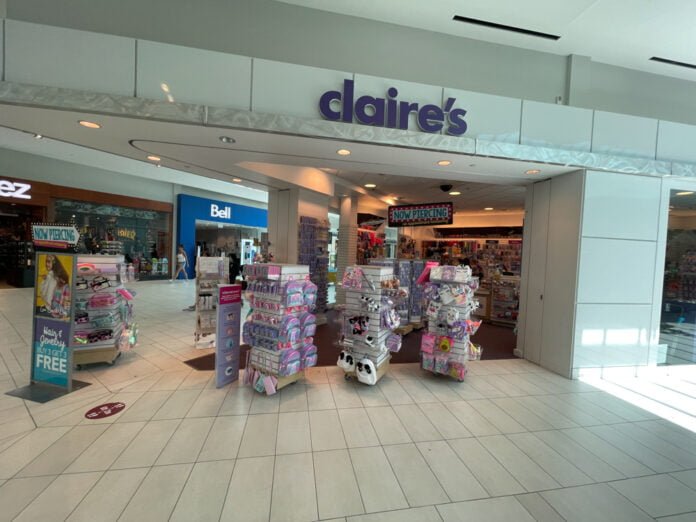
Claire's at Willowbrook Mall in Langley (July 2021). Photo: Lee Rivett.
Newly filed court documents reveal that accessories retailer Claire’s could sell up to 77 Canadian stores as part of a sweeping deal with Maryland-based Ames Watson, a firm known for buying and reviving distressed consumer brands. The purchase price for the Canadian portion of the business has been set at US$2.3 million, though that figure will be reduced by US$1.3 million to cover service and professional costs.
The deal is part of Claire’s Canadian restructuring under court supervision and follows a parallel Chapter 11 filing in the United States. The company began liquidating 26 Canadian stores not included in the agreement after its August filing for creditor protection. The sale still requires approval from both Canadian and U.S. courts.
The documents specify that Claire’s U.S. operations will not participate in the first US$1 million of distributions from the Canadian business to unsecured creditors, a detail that may improve recoveries for domestic suppliers and landlords. At the time of its filing, Claire’s operated 103 leased store locations across Canada and employed over 700 workers.
If the deal is finalized, Ames Watson would inherit most of the surviving Canadian network, though future closures remain possible if profitability targets are not met.
A Retail Chain Under Pressure
Claire’s Canadian restructuring reflects a broader crisis facing the brand. Years of unprofitability, combined with declining mall traffic and rising costs, led the company to seek protection under the Companies’ Creditors Arrangement Act (CCAA) in Ontario. According to court filings, net losses had reached nearly CAD $8 million by mid-2025, while mounting debt obligations left the company unable to renegotiate many unprofitable leases.
The company’s troubles have been compounded by increased competition from e-commerce players and fast-fashion brands, along with inflation and tariffs that have pushed up import costs.
Store Network Across Canada
As of July 2025, Claire’s operated 120 stores nationwide, with the largest concentration in Ontario (45), Alberta (21), and British Columbia (19). The retailer also maintained a presence in Quebec, the Prairies, and Atlantic Canada. While stores remain open during restructuring, many are being reviewed for closure if rent relief or lease amendments cannot be secured.
Even with Ames Watson’s planned investment, the company may struggle to justify its current footprint if mall traffic continues to decline.
Global Context and Past Bankruptcy
Claire filed for Chapter 11 protection in the United States in August 2025, the second such filing in seven years. The chain, which Apollo Global Management took private in 2007, previously restructured in 2018 to address US$1.9 billion in debt.
Globally, Claire’s operates more than 1,500 stores under the Claire’s and Icing banners, along with locations in Walmart and other shop-in-shop formats. European divisions, including those in the UK and France, have entered administration or receivership, with additional closures anticipated.
Ames Watson’s Turnaround Playbook
Founded in 2017, Ames Watson has built a reputation for buying struggling but recognizable brands and attempting to engineer turnarounds. Its best-known acquisition came in 2019, when it purchased athletic headwear retailer Lids. Under Ames Watson’s ownership, Lids restructured its store base, improved inventory management, and focused on exclusive collaborations with sports leagues and celebrities.
The strategy ultimately stabilized Lids, which returned to profitability and began expanding again in key markets. Industry observers say this precedent offers some optimism for Claire’s Canadian restructuring, though they caution that the accessories chain faces a different set of challenges, particularly around shifting consumer habits and mall dependency.
Prospects for Claire’s Under New Ownership
Ames Watson has pledged US$104 million in cash and US$36 million on a seller’s note to acquire between 795 and 950 global Claire’s locations. The firm has said it hopes to maintain a “significant retail footprint,” though it has already announced the immediate closure of more than 290 stores, primarily in struggling malls.
Whether Claire’s Canadian restructuring will result in a viable, profitable network remains uncertain. The future of its 77 potentially retained stores will depend on landlord negotiations, sales performance during the coming holiday season, and Ames Watson’s long-term strategy.
If successful, the sale could stabilize the business and preserve hundreds of jobs. But if store traffic and revenues continue to decline, a second round of closures, or even full liquidation, could follow.
Measured on a scale between 0 and 100, an index above 50 means owners expecting their business’s performance to be stronger over the next three or 12 months outnumber those expecting weaker performance.
Simon Gaudreault
“The subpar optimism we’ve been seeing speaks volumes about the current uncertain business environment. Business owners have hardly been positive this year, and it’s not surprising given the trade and economic uncertainty, declining demand, and rising operational costs,” said Simon Gaudreault, Chief Economist and Vice-President of Research at CFIB.
“With the pace of tariff announcements slowing down a bit and the discussion shifting to how Canada can durably adjust to a new trade and policy environment, we may be entering a new phase on the economic calendar. Meanwhile, business owners report that there are still many fiscal, regulatory and labour challenges that prevent them to contribute to the economic recovery. Certainty, stability and confidence remain in short supply and sending the right policy signals this fall could help turn the tide.”
Average price plans stand at 2.7% and wage plans at 2.2%. The weakness in the labour market continues, with 12% of firms looking to hire in the next few months and 18% considering layoffs, said the CFIB.
“Based on our data, it does not look like the labour market will strengthen anytime soon. The share of businesses with hiring plans remains below its usual seasonal pattern, while more and more firms have recently stated layoff plans, significantly exceeding seasonal patterns,” said Andreea Bourgeois, Director of Economics at CFIB.
The CFIB is Canada’s largest association of small and medium-sized businesses with 100,000 members across every industry and region.
Andreea Bourgeois
Tax and regulatory costs remain top of mind for 67% of small firms, followed by insurance costs (66%). More businesses reported facing difficulties with wage costs (66% in September vs 59% in August). Weak demand also persists for over half (55%) of businesses, explained the CFIB.
“In the wake of post-labour disruptions, 20% of businesses reported challenges distributing their products,” it said.
“The share of businesses struggling with capital equipment and technology costs has reached a record high of 36%. CFIB’s upcoming report on small business adoption of technology and AI will show how investing in digital tools and equipment can significantly boost productivity and help businesses become more efficient.”
The full September Business Barometer report can be found here.
Canadian-born, women-owned beauty brand, Sona Cosmetics, has launched, bringing beauty without barriers to all Canadians.
Built by beauty industry veterans on the belief that high-quality, trend-driven makeup should be available to all, Sona delivers premium beauty at a loveable price tag, without compromising quality, said the company.
Spearheading the new brand are Emily David, Co-Founder & Director of Product of Sona Cosmetics and Lauren Mezzaluna, Co-Founder & Director of Brand Marketing of Sona Cosmetics.
Emily David
“We believe that beauty should never feel exclusive or unattainable,” said David. “Sona’s mission is to create thoughtfully curated, high-performance beauty products that are driven by community, committed to inclusivity, and ensuring that no one is priced out of self-expression.”
Rooted in inclusivity and inspired by culture, Sona said it is passionate about ensuring that everyone has the tools to play, experiment, and find what makes them love the skin they’re in, inspiring the it girl in everyone.
“With ingredients like hyaluronic acid to keep lips soft and plump and peptides to give skin its bounce, every formula is meticulously crafted for maximum effectiveness. At Sona, affordable doesn’t mean low quality; every product is backed by rigorous testing and features high-performing, cruelty-free, vegan formulas,” it said.
Lauren Mezzaluna
Sona’s September product launch includes:
Tinted Lip Treatments – deep hydration, lightweight, everyday colour ($12)
Peel Off Lip Stain – long-lasting and transfer-proof ($9)
All products are available in a variety of colours and shades.
“With sleek, bold and cruelty-free formulas, Sona strikes the perfect balance between luxury and accessibility. Sona is beauty without barriers, where everyone gets a seat at the table (and a killer lip-tint to match),” said the brand.
“Sona Cosmetics is available starting September 18th online at sonacosmetics.ca, with shipping available anywhere in Canada and in select Canadian retailers, including Dollarama and Giant Tiger. Additional product launches are planned for October, November, and December.”
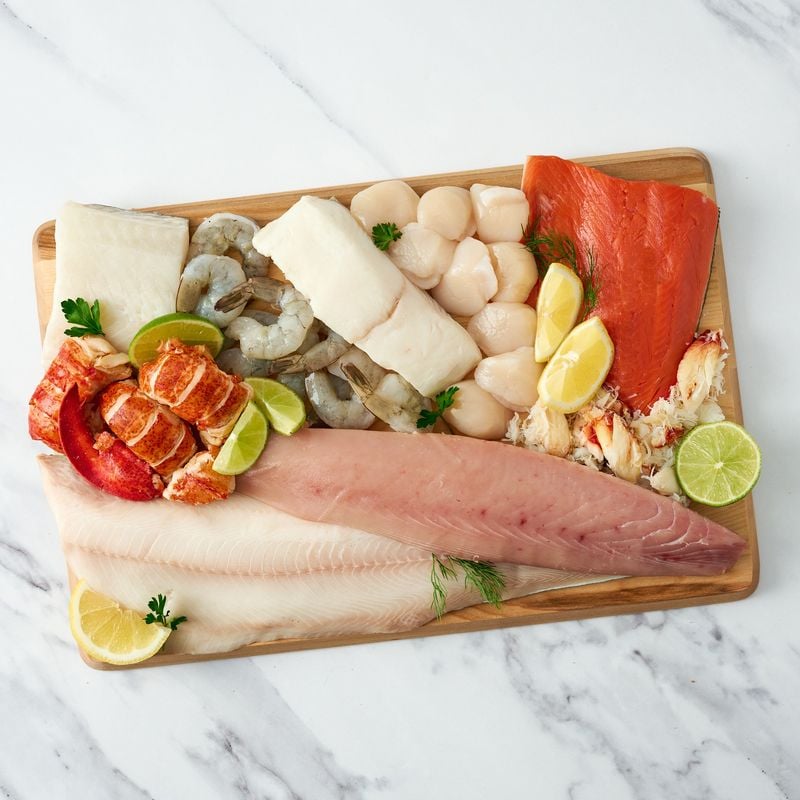
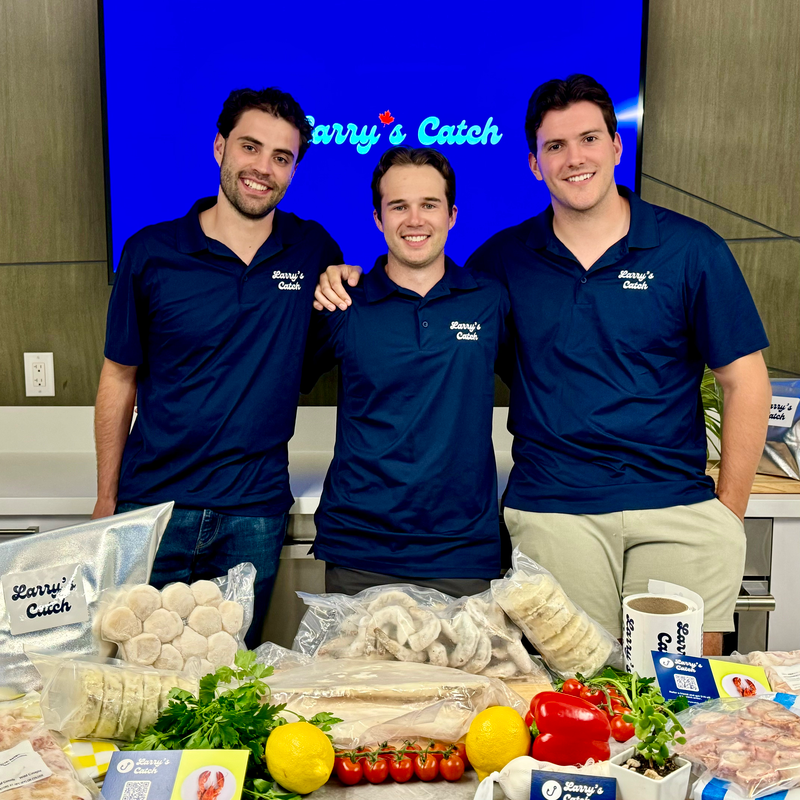
A startup founded by three university friends is making waves in the Canadian seafood industry by delivering wild-caught, sustainably certified, Canadian seafood directly to consumers’ doors across the country. Larry’s Catch, which began as a side hustle and is now a full-time business, currently operates in nine provinces and is looking to expand its reach.
“We started it kind of as a side gig, in the spring of 2024, and we’ve since gone full-time in September,” said Glen Creaser, Co-Founder and President of Larry’s Catch. “That’s when we really started taking this really seriously and working to scale the business and serve as many Canadians as possible.”
Glen Creaser
Creaser, who also oversees branding, product, and supplier relationships, runs the company alongside co-founders James Quinn and Javier Sanchez Mejorada. The company is based out of a Mississauga warehouse, though its roots began in Toronto.
“For quite some time, while we could keep things going out of deep freezers, we were running the business—my two co-founders and I—actually out of our house in Toronto,” said Creaser.
The idea for the business came from a personal struggle Creaser experienced after moving from Nova Scotia to Ontario.
“I grew up with a father as a fisherman,” said Creaser. “I grew up eating the best seafood you could imagine almost every single day. And then I moved to Ontario where I almost cut seafood completely out of my diet because I couldn’t find anything to the quality I was looking for.”
That quality gap, combined with concerns about transparency and sustainability in the seafood industry, drove Creaser to action.
“You could never really tell in the stores where the seafood was coming from. Most of it was imported from very kind of environmentally disastrous countries,” he said. “Over 80% of the seafood we consume in Canada is imported, especially inland as you move away from those kinds of coastal communities.”
“Most of it was previously frozen and thawed to display, which is a huge problem because that increases waste. With modern freezing technology, just keep it frozen because it really is the best quality you can find, especially in inland provinces.”
The company was named in honour of Creaser’s father.
“That really kind of pushed me to eventually start Larry’s Catch and name it after my father who is a retired fisherman,” he said.
Larry’s Catch sources seafood from all three coasts, including Nova Scotia, Prince Edward Island, British Columbia, and even Baffin Island in the Arctic.
“Nova Scotia is really where most of the stuff we source and sell,” noted Creaser. “We’re also working on a few products from Newfoundland and New Brunswick as well.”
The company’s founding team shares a deep connection that goes back to their first day at Queen’s University.
“We actually met on our very first day—we were on the same floor in our residence,” said Creaser. “We then moved in together with a few other buddies after that.”
From left to right (Javier Mejorada, James Quinn, and Glen Creaser)
Before launching Larry’s Catch, the trio even started and sold a software company, before ultimately leaving the tech industry behind.
“We all ultimately quit our lives in tech and joined the seafood industry where we’ve really been feeling like we’re doing super meaningful work and really pushing some very important support of our Canadian coastal communities,” said Creaser.
Asked about future international expansion, Creaser acknowledged the potential but emphasized the company’s current focus on Canada.
“There is some tariff business going on which would pose some challenges,” he said. “But Canadian seafood is internationally renowned and there is demand for it around the world.”
“In fact, 80% of our seafood is exported. So it’s honestly quite hard to find in Canada, which is why we even started this in the first place.”
He added, “We have a lot of folks that have been requesting our seafood, whether it’s Canadians that are living south of the border, or Americans who have visited Canada and really had the opportunity to taste the seafood that we have to offer.”
Photo: Larry’s Catch
“But for now we’re very, very focused on Canada and serving as many Canadians as possible.”
Creaser believes Canadian consumers are beginning to shift more toward seafood—motivated by both health and environmental factors.
“In Canada specifically, we’re extremely underserved when it comes to seafood consumption,” he said. “There’s been almost a bad rep with seafood, especially inland, in Canada, so people aren’t eating as much.”
He highlighted a stark gap in consumption levels: “The average Canadian will eat 16 pounds of seafood throughout the year. The average person in the rest of the world will eat around 44 pounds. So what I like to use is the term ‘seafood deficient’ when I talk about Canada.”
“There are a ton of health benefits to eating seafood. It helps with your brain and your heart, longevity—I can really go on and on.”
In fact, some customers come to Larry’s Catch at the recommendation of their physicians.
“We actually have some folks who come to us whose doctors are telling them that they need to be eating more seafood,” said Creaser. “They’re looking for a high quality, zero additive, and naturally occurring option. So that’s why they actually come to us.”
As for the future, Creaser is passionate about continuing to serve Canadians with sustainable, local seafood.
“People are becoming much more health conscious and realizing that seafood—especially many species of seafood—are actually considered superfoods just because of how lean it is, packed with omegas and antioxidants,” he said. “As you can tell, I’m very passionate about this and I can go on and on.”
This weekend, CHFA NOW Toronto, Canada’s largest trade show for natural, organic, and wellness products, will spotlight five key trends set to shape the way Canadians shop in 2026. Running Friday, September 19, through Sunday, September 21, at Exhibition Place, the event will draw over 1,000 brands and 8,000 industry professionals to discover the latest and greatest innovations currently shaping the natural, organic, and wellness industry.
Aaron Skelton
“CHFA NOW Toronto is more than a trade show — it’s where the future of Canada’s natural, organic, and wellness industry comes to life,” said Canadian Health Food Association President and CEO Aaron Skelton. “From innovative products to inspiring entrepreneurs, this event highlights the creativity and growth driving our sector and a first look at the trends that will soon influence the marketplace.”
The CHFA is Canada’s largest trade association dedicated to natural, organic and wellness products. As a national not-for-profit association, its members include manufacturers, retailers, wholesalers, distributors, and importers committed to getting more healthy living products into the hands of more Canadians.
Heading into the show, CHFA has identified five emerging trends expected to shape the industry and hit retailers in 2026:
Minis: Small Size, Big Impact: As appetite suppression becomes more common due to the rise of GLP-1 medications and increased awareness of metabolic health, there is a growing consumer demand for mini meals, snacks, and drinks that deliver satisfaction without excess. This shift helps to fuel interest in smaller portions, offering greater flexibility, affordability, and a sense of reward without the guilt. At CHFA NOW: Unreal Snacks Dark Chocolate Coconut Bars, Henri Apple Cinnamon Bars
Bitter Brews & Functional Sips: A new wave of functional beverages is capturing attention by blending bold, bitter flavour profiles with wellness benefits. From matcha to mushroom coffee and cacao elixirs, consumers are embracing drinks that go beyond hydration. This trend is driven by a growing appreciation for global cuisines, adaptogens, nootropics, and longevity ingredients, as well as a desire for beauty and cognitive benefits in drinkable formats. At CHFA NOW: Origen Sea Water Electrolytes, Matcha Ninja Blue Matcha
Soft Wellness: Calm, Comfort, and Connection: In uncertain times, Canadians are carving out and embracing a wellness lifestyle that nurtures and provides joy. Consumers are turning to products and experiences that offer emotional support, incorporate rituals as a form of self-care, support the gut-brain connection, and promote rest and recovery. At CHFA NOW: Mosse – Sea Moss Beverage Powder, BioSnactive Foods Inc. – Code Red
Expanding the Health Span: Age Gracefully, Live Fully: As people live longer, the focus is shifting from extending lifespan to enhancing it – living better for longer. Functional foods, beverages, and supplements are evolving to support the complex needs of aging gracefully, from brain health to joint support. Cognitive health and brain nutrition products, proactive nutrition, and inspiration from the Mediterranean diet round out this trend. At CHFA NOW: Tony’s Really Good Olive Oil, Herbaland ACV & Fibre Jelly Stick, Poo Perfect Mango Passionfruit
Beauty from Within: Edible Indulgence with Benefits: Beauty and wellness are merging in the rising category of edible beauty. Consumers are increasingly turning to functional snacks, beverages, and supplements that support skin, hair, and nail health – and they want it all wrapped in a premium, snackable experience with elevated packaging that has sensory appeal. At CHFA NOW: The Meat Bar Beauty Boosting Protein Bar, Glow Green Co. Full On Hydration Face Moisturizer
The CHFA said the event brings together industry-leading voices and leaders in natural, organic, and wellness. One of the most anticipated features of the show floor is Incubator Alley, where emerging brands showcase groundbreaking products and fresh new perspectives.